




Abstract

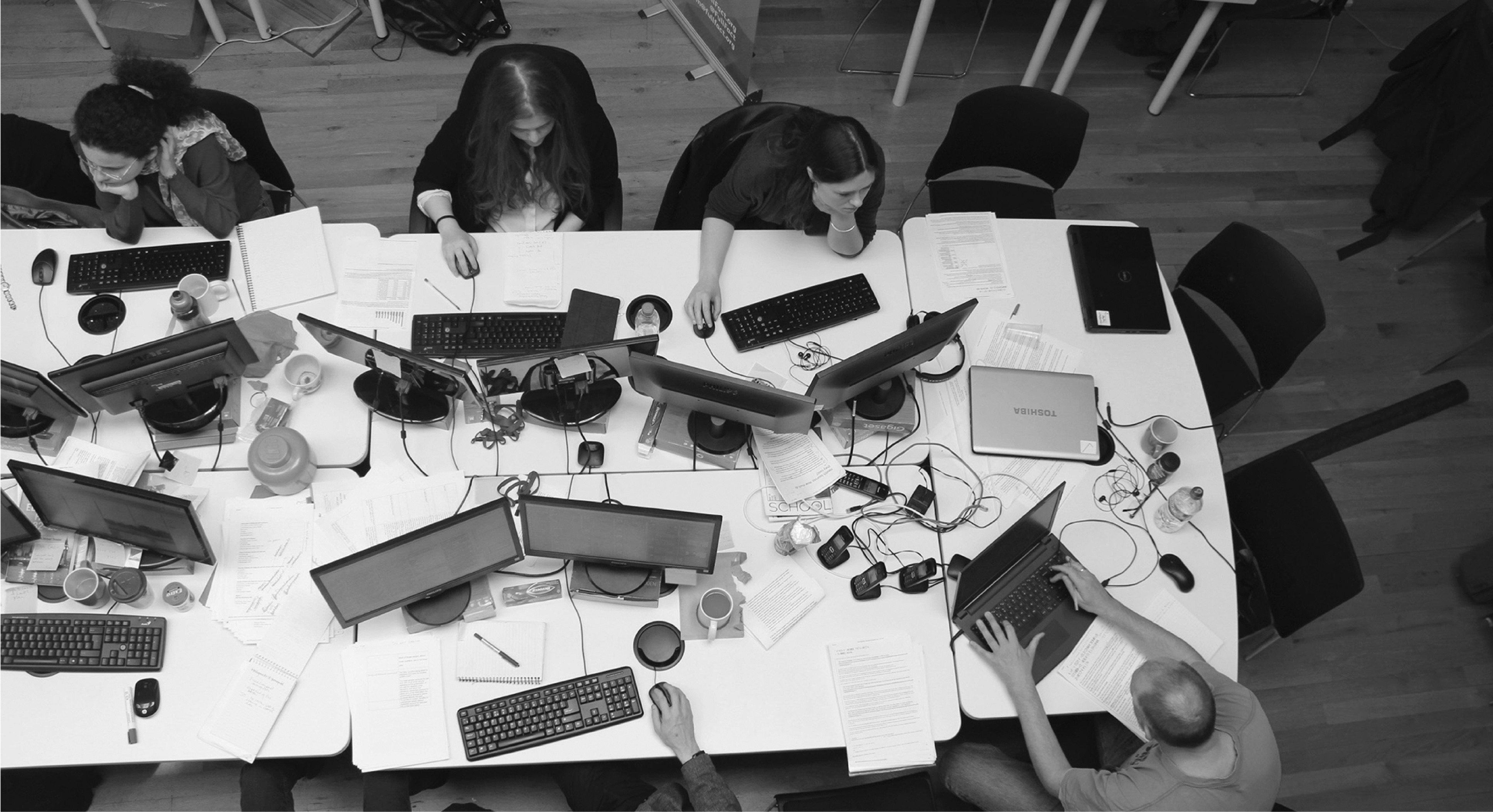
FullFact, the UK’s only independent factchecker, was established in 2010, but 2015 has been its breakthrough year. During the UK general election, it staffed an 18-hour-a-day “rapid-reaction centre”, made possible by a crowd-funding campaign. It responded to queries from the public, and from journalists, as well as checking manifestos and speeches. One of the team’s proudest moments was when they contacted BBC’s Newsnight mid-broadcast and a correction appeared before the programme ended.
“It seems like we are capturing a global zeitgeist,” Fullfact’s director, Will Moy, told Index. “I’m not sure if it’s [due to] a growing sense of distrust or because the internet makes it easier to factcheck and compare primary sources. Maybe it’s a search for authenticity? We’re definitely tapping into something.”
Index visited FullFact in the same week of July as the Global Fact-Checking Summit, held at City University, London, and attended by 70 factcheckers and academics from around the world.
Among those represented was AfricaCheck.org, a non-profit factchecker running since 2012, based in the journalism department of the University of the Witwatersrand in Johannesburg. The project was devised by the AFP Foundation (the non-profit arm of the international news agency), with seedfunding from Google. It also operates in Nigeria and Senegal (in French), and next year will open a division in Kenya.
“In Africa, reliable and accurate information is scarce,” Peter Cunliffe-Jones, its director and a former foreign correspondent, told Index. “Factchecking is a difficult thing to do. But the popular reaction has been great – from readers and also from media houses, who have taken our reports and interviewed our researchers.”
AfricaCheck recently challenged inflated claims about immigration to South Africa – repors that were fuelling xenophobia amid concerns about immigrants supposedly flooding the country. “The New York Times reported there were five million immigrants. The census figures are 2.2 million. We found no justification for this [higher] figure. Nobody has been able to explain where these other 3 million people have come from,” said Cunliffe-Jones. The BBC, Reuters, the Mail Online and various South African media had also used the unverified figure.
“But we are not an anti-media organisation,” he added. “We don’t want to feed into an idea that all media or all politicians are liars. If we dig into something and find out it is true, we say so.”
Independent factcheckers Full Fact provided an 18-hour-a-day “rapid-reaction centre” during the 2015 UK general elections
Credit: Full Fact
The United States spearheaded the factchecking movement, with Factcheck.org operating since 2003 and PolitiFact.com, run by the Tampa Bay Times, since 2007. Yet Moy expressed a reservation about the US approach. He cited a blog post that FactCheck.org wrote about the 2008 US election, which said that more than 40 per cent of Americans believed falsehoods about both candidates’ tax plans, and one in five falsely believed Barack Obama was a Muslim. Moy said: “[FactCheck.org] took that as evidence that they were doing the right thing [by exposing the ignorance]. We take that as evidence that something is not working.”
FullFact, by contrast, focuses almost as much on the correction as the debunking, he said. One of its tasks involves trying to identify things that go wrong repeatedly. A success story has been convincing the Office for National Statistics to add a line to one of their regular press releases to explain what the statistics didn’t mean – in order to halt the normal stream of misleading headlines. Although Moy says the ONS was reluctant and only agreed after watchdog intervention.
In Argentina, finding and disseminating reliable statistics is harder. Along with a highly polarised press, the country has a shambolic national-statistics office (Indec), which has been underestimating inflation for years.
Enter Chequeado, South America’s first independent factchecking organisation. Like FullFact, it started in 2010 and has similarly expanded to around 10 staff.
Chequeado’s director, Laura Zommer, said that although there was no shortage of information, the problem was circulating it. “Often, the individuals have information that contradicts a minister, but they aren’t going to come out and say it publicly, because they are scared, or because they don’t want the confrontation. Part of our work is to generate a platform that is neutral. We want people to feel able to come to us with information,” she said. Since Chequeado began, more Latin American factchecking organisations have appeared, including Uruguay’s uycheck.com and Mexico’s El Sabueso (run by AnimalPolítico.com).
Many of these new operations seem to share a focus on training, education and innovation. FullFact is working on an automated factchecking system, instantly noticing when claims have been checked before. Chequeado is creating new apps and smartphone alerts, to make factchecking more appealing and user-friendly.
“We’re not going to let our campaign be dictated by factcheckers,” said an aide to the US presidential candidate Mitt Romney in 2012, raising eyebrows around the world. But ignore the factcheckers at your peril. They look set to become much more powerful players.
© Vicky Baker