



Abstract

Air pollution in China’s Hubei province, pictured on 6 March 2015, the day of the annual meeting of parliament and week after the Under the Dome documentary was released
Credit: Darley Shen/ Reuters
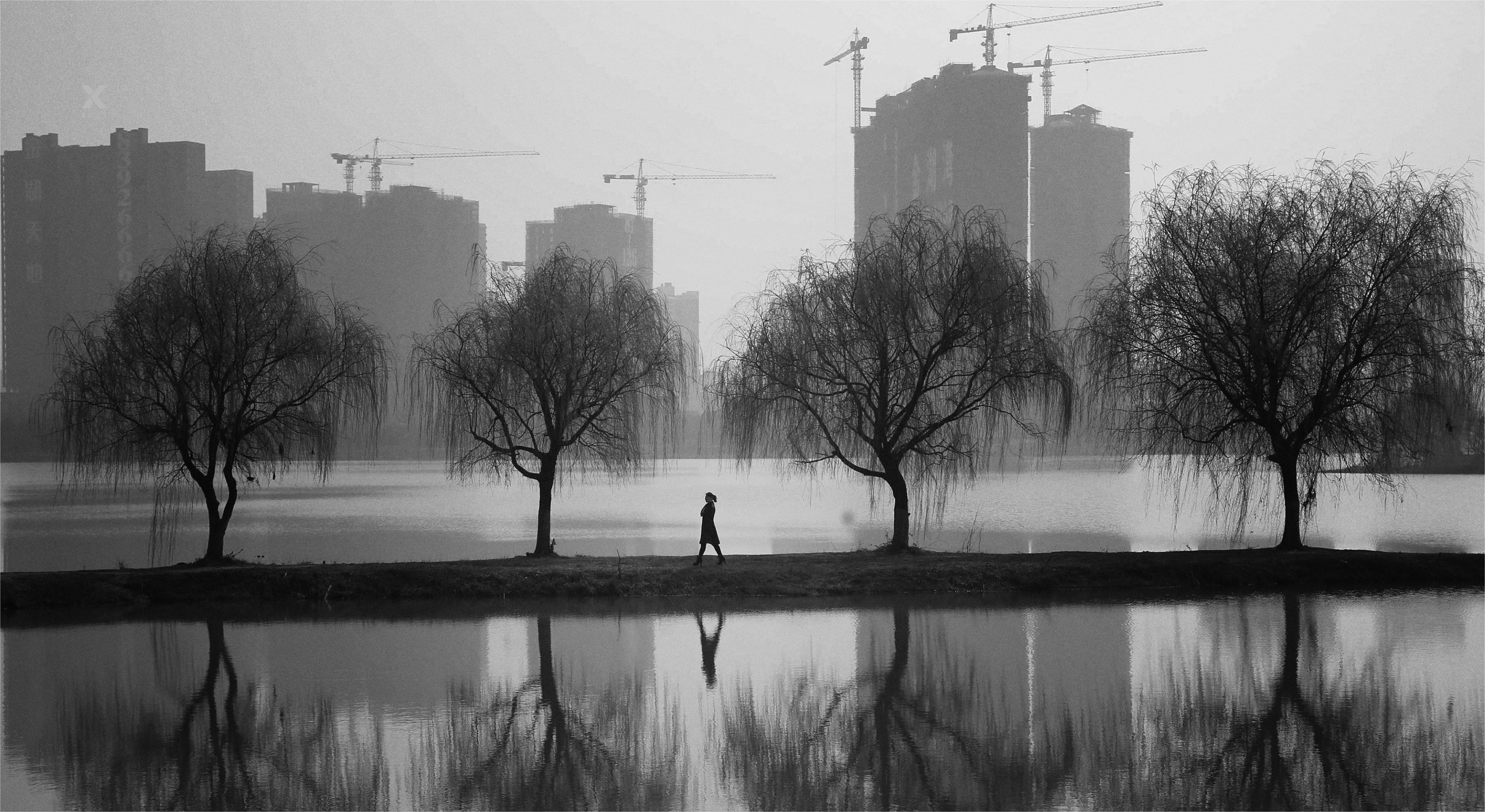
When a documentary about air pollution in China went viral, the Chinese government first welcomed it, then tried to have it removed. In this new research, academics
The film rapidly went viral. Public interest in the documentary’s primary villain, “haze” (or smog), surged. On Monday 2 March this year, around 48 hours after its online release, the 104-minute documentary had been viewed more than 200 million times and references to haze appeared in more than 280 million posts on Weibo, China’s equivalent of Twitter. We found that hundreds of posts were censored in the hours and days after the video was first uploaded to the web.
Using selective sampling technology developed by the Weiboscope project at the University of Hong Kong (see sidebar), we monitored Weibo posts related to Under the Dome. While news of the documentary caught the attention of the international media, censorship of Weibo has not yet been revealed. Among the deleted messages we found condemnations of the state and photographs of anti-pollution demonstrations.
This was an abrupt turnaround. The website of the People’s Daily had been one of the first platforms to make Under the Dome available, and hence, an important media organ of the Chinese Communist Party assented to its distribution. Early on, the video and Chai gained praise from China’s minister of the environment. But official endorsements were quickly offset by stern warnings from national and municipal authorities that media coverage of Under the Dome should cease. When links to the video went dead and commentary was pulled down from outlets, including the People’s Daily, news outlets around the world took notice.
What they missed was that hundreds of posts were censored on 1 and 2 March, days before the video started disappearing from popular video-sharing sites, such as Youku and Tencent. Among the deleted messages were condemnations of a key assertion in the video – that China’s dirty air was a “collective sin”, a public health crisis perpetrated by China’s rank and file. “Blaming it on the powerless citizens is simply ignorant and shameless,” declared the author of a censored post. Other censored messages criticised the state-owned oil and gas corporation, Sinopec, or poked fun at recent emergency measures to scrub Beijing’s air in time for a meeting of the Asia-Pacific Economic Cooperation forum – a fleeting, fair-weather event that gave rise to the ironic phrase, “APEC Blue”.
Among censored posts were images of demonstrators. To our knowledge, public demonstrations in response to the documentary have not been described elsewhere, and while we cannot vouch for the authenticity of the images, it is notable that censors felt compelled to take them down. One censored image, which was accompanied by text, purportedly showed demonstrators in the eastern city of Xi’an carrying signs, reading “Haze causes cancer, harming everyone” and “To control haze, the government should take responsibility”.
In China, exhortations on online forums, blogs, and microblogs calling for people to collectively object to government actions or policies are all but certain to provoke censors. As Professor Gary King, director of the Institute for Quantitative Social Science at Harvard University, has argued, censors get to work when posted information is interpreted as inciting collective action (How Censorship In China Allows Government Criticism But Silences Collective Expression, in American Political Science Review, May 2013). However, King also contended in the same article that ordinary expressions of dissent online, even bitter criticisms of government policy, are now regularly tolerated. Yet the censored Weibo posts we compiled indicate that public expressions of concern, well short of pleas for a collective response, were deemed worrisome enough by authorities to be suppressed. Blocked messages linked to Under the Dome included many jabs at ineffective regulatory policies and sarcastic assessments of government performance, but neither explicit nor implicit calls for collective action (see sidebar). Notable exceptions were images of placard-carrying demonstrators. By the standards of Chinese censors, the messages conveyed by the protesters are not the problem. It is that they are demonstrating in the first place.
Chinese as well as Western media outlets report that President Xi Jinping is serious about cleaning up pollution and in engaging the public on this issue. In the tradition of Chinese mass mobilisation, which sees campaigns involving matters as diverse as fighting corruption and planting trees to curb erosion, President Xi has appealed to “the whole society” to “act more vigorously to protect the land our lives depend on”. Broad, public participation is required to rectify a collective sin, according to Under the Dome, which has been compared to Rachel Carson’s book Silent Spring in bringing environmental damage to public attention. Successful environmental policies in industrialising nations often involve putting public pressure on governmental authorities to act, not merely to exhort public participation and promising to punish violators – both of which are already typical in Chinese environmental policy.
The brief, but widespread, availability of the documentary Under the Dome underscores Chinese authorities’ ambivalence towards a more proactive approach to the country’s environmental crisis. The panicky removal of the video from Chinese websites, followed by censorship of not only official commentary, but also the views of ordinary citizens, suggests that the state remains more effective at clamping down on public expression than on pollution.
Additional reporting: Xinle Jia, Priscilla Lee and William Ash
© Matthew R. Auer, King-wa Fu
Examples of censored Weibo posts
1 March 2015
Ever since the first day of policy ban, the worst we fear in this country was never the haze, but restless evil hands hiding behind the haze!
1 March 2015
I agree with this statement from Murong Xuecun: The emergence of haze is not attributed to the lack of supervision from government but the lack of supervision on government.
3 March 2015
Just saw these words: “Haze is a collective sin, it is worsening China’s overall environment, and all of us are conspirators.” I strongly disagree with the statement. Let me spell out the words that were implied in Chai Jing’s film: No matter how complicated the reason for the polluted haze is, it’s our system’s fault at the end of the day. The authorities know the source of haze, and quickly reacted, created APEC blue, this is plain and simple for everyone to see. Blaming it on the powerless citizens is simply ignorant and shameless.
5 March 2015
Care for pneumoconiosis in China! You can know the disaster brought by haze! Country needs development, but what we need more is public health!// @What is law:// Lawyer [name redacted]: The number of retweets, comments and likes of this post have exceeded ten thousand, with the number of reading amounting 3.05 million.
8 March 2015
To deal with haze problem, the government should undertake the responsibility.
Permission Denied!
How we tracked censorship on Weibo
Weibo, like most web services, uses an application programming interface (API) to enable posts to be accessed by a variety of screens and software, including websites and mobile devices. It allows access to each and every post on Weibo, including the content of the post accompanied by metadata, such as the date, time, name of user etc. The Weiboscope project at the University of Hong Kong makes use of this API to track microblogging activity and all associated content from a list of around 350,000 popular Weibo users who have 1,000 or more followers.
We collected user posts on 1 March and 2 March this year. Using the “user timeline” function of the API, all posts were saved in a PostgreSQL database. The script we developed scours the posting activity, hourly and daily, to detect deleted messages, including censored messages, which generate a particular error code. The code for each deleted post is accompanied with a “Permission Denied!” message. Extrapolating from a sample of censored posts, we estimate, conservatively, that hundreds of posts were censored during this time period.