Abstract

Heaven 17’s
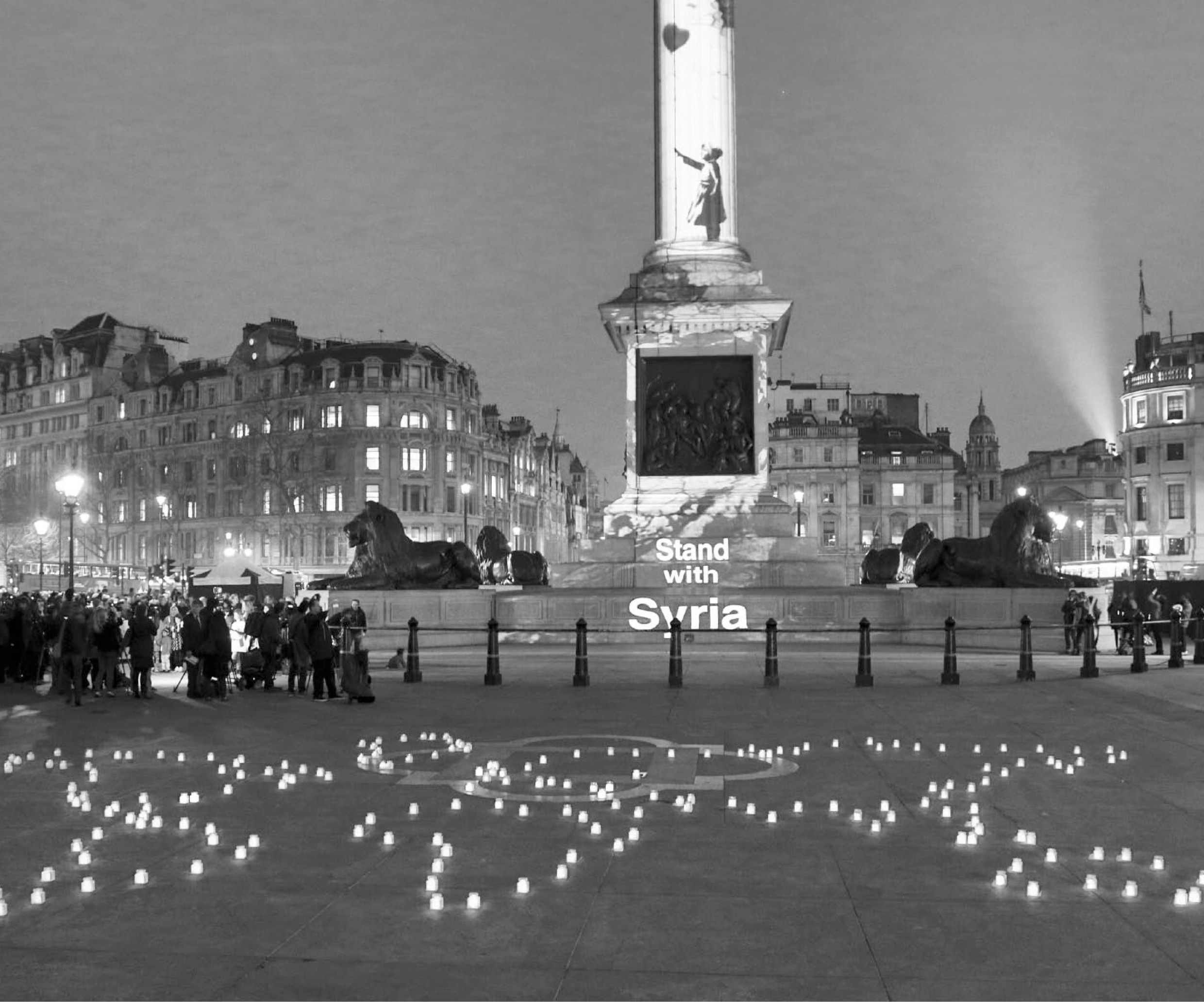
Those standing in the square heard recordings of refugees speaking about their own experiences, in English and Arabic, as well as children singing. Its power, as I remember standing there, was that there was no moving video to distract attention, so you stood and listened to the voices.
Ware said of the recordings: “All of the speech, everything, came from people within the camp. No actors did anything, it was all real. And a lot of it was quite desperate.”
But they also wanted to get over the normal of day-to-day life and some of the hope for the future: “So looking at the Zaatari camp and the privation they have to suffer, we heard stories of what people are doing there to make it a tolerable environment. Like renaming some of the streets, the Champs-Élysées, for instance – a street which is literally just a dirt path through the middle of a bunch of tents – and building their own private exchange-based economy within the camp.”
The #WithSyria project was held to recognise the three-year anniversary of the beginning of the crisis in Syria, and to try make more people around the world aware of the conditions, the massive displacement of people, and the impact of the war.
“We had a huge number of recordings. We gathered a lot of sounds from local musicians living in the camp. A lot of people who were displaced from Libya were very affluent – this isn’t just poor people who are starving and the third-world cliché in general – it’s not a third world issue at all really, this is more to do with displacement. So a lot of them had their own instruments, a lot of them had recording devices, although electricity is a problem, of course.”
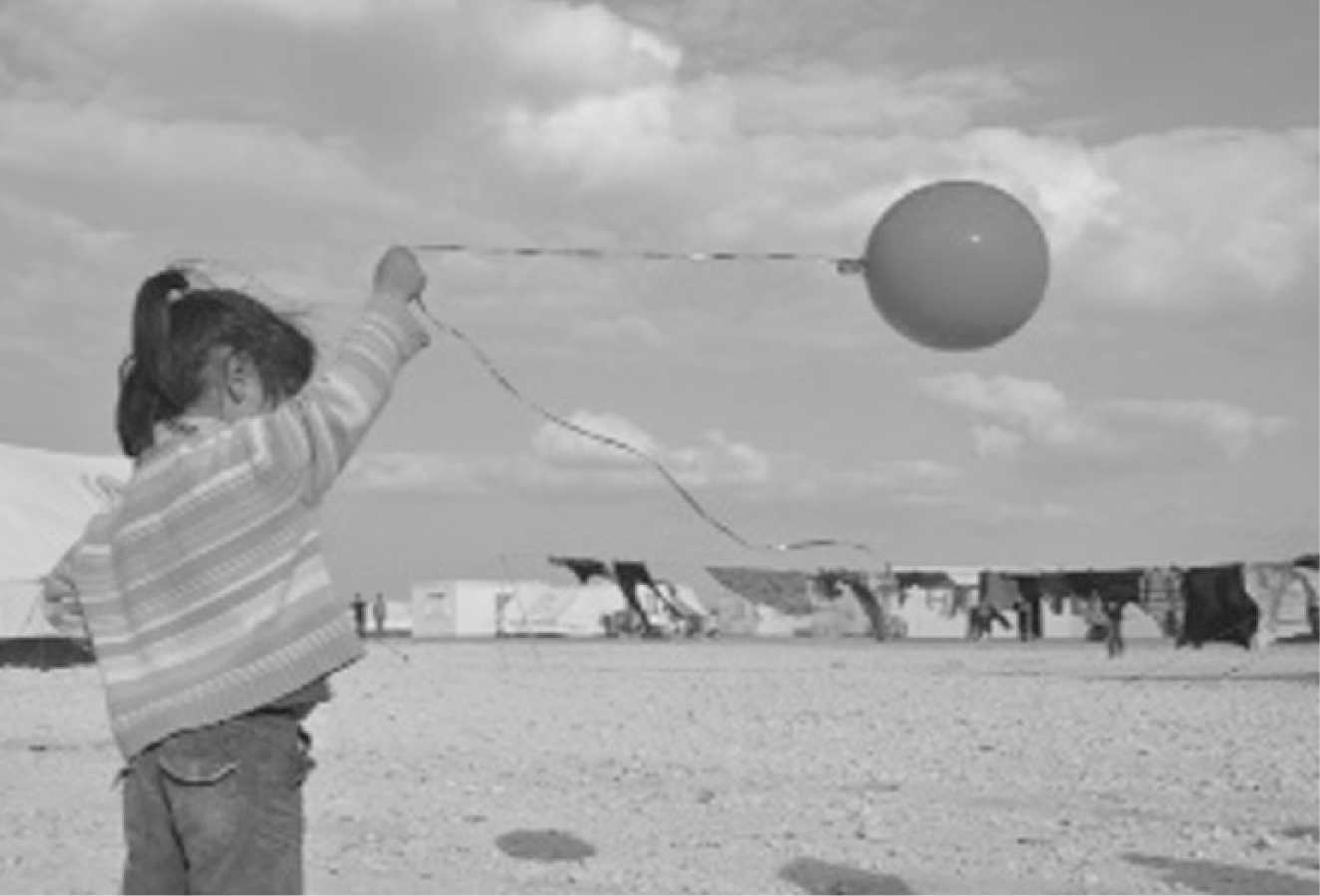
A girl releases a #WithSyria balloon in Zaatari refugee camp, Jordan
Credit: Colombe Verges/ Creative Commons / Flickr
There’s a lot of misery there as well, not to sugar-coat it; it’s a horrible environment and the adults, especially, just want to go home.”
He thinks the kind of soundscape he creates works in a different way to news reporting on the camp. “There have been some very good pieces of journalism written about it but it’s not appealing from a news point of view- it’s on a grand, epic scale that people can’t comprehend.”
While doing research, those making recordings found former professional musicians living in the camp, and wanted to use their skills too. “What was really fascinating and inspiring was the songs they were writing directly related to their experience there, and when we played some of those back as part of the soundscape in Trafalgar Square there were refugees there who were crying. The sound of the instruments obviously typical of that region were obviously very emotive for them, and then there’s the really realistic sounding children singing in their classroom, singing beautiful songs, which we placed in one corner of Trafalgar Square, making it sound as if they were really there.”
Its power was that there was no moving video to distract attention, so you stood and listened to the voices
Ware, who says he is hoping there is a chance to do a follow-up piece from Zaatari, is also working to set up a music project of a different kind in Zimbabwe, along with an organisation called Agencia. He also works with Manchester University’s In Place of War project which researches and develops music in countries with armed conflict. “We are collecting musicians, musical instruments and recording devices, and working with these townships just outside of Makokoba, near Bulawayo. They’ve got 95 per cent unemployment in the area, and Zimbabwe used to be quite a rich country. They’ve got nothing to do, they’re bored, so a lot of the time they’re drinking and there’s also nothing for the kids to do. So we’re building a creative hub, and raising money for it, together with the local parent group. We’re shipping out container loads of stuff for Harare as well.”
One of the ideas is to create a global network of musicians, exchanging ideas. In Zimbabwe, they have already made an album with some singers they met. “Some of them were just teenagers who rapped and did hip hop, some were poets and some more traditional musicians like drummers. And in three days, without any preparation at all, we made an album with them. We are working on it now, fine-tuning it and mixing it together. A friend of mine, a British musician based in Manchester called Aniff Akinola (from Backyard Dog), Rodney P (who started out with London Posse) and another artist called Fallacy, were all out there working with them, and doing collaborations, with the idea to raise money for Makokoba so we can get this creative hub off the ground.”
Ware sees music and sound recordings as powerful both as a creative outlet for Syrians and Zimbabwean townships, and as a different experience for audiences hearing them. Both projects give people a direct voice (literally in the case of the #WithSyria vigil) to the world they might not otherwise have.
Banksy artwork of a Syrian girl with a balloon was projected on to Nelson’s Column at the Stand #WithSyria rally, Trafalgar Square, London to mark the third anniversary of the crisis in Syria, March 2014
Credit: Paul Brown / Alamy