




Abstract

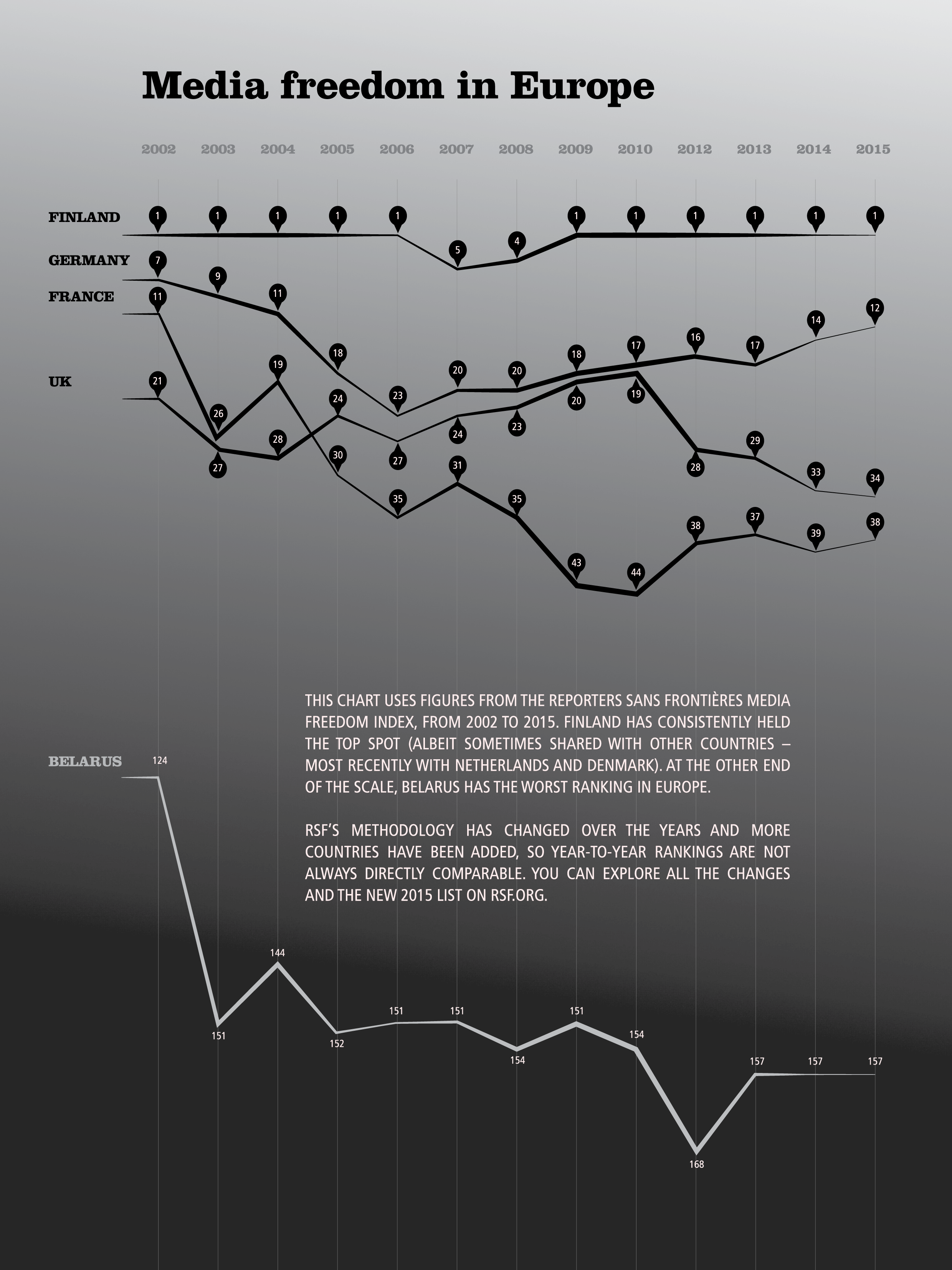
Why does Finland always top press freedom lists? As it comes in at number one again in Reporters Sans Frontières’ 2015 index,
In some countries, self-regulation is coming under increasingly heavy scrutiny, especially in the UK following the hacking scandal and the ensuing Leveson enquiry. Finland though provides the proof that it can work.
Finland’s self-regulatory system, the Council for Mass Media in Finland (JSN), was formed in 1968 and since then it has been able to work without any serious interference from outside. Despite some inevitable criticism over the years, it has never lost the confidence of the press, public, politicians and influential lobbies.
The JSN was established by the Finnish Union of Journalists, the press and magazine industry, and the publicly funded Finnish broadcaster, YLE. It is successful because membership and compliance is voluntary, but it has no legal jurisdiction.
A press council is only credible if it can show the strength and willingness to set clear ethical boundaries. In Finland, we have been able to do this without using financial sanctions. If a media company is reprimanded, it must publish our whole verdict on its website and mention our resolution in the medium where the original mistake was made. The prominence of the correction must correspond to the seriousness of the original error. If there have been multiple factual errors in an article, or if the incorrect information caused significant damage, the editors must publish a new article in which the problem is identified and corrected.
These “shame punishments” work in Finland. Journalists and editors do not like to jeopardise their credibility in the public eye. They also work together to keep the system functioning, and there is a reason for this collaboration. Unlike many other countries, including Britain, Germany, Ireland and Sweden, Finland does not have a separate regulatory body for the press (including online content) and another for radio and television. We cover it all. This means one ethical code and one self-regulatory body. All publications and journalists are treated in the same way. Members find themselves bound by the same goal: to keep the media reliable, powerful and alive.
This is something that is taken seriously. About 95 per cent of the Finnish media works under the JSN’s umbrella and all have committed themselves to our ethical code. The guidelines state that a journalist is primarily responsible to the readers, listeners and viewers, who have the right to know what is happening in society. The journalist must aim to provide truthful information and when the information is obtained, it must be checked as thoroughly as possible, even when it has been published previously.
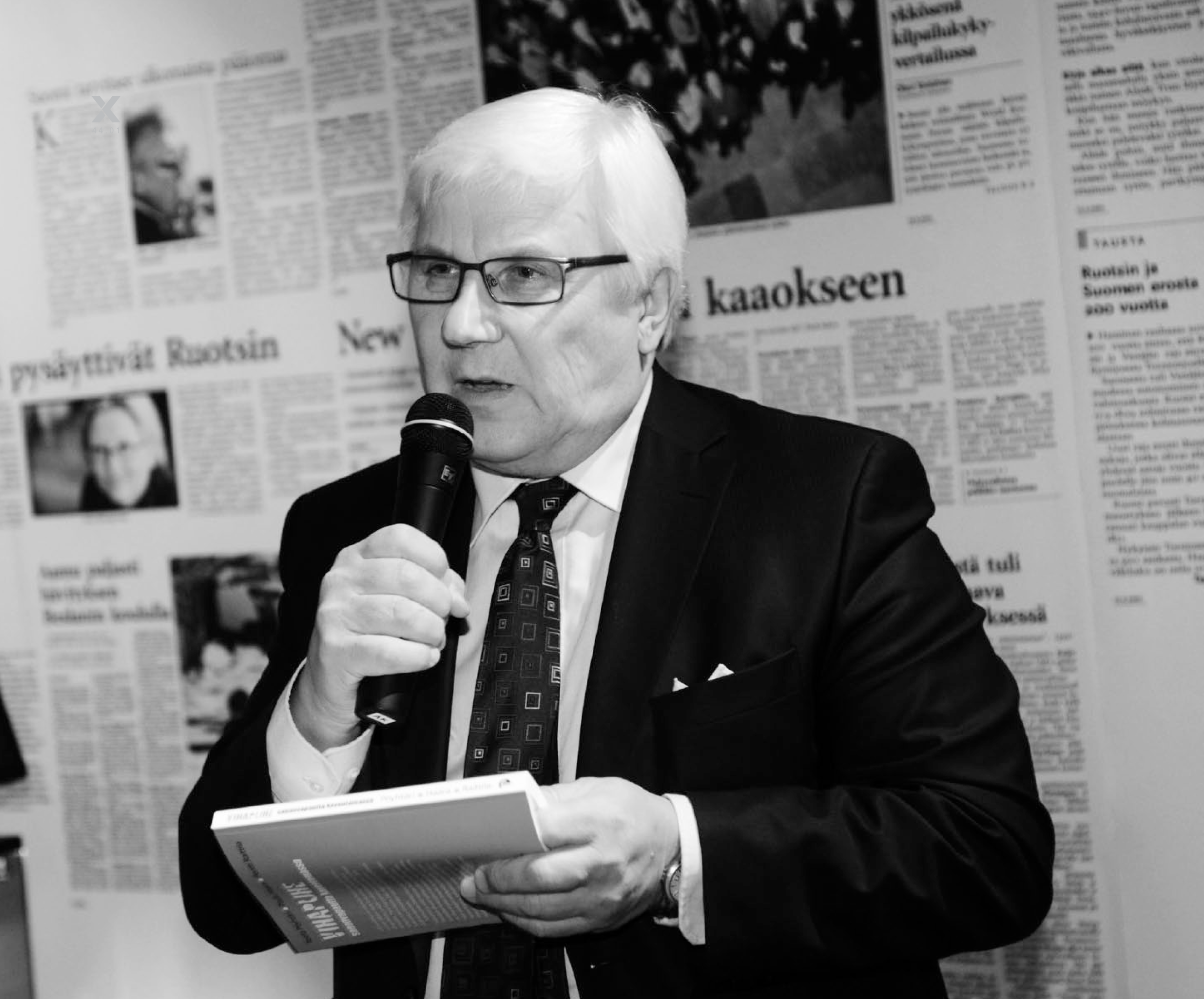
Risto Uimonen is the current chair of the Council for Mass Media in Finland (JSN), which was formed in 1968
Credit: Ida Pimenoff
We find our members end up keeping an eye on each other. For example, in 2013, the JSN reprimanded a glossy magazine for not making a clear distinction between the journalistic content and commercial material. After the magazine, which belonged to the largest media corporation in Finland, protested publicly, a leading newspaper owned by the same company published an editorial politely contradicting the magazine and emphasising the importance of protecting self-regulation. Media companies and journalists see our long-term objectives as more important than the short-term ill-feeling caused when a complaint is upheld.
The Finnish press is free to act as the watchdog of the mighty and criticise those in power. That is due to a very liberal press law and the fact that freedom of expression is protected by our constitution. Our press law gives the editor-in-chief of a news outlet the sole right to decide what to publish. This means, for instance, that the owners or chief executives of media companies, such as the Rupert Murdochs of this world, have no right to give orders to editors-in-chief about matters relating to content. If they are unhappy with the editor-in-chief’s decision, they must fire him or her.
Our council gets roughly one complaint per day. The staff comprise two full-time and two part-time workers, and we work to a budget of less than $412,000 per year. We are regarded as being not only well functioning, but also efficient and relatively cheap. One way we keep costs down is by only paying a small fee to council members for their time. We do not cover the full cost of the losses they suffer when they take the day off to participate.
Our workload is also less heavy because there has never been an established tabloid press in Finland, only a couple of tabloidish magazines. They are also members of the JSN, and follow our code of ethics.
The council is formed of 14 members, each serving three-year terms. Eight members represent the industry and five represent the public. The chair, who gets the deciding vote, remains independent. Some people believe the public should be in the majority, but then our organisation would no longer be about self-regulation but about being dictated to by outsiders. This could endanger the whole system, as journalists would be less likely to co-operate.
Of course, we have had some difficult times. The previous chair of the council decided to quit suddenly in 2009, when he realised that he was going to lose a major case. The complaint dealt with a news item broadcast from the Finnish Broadcasting Company (YLE), claiming that the then prime minister of Finland Matti Vanhanen had taken a bribe of high quality timber for his house 14 years ago.
The complaint was not upheld by the council, which argued that the YLE had checked its source well enough. But the chair, Pekka Hyvärinen, wanted to condemn the YLE, because it had used only one anonymous source.
We changed our ethical code after that. Now the medium in question must clarify to the public how it has verified information from an anonymous source. The source, of course, must not be revealed. Recently, we have made additional changes to the code, including new, tough correction instructions and an addition to our media guidelines, defining how editors must handle user-generated material on their websites. Content that violates privacy and human dignity must be deleted. It is a delicate matter because we cannot and do not want to give orders to the public and we do not want to limit their freedom of expression.
“Shame punishments” work in Finland; journalists do not like to jeopardise their credibility in the public eye
It is important for the JSN to be transparent and plausible, too. We must follow carefully what is going on in the rapidly changing media landscape and our system must be improve when needed. Otherwise the JSN and the whole system will quickly lose the confidence they have had for so long.
Opinion: Could the UK follow Finland’s example?
Can we have a press that is unruly, irreverent and cheerfully discourteous to those in power? Can we have one that is truly at arm’s length from government? Yes. But all of this is meaningless if we do not have the trust of the public.
From my understanding of the Finnish model, trust is an incredibly useful, indeed powerful, weapon that helps to keep journalism on the right track and the politicians at bay. It is clear the Finnish public trust their journalists, and that is the fundamental transaction that validates the model.
But the Helsinki approach wouldn’t be the correct model in the UK, for a number of reasons – many of them interconnected. Firstly, things have gone too far. Unfortunately, the debate on the future of the press became politicised and a cause célèbre of the left. Many on the left, though not all, saw it as a way to get to the press baron Rupert Murdoch, and the UK’s Conservative Party.
Also, the press, or more correctly certain sections of it, handed its critics endless supplies of ammunition through phone-hacking, the practice of listening into people’s voicemails and intercepting their phone calls; chequebook journalism and the debasement of popular papers through a corrupting version of showbiz journalism.
National newspapers were arrogant, treating corrections as a sign of weakness until the Leveson Inquiry, a judge-backed inquiry which was set up to look at the role of the police and newspapers in phone-hacking, changed all that. Before the inquiry, it was almost impossible for an ordinary person to get a correction into a national newspaper. Sometimes newspapers acted like thin-skinned bullies, unleashing bombardments on critics, rather than revelling in the cut and thrust of freedom of expression.
The UK’s newly set up Independent Press Standards Organisation (Ipso), which seeks to regulate the press through a complex series of interlocking and commercially binding contracts, is such a system. Despite what the critics say, I do hope and believe it will finally disrupt the legacy of the, at times, too cosy relationship between the Press Complaints Commission and newspapers and will emerge as a pugnacious but fair regulator.
It will almost certainly never issue the theoretical £1 million maximum fine allowable under its rules, but provided it behaves in a way that says: “We’ll do it if we have to”, then the system will work for those who participate.
The obligation of those who have signed up, which is most of the UK press with some notable exceptions, is to operate a stringent and transparent process of recording, investigating and resolving, where possible, complaints. A system that will be subject to annual inspections.
Like most good ombudsmen, Ipso also contains protections for those it regulates: it can throw out groundless complaints and it also runs a whistleblower’s hotline for journalists who believe they have been asked to perform an unethical action by a boss. Part of the Ipso contract states that journalists who legitimately use this hotline must not be subject to any disciplinary procedure. Although, as of February 2015, this hadn’t been set up yet, provoking some criticism.
The Belfast Telegraph group has fully signed up to Ipso, and indeed the Northern Ireland media recently received its first intervention from Ipso on behalf of a person who was in the public eye and who did not want to be approached further by journalists. We were reminded that clause 4 (Harassment) of the Editors’ Code of Practice prohibits harassment or persistent pursuit without an over-riding public interest.
I hope Ipso will be a tough taskmaster. The industry needs it, and the public deserves it. Never again should the actions of a few London papers allow the stock of the great trade of journalism to sink so low.
© Paul Connolly
For more on the post-Leveson debate from Index, read: http://bit.ly/1edHGHg