



Abstract

Cynthia Ottaviano has her work cut out as Argentina’s first public defender for communications. As the country looks ahead to its 2015 general election,
“
Ottaviano, a former investigative journalist, was appointed in 2012 as the first person to take the newly created post, an outcome of the country’s controversial 2009 Audiovisual Media Law. Recently, the law has been making headlines again in Argentina, with the government preparing to impose a plan to dismantle the vast Clarín media group, having rejected the company’s own reorganisation plan in October.
The ombudsman is autonomous, with no jurisdiction to impose penalties. Ottaviano was selected as a result of a public nominations process and elected by Congress. Now she and her team of 65 are responsible for dealing with citizens’ complaints, helping to resolve issues with various media companies, and making public recommendations. She is, she says, “a bridge” between the audiences and various organisations and institutions.
In its first 10 months, the office received 3,600 queries and complaints. Of them, 75 per cent related to access issues (including problems with signals and interference) and 25 per cent were about representation – including complaints relating to causing offence, discrimination, violence, invasion of privacy, and misuse of personal image. Ottaviano says that 70 per cent of cases have been resolved – sometimes via an apology on air or in print, sometimes by arranging a follow-up piece, or by giving the right to reply. The unresolved 30 per cent of cases remain “in process”.
Now that she’s halfway through her four-year term, has she noticed a difference between the role she imagined and the reality? “I didn’t think this role was going to get such a good reception. You only think of the contentions, which is logical. But when you are looking at ways to repair the violations of rights, there is great predisposition here – across all areas of the media – for dialogue.”
This predisposition, as she says, stems from the aftermath of the 1976-1983 military dictatorship – during which an estimated 15,000 to 30,000 people were killed as part of a so-called “national reorganisation process”. Dissenting voices were silenced or “disappeared”, with journalists among those killed and tortured. Communication is now widely seen as a fundamental human right, and the Audiovisual Media Law was designed to replace the 1980 Radio Broadcasting Law, which had been established by the junta and which accelerated the monopolisation of the country’s media.
The military regime had ruled that the media had to be “objective”, “truthful” and “opportune”. Ottaviano says the new media law steers deliberately clear of the same language. “Usually when you talk about these qualities in other parts of the world – say, in Europe – they have positive associations,” she says. “But Argentina’s media history is complex. Our current law doesn’t use words like ‘truth’ and ‘objectivity’, because who determines this? This can’t be determined by the state. The role of the state is to safeguard human rights. Communication has to be created collectively, with plurality and diversity.”
Plurality is another key part of the wider 2008 media law, and indeed its most contentious aspect. The law has put limits on the market share a media company can hold, up to a maximum of 35 per cent. There has been a move to break up monopolies and redistribute licences. Although some praised this, others deemed it an attack on dissenting voices – an assault against the free press. The biggest media companies are also the government’s biggest critics.
At the centre of the story is media giant Grupo Clarín, a very vocal opponent of the current government. The group owns the country’s biggest daily newspaper, Clarín, and multiple media licences across the country – more than 200 according to the government’s figures. The new law rules that any one company can only have 24 cable licences and 10 free-to-air licences for radio and television.
And the story runs much deeper. Clarín thrived during the time of dictatorship, much as the Globo network did during the Brazilian dictatorship and El Mercurio did in Chile’s, with both retaining great power to this day. But in Argentina, it’s also personal.President Cristina Fernández de Kirchner has been warring with Clarín since the beginning of her term of office in 2008, when the newspaper didn’t support her in a dispute with farmers. The mutual animosity between the president and the news group has been vicious ever since, with each party claiming the other is wholly self-serving and out to ruin the country.
Argentina’s media law is bigger than the current Fernández government, but the two are very much intertwined
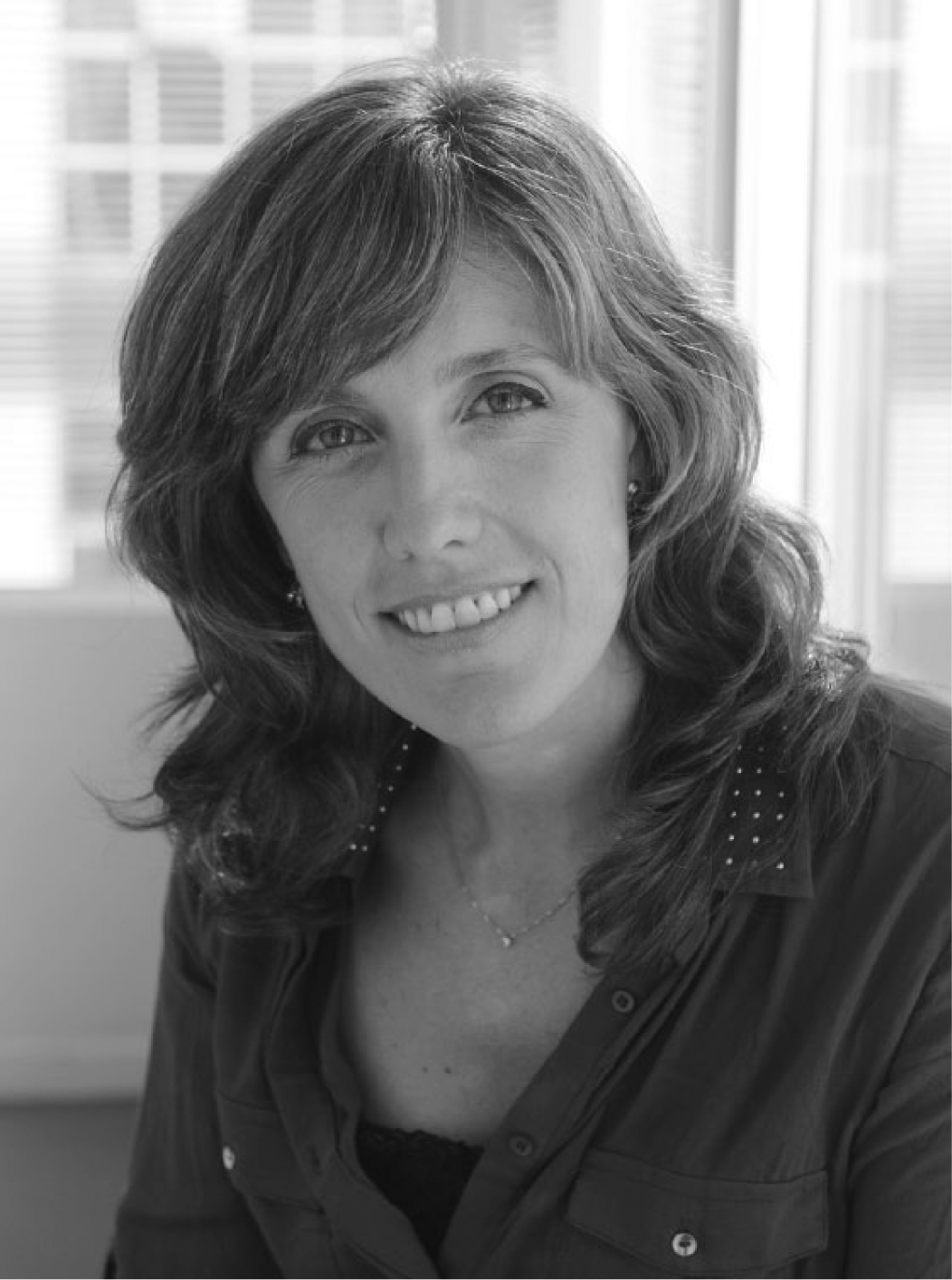
Cynthia Ottaviano, Argentina’s first public defender for communications
Credit: Augusto Torello
La Nación, Argentina’s leading conservative daily, says it has faced a government advert boycott
Credit: Leo La Valle/EPA

When the media law was first announced, the worldwide press largely latched on to the Clarín viewpoint. This was perhaps a sign of the strength of its voice, or a link to wider concerns over Fernández’s government.
Ottaviano sees the situation as far more complicated. “This law has 166 articles; it can’t be summed up with the case of one media group,” she says. “In the past, you could only have a radio or TV licence if you had money. This law shows communication not as a commodity, but as in the public interest. It should be developed with social responsibility.”
Clarín announced Ottaviano’s appointment by reminding readers that she was also one “of the founders of the pro-government newspaper Tiempo Argentina”. But Ottaviano points out, repeatedly, that she was appointed by parliamentary election in a bicameral system; and the public had 10 days to object to her appointment.
Mostly, she tries to distance herself from political conflict and gets stuck into the day job, dealing with 4,000 media outlets nationwide. “We treat everyone equally,” she insists. “There is no bias, as our duties and functions are spelt out within the law.” She is also busy travelling to schools, neighbourhoods and newsrooms to hold discussions and workshops. “You can’t expect people to stand up for their rights if they don’t even know they have them,” Ottaviano says.
Where will it go from here? Argentina’s media law is bigger than the current Fernández government, but the two are very much intertwined. The president has often put a focus on human rights issues, while giving very mixed messages on the media. For example, Fernández never gives interviews, and when the public were given free access to football on television, the matches came with a running ticker of government propaganda. If a split-up of the Clarín Group is well under way before she finishes her final term in October 2015, Fernández will see it as one of her biggest legacies.
Frank La Rue, the former United Nations special rapporteur on freedom of expression, once declared Argentina’s media law “an example for the entire continent”. Meanwhile, the Washington Post has written of Clarín being “a newspaper under siege”.
“It’s complicated in Argentina,” says Ottaviano, and few could argue with that.