




Abstract

Parody videos that splice together footage of world leaders and other powers should be enjoyed and protected, says
As of 1 October this year, UK copyright law allows for creative montages made from existing material “for the purposes of parody, caricature or pastiche”. “Seriously though Dave, thanks for legalising parody videos,” read the subtitle underneath Cassetteboy’s Cameron video, which was posted on the same day as the amendment was announced.
Was the video funny? I certainly thought so – partly for the political satire, partly just for the incongruity of hearing “let the beat drop” from a world leader. Judging by the number of times it was posted and reposted on social networks, many more felt the same. But the twist in the tale is that if the video ends up being challenged in court under copyright laws, it’s a judge who must rule whether it is funny or not. And if it’s not funny, it’s not parody.
This opens all sorts of grey areas. What if someone intends it to be funny, but doesn’t pull it off? What if something is deemed offensive and therefore, according to some tastes, not funny? And what if a mash-up, as these video montages are known, is done to make a point rather than score laughs?
“Not only is it crazy to legally judge humour, with this amendment, they’ve also ended up prioritising parody over all forms of artistic expression,” says one half of the semi-anonymous duo Cassetteboy, who wishes to be known only as Mike. “These videos can also be moving, or make you cry, and that should be equally valid.” He refers me to a video they once made for Amnesty International, which involves splicing together footage of President Barack Obama so it looks as if he is giving a speech about the hypocrisy of the international arms trade. (“Anyone buying a gun must at least have to prove they are not … President Assad”.) The result is powerful, close to the bone and quite depressing.
One key difference between the Obama video and the Cameron video is the White House allows users to manipulate footage as they wish. “If we’d done the same with David Cameron, I don’t know what would happen,” admits Mike. “Cameron is not likely to sue Amnesty International, but it mashes up content I don’t own to make a serious point, which I believe is still illegal.” (It is, although he could lean on the fair-dealing exception for news reporting and criticism.)
“You could say that everything we do is political,” he adds. “We want to annoy the people we feature in our videos. Although it’s only funny when you are taking the piss out of people more powerful than you. People like David Cameron, [businessman] Alan Sugar, even [television chefs] The Hairy Bikers. If we were to do this with people’s home videos, it wouldn’t be funny.” Although perhaps another artist could argue it was …
I called the Number 10 press office to find out if Cameron had commented on the video montage. He hasn’t and any comment would have surely been anodyne (as Max Wind-Cowie writes on page 81). But it strikes me afterwards that I’d just had a frank chat with the prime minister’s office about a video that ridiculed him, while giving my real name and number. And why wouldn’t I? It’s such an obvious thing to do that it seems ridiculous to write it here. So why did I even think of this?
Fresh in my mind was a visit to the Index on Censorship offices from Maryam Al Khawaja, the Bahraini co-director of the Gulf Center for Human Rights. She has recently been released from jail, and fully expects to end up there again, for criticising the state. Her sister was also recently incarcerated and faced up to seven years in prison and a hefty fine for tearing up a picture of the king.
I asked Mike if he ever considered this difference. “It’s not something I think about, but it’s true that in the UK we have a long tradition of satire, of mocking royalty and the political establishment. And if you stop to think about the sort of trouble we could be getting into if we did this in China or North Korea … then we are very lucky.”
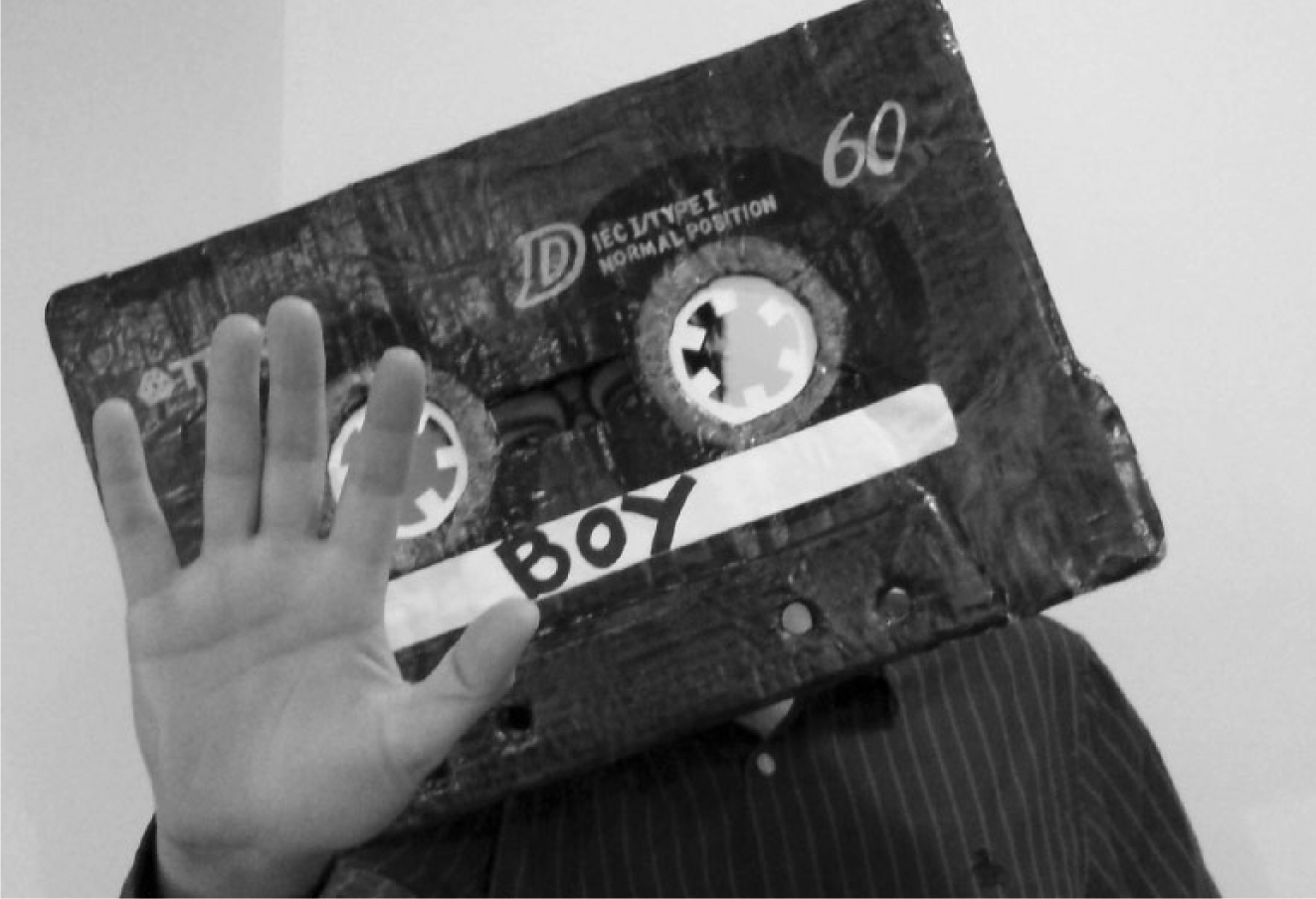
Parody specialist Cassetteboy
Credit: Cassetteboy
Of course, it’s not really down to luck, although that’s a turn of phrase that we all use. It isn’t an accident that we have freedom to do this and, despite our long history, it’s not guaranteed forevermore. This recent amendment only comes after years of active campaigns by organisations such as Open Rights Group. And we were reminded recently that the British don’t always protect – or even understand – satire, when a mural of some racist pigeons by street artist Banksy was erased by the local district council in Clacton-on-Sea in Essex. The grey pigeons were holding placards towards a parrot, reading “Go back to Africa” and “Keep off our worms”.
Not only is it crazy to legally judge humour, with this amendment, they’ve also ended up prioritising parody over all forms of artistic expression
Video artists will still need to be careful, says Arty Rajendra, a lawyer on the committee of the Intellectual Property Lawyers’ Association: “This is not a get-out-of-jail-free card.” Rajendra explains artists still can’t use entire music tracks as they might compete with the original; defamation remains a risk; and they can still be challenged over copyright if the parody exception does not apply to the specific usage.
This leaves artists such as Cassetteboy still walking a fine line and often having to draw up their own boundaries. Mike cites a video that reworked BBC footage of the royal family so they seemed to make smutty remarks about the Queen’s sex life. It was taken down from YouTube after complaints. “It really was quite filthy. The BBC has been very good about tolerating a lot of stuff from us, but with that video, we found the line and went a long way over it. It seems you can’t mess with her majesty.”