Abstract

Until August 2012 every publication in Burma (including newspapers, books, and cartoons) needed to be approved in advance by the Press Scrutiny and Registration Division of Burma’s Ministry of Information. The lifting of the 1962 Printers and Publishers Registration Act marked an important step in the country’s transition. The accompanying editorial in the Myanmar Times underlined its significance noting “the removal of pre-publication censorship is another load of cement being poured into the foundations of democracy here in Myanmar”. A photo essay by
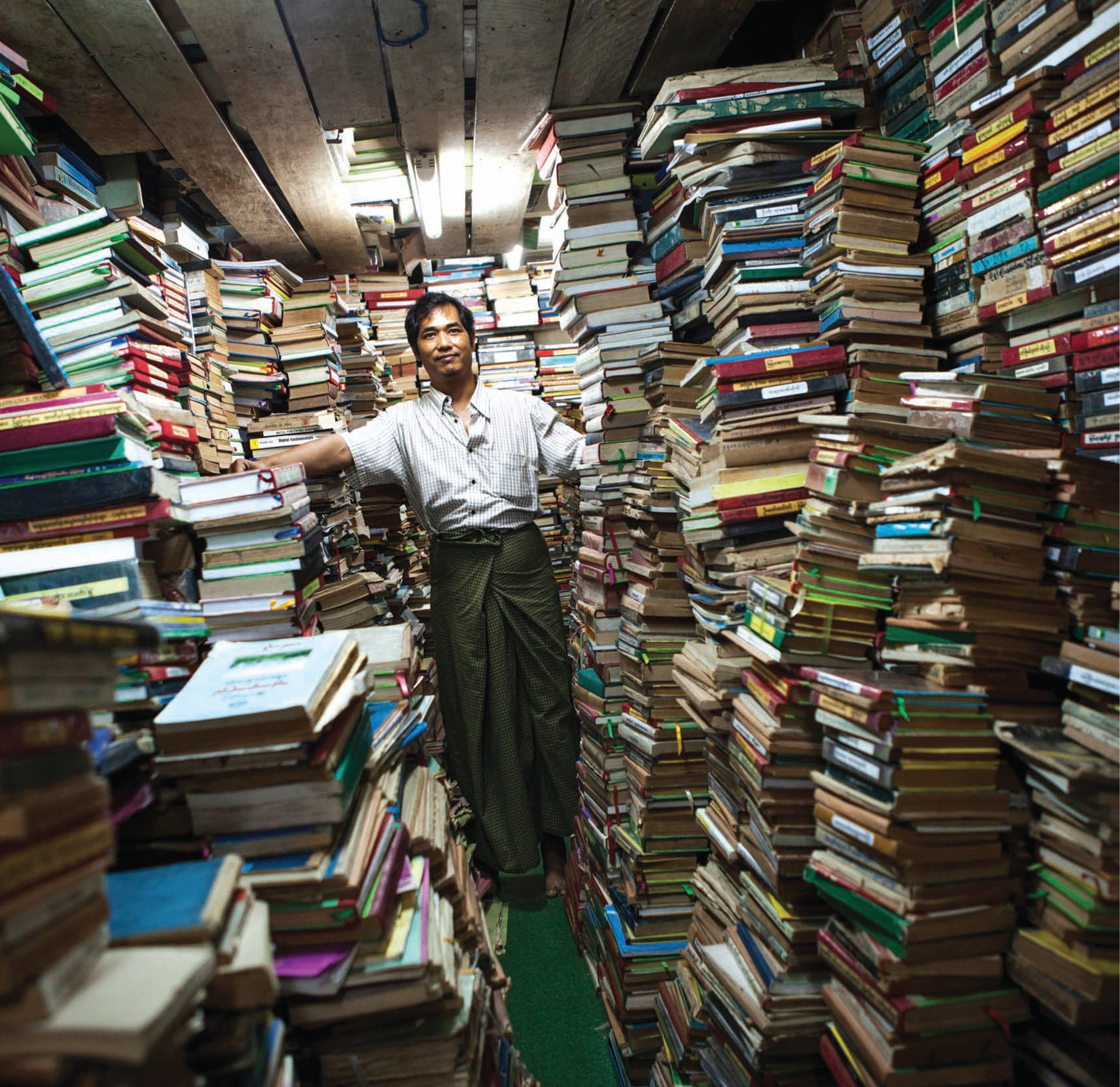
LEFT: U Hla Min Aung, owner of New Vision bookshop on Street 37th in Downtown Rangoon stands amongst floor-to-ceiling stacks of books. At the entrance door, books by opposition leader Aung San Suu Kyi and her independence hero father are proudly on display. Less than two years ago, this would have been unthinkable.
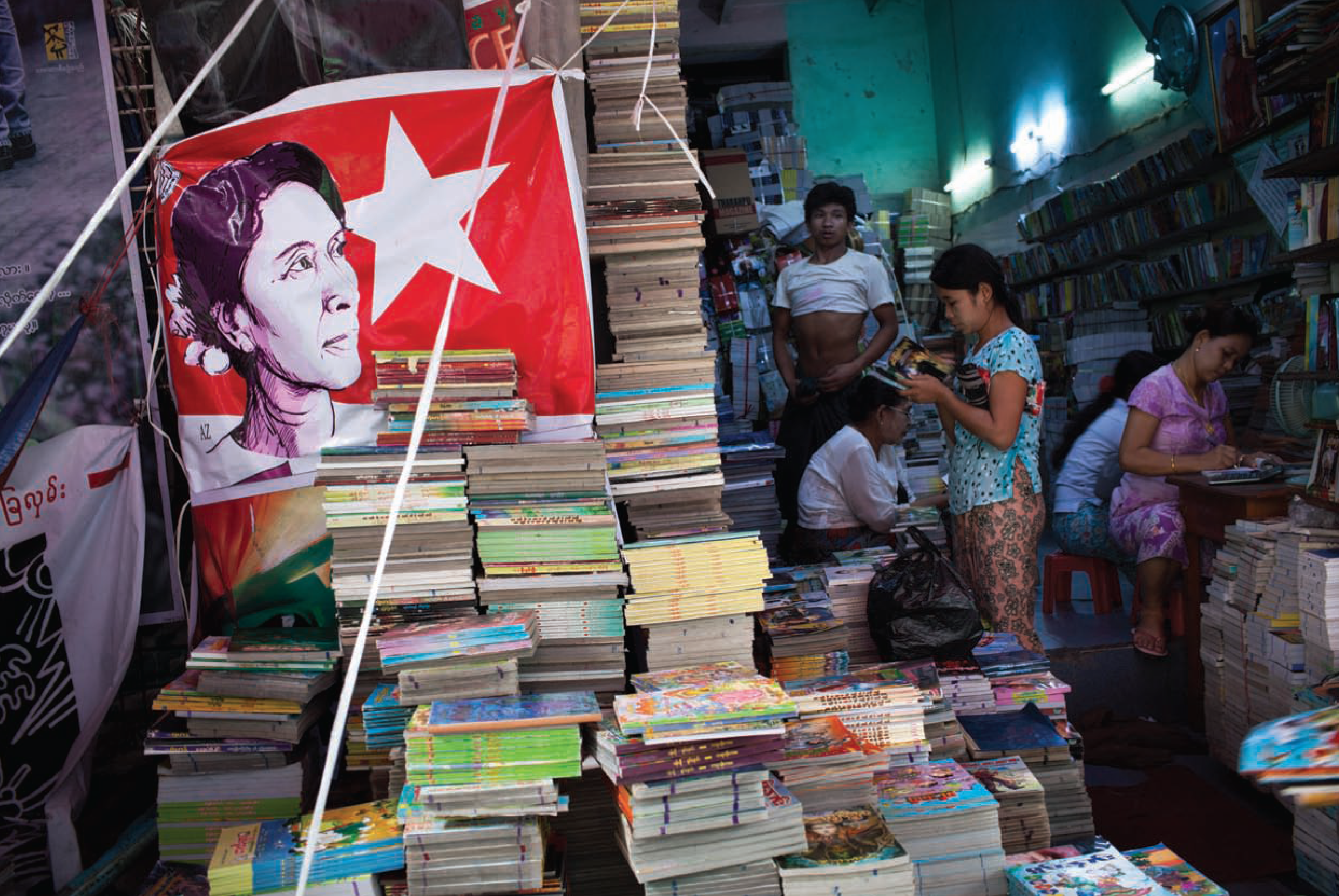
ABOVE: Early morning, workers at a Yangon bookshop take stock of their inventory. At the front of the shop, the now commonplace poster of Aung San Suu Kyi that one finds all over the city, could have caused the business to close just a few years ago. The Burmese are avid readers, bring books and newspapers on every trip be it on the Rangoon river ferry, busses, trains and the reading will often start heated discussions at teashops.
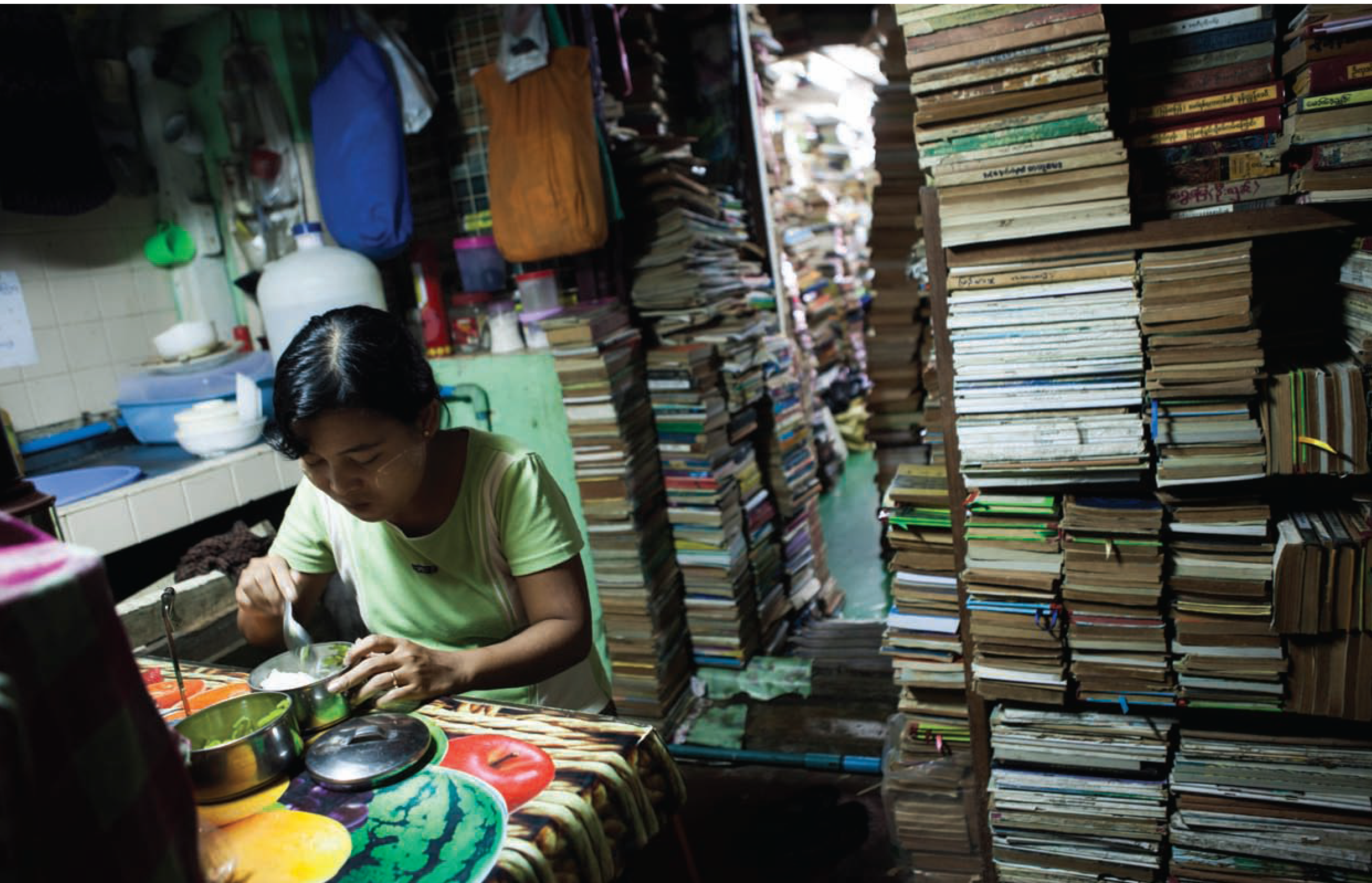
LEFT BELOW: U Hla Min Aung’s daughter eats her lunch amidst more piles of books that invade every room including the kitchen at New Vision; everything from rare British colonial era tomes to traditional Burmese fairytales. In celebration of the country’s new literary freedom, the first ever international literary festival was held in Burma in 2013, featuring a host of internationally acclaimed writers, such as Timothy Garton Ash, Vikram Seth, Jung Chang, William Dalrymple and Fergal Keane, as well as almost 60 local literary figures. Presided over by patron Aung San Suu Kyi, the Irrawaddy Literary Festival was the brainchild of Jane Heyn, the wife of the British Ambassador to Burma. The idea of having a literary festival first came to her when touring old bookshops in Rangoon. She was struck by how “Burmese bookshops were managing to create books out of nothing”. How they would photocopy precious uncensored literary editions and make “one text go a million miles”. The 2014 Irrawaddy Literary Festival took place in Mandalay on the grounds of the Kuthodaw Pagoda, said to be home to the “world’s largest book”.
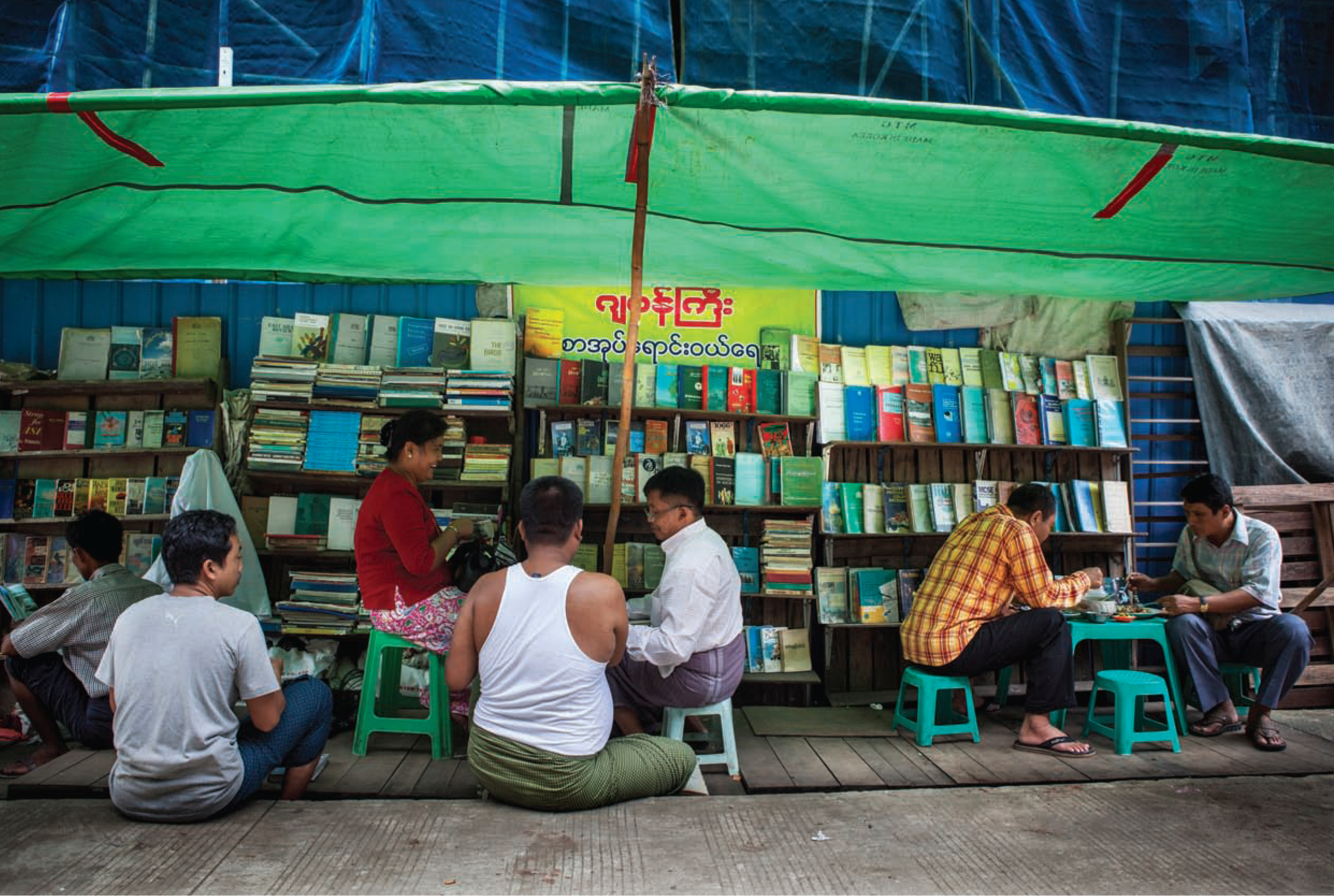
LEFT ABOVE: Impromptu book bazaars are a prominent feature of the downtown Yangon landscape, with piles of books spread out across pavements on tarpaulin mats or lined up on makeshift street-side shelves, hastily constructed each morning. Some of these street bookshops also act as teashops.