




Abstract

With the experience of Communist censorship still fresh in many peoples’ minds, Polish people have resisted government attempts to control free speech. But, argues journalist
“This was supposed to be a democracy, and yet everybody says what they think!” This apocryphal quote, attributed to former Polish president Lech Wałesa, not only neatly exemplifies the leader’s idiosyncratic rhetoric, but also points to democracy’s freedom of speech paradox.
While freedom of expression is the foundation of any democracy, it is also true that things people say can actually pose a mortal threat to democracy. While many might agree that such speech should be restricted, there is not, and probably cannot be, any agreement as to where to draw the line.
Poland, a successful democracy for almost a quarter of a century now, is extremely reluctant to penalise any kind of free expression. By being so markedly liberal, however, the country is supporting illiberal ideologies, which often derive more profit from the right to free speech than ideologies that might be defined as liberal or progressive.
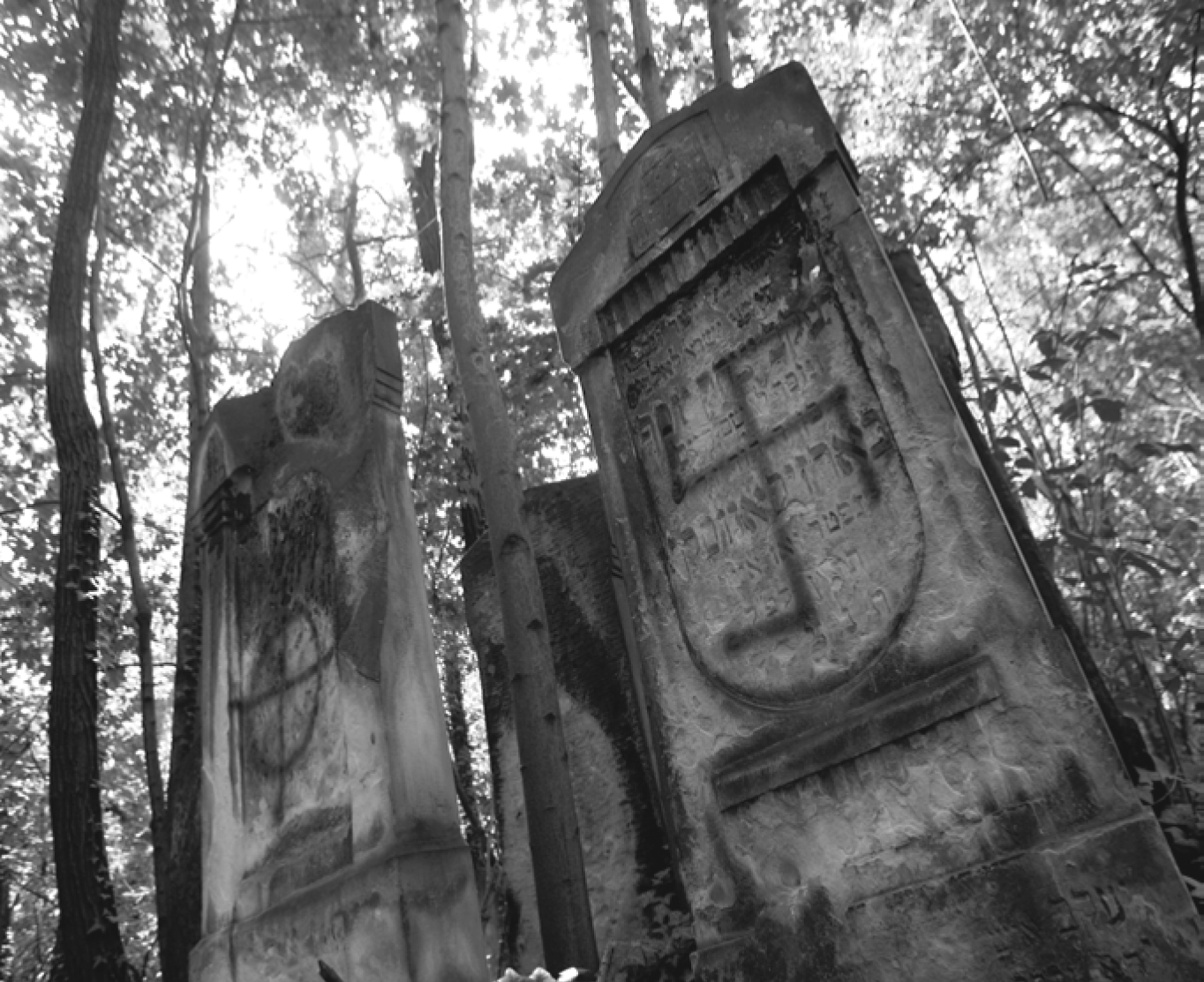
In June 2013, Wojciech Zaleski, head of a regional prosecutor’s office for the northeastern city of Białystok-North, refused to prosecute people who painted swastikas on the walls of several buildings in the city because, as he explained, “The swastika is an Asian symbol of good fortune” and so can be legally displayed. Over the last few years, Białystok has become a hotbed of extremist violence. There have been instances of refugees being attacked on the street and apartments belonging to couples of different ethnic backgrounds being set on fire. Shoah memorials have been vandalised and racist graffiti daubed on walls. The police have been unable to identify the perpetrators, and a government-led investigation indicated that the government itself had in some cases been infiltrated by extreme right-wing militants.
Zaleski’s opinion seemed to fit nicely with the mood, but it proved nonetheless to be too much. In September, after the general public expressed outrage over his comments, Zaleski resigned from his post to avoid being fired. It goes without saying that the author of the “good fortune” graffiti has never been identified.
The instinct for leniency shown by the prosecutor is perhaps not surprising given that the experience of Communist censorship is fresh in many peoples’ minds, and Poland generally still remains allergic to the idea that the government should decide what can and cannot be said.
And yet it seems that leniency is proffered most often to those who hurl anti-semitic insults. In June 2013, another prosecutor, this time in the city of Kielce in central Poland, refused to classify the public use of the term “Jewish carcass” as an insult. The prosecutor’s office later reconsidered, possibly because of the city’s history. In 1946, 42 Jews were murdered in Kielce in Europe’s largest post-World War II pogrom, so a certain sensitivity to the term “Jewish carcasses” might understandably linger there.
When reaching his decision, the Kielce prosecutor did not use the argument that the term is insulting only if directed at an actual Jew. That honour was given to the prosecutor’s office in Lublin, in the southeast of the country. In 2012, the prosecutor decided not to investigate a case where a professor at the local university used the words “dirty Jewess” when arguing with another professor about the use of a seminar room.
The Lublin prosecutor was of the opinion that as the professor targeted was “Polish, not Jewish”, even though she taught Jewish studies, it was impossible for her to regard this comment as an insult.
But the chairman of the Union of Jewish Religious Communities, Piotr Kadlčik, was worried enough by this and similar events to write a letter to the prosecutor general and to the minister of the interior, which led to the two officials meeting to coordinate their efforts against anti-semitism. The chairman had a legitimate right to feel concern: of the 473 race crimes reported in 2012, fewer than half were investigated. The largest number of attacks, 98, targeted Jews; followed by attacks against those defined as black, Roma, Arab and Muslim. It is important to stress that most crimes are not reported, because victims, not without reason, believe racist attacks will not be investigated.
Even so, anti-semitism manifests itself much less overtly and publicly today than it did 15 years ago. Gone are the days when anti-semitic publications could be bought on newsstands; when the notorious anti-semitic text favoured by the Nazis, The Protocols of the Elders of Zion, was prominently displayed in some churches; or when the walls of some Polish houses were adorned with pictures of the Star of David hanging from gallows.
In September 2013, Professor Ireneusz Krzeminski of the Polish Academy of Sciences published the results of a survey of anti-semitism in Poland. It found that in 2012, 20 per cent of Poles expressed “modern” anti-semitism, which was defined as a negative view of the role of Jews in public life. The report also said that 8 per cent of the population displayed “traditional” anti-semitism, referring to the belief that Jews’ theological position was wrong. According to data published in 2002, 27 per cent of the population subscribed to “modern” anti-semitism and 11.6 per cent to “traditional”. For 1992, the figures were 17 per cent and 11.5 per cent respectively.
Over the last few years, Białystok has become a hotbed of extremist violence. There have been instances of refugees being attacked on the street and apartments belonging to couples of different ethnic backgrounds being set on fire
This decline of anti-semitism is due in part to shifting opinions among Poles, as well as an understanding that in the country that had experienced the Shoah first-hand, manifestations of anti-semitism are particularly damning. But these overt forms of anti-semitism are also on the decrease because of a certain amount of repression, however inadequate.The targets of hatred are changing too.
ABOVE: Defaced graves, Jewish cemetery, Czestochowa
Credit: Peter Andrews/Reuters
Across Poland, homophobic and misogynic attitudes are expressed on a wide scale. According to the European Union Agency for Fundamental Rights’ 2013 report on homophobia in Europe, 63 per cent of the Polish lesbian, gay, bisexual, and transgender community reported that discrimination on the grounds of sexual orientation was widespread, though it was worse in Lithuania, Croatia and Romania. And yet successfully prosecuting homophobic acts is no less difficult than prosecuting other hate crimes.
The fact that virulent anti-semitic opinions are freely expressed by Polish trolls presents any liberal with a problem
There are occasional prosecutions, for instance for “insult to religious feelings”, a crime punishable under Polish law by a fine or up to two years’ imprisonment. These prosecutions, if rare, are always widely commented on in the Polish press, as those insulted are almost always Catholics, Poland’s majority religion. Recently, Karol Szwalbe, a newly-appointed police chief in the town of Radom, was denounced for this crime after removing a cross from the wall of his office, which had been put there by a predecessor. The local prosecutor has not yet said whether he will take up the case.
After being convicted on charges of insulting religion for saying the Bible had been written “by a guy high on wine and grass”, pop singer Dorota Rabczewska lodged an appeal with the Supreme Court. She was the only person convicted of the crime in 2012. There were no convictions in 2011, six in 2010 and 13 in 2009.
Had Rabczewska made her comments online rather than in an interview, she would have probably not been charged. In general, prosecutors have avoided responding to online material; the “Jewish carcass” case in Kielce was a rare exception. On the whole, the internet is left unregulated, as Polish foreign minister Radek Sikorski, who is married to the Washington Post columnist Anne Applebaum, discovered. Repeatedly denounced by anti-semitic bloggers and trolls as a “Jew” and “Jewish agent” because of his liberal policies and because of his wife, who is of Jewish heritage, he tried to persuade the prosecutor’s office to investigate the abuse as a hate crime. He hit a brick wall.
The office’s opinion was that Sikorski could lodge a lawsuit himself if he felt offended, but that the office would not intervene, especially as he himself is not Jewish (and therefore, according to the interpretation applied in the case of the academic, cannot be slandered). It was also made clear that the chances of identifying those responsible for the comments were slim. Sikorski declined to file a lawsuit, believing that such speech harms not only his own interests, but those of the state, and should be prosecuted ex officio. If a government minister cannot persuade prosecutors to take action, what are the chances of others having success?
The Polish-language internet is overflowing with hate speech, especially of the anti-semitic variety. This applies to comments on news items or op-eds addressing contemporary Jewish life, or regarding Israel. Some leading internet portals have blocked discussions relating to these topics because of the prolific anti-semitism they provoke. But even less obvious subjects trigger an anti-semitic response. In August 2012 the Polish news site wp.pl published a short news story about the appointment of Dan Sova, a Holocaust denier, as minister for parliamentary relations in Romania, and the protests by Jewish organisations that ensued. The post immediately attracted attention: 367 people commented on the site, while, in Romania, these sorts of news items would generate, on average, around six comments per news item.
Of the comments posted, 12.5 per cent responded directly to what Sova had said regarding the Holocaust, expressing support for his views or attacking his critics. Slightly more, 13.8 per cent, were more general comments unrelated to Sova’s views. But the overwhelming majority of comments, 70.2 per cent, expressed outrage at Jews, either for spreading “the lie of the Shoah”, or for other “crimes”. The remaining comments, 4.5 per cent, or 12 posts, expressed either sympathy for Jewish people or horror about Holocaust denial. These figures suggest a worrying trend and an unequivocal truth about the level of anti-semitism among a significant number of Polish internet trolls. Many people also responded positively to rhetorical questions like, “What about European Jews who deny the Israeli occupation? What about the crimes of Israel and the suffering of Palestinians?” But in this case, although this type of denial does exist in Poland, the specific wording is not considered to be anti-semitic, regardless of intent. Other statements are more directly anti-semitic. Typical is the accusation that while Jews had undoubtedly suffered in the World War II, non-Jewish Poles suffered no less, and then suffered again at Jewish hands under Communism – meanwhile Jews turned their suffering into a shameful business. Such statements are met with virtually no criticism. After all, it requires no great effort to click the “thumb down” icon next to a comment, and this is as significant as the unambiguous, overt anti-semitic statements themselves. The fact that virulent anti-semitic opinions are freely expressed by Polish trolls presents any liberal with a problem. On the one hand, engaging in a discussion with somebody who believes that a new Shoah would be desirable is plainly impossible. Even if one were to do so, however, one would then support this opinion as a legitimate expression. Yet refusing to engage might suggest there is no counter-argument.
Prosecution would send the clear signal that such opinions are not acceptable. Even if chances of identifying the author are slim, and even if the entire question of limits of free speech were to be re-opened again, this seems to be preferable to resigning oneself to inaction.