




Abstract

Artists are persecuted and jailed on a variety of dubious charges, from insulting the authorities to hooliganism. Index’s
Censorship of the arts happens all over the world, as an April 2013 report by Farida Shaheed, UN Special Rapporteur for Cultural Rights, documents. ‘The crucial task’ of implementing universal rights norms to cultural expression, Shaheed says, is to ‘prevent the arbitrary privileging of certain perspectives on account of their traditional authority, institutional or economic power or demographic supremacy in society’. This is an even-handed and succinct summary of a complex subject and reminds states, whether authoritarian or democratic, of their obligations to support artistic freedoms.
Censorship can be a stimulus for more imaginative and courageous artwork
Pressures take very different forms and the penalties and consequences vary greatly: in a democracy, censorship of an artwork can enhance an artist’s profile and give their work more kudos, while in authoritarian states, censorship can destroy an artist’s career, health or even, as in the eight shocking cases recorded in 2012, end in death.
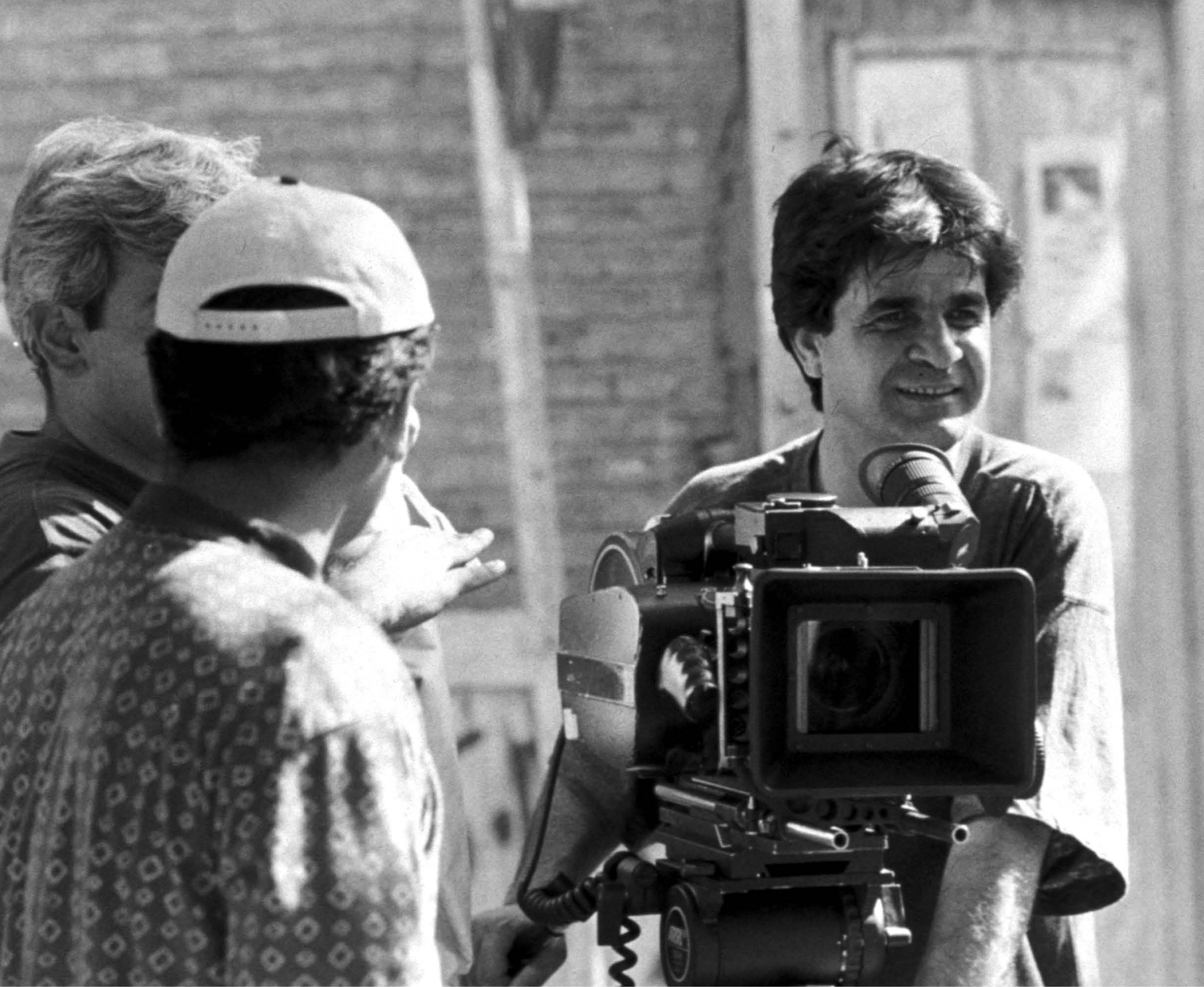
Around the world artists are imprisoned, convicted on a range of charges made possible by an intriguing array of laws. Laws used to shut down expression are often distinctive and very specific to a particular country, designed to protect the sensitivities of the regimes that uphold them. Indian cartoonist Aseem Trivedi was charged with sedition for allegedly ‘insulting the constitution’. Russian punk musicians Pussy Riot were convicted for hooliganism motivated by religious hatred. Iranian filmmaker Jafar Panahi was accused of ‘assembly and colluding with the intention to commit crimes against the country’s national security and propaganda against the Islamic Republic’.
In 2008, Burmese comedian Zarganar was imprisoned for a staggering 59 years, a sentence that was subsequently reduced to 35 years, for violating three parts of the Electronics Acts. He was sentenced to an additional 14 years in prison for abetting ‘destructive elements’ against the state and for violating the Video Act. As far as the government was concerned, his chief crime was publicly criticising the government’s handling of the aftermath of the Nargis cyclone in 2008.
Governments also convict artists for alleged crimes not directly related to their artistic expression in order to silence them. In 2008, Cameroonian musician Lapiro de Mbanga was sentenced to three years in prison for taking part in anti-government riots. His real crime was his criticism of the government, through songs such as ‘Constipated Constitution’, where he lampooned amendments to the constitution that allowed the president unlimited terms in office. In 2012, the Moroccan government arrested, tried and convicted one of the Arab world’s best young rappers, Mouad Balghouat, aka El Haked, on charges of insulting the police, ‘showing contempt’ towards public servants and ‘undermining their honour’.
These attempts to silence usually have the opposite effect to the desired outcome: censorship amplifies artists’ voices. ‘The paradoxical ability of censorship is that, in its efforts to suppress, it highlights that which it wishes to condemn,’ wrote Alberto Manguel in Index on Censorship in 1995. Perhaps the most famous recent example is that of the Chinese authorities’ attempt to punish and silence artist Ai Weiwei. His company, Beijing Fake Cultural Development Limited, was accused of tax evasion in 2011. In April that year, the artist disappeared for 81 days, making Ai into a global symbol for freedom of expression.
Censorship has another paradoxical consequence – it can spur the artist on to greater creativity and imagination to evade the censor and speak to the audience about forbidden things. Censorship can therefore be seen as a stimulus for more imaginative and courageous artwork.
In democracies, mechanisms for controlling expression that offends religious, moral or business sensibilities are mainly via non-judicial forces: public censorship, corporate censorship or self-censorship. The state either stands back and lets the censorship happen, or may intervene to comment on the proceedings. German Chancellor Angela Merkel is on record for supporting the publishers of the Danish Cartoons, while British politician Fiona McTaggart, who was Home Office minister at the time of the Behzti affair, refused to condemn violent protest against free expression. In 2004, the Birmingham Repertory Theatre cancelled the play, written by British Sikh playwright Gurpreet Kaur Bhatti, after demonstrations by a group of Sikhs, who viewed the play as deeply insulting to their religion, turned violent. In a radio interview, McTaggart celebrated the fact that the protesters were exercising their right to free speech, without acknowledging the importance of the playwright being able to enjoy the same right. Salman Rushdie commented at the time: ‘The minister is sending entirely the wrong message. It should be quite clear that in this country, it is the liberty of any artist to express their view of their own society and their own community.’
London-based artist Larissa Sansour’s work Nation Estate was removed from the shortlist for a prestigious European prize after it was deemed too ‘pro-Palestinian’ by the sponsors, fashion label Lacoste. The prize’s organisers pressured Sansour to approve a statement saying she had removed her work from the competition voluntarily. Following widespread criticism, the Musée de l’Elysée decided to suspend the competition, based on the sponsor’s wish to exclude Larissa Sansour. The museum said its decision to suspend the prize was in line with its history of defending ‘artists, their work, freedom of the arts and of speech.’
The general public also play a role in censoring artwork. Some of the highest profile cases of censorship and of art being removed from display have come about following pressure from special interest or religious groups. In October 2010, the Smithsonian Museum in Washington DC came under enormous pressure to remove David Wojnarowicz’s video Fire in my Belly, which features 14 seconds’ footage of ants crawling on a crucifix. Following protests from a right-wing Catholic group and members of Congress, the museum withdrew the video.
Burma provides an interesting insight into public censorship. The country is in a state of transition – pre-censorship of print media has been abolished and, while it is still necessary to obtain a licence to host an exhibition or performance, many arts venues are putting on events without licences, a risk they would not have taken before. But as authorities loosen their grip on controlling what kind of expression is allowed, members of the public are taking things into their own hands.
ABOVE: Jafar Panahi on the set of The Circle, 2000. In 2010, the filmmaker was placed under house arrest. He is banned from filmmaking or leaving the country
Credit: Photos 12/Alamy
In a fragile wooden house at the far western end of Strand Road in the docks in Rangoon, a temporary art space is due to be demolished in summer 2013 to make way for a new apartment block. The space is run by a Burmese artist and a US journalist; it’s owned by the artist’s uncle. In spring 2013, crowd-sourced money was used to fund a series of weeklong site-specific exhibitions over a period of two months. They didn’t apply for a licence. During my visit to the space a week after it opened, a group of neighbours turned up and confronted the artist aggressively, demanding to know what they were doing. The Burmese artist eventually calmed the small crowd down and invited them to attend the next event. The group left soon after, seemingly reassured, and didn’t approach the authorities. One of them, however, contacted the artist’s uncle, asking him to appeal to the artist’s parents to take control of their son. It’s clear that years of political and cultural censorship has taken its toll on Burma: it’s a country used to being constrained by rules. But, as we’ve seen with the example of the United States, even when free expression is part of the very fibre of a culture, people’s impulse to censor is strong.
Many artists are drawn to sensitive subjects that reveal uncomfortable truths. As author Kenan Malik has written, free speech is a ‘fundamental good, the fullest extension of which is necessary for democratic life and for the development of other liberties’. Cultural spaces allow for debate and disagreement; controversies triggered by artistic expression make an essential contribution to our understanding of ourselves and our society. It’s a vital process for a healthy society, and one we must protect.
