




Abstract

BBC Media Action‘s
The Millennium Development Goals (MDGs) were drafted by a small group of UN officials in a hurry, working in the basement of the UN building in New York. That process had its drawbacks. Mark Malloch Brown, then administrator at the UN Development Programme, has candidly acknowledged in the years since that the group nearly omitted a goal around the environment.
In one agreement, there was no room for the phrase ‘free media’, for fear of putting off Chinese commitment to the process
The MDGs have done a serviceable job. Designed to rally both an international public as well as political backing around a clear set of agreed development priorities, the eight goals have succeeded in their purpose. Early concerns were that they would end up being seen in the developing world as a bunch of aspirations conceived of and by the West with no buy-in from the countries where they mattered. The goals are imperfect, limited and many of them won’t be met. But it is difficult to see what other development manifesto would have coalesced so much energy, money and, ultimately, endorsement from both developed and developing countries alike.
There are just two years to go before the 2015 deadline to achieve the MDGs. No basement discussions this time around. Instead, conferences all over the world, and development agencies of infinite hue – governmental, non-governmental, think tank, research institute, community organisation - are working out how to ensure that their concerns will be properly represented in the next iteration of the MDGs. We are entering an advocacy maelstrom.
Like most others, I have my own agenda. I would like to see a goal that encourages much greater public access to information and freedom of expression. In order to get out of poverty, poor people must be able to make informed choices, take actions for their own development and influence decision-makers and hold them to account, activities that Nobel laureate Amartya Sen refers to as ‘real freedoms’.
ABOVE: Library and training centre, Bangladesh
Credit: GMB Akash/Panos
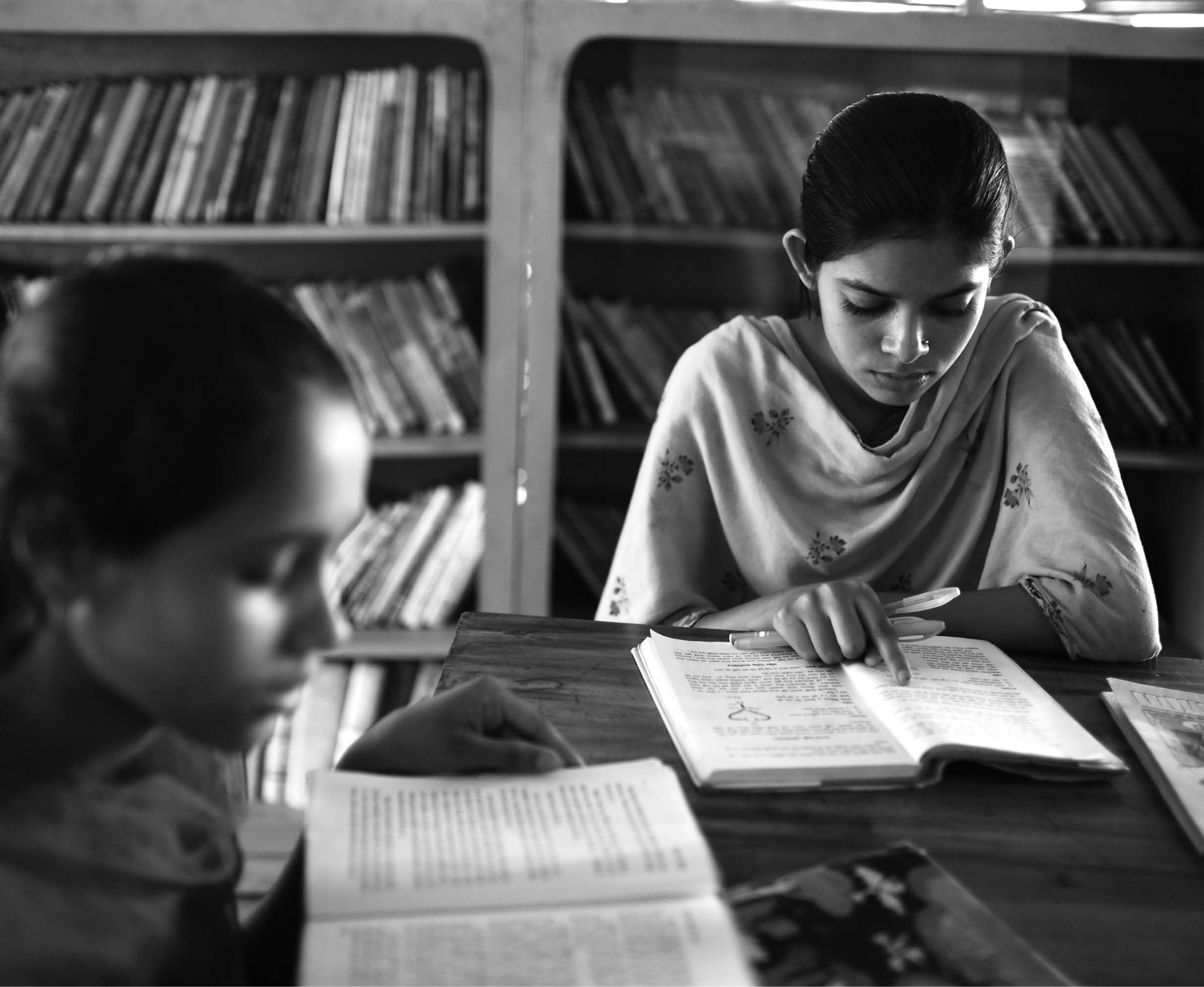
Communication and access to relevant and reliable information are critical to informed choice and action. And the media has a dual role to play in that amplification of voice and as a crucial check on power. Working with and in support of media to achieve such objectives is central to the work of my organisation, BBC Media Action, the BBC’s international development charity.
Some of these concerns are reflected in the emerging rhetoric around the future of the MDGs. As co-chair of the high level panel on the post-2015 development agenda, Prime Minister David Cameron has referred often to the ‘golden thread’ that will pull countries out of poverty, including a free media, an open civil society, a vibrant private sector and a stable and accountable government.
How such threads might actually materialise in a concrete target focused on securing greater freedom of expression remains unclear and, at least at present, there is limited momentum around pushing for one. There may be some good reasons for this.
The first is return on investment. The amount of time required to mount a serious case for articulating and developing a clear consensus around a post-MDG goal linked to freedom of expression would be substantial.
Linked to this is politics. Crafting the post-2015 MDG agenda will be no back-of-the-envelope exercise. It will be subject to tortuous negotiations among thousands of civil society organisations and government representatives, including those hostile to freedom of expression. The recent history of integrating such concerns into development declarations is not promising. The declaration from the Busan Fourth High Level Forum on Aid Effectiveness, agreed in December 2011, could not find room for the phrase ‘free media’, apparently for fear of putting off Chinese commitment to the process. Safeguards for access to information could well be downgraded in such a process.
A third challenge is substance. Recall that the MDGs were initially part and parcel of another document – the Millennium Declaration – which, among other things, acknowledged the centrality of freedom of expression to meeting the development goals, including ‘democratic and participatory governance based on the will of the people’. That declaration also committed signatories to upholding ‘the freedom of the media to perform their essential role and the right of the public to have access to information’. But the declaration is rarely mentioned now, and such concerns were not reflected in the final eight development goals. It is the goals that are remembered. The same may happen if goals are replaced by principles or threads.
A post-2015 goal on freedom of expression getting universal approval is thus unlikely. Which doesn’t mean that it’s not worth trying. Short of that, the investment is perhaps best made in ensuring that those governments who do support freedom of expression make it a far more prominent part of their development spending and the values that underpin that spending.
