




Abstract

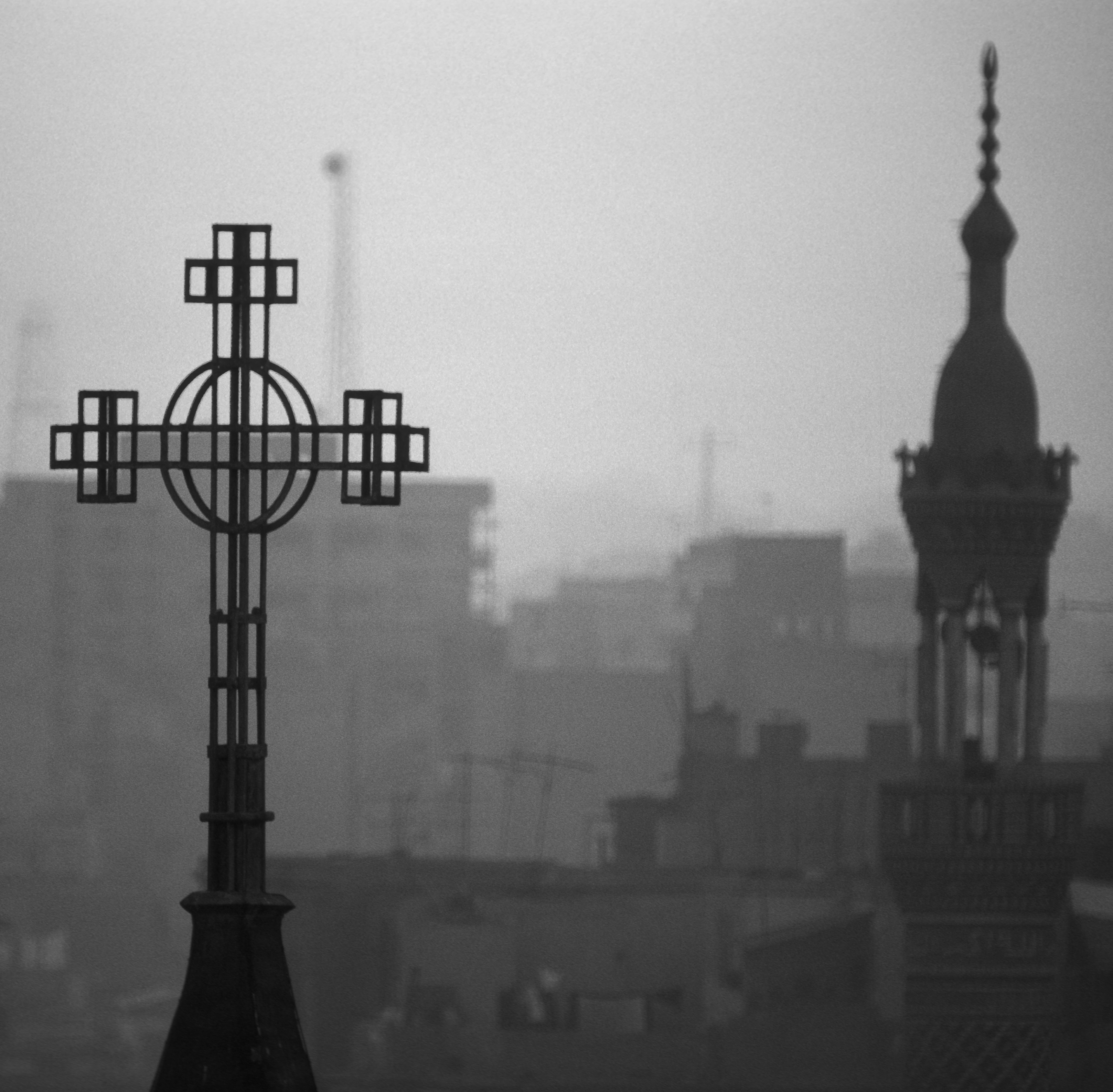
ABOVE: Cairo skyline
Credit: BennettPhoto/Alamy
In this section
Religious freedom in Egypt SHAHIRA AMIN 102
Narratives of hate ROHAN JAYASEKERA 110
Free speech in the ‘pearl of Asia’ GEOFFREY CAIN 114
Free to be fair JOHN LLOYD 118
The golden thread JAMES DEANE 122
Burma’s transition MIKE HARRIS 125
Working under censorship HTOO LWIN MYO 129
Trouble at the border RONALD DEIBERT 132
Turkey’s polluted media landscape YAVUZ BAYDAR 140
Voice of the republics MANSUR AKHMADOV 146
Two years on from the revolution, religious minority communities are struggling to make their voices heard, reports
More than two years after the mass protests in Egypt demanding ‘bread, freedom and social justice’, there are concerns over the rights of religious minorities. Egypt’s liberal opposition say the new constitution passed in a popular referendum in December 2012 (with 64 per cent support, but with only 33 per cent electorate participation) threatens to undermine religious freedom and free expression. For them, it falls well short of expectations of youth revolutionaries who had taken to the streets in January 2011 to bring down the previous authoritarian regime – not least because the referendum was held under a state of emergency, allowing soldiers to arrest citizens without charge.
In today’s deeply polarised Egypt, Christians have joined protests demanding that Morsi step down over what they describe as his ‘dictatorial policies’
Liberals and church representatives on the constituent panel, which had been tasked with drafting the constitution and which was dominated by Islamist members of the Muslim Brotherhood and the Salafist Nour Party, walked out before completion of the process, complaining that their suggestions had been overlooked and that the panel was unrepresentative of many key groups in society. These opposition parties and organisations, revolutionary activists and Christians staged a series of angry protests in December, demanding amendments to the constitution and criticising the manner in which it was adopted.
Prime Minister Hisham Qandil has, meanwhile, promised that a committee of constitutional experts will be formed to amend the controversial articles (on which full consensus could not be reached by the previous panel). The members of the new committee are not, according to Qandil, affiliated to any political party or group, and their proposals will be submitted to the president for approval. The decision to form the committee came after the National Salvation Front, the main opposition secular bloc, rejected repeated calls by the Islamist president to engage in a national dialogue and to put forward its proposed amendments to the charter.
Under the new charter, freedom of worship is limited to the three Abrahamic religions: Islam, Christianity and Judaism. Article 43 pertains to freedom of religion and grants the right to practise religion and to build places of worship for Muslims, Christians and Jews, but excludes followers of other faiths, including Egyptian Baha’is. Article 44 forbids ‘undermining’ prophets, which contradicts articles guaranteeing freedom of expression.
A future for the Jews of Egypt?
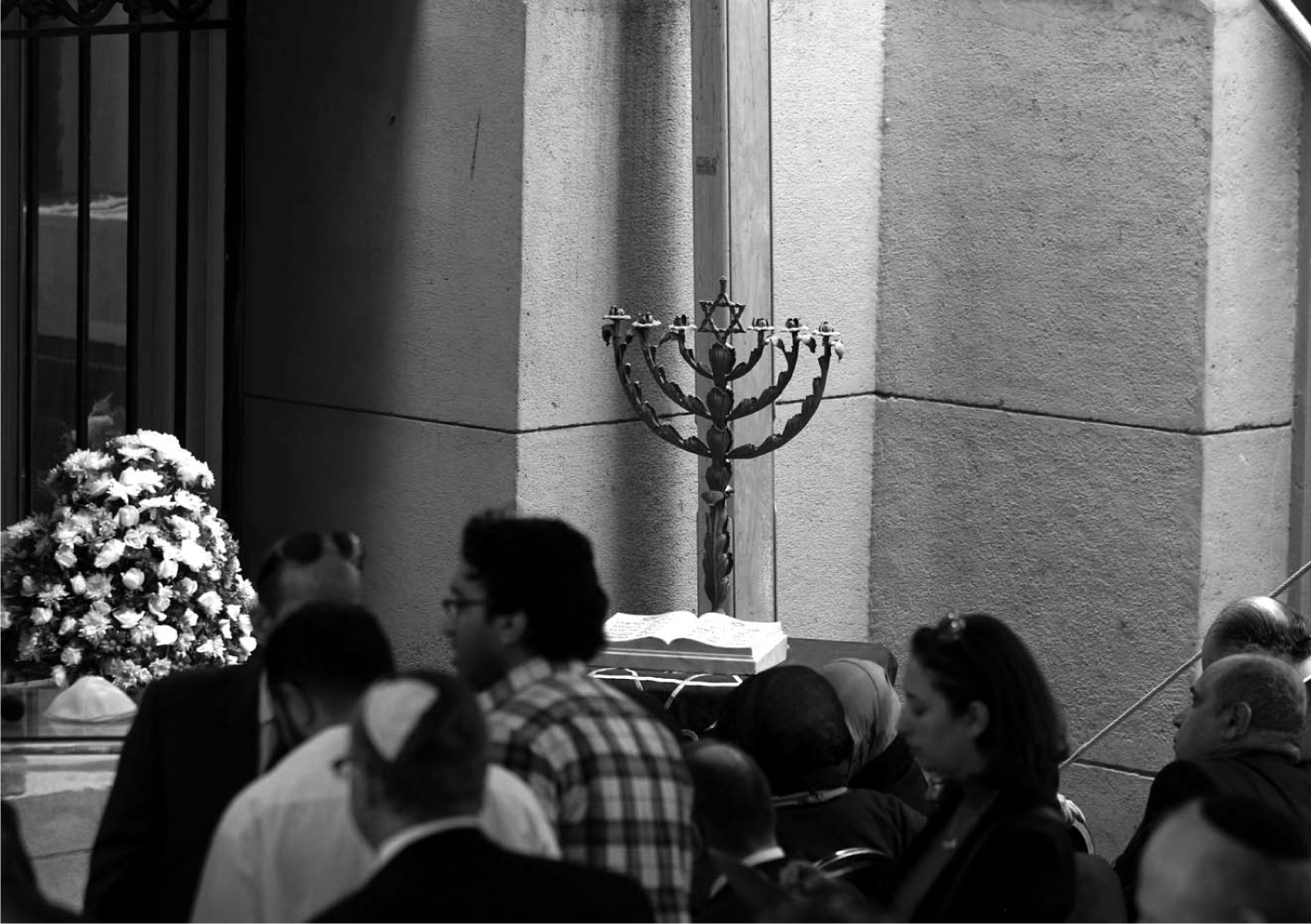
When Carmen Weinstein, the leader of Egypt’s tiny Jewish community, died on 13 April 2013, few Egyptians were aware that a small population of Egyptian Jews still lived in their midst. Her funeral service, held on 18 April amid tight security at the Shaar Hashomayim synagogue in central Cairo, was, for many, a rude awakening. Attracting a great deal of media attention, it served as a painful reminder of the vulnerability of the approximately 100 Jews remaining in the country.
Under Islamist rule, today’s Egypt is vastly different from the diverse multicultural country that just a few decades ago was home to some 80,000 Egyptian Jews. Many of them fled the country after the creation of Israel in 1948, and a second mass exodus of Jews occurred after the 1956 tripartite attack on Egypt (by Britain, France and Israel) that came in retaliation for the late President Nasser’s decision to nationalise the Suez Canal. While only a handful of Egyptian Jews were expelled at the time (after being accused of spying for Israel), hundreds of others left of their own accord after their property and businesses were sequestrated.
Many who remained in Egypt converted to Islam (either because they married Muslims or because they believed that converting would help them better integrate into mainstream Egyptian society). Born to a Jewish family in Alexandria in 1931, Weinstein remained a Jew, dedicating her life to preserving Egyptian Jewish heritage. In the face of tremendous adversity, she campaigned to keep valuable Torah scrolls and other Jewish artefacts in the country and oversaw the restoration of the 15 remaining synagogues.
But the run-down Bassatine cemetery where she was laid to rest on 18 April mirrored the state of Egypt’s dwindling Jewish community: the long-neglected graveyard was partly flooded with sewage water and rubbish was strewn everywhere.
Despite a provision in Egypt’s new constitution giving Jews and Christians the right to build places of worship for the first time in Egypt’s history, several Jewish mourners attending Weinstein’s burial said they could not envision a dignified future for Egyptian Jews under Islamist rule.
‘There’s no future for Jews here,’ lamented Albert Arie, an elderly lawyer who was born a Jew in Cairo but later converted to Islam. ‘Tolerance is needed for people of different faiths to co-exist harmoniously. That can only come through a change in the educational system.’
Many schools in Egypt – particularly those in the conservative south – have for decades incited hatred against Jews. According to textbooks taught in those schools, ‘all Jews hate Islam’ and the lives of Jews are ‘based on treachery and betrayal’. In recent months, Egypt’s Islamist president Mohamed Morsi has faced harsh criticism over anti-Semitic comments he made in 2010 (before he became president) in which he referred to Jews as ‘the descendants of apes and pigs’. At a media briefing on a trip to Germany earlier this year, however, Morsi backtracked on the comments, saying that they had been ‘taken out of context’ and had referred to ‘Israeli attacks on Palestinians’. He insisted that he was ‘neither against the Jewish faith nor the Jewish people’.
ABOVE: Egyptian Jewish mourners at the funeral of Carmen Weinstein, who led the country’s small Jewish community, 18 April 2013, Cairo, Egypt
Credit: Tareq Gabas/Alamy
In December 2012, during an interview on private satellite channel Dream TV, Essam el Erian, a prominent Muslim Brotherhood leader and then-adviser to President Morsi, called on Egyptian Jews living in Israel to return to Egypt, saying that ‘every Egyptian has a right to live in his country’. He added that ‘Egyptian Jews should refuse to live under a brutal, bloody and racist occupation stained with war crimes against humanity’ and that ‘the Jewish presence in Israel contributes to the occupation of Arab land’. El Erian’s controversial comments provoked a public outcry in Egypt, earning him sharp criticism from opponents of the Muslim Brotherhood and forcing him to resign from his post as Morsi’s adviser a few days later. In his column published in state-sponsored al Ahram, journalist Khaled Fahmy dismissed el Erian’s remarks as ‘a bad joke’, adding that ‘they should be ignored outright’.
Social media networks Facebook and Twitter were awash with posts teetering between outrage and sceptical sarcasm. Some questioned el Erian’s motives for the ‘deceptive invitation’, pointing out that the Muslim Brotherhood official had told ONTV in another interview that ‘within a decade, Israel would disappear altogether’. Others expressed fury over what they perceived as a sort of outreach to ‘the enemy’. An Islamist Jihad member, meanwhile, threatened death for those who returned. Others still warned that the invitation would open the door for Egyptian Jews to demand compensation for the property and businesses they left behind, adding that it could undermine Palestinians’ right to return home.
Some also denounced el Erian for ‘faking tolerance towards Jews’, while other religious minorities, particularly Christians, were becoming increasingly concerned about persecution under Islamist rule.
The persecution of Coptic Christians
Egypt’s minority Coptic Christians, who make up an estimated 12 per cent of the population, have become increasingly concerned about their religious freedom after reported incidents of Islamist vigilante groups harassing and assaulting women who are not veiled. Christians have also been the target of insults by ultra-conservative Salafi preachers appearing on Islamist satellite channels.
Islamic TV cleric Ahmed Abdullah, popularly known as Abu Islam, has in recent months been investigated on charges of ‘contempt for religion’, but was released on bail after paying LE 20,000 (US$2890). Christian Rights Lawyer Nabil Gabriel filed a legal complaint against him after he allegedly called Christian women ‘prostitutes’ on his TV show on the Arabic satellite channel al Umma. He had also said that women who join the protests go to Tahrir Square to be raped. Abu Islam had earlier torn a Bible on camera during a protest by Islamists angered by the anti-Islam film The Innocence of Muslims. (For more on this story, see Rebecca Mackinnon and Ethan Zucherman’s article from the December 2012 issue of the magazine, as follows: http://ioc.sagepub.com/).
Since the January 2011 mass uprising that toppled President Hosni Mubarak, Coptic Christians have increasingly faced physical assaults and several churches have been torched. The violence has forced tens of thousands of Christians to leave the country and settle elsewhere. Entire Coptic Christian families have meanwhile been forced to evacuate their villages after sectarian clashes over the past year in Amreya, Dahshour and, more recently, in North Sinai’s border town Rafah.
In a telephone conversation with the private ONTV channel after a recent spate of sectarian violence in Egypt, Pope Tawadros, head of the Orthodox Christian Church, accused President Morsi of ‘negligence’ and of failing to protect the Cathedral in Abbassiya. His comments came after Christian mourners attending a funeral service for four slain Copts (killed a couple of days earlier in Khosous, a village north of Cairo) were attacked by a mob of angry Muslims in early April 2013. This spate of sectarian violence was the worst the country had seen since Morsi came to power, with seven people (mostly Christians) killed and scores injured.
In his election campaign, Morsi had promised to be a leader for all Egyptians and to appoint a Christian vice-president, but he has lately been accused by the liberal opposition and Christians of being ‘a leader for Islamist groups’. In today’s deeply polarised Egypt, Christians have joined liberal opposition parties and groups in protests, demanding that Morsi step down over what they describe as his ‘dictatorial policies’, as well as continued abuses by the country’s security forces. Morsi has described the recent attack on Christians outside the cathedral as an assault on him personally, vowing to bring the perpetrators to justice. Pope Tawadros, however, dismissed the remarks, saying that ‘action is needed, not words’. ‘The Church has never been subjected to such attacks even in the worst ages,’ he told ONTV. In many of the past incidents of sectarian violence, Muslims have been acquitted, while Copts – who allegedly were ‘victims of the aggression’ – have been convicted.
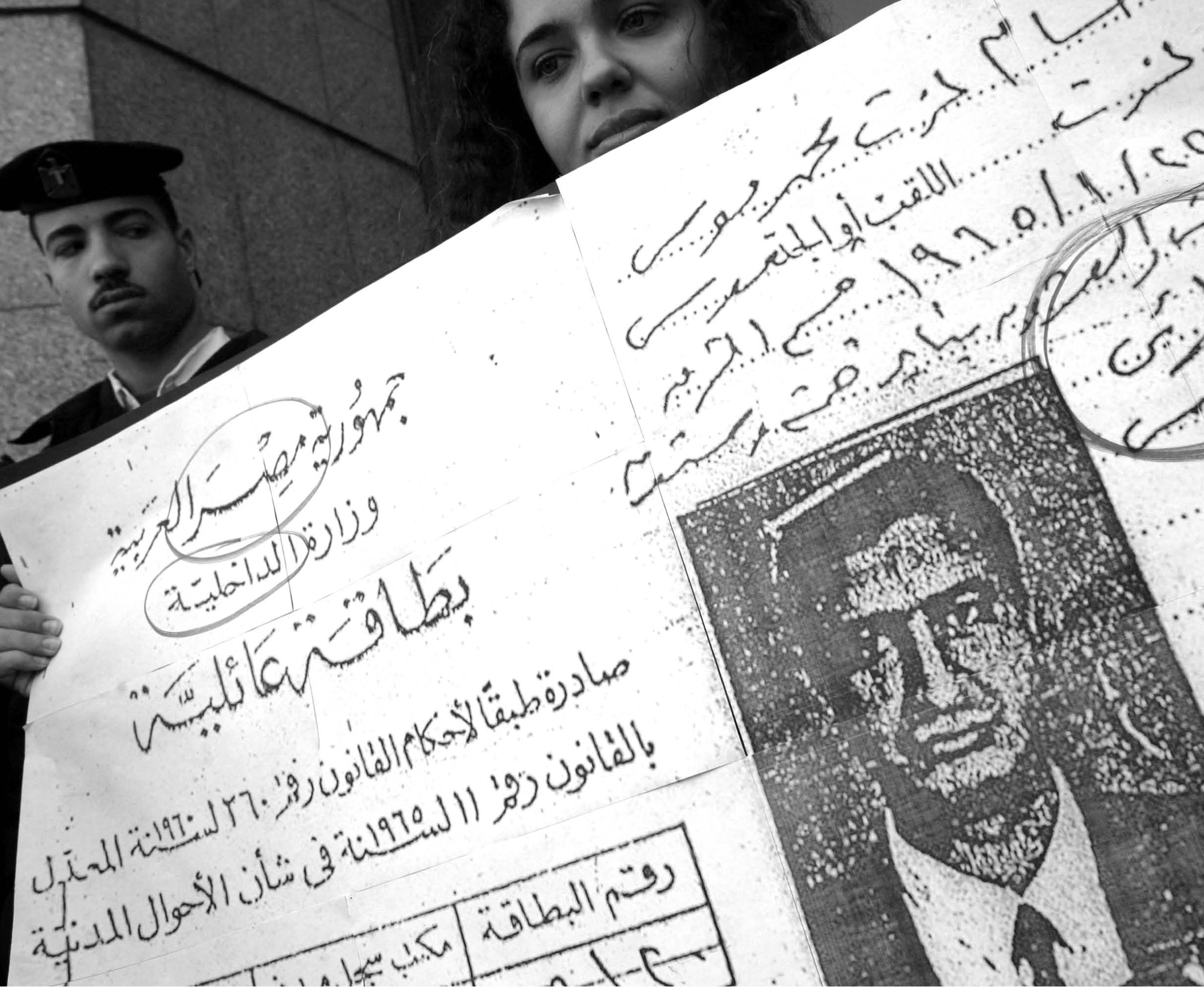
ABOVE: A demonstrator holds a placard featuring Baha’i identity cards, Cairo. The minority religion lost their right to register their religion on ID documents in 2006
Credit: Nasser Nurl/Reuters
A separate Personal Status Law for Egypt’s Coptic Christians is currently under review by the Shura Council (the upper House of Parliament, which has been tasked with issuing legislation until a new People’s Assembly is elected). When passed, the law will enable the Orthodox Church in Egypt to govern familial relations, including marriage, divorce and child custody, in accordance with Christian teachings.
The Baha’i faith and social exclusion
Meanwhile, the fate of Egypt’s estimated 5000 Baha’is has been cause for even greater concern. Under Egypt’s new Constitution, Baha’is do not have the right to build places of worship, as only followers of the three ‘heavenly’ religions – Judaism, Christianity and Islam – are granted that right in the new charter. At the same time, Baha’is are also unable to state their religion on their national identity cards (again, this has been restricted to the three religions mentioned above) and are required instead to put a dash in the space left for ‘religion’ on the cards. The discriminatory ruling not only stigmatises them morally and socially, it also denies them access to public services such as health and education and bars them from owning or selling property.
Opposition activists and revolutionary groups who helped spark the uprising more than two years ago are, however, determined to fight the growing conservatism and are pushing for greater freedoms for Egypt’s religious minorities. A notable example of such efforts is the online campaign calling for the elimination of religious identity from ID cards, spearheaded by Egyptian journalist Sarah Carr. In the wake of the recent sectarian violence, Carr has created a Facebook page called ‘None of Your Business’, urging citizens to cover up the religious identity on their ID cards as a form of protest at what she describes as ‘state interference in the private affairs of citizens’. Within the first couple of days of its creation, more than 1,000 fans had signed up and the number of followers is fast increasing.
Shi’ite Muslims in the ‘new Egypt’
And it’s not just non-Muslim minorities that face discrimination and persecution in the ‘new’ Egypt: Egyptian Shi’ite Muslims (who make up about 1 to 2 per cent of the population) have been struggling for citizenship rights in the face of a government crackdown on them. Fear of the spread of Shi’ism in Egypt increased in the first part of 2013, sparked by the restoration of diplomatic ties with Iran’s Islamic Republic and the visit to Egypt last February by Iran’s President Ahmadinejad (the first visit by an Iranian president in more than 30 years). An ensuing visit by a group of Iranian tourists to Egypt in early April (following the resumption of flights between the two countries) triggered a wave of protests in Cairo by ultra-conservative Salafis: ‘Iranians are not welcome in Egypt’ and ‘Shi’ites are not Muslims,’ demonstrators chanted. Seeking to allay fears of a ‘Shi’ite expansion in Egypt’, Mohamed Wahdan, a Muslim Brotherhood leader, was quoted by the Muslim Brotherhood website Ikhwanweb as saying ‘the Egyptian people and their government will not allow the spread of Shi’ism in Egypt under any circumstances’.
Egyptian Shi’ite Muslims have struggled for citizenship rights in the face of a government crackdown on them
In October 2012, Egyptian authorities refused to register a political party with majority Shi’ite members on grounds that it was ‘based on religious principles’. Ironically, there are several other parties in Egypt with religious affiliations (including the Muslim Brotherhood’s own Freedom and Justice Party and the Salafist Nour Party). A month later, Shi’ites were denied entry into Cairo’s al Hussein mosque to commemorate the Shi’ite religious festival of Ashoura. Although Shi’ites are not outlawed in Egypt, there’s little tolerance for them in the predominantly Sunni society. In July 2012, a young Egyptian Shi’ite, Mohamed Asfour, was sentenced to three years in jail for ‘insulting the Prophet Mohammed’s companions’. His conviction marked the first time that a Shia Muslim was incarcerated on this charge. Before his arrest, Asfour’s parents-in-law had forced his wife to divorce him over his conversion to Shi’ism. Shi’ites also complain that they are unable to find work because of their faith. ‘Those who do find work are often dismissed after their colleagues find out they are Shi’ites,’ lamented rights activist Bahaa Anwar, who converted to Shi’ism when he was in his twenties.
Prior to the 2011 mass uprising, the toppled Mubarak regime had promoted hostility towards Shi’ites to score political gains. For years, the Mubarak government targeted Shi’ites (arresting and detaining scores of them for their religious beliefs) to win favour with oil-rich Gulf countries vehemently opposed to Iran’s growing influence in the region. Animosity towards Shi’ites has persisted under the current Muslim Brotherhood regime – a main bone of contention being Iran’s support for the Syrian regime. President Morsi, meanwhile, backs the opposition in Syria, which is largely dominated by the Muslim Brotherhood, the group from which he hails. Addressing a gathering of the Non-Aligned Movement in Iran in August 2012, Morsi lambasted the Iranian president, urging him to back Syrian rebels fighting what he called an ‘oppressive regime’ that has lost legitimacy.
The Tahrir dream
More than two years on, the hopes of the Tahrir opposition activists for a ‘secular state’ have all been dashed, and the freedom they had yearned for remains far out of reach. The country’s first constitution post-revolution, which isolates and marginalises some religious minorities and irreligious groups, the jailing of atheists (like Alber Saber) on charges of ‘contempt for religion’ and the investigation of journalists and bloggers accused of ‘insulting Islam’ all sound the alarm that there is a marked regression in religious freedom and free expression in the ‘new’ Egypt. But the resilience and determination of the young activists who have vowed to continue their revolution gives some solace and hope to those who envision a pluralistic, tolerant Egypt that the dream may yet be realised.
