




Abstract

Italian films were once the envy of the international scene. But now major cuts in funding – often arbitrarily applied – are changing the face of Italian cinema, says
It was an ill-fated night: in Genoa, on 20 July 2001, police suspended the rule of law, taking matters into their own hands. This never should have happened. And, on screen, it almost didn’t, for a range of reasons.
Daniele Vicari, director of the film Diaz: Non pulire questo sangue (Diaz: Do not clean this blood), which documents the violent events during the G8 summit in Genoa, said at press conference in 2011: ‘When [producer] Domenico Procacci and I decided to make the film, we couldn’t find partners. The funders didn’t even want to read the script.’
Filmmakers, artists and industry workers have staged a number of protests outside Parliament, rallying against the reduction of state subsidies
Perhaps they were frightened by the thorny subject of the riots, during which 400 protesters and about 100 security forces were injured, and Carlo Giuliani, a 23-year-old activist, was shot dead and run over by a car in full view of the cameras. In the end (and fortunately), Vicari and Procacci received a state grant of €400,000 (US$534,000), the production machine was set in motion and the film was released in 2011, costing €7million (US$9.3million).
This case would suffice as a good example of how some films can still be made in this belpaese, in Dante’s words (meaning ‘beautiful country’ and used ironically by many Italians). Production of this type of film – controversial, and hitting at the very heart of the political and social malaise of Italy today – is possible only with the support of public funds. It illustrates, too, how public support can (even indirectly) encourage a full, open expression of ideas. But as state backing vanishes, artistic freedom in the film industry faces significant risks.
This could be dismissed as an exaggeration, but there is solid evidence that this is the reality for the film industry in an increasingly Byzantine country, where things are never as they seem. State funding for films has been reduced drastically: according to figures from the Ministry of Culture, in 2010 public investment in film production was halved, totalling €35.4 million (US$ 47.2 million), compared to €70.9 million ($95 million) only two years earlier. Only 50 per cent of proposals for new films are financed by the state, a percentage that drops further when one looks at those just starting out in the field: in 2011, out of 150 applications for funding by newcomers, only 43 obtained funds.
And it is not a coincidence that in 2011 the Minister of Economic Development, Corrado Passera, said that the situation for cultural production in Italy was ‘a shame’. It’s a situation that, according to him, was also inevitable: the government faced a ‘resounding emergency’ that prevented him from paying ‘the necessary attention to culture’. The country, he said, ‘was in danger of losing everything: welfare, public wages and sovereignty’.
In the last few years, filmmakers, artists and industry workers have staged a number of protests outside parliament, rallying against the reduction of state subsidies earmarked as part of the Fund of the Performing Arts, which was created in 1985. But those who (rightly) complain do not stop to look closely at these subsidies or assess how they are granted and whether or not they are effective. This is where things get enormously complicated.
Empty seats at the Italian cinema
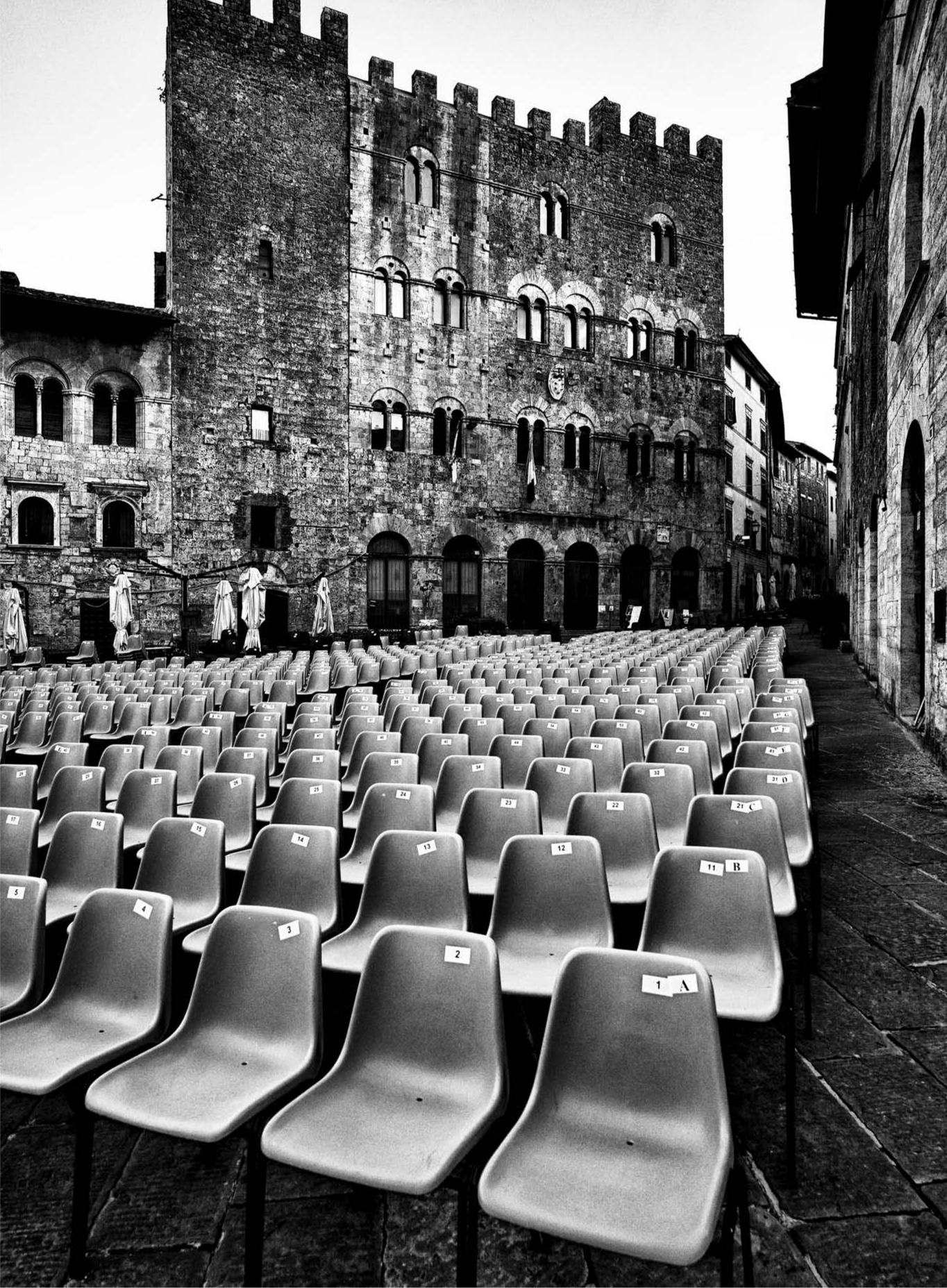
Between 1994 and 2006, the state devoted well over €800 million to 544 commercial films (an average of about €1.5 million or US$2 million per film). Of these, the Ministry of Culture admits 155 were never released in commercial cinemas, while those that were shown in cinemas typically grossed on average around €378,000 (US$513,775). Only 25 of the 544 subsidised films – the most popular in commercial cinemas – were able to recover invested money from sold tickets.
As well as the scandalous number of films funded by the state but never seen, there is no coordination between the government agencies awarding grants and regional funders. When, in 2001, the country’s constitution was amended to recognise ‘the fullest measure of administrative decentralisation’, each of the 20 regions in Italy created their own film commission, responsible for allocating funds for subsidising cinema. The result has been overlaps – national and regional funds being funnelled to the same movies without any coordination or strategy, plus a concentration of funding for certain films and a lack of transparency, so that the public has little opportunity to assess just how strong support for cultural production might be.
At the same time, a campaign promoting the sustainability and self-sufficiency of culture in Italy, supported by a liberal contingent, continues to grow.
In any case, the system has mainly supported a certain type of mainstream film. These films can easily move from the cinema to television and do not venture outside a narrow selection of themes (of which love, of the heterosexual and conventional variety, is the touchstone).
The political classes have always been uncomfortable with the cinema and perhaps for good reason. The most recent and prominent case of partisan interference in the awarding of funds took place in 2011, when the Catholics of the Union of Christian and Centre Democrats (known as UDC) and members of the right-wing Northern League boycotted the film La bella addormentata (Sleeping Beauty), denying it €150,000 (US$200,500) from the film commission operated by the Friuli-Venezia Giulia region. With this film, Marco Bellocchio – a prominent Italian director – wanted to tell the story of Eluana Englaro, a woman who lived in a persistent vegetative state for 17 years, and that of her parents, who determinedly requested that medical professionals stop using the life-prolonging equipment that kept her strapped to machines. Between 2008 and 2009, the case split Italian society and politics along religious divides. The film was finally released in September 2012 during the Biennale di Venezia.
But if the political classes in Friuli acted with great impudence by boycotting Bellocchio’s film because of its controversial subject matter, in other areas of the country, state funding can be granted according to less obvious political motivations. This is simply because the selection of films to be funded is made by the very people who are close to the axis of power.
When, in November 2011, Berlusconi was forced to resign, as a final act, the Minister of Culture, Giancarlo Galan, appointed members of the ministerial film commission (which, among other things, decides funding). Following a long tradition, Galan instated many friends and associates. Among them were Antonia Postorivo, wife of Senator Antonio D’Ali Solina, from Berlusconi’s Partito della libertà (PDL); Valeria Licastro Scardino, married to PDL Communications Regulatory Authority official Antonio Martusciello; and Anselma Dell’Olio, who is considered a film expert because she writes about cinema, but is also the wife of Giuliano Ferrara, a friend of and advisor to Berlusconi.
It certainly does not bode well that the minister of the technical government headed by Mario Monti, Professor Lorenzo Ornaghi, recently confirmed that his predecessor’s appointments will continue their work under his leadership. Ultimately, it would be enough to observe what films secure funding in order to know which side the commission is on: established, renowned filmmakers and authors with clear political leanings, such as Renzo Martinelli, a director responsible for resounding flops (his Barbarossa, funded by the state, was released in 283 theatres and grossed only €835,469, or US$1,135m).
The Italian situation is one of light and shadows, and has generated strong reactions from a wide range of directors. For example, Daniele Segre, a director of quality films and documentaries, has decided to never ask for public funding. ‘This way,’ he told me in an interview, ‘the artist must ask himself what he has to say, how pressing his analysis is; he must emphasise his stance and escape the dangers of censorship and self-censorship that can occur before, during and after [the production of a film]’. Of course, this determination has a very high price. Segre says: ‘My Morire di lavoro (Dying of work) [a dramatic documentary about the tragedy of death on the job] was rejected by all the television channels and that forced me to take care of the production. Thirty years ago I created the production company I cammelli. It is clear that new media, particularly the internet and new technologies, can help those who want to make a certain kind of cinema.’
Of course, it would be better and more appropriate for directors expressing original perspectives and ideas and offering sophisticated analysis to be supported by government funding. It would be consistent with the cultural institutions’ very mission. But before this can really happen the way funds are allocated should be restructured, according to the experts. Oligarchs, who have for years have been making funds disappear, must be taken out of the picture. Those who fund cinema in Italy must offer financial support on truly objective, pluralistic and meritocratic grounds.