




Abstract

Artistic freedom is robustly supported under the First Amendment. But, says
Censorship, one of the oldest and most persistent of human impulses, is also one of the most resilient. Today’s freedom-committed liberal democracies are not immune to it. However, in those nations where repression is deplored and condemned, censorship works in subtle ways.
The United States does not have a board of censors; on the contrary, it has the world’s most extensive legal protections of free speech. Censorship, in this country, is a dirty word. Yet public discourse is rife with references to ‘appropriateness’, ‘responsibility’, ‘sensitivity to religious feelings’, ‘political balance’, ‘protecting children’ and ‘respect for community values’. All noble sentiments, but also words that mask a growing tendency for art institutions to censor themselves. And the real reasons underlying institutional self-censorship are both more complex and less noble.
Self-censorship comes in many shapes and is motivated by an array of reasons. The common denominator is fear, no matter under what noble sentiment it masquerades. This fear can be a result of the reluctance to plunge into the public relations nightmare of handling controversy, of concerns over the loss of public funding or donor support, of real or imagined threats of violence, or of anxieties over the presence of children in the audience. The trickiest thing about self-censorship is that the bulk of it remains unseen – occasionally, though, we see glimpses and the picture is alarming.
One of the often-noted paradoxes of art censorship in the US today is that, rather than suppressing a work, it gives it visibility. Indeed, some of the best-known artworks in the last 20 years are works that have been the focus of censorship attempts. Andres Serrano’s ‘Piss Christ’, Chris Ofili’s ‘Holy Virgin Mary’ and Robert Mapplethorpe’s ‘X Portfolio’ have all successfully migrated from the specialised art niche to the much more widely read news press. David Wojnarowicz’s video, A Fire in my Belly, existed in total obscurity for over 20 years until it was removed from an exhibition of gay and lesbian portraiture at the Smithsonian’s National Portrait Gallery in 2010.
If to suppress an individual work were indeed the goal, then censorship today miserably fails. But if the goal is to assert cultural presence, to mobilise the anger of key constituencies and, most importantly, to force exhibiting institutions to second-guess themselves when they are about to show a ‘controversial’ work, then censorship is singularly successful.
Would-be censors reduce a complex and polysemic artwork to a deliberate attack on a particular system of values and beliefs and use it as the focus of a politically useful scandal. Tactics vary with local conditions, but the strategy remains the same: attribute a simple and maximally offensive intention to an image, a film, play or artwork and use it to trigger long-standing grievances, while also mobilising and radicalising your constituency by creating the impression that they are engaged in a war in which their most cherished values are at stake.
One can say, of course, that this is all part of the tug and pull of democracy. Censors may reduce an artwork to a one-liner and misrepresent it, yet many other, more thoughtful voices also join the discussion. There is an emotional toll on the artist, curator and staff of art institutions, yet nobody is in jail, the work still exists and even more people than originally expected come to see it. The censors get their moment of publicity and free speech advocates get to trumpet First Amendment values.
From a certain perspective censorship controversies are, indeed, good: they engender public dialogue around culturally sensitive issues and let us deepen our understanding of those issues. But relentless attacks on art also leave art institutions fearful and much more willing to censor themselves. Thus it is not the overt attacks on artwork, but the ensuing self-censorship that is the real threat to free speech in the US today.
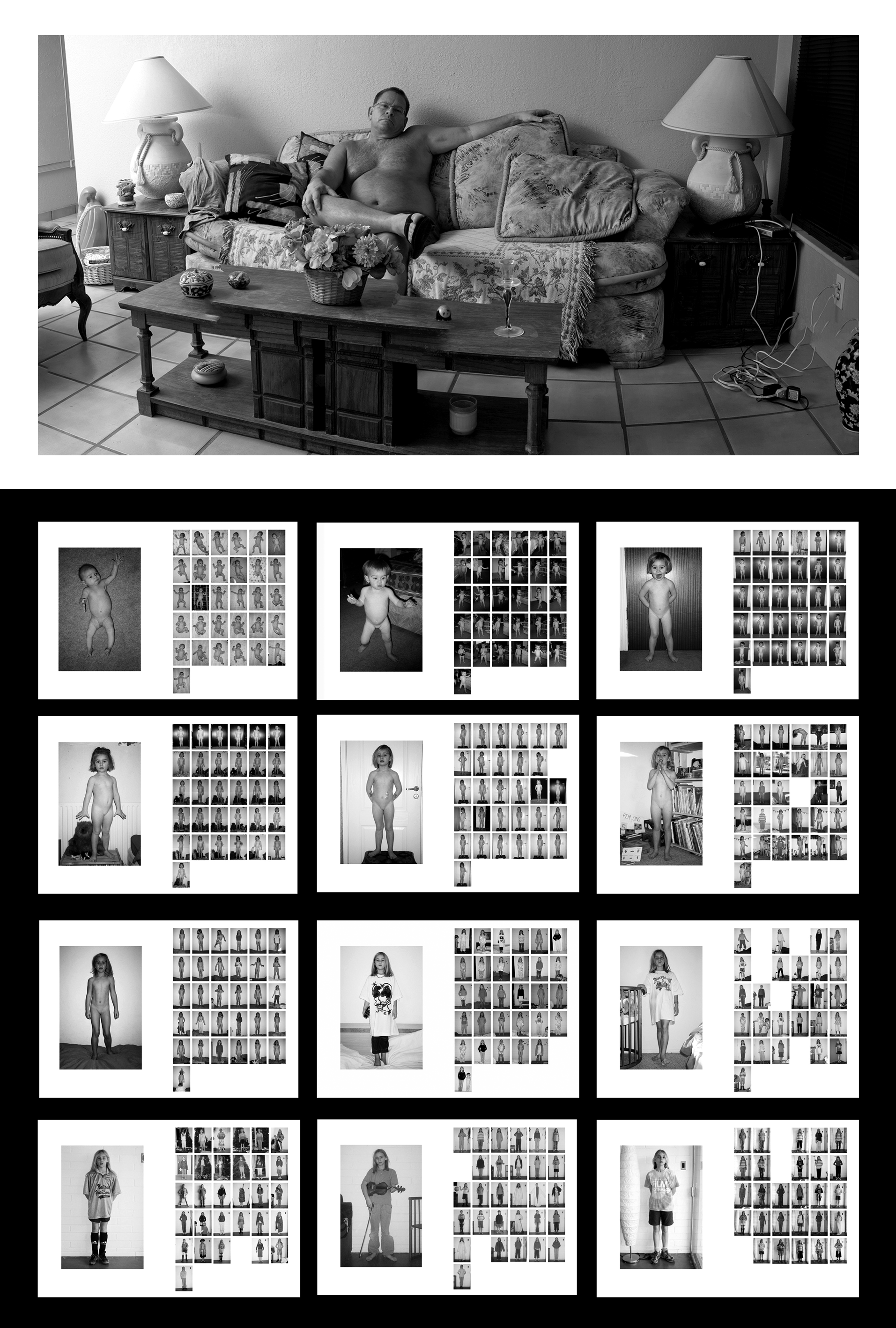
Jeff Larson’s ‘Men in Living Rooms #680’ from the cancelled Stonewall National Museum exhibition; from Betsy Schneider’s Januarys 1998-2008, part of her series Quotidian, removed from an exhibition at Wisconsin’s Kohler Art Center in response to complaints
Legacy of fear
During the notorious ‘culture wars’ of the 1990s, conservative US Congressmen relentlessly attacked federal funding for the arts. They argued that ‘taxpayers should not pay for art that offends them’. Federal funding survived, though diminished, but the ‘wars’ left a legacy of fear: arts funding had been proven to be a politically vulnerable target and special interest groups or opportunistic legislators would not hesitate to scrutinise arts grants with the goal of attacking government spending of the arts and education.
While the First Amendment bars enraged public officials like former New York Mayor Giuliani from punishing a museum because of its programming, there is nothing to stop legislators from slashing funds for the arts under the blanket of budgetary belt-tightening. This is the sword of Damocles hanging over the leaders of arts institutions: if they dare programme controversial material that legislators may not like, they may be putting future funding for their institution at risk.
It was enough, in 2010, for instance, for a couple of leading Republicans in Congress to hint that the Smithsonian may face funding cuts if one of the works was not removed from an exhibition at the National Portrait Gallery: Smithsonian Secretary G Wayne Clough had Wojnarowicz’s video removed within hours. This was a rare case that developed in full public view; decisions to censor a show or even entirely cut it from a museum’s programming are, most frequently, made earlier on in the process and remain hidden from the public. The bulk of institutional self-censorship is invisible.
It is, for instance, only through the muckraking efforts of a local reporter that the public found out about the behind-the-scenes ‘balancing’ of political content at the 2004 Arizona State University (ASU) museum show Democracy in America. The coincidence of a political art show and the Bush-Kerry presidential debate, scheduled to take place on the ASU campus, drew the attention of local legislators and consequently provoked the anxiety of the college president, who insisted that the show be ‘balanced’. Presumably, he was concerned that legislators might slash the public university’s funds if they saw the institution as politically partisan.
Having migrated from media culture into academia and art institutions, the claim of a search for balance when politically controversial topics are broached can serve as a disguise for institutional self-censorship. Curators of Democracy in America were forced to remove some of the artwork – not only work that was explicitly critical of George W Bush, but work that could potentially be interpreted as expressing anger at the status quo – because they were unable to find an equal number of artworks that criticised Kerry. Because the decision having been made as part of the curatorial process – even though under administrative pressure – there could be no allegations of outright censorship. Nevertheless, critical voices were excluded from the show.
Fear of losing funding is not limited to publicly funded institutions. It is even more of an issue in private institutions where donors may withdraw support at will and where no First Amendment imperatives prohibit them from discriminating against viewpoints they do not like. In 2008, for instance, museum funders pressured the Spertus museum in Chicago, a privately supported Jewish institution, to close down a show on maps and mapping because they insisted the show was anti-Israel.
Institutional fears are replicated on the personal level: curators working on temporary contracts and untenured art professors curating student art shows regularly run into censorship, but blowing the whistle and standing up for the artists involved can cost them their jobs. Unfortunately, when it comes to choosing between one’s ideals or one’s livelihood, few are brave or financially secure enough to oppose their superiors.
Panic around children
Over the past couple of decades there has been a growing panic around the need to protect children from material that some parents and advocacy groups believe might be harmful. This has led to a wave of self-censorship, especially where nudity, sexuality or homoeroticism are concerned.
In September 2012, the Stonewall National Museum in Florida, an institution devoted to education about gay, lesbian, bisexual and transgender culture and history, cancelled a pre-approved and scheduled exhibition because of concerns that it would be considered ‘inappropriate’ for school groups visiting the space as part of a new educational initiative. The show featured photographs of (gay) men, some nude, sitting in their living rooms, but no genitals were visible in any of the images – in fact children could see much more explicit nudity in any art museum. The cancellation of the show raised the question of whether, in deference to the often conservative, and even homophobic, sensitivities of the culture at large, the museum would begin to censor all its programming and thus compromise its mission.
While what children may see is an extremely frequent concern, especially with regard to nudes or sexually explicit material, when it comes to representations of children – of how they can be seen – the concern rises to a fever. At the time of writing this article, the Kohler Art Center in Wisconsin was struggling over whether to keep or remove a series of photographs from a show about families and children. The series presents panels from artist Betsy Schneider’s 11-year photography project documenting the growth of her daughter. In some of the images from babyhood or as a young child, she is naked. While there is nothing sexual in those snapshots, the Center was concerned that a prosecutor may see the images as sexual and file child pornography charges. While just about any parent has naked pictures of their baby, the vagueness of child pornography laws coupled with draconian penalties (five years’ imprisonment) are enough to chill an art institution’s resolve to stand by artistic freedom: the work has been removed from display for the ostensible reason that it would be divisive for the community.
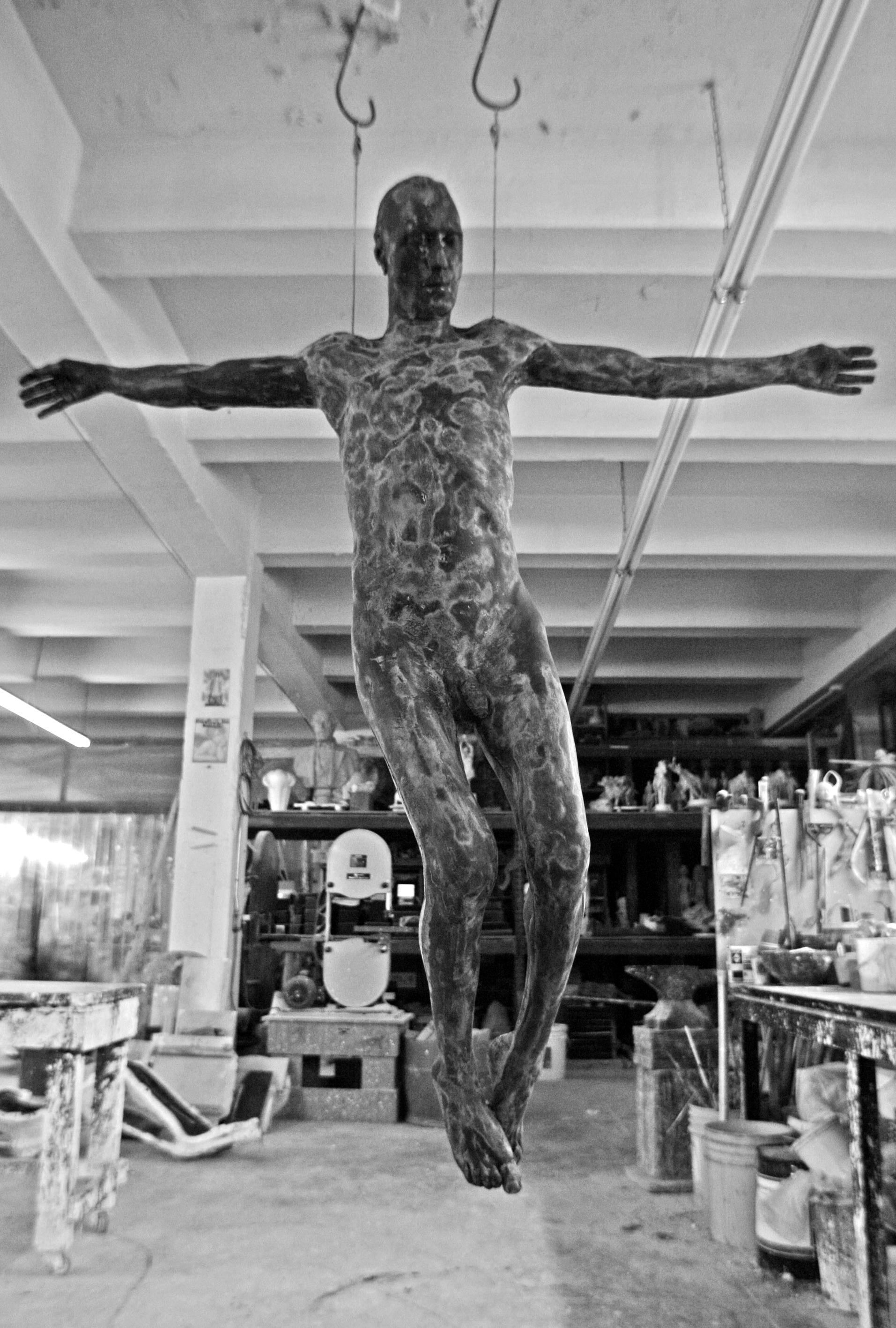
Chocolate statue ‘My Sweet Lord’ by Cosimo Cavallaro
Credit: Mary Altaffer/AP/PA
Threats of violence
It could be said that – in spite of the self-censorship provoked by funding fears or the absurd excesses of the desire to ‘protect’ the young – at least we are spared mob violence. But the spectre of violence is also present here, though, due partly to a much more effective policing of public space, destructive violence only occasionally erupts when a lone individual decides to destroy a work that offends them. However, real or imagined threats of violence are increasingly effective in forcing institutions to self-censor. After the attacks of 9/11, fear of violence acquired a reality it didn’t have before then and the explosion of riots triggered by the Danish Mohammed cartoons in 2006 exacerbated this fear. Most US presses refused to reprint the cartoons, in marked contrast to previous publication of images of other controversial artwork, and voiced commitment to free speech, independent of who may happen to be offended, began to waver.
In 2009 Yale University outraged the academic and free speech communities by deciding to strip all images of Mohammed from Jytte Klausen’s book The Cartoons that Shook the World, a scholarly review of the events surrounding the cartoon controversy. To justify the decision, university officials cited concerns that the book might stimulate violence ‘somewhere in the world’, even though no actual threats had been received. In a Statement of Principle and Call to Action, national organisations like the American Association of University Professors and the National Coalition Against Censorship warned against the spread of pre-emptive self-censorship as a result of fear of violence.
Yale was responding – or perhaps over-reacting – to a radically new world situation, where communications are instantaneous, but where cultural and political differences are still enormous. How do we know whether a book from an academic press may not be used to stimulate violence in some far-away country with no free speech tradition and plenty of sectarian violence? And if we cannot know that, should we self-censor?
In the meantime, religious groups capitalised on the climate of fear. In 2007, a private Manhattan gallery, after reportedly receiving death threats, cancelled an exhibition of Cosimo Cavallaro’s chocolate life-size sculpture of Jesus, ‘My Sweet Lord’. The threats followed a radio broadcast in which Bill Donohue, president of the Catholic League, an organisation ever vigilant for art that could potentially be seen as offensive to Catholics, attacked the piece as ‘one of the worst assaults on Christian sensibilities ever’.
The tactic of threatening violence is not the sole province of religious extremists. In 2008 the San Francisco Art Institute (SFAI) cancelled Don’t Trust Me, an exhibition by Algerian-born French artist Adel Abdessemed, in response to threats of violence directed at staff members and their families by animal rights activists. The installation consisted of video footage of animals being killed by a single blow from a sledgehammer, deeply disturbing images, though probably less so than videos of animal abuse distributed for advocacy purposes by some of the animal rights organisations that protested the exhibition. The difference was that Abdessemed’s videos lacked a clear moral message.
Had Abdessemed stated that his work condemned practices of slaughtering animals in Mexico (where the footage was ostensibly shot), for instance, it seems unlikely that SFAI would have been subjected to the threats that caused it to cancel the exhibit. But that would have also reduced an artwork to a piece of advocacy: by not explicitly telling the viewer what to think, Abdessemed’s work elicits a much more ambiguous emotional response than, say, an animal rights organisation’s video.
Notwithstanding the powerful effect Don’t Trust Me has on the viewer, the possibility that the animals were killed just for the camera – even if they were killed instantaneously with no pain and would have been slaughtered anyway – undeniably raises serious ethical questions. But the function of art is not necessarily, or always, to provide moral guidance or to reflect the prevailing moral standards of the day. By exploring taboos and testing the boundaries of the permissible, art can reveal the contradictions within our moral systems and force us to re-examine our assumptions. By daring to face the horror of existence and represent it in all its stark brutality, art may indeed provide insights available nowhere else.
The wavering of support for the right to offend, to disturb, to pose – sometimes bluntly – questions about ethics or religion threatens to institutionalise self-censorship even further.
The right to offend
In the abstract, free speech is an article of faith in the United States, yet many would hesitate if asked whether free speech includes ‘the right to offend’. A disturbing 43 per cent of Americans do not think people should be allowed to say things in public that might be offensive to religious groups, according to a 2009 survey conducted by the First Amendment Center. While from a distance it appeared as if the US was solidly behind freedom of speech in the face of Middle East riots protesting The Innocence of Muslims, this was not the case: quite a few used the occasion to emphasise the fact that, even in the US, free speech is not an absolute – and to argue that speech that is as deliberately offensive as the anti-Islam video should be legally regulated.
While First Amendment law still makes no exception for offensive speech, the force of public opinion, hate speech codes in academia and often-misunderstood harassment laws at the workplace all encourage self-censorship. Though regulating one’s own speech so as not to offend others may be a good thing, the rhetoric of offence has also been used as justification to threaten art institutions with physical violence or with funding cuts, thus triggering a kind of self-censorship that endangers the cultural life of the country.
The fact that something is offensive – or could be offensive to some group – has become a sufficient stand-alone moral (if not legal) justification for self-censorship. The argument has been applied to work that incorporates religious symbols, features nudity (which some have claimed objectifies women) or homoerotic images to art commenting on current political events, and, in one case, to a painting featuring an overweight person (the work, called ‘Fat Girl’, was deemed offensive to fat people and removed).
Paradoxically, in the United States it is not the religious right but the socially progressive left that has pioneered the latest imperative not to offend. Concerned about equality and creating an even playing field in a country haunted by a history of slavery, the oppression of women as well as of ethnic and sexual minorities, the left introduced political correctness. Political correctness (or ‘PC’) brought about a wave of linguistic self-policing, one of the goals of which was to avoid offending various minorities. Even as the political right mocked PC, the exacerbated sensitivity to offence it legitimised was a boon to religious groups who quickly appropriated the discourse of victimisation and began deploying it to their own purposes. The argument that ‘taxpayer dollars’ should not be used to support anything deemed ‘offensive’ thus became and continues to be a tool to attack public funding for any art exhibition that challenges religious dogma, dominant perceptions of women, or dares to present alternative sexualities.
While instances of downright government censorship of art are rare in the US, the increasing cultural pressure to suppress speech so as to avoid offence gives a degree of legitimacy to threats of violence and warnings of terminated funding. This growing concern about the possible psychic damage caused by offensive art goes hand in hand with anxieties about how art affects children. The end result is that self-censorship is becoming the order of the day. Perhaps sometimes it is warranted; mostly, though, its prime motivator is fear – and fear is not a legitimate point on the ethical compass.