




Abstract

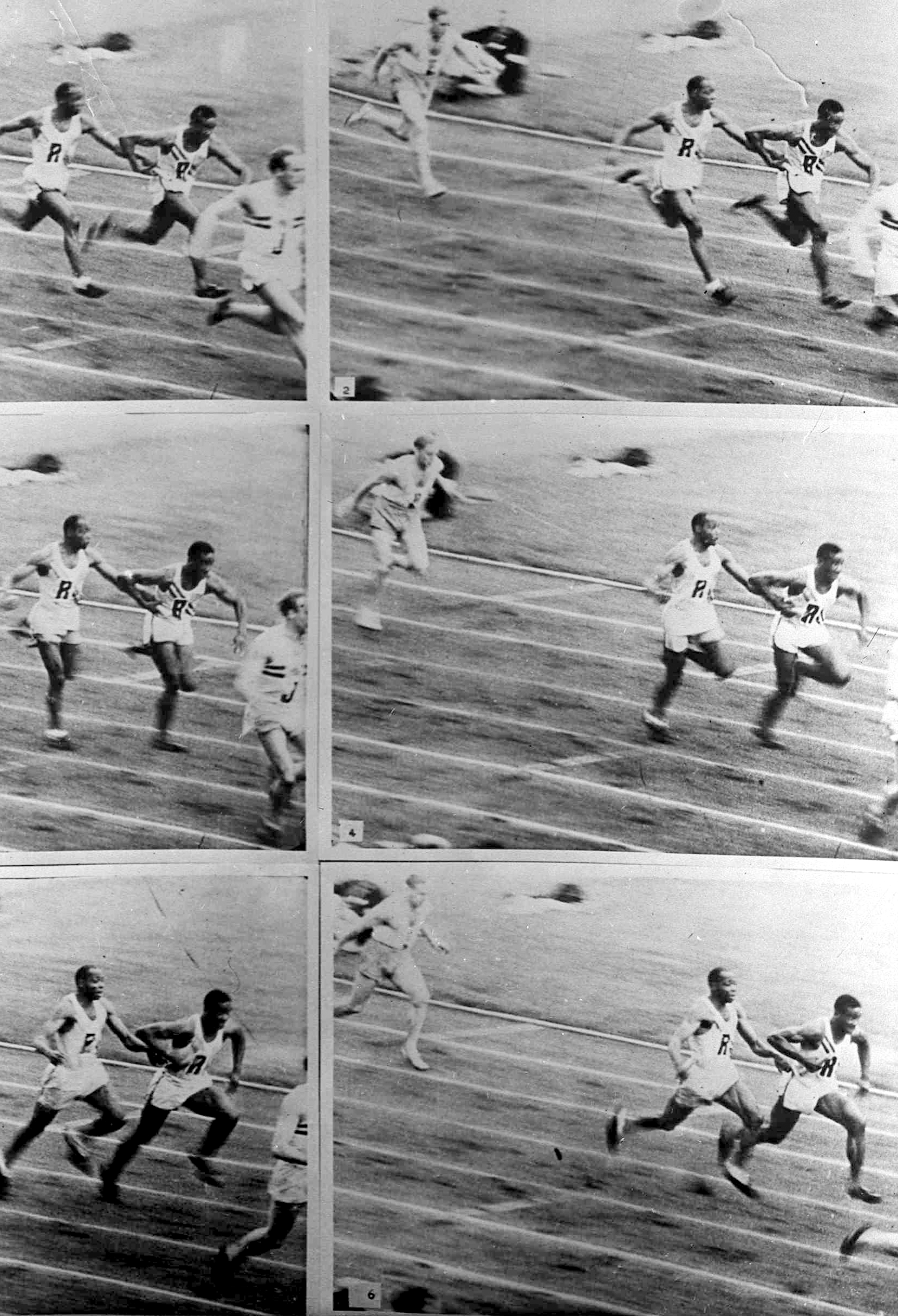
Relay finals at the 1948 Olympic Games, Wembley Stadium, London, 7 August 1948
Credit: Press Association
Should sport be above politics and human rights? Formula One chief Bernie Ecclestone seems to think so. As calls for a boycott of the Grand Prix in Bahrain reached their height in April, he told reporters: ‘It’s nothing to do with us.’ The attitude of international sports bodies towards engaging with authoritarian regimes can range from brazen disregard for the country’s human rights record to idealistic notions of sport as a force for good. As Mihir Bose recalls in this issue of Index, the International Olympic Committee (IOC) skirted the question when it came to awarding the bid to Beijing in 2001 and then rashly promised that China would emerge a more open society [pp. 48-55].
The modern history of sport as a universally improving pursuit goes back to the 19th century novel Tom Brown’s Schooldays, Bose goes on to reveal, but it’s the potential for propaganda and investment that has always been the draw for dictatorial world leaders. President Putin is getting ready to host the 2014 Winter Olympics in Sochi, on the edge of the deeply troubled North Caucasus. Arnold van Bruggen and Rob Hornstra are in the midst of an inspired five-year project documenting Moscow’s unstable backyard: a catalogue of devastation that sits uncomfortably alongside Putin’s ambitions for showcasing Russia [pp. 94-101]. Further west, Belarus’s dictator Alexander Lukashenko is looking forward to indulging his passion for ice hockey when the country hosts the world championship in the same year. There are currently calls to boycott the Belarus event. If the championship does go ahead in Minsk, for civil society ‘it will be yet another insult’ writes Natalka Babina [pp. 102-109].
During the apartheid era, the International Olympic Committee took a hard line against South Africa, banning the country from taking part in the Games. While there seems less appetite today for taking a political stand, even in such a morally clear-cut case, there were strong differences of opinion at the time. Celebrated South African playwright Athol Fugard spoke out against both cultural and sporting boycotts in 1973, in an interview republished in this issue: ‘My view is that a boycott psychology is a bomb psychology. One solution to the South African problem is to drop a bloody great hydrogen bomb on the country, blow the whole thing to ashes . . . I’m not interested in that. I’m interested in the survival of what I know is still there, vital and intact’ [pp. 56-58].
In London’s Olympic year, it’s the growing power of the brand that has been causing particular concern. The rules and regulations accompanying the Games are ripe for comedian Natalie Haynes’s parody: commenting on the sweeping legislation that prohibits unauthorised bodies from using images, words and even sounds associated with the Olympics, she writes: ‘What, you may be wondering, is the sound of the Olympics? The gentle flow of tenners as they sink into an open drain?’ [pp. 66-69]. In a fascinating account of early offshoots of the Games, Martin Polley and Stephen Escritt demonstrate how the desire for Olympic control is directly linked to the rise of commercial sponsorship [pp. 59-65]. You can read the civil rights group Liberty’s concerns about some of the very broadly framed legislation that has been passed to protect the Olympic brand, along with recent bye-laws limiting the right to protest [pp. 88-91].
Also in this issue, you can read former Czech dissident and novelist Ivan Klíma’s engaging satire of communist sporting prowess, first published in Index in 1981 when he was still a banned writer; an interview with acclaimed Syrian cartoonist and Index award-winner Ali Ferzat, and poetry from Sri Lanka along with reports on news and culture from Hungary, Dagestan and India.
For the rest of the year, thanks to our publisher SAGE, you can read Index’s archive from 1972–2010 for free at www.indexoncensorship.org/magazine-archive to mark our 40th birthday and take advantage of a 40 per cent discount on your 2012 subscription to the magazine at www.indexoncensorship.org/subscribe. Read daily reports on censorship and free speech on our website (www.indexoncensorship.org) and visit the exhibition Politics and Olympics this summer at the Free Word Centre, 60 Farringdon Road, London EC1R 3GA, co-curated by Stephen Escritt.