




Abstract
As literary festivals and fairs become forums of censorship and protest,
There are many ways to protest against a writer whose views or work you dislike. You can close the book, as novelist Salman Rushdie once proposed in a speech in India in 2010. You can write a book to counter the arguments with which you disagree, as Indian peace activist Maulana Wahiduddin Khan suggested to Muslims who strongly opposed The Satanic Verses. You can tell others how awful the writer’s work is, so that they don’t make the mistake of buying it. You can even picket an event where the writer is scheduled to speak, letting the audience know your views.
What you should not do in a free society is force the organisers to cancel the invitation to the writer, intimidate publishers so that they don’t dare to print the book, or threaten the writer, his supporters and his audience with violence.
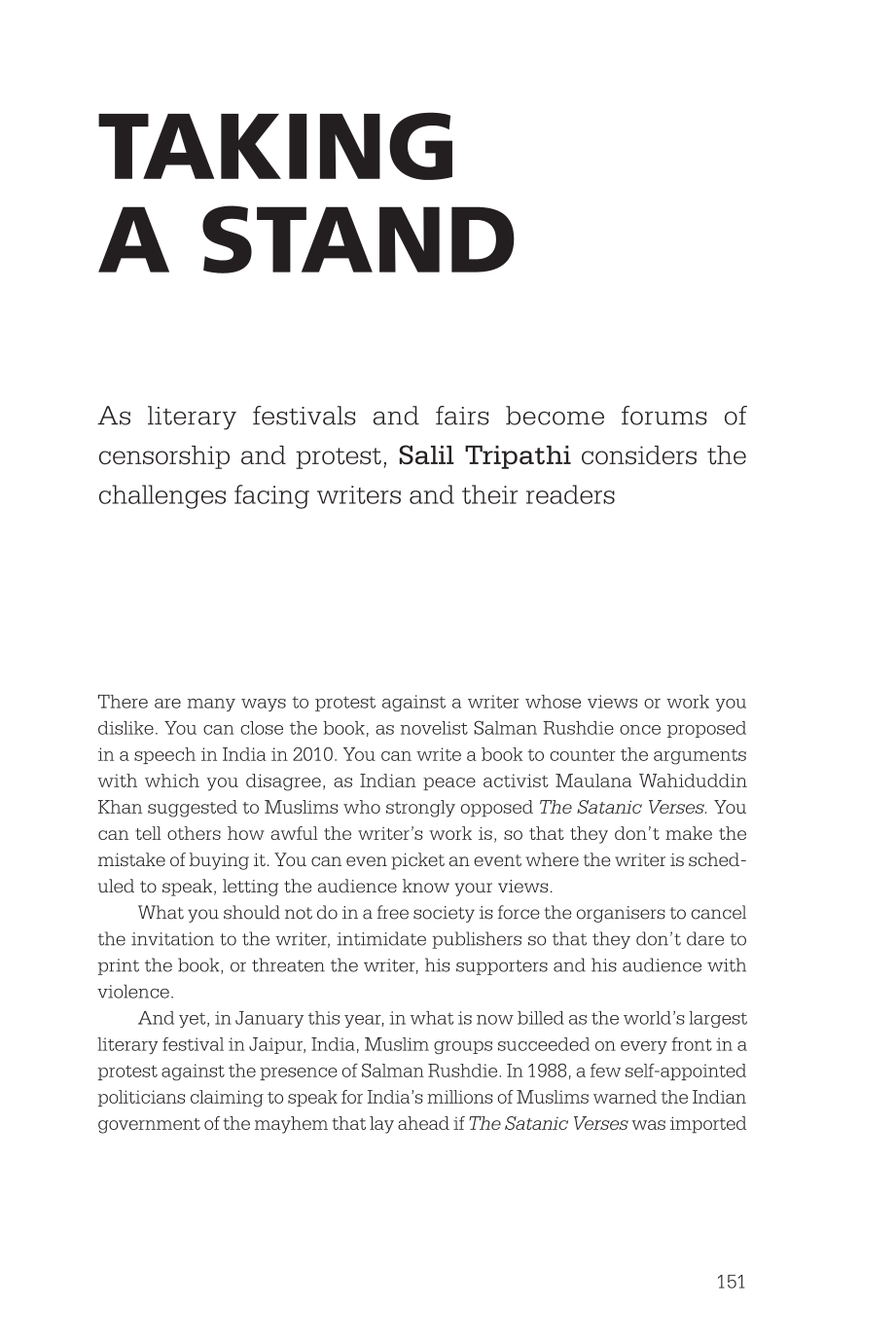
And yet, in January this year, in what is now billed as the world’s largest literary festival in Jaipur, India, Muslim groups succeeded on every front in a protest against the presence of Salman Rushdie. In 1988, a few self-appointed politicians claiming to speak for India’s millions of Muslims warned the Indian government of the mayhem that lay ahead if The Satanic Verses was imported or published in India. The government acquiesced and imposed an import ban; Penguin India, which had the Indian rights to publish the novel, decided not to print the edition in India at all. Nearly a quarter century later, the darul-uloom of Deoband, a seminary that trains conservative Muslim preachers, told the organisers of the Jaipur literary festival that they should not have invited Rushdie. The festival stood firm, until Rushdie decided to pull out: he had received what appeared to be credible warnings from the state police that a hit squad was on its way. The threat turned out to be a hoax.
Then the festival organisers did something odd. When four authors – first, US-based Amitava Kumar and Hari Kunzru, and later, India-based Ruchir Joshi and Jeet Thayil – read out passages from The Satanic Verses, the festival intervened to stop their protest. Police officers stepped in and questioned them. The festival also issued a statement distancing itself from the writers, as though they had done something shameful or wrong.
The organisers then tried to retrieve the festival’s central purpose, and decided to conduct a live conversation with Rushdie via video-link. But the Muslim protesters, once appeased, wanted more; they threatened again, saying they would demonstrate at the festival and would not be held responsible for the consequences. High drama followed, and the owner of the palace where the festival takes place pulled the plug, refusing to allow the video-link to proceed. Ironically, Rushdie then got an audience of millions, as he spoke to Indian journalist Barkha Dutt from London on television within an hour of the cancellation, multiplying his audience. Meanwhile, several political activists belonging to all major parties filed lawsuits against the four writers, saying that their act intended to cause public unrest and hurt sensibilities.
There was more than one redeeming outcome however. A group of writers circulated a petition in Jaipur calling for the lifting of the ban on The Satanic Verses. Delhi-based critic and writer Nilanjana Roy was one of the prime movers behind it. She thinks India has two models of literary festival – one based on the durbar, and one on the open math, or field. The durbar festival celebrates literary pomp, but is uncomfortable with genuinely subversive or revolutionary discussion; the open math encourages free expression of all kinds, providing a space outside the control of the state. ‘It is very different from the polite and ultimately unthreatening views of drawing-room conversations,’ she says. Reflecting on Jaipur, she adds: ‘What we saw there was the durbar reaction – it wasn’t just that the organisers distanced themselves, laying down rules for what can and can’t be said at an apparently open literary event, but that they reflected the Indian middle-class discomfort with dissent. Festivals are hollow spectacles if they can’t protect what is truly important – the free movement of words and ideas. If they set up border posts where an idea has to go through security checks before it can be articulated, you don’t have a literary festival, though you may still have a grand literary circus.’
Muslims shout slogans against Salman Rushdie, who cancelled his appearance at the Jaipur Literature Festival because of threats, 20 January 2012
Credit: Altaf Hussain/Reuters
Two months after the Jaipur fiasco, Rushdie came to New Delhi and spoke at a conclave organised by a magazine. He said pretty much what he wanted to about pretty much everything.
A literary festival is above all an exchange of ideas. The ideas may be deplorable to some, inspiring to others; controversial to one group, affirming to another. A festival that does not permit room for ideas, for debate, becomes a monologue, or, as Roy puts it, a circus; it is no longer a conversation.
There is of course an element of spectacle, of theatre in a literary festival – the grand entry, the large screen, the panel, the attractive presenters, the music programmes, the cocktail parties, and the autograph-signing sessions. A writer in front of an audience, expressing his or her view, can have an electrifying effect; a spirited debate between writers, or writers and readers, can be a memorable experience.
The instinct of the organisers at Jaipur was right – to create space where doubts can be raised and ideas challenged. But when the crunch came, the festival caved into groups threatening violence while the state abdicated its responsibilities, failing to stand by the four writers who protested. The festival could not force Rushdie to come, and Rushdie had good reason not to come; nor could the organisers prevail upon the owner of the palace, or the security forces, to provide sufficient protection to a peaceful audience which had gathered to listen to a writer. The organisers themselves have since also been targeted in lawsuits filed by activists from Muslim groups and political parties.
While outwardly a democracy, India’s constitutional guarantees of free speech place several limits, such as restricting speech that may incite violence, offend others, or promote religious hatred. Two specific sections in its criminal laws grant the state the power to prosecute anyone who misuses his right to speak freely, as well as giving any individual who claims to have been offended by a particular speech or piece of writing the right to lodge a criminal complaint.
Authors in Sri Lanka have faced a different pressure – the call to boycott. This issue came into focus last year, when many writers, including Arundhati Roy, called upon invited authors to boycott the Galle literary festival in Sri Lanka, as a mark of protest against the brutal manner in which the army annihilated the Tamil Tigers and killed tens of thousands of civilians during the last phase of the civil war. In the end, only a few writers complied with the boycott. The debate over Galle became emotionally charged, as Tamil and other human rights activists quite rightly condemned the Sri Lankan government over the way it conducted the war. Is it even possible to have a dialogue with a government accused of crimes against humanity?
Michigan-based novelist V V Ganeshananthan has thought long and hard about this issue. She wrote a moving novel, Love Marriage, about a family from the Tamil diaspora and its relationship with the country. She decided to participate in the festival in 2009 before the final onslaught in the civil war. It was a bold decision, and she wrote an eloquent essay arguing against a boycott on the website www.themillions.com, where she said: ‘The great traditions of solidarity are built on conversation, long and careful study and thought, and yes, informed travel of the mind and body – not the petition of a moment. This is a long engagement, and must emphasise serious exchange – something that has no chance of happening if the door is closed.’
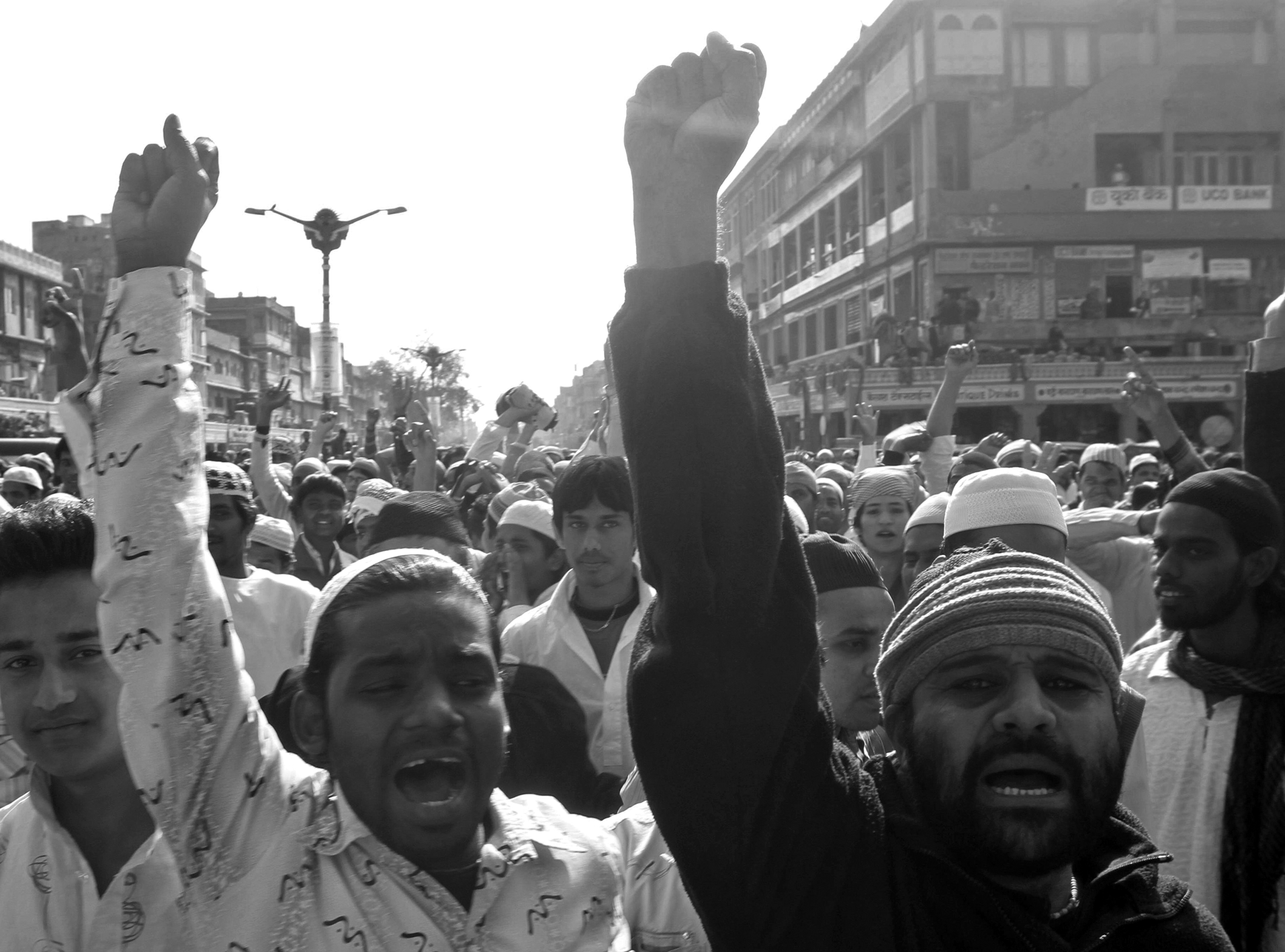
Galle Literary Festival participants and attendees were encouraged to share artwork and comments on the festival's graffiti wall, Galle, Sri Lanka, 29 January 2010
Credit: Dinuka Liyanawatte/Reuters
Reflecting on the festival three years later, she says: ‘It is hard to make absolute arguments – the politics of each festival and state are particular, and should be looked at that way – but if a festival did not provide real room for opposition and argument, and if activists in the country advocated a boycott, I would consider it. Thus far, that hasn’t been the case in Galle. Many activists have worked or participated there. A number of people involved in its organisation are critical of multiple actors in Sri Lankan politics.’ She is aware that she is herself part of the Tamil diaspora, which is regularly criticised in the Sri Lankan media. ‘By going to Galle, I provide something of a counter-narrative: the diaspora isn’t a faceless monolith, and it has its own varied and complicated stories. I also have the opportunity to be in conversation with an audience that’s actively seeking out new ideas about literature and politics. I want Sri Lanka to be in conversation with the world beyond its shores – and just as importantly, vice versa.’
China offers an even bigger challenge. It hosts literary festivals, and some writers have questioned whether an open dialogue there is even possible. Tina Mani Kanagaratnam, co-director of the Shanghai International Literary Festival and the Capital Literary Festival Beijing, which she has been running for a decade, says: ‘Increased openness is a journey. It does not come from freezing out countries, it comes from engagement – yes, on their terms – and it comes slowly, but it comes. We are well-behaved guests in China, and we give controversy a wide berth. But within our festival, we do have discussions and dialogue, and that dialogue helps us understand each other, and share why each of our value sets are so important to us. That is a key point: China and the west need to understand each other, and not have one dictate what “universal values” are to the other. No, we don’t ever have a writer that would be considered controversial, because that would mean getting shut down, and at the end of the day, being engaged is much more important than turning our backs in protest. To turn our backs, even in the name of principle, is to turn our backs on Chinese writers too.’
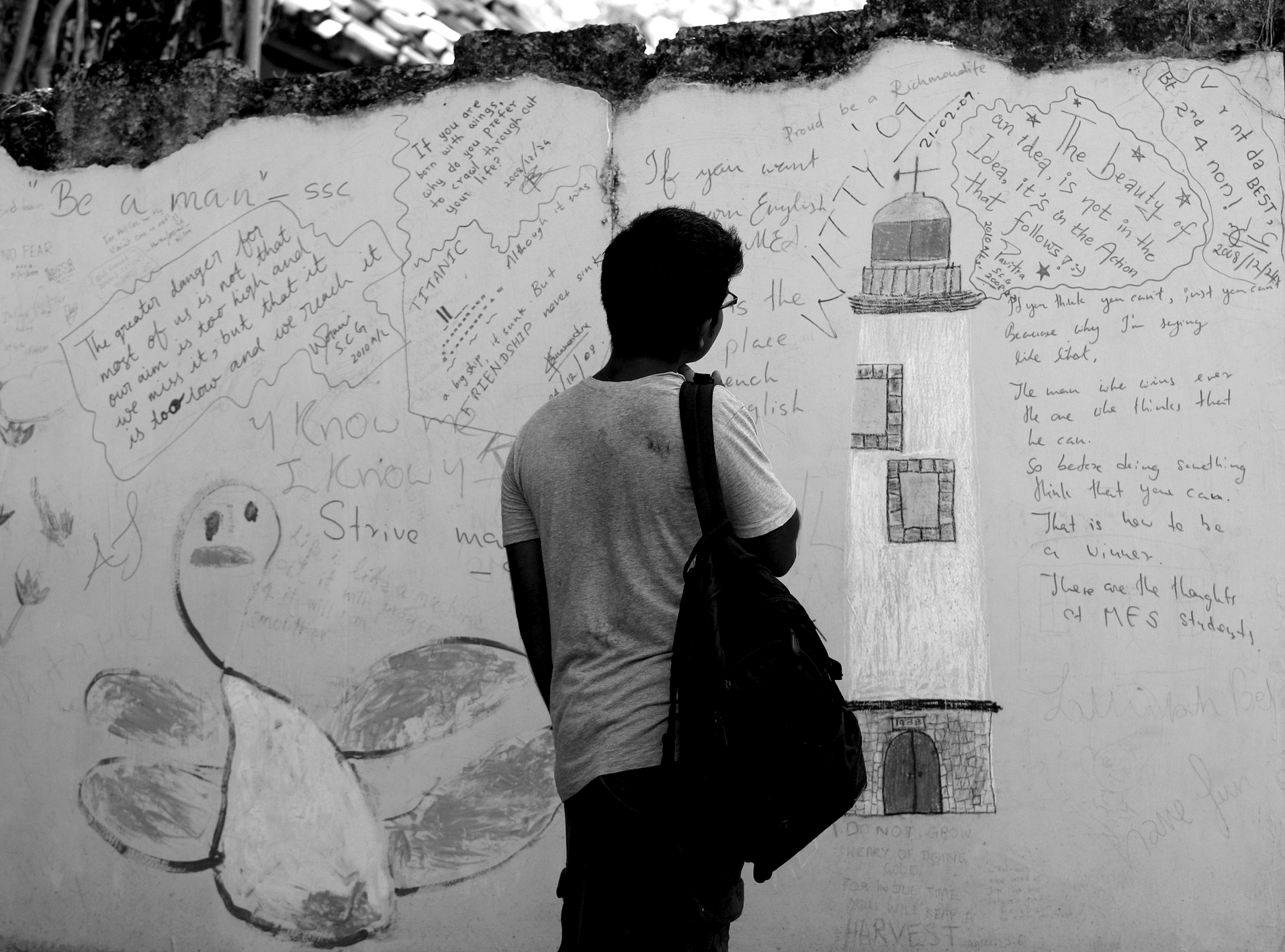
But what about London? Should Britain crowd out criticism? China was this year’s ‘market focus’ at the London Book Fair, which is a trade fair. British publishers want access to the Chinese market, and Chinese authors would like wider recognition. But which Chinese authors? The invited list of authors at this year’s festival was approved by the Chinese government, which inevitably meant that authors who have defied censorship in China, or who have been imprisoned for questioning the Party’s authority, were absent. Authors such as Jung Chang and Ma Jian, who live abroad but have written critically about China, were not part of the official delegation. In contrast, when India was the market focus a few years ago, several Indian authors based in the United States or Britain were part of the official programme.
There is a word in Mandarin – zige – which can be loosely translated as standing, or worth. The Asia scholar Ian Buruma points out in his thoughtful book about Chinese dissidents, Bad Elements, the Chinese government characterises activists and writers who leave China as figures who have lost their standing. By not including Jung Chang and Ma Jian in the pantheon of contemporary Chinese writers, the Chinese government was delegitimising them.
Ma contests the government’s standing on this issue. The London-based author of Beijing Coma, the epic novel about the Chinese nation’s stultification after the Tiananmen Square massacre in 1989, opposed the presence of officially approved Chinese authors at the London Book Fair this year. Many human rights and literary organisations expressed disappointment, in particular over the British Council agreeing with the Chinese authority’s choice of writers. English PEN, which invites speakers attending the fair each year at its literary cafe, invited only one official delegate whose work it had supported in the past and pointedly hosted Jung Chang at its cafe. Its director, Jonathan Heawood, said: ‘There are more Chinese writers in detention than are included in the official programme at the London Book Fair. That’s why we can’t endorse this programme by uncritically hosting these authors. However, we are looking forward to meeting all the writers who are coming, and to debating free expression and literature in China. We want to engage with Chinese authors, but we do not want to endorse the Chinese regime.’ It is always a challenge, and the truth is nuanced. Just as it is mindless to boycott every government with a poor human rights record, it is equally thoughtless to engage with every government uncritically. If a hypothetical festival in apartheid-era South Africa prevented black South African writers from participating, then invited international writers – black or white – would be expected to boycott such a festival. If a festival was organised by a government accused of genocide, writers would again be expected to stay away. Should a writer use such opportunities to shame those with power?
Protests at the London Book Fair, where China was the 'market focus', 17 April 2012
Credit: Robert Sharp
Hari Kunzru, who read from Rushdie’s novel in India and now faces charges there, says: ‘The important point is that freedom of speech is only defended by exercising it. Asserting the value of freedom of expression in the abstract is all very well, but you only find out who’s genuinely committed when you actually say something controversial or transgressive. In between the sterile politics of cultural boycott and the equally sterile politics of uncritical “engagement” is a space where you can force power to speak – that’s the crucial point here. Power would always rather remain silent and invisible. Forcing it to reveal itself is a powerful political act.’
Such acts have consequences, and brave writers, for centuries, have spoken truth to power.