




Abstract
Recognizing students’ preferred learning styles can inform instructional design and support academic success, yet the linkage between learning-style models and teaching practice is often overlooked. In this paper, the interactions between prominent learning style models and both the cognitive and teaching styles are discussed and presented in a novel visual way. Additionally, two courses shared by Electrical Engineering (EE) and Mechanical Engineering (ME) students, and taught by two professors with contrasting teaching styles, are used to assess how instructional approaches interact with learner preferences and outcomes. This research aims to raise two research questions: 1) Should instructors adjust their teaching style based on students’ discipline? 2) Is there a correlation between students’ learning style and their choice of field of study? Four case studies are used to evaluate the impact of teaching styles on the learning of ME and EE students. Results indicate a discipline-specific pattern: EE students predominately display abstract, intuitive, and aural preferences and perform well in theory-oriented settings, whereas ME students more often exhibit concrete, sensing, and kinesthetic preferences and benefit from real-world, hands-on examples to grasp theoretical concepts. These divergent preferences may influence disciplinary orientation and have clear implications for curriculum and pedagogy. While the limited sample precludes definitive conclusions, the observed trends suggest that combining abstract exposition with applied, experiential learning could better accommodate diverse engineering learners.
Keywords
Introduction
Cognitive styles and learning styles are two important terms that are receiving significant attention and focus in educational research. As a result, there are multiple definitions and models for cognitive styles and learning styles in literature. Cognitive style is usually defined as the individual differences in processing that are integrally linked to a person’s cognitive system and a person’s preferred way of processing information. 1 Cognitive styles are considered partially fixed, relatively stable, and possibly inherent preferences of an individual.
On the other hand, learning styles are classified based on an individual’s preferred way of responding to learning tasks. 1 It can be defined as the cognitive characteristics, affective and psychological behaviors that serve as indicators of how an individual perceive, interact with, and respond to learning environment.2–4 Furthermore, learning styles is used to characterize how individuals concentrate, process, and retain information. 5 Finally, learning styles of individuals vary either with regard to what mode of instruction is most effective for them 6 or based on how they collect, organize and transfer information into useful knowledge. 5
For clarity throughout this paper, we establish that dimensions refer to continuous scales defining a model’s structure, resulting styles describe categories emerging from intersecting dimensions, and all styles represent preferences along continua rather than rigid categories.
Following this brief overview of the definitions of both cognitive styles and learning styles, it becomes evident and logical to acknowledge the inherent interconnections and interdependence between cognitive styles and learning styles. Cognitive styles research suggests that there are three categories of psychometric qualities that influence learning, namely: teaching styles, learning styles, and cognitive styles.1,7 As shown in Figure 1, the core of the learning process is the cognitive styles, and hence, the role of cognitive style in the learning process is proven to be important, particularly in the early stages of education.1,8 While Roberts 8 focuses on architectural design, it provides a general framework for understanding the impact of cognitive styles on creative problem-solving, which is a skill relevant to many engineering disciplines. Note that the relationship between teaching styles and learning styles is a two-way relationship, which is indicated in Figure 1 by the double arrow symbols.
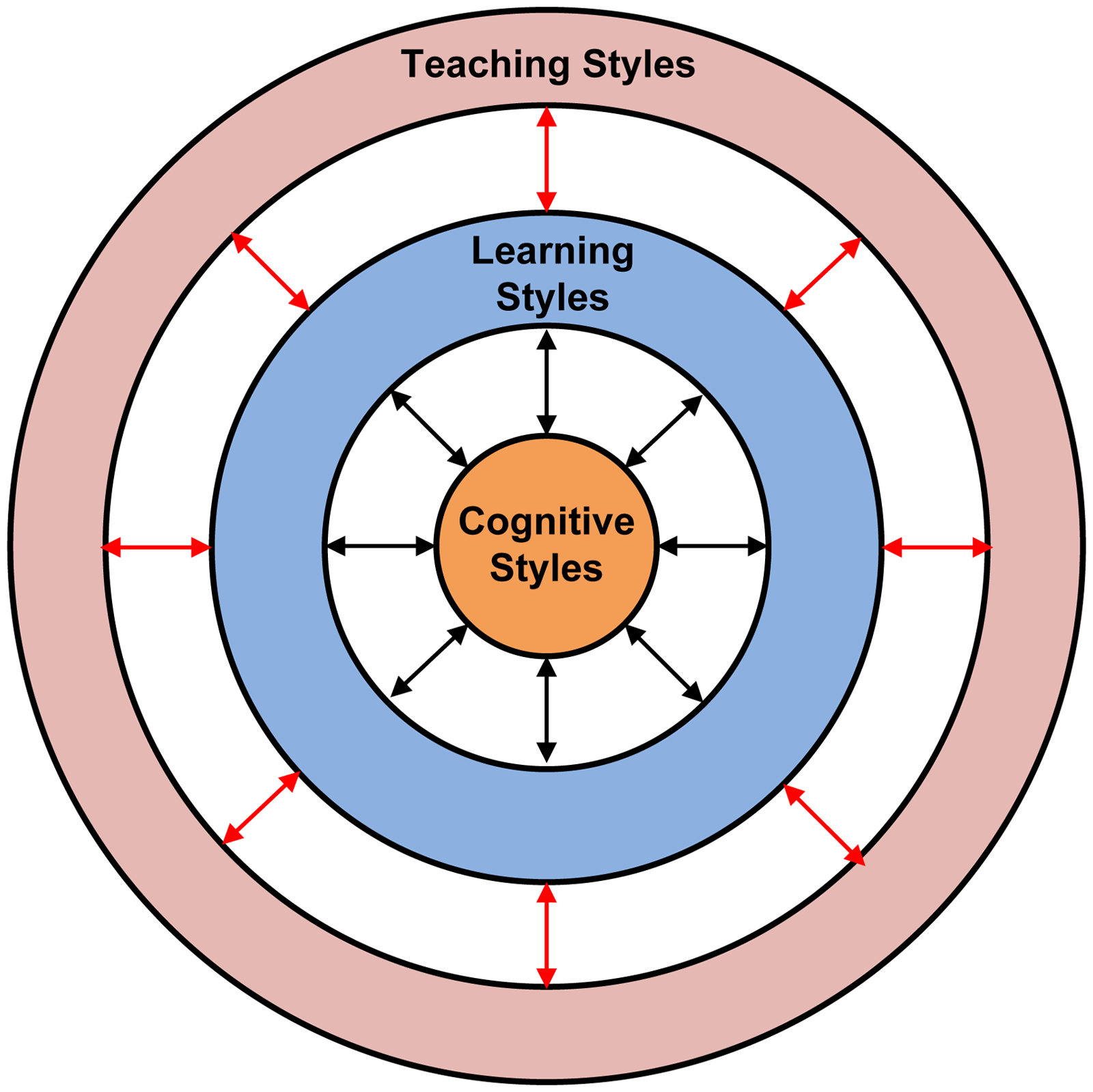
Inherent interconnections of cognitive styles, learning styles, and teaching styles.
Some research suggests that aligning teaching styles with individual learning preferences may contribute to a more efficient learning environment. However, the extent and nature of this relationship remain a topic of ongoing investigation, particularly in engineering education Note that while cognitive styles tend to be fixed and relatively stable, learning styles can evolve and be enhanced if a good teaching style strategy is implemented efficiently.1,9
The development of learning style theories is rooted in the field of psychology. These theories share a common foundation, positing that each person has a unique way of learning and expressing their understanding, reflecting the inherent diversity among individuals. 10 In recent decades, a wide array of theories and models related to learning styles has emerged.11–16 One of the most recognized models is the Kolb model, which is an experiential learning model based on four categories of learning styles: diverging (concrete and reflective), assimilating (abstract and reflective), converging (abstract and active), and accommodating (concrete and active).2,3,5,6,10–12,17–19
Additional, the Kolb model describes cognitive styles using seven dimensions, each of which comprises two contrasting poles. These seven dimensions and its opposite poles can be described as analytical versus synthetic, deductive versus inductive, rigorous versus expansive, constrained versus unconstrained, convergent versus divergent, formal versus informal, and critical versus creative.1,20 It is important to note that cognitive styles are often conceptualized as continua, meaning that individuals may exhibit a range of characteristics from different cognitive styles, and their preferences may vary depending on the context and the task at hand. These styles are not exclusive categories; they represent general cognitive tendencies that individuals may display.
Before moving on with the discussion, the visualization principles for learning style models are discussed. Figures 2 to 4 illustrate interactions between teaching, cognitive, and learning styles. Critically, these visualizations employ different approaches to represent complex relationships: Kolb (Figure 2) maps two intersecting dimensions to generate four style categories; FSLSM (Figure 3) portrays four independent dimensions operating on separate continua; while VARK (Figure 4) uses relative circle sizes to indicate modality preference strength. It is essential to recognize that no single visualization can fully capture the complexity of learning styles, as individual preferences exist along spectra rather than as discrete points.
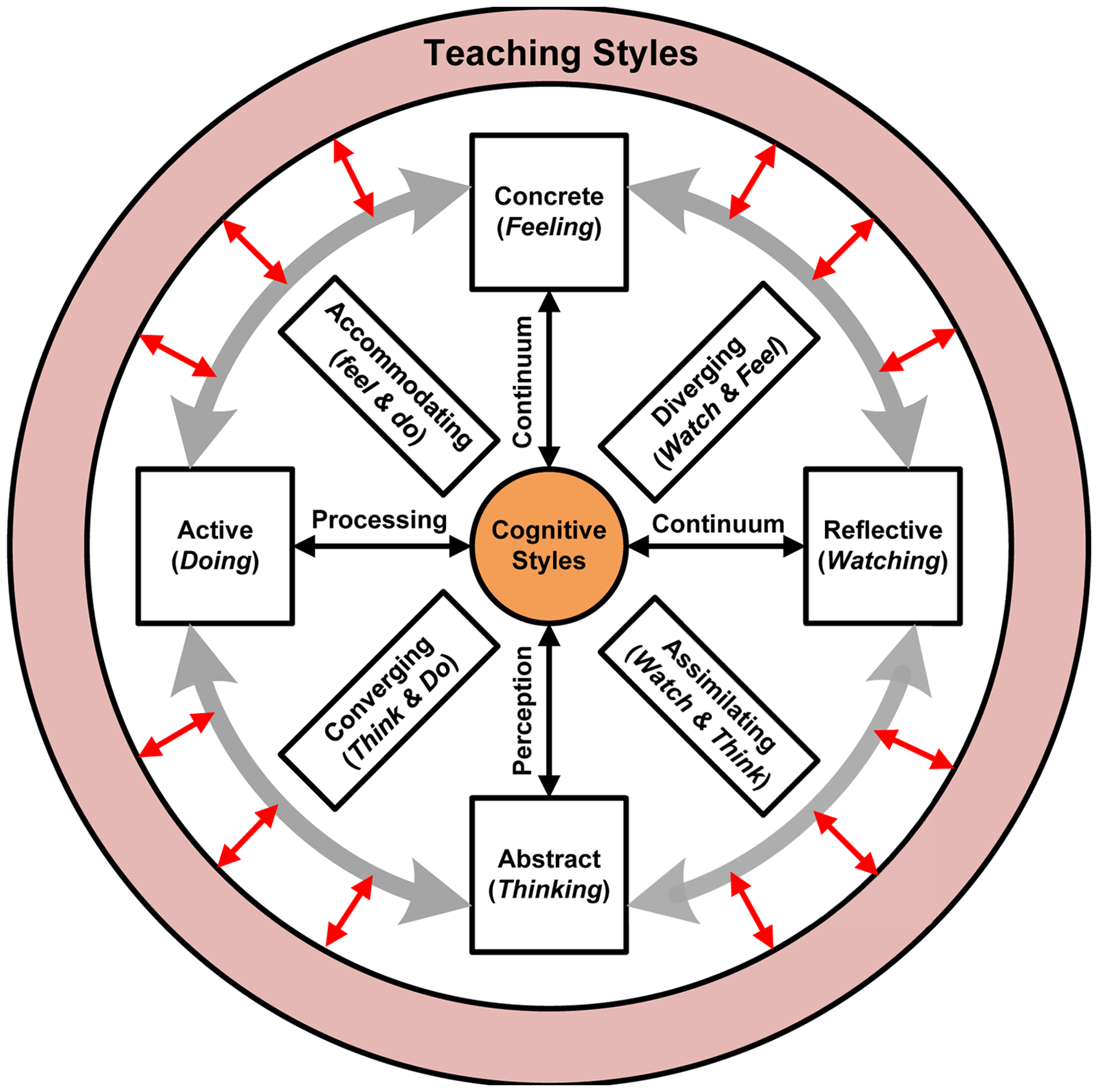
Augmented Kolb model structure.
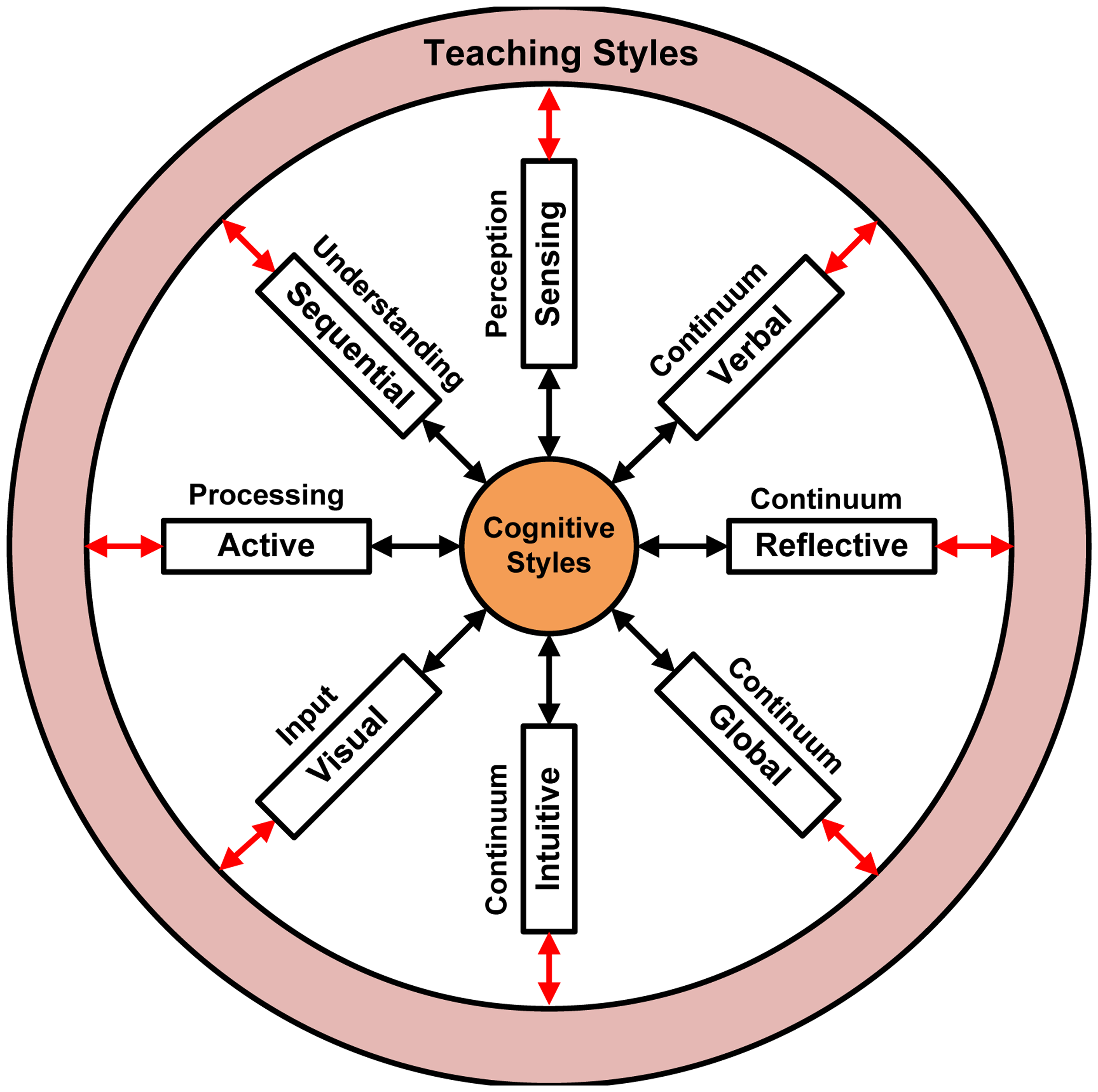
Augmented FSLSM model structure.
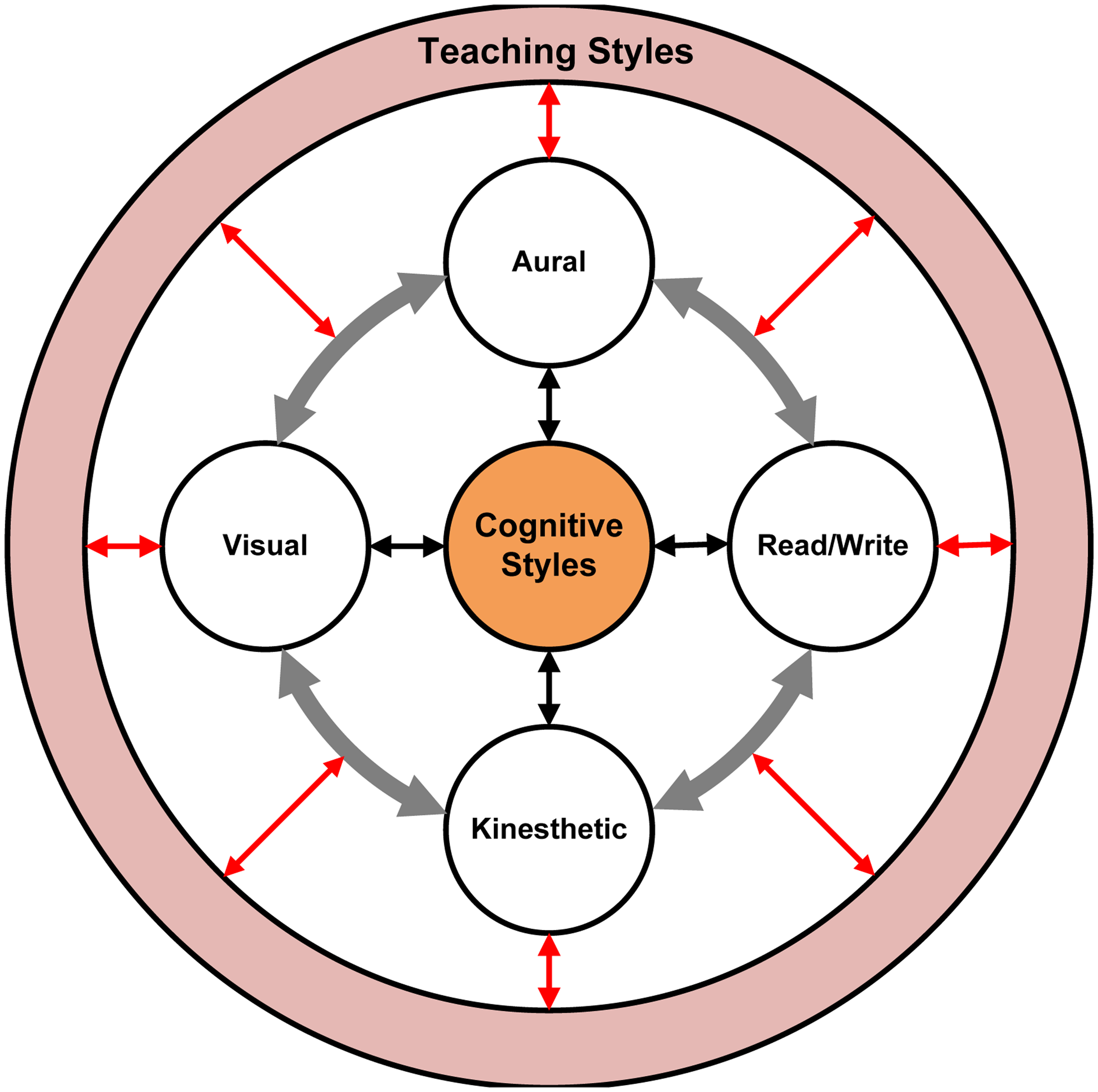
Augmented VARK model structure.
Figure 2 depicts an augmented Kolb model structure that reflects the operational principles of the Kolb model, connecting it to the cognitive styles and learning styles. The Kolb model is based on the notion that students’ learning preferences can be mapped across two dimensions. The initial dimension signifies the progression from concrete experience to abstract conceptualization, as observed on the vertical axis, reflecting their approach to knowledge acquisition. The second dimension portrays the shift from reflective observation to active experimentation, depicted along the horizontal axis, illustrating the knowledge acquisition process. In most studies available in the literature that define learning styles based on the Kolb model, the model is illustrated without the cognitive styles and learning styles shown in Figure 2.
Augmenting the Kolb model by considering both the cognitive and learning styles along with the teaching styles, provides a more enhanced overall view of the learning process. The structure of a typical Kolb model reflects on the relationship between teaching styles and cognitive styles. However, to communicate the duality between cognitive styles and learning styles on one hand, and a similar duality between teaching styles and learning styles on the other hand, Figure 2 is generated.
Two other well-recognized models are the Felder-Silverman Learning Style Model (FSLSM) and the VARK model, which will be explained next. In addition, the models are augmented to include the interaction of the teaching styles with the cognitive/learning styles. Note that the same approach used for the augmented Kolb model will be utilized to visualize the structures of both the Felder and VARK models and their relationship with teaching styles and cognitive/learning styles.
Felder-Silverman Learning Style Model (FSLSM) is another well-recognized model, originally developed to address learning differences among engineering students. This model categorizes students learning style into four dimensions. Each dimension consists of two polar opposites. The first-dimension is information processing, where learners are classified as either active learners or reflective learners. Active learners thrive by applying, trying things out, and working with learning materials, while reflective learners prefer to contemplate the material and engage in introspection. The second-dimension is perceiving information, and learners in this dimension are split into sensing learners and intuitive learners. Sensing learners favor learning concrete facts and materials, and they tend to be practical and realistic, often seeking to connect learned material with the real world. In contrast, intuitive learners gravitate toward abstract learning resources, such as theories and their fundamental concepts.
The third-dimension is related to how learners input information and differentiates between visual learners and verbal learners. Visual learners excel when presented with pictures, diagrams, flowcharts, or demonstrations, whereas verbal learners, according to some models, may express a preference for written and spoken materials as their preferred mode of learning. However, it is important to recognize that individuals can learn through multiple modalities, and this preference does not necessarily equate to exclusive effectiveness. The fourth and final dimension of the FSLSM model involves understanding information and categorizes learners into sequential learners and global learners. Sequential learners thrive by taking small incremental steps, following step-by-step paths to find solutions, and building their understanding from individual parts to the whole. On the other hand, global learners excel in holistic thinking processes, grasping concepts in large leaps.2,3,5,10,11,21–25 Figure 3 offers a comprehensive depiction of the interactions and interconnections within the FSLSM model of learning styles. Felder proposed that the majority of engineering students tend to be visual, sensory, sequential, and actively engaged learners.13,25 However, as will be discussed in the results section of this paper, different classes of learners have the tendency to study different sub-fields of engineering.
The VARK, which is an acronym for visual, aural, read, and kinesthetic, model, was developed by Neil Fleming in 1987. The VARK model classifies students into four primary learning modalities, based on their preferences for processing and retaining information: visual, auditory, read/write, and kinesthetic.6,10,18,22,23 Visual learners find visual aids such as charts, diagrams, images, and videos to be the most effective for their learning, as they can grasp and retain information more efficiently when presented graphically. Aural or auditory learners, on the other hand, flourish in environments that emphasize listening and speaking. They prefer educational settings involving lectures, discussions, and verbal explanations, as these methods help them remember information more effectively through sound and conversation. Read and also write learners demonstrate excellence when utilizing written or text-based materials for learning. Their strengths lie in reading, note-taking, and summarizing information in written form. Finally, kinesthetic learners have to feel or live the experience to learn; they prefer simulations of real practice and experiences, field trips, exhibits, samples, photographs, case studies, “real-life examples”, role-plays, and applications to help them understand principles and advanced concepts. Figure 4 presents the augmented VARK model, which highlights the needed interactions between the learning/cognitive styles and the teaching styles. As represented in the figure, a two-way relationship has to exist between the learners’ cognitive styles and the instructor’s teaching style to attain a rich educational experience.
Similar to the cognitive styles, the learning styles space needs to be visualized and considered as a continuum space. This means that individuals may have a combination of these learning preferences, and their preferred style can vary depending on the subject matter and the context. The learning style model helps students and educators understand how to adapt teaching and learning methods to accommodate these different learning styles and to enhance the learning experience for each student.
Learning style plays an energetic role in education, as it helps students to increase their cognitive capacity and to deal with the learning difficulties, which generally improves their academic performance.21,26 Because cognitive styles are built-in characteristics of each individual students, each student is expected to have different learning styles.21,27 Numerous factors influence a student’s learning styles, some are intrinsic and others are extrinsic. Intrinsic factors are factors such as social background, culture, prior experiences, dedication level, cognitive ability, motivation, self-confidence. Examples of extrinsic factors might be the quality of the curriculum and teaching, the efficiency of institutional support systems, learning environment, government policies.3,11,24,28–30 Some learning style theories propose that matching teaching strategies to a student’s perceived or expressed learning style may contribute to improved understanding and retention.21,22,31 However, the empirical evidence supporting this claim is mixed, and other factors, such as motivation, prior knowledge, and the specific content being taught, likely play significant roles. The connection between learning style and students’ achievement has been supported by a number of researchers.6,32,33 Recognizing an individual’s learning style typically yields a beneficial effect on academic performance.6,34 When the learning styles of students in any given class is significantly mismatched with the instructor’s teaching style, the educational process will be hindered. Students are likely to become uncomfortable, bored, and inattentive in class; in addition, they might perform poorly on tests, which might lead to losing motivation to study.2,3,13,21,34–38
Multiple studies have explored the influence of learning styles on students’ performance from diverse viewpoints and concluded some interesting, and in some cases conflicting, results. Some of these studies concluded that, with respect to engineering students, there is not a clear difference in preference for a particular learning style. 18 The findings of another study indicated that there is no significant relationship between students’ learning styles and academic achievement for technical subjects or course learning outcomes.3,24 However, a significant amount of studies claims the existence of a positive correlation between students’ learning styles and their learning outcomes and academic performance. 6 For example, with respect to Mechatronics Engineering, the kinesthetic style of the VARK learning model is found to be more preferred among other learning styles. This can be explained by the fact that Mechatronics Engineering is a multidisciplinary engineering field where the kinesthetic style is proven to be important in creating systems and machines within this field. 23 The same can also be said for Material engineering, as most of the learners favor the kinesthetic learning style. 22 A comprehensive survey of engineering students at different institutions indicated that the majority of the students are more active than reflective, more sensing than intuitive, more visual than verbal, and more sequential than global learners. 2 When it comes to electrical engineering students, a combination of active, sensing, visual, and sequential learning styles (especially sensing and visual) is preferred among the majority of the students. 24
Note that a number of studies indicated that the visual learning style is the most common learning style among engineering students.5,11,21 One study shows that most engineering students tend to be active, intuitive, visual, and sequential learners, based on the Felder learning model. 10 However, another study indicates that engineering students tend to be visual, broadly sensory, and sequential learners. 25 The contradiction between the two studies in Hemlata and Sachin 10 and Byrne 25 with respects to engineering students having an intuitive or a sensory learning style can be explained by the hypothesis of this paper, which is that students’ in different sub-field of engineering have different learning styles.
Learning style is an important aspect in education, as it can influence students’ learning in different ways, either positively or negatively. Matching teaching styles with students’ preferred learning styles could lead to improvements in students’ academic achievements and learning outcomes. Therefore, it is essential for teachers to invest in understanding students’ learning styles, so they can implement the best practices in related learning activities. Note that learning styles should never be used to predict a student’s academic performance or draw inferences about a student’s capabilities, because this can lead to negative psychological, personal, and academic effects on the student.
While learning styles theories remain popular, major reviews find no empirical validation for the “meshing hypothesis”, which is the claim that aligning instruction with individual learning preferences improves outcomes. For instance, in Pashler et al. 39 performed a deep analysis of learning styles literature and found no credible evidence for the meshing hypothesis. Moreover, the authors in Coffield et al. 40 evaluated various learning style models and concluded that none of the studied models demonstrated sufficient reliability, validity, or practical utility to justify educational application. They explicitly advised against adopting these models in post-16 education. In Newton, 41 the author further claims that despite this overwhelming discreditation, the learning styles myth persists, with 89% of recent pedagogical papers uncritically endorsing it. These skeptical views, while claiming that there is no robust evidence that tailoring instruction to these preferences enhances achievement, underscore the overwhelming research done to study the learning styles.
The goal of this paper is to understand the learning style differences between Electrical and Mechanical Engineering students, with the aim of enhancing and optimizing the teaching process. The rest of the paper is organized as follows. Contributions and methodology are discussed in Section “Contributions and Methodology”. The various case studies presented in this paper are discussed in Section “Case studies”. The results and discussion of findings are presented in Sections “Results and Discussion” respectively. Finally, the paper is concluded in Section “Conclusion”.
Contributions and methodology
Two subjects that are common among both Mechanical engineering and Electrical engineering student disciplines – 1) control systems and 2) electronics and instrumentation – were selected as a basis for the study. Four cohorts of students from both disciplines were studied. Professors from both disciplines rotated the teaching of a control systems course for electrical engineering students, and an electronics and instrumentation course for mechanical engineering students. In all cases, the professors had prior experience teaching the corresponding course within their own discipline. For example, the mechanical engineering professor had taught the control systems course for mechanical engineering students prior to teaching it for electrical engineering students. This is an important consideration to ensure that instructor preparation does not play a role in biasing the results of the study. In addition, the teaching experience of both professors was comparable in terms of number of years and student evaluations.
Data points from various course evaluations are used to compare the suitability of a teaching style to an engineering discipline. Note that student learning styles were not independently assessed via validated instruments (e.g., Felder-Silverman Index). We utilize course evaluations as proxies for perceived teaching effectiveness and student preferences, not as direct measures of learning gains or cognitive styles. While evaluations provide insight into satisfaction with instructional approaches, they can also be used to establish a relationship between teaching style and conceptual understanding.
Case studies
Four case studies are included in this paper. Two professors with two different teaching styles participate in the case studies. Professor A-ME is a mechanical engineering professor who when introduces a topic starts with the physical and real-life applications before explaining the theory and any related mathematical concepts; however, Professor B-EE is an electrical engineering professor who prefers to start with the theory and the related mathematical concepts of the topic before discussing the physical and concrete applications of a given concept. Finally, the mean and the variance of the cumulative GPA, along with the number of students in each of the batches are listed for each case study. As will be noted, there is usually a small difference between the averages, which indicates that the academic level of the batches used in any case study are of equivalent academic aptitude. This equivalency in the academic level between the batches ensures that the outcomes and results of the case studies is not affected by the quality of the student.
Case study I
This case study was designed to analyze the impact of professors with different teaching styles on Mechanical Engineering students. The course chosen for this case study is EMEC360 – Electronics and Instrumentations with Lab, which is an electrical engineering course that is taught as a part of the mechanical engineering degree core requirements. This course had a lab component where students had to conduct various experiments. These experiments are based on building circuits from passive electric components, and using electrical equipment such as function generator, digital multimeter and oscilloscope. For EMEC360, students were assesed using the following assessment tools: homework assignments (15%), short quizzes (15%), labs(20%), midterm(20%) and final (30%) exams. Typically, five assignments and five quizzes are administered during the semester. For the lab component, students have to perform a total of 8 experiments and sit for a lab exam. Finally, two closed book exams are administered: a midterm in the middle of the semester and a final during the last week of the semester. The professors teaching the course have two different teaching styles. The course was taught by Professors A-ME and B-EE in two consecutive semesters. In addition, Professor A-ME taught this course five other times to Mechanical Engineering students, while this was the first time Professor B-EE teaches this course to Mechanical Engineering students. It is important to note here that Professor B-EE taught similar course to Electrical Engineering students multiple times. Both cohorts had a similar average GPA. The average GPA of the batch taught by Professor A-ME is 2.99/4.00, with a variance of 0.37; while the average GPA of the batch taught by Professor B-EE is 2.98/4.00, with a variance of 0.27. The number of students in the batches taught by Professor A-ME and Professor B-EE are 10 and 17 students, respectively.
Case study II
Similar to Case Study I, this case study was designed to analyze the impact of professors with different teaching styles on students; however, in this case study the impact on electrical engineering students is considered. The course chosen for this case study is EECE470 – Systems and Controls, which is a senior level course in which students are introduced to the field of control systems. By its nature, the field of control systems is a multidisciplinary field where students have to study the interaction between electrical and mechanical subsystems, along with other topics. For EECE470, students were assessed using the following assessment tools: homework assignments (15%), short quizzes (15%), project(20%), midterm(20%) and final (30%) exams. Note the assessment tools used in this course is similar to the assessment tools used for the course in Case Study I, with one difference. A course project is used instead of the lab component in EMEC360. This case study considers two different batches of electrical engineering students, taught by both professors. Professor B-EE taught this course four other times to electrical engineering students, while this was the first time Professor A-ME teaches this course to electrical engineering students. Note that Professor A-ME taught a similar course to mechanical engineering students multiple times. The average GPA of the batch taught by Professor A-ME is 3.16 / 4.00, with a variance of 0.26; while the average GPA of the batch taught by Professor B-EE is 3.29 / 4.00 , with a variance of 0.31. The batch taught by Professor A-ME had 9 students, while the batch taught by Professor B-EE had 16 students.
Case study III
In this case study, the learning style of students from different engineering disciplines (electrical versus mechanical) is investigated. The EECE470 course introduced in Case Study II, which is taught to electrical engineering students, and its equivalent course for mechanical engineering students EMEC365-Control systems are used as the base for this case study. Note that the textbook used for both courses is the same. Assessment tools for the EECE470 were discussed in Case Study II; however, for EMEC365 the 20% project component was replaced by a set of weekly labs that the students have to perform. Professor A-ME, who has a mechanical background, has taught EMEC365 to mechanical engineering students multiple times (five batches), and he has been selected to teach EECE470 for electrical engineering students. Note that Professor A-ME has a teaching style that relies on the pedagogical approach of connecting any course topic to practical real-life applications before covering the abstract and theoretical information of a given topic.
The number of mechanical engineering students registered for the EMEC365 course was 13 students, with an average cumulatuive GPA of 3.09 / 4.00 and a variance of 0.32. On the other hand, 9 electrical engineering students were registered for the EECE470 course, and they had an average cumulative GPA of 3.16 / 4.00 and a variance of 0.26.
Case study IV
This case study is a variation on Case Study III. Here, we investigate the learning styles of both electrical and mechanical engineering when taught by Professor B-EE. Similar to Case Study III, the courses used are both the EECE470 and the EMEC365. Professor B-EE taught the course once to mechanical engineering students and taught it five times to electrical engineering students. In order to compare the effect of the professors teaching style on the students learning style, a batch from mechanical engineering is compared to a batch from electrical engineering for each professor. Both batches were taught in the same semester of Fall 2019; however, each batch had their own lectures. The average GPA of the electrical engineering students was 3.19 / 4.00, with a variance of 0.1. On the other hand, the average GPA of the mechanical engineering students was 3.37 / 4.00, with a variance of 0.34. Note that the electrical engineering class had 7 students and the mechanical engineering students had 6 students.
Results
Mechanical engineering students tend to have a propensity for working with their hands. Most of the mechanical engineering students choose this discipline because they believe as an engineer they will get to work with their hands. Electrical engineering students, on the other hand, due to the nature of the discipline might specialize in sub-disciplines that do not require this physical interaction with the system.
As discussed earlier, in Case Study I Professor B-EE has the inclination to introduce the mathematical foundation and the theory of a topic before discussing the practical applications. His starting point when introducing a topic is the most advanced theoretical background that the students must have covered in prior courses. For example, students enrolled in EMEC360 have to study the working principle of a galvanometer; which is a device that utilizes deflection in a coil due to magnetic field to measure current flow. To introduce this topic, Professor B-EE started by introducing the equations that relates the force generated by allowing current to flow in a conductor of a certain length within a magnetic field. After that, the theory behind torque generation was presented, in the case where the current-carrying conductor was shaped as a loop. This led the discussion to basic D’Arsonval movement, which is the foundation for the galvanometer. It has to be noted that these discussions were aided by Figures 5 and 6. While the instructor did not systematically track question frequency, they observed that students sometimes asked more questions about physical and real-life applications, potentially indicating a greater interest in these aspects of the topic. Once a video of galvanometer was introduced to them, they were able to accept the theory and the math behind it. Note that this observation is just one possible interpretation, and other factors may have influenced student questioning behavior.
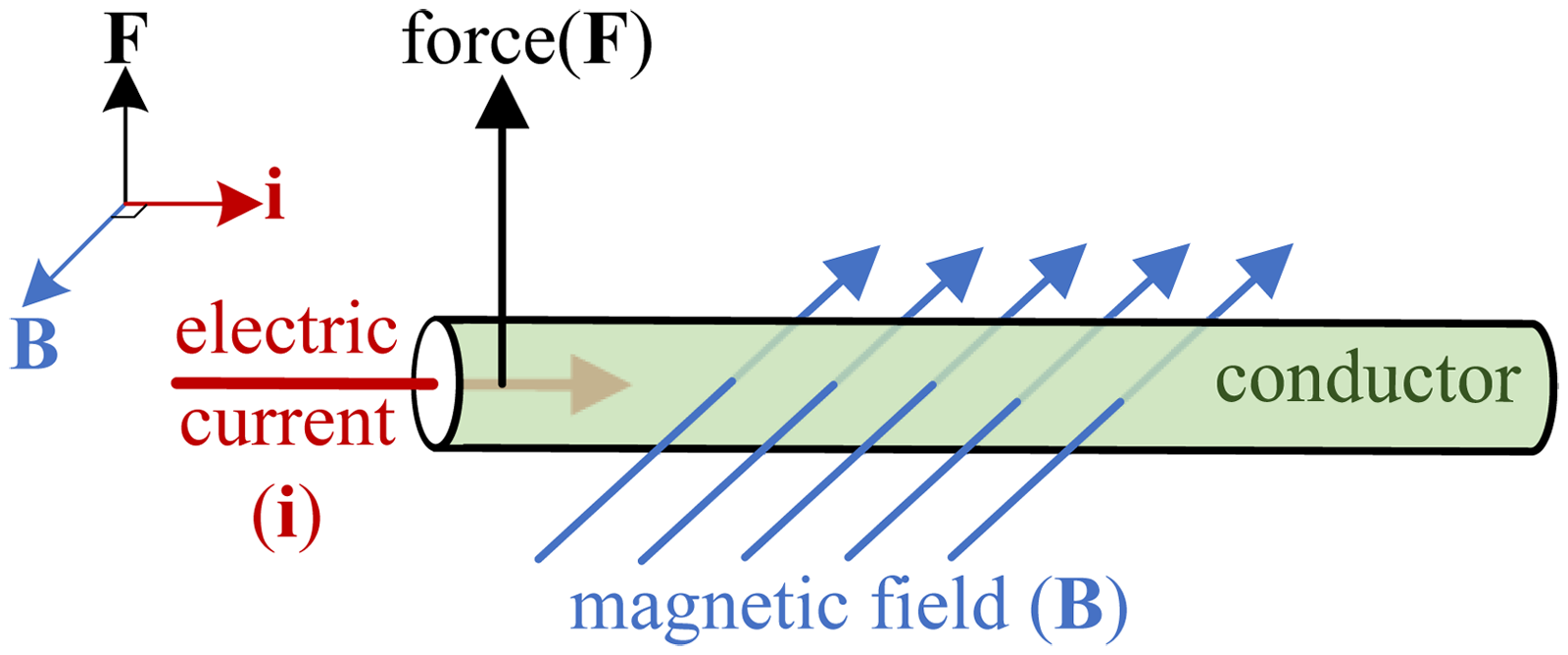
Force on a current-carrying conductor in a magnetic field.
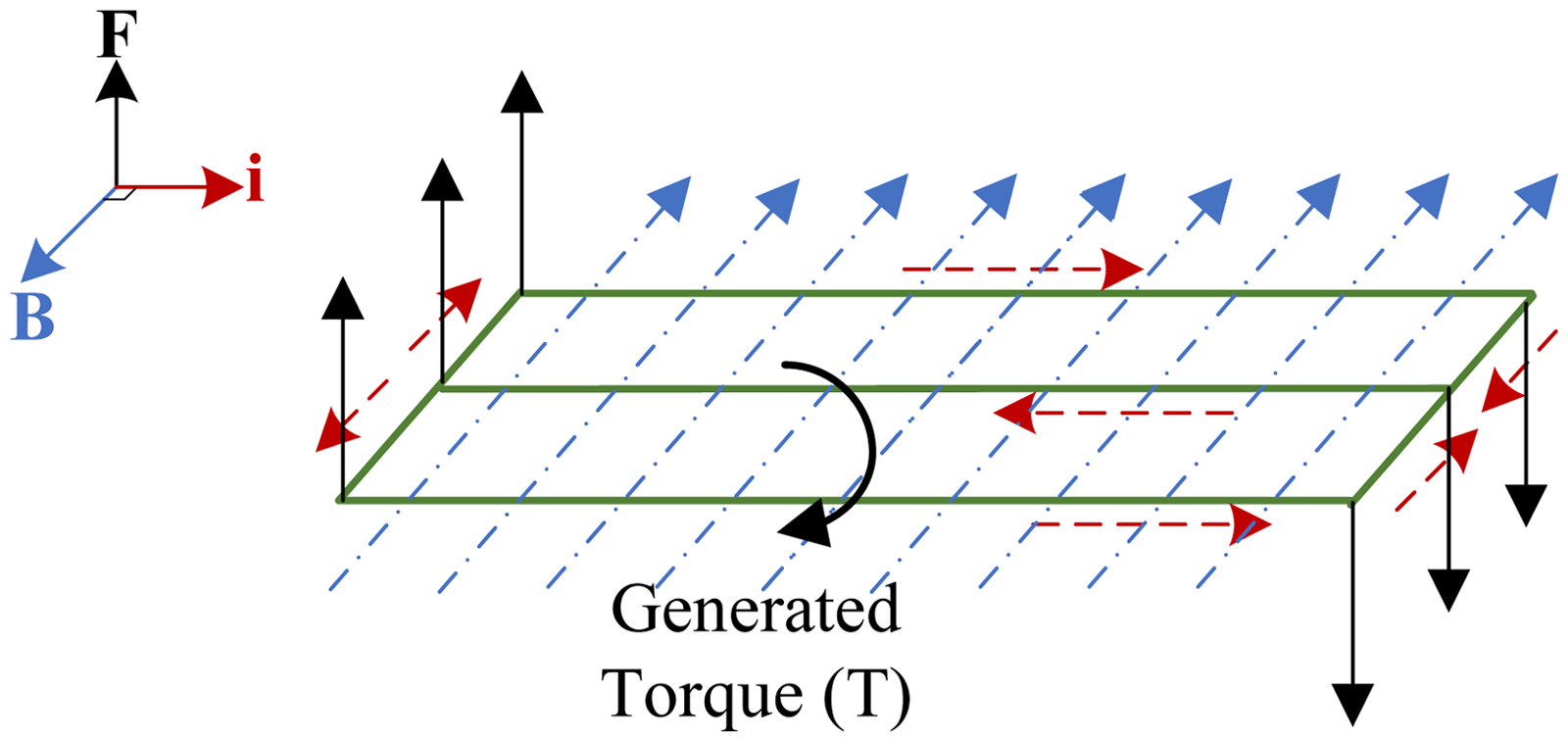
Forces and resulting torque on a current loop in a magnetic field.
On the other hand, when Professor A-ME teaches the course, when a topic is introduced, a demonstration of the physical and real-life applications of the topic is shown to the mechanical engineering students first; after which, the theory is discussed with the students. Note that Professor B-EE did not face similar situations when teaching equivalent courses to electrical engineering students. Electrical engineering students seldom need to see the application first before understanding the theory. This was deduced from how their questions do not inquire about the application when theory is discussed, but rather about the theory itself.
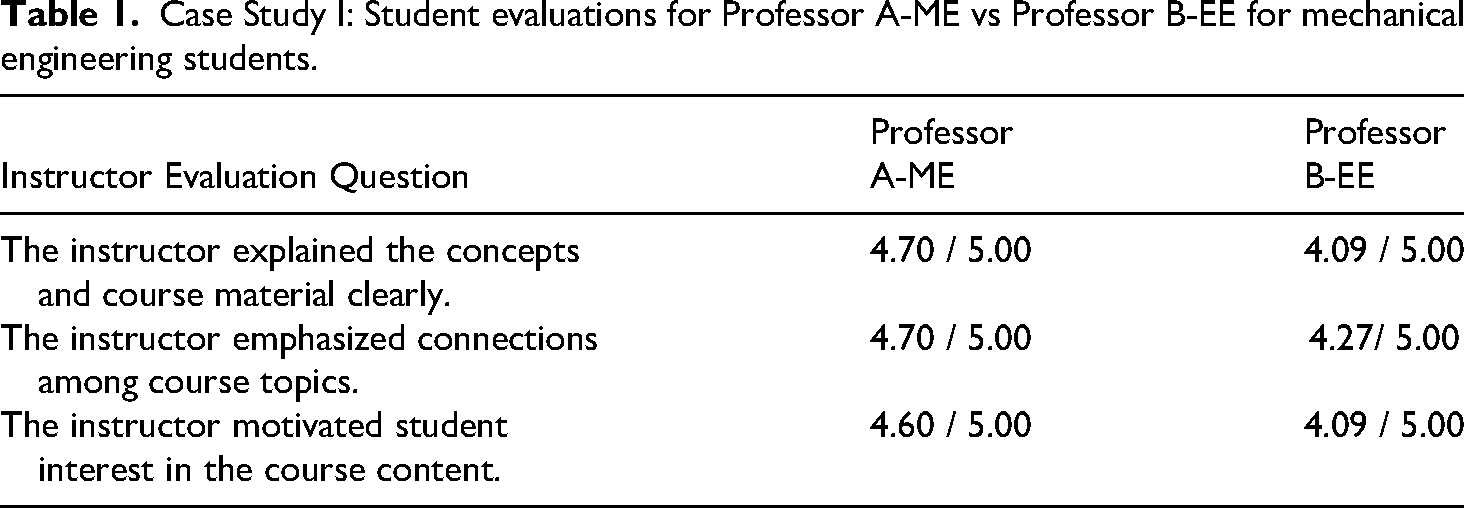
Table 1 shows a comparison between the instruction evaluation for Professor A-ME and Professor B-EE by mechanical engineering students. This table shows that mechanical engineering students favor the style of Professor A-ME. So, it can be concluded that Mechanical Engineering students do not accept a concept until the physical, concrete and real-life representation of the concept is identified.
Case Study I: Student evaluations for Professor A-ME vs Professor B-EE for mechanical engineering students.
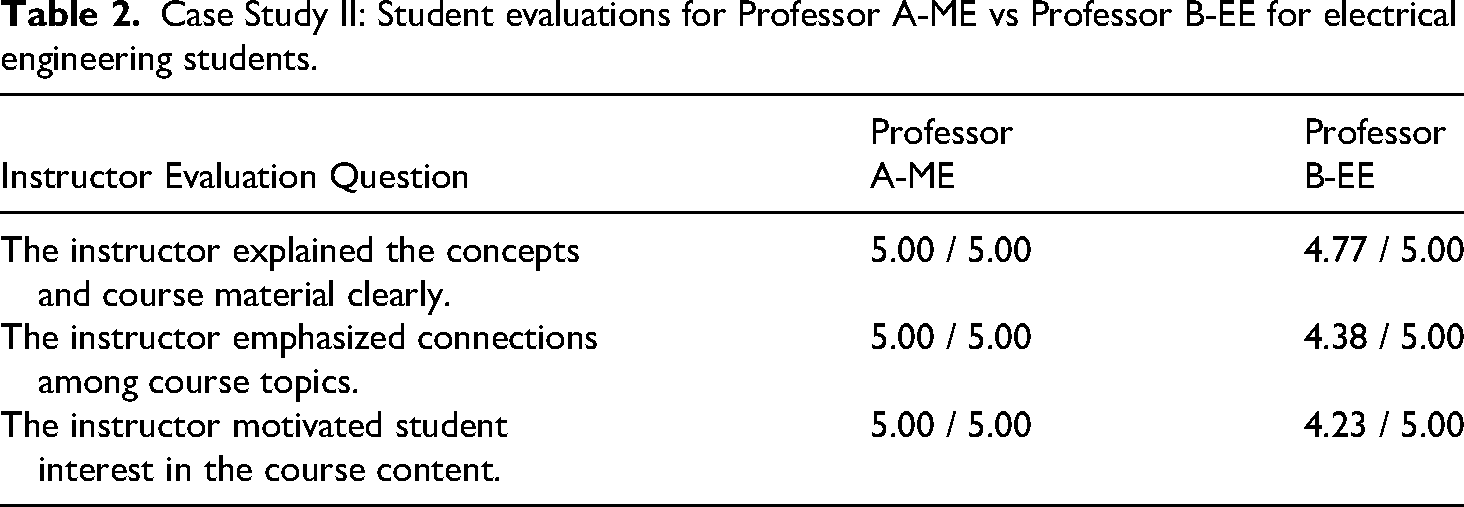
These findings can be further confirmed by Case Study II, where both professors taught EECE470 to electrical engineering students. Despite using his regular style of teaching, Professor A-ME reported that the students’ appreciation for the physical and real-life applications of the concept is not as profound as it is with mechanical engineering students. For example, when explaining the DC motor, Professor A-ME always starts with a video that shows the working principle of the DC motor, after which, the circuit of the DC motor is introduced to the students. On the other hand, when Professor B-EE teaches the DC motor concept, the schematic of the DC motor is introduced to the students first and discussed; after which, a video of the DC motor is shared with the students just to relate the concept to reality. However, without the video, the students would not have struggled with understanding the concept through the mathematical equations. In fact, for the batch used in Case Study II, Professor B-EE did not show a video of the functionality of the DC motor and students were able understand the concept and its applications without any concerns. This was confirmed by a course project that focused on DC motors. Table 2 shows a comparison between the instruction evaluation for Professor A-ME and Professor B-EE by electrical engineering students. These results indicate that electrical engineering students are satisfied with the teaching style of Professor B-EE; however, students were extremely pleased with Professor A-ME teaching style. Students gave full score in all categories to Professor A-ME (Table 1), something that was not even achieved in the mechanical engineering students’ case (Table 2). In fact, one of the students commented in the course evaluation for Professor A-ME “the professor’s emphasis on physical understanding is very welcomed”.
Case Study II: Student evaluations for Professor A-ME vs Professor B-EE for electrical engineering students.
This finding is further confirmed by case studies 3 and 4. In Case Study III, Professor A-ME found that mechanical engineering students struggle with a new concept unless a practical application of the concept is discussed first. For example, when introducing the concept of feedback in control systems shown in Figure 7, it was hard for the mechanical engineering students to process the theory without visualizing some physical and practical examples of real-life feedback control systems. The professor had to explain some practical examples of such topics, such as vehicle cruise control systems shown in Figure 8 and air conditioning systems, before introducing the topic’s abstract and theoretical information. It was noticed that introducing these practical examples made it easier for the mechanical engineering students to understand the applied theory. On the other hand, Professor B-EE noticed that electrical engineering students were able to process and utilize feedback control system concepts without the need for prior understanding of practical and physical examples.
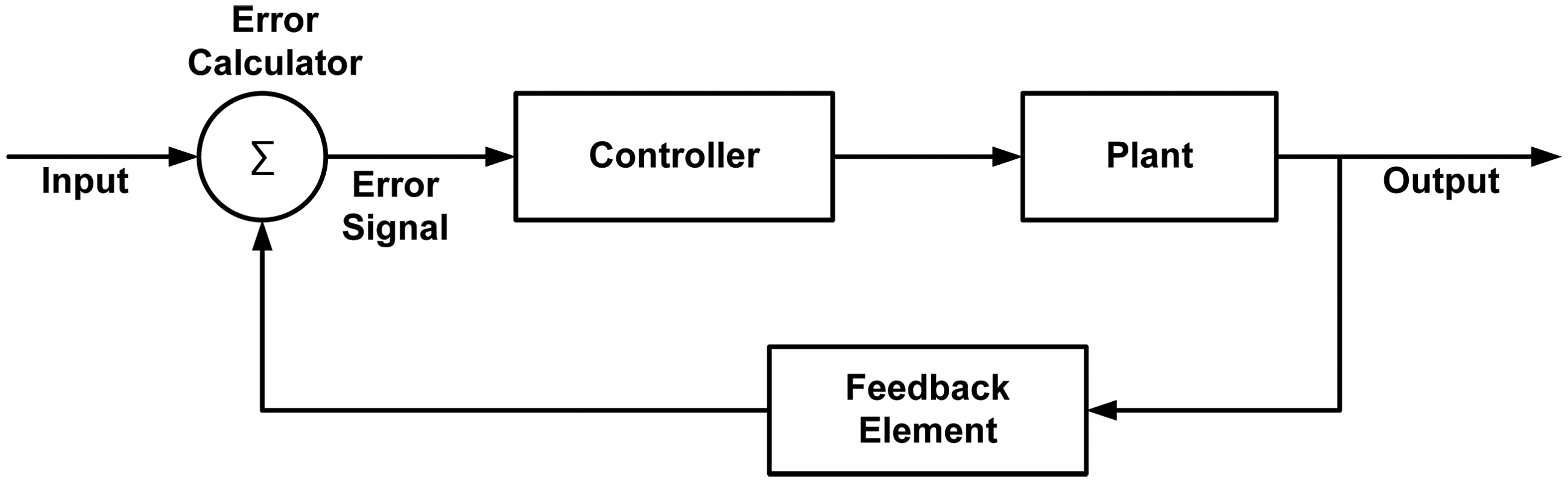
The concept of feedback control system.
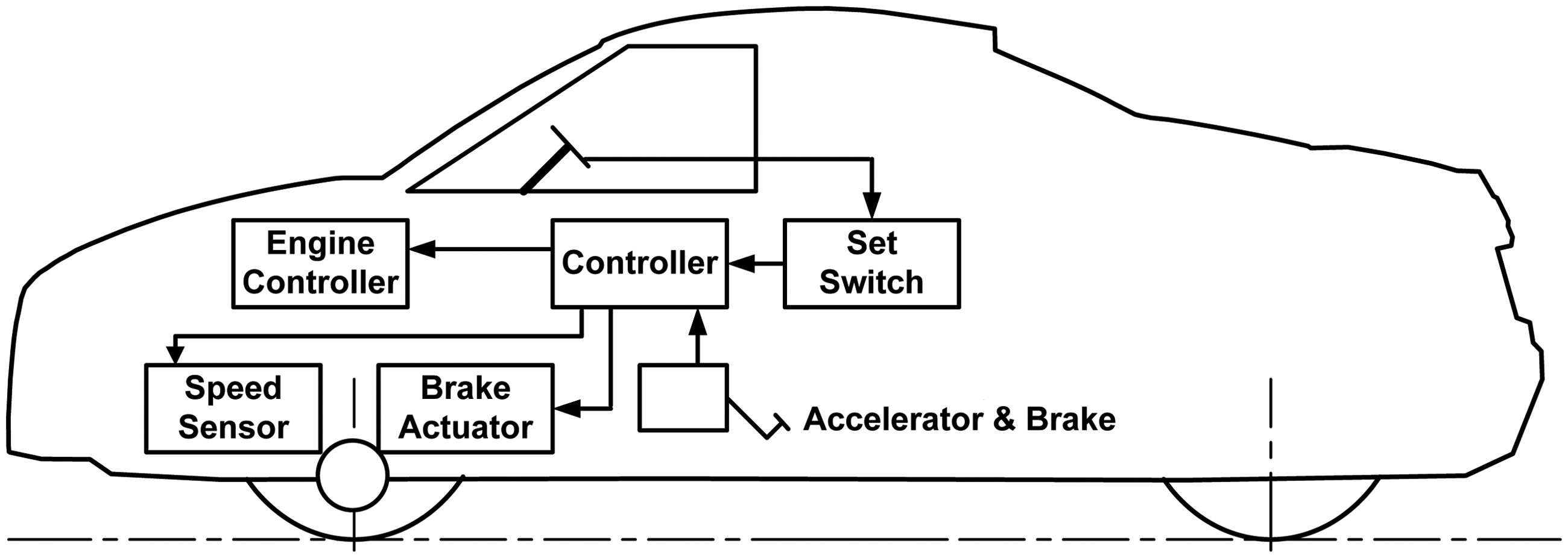
Vehicle cruise control system.
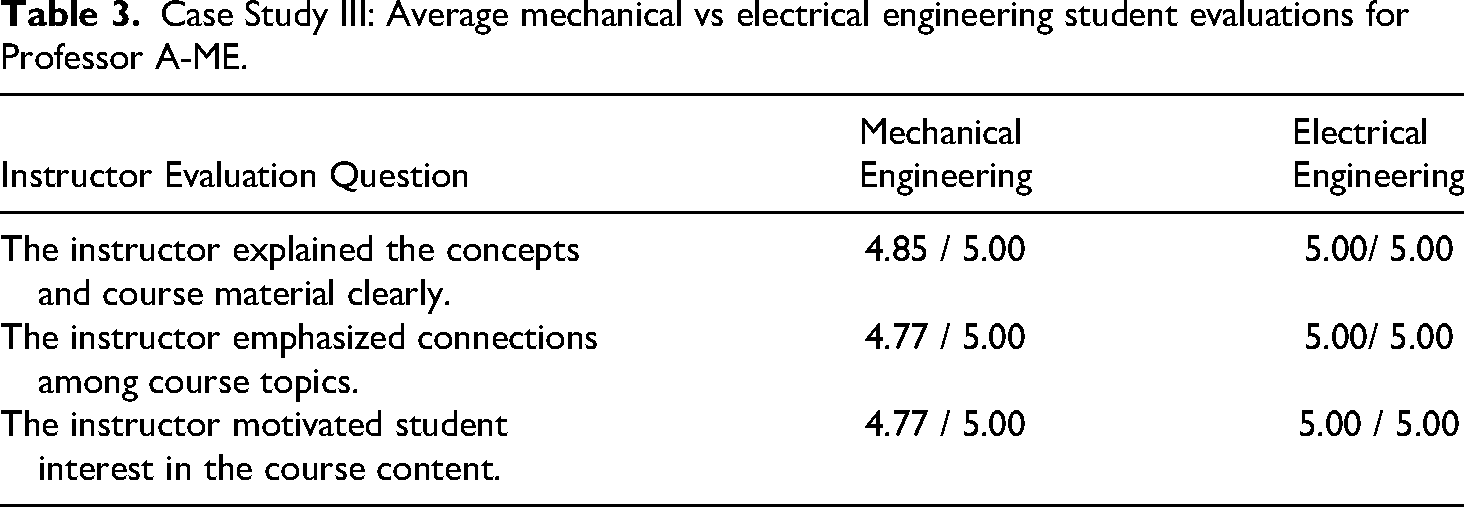
Table 3 shows some items of the course evaluations of both the mechanical electrical engineering students which support the aforementioned findings of this case study. As shown in the table, in spite of the difference in the pedagogical approach between the mechanical and electrical students, the results are quite similar for both batches.
Case Study III: Average mechanical vs electrical engineering student evaluations for Professor A-ME.
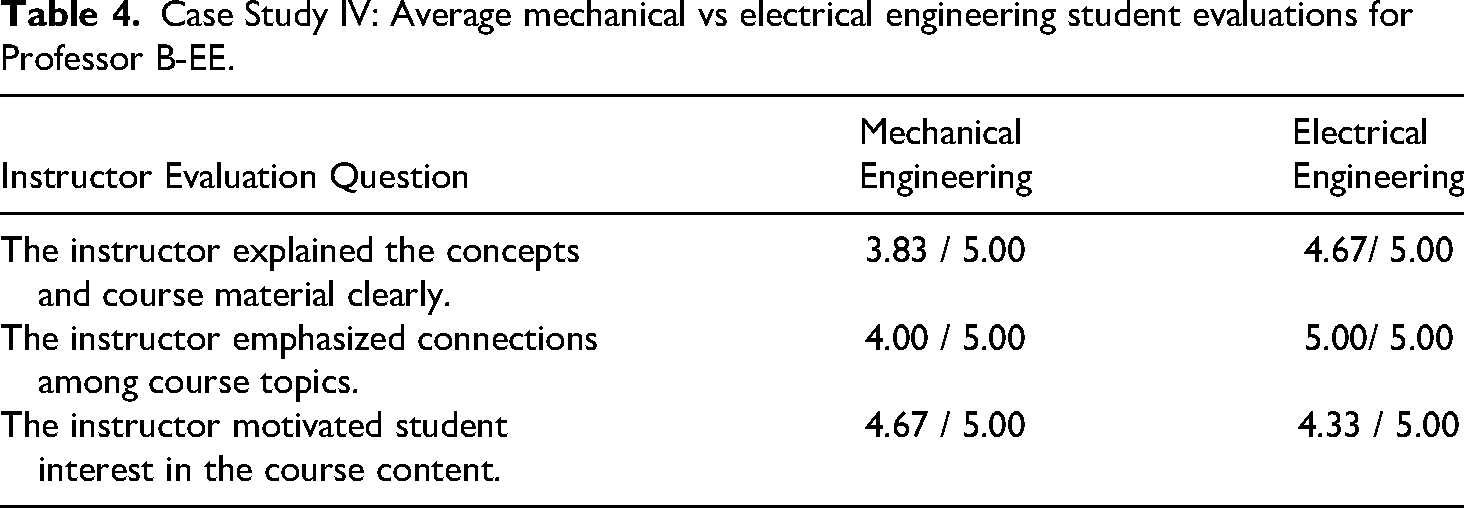
Finally, Case Study IV confirms that mechanical engineering students have a need to understand the physical interpretation of the mathematical concepts. This was noted because, once a concept is introduced, mechanical engineering students questions usually revolve around the physical and real-life representation of the concept. For instance, when discussing the Laplace transform application in circuit analysis, mechanical engineering students were not satisfied by the mathematical representation of an inductor. They have seen a resistor and know what it represents, they have seen a capacitor and know how it is built; however, they have never seen an inductor and inquired what does it look like from a physical standpoint. Once they understood that it was easy for them to comprehend the theoretical concepts. Electrical engineering students, on the other hand, were content with the mathematical description of mechanical components. For instance, even though they never worked with a damper before, whether rotational or translational, there were no question raised on how it is built. All the focus was on the mathematical description of the damper and how it related force and displacement. Table 4 compares the mechanical engineering and the electrical engineering course evaluation for Professor B-EE. It is evident that the teaching style of introducing the theory first and then discussing the practical application suits electrical engineering students more than mechanical engineering students.
Case Study IV: Average mechanical vs electrical engineering student evaluations for Professor B-EE.
Differences in evaluation scores reflect student-reported satisfaction with teaching methods, not objective learning outcomes. Higher ratings for Professor A-ME among ME students suggest a preference for concrete-first pedagogy, while EE students’ comparable ratings for both professors indicate greater tolerance for abstract-first instruction. These patterns align with self-reports of engagement but do not demonstrate superior knowledge acquisition.
Finally, note that introducing practical examples can enhance the understanding of concepts for electrical engineering students; however, these practical examples are not fundamental to the learning process, which is not the case of mechanical engineering students. Mechanical engineering students require physical, real-life examples to fully comprehend a concept.
Discussion
While the electrical engineering professors were more amenable to focusing on the theory first before presenting the students with practical examples, the mechanical engineering professors preferred to introduce the subject through physical models. A number of topics from both subjects were selected for comparison. They include: 1) theory and practical applications of galvanometers; 2) theory and practical applications of Wheatstone bridges; 3) theory and principles of operation of DC motors; and 4) feedback control systems.
According to Table 2, for electrical engineering students, the concrete-focused teaching style of Professor A-ME and the abstract-oriented teaching style of Professor B-EE did not appear to have a high impact on the students’ conceptual understanding of the course topics. The evaluations of electrical engineering students for their “understanding of course concepts” were 5.00 and 4.77 out of 5.00 for Professor A-ME and Professor B-EE respectively. The same conclusion can be drawn from Table 3; the concrete-focused teaching style of Professor A-ME did not result in a significant difference between the evaluations of electrical engineering students’ understanding of concepts which was 5.00 out of 5.00 compared to the mechanical engineering students’ evaluations which was 4.85 of 5.00.
These results suggest that electrical engineering students, in general, are more likely to accept, understand, and process abstract information with little or no physical analogy. This indicates that electrical engineering students, in general, prefer the abstract learning style of the Kolb model with little tendency towards the concrete learning style. With respect to the FLSM model, electrical engineering students can be considered intuitive on one dimension and reflective on another dimension. Considering the VARK model, electrical engineering students can be considered auditory learners more than kinesthetic learners. For all the other remaining learning style dimensions of the Kolb, FLSM, and VARK models, the understanding and academic performance of electrical engineering students do not seem to be positively or negatively affected by the remaining learning styles.
When it comes to mechanical engineering students, Table 1 shows that mechanical engineering students’ understanding of the course concepts through Professor B-EE’s abstract-oriented teaching style is not favored, as evidenced by the score of 4.09 out of 5, while this score was 4.70 out of 5 for Professor A-ME’s concrete-focused teaching style. This is also clearly indicated and shown in Table 4. The mechanical engineering students’ evaluation for the course concept understanding was 3.83 out of 5.00 in the case of Professor B-EE’s abstract-oriented teaching style, while the electrical engineering students’ evaluation in response to course concepts understanding did not show a major issue, evidenced by an evaluation score of 4.67 out of 5.00.
These students’ evaluation scores suggest that mechanical engineering students tend to favor practical explanations for physical systems, and often struggle with abstract information unless it is presented within a practical context. The inclusion of practical examples before delving into abstract concepts was found to be beneficial. In summary, mechanical engineering students exhibit a preference for the concrete learning style in the Kolb model, and are more inclined towards active and sensing learning in the FLSM model, and are characterized as kinesthetic learners according to the VARK model. Other aspects of the Kolb, FLSM, and VARK models do not appear to significantly impact the academic understanding and achievement of mechanical engineering students.
Conclusion
This study investigated relationships among teaching styles, student learning preferences, and academic performance in Electrical Engineering (EE) and Mechanical Engineering (ME) against the backdrop of the ongoing debate over the “meshing hypothesis”. Although recent reviews have questioned the empirical support for that hypothesis, the paper exploratory analysis reveals distinct, discipline-specific trends with practical implications for curriculum design and pedagogy.
EE students demonstrated a clear preference for abstract, theoretical approaches: evaluation scores and classifications across Kolb, FLSM, and VARK frameworks point to abstract-conceptual learning, intuitive/reflective processing, and auditory modes of instruction. In contrast, ME students exhibited a stronger orientation toward concrete, practical learning, responding better to physical models, hands-on examples, and applied explanations consistent with Kolb’s concrete-experience style, FLSM’s sensing/active dimension, and VARK’s kinesthetic modality.
These findings underscore the importance of tailored teaching methods and curriculum design to meet the specific needs of students in these engineering disciplines. While electrical engineering students thrive in a more abstract, theoretical environment, mechanical engineering students benefit from concrete, hands-on applications. Across both disciplines, prior preparation and background affected students’ ability to assimilate abstract concepts, with some learners needing concrete contexts before engaging theory and others able to grasp theoretical frameworks first.
Note that this study is exploratory and limited by sample size and scope, so results are indicative rather than definitive; future research should use larger, more diverse samples, varied assessment instruments, and controlled experimental designs, and examine how prior preparation, cultural background, and course content moderate the teaching performance relationship. Overall, the paper highlights meaningful differences between EE and ME learners and encourages further empirical work to inform evidence-based instructional practices.
Footnotes

Ethical considerations
Our institution does not require ethical approval for reporting individual cases or case series.
Consent to participate
Not applicable.
Consent for publication
Not applicable.
Funding
The author(s) received no financial support for the research, authorship, and/or publication of this article.
Declaration of conflicting interest
The author(s) declared no potential conflicts of interest with respect to the research, authorship, and/or publication of this article.
Data availability statement
Data sharing not applicable to this article as no datasets were generated or analyzed during the current study.