



Abstract
Using PowerPoints slides (PPT) to deliver lectures has become the norm and common practice in academia over the last decade. Despite the benefits of PPT in providing smooth presentations and helping to prompt the presenter, the use of slides in engineering teaching has its own drawbacks. By using slides in teaching, the information will be provided in a discontinued and very abstract format. However, as a matter of fact, students mainly depend on lecturing slides in their learning and only use the slides to prepare for their exams. Students rarely read beyond what is given in the slides or refer to the reading list for more in-depth knowledge. This creates a gap in knowledge, affects the overall student experience and, to a certain level, affects graduate employment. In this paper, we review a pilot experiment to test a new teaching theme in engineering with no PPT slides. This was implemented for a Level 4 module, Mechatronics 1, which is a newly developed module in the Mechanical/Marine Engineering programmes at Liverpool John Moores University, Liverpool, UK. The outcome of this practice is evaluated with the focus on student views, assessment results, and overall assessment of this style of teaching.
Introduction
Digital presentation tools, such as PowerPoint (PPT), Google Slides and their sisters, are used to disseminate teaching contents from early stages in primary schools to postgraduate courses in higher education. While all these digital tools share the same principles, PPT prevails due to its integration with Microsoft Office package. PPT is a presentation software which was introduced in 1987 and since then it has been widely spread across the users of computers. In education, the use of PPT for delivering lectures and tutorials becomes the norm. There is no debate over its prevalence on education and its use for teaching delivery.
Early studies on the use of PPT in engineering courses studied the link between the use of PPT and the performance of students. The studies focused on the impact of the use of PPT versus the traditional methods of writing on boards. For example, the authors in 1 reported that PPT did not result in higher marks when compared to traditional methods. The paper concluded that while students liked PPT presentation, they stated their preference to traditional lectures to understand complex materials because it helped them to learn more and to retain the delivered material better. These findings were supported by several teachers and educators in various engineering programmes over the past two decades. This was either via personal reflection and interaction with students, see for example Felder and Brent 2 or via statistical approach and surveying of student results and opinions, see for example Baker et al. 3 and the references therein. In all these studies, the conclusion was showing the same pattern ‘PowerPoint had no effect on learning’.
On the other hand, there is the argument that PPT is just a tool, and it can definitely enhance student learning when used and designed appropriately. 4 Several studies draw on the conclusion that majority of engineering students prefer the use of PPT in lecture theatres and classrooms with an indication that PPT helps in their learning and understanding. 5
Regardless of where one stands on this debate, there is no doubt that PPT is entirely presenter-oriented and not content-oriented. 6 The PPT is a tool that helps the presenter to deliver a smooth presentation with a nice flow of ideas. Yet, whatever you put in the slides, from an engineering course point of view, the content cannot substitute the need to read from textbooks and references. In the context of teaching an engineering subject, students should learn more in depth and width beyond what is presented in lectures in order to strengthen their engineering skills and enhance the foundation of their knowledge. Unfortunately, all indicators show that students do not do that and instead they always choose the easier option. They restrict their reading to the contents of slides only and mainly build their knowledge and understanding on what is inside these slides. 7 This affects their learning outcomes and confidence as their understanding is not established well using the right sources. Whatever an educator includes in the PPT slides, they will still be limited to what one can deliver during the contact hours. Furthermore, the nature of PPT transition between slides forces the presenter to certain style of discrete contents between slides which might not be very useful in certain topics that need mathematical derivation and continuation of discussion and analysis.
In this paper, we review a pilot experiment that has been conducted to test a new teaching theme with no PPT slides in engineering programmes at Liverpool John Moores University. Perspectives related to the achieved learning outcomes and the alignment between empowering students to learn and encouraging them to read while providing them with the right level of resources are discussed and explored.
In the remaining parts of the paper, the case is summarised in ‘The case’ section. The proposed solution is presented in ‘The new delivery style’ section, while ‘The outcome’ section is dedicated to the outcome of the experiment. The paper finishes with some conclusion remarks and recommendations in ‘Conclusions’ section.
The case
The discussed pilot case in this paper is related to the teaching of Mechatronics 1 module (it has the code 4307MECH) which is part of level 4 delivery in the ‘Mechanical Engineering’ and ‘Mechanical and Marine Engineering’ programmes within the School of Engineering at Liverpool John Moores University. These two programmes have been reaccredited by the professional body IMehcE in the last academic year (2021–2022) and the delivery of the new reaccredited programmes started in September 2022. This module is newly introduced in the programmes to replace an old module which used to focus on the teaching of electrical engineering principles. The newly introduced module is completely different from its replaced one, and it has been designed with the following aims and learning outcomes:
Aims
The aim of the Mechatronics 1 module is to introduce electromechanical systems focusing on applications in the areas of Mechanical, Automotive and Marine Engineering. The module covers the essential concepts of electrical circuits including AC and DC systems, signals, sensors, actuators and digital electronics.
Learning outcomes
After completing the module, the student should be able to:
Describe and model the principles of electrical and electronic systems. Analyse circuits which include passive and active electrical components. Differentiate between digital and analogue circuits and analyse the requirement for each type. Select appropriate transducers (sensors and actuators) for a mechatronics application and demonstrate an understanding of their characteristics and practical interfacing requirements. Determine different types of signals and perform the required signal processing for digital or analogue interface.
The new delivery style
This is a new module in the programmes and hence there is no previous delivery style specifically related to this module. However, the delivery style of the replaced old module and all other modules within the related programmes depends on a weekly release of the teaching materials in a PPT format. Students use these slides as the main source for their learning and preparation for the assessments. The number of slides per a PPT file and the contents of these slides are limited to what can be delivered during the contact hours with an average of 25 slides per hour of delivery. Tutorials materials and solved examples are released in separate files on a weekly basis as well. At the end of the semester, in average, each module will have 11 PPT files in addition to 11 files for the tutorials.
During the preparation stage of the teaching for this module (Mechatronics 1), the materials have been drawn with full explanation and full in-depth information into a single book style pdf document. The preparation took over 9 months and resulted in a file of over 220 pages. This file contains everything related to the module including lecturing materials, solved examples and tutorials. This document was made available to students at the start of the semester.
The lectures have been delivered without any use of PPT slides, and with direct show and reference to the pdf file that contains the whole content of the module. The lectures follow the flipped classroom approach where the focus is more on the discussion of the presented concepts and relevant examples. Given the materials were available to students at the start of the semester, students know in advance what will be delivered in each lecture. The booklet was designed on a chapter per week of delivery. This method of delivery was explained to students explicitly at the start of the academic term focusing on the philosophy behind the new approach and the benefits it has. Students have been offered the opportunity to comment on the material and the delivery style through a Google Forms link which has been provided at the start of the document as shown in Figure 1.
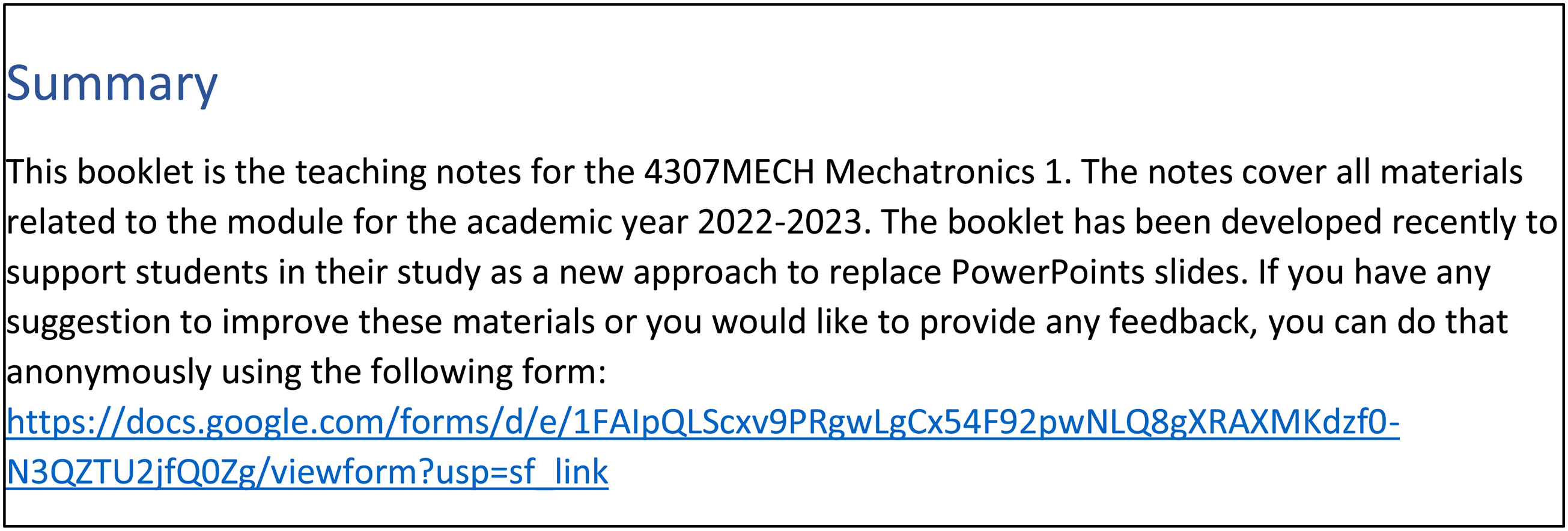
A screenshot from the cover page of the delivery booklet to show the provided Google Forms link given to students for feedback and comments.
The author of this paper was the only teacher of the module. During lectures, the delivery style used a student-centred pedagogy with less talk from the lecturer and more discussion with students and questions related to what was in the document related to the topic being discussed. The contact hours of the module contained 11 one-hour lectures and 11 one-hour tutorials in addition to three-hour labs that ran on a bi-weekly structure.
Tutorials were run in a semi-lecture style, where questions were presented to students, and then they were asked to try solving them. Students were working individually. After a certain time, the answers for the questions were presented. The answers will be discussed with students along with the main challenge and the main concept of each question.
The lab work was organised in group-based activities where these activities were aligned with what students learned in the lectures. Materials of the lab activities were provided separately for ease of access and to make sure students can print the sheet of each activity directly from a separate folder which was put in the webpage of the module.
The main difference between this type of delivery and using a published textbook can be summarised in the following points:
The examples given in the delivery materials are unique in their types and level to make sure that they are at the right level for first year students and are suitable for mechanical and marine/mechanical engineering students. This is a key advantage of preparing a bespoke delivery materials that suit the targeted students. The chosen topics for delivery don’t exist in a single textbook that is available in the market. Due to the nature of the module and given that the targeted students are not specialised in mechatronics engineering, topics of delivery were picked and chosen from various materials including eight textbooks, previous teaching slides, previous student projects and characteristics of commercial components. This combination of materials is not available in a single textbook. In addition, the focus of textbooks is usually on the specialty of the discussed topics. Books go into a certain depth that is suitable for students who study the subject as part of their specialisation.
In addition to the delivery materials, students were recommended complementary five core textbooks to complement their knowledge on the subjects covered by the module. These textbooks were part of the resources that were used for preparing the materials of the module. This was just an enrichment exercise for those students who would like to dive into the subjects and build their own knowledge; however, the provided materials of the module were sufficient to achieve the learning outcomes and aim of the module.
The outcome
From the perspective of achieving the learning outcomes of the module, the author believes that the delivery without using PPT was effective, and it helped to deliver the covered topics and to explain concepts in more useful way and without the fears of missing any essential information.
Several verbal comments from various students were received during lectures commending the way the lectures were delivered, without the use of PPT, where students felt the flow of the information in the delivery booklet was smooth, logical and easy to follow. No complaint has been received during the delivery which indicated general content and satisfaction.
Figure 2 shows the comments that have been received via the Google Forms link throughout the year. Some comments were not related to the delivery style and rather to other aspects of the module, but they were kept here for full transparency and accuracy. The second comment is interesting as it shows clear reflection on the intended delivery style without PPT. The third and fourth comments were also related to the new style of delivery. One student felt the inclusion of everything was overwhelming while the other one asked for more examples and details.
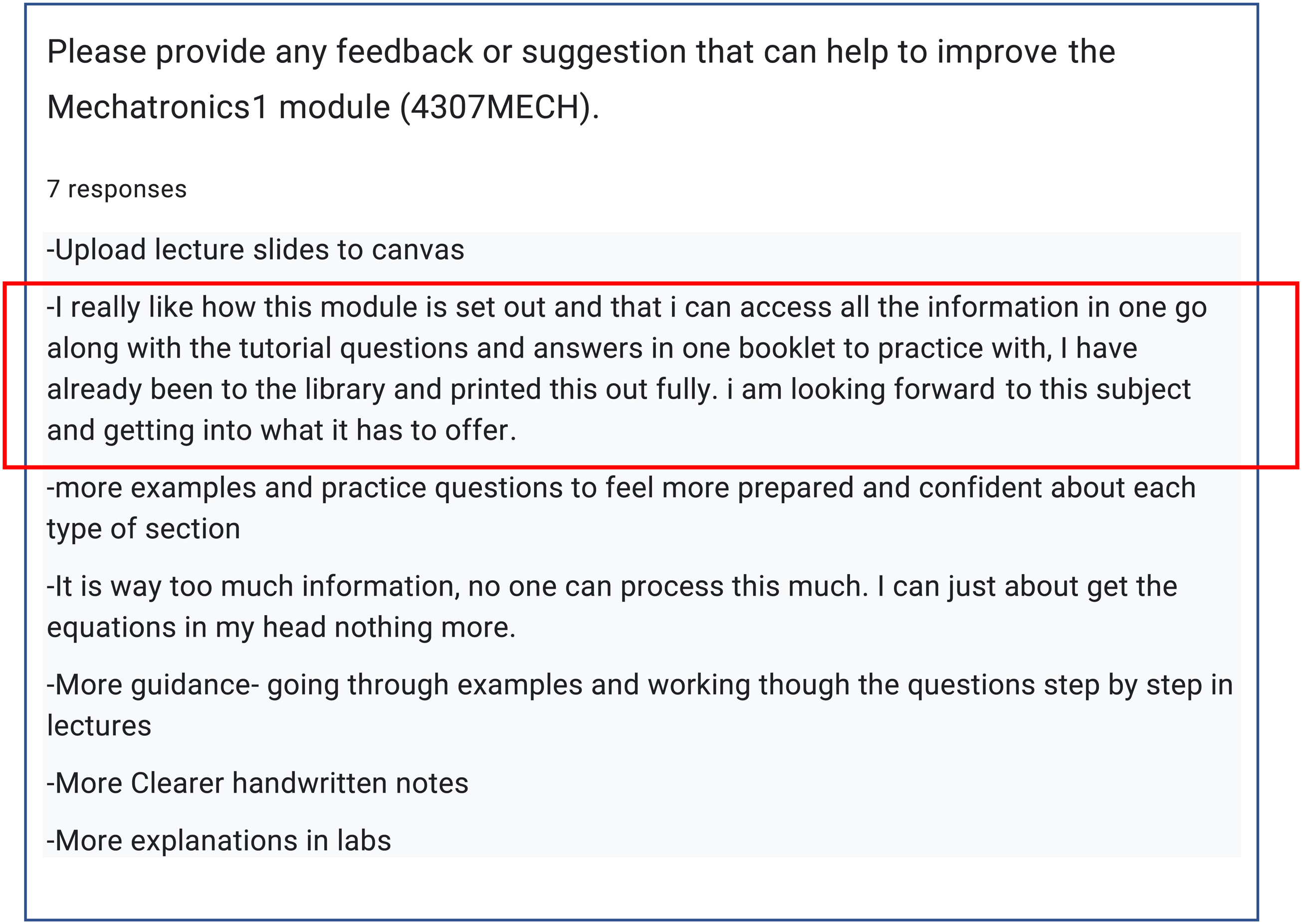
Comments and feedback received via the provided Google Forms link within the module notes.
End of module survey
For the End of Module Survey, there was a total of 23 responses received on the module survey which represented a 19% response ratio from a cohort of 121 students. This response rate is consistent with the average response rate across different modules within the school as well as the response rate from previous years for other modules which were taught by the author. The overall satisfaction of the module including both ‘Very Satisfied’ and ‘Fairly Satisfied’ options reached 83% as shown in Figure 3.
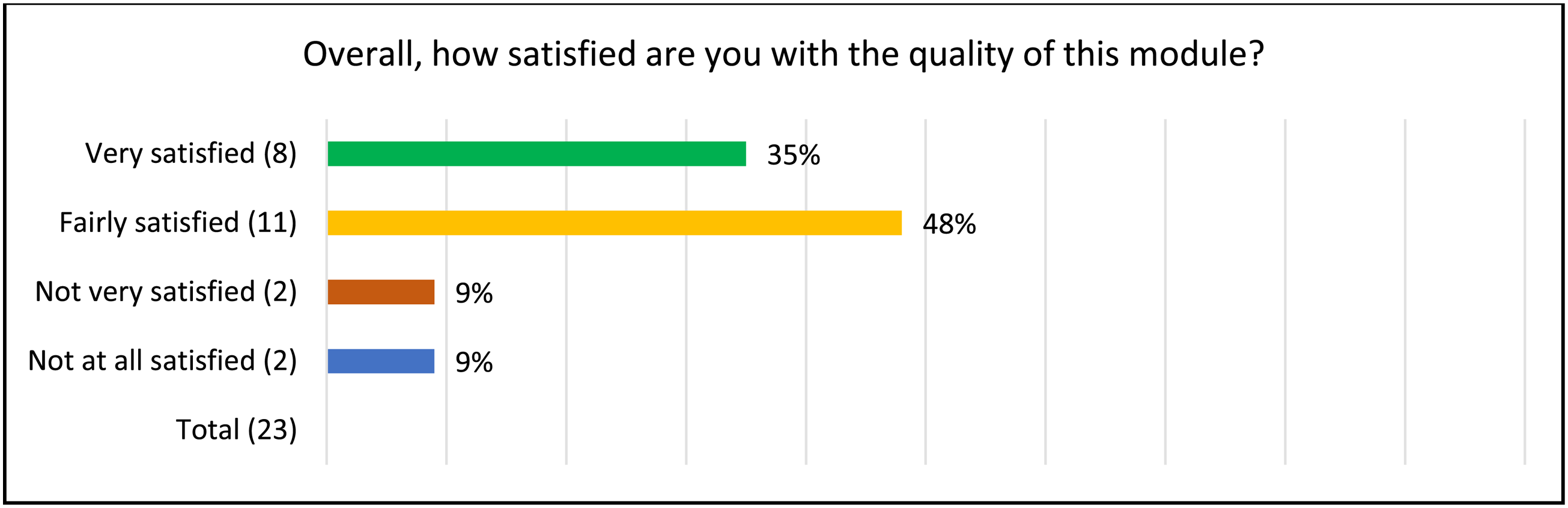
Survey responses to the overall satisfaction of Mechatronics 1 module.
To put this result into context, a comparison is made against the module survey result of the module from the last year which was delivered by the author, and it was replaced by Mechatronics 1. The module was called ‘Introduction to Electrical and Electronic Engineering’. It included some of the materials that were covered in Mechatronics 1 and it was taught using standard PPT slides without any supporting documents. The overall satisfaction responses from the module survey last year are shown in Figure 4. There were 17 responses last year which represents a response rate of 16% from a cohort of 106 students. As it can be seen from Figures 3 and 4, the responses format to this question has changed where the option ‘Neither Agree nor Disagree’ has been removed as a possible answer for this question. This means a direct comparison between the detailed answers for the overall satisfaction question from the module survey is not possible. However, looking at the overall satisfaction percentage there was a total of 70% who were satisfied last year compared to 83% this year.
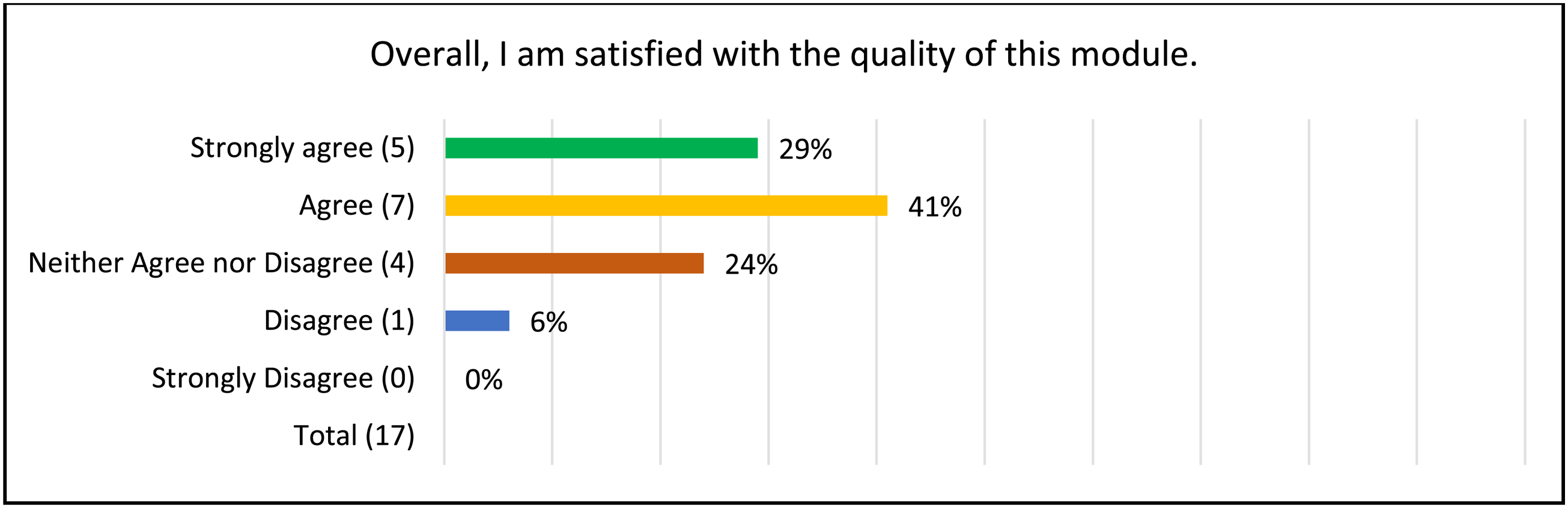
Survey responses to the overall satisfaction of the replaced module that was taught in the 2021/2022 academic year.
The overall module satisfaction of level 4 modules (other modules follow standard PPT teaching style), which were taught to the same cohort of students this academic year 2022/2023, is shown in Table 1. While there are many factors that affect the overall satisfaction of the modules and it cannot be due to the delivery style only, this table gives a general picture of how students feel about the module and how its satisfaction level is compared with other modules. It shows that Mechatronics 1 is not one of the leading modules in terms of satisfaction; however, it is not the worst as well. It is ranked 4 from the 7 modules that were delivered to level 4 students.
The overall satisfaction rate for Level 4 modules including Mechatronics 1.
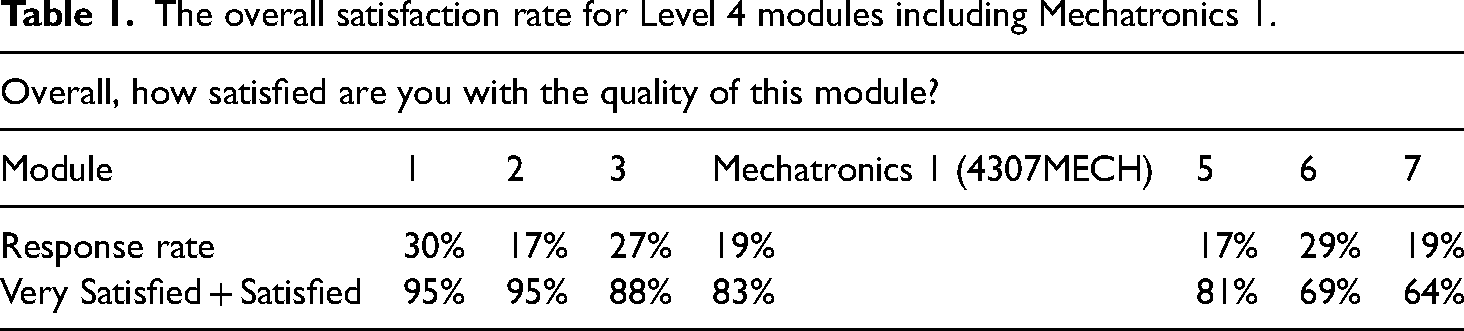
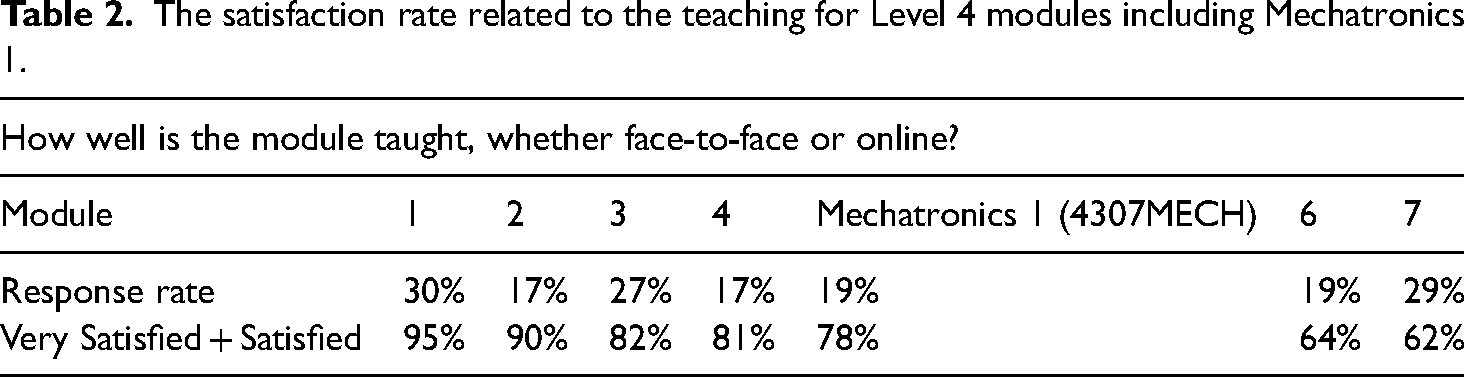
For Level 4 modules, the question of the quality of teaching, which might relate to the style of delivery in addition to the skills of teaching the delivery team has come with the following details as shown in Table 2. This table paints a similar picture to what has been seen Table 1 where Mechatronics 1 was not a leading module, but it was also not at the end of the list.
The satisfaction rate related to the teaching for Level 4 modules including Mechatronics 1.
The module survey included several specific questions related to the delivery without PPT. These questions were designed by the author and included in the survey. These questions were as following:
The delivery materials of this module are well organised: The delivery style of this module with full notes is better than using PowerPoint slides: I have been fully engaged with the teaching of this module: The teaching materials are sufficient to help me fully understand the subject areas of this module:
The responses of the students to these questions are shown in the graphs in Figure 5. This figure shows a mixed picture. It seems there were very few students (4 in total) who were unhappy at all and their answers to the survey questions were ‘Disagree’ or ‘Strongly Disagree’. The remaining responses vary between those who were unsure ‘Neither Agree nor Disagree’ and those who commended on the teaching and the style of delivery.
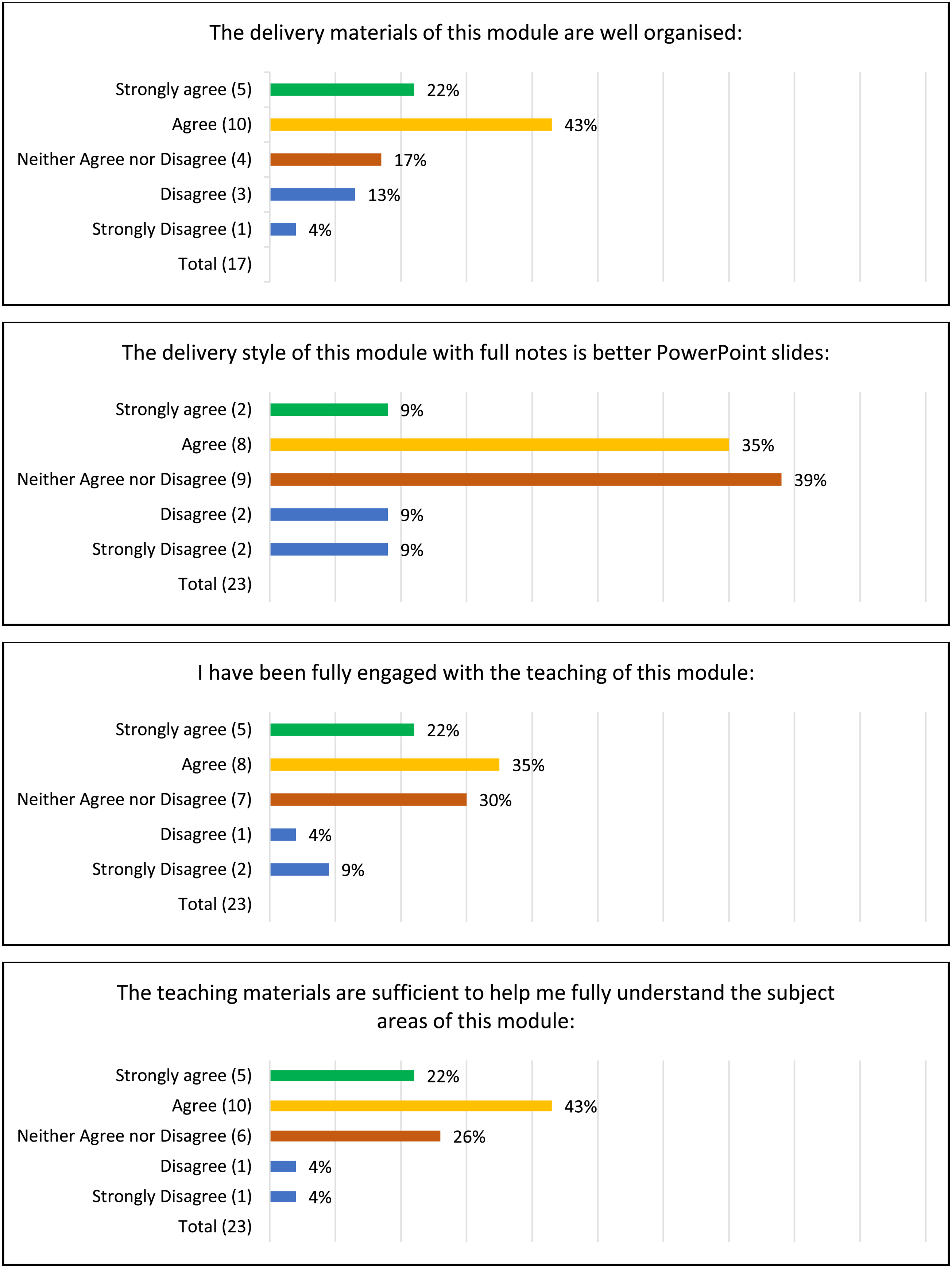
Survey responses to the specific questions related to the new delivery style of the module.
In Figure 5, the second question ‘The delivery style of this module with full notes is better than using PowerPoint slides:’ is meant to enable students to make some reflections on how this module is taught in comparison with the conventional way of teaching which is used in other modules that students are studying. The question encourages students to think on the advantages and disadvantages of the learning process in this module compared to the other modules they are currently studying.
One of the key aspects associated with using a single pdf file for the delivery is the ease of finding the required information and the ability to link topics together. This is to be compared against the use of multiple PPT files and tutorial sheets where it will be a struggle for students to find what they are looking for or linking subjects together. The issue has a direct question in the module survey which asked about ‘How easy is it to find the information that you need on the module Canvas site?’. Canvas is the name of the platform that is used by the university as the Virtual Learning Environment (VLE) to host the activities and materials of the modules. The answers from students are shown in Figure 6. The figure shows a strong satisfaction with a percentage of 91% who confirmed that it was easy for them to find the information they need on the module Canvas site. While this question does not ask specifically about the teaching materials, it is an indirect indication of the impact of the delivery style. This is due to the fact that the less files the Canvas site has, the more organised it will be with more ease of access to the required information.
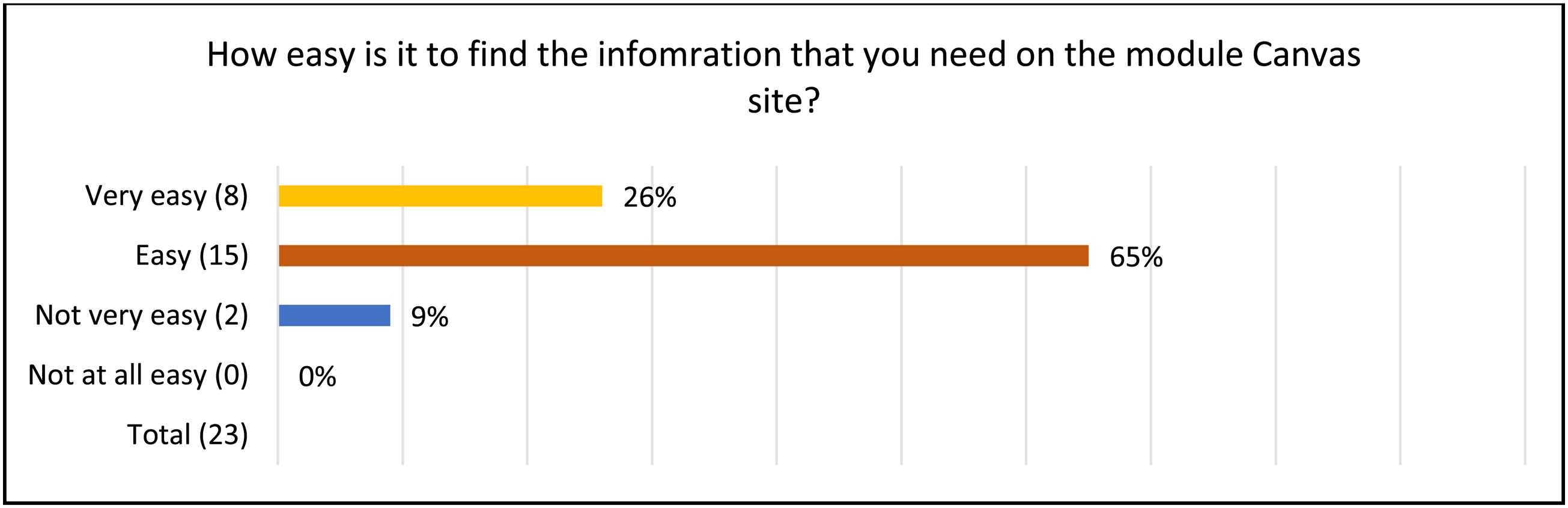
The survey response for the question related to the ease of finding the required information.
The individual comments on the survey from students came with a mixed bag of positive and negative comments, and the focus was mainly on the lab activities. No comment was received on the material structure and the move away from PPT delivery style.
The academic performance
For the assessment of this module, students were assessed by two VLE tests that were due in Week 7 (halfway through the delivery) and Week 13 (during the assessment period at the end of the semester). Both tests were password protected and students had to do them on site at specific allocated rooms to protect the integrity of the assessments and to make sure that students were tested to the best of their abilities. The first VLE test contained 14 questions and it was worth 40% of the total mark of the module while the second VLE test had 22 questions and was worth 60% of the total mark of the module. Questions of the tests ranged from simple true/false statements to high-level questions that contained several mathematical steps in addition to questions related to the labs, which required deep understanding and logical thinking. Figure 7 shows some examples of the different questions that were used in the VLE tests.
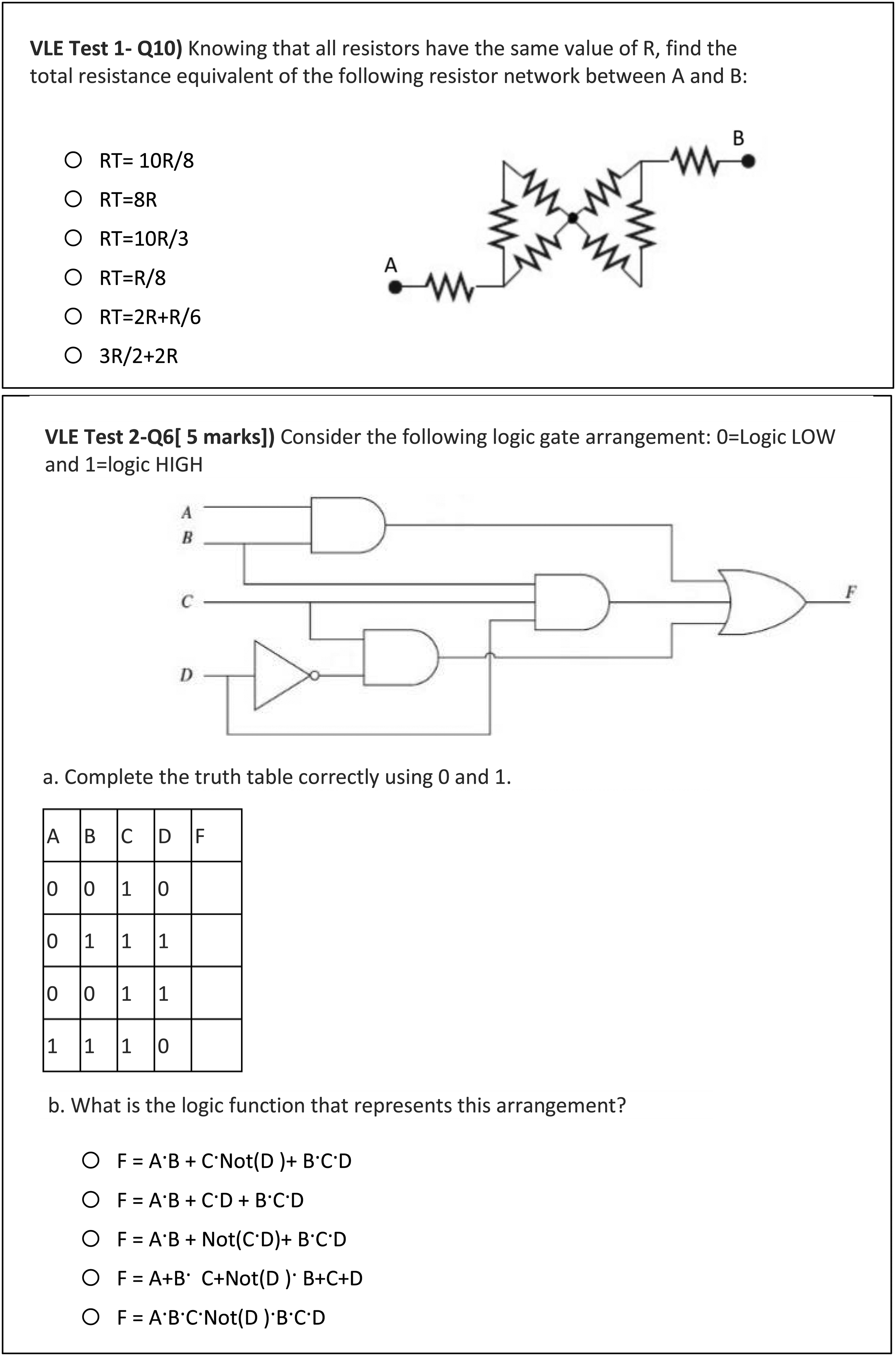
Examples of questions that were used in the assessments to demonstrate the level of understanding required to pass the module.
For the academic performance, there is no enough evidence to draw any conclusion or observe any pattern related to how students performed this year and the link between this and the delivery style of the module. This is due to the fact that Mechatronics 1 is a new module and student results cannot be compared with the previous years like for like. The overall distribution of the achieved marks for this module follows the general mark distribution that is achieved by students at the same level every year as shown in Figure 8. The total number of students attempted all assessments of the module was 109 students. The results included six students who achieved less than the pass threshold (40%) which represents a pass ratio of 94.5%. This is a good pass ratio that is high above the average of 85% across the school. The average mark was 59% which is considered good for Level 4 students.
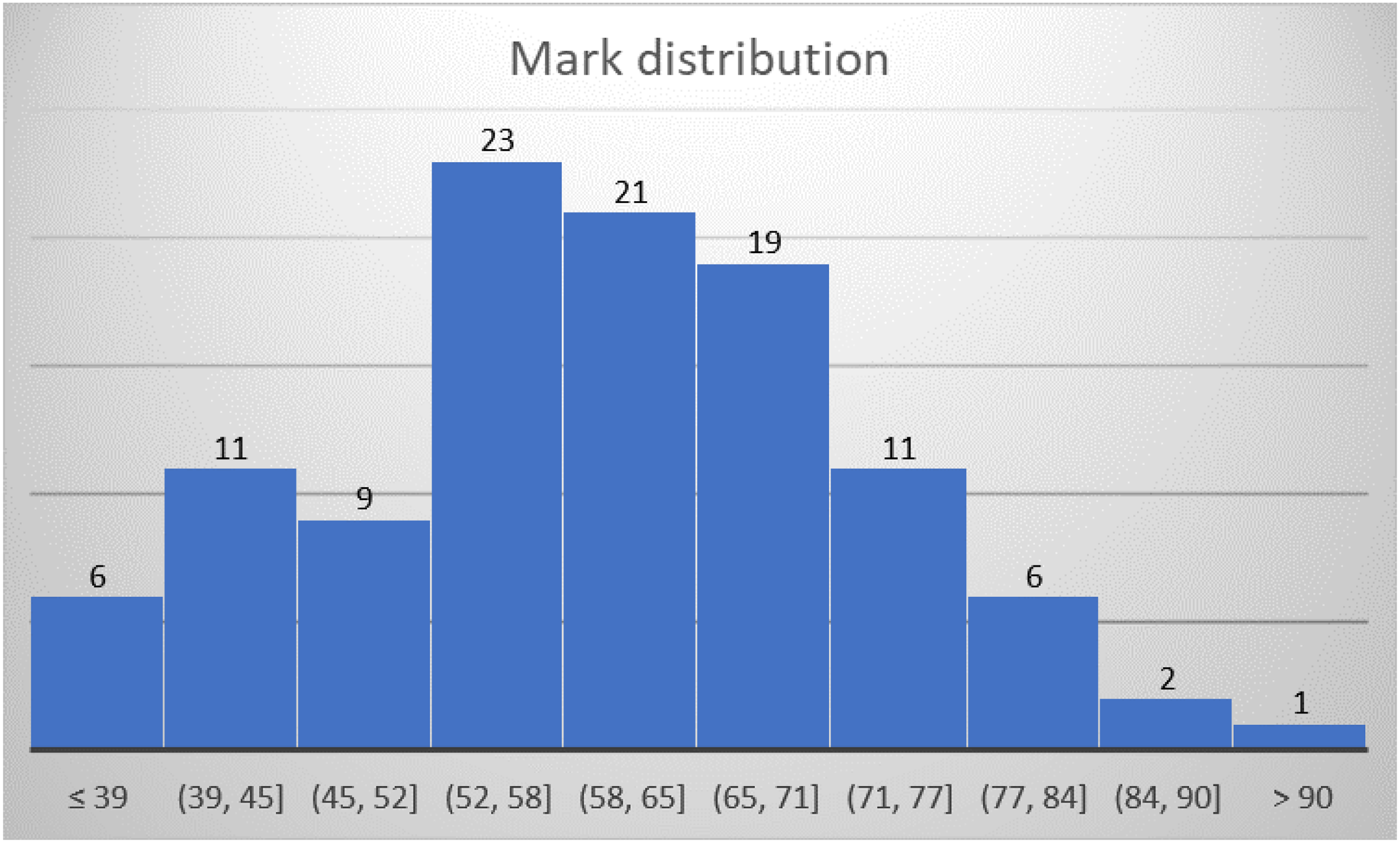
Distribution of the overall mark of Mechatronics 1 achieved by students for the academic year 2022/2023.
Conclusions
Despite the wide use of PPT in engineering education and the positive features this tool has, evidence shows that it has strong drawbacks that affect the attainment of students. These drawbacks are not related to how PPT can be used and rather they are inherited from the features of the software and how it is created to help the presenter rather than to be learner focused. This paper illustrated a try of a new delivery style without the use of PPT in an engineering module in the School of Engineering at Liverpool John Moores University. From the teacher perspective, adopting the new delivery style and moving away from the PPT slides give students full advantages with the ability to see explanations in full and see the links between various topics without the need to go forth and back in slides. Verbal comments and informal communication with students during the delivery of the module in addition to the comments received via the provided feedback form commended this change. The module feedback survey did not show a consistent pattern. The module satisfaction was not the highest in comparison to other modules at the same level. While the module survey results can be affected by several other factors and it can be interpreted in various ways, it seems the majority of students didn’t see the full advantage of this change. It needs a culture change within the HE providers before the move way from PPT can be accepted by students and seen positively. The same module, featuring the proposed teaching style, will continue to be taught in the upcoming academic years. This continuity allows the project to expand, engaging a larger number of students and yielding additional results. Further outcomes relating to the teaching of the module in subsequent years will be incorporated into future publications of the project.
Footnotes
Declaration of conflicting interests
The author declared no potential conflicts of interest with respect to the research, authorship, and/or publication of this article.
Funding
The author received no financial support for the research, authorship, and/or publication of this article.

Data Availability Statement
The datasets used and analysed during the current study are available from the corresponding author on reasonable request.