



Abstract
Teaching in higher education is a very demanding task, as students have easy access to information through a computer or mobile device, and nothing seems to surprise them. One of the main concerns of Mechanical Engineering professors is the transmission of the best general competencies and scientific knowledge, and the development of skills that will be very useful in their future professional life in a global employment market. In this way, teachers must continually innovate to motivate students and catch their attention, adopting new teaching methodologies, such as active learning. The main objectives of this teaching methodology are: to provide advanced knowledge in engineering; resolve of engineering problems; experimentation and knowledge discovering and, improvement of soft skills. This paper describes a project entitled “Production of a ceramic component,” included in the Curricular Unit of Non-Metallic Materials, proposed to the students of the third year, the first semester of a Mechanical Engineering course. Each group is assigned a ceramic component and is asked to research and prepare an oral presentation and a poster where they describe all the stages of the manufacturing process. They must consider component requirements, and the scientific and technical details of its production from materials selection to its sale. To carry out this assignment, students must review their basic knowledge of materials science, technical drawing, and materials and manufacture of ceramic components (subjects previously taught in different courses), and search in databases of material properties. Although this assignment is very challenging and time-consuming, students report in informal conversations promoted by teachers that they enjoy it and feel very motivated. They consider that this type of work better prepares them for their future professional life, by improving their soft skills.
Keywords
Introduction
The success of tomorrow's engineers requires designing university curricula that promote awareness of the broader impacts of engineering, empower systems thinking, instill sustainable engineering practices, and help prepare students to act with an impact on the global community.1,2
The main mission of the Mechanical Engineering Department of the Faculty of Engineering of the University of Porto (FEUP) is to prepare students for success as global engineers. The vision is to provide its engineers with skills to solve technical challenges in the context of an increasingly complex society, namely in-depth training in basic sciences and major scientific areas of Mechanical Engineering; laboratory and computational components; development of transversal skills; and carrying out projects in an academic, research or business environment.
Today, an engineer is constantly dealing with uncertainty, incomplete data, and competitive requirements from customers, environmental groups, and the public. To react to these requests, technical competence is required, but also an adequate profile in terms of human relations. While trying to incorporate more “human” capabilities into their knowledge base and professional practice, today's engineers must also deal with constant technological and organizational change in the workplace. Furthermore, they must deal with the commercial realities of industrial practice in the present world, as well as the legal consequences of all professional decisions they make. 3
The predominant model of engineering education remains very similar to that practiced in the 1950s, with chalk (now whiteboard marker) and conversation, with large classes and a single subject, lecture-based delivery being the standard, particularly in the first years of study. Traditionally, the educational process involves students first learning the fundamentals and then applying these concepts to solve a problem; learning objectives are defined by the professor, and the principles are presented to students through lectures. Tasks are given to reinforce the application of concepts, but often students only “learn” what is necessary to pass the test or “repeat” the information to satisfy the teacher. 4
Nowadays, the higher education system has been challenged to question more traditional teaching practices and focus more on the student. This change arose from the current needs of students and their future professional life, as well as more global economic and political changes. 5
Generic skills have been seen as important learning objectives, due to their relevance when an individual leaves higher education and enters the labor market. 6 Consequently, the concept of Active Learning (AL) has aroused greater interest and implementation in the most varied Universities and has been recommended by different Engineering professional associations (European Society for Engineering Education), political organizations like UNESCO, and others. 7 AL is a broad concept, generally based on active, student-centered, and faculty-led teaching methods. 8
AL develops specific and essential skills such as collaboration, autonomy, logic, creative thinking, and problem-solving. These skills are essential to perform the most varied positions in today's extremely competitive global job market.7,9
AL is an interactive teaching method, whose main features are: (a) student-centered approach that puts him at the center of the process, (b) student is the main protagonist of his learning process, carrying out relevant activities and thinking critically about ongoing tasks, (c) highly engaging teaching method, (d) encourages the student to actively participate by carrying out practical activities, (e) students work based on learning objectives, (f) consolidation of knowledge because the learning effort is exerted by itself, (g) teachers assume the roles of mentors and evaluators of students’ progress, and (h) a wide range of means to capture and maintain students’ attention.9–11 Hernández-de-Menéndez et al.
9
listed 10 universities that pioneered the implementation of AL environment and activities, briefly describing what was implemented. AL encompasses a wide range of techniques ranging from the simplest to the most complex. The latter are9,11,12:
Project-based learning (PBL): Focuses on the idea that students combine the knowledge acquired in previous CUs with that obtained through the development of the project. Cooperative-based learning: Students may have better results when they work together and understand group dynamics (groups of three or more). Problem-based learning: Analysis and discussion of a real problem in small groups without the opportunity to look up new concepts. The aim is to apply previous knowledge. Then, they elaborate questions for each one to look for information to reach a solution as a group. Team-based learning: Case-based teaching and learning. UC knowledge is acquired independently before class. Students are examined at the beginning of the session through an individual questionnaire and, immediately afterwards, they take the same test in a group. The results of both exams make up the final grade. Competency-based learning: Ensure that students acquire the knowledge and skills essential for success in higher education and professional careers. Challenge-based learning: Involves the student in a relevant and challenging situation in a real-world context. It considers the acquisition of knowledge, the definition of the problem, and the implementation of a solution(s).
In recent years, studies have been conducted in many countries to determine the technical and personal abilities required of engineers by today's industry. These studies have indicated some key concerns that are missing. Today's engineering graduates need to have strong communication and teamwork skills. They need to have a broader perspective of the issues that concern their profession such as social, environmental, and economic issues. Finally, they are graduating with good knowledge of fundamental engineering science and computer literacy, but they have clear difficulties on how to apply that in practice. The new accreditation approach shifts the emphasis away from “what is being taught” to “what is being learned.”2,13–15
During the last 40 years, one of the main AL techniques that has been widely adopted in engineering education, because of its expected effectiveness in developing students’ professional knowledge and transferable skills, is PBL. The PBL approach employs a problem as the driving force for learning the fundamental principles that are required to find a solution. Moreover, this approach provides a context that makes learning the fundamentals more relevant and, hence, results in better memory by students.16–19
PBL experiences that emphasize student learning rather than instructor teaching can play a key role in the successful development of a global engineer. Evaluations of project-based courses show increases in student motivation and creativity, problem-solving ability, communication, and teaming skills, knowledge retention, and capacity for self-directed and AL. 20
A key result of all the PBL activities is to enable students to develop self-directed learning capabilities. After all, the purpose of education is not to transmit “what to know” but to challenge students to have an AL, developing the skills of inquiry or “how to learn.”1,18,21 Rubino 22 describes the implementation of project-based instruction into a freshman engineering technology course. Genalo 23 discusses the application of a project-based approach for teaching the design of experiments in the framework of a materials science course. Haik 24 reports the development of an engineering mechanics course based on a term project that also involved building the designed product.
Richardson et al. 25 emphasized that projects can serve as a powerful tool for attracting students to and retaining them in engineering programs by demonstrating the diversity of skills needed to practice engineering. These authors have implemented, with some success, the teaching of engineering and design based on PBL in some courses they teach.13,17,26
According to Frank et al. 27 and Krajcik et al., 28 the PBL approach engages learners in exploring important and meaningful questions through a process of research and collaboration. Students ask questions, make predictions, design investigations, collect and analyze data, use technology, make products, and share ideas. 20 Krajcik et al. 28 suggested four benefits for the student; (1) develop deep, integrated understanding of contents and processes; (2) learn to work with people from different backgrounds to solve problems (sharing of ideas to find answers to the problems listed); (3) responsibility and independent learning; (4) student involvement in various types of tasks, thereby meeting the learning needs of many different students (see also Hill and Smith 29 ).
The advantages of PBL from the student’s point of view are described by Orevi and Danon, 30 who report that it enhances the development of data collection and presentation skills, and reasoning ability, which adapts to personal learning styles, increases motivation, and develops independent students.
Krajcik et al. 28 suggested three possible advantages for the teacher; (1) find the work enjoyable, interesting, and motivating, as teaching varies each year as it explores new projects with each new group of students; (2) continually receives new ideas, thus becoming a “lifelong learner”; (3) classroom management is simplified because, when students are interested and motivated, disciplinary problems are residual (see also Bell, 19 and Hill and Hopkins 31 ).
In this work, we share the methodologies developed and adopted for the implementation of AL in the Non-Metallic Materials curricular unit, third year, the first semester of the Mechanical Engineering course, which has been highly appreciated by students. The CUs involved in the learning process and all the competencies (transversal, experimental, and computational) that interfere in this non-traditional teaching–learning process stand out.
A case study of active learning in mechanical engineering
The learning objectives of the Mechanical Engineering course of FEUP are:
Acquisition of knowledge in basic sciences, namely in Mathematics, Physics, and Technical Drawing; and in the major scientific areas of Mechanical Engineering, namely in Solid and Structural Mechanics, Fluid Mechanics, Thermodynamics and Heat Transfer, Electricity and Automation, Materials and Technological Processes, and Production Management; Acquisition of skills and experience in the use of computer and programming means for application in different areas of Mechanical Engineering; Acquisition of skills for communication and interaction with different audiences; Development of work skills in multidisciplinary teams, with personal integrity and professional ethics; Development of personal skills.
Throughout their academic career, students acquire in-depth knowledge for accomplishment of the profession of a mechanical engineering and develop fundamental experimental, computational, and transversal skills, highly valued both in careers in the most diverse companies and in research, development, and transfer of technology. Figure 1 shows the major areas of the new study plan implemented in the school year of 2021/2022 and the respective ECTS (European Credit Transfer and Accumulation System), which is a tool of the European Higher Education area for making studies and courses more transparent. It helps students to move between countries and to have their academic qualifications and study periods abroad recognized.
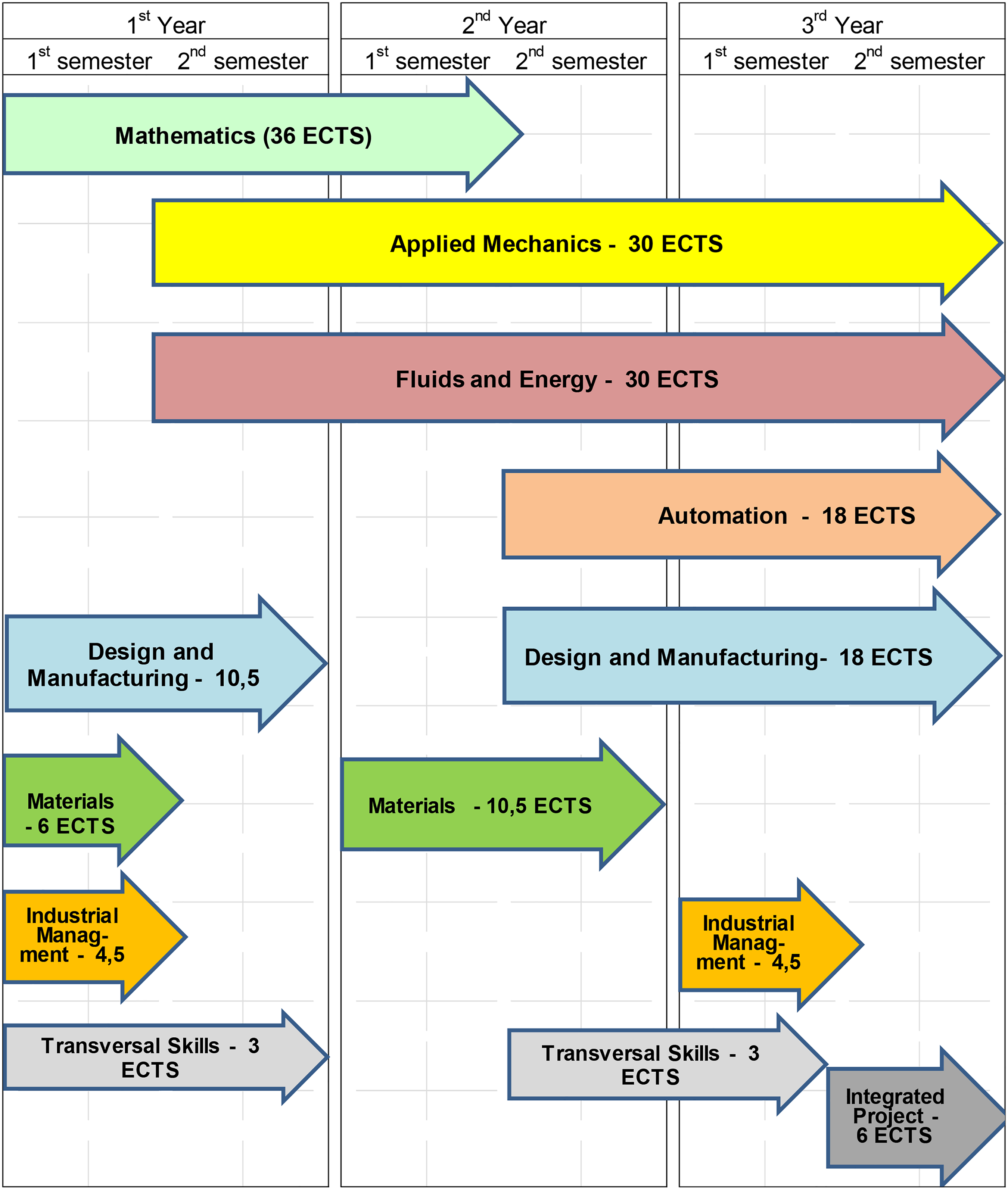
Major areas of the mechanical engineering program and the respective ECTS (European Credit Transfer and Accumulation System).
Regarding the subject area of Materials, the program includes three curricular units (16.5 ECTS) whose objective is to provide students with knowledge that allows them to understand in an integrated, in-depth, and diversified way, the issues related to materials—structure, properties, processing, and performance—fundamental to produce everything.
Training in this area begins in the first year, the first semester, with the Materials Science course, where students learn the main materials used in Mechanical Engineering, their main properties and understand and relate the various factors that contribute to the great diversity of mechanical behavior of materials (structure, chemical composition, defects, chemical bonds, and processing). In the end, they must have general knowledge about materials and be aware of the wide range of factors that are fundamental in their selection.
In the second year, the first semester, the course of Metallic Materials covers specific contents of metallic materials, from their manufacturing process, the relationship between structure, chemical composition and properties, heat treatments, and selection of metal alloys. In addition, the training is completed with the acquisition of computational skills (mastery of material and processes selection software—GRANTA EduPack, from Ansys (formerly CES EduPack). This is a unique set of teaching resources to support materials education that provides support to enhance undergraduate materials education. Includes a database of materials and process information, materials selection tools, and a range of supporting resources. It has also been designed to support a wide variety of teaching styles, from design and science-led approaches to problem-based teaching.
The students develop experimental skills (performing heat treatments, microstructural analysis, and mechanical testing) and transversal skills (capacities for collecting technical information, and carry out practical group work, reports, and presentations). Its prerequisites are concepts of mechanical behavior, structure, and phase diagrams taught in Materials Science.
Finally, the course of Non-Metallic Materials, second year, second semester (previously in the third year, first semester), states as objectives the knowledge of the various ceramic, polymeric, and polymeric matrix composite materials, their main applications, properties, and main manufacturing processes. In addition, it reinforces computational skills in the use of material and processes selection software (GRANTA EduPack), experimental skills (ability to carry out experimental work; collect data, interpret them and relate them to different subjects and carry out small projects on the selection of materials and manufacturing processes) and also transversal skills developing abilities to collect scientific information, using different sources (books, scientific articles, databases), preparation of technical reports and posters and ability to carry out practical work in group and presentation and discussion of results. The prerequisites are knowledge of chemical bonds, phase diagrams, material structures, mechanical behavior, and even design concepts taught in Technical Drawing and Mechanical Construction Drawing courses.
Active learning in teaching Non-Metallic Materials
The Non-Metallic Materials course is divided into two parts, (1) ceramic materials, and (2) polymeric and polymeric matrix composite materials. In this publication only the part of ceramic materials is addressed (for more information see Alves et al.13). The syllabus for ceramic materials covers the following topics:
Introduction to ceramic materials, general properties and applications of traditional and engineering ceramics, and glasses. Processing of ceramic materials. Introduction to sintering. Solid state, liquid phase, and reaction sintering. Mechanical, thermal, and optical properties. Advanced ceramics. New materials and new applications. Future challenges.
In theoretical-practical classes, the professors present the fundamental concepts of the syllabus mentioned above and challenge students to carry out various works of knowledge consolidation and research.
One of these works is to provide each group of three students with a component made of a ceramic or glass material and challenge them to carry out a study about the materials and manufacturing processes used in its production. It is an AL in which students are challenged to investigate everything that involves the “Production of a Ceramic Component,” having to relate the contents taught in previous CUs and use computational, experimental, and transversal skills, to present and justify the proposed solution.
Figure 2 presents some examples of parts randomly assigned to students. For each part provided in the class, the teachers indicate some details in terms of materials, microstructures, and manufacturing.
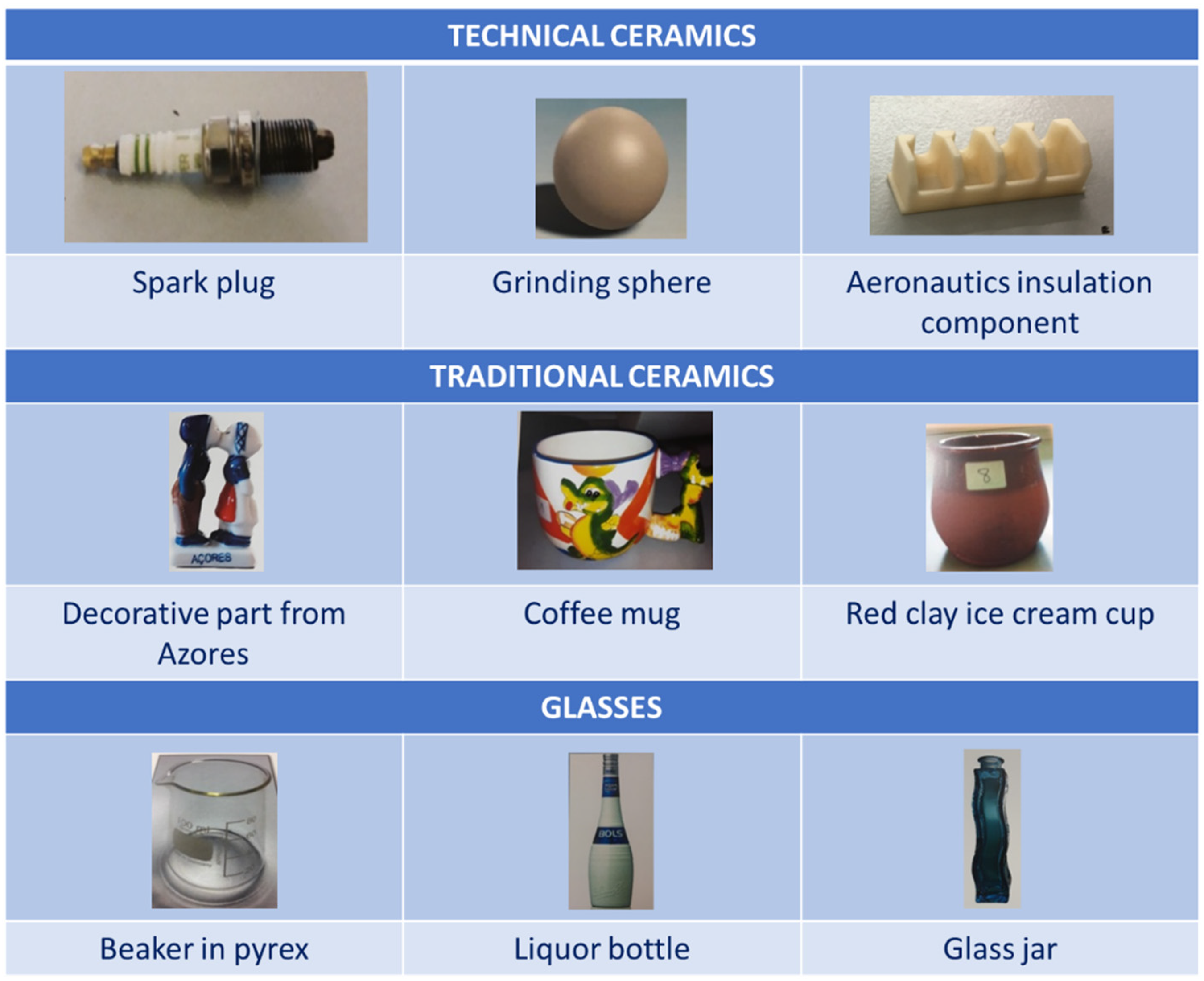
Examples of ceramic parts provided to students.
To understand the challenge launched at the students and the steps to be taken, the work guide is here presented.
Component design: Make a photographic record of the component and briefly describe the requirements for use (why this component is made in this material and not any other). Then sketch (freehand drawing) the component. Obtain its dimensions using suitable measuring instruments and draw it in AutoCAD 2D or other software. Characterization of the material used in its manufacture: With the help of GRANTA EduPack and other sources of information (videos, databases, books, technical datasheets, etc.), characterize your material (properties, chemical composition, crystal structure, etc.). Component production: Imagine that you intended to produce the component. Describe, through an organizational chart, all stages of the manufacturing process, from its design (2D drawing) to the final component (launch of the product on the market). Describe in detail all the steps identified in the organization chart, such as raw materials, binders, drying, manufacturing process, sintering cycle, finishing, recycling, and environmental concerns, among others that you consider relevant. Use photographs and other elements that you find interesting (e.g., videos). Work to be carried out (groups of three students): Perform the tasks indicated throughout the statement and present the work performed as an oral presentation (supported by a power point) and a printed A3 poster.
The presentation must consider the scientific and technical details of the product's preparation, as well as its sale. The presentation should be as objective as possible. The main idea is to make the component's production cycle clear, from its idealization to its place on the market (avoid generalities about ceramic materials). The oral presentation must have a maximum duration of 8 minutes. The poster must contain the following information: title of the work, curricular unit, year, course, objectives, introduction, work carried out, conclusions, future work, photos/names of the group members, location, and other elements that you consider relevant.
This work describes a case study with all the steps and research work carried out for one of the ceramic components assigned to a group of three students (2016/2017), evidencing the AL methodology in each phase. This year, 153 students (between 20 and 21 years old, 25% were female) carried out this work, divided into seven classes with about 22 students. In each class, eight different ceramic parts were distributed.
The professor follows the progress of the work during the classes, suggests research sources, visits to companies, corrects errors, and clarifies doubts.
All the following information was compiled from the work of different groups.
Case study of a ceramic connector
The ceramic component supplied was a connector for the heating resistances of a glass ceramic stove. This device is used for heating pots for kitchens. Glass ceramics are polycrystalline materials produced through controlled crystallization of base glass. Figure 3 shows the ceramic component assembled to perform its function. Figure 4 shows the ceramic component and its main length.
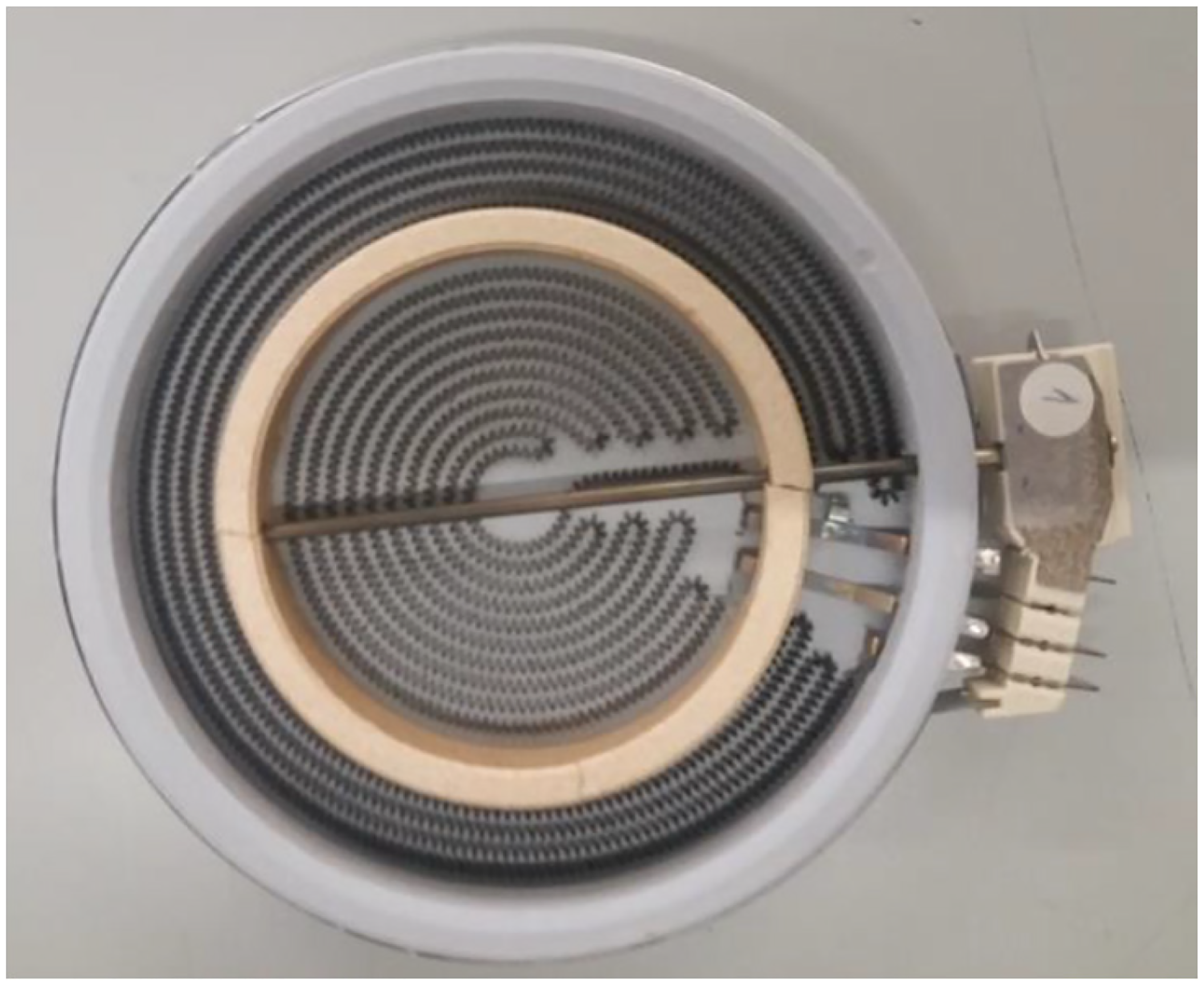
Ceramic component to be studied in the original location of a heating disk of a glass ceramic stove.
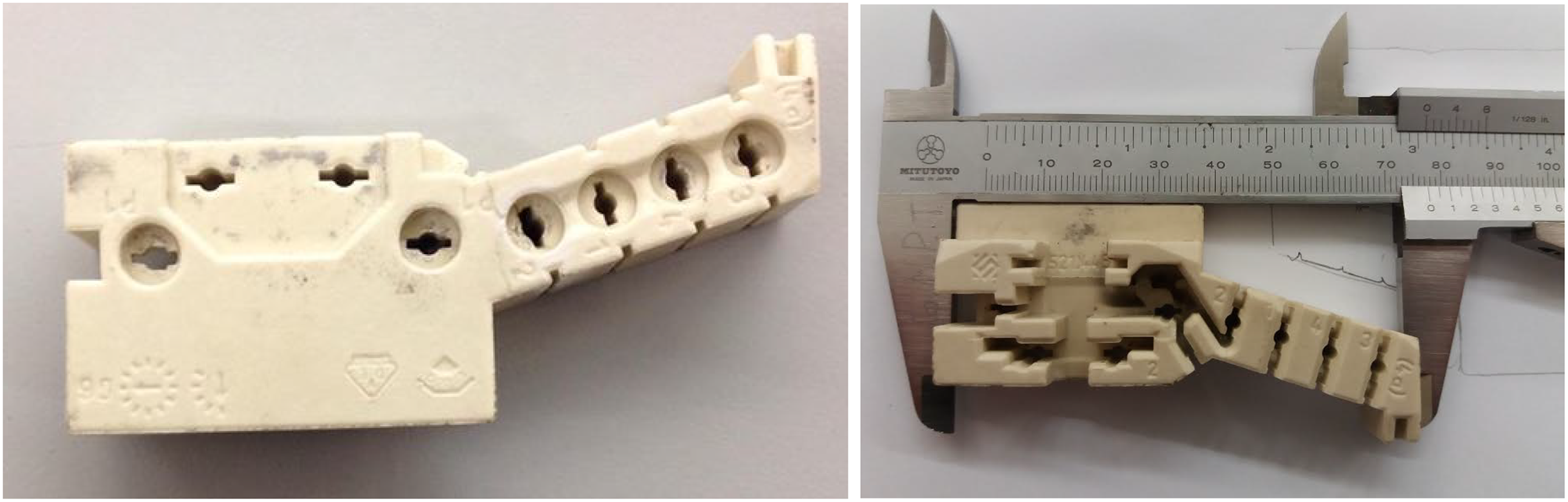
Ceramic component removed from the original equipment and measurement of its main dimensions.
AL Skills: Experimental observation, teamwork, research about information sources, organization, and synthesis.
Results: Requirements of the component under study:
High-temperature resistance; Resistance to thermal shock; Good thermal insulation; Good electrical insulation; Low cost; Large-scale production (batch size).
AL Skills: Debate search criteria using the GRANTA EduPack materials selection software, collection, and discussion of results, elaboration of summary tables and graphs on properties, characteristics, and applications of ceramics that meet the requirements.
Results: Using the GRANTA EduPack software, graphs were built (Figures 5 and 6) relating ceramic materials properties, considering the requirements indicated above. After analyzing these graphs, it was verified that the most suitable ceramics would be alumina, steatite, and cordierite. Thus, Table 1 was prepared, containing the main properties necessary to meet the requirements and typical applications related to this type of application. The selected ceramic materials generally comply with all the properties presented in the requirements, also allowing the manufacture of parts with complex geometries and details.
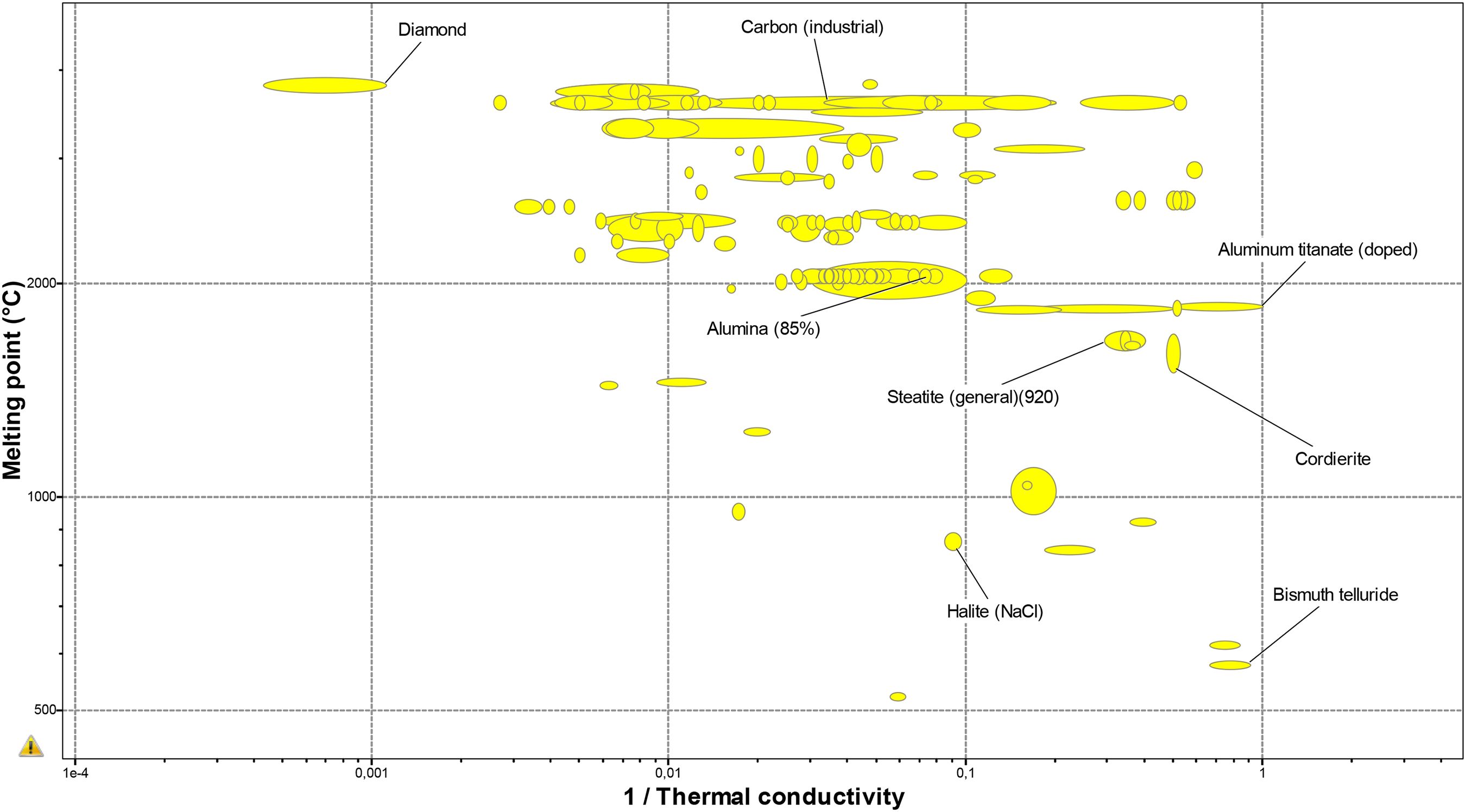
Requirements considered: resistance to high temperatures (high melting point) and low thermal conductivity.
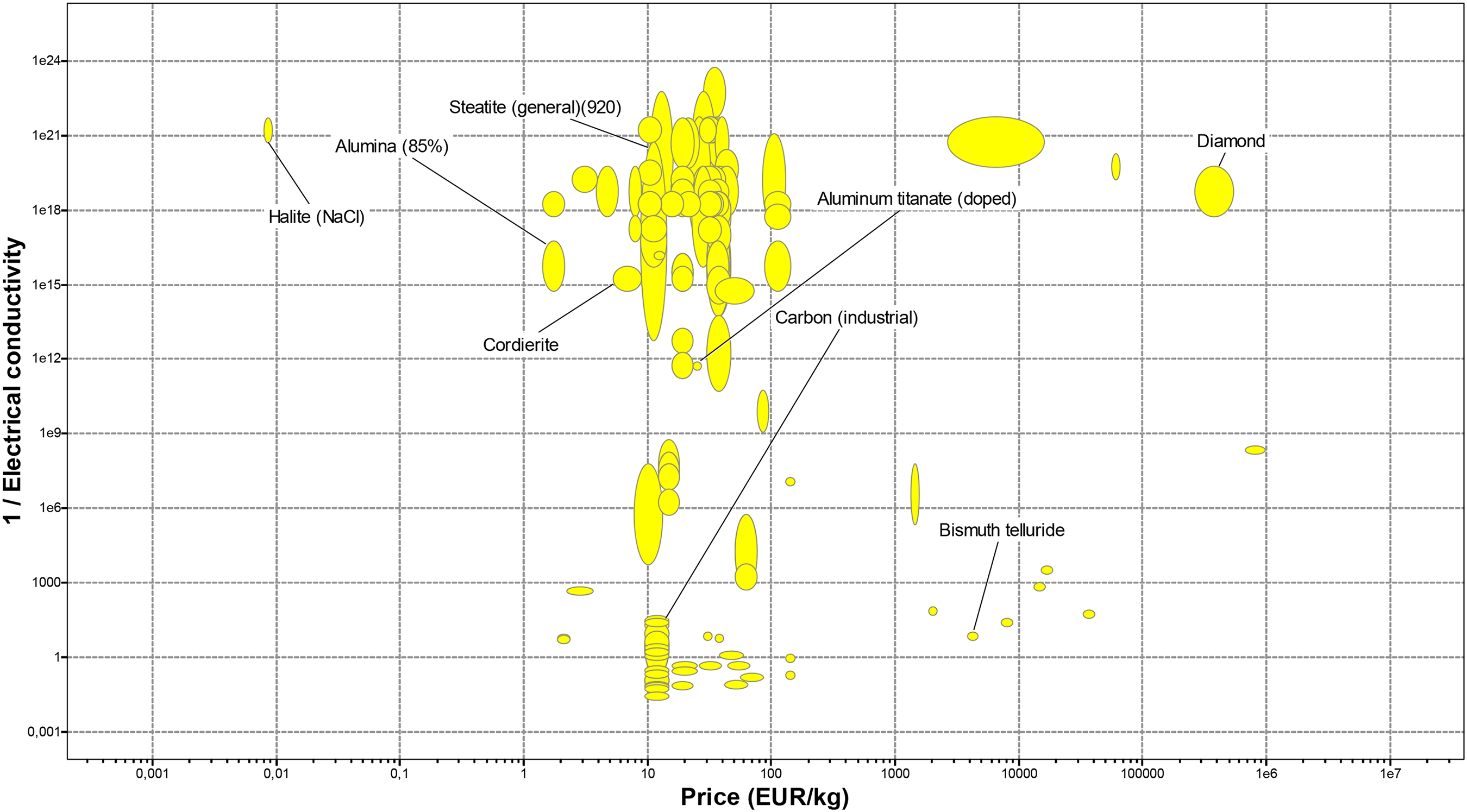
Requirements considered: low electrical conductivity and low price.
Main properties of materials selected from the graphics that meet the specified requirements.
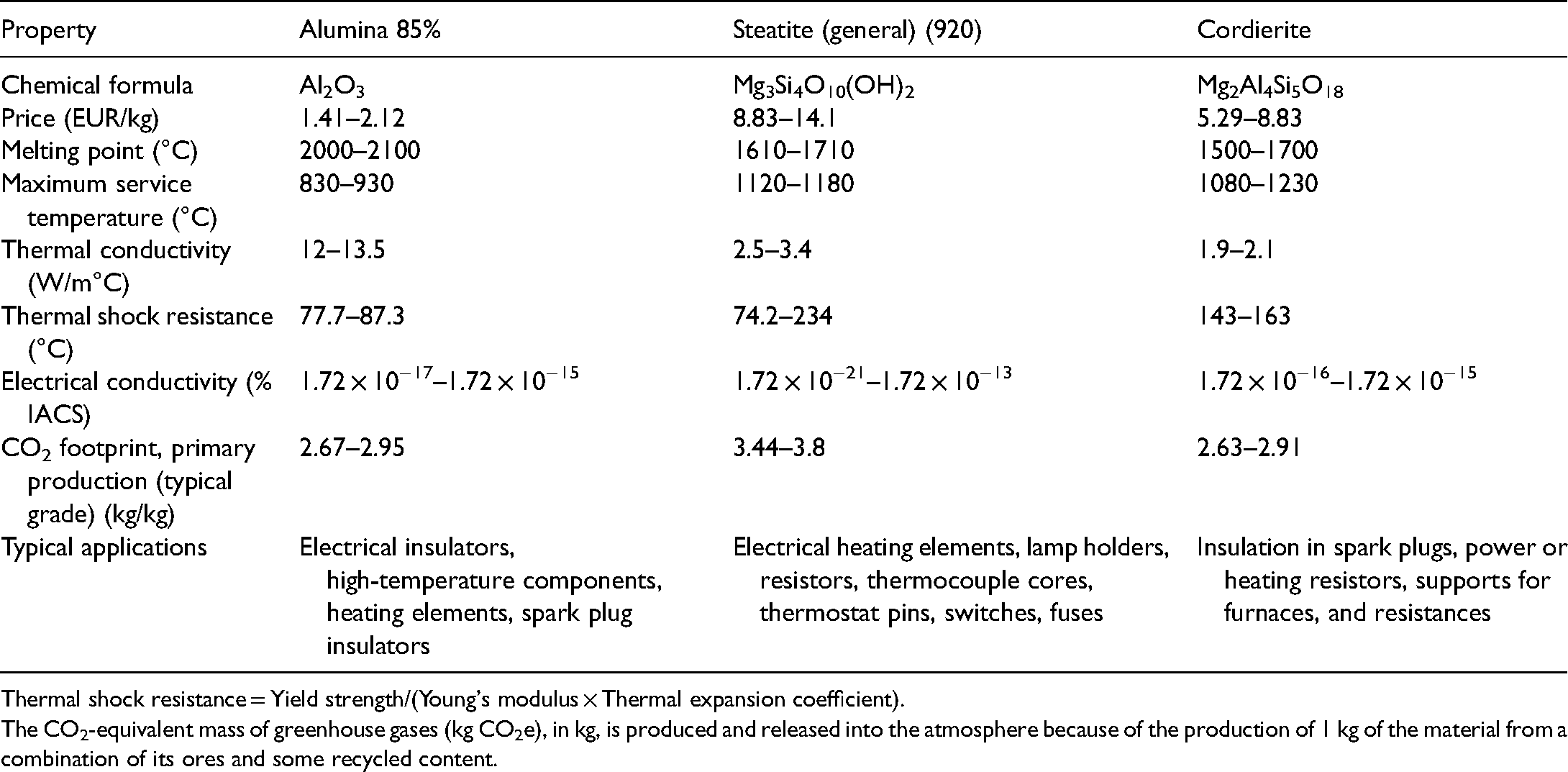
Thermal shock resistance = Yield strength/(Young's modulus × Thermal expansion coefficient).
The CO2-equivalent mass of greenhouse gases (kg CO2e), in kg, is produced and released into the atmosphere because of the production of 1 kg of the material from a combination of its ores and some recycled content.
AL Skills: Research methods of materials analysis suitable for ceramic materials (available at U.Porto). Experimental work: samples preparation for observation by optical microscopy (only visualization of different phases) and electron microscopy (visualization of the structure and fracture surfaces and determination of chemical composition).
Results: In the first phase, it was decided to take a sample of the component to carry out its materialographic preparation for analysis by optical microscopy, and later a more detailed analysis by scanning electron microscopy (SEM). Sample preparation (no etching was used) was carried out as indicated in Table 2.
Materialographic preparation steps.
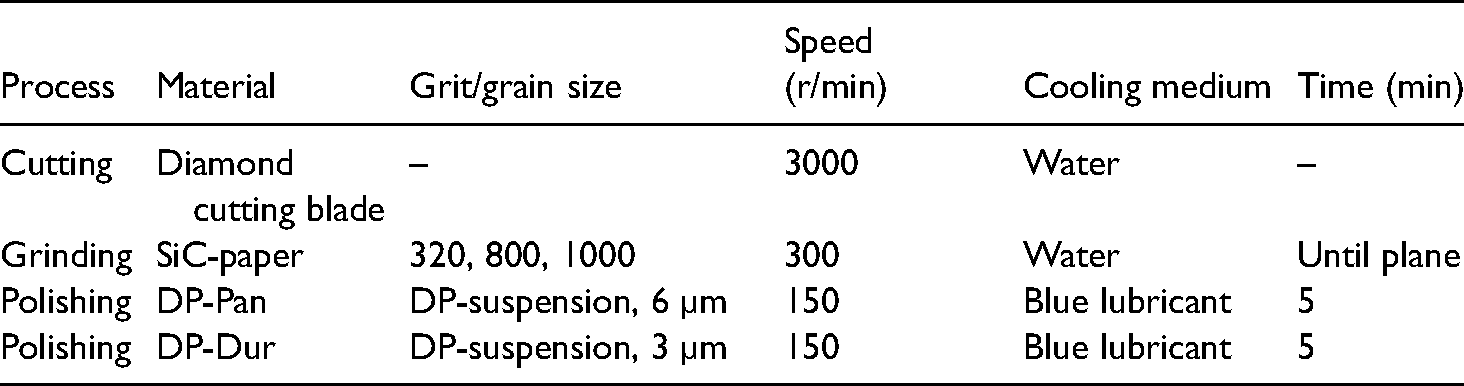
Figure 7 shows an image obtained by optical microscopy (ZEISS, Axiophot), where particles of different phases, dimensions, and geometries can be observed in a ceramic matrix, with almost no porosity.
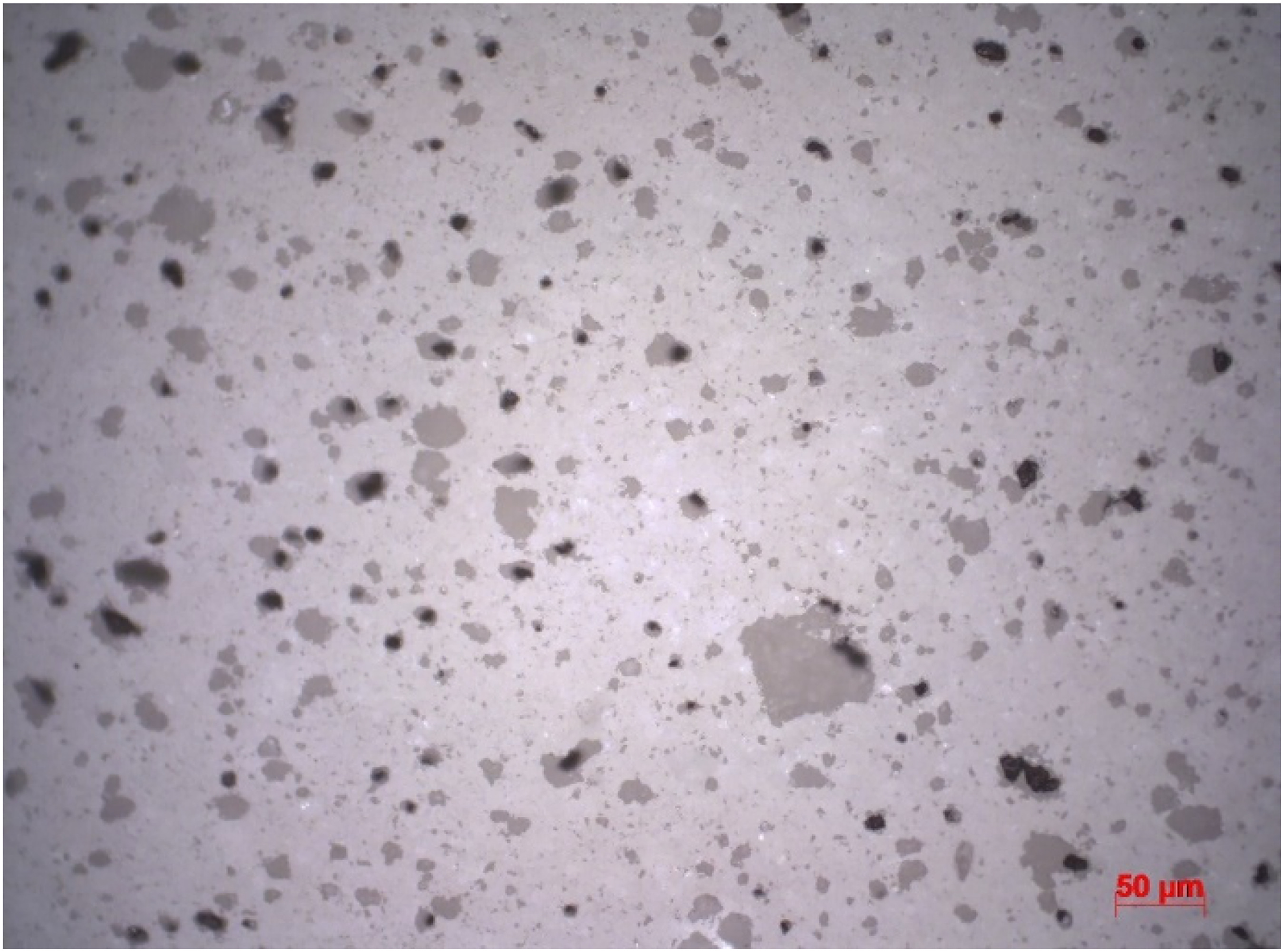
The surface of polished ceramic component (some of the black areas are pull-outs).
The analysis by optical microscopy allowed us to observe the microstructure of the ceramic material, but not the identification of the phases and raw material used in its production, which is only possible with the SEM and EDS (energy dispersive spectroscopy) analysis. The sample was prepared for analysis by electron microscopy through an Au-Pd coating deposited on its surface (making it conductive). The equipment used was a JEOL JSM 6301F/ Oxford INCA Energy 350/Gatan Alto 2500 (CEMUP—Centre of Materials of University of Porto—Functional Centre established as a general facility for the support of research and development in the field of materials, providing support and service to the departments and research centers of the University of Porto, to other universities, and to other public or private research and industrial activities).
Figure 8 shows the sample surface observed by SEM in different scanning modes: (a) SE—secondary electrons and (b) BSED—backscattered electron diffraction pattern mode. In this second mode, heavier phases are lighter.
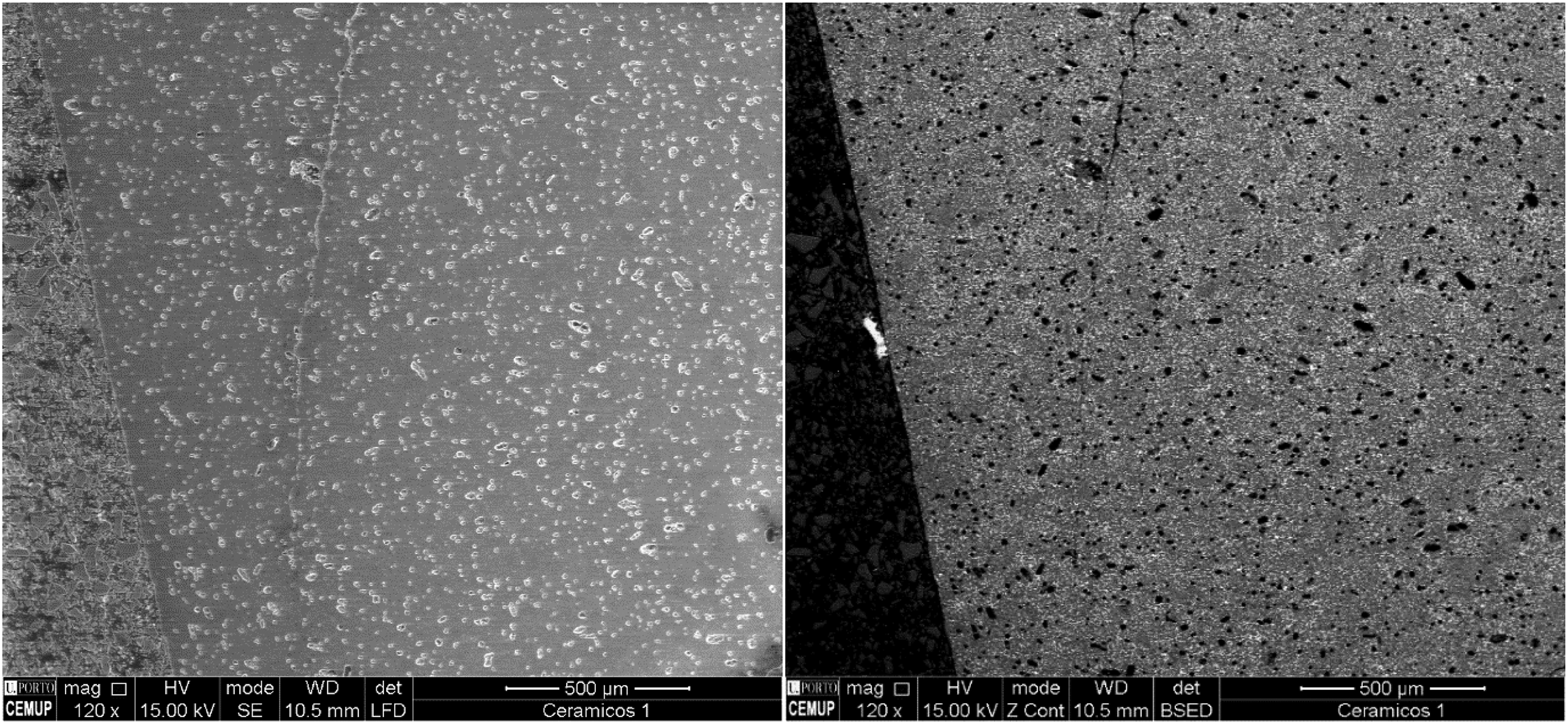
Sample surface observed by SEM: (a) SE, (b) BSED.
Figure 9 shows the observation of the surface at a higher magnification with an indication of two zones where X-ray microanalysis analyses were carried out to obtain information about the chemical composition. The spectra of the two regions and the global spectrum are shown in Figure 10. Table 3 summarizes the chemical composition of zones F1 and F2 identified in Figure 9.
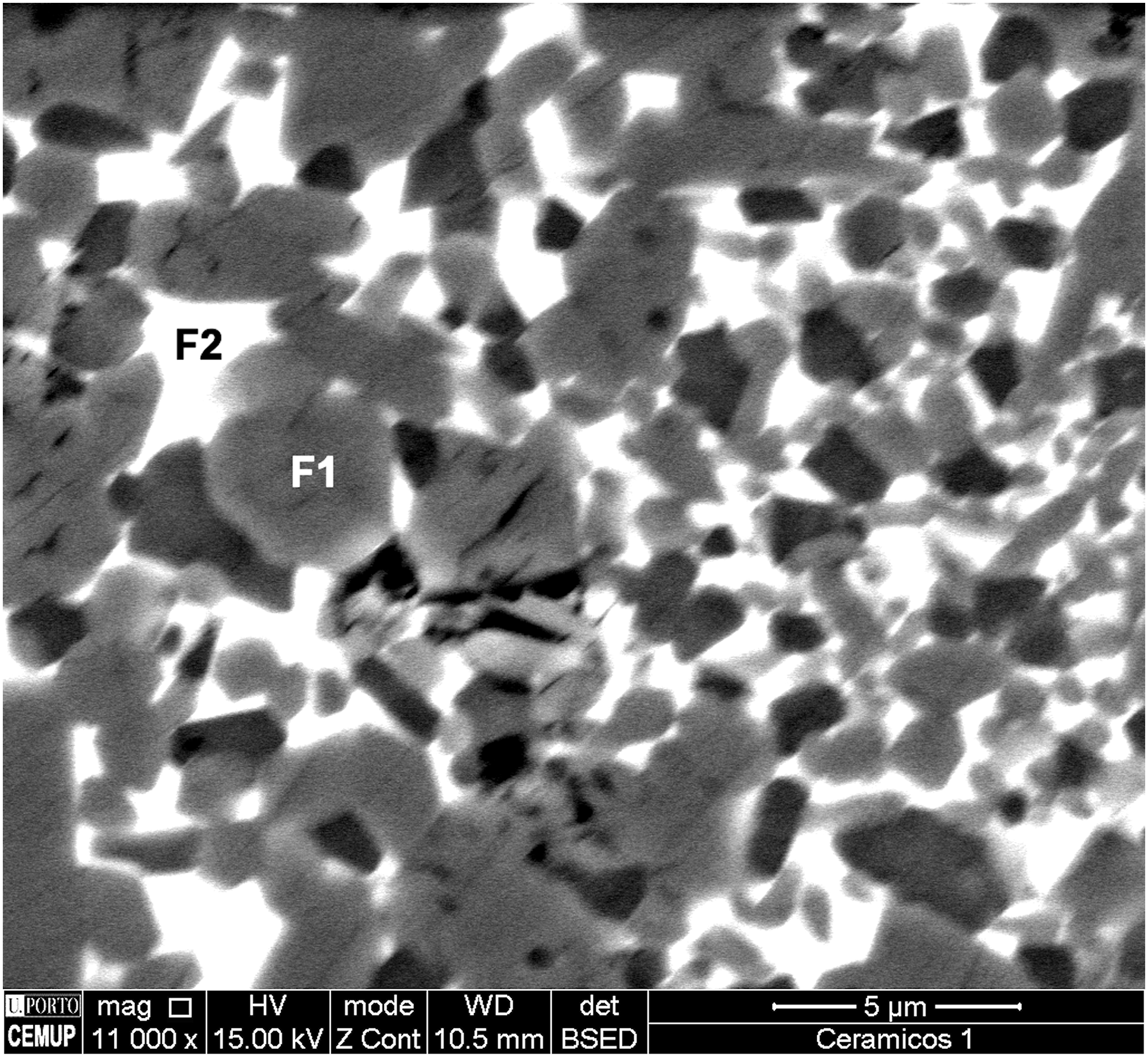
Microstructure of the ceramic component surface with an indication of the areas where the chemical analysis was carried out: F1—magnesium silicate particles, and F2—magnesium aluminum silicate (liquid phase)–AlMgO4Si.
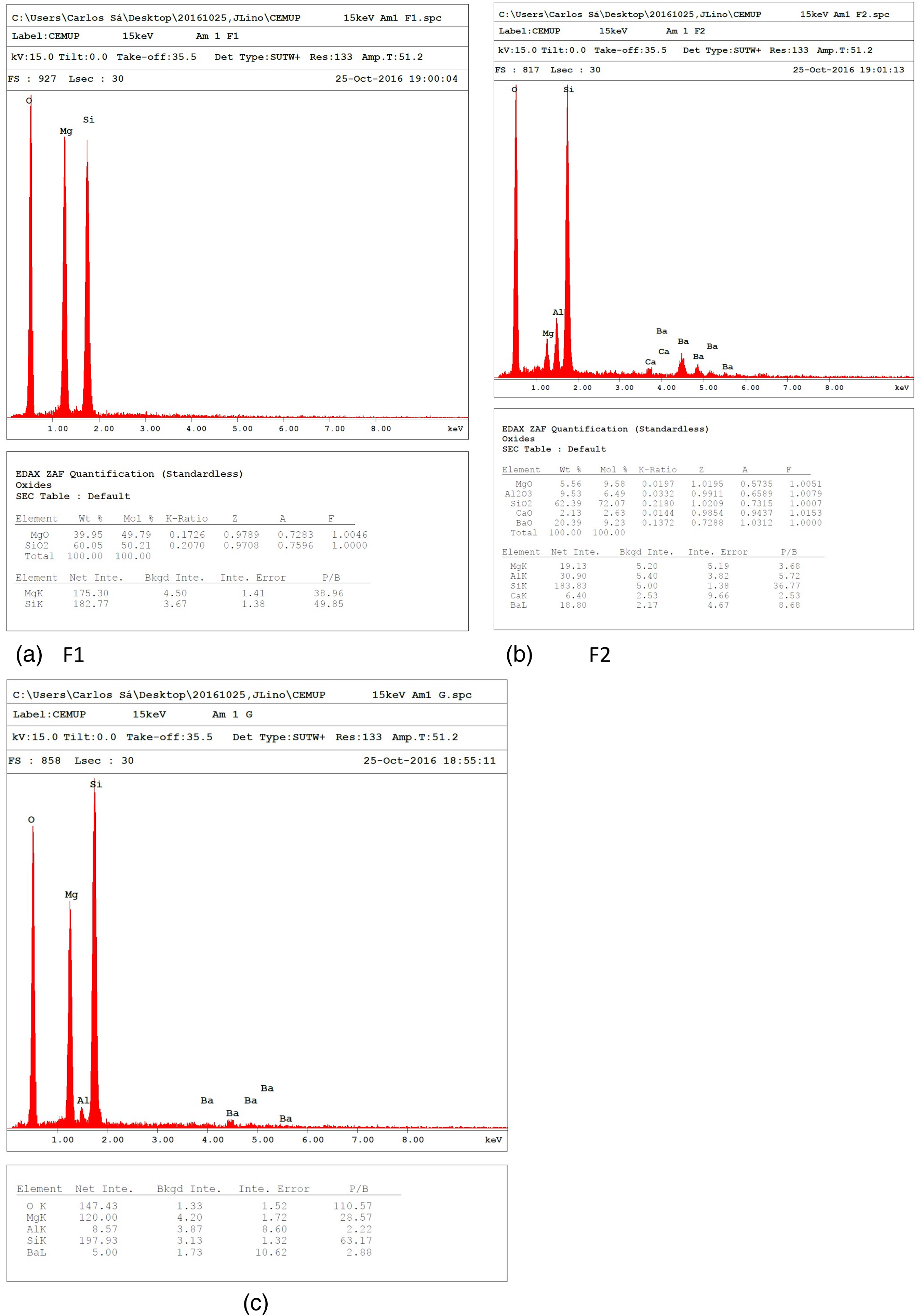
X-rays spectra of regions: (a) F1; (b) F2; (c) global.
Chemical composition (approximate) of zones F1 and F2.
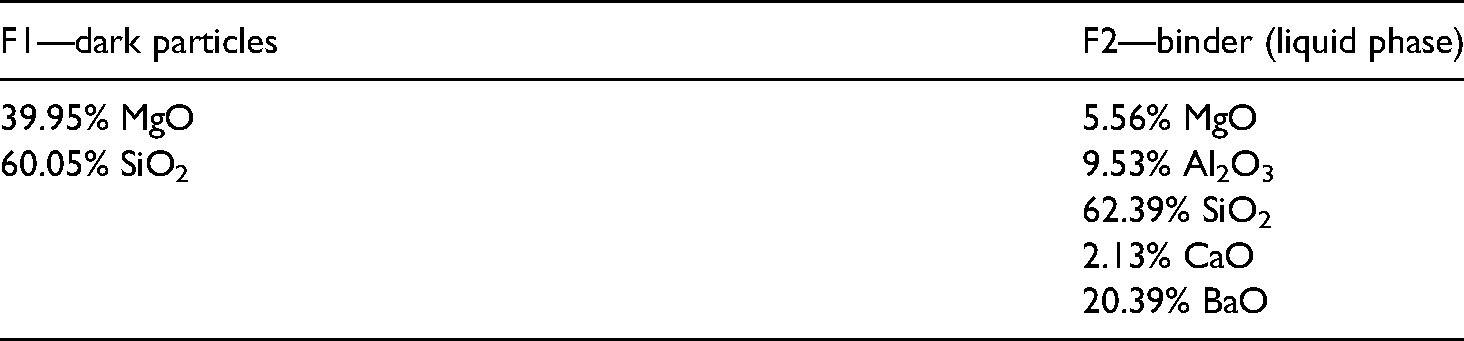
Considering the graphics obtained through the GRANTA Edupack software, and the SEM/EDS analysis, it was possible to identify the raw ceramic material as steatite, to which a binder (F2 in Figure 10) was added, to generate a liquid phase during the sintering cycle.
AL Skills: Research ceramic materials processing methods, advantages, and disadvantages. Experimental and computational component: Freehand drawing and technical drawing of the component.
Results: The first phase of this step was to make a sketch of the component, and then select the measuring equipment to obtain the necessary dimensions for the 2D technical drawing. Figure 11 shows two examples of freehand sketches made by two groups of students (one simpler and the other more elaborate). These two examples show the difficulty/ease with which the students overcome this challenge. Figure 12 shows two examples of 2D technical drawings using two different software.
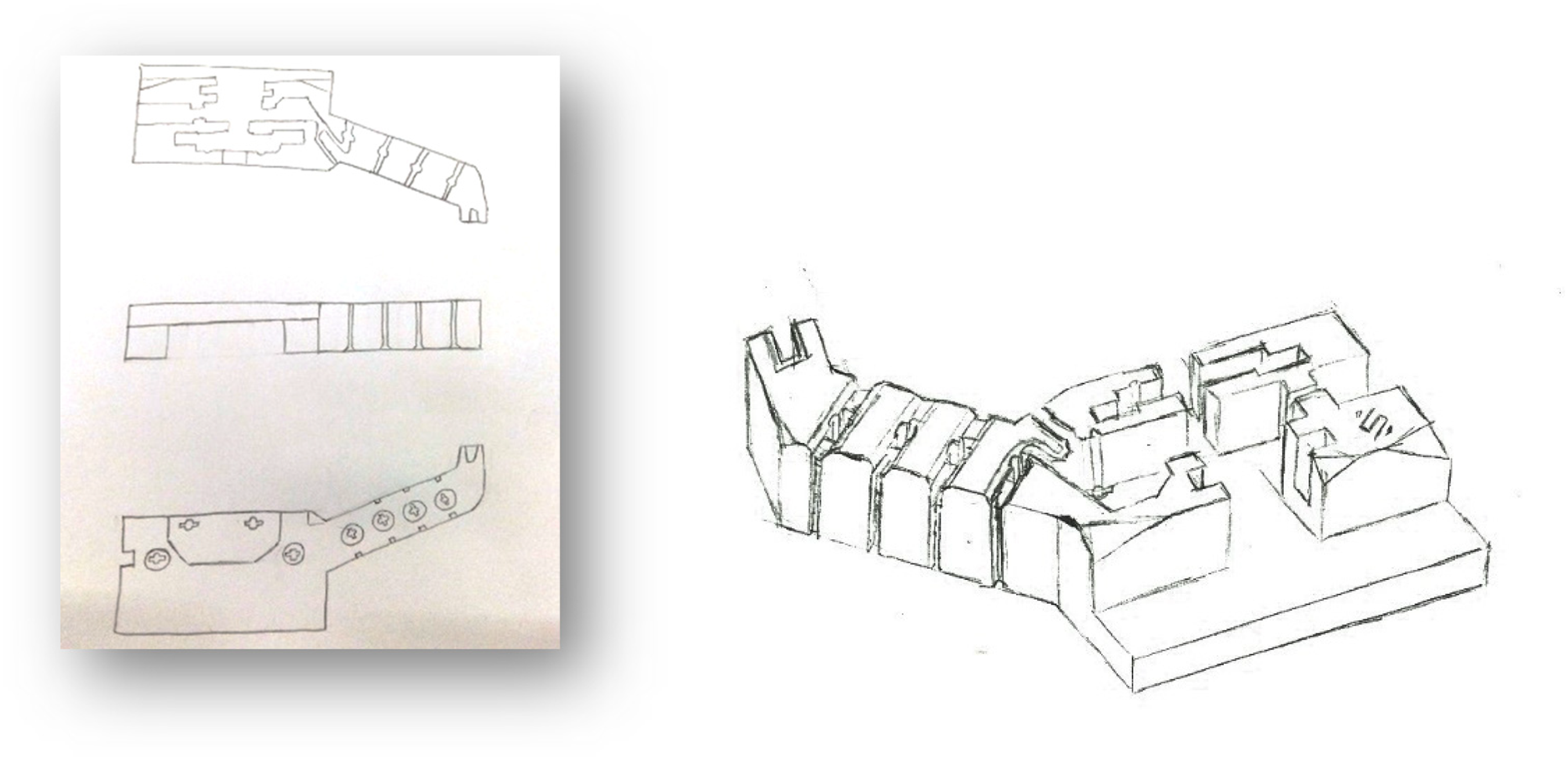
Two examples of freehand sketches of the ceramic component.
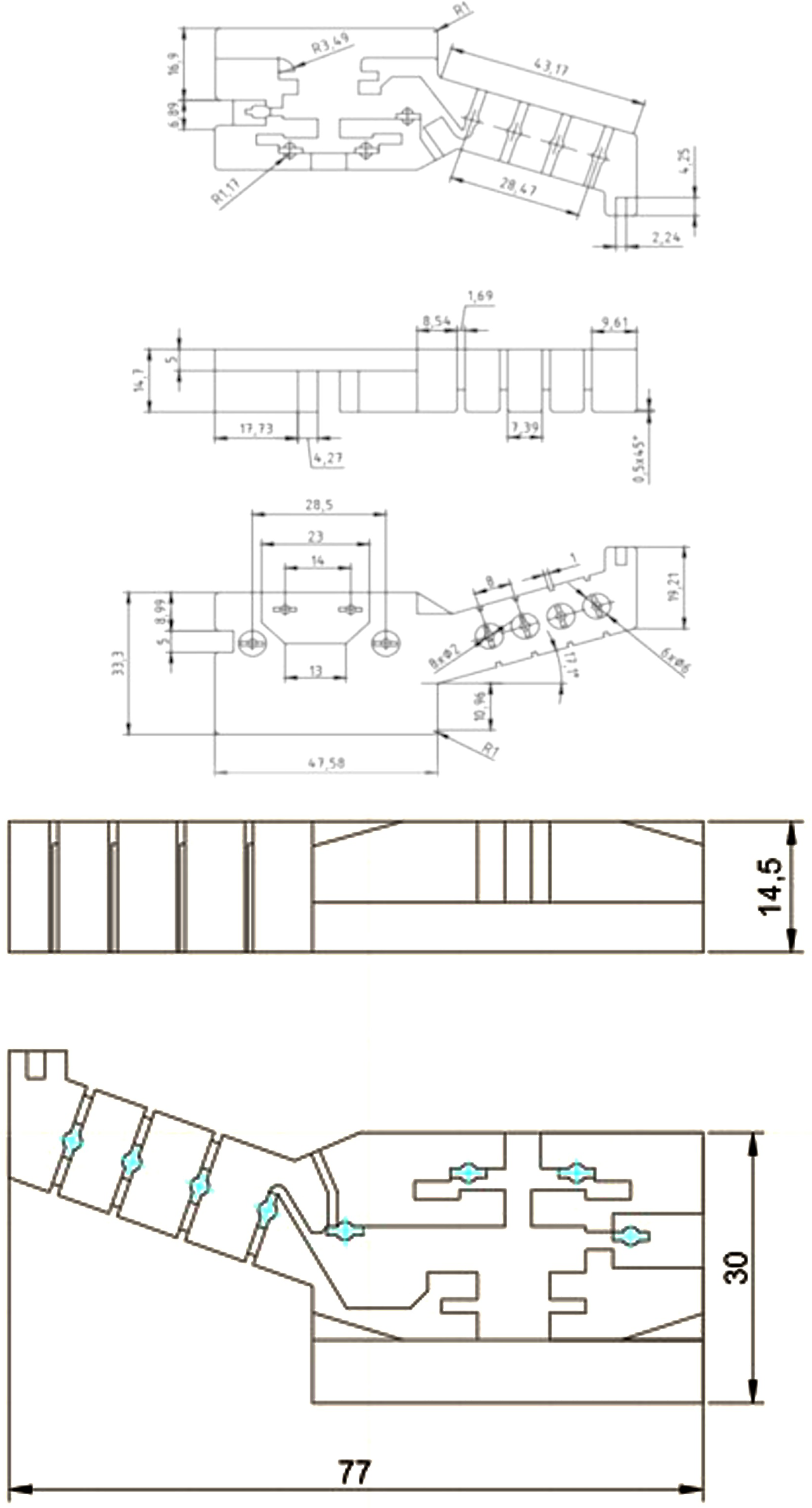
Two examples of two-dimensional (2D) technical drawings using two different software (SolidWorks and AutoCAD 2D).
Some more enthusiastic students also decided to do this drawing in CAD 3D (they were having this course at the same time), see Figure 13.
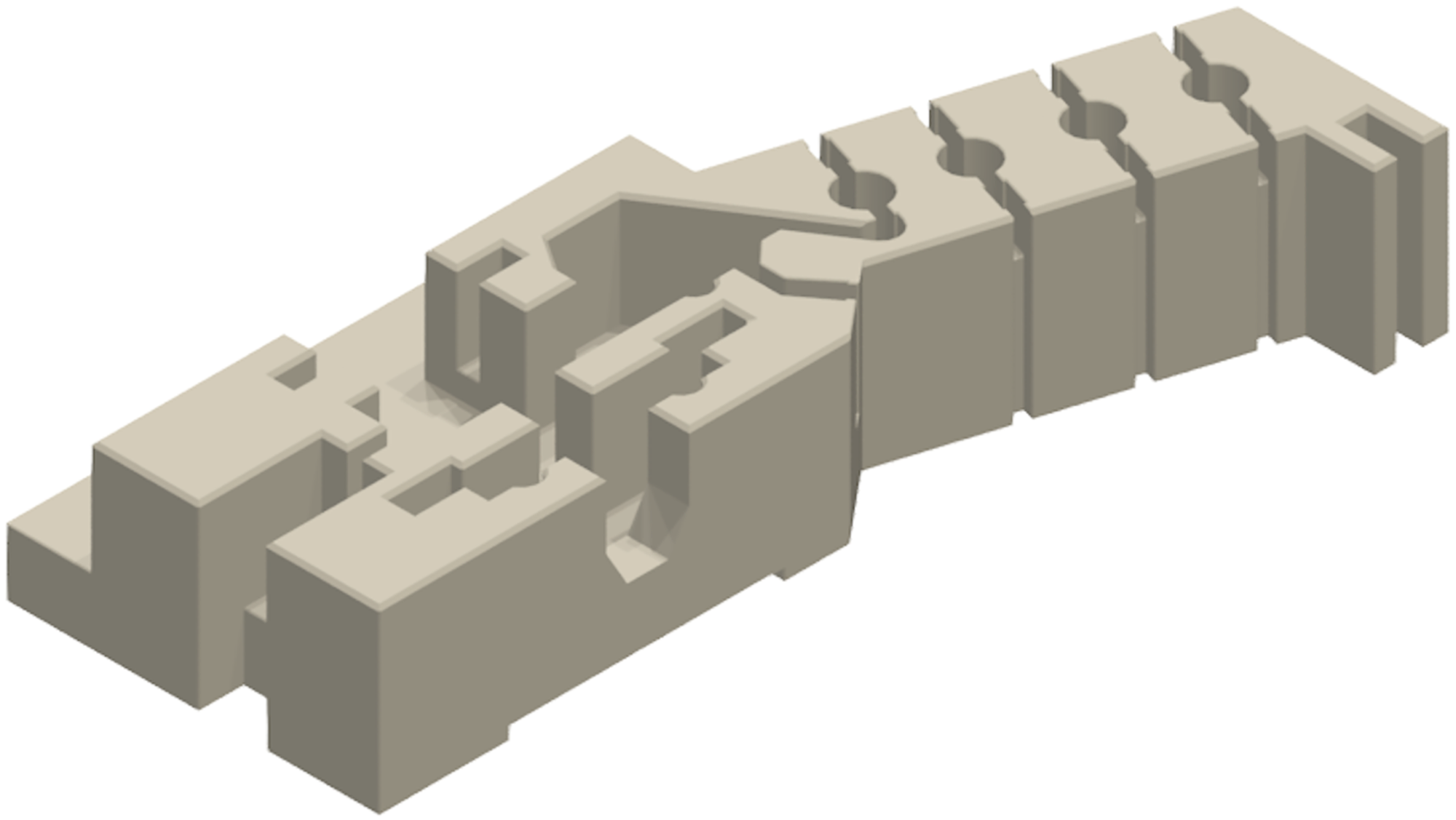
Three-dimensional (3D) drawing using SolidWorks software.
At this stage, students are faced with the need for an investigation into the manufacturing processes of parts in ceramic materials. The requirements to be considered in the manufacture of this component must be large-scale production, capable of producing parts with tight dimensional tolerances, good surface finish, and capable of being automated to justify large batches at reduced prices.
Steps:
Raw material selection—search for steatite suppliers, consult catalogs, and compare features and prices. Mixture with a binder (usually polymeric such as polyethylene glycol or polypropylene)—its main functions are to provide fluidity to the material (to help in the molding process) and to guarantee “green” resistance (to allow the handling and shape of the part until sintering). Conformation—After analyzing all the shaping processes for ceramic materials that are based on powders mixed with a binder, which allow for high production rates and parts with good finish and tight tolerances, it was decided that the most suitable were: injection molding (Figure 14). The powder is mixed with a resin, to increase its fluidity even more, and then the mixture is injected into the molding matrix. The injection molding process was selected as being suitable to fulfill the defined requirements. There was also the need to select the steel to manufacture the injection mold (Steel X210 Cr 12, DIN Standard), and the shrinkage that occurred during the sintering process was considered in the project (around 15–18%). Once the presence of a liquid phase in the sintering was identified, the students had to study this process of consolidation of ceramic parts and define the heat treatment cycle. The students proposed a slow heating up to 1200 °C (75% of the melting temperature of steatite, see Table 1), a sintering stage of about 1 h, and slow cooling (heating and cooling depend on the type of oven and the number of parts to be treated simultaneously). During the heat treating cycle, the binder burns, the connection between particles occurs, and porosity decreases. Finishing—it is not necessary because the use of metallic molds, with high wear resistance and low roughness surfaces, allows to obtain of “ready” parts after sintering. Final inspection, packaging, and shipping to the customer.
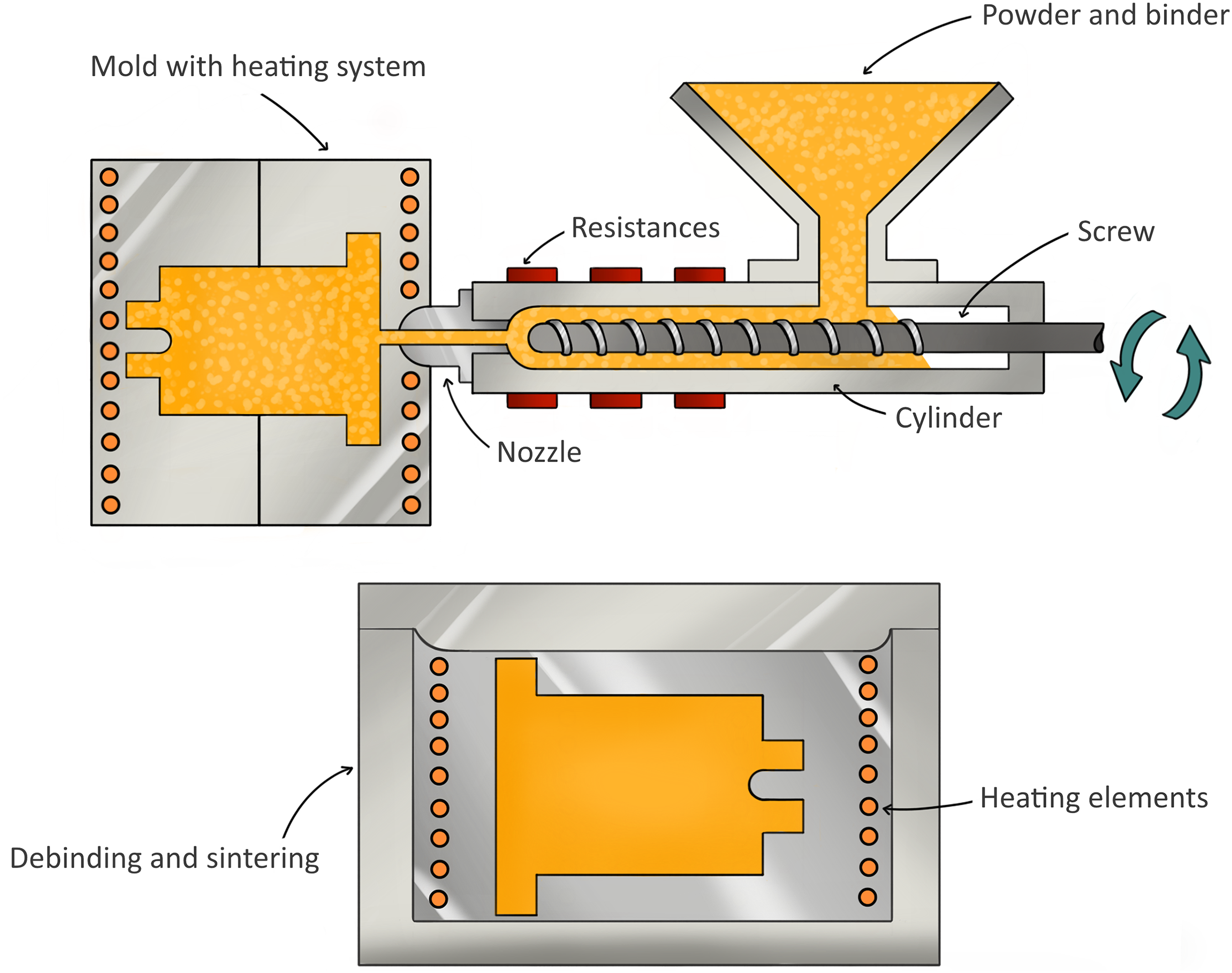
Ceramic injection molding.
Figure 15 shows an organizational chart of the manufacturing process.
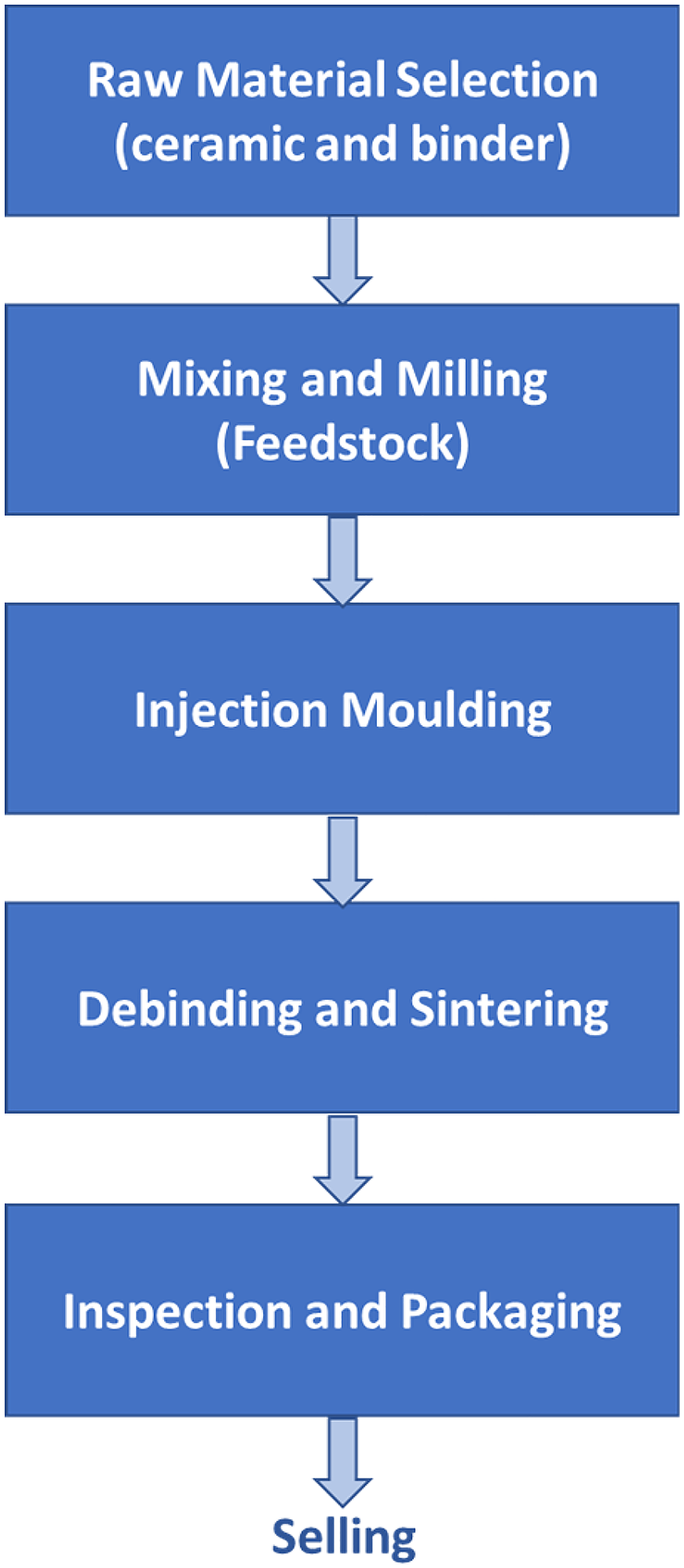
The organizational chart of the production process.
AL Skills: Research the sustainability of these materials and the possibility of recycling.
Results: A ceramic resistor connector made of steatite is not recyclable, that is, it cannot be used again to produce another material of similar quality; it is not biodegradable either; however, it is not harmful to the environment when deposited in the proper places.
The material chosen for the manufacture of this ceramic connector is one of the most suitable for these components. The steatite complies with the requirements initially presented (properties indicated in Table 1).
Ceramic injection molding is used due to the need to produce a large number of parts at low cost and also due to the complexity and size of the part.
Discussion
This paper describes an experimental work included in the Non-Metallic Materials course (CU), on the part of ceramic materials. AL was considered the most appropriate and motivating method for this CU. Within the AL techniques mentioned in the introduction, we consider that PBL, Cooperative-Based Learning, Problem-Based Learning, Competence-Based Learning, and Challenge-Based Learning were applied in this experimental work.9,11,12
It is understood that carrying out this activity contributes to the development and creation of skills in students that go beyond traditional technical knowledge. The methodology described is in accordance with the AL concepts presented and applied by several authors.4,27,29 Figure 16 shows a word cloud where we intend to highlight the relevant concepts that this work, to a greater or lesser degree, has strengthened: competencies in different areas, the relationship between CU contents, the relationship between students, work and research skills, and many others. Many of these words emerged from the reflection carried out by the teachers about the CU's functioning, improvements to be implemented in the following year, and words that the students mentioned in the conversations and discussions that took place.
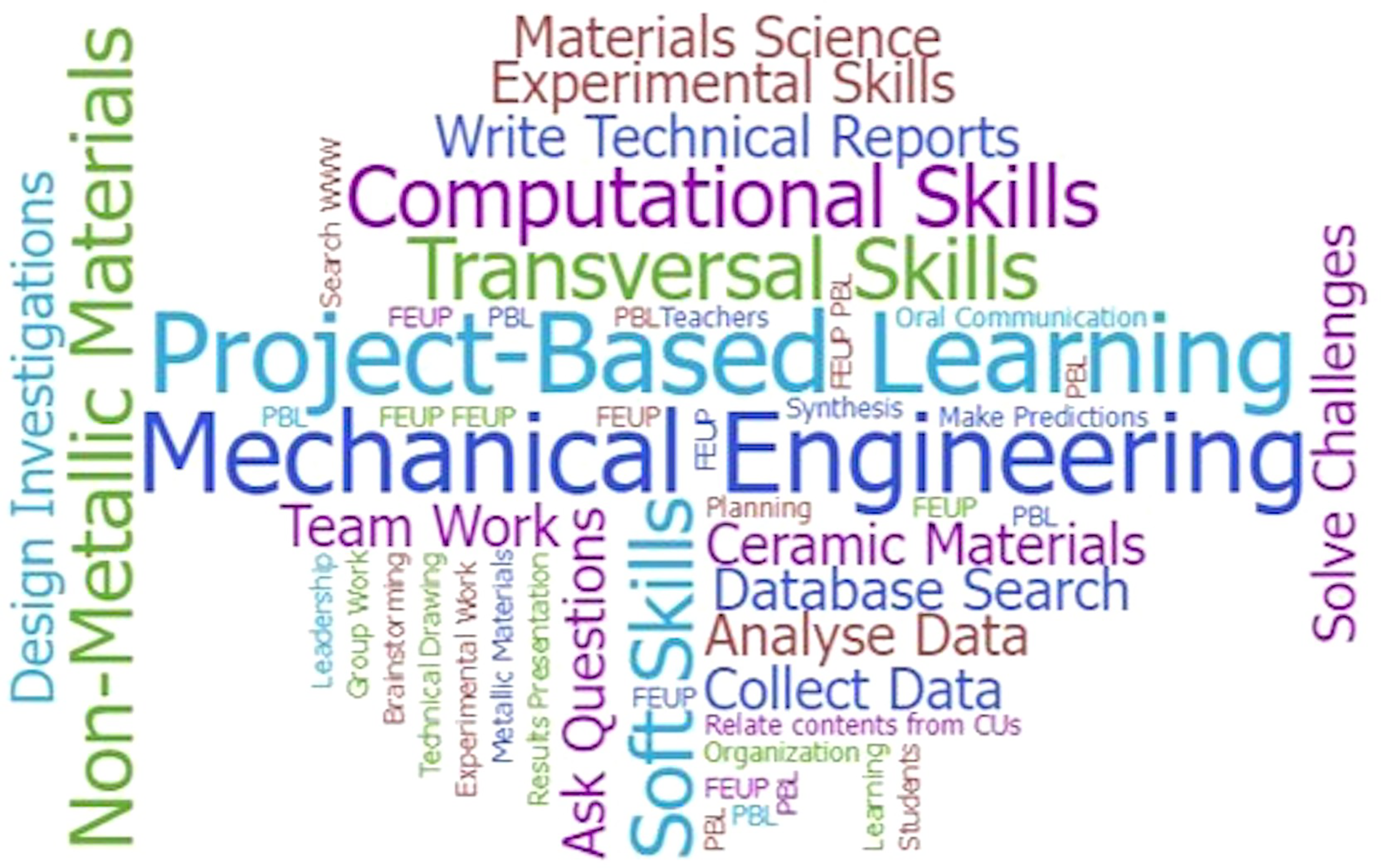
Word Cloud project-based learning (PBL) was applied to this experimental work.
In informal conversations with the students, they mentioned that, in the beginning, they had difficulty in starting the experimental work, as they were not familiar with this teaching and learning methodology. But when they understood the proposed challenge and obtained the first results, they recognized the contribution of this CU to their global training, significantly increasing their commitment and dedication.
Conclusions
Teaching technology and engineering by means of AL may train better new students’ generations for their future careers in the global market. As in real life, students in the PBL environment are challenged to solve concrete problems, which requires the ability to apply their technical knowledge acquired throughout their school training, but also creativity, transversal skills, and interpersonal relationships.
While learning, students are exposed to many relevant aspects of the new products development (from requirements and needs, materials selection, and manufacturing processes of the final product).
In PBL students participate in a learning environment that allows them to develop knowledge, skills, and personal and interpersonal abilities: the ability to work in an engineering team, to ask “good” engineering questions, and to engage in self-study both as individuals and as members of a team.
Teaching through this methodology, despite being much more demanding in terms of monitoring students and time spent preparing and guiding the work, is extremely rewarding due to the good results that have been obtained.
Footnotes
Acknowledgements
The Mechanical Engineering students who provided results for this work, and all the others who attending this CU, have motivated us to continue applying this project-based learning methodology. CEMUP for analyzing the ceramic samples of this work.
Declaration of conflicting interests
The author(s) declared no potential conflicts of interest with respect to the research, authorship, and/or publication of this article.
Funding
The author(s) received no financial support for the research, authorship, and/or publication of this article.
