




Abstract
Due to the COVID-19 pandemic, universities across the world have curtailed face to face teaching. Associated with this is the halt to the delivery of the practical experience required of engineering students. The Multidisciplinary Engineering Education (MEE) team at The University of Sheffield have responded to this problem in an efficient and effective way by recording laboratory experiences and putting videos, quizzes and data online for students to engage with. The focus of this work was on ensuring all Learning Outcomes (LOs) for modules and courses were preserved. Naturally, practical skills cannot be easily provided using this approach, but it is an effective way of getting students to interact with real data, uncertainty and equipment which they cannot access directly. A number of short case studies from across the range of engineering disciplines are provided to inspire and guide other educators in how they can move experiments on line in an efficient and effective manner. No student feedback is available at the time of writing, but anecdotal evidence is that this approach is at least acceptable for students and a way of collecting future feedback is suggested. The effort expended on this approach and the artefacts produced will support student learning after the initial disruption of the lockdown has passed.
Introduction
With lockdowns implemented globally, and face to face teaching stopped, the way that most universities teach has been disrupted. Technology can effectively replace many forms of classroom experience. Flipped and blended learning modes are well established as approaches to teaching, and Zoom, Google Meet, Webex and Microsoft Teams allow reasonably effective face to face teaching to take place in live lectures and tutorials. The development of Virtual Learning Environments (VLEs) such as Canvas, Blackboard and Moodle allow the provision of teaching material and assessment to take place. However, in engineering and the sciences there is the need for students also to conduct practical work. Sometimes this requires specialist, large equipment or risky activities. This paper discusses and gives examples of various innovative ways of moving practical activities from face-to-face to virtual delivery.
Multidisciplinary Engineering Education (MEE) is a specialist department at the University of Sheffield which is dedicated to delivering practical teaching for all students in the Faculty of Engineering using large, shared laboratories and workshops. MEE consists of around 50 staff, including 30 teaching technicians and 15 academic staff, each of whom is responsible for delivering a themed area of practical learning. In addition to this, MEE employs more than 200 PhD students as graduate teaching assistants (GTAs), to support learning, supervise students and assist in marking. Due to the ubiquity of some basic engineering principles, some practical activities are provided to 1000 students a year across 7 different programmes. This economy of scale and concentration of practical teaching expertise has made for an excellent student experience. The scale of the operation requires a large supporting infrastructure including 5 administrators to lead on timetabling, data management, lab book production and student experience.
From MEE's inception in 2015 we have worked with departments in the Faculty of Engineering to integrate practical teaching seamlessly into their courses, usually delivering practical learning to an entire cohort when subjects are introduced by the lecturer. We are generally able to deliver an identical experimental activity to up to 320 students within the same week because of the scale of our laboratories. Our 5 largest laboratories can all accommodate between 80 and 144 students simultaneously.
MEE is dedicated to the delivery of practical teaching and as a result we carefully consider how to ensure laboratory teaching is as effective as possible. 1 We have adopted a blended learning approach for all our experiments. Figure 1 shows all 5 steps in the design and implementation of remote practicals, of which the central 3 elements are core to all of our practical activities:
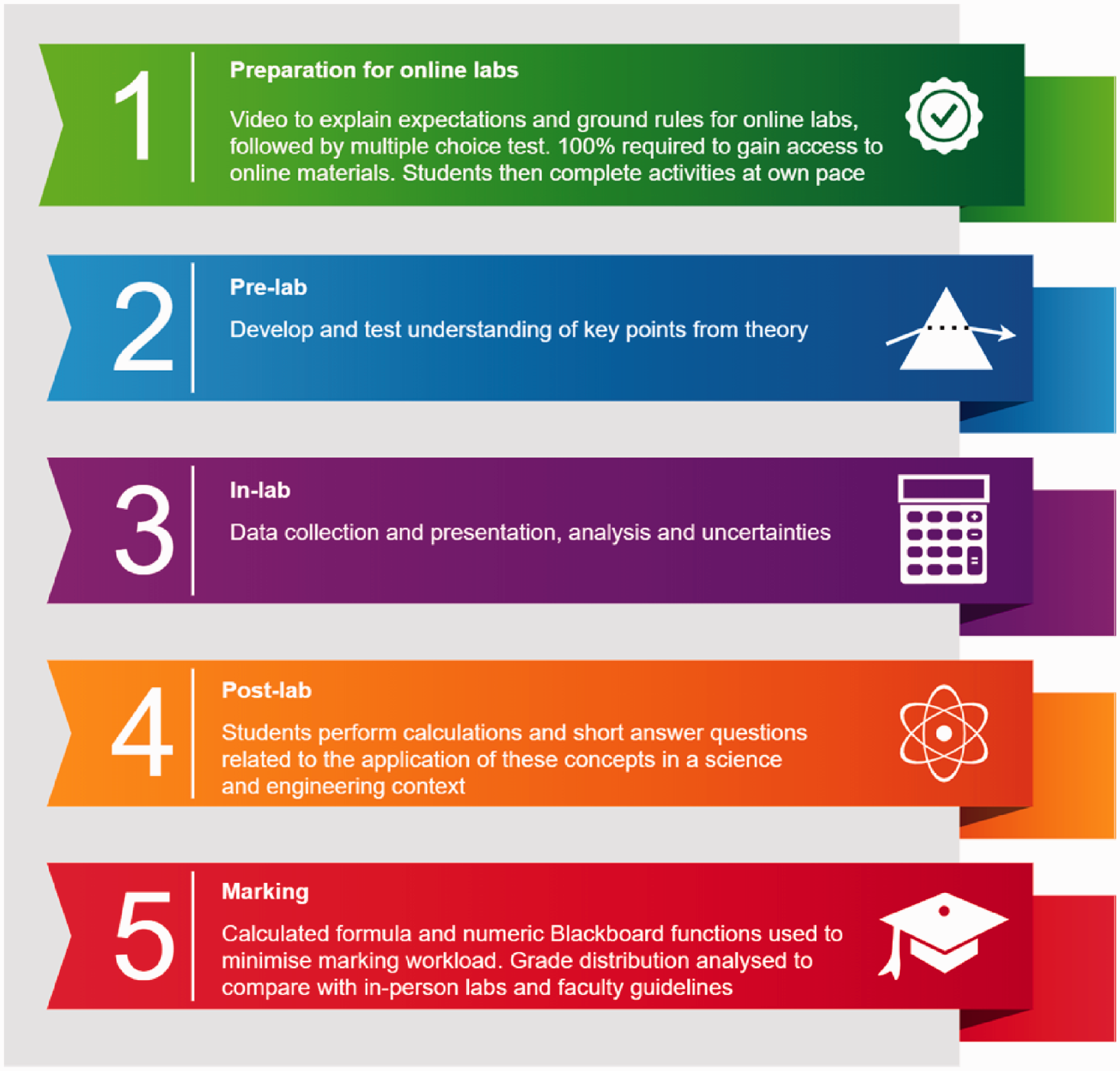
Process of virtual labs.
Literature review
When moving practical teaching from face to face to remote teaching, three main approaches can be taken: simulation, remote control of equipment, and providing recordings of data and experiments. Some prior work has sought to contextualise this, but without implementing any form of teaching.2,3
One of two early (2007) papers on remote laboratories explicitly describes three types of laboratory exercise.
4
Development Lab, where students answer specific questions about a design and determine if a design performs as intended. Research Lab, generally an addition to the body of knowledge. Educational Lab, where students apply theoretical knowledge to gain practical experience.
Their work also refers to the value of pre lab experiences and acknowledges that remote labs at that time could not replace all of the experience of a face to face laboratory.
The other (2006) early work on non-face-to-face laboratories is a literature review on the subject of “Hands-On, Simulated, and Remote Laboratories”. 5 The authors state that for many remote laboratories, the more effective the computer interface is, the easier the exercise is to move online.
Further work used remote controlled and internet enabled experiments to allow students to engage with real equipment and data while at a different location. 6 This approach had two advantages in that one set of equipment can serve many students, and that the experimental results are obtained from real equipment with noise and nonlinearities. A large scale piece of work on remote and virtual laboratories has been conducted in Germany on manufacturing and materials testing. 7 Labelled “Education 4.0”, it has increased student understanding and engagement, particularly for Massive Open Online Courses (MOOCs). They report that students who have conducted the remote practicals arrive for real laboratories far more prepared, much like MEE’s pre labs.
A group from Mexico and the UK have created a series of remote mechatronics and electrical laboratories, which can be both be controlled and data acquired remotely, using LabVIEW software via a webserver. 8 The work reported on three laboratories: an electropneumatic system, control of AC motors and residential wiring circuits. A small study of student feedback reported that students like the interface and can follow the experiments while lectures are being conducted.
A publication that looks at the effect of remote experiments on student learning comments that remote experiments work better for earlier years. 9 In addition, effective remote experiments are stated to integrate three elements: “The first was technical/technological, the second was administrative and the third academic.” The work also implies that remote experiments with good staff support are a useful element for inclusivity and accommodating a variety of learning styles.
A report on the Australian Labshare Project 10 looked at the student experience of a series of remote electronics and control laboratories shared between 6 universities. Their results show that students actually preferred the remote laboratories except for “Help and support if required”. In common with other literature, they report that staff support and engagement are key to student success. They also state that it may be required to have different Learning Objectives (LOs) for remote practicals than for conventional experiments. A further finding is that students do better on subsequent remote experiments than on their first one, implying an induction process may be useful.
Most of the work that has been found in the literature refers to electronics and control laboratories, but a consortium of universities has built a remote materials specimen testing lab which can be used by both staff and students. 11
Another approach that can be taken is asking students to perform a “take home lab”. 12 Here students use artifacts around them to engage with measurement and analysis. This can be a powerful aid to augmenting traditional teaching, but could have elements of risk unless students are carefully inducted.
From these examples, it can be seen that remote laboratories are becoming prevalent. However, they require a lot of time and effort to implement effectively. Additionally, most of the topics approached are from the electronics and control fields where computer interfaces are ubiquitous. At a time when conventional laboratories are suddenly not available, a quick fix without additional hardware modification is necessary. The work described here shows a large number of multidisciplinary approaches to moving the practical experience on line in a fast and efficient manner. These aim to preserve as much as possible of the original student experience.
General approach
At the University of Sheffield, the Faculty of Engineering teaches 4700 undergraduate and taught postgraduate students across 10 degree programmes. MEE is responsible for delivering over 2000 individual practical activity sessions comprising 600 different experiments to these students. Both the scale of the operation and the complexity of the service provision model requires effective infrastructure and robust communication channels to effectively function. This infrastructure includes:
Appointed academic liaison staff to act as a point of contact and provide overarching management of sessions for each degree programme. A master spreadsheet, known as the Directory of Activities (DoA), which uniquely identifies and records metadata associated with all of our activities. A departmental timetable of all practical activities, linked to the DoA using unique identifiers, administered by a learning and teaching manager.
This infrastructure allowed the creation of a rigorous process to pivot to remote delivery, developed and agreed within 24 hours. A spreadsheet was produced from the timetable, containing a list of the 602 practicals still to be taught in 14 different laboratories. Through linking this spreadsheet to the DoA, metadata for each session was attached, including the MEE staff member responsible for the practical activity, and the module lead responsible for all teaching across the related module, including lectures, tutorials and assessment. Each member of staff responsible for an activity was tasked with finding the most appropriate teaching method to deliver the practical remotely, and asked to populate the spreadsheet with information about what was done and what impact this would have on assessment.
Having a single location for all this information allowed:
Effective communication with the Faculty Learning and Teaching Committee, who report to the central University Learning and Teaching Committee. The information about the impact on assessment was particularly important to inform the University’s policy on concessions for students due to the disruption. Effective liaison between departmental directors of learning and teaching, module leaders and module teaching staff, regarding the process we adopted for our teaching delivery, and for response to student queries. MEE management to audit completion of the move to remote practicals, and MEE administrative staff to respond to student queries without the need to involve academic staff.
As practical work is fully integrated into most Sheffield engineering courses and forms a key to students understanding and contextualising material, it was inadvisable to just remove the experiments. It was therefore decided that as a general approach we would replace the conventional lab sessions with an online delivery of the lab, using videos, data and/or quizzes to get the students to still deliver the required learning outcomes. Due to our experience in creating pre lab activities, this was a relatively small intellectual step, but in many cases required a huge amount of work to prepare and deliver. A number of other approaches were considered, such as abandoning the experiments, getting students to do this work at home, the remote operation of experiments from students’ locations or the simple approach of just providing data for the students to process. Understanding that our response was reactive, we wanted to reproduce as much of the experience as possible within a very short timeframe.
At the University of Sheffield in March 2020, there was a window of approximately one week between face to face teaching being suspended and a full lockdown of the campus. MEE were able to use this time to prepare to deliver remote practicals while working from home, by recording videos and data. The teaching technicians were fully engaged in this process and their expertise allowed an enormous amount of recording to be carried out. Staff then had about six weeks to then edit videos, prepare online quizzes and experimental data, and adapt their assessments for each activity. This also entailed discussing and negotiating with the module leaders the experience that their students were going to have in lieu of the timetabled practical sessions. The activities were ready for delivery after the Easter break and were delivered to students between the end of April and early June 2020.
What follows is a series of short case studies covering a wide variety of engineering subjects and approaches taken to mitigate the issues around the sudden curtailing of laboratory access. We hope that these will inspire others to be able to continue to provide students with a reasonable practical experience when university laboratories are unavailable. We have chosen to present a small subset of all our case studies (CSs) in this work, which collectively demonstrate the flexibility and diversity of delivery methods that can be implemented across engineering fields even on short timescales. However, many more teaching activities had to be adapted for online delivery, hence an even larger number of other CSs is presented in the Appendix.
Table 1 summarises all of the CSs presented in this paper, with those in the Appendix marked with an asterix (*) and located towards the bottom of the table. It indicates which delivery methods were utilized in teaching each practical subject.
The case studies in this paper and its appendix.
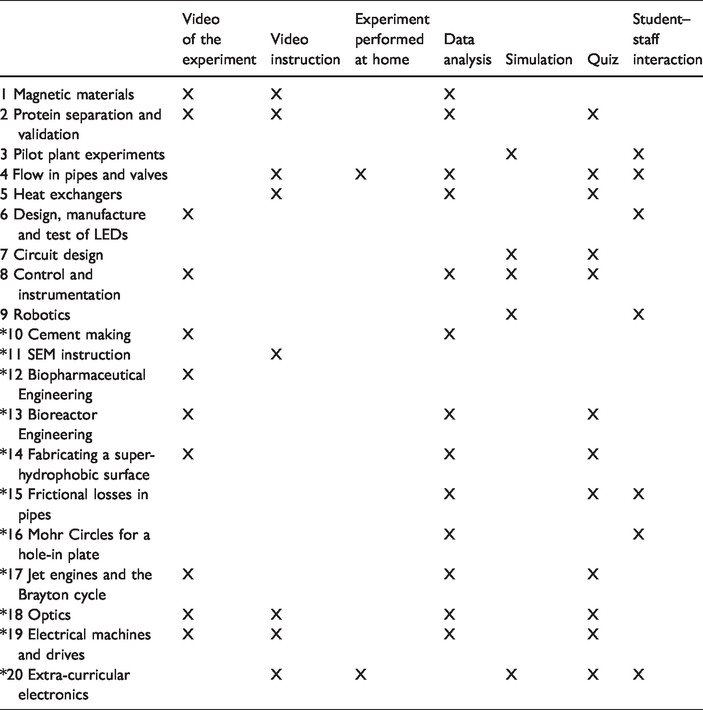
A series of case studies on remote practicals from MEE at The University of Sheffield
Magnetic materials
An experiment in magnetic materials illustrates measuring the response of two different magnetic materials (soft and hard) under a changing external magnetic field. A video was captured of the experimental setup required to collect data across a range of field strengths generated by an applied voltage.
A teaching technician created a recorded walkthrough of the data analysis methods using a spreadsheet. The students were required to draw a hysteresis loop from the supplied data collected, by integrating and normalising the values of magnetisation from the electrical signal. This was a section of the practical where the students typically struggled, justifying additional effort in the presentation of this material.
Protein separation and validation
To explore how the function of cells and tissues can be investigated as well as practice techniques used in disease testing and diagnosis, 2nd and 3rd year bioengineering students carry out protein separation using gel electrophoresis and validate the presence of a particular protein using antibodies. A video of gel electrophoresis was produced with the same level of detail as provided in the lab script, so that students could still calculate the concentration of protein solutions obtained and provide answers to an online test. A series of captioned figures showing the expected data from the experiment allowed students to analyse and interpret the data.
To demonstrate how antibodies can be used to validate the presence of a particular protein, several online resources were used and a game that is usually played during the lab session was recreated online to help students apply their knowledge and determine how antibodies are selected when designing an experiment (Figure 2). Additionally, students were asked to compile a 750 word report discussing the use and limitations of the techniques in research and medicine, providing relevant examples, including an example of how antibodies are being used in the fight against COVID-19.
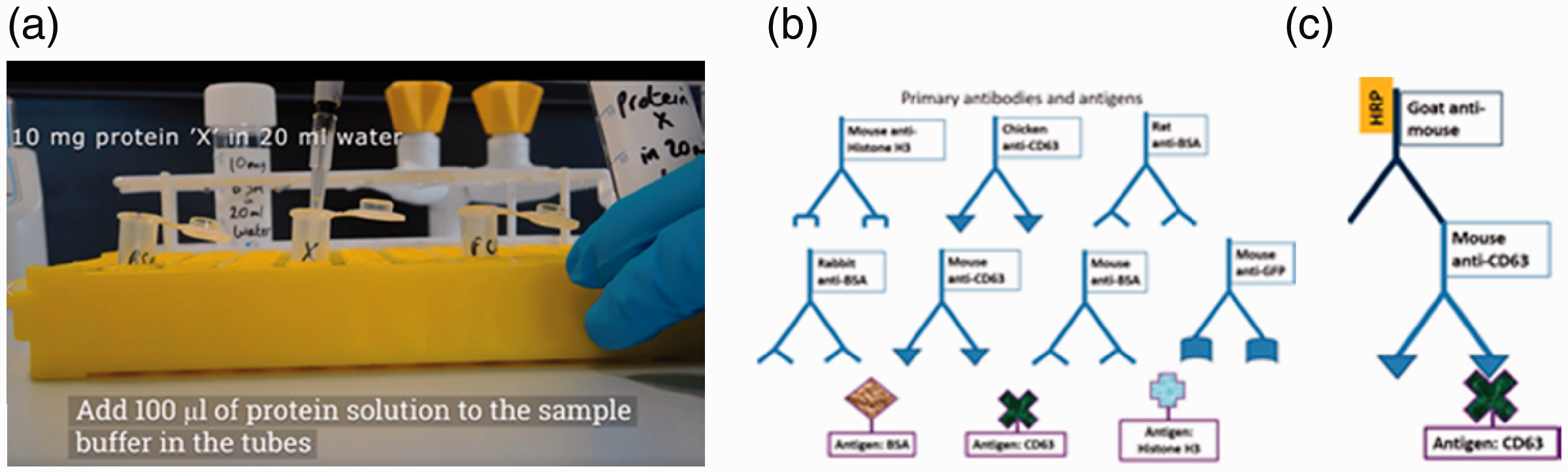
Video stills showing (a) the preparation of the protein samples (b) images of different antibodies used in the antibody game. (c) Answer to an online test question.
Pilot plant experiments
Experiments which usually utilise the Diamond Pilot Plant facilities, shown in Figure 3, allow for complex and open ended investigations which are challenging to develop into online activities. 13 The industrial scale chemical processing rigs permit the exploration of several process parameters. Students use the rigs to conduct experimental investigations and collect data for further statistical analysis. One of the main LOs in these activities is planning a Design of Experiment (DoE), which students are required to carry out using statistical approaches before arriving at the lab. Students were to be interviewed in the lab by a GTA to check their DoE, before executing their plan and collecting data during the session.
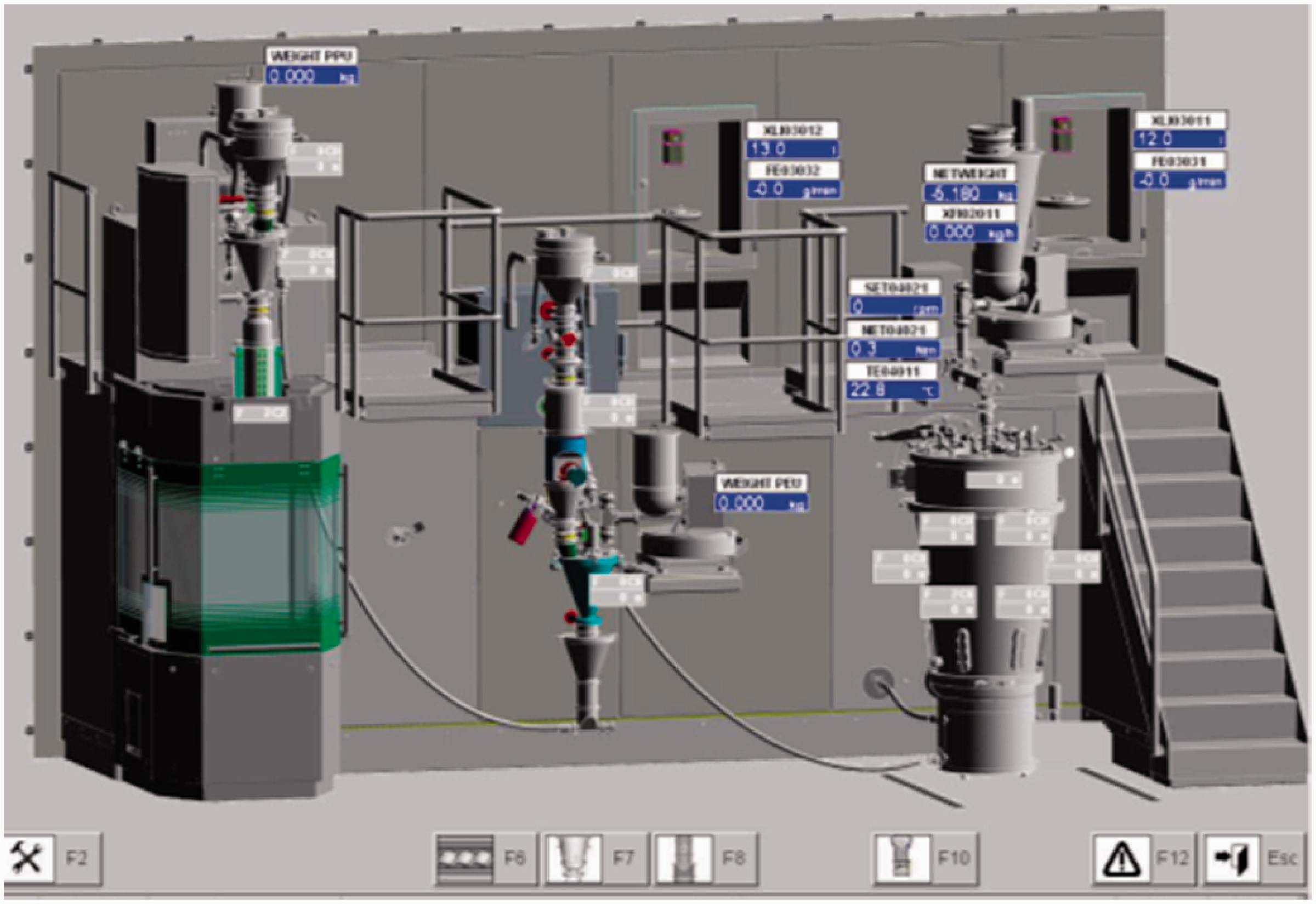
ConsiGma25 powder to tablet line, showing the complex unit operations with wide range of process parameters to be controlled to produce pharmaceutical tablets.
Two strategies were used to provide remote practicals. Initially, students were asked to carry out their pre lab preparation and DoE as normal. However, this was submitted as online VLE assignments to substitute for the in-lab assessment. The execution of the DoE was then conducted by proxy, where GTAs (who were initially still allowed in the plant despite the suspension of face-to-face teaching) conducted the experiment and collected data for students.
The second approach was implemented after the complete campus lockdown, removing GTA access to the laboratory. Students were still required to submit their DoE as an online assignment, but data was extracted from an existing database.
An important LO of these experiments was the development of transferable skills, such as effective communication and team working. These were still achieved as students were required to do all planning and post lab reports in groups, and then complete a peer assessment form. The engagement and interaction with students and the progress of the work were monitored using weekly sessions via the VLE, where the whole teaching team was available to answer questions from students.
Flow in pipes and valves
Two planned practical sessions usually study laminar/turbulent flow and flow controlled by taps. The assessment of the former focused on experimental record keeping, while that of the second involved submission of a short report. These two practicals were combined and adjusted to be performed by students in their own homes. Generally, access to equipment can be variable, however, most students have access to water from a tap and rudimentary instrumentation, such as weighing scales or measuring containers. While this equipment would be less accurate than laboratory instruments and would vary from student to student, the LOs did not depend on these factors. A new assignment brief and explanatory video (including showing a staff member’s kitchen with tips and suggestions on how to complete the lab) was created. Teaching material that formed the original pre-lab activity, including videos and documents of the equipment in the laboratory, was retained for the student’s reference. The marking criteria remained virtually unchanged.
In addition to providing detailed guidance to allow students to work remotely, two aspects were incorporated to facilitate this mode of delivery. Firstly, students were informed that they would need to think creatively in order to engage with this activity. As this was not an explicit LO, it did not form part of the summative assessment, but as engineers need to employ creativity regularly, this was an opportunity to practice that skill. Secondly, although the activity is intrinsically safe (running water from a tap), it is important that we exercise a duty of care while instilling the need to assess risk in changed circumstances. Students therefore completed a risk assessment before undertaking any work. All taught students in the Faculty of Engineering are trained in completing risk assessment as one of their first timetabled activities, called “the Danger lab”. 14 Any work received without a completed risk assessment would receive zero marks, which is usually a sufficient incentive for compliance.
Heat exchangers
The original aim of this first year mechanical engineering experiment was to apply the first law of thermodynamics to a practical application over a range of operating conditions. Within their studies students will often only investigate thermodynamics around a single operating point whereas in an industrial setting equipment will have an operational range. Students were required to vary two parameters (hot and cold flow rates) and capture at least 15 data points. Within the lab sessions there was often insufficient time to analyse all the data in detail, and only a few extreme cases would be investigated. When the experiment could not take place in-lab, students were instead provided with a set of example data, allowing more data analysis than would have been possible after a practical class.
Data processing was performed using a spreadsheet. Analysis using spreadsheets in-lab has been attempted previously but abandoned due to the range of student skills. Generally more confident students take over the computer whilst others look on, and the class becomes a spreadsheet tutorial rather than a thermodynamics practical. A significant portion of the students have little or no spreadsheet experience and find their use alienating. With this in mind, videos were created showing partial analysis of the data, including calculations and the creation of scatter graphs. Emphasis was placed on the professional production of charts. The final online exercise consisted of 5 parts:
14 minute recorded presentation introducing the equipment and background theory; 11 minute video detailing data processing; 10 minute video examining the production of scatter graphs; 12 minute recorded presentation reviewing the resultant figures; and 6 question online quiz consisting of multiple choice and calculation questions.
Two attempts at the quiz were permitted to encourage the students to attempt the quiz and then correct their mistakes. It was decided to keep the assessment as close as possible to the original planned experiment. In future iterations the assessment could be adapted to test and encourage the use of spreadsheet processing. Furthermore, data visualisation with scatter charts revealed further depth to the data, permitting more advanced concepts to be observed e.g. the impact of fluid dynamics on heat transfer. These observations formed a useful primer on heat transfer which the students are introduced to later in their studies.
Design, manufacture and test of LEDs
MEE has a bespoke teaching Cleanroom. This 300 m2 facility has an ISO6 particulate rating, enabling the manufacture and test of electronic, optoelectronic, micromechanical and microfluidic devices with features as small as 1 µm.
Following the move of teaching online, two two-hour online lab sessions exploring light emitting diodes (LEDs) were delivered to first year Electronic and Electrical Engineering students. The first session took the students through the basic physics of a p-n junction, followed by the measurement of the electrical characteristics (current vs voltage) of blue and red LEDs. The second session investigated the optical properties of the LEDs and finished with a discussion of the methodology for creation of white light by using a blue LED with a yellow phosphor.
The experience comprised a set of slides, supplemented by short video clips that gave the students a tour of the lab and showed recordings of the collection of the electrical and optical test data. This real data (complete with its imperfections) was shared with the students and formed the basis of their post lab analysis.
The sessions were delivered live via the VLE by the university teacher. This real-time approach enabled many question and answer interludes to be dispersed throughout the presentations. In these question and answer sessions, the students could remain anonymous and this encouraged them to participate. They could ask and respond to questions by annotating the slides (Figure 4).
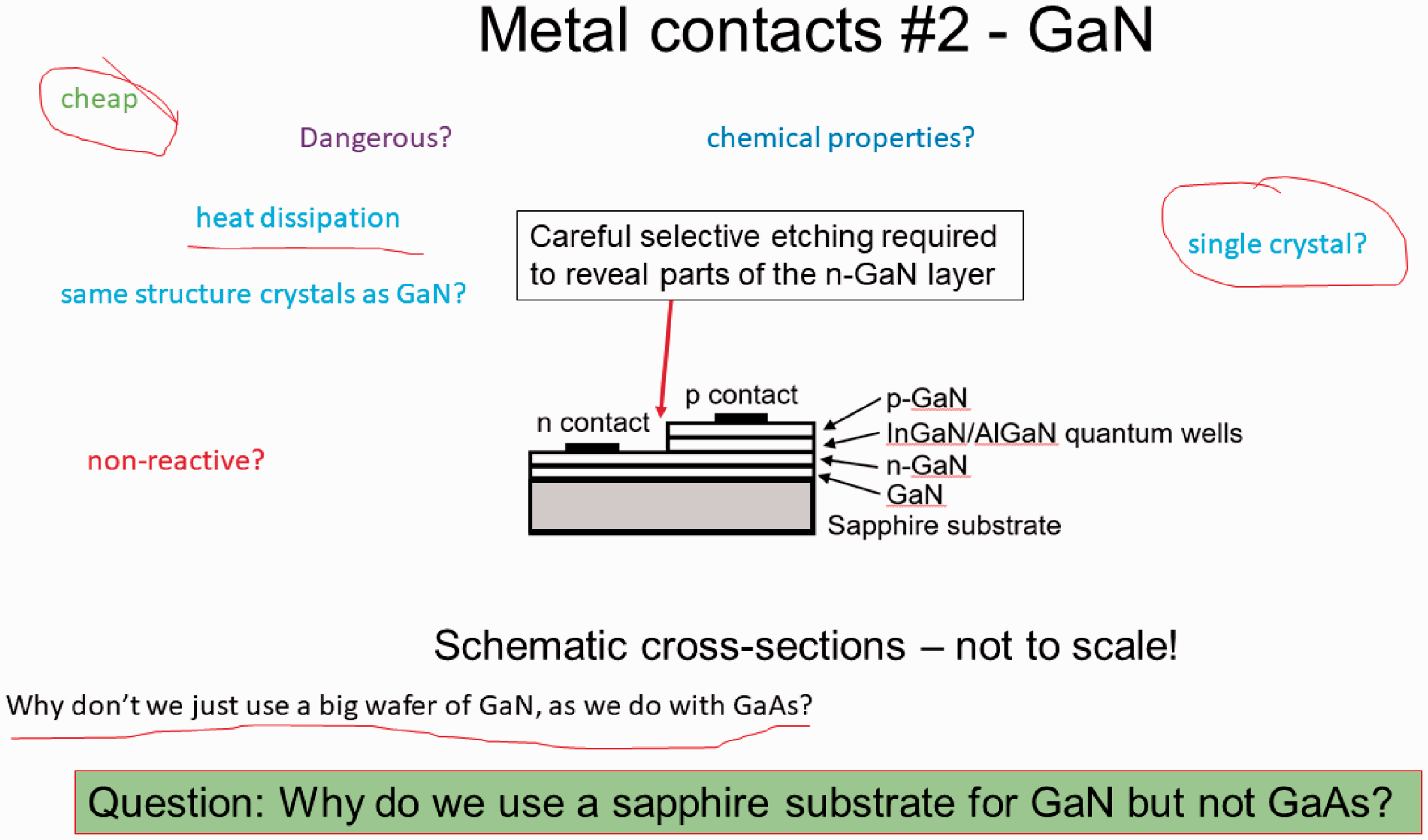
Screenshot of student-annotated slide from live virtual Cleanroom lab (reproduced).
Live attendance was satisfyingly high - greater than 50% - with the rest of the cohort using on-demand recordings. Given that students were told in advance that the sessions would be recorded, and that many EEE students are international, particularly Chinese with a time difference of 7 hours, 50% attendance at a live session is impressive. Anecdotal feedback from students suggests that they found it ‘enjoyable and entertaining’ and even a ‘highlight’ of their day! The live format added some spontaneity to the event and this has been appreciated by students watching the recordings.
The Cleanroom technical staff were also in attendance. They assisted with setting and answering technical questions. It also enabled these staff to gauge the level of understanding of the students and hence to be better placed to help with marking and giving feedback on the post lab tasks.
Circuit design
An independent circuit design, construction and testing task would normally form the capstone of the practical exercises for first year electronic engineers, but as most students do not own specialist soldering and measurement equipment at home, this cannot be directly replicated remotely. Even where students may have their own equipment, the University cannot verify that their equipment is serviceable and will be used safely, so no expectations for practical work could be made.
To still teach the fundamentals of circuit design and testing, students were provided with several simulation exercises. Two freeware platforms were selected for this task, based on their wide compatibility and ease of installation: LTSpice and Tinkercad. A structured series of sessions was designed for the students to complete at their own pace, including initial guided tutorials instructing on how to use the platforms. Particular focus was placed on how to simulate realistic circuit effects that would be seen in the laboratory, such as hidden internal resistances and parasitic capacitances, rather than just illustrating ideal theoretical concepts. The final sessions required the students to perform an independent design exercise and then simulate tests of their circuit’s performance against set criteria; this mirrored requirements of the originally planned practical exercise, with the omission of only manual soldering practice.
Student interaction and engagement was maintained by frequent online quizzes, which included a mixture of both automated feedback from numerical answers, and personalised feedback from staff on images and design files shared by the students. This balanced feedback structure allowed rapid turnaround of a realistic marking workload for staff, despite a cohort of 80 students. The combination of exercises and quizzes allowed learning outcomes in engineering design and experimental testing to still be met and assessed, even without physically constructing the circuits. Students should be able to progress smoothly into second year practical work, which will directly use the skills that students have acquired. However, students will need to translate their measurement techniques from virtual on-screen instruments to physical equipment, which will require careful instruction. All simulation exercises will also be integrated into pre lab work when laboratories reopen, allowing students to become familiar with circuit designs and expected results before attending in-lab sessions, to increase the efficiency and value of the in-lab practical experience.
Control and instrumentation
One of the challenges in providing on-line practical activities in control system analysis and design is allowing students to analyse the performance of a real system using their designs, which is easily performed in-lab. Temporary on-line replacement activities were created that closely mirrored the planned in-lab activities printed in the students’ laboratory worksheets.
It was required that these activities maintain the pre laboratory exercises: analysis, design, and linear system simulation elements, but also provide the students with quality feedback to enable them to correct any misunderstandings or wrong working, without just giving them the answers. This way, the student learning journey and intellectual development progress as if staff were present, ensuring that students understand how they achieved their goal, received feedback on any mistakes made, and have a correct understanding of the topic.
Each activity employed a blend of demonstration videos (Figure 5), sample data sets taken from these demonstrations, and on-line quizzes with comprehensive feedback to ensure the students have measured the correct values, analysed the data correctly, and showed understanding of the results. A key factor to these activities was the structured sequence of the presentation of this material, which was facilitated using the VLE.
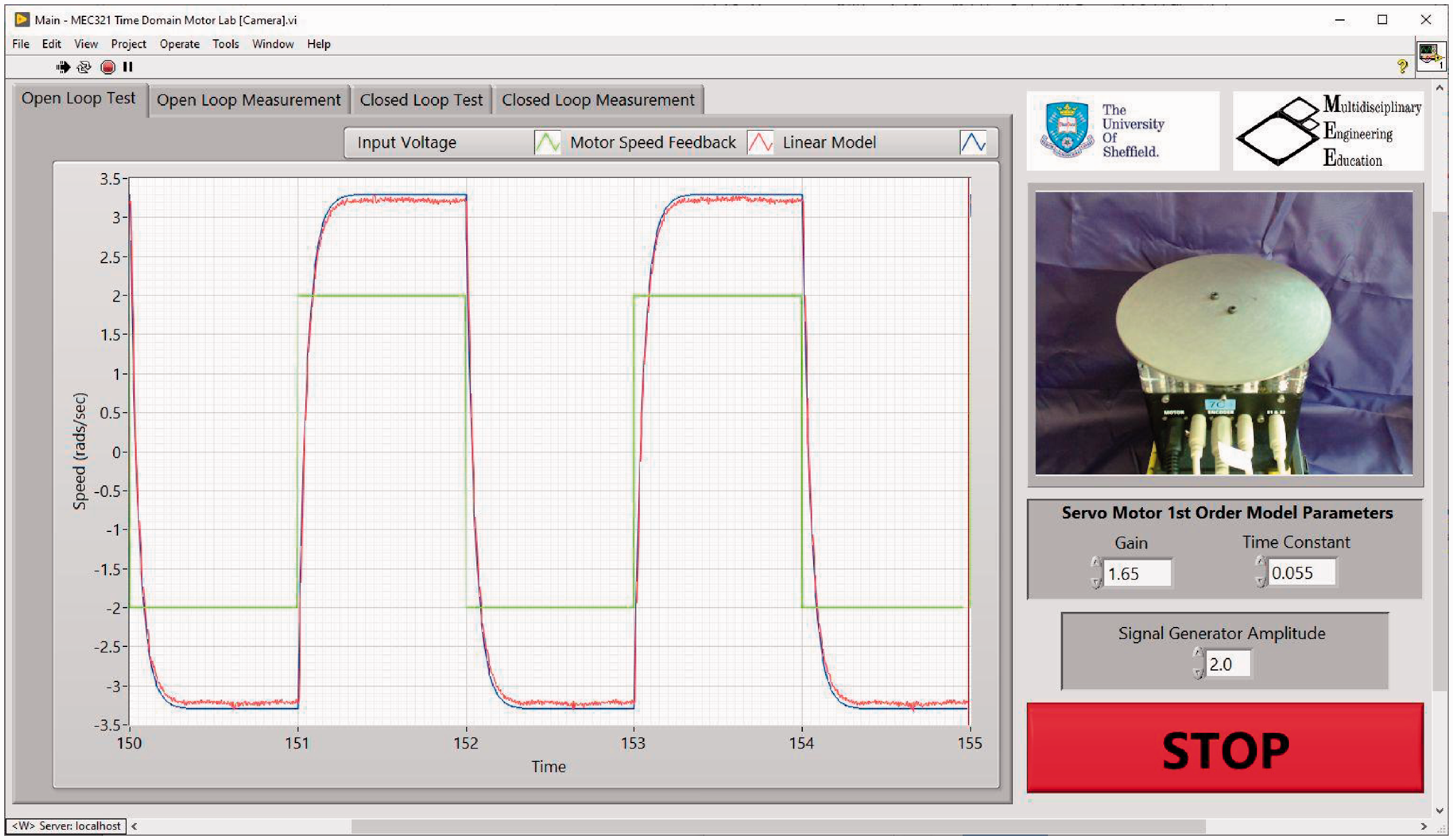
Screengrab showing experiment and response.
The activities were split into sections, with successful completion of quizzes used to adaptively release material for the next section. Students were required to complete a pre-lab worksheet section, alongside the demonstration video, before starting the quiz for that section. Design sections had an initial quiz before the release of the remainder of the material and a final section quiz. This allowed design of controller parameters calculated by the students to be assessed before the ‘instructors’ values were revealed to them in a demonstration video.
Each quiz was automatically marked and comprehensive feedback was provided to students to help correct any mistakes. The quizzes were generally a blend of multiple choice, numerical value, multiple answer, or jumbled sentence questions. Students needed to get full marks in each quiz before they could continue, but had unlimited attempts at each quiz.
For each incorrect answer, feedback was provided to the students, signposting them to background resources in the worksheet, VLE or course lecture notes, and, if necessary, they could email staff for further advice. This allowed students to make mistakes, but they could persevere and engage to truly understand the subject.
Robotics
The University of Sheffield had invested £400k in state-of-the-art robotics hardware to provide undergraduate students with industry-relevant, hands-on practical robotics experiences. A brand new 12 week practical lab course had been developed around this hardware and was being delivered to second year Computer Science undergraduates for the first time, when the laboratories were closed. When an alternative approach needed to be devised, it was important to maintain continuity with the partially-delivered course but without access to the physical hardware.
The open-source robot simulator Webots 15 was selected as the most appropriate platform to deliver a simulation-based alternative to the practical laboratory sessions. The students would have originally, in groups, programmed their real robots to complete a series of tasks in a final challenge at the end of the semester in a real ‘Robot Arena’. Using Webots, a representative robot arena could be simulated, so that students could still learn how to develop the same core robot behaviours that would fulfil the original challenge, thus still achieving the original LOs.
A number of benefits were identified as a result of this simulation based approach. Firstly, a series of separate ‘development arenas’ (Figure 6) could be provided to the students to allow them to develop and test individual robot behaviours in isolation, before amalgamating these into a single, multi-layer controller.
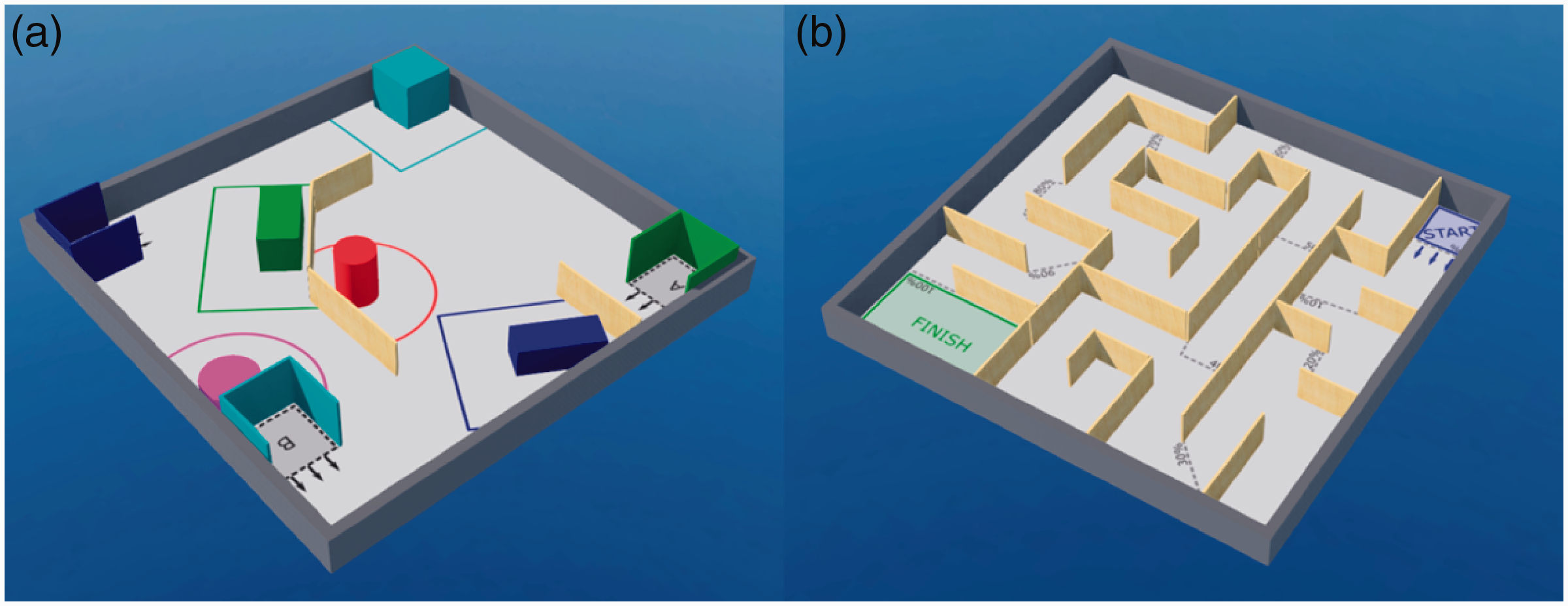
Robot ‘Development Arenas’ for (a) object search and detection and (b) maze navigation.
Secondly, these arenas were distributed to students via a VLE, and they therefore had unrestricted access to develop and test whenever they wanted to, rather than being limited to scheduled lab hours. Finally, an additional element was also introduced into the assignment where students were required to develop robot hardware from scratch in the simulator. This exercised their ability to consider the physical, geometric and technical constraints such as limitations of sensors and actuators. Some student robots are shown in Figure 7.
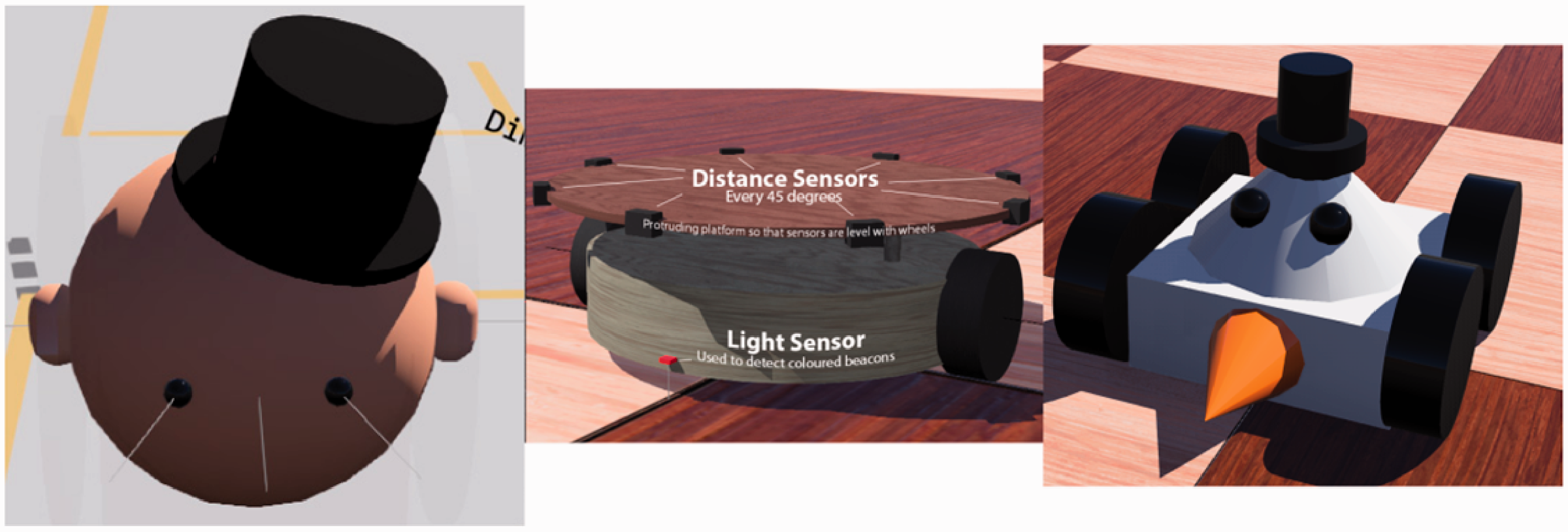
Examples of some innovative student-designed robots.
The use of a VLE was at the heart of this work. Detailed lab instructions were released to students and updated regularly via the VLE, as well as all the necessary simulation files for students to develop and run their robots in Webots. A discussion board was set up to provide a forum for students to post questions. It was monitored regularly so that support and guidance could be provided to students in a timely manner. This was found to be very effective, providing a space for students to voice questions and concerns (technical or logistic) and for facilitators to address topics and publicise responses without having to reiterate to students individually.
Whereas the original assessment would have been based on showcasing their robot’s performance in the robot arena, students instead submitted videos of their robots performing the equivalent tasks in the simulator. Staging intermediate task submissions at various points throughout the lab course was an effective method of checking student progress and monitoring overall engagement. In the final challenge, students submitted their robot and multi-layer controller scripts for entry into a competition, using an arena configuration that the students do not have prior knowledge of, thus testing the robustness of their developed robot behaviours. They were ranked in a league-based competition, and a video of their robot’s performance was provided to them once the competition had taken place.
Discussion
The sudden appearance and effect of the coronavirus has caused major disruption to the education sector. Generally, this is not a good thing for the student experience, but it can encourage teachers to think outside the box. It can provide the impetus to create approaches that staff have not previously had the time or opportunity to investigate. This is particularly true for practical sessions and laboratory experiments, where students engaging with equipment, working in groups and making mistakes are crucial elements embedded in programmes and providing some module LOs. As most of our laboratories are formative, there was no need to worry unduly about plagiarism and collusion. However, as exams were also moved online at the same time, summative lab assessments were performed under conditions already deemed appropriate for formal examinations, excepting longer time windows being permitted for candidates to attempt the assessment tasks.
As the numerous case studies provided in this paper show, a number of approaches can be used to mitigate the loss of the actual practical experience, such as take home experiments, remote control of equipment, technical staff carrying out experiments for the students, simulation and video replacement of the experiment. It can be seen from the variety of strategies used, that positioning remote practicals as a valuable active learning experience rather than just a recording of the experiment is key to getting students to actually engage with and understand the experiment. Simulations, remote face to face sessions, quizzes, real and simulated data, gamification, and edited videos for students to collect data from all allow high level engagement. This allowed the experiments to be more interactive than just using videos to show what was happening. To corroborate the findings of the literature survey, it is easier to provide substitute and remote laboratories where there is usually a computer between the equipment and the user. In this case, true remote experimentation is possible.
It is unlikely that this work would have been prioritised in “normal” times. As well as providing a simulacrum of a practical experience, the work put in at this time will actually improve the student experience in the future; much of the material produced will be used to enhance our pre labs to prepare students better in advance of the laboratory activities. For example, extra information and practice can be provided by videos on analysing data, which will remain available for students going forwards to support their learning, such as described in CS1.
It must be reiterated that these replacement activities will not be able to substitute for and support all the skills that quality graduate engineers need. Indeed, the UK Engineering Council in its accreditation documents 16 has a complete section on Engineering Practice where one of the requirements is the “Ability to apply relevant practical and laboratory skills”. It is clear that this cannot be conducted purely through virtual means. If it turns out that students cannot attend university campuses for a period of years, these will need to be provided for in other ways, with the associated Health and Safety aspects of working unsupervised. Without the addition of copious resources, remote practicals will generally only be able to supply some of the skills needed to function as engineers in the workplace. For example, commercial pilot training is now provided almost exclusively using simulators, but this is both low volume and very expensive.
Moving practical teaching online presented us not only with the challenge of how to provide the students with the experience and skills that each practical session offered originally, but also how to receive feedback from the students about their engagement in these activities. Previously we could easily receive verbal feedback from the students during the laboratory practicals, either directly from them or through our GTAs. Additionally, MEE developed a system for recording student satisfaction anonymously during laboratory activities where they simply press one of four facial expressions displayed on a tablet to indicate how they feel about the activity they have just completed. This has allowed us to identify the practicals that the students struggled the most with and modify them for subsequent cohorts. Away from the lab, both of those channels of receiving student feedback have been blocked.
To mitigate the lack of feedback, a simple online form was created that students are encouraged to fill out after each online activity. The form was written for fast completion so that it encourages as many student responses as possible. There are only 7 compulsory multiple-choice questions, to which students can reply on a Likert scale and 2 optional open-ended questions concerning the specifics of what they liked about the activity and what we could do to improve it. Crucially the students are asked whether they believe that the online activity was an adequate replacement of the practical activities under the current circumstances and whether they think they gained comparable skills and understanding to what they would have in a laboratory.
The information that we gather will help us not only to improve our online delivery of the laboratory teaching in the new academic year, but also rethink and redesign our activities for the future. For example, it will be possible to assess whether the LTSpice and Tinkercad approaches described in CS7 gave the students comparable skills and understanding to an in-lab experience. If true, then we could continue to provide basic circuit design teaching in this way and utilize the staff, laboratory and financial resources that would have otherwise been required to instead offer students face-to-face teaching of more advanced industrial concepts and/or more creative open-ended projects that truly benefit from interactive teaching.
Due to the strict time constraints, it was not possible to obtain ethics approval to report on student feedback we received on the strategies we implemented, so only anecdotal evidence is supplied. However, a lack of student complaints and high completion rates is a first order indication that students were engaging with the experiments and finding them useful. Initial results from student feedback surveys indicate that while they appreciated the effort and it helped their learning, they really did prefer face to face practicals
MEE were in a good position to be able to move laboratory teaching online, as a department dedicated to delivering high quality practical teaching with a student body that is used to carrying out pre lab activities online. This meant that it was possible to take a reasonably unified top level approach, combined with a myriad of ways of delivering and engaging the students, to move away from face to face laboratory experiments, while still being able to implement our high quality teaching within a very short timescale. We hope that readers of this paper will be inspired by some of the ideas presented here and will be able to better support students who cannot physically access laboratories to gain practical experiences. Some of the material and approaches developed will also be used to enhance the student experience in the future and ensure that when they are able to access the physical spaces they enter better prepared to use that valuable and expensive time more effectively in their development as practical, employable engineers.
Conclusions
The approach of using the University of Sheffield’s VLE to support student practical experience when face to face teaching was curtailed appears to have worked. MEE’s aim to deliver original Learning Outcomes and to continue to support modules with embedded practical activities was conducted effectively.
Due to the existing infrastructure and MEE’s previous experience, it was possible to video experiments, write quizzes, create new simulation tutorials, and provide other supporting documentation in a very short time. By empowering staff within a framework, suitable local solutions were developed by individual staff members and teams to address a wide range of requirements.
Recordings of laboratory experiments will never fully substitute in-person activities, but by thinking about the Learning Outcomes and the student experience, it is possible to create an effective learning environment for a short to medium hiatus in lab availability.
A variety of approaches to remote practicals have been presented. It is recommended that further work be undertaken to codify the totality of options for delivering online practicals, including the aspects of in lab activities that are suitable for delivering in a remote format and those that can only be delivered adequately using face to face teaching. This work would allow the development of a toolkit of tactics for educators to consider when required to either pivot completely to online learning or highly limit the amount of time each student can spend in laboratories due to social distancing measures
Supplemental Material
sj-pdf-1-ijj-10.1177_0306419020958100 - Supplemental material for Remote practicals in the time of coronavirus, a multidisciplinary approach
Supplemental material, sj-pdf-1-ijj-10.1177_0306419020958100 for Remote practicals in the time of coronavirus, a multidisciplinary approach by K Bangert, J Bates, SBM Beck, ZK Bishop, M Di Benedetti, J Fullwood, AC Funnell, A Garrard, SA Hayes, T Howard, C Johnson, MR Jones, P Lazari, J Mukherjee, C Omar, BP Taylor, RMS Thorley, GL Williams and R Woolley in International Journal of Mechanical Engineering Education
Footnotes
Acknowledgements
The authors would like to acknowledge, second year Computer Science undergraduate students: Zhengyuan Fang, Jack Maskell, Frank Richards, Arnas Boruchovas, William Shaw, Shteliyan Mihalev, Mateusz Jaskola, Ambrose Robinson and Zixuan Zhang, for their innovative robot designs and for their permission to use images of these robots in  .
.
Declaration of conflicting interests
The author(s) declared no potential conflicts of interest with respect to the research, authorship, and/or publication of this article.
Funding
The author(s) received no financial support for the research, authorship, and/or publication of this article.
Supplemental material
Supplemental material for this article is available online.
References
Supplementary Material
Please find the following supplemental material available below.
For Open Access articles published under a Creative Commons License, all supplemental material carries the same license as the article it is associated with.
For non-Open Access articles published, all supplemental material carries a non-exclusive license, and permission requests for re-use of supplemental material or any part of supplemental material shall be sent directly to the copyright owner as specified in the copyright notice associated with the article.
