




Abstract
Few empirical studies exist which investigate the effect of cultural identity on entrepreneurship via comparison between overseas returnees and local entrepreneurs. Hence, this study aims to explore the similarities and differences between the two groups with different social and cultural backgrounds in conducting their entrepreneurial activities. This study adopts a qualitative inductive approach and offers both theoretical and policy implications. The key findings provide a comprehensive understanding of the two groups’ developing their arts and culture start-ups with different backgrounds. Hence our contributions are twofold: we address existing theoretical gaps by underlying the thought process of a new variant of entrepreneurs succeeding in a challenging environment with different social and cultural backgrounds; and we identify the ongoing change of people with different social and cultural backgrounds during the journey of entrepreneurship.
Keywords
Over the years, globalization has contributed to an increasing trend of entrepreneurs’ mobility and diversified business operators, such as overseas returnees entrepreneurs (OREs) and local entrepreneurs (LEs) conducting business in the same location but with different ways of business engagement (Bao et al., 2016; Ma et al., 2018; Wang et al., 2016). For example, LEs have an extensive social network and can acquire strategic resources to exploit opportunities with stronger local social capital (Dahl and Sorenson, 2012; Obukhova et al., 2013); while OREs establish businesses as overseas returnees aid the domestic economy by bringing different ideas and social/cultural experiences that can be gainfully contextualized (Guo and Miao, 2021). Therefore, in this paper, we investigate the following key question: To what extent that the different social and cultural backgrounds influence entrepreneurs starting and running their start-up businesses? In doing so, we identify certain similarities between the two, but our concern, as mentioned, remains the dimensions which distinguish the entrepreneurial undertakings under the influence of different social and cultural backgrounds. We have chosen to focus on the broad social and cultural landscape in South Korea (hereafter Korea) by selecting its arts and culture industry.
One of the most significant global and cultural successes the world has witnessed is the rise of the phenomenon known as the Korean Wave (also known as Hallyu (or한 in Korean)) (Oh and Lee, 2014). The boom of the Korean Wave initiated in the early 2000s, penetrating markets in East and Southeast Asia (i.e. China, Japan, Vietnam, and Taiwan) with television shows but now has significantly encompassed a range of cultural content in the form of music, cinema, cosmetics, fashion, and so on (Huang, 2017). These contents have been distributed on a global scale, and according to Invest Korea (2023), the size of the Korean cultural content market is estimated to reach USD 70.9 billion in 2023, which is the 7th largest in the world. Recent examples contributing to this development can be demonstrated through the international success of the Korean film Parasite, the global Korean-pop (K-pop) boy band called BTS (Bangtan Boys), and the Korean TV show on Netflix Squid Game. In other words, the Korean Wave has achieved tremendous economic success, vastly contributing to the Korean economy. On a similar scale, the Korean Wave has inadvertently shifted contemporary cultural beliefs, inspiring youths to consider a career choice that was often disregarded by many. Yet, despite the growing significance, the literature has not yet paid attention to emerging Korean entrepreneurs in the arts and culture industry.
So far, there are limited case studies on the comparative analysis of entrepreneurs with different social and cultural backgrounds (Solano, 2020), particularly between OREs and LEs. A number of issues remain unaddressed, such as the entrepreneurial behaviour as well as the advantages and disadvantage these two groups could obtain in conducting their entrepreneurial activities. Hence, it is important for this study to compare and contrast people with different social and cultural backgrounds. Therefore, the different perspectives of these two groups of entrepreneurs with their unique ways of thinking and behaving in the process of entrepreneurship are the focus in this study.
This paper is expected to make several contributions. First, this study attempts to systematically investigate the effect of different social and cultural backgrounds on entrepreneurial behaviour between OREs and LEs. Second, this study is among the first efforts to connect social and cultural phenomena with entrepreneurship literature by focussing on the underexplored context of the Korean arts and cultural industry. The Korean cultural context has gained immense importance in recent years due to the global rise of K-pop, Korean cinema, and other cultural exports, which have significantly influenced global trends and economic landscapes (Hemmert et al., 2022).
In the following section, we discuss the underpinning literature relevant to this study. Thereafter, we describe research design and methods, which is then followed by a detailed illustration of findings. Finally, we provide more detailed discussion regarding the key findings with the implications for theoretical development and policy and practices as well as concluding remarks with the limitation and future research direction.
Literature review
Entrepreneurship can be influenced by a set of interrelated constructs beyond cultural boundaries (Solano, 2020). However, before embarking on a theoretical discussion, the literature surrounding the returnee entrepreneurs and the differences between the two groups, namely, OREs and LEs, will be addressed. Since these groups are the core focus of the present research, it is necessary to explain the need for undertaking this comparative study and the significance of the differences. Afterwards, the literature related to social/cultural identity and entrepreneurship is reviewed based on the notion of social affiliation (Hajek, 2023) that influences the interaction between each other and with their respective environment. Thirdly, given the different social ties between OREs and LEs, social capital theory provides the underpinning concept that explains the advantage and disadvantage of utilizing strong versus weak ties in OREs and LEs entrepreneurial activities (Liu et al., 2013). Hence, it is our intention to review these relevant literature studies to shed light on how an existing framework can be extended in understanding new breeds of entrepreneurs with different social/cultural backgrounds working in a similar dynamic contextual environment, namely, Korean arts and culture industry.
Returnee entrepreneurs
Returnee entrepreneurs are defined as individuals who return to their home country and start a new venture after studying or working abroad (Bai et al., 2017; Gruenhagen et al., 2020). The ventures founded by returnee entrepreneurs in their country of origin are known as returnee entrepreneurial ventures (REVs) (Bai et al., 2018).
Very often, returnee entrepreneurs are often high human capital professionals such as scientists, professionals, engineers, or other professionals who have been trained overseas, often in developed countries (Bai et al., 2017). However, as important as education, the process of ‘experiencing foreignness’ can stimulate entrepreneurial cognition (Pidduck, 2022), contributing to development of entrepreneurial skills. For many developing nations, the expatriates who returned to their home country after studying and working overseas brought with them technical, managerial, and entrepreneurial skills playing an active role in the growth and development of new industries in countries such as India, China, and Taiwan (Kenney et al., 2013; Liu et al., 2014). Returnee entrepreneurs are thus associated with significant knowledge spillovers (Anghel et al., 2023; Liu et al., 2010) and creation of ventures with deep international connections from the very early stage (Croitoru and Cosciug, 2021).
Returnee entrepreneurs have the ability to combine international and home country networks in allowing them to leverage their human and social capital (Croitoru and Cosciug, 2021; Pruthi, 2014). In doing so, they often undertake the role of resource arbitrageurs (Abd Hamid et al., 2023). Some research suggests that the ventures they found perform better than locally founded SMEs (Bai et al., 2018; Li et al., 2012).
Home country networks are critical for venture creation (Pruthi, 2014), and those who can maintain and nurture their home country networks while overseas have an advantage (Lin, 2019). It is critical to contextualize their overseas knowledge as the returnee entrepreneurship unfolds in the home country creating meaning and new knowledge which can serve as their source of effectiveness (Liu et al., 2020; Tran and Truong, 2022).
OREs and LEs differences in Korea
In Korean society, there are increasing mixed social/cultural identities emerged among new generation of entrepreneurs due to global mobility of young people who are taking entrepreneurship as their career (Ślesizk, 2013). As a result of this, many young people, particularly those young overseas returnees, may no-long abide the traditional Korean social and cultural norms (Choi et al., 2019; Kim et al., 2015; Wang et al., 2016), such as seniority-based social hierarchy and collectivism that endorses values that are centred around others (Ślesizk, 2013). On one hand, LEs as locals may face an increasing conflict with traditional cultural norms due to social progression (Sardana et al., 2019). On the other hand, though OREs are not a homogeneous group (Croitoru and Cosciug, 2021), when they return to the home country, they could experience conflicting emotions and cultural clash (Drori et al., 2009) and it requires them to make more radical adjustment to fit into the different social/cultural environments (Lin, 2019). Due to the prolonged absence in Korean society, OREs may be aware of the cultural context but could be distant to the lived experience as overseas returnees. While embedding themselves in the host environment is not easy and it can be mentally exhausting (Obukhova et al., 2013). It can also influence their entrepreneurial behaviours in dealing with such new business environment (Obschonka et al., 2015). Comparatively, locals who feel at home in their country will not experience such challenges (Navarrete and Jenkins, 2011) and may engage in their business activities as ‘usual’. However, so far, not many comparative studies of these two groups of entrepreneurs have been developed. Hence, investigating the influence of different social/cultural backgrounds and identity on two distinct groups of entrepreneurs can offer enriching insights.
Social/culture identity and entrepreneurship
Social/cultural identity is a relevant concept to entrepreneurship that is centred on the social affiliation one has with a particular social/cultural group (Estrada Cruz et al., 2019), describing their thought process in interacting with other groups as well as their respective environment. Culturally imbued individuals have a clear understanding of the social norms associated with the environmental context (Naudin, 2017). This understanding helps individuals to construct their own personal beliefs associated with the perceived reality (Kromidha and Robson, 2016). Clarity regarding one’s social/cultural identity is linked to positive self-esteem. In contrast, a poorly defined personal and social/cultural identity can lead to internal conflict which can result in lower levels of self-esteem and well-being, undermining their desire to initiate a risky venture in an unfamiliar environment (Usborne and Taylor, 2010).
A concrete example of this phenomenon can be seen in Korean returnees from the US. These Koreans balance the ethnic culture of their country of origin with the mainstream Western environment with which they interact (Yang and Yang, 2022). Generally, Koreans value the interdependence of membership within groups, while Americans are autonomous individuals (Schüler, 2022). Balancing these contrasting values is a complicated process embedded in searching possible multi-social/cultural identity (Lin, 2019).
The interplay of both personal and social/cultural identity is relevant to entrepreneurship. Obschonka et al. (2015) conducted a study that correlated entrepreneurial self-identity with intention. This study reported that self-identity interplays with entrepreneurial motivational factors as well as attitudes, norms, and control beliefs. Meaning, individuals with a strong self-identity are committed to developing innovative business ideas. The study is indicative of the concept of self-identity and its relation to entrepreneurship but does not include social/cultural identity and its relation to entrepreneurship. Hence, further studies are required to ascertain the importance of social/cultural identify in the process of engaging entrepreneurship (Morris et al., 2018).
In their article, Mmbaga et al. (2020) conducted a review examining current and past studies for research on identity in entrepreneurship. Their article describes four dimensions of identity related to entrepreneurship – distinctions, variations, constructions, and intersections. Distinctions describe the concept of entrepreneurs being distinct from other groups of individuals; variations focus on the psychological nature of entrepreneurs in explaining how cognitive factors breed different types of entrepreneurs; construction reflects the entrepreneur’s narrative and story that drives their business; and intersection involves the integration of other entities (employees, teams, firms, and collectives) that propels the entrepreneur to take action and achieve outcomes. All are relevant key dimensions but for the present study, Mmbaga et al. (2020) focus on variation with ongoing changes is important to note. Variations in social/cultural identities can lead to understanding different groups of entrepreneurial behaviour. These differences shed light on further development of understanding on the social and cultural environments that influence self-efficacy (Brandle et al., 2018), the decisions that led to starting a business – whether it is for family or personal goals, how they develop their business and confront with difficult situations, and how do they manage their team (Powell and Baker, 2014). These could be key elements for this study to explore individuals with certain cultural identity choose to start and operate a business in an environment and confront with challenges in this environment.
Social capital theory and entrepreneurship
Social capital theory claims that social capital is the accessibility of resources an individual has through networks and their relationships (Lin, 2017). Social capital has been defined distinctly across many facets including entrepreneurship literature (Stam et al., 2014). Prior literature explains that social capital has three key dimensions, that is, the relational, structural, and resource dimensions of social capital (Claridge, 2018). Although entrepreneurs’ network relationships can be regarded as an asset for small firms, there is no consensus on what properties of these networks constitute social capital. Nonetheless, social capital is considered an asset that can arise from the interaction of the social interactions of a person with his/her close friends and family and business ties. Such interactions can help entrepreneurs, entrepreneurial teams, and ventures to achieve goals by developing access to all kinds of capitals, namely, financial, intellectual, and so on (Claridge, 2018). Similarly, prior meta-analysis mentions that social capital strongly and significantly influences the firm performance, especially those small and medium enterprises (Stam et al., 2014).
Early research of Granovetter (1973) on weak and strong network ties might be the most prevalent form of social capital dimension considered as far as the concept of the personal network goes. Generally, weak ties are defined as the interaction of individuals with business contacts such as suppliers, customers, and government bodies (Granovetter, 1983). Such interactions with individuals outside the venture can help maintain and obtain information and resources. Entrepreneurs by exploiting known information through weak ties bridge disparate knowledge into probable opportunities. In comparison, strong ties are the relationship of the individual with his/her close family and friends that can not only help them in obtaining access to consistent resources rather provide support through mutual trust and emotional connections (Kramer et al., 2021). However, entrepreneurship literature is mostly confused on the conception of strong ties due to the primary argument that such ties provide redundant information, however, at the same time provides ample resources, support, assistance in business activities, and accessibility of finance and other resources (Kramer et al., 2021). Other than that, strong ties to bring consistent access to capital (human and financial), social support, and trusted relationships to the table, which can be helpful in difficult times such as adversity.
Literature elucidates that findings on the social capital relational dimension (i.e. weak and strong ties) are inconsistent. The seminal study of Granovetter (1973) states that weak ties are more important for entrepreneurs to build networks and access information by engaging with business contacts that are loosely tied. However, in contrast to weak ties, scholars also endorse that strong ties have their benefits, mostly in the form of needed resources derived from individualized strong contacts such as close family and friends (Patel and Terjesen, 2011). Similarly, some mention that strong ties are better able to develop the newly founded firms while the opposite is true for others. Additionally, weak ties generate more favourable results for small and medium enterprises in established economies while strong ties a significant role in emerging economies (Stam et al., 2014). This shows that the strengths of both ties might generate different outcomes for different contexts. This also depicts that the results for social capital, considering weak and strong ties, have been largely inconclusive (Kramer et al., 2021).
Despite abundant research exploring and explaining the role of social capital with business performance, not much has been said about the role of social capital and business performance in the context of different social/cultural backgrounds and identity of two distinct groups of entrepreneurs. Individuals with different social/cultural backgrounds derive economic and psychological benefits by developing and exploiting social networks. Thus, for this study, it is expected that those different entrepreneurs deal with challenges and ultimately make them resilient in conducting business by exploring and developing different types of social ties due to their different social/cultural backgrounds.
Research design and methods
As discussed earlier, this study is one of the first to unravel the distinctive differences between two groups, namely, OREs and LEs in Korea. Adopting a qualitative approach helps explore new areas of interest in relation to an emerging phenomenon. This is a particularly important observation to note since studies on the examination of comparative entrepreneurial differences between the two groups are scant (Al-Shammari and Al Shammari, 2018). In order to understand the emotions that facilitate entrepreneurship, adopting an inductive analysis will contribute to the existing literature by identifying new concepts affecting two distinct cultural groups of entrepreneurs (Sardana et al., 2019). Based on the literature review, we identify the following key research questions as the central focus of this study: How do the social and cultural environments influence self-efficacy that leads to starting a business? How do they confront difficult situations and manage their start-up businesses? How do they utilize their social ties and other capabilities in conducting their entrepreneurial activities?
Research design
In order to capture the essence of entrepreneurial behaviour, 19 interview questions were formulated. These questions were developed based on our earlier literature review with the purpose to identify those gaps and find new evidence to support our arguments. We followed a specific structure and divided the interview protocol into four main parts: Starting Point, Firm Establishment, Business Management, and Future Aspirations. Each of these areas of interest touched upon central entrepreneurial themes and was determined by exploring the existing literature which helped construct the interview questions to capture the entrepreneurial process.
For example, Part 1 (Starting Point) of the interview questions addressed the entrepreneurs’ reasoning for starting a business. Entrepreneurs also discussed business opportunity recognition process. Part 2 (Firm Establishment) focused on the action that led to the business creation. The subsequent actions of exploiting an opportunity and overcoming challenges were discussed. Part 3 (Business Management) contained questions that addressed business operation and managing different functions, for example, resources and HR. Entrepreneurs were asked about the type of post-entry activities involved in achieving business growth. Questions were also posted on the role of the external environment and social/cultural norms in influencing entrepreneurial behaviour. Finally, Part 4 (Future Aspirations) of the interview questions investigates the perceived value of the entrepreneur’s venture and future direction. Before we started formal interviews, we tested our interview questions with our colleagues in order to make sure there was no confusion with those developed questions.
Data collection
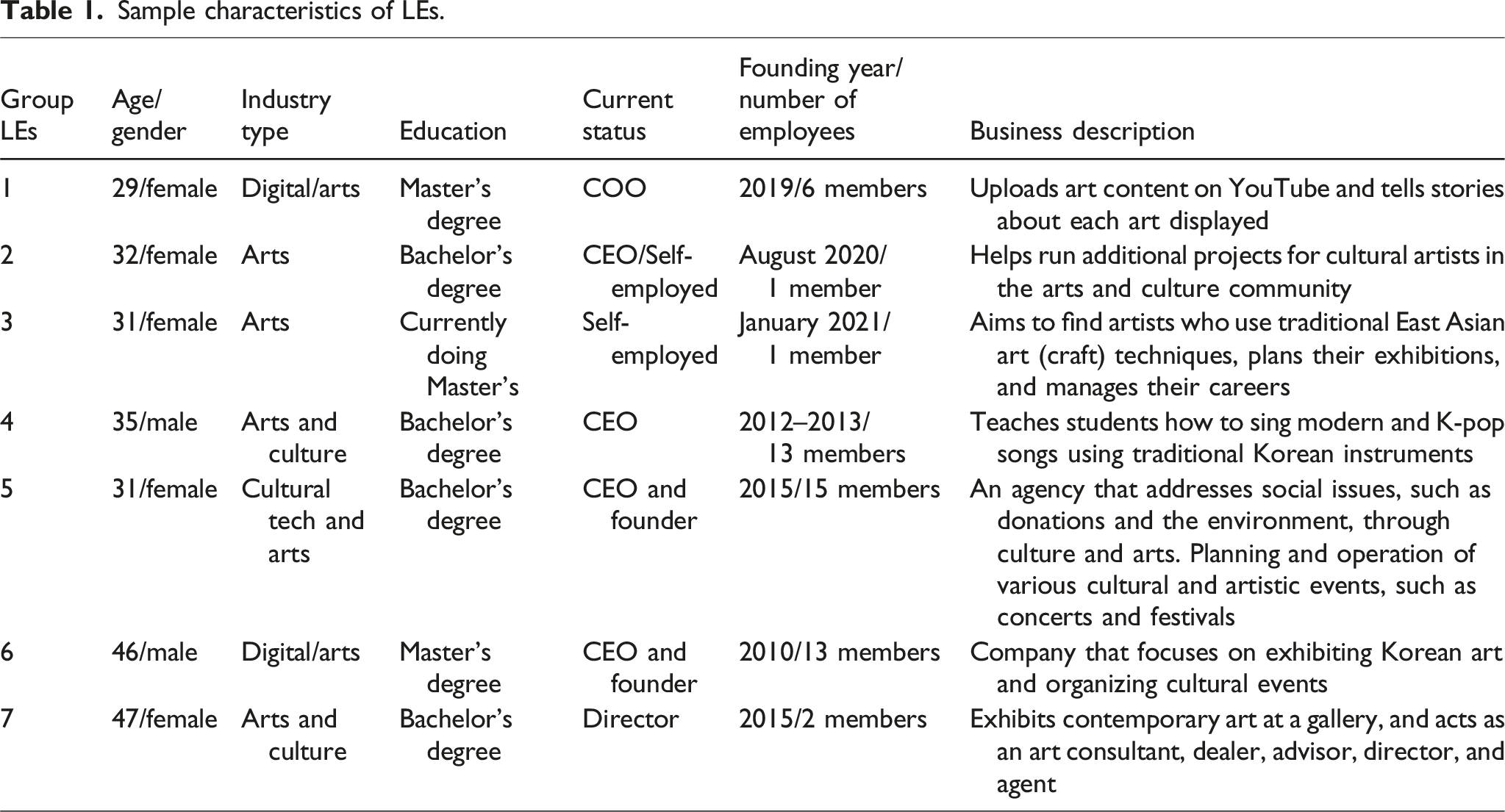
The data for this study as indicated earlier came from semi-structured in-depth interviews. During December 2020 to June 2021, 14 entrepreneurs were interviewed. Throughout the duration of data collection, this research followed two stages.
Sample characteristics of LEs.
Sample characteristics of OREs.
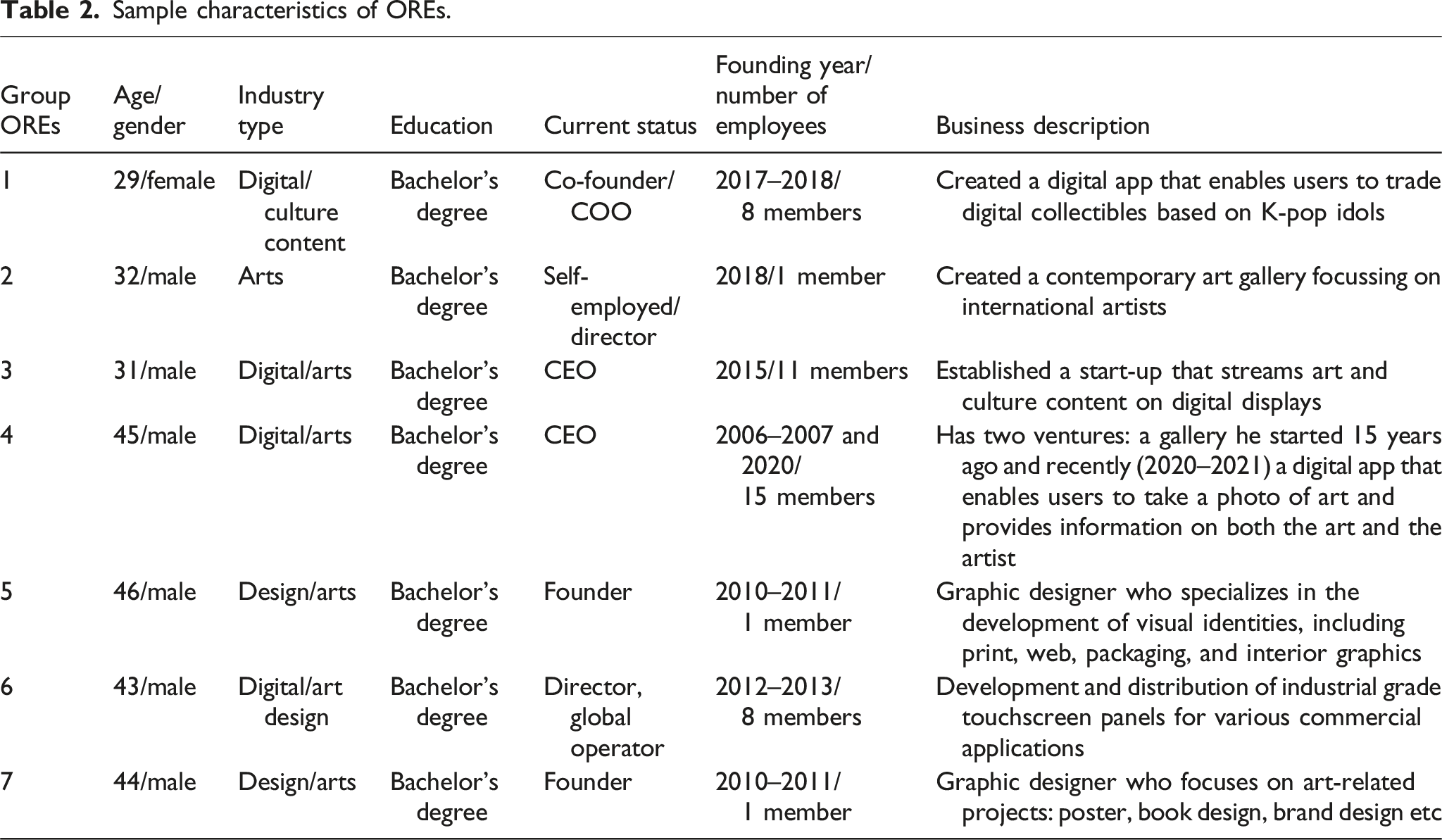
Once samples were identified, interviews were conducted via Zoom. With the global pandemic restricting international travel during the time of fieldwork in 2020-21, Zoom was an effective and powerful platform to meet with the participants and record interview data (Archibald et al., 2019). Each interview lasted between 60 and 90 minutes.
Data analysis
The analytical approach involved interpreting the experiences of the interviewed entrepreneurs into conceptual themes. Constantly comparing the emergent themes to the extant literature demonstrates qualitative rigour (Gioia et al., 2012; Glaser and Strauss, 1967). By using this approach, this research demonstrates the nature of the topic, the transformational process of data to themes, and the decision-making process involved for the chosen analysis.
Data analysis was conceptually coded in the qualitative computer software, NVivo. Consistent with Strauss and Corbin (1998), the data was coded based on the entrepreneur’s responses which were later linked to theoretical dimensions (Gioia et al., 2012). Gioia et al. (2012) proposed a stepwise approach to collate the various informant terms, codes, or categories combined with theoretical arguments to distil more abstract themes and ‘aggregate dimensions’. Gioia’s methodology offered a systematic approach to new concept development and grounded theory articulation to bring qualitative rigour and transparency to conducting inductive research (Gioia, 2012). The data analysis comprised three main steps: (1) classifying the raw data into first-order empirical themes; (2) abstracting and consolidating the empirical themes into second-order conceptual categories; and (3) aggregating the conceptual categories into theoretical dimensions as Figure 1 demonstrates. Data structure.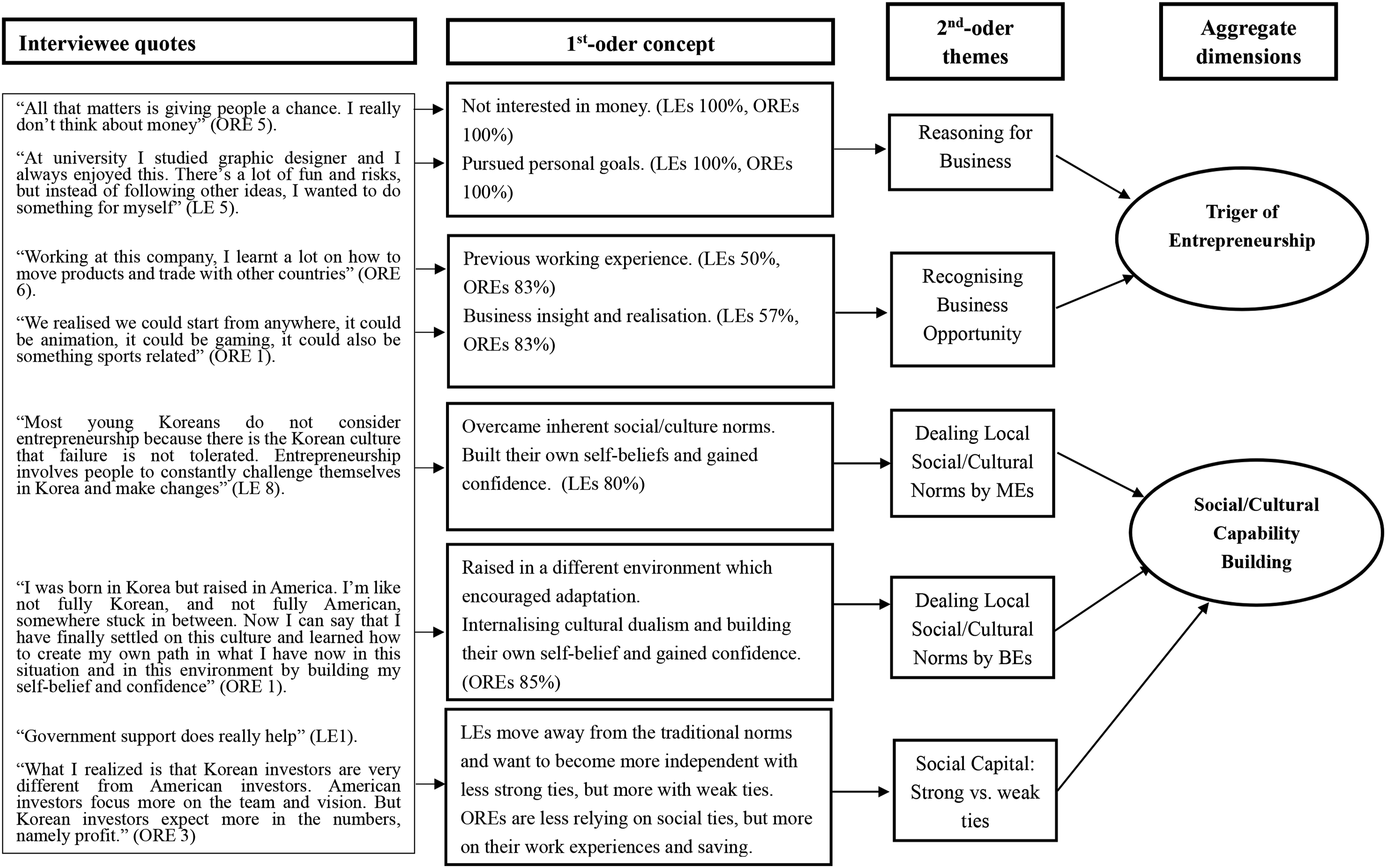
In the first stage of data analysis, the first author read the interview transcripts and field notes. At the same time, he started categorizing the raw data into first-order empirical themes, using language that was as close to the data as possible. The authors discussed regularly the emerging first-order themes. In the second stage, based on Strauss and Corbin (1998), the authors worked closely to consciously identify similarities and differences among the first-order themes to consolidate empirical themes into higher-level conceptual categories. This stage included continually comparing the first-order themes with one another and with the emerging conceptual categories. We also reviewed all the transcripts and field notes again to ensure the coded passages fitted with the emerging second-order categories. After several rounds of iterations among first-order themes, raw data, observation notes, and theory, we developed second-order conceptual categories.
In the last stage, we actively examined the theoretical explanations for the relational dynamics among the second-order categories. We conducted multiple iterations of pattern matching between the emerging conceptual categories and the literature to identity the theoretical dimensions. Following Pratt et al. (2006), we actively brainstormed alternative conceptualizations of how the theoretical dimensions related to each other and the literature before finalizing our model as shown in Figure 1.
Findings
The findings are divided into three different sections. Each section elaborates those aggregate dimensions demonstrated in Figure 1 with the comparative differences in entrepreneurial behaviour of the two groups, namely, (1) trigger of entrepreneurship and (2) social/cultural capability building.
Trigger of entrepreneurship
The trigger of entrepreneurial is an important element to link the interrelated entrepreneurial concepts of reasoning and opportunity as a single dimension. The existing literature has emphasized the presence of both reasoning and opportunity to be essential components that develop prior to entrepreneurial entry (Dimov, 2011; McMullen and Dimov, 2013). Without reasoning, entrepreneurs lack the drive to persist in their chosen career fraught with challenges and uncertainty (Shepherd and Patzelt, 2011). Without opportunity, entrepreneurs lack the means to create a new venture and transform innovative ideas into a viable product or service (Davidsson, 2015). In this study, reasoning is the innate drive that compels an individual to recognize a profitable business opportunity and transform new ideas into a creative venture. By linking opportunity and reasoning together, meaningful outcomes can be generated in explaining why and how one becomes an entrepreneur.
Reasoning
During the interview, entrepreneurs from both groups shared similar expressions in describing their reason of pursuing entrepreneurship. One of the key findings reported in both groups was that the most frequently mentioned expressions related to personal goals, such as ‘I want to work for myself’, ‘I want to be my own boss’, and ‘I want to work because this is fun’. Both groups decided to start a business as a source of personal fulfilment and not missing possible opportunity with LE 6 sharing this comment: ‘I did not want to regret the decision of not starting my business when I had the opportunity. If I had missed this opportunity, I would always regret it’.
In addition, the need to help others was also felt by entrepreneurs from both groups. Nearly half of the entrepreneurs (LE 1, 2, and 3; ORE 2, 3, and 5) had created a venture in service of others, as expressed by ORE 3: ‘I wanted to create a platform that could actually support people who are not familiar with technology but at the same time, help them to use technology to promote what they do’. Similarly, LE 2 shared his thoughts about having interacted with various people and help them: ‘I had a lot of opportunities to work and interact with a lot of people. I had this thought: how can I make a festival for artists, planners and general people who want to be involved in the art world. I developed this idea that I wanted to be of use to somebody else’.
While the interest of personal development served as the primary reason, entrepreneurs from both groups also claimed to uphold a sense of social responsibility, but not driven by financial gain as ORE 5 claimed: ‘All that matter is giving people a chance. I really don’t think about money’. The findings reveal that fulfilling the dual objective of helping others and pursuing personal goals simultaneously can be an innate driver for facilitating entrepreneurship.
Recognizing opportunity
Driven by determination to start a business, entrepreneurs scanned their external environment to identify an opportunity associated with their choice of interests and capabilities. For both groups, several factors were involved in the entrepreneur’s capability to recognize an opportunity.
Prior experience can help build the capabilities of entrepreneurs. Amongst the LEs, only LE 7 had acquired such an experience. She had not acquired this insight from her school but rather from a personal hobby. She had received formal training in dancing and competed fiercely with others at an early age. Instead of following the traditional path of academia, she had developed her business from a hobby – dancing: ‘The opportunity came naturally while I was at university with various activities that were linked to the college, district offices and the government. These organizations paid us to perform on the stage. That is what led me to start a business’.
As for other LEs, many of them had not gained any prior work experience before entering university, and for them, their social engagement outside study was more important than university education as LE 3 explained: ‘The experience I gained from my university − I do not think it had that much of an impact on me starting a business. I would say I got my idea from working with the people I know, listening to my friends or even from the work later I did’.
In comparison, most of the OREs (1, 2, and 4) had gained some work experience and broader knowledge whilst studying at university. Education played a pivotal role in the sense that OREs were able to interact with academic lecturers as mentors to know the growing emergence of technology and the need to be leaders of the world. Other OREs (3, 5, and 6) had gained some work experience prior to and during university study, which helped them identify opportunities for developing new business with insight as ORE 6 put: ‘Working at other company, I learnt a lot on how to move products and trade with other countries and that helped me develop new business’. ORE 1 also claimed: ‘We realised we could start new business from anywhere, it could be animation, it could be gaming, it could also be something sports related given we had these experience by working for others before’.
The findings indicate that there are similarities and differences among these two groups regarding the trigger of entrepreneurship. Both groups were highly committed to achieve personal goals and helping others with less on financial gain, and both of them had built certain capacity to recognize a unique opportunity. The contextual differences between local and overseas returnee entrepreneurs play a pivotal role in the recognition process, with LEs relying on social engagement with less on education and prior work experience versus OREs with more experiences through prior education and work for recognizing opportunity.
Social/cultural capability building
As social/cultural norms play a fundamental role in shaping social and business behaviour in the Korean context, it is relevant to discuss how personal beliefs are formulated to challenge the existing norms. Both LEs and OREs need to process the perceived value of cultural norms and, subsequently, challenge existing constraints that hinder entrepreneurial entry. The current findings represent entrepreneurs from both groups who had followed decisions of their own personal volition that led them to start a business and running it. LEs had overcome traditional cultural barriers and had chosen a path that prioritized their personal development. Instead of adhering to the opinion of others embedded in the external environment (i.e. friends and family), LEs had aligned their identity associated to the self. In contrast, OREs integrated with the new social/cultural environment to work for themselves and create a venture in supporting the welfare of others. Although OREs had not been exposed to Korea’s cultural environment to the same extent as their local counterparts, they often question and modify their social/cultural identity at a deeper level.
Nevertheless, both groups of entrepreneurs who overcome these issues have gained confidence and built capability in pursuing decisions of their own personal volition. As for LEs, overcoming inherent traditional social/culture norms and developing their own self-beliefs and confidence to address the existing problems were crucial for successful entrepreneurship as LE 7 pointed out: ‘Most young Koreans do not consider entrepreneurship because there is the Korean culture that failure is not tolerated. Entrepreneurship involves people to constantly challenge themselves in Korea and make changes’. While raised in a different environment which encouraged adaptation, OREs were constantly confronting and adjusting to the new social/cultural environment. By building their own self-belief and gained confidence, they could overcome the barriers and fit into the new society as ORE 1 claimed: ‘I was born in Korea but raised in America. I’m like not fully Korean, and not fully American, somewhere stuck in between. Now I can say that I have finally settled on this culture and learned how to create my own path in what I have now in this situation and in this environment by building my self-belief and confidence’.
In terms of developing relationship with external stakeholders as social ties, particularly the government and investors, both groups of entrepreneurs expressed different concerns. For example, there were mixed opinions regarding government support. Among the 14 start-ups, 57% had received government support prior to business establishment. Amongst these entrepreneurs, the following comments were expressed: ‘Korea is really good for start-ups’, ‘There is information available online’, and ‘Government support does really help’. Although government support is warranted, 21% of the interviewees (OREs 1 and 5 and LE 7) shared some concerns, as expressed by ORE 5: ‘I’m not a huge fan of government funds. I applied for a couple of grants several times and at the time it was necessary. I was thankful. But I am not a huge fan of government funding. Mostly in Korea, their demands are so outside of the business focus, which I find to be disappointing’.
Investor involvement also resulted in similar mixed thoughts. More than half of the interviewed entrepreneurs had received investment support. Substantial funds were secured that helped build the establishment of their business. Among them, none of the LEs had reported any particular difficulties in engaging with Korean investors. On the other hand, 14% of the interviewees, only OREs (1 and 3), encountered some challenges as ORE 3 claimed: ‘What I realized is that Korean investors are very different from American investors. American investors focus more on the team and vision. But Korean investors expect more in the numbers, namely profit’. In fact, more OREs (83%) had relied on their own financial support than LEs (38%) as ORE 3 claimed: ‘I made a gross profit of USD2 million, so I thought why not work under myself’. Many OREs had previous work experience and made saving in their prior work in comparison with LEs with less prior work experience. Based on these findings, we can summarize that the overall situation in operating business in Korea has changed with many young LEs move away from the traditional norms and want to become more independent. Although they may have established strong ties with family and friends locally, they would prefer to rely on their own effort with support of the government and venture capital as weak ties. In contrast, those OREs do not have much strong ties locally; some of them have built business with the support of weak ties such as the government funding and venture capital investment. However, in comparison with LEs, OREs are more independent in conducting their business with more work experience and financial saving from earlier years. OREs also discover that the local venture capital is more interested in making profit, rather than developing human talents with vision.
In addition, since entrepreneurs from both groups are distinctively different due to their social/cultural identity, their managerial practices vary. However, when entrepreneurs were asked about ‘what is the most challenging work in starting and maintaining a business?’, 50% of the entrepreneurs responded ‘finding the right person’.
Finding talented individuals to suit the needs of start-ups is a significant predicament that was expressed by both groups. The majority of the entrepreneurs from both groups commented on the presence of large Korean companies. There is the ideal belief that success is associated with Korean conglomerates, while failure is a common experience amongst start-ups. This belief is slowly changing with the rise of Korean start-ups. However, this perception remains a hurdle in securing talented employees as ORE 3 pointed out: ‘Many good talented people will already work for big companies. It is really hard to hire good people for small firms’.
Another issue found in this study was the way of managing local employees. Korean employees have been raised in an environment with a very high degree of power distance as a hierarchical society (Kim et al., 2015). Thus, Koreans are obedient workers and not used to equal way of managing and communicating as ORE 1 explained: ‘I feel like a lot of Korean employees don’t like to communicate with me too much. They prefer if you guide them in what to do more than actually talking to them about what they want to do or asking them for new opinions’.
That being said, LEs did not face any particular difficulties when working with local Koreans given they had better understanding with each other. When working closely with their employees, LEs 1 and 8 encouraged teamwork as explained by LE 1: ‘We have a different form of freedom as a start-up company. We think of our work as projects collectively. Our team members come up with ideas and as a team, we pick the most attractive idea’.
Hence, entrepreneurs from both groups reported distinct differences when working with local Korean employees. Mainly, LEs had expressed positive views in working with local Koreans where open communication and team sharing were also encouraged. However, OREs experienced some difficulties as local Korean employees had difficulties in working in an organization that had different management practices to the local norm.
Discussion and conclusion
By developing a comparative analysis, this study provides a holistic picture regarding the two groups which behave differently but operate businesses under the same contextual conditions. There are a number of implications for theoretical development as well as policy and practices. The following sections will highlight the overall outcomes and key implications.
The overall outcomes address our key research question, namely ‘To what extent that the different social and cultural backgrounds influence entrepreneurs starting and running their start-up businesses?’. First, at the starting phase, both groups show that their reasonings are linked to autonomy and realizing personal goals as well as making contributions to the society rather than making money. Hence, both groups demonstrate a strong tendency of intrinsic reasoning for developing their entrepreneurship.
Second, regarding the competency in dealing with social/cultural norms, LEs experienced cultural restriction rooted in traditional culture and wanted to overcome these constraints through confidence building and independence from their family and friends. In contrast, majority OREs experienced positive effects from internalizing their cultural adjustment which enabled their entrepreneurship and overcome those cultural barriers. In terms of utilizing social capital, LEs were increasingly developing their business with weak ties, such as financial support from government and venture capital rather than strong ties with family and friends. OREs developed some weak ties with government and venture capital locally but mainly relied on their own experience and saving for developing their business.
Third, with further development, individual competency in dealing with other employees, LEs were able to manage their employees effectively with the encouragement, flexibility, and autonomy. In contrast, OREs might find difficulty of engaging with local employees due to different cultural norms and business practices.
Fourth, the results indicate that prior education and work experience (i.e. human capital/competence) was the major contributing factor to successful entrepreneurship. Our results show that OREs gained overseas education and work experience and contributed to their entrepreneurial activities with different business management styles when they started business in a new environment (Ogarca et al., 2019). The different capabilities of OREs result in learning new way of doing business with ongoing change of their identify, namely, from the beginning of distinctions of identify as overseas returnees to later variations, constructions, and intersections with new identify through developing the business and engaging with other stakeholders. On the other hand, although LEs have advantages as local, they also face different challenges, such as constrain of traditional culture and lack of international experience. Modern education and business engagement with others domestically and internationally enabled these young LEs to break from the Korean cultural and business traditions and create an organization that is aligned with both the entrepreneur and employees’ beliefs by replacing the existing hierarchical structure. This reflects that there is also ongoing change of their identify among LEs during the process of entrepreneurial development.
Theoretical implications
For the present study, we have examined the behavioural differences between two unique cultural groups of entrepreneurs, namely, OREs and LEs, in the process of starting and continuing their business in Korea. As a result, we provide a comprehensive overview in understanding their behaviour through the theoretical lens of social/cultural identity and social capital and attribute their intent and action to entrepreneurship with different social/cultural backgrounds. Hence our contributions are threefold: we address existing theoretical gaps by underlying the thought process of a new variant of entrepreneurs succeeding in a challenging environment; we document the key elements that develop over time which explain how new sources of reasoning can contribute to entrepreneurial success; and we identify the ongoing change of social/cultural identify with continuing adjustment during the journey of entrepreneurship among both groups. More specifically, LEs have moved away from the traditional norms and wanted to become more independent with less strong ties, but more with weak ties. OREs have been less relying on social ties but more on their work experiences and financial saving.
Hence, in this study, we demonstrate that the similarity and difference between the two groups with different social/cultural backgrounds operating business start-ups in a similar societal context. We detail that while autonomy remains relevant to both groups, levels of cultural competency and relational ties can vary from each other but still contribute to developing entrepreneurial intent to run their businesses. In this study, we identified how the two groups were able to develop their entrepreneurship, and more importantly, demonstrated that multiple elements could be applied to examining new emerging variant types of entrepreneurs succeeding in a unique contextual element with ongoing changes of social/cultural identity. Business development and interaction with other stakeholders enable them to transform their identify from initial distinction one to later variation one, construction one, and intersection one (Zhu et al., 2022). Similar studies should be conducted in different environments to fully capture the extent of these two groups of entrepreneurs in successfully starting and continuing a business under contextual elements.
Implications for policy and practices
From a contextual lens, this research outlines key implications for policy and practices to consider in incentivizing entrepreneurship in Korea. For instance, as this research demonstrates the practical significance of Korea’s cultural and art sector, we emphasize that this sector deserves more recognition as Korea’s cultural elements will continue rising with the growing influence of the Korean Wave. Currently, the Korean government has implemented projects to cultivate entrepreneurial talent through various programs, such as Youth Startup Academy 1 and Human Resources Development Program for small-medium enterprises (SMEs) 2 . These programs are designed to further improve the competitiveness of SMEs and address the shortage of human resources amongst SMEs. However, these workers are generally directed towards technological and manufacturing sectors. Further attention to fostering the creative talent of local workers should be acknowledged. Furthermore, it is recommended that Korean investors consider additional aspects beyond potential revenue when evaluating entrepreneurs’ vision, business model, and future goals. A deeper understanding of entrepreneurs’ determination in achieving short-term and long-term plans can be gained. However, since this research has only interviewed entrepreneurs, the decision-making process of Korean investors remains unexplored. Thus, future research should also consider interviewing Korean investors. By doing so, the nature of investors in a contextual setting can be ascertained and the stakeholder relationship between entrepreneur and investor further explored.
Other findings suggest that with the emerging class of multi-cultural entrepreneurs, the Korean government is able to offer international internship opportunities at firms operated by returnee entrepreneurs, resulting in two beneficial outcomes. On the one hand, Korean SMEs would be diversified by linking the domestic market to the global market. Korean SMEs would be presented with the opportunity of tackling international markets which can improve the domestic economy, enhance global competitiveness, and encourage greater innovation (Lee, 2024). On the other hand, returnee entrepreneurs could have more cross-cultural management experience (Brannen and Thomas, 2010). With their cultural acumen, they can mediate between two cultural environments. Essentially, returnee entrepreneurs are active translators who can help foreign employees, who have yet to learn Korean, ease into a new environment. By fostering international talent, new ideas could be generated.
Limitations and future research directions
This study has laid the foundations for investigating comparative differences between LEs and OREs in a specific context (i.e. South Korea). However, there are a number of limitations in this study that require further investigation in future studies.
First, the current focus on Korea’s arts and culture industry limits the understanding of entrepreneurship on a broader scale. Future research can be extended by expanding the sample size and considering entrepreneurs in other fields. For instance, digital technology and manufacturing hubs are growing into prominent sectors in South Korea (Shim, 2010). As Korea is globally recognized for its technological hubs and highly educated workforce, Korea has the potential to be the next entrepreneurial hub in Asia.
Second, this study has effectively identified several contextual factors in relation to the host country influencing entrepreneurial performance. Future studies should consider adopting a similar approach to this study in simultaneously investigating LEs and OREs. By doing so, a better understanding of specific contextual factors associated with the host country and how this influences entrepreneurship could be gained (Bagheri and Zhu, 2023).
Third, this research was limited in its examination of entrepreneurs who have successfully initiated a venture and continued to survive (at the time of field work). By not examining entrepreneurs who have failed, a key theoretical gap remains. Failure is an experience that can discourage further entrepreneurial activity. In contrast, it can also be a motivating factor in driving entrepreneurs’ determination (Cope, 2011). The literature can be enriched by examining how two cultural groups of entrepreneurs react, experience, and potentially, overcome failure as an entrepreneurial hurdle. Furthermore, conducting a longitudinal study can address such gap. If entrepreneurs discontinue their business because of some external or internal factors, it would be prudent to understand the reasons for the relevant actions being taken.
Footnotes
Declaration of conflicting interests
The author(s) declared no potential conflicts of interest with respect to the research, authorship, and/or publication of this article.
Funding
The author(s) received no financial support for the research, authorship, and/or publication of this article.
