



Abstract
This research investigates how employees’ experience of role ambiguity may dampen their change-oriented organizational citizenship behavior (OCB), a harmful process that might be buffered by employees’ access to relevant resources, stemming from their work (work passion), coworkers (peer harmony), or employing organization (affective commitment). If the hardships induced by unclear job descriptions can be subdued by these complementary, energy-enhancing resources, it becomes less likely that employees respond to resource-draining job conditions by halting extra-role work activities. Survey data collected in a large transportation company offer empirical support for these mitigating effects. As a primary conclusion, this study reveals that organizations that cannot eliminate role ambiguity completely for employees still can guarantee a certain degree of change-oriented OCB, by nurturing various resources that generate positive emotional energy among employees.
Keywords
Introduction
Management researchers and practitioners agree about the critical need for employee work efforts that exceed formal job obligations, or organizational citizenship behavior (OCB) (Amah, 2018; Ocampo et al., 2018; Organ et al., 2006). In traditional conceptualizations, OCB is affiliative and prompts respect for, instead of challenges to, preexisting organizational practices (Podsakoff et al., 2018; Vigoda-Gadot and Beeri, 2012). But a critical, relatively unexplored aspect of work-related voluntarism is change-oriented OCB, defined as “constructive efforts made by employees to identify and implement necessary changes to work methods, policies and procedures in the context of their jobs or organizations” (Wang et al., 2021: 2164). Employees who exhibit change-related OCB seek to increase organizational effectiveness with their extra-role activities that explicitly aim to change the organizational status quo (Chiaburu et al., 2022; Choi, 2007). For example, they might voluntarily propose new practices for improved efficiency or ideas to remove redundant processes (Bettencourt, 2004; Younas et al., 2021).
Both organizations and employees can reap the fruits of such voluntary change-oriented labor. Organizations can achieve improved performance and competitive positioning; employees can increase their work standing (Carter et al., 2014) or enjoy a sense of personal fulfillment (Li and Xie, 2022). But because change-oriented OCB, by definition, is disruptive, it also can create significant challenges, especially if colleagues perceive this behavior as an attack on their positions (Bergeron and Thompson, 2020; Vigoda-Gadot and Beeri, 2012) or privileges (Choi, 2007; Hon et al., 2014). Negative reactions could be even more prominent if employees suggest changes voluntarily, without having any formal mandate to do so (Barry and Wilkinson, 2016; Chiaburu et al., 2022).
Thus, the current investigation seeks explicitly to clarify when and why employees may be reluctant to undertake change-oriented OCB. Previous studies mostly focus on enablers, including employees’ learning orientation (Bettencourt, 2004), religious faith (Haq et al., 2020a), knowledge-oriented work practices (Kao, 2017), or exposure to empowering (Li et al., 2016), inclusive (Younas et al., 2021), or ambidextrous (Iqbal et al., 2022) leadership. But due to the inherently disruptive nature of OCB, it is equally critical to understand how employees who are already exposed to resource-draining work conditions may be hesitant to exert further discretionary energy in this way (Chiaburu et al., 2022). For example, voluntary work efforts that alter the status quo are less likely among employees exposed to narcissistic supervision (Wang et al., 2021) or family-to-work conflict (De Clercq, 2020). In essence, factors that deplete employees’ positive energy resources may leave them unable or unwilling to undertake OCB that could be upsetting to others (Quinn et al., 2012).
Role ambiguity as an inhibitor of change-oriented OCB
As a critical contribution, this study features another notable source of resource depletion that may diminish change-oriented OCB: the extent to which employees experience role ambiguity or information deficiencies with respect to their job duties (Ralston et al., 2010; Rizzo et al., 1970). This focus on role ambiguity is theoretically interesting and meaningful, in light of previous conflicting results with respect to its impact on change-invoking work activities, such as creativity or innovation. On the one hand, unclear job descriptions might spur disruptive work behaviors, because employees who can undertake job tasks in flexible ways might feel better able to challenge the status quo too (Leung et al., 2011; Manderlink and Harackiewicz, 1984). As Wang et al., (2011: 212) note, “as the level of role ambiguity increases, employees begin to experience some degree of uncertainty regarding the procedures to accomplish their tasks, evaluation standards, and proximal goals, creating the necessary space for cognitive flexibility.” On the other hand, empirical research that relies on conservation of resources (COR) theory has shown that “when employees believe that they receive insufficient information about their job duties, the energy depletion they experience may compromise their efforts to generate change-invoking ideas” (De Clercq, 2019: 371).
Such opposing forces are evident in previous studies that indicate various relationships between role ambiguity and change-invoking work behavior: positive (Jiang et al., 2019), negative (Kassa, 2021), or curvilinear, with either U-shaped (Leung et al., 2011) or inverted U-shaped (Wang et al., 2011) patterns. But with its conceptual focus on change-oriented work behavior that is discretionary in nature, and consistent with investigations that pinpoint a negative relationship between role ambiguity and voluntary work efforts in general (Eatough et al., 2011; Kang and Jang, 2019), the current study proposes a negative baseline association between role ambiguity and change-oriented OCB. Change-invoking work efforts tend to be challenging and received with skepticism or resistance by other organizational members (Hon et al., 2014), which may be especially likely if those efforts are not mandated by formal job descriptions (Chiaburu et al., 2013). Consistent with COR theory (Hobfoll and Shirom, 2000), the uncertainties resulting from unclear job roles may drain employees’ resources to such an extent that they are not able or willing to perform challenging, change-oriented, voluntary work activities (Ralston et al., 2010; Zhou et al., 2016).
Buffers of the inhibitive role of role ambiguity
In addition to addressing how unclear job descriptions might constrain employees’ voluntary change-oriented work efforts, this study seeks to identify pertinent boundary conditions that might make this harmful process less likely. According to COR theory, employees’ access to energy-boosting resources can mitigate the adverse effects of resource-depleting work conditions (Hobfoll et al., 2018; Zou and Dahling, 2017). Specifically, the negative link between role ambiguity and change-oriented OCB might not materialize if employees (1) feel enthusiastic about work (Haq et al., 2020b), (2) maintain harmonious relationships with peers (Chen et al., 2015), or (3) exhibit strong emotional bonds with their organization (Geraldes et al., 2019). Succinctly, the translation of role ambiguity into tarnished change-oriented voluntarism may be contained by the presence of work passion, peer harmony, or affective commitment, as contingency factors.
A unifying theme underpins these three resources: They all instill positive emotional energy in employees, which they can apply to discretionary, disruptive work behaviors, even while being exposed to resource-draining role ambiguity (Halbesleben et al., 2014; Quinn et al., 2012). The moderators also have complementary roles, in that they operate at distinct levels: Work passion elicits positive emotions through employees’ execution of the work itself (Klaukien et al., 2013); peer harmony captures the extent to which their relationships with colleagues are fulfilling and without emotional hardships (De Clercq et al., 2016); and affective commitment speaks to an emotional attachment with their employing organization (Buonocore and Russo, 2013). Integrating all three levels provides a logical and comprehensive perspective on how employees’ access to various valuable resources may enable them to maintain a certain level of change-oriented voluntarism at work, even if their energy resource reservoirs are depleted by job-related information shortages (Quinn et al., 2012; Ralston et al., 2010).
In addition to their complementarity, these three focal moderators are interesting in light of previous studies that link them to relevant outcomes, such as change-oriented work behavior, OCB in general, change-oriented OCB specifically, or role ambiguity. First, employees’ work-related passion increases their proactive work behavior (Gulyani and Bhatnagar, 2017) and OCB (Wan et al., 2022) and lowers the chances that exposures to workplace bullying translate into diminished change-oriented OCB (De Clercq and Pereira, 2023). Similarly, employees’ job involvement—or the excitement they feel about their daily job activities, similar to work passion (Brown, 1996)—makes it less likely that their sense of organizational disidentification escalates into tarnished change-oriented OCB (De Clercq, 2022). Second, harmonious work relationships facilitate OCB (Chin, 2015) and decrease the probability that the experience of work overload or organizational politics leads to less innovative behavior (De Clercq et al., 2016). Coworker trust, which is akin but not identical to interpersonal harmony, makes it less likely that role ambiguity escalates into turnover intentions (De Clercq and Belausteguigoitia, 2017) or that family-to-work conflict constrains change-oriented OCB (De Clercq, 2020). Third, affective commitment enhances change-oriented work behavior (Campbell, 2020) and OCB (Vera and Sánchez-Cardona, 2023) and diminishes the likelihood that workplace incivility prompts lower OCB (Liu et al., 2019) or that work-related insomnia dampens creative behavior (De Clercq and Pereira, 2021). Affective commitment also may reduce role ambiguity (McCormick and Donohue, 2019), or role ambiguity may reduce affective commitment (Ackfeldt and Malhotra, 2013). Focusing specifically on how work passion, peer harmony, and affective commitment each might mitigate the conversion of role ambiguity into tarnished change-oriented OCB offers a valuable addition to this body of research.
Contributions
In summary, this study contributes to extant management research by examining the relevance of role ambiguity as an unexplored inhibitor of employees’ propensities to try to change the organizational status quo voluntarily (Chiaburu et al., 2022; Vigoda-Gadot and Beeri, 2012). As indicated, this specific connection is pertinent due to equivocal findings related to whether this source of role stress decreases or increases change-oriented work behavior. The current research details a negative relationship in scenarios in which such behavior is fundamentally voluntary. In so doing, it points to a potentially counterproductive dynamic, in which employees might be unintentionally complicit: They respond to the challenge of unclear job specifications by becoming complacent in their change-oriented voluntarism, rather than engaging in extra-role activities that could help fix the problem (Carter et al., 2014). In addition, this study explicates how this negative dynamic can be disrupted by employees’ access to complementary, energy-enhancing resources. Prior research shows that employees are more likely to engage in discretionary or change-invoking work behaviors to the extent that they can draw from work passion (Gulyani and Bhatnagar, 2017), harmonious peer relationships (Chin, 2015), or strong emotional attachment to their organization (Campbell, 2020); this study extends these insights by clarifying the indirect beneficial roles of these factors. Companies accordingly can leverage these factors to halt a process in which employees, unclear about what to do, respond with passivity and unknowingly help perpetuate the situation. The proposed theoretical framework and its constitutive hypotheses are in Figure 1. Conceptual model.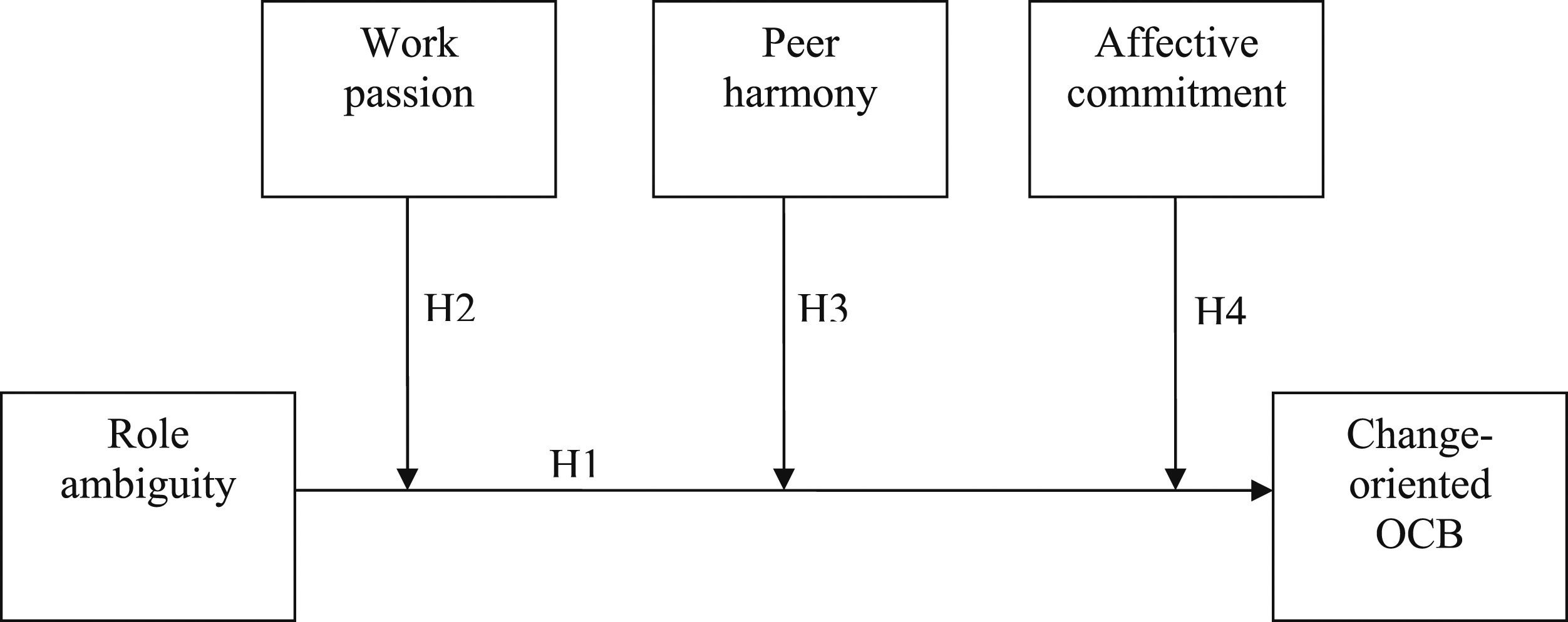
Research hypotheses
Role ambiguity and change-oriented OCB
This study predicts a negative relationship between employees’ exposure to role ambiguity and their propensity to undertake change-oriented work efforts on a voluntary basis. If employees are left in the dark about what their job duties entail, they do not understand how to meet organization-set performance standards and likely become concerned about the quality of their professional functioning (Bennett et al., 2016; Hamwi et al., 2011). The logic of COR theory suggests that the corresponding resource depletion may escalate into diminished change-oriented OCB, because employees feel determined to minimize additional resource losses by preserving their work-related energy, instead of “wasting” it on voluntary, disruptive work behavior (De Clercq and Pereira, 2022a; Zhou et al., 2016). Similarly, job-related information deficiencies may generate persistent worries about their future with the firm (Chênevert et al., 2019; Ralston et al., 2010), which deplete valuable energy that otherwise could be devoted to change-invoking OCB. In addition, frustrations about unclear job descriptions may decrease the desirability of such behaviors. That is, a lack of job-related information may signal to employees that their organization does not care for their professional well-being (Ito and Brotheridge, 2012; Kawai and Mohr, 2015), so their decision to withhold change-oriented OCB may generate resource gains for them, in the form of a sense of deservedness (Halbesleben et al., 2014). These arguments inform the baseline hypothesis:
There is a negative relationship between employees’ experience of role ambiguity and their change-oriented OCB.
Moderating role of work passion
Employees’ work passion may mitigate the negative link between their experience of role ambiguity and change-oriented OCB. The logic of COR theory indicates that employees’ adverse behavioral reactions to unclear work conditions are contingent on the extent to which they possess personal resources that enable them to address the associated uncertainties (Hobfoll et al., 2018; Ralston et al., 2010). Passionate employees experience excitement about performing their work (Chen et al., 2020; Gulyani and Bhatnagar, 2017). These positive emotions in turn increase their cognitive abilities to deal with job-related uncertainties (Klaukien et al., 2013; Lavigne et al., 2012), so they retain some discretionary energy that they can devote to disruptive, extra-role work activities. In addition, employees marked by high levels of work passion tend to feel inspired by challenging job situations that offer them opportunities to do what they love, as well as personal fulfillment when they meet the demands successfully despite challenges (De Clercq et al., 2023; Vallerand et al., 2003). That is, a passion for work may lower the probability that experienced role ambiguity thwarts change-oriented voluntarism, because the idea of finding ways to exhibit discretionary work behaviors even in the presence of resource-draining role ambiguity is highly attractive to these employees (Houlfort et al., 2014). Formally:
The negative relationship between employees’ experience of role ambiguity and their change-oriented OCB is moderated by their work passion, such that the relationship is weaker at higher levels of work passion.
Moderating role of peer harmony
The tenets of COR theory also predict that employees’ access to harmonious peer relationships should diminish the chances that role ambiguity translates into diminished voluntary efforts (Hobfoll and Shirom, 2000). This relational resource captures the extent to which peer interactions are peaceful and do not elicit negative tensions (De Clercq and Pereira, 2022b; Park et al., 2021). Employees feel comfortable speaking up about difficulties in the course of doing their jobs, because they do not need to fear negative repercussions for their work standing (Chen et al., 2015). This reassurance likely makes it easier to consult peers about how to handle unclear job duties and thus reserve more energy to devote to discretionary, change-oriented activities (Kang and Jang, 2019; Quinn et al., 2012). Moreover, interpersonal harmony tends to evoke favorable views about the quality of the work situation in general (Baeza and Wang, 2016; Park et al., 2021). These positive views may diminish desires to avoid productive, change-related, voluntary work efforts, from which organizational colleagues otherwise could benefit, even when confronted with job-related information deficiencies (Hobfoll et al., 2018; Kao, 2017). That is, harmonious peer relationships help employees exposed to role ambiguity remain motivated to spend some time on productive change-oriented OCB. Therefore:
The negative relationship between employees’ experience of role ambiguity and their change-oriented OCB is moderated by their peer harmony, such that the relationship is weaker at higher levels of peer harmony.
The escalation of role ambiguity into tarnished change-oriented OCB also might be subdued when employees exhibit strong affective commitment to their organization, which represents an energy-enhancing resource (De Clercq and Pereira, 2021; Lages et al., 2020). Employees who experience a sense of belonging feel valued by their employer and are more likely to forgive it, even if its practices are not optimal for their professional functioning (Lim, 2022; Menatta et al., 2022). Affective commitment similarly may offset their irritation with unclear job role descriptions and diminish the likelihood that they avoid change-oriented work voluntarism (Campbell, 2020). An emotional bond with the employer likely shifts employees’ focus; rather than feeling entitled to more job-related information, they develop a stronger interest in supporting the organization’s success overall (Gaudet and Tremblay, 2017; Pooja et al., 2016). Such committed employees should be less likely to use resource-draining role ambiguity as an excuse to avoid discretionary work efforts that could improve the organizational status quo (Chiaburu et al., 2013; Hobfoll et al., 2018). An emotional attachment to the organization also might decrease the potency with which role ambiguity constrains change-oriented OCB, because if they can deal with job-related information shortages and still support their beloved employer with productive activities, highly committed employees likely gain a sense of fulfillment (Buonocore and Russo, 2013). These arguments suggest:
The negative relationship between employees’ experience of role ambiguity and their change-oriented OCB is moderated by their affective commitment, such that the relationship is weaker at higher levels of affective commitment.
Method
Data collection and sample
The research hypotheses were tested with survey data collected from employees in a large Portuguese organization that operates in the public transportation sector (i.e., railway urban transportation). By examining one firm, in one industry sector, this study reduces the danger of unobserved differences in terms of how external market conditions (or firm-level factors that are not part of the theoretical framework) may affect employees’ ability or motivation to undertake change-oriented work efforts voluntarily (Bettencourt, 2004; Chiaburu et al., 2022). The public transportation sector in Portugal is subject to significant external scrutiny, in light of the significant tax proceeds allocated to it (Nunes et al., 2019; Pereira and Andraz, 2007; Zegras et al., 2013). Organizations that operate in this sector thus can benefit greatly from voluntary attempts by employees to change and improve internal corporate functions.
The survey development involved common translation and back-translation practices (Van Dick et al., 2018). The first English version was converted into Portuguese by a translator fluent in both languages. This version was reverse-translated into English by another bilingual peer. After addressing a few small discrepancies, the final survey was administered in Portuguese. A random sampling technique, based on a random digit generator applied to a list of all organizational employees, identified 300 employees for possible participation. These employees were promised complete confidentiality and assured that their individual answers would never be included in any research reports; the research goal to detect general patterns across aggregate data was also explicitly noted. Further, participants learned that participation was completely voluntary and that their employer would not know who participated. The survey also highlighted the importance of their honest opinions. These specifications help decrease the risk of social desirability bias (Jordan and Troth, 2020; Malholtra, 2010). Among the 300 initially contacted employees, 177 completed the survey, for a response rate of 59%. The final sample consisted of 54% men and 46% women; 90% of the respondents had been employed by the organization for more than 5 years; and 24% had some supervisory responsibilities.
Measures
Constructs and measurement items.
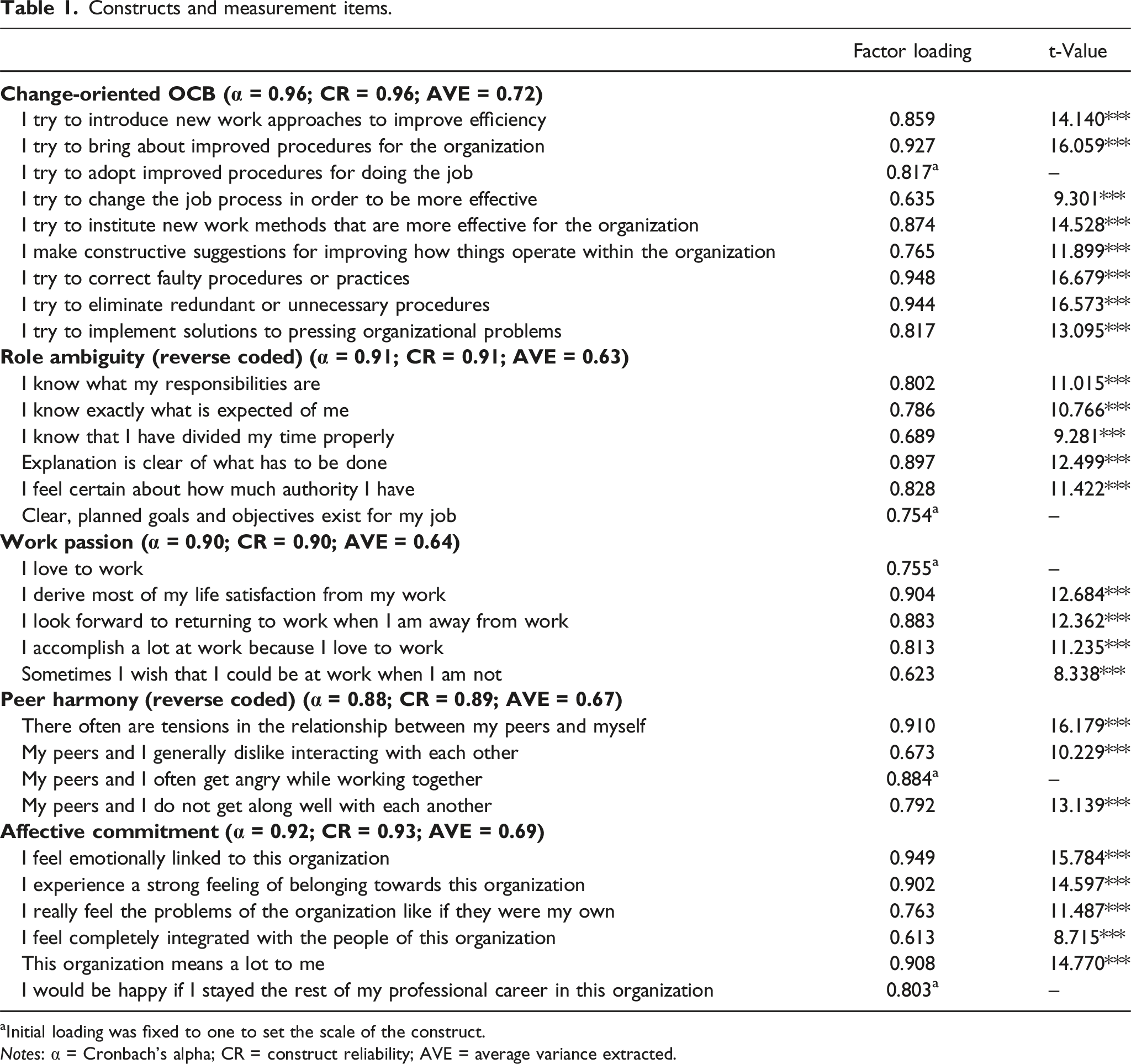
aInitial loading was fixed to one to set the scale of the construct.
Notes: α = Cronbach’s alpha; CR = construct reliability; AVE = average variance extracted.
Change-oriented OCB
The extent to which employees seek to change and improve the organizational status quo voluntarily was assessed with a nine-item scale of change-oriented OCB (Bettencourt, 2004). Consistent with Morrison and Phelps (1999), the items were preceded by the statement that respondents should assess whether they undertake specific work activities that go beyond their regular job duties, such as “I try to introduce new work approaches to improve efficiency” and “I try to bring about improved procedures for the organization.” Relying on self-assessments of change-oriented work voluntarism is consistent with prior research (De Clercq, 2020; Kao, 2017; Simo et al., 2016), in that employees are better placed to provide adequate, comprehensive evaluations of their work behaviors, compared with other assessors (e.g., leaders, colleagues) who have only a partial view of the complete range of their change-oriented efforts (López-Domínguez et al., 2013; Zhou et al., 2016).
Role ambiguity
To measure employees’ beliefs that their employer fails to provide sufficient information about their job responsibilities, the survey included a reverse-coded six-item scale of role clarity, developed by Rizzo et al. (1970) and widely applied in role ambiguity research (e.g., Kalay et al., 2020; Skogstad et al., 2014; Zhou et al., 2016). Two example items were “I know what my job responsibilities are” and “I know exactly what is expected of me.”
Work passion
The degree to which employees derive positive energy from work was assessed with a five-item scale of passion for work (Baum and Locke, 2004; Haq et al., 2020b). For example, respondents indicated whether “I love to work” and “I derive most of my life satisfaction from my work.”
Peer harmony
To measure the extent to which employees maintain harmonious relationships with their peers, the study adopted a reverse-coded four-item scale of interpersonal conflict (Jehn and Mannix, 2001), consistent with previous research on the beneficial effects of high-quality peer relationships in organizations (De Clercq et al., 2016). Two example items were “There often are tensions in the relationship between my peers and myself” and “My peers and I generally dislike interacting with each other.”
Affective commitment
The extent to which employees experience an emotional bond with their employer was assessed with a six-item scale of affective organizational commitment (Meyer and Allen, 1991; Pooja et al., 2016). The participants rated, for example, whether “I feel emotionally linked to this organization” and “I experience a strong feeling of belonging towards this organization.”
Control variables
The regression models accounted for the effects of three characteristics: gender (0 = male, 1 = female), organizational tenure (1 = < 6 years, 2 = 6–10 years, 3 = 11–15 years, 4 = 16–20 years, 5 = > 20 years), and job level (1 = lower level, 2 = intermediate level, 3 = senior management). 1 Men, compared with women, may have stronger propensities to undertake disruptive work behaviors (Huang et al., 2020b), and employees with greater organizational experience or higher job levels may have enhanced confidence in their ability to change the organizational status quo (Ng and Feldman, 2009, 2013).
Construct validity
The CFA, designed to evaluate the validity of the central constructs, relied on the AMOS software package (version 28.0). The fit of a five-factor measurement model that estimated the factor loadings of the measurement items on their respective constructs and the correlations among the central constructs (Anderson and Gerbing, 1988; Lattin et al., 2003) was relatively poor: χ2 (395) = 2235.38; confirmatory fit index (CFI) = 0.70, incremental fit index (IFI) = 0.71, and standardized root mean squared residual (SRMSR) = 0.09. This relatively poor fit is not surprising, considering the low, non-significant correlations between two construct pairs in the measurement model (De Clercq et al., 2020; Hair et al., 2019), that is, between peer harmony and role ambiguity (r = −0.020; p = 0.805) and between peer harmony and change-oriented OCB (r = 0.094, p = 0.242). These weak correlations align with the study’s theoretical focus on the moderating effect of peer harmony on the role ambiguity–change-oriented OCB relationship, rather than the direct effects of peer harmony on role ambiguity or change-oriented OCB. Importantly, the estimated factor loadings in Table 1 are all strongly significant, which indicates convergent validity (Gerbing and Anderson, 1988; Hair et al., 2019).
Moreover, the AVE values of each construct exceeded the cut-off value of 0.50 (Lattin et al., 2003)—ranging between 0.63 and 72 (Table 1)—and CFAs performed separately on the five focal constructs generated acceptable fit indices: change-oriented OCB (CFI = 0.87; IFI = 0.87; SRMR = 0.06), role ambiguity (CFI = 0.96; IFI = 0.96; SRMR = 0.04), work passion (CFI = 0.92; IFI = 0.92; SRMR = 0.04), peer harmony (CFI = 0.95; IFI = 0.95; SRMR = 0.05), and affective commitment (CFI = 0.93; IFI = 0.93; SRMR = 0.04). In support of discriminant validity, the AVE values were greater than the squared correlations between associated constructs, and the fit of the models with constrained construct pairs (i.e., correlation between two constructs forced to equal 1) was significantly worse than the fit of the corresponding unconstrained models (i.e., correlation between constructs could vary freely), for all 10 construct pairs (Δχ2(1) > 3.84, p < 0.05; Lattin et al., 2003).
Common source bias
Two well-established tests checked for common source bias. First, Harman’s one-factor test, based on an exploratory factor analysis, assessed whether a single-factor model—in which the items of the five central constructs loaded on one factor—might account for the majority of the total data variance. The first extracted factor explained only 43% of the total data variance though (Biswas et al., 2021; Huang et al., 2020a). Second, according to a CFA comparing the fit of the five-factor model with that of a single-factor model, the former achieved superior fit (χ2 (10) = 1817.24, p < 0.001). Thus, the presence of bias due to a common respondent appears unlikely (Hair et al., 2019). The probability of common source bias also is significantly lower when testing conceptual frameworks that include multiple moderating effects, because respondents struggle to anticipate these effects or adjust their answers to match any expectations (Malhotra, 2010; Simons and Peterson, 2000).
Results
Main analysis
Correlations and descriptive statistics.
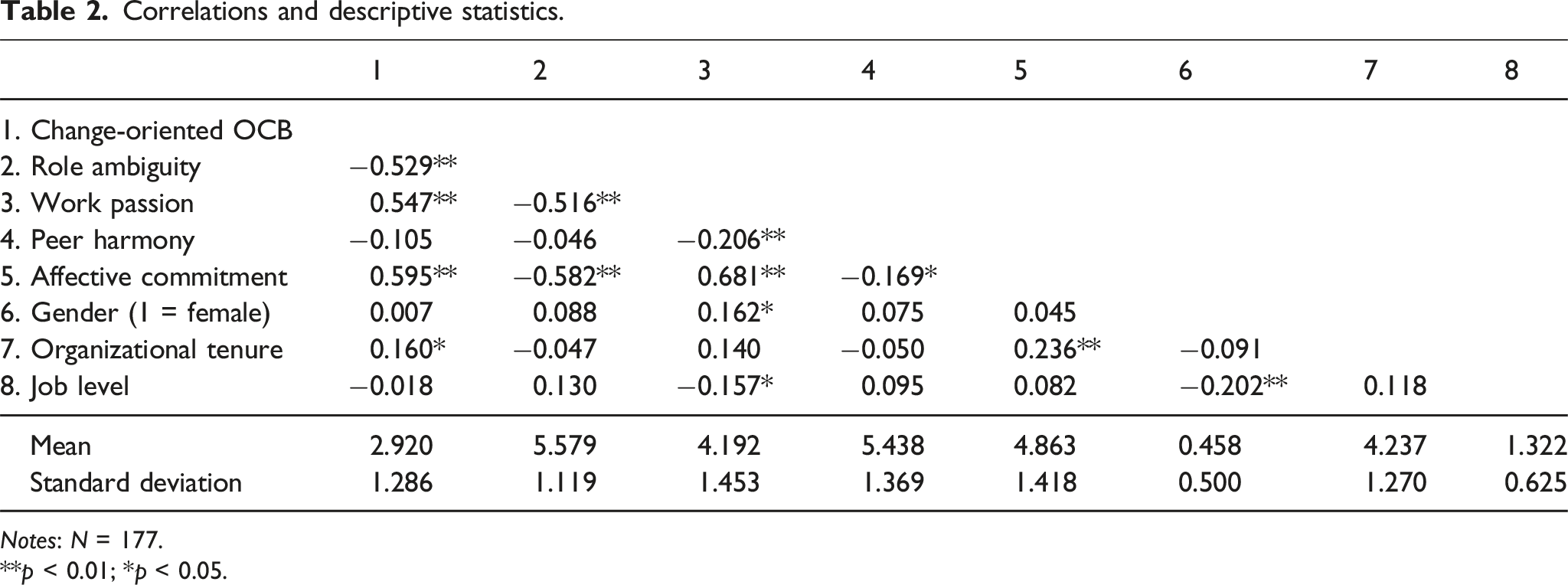
Notes: N = 177.
**p < 0.01; *p < 0.05.
Regression results (dependent variable: change-oriented OCB).
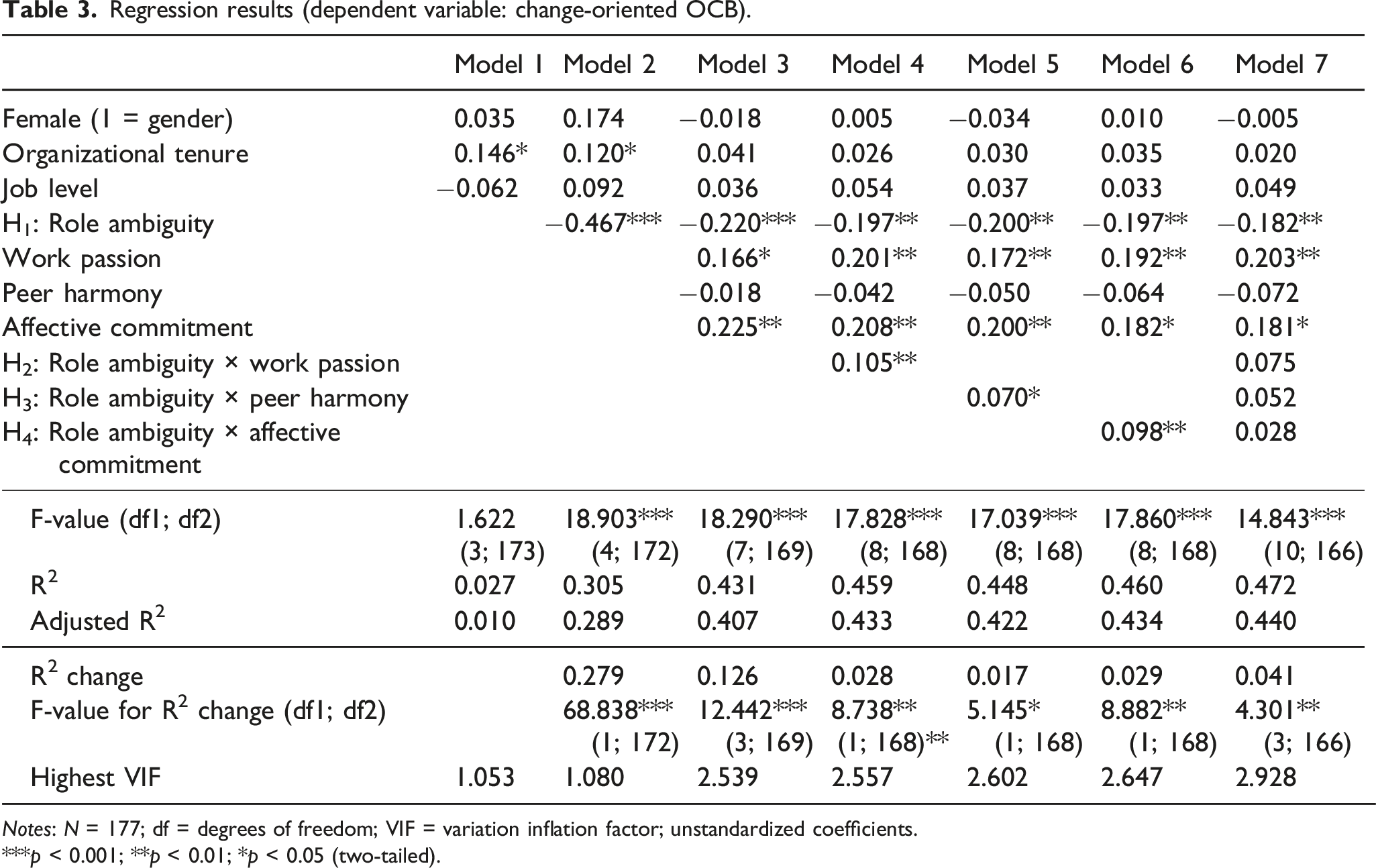
Notes: N = 177; df = degrees of freedom; VIF = variation inflation factor; unstandardized coefficients.
***p < 0.001; **p < 0.01; *p < 0.05 (two-tailed).
For each model, Table 3 reports (1) F-values to assess the model’s overall significance (all strongly significant at p < 0.001, except for the control model), (2) the R-squared and adjusted R-squared values, (3) the R-squared change values and corresponding F-test results (all significant at p < 0.05 or less), and (4) the value of the highest variation inflation factor across a model’s predictors, all of which were substantially lower than the conservative cut-off value of 5.0 (Studenmund, 1992), such that multicollinearity does not appear to be an issue for any models.
In Model 1, change-oriented OCB was more likely among employees who had worked for their organization for a longer time (b = 0.146, p < 0.05), but there was no gender effect (b = 0.035, ns) or job level effect (b = −0.062, ns). In corroboration of the baseline argument that energy drainage stemming from job-related information deficiencies directs employees away from extra-role, disruptive work efforts, Model two revealed a negative relationship between role ambiguity and change-oriented OCB (b = −0.467, p < 0.001), in support of Hypothesis 1. 3 In results that extend beyond the theoretical scope of the proposed framework, Model three indicated positive links of work passion (b = 0.166, p < 0.05) and affective commitment (b = 0.225, p < 0.01) with change-oriented OCB but no significant relationship involving peer harmony (b = −0.018, ns).
The results of Models 4–6 offered support for the theorized buffering effects of work passion (b = 0.105, p < 0.01), peer harmony (b = 0.070, p < 0.05), and affective commitment (b = 0.098, p < 0.01) on the negative relationship between role ambiguity and change-oriented OCB. Specifically, the probability that increasing levels of role ambiguity translated into thwarted change-oriented OCB was subdued to the extent that employees felt enthusiastic about working hard (Hypothesis 2), maintained harmonious relationships with colleagues (Hypothesis 3), and experienced a sense of belonging to their employing organization (Hypothesis 4). These buffering effects are depicted in Figures 2(a)–(c), showing the effects of role ambiguity on change-oriented OCB at high and low levels of the three contingency factors. The findings of the corresponding simple slope analysis (Buttner and Lowe, 2017; Li and Lu, 2021) indicated that the relationship between role ambiguity and change-oriented OCB was negative and significant at low levels of work passion (b = −0.294, p < 0.001), peer harmony (b = −0.265, p < 0.001), and affective commitment (b = −0.290, p < 0.001), but this relationship was notably weaker at high levels of these resources (b = −0.092, ns; b = −0.130, p < 0.10; b = −0.099, ns; respectively). (a) Buffering effect of work passion on the negative relationship between role ambiguity and change-oriented OCB (b) Buffering effect of peer harmony on the negative relationship between role ambiguity and change-oriented OCB (c) Buffering effect of affective commitment on the negative relationship between role ambiguity and change-oriented OCB.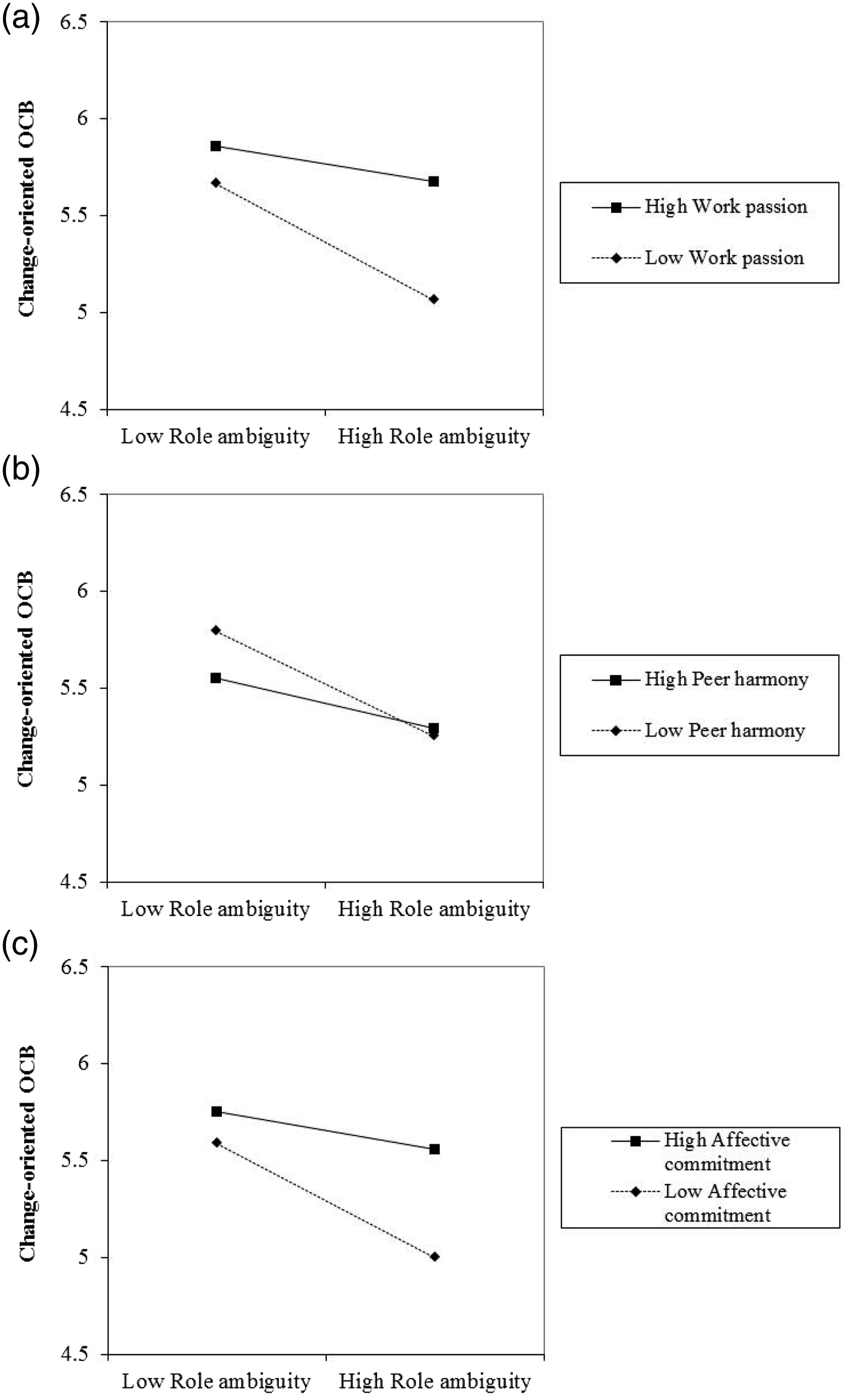
Post hoc analysis
As noted, the simultaneous estimation of multiple interaction terms in a single equation may hide true moderating influences, due to the complex conglomeration of multiple effects that operate concurrently (Cai et al., 2019; Warner, 2013). Nevertheless, a model that includes all interaction terms together can affirm the robustness of the focal results, to the extent that the signs of the interaction terms align with the results of regression models that estimate the interaction terms separately (Arnold, 1982; Covin et al., 2006; De Clercq and Pereira, 2022c). In Model 7 (Table 3), the signs of the three interaction terms are positive and thus consistent with those in Models 4–6. Critically, the significance of the interaction terms in Models 4–6, but not in Model 7, reflects the specific interpretation of each interaction term (products of mean-centered variables) when the two other interaction terms are taken into account in Model 7 (Aiken and West, 1991; Warner, 2013).
In detail, regression models that estimate only one interaction term (Models 4–6) pinpoint the relationship between role ambiguity and change-oriented OCB at non-average values of a particular moderator (work passion, peer harmony, or affective commitment). Their simultaneous consideration in Model seven reflects the influence of each moderator in a multidimensional space, restricted to the average values of the other moderators (Warner, 2013). For example, the moderating role of work passion in Model seven conveys a scenario in which peer harmony and affective commitment (mean-centered in their corresponding interaction terms) are at their average values. Yet in Model 4, the moderating role of work passion spans the entire range of values for peer harmony and affective commitment. The lack of significance of the interaction terms in Model seven suggests that the associated moderating influences are sensitive to the effects of the other moderating variables (De Clercq et al., 2010; Hair et al., 2019). 4
Discussion
This study adds to management research by identifying a negative link between role ambiguity and change-oriented OCB, as well as detailing how employees’ access to complementary, energy-boosting resources can mitigate this link. A salient risk exists, such that energy-usurping worries about job-related information deficiencies may direct employees away from disruptive, discretionary work behaviors, even if these behaviors could alleviate problems (Quinn et al., 2012; Zhou et al., 2016). With a conceptual grounding in the COR framework (Halbesleben et al., 2014; Hobfoll and Shirom, 2000), this study predicted important buffering roles of three specific resources (work passion, peer harmony, and affective commitment) that may diminish the chances that irritations with incomplete information about job responsibilities translate into thwarted change-oriented voluntarism. The empirical findings align with the theory-informed predictions.
First, the direct negative connection between role ambiguity and change-oriented OCB that this study establishes informs debates about the positive (Jiang et al., 2019), negative (Kassa, 2021), or curvilinear (Wang et al., 2011) effects of role ambiguity on change-invoking work activities. As the study findings suggest, the uncertainties and associated ruminations that stem from information deficiencies may be so overwhelming that employees lack the stamina to undertake specific change behaviors that go beyond the call of duty (Chiaburu et al., 2013). Moreover, perceptions of role ambiguity may transform into diminished change-oriented OCB because employees’ annoyance with an employer that fails to provide adequate information about their work roles leaves them unwilling to volunteer to undertake disruptive activities, from which their employer could benefit but for which they are not formally rewarded (Kang and Jang, 2019). An interesting theoretical take-away accordingly involves the possibility of a negative cascade, leading to a double whammy for employees: They are disappointed about the lack of information they receive about their job responsibilities, and their subsequent refusal to undertake extra-role work efforts that change the organizational status quo may prevent them from finding good solutions (Carter et al., 2014).
Second, three resources help subdue this harmful process. Specifically, the detrimental effect of beliefs about ill-defined job roles on diminished change-oriented voluntarism depends on employees’ access to valuable resources that can counter the experienced challenges (Hobfoll et al., 2018). As explicated at the outset of this study, the three complementary resources constitute a compelling set of contingency factors that generate positive emotional energy, through the influence of work (passion employees feel about working hard), peers (harmony in interactions with coworkers), and the organization in general (emotional bond with employers). This study accordingly offers organizational researchers unique insights into how poorly specified job descriptions may escalate into thwarted change-oriented OCB to a lesser extent if employees exhibit work-related enthusiasm (Gulyani and Bhatnagar, 2017), experience smooth relationships with colleagues (Chen et al., 2015), and feel a strong sense of belonging toward their employer (Geraldes et al., 2019).
Notably, these contingency effects capture incremental contributions of employees’ beliefs about role ambiguity for diminishing change-oriented voluntarism. These beliefs produce a worrisome risk of work-related complacency—but only in the absence of pertinent resources (Halbesleben et al., 2014). This issue comes to the fore in the interaction plots in Figures 2(a)–(c) and the simple slopes analyses. Increasing levels of role ambiguity culminate in tarnished change-related activities when employees do not get excited by work, face emotion-based tensions in peer interactions, or experience little emotional attachment to their organization. But this detrimental process does not surface if the three focal resources are available. As indicated in the Introduction, evidence of these buffering effects complements extant research that recognizes their direct beneficial roles (Campbell, 2020; Chin, 2015; Gulyani and Bhatnagar, 2017). This study highlights their indirect but no less instrumental role for avoiding a scenario in which one adverse job condition (significant ambiguity in work roles) begets another (diminished support for the organization with productive changes). The findings also extend prior research related to how the three focal moderators help employees deal with other sources of hardship: Work passion enables them to overcome fears of terrorism (Haq et al., 2020b), interpersonal harmony helps them address pandemic threats (De Clercq and Pereira, 2022b), and affective commitment gives them a means to cope with work–personal life conflict (Geraldes et al., 2019).
Limitations and further research
This study has some weaknesses, which offer opportunities for continued examinations. First, the conceptual arguments for the baseline relationship are anchored in the well-established COR theory—which posits that resource-depleting work conditions discourage risky, discretionary work efforts that could usurp even more energy (Hobfoll et al., 2018)—but the presence of reverse causality cannot be entirely excluded. Longitudinal research could assess the two constructs that constitute the baseline relationship at distinct points in time, to estimate cross-lagged effects. Similarly, this study predicts both ability and motivation mechanisms for the negative link between role ambiguity and change-oriented OCB, in line with COR theory (Hobfoll and Shirom, 2000). Additional research could formally assess these mechanisms to establish their relative salience.
Second, the study focuses on three particular contingency resources that operate at complementary levels (work, peer, and organization). For parsimony, it investigates one resource per level, all of which share a common denominator, namely, that they spur positive emotions in employees. But other relevant resources could have buffering roles too, and further research might outline these effects. For example, frustrations due to role ambiguity may be more easily contained, and less likely to escalate into tarnished change-oriented OCB, if employees are resilient (Jiang et al., 2021), enjoy trust-based relationships with coworkers (Guinot et al., 2014), or believe organizational decision-making processes are fair (Lin, 2015). It would be interesting to compare the relative potency of each alternative buffer, as well as examine how their effects stack up against those of the current study’s three central moderators.
Third, studying one organization that operates in one specific industry may represent an empirical shortcoming, even if it diminishes the risk that unobserved firm- or sector-level factors interfere with the hypothesized effects (Hair et al., 2019). Multi-industry studies that explicitly account for the role of pertinent industry factors would offer a relevant complement. For example, in industries marked by high levels of market turbulence, employees may be more forgiving of incomplete information about their job responsibilities (Senbeto and Hon, 2020). Competitive intensity in the industry also may increase employees’ motivation to search for ways to improve the organizational status quo, regardless of job-related information deficiencies (Yeniaras and Unver, 2016). Finally, employees may be reluctant to use role ambiguity beliefs as justifications for refraining from productive voluntary efforts in industries with limited employment alternatives (Hahn and Kim, 2018).
Managerial implications
When employees are disappointed by persistent information deficiencies, their energy reservoirs may become so depleted that they lack the ability or motivation to go beyond the call of duty and allocate substantial energy to voluntary change efforts that could benefit the organization. The theoretical focus of this study was on the outcomes, not the drivers, of role ambiguity, but the harmful role of this notable source of role stress suggests that organizations must work proactively to eliminate perceived role ambiguity, such as by formalizing job role specifications in written policies (De Clercq et al., 2013). To diminish role ambiguity beliefs—and the chances of subsequent tarnished change-oriented OCB, as this study’s empirical analyses reveal—organizations could mandate both the ends (e.g., particular performance goals) and means (e.g., budget resources) of employees’ work. Such initiatives might diminish the chances that employees use role ambiguity as an excuse to refrain from voluntary, productive work activities that can enhance the organizational status quo.
Moreover, the study findings indicate different tactics for reducing the risk of such a detrimental process, in which perceptions about unclear work roles escalate into diminished change-oriented voluntarism: Organizations should nurture energy-boosting resources (Hobfoll et al., 2018). Although the current study does not empirically identify why employees may exhibit varying levels of work passion, peer harmony, or affective commitment, their mitigating roles, as identified herein, indicate that organizations can derive great benefits from their presence, particularly if those organizations cannot fully detail the nature of employees’ job tasks, as might be the case for complex jobs (Eatough et al., 2011). In particular, the study findings imply that organizations can thrive if they (1) recruit and retain employees who feel passionate about working hard (Klaukien et al., 2013), (2) stimulate harmonious relationship-building efforts within their workforce (De Clercq et al., 2016), or (3) create affect-based internal environments that evoke emotional bonds among employees with the employer (Geraldes et al., 2019). By nurturing these different factors, and encouraging employees to leverage them, senior managers can avoid a scenario in which negative beliefs about underspecified work roles turn employees into laggards who are unable or unwilling to initiate changes that can enhance the current organizational situation.
Conclusion
This study extends prior management scholarship by pinpointing several contingency factors that determine whether employees, upset with inadequate job-related information provision, halt their change-oriented OCB. The risk that persistent irritations with information deficiencies translate into this form of work complacency can be averted to the extent that employees can draw from distinct resources that elicit positive emotions, whether due to their individual approaches to work, the nature of their peer relations, or the positive feelings they have toward the entity that employs them. These insights ideally will set the stage for continued examinations that clarify how organizations can diminish the danger that employees’ beliefs about having insufficient work role information might culminate in negative reactions. Such research could help organizations avoid a downward spiral in which good employees appear lazy, due to role-related challenges that they experience.
Footnotes
Declaration of conflicting interests
The author(s) declared no potential conflicts of interest with respect to the research, authorship, and/or publication of this article.
Funding
The author(s) received no financial support for the research, authorship, and/or publication of this article.
