




Abstract
Understanding China’s national culture is increasingly important for enabling greater international collaborative activities as China takes her central stage in the global arena. However, the country’s rapid modernization, such as through leading innovations in Industry 4.0 (specifically the ‘Made in China 2025’ policy), may have provoked a cultural turn that is difficult to capture with existing cultural measurement tools. This study conducted interviews with leaders of Chinese establishments that have updated their operations to the Industry 4.0 specification to understand their impact on general perception and workplace culture. Based on these insights, this article argues that existing models for measuring national culture are not necessarily being old that makes them unsuitable for application to a ‘new’ China but that Chinese establishments operating Industry 4.0 are a unique case for which generalized models can no longer be universally applicable. Instead, augmented/alternative cultural dimensions are suggested as new theoretical constructs for this unique context.
Introduction
Since opening up to international trade in the 1980s, China has now grown to become a global super-power in terms of economic development and political influence, such as through the present Belt and Road Initiative involving 152 countries across five continents (Tsui et al., 2017). Coupled with the global adoption of Industry 4.0 (taken broadly to mean the use of digitalization and advanced manufacturing technologies), there is much need for collaborating countries to accommodate local working conditions to those of China to improve on such project relationships through better alignment of each country’s ways of doing things. One way may be to consider how national cultural differences can affect the business relationship, as the search for competitive advantage is argued to lie in the best use of the workplace (McClean and Collins, 2018). This is also an innovative approach as modern criticism about China’s growing global dominance has rested on economic reasons, such as location and ownership advantages (e.g. Li, 2019), rather than national cultural differences. However, the existing models for measuring national culture (e.g. Hofstede, 1994) are now somewhat old and possibly no longer accurate in reflecting contemporary issues in a somewhat ‘new’ China (Chun et al., 2021), not the least one that is further complicated by the emergence of another (the fourth) industrial revolution! Thus, much has changed in terms of the complexity of the work at hand, as well as the necessitated leadership skills and mindset to support this (see Banks et al., 2019).
There is a stream of opinion, based on the cultural convergence perspective, consistent with globalization, that increased similarities can be observed in cultures with strong international linkages (e.g. Bergiel et al., 2012). This would naïvely suggest Industry 4.0 would lend itself to a convergence of leadership style and practice for both Chinese and other international firms – particularly as difficulties already exist in researching western concepts with eastern eyes, and vice-versa (Barkema et al., 2015; Bui et al., 2020). However, the intention of the present study is to argue that China’s modern cultural stance is uniquely different from anything history has shown and that no existing model of cultural measurement – including that of Hofstede (1980) which has dominated management scholars and business practitioners for some decades – is accurate at understanding how Chinese leaders can best manage in the era of Industry 4.0. The reason is China’s rapid growth and pace in modernization, and the political system that governs her. The purpose of this article is thus to explicate this argument and posit new, more accurate cultural dimensions that future models of cultural measurement that endeavours to involve China’s active use of Industry 4.0 ought to incorporate.
The benefits from the findings of this study to general managers working in Industry 4.0 environments or practitioners desiring to learn more about the workplace environment are an understanding of the constraints and operating difficulties for Industry 4.0 businesses at the early stages of adoption and progression. These insights should be helpful for organizations in countries that share similar ideologies to those of China as an indication of the success of the adoptive practice and the likely challenges. The outcomes of the theoretical assessment of suitable measures of Chinese national culture will highlight their inaccuracies on which current business partnership behaviours are premised, and therefore should be avoided by such practitioners in flourishing future relationships.
While the study’s focus is on culture, it has an inextricably intertwined relationship with ideology – the intended set of behaviours held by a political controlling government as well as the individualized interpretation of such a prescription. Culture on the other hand is how society has practiced a set of values that stem from ideologies at both governmental and individual levels. In the view of Griffin (2006), ideology is the formative, intrinsically paradoxical, constituent of culture, but is influenced by society, so it is both a cultural product and producer. Notwithstanding the strong basis to assume a close alignment between the two for the context of controlled governments, this view is further reinforced in the present study by deliberately understanding political ideology as the frame and institutional practice for its cultural examination.
Thus the present study uses the 19th National Congress of the Communist Party of China (CPC, from here on) which took place in 2017 as an ideological turning point to examine the challenges for society. This is due to the reforms in the congress being both broad and extensive enough to cover all aspects of corporate business, as well as the specific remit to advance Industry 4.0 in ‘applying a new vision of development and developing a modernized economy’ (Xi, 2017: p.25). Any significant impact/change at both national and the specific workforce levels is interesting and argued to be related in a particular way (Fombrun, 1983). The research draws on first-hand investigations into three key Chinese establishments that employ Industry 4.0 concepts, making them exemplary of how the specific congress changes have significantly impacted their management. Hence, rich empirical insights into cultural and modern societal problems are presented; theoretically, the challenges of Chinese organizational leaders using old/existing culture measurement models to understand Chinese-western business interactions to manage in the fourth industrial revolution are discussed, and an alternative labelling of extant dimensions of cultural understanding is articulated as possible further research in this area.
Political ideology
A modern Chinese political ideology was highlighted in 2012 when a grand vision of the Chinese Dream and National Rejuvenation was pronounced for the ‘great revival of the Chinese nation’. With that vision of creating a moderately well-off society by 2021 (the 100th anniversary of the CPC), the ‘Made in China 2025’ (MIC) policy was initiated in 2015. The intended high developmental push was built around maximizing the concept of Industry 4.0, which at the time aroused an international community of reactions regarding the policy’s success and implications for global collaboration (for an extensive review, see Agarwala and Chaudhary, 2021). MIC is not a simple adoption of Industry 4.0 as MIC is broader and runs across a range of industries (Li, 2018) although their successes are likely impacted by similar determinants.
The significant embedding of MIC was through its specific articulation at a recent Chinese national congress. A national congress of the CPC is held every 5 years, and the significant 19th one was held in October 2017. Xinhua (2018b), the official news agency of the People’s Republic of China, reported President Xi’s delivery of the details of the improvements and changes in the past 5 years and plans for the next 5 years. In this congress, 360 major reform plans and more than 1500 reform measures were launched to establish a framework for growth in the core areas of reform. Demonstrating greater diversity and reflecting on societal changes, more women delegates attended this congress than any of the previous congresses, and the proportion of delegates representing frontline production and manufacturing sectors increased by 3.2% than that of 5 years previously (Xinhua, 2018a).
This symbolized a significant change in both the process of political activity as well as the nature of reforms. Thus, the word ‘new’ became both a core theme and a significant buzzword at the party congress. As such, the international community responded by regarding this historic congress as heralding the advent of a ‘new era’ of Chinese politics and power (e.g. Phillips, 2018), and President Xi himself also announced ‘This is a new historic juncture in China’s development’ and time for his nation to transform her into ‘a mighty force’ that could lead the world on political, economic, military and environmental issues. Additionally, the top ruling council announced a dramatic development on the history of China, furthering the Xi Jinping thought on Socialism with Chinese Characteristics for a New Era.
In the influential statement entitled Secure a Decisive Victory in Building a Moderately Prosperous Society in All Respects and Strive for the Great Success of Socialism with Chinese Characteristics for a New Era by President Xi (2017), several significant changes were outlined for the manufacturing industry, business sector and financial sector. For instance, supply-side structural reform was intended to ‘build China into a manufacturer of quality and develop advanced manufacturing, promote further integration of the internet, big data, and artificial intelligence (AI) with the real economy, and foster new growth areas and drivers of growth in … the sharing economy, modern supply chains, and human capital services’ (Xi, 2017: p.26), signalling the importance and development of Industry 4.0. Additionally, the traditional industries would be upgraded and accelerated to reach international standards and the Chinese industries will be moved up to the medium-high end of the global value chain, and a batch of world-class advanced manufacturing clusters would be fostered soon after, extending the applicability of Industry 4.0.
While there have been numerous reforms and developments at the 19th party congress, the idea of a Socialist core value system remained the same. This has been seen from the ‘Cultural Development and Prosperity’ direction proposed at the 17th congress, to the ‘Developing a Strong Socialist Culture in China’ at the 18th congress, and again at the 19th congress to ‘Strengthen Cultural Self-confidence’, which together indicated the importance of cultural values in the development of national economy and social activity. However, cultural values and cultural understanding might become a barrier for those organizations and business traders from outside China who are inclined to cooperate business activities within the Industry 4.0 remit across the border. Thus, the significance of tools for measuring the national culture is more important now than ever before, particularly their suitability and applicability for Industry 4.0.
National culture and implications for Industry 4.0 management
The importance of national culture for international business relationships has been extensively and progressively researched (e.g. Kristjánsdóttir et al., 2017). The term culture ‘is used by social scientists to refer to a set of parameters of collectives that differentiate each collective in a meaningful way’ (House et al., 2002: 15), and in the context of the present study stems from political ideology within the country’s societal context. This therefore relates to how and why groups of people or related stakeholders behave – that being the shared values, beliefs and ideas within one community (Venaik and Brewer, 2008), or more generally expressed, ‘the collective programming of the mind that distinguishes the members of one group or category of people from another’ (Hofstede, 2001: 9). In the case of mainland China – a large country with her distinctive provinces, broad range of economic activities and thus potential sub-cultures – understanding of culture at both the national and corporate levels is a complex but crucial exercise. A further problem with the specific case of China is her fast-changing pace of economic and technological change making any tool for cultural measurement difficult to keep up. Citing Hofstede (2001: 34–36) in particular, ‘Cultures, especially national cultures, are extremely stable over time … differences between national cultures at the end of the last century were already recognizable in the years 1900, 1800 and 1700 … [so] there is no reason they should not remain recognizable until at least 2100’, Chun et al. (2021: 354) disagreed vehemently. Instead, they argued such a dated view existed at a time when China’s economic and political power was weak (1960s), and since then the world has prospered much and developed technologically, resulting in significant changes in value systems of cultures (Inglehart and Baker, 2000). There is evidence of cultural changes over time (e.g. Taras et al., 2012). As culture affects a country’s governance system (Melo Arantes et al., 2020), it is likely technology has a significant role to play in that connection.
Originated in Germany in 2011 at the Hannover Mess, Industry 4.0 originally concerned the use of manufacturing machinery, robots, warehousing systems and autonomous controlling systems (Kangermann et al., 2013), but has since expanded more broadly – such as to include ‘the usage of intelligent products and processes, which enables autonomous data collection and analysis as well as interaction between products, processes, suppliers, and customers through the internet’ (Buer et al., 2018: 2925) – thereby covering SMART factories, digitization and a range of automated systems, making its relevance to a range of business leaders rather sparse. Its purpose was to achieve shorter development periods, flexibility and resource efficiency (see Lasi et al., 2014). Specifically for China, the MIC policy involves combining advances made in Industry 3.0 (such as automation and mass manufacturing which dominates global trade) with the SMART technologies of Industry 4.0 (Agarwala and Chaudhary, 2021) to go beyond manufacturing. To do so, the necessary tools and well-functioning assistance systems are required for a broad coverage of workers within the organization (Thun et al., 2019) which can be difficult for less-prepared and poorly resourced firms, such as SMEs (Moeuf et al., 2018). As such, organizational and managerial processes need to be aligned to enable Industry 4.0’s effective operation (Agostini and Filippini, 2019). Hence, organizational culture is an indication of the readiness to implement Industry 4.0 (Ziaei Nafchi and Mohelska, 2020), but this process is complicated because organizational management is itself context-specific and impacted by a range of (nationally) cultural and social factors (Culot et al., 2020).
For example, the drivers of Industry 4.0 vary between countries. For the USA, Industry 4.0 is driven by demand-side educational and training policies, while Germany tends to favour demand-side scientific and technical development policies (Kuo et al., 2019). However, for China, Industry 4.0 is driven by both private technologically-based companies and state initiatives (Ito, 2019), particularly environmental and public service policies. Some of the challenges in the transformation of China’s manufacturing industry have historically been to do with the lack of creativity, defective industrial structure and scarcity of quality talent (Sun et al., 2020), but MIC’s digital push was intended to provide a leap over these challenges. The challenges are further complicated by different developmental rates between geographical regions and the ability to engage all stakeholders across different sectors (Zhou et al., 2020). The ability of governmental policy to achieve an effective nationwide strategic response to Industry 4.0 (or similar, such as MIC), while essential, is thus constrained (Lin et al., 2018).
Culture’s relevance to the use of Industry 4.0 concepts is therefore extensive and broad. Research into developing specific tools to measure a country’s culture began some decades ago mainly for the broad discipline of social sciences (for a review, see Kirkman et al., 2006). For business and management are the renowned contributions of Hofstede’s Cultural Dimensions and the rival methodology, the GLOBE (Global Leadership and Organizational Behavior Effectiveness) Project. Doubts have however been raised concerning the accuracy of the Hofstede scores (e.g. McSweeney, 2002; Schwartz, 1992, 1994; Shenkar, 2001; Smith, 2002). Specifically for the Chinese context, the Chinese Cultural Connection (1987) study led by Michael Bond highlighted the importance of cultural values, and sparked off a number of peripheral studies about the uniqueness of the Chinese context. These are reviewed next for their relevance to a modern China, as particularly argued by Ralston et al. (1999), China’s rapid economic development since the 1970s has (already) resulted in significant generational shifts in work values (notwithstanding the impact of Industry 4.0). Thus, commonly associated Confucius values (see also Chau, 2013) have different meanings between the latter and present generations, which make it even more necessary to revisit the topic today. All these are old, and probably have difficulty in reflecting on current issues of the contemporary workplace in a modern China that is technology-driven and innovation facing, particularly concerning the high prosperity ambitions of MIC.
China and the connection of Hofstede’s cultural dimensions to Industry 4.0
Despite critiques and challenges, Hofstede’s cultural dimensions framework is still widely regarded and most popular of tools for measuring national culture, particularly for country comparison purposes. Conceived originally from a large survey database of 100,000 questionnaires about value and related sentiments of people in over 50 countries worldwide from the local subsidiaries of IBM, the Dutch social psychologist conceived an initial four dimensions (Hofstede, 1980) – power distance index; individualism vs. collectivism, uncertainty avoidance index, and masculinity vs. femininity. The (then) complex survey was subsequently re-analyzed (see Hofstede, 2011) to provide country-level comparisons and created a scoring mechanism that provided insights into over 90 countries worldwide. A fifth dimension – long-term orientation versus short-term orientation – was later added after considering Chinese cultural values, and more recently a sixth dimension of indulgence versus restraint was added.
Power distance is understood as the extent to which less powerful people, regardless of family or in an organization, accept that power is unequal and rarely question orders from higher authority. The dimension ‘suggests that a society’s level of inequality is endorsed by the followers as much as by the leaders’ (Hofstede, 2011: p.9). Although power and inequality exist in numerous societies, this is higher in some than others. China scores highly at 80, suggesting that individuals are not equal and the inequalities among Chinese people are acceptable (Hackett, 2007). The score suggests the hierarchical positions in China are rigidly stratified while the subordinate-superior relationship is obvious and strict. Generally, residents are influenced by the formal authority and they rarely question the command given by their superiors. The use of Industry 4.0 processes in the form of autonomous systems may reduce the need for equality among staff at work, although command-and-control may likely still exist, so this dimension applies in a somewhat different way.
Individualism contrasts with collectivism – as a dimension it describes the extent to which people in a society are integrated into a group and exhibits the self-image of a single person or a group of people. For individualism, the relationship and ties between people in the society are much weaker and looser, which means that everyone tends to care about their immediate family members (Hofstede, 1984). For collectivism, people have a relatively strong connection with and expect to take care of the extended family. People are more likely to distribute themselves into the societies and strengthen their relationships between each other (Sun et al., 2004). Wu (2006) classified China as the most collectivist of all countries in the world (with the US being on the other extreme of an individualistic country), scoring 20. This is manifested in numerous daily Chinese characteristics, such as the dining etiquette of food dishes shared around the table as opposed to each served an individual plate in western cuisines (Pan and Xu, 2018). As Industry 4.0 is based on intelligent systems and sharing of information through the internet, it is expected the dimension will sway towards a more collectivist culture for all international parties.
Uncertainty avoidance explores the tolerance for ambiguity in a society. It concerns the degree of comfort of the members in a society within unstructured situations – these being the novel, unknown and surprising differences (Fernandez et al., 1997). A culture which expects to minimize such possibility would formulate strict social codes, laws and rules. China's score is relatively low (30), suggesting people are quite satisfied and comfortable with the ambiguity (Peterson and Hofstede, 2003). A practical example may be in Chinese language, which operates with deliberate ambiguity, which is often difficult for a non-native speaker to understand. This is because in Chinese culture, people may consider it rude to communicate clearly and directly, favouring subtlety and humility. However, this may change for the context of Industry 4.0 system applications which do require technical accuracy and clarity of meaning to function correctly.
Masculinity (vis-à-vis femininity) is about focussing on what people do best (as opposed to the things they achieve, respectively) as the main motivation. Masculinity is characterized by heroism, assertiveness and material rewards, hence being competitive. Femininity is about cooperation, modesty and a caring society that focuses on the quality of life (Hofstede, 1998). This dimension is dubbed ‘tough versus tender’ perspective, and not essentially to do with biological preferences within a society per se, although in practice this measure might be interpreted as that and their related gender stereotypes. With a score of 66, China is predominantly a success-driven society, and work values prevail. This is probably driven by a strong political influence that has set high objectives for the country as well as individuals, and is expected to continue in its control over technological advances, such as Industry 4.0, and the CPC’s specific MIC policy.
The dimension of long-term versus short-term orientation is specifically driven by Chinese influence – that of Confucius ideology – and was added after a separate study was carried out on the Confucian Work Dynamism, which examined the correlation between economic growth and how hard a nation works. In principle, this dimension is about the choice of people’s efforts in three timeframes: past, present and future. For the long-term, social value presents perseverance, thrift, ordering relationships by status and having a sense of shame, while for the short-term, value indicates that people are reciprocating social obligations, respecting tradition, protecting one’s ‘face’ and have personal steadiness and stability (Fang, 2003). China’s high score of 87 represents a pragmatic long-term orientation, with which action does relate to situation, context and time. It is likely any controlling political party will have a strong hold on how people operate to maintain this cultural measurement, such as to invest heavily in Industry 4.0 to sustain long-term success.
Indulgence (vs restraint) was the last dimension added to the framework, and is concerned with the broad theme of happiness, following research carried out by Bulgarian sociologist Michael Minkov (the World Values Survey). A high orientation to indulgence is deemed to focus more on happiness and wellbeing, while in contrast a restraint orientation signifies minimal expression of positive emotions and happiness. China’s low score of 24 suggests the latter scenario, and may be due to a number of unfortunate economic and political histories, that remain within her memory. While successes in adopting Industry 4.0 principles may result in higher living standards and improved wellbeing by utilizing advanced, extensive and more productive technologies, the insistence to sustain this success may amount to a restraint culture.
The Chinese influence on cultural measurement tools
Indeed, other rival cultural measurement tools have been developed since Hofstede’s work – notably the GLOBE Project (House et al., 2002), which focused originally on leadership but soon turned into national and organizational cultures (Hofstede, 2006, 2011). However, studies have persistently found the Hofstede framework resulting in a more positive correlation between cultural values and practices (e.g. Javidan et al., 2006) than GLOBE, particularly at societal and individual levels (Hofstede, 2011), which have not been distinguished carefully in some studies (e.g. Kirkman et al., 2006). This close association is important for the context of China.
Similarly, the search for specific and suitable cultural dimensions for the unique case of China pre-dates Hofstede. For example, Morris (1956) in a more general examination of human values first considered 13 different ways people chose to live their lives, which included ‘the main geographical regions of China except Manchuria’ (p.8) and ‘the distinctive feature of the Chinese material’ (p.58) as part of it. His research recognized the contrast between the self-centred orientation, in comparison to society-centred western people. The Chinese Cultural Connection (1987) was first to recognize the distinctive individualist versus collectivist contrast, further attributing it to a Confucian influence which was ‘responsible for the stunning economic development of Oriental cultures with a Chinese heritage’ (p.159). Garrott (1995) further reported a survey of Chinese students on their preferences to situations from a mix of geographical and demographical backgrounds and found a greater tendency towards individualism (than the traditional collectivist expectation). He suggested that diversity makes it practically difficult to place simple labels to behaviours, questioning the value and accuracy of any cultural measurement tool.
While Hofstede’s recognition of Chinese culture’s connections to Confucius roots (Hofstede and Bond, 1988) was to complement research instruments by the then famous social psychologists Rokeach (1973) and Schwartz (1992), their continued applicability is regularly challenged (e.g. Matthews, 2000). As the distinctive Hofstede cultural dimensions framework in the cross-cultural research field is due to its ‘clarity, parsimony, and resonance with managers’ (Kirkman et al., 2006: 286), the strength of this work is that the value dimensions seem well correlated to both economic conditions and institutional conditions (Tang and Koveos, 2008). This makes it a valuable tool for describing and exploring cultural understanding, as well as for policy influencers to use if economic and institutional conditions are priorities of control. Tang and Koveos (2008) further found that three dimensions of Hofstede’s cultural values – individualism, long-term orientation and power distance scores – have a curvilinear relationship with national wealth (measured by GDP per capita), while uncertainty avoidance and masculinity are more likely correlated with the institutional conditions. However, the relationship between national culture and economic conditions tends to change over time, so research on this relationship must be ongoing if it is intended to be of continued practical use, and it is not clear what is the likely impact of Industry 4.0.
In a similar vein, Ralston et al. (1999) concluded that the rapid economic development in China since her opening-up policy could have the greatest influence in work values among different generations: more individualistic and less Confucian value ideologies were exposed to the new generation of Chinese managers compared with older ones. The combination of power distance and Chinese traditionality has been found to impact on organizational support and work outcomes, although power distance presented a stronger moderating effect than Chinese traditionalism (Farh et al., 2007). Further research by Ralston et al. (2008) connected the impact of national culture and economic ideology to individual values. They compared differences between national culture and economic ideology between countries, including China and the USA, and found that the teachings of Confucius have been valued by individuals and in turn have influenced society, groups and hierarchical relationships in China. Ralston et al. (1996) had consistently believed the collectivistic values were still dominant in China and the collectivistic notions of socialism will still form the lifeblood of the economic ideology, and in this regard, the socialistic philosophy continues to apply in Chinese workplaces social activities.
Despite the above, four problems persist with Hofstede’s cultural dimensions (Sivakumar and Nakata, 2001) which the present study supports. First, the framework has split and reduced culture into a few simple parts and conceptualization without detailed understanding of sub-cultures, particularly those that reside in modern (as a result of ancient) China. Second, Hofstede’s original proposition relied too much on a single case study (of IBM), which could have limited the sample towards a broader understanding of more diverse backgrounds. Third, the variability and malleability of culture could fail to capture the changes over time (cf. Chun et al., 2021), which makes it timely to reinvestigate the suitability of such a measurement tool, particularly for a fast-changing country as China. Fourth, the heterogeneity of culture within one country or a religion has been ignored – for a country as large as China, this is most likely. To add to these is the technical complexity imposed by automated machinery and digitalization of the present time, which was not present at the time of Hofstede’s early studies.
Methodology
The research adopted a qualitative approach by seeking insights from a Chinese governmental sector and two other key private sectors.
Research design
As the Chinese economy is officially classified as planned, controlled and managed under the socialist political and economic paradigm, alongside other industries and departments, staff who work in the governmental sectors are representative of the CPC. Therefore, exploring and examining insights from a governmental unit offer the best observation method for understanding the official changes of China over recent years. Meanwhile, private enterprise is one of the vital mechanisms that drive the reformation of modern China. Under the ruling CPC, members from private companies may have complementary thoughts towards a modernizing China. For these reasons, the participants of this study were comprised of senior employees (leaders), plus a junior staff from two significant sectors of private business (commercial companies) and a CPC representation (a governmental unit). This purposive research design was based on the advantages known as theoretical sampling in qualitative case research, which aims to draw from vital constructs of what each of the exemplary cases (chosen sectors) can contribute – for details, see Butler et al. (2018). The research also used the three major reforms specified in the 19th CPC congress as the themes on which to explore cultural turns. These were: (1) basic national policy of equality between male and female, (2) speeding up the construction of the real economy in China and (3) Chinese culture and ideology.
Data collection
Qualitative data were collected predominantly in the form of in-person face-to-face interviews with key/senior personnel of the establishments concerned (elite interviewing, following Harvey, 2011), along with junior staff to enable triangulation of the commentary to improve reliability. Elite interviewing is understood to offer the best abstraction in leadership related research. Additional factual information to support the researchers’ understanding of the context was in the form of publicly available/promotional documentation either pre-existing online or published in print (but these were not used as part of the direct data analysis or reporting to preserve anonymity). This supplementary data process was dynamic, in that it was demand driven based on how the interviewees were raising new and potentially important issues needing following up or further contextual understanding. The establishments were: All-Health Unit (pseudonym for ‘a governmental unit generally responsible for all aspects of health’) as the government representation; and BravoWood Co (pseudonym for ‘a company that manufactures wooden products’) and ChemiTrade Co (pseudonym for ‘a company that trades chemicals’) as the private commercial companies, as explained in the above research design section.
The choice of the two private companies is because the 19th CPC congress emphasized the need for China to develop manufacturing and science industries. Specifically for the former, the need to upgrade the Chinese manufacturing industry to an advanced manufacturing cluster was specifically highlighted. The emphasis on these sectors is more illustrative of China’s development prospects in comparison to the ‘old’ China. As for the governmental sector, the reason for choosing All-Health Unit is because the medical sector is the most prominent in China and most accepted by the nation. This establishment is also core in channelling medical services for almost everyone in the country and is under the direct control of the Chinese government, making it highly suitable for, and directly related to, the research context.
All-Health Unit (pseudonym) is a major governmental division in China which provides general healthcare and medical assistance to the public. It is regarded as one of the basic health divisions in China, and operates Industry 4.0 principles to achieve resource efficiency in the form of intelligent processes to source drugs and distribute to medical institutions for emergency use. For this research, an anonymous provincial level medical unit which involves two main sections – hospital and patient-care administrative units – was explored. The main responsibilities of the chosen unit are divided into medical assistance and health management. The former is usually providing services in hospitals and the latter is about logistical support in medical treatment. The work in the medical sector includes, but is not limited to, promoting the reform of the medical and health system, formulating the provincial health reform and development of strategic objectives, plans and policies, implementing national laws and regulations on health, food safety, medicines, and medical devices and formulating implementation recommendations and relevant policies for the province. Regulations, standards and technical specifications – conforming directly to government direction – are also thereby organized and implemented.
BravoWood Co (pseudonym) is a privately owned manufacturing company located in Sichuan Province. At the time of the research, the company covered an area of more than 5 acres and used more than 1000 square metres of state-of-the art factory buildings. It has more than 50 employees, including 3 engineers, 5 technical staff and more than 10 at middle management involved in advanced technology. After several business transformations and reforms, it not only completed the accumulation of original capital for the company, but also laid the foundations for the new leap – the successful implementation of smart manufacturing and autonomous robots within Industry 4.0, which reduces development periods. In order to meet the domestic market demand, enterprises continued to accelerate the pace of industrial transformation products. The company was founded in the 20th century and engaged mainly in various specifications of medium fibre board, particle board, multi-layer solid boards, melamine decorative panels, etc., well-catered to the requirements of improving China’s manufacturing sector. The interviewees were purposely selected in strategic and operationally core areas of the organization directly involved in the implementation phase of Industry 4.0, enabling them to comment knowledgeably about the impact of the 19th CPC congress issues that related to technology development.
ChemiTrade Co (pseudonym) is a professional trading company founded in the early 21st century engaged in both domestic trade between businesses and essential international supply chains. The company operated mainly in Sichuan Province and used a large warehouse for storing chemical materials for trading (such as construction materials, chemicals, resins, fertilizers, cokes and other materials and products) as well as being involved in a small part of the production process for basic materials. It recently adopted self-configuring and autonomous warehousing systems that facilitate manufacture/production and manage the flexible supplier interchange as a form of Industry 4.0. The company’s operating level comprised around 150 staff and was deemed a medium-sized trading company. Since its inception, ChemiTrade Co has effectively refocused to China’s trade policy and recently achieved its Industry 4.0 objectives.
Interviewee profiles.
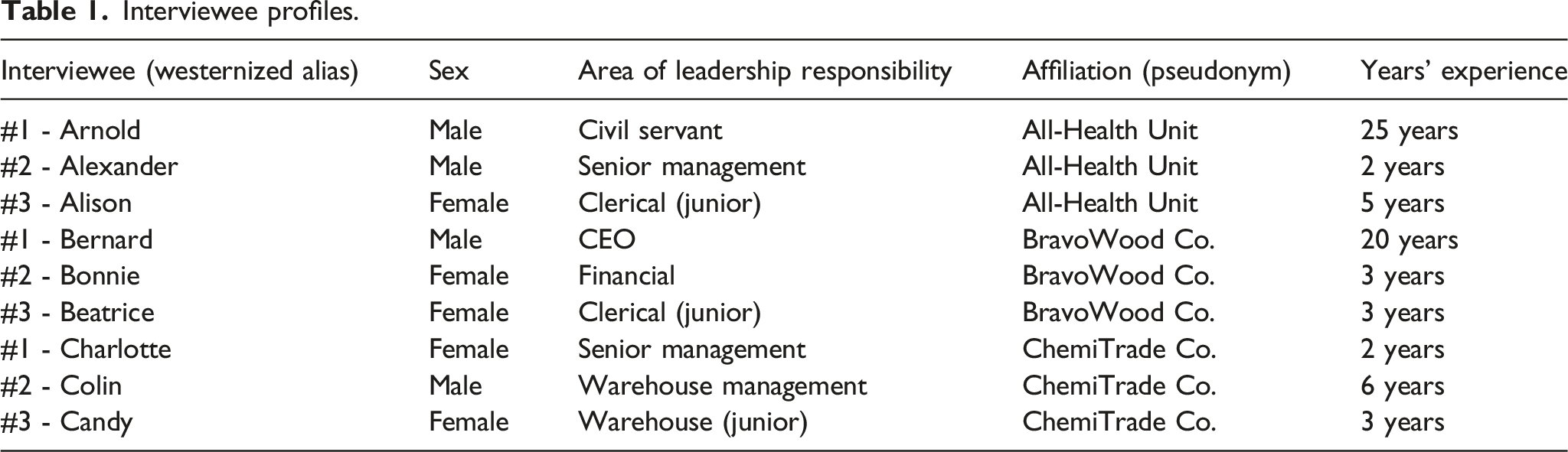
The questions for each sector’s interviewees were asked differently due to the diverse characteristics of content, responsibilities and nature of work of Industry 4.0 inherent within the three sectors. However, they covered the following same issues, because they were either emphasized in the 19th CPC congress statement, core to the advancement of Industry 4.0, or foundational to a dimension of Hofstede’s cultural measurement framework: • the major issues in the private companies, such as the job opportunities for the manufacturing industry and recruitment of trading business staff; • sex/gender equality; • speeding up the construction of the real economy in China; • the main concerns which related to the manufacturing industry; • trading businesses relating to ‘Made in China 2025’ and ‘integration economy’ with the combination of high technology and the internet; • the relationship with socialism; • jobs and work management and work relationships with superiors; • the impact of traditional Chinese culture on the choice of future work; and • the importance of learning Chinese culture and ideology.
Data analysis
As the research concerned sensitive information and personal opinions, face-to-face interviews with the representative staff of the organizations were conducted during their usual working days by one of the authors to allow the staff to open up more comfortably. The interviewer was fluent in the native language, as well as the local and national Chinese accents/dialects, which enabled a more fluid dialogue (for details of this advantage, see Krefting, 1991). The interviews were both comprehensive and in-depth, and lasted between 1-1.5 h each. These were digitally recorded and then transcribed verbatim, initially in Mandarin Chinese and then translated using a simple variant of the standard back-method to preserve both the broad essence of the conversation as well as any subtlety (Breslin, 1976). Applying such a robust procedure was important as the subject of investigation was culture, which is ambivalent/subtle and therefore required deep exploration. Much of the sensitive content was immediately anonymized or pseudonymized as best as possible without foregoing context and comprehension.
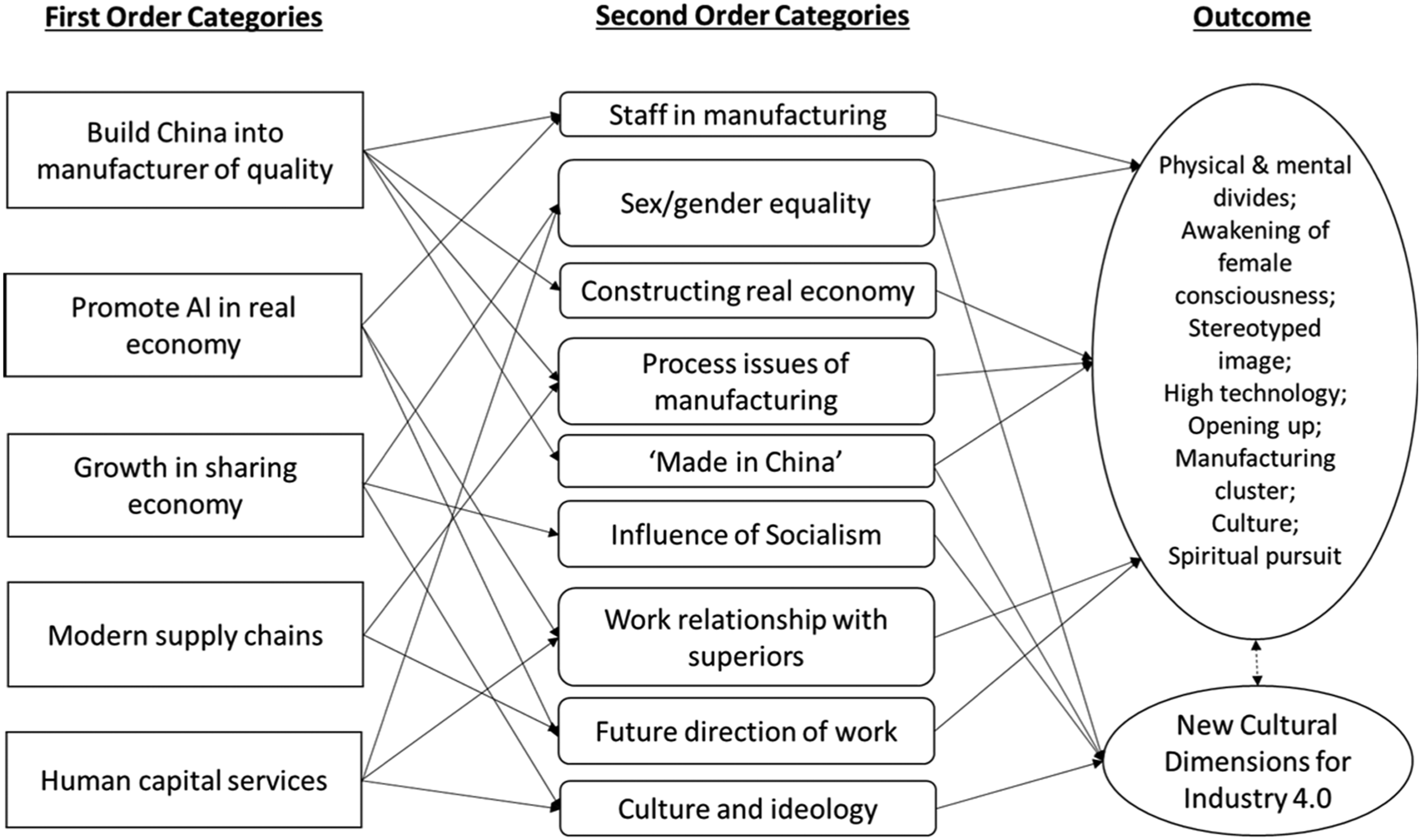
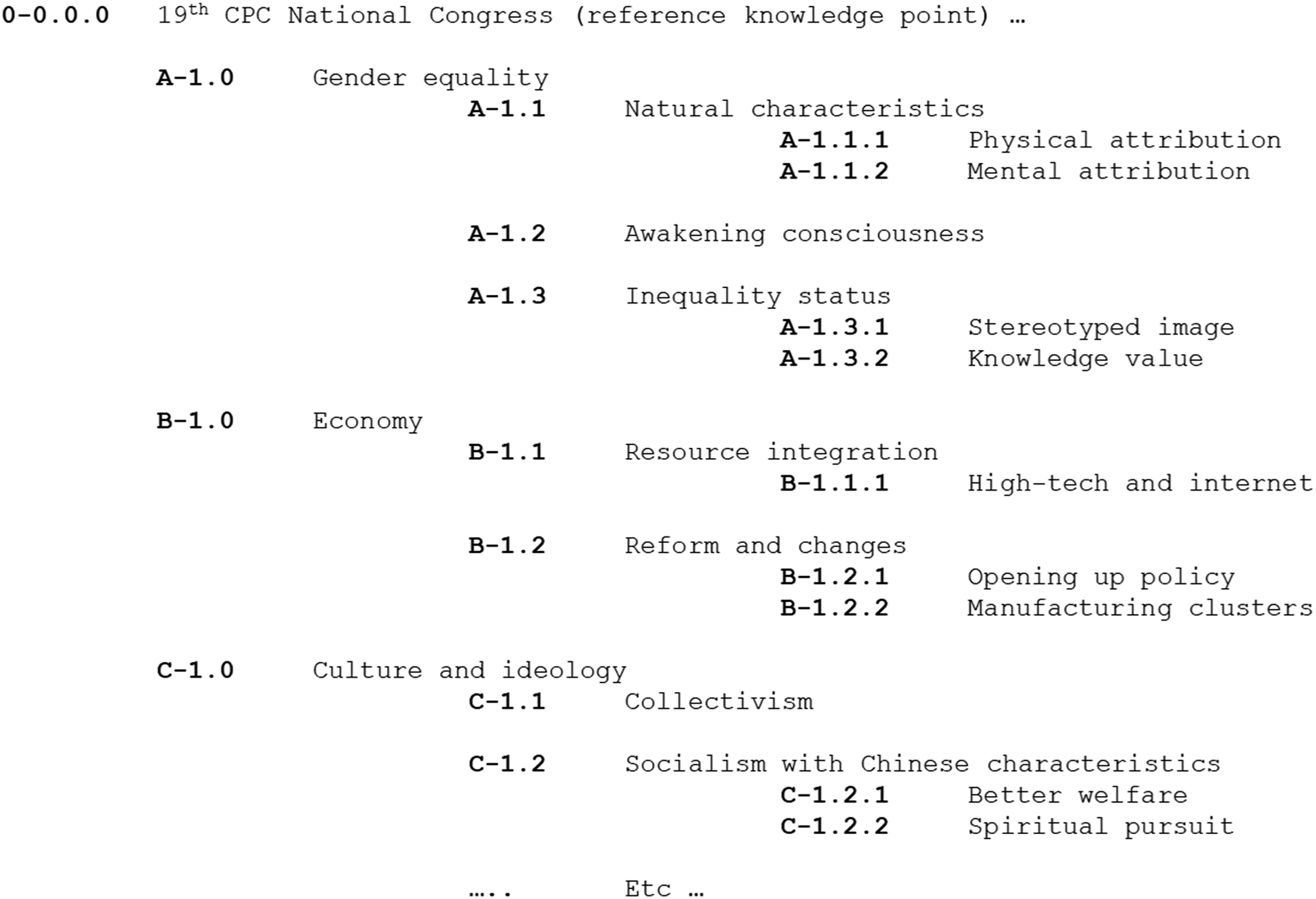
Data analysis of the interview transcription and general contextual supporting information utilized the template analysis technique of thematic data analysis, following broadly an adapted version of the guiding principles of King (2004). Specifically: 1. Verbatim transcription of interviews: transcription included all breaks and interruptions to enable a form of conversational appreciation. The transcription pages were designed specifically to include spacious margins to enable to transcriber (who was also the interviewer) to provide immediate commentary, as well as manual labelling of the assigned codes to the associated texts of interest (see stage 3). 2. Establishment of a priori themes: a skeletal framework was established from examination of the extant literature to flesh out with the empirical information from the research. In this case, the interview topics derived from the 19th congress speech were used as first-order categories, their connection to sectors and contextual application as the second-order categories and the patterns that emerged in the form of clarificatory themes formed the third/final-order categories. Figure 1 outlines how the initial interview commentary over the different phases of analysis became an emergence of themes, which resulted in a pattern of commonality, and formed the findings ultimately presented in this study. For example, the promotion of AI in the real economy (first order, as stated in the congress speech) was manifested in the staff members of manufacturing touting its benefits (second order, a contextual application), which resulted in the discussion theme of manufacturing clusters (the outcome). This procedure is typical of thematic data analysis. Further, to offer a new set of cultural values, the Hofstede dimensions were compared against a scrutiny of the raw respondent commentary. 3. Establishment of codes/coding system: following the above stage, the method of ‘in-vivo coding’ – borrowed from grounded theory (Strauss and Corbin, 1998) that allows for extensive abstraction of new thought from participants – was used for establishing a coding system for the interview transcripts. For this, a conventional coding tree was created, involving ‘parent’ and ‘child’ categories for the break-down of the higher and lower order of connected information. Specifically, an alpha-numerical labelling of information was utilized – numerical for the broadest grouping of information, and the use of decimalization for the sub-categories of parent-child information (see Figure 2 for an excerpt of this coding system) – for example, A-1.1.2. This was an iterative process which progressed throughout the data collection and theoretical development stages to ensure a good consistency between theory and context of research. 4. Analysis (identifying clusters as patterns): a simple form of content analysis was carried out to identify the popular and frequently recurring information from the interviews as the ‘pattern of commonality’ described in stage 2 above. Specifically, words and phrases were frequency-counted and categorized into the themes to ascertain their significance. Such words/phrases (or variants of them) were neither weighted nor was any prior schema created, as the idea was not to pursue or confuse this approach with discursive analysis, but instead to confirm the manifest (face-value) meaning of the extant cultural dimensions as well as to identify the latent (not existing form the literature) meanings (see Berg, 2001), in relation to Industry 4.0, to extend our understanding of the context and develop theory. 5. Keeping a reflexive journal: to reduce the potential subjectivity and researcher bias (as the data collection and iterative analysis were carried out by the same person of the researcher group), a simple reflexive account was maintained throughout the whole research process. Doing so was part of research quality assurance (see next sub-section). This process involved keeping manually written comments in a note-book of instances that occurred that might have influenced the researcher’s cognitive process. A record was also kept of how the researcher had identified potential bias within the researched context itself that was not well-disclosed. For example, in one of the establishments, two of the respondents knew each other in a more social/private context, which could have affected the opinions expressed in the interviews. However, upon assessment of the situation, and the decision to report only leadership comments in the present study, this potential concern was judged not to have diminished the methodological rigour or biased the findings. Order of data reduction and pattern identification of themes. Order of codes for interview transcriptions.
Research quality assurance
Several procedures were operated to uphold the reliability and validity of the methodological approach to ensure research quality assurance.
Reliability of the case designs and generation of results was ensured by achieving the stability/consistency of responses. In all three research establishments, the number and representation of participant seniority were the same and the data collection instrument used was consistently drawn from a comprehensive schedule. The data reduction process enabled key information from all the cases to emerge and be treated with equal importance without complication from the related industrial contexts. This meant a constant referring of the emerging empirical findings against the key theoretical constructs of research interest, ensuring there would be no steering off the core questions of concern as the research progressed. The use of well-established techniques borrowed from prominent approaches, such as the coding technique commonly used in grounded theory, ensured consistent and comprehensive understanding of how both prior theoretical and emerging empirical issues related to each other so that an orderly attempt to conceptualize the knowledge was achieved. In the event of any human error occurring in the research process, the reflexive journal kept would have at least acknowledged any shortfalls, if not considered them carefully and addressed them as they occurred.
The assurance of research validity – understood as the integrity of approach and methods undertaken and the findings accurately reflect the data obtained – was achieved through several verification strategies outlined by Morse et al. (2002). These included sample sufficiency, dynamic data and collection process, and systematic theory development. To recap some of the earlier mentioned issues about the case design, the study’s sample sufficiency was assured by both the wide coverage of sectors the three cases spanned (manufacturing, science and governmental) and the interviewees representing elite positions of authority and exclusive knowledge; together, both the spread and depth of the investigation were achieved. A dynamic data collection process was operated in two ways: first, junior staff were consulted for triangulation purposes – not for the main abstraction of core data – but to augment the information obtained from the elite interviews with the organizational leaders; second, supplementary public documentation from the three establishments was only obtained to verify and seek a deeper understanding of the context of the information obtained from the first-hand interviews on a demand-basis. Doing so focused energy only on activities that were necessary, thereby being more efficient, and redirecting residual energy to the subsequent data analysis. It also reduced interviewee fatigue, which made them open up more comfortably, enabling more accurate abstraction of data. Lastly, the use of template analysis to guide the empirical research and develop theory simultaneously ensured that the ultimate theory development (augmented cultural dimensions) was carried out systematically. This meant that new knowledge was consistent with existing knowledge but was extended in a structured and consistently accurate way to fit the specific context of interest.
Findings and discussion
This section presents the themes that emerged in the research in relation to both the 19th CPC congress and Chinese culture in the original broad headings, and then discusses their theoretical implications for the areas of leadership in the era of Industry 4.0, sectoral variations and augmentations to existing cultural dimensions used in international business research.
The basic national policy of equality between sex/genders
‘I think this type of work is more suited for women because it needs the quality of carefulness. I think females are more careful and caring, and more suited …. So I might think the reason for the difference is due to the different characteristics between males and females’. [Charlotte: code A-1.1.2] ‘In the work of medical institutions, it will be obvious that women will be more attentive in their work, and then some of the executive powers of men’s work will be more obvious’. [Alexander: code A-1.1.1]
‘I also think with the awakening of women's thought and the degree of female participation in work, women are increasingly responsible for their work’. [Charlotte: codes A-1.2, A-1.1.2]
Inequality of social status in genders
‘According to the traditional view of the past, nurses should be women who are more caring and gentler’. [Alexander: codes A-1.3.2, A-1.3.1]
Although the gap of social status between men and women is diminishing over time, the inequality of gender still exists. The interviewees of All-Health Unit expressed that social acceptance of male practitioners is generally higher than that of females and the social status is of inequality due to the knowledge structure between doctors (mostly men) and nurses (mostly women). This was further heightened by the belief that the role of doctors in society is more important than that of nurses. It was thus commented: ‘The acceptance of men by the public is generally high and everyone feels that male medical staff are more respected’. [Arnold: codes A-1.2, A-1.1.2] ‘In today’s medical sector in China, the medical knowledge and professional quality of nurses are lagging behind doctors’. [Alexander: code A-1.3.2]
This strong power distance has sadly extended further when the Industry 4.0 systems were adopted within All-Health Unit. For example, it became the expectation that men would make the strategic decisions regarding contracts and sourcing of medication, while women facilitated that administrative process regardless of the levels of medical (or other) qualification achieved.
Speeding up the construction of the real economy in China
China’s economic development has been marked by significant events, such as the ending of the imperialist Qing Dynasty, Maoist reforms and opening up to global trade in modern times (Larsen, 2001). President Xi’s 19th CPC congress speech reaffirmed that the Chinese economy has remained the level of medium-high growth rate and maintained the position of the second largest economy in the world as well as ranking top among the major global developed economies. It was further commented by two junior staff members: ‘I have already experienced extraordinary changes in my lifetime and the pace of change I expect to see, along with technological advances, will be phenomenal’. [Candy: codes B-1.2.2, B-1.1.1] ‘Outsiders [foreigners] no longer understand or know what China is anymore. They think we construct buildings brick-by-brick and use low-technology. Silly them! They need to come and see for themselves what modernization is’. [Beatrice: codes B-1.1.1, C-1.2.2]
The rate of development in the three establishments seemed to mirror these past performances, and all the interviewees believed Industry 4.0 will support this sustained growth forecast with its vast array of automation and AI design capabilities. Hence, all the above supports a continued strong dimension of a high long-term orientation.
Resource integration
‘In the past, traditional book-keeping requires manual records in the finance department, which may come with many faults. However, we are now using a professional accounting system, from transfer and payment of goods to warehouse distribution, to logistics transportation, to final shipping documents. We can all achieve this by using the internet and high technology. It can save manual work time and improve efficiency, as well as accuracy’. [Colin: code B-1.1.1]
Thus, Industry 4.0 helps to enhance efficiency and improve quality of work, supporting the high existing Hofstede score on the long-term orientation dimension.
However, within the push of the integration economy to adopt Industry 4.0 standards also lies challenges. At the same time the government encouraged the transformation of enterprise, some of the interviewees believed it also introduced many policies and rules that restrain the further progress of some traditional companies. For example: ‘In the past, the traditional factory was permitted to emit some pollution ... [but now] the government introduced many policies that require them to achieve a high standard of air quality autonomously ... From the perspective of a senior manager, it is indeed a lot of pressure...’. [Charlotte: codes B-1.1.1, B-1.2.1]
The eventual acceptance to adopt these standards supports the high power distance dimension despite the obvious struggles initially identified.
Reform and changes
‘Opening up has been beneficial and brought us in line with western countries … Now we are able to go even further’. [Bernard: code B-1.2.1]
They believed the proactive governmental support for businesses’ adoption and extensive advancement of Industry 4.0 technology and its inherent interconnectivity are the modern-day (virtual) extension of this opening up policy. This therefore questions the score of uncertainty avoidance if a convergence of values really has taken place.
‘Chairman Mao said that we can make tables and boards now, but [now] we are going to create something far more advanced’. [Bonnie: codes B-1.2.1, B-1.2.2]
It can be seen that from the primary manufacturing industry since early China to the mature manufacturing industry of the present, and then to advanced manufacturing cluster of Industry 4.0 in the near future, this objective of step improvement had been a core priority through time. Innovation has been regarded as the most significant contribution to the journey of transformation. Specifically argued by Bernard, China has already ‘accumulated considerable capital such as equipment and talent’ [code: B-1.2.2], which coupled with innovation, makes China’s transformation of her manufacturing sector already a step closer to her intended success. This strongly supports a high long-term orientation.
Culture and ideology
‘In my opinion, everyone is accepting this traditional value; everyone is willing to sacrifice themselves to achieve greatness in time’. [Bonnie: code C-1.1]
The feeling of collectivism was not negative, but on the contrary, the interviewees felt the Chinese may have a sense of shame when they talk about individualism. Moreover, they believed that collectivism has better cohesiveness in the workplaces, which will better teamworking and collaborative efforts. This is even more so in adopting Industry 4.0 standards, when much of the processes make use of big data, AI and sharing systems to support mass manufacturing quality on a grander and more collective manner. It was believed that sharing and giving are one part of collectivist Chinese culture – which extends to the digital context – and people prefer to be considerate of one another as a way of improving efficiency and work productivity.
Socialism with Chinese Characteristics
‘We have higher requirements in terms of system and construction, and more stringent requirements for specification operations: this is the result of strict government control’. [Arnold: codes C-1.2.1, B-1.2.1, B-1.2.2]
Questioning the accuracy of a low score for uncertainty avoidance, it was believed that accelerating the development of the real economy is actually accelerating the development of the entire economy, thus, increasing the broader welfare (and wellbeing) of individuals. Against the background of government regulation towards the market economy and intervention and control of the industry sector, the living standards of the general public were also perceived to be gradually rising. The use of Industry 4.0 to improve efficiencies, which is directly supported by the government, would eventually filter through to the real economy, thereby desiring a more unambiguous future society.
‘We will strengthen our spiritual construction. We will be more eager to realize the value of life. There will be a higher level of pursuit… I will find and explore what I want and my advantages and shortfalls, and seek my own value and value in my work’. [Colin: codes C-1.2.2, B-1.2.1]
This was most evident in the use of younger generational digital platforms (such as mobile communication technologies) which paved the way for, and supported the development of, AI and business networking support and payment systems within Industry 4.0. Through these, it would seem the younger generation is pursuing more of a sense of identity for themselves. The attitudes towards traditional culture are paying only lip-service and losing their strength. Almost all the interviewees admitted that the impact of (new) Chinese culture and ideology was positive and could help them to better achieve the value of life – thereby placing doubt on the low uncertainty avoidance score for this cultural dimension.
Strategic leadership in the era of Industry 4.0, alike and beyond
The specific context of China’s MIC has provided a perfect storm of operating principles within cultured working practices. The assistance of specific Industry 4.0 concepts has allowed greater efficiency to be won in the three establishments. However, as the literature has suggested, the success is variable and dependent on organizational culture (Ziaei Nafchi and Mohelska, 2020) and governmental policy drive (Kuo et al., 2019). There is no doubt the 19th CPC congress had set out the broad parameters for firms to operate in, but within which is still much scope for variations in manoeuvrability. The senior respondents of the three researched establishments have presented their understanding of culture in broad ways. For example, Arnold remarked: ‘ … the acceptance of men by the public’; Bernard remarked: ‘Opening up has been beneficial …’; and Charlotte remarked: ‘In the past, the traditional factory …’. Their leadership positions had enabled them to see culture through more experienced eyes and comment on the issues at hand beyond the specific Industry 4.0 concept in question, and in relation to their connection to societal behaviours. In contrast, the junior personnel made very few contributory remarks and saw the 19th CPC congress categories very much in literal terms – such as Candy’s remark about constructing buildings brick by brick for the context of real economy development. From this observation, it can be inferred the strategic responses to Industry 4.0, and the ability to relate cultural measurement instruments to the issues at hand, require direct leadership intervention. As much as this may seem obvious, there poses a disadvantage for newer and smaller firms that are less able to support the right work culture for maximum utility of Industry 4.0 concepts.
Sectoral variations
It is inevitable that the way Industry 4.0 concepts might apply to different industries/sectors will vary, such as a series of organizational and managerial barriers that are associated with the specific trade (cf. Agostini and Filippini, 2019) as well as their association directly with government or not. However, the subtle differences in the cultural connections were less expected. For example, the interviewees in the medical establishment were more direct and realistic in their association of Industry 4.0 with the cultural implications for the sector’s advancement. This was demonstrated in one of Alexander’s (medical) specific reference to the sector, such as: ‘In the work of medical institutions …’ in addressing equality and power distances, which is somewhat different from Charlotte’s (chemical trade) much broader remark: ‘… degree of female participation in work …’ for considering cultural awareness in general. One would not normally expect the narrow and broad associations in this way, as both sectors address quite specific trade skills.
In a similar vein, for the physical manufacturing sector (BravoWood), the extent of comments has been on the patriotic side, relating to quite direct associations with the MIC ambitions. For example, Bonnie’s comment which mentioned ‘Chairman Mao said …’ and elsewhere ‘… everyone is willing to sacrifice themselves to achieve greatness …’ all relate to the foundations of political ideology. This is both expected and surprising – expected, in that MIC places a significant emphasis on the advancement of the real economy, but also surprising, in that the specific company of research was a private firm which had historically been detached from direct governmental control. Another reason may be that Industry 4.0 concepts originated from their strongest connection to the manufacturing sector – such as SMART systems, AI, automated manufacturing, etc – and the stronger arousal of the cultural connection may be connected to China’s modern historic success in mass manufacturing export.
Augmented cultural dimensions
New dimensions of cultural measurement for (new) China in Industry 4.0
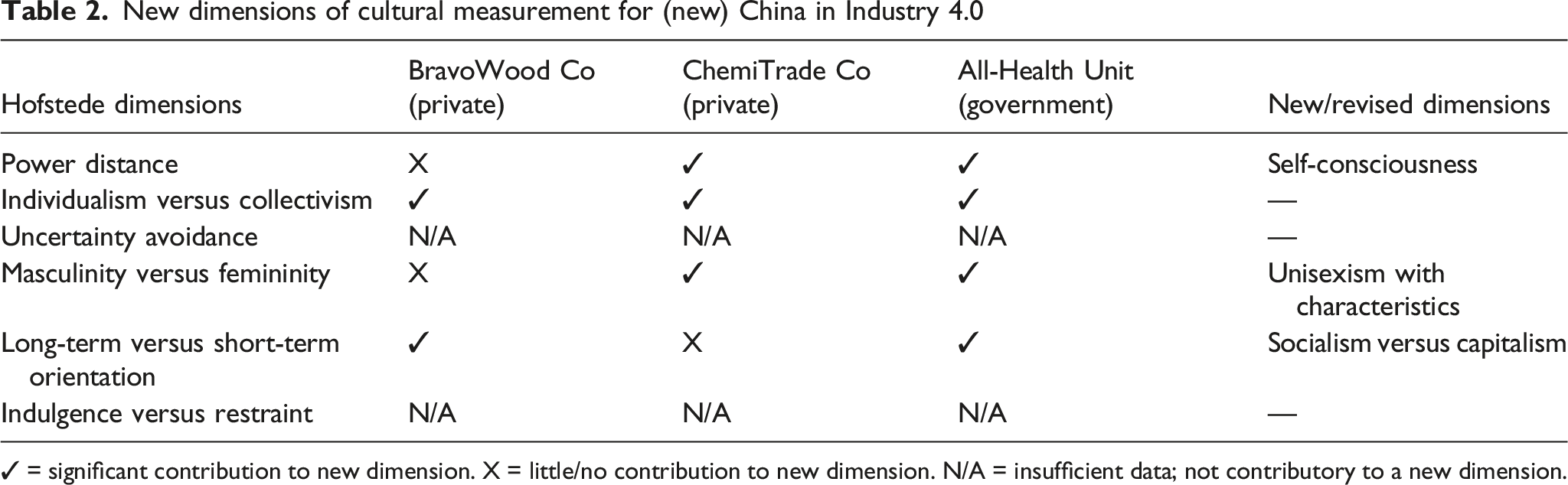
✓ = significant contribution to new dimension. X = little/no contribution to new dimension. N/A = insufficient data; not contributory to a new dimension.
Power distance was only found relevant in the governmental sector. In the private companies, the interviewees did not exhibit strong awareness of the inequalities between employees and leaders. There, they were more likely to emphasize the values of work and themselves. In the governmental sector, however, a couple of interviewees highlighted that despite the ease Industry 4.0 processes have brought, ‘the core concern of the leader is the extent of work completion and the purpose of the work’ [Arnold: code B-1.2.2], and ‘there are many problems or some implementations that are not effectively incorporated in practice’ [Alexander: code B-1.1.1]. In other words, there is still much variation in work brought about by different talents, and Industry 4.0 processes have not provided a single-fix solution within the workforce. For this reason, power distance may be more suitably adjusted to refer to self-consciousness. By this, the dimension should measure the nation’s need to acknowledge inequalities caused by necessary and unchangeable resources and social capital. Thus, in a new China, a leader’s self-awareness is becoming stronger due to the increasing social acceptance of diversity. This can be seen in the example of recruitment, where different positions require unique characteristics and quality to drive the broad ambitions of MIC, especially with the younger generation who are beginning to exhibit a broader diversity of background and personal worth.
Most of the interviewees held a positive opinion of collectivism. When asked to compare Chinese and western (e.g. US) cultures, they believed that individualism in the US is prominent and is about how an individual performs and shows consideration in aspects of the workplace and life in general, and in China, there was a collective need to consider others’ thoughts while ignoring their own experience. For example, Bernard referred to the example of Chinese people eating ‘big-pot-rice’ [code C-1.1], not in the literal dining sense but as an idiom for the sharing of problems (and successes). The interviewees were generally explicit about the importance of collectivism in Chinese culture, signally the viability of it as a measure of culture for both the governmental office and private firms when operating principles belonging to Industry 4.0 and MIC. Thus, it is believed that the dimension of the collectivism should be retained and further emphasized for China’s modernizing future.
While about half of the interviewees believed a gender inequality did exist, the inequality was in practice a concern of power distance – not that of the masculinity versus femininity dimension. For example, Charlotte insisted: ‘Living standards have improved over time; we owe this success to improved technology but how far we can go is dependent on how well this technology can be nurtured’ [code: C-1.2.2]. So, the true distinction between material rewards over a modest quality of life could hardly characterize the role or operating features of Industry 4.0 in any of the establishments. The broad coverage of technological inclusion within MIC was intended to benefit the economy and society but through harnessing efficiency principles. Recognizing that both are necessary and have limitations, the masculinity versus femininity distinction lacks substantiation. Therefore, this neutral connection may be better understood for China as ‘unisexism with characteristics’ – that is to say, Industry 4.0 standards indiscriminately advance competitiveness while improving the quality of work life and society, flavoured with Chinese features. This augmented cultural dimension would measure the degree to which a nation respects improvement on both fronts of social wellbeing and improvement in competitiveness principles to enable it, within its ideological setting.
Long-term versus short-term orientation was viewed as the biggest influence on the vital and basic social and political value systems in China (e.g. Yum, 1988), its dominance has presided over a thousand years in eastern Asia. In the case of China, the dimension has flavoured the understanding and operation of socialism. In other words, the pragmatic nature of this dimension is a long-term orientation with short-term features. It was commented, for example, ‘I think union is strength in our culture, which is very important and there is an old saying in China that two heads are better than one’ [Charlotte: codes C-1.1, C-1.2]. While advancement in Industry 4.0 innovations has the potential to improve profitability (and hence, capitalism), its natured approach is socialism in its collective success. Much of this can be seen in the country’s advancement of 5G technology, which in western eyes has also been regarded as a threat to the world. A more nuanced dimension of culture for the specific Industry 4.0 application used in China may be that of socialism versus capitalism where a balance may be struck overall and may vary in each case. This augmented cultural dimension would measure not a balance of economic prosperity over social obligations, but what ideological mindset drives the necessary technology to bring about the priorities in both long- and short-term orientations.
Conclusion
This article has explored the suitability of existing models – particularly Hofstede’s – for measuring and understanding the culture of mainland China during the fourth industrial revolution. It has done so by taking a specific incident of both cultural consolidation and turn – the 19th CPC congress, concerning key reforms (such as MIC), to set the parameters for the three main sectors the reforms concern (manufacturing, science and government) to explore how these were perceived to have an impact on the workplace and general social culture. Hence, by examining comments and specific phraseology used by the interviewees across three core sectors of modern China, this article has explored the meaning of national culture on Industry 4.0 concepts and industrial practices, and the impact on strategic leadership and sectoral variations. It has also evaluated the original meaning of the cultural dimensions as proposed by Hofstede and their applicability. The research finds that half of them need re-clarification if they are to reflect accurately the modern workplace and the broader society. Most interestingly, the dimension added by Hofstede after looking specifically at Asia (long-term vs short-term orientation) seems no longer suitable, as time has taken its toll on the nation to reflect the realities of modern life.
The newly suggested dimensions from the present research of self-consciousness, unisexism with characteristics and socialism versus capitalism are the outcome of preliminary research intended and suggested for following up in future research with specific testing and/or validation. The benefits and uses of the above insights from leaders of Chinese establishments that drive Industry 4.0 development and usage, and the specific connection to cultural awareness, will bring a more updated and accurate understanding to practitioners in this essential and developing era of industrial revolution. For ‘students’ (in the broader meaning of the word) of cultural measurement, either for successful business collaboration with international partners or learning the tools of the trade for national culture research, it is imperative they be updated on developments on the eminent work of Hofstede which has dominated for decades.
This study is neither perfect nor deemed complete (acknowledging the geographical limitation of the case establishments and the possibility of sub-cultures existing in regions/provinces), but the insights do at least throw valuable light on how culture may in future be researched where Hofstede’s thinking may have fallen short in its heyday, and fallen out of date and fashion in its present day, particularly for a unique country as China. Insights from this study may also be useful for policy implementors that need to recognize challenges in national culture in order to make such policies succeed. An example might be the recent global climate change summit (COP26), which ironically is about reversing the damages of the first industrial revolution. In any case, future researchers may wish to test the augmented cultural dimensions and develop further the insights from a strategic or policy perspective. For now, the present study holds the view that existing models for measuring national culture, while not entirely unsuitable, are not fully appropriate for, and representative of, a modern (new) China in an exciting era of Industry 4.0 and what lies beyond.
Footnotes
Declaration of conflicting interests
The author(s) declared no potential conflicts of interest with respect to the research, authorship, and/or publication of this article.
Funding
The author(s) received no financial support for the research, authorship, and/or publication of this article.
