




Abstract
Organizations are facing an ever-growing need to implement continuous transformational change. This has led to an increase in interest in change leadership. However, this has not been supported by empirical research and the need for it has been widely recognized. In parallel, and related to, these developments there have been a significant growth in interest in the concept of mindfulness and in particular in its relationship to leadership. However, whist there is a lot of evidence of its value in clinical contexts, there is limited organizationally based evidence and a paucity of studies that explore mindfulness and leadership. In spite of this, there is an increasing interest in mindful leadership amongst practitioners and a growth in related development programs on offer. This paper reports a study that explored the nature of leader mindfulness and change leadership behaviors in the context of implementing organizational change. It was based on interviews with 63 leaders from 56 organizations. Analyses of the data showed clear relationships between leaders’ facilitating and engaging behaviors and leader mindfulness in the context of change.
Introduction
The context in which today’s organizations are operating is one of volatility, uncertainty, complexity and ambiguity (VUCA) leading to unprecedented levels of change (Anderson and Akerman-Anderson, 2010; Burnes, 2009; Gioia et al., 2012; Rodriguez, 2015). In this context, change is no longer the exception to the rule but is rather an inevitable and continuous aspect of organizational life (Holten et al., 2017; Hammer and Champy, 1993). Furthermore, the speed, magnitude, unpredictability and, consequently, the importance of change capability to organizations has increased considerably (Burnes, 2009; Holten et al., 2017). Whilst there is a high level of acknowledgment of the growing significance of change for organizations, there is also a large body of evidence that points to the difficulties faced in implementing change and consequent high levels of change failure (Hughes, 2016; Higgs and Rowland, 2011).
Against this background, there has been a growing interest in the role that leaders play in implementing change and the skills and behaviors that give rise to an increased probability of change success (Herold et al., 2008; Hughes, 2016; Holten & Brenner, 2015; Kuipers et al., 2014; Liang et al., 2016; Ling et al., 2018). However, there are relatively few empirical studies, which identify specific change leadership skills and behaviors (By et al., 2016; Ford and Ford, 2012; Hughes, 2016); rather the literature that explores change leadership tends to rely more on general leadership theories and generic conceptualizations of leadership applied within the context of change (Avolio et al., 2009; Burnes et al., 2018; Dumas and Beinecke, 2018; Higgs and Rowland, 2011). Indeed, there is a general recognition of the need for further research designed specifically to explore the nature of change leadership and its impact on success of change implementation (Anderson and Ackerman-Anderson, 2010; Babalola et al., 2016; Burnes et al., 2018; Gioia et al., 2012).
The volatility and complexities of organizational life have also seen a rapid growth in interest in the concept of mindfulness and its potential applications within organizational settings (Allen et al., 2021; Baron, 2016; Brendel et al., 2016; Brown et al., 2007; Chiesa, 2013; Good et al., 2016; King and Badham, 2019). Studies in this area have indicated that mindfulness has a range of associations with organizational outcomes such as task performance, citizenship behavior and well-being (Good et al., 2016; Shapiro & Jazaieri, 2015; Zhang et al., 2021). It has also been asserted that mindfulness may play a role in contributing to successful change implementation (Anderson and Ackerman-Anderson, 2010; Baron, 2016; Gärtner, 2013). From a practitioner perspective, there has been a rapid growth in books and articles that assert that mindfulness plays a significant role in effective leadership (Brendel et al., 2016; King and Badham, 2020; Roche et al., 2014). Furthermore, there is a growing use of mindfulness training and development interventions and programs being used in the context of leadership development (King and Badham, 2020; Urrila, 2021). However, despite the asserted emerging importance of mindfulness in this context, there is very little empirical work that explores the relationship between these two constructs (Baron et al., 2017; Baron, 2016; King and Badham, 2019; Rooney et al., 2021; Ruprecht et al., 2019; Reb et al., 2019). The few studies that have been conducted have tended to focus on the beneficial role of mindfulness for leaders (Baron, 2016; Urrila, 2021).
From the above the following overall research question was formulated: To what extent does leaders’ mindfulness relate to their leadership behaviors in the context of change implementation?
The remainder of this paper explores this question through a brief review of the literatures relating to change leadership and mindfulness, together with their inter-relationships. A qualitative study designed to explore the research question is then reported. This study employed critical incident interviews (Butterfield, Borgen, Amundson, and Malio 2005; Chell, 2002; Edvardsson and Roos, 2001; Flannagan, 1954) with 63 leaders in 56 organizations. The interviews were designed to explore the relationships between leaders’ change behaviors and practices and their mindfulness in the context of change implementation. The findings from this study are presented and discussed in the context of the extant literature, and the contributions of the analyses of the data to an understanding of the nature of leader mindfulness and change leadership are considered along with limitations of the study and areas for further research.
Background
More than 20 years ago Hammer and Champy (1993: 23) declared that “…change has become both pervasive and persistent in organizations…” suggesting that dealing with change has become a core aspect of organizational life. In the VUCA context facing organizations today this need for continuous change requires the development of change management as a core organizational competence (Burnes, 2009; Holten et al., 2017). At the same time there is a strong consensus, based on both assertions and empirical evidence that a very high proportion of change initiatives fail (Hughes, 2016; Higgs and Rowland, 2005, 2011). Thus, organizations appear to be faced with a classic paradox: “We have to change, but most of our change initiatives fail” (Burnes, 2009: 107).
Within this context there has been a shift in conceptualizing change from one of punctuated equilibrium to continuous transformation (By et al., 2016; Burnes, 2009; Hughes, 2016; Kuipers et al., 2014; Higgs and Rowland, 2011). Within the continuous transformation paradigm, there is an increased focus on dealing with organizational dynamics and human agency resulting in a focus on engaging with stakeholders entailing high levels of involvement and commitment building (Anderson and Ackerman-Anderson, 2010; Gioia et al., 2012; Higgs and Rowland, 2011). Indeed, the move from punctuated equilibrium to continuous transformation may be seen as moving from “doing change to people” to “doing change with people” (Higgs and Rowland, 2005: 57). This shift in focus leads to questions relating to the role and behaviors of organizational leaders in implementing complex and continuous change.
Change leadership
While much of the change management literature examines the processual issues surrounding change, there is a growing interest in the role of leadership in successful change implementation (By et al., 2016; Hughes, 2016; Higgs and Rowland, 2011; Kuipers et al., 2014). Indeed, some argue that understanding the role and behaviors of leaders is critical to achieving successful change implementation. For example, Burke (2011: 247) asserts that “without leadership, planned organizational change will never be realized.” Others point out that leadership and change are inexorably linked (Burnes et al., 2018; Parry, 2011). In spite of the recognition of this significance, there is a general view that in the field of change leadership there is a paucity of empirical research (Burnes et al., 2018; By et al., 2016; Hughes, 2016; Higgs and Rowland, 2011; Ford and Ford, 2012; Kuipers et al., 2014; Parry, 2011). Parry (2011) points out that the field has tended to be dominated by practitioner work that is case based and lacks rigor. Indeed, in a review of the literature between 1990 and 2010, Ford and Ford (2012) found only 14 academic journal papers reporting empirical studies exploring change leadership. However, since this review, there has been a growth in empirical studies. These have been dominated by a focus on quantitative studies examining the role the role of transformational leadership and its relationship to a range of employee related outcomes, behaviors, and attitudes (Burnes et al., 2018; Dumas and Beinecke, 2018; Holten et al., 2017; Holten and Brenner, 2015). In broad terms these studies have shown that leaders have an impact on change outcomes through enhancing employee commitment to change (Dumas and Beinecke, 2018; Holten et al., 2017; Ling et al., 2018; Van der Voet, 2016; Van Kippeberg et al., 2004). Such studies have been criticized for being dominated by a top down, leader-centric view of leadership (Burnes et al., 2018; King and Badham, 2019; Ling et al., 2018) and being process based (King and Badham, 2019). However, there is emerging evidence that a shift to a more relational approach to change leadership has a significant positive effect of follower involvement and participation (Burnes et al., 2018; Holten et al., 2017; Herold et al., 2008; Ling et al., 2018) and the provision of support and capability development (Ling et al., 2018; Pearlmutter, 1998; Van der Voet, 2016). Furthermore, drawing on the social identity theory of leadership (Haslam et al., 2017; Van Knippenberg et al., 2004) there is evidence that leadership that establishes clear norms and builds a strong sense of collective identity has a positive impact on follower commitment to change (Haslam et al., 2017; Ling et al., 2018).
The majority of empirical exploration of change leadership has been conducted using quantitative studies (Burnes et al., 2018; Dumas and Beinecke, 2018; Parry, 2011) leading to a call for rigorous qualitative studies that aid understanding of the mechanisms and behaviors that underpin the relationships established (Avolio et al., 2009; Ford and Ford, 2012; Holten et al., 2017; Ling et al., 2018). Relatively few studies in this area have been conducted using such an approach (Burnes et al., 2018; Ford and Ford, 2012; Higgs and Rowland, 2011; Kuipers et al., 2014). Both Ford and Ford (2012) and By et al. (2016) suggest that notable exceptions to this are provided by the studies of Higgs and Rowland (2011, 2005). For example, in a qualitative study of 70 change stories from 20 organizations, Higgs and Rowland (2005) found that leader-centric behaviors (Shaping) had a negative impact on change success across all of the contexts that they examined (the timescale; scope, magnitude, complexity, and history of change). On the other hand, they found that the more group- and systemic-focused behaviors (Framing Change and Creating Capability) were positively related to change success across all of the contexts that they examined. In a further, more detailed, qualitative study comprising 65 change stories provided by leaders from 33 organizations, Higgs and Rowland (2011) identified five categories of behavior, which were: (i) Shaping Behavior (as per the Higgs and Rowland (2005) study); (ii) Attractor Behavior: leader behaviors that pull people toward what the organization is trying to do and creating an energy for, and emotional engagement with, the change; (iii) Edge and Tension: behaviors that provide challenge to assumptions made by individuals and the organization; (iv) Container Behavior: leader behaviors that provide calm, confident and affirming signals that allow people to find positive meaning and make sense in an anxious situation; and (v)Transforming Space: behaviors that create change in the “here and now,” based on the assumption that the only thing that you can change is the present moment.
From the analyses of their data, they found that once again the leader-centric Shaping behaviors were negatively related to change success. On the other hand, they found that a combination of the other four positive behavior groupings (Attractor, Edge and Tension, Container and Transforming Space) were clearly associated with successful change implementation across all of the contexts that they examined. These findings tend to provide support for the emerging view in the literature that a relational approach to change leadership, combined with provision of support and capability building, is effective in developing follower commitment to change and thus to successful organizational outcomes (Burnes et al., 2018; Ling et al., 2018; Holten et al., 2017; Van der Voet, 2016). In examining the most successful changes in their study, Higgs and Rowland (2011) identified that these leaders tended to demonstrate high levels of self-awareness combined with an ability to act in the moment. This raises a question relating to the extent to which the “inner state” of the leader impacts the behaviors that they exhibit in leading change (Holten and Brenner, 2015; King and Beinecke, 2018). To an extent, there is some evidence that the concept of Emotional Intelligence through its emphasis on self-awareness does provide some indication of the role of “inner states” of the leader in successfully implementing change in organizations (Higgs and Dulewicz, 2016). However, whilst this could offer an understanding of the role of self-awareness, it does not cover the action in the moment. This aspect of the “inner state” may well warrant consideration of the extent to which the concept of mindfulness may play a role in the leadership arena. Given this, the role of leader mindfulness in a change context is now explored.
Mindfulness
Over the last few years, the increasingly complex, ambiguous, and volatile environment has led to a growing interest in the concept of mindfulness (Baron, 2016; Baron et al., 2017; Burke, 2014; Good et al., 2016; Lyvers et al., 2014; Micklitz et al., 2021: Zhang et al., 2021). In particular, the application of mindfulness within organizational settings and its potential significance for leadership has seen the emergence of a stream of books and articles in the practitioner arena (Burke, 2014; Chiesa, 2013; King and Badham, 2020; Reb et al., 2019), There has also been a significant growth in training and development programs designed to enhance leader mindfulness (King and Badham, 2020, 2019; Rooney et al., 2021). However, whilst there is much empirical evidence that supports the positive role of mindfulness in the clinical and personality disciplines (Allen et al., 2021; Baron et al., 2017; Brown and Ryan, 2003; Chiesa, 2013; Good et al., 2016; Kabat-Zinn, 2013; Morton et al., 2020), there are far fewer studies which have examined and supported a positive role within organizational settings (Gärtner, 2013; Kezar, 2013; Kabat-Zinn, 2013; Purser and Milillo, 2015; Reb et al., 2019).
Definitions of mindfulness
Whilst there are a range of definitions of the construct of mindfulness, there is a consensus that most include reference to a focus on attention, awareness and being in the present (Reb et al., 2014; Zhang et al., 2021). A widely cited definition is that proposed by Brown and Ryan (2003: 824): “… awareness and attention to present events and experiences.” The terms attention and awareness are argued to be central to mindfulness, as it is the integration of these that distinguish the construct from other, related states (Good et al., 2016; Morton et al., 2020). Indeed, these components are also encountered in definitions relating to mindfulness in an organizational context. For example, King and Badham (2019, p6) define it as “a quality or state of mind that attends to experience, avoiding or overcoming mindlessness by giving full and proper attention to presence, context and purpose.” Associated with these elements is the concept of being non-judgmental (Allen et al., 2021; Arendt et al., 2019). They argue that the construct requires responding to internal and external stimuli with an open non-judging attitude. This theme is evident in the definition of mindfulness given by Baer (2015: 125); “the non-judgmental observation of the ongoing stream of internal and external stimuli as they arise.” However, it is important to note that non-judgmental does not mean that mindful individuals do not make any judgments. Rather it implies that it is an ability to pay attention to what is experienced without being carried away by reactions to it (Arendt et al., 2019). In looking at mindfulness in an organizational setting, Weick et al. (2005) introduce the element of understanding experiences in the context of a wider system. This move to broaden the definition of mindfulness is further emphasized by Allen et al. (2021), particularly when exploring the application of the concept to an organizational setting.
Research into Mindfulness
Extensive research within the field has demonstrated clear relationships between mindfulness and a diverse range of individual outcomes including stress reduction, enhanced well-being, improved memory, positive physiological states, improved mental health, reduced anxiety, reduction in depression, and reduced substance abuse (Allen et al., 2021; Brown et al., 2007; Brown and Ryan, 2003; Heard, 2010; Jiminez-Picon et al., 2021; Roche et al., 2014; Siegel, 2009; Sauer and Kohls, 2011; Zhang et al., 2021). However, the majority of studies to date have been based on experimental designs employing self-assessment questionnaires, thus limiting the generalizability of findings to other contexts such as organizational settings and work outcomes (Chiesa, 2013; Good et al., 2016; Micklitz et al., 2021; Morton et al., 2020). Furthermore, a high proportion of existing studies have been focused on examining the impact of interventions designed to enhance mindfulness and its impact on individual outcomes (Allen et al., 2021; Chiesa, 2013; Jiminez-Picon et al., 2021; Morton et al., 2020). Taken together, these methodological limitations have reduced the extent to which findings can be generalized to work-related contexts (Good et al., 2016; Micklitz et al., 2021).
In exploring organizational aspects of mindfulness, there is a small, but growing, body of work that explores the relationships between mindfulness and workplace functioning (Baron et al., 2017; Glomb et al., 2011; Reb et al., 2019; Zhang et al., 2021). Within this work, there is evidence that mindfulness can have a positive influence on a range of areas of workplace outcomes, including: task performance, job performance, citizenship behaviors, deviance, motivation, work engagement, and job satisfaction (Allen et al., 2021; Baron et al., 2017; Good et al., 2016; Gärtner, 2013).
In spite of the body of evidence that mindfulness has applications in organizational settings, there are seen to be a number of limitations that are significant. First, the dominant approach to studies has been largely experimental in design, exploring the impact of interventions designed to enhance mindfulness (King and Badham, 2019, 2020; Purser and Milillo, 2015; Reb et al., 2019). Second, the treatment of mindfulness has been focused on the intrapersonal level, yet organizational settings are concerned with interpersonal interactions (Allen et al., 2021; Arendt et al., 2019; King and Badham, 2019; Micklitz et al., 2021; Reb et al., 2019; Zhang et al., 2021). Third (and related to the two above points), mindfulness has been treated as a state. Research indicates that the average frequency and intensity with which individuals experience mindfulness varies between individuals, indicating a trait like quality which could be referred to as dispositional mindfulness and needs more exploration (Arendt et al., 2019; Micklitz et al., 2021). Finally, research is dominated by quantitative studies that operate at the level of abstract constructs (King and Badham, 2019; Reb et al., 2019; Zhang et al., 2021). This leads to a call for more qualitative research that uncover the processes that underpin the relationships between mindfulness and outcomes that could provide a richer understanding of the phenomenon (Allen et al., 2021; Bartunek and Seo, 2002; Reb et al., 2019; Zhang et al., 2021).
In exploring the value of mindfulness in the context of organizational change, Good et al. (2016) argue that the accumulated work-related evidence suggests that the value of mindfulness more broadly in exploring performance is largely contingent on attentional qualities and that this is of considerable benefit to all employees in complex and dynamic environments. In the context of this perspective, they have argued that the current VUCA context requires organizations to engage with continuous change and thus, mindfulness may have considerable organizational impact. Indeed, Gärtner (2013) proposes that mindfulness plays a powerful role in managing ambiguity and promoting positive outcomes in such a context. In support of this argument research that has shown that mindfulness assists an organization to prepare for change, and that people who are mindful find it easier to cope with the ambiguities and challenges of transformational change (Gärtner, 2013; Zhang et al., 2021).
Mindfulness and leadership
There has been a rapid and increasing level of practitioner interest in the relationship between leadership and mindfulness. (Arendt et al., 2019; Good et al., 2016; King and Badham, 2019; Lyvers et al., 2016; Nübold et al., 2020; Reb et al., 2019; Rooney et al., 2021). Indeed, leader mindfulness has been presented as a solution to the challenges of the VUCA context (King and Badham, 2019). However, despite its importance to management, leadership has not tended to be a subject of investigation by mindfulness researchers and the field can be seen as being somewhat intuitive and is in its infancy (Baron et al., 2017; Good et al., 2016; King and Badham, 2019; Reb et al., 2019; Reitz et al., 2020).
In discussing mindful leadership there is a tendency to draw on the broader definitions of mindfulness. For example, Roche et al. (2014: 477) suggest that mindfulness for leaders can be considered as being “…. An open state of mind where the leader’s attention, informed by sensitive awareness, merely observes what is taking place: worry about the future and negative projections are brought back to the present moment where the situation is seen for what it is.” In a similar vein, Saurer and Kohls (2011) posit that mindful leaders develop emotional resilience as a means of coping with and responding to both positive and negative events in a way that is open and non-judgmental.
In spite of the comments that there is a paucity of empirical and rigorous research into leadership and mindfulness, there has been a more recent growth in published studies. Initially, these have tended to focus on the effect of mindfulness on the leaders and consequent impact on followers (Good et al., 2016; Nübold et al., 2020; Roche et al., 2014; Urrila, 2021). For example, Roche et al. (2014) report research that has indicated that stressed leaders lack the capacity to support their teams, which in turn has a concomitant effect on the stress levels of their employees.
Brendel et al. (2016) reported an empirical study that indicated that the adoption by leaders of regular mindful practices was positively associated with the development of leadership qualities associated with success in the context of ambiguity and change. The adoption of mindfulness practices forms the basis of most of the leadership development interventions found in practice. There is an emphasis on the learning and practice of meditation in most such programs (King and Badham, 2020; Urrila, 2021).
Baron (2016), having asserted that Authentic leadership (Avolio and Gardner, 2005) and mindfulness share the elements of self-awareness and unbiased processing, found evidence that they are related with mindfulness playing a role in the development of Authentic leadership. The relationship of mindfulness to authentic leadership was also supported in a study by Nübold et al. (2020). In addition, Baron et al. (2017) demonstrated a relationship between leaders’ mindfulness and their behavioral flexibility. However, a number of authors have pointed out that the relatively limited work exploring the relationships between mindfulness and leadership are focused on the beneficial role of mindfulness for leaders themselves, rather than exploring leader-follower interactions and the relationships between leader mindfulness and organizational level outcomes with, a relatively small number of studies exploring the impact of leaders’ mindfulness on their subordinates (Good et al., 2016; Reb et al., 2019; Urrila, 2021). This call for understanding more about mindfulness and leadership form an interpersonal, relational perspective is echoed by others (King and Badham, 2019, 2020; Stedham and Skaar, 2019)). A few studies have responded to this call. For example, Reb et al. (2019) report a study that leader mindfulness was found to be an antecedent of high-quality Leader Member Exchange (LMX) relationships and Stedham and Skaar (2019) reported relationships between leader mindfulness and employee trust. Based on their study, Reb et al. (2019) argue that their findings indicated that it is the relational quality which translates the leader’s mindfulness to a follower’s performance. In another relationally based study, Liang et al. (2016) found that leader mindfulness moderated the relationship between abusive supervision and employee performance. In exploring this relational impact on employees, Arendt et al. (2019) report studies that show; (i) leader mindfulness is related to follower satisfaction with the leader and, (ii) leaders’ dispositional mindfulness is related to followers’ well-being. From these studies, they argue that leader mindfulness tends to be reflected in leadership styles that enhance the relationships between followers and leaders. This point is supported by the study of Purser and Milillo (2015) which found that there was a clear relationship between leader dispositional mindfulness and employee perceptions of servant leadership behaviors. In a similar vein, Williams and Seaman (2016) demonstrated that leader mindfulness mediates the relationship between ethical leadership and perceptions of leader performance. However, such studies remain in the minority and the work on leader mindfulness and its benefits remain predominantly theoretical in nature (Arendt et al., 2019; King and Badham, 2019; Liang et al., 2016; Reb et al., 2015, 2019).
Overall, the empirical studies of leader mindfulness are subject to the same criticisms as those of mindfulness in general (i.e., experimental designs, intrapersonal focus, and individualistic approach). Good et al. (2016) assert that further research into mindfulness and organizational level outcomes would benefit from moving from experimental to more exploratory and cross-sectional studies. Furthermore, they argue that future studies should take account of organizational contexts such as role and task characteristics and organizational climate. In addition, there is seen to be a need to establish such studies in a relational context (Arendt et al., 2019; King and Badham, 2019; Reb et al., 2019). Finally, and importantly, the research tends to focus on the application of the established elements of mindfulness (i.e., awareness, attention, and presence) rather than exploring the specific manifestations of this in a leadership context. Based on the above review, it could be argued that future studies should also examine mindfulness in the context of organizational change given the significance of the VUCA environment and its associated need for continuous change.
Research questions
From the above review, it is evident that whilst there is agreement that leadership plays a significant role in successful change implementation there remains limited empirical evidence which specifically examines change leadership behaviors (Burnes et al., 2018; Holten et al., 2017; Ling et al., 2018; Van der Voet, 2016). Furthermore, it has been argued that there is a need to consider the extent to which the “inner states” of leaders have an effect on their behaviors in change (Holten and Brenner, 2015; King and Beinecke, 2018). The VUCA environment has also seen an increase in interest in mindfulness and its links to leadership (Baron, 2016; Baron et al., 2017; Good et al., 2016; King and Badham, 2019; Reb et al., 2019; Urrila, 2021). In particular, it has been argued that mindful leadership may be of significance in enabling change in an organization (Good et al., 2016; Gärtner, 2013). However, empirical studies of mindful leadership remain relatively scarce and have not addressed it in a change context explicitly (Good et al., 2016; Reb et al., 2019; Rooney et al., 2021). In addition, studies of mindful leadership have, to a large extent focused on intrapersonal perspectives, whereas leadership is relational requiring an interpersonal perspective (Arendt et al., 2019; Good et al., 2016; King and Badham, 2019; Ruprecht et al., 2019).
Given the above the following research question arises: To what extent does leaders’ mindfulness relate to their leadership behaviors in the context of change implementation?
Study design
Within the leadership and change leadership literatures, the dominant approach to empirical studies has been quantitative and led to calls for more in-depth qualitative studies that will enable the development of further insights across a wider range of contexts (Avolio et al., 2009; Burnes et al., 2018; Dumas and Beinecke, 2018; Parry, 2011). In a similar vein, Good et al. (2016) point out that studies of mindfulness are predominantly quantitative and experimental. They also call for further exploration of the phenomenon (particularly in an organizational context) by means of qualitative and cross-sectional studies. Influenced by these calls, it was decided to explore the above research questions through the adoption of a qualitative design. Given the research questions identified, it was decided that adoption of a critical realist paradigm was warranted (Bhaskar, 1998) employing a thematic methodology (Braun and Clarke, 2021; Boyatzis, 1998). In doing this, a cross-sectional, multi-method design was adopted (Cresswell, 2017; Tashakhori and Teddlie, 2010). In implementing such a study, in-depth interviews with 63 leaders were conducted across 56 organizations. In addition, each leader was asked to complete a brief questionnaire designed to establish the context of the change with which they had been involved. The context questions are shown in Appendix 1.
Sampling
In identifying the sample for this study, a “purposive” approach was adopted (Denzin and Lincoln, 2017; Hair et al., 2002; Saunders et al., 2012); the criteria employed in selecting the sample were that the participants had to be senior level leaders having been involved in leading the implementation of a significant change in their organization within the last 2 years and the change had to have been completed, or at least a significant aspect of the change had to have been completed.
Sample description (n = 88).
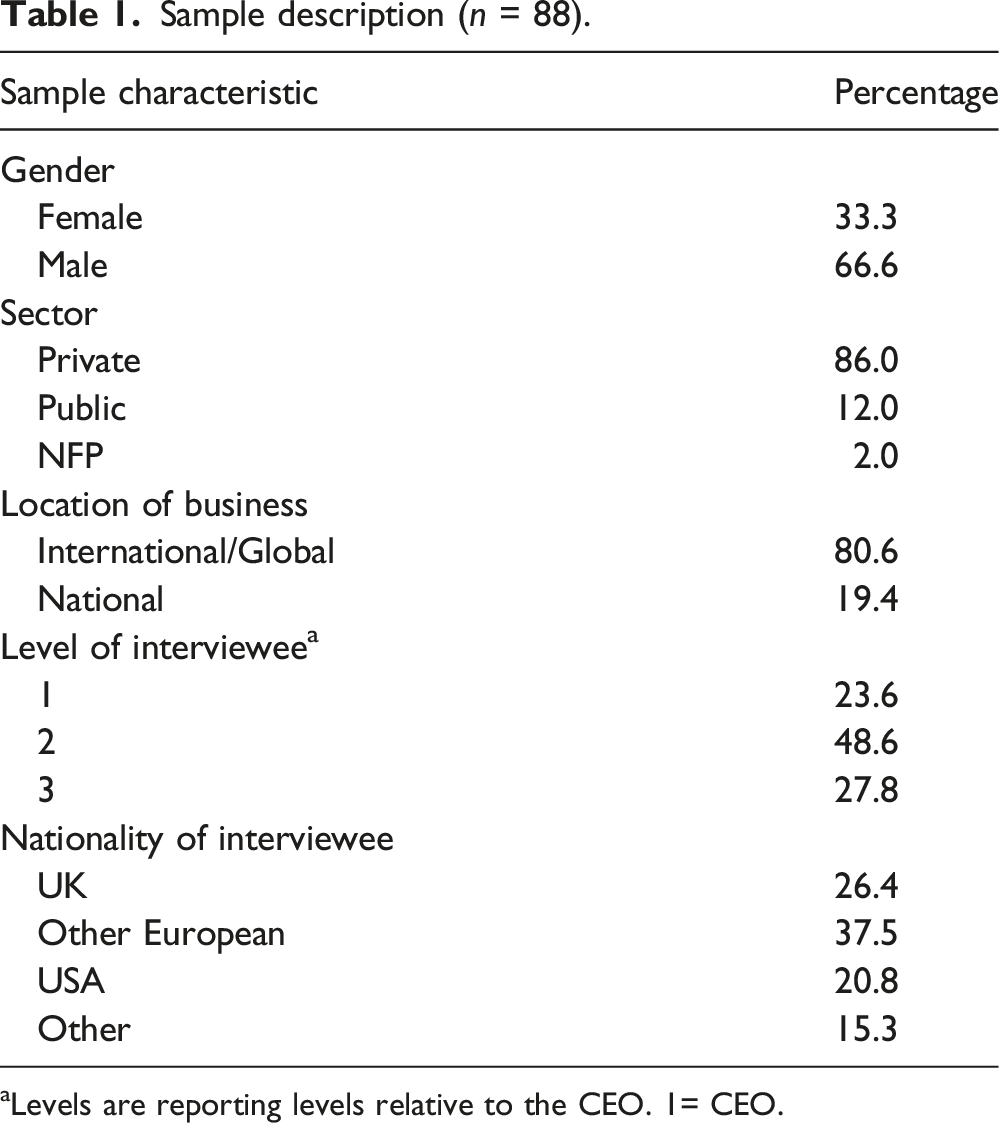
Levels are reporting levels relative to the CEO. 1= CEO.
Interviews
The limitations of the use of retrospective recollection in such interviews are widely discussed (e.g., Denzin and Lincoln, 2017; Miles and Huberman, 1984). To ameliorate such limitations, the researchers adopted a critical incident approach to the interviews (Butterfield, Borgen, Amundson, and Malio 2005; Chell, 2002; Edvaardson and Roos, 2001; Flanagan, 1954). Each leader was asked to recollect and describe one or two stories relating to a change in which he or she had been involved in and played a significant leadership role within his or her organization. The change story was used as the unit of analysis and some 88 stories were collected from the 56 leaders. However, stories that related to change where no evidence of completion (or at least stage completion) was available were excluded leaving some 88 stories. In exploring the change stories, the interviewee was asked to provide specific examples of behaviors and responses for each incident. By probing for multiple examples, the problems associated with interviewees “smoothing” the stories are ameliorated, even if not eliminated (Butterfield, Borgen, Amundson, and Malio 2005; Chell, 2002; Edvaardson and Roos, 2001; Flanagan, 1954). In the course of each interview, the change stories were probed to ensure that (i) the context of the story, (ii) the actions and behaviors of the leader; (iii) the impact of the behaviors on others; (iv) how the leaders prepared for interactions; (v) how leaders responded to the outcomes of the actions and interactions; and (vi) the leaders’ reactions to the outcomes of actions and interactions were ascertained. Each of the interviews lasted between 1 and 2 h and carried out in the interviewees’ workplace in accordance with the guidelines and codes of conduct recommended by both the British and American Psychological Societies. The interviews were recorded, and the recordings transcribed. Field notes were also taken during interviews, to supplement the transcribed interview data.
Success assessment
To obtain an indication of the degree of change success, a panel assessment was employed. This entailed combining ratings of success provided by the leaders interviewed (self-assessment), with ratings from five members of an “expert” panel who independently reviewed the overall change story (this panel comprised one academic working in the field of change leadership, one academic working in the field of mindfulness and three consultants working in the change implementation arena). Success was rated using a one to five scale (5 being very successful).
Trustworthiness of the data
Trustworthiness of the data was maximized through: (i) Taking written notes during interviews in order for researchers to check back their understanding of what has been said and to clarify any early inferences drawn in interviews, (ii) checking data gathered from interviews about decisions and actions taken with information contained in any relevant project documents referred to by interviewees to triangulate findings (Strauss and Corbin, 1997), (iii) to establish reliability in the coding process, a 10 per cent sample of transcripts were double-coded (Denzin and Lincoln, 2017; Miles and Huberman, 1984). Where a degree of coder alignment of less than 80% arose, the transcript went to a third coder for adjudication of differences, and (iv) summaries of coding from each coder were reviewed by a separate researcher to check for any apparent consistent biases in their use of codes.
Data analysis
A thematic approach to the data analysis was adopted (Braun and Clarke, 2021; Boyatzis, 1998). In using this approach, the data was analyzed in two stages. The first stage employed a combination of a priori content specific and a priori non-content specific schema (Blaikie and Priest, 2019; Denzin and Lincoln, 2017). This was developed from a combination of: (i) the categories of change leadership behavior identified in the Higgs and Rowland study (2011); (ii) a review of the change leadership and mindfulness literatures (e.g., Allen et al., 2021; Burnes et al., 2018; Good et al., 2016; Reb et al., 2019; Roche et al., 2014); and (iii) an iterative review of a sample of the original transcripts that identified emerging themes (Neal, 2016; Denzin and Lincoln, 2017).
The second stage employed content analysis (Denzin and Lincoln, 2017; Duriau and Reger, 2007; Stemler, 2000) applying the following steps: 1. Each Change story was used as the basis for analysis (88 in total). 2. As we were interested in the role of mindfulness and change leadership behaviors in change implementation, we categorized the stories based on the assessed level of change success in order to explore the differences in leader mindfulness and leadership change behaviors exhibited in each story. In addition, we were interested in exploring the data in the context of significant change and further categorized the data based on a combination of success rating and magnitude of the change. For the purpose of the analyses, we identified four broad categories of change outcome these were: (i) very successful (success rating 5); (ii) successful (success rating 4); (iii) partially successful (success ratings 3 and 2, and (iv) unsuccessful (success rating 1). 3. An analysis of the most and least successful cases to explore the most notable differences in behaviors and mindfulness
Based on the above steps each coded story was examined and the proportional distribution of each coded category of mindfulness and leadership behavior was calculated. The percentages were computed from content analysis (Denzin and Lincoln, 2017; Duriau and Reger, 2007) based on the coding frame and represented the behaviors in each category as a proportion of the total elements identified in each of mindfulness and leadership categories in each change story.
Findings
Coding themes.
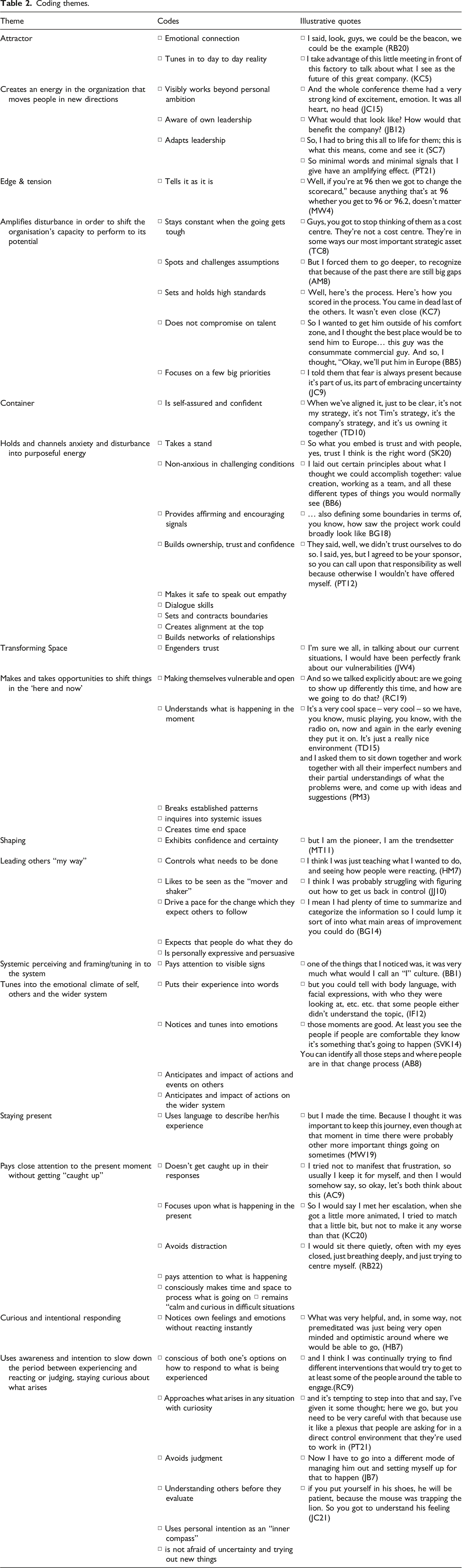
From our analyses, we found that the change leadership behaviors identified by Higgs and Rowland (2011) were clearly evidenced in this study. In terms of mindfulness, the data indicated that within a leadership setting there was evidence of attention, awareness and being present (Reb et al., 2019). However, the themes identified (i.e., Systemic Perceiving, Staying Present, Curious Responding, and Acknowledging the Whole) indicated that the definitional elements above were distributed across a range of leader practices. This does tend to support the arguments of King and Badham (2019) who emphasize the importance of context in considering mindful leadership and to encompass interpersonal as well as intrapersonal considerations. There is also support here for the assertion of Weick et al. (2005) that leader mindfulness requires the element of understanding experiences in the context of a wider system. In addition, we identified a theme of non-mindfulness. This was not merely an absence of practices that could be deemed mindful, but rather those that were the exact opposite (For example: “I said I understand you disagree. Fine, we agree that we disagree, that’s totally fine, we can argue for hours and hours, if you want my opinion at the end of the day, I’m in charge of doing this transformation. If you feel that we shouldn’t be doing what I’m doing, okay. But you will have to.” -RA14”)
In order to explore our research question further, we conducted an overall content analysis. The results of this are summarized in Figure 1. Overall profiles.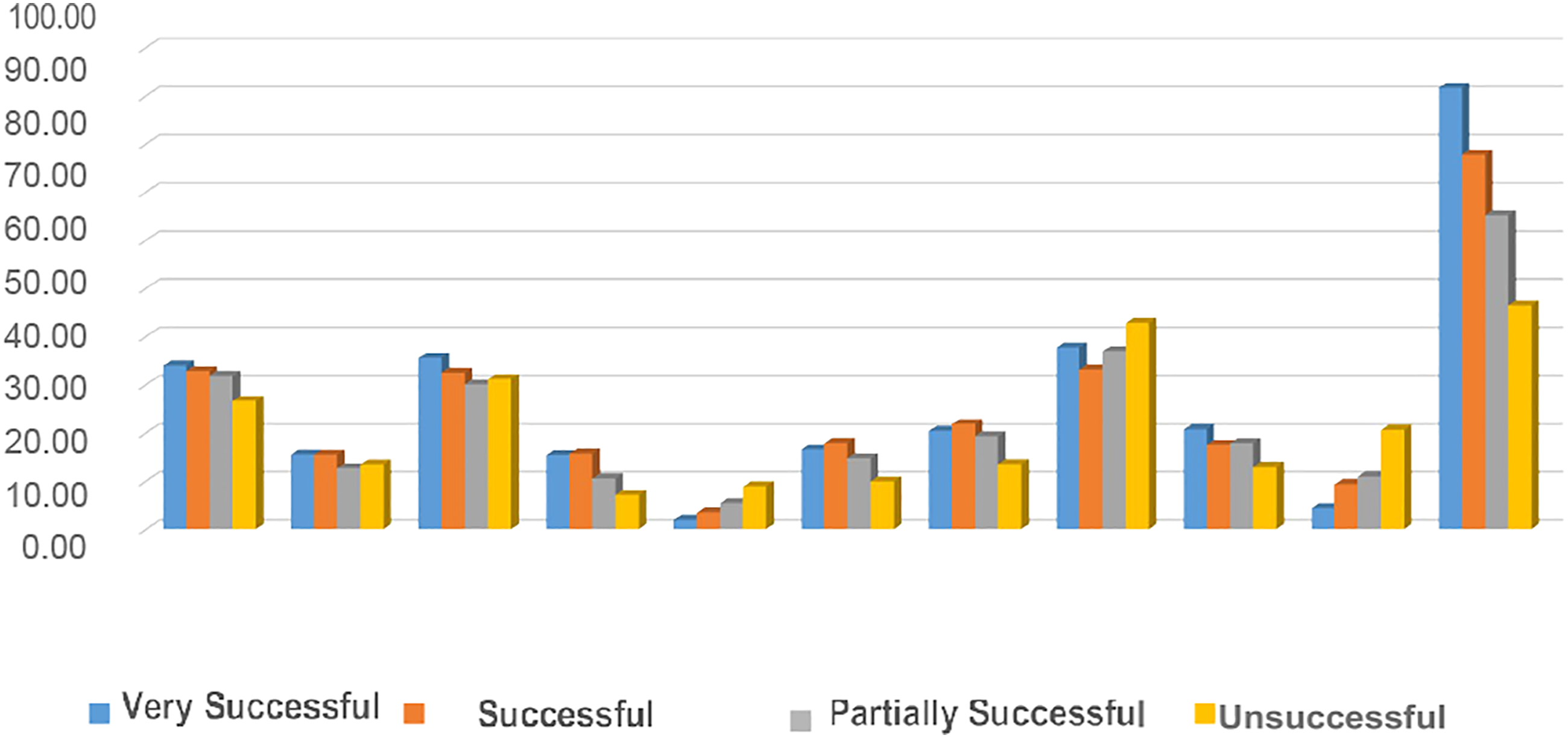
From this analysis, we found the less successful changes showed a far higher proportion of dominant Shaping behaviors and a relatively low proportion of other leadership behaviors, (with the exception of Container behaviors). On the other hand, the more successful changes showed a dominance of positive behaviors with relatively low levels of Shaping behaviors. Overall, these findings tend to support those reported in the study of change leadership behaviors of Higgs and Rowland (2011) as well as the broader change leadership literature (e.g., Burnes et al., 2018; Holten et al., 2017).
It is interesting to note that at the lower levels of success there tend to be higher levels of Container behaviors. Whilst this initially appears to be somewhat surprising, it is important to note that Higgs and Rowland (2011) found that in the most successful changes leaders demonstrated a balanced combination of high levels of the four positive behaviors and a minimal presence of Shaping behavior. It is evident that the less successful changes show an in-balance of the positive behaviors and a strong presence of Shaping behaviors. Indeed, the strong presence of Container behaviors with limited presence of Attractor, Edge and Transforming Space could indicate that the less successful leaders are potentially avoiding the issues that need to be addressed in order to implement changes effectively (By et al., 2016; Burnes, 2009; Higgs and Rowland, 2011) Furthermore, this tendency could be exacerbated as the focus of this study is on significant transformational change (Burnes et al., 2018; Holten et al., 2017; Kuipers et al., 2014), whereas the Higgs and Rowland (2011) study looked at success across a broader range of changes.
Turning to the mindfulness elements, it is of note that in the more successful changes there was a higher presence of all of the mindful elements than in the less successful changes whilst exhibiting a minimal presence of non-mindful elements compared to a higher level of this category within the less successful changes.
To explore these findings further, we compared the most successful change stories with the least successful. This was done by taking the top 10 success scoring stories and comparing them with the bottom 10. The results of the content analyses for these stories are shown in Figure 2. Very successful versus unsuccessful stories.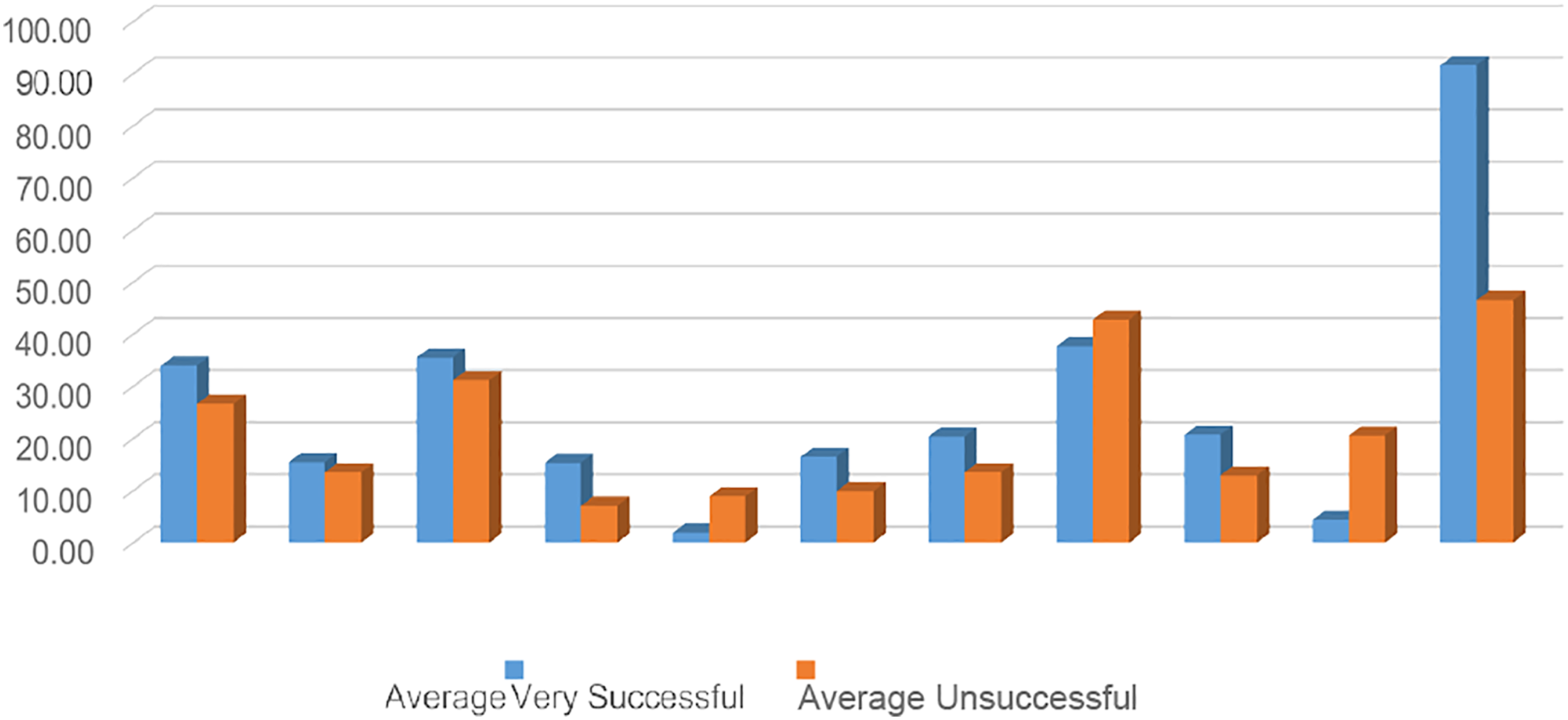
Whilst this comparison highlights the above points, it is notable that the mindful elements of Systemic Perceiving and Curious and Intentional Responding are the dominant elements in the most successful changes in this study
Examining the relationships between mindfulness and change leadership behaviors shows that there does appear to be a pattern of association. In general, the more successful changes have higher levels of both leader mindfulness and change leadership behaviors than found in the less successful changes (with the exception of the leadership behavior of Container). At the same time, in the more successful cases, leaders showed much lower levels of Shaping behavior and the non-mindful element, Indeed, these two elements appear to be strongly related. While in a study such as this no claims about causality may be made, the relationship between mindfulness and leadership behaviors does tend to be more evident in the more successful changes (Gärtner, 2013; Holten et al., 2017; Ling et al., 2018; Roche et al., 2014).
The analysis of the top and bottoms stories prompted a more detailed review of the transcripts of the most successful change stories within which there was evidence that leaders were deploying all four of the positive leadership behaviors and all four of the mindfulness elements. From this analysis, we found that the following patterns were present and that these tended to differentiate these leaders from others in the sample.
In the most successful cases, Systemic Perceiving appeared to play a significant role. The most successful leaders seemed to operate on permanent radar that helped them tune in to the system, monitor its climate, and change tack if necessary. “I was also still getting customer complaints. So, when I read a customer complaint or whatever, you’re checking for a change in the winds, you’re checking for priorities. So, you’re constantly trying to calibrate whether I need to kind of tack or not, in what I’m doing” (RB13)
The other clear mindfulness element that differentiated the most successful sample—and in particular those at the highest levels in the hierarchy—was their capacity to Acknowledge the Whole. While rare across the whole sample, the “top leaders” appeared to be far more likely to be able to: interpret their own inner experience (be that cognition, feeling states, somatic sensations, action impulses) and thereby avoiding cognitive bias. For example: “My point was it’s not about what management decide any more it’s what the market decides and unless we get ourselves faster in terms of improving, all these internal discussions are irrelevant. And then I made the linkage to why I needed the engagement of people, why, therefore, their mind-set is important, why I needed to talk to people about what we call this high-performance culture and what that meant”. (AVL 7)
The primary leadership practice to achieve successful change appeared to be Edge and Tension. Leaders in the most successful sample did not hold back from being able to clearly and accurately “tell it as it is.” They also were much more likely to set high performance standards and focus on a few key priorities. This leadership practice was at the same time complemented by a high level of Systemic Perceiving, Acknowledging the Whole, and Staying Present, so they were able to bring Edge and Tension while remaining calm and tuned in to others. For example: “‘What I want to do is call you community leaders’; they didn’t like that, so I said okay, so I got three of them to lead for the other 40, and I said, ‘okay, so, tell me what you don’t like around the word “leader”? That’s what you do, your job is to lead’. And they kind of got with that but there was a lack of acknowledgment of manager or director. It’s position, its status, and its recognition. I said, ‘It might be recognition in terms of how you thought about it. But ultimately you lead, that’s what I want you to do and I want the role to describe what you do, and I want people to think differently going forward' (RB 13) “…. I said, ‘tell me what you think about the word “community”, what’s wrong with the word community?’ And what it came down to, in their mind was care in the community, it was not sophisticated. So, I said, ‘okay, here’s what we’re going to do, there’s two words in “community leader”; so, I’m going to choose one word and you can choose one word. And I’m choosing the word “leader”, you can decide the other one but before you go away let me give you two things to think about. I must get 50 CVs a week and they all say they’re directors or managers; the word leader would stand out to me and I’m far more likely to look at that CV than the other 49.’' (DR 27)
While Container practice did not differentiate across the whole sample, when we looked at the very senior leaders in the successful stories, it became apparent that they did deploy this practice, the interpersonal elements were primary, and in particular those that enabled the change leader to stay non-anxious in challenging conditions, “I arranged for a couple of days offsite in the first 2 weeks where it was, ‘help me understand the business, you help me understand the culture. You know all about it and you’ve grown up in it and you’ve got hundreds of years of experience between you. I’ve got none. I want you to help me understand what’s going well, what’s not going so well.’ And I used the de Bono Six Thinking Hats as a kind of tool in that first session to try and legitimize them, let their emotion out and legitimize them doing a bit of black cap thinking, just so I could get beyond the, ‘oh, it’s nice to have you here,’ and all the politeness.” (AVL 6)
Summary of findings
In reviewing our analyses of leader behaviors, some evidence was found that tended to support the earlier findings of Higgs and Rowland (2011), in that the leader-centric behavior (Shaping) tended to be more prevalent in the changes rated as less successful, whilst the more positive behaviors (Attractor, Edge, Container and Transforming) were more prevalent in those changes seen as being more successful (particularly when all four were significantly present). It was interesting to note that in complex and high magnitude change the behaviors labeled as Edge and Tension appeared to be particularly prevalent.
When examining the mindfulness elements, we did find that they were more prevalent in the cases seen as successful in terms of change implementation, This does provide some support for the assertions of other scholars (Baron, 2016; Good et al., 2016; King and Badham, 2019; Reb et al., 2019; Roche et al.,2014). However, the elements of Systemic Perceiving and Curious and Intentional Responding were particularly salient. Whilst these include aspects of awareness and attention, they do suggest a broader view of mindfulness encompassing a more systemic component. This provides a degree of support for the views of a number of authors (Allen et al., 2021; Reb et al., 2019; Weick et al., 2005). Prompted by it could be suggested that while the “basics” of present moment awareness and non-judgmental responding were “needed to play,” what differentiated the top 10 stories in our sample from the rest, were the interpersonal and contextual aspects captured by systemic perceiving and acknowledging the whole.
Building on the calls for further research into the relationships between leadership and mindfulness (Arendt et al., 2019; Baron, 2016; Brendel et al., 2016; Good et al., 2016; Reb et al., 2019; Urrila, 2021), clear relationships between the two constructs (leader behaviors and mindfulness) were found within a context of leading organizational change. The mindfulness elements, when combined with the change leadership practices, were associated with much lower levels of leader-centric shaping behavior. When leaders displayed non-mindful behaviors, they also displayed shaping behavior, and this combination was much more prevalent in the less successful changes.
Discussion and conclusions
In the relatively limited empirical work on change leadership, it has been argued that the focus has been on leader-centric models of leadership (Ling et al., 2018). However, the findings from the current study indicate that such a focus could have a negative impact on change success, and a more relational and engaging approach could have a positive impact. While some have argued for such an approach, previous evidence of its efficacy has been somewhat limited (Burnes et al., 2018; Dumas and Beinecke, 2018; Ling et al., 2018; Van der Voet, 2016). From the data in this study, it does appear that the leader behaviors that were prevalent in the more successful changes appeared to encompass elements of building a shared identity (Haslam et al., 2017; Van Knippenberg et al., 2004) through Attractor and Container practices. Equally, involvement and participation appear through the behaviors associated with Container and Transforming Space. Dumas and Beinecke (2018) highlight the need for leaders to challenge the status quo in order to ensure that change in a volatile and complex setting is realized. In our data the behaviors associated with Edge do provide support for this assertion.
In the literature on mindfulness and leadership, it is argued there is a need for a move to move from an intrapersonal to an interpersonal focus (King and Badham, 2019; Reb et al., 2019; Urrila, 2021). Whilst the topic has attracted significant practitioner interest, empirical research remains limited (Arendt et al., 2019; King and Badham, 2019; Nübold et al., 2020; Reb et al., 2019). Data from the current study does provide evidence of the relational role of leader mindfulness. Furthermore, the analysis presented in Figures 1 and 2 above indicate that there is a relationship between leader mindfulness and leader behaviors (style). This supports the assertion of such a relationship in the emerging literature (Arendt et al., 2019; Urrila, 2021). In one of the relatively few empirical studies, Reb et al. (2019) found leader mindfulness to be an antecedent of LMX relationships. While the data from this study does not evidence such an antecedent role, it does show a clear relationship between these two elements.
The mindfulness elements that emerged from the analysis of the data encompass the common elements of awareness, attention and being present, encountered in many of the definitions of mindfulness (Allen et al., 2021; Brown and Ryan, 2003; Chiesa, 2013; Good et al., 2016; Reb et al., 2019). However, in line with Chiesa’s (2013) arguments, leader mindfulness was found in this study to be a multi-faceted construct that entails a more systemic focus (Reb et al., 2019; Purser and Milillo, 2015; Weick et al., 2005) and picks up a number of the elements identified by Bergomi et al. (2013). In terms of the impact of leaders’ mindfulness on change success, it was found that, whilst all four of the elements (Systemic Perception, Staying Present, Curious and Intentional Responding and Acknowledging the Whole) were prevalent in the more successful change stories, the elements of Systemic Perception and Curious Responding appeared to have the greatest salience.
The existence of the concept of non-mindfulness has been raised by a number of authors (Arendt et al., 2019; Gärtner, 2013; Sauer and Kohls, 2011). The current study found evidence of non-mindfulness amongst some of the leaders. However, the presence of non-mindfulness appeared to be far stronger in the less successful changes. An examination of the elements encompassed within non-mindfulness in this study (see Table 1) indicates that it has strong elements of leader-centricity and may be seen to be an “inner state” equivalent of the Shaping behavior found in the study. As such, this finding is perhaps unsurprising and could be seen as reinforcing the need to move away from the “heroic” conceptualization of leadership widely encountered within the literature (Avolio et al., 2009; Burnes et al., 2018; By et al., 2016).
Whilst there is a rapid growth in interest amongst practitioners in the concept of mindfulness playing a role in leadership, this interest is not currently supported by extensive empirical research (Arendt et al., 2019; Good et al., 2016; Gärtner, 2013; King and Badham, 2019; Reb et al., 2019; Reitz et al., 2020). Within the academic literature there are arguments suggesting that there is a relationship between mindfulness and leadership. However, to date empirical research has been dominated by examination of the impact of mindfulness on the leader rather than on relationships with followers or other organizational outcomes (Gärtner, 2013; Good et al., 2016; King and Badham, 2019; Roche et al., 2014; Reb et al., 2019; Urrila, 2021). To an extent, the current study provides some empirical evidence that supports the assertion that a leader’s mindfulness has a relationship to important organizational outcomes (i.e., change implementation). The data also suggests that the leader’s behaviors could be a means by which their mindfulness may be translated into followers’ actions and performance (Nübold et al., 2020; Reitz et al., 2020; Reb et al., 2019).
Conclusions
Based on a review of the change leadership and mindfulness literature, our research question was: To what extent does leaders’ mindfulness relate to their leadership behaviors in the context of change implementation?
Overall, the findings from this study provides some empirical support for the view that leadership plays a significant role in the successful implementation of change (Baron et al., 2017; Brendel et al., 2016; Dumas and Beinecke, 2018; Kuipers et al., 2014; Ling et al., 2018). At the same time, it was found that leader mindfulness elements were also associated with successful change implementation. The findings do indicate that there is a relationship between the elements of leader mindfulness and the change leadership behaviors identified in this study. The pattern of mindful elements and leader behaviors, shown in Figures 1 and 2 above, indicate that there is a higher presence of both elements in the more successful than less successful changes. Interestingly the negative impact of Shaping behavior is very similar to that of non-mindfulness. Taken together these findings do tend to support the view that there is a relationship between a leader’s mindfulness and their behaviors (Baron, 2016; Good et al., 2016; Liang et al., 2016; Roche et al., 2014; Reb et al., 2019; Urrila, 2021). Whilst, in a qualitative study it is not possible to make any assertions about antecedence or causality, the findings do indicate that the presence of leader mindfulness is associated with effective change leadership behaviors.
Contributions
The current study has provided evidence that addresses the gaps in our understanding of the nature of change leadership behaviors and of leader mindfulness and its relationship to leader behaviors as well as the relationship of both leader mindfulness and behaviors in change implementation. From this we suggest the study offers the following contributions. In relation to theory/literature: (i) our findings contribute to the call for further empirical evidence that explores the application of mindfulness theory to organizational contexts and linkages to organizational level outcomes (Allen et al., 2021; Arendt et al., 2019; Good et al., 2016; King and Badham, 2019; Liang et al., 2016; Reb et al., 2019). Furthermore, the study demonstrates that a multi-faceted perspective of mindfulness is useful in studying the phenomenon within an organizational context. In doing this, it broadens our understanding of mindfulness from its established focus on awareness, attention and presence and illustrates it from an interpersonal perspective (Allen et al., 2021; Arendt et al., 2019; Good et al., 2016; Purser and Millilo, 2015; Reb et al., 2019; Zhang et al., 2021). In particular, it highlights the significance of systemic elements, as argued by Weick et al. (2005); (ii) whilst there are many assertions that mindfulness plays a role in effective leadership there is a paucity of empirical evidence to underpin such assertions (Arendt et al., 2019; Baron, 2016; King and Badham, 2019; Reb et al., 2019; Rooney et al., 2021; Urrila, 2021; Williams & Seaman, 2016). This study addresses this gap and provides evidence that provides a description of mindfulness displayed by leaders in the context of change. Thus, it provides a basis for moving from the somewhat limited view of leader mindfulness being purely related to the more general definition (i.e., awareness, attention, and presences). Furthermore, the data indicates that there is a clear relationship between mindfulness and leadership behaviors within the context of organizational change; and (iii) the study provides further insights, based on empirical work, into the emerging field of change leadership and provides insights into the nature of leader behaviors that appear to be prevalent in successful implementation of complex and high magnitude change (Burnes et al., 2018; By et al., 2016; Holten et al., 2017).
Additionally, the study contributes to the literature through the adoption of a qualitative design, responding to calls for such work in both the change leadership and mindfulness fields (Arendt et al., 2019; Burnes et al., 2018; Dumas and Beinecke, 2018; Ling et al., 2018; Morton et al., 2020; Parry, 2011; Reb et al., 2019). In this way, the study contributes to illuminating the processes and behaviors that underpin the constructs (Reb et al., 2019). Furthermore, the mindfulness focus in this study has been on the interpersonal aspects of mindfulness linked to a relational leadership focus.
Given the dominance of practitioner interest in both change and mindful leadership, it is important that understanding is supported by rigorous research (Burnes et al., 2018; By et al., 2016; Good et al., 2016; King and Badham, 2016, 2020; Parry, 2011). This study does make a clear contribution to practice based on empirical work. The findings could prove useful to organizations in terms of formulating leadership training and development interventions that can enhance the effectiveness of leaders, particularly those engaged in significant change initiatives. The majority of mindfulness development interventions are currently based around meditation principles combined with individual practice (Reitz et al., 2020; Ruprecht et al., 2019; Urrila, 2021). This approach tends to focus on the impact of interventions on the leader and trust that this will have a subsequent impact within the organization (King and Badham, 2020; Reitz et al., 2020). Developing interventions based on the broader view of leader mindfulness identified in this study could assist in designing programs that focus interventions in a way that can have a more direct impact on organizationally related outcomes. In doing this, such approaches to development would benefit from the inclusion of assessment and feedback, supported by coaching initiatives. In addition, the elements of both change leadership behaviors and leader mindfulness could prove to be useful within processes designed to identify and develop leadership potential.
Limitations and future research
As with any study of this nature there are inevitably a number of limitations. First, in this study, the selection of the sample, using a purposive approach (Blaikie and Priest, 2019; Denzin and Lincoln, 2017; Hair et al., 2002), gives rise to a risk of sample bias, in that those agreeing to participate already had an interest in the area of the research. This, combined with the use of a qualitative approach, does limit the generalizability of the findings (Blaikie and Priest, 2019; Denzin and Lincoln, 2017). Second, the use of interviewing to examine the phenomena under investigation carries the risk of inadequate recall or attempting to explain or justify the past events (Blaikie and Priest, 2019; Denzin and Lincoln, 2017). The use of a critical incident approach to the interviews does, however, mitigate these risks to an extent (Chell, 2002; Flanagan, 1954). Third, whilst the findings from this study show clear relationships between leader mindfulness and leader behaviors and between both factors and change implementation, causality cannot be claimed (Blaikie and Priest, 2019; Denzin and Lincoln, 2017).
The majority of the change stories that formed the basis of this study related to change that had already taken place. In that sense, the data was retrospective (Denzin and Lincoln, 2017). In addition, the cross-sectional nature of the research precluded examination of any temporal effects. Therefore, it would enhance our understanding of both leader mindfulness and change leadership behaviors for future research to be conducted employing a longitudinal design (Blaikie and Priest, 2019; Saunders et al., 2012). This could be structured in such a way as to enable inferences of causality to be explored.
Much of the mindfulness research has focused on examining the impact of interventions designed to enhance mindfulness on a range of outcomes (Allen et al., 2021; Good et al., 2016; Roche et al., 2014). This is a particularly notable element in studies designed to examine the relationship of mindfulness to work-based outcomes (Dane, 2011; Morton et al., 2020; Roche et al., 2014) and to leadership behaviors (Gärtner, 2013; Good et al., 2016; Urrila, 2021). It would be valuable for future research, building from this study, being conducted to explore the impact of development interventions focused on both mindfulness and leader behaviors on the success of change implementation.
Overall, the fields of the mindfulness of leaders and change leadership are areas of significant practitioner interest (Burnes et al., 2018; By et al., 2016; Good et al., 2016; King and Badham, 2016, 2020; Parry, 2011). It is important that this interest is supported, and informed, by rigorous academic research; developing the current study further, as suggested above, presents an exciting opportunity for scholars working in these areas.
Footnotes
Declaration of conflicting interests
The author(s) declared no potential conflicts of interest with respect to the research, authorship, and/or publication of this article.
Funding
The author(s) received no financial support for the research, authorship, and/or publication of this article.

Context factors
In this study we employed the contextual factors used in the previous studies of Higgs and Rowland (2011), 2005). These were: • History of change: this coded the experience of the people implementing the change—high experience of change work; low experience of change work. • Scope of change: the number of people impacted by the change—large group; small group. • Complexity of change: the number of levers used in the change—low complexity/low number of levers applied to the change; medium complexity; and high complexity/high number of levers applied to the change. • Magnitude of change: a calculation of the scope (per above) multiplied by the complexity of the change (per above) to determine the magnitude of the change. • Time scale: the length of the change project time period with each story—up to 12 months; up to 18 months; over 18 months. • Source of change: this coded the change project into internally directed change, that is, internal to a division within the organization; externally directed change that is still driven from within the organization; and impacting whole organization; and externally directed change from a third-party source, for example, government directed change. • Individual or team led: change implementation led by an individual leader or whether the change implementation was led by a team.