




Abstract
Although job satisfaction—an indicator of employees’ happiness at work—is thought to contribute to higher job performance, past research findings have been inconsistent, suggesting that there could be important contextual factors that moderate this relationship. This study aims to revisit this important relationship by drawing attention to the role of supervisor-focused interpersonal justice climate as an important social context that may moderate the effect of job satisfaction on job performance (i.e., task performance and organizational citizenship behaviors). Based on a multi-source sample of 192 individuals in 40 teams from a large public organization in Thailand, the hierarchical linear modeling (HLM) analyses revealed that when interpersonal justice climate was high, job satisfaction did not contribute significantly to job performance. However, when interpersonal justice climate was low, the influence of job satisfaction became significant. These findings lend support for a compensatory model in which job performance only suffers when both factors are low.
Keywords
Introduction
Management researchers have long been interested in the factors that motivate job performance. One body of work has focused on the virtuous influence of job satisfaction—how one thinks and feels about work (Brief and Weiss, 2002). Researchers have indicated that job satisfaction is one of the most frequently studied constructs of employee happiness at work (Fisher, 2010; Wright et al., 2007). This line of inquiry is grounded in the happy-productive worker (Staw, 1986) and feeling good-doing good (George and Brief, 1992) hypotheses, which posit that when people feel good at work, they are likely to become more productive and engage in more positive work behaviors. However, decades’ worth of research suggests that the findings regarding this important relationship have been inconsistent at best (Judge et al., 2001). Several scholars have thus called for more research on the boundary conditions that may explain the variability in the job satisfaction-job performance relationship (Dalal et al., 2012; Judge et al., 2001; Ng et al., 2009; Riketta, 2008; Schleicher et al., 2004).
This present study aims to revisit this important relationship by drawing attention to the moderating role of interpersonal justice climate as an important social context that may explain the variation in the association between job satisfaction and job performance. Interpersonal justice climate can be viewed as a shared perception among team members about how the work group as a whole is treated by those holding positions of power, especially supervisors (Ambrose et al., 2013; Liao and Rupp, 2005; Stoverink et al., 2014). Bies and Moag (1986) indicated that team members perceive their supervisors to be interpersonally fair when they are treated with politeness, dignity, and respect. Notably, perceptions of interpersonal justice climate are consequential as they can generate shared norms that guide how team members should act towards their team leaders, other team members as well as the organization (Roberson and Colquitt, 2005). In this respect, when group norms establish high performance standards and behavioral expectations, it has been suggested that job dissatisfaction will be less likely to result in a decline in job performance because such a behavior would violate the expected norms in the work groups (Judge et al., 2001). This study builds on this idea by proposing a critical question: Can positive levels of one variable offset negative levels of the other variable?
Based on the above research question, this study takes a multilevel perspective to examine whether interpersonal justice climate may have a cross-level interaction effect on the relationship between job satisfaction and job performance. Specifically, it focuses on three important domains of job performance, namely task performance, organizational citizenship behaviors toward individuals (OCB-I) (e.g., helping coworkers handle heavy workload) and organizational citizenship behaviors toward the organization (OCB-O) (e.g., making suggestions to improve the organization) (Motowidlo et al., 1997; Williams and Anderson, 1991). Drawing from the situational strength theory (Meyer et al., 2010, 2011; Mischel, 1973), this study argues that job satisfaction will exert a stronger influence on job performance when interpersonal justice climate is low (i.e., a weak situation), whereas the adverse influence of job dissatisfaction on job performance is expected to be attenuated when interpersonal justice climate is high (i.e., a strong situation). Dalal et al. (2012) indicated that job attitudes such as job satisfaction tend to be better predictors of job performance in “weak” situations than in “strong” situations. Other researchers have also indicated that the influence of interpersonal justice climate may actually help to attenuate the disruptive effects of undesirable organizational factors on employee outcomes (e.g., Herr et al., 2018; Zhang and Jia, 2013). On this basis, the present research aims to examine a compensatory model in which job satisfaction and interpersonal justice climate may offset the low levels of the other variable.
The present study adds to the current knowledge in the management literature by revisiting the job satisfaction-performance hypothesis and by shedding light on the role of interpersonal justice climate. This line of inquiry is critical for providing deeper insights into how the negative effects of job dissatisfaction can be overcome. In particular, although previous researchers have identified several important moderating variables pertaining to personality traits (e.g., conscientiousness) (Bowling, 2010), work conditions (e.g., type of work) (Lucas and Diener, 2003) and country-level factors (e.g., national cultures) (Ng et al., 2009), it is important to acknowledge that group-level factors that fall within the direct responsibility of the supervisor have largely been neglected in the literature (Ng et al., 2009). Additionally, interpersonal justice climate has received relatively little attention from scholars compared with other types of justice climate (Stoverink et al., 2014). To test the study hypotheses, hierarchical data were collected from a large public organization in Thailand.
Theory and hypotheses
Job satisfaction
Job satisfaction is perhaps one of the most important pieces of information about a person once he or she has joined the organization (Roznowski and Hulin, 1992). Among the various indicators of employee happiness such as positive and negative affectivity and subjective well-being (Cropanzano and Wright, 2001), job satisfaction is by far one of the most frequently studied constructs of employee happiness at work (Fisher, 2010; Wright et al., 2007). In his classic definition, Locke (1976: 1300) described job satisfaction as “a pleasurable or positive emotional state resulting from an appraisal of one’s job or job experiences.” Hulin and Judge (2003) stated that job satisfaction has strong implications for our well-being, health, and happiness because how individuals come to evaluate their jobs will tend to affect them at every waking hour. Indeed, past research reveals that satisfied employees are more likely to enjoy physical and mental health (e.g., Lim et al., 2008). Although job satisfaction is generally construed as an attitude that contains both affective (i.e., I enjoy my job) and cognitive (i.e., I think my job is fun) components (Eagly and Chaiken, 1993), this research adopts an affectively-based measure of job satisfaction to capture the concept of happiness at work (Judge and Ilies, 2004; Schleicher et al., 2004).
Job satisfaction and job performance
The relationship between job satisfaction and performance has been described as “the Holy Grail” of organizational research (Weiss and Cropanzano, 1996). This relationship is grounded in the happy-productive worker (Cropanzano and Wright, 2001; Judge et al., 2001; Staw, 1986; Staw and Barsade, 1993) and feeling good-doing good (Clark and Isen, 1982; George and Brief, 1992) hypotheses (see Barsade and Gibson, 2007: for a review). The fundamental argument is that when a person feels good at work, he is she is more likely to engage in positive work behaviors such as task performance and OCBs. Since job satisfaction is generally targeted at one’s work, it is reasonable to assume that, in an organization setting, happy workers will be more energized to dedicate more work effort to their tasks (George and Brief, 1996; Wright et al., 2007). Watson et al. (1999: 830) indicated that positive emotions promote approach-type behaviors such as working hard toward goals and helping others by enhancing “feelings of energy and vigor.”
Apart from showing in-role performance, Bateman and Organ (1983) indicated that individuals with higher job satisfaction are likely to display more extra-role behaviors (i.e., OCBs) because their positive affect helps to reduce the psychological distance between them and others. This positive affect in turn could unfold in the form of prosocial behaviors that aim to benefit others. Similarly, the feeling good-doing good hypothesis indicates that happy employees tend to engage in more spontaneous behavior in organizations, such as helping coworkers, protecting the organization, making constructive suggestions, and spreading goodwill (George and Brief, 1992). Indeed, researchers have indicated that engaging in prosocial behavior is quite an automatic or spontaneous response without much deliberation about the consequences of one’s actions (Meglino and Korsgaard, 2006). Based on these arguments, it is hypothesized that;
Hypothesis 1: Job satisfaction is positively related to (a) task performance, (b) OCB-I, and (c) OCB-O. Despite the continued interest in this important relationship, existing meta-analytic research indicates that the correlation between job satisfaction and job performance is only modest (Iaffaldano and Muchinsky, 1985; Judge et al., 2001), even after correcting for unreliability and sampling error (e.g., Judge et al., 2001; Kinicki et al., 2002; Ng et al., 2009). Specifically, Judge et al. (2001) and Ng et al. (2009) reported mean correlations of 0.30 and 0.32, respectively, whereas Kinicki et al. (2002) found that mean correlations among studies could range from 0.15 for satisfaction with pay to 0.23 for satisfaction with supervision. Ajzen (2011: 32) lamented that the current findings “have been surprisingly disappointing.” Nevertheless, there is a good bit of research that shows a strong relationship between job satisfaction and work effectiveness (e.g., Harrison et al., 2006). In light of these inconsistent findings, several scholars have called for a better understanding of the conditions under which job satisfaction and performance are related (Dalal et al., 2012; Judge et al., 2001; Ng et al., 2009; Riketta, 2008; Schleicher et al., 2004). This study proposes that the variability in the job satisfaction-job performance relationship could be attributed to the role of social contexts in which employees operate. For individuals working in organizations, perhaps the most prominent social context is their immediate work groups. Hackman (1992) indicated that groups create social norms and expectations and supply ambient stimuli that are salient and are primary proximal causes of group members’ work-related behaviors. Such ambient stimuli serve as the glue that keeps groups together and provide a context for member behavior that significantly shapes what happens in the group. In this respect, Judge et al. (2001) indicated that such norms could influence the strength of association between satisfaction and job performance. Specifically, when group norms indicate specific performance standards and behavioral expectations, they will discourage individuals from violating the group norms. The result is that job satisfaction could be less strongly related to job performance under such a situation.
The moderating role of interpersonal justice climate
Based on the above argument, this study proposes that interpersonal justice climate will moderate the relationship between job satisfaction and job performance. At the individual level of analysis, interpersonal justice evaluates the extent to which individuals are treated by authorities with dignity, courtesy and respect (Bies, 2001; Bies and Moag, 1986). There are at least two rules that govern the fairness of interpersonal treatment, namely respect (i.e., treating people with honesty and dignity) and propriety (i.e., using appropriate language) (Bies and Moag, 1986). Interpersonal justice is important because people are not only influenced by interpersonal treatment during reward allocation but by daily encounters with organizational authorities (Bies, 2005).
Over time, the interpersonally fair behavior modeled by group authorities creates social cues that provide a basis for the development of interpersonal justice climate in the work units (Ambrose et al., 2013; Naumann and Bennett, 2000). In particular, justice climate represents a group-level cognition or shared perception regarding how the work group as a whole is treated by authorities (Colquitt et al., 2002; Mossholder et al., 1998; Naumann and Bennett, 2000; Roberson and Colquitt, 2005). Schneider (1975) stated that climate serves to guide how employees should behave by providing cues about the link between desired behaviors and outcomes. When treating employees fairly, supervisors provide signals to group members about what behaviors will be rewarded and punished as well as what is prioritized, valued, and supported (Ambrose et al., 2013). Although the interactions between the supervisor and each individual member may differ on a person-to-person basis, “work units tend to progress toward interpersonal homogeneity such that the treatment of one group member is extended to the rest of the group given common goals and similar interests” (Simons and Roberson, 2003: 433). This is because when group members interact, they have the opportunity to learn more about how each is treated by the supervisor and as a result, engage in collective sensemaking by discussing and interpreting incidents of justice and injustice (Roberson, 2006). This sensemaking process in turn generates shared social norms in the work groups that guide how members should act towards their team leaders, coworkers, and the organization.
At least three distinct processes provide a basis for understanding the influence of justice climate (see also Mayer and Kuenzi, 2010), namely social exchange theory (SET; Blau, 1964), social learning theory (SLT; Bandura, 1977, 1986), and social information processing theory (SIPT; Salancik and Pfeffer, 1978). According to SET, when individuals feel that they are treated fairly, they will reciprocate fair treatment by engaging in positive work behavior that benefits the party that initiates such fair treatment. Greenberg (1980) suggested that those who receive fair treatment will experience a sense of indebtedness that is highly aversive, such that it can only be reduced through acts of reciprocation. Engaging in task performance and OCBs can be seen as a way to reciprocate fair supervisory treatment because they can benefit the supervisor directly or indirectly by making their jobs easier (Lavelle et al., 2007). From the SLT lens, however, individuals learn social norms for appropriate behavior by witnessing and then striving to emulate the behaviors of credible and legitimate role models (Bandura, 1977, 1986). Thus, group members are likely to replicate the interpersonally fair behaviors of group leaders by treating other group members in the same manner. This view is consistent with SIPT, which posits that individuals working in the same work units will be exposed to similar cues such as the behaviors of their team leaders and that they will look to the actions of these important figures to make inferences about what is important and appropriate (Salancik and Pfeffer, 1978).
Building on these arguments, the present research draws on situational strength theory (Meyer et al., 2010, 2011; Mischel, 1973) to hypothesize the moderating role of interpersonal justice climate. Specifically, this theory posits that, in a strong situation characterized by clear expectations and norms regarding how one should behave, there will be a psychological pressure on the individual to engage in or to refrain from a particular behavior, such that their personal dispositions and attitudes will become less relevant. In contrast, in a weak situation, there tends to be more ambiguity and less clarity about what behaviors are most likely to be appropriate, such that individuals’ behaviors will depend more on their attitudinal and internal forces.
Specifically, it is proposed that high interpersonal justice climate is characterized by shared group norms, which will in turn induce uniform expectations regarding appropriate response patterns from employees. Andersson and Pearson (1999) indicated that in a formal setting characterized by high interpersonal justice climate, there is relatively little ambiguity about what is regarded as socially acceptable behavior. “[E]mployees [will tend to] follow unspoken rules of politeness and professionalism in their relationships with one another” (Andersson and Pearson, 1999: 465). In such a strong situation, it is expected that the disruptive effects of job dissatisfaction could be attenuated. Specifically, it is expected that employees will engage in positive work behaviors regardless of their job satisfaction levels.
In contrast, in groups with low justice climate, there is likely more ambiguity regarding how group members should behave or act, whereas one may expect low interpersonal justice climate to provoke strong visceral reactions from the victims (Ambrose et al., 2013), it has been indicated that low interpersonal justice climate is generally characterized by uncertainty, such that group members may be unsure as to why they are mistreated and how they should react, which then creates greater potential for misinterpretation (Andersson and Pearson, 1999). When supervisors treat their entire team without dignity and respect, it can signal to employees that the normative expectations of respectful treatment have been violated, in turn creating a condition of uncertainty and arousing a need for cognitive clarity among employees (e.g., why were we treated this way?) (Stoverink et al., 2014; Umphress and Stoverink, 2010).
In light of these findings, the present study contends that there could be variation in how individuals with different levels of job satisfaction respond to unfair climate. In particular, when interpersonal justice climate is perceived to be low, dissatisfied workers will most likely respond negatively toward their work and teams because cues and norms signaling the priority placed on performance norms and respectful behavior are lacking. That is, when job satisfaction is low, it is expected that perceptions of injustice will become more salient. Past research shows that unhappy people tend to be more sensitive to negative stimuli in the environment and may react more strongly when experiencing negative events (Brief et al., 1995; Fisher, 2003). Thus, if levels of job satisfaction and interpersonal justice climate are simultaneously low, it is plausible that job performance will be most strongly negatively affected. On the other hand, low levels of interpersonal justice climate may be compensated when group members have high levels of job satisfaction, as satisfied employees will be less sensitive to this aspect of their social context. Based on the above arguments, the present research examines the possibility that the positive levels of job satisfaction and interpersonal justice climate could offset negative levels of the other variable. Thus, it is hypothesized that;
Hypothesis 2: Interpersonal justice climate will moderate the relationships between (a) job satisfaction and task performance, (b) job satisfaction and OCB-I, and (c) job satisfaction and OCB-O such that when interpersonal justice climate is high, these relationships will become weak or nonsignificant but when interpersonal justice climate is low, these relationships will be positive and significant.
Methodology
Sample contexts and sampling procedures
The sample for this present study was drawn from employees working in the Ministry of Interior in Thailand. Consisting of over 13,000 employees, this public agency is responsible for wide range of tasks including national security, emergency management, household registration, ands supervision of local governments. It is also endowed with the responsibility to implement several national policies proposed by elected governments, including initiatives related to drugs and poverty eradication. Given its critical role in maintaining the country’s law and order, this public agency is recognized for its approach to building a pipeline of low-, mid-, and high-level leadership (i.e., district chiefs and governors) to oversee provincial and district administration throughout the country (Siengthai, 2015).
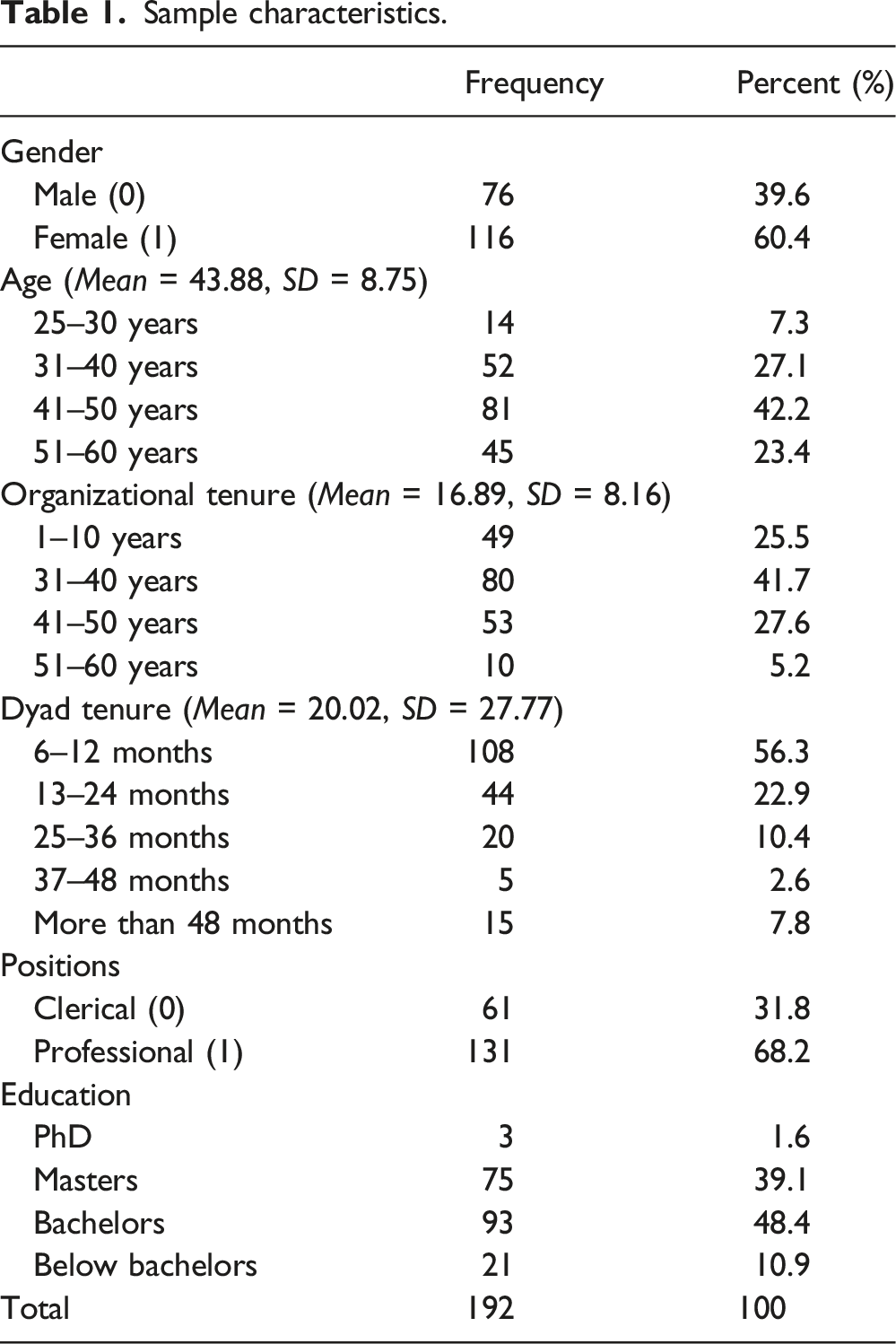
In conducting the research, the author spent two weeks at the agency’s headquarters located in Bangkok. Based on a stratified sampling strategy, 44 work groups with at least three members from each bureau were selected, resulting in a sample of 250 employees in 44 work units. Each group member received an envelope containing one survey questionnaire, which comprised measures of job satisfaction, interpersonal justice and demographic information. Out of 250 questionnaires distributed, 196 were returned, resulting in a 78.4% response rate. One week later, each supervisor of the 44 work groups was asked to rate task performance and citizenship behaviors for each of their subordinates. Each supervisor was also asked to provide information about group size and dyad tenure.
Sample characteristics.
Measures
Job satisfaction
Job satisfaction was assessed using five items from the Overall Job Satisfaction (OJS) scale developed by Brayfield and Rothe’s (1951). According to Moorman (1993: 763), OJS “includes questions on the degree to which the respondent is bored, interested, happy, enthusiastic, disappointed, and enjoying work. These questions center not on specific appraisals about job conditions, but on the emotional reactions to the work.” The five OJS items were identified as affectively-based more than 95% of the time by the participants in the study by Schleicher et al. (2004) and have been used successfully in previous studies (e.g., Judge et al., 2005; Judge and Ilies, 2004). A 7-point Likert-type scale was used, ranging from 1 = strongly disagree to 7 = strongly agree. Items include “I feel fairly satisfied with my present job” and “Most days I am enthusiastic about my work,” “Each day seems like it will never end (reverse coded),” “I feel real enjoyment in my work,” and “I consider my job to be rather unpleasant (reverse coded).” The scale’s alpha reliability is 0.80.
Interpersonal justice climate
Interpersonal justice was assessed using the four-item interpersonal justice scale developed by Colquitt (2001). A 5-point Likert-type scale was used, ranging from 1 = to a very small extent to 5 = to a very large extent. Sample items include “Has (your supervisor) treated you with dignity?” and “Has (your supervisor) treated you with respect?” As will be discussed below, interpersonal justice climate is operationalized as the mean of group members’ perceptions toward their supervisors and thus, as discussed below, were aggregated to the group level of analysis. The scale’s alpha reliability is 0.94.
Job performance
Task performance, OCB-I and OCB-O were assessed using the six-item scales from Williams and Anderson (1991). The supervisors were asked to respond to the items on a 5-point Likert-type scale ranging from 1 = strongly disagree to 5 = strongly agree. The scale’s alpha reliabilities were 0.94 for task performance, 0.93 for OCB-I and 0.94 for OCB-O.
Control variables
A number of variables were used as statistical controls including group size (a level-2 variable), occupational type (clerical= 0, professional = 1), gender (male = 0, female = 1), and education (0 = below bachelors’ degree, 1 = bachelors’ degree, 2 = master’s degree and 3 = PhD). As will be discussed below, organizational tenure, dyad tenure, and age did not show any bivariate correlation with the three dependent variables and thus they were not included in the final analyses to conserve degrees of freedom and to maximize statistical power.
Results
Confirmatory factor analysis
Comparison of measurement models.
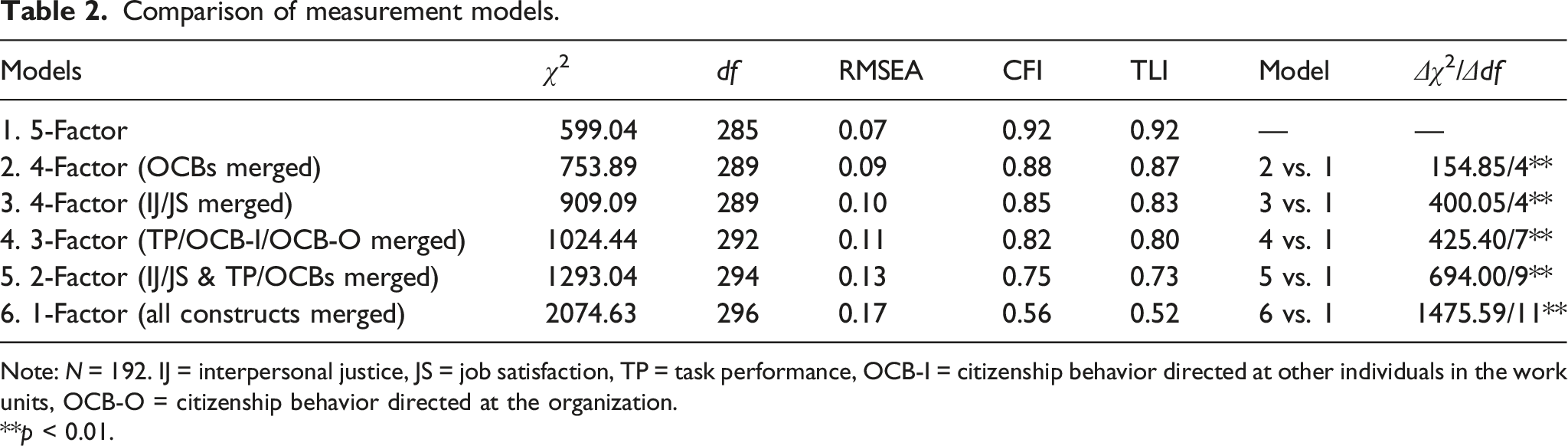
Note: N = 192. IJ = interpersonal justice, JS = job satisfaction, TP = task performance, OCB-I = citizenship behavior directed at other individuals in the work units, OCB-O = citizenship behavior directed at the organization.
**p < 0.01.
Means, standard deviations, and correlations.
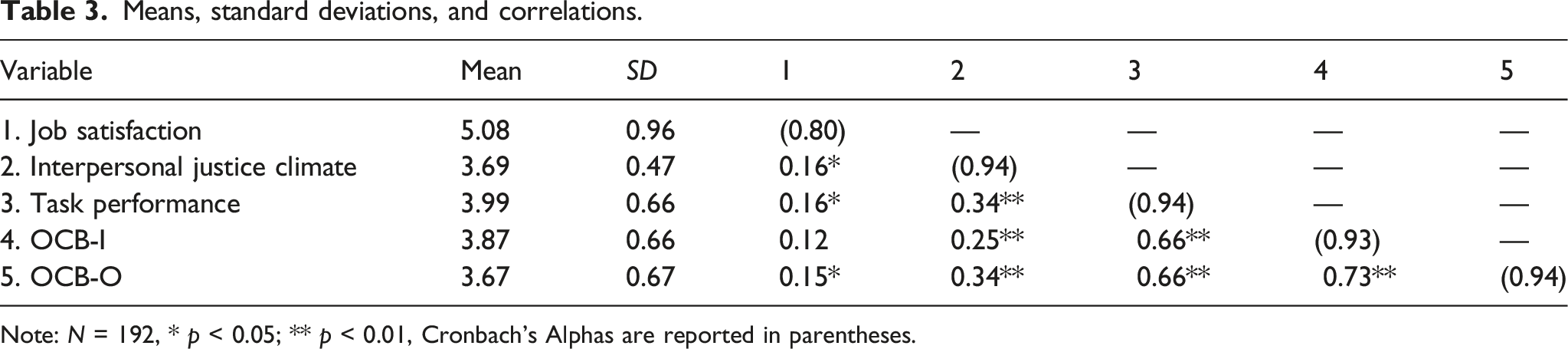
Note: N = 192, * p < 0.05; ** p < 0.01, Cronbach’s Alphas are reported in parentheses.
Aggregation of interpersonal justice
In order to aggregate individuals’ perceptions of interpersonal justice to the group level, it is necessary to demonstrate both between-groups disagreement and within-group agreement (Klein et al., 1994). The intraclass correlation coefficients (ICCs) were used to assess between-units disagreement and interrater agreement (rwg) to assess within-unit agreement, respectively. The one-way analysis of variance (ANOVA) indicated that interpersonal justice climate varied significantly across work units (F39, 148 = 1.71, p <0.01). Then the interrater reliability index ICC(1) and the reliability of group mean index ICC(2) were calculated. The ICC(1) and ICC(2) values were 0.15 and 0.45, respectively. Then within-group agreement (rwg) with a uniform null distribution (James et al., 1984) was computed for each of the 40 work units. The mean rwg (j) was 0.90. This indicates strong within-group agreement (i.e., high levels of consensus among members of work groups), justifying the presence of group climate (LeBreton and Senter, 2008).
Analytic procedures
Hierarchical linear modeling (HLM) (Raudenbush and Bryk, 2002) was used to examine the cross-level interaction effect of interpersonal justice climate. HLM can account for supervisor rating effects by treating the intercepts as random (between-group effects) rather than fixed effects (within-group effects). In addition, HLM provides the correct parameter estimates and significance tests for multilevel data (Bliese, 2000; Raudenbush and Bryk, 2002). To ensure that Level-1 predictors are uncorrelated with Level-2 predictors (Aguinis et al., 2013), all Level-1 predictors were group-mean centered.
Prior to testing the hypotheses, null model equations (models 1, 5, and 9) were estimated to determine the degree of non-independence in task performance and citizenship behaviors. Each null model revealed a 27.17%, 33.55%, and 42.48% between-group variance in task performance, OCB-I and OCB-O, respectively. These tests were significant (task performance, χ2 [39, N = 192] = 56.70, p < 0.001; OCB-I, χ2 [39, N = 192] = 135.23, p < 0.001; OCB-O, χ2 [39, N = 192] = 176.03, p < 0.001, indicating the presence of systematic between-group variance in performance ratings and justifying the decision to use HLM.
The three-step procedure was used in probing a cross-level interaction as recommended by Aguinis et al. (2013). First, a random intercept and fixed slope model (ANCOVA) was estimated where job satisfaction was entered as a Level-1 predictor and interpersonal justice climate was added as a Level-2 predictor of the random intercept. The purpose of this procedure was to test a direct single-level effect of job satisfaction and a direct cross-level effect of interpersonal justice climate. After that, a random intercept and random slope model was run where both the intercepts and the slopes were allowed to vary across all the work units. The purpose of this procedure was to test whether there was sufficient slope variance (τ11) for us to model a cross-level interaction effect. In the final stage, a cross-level interaction model was estimated where interpersonal justice climate was entered as a predictor of the slope. The purpose of this procedure was to probe the cross-level interaction effect. The model can be formally stated as; (Level 1) Performanceij = β0j + β1j (Job Satisfaction) + rij (Level 2) β0j = γ00 + γ01 (Justice Climate) + u0j (Level 2) β1j = γ10 + γ11 (Justice Climate) + u1j
Hypothesis tests
HLM results for main and cross-level interaction effects.
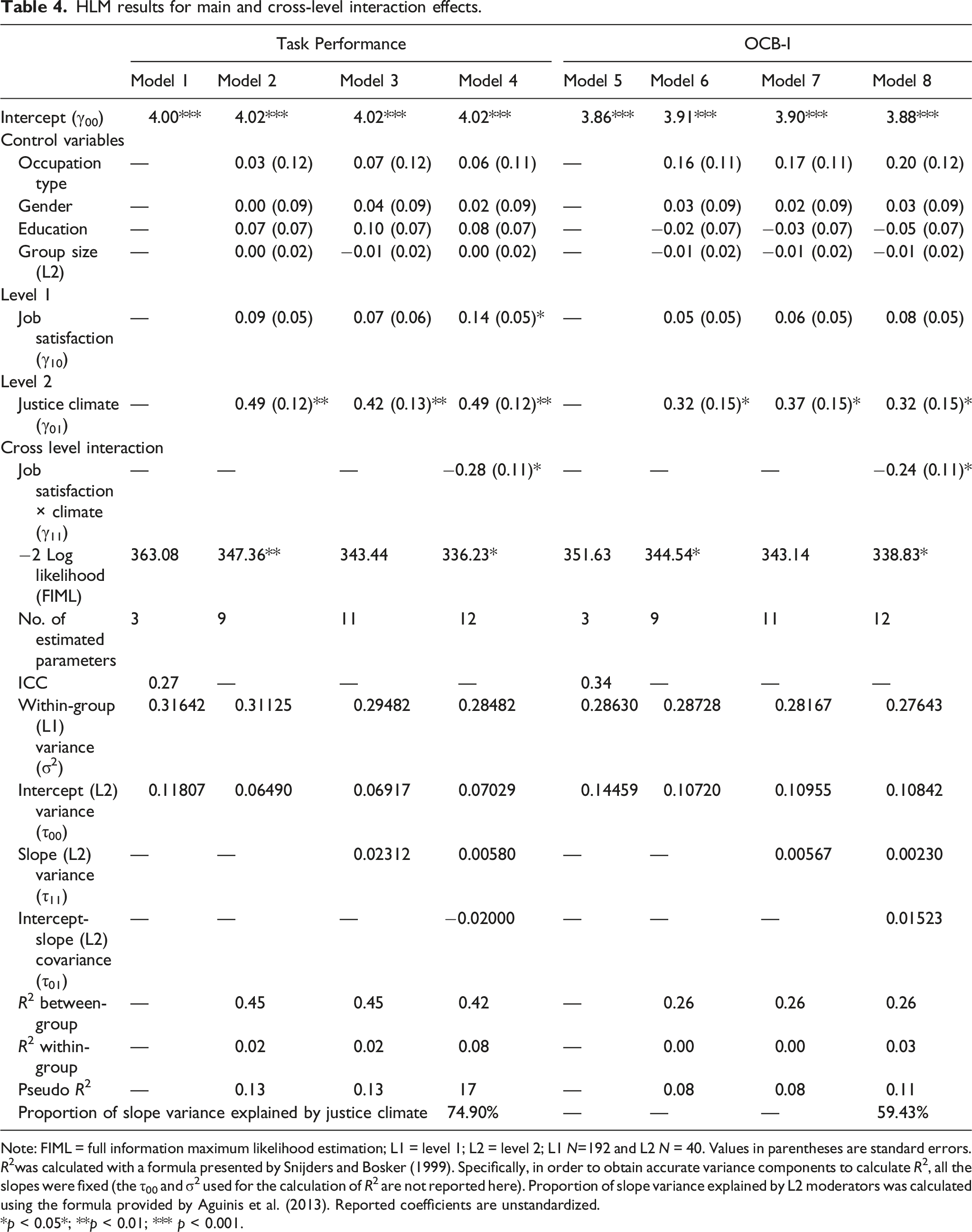
Note: FIML = full information maximum likelihood estimation; L1 = level 1; L2 = level 2; L1 N=192 and L2 N = 40. Values in parentheses are standard errors. R2was calculated with a formula presented by Snijders and Bosker (1999). Specifically, in order to obtain accurate variance components to calculate R2, all the slopes were fixed (the τ00 and σ2 used for the calculation of R2 are not reported here). Proportion of slope variance explained by L2 moderators was calculated using the formula provided by Aguinis et al. (2013). Reported coefficients are unstandardized.
*p < 0.05*; **p < 0.01; *** p < 0.001.
HLM results for main and cross-level interaction effects.
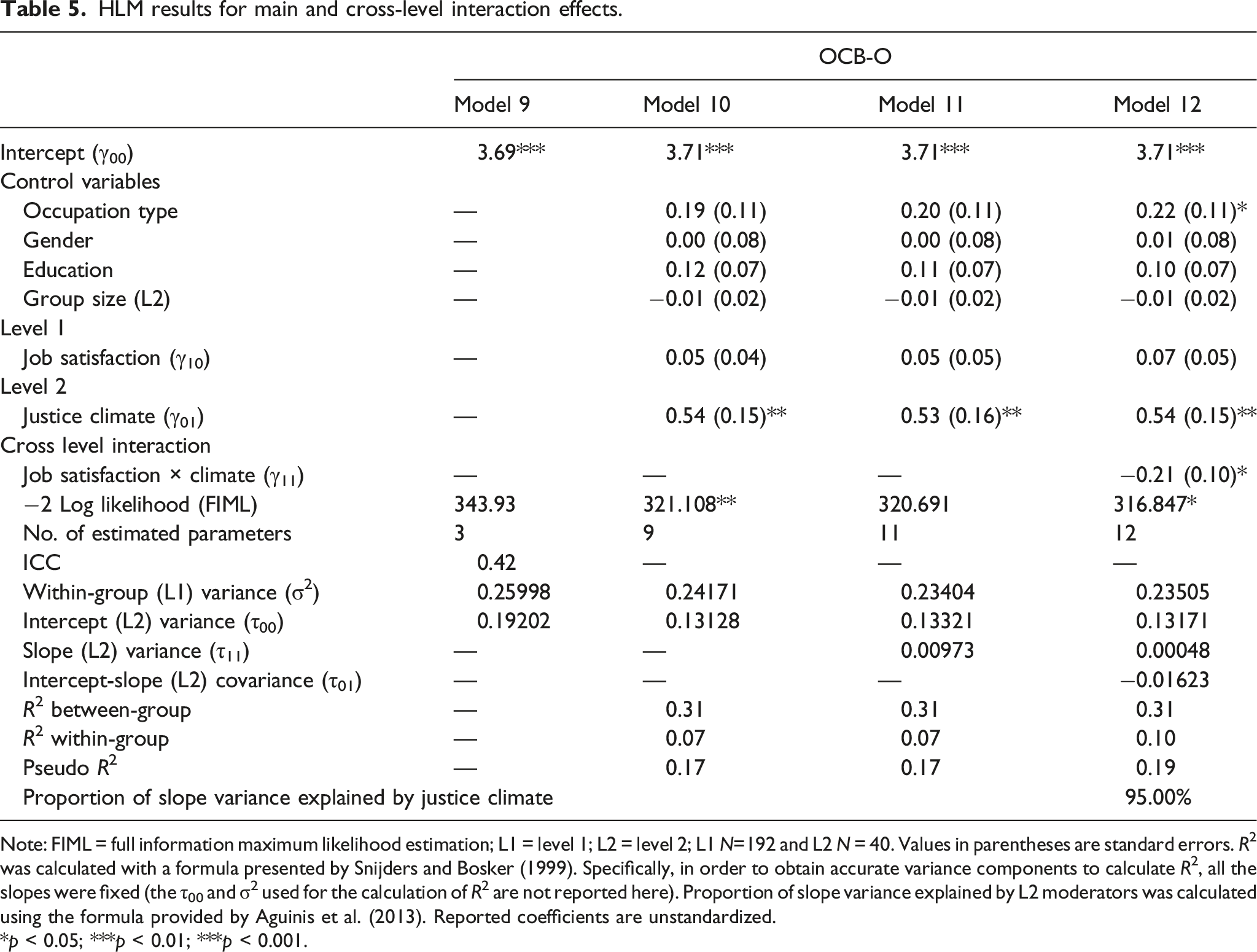
Note: FIML = full information maximum likelihood estimation; L1 = level 1; L2 = level 2; L1 N=192 and L2 N = 40. Values in parentheses are standard errors. R2 was calculated with a formula presented by Snijders and Bosker (1999). Specifically, in order to obtain accurate variance components to calculate R2, all the slopes were fixed (the τ00 and σ2 used for the calculation of R2 are not reported here). Proportion of slope variance explained by L2 moderators was calculated using the formula provided by Aguinis et al. (2013). Reported coefficients are unstandardized.
*p < 0.05; ***p < 0.01; ***p < 0.001.
Simple slope tests
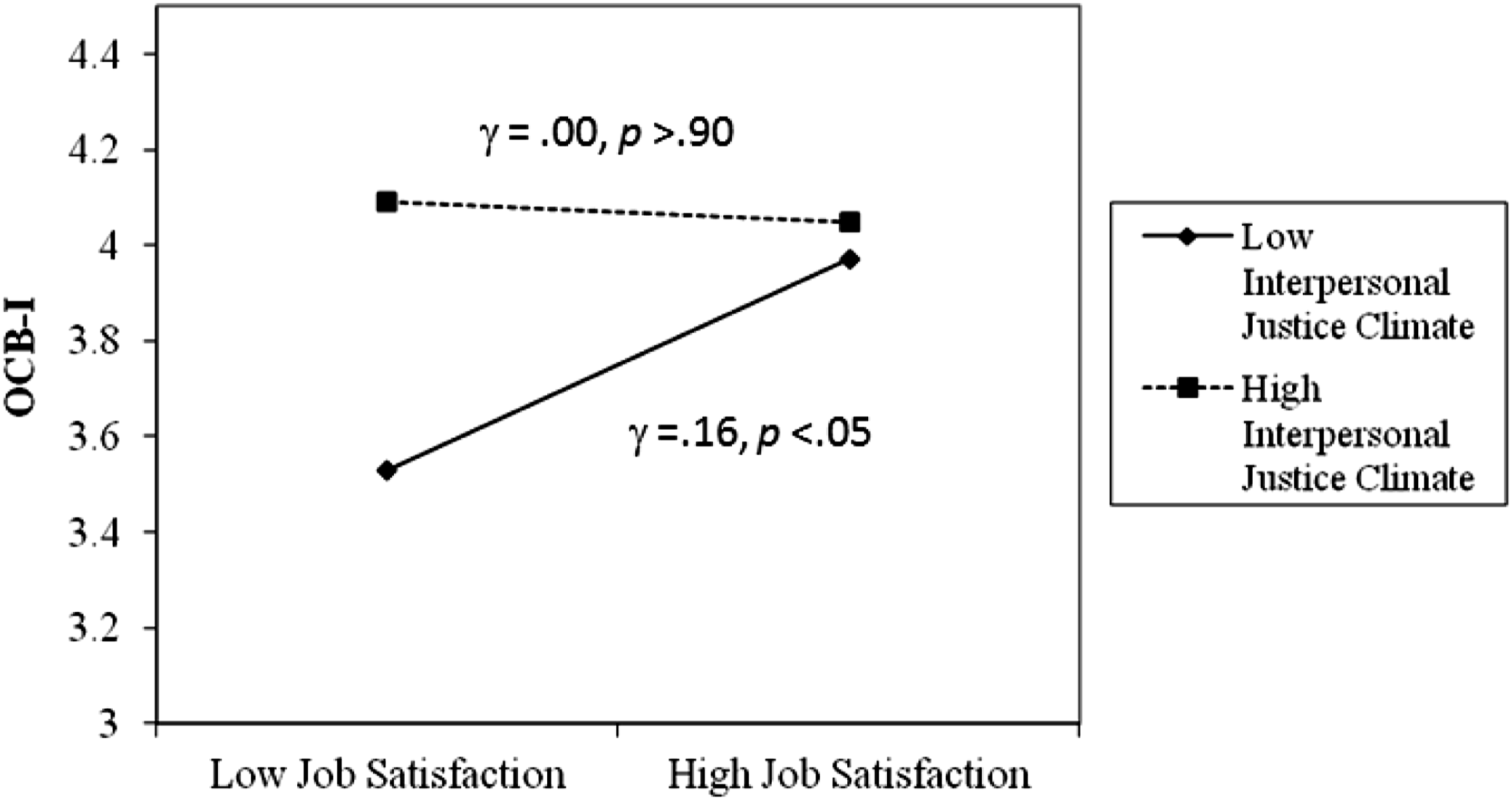
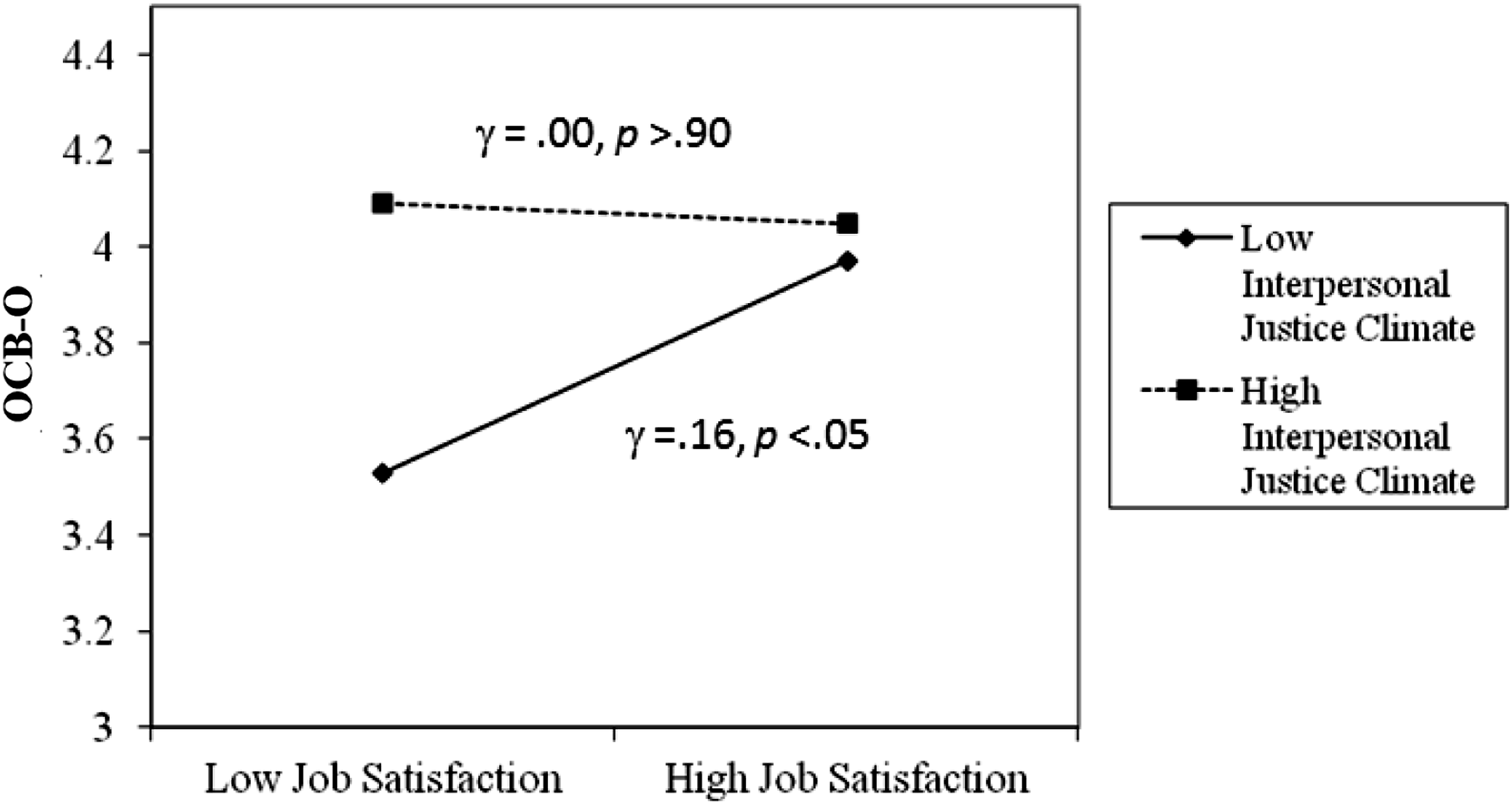
In order to graphically illustrate the significant cross-level interaction effects uncovered in the analyses, the simple slopes for high interpersonal justice climate (1 SD above the mean) and low high interpersonal justice climate (1 SD below the mean) were estimated (see Figures 1–3). In line with the hypotheses, job satisfaction was positively related to task performance when interpersonal justice climate was low (γ = 0.25, p < 0.01) whereas the relationship was not significant when interpersonal justice climate was high (γ = 0.05, p > 0.40). Similarly, job satisfactions were positively related to OCB-I and OCB-O when interpersonal justice climate was low (γ = 0.16, p < 0.05; γ = 0.18, p < 0.05, respectively), whereas the relationships were not significant when interpersonal justice climate was high (γ = 0.00, p >0.90; γ = 0.02, p >0.60, respectively). Thus, as anticipated, there was a stronger relationship between job satisfaction and performance outcomes when interpersonal justice climate was low than when it was high. Cross-level interaction effect of interpersonal justice climate on the relationship between job satisfaction and task performance. Cross-level interaction effect of interpersonal justice climate on the relationship between job satisfaction and OCB-I. Cross-level interaction effect of interpersonal justice climate on the relationship between job satisfaction and OCB-O.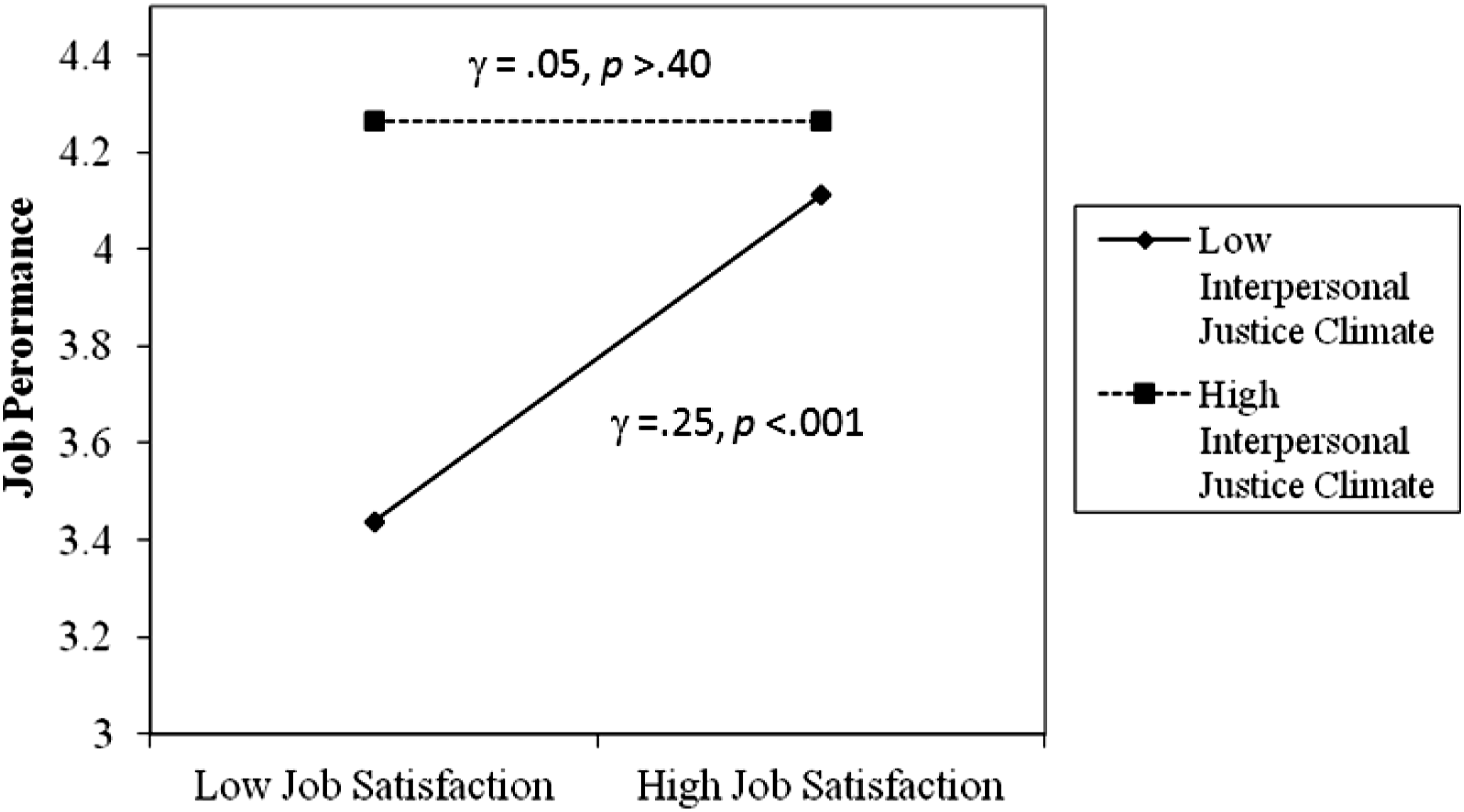
Discussion
The present research proposes that the relationship between job satisfaction and job performance is contingent upon interpersonal justice climate. The findings provide full support for the proposed hypotheses. Specifically, this study found that interpersonal justice climate had a cross-level interaction on the relationship between job satisfaction and job performance, such that job satisfaction was positively related to performance outcomes only when interpersonal justice climate is lacking. When interpersonal justice climate was high, job satisfaction did not contribute significantly to job performance. The results were consistent across the three domains of job performance. Theoretical contributions, areas for future research, and practical implications for managers and organizations are discussed below.
Theoretical implications
First and foremost, the present research contributes to the literature by responding to calls for more research on the group-level moderators of the job satisfaction-outcome relationships (Dalal et al., 2012; Judge et al., 2001; Ng et al., 2009). The results confirmed that this group-level construct can explain the variability in the job satisfaction-performance relationship. An important finding that emerged from this study is that, when work groups are characterized by high levels of interpersonal justice climate, employees maintain relatively high levels of job performance regardless of their job satisfaction levels. This suggests that group authorities who treat their team members with dignity and respect may create a strong situation in which employees feel collectively motivated to contribute to group objectives, allowing the negative effects of job dissatisfaction to be mitigated or buffered. In contrast, in the work groups characterized with low levels of interpersonal justice climate, there is more variability in the relationship between job satisfaction and job performance. This suggests that in the absence of strong and formal situational contingencies, employees may decide to respond to unfair group leaders in different ways, depending upon their job satisfaction levels. As has been noted by Dalal et al. (2012), in the absence of situational contingencies, job performance becomes a function of individual attitudes. These compensatory findings suggest that the inconsistencies surrounding the job satisfaction-performance relationship could be due to the exclusion of important group-level variables, which further underscores the importance of accounting for contextual factors when investigating the relationships between job satisfaction and job performance (Judge et al., 2001; Dalal et al., 2012; Ng et al., 2009).
Second, the study’s findings have important implications for theoretical models that assume a causal link between justice perceptions, job satisfaction and job performance (e.g., Masterson et al., 2000; Whitman et al., 2012). This particular argument essentially suggests that the relationship between interpersonal justice climate and job performance should be mediated by job satisfaction (see Fassina et al., 2008). However, based on the supplemental mediation analysis (Baron and Kenny, 1986), the results showed that this argument was not supported in this current sample. This finding is in fact consistent with early organizational justice research, which indicates that job satisfaction does not contribute to the variance in job outcomes once fairness perceptions are accounted for (Moorman, 1991; Organ and Konovsky, 1989). Moreover, it has been indicated that justice perceptions and job satisfaction actually exert their influence on job performance through different psychological mechanisms, such that these variables may interact in meaningful ways (Fassina et al., 2008), whereas job satisfaction generally affects job performance through positive emotional responses (Cropanzano and Wright, 2001), it has been indicated that justice perceptions influence workers’ performance through social exchange (Blau, 1964), social learning (Bandura, 1977, 1986), and social information-processing (Salancik and Pfeffer, 1978) processes (see also Mayer and Kuenzi, 2010). This current study thus addresses Fassina et al. (2008)’s observations that the positive levels of one variable (i.e., job satisfaction or justice perceptions) may offset negative effects of the other variable.
Looking forward, future research may find it fruitful to examine whether interpersonal or other types of justice climate may have a similar buffering effect on the relationship between job satisfaction and other important work-related outcomes such as counterproductive work behaviors and health outcomes. Future research could also extend the current findings by examining other types of job attitudes (e.g., organizational commitment and work engagement) and other important indicators of happiness at work (e.g., positive and negative affectivity). In the absence of situational contingencies, it is likely that job performance will become a function of job attitudes (Dalal et al., 2012).
Practical implications
A decade ago, Simons and Roberson (2003) asked: “Why managers should care about fairness?” The findings from this present study indicate that behaviors of interpersonally fair managers not only affect job performance directly but also moderate the effects of job satisfaction. There is both good and bad news for managers. The good news is that when managers treat their employees with respect, kindness and dignity, their actions can create a positive work environment that helps to buffer the deleterious effects of job dissatisfaction. This is good news because research has shown that job satisfaction is a function of many factors (e.g., personality traits) that may fall outside a direct control of managers (Hulin and Judge, 2003). Thus, managers’ ability to offset the negative effects of job dissatisfaction is encouraging. The bad news, however, is that when managers treat their people poorly, there could be more variation in employees’ performance. An important practical implication for organizations is that they should focus on creating programs or interventions that seek to enhance managerial abilities in terms of respectful treatment, which can prove critical especially in times of crisis (e.g., the COVID-19 pandemic) (Wang et al., 2021). Last but not least, because the current findings indicated that job satisfaction still matters a great deal especially when interpersonal justice climate is low, organizations should employ different strategies to enhance the well-being of their employees, or as previous research suggests, they could hire employees who are happier in the first place (Cropanzano and Wright, 2001).
Study limitations
This study has certain limitations that should be acknowledged. First, the cross-sectional design makes it impossible to make causal inferences regarding job satisfaction effects. Indeed, job performance may influence the extent to which employees are satisfied with their jobs (see Judge et al., 2001). Although the meta-analytic review conducted by Riketta (2008) showed that task performance had no cross-lagged effects on job satisfaction (r = 0.00), the present study’s hypotheses can be more reliably investigated through a longitudinal design. Second, although two sources of data were used in this research, it is important to note that job satisfaction and interpersonal justice climate were rated by the same respondents, which could raise concerns about common source variance (CMV) (Podsakoff et al., 2003). However, this issue was likely mitigated as interpersonal justice perceptions were aggregated to the group level. Furthermore, it has been shown that interaction effects tend to be robust against CMV (Siemsen et al., 2010). Additionally, this study applied various response formats in the survey, placed the survey items measuring the dependent variable at the beginning, and ensured anonymity by providing each respondent with a sealed envelope that was returned directly to the researcher on the same day. Last, one should note that the relatively weak effects of job satisfaction and the strong effect of supervisor-focused justice climate observed in this present study could be due to the role of power distance that is accentuated in the Thai society. As Ng et al. (2009: 767) noted, job satisfaction likely has a weaker relationship with job performance in high power-distance cultures “wherein social inequality is perceived to be legitimate because individuals recognize that superior performance is expected from their supervisors.” That is, in such cultures, employees are expected to be told what to do and to accept arbitrary treatment from organizational authority and thus job attitudes may play a less important role in determining job performance. Future research situated in a social context in which social deference and inequality differ in terms of saliency needs to be conducted to extend the current results.
Conclusion
The present research revisits the relationship between job satisfaction and job performance by considering the role of interpersonal justice climate. The findings indicate that the effects of job satisfaction on task performance, OCB-I and OCB-O are contingent upon interpersonal justice climate. In the work groups with high interpersonal justice climate, employees exhibited relatively high levels of job performance irrespective of their job satisfaction levels. Conversely, in the work groups with low interpersonal justice climate, there was a stronger relationship between job satisfaction and job performance. The proposed compensatory model suggests that interpersonal justice climate may serve as a buffer against the negative effects of job dissatisfaction, whereas job satisfaction may compensate for low interpersonal justice climate. It is hoped that the findings from this present will spark further interest in this important area.
Footnotes
Declaration of conflicting interests
The author(s) declared no potential conflicts of interest with respect to the research, authorship, and/or publication of this article.
Funding
The author(s) received no financial support for the research, authorship, and/or publication of this article.

Author Biography
Wisanupong Potipiroon is an Assistant Professor in the Faculty of Management Sciences at Prince of Songkla University in Thailand. He has served as Director of the PhD Program in Management. His research falls in the domains of leadership, organizational justice and work motivation. His work has appeared in several leading management journals including Journal of Occupational and Organizational Psychology, Journal of Leadership & Organizational Studies, and Safety Science.