




Abstract
The influence of CSR on organisations’ consumers has been studied extensively. However, there is a lack of studies investigating the impact of employee CSR perceptions on their behaviour. Moreover, most of these studies have been conducted in the setting of developed economies, mainly in Western business contexts. Considering this two-fold lacuna, this study analyses to what extent CSR strategies applied by multinational organisations that operate in a non-Western context, influence their employees’ behaviour. Results of a study of 204 employees working in MNOs in Bangladesh reveal that perceived CSR association along with perceived prestige increase organisational identification. Here, employee CSR perceptions are used as an antecedent of perceived prestige and organisational identification. Organisational identification, in turn, affects employees’ organisational commitment, which subsequently influences job satisfaction. By integrating social identity theory and social exchange theory, this study shows a potential link between social identification and social exchange processes. In the case of CSR, exchange relationships improve when employees have identified themselves with the organisation. We also argue that CSR can enable MNOs to strengthen their relationships with employees.
Keywords
Introduction
The last few decades have witnessed considerable interest in Corporate Social Responsibility (CSR) research, largely exploring the macro perspective-the external effects of CSR, (e.g., how CSR influences consumers) (e.g. Habel et al., 2016; Pérez and Del Bosque, 2015). However, the effectiveness of corporate social responsibility (CSR) activities on internal stakeholders -that is micro-organisational behaviour– has remained largely neglected (see Barakat et al., 2016; Chaudhary, 2020; Ditlev-Simonsen, 2015). Few studies have documented how CSR plays a special role in improving employees’ relationships with the organisation in the form of higher commitment (Brammer et al., 2007; Mory et al., 2016), performance (Chaudhary, 2020), identification (Bhattacharya et al., 2008; Kim et al., 2010) and job satisfaction (Barakat et al., 2016; Bauman and Skitka, 2012). Kim et al. (2010) argue that existing studies and their results pertaining to CSR influences on employees’ attitudes such as organisational commitment (OC) or organisational identification (OI) remain either fuzzy or limited. It is also important to note that the influence of CSR on employees is subject to how they perceive their organisation’s CSR activities (Lee et al., 2013). However, very little is known about the relationship between employee CSR perception and its outcomes in relation to their behaviour (El-Kassar et al., 2017; Glavas and Kelley, 2014). Considering the importance of employees as stakeholders and the potential effects of CSR policies on them, further theoretical and empirical attention to the relationship between employee CSR perception and their behaviour is warranted.
Although explaining how employees respond to CSR, most of the studies use either social exchange theory or social identity theory. Despite the considerable attention given to these two theories, very few studies with the exception of Chaudhary (2020), Jones (2010) and Gond et al. (2010) combine these theories in order to explain employee behaviour. Gond et al. (2017) and Aguinis and Glavas (2012) call for more empirical studies that utilise both social exchange and social identity theories to explain how various underlying mechanisms mediate individual reactions to CSR. To respond to this call, our paper is drawing on these two theories examining to what extent CSR perception (PCSR) influences employees’ behaviour- namely, organisational identification (OI- which subsequently affects the organisational commitment (OC) and job satisfaction (JS) of employees working in multinational organisations (MNOs) in Bangladesh.
The contribution of this paper to the extant literature is twofold. First, building on the existing evidence in the area, this research draws insights from social exchange theory (SET) and social identity theory (SIT) to decipher the complex dynamics of the association between CSR and employee behaviour. Previous research shows that organisational identification may constitute specific forms of social exchange (Flynn, 2005; Lawler, 2001). Gond et al. state ‘individual levels of organisational identification may influence social exchange, and subsequent processes, triggered by CSR, may affect social exchange dynamics within organisations’ (2010: 6). Thus, we will postulate that employees engage in social exchange when they have already identified with their organisations. To evaluate different pathways to improving OI, this study also adds perceived prestige (PP), which is a key predictor of OI (Smidts et al., 2001) and is influenced by PCSR (Kim et al., 2010). The second contribution is related to the context of the study. Most studies examining the impact of CSR on employees have been conducted mainly in western contexts (such as Brammer et al., 2007; Ditlev-Simonsen, 2015). It would be critically important to explore the impact of CSR perception on employees in business contexts other than Western ones that may include specific cultural and institutional peculiarities that influence the application of such practices (Psychogios and Prouska, 2019). We choose Bangladesh as a research context which has witnessed continuous economic growth but suffered from widespread corruption (see Roy and Quazi, 2021) and a high (5.3%) unemployment rate (The World Bank, 2021). Institutional voids resulting from a lack of regulatory frameworks and limited local stakeholders’ pressure allow organisations in Bangladesh to prefer economic aspects to social aspects (Roy and Quazi, 2021). When an organisation focuses solely on economic responsibility, the interests of different stakeholders such as employees become inconsequential. Nasrullah and Rahim (2014) argue that organisations in Bangladesh can bring long-term positive economic and social changes in the lives of employees by adopting the broader aspect of CSR- i.e. the social component. Given the potency of CSR perceptions in shaping employees’ behaviour, it is, therefore, important to examine the extent to which CSR perception influences employee behaviour in the context of Bangladesh where institutions are largely ineffective and organisations are not obliged to involve employees in managerial decision-making processes.
The paper is structured as follows. The first section explains how social identification and social exchange together can explain the influence of CSR perception on employees and introduces hypotheses. The next section discusses the sample, data, and variable specifications. Then, the results of the analysis are presented. In a concluding section, the results, implications, and limitations of this study are discussed.
Research background and hypotheses development
Perception of CSR (PCSR)
CSR entails a broader responsibility in which organisations engage in ‘voluntary and responsible corporate actions that focus on stakeholders’ needs and stretch beyond an organisations’ economic interests and legal obligations’ (Edwards and Kudret, 2017: 170). In this paper, we use the term CSR activities to refer to various social programmes and activities in which an organisation engages with charitable causes, the local community, and NGOs. Hence, this study defines employee CSR perception as ‘the degree to which employees perceive a company supports the activities related to a social cause’ (Lee et al., 2013: 1717). In management literature, perception of CSR (PCSR) is also labeled as ‘CSR associations’ (Kim et al., 2010) and ‘perception of external CSR’ (Brammer et al., 2007). Previous studies examining the effect of CSR on consumer behaviour label PCSR as ‘perceived corporate responsibility' (Becker-Olsen et al., 2006) and ‘corporate social responsibility perception’ (Rivera et al., 2016). Understanding employee CSR perceptions is important because these can significantly influence workplace behaviour and performance. More recently, it has been suggested that employee perceptions of an organisation’s values, ethics, and social responsiveness play a significant role in shaping an organisation’s identity attractiveness (Greening and Turban, 2000), organisational commitment (Brammer et al., 2007; Glavas and Kelley, 2014) and job satisfaction (Glavas and Kelley, 2014). When organisations communicate their ‘socially responsible’ identity to stakeholders including employees, they develop a good reputation, which subsequently improves perceived prestige (PP) and organisational identification (OI) (Kim et al., 2010). How PCSR influences employee behaviour has received conflicting views from researchers. For instance, Vlachos et al. (2013) find that employees’ subjective interpretations of CSR directly influence their job satisfaction, whereas Valentine and Fleischman (2008) show how perceived CSR association mediates the relationship between ethics programmes and job satisfaction. In this paper, we hypothesise that perception of CSR (PCSR) and perceived prestige (PP) both influence organisational identification (Figure-1). It is further expected that perceived prestige and organisational identification have positive relationships with organisational commitment. Finally, it is postulated that organisational commitment has a positive influence on job satisfaction. Conceptual model.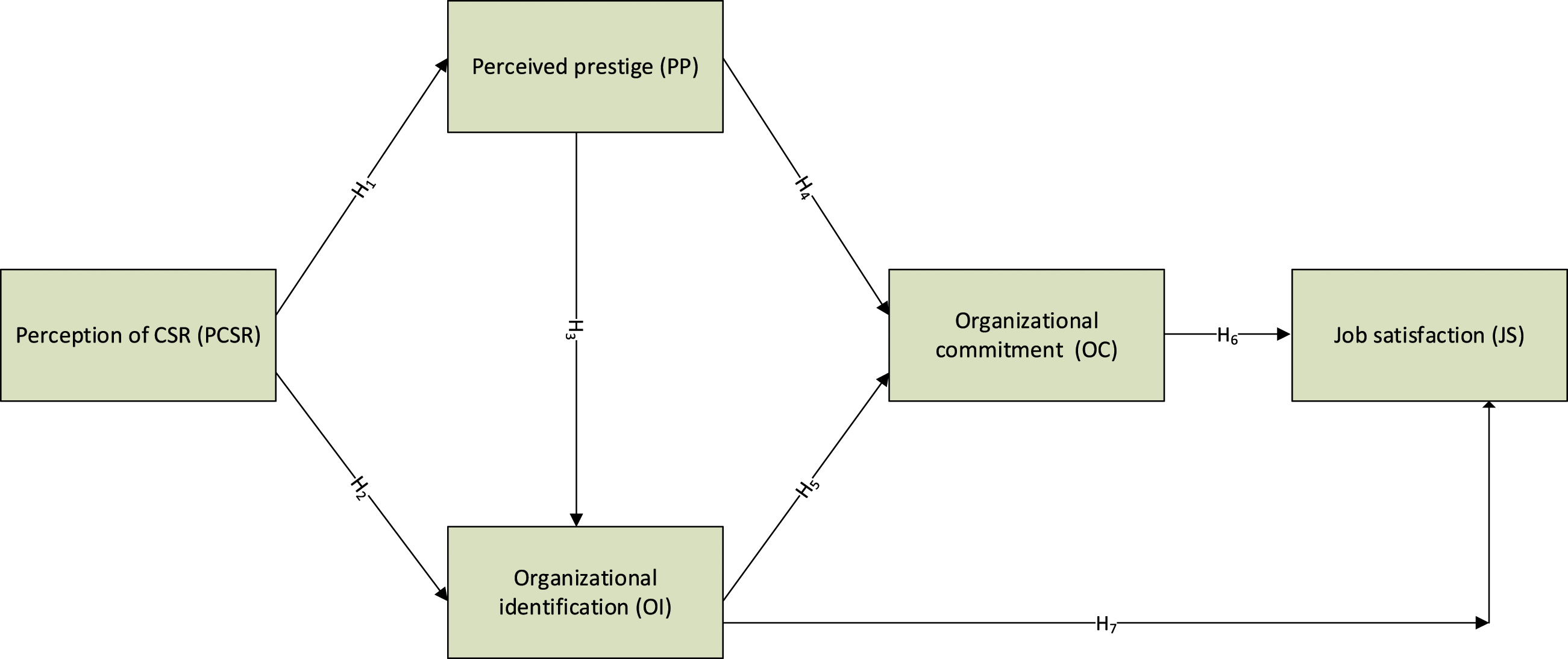
The influence of perception of CSR on perceived prestige
Perceived prestige (PP) is an employee’s assessment of how outsiders such as customers, suppliers and competitors perceive his or her organisation (Smidts et al., 2001). In particular, an employee’s assessment and interpretation of the organisation’s prestige depends on outsiders’ views or the exposure to information about the organisation (Smidts et al., 2001). An organisation’s prestige is constructed and deconstructed by outsiders based on the overall and ongoing assessment of its current assets, future behaviour and present position (Fombrun and Shanley, 1990). Various related constructs are synonymously used by different researchers, such as ‘organisational image’ (Carmeli, 2005), ‘constructed external prestige’ (Dutton et al., 1994), ‘organisational prestige’ (Mael and Ashforth, 1992) or ‘perceived organisational prestige’ (Bhattacharya et al., 1995). Drawing upon studies by Hammond and Slocum (1996), Fombrun and Shanley (1990) and Fryxell and Wang (1994), Carmeli (2005) categorises PP into two forms: economic prestige and social prestige. Economic prestige covers long-term investment, financial soundness and use of organisation assets, whereas social prestige includes quality of products/services, quality of management, community and environmental responsibility, innovativeness and the ability to attract, develop and retain talented people.
With few exceptions (such as Boğan and Dedeoğlu, 2020; Kim et al., 2010), very few studies examine the relationship between PCSR and PP. Employees form PP through outside information sources such as word of mouth, reference groups, external organisation-controlled information, and internal communication about how outsiders perceive the organisation (Smidts et al., 2001). Organisations undertaking CSR activities make employees aware of their CSR activities through communication and, subsequently, this awareness shapes how employees perceive CSR activities (Gond et al., 2010). It is argued that employees are exposed to information about the organisation to different extents, and they also assess and interpret this information differently, so PP is an individual-level variable rather than a group-level variable (Smidts et al., 2001). Recent studies examining CSR strategies in Bangladesh suggest that MNOs with their CSR activities tend to build reputation and image (Roy et al., 2020) and they use internal and external means to communicate these CSR activities (Roy and Quazi, 2021). It is further contended that PP is a reflection of reputation (Dutton et al., 1994). With perceptions shaped by CSR activities, employees compare their organisation's social and environmental contributions with those of other organisations to assess their PP. Therefore, the following hypothesis is proposed:
Perception of CSR has a positive relationship with perceived prestige
The effect of perception of CSR on organisational identification
In broader terms, OI is the degree of congruence between employees’ values and self-concept with their organisations’ values and other attributes. Although many definitions of OI have been proposed by different scholars (Pratt, 1998), all these definitions, however, share similar core attributes or concepts that delineate this construct as they imply that an individual ‘has linked his or her organisational membership to his or her self-concept, either cognitively (e.g., feeling a part of the organisation; internalizing organisational values), emotionally (pride in membership), or both’ (Riketta, 2005: 361, 361).
Due to this link, a psychological merging of self and organisation appears, using ‘We’ instead of ‘I’ (Tyler and Blader, 2000). Researchers frequently use social identity theory to explain such psychological links (such as Ashforth and Mael, 1989; Mael and Ashforth, 1992). According to social identity theory, people tend to classify themselves into various social categories based on factors such as religious affiliation, organisational membership, gender or among others (Ashforth and Mael, 1989). An individual tends to associate or identify with specific social category or categories in order to enhance their self-esteem (Hogg and Turner, 1985) or self-concept (Turban and Greening, 1997). This proposition also equally applies to employees, who tend to categorise themselves based on organisational membership, which enables them to enhance their self-concept.
When an organisation is perceived as socially responsible, employees are likely to believe that the organisation has a distinctive identity that reflects their self-concept (Lichtenstein et al., 2004). Identity distinctiveness can lead to identity attractiveness (Bhattacharya and Sen, 2003). Employees’ perceptions of an organisation's social responsiveness play a critical role in shaping that organisation’s identity attractiveness (Greening and Turban, 2000). Previous studies indicate that PCSR can increase OI, which in turn enhances job performance and job-satisfaction level (Jones, 2010). Kim et al. (2010), however, reveal that PCSR does not directly associate with OI, influencing OI through PP. In the presence of such contested empirical evidence, this study posits that employees strongly identify with organisations if they perceive organisations’ CSR activities as a means of social development. Therefore, the logic above leads to the following hypothesis:
Perception of CSR has a positive relationship with organisational identification
The influence of perceived prestige on organisational identification
Existing studies suggest that CSR initiatives encourage employees to identify with the organisations if these initiatives overlap with employees’ self-concept (i.e. high organisation-employee fit) (Lichtenstein et al., 2004) or enhance employees’ self-esteem and self-enhancement (Bhattacharya et al., 2008; Chaudhary, 2020). Employees feel proud or rewarded to belong to an organisation that is believed to have socially valued characteristics (Dutton et al., 1994). Such associations can enhance self-esteem, which will trigger a high degree of identification. Few studies identify PP as an antecedent of OI (Kim et al., 2010; Van Knippenberg and Sleebos, 2006). Other studies find a positive link between PP and OI (e.g. Bhattacharya et al., 1995; Kim et al., 2010; Mael and Ashforth, 1992). In an organisational setting, employees not only seek financial incentives to fulfil their needs but also have aspirations to be a part of an organisation, particularly one which is highly regarded, respected, or valued. In order to satisfy the need for self-enhancement, employees tend to identify with organisations that have prestigious identities (Bhattacharya and Sen, 2004). Thus, the following hypothesis is set forth:
Perceived prestige has a positive relationship with organisational identification
The impact of perceived prestige on organizational commitment
Although some researchers use OI and OC synonymously in their work (Mathieu and Zajac, 1990), others view OI as a key antecedent of OC (e.g. Kim et al., 2010; Punjaisri et al., 2009; Wiener, 1982). Despite some commonalities, these two concepts are empirically and theoretically distinguishable (Ashforth and Mael, 1989; Mael and Tetrick, 1992; Punjaisri et al., 2009). The fundamental difference between OI and OC lies in the nature of the relationship. Although identification refers to a convergence of self and the organisation, commitment implies a relationship in which an employee and the organisation are separate entities psychologically (Van Knippenberg and Sleebos, 2006). Thus, identification is more organisation-specific than commitment-specific (Mael and Ashforth, 1992).
Conceptually, OC can be characterised by three factors: i) extra effort on behalf of the organisation, ii) acceptance of organisational values and goals, and iii) desire to remain with the employer (Mowday et al., 1982: 27). Through an attitudinal lens, OC can be conceptualised as a person’s ‘positive attitude toward his/her organisation, wherein the person’s sense of self and organisation remain separate entities’ (Sluss et al., 2012: 952).
Unlike OI, the self and the organisation are perceived as independent entities for OC (Ashforth et al., 2008); thus, it can be easily transferred to other organisations without any or with minimal psychological loss. In the literature, social exchange theory is often used to explain the complex relationship between the organisation and its employees. According to social exchange theory’s (SET) norms of reciprocity, employees’ commitment depends on their perceptions of value and benefit that they are expecting from the organisation (Shore and Wayne, 1993).
SET suggests that employees who perceive the organisation as caring for their well-being are more likely to reciprocate by developing a stronger sense of commitment. Scholars (such as Shore and Wayne, 1993) call this concept ‘perceived organisational support' (POS 1 ). The idea of POS can be expanded by including an employee’s perception of how other stakeholders are treated by the organisation. When employees perceive that their organisation is being fair to others, they like to respond positively to their organisation. In other words, treating other stakeholders well signals to an employee that he/she will be treated fairly (Glavas and Kelley, 2014). Furthermore, employees develop high levels of commitment (OC) when outsiders appreciate or favourably evaluate the organisation (Carmeli, 2005). Since employees can augment their self-image via PP, they are likely to feel a sense of obligation to reciprocate. When organisations create social value and key stakeholders view these initiatives positively, employees feel an obligation that motivates them to demonstrate positive responses, that is, commitment. Therefore, the following hypothesis is proposed:
Perceived prestige has a positive relationship with organisational commitment
The influence of organisational identification on organisational commitment
Turker (2009) claims that being a member of a reputed organisation can enhance identity, which will affect individuals’ work attitudes. Similarly, when employees identify themselves with socially responsible organisations, they may like to give more support to attain organisational goals and objectives (both social and economic objectives) (Model et al., 2012). It is also argued that employees who are strongly committed to their organisations are also likely to identify themselves with their organisations (Mowday et al., 1982). In common with some previous studies (e.g. Kim et al., 2010; Wiener, 1982), this study argues that OI is a key antecedent of OC. Therefore, the following hypothesis is established:
Organisational identification has a positive relationship with organisational commitment
The influence of organisational commitment and job satisfaction
Job satisfaction is ‘an individual’s positive emotional orientation towards work’ (Psychogios et al., 2019: 9, 9). It is associated with different factors: work, pay, promotion, supervisor, and co-workers (Smith and Plant, 1982). Employees form attitudes depending on their expected benefits and received benefits and their relationships with peers and supervisors. In other words, when employees’ diverse needs are fulfiled by the organisations, they demonstrate positive feelings, that is, job satisfaction.
It is claimed that employees in modern, technologically advanced societies are motivated by the higher-order needs such as self-esteem, the esteem of others, and self-actualization rather than lower-order needs (Mathis and Jackson, 2005). It might not be the case for developing countries where many, if not most, employees find difficulty in fulfiling their lower-order needs. Unlike developed countries, physiological, safety, and social needs act as key motivators in developing countries (Ranganayakulu, 2005). It is posited that employees working in MNOs are motivated when their lower-level and higher-level needs are fulfiled. CSR can fulfil a range of psychological needs while complementing other forms of non-financial incentives and it also contributes to positively influencing employees (Bauman and Skitka, 2012). It is also argued that CSR activities result in higher job satisfaction (Valentine and Fleischman, 2008). It also appears that CSR cannot directly influence job satisfaction, but it can provide indirect benefits to employees by influencing OC (Song et al., 2015). Interestingly, present studies report inconsistent evidence on the nature of relationships between OC and JS. For instance, Mahanta (2012) and Testa (2001) identify job satisfaction as a key antecedent to OC; whereas other studies (e.g. Song et al., 2015; Vandenberg and Lance, 1992) suggest that OC leads to higher job satisfaction. This study, however, posits that CSR with its capacity can fulfil the range of employees’ desired needs in Bangladesh (see Nasrullah and Rahim, 2014). When their needs are fulfiled, they like to reciprocate through higher commitment, which leads to job satisfaction. Hence, in agreement with Song et al. (2015) and Vandenberg and Lance (1992), the following hypothesis is set forth:
Organisational commitment has a positive relationship with job satisfaction
The influence of organisational identification and job satisfaction
Carmeli and Freund (2009) reveal that membership in a prestigious organisation is a key driver of employee satisfaction. Hence, employees tend to derive more satisfaction from their membership in an organisation with a strong image than from being a part of an organisation with a negative image or that is less well-regarded. More importantly, employees who experience a moderate level of meaningfulness and belonging at work are more satisfied compared to employees who feel a lack of these (Bauman and Skitka, 2012). It is further suggested that external recognition shaped by CSR activities plays a role in augmenting employee satisfaction levels (Lee and Chang, 2008). In a study, Knippenberg and Schie (2000) find OI as a key cause of job satisfaction. Therefore, the following hypothesis is established:
Organisational identification (OI) has a positive relationship with job satisfaction (JS)
Methodology
Profile of multinationals.
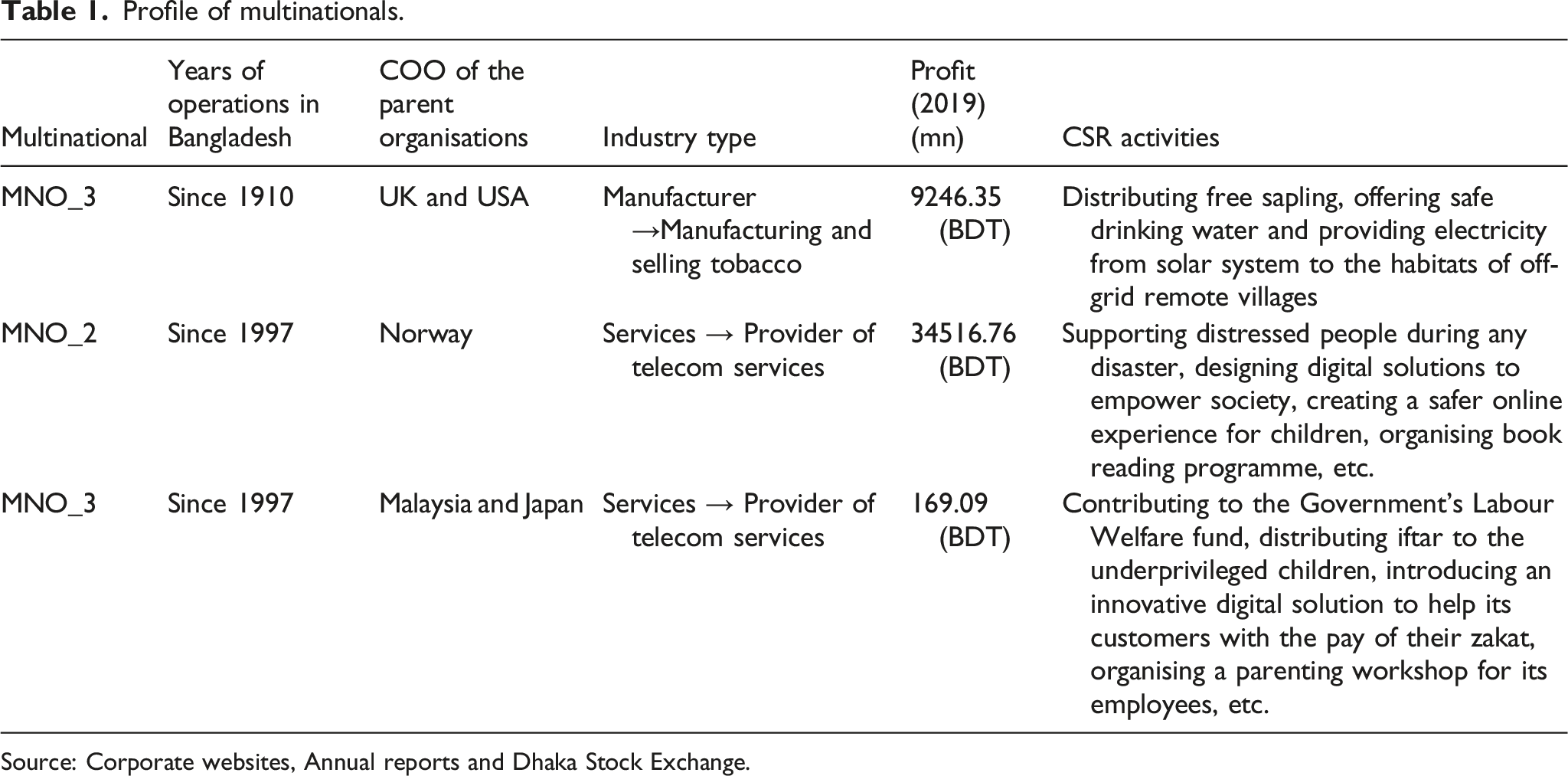
Source: Corporate websites, Annual reports and Dhaka Stock Exchange.
The main criteria for inclusion in the survey were: a) employees from various departments such as marketing, sales, finance, Human Resource (HR), logistics, admin, and accounting, b) mid and entry-level employees from Bangladesh and c) at least 1 year of work experience. Data was mostly collected from employees working in Dhaka; however, some employees from regional offices such as Chittagong, Bogra, and Rajshahi participated in the study. It is important to note that no incentives were offered to any participants. Snowball (non-possibility) sampling rather than random sampling was adopted, as random sampling initially failed to produce the expected number of responses from the potential respondents. Previous researchers also outlined difficulties in conducting research in developing countries including methodological issues, data-gathering complications, and weak links between the research community and business sectors (Sidani and Jamali, 2010). Researchers (such as Psychogios et al., 2019; Segers et al., 2011) support the use of snowball sampling for the collection of data from the targeted population. Following previous studies (e.g. Barnes and Vidgen, 2012; Faul et al., 2007), G*Power 3.0 was used to determine the sample size for the survey. G*Power 3.0 shows that the required sample size for detecting moderate effect sizes with .80 statistical power at the 5% level of significance is 77 (f2 = 0.15, α = 0.05, 1- β = 0.80). Drawing from Cohen’s (1992) statistical power analysis, Hair et al. (2013), on the other hand, show that no fewer than 41 observations are required to detect minimum f2 values of .25 with .80 statistical power at the 5% level of significance if the maximum number of independent variables in the measurement and structural models is 4. The sample size (i.e. 204) for the research in this study is well above the proposed sample size threshold.
Data revealed that 42% of respondents were from MNO2 and 29% of respondents were from each MNO1 and MNO3. Out of 204 respondents, 79.9% of respondents were male and 21.1% of respondents were female. Most respondents (50.5%) held a Bachelor’s degree, 2.9% of respondents had a college/associate degree/diploma, and 46.6% of respondents had a post-graduate degree. The data for the distribution of age illustrates that the majority of respondents (79.4%) were aged between 26 and 40 years. The second highest age grouping was below 25 years with 18.6%, followed by 2% for those aged between 41 and 55 years.
Following the data screening, Partial Least Squares (PLS), the second-generation statistical structural equation modelling (SEM), was used to analyse the hypothesised model. SEM enables the incorporation of unobservable variables that are measured indirectly by indicator variables, and errors in observed or latent variables (Chin, 1998; Hair et al., 2013). As the data for all the model variables were collected from single respondents in a one-time survey, the researchers followed the method proposed by Kock (2015) and Kock and Lynn (2012) to test common method bias.
Measures
To measure all the proposed variables with one exception (i.e. awareness level), a 7-point Likert-type scale (“7”= “Strongly agree” to “1”= “Strongly disagree”) was employed with neutral as the midpoint (see Appendix).
Five items was used to measure the degree to which an organisation’s CSR-related activities are viewed as socially responsible behaviour from an employee's perspective (Perception of CSR). These items, refined from Lichtenstein et al. (2004), were used to measure this construct (see Appendix). Previous studies report a coefficient alpha (α) of 0.88 (Kim et al., 2010) and 0.90 (Lichtenstein et al., 2004) for their study.
For this study, organisational identification (OI) was measured with Mael’s (1988) six-item scale. Initially, Mael (1988) developed these items to measure OI, and then they were adopted by other scholars (such as Bergami and Bagozzi, 2000; Mael and Ashforth, 1992) (see Appendix). Previous studies report a coefficient alpha (α) of 0.81(Mael, 1988), 0.87 (Mael and Ashforth, 1992), and 0.86 (Kreiner and Ashforth, 2004) for these items.
Perceived prestige was measured based on two constructs: perceived external social prestige and perceived external economic prestige. These two forms of PP were theoretically drawn from Hammond and Slocum (1996) and Fryxell and Wang (1994). In this study, eight items (5 items for perceived external social prestige and 3 items for perceived external economic prestige) were borrowed to assess PP (See Appendix). In a prior study, the Cronbach’s alpha (α) for the measure was 0.86 (Carmeli and Freund, 2009).
Organisational commitment was measured using a nine-item scale adapted from the organisational commitment questionnaire (OCQ), as detailed by Mowday et al. (1982) (see Appendix). For this measure, prior studies have found a high Cronbach’s alpha value (e.g. α = 0.89 (Huselid and Day, 1991) and α = 0.91 (Turker, 2009)).
Job satisfaction was measured with a five-item scale, which consists of five dimensions (job, co-workers, supervision, promotional opportunities, and remuneration), borrowed from Wright and Cropanzano (1998) (see Appendix). In prior studies, the Cronbach’s alpha (α) for the measure was 0.75 (Wright and Cropanzano, 1998) and 0.80 (Su et al., 2009).
Statistical analysis
Partial Least Squares (PLS), more specifically SmartPLS 3.0, was used to test the research model. In SmartPLS, latent constructs can be modelled as either reflective or formative constructs (Hair et al., 2013). This study's measurement model included four first-order-reflective-constructs, that is, PCSR (Perception of CSR), OI (Organisational Identification), OC (Organisational Commitment), JS (Job Satisfaction), one second-order-formative construct PP (Perceived prestige) and two first-order-formative constructs for PP, that is, Perceived external social prestige (PEP_S) and Perceived external economic prestige (PEP_E). As the measurement model comprises both formative and reflective indicators, different techniques were used to assess the validity and reliability of these distinctive indicators.
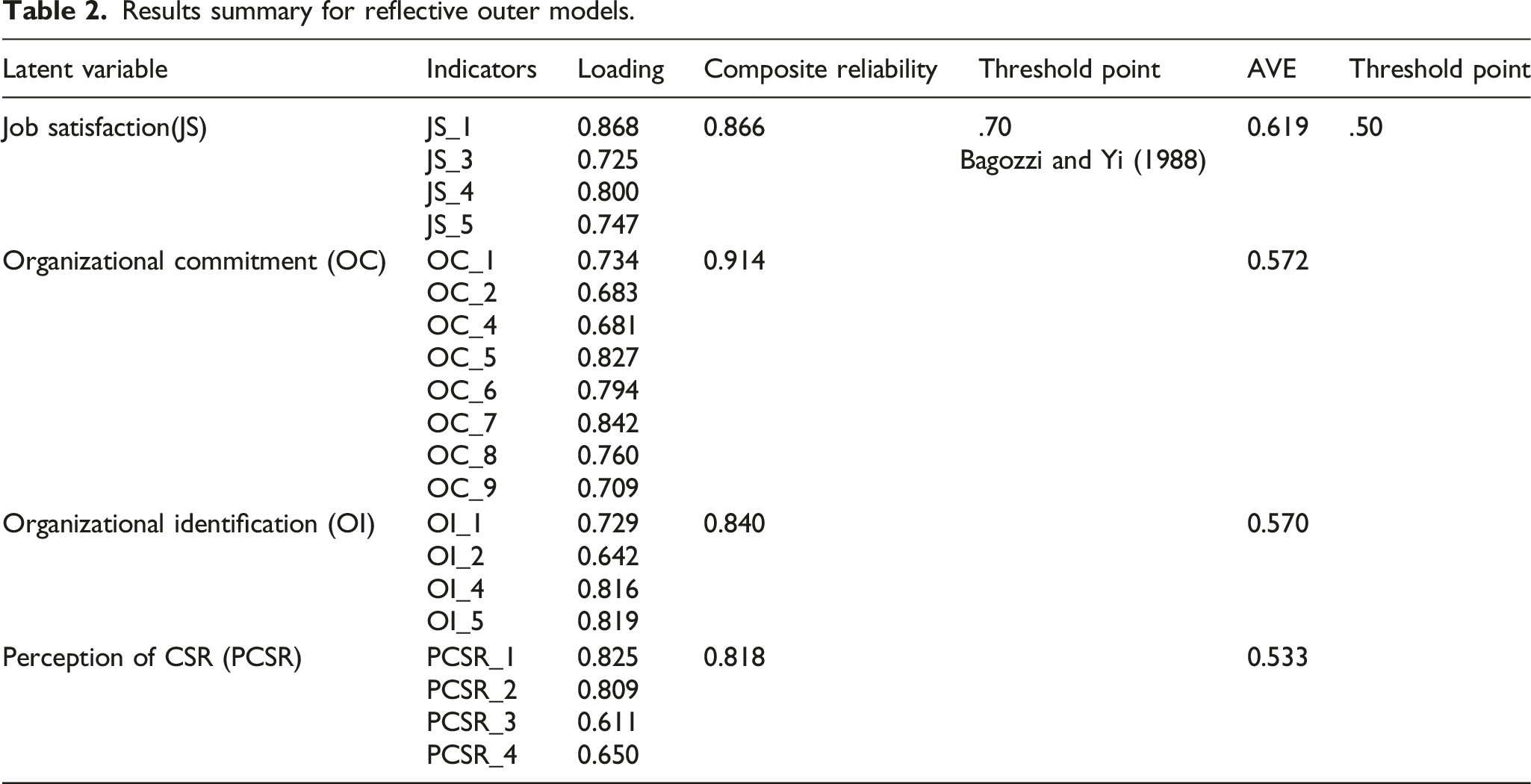
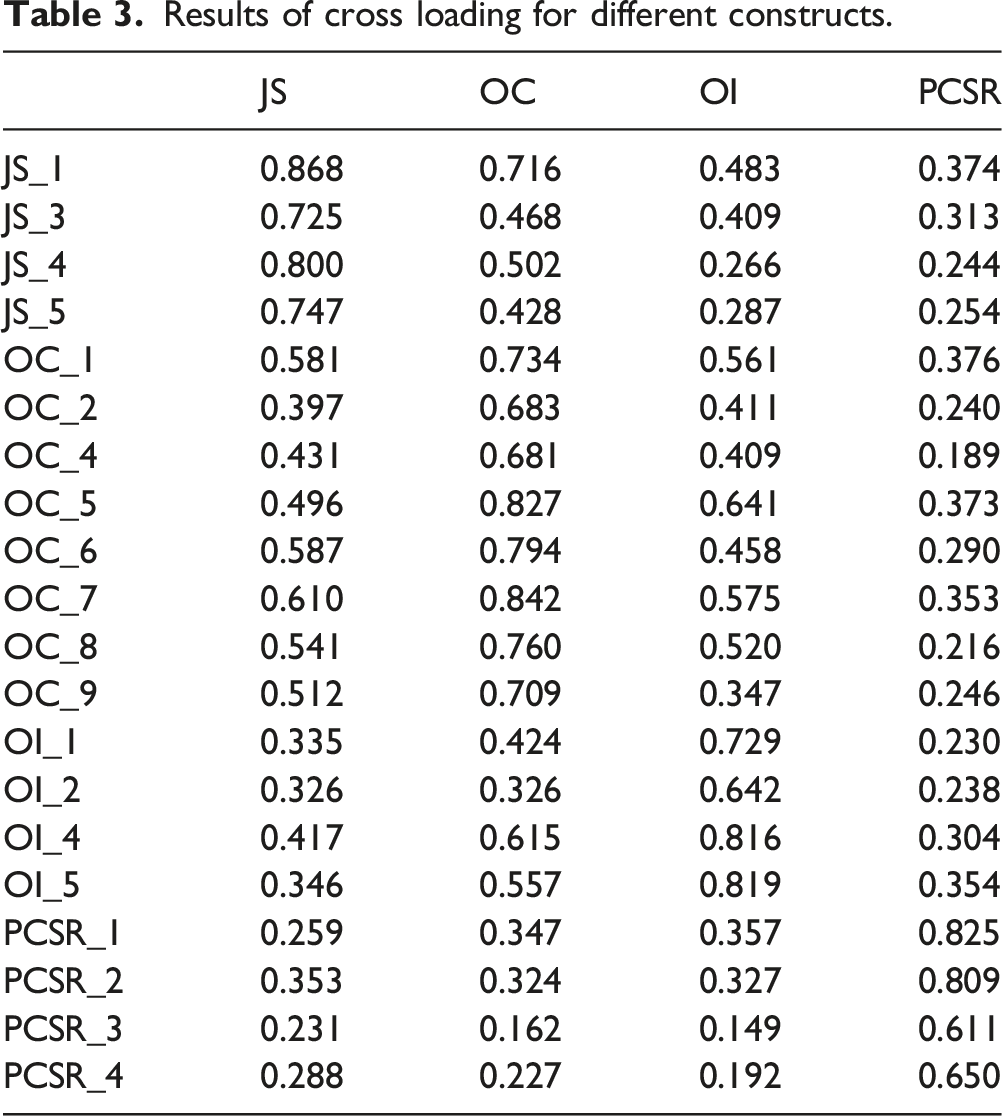
Assessing the reflective measurement model
Results summary for reflective outer models.
Results of cross loading for different constructs.
Fornell–Larcker criterion analysis for checking discriminant validity.
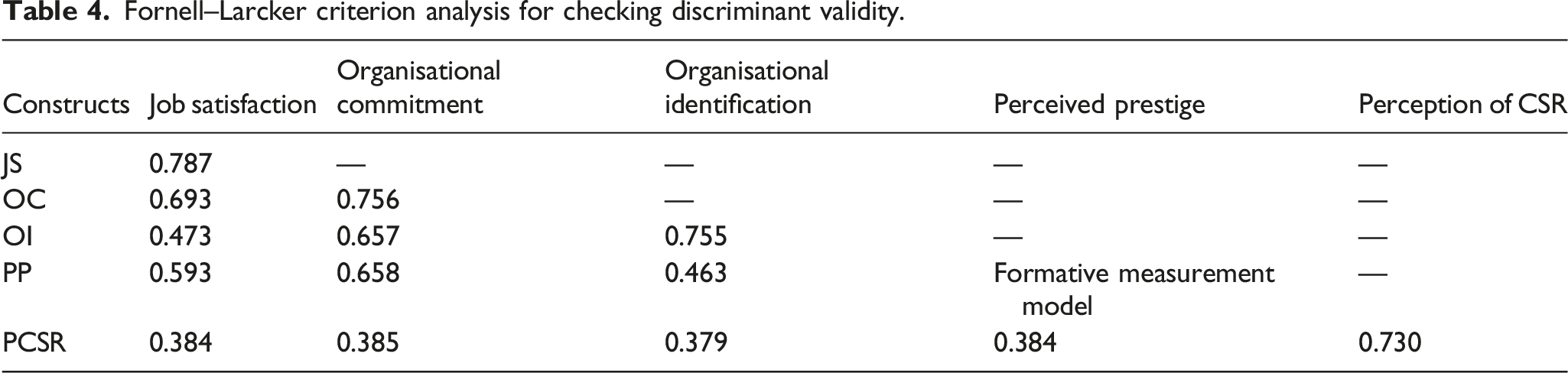
Assessing the formative measurement model
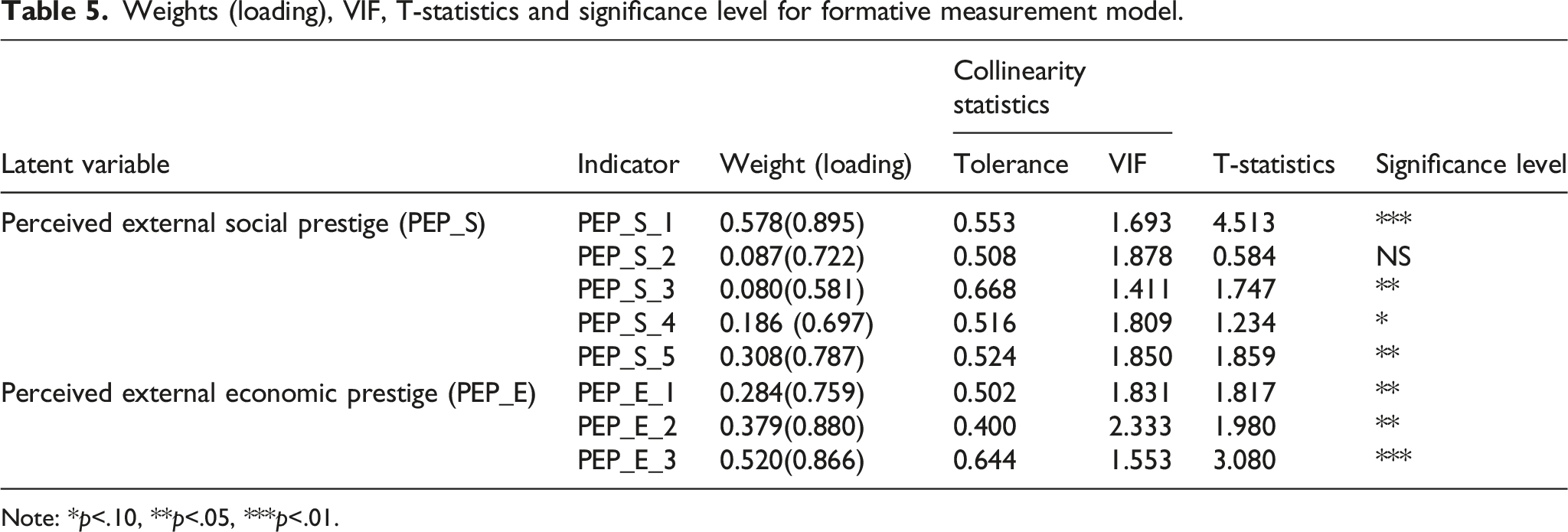
Weights (loading), VIF, T-statistics and significance level for formative measurement model.
Note: *p<.10, **p<.05, ***p<.01.
Variance inflation factor (VIF) and tolerance values generated from the multiple regression analysis were used to check collinearity. All of the indicators’ (see Table 5) VIF values were lower than 5 and their tolerance values were higher than .02, and these results indicated the absence of multicollinearity (Wong, 2013). Furthermore, VIFs resulting from a full collinearity test were lower than 3.3, indicating that the model was free from common method bias (Kock, 2015; Kock and Lynn, 2012).
Evaluation of the structural model
Table for R2 and Q2.
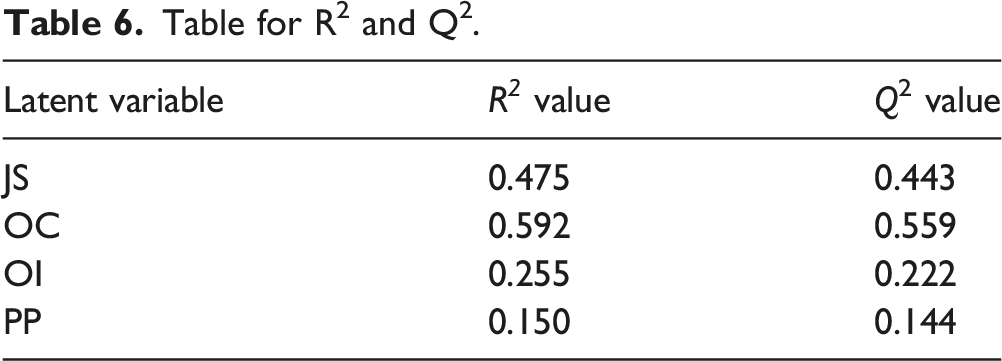
Additionally, Q2 is measured with the aim of making a stronger case for model predictive capabilities (Chin, 1998; Henseler et al., 2009). All Q2 values are considerably above zero, indicating the model’s predictive relevance (Abdullah et al., 2012). Therefore, an interpretation of the conceptual model’s causal relationships is possible.
Results and discussion
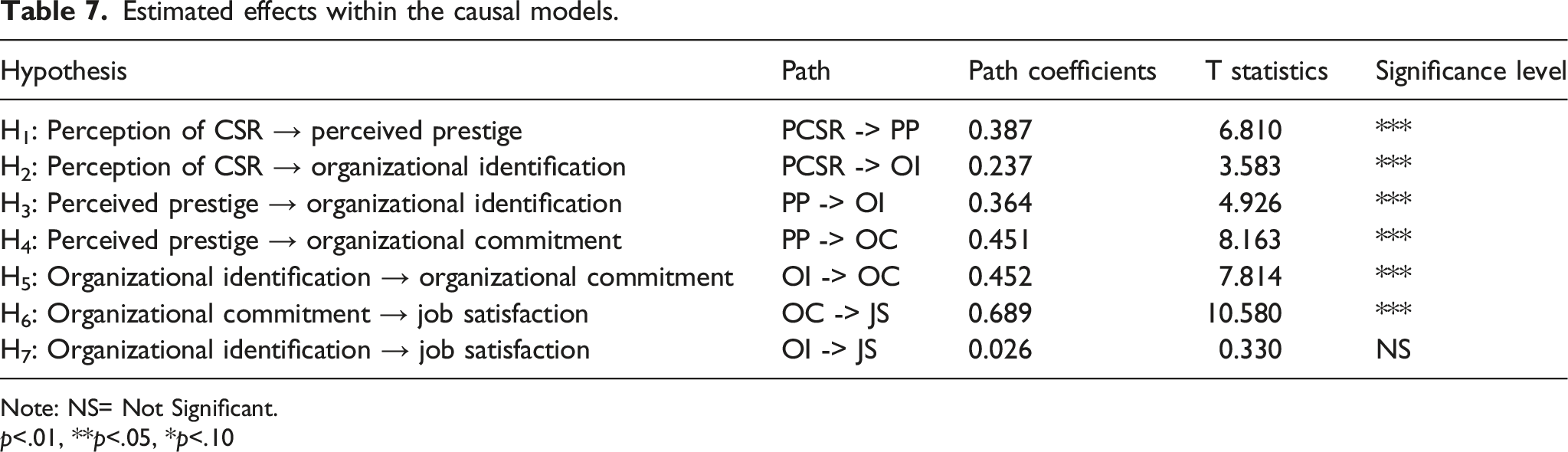
Estimated effects within the causal models.
Note: NS= Not Significant.
p<.01, **p<.05, *p<.10
The findings indicate that perceptions of CSR (PCSR) and perceived prestige (PP) have significant positive influences on organisational identification (OI) (H2: path coefficient 0.237, p < 0.01, H3: path coefficient 0.364, p < 0.01). These are important findings since a prior study has shown surprisingly a non-significant and indirect relationship between PCSR and OI (Kim et al., 2010). With CSR, MNOs in Bangladesh tend to influence stakeholders’ perceptions and build their reputation (Roy et al., 2020), which shapes or reshapes PP. This current study's findings indicate that positive perceptions informed by CSR activities not only enable employees to compare their organisation's social and environmental contributions with those of other organisations to assess and improve their PP (H1: path coefficient 0.387, p < 0.01) but also facilitate organisations to establish and reinforce a sense of belongingness and identification. Employees in Bangladesh like to work for an organisation, which is positively viewed by outsiders (Abdullah et al., 2011, 2012). According to social identity theory, people seek to be a part of an organisation with a positive reputation or image in order to enhance their self-esteem or status (El-Kassar et al., 2017; Mael and Tetrick, 1992). Hence, the reputation or brand shaped or reshaped by CSR affects employees. Unlike western countries where key stakeholders show negative attitudes towards the instrumental drivers (such as improving reputation or image) of CSR (see Becker-Olsen et al., 2006), employees’ attitudes in Bangladesh towards their organisation are less likely to be diminished if CSR is employed to acquire business benefits. This calls for a cautious refinement of the theoretical understanding of how CSR shapes the attitudes of employees in developing countries.
The findings further demonstrate that identification and perceived external prestige reinforce commitment (H4: path coefficient 0.451, p < 0.01 and H5: path coefficient 0.452, p < 0.01), which fosters job satisfaction. In other words, CSR affects commitment and job satisfaction through identification and perceived external prestige. These results corroborate the findings of a great deal of the previous work (e.g. Valentine and Fleischman, 2008). However, this finding does not fully support the findings of (Mollik et al., 2011) who argue that financial incentives such as higher salaries, wages or gratuities are instrumental in boosting employee satisfaction in Bangladesh. A possible explanation for this finding might be that employees from MNOs in Bangladesh seek both financial and non-financial benefits. In Bangladesh where unemployment is high and employees are often victims of irresponsible business practices, CSR can provide different benefits ranging from higher social recognition or status to safe working conditions. By adopting CSR, MNOs tend to fulfil employees’ higher-order needs (e.g. self-esteem) along with other basic needs (e.g. physiological or safety needs) in Bangladesh. When employees’ needs are fulfiled, they like to identify with the organisation, and they further like to reciprocate through higher commitment, which leads to job satisfaction.
By satisfying diverse needs, CSR perception sets a foundation for exchange that inspires employees to reciprocate in the form of higher commitment and job satisfaction. Synthesis between social identity theory and social exchange theory can explain this behaviour. Organisational identification triggered by CSR develops a sense of obligation, which is demonstrated via higher OC (H6: path coefficient 0.689, p < 0.01). Put differently, favourable outcomes, generated by CSR, create an obligation to ‘repay the favour’ in terms of OC. If employees perceive that the organisation cares about society, they are more likely to identify with their organisations and subsequently be committed and satisfied. The present findings seem to be consistent with Gond et al. (2010), who argue that unless employees strongly identify themselves with organisational values, employees will not engage in social exchange with the organisation. However, it appears in this current study that OI is unable to exert a strong influence on JS (H7: path coefficient 0.026, p < 0.01). This finding is consistent with that of Van Dick et al. (2004) who suggest that being highly identified does not always lead to job satisfaction. It is argued that OC is more contingent on perceptions of the quality of the exchange relationship between the organisation and employees than OI is (Van Knippenberg and Sleebos, 2006); therefore, OC is more closely aligned with job satisfaction than OI is.
Conclusion: Contributions, limitations and future research
Contributions
This study responds to the calls of Gond et al. (2017) and Aguinis and Glavas (2012) who demand more empirical studies on micro-CSR by utilising both social exchange theory and social identity theory. Although exploring the fuzzy link between CSR perception and employee behaviour, this paper offers a scope to extend earlier analysis of synthesising both social identity and social exchange theory in micro-CSR literature. In Bangladesh, CSR often fulfils diverse needs that create an obligation among employees, who then reciprocate in the form of higher commitment. This reciprocal exchange between an organisation and its employees builds strong relationships (Cropanzano and Mitchell, 2005). This finding contributes to the current literature by investigating data from Bangladesh, a country that has not been studied in as much depth as is the case with other developed economies. This current study showcases how CSR perception affects organisational identification and perceived prestige, which subsequently shape the behaviour of critical stakeholders such as employees. In addition, the relationship between an organisation and its employees is not adequately explained by social exchange theory alone; the aspects of social identity theory (self-definition and self-categorization) address this limitation (Van Knippenberg and Sleebos, 2006). The findings clarify the link between the process of social exchange and social identification. According to this current study, organisational identification and social exchange interact to generate an obligation to ‘repay the favour’. This study also postulates that when employees identify with their organisations, they are more likely to engage in social exchange. Beyond employees, this theoretical synthesis provides a new understanding of the relationships between the organization and its other stakeholders.
Implications for HR practices
The results have a number of significant implications for the implementation of CSR strategies within companies in non-western contexts. First, although prior studies suggest that organisations should invest in CSR to improve financial performances or shape customer response, this study reveals that external CSR activities can pay off internally. A positive CSR perception can trigger attachment through organisational identification, which subsequently affects organisational commitment and job satisfaction. Both local and multinational organisations in Bangladesh where social recognition is a critical factor of selecting an employer (Abdullah et al., 2011, 2012) could make use of these findings as a tool for talent attraction and retention. Second, the internal communication approach can play a key role in forming CSR perceptions, which have a subsequent impact on employees’ behaviour. For CSR to have meaningful and desirable impacts on employees, their knowledge of the organisation’s CSR initiatives is pivotal. Thus, it is important to communicate CSR policies and in particular external CSR policies such as corporate community policies to employees in order to heighten their CSR awareness and gain appreciation. Finally, organisations should integrate CSR with HR policies for enhancing employees’ performances, rather than using it as a sole property of marketing and public relations. Through innovative HR policies (e.g., recognising employees’ CSR contributions or providing release time for CSR activities), companies can encourage employees to engage in different CSR activities. Employee participation in CSR (e.g. employee volunteering) not only creates a positive perception but also has a strong influence on employee identification (Kim et al., 2010). Similarly, Gond et al. (2010) suggest that the more HR supports employees’ involvement in CSR practices the more likelyit is that a responsible leadership culture is developed within the organisation.
Limitations
Despite the notable contributions of this work, it is important to note several limitations. First, this study included organisational identification and organisational commitment for understanding the impact of CSR perception on employees’ behaviour; but other key factors such as organisational citizenship behaviour or organisational trust have been excluded. Future research could include this wide range of employees’ behaviour and examine the impact of various moderating variables such as gender, age, or education (e.g. HRM, marketing or finance) on this existing model. Second, the quantitative analysis excludes key antecedents of PCSR such as E-O fit, perceived CSR motivation, awareness level (that is, CSR communication), and individual beliefs in CSR. Hence, future research could develop measures of these antecedents in the context of developing countries and then evaluate the relationships between these antecedents and employees’ CSR perceptions. Third, this study used snowball sampling which has some weaknesses; for instance, the sample can be restricted to a rather small network of acquaintances (Profetto-McGrath et al., 2010). Fourth, data were only collected from MNOs, which practise CSR more than the local organisations do. Future studies could focus on both local and MNOs and use random sampling, which will improve the generalisability of the findings and enable researchers to compare the findings that emerged from this study (non-random sampling) with those from future research (random sampling). Finally, the lack of an ability to deal with bidirectional relationships is traditionally considered a major drawback of PLS-SEM (see Hair et al., 2013). Future studies can examine the proposed model via CB-based SEM such as Mplus, which can manage both reflective and formative indicators, and bidirectional relationships (e.g., OC↔JS).
Footnotes
Declaration of conflicting interests
The author(s) declared no potential conflicts of interest with respect to the research, authorship, and/or publication of this article.
Funding
The author(s) received no financial support for the research, authorship, and/or publication of this article.
Notes
Appendix 1
Constructs and measures
Constructs
Measures
Perceived CSR association
1. My organization is committed to using a portion of its resources or profits to support socially responsible causes.
2. My organization gives profits back to the communities where it does business
3. My organization integrates charitable contributions into its business activities
4. Local non-profits and communities get benefit from my organization’s contribution
5. My organization is involved in corporate giving (e.g., donation)
Employee attitudes and behaviour
1. When someone criticizes my organization, it feels like a personal insult.
2. I am very interested in what others think about my organization
3. When I talk about this organization, I usually say ‘we’ rather than ‘they’
4. This organization’s successes are my successes
5. When someone praises this organization, it feels like a personal compliment
6. If a story in the media criticized the organization, I would feel embarrassed
7. I intend to put more efforts for the success of my organization
8. I promote this organization to my friends as a great organization to work for
9. I would accept almost any types of job assignment in order to keep working for my organization
10. I Find that my values and my organization’s values are very similar
11. I am proud to tell others that I am part of this organization
12. This organization really inspires the very best in me in the way of job performance
13. I am extremely glad that I chose this organization over others at the time I joined
14. I really care about the fate of my organization
15. For me this is the best of all possible organizations for which to work.
Perceived external prestige
My organization has a reputation of having a high level of:
1. Quality of management
2. Quality of products or services
3. Ability to attract, develop and retain talented people
4. Community and environmental responsibility
5. Innovativeness
My organization has a reputation of having a high level of:
1. Financial soundness
2. Long-term investment value
3. Use of organization assets
Job satisfaction
1. All in all, how satisfied are you with your job?
2. All in all, how satisfied are you with your co-workers?
3. All in all, how satisfied are you with the supervisor?
4. All in all, how satisfied are you with the promotional opportunities?
5. All in all, how satisfied are you with the remuneration?