




Abstract
This article describes the results of an exploratory action research project that sought to implement an intervention proposal entitled Promoting Self-regulated Musical Learning in Online Lessons (PSRL). This PSRL was developed in accordance with self-regulated learning theory and the corresponding premise that self-regulation can be activated directly through teacher instructions and indirectly by enriching the learning environment with pedagogical tools that facilitate student self-regulation. The PSRL contained two components: (1) a diagnostic approach, which aimed to understand just which self-regulation processes students deployed during practice, and (2) a training approach, which included teacher instructions and tools for self-regulation. In addition, this study explored an online learning environment tailored to activate and enhance self-regulated learning skills. Two cello students from a music education BA programme in Brazil participated in the project. The PSRL was implemented throughout 4 weeks in eight cycles of action. The findings indicate that a questioning approach and the indirect support of the online environment were associated with increased metacognitive reflection in the two students. Although the results cannot be generalized due to the small sample size, the study provides insights into teaching strategies that may support the development of students’ self-regulated musical practice habits in online lessons.
Keywords
Practice is essential to developing and maintaining instrumental music skills (How et al., 2022). This usually takes place when students are alone and thus requires they learn their instruments independently. Research has concluded that instrumentalists can make their practice more effective and attain better performance outcomes by adopting self-regulated behaviours, feelings, and thoughts (Araújo, 2016; McPherson et al., 2019). Therefore, according to researchers studying self-regulation, music teachers have to explicitly teach and support self-regulated learning (SRL) strategies (McPherson et al., 2018; Miksza & Tan, 2015). This aspect becomes especially relevant in online musical instrument lessons in which students hold greater autonomy simply due to the impossibility of certain forms of external regulation, such as direct physical intervention by the teacher (Aaberg, 2023; Pike, 2017; Utermohl de Queiroz et al., 2024). Thus, online settings represent one context where it appears increasingly crucial for music teachers to guide students in acquiring SRL strategies and to effectively enable them to harness the autonomy demanded by the modality. Considering the lack of research exploring approaches to promoting self-regulation in online music instrument lessons, this article presents and analyses the implementation of an intervention proposal designed to help students to become reflective learners.
Theoretical framework
Self-regulated learning
Self-regulation may be defined as planning and monitoring thoughts, actions, and feelings to achieve self-set goals (Cleary & Zimmerman, 2004). Zimmerman (2000) defines SRL from a socio-cognitive perspective in which the interactions between personal, behavioural, and environmental processes influence individual self-regulation. According to this author, SRL constitutes a cyclical process that spans three phases: forethought, performance, and self-reflection.
In the forethought phase, task analysis occurs, that is, when learners determine their learning goals and undertake the strategic planning to achieve them (Zimmerman & Moylan, 2009). As an illustration, self-regulated music learners set long-term goals to play particular music pieces and then divide this goal into smaller goals, such as learning a specific technique related to the piece (McPherson & Zimmerman, 2011). To this end, students develop their strategic plan by selecting, for example, task strategies (e.g., metronome, sing, and mental practice), scheduling practice sessions throughout the day, and structuring their practice environments. Motivational beliefs, such as self-efficacy, influence this phase. Self-efficacy incorporates the personal beliefs of individuals as regards their ability to attain their predetermined goals (Zimmerman, 2000).
In the performance phase, students engage in two processes of self-regulation: self-control and self-observation. Crucial forms of self-control include student tactics for maintaining their concentration during practice sessions, for example, task strategies, self-instructions, time management, environmental structuring, and help-seeking methods (Zimmerman & Moylan, 2009). In turn, self-observation includes metacognitive monitoring strategies. Metacognitive monitoring refers to the ‘thought processes’ that allow students to assess their performance levels during practice, resorting to adaptations in strategic planning if and when necessary (McPherson et al., 2019; Osborne et al., 2021). Self-questioning reflects one of these metacognitive monitoring strategies (Livingston, 2003). Nielsen (2001) states that the ability of students to self-question during practice (e.g., how can I solve this?) can influence and increase their metacognitive awareness. Furthermore, on how self-monitoring shapes learning, Kirschenbaum and Karoly (1977) suggest that negative self-monitoring, characterized by tracking negative behaviours, incurs the potential to diminish motivation and heighten learner anxiety levels.
Finally, the third phase, self-reflection, involves learners evaluating their own learning progress. This applies two processes: self-judgement (self-evaluation and causal attribution) and self-reaction. Self-evaluation consists of comparing the current performance either with a past performance by the same individual or with the performance of other individuals or the ability to achieve all the different facets of a particular skill (Bandura, 1986). In turn, causal attribution refers to the influence of events or behaviours on the results obtained. The self-reaction process encapsulates the ability of students to adapt strategies and methods to future learning processes. The model becomes cyclical to the extent that self-reflection provides feedback that will then assist in correcting current or future learning cycle flaws.
Promoting SRL
According to Dignath and Veenman (2021), when teachers instruct self-regulation strategies, they directly promote the adoption of self-regulated behaviours by their students. These authors propose two categories for direct instructions: (1) explicit strategy instruction, when teachers explicitly instruct SRL strategies, and (2) implicit strategy instruction, when teachers act as a model and deploy the strategies. These authors exemplify forms of directly teaching self-regulation strategies that is, (1) demonstration (when teachers demonstrate strategies), (2) explanation (when teacher explain how to apply them), (3) call (when teachers request students apply strategies), and (4) asking (when the teacher asks questions about the strategies). Based on a review of 17 observational studies that sought to understand how school teachers foster SRL strategies, Dignath and Veenman (2021) argue that explicit teaching leads students to develop greater metacognitive knowledge, thus ensuring more sustainable usage of strategies. This derives from how teaching using the explicit approach informs students about the benefits of implementing a particular SRL strategy, provides them with guidance on how best to apply it, and furthermore encourages them to reflect on its utilization.
In addition to direct promotion, Dignath and Veenman (2021) also consider the indirect activation of self-regulation by designing appropriate learning environments. In this article, we focus on indirectly promoting SRL through the pedagogical tools incorporated into the learning environment. These aim to lead students to adopt self-regulated behaviours and implement them without any teacher guidance, that is, outside of classroom contexts.
SRL interventions in musical setting
In face-to-face settings, the authors applied intervention studies to encourage the adoption of SRL processes by music students (Mieder & Bugos, 2017; Miksza, 2015; Miksza,McPherson et al., 2018). The study by Mieder and Bugos (2017) set out to understand how a curriculum based on the SRL theoretical principles might influence the performance achievements of 30 instrumentalists. The results convey how, through curriculum implementation, students became more aware of their practice strategies and strengthened their self-efficacy beliefs. Miksza (2015) examined how self-regulation instructions would influence the performance, practice, and levels of self-efficacy of 28 wind players divided into two groups. The first group was taught task strategies while the second received teaching about the SRL principles alongside these task strategies. The results demonstrated that the group introduced to the SRL principles returned stronger performance outcomes. Furthermore, Miksza, McPherson et al. (2018) inserted SRL theory into planning music lessons. In turn, this article presents practical factors for applying SRL concepts in music classrooms. Studies have also focused on understanding if and how digital tools foster SRL skills. Brook and Upitis (2015) and Wan et al. (2023) demonstrate that online features designed to support SRL do help students self-regulate their practice by supporting the application of task strategies and/or encouraging help-seeking.
The aforementioned studies sought to understand the effects of teaching self-regulation principles on student learning in face-to-face settings. However, there remains a clear need for further studies seeking to understand how we may develop SRL skills specifically in students learning online. Thus, this study approaches the perspectives of participants and the actual effects on student practice behaviours when implementing a SRL of an intervention proposal called Promoting Self-regulated Musical Learning in Online Lessons (PSRL). Thus, we addressed the following research questions: (1) According to their self-reports, which aspects of students’ practice behaviours were most influenced by the PSRL intervention proposal? (2) In what ways do the teacher’s self-regulation pedagogical strategies align with the reported changes in students’ practice behaviours?
Method
This action research (AR) project took place to develop practical solutions for fostering student self-regulation when learning online. AR is characterized as the teacher-as-investigator methodology (Creswell, 2012). Through this methodology, practitioners seek to improve and develop particular practices (Robson & McCartan, 2016).
Participants and research site
Two cello students, ‘Arthur’ and ‘Emma,’ and the teacher (first author), participated in this project that applied the purposive sampling method (Robson & McCartan, 2016) to select the participants. The selection criteria were (1) higher education cello students, (2) at an advanced or intermediate level, and (3) Portuguese speakers. The students were contacted individually by the teacher who had already taught them 3 years prior to beginning this project. Before the project started, they were invited to choose the pieces they would like to work on during the implementation of the intervention. This strategy was based on the Renwick and McPherson (2002) recommendation that allowing the choice of repertoire to be student-centred results in increased motivation for practice.
Arthur was 24 years and had then been learning cello for 8 years. During the project, he worked on the following repertoire: D major scale, Popper Etude no. 1, and prelude from Suite no. 3 by J. S. Bach. Emma, 23 years, had been learning cello for 4 years. During the project, she chose to work on the following repertoire: E major scale, Popper Etude no. 11, and Allemande from the first suite by J. S. Bach.
Throughout the project’s duration, the students were enrolled in a Bachelor of Music (Music Education) programme at a higher education institution in Brazil. Students were able to enrol for this degree whether or not they already had experience playing the cello. Thus, Emma started her cello studies in her first year of undergraduate studies, where she took cello lessons with the teacher between 2018 and 2019 (2 academic years). Arthur had already played the cello before starting his undergraduate studies, and he took lessons with the teacher between 2017 and 2019 (3 academic years).
The teacher (first author) was then 35 years, held a master’s degree in Cello Performance, and was in the fourth year of a Ph.D. in Music. She has 14 years of experience teaching cello (5 years of experience at a university level). During the course of this project, she was based in Portugal.
The Council of Ethics of the University of Aveiro issued its ethical approval for this research with the students providing their informed consent, and with the anonymization of all the personal data presented in the findings.
Intervention proposal
The PSRL project is an intervention proposal with a student-centred approach. It is based on Zimmermann’s (2000) cyclical model, Cleary and Zimmerman’s (2004) Self-Regulation Empowerment Program (SREP) and the of concept direct and indirect promotion of self-regulation. This intervention proposal incorporated the following materials and approaches: (1) an online learning environment stocked with materials on SRL theory; (2) an online questionnaire called a practice form created to assess and activate self-regulatory skills during practice; and (3) the teacher’s approaches – teaching the self-regulation strategies directly to students. Hence, this intervention proposal synchronized both the teacher’s approaches and the learning environment around developing self-regulated students. The following paragraphs further elaborate on these aspects.
The online learning environment (OLE)
A webpage was developed to indirectly promote student self-regulation (see https://pamaonline.net.br/). The environment contained content that presented students with a series of the principles for self-regulated learning, such as the cyclical self-regulatory phases and SRL principles such as setting goals, strategic planning, environmental structuring, task strategies, self-efficacy, self-assessment, and causal attribution. To produce these materials, we primarily relied on studies from the music SRL literature (Barry & Hallam, 2002; McPherson & Zimmerman, 2011; Mieder & Bugos, 2017; Miksza, 2012, 2015; Miksza & Tan, 2015; Zimmerman, 1998), as well as on literature specific to the cello (Benedetti, 2017; Sazer, 1995). The task strategies (e.g., chunking/chaining, singing, and playing, using a metronome) were inserted into a mind map application incorporated into the OLE. Each task strategy was accompanied by an explanation of how to apply it and which challenges it was recommended for. All these learning contents were added to the environment in both text (in Portuguese) and image formats (see Supplemental Appendix A for the translated English version).
Practice form
A questionnaire was added to the OLE. Entitled ‘practice form,’ this was designed to assess and simultaneously contribute to self-regulation by students during their practice. Its structure was predominantly shaped by adapting a Portuguese translation of items extracted from the microanalysis protocol produced by Osborne et al. (2021), as well as the Portuguese translations of this protocol developed by Moisés (2022) and Soares (2021), which also informed the adaptation process. According to McPherson et al. (2019), microanalysis is an SRL assessment technique that provides a detailed and contextualized view of how music students regulate their actions, thoughts, and feelings during practice across the three phases: forethought, performance, and self-reflection. In addition to translating the items into Portuguese, the sentences were also adapted from the second person (you) to questions in the first to involve the students in more reflective processes. The items we produced stemmed from the SRL precepts put forward by McPherson and Zimmerman (2011). The practice form contained 19 open-ended and Likert scale, multiple-choice questions intended to diagnose and activate self-regulated student behaviours during practice (see Supplemental Appendix B). The practice form was divided into two sections. The first section contained questions relating to the components of the forethought phase (task analysis and self-motivation beliefs). The second section questioned the performance phase (self-control and self-observation) and self-reflection (self-judgement and self-reaction). The students were instructed to answer the first section before practice and the second section after practice.
The teacher’s approaches
The teacher took on the role of self-regulated learning coach (Cleary & Zimmerman, 2004), thus seeking to endow students with the SRL principles through different approaches: (1) demonstration, (2) explanation of the strategy, (3) calling on the student to apply the strategy, and (4) asking questions intended to lead students to reflect on why, how, and where to apply a strategy. The teacher designed her approaches to instructing self-regulation strategies based on a constructivist practice (López-Íñiguez & Pozo, 2016; Scott, 2011) in which dialogic interaction and cooperation play central roles.
Procedures
Data collection took place more than 4 weeks, coinciding with the students’ summer vacation, allowing us to gather data without interference from their regular instrument lessons. First, an information session, led by the teacher, was held and introduced the students to (1) SRL theory; (2) the OLE, its contents, and how to navigate them; and (3) the practice form items, which the teacher read and discussed with the students to ensure their understanding. During this meeting, students and the teacher discussed the SRL concepts. In addition, students voluntarily shared their perceptions of the content covered and provided feedback on their practice behaviours.
Synchronous lessons took place at the University of Aveiro and the students’ own university in rooms prepared for videoconference meetings and distance learning. Zoom (version 5.15.7 20303) served as the video conferencing software. The technical equipment available in the teacher’s room included the following: Xenyx Q1202USB audio mixer, ambient microphone, AVer CAM520 Pro2 camera featuring 4k resolution, a 55-inch screen, and headphones. Meanwhile, the students’ room was equipped with Microsoft Lifecam 3000 camera, Lavalier Lyco BT-96 wireless microphone, a video projector, and headphones. Before the online lessons started, there was an equipment test (computers, microphones, and cameras) in both classrooms. Eight synchronous lessons, two per week to collect comprehensive data about the teacher’s synchronous self-regulation instructions, took place, averaging 1 h and 15 min per student. These lessons were individual but students were encouraged to attend their classmate’s sessions, which students chose to do on most occasions. Asynchronous communication took place through a messaging platform (WhatsApp). The asynchronous interactions were mainly initiated by the teacher and primarily focused on clarifying assignments, scheduling lessons, sharing resources, and providing feedback, primarily related to the self-regulation instructions.
At every practice session, students completed the practice form. The teacher analysed the answers between lessons and, according to this examination, she planned the next lesson.
Based on a cyclical approach to AR (Robson & McCartan, 2016), each lesson per student (N = 8) accounted for a cycle consisting of three steps: (1) planning (lesson planning through analysis of the practice forms); (2) action (the lesson); and (3) observation and reflection (preliminary analysis of the recorded lesson, reflections on how to improve teaching and updating the OLE for the next cycle).
Data collection and analysis
The data sources analysed stemmed from the synchronous transcripts of the lesson video-recordings (18 h and 40 min), lesson plans (34 pages), teacher field notes (8 pages), student responses to the practice form (Arthur: 15 responses; Emma: 19 responses), asynchronous interactions on the messaging platform (18 pages of transcribed messages), the transcript of the information meeting (20 pages), and the transcript of the post-study focus group (24 pages).
We conducted a post-study focus group to explore participants’ perceptions of the intervention’s effects on their musical practice. The questions focused on changes in participants’ musical practice influenced by the intervention, for example, ‘How did you practise immediately before participating in this intervention? What practice strategies did you use?’ and ‘After participating in this intervention, what do you think changed the most in your musical practice process?’
The data analysis was conducted using a qualitative approach based on theoretical thematic analysis (Braun & Clarke, 2006). As Cain (2008) highlights about AR methodology in music education, this study collected a substantial amount of data, but only the data relevant to the purposes of answering our research questions were reported. Initially, we identified the main effects of the intervention on practice self-regulation, focusing on the self-regulatory processes that the participants perceived as most influenced by the intervention, as highlighted in the post-study focus group (see Figure 1). We then corroborated these findings with evidence from other data sources, such as lesson recordings, lesson plans, and practice form responses. This process helped us to explore connections between the teacher’s self-regulation instructions and the effects reported by the students, offering a deeper understanding of the intervention’s impact.
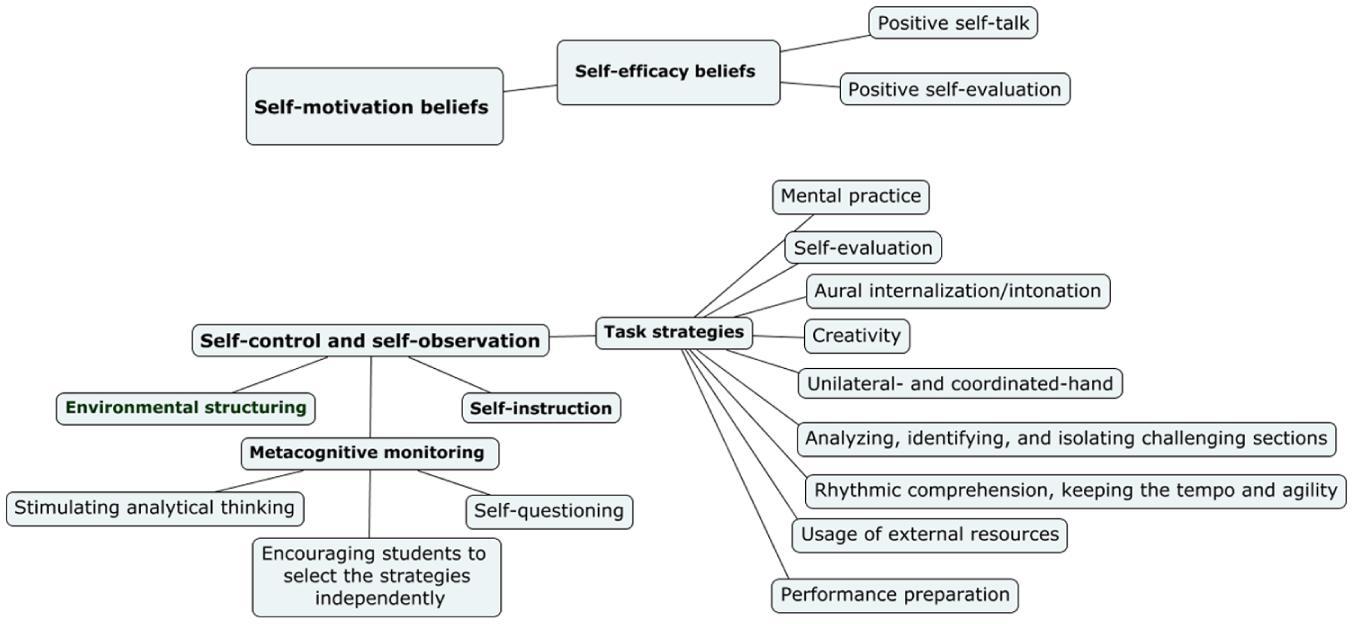
Codes and Categories Based on SRL Theory.
The triangulation of the different types of data sources (e.g., observation, interviews, and questionnaires) gathered from different individuals (teachers and students) served to corroborate the evidence (Creswell, 2012). The first author (Utermohl de Queiroz) led the first round of coding. Subsequently, the second author (Foletto) and the third (Pedro) individually reviewed the initially attributed codes. Finally, to minimize bias and reinforce the credibility of the data analysis, the authors engaged in discussions, critical reflection, and data review sessions until there was complete consensus on the coding (Creswell, 2012). We applied NVivo 11 software, version 1.0 for this coding process.
We coded the data based on the SRL theoretical model put forward by Zimmerman and Moylan (2009). More specifically, the task strategy codes (e.g., ‘singing’, ‘make it musical’, and ‘write on music’) derive from the musical self-regulation literature (McPherson & Zimmerman, 2011; Mieder & Bugos, 2017; Miksza, 2012, 2015; Miksza & Tan, 2015). These codes were grouped into categories related to musical skills (e.g., aural internalization/intonation, creativity, and unilateral- and coordinated-hand).
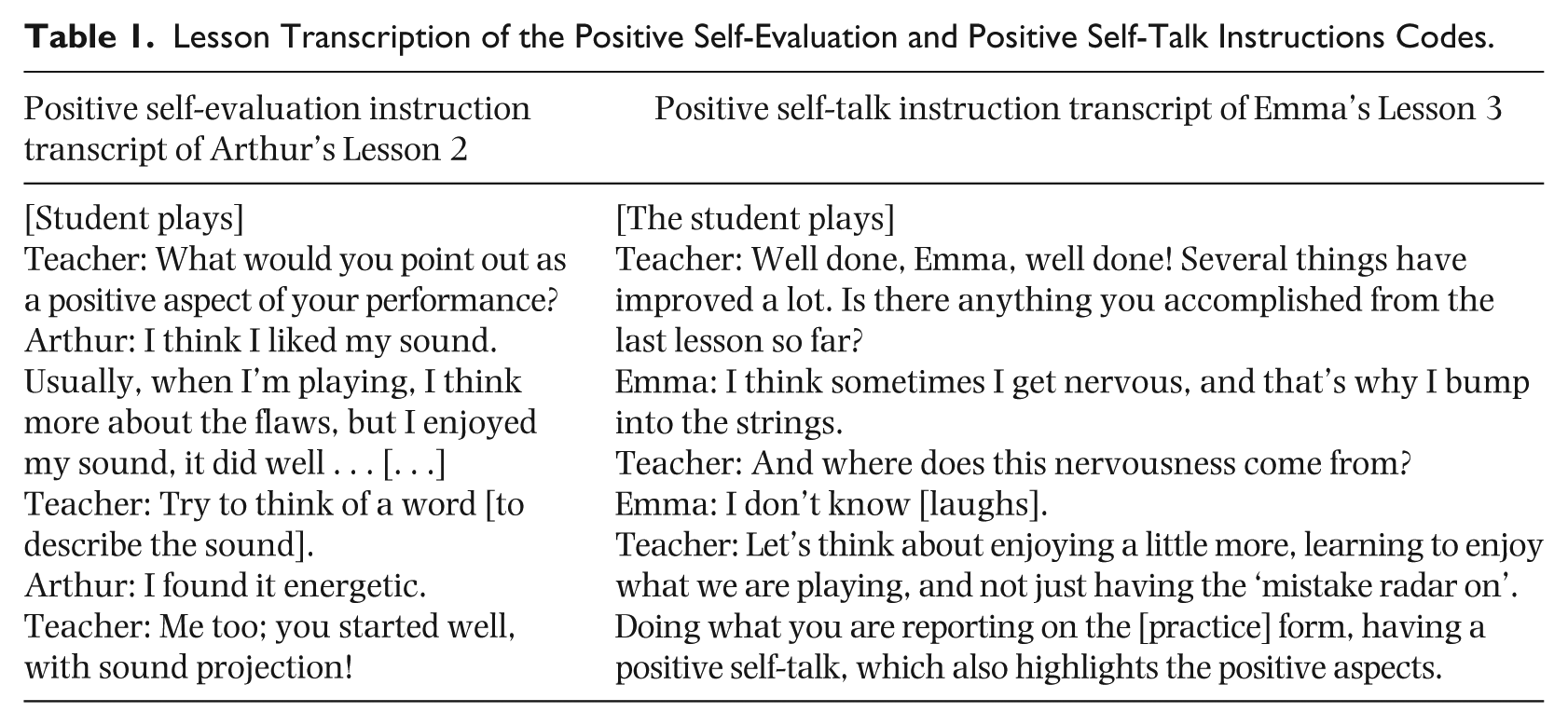
We coded the lesson recordings according to the rehearsal frame concept set out by Duke (2000). Specifically, we focused on coding only the segments where the teacher provided self-regulation instructions. These segments were treated as distinct units of analysis. We conducted a descriptive analysis reporting the frequencies of self-regulation instructions provided by the teacher. Transcriptions of some self-regulation instructions are also presented in tables (see Tables 1, 3, and 5) in the findings section to exemplify the specific types of guidance offered during the lessons. We analysed the teacher’s self-regulation instructions to understand their alignment with the students’ reported practice behaviours.
Lesson Transcription of the Positive Self-Evaluation and Positive Self-Talk Instructions Codes.
Some items on the practice forms produced quantitative answers while others resulted in open-ended answers. For the quantitative ratings of student self-efficacy beliefs, we calculated the average throughout the data collection process. The responses regarding the application of task strategies were open-ended and so we coded for the student reported frequency of task strategy.
Findings
In this section, we present the categories: (1) self-motivation beliefs and (2) self-control and self-observation. These categories refer to the self-regulatory practice habits that the participants described as most influenced by the intervention proposal (first research question). In addition, the teacher’s self-regulation instructions are described in relation to the practice behaviours reported by the students (second research question). We highlighted the codes in italics and indicated the frequency for each code.
Self-motivation beliefs
The teacher noted how the students often made self-deprecating comments about their performances, always highlighting mistakes or applying negative words to describe it (e.g., Emma, after playing in lesson 1: ‘It was horrible, right?’). Thus, as a means of promoting student self-efficacy beliefs, the teacher adopted a pedagogical strategy of provoking reflection and the identification of positive aspects in their performances through the application of questions intended to stimulate positive self-evaluation instruction (11 references), such as ‘what do you think was good about your playing?’ (see one example extracted from a lesson in Table 1).
The students reported similar levels of self-efficacy beliefs (Arthur, M = 77.33%; SD = 11.81%; Emma, M = 76.47%; SD: 4.77%) with these values increasing in the final week of the intervention (Arthur, 90% and Emma, 80%). They also reported recourse to the positive self-talk strategy during practice (seven references. Emma: ‘I am telling myself that it is not impossible, and I praised some things’). This strategy received encouragement from the teacher during the lessons (two references. See Table 1). In addition, in the post-study focus group, students specifically noted how the intervention had led them to develop greater confidence in their abilities, impacting positively on their self-esteem: During the lessons, we noticed this progress, not only in the [musical] instrument but the psychological progress that we are solving here. It showed us that we could do certain things. And then, little by little, it changes. If we get it sorted out in the lesson, we can solve it later. (Arthur) So, another thing that was worked on a lot was this issue of self-esteem, not facing that difficulty and demeaning oneself, but looking for ways to ease that difficulty and keep moving forward. (Emma)
Self-control and self-observation
Task strategies
The students revealed that before participating in the intervention proposal, they mostly applied the following task strategies: using the metronome and skipping to critical sections (Arthur), and metronome and using a reference sound-tuner (Emma). Emma stated she had the habit of using a practice journal. However, she indicated she mostly did not use any specific task strategy, simply playing the entire musical piece from beginning to end, even when faced by mistakes (‘So, I wanted just to play, play, play, play, play and not solve the problem’). Arthur and Emma indicated their practice was ‘automatic’ (five references), denoting how they did not engage in reflection during practice.
Task strategies instructions
The students stated they accessed the mind map application containing the task strategies more frequently than the other materials about SRL principles (Supplemental Appendix A presents the task strategies included in the mind map). Table 2 sets out the list of codes for the subcategory task strategies. The teacher and students focused more on strategies for developing aural internalization/intonation (Total: 111 references). In addition to this category, which presented similar coding frequency between teacher and student, Table 2 indicates that the teacher prioritized teaching strategies from the category unilateral- and coordinated-hand, followed by creativity. On the contrary, students reported a higher frequency of using strategies from the categories analysing, identifying, and isolating challenging sections and rhythmic understanding, maintaining tempo and agility. Therefore, in the other categories, there was an inconsistency in the level of instructional guidance concerning the application of strategies by students: creativity (T 1 : 49 references; S 2 : 24); unilateral- and coordinated-hand (T: 52 references; S: 21); analyse, identify, and isolate challenging sections (S: 30 references T: 19); rhythmic comprehension, keeping the tempo and agility (S: 29 references; T: 6); self-evaluation (S: 19 references; T: 9); usage of external resources (T: 11 references; S: 3); performance preparation (T: 8 references; S: 6); and mental practice (T: 4 references; S: 1). Table 2 also demonstrates the diversity of strategies instructed during the intervention and the most frequently coded categories, highlighting the technical musical skills most worked on during the intervention.
Task Strategies Reported by the Students Via Practice Forms and Strategy Instructions Delivered by the Teacher Organized by Category.
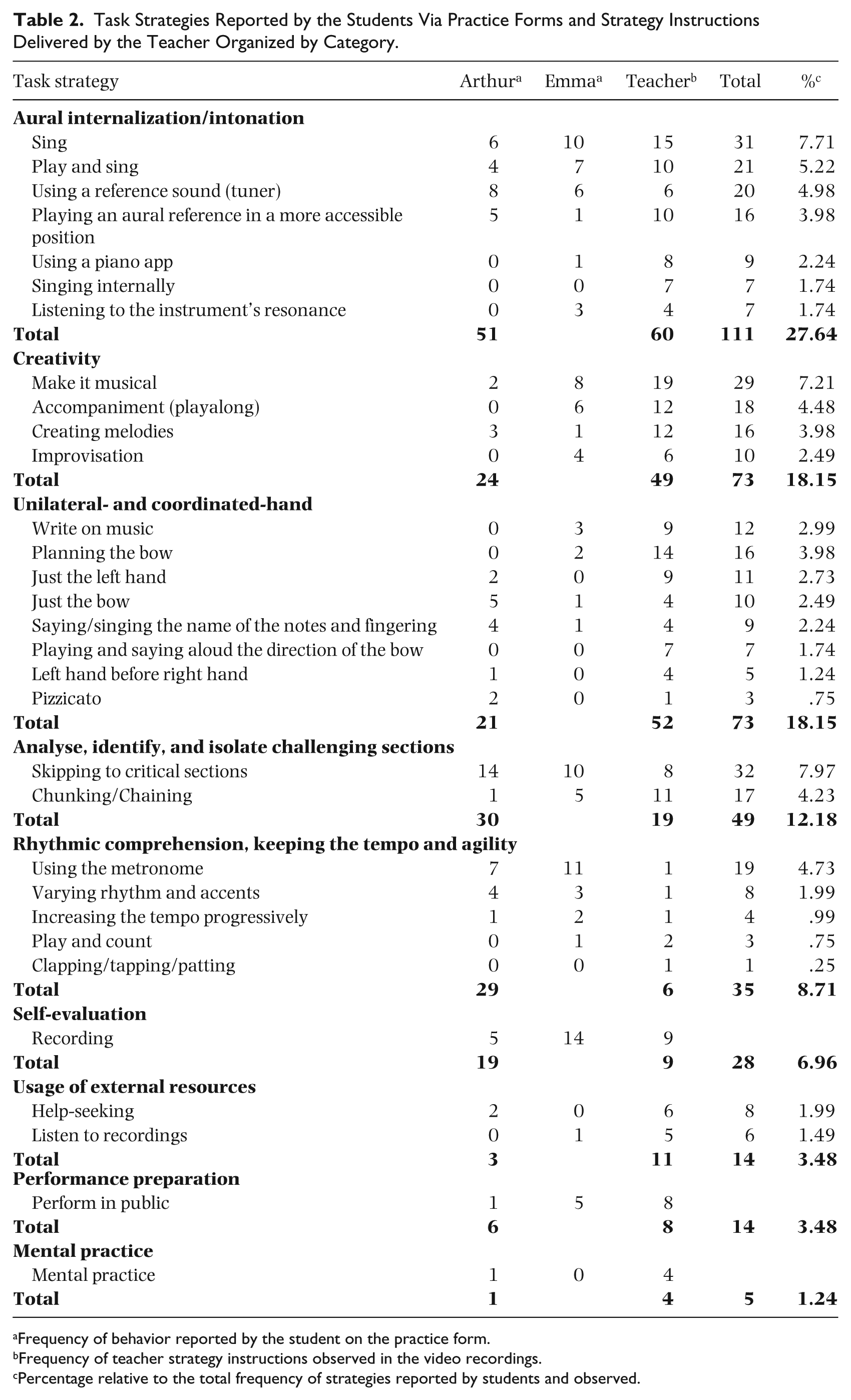
Frequency of behavior reported by the student on the practice form.
Frequency of teacher strategy instructions observed in the video recordings.
Percentage relative to the total frequency of strategies reported by students and observed.
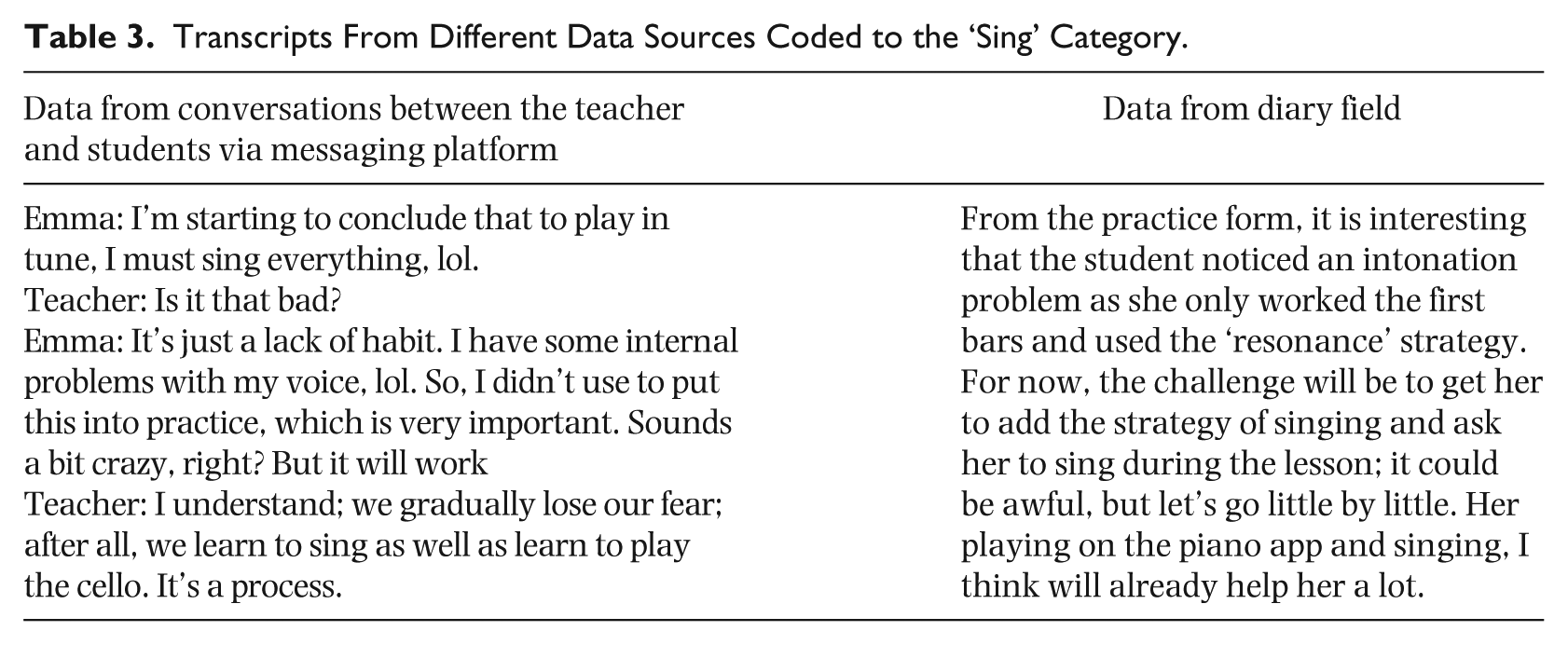
According to Emma, the strategy taught during the intervention proposal that helped the most was sing: ‘I would take the sheet music and turn on my little keyboard [an app], then hum the notes and listen to their sound before taking to the instrument’ (see Table 3 for data transcriptions relating to sing strategy instruction). As can be seen in Table 2, this was one of the most applied strategies during the intervention. The strategy instructions presented in the category aural internalization/intonation were among those most taught by the teacher to foster intonation monitoring after having identified this striking difficulty in the students.
Transcripts From Different Data Sources Coded to the ‘Sing’ Category.
The students indicated how they only sought to think musically during practice after overcoming ‘technical barriers’. With that in mind, the teacher added the task strategy make it musical both to the OLE and to her pedagogical practice. Just like the sing task strategy, this was one of the most applied strategies during the intervention. According to Arthur, this was the strategy that most helped: (make it musical) it was [the task strategy] that I found most interesting because I was thinking technically about everything. So, sometimes changing the tempo of a phrase a little bit . . . it won’t mischaracterize, it’ll give a musical idea, and you’ll solve the problem.
The teacher also taught strategy instructions such as creating melodies (e.g., playing your melodies inspired by the sound materials of the pieces) and improvisation (e.g., tonal improvisation using accompaniment) to empower student musicality and creativity.
Recordings (the fourth most codified task strategy, see Table 2) was a strategy instruction applied to encourage student self-assessment. The teacher requested student recordings, watched the videos, and sent feedback via the messaging platform (see Table 4). In one lesson, the teacher watched and discussed the recordings in conjunction with the students.
Transcripts of Asynchronous Interactions on the Messaging Platform Coded as ‘Performance Preparation’ and ‘Recordings’.
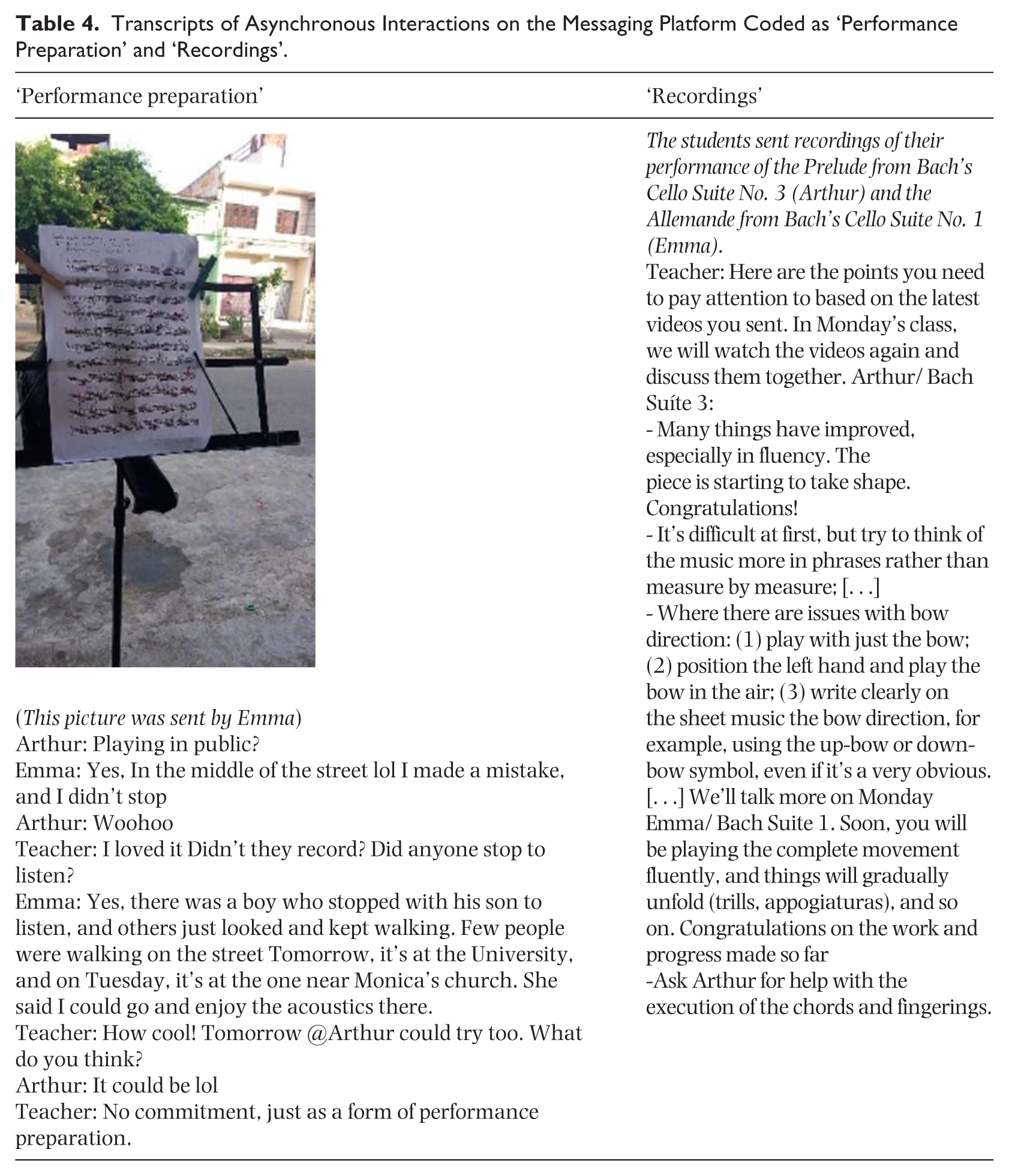
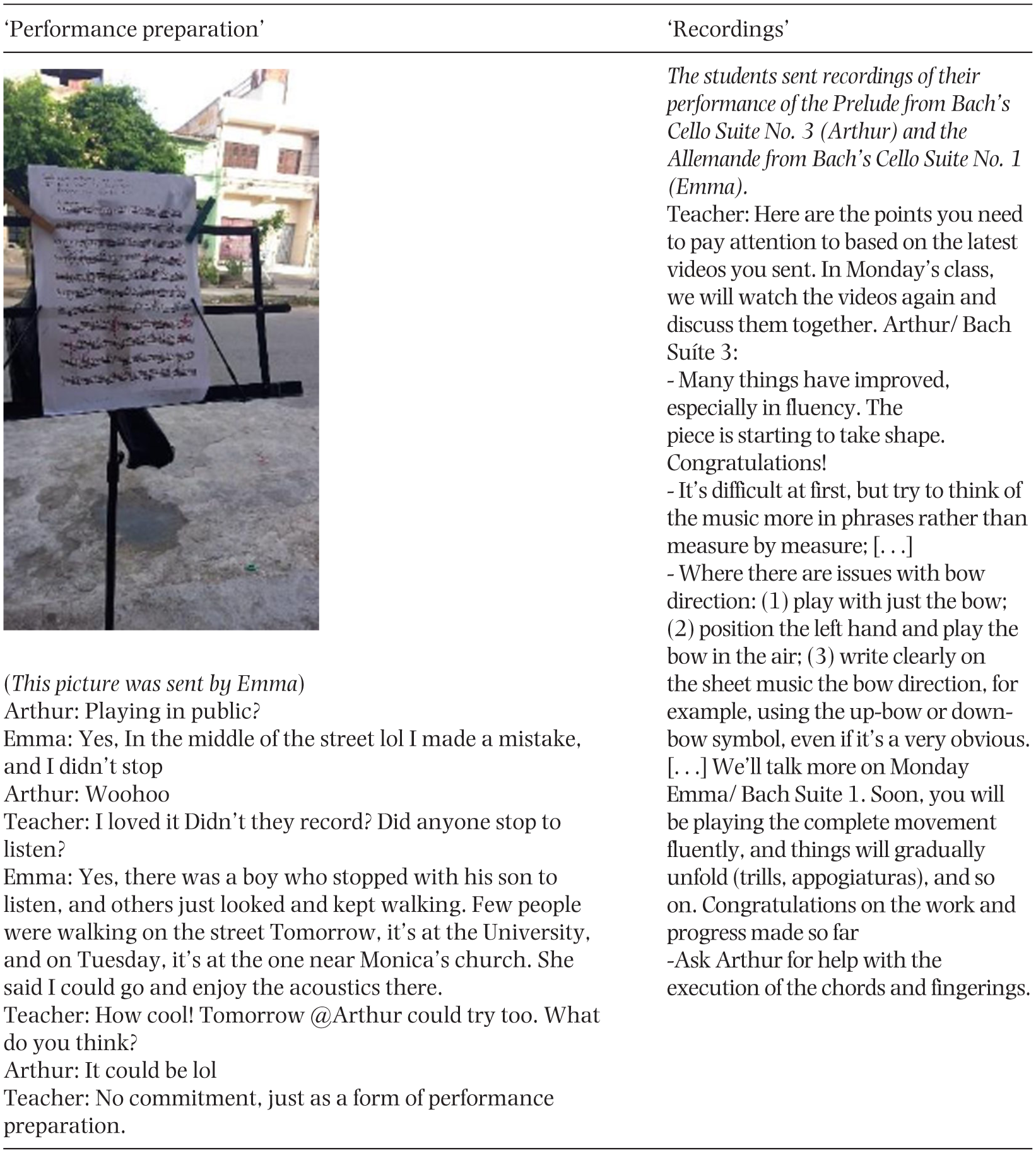
As strategy instructions for fostering usage of external resources, the teacher instructed students to practice together and/or play for other colleagues (help-seeking) and listen to recordings. Help-seeking was explored especially by Arthur, who mentioned how he felt more motivated when practicing with peers on different occasions. Arthur described the importance of this strategy: ‘Sometimes the other person sees something there that you didn’t notice, it helped me a lot, like, “OK, listen to this, what do you think?” I was trying to reason with him’.
A recital was deliberately scheduled towards the end of the intervention proposal to motivate students. For this reason, and following requests from the students, the teacher added the category ‘performance preparation’ to the mind map. Emma conveyed that she performed in different spaces as part of her preparations for the final recital (see Table 4).
The teacher approached the mental practice strategy in one of the lessons when she noticed the students were not reporting this on the practice forms: ‘I’m going to give us time to do an activity that has no sound. You will look at the score, and the whole song will run through your head’.
Maintaining interest levels
Students reported they maintained levels of interest through (1) applying the task strategies (Emma: ‘I kept my interest in the strategies I had planned before practice and even at the time others came to my mind’); (2) recognizing their progress (Arthur: ‘I kept up my interest when I realized I was achieving my goals’); and (3) the interest they had in the pieces they chose (Emma: ‘I like these etudes, especially Popper’).
Self-instruction and metacognitive monitoring
The teacher’s approach sought to foster autonomous identification of the challenging sections by students through asking them questions such as ‘What do you think was not so good?’ (stimulating analytical thinking: 38 references). Questions like ‘What strategy can we use?’ were also posed after recognizing this problem to encourage the students to reflect and choose the ideal task strategy (encouraging students to select strategies independently: 28 references). Table 5 provides a fragment of Arthur’s lesson when these two strategy instructions were applied.
Transcription of Lesson 3 by Arthur.
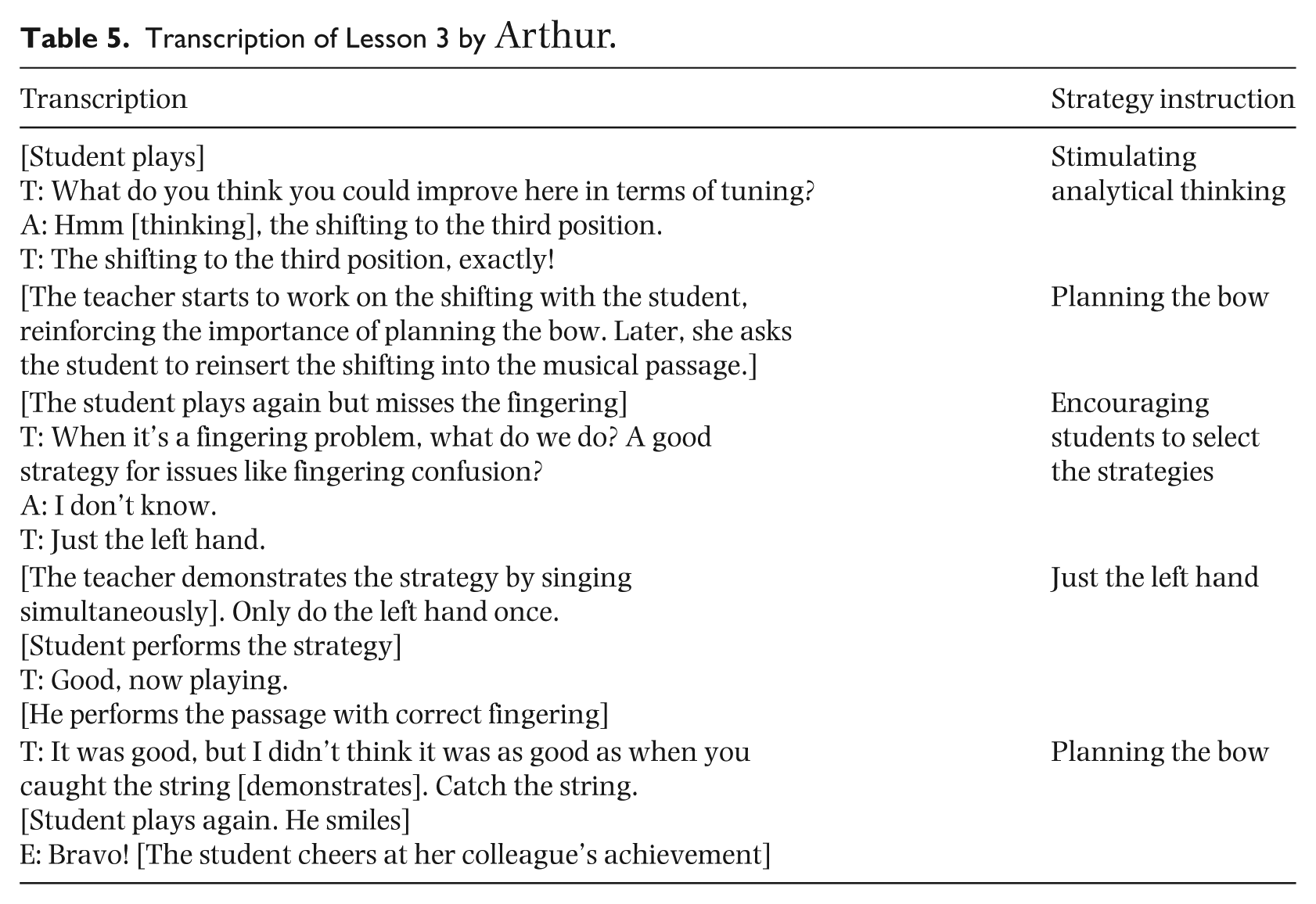
Through this questioning-developing teaching approach, the teacher sought to involve students in metacognitive monitoring and self-control processes, motivating students to apply self-instruction and self-questioning during musical practice. On the practice forms, usage of self-questioning and self-instruction was reported by both students with a total of 28 references (Arthur: ‘through self-talk, I asked myself questions before and after playing a passage trying to avoid playing anything on “automatic”’. Emma: ‘I talked to myself and drew attention to improving in specific passages’). Concerning this, students highlighted the influence of the practice forms and the teacher’s approaches: In the last few days that I was practicing, I even forgot and stopped sending the [practice] forms, but your head changes now, so your self-talk changes, you question yourself, you want to understand, so within a short phrase, you see thousands of things, ‘Ok, am I playing the note in tune?’ ‘No’ ‘So let’s adjust the intonation here.’ ‘Is the note sounding like I want it to?’ ‘No.’ ‘What can I do to solve this then? Okay, let’s start here, then. Where is this phrase going? How do I want it to sound here? What is the region of the bow?’ Obvious things. So, it helped me a lot. (Arthur) It’s not that you gave us the answer, but you helped us think about the answer [. . .] because when we practice alone, we must think about it, right? (Emma)
Initially, students gave brief answers to the teacher’s questions. Recognizing the need to allow more time for reflection, the teacher adjusted, stating, ‘I should give the student more time to respond, especially as this is a new aspect’. As a result, students became more comfortable expressing their musical decisions through more elaborate answers.
Through the responses to the practice forms, the teacher was able to understand not only which strategies had been incorporated by the students but also which had positively or negatively influenced their practices. Thus, throughout the lessons, she could instruct changes or additions in the selection and application of strategies. For example, the teacher realized that when Arthur indicated low levels of environmental structuring, he also had low levels of concentration and self-evaluated his practice as ineffective: ‘the environment was not suitable for practice’ (Arthur). After dialoguing with the student, the teacher understood this happened when the student practised at home, a space permeated with distractions as indicated by the student. Hence, the teacher tried to instruct him to organize his practice schedules around his family’s dynamics, as well as helping him gain access to practice rooms within the university.
Discussion and implications
This study sought to understand the effects of the PSRL on the musical practice of two students learning cello online. The PSRL was designed to encompass the promotion of self-regulation strategies through the teacher’s instructions and an online learning environment (OLE) composed of content related to the SRL principles and the practice forms. After engaging in the intervention proposal, the students reported a significant transformation in their musical practice habits. This transformation involved a shift from a practice approach characterized by only a limited application of task strategies and a lack of ongoing assessments (referred to by students as ‘automated’ practice) to an approach incorporating extensive utilization of metacognitive reflection processes, including active self-questioning.
The fact that the intervention proposal focused on the direct and indirect teaching of various SRL principles – for example, through the teacher’s questioning approach, the OLE, and practice forms – demonstrated that students not only applied the suggested task strategies during the study but also incorporated more metacognitive strategies, a characteristic associated with more advanced musicians (see Araújo, 2016). To some extent, these results align with the findings of Miksza (2015), which show that teaching principles of the theory contributes to students using practice strategies more efficiently.
During the implementation of the intervention proposal, there was an increase in the levels of both the self-efficacy beliefs and the self-esteem of the participating students. The teacher deliberately sought to take students from a self-deprecating stance to better confidence levels through positive reinforcement strategies. These results align with research findings reporting the beneficial impact of positive self-talk on sports performance (Van Raalte et al., 1995) and positive self-evaluation for academic learning (Pullman & Allik, 2008).
The students increased their repertoire of task strategies, which they pointed out as one of the reasons for their increased interest in practising. Authors researching musical practice have identified how musicians begin their learning with a restricted repertoire of task strategies and gradually develop them over time (Hallam et al., 2012; McPherson, 1997). Our findings suggest that explicitly teaching these competencies may have helped the two students who participated in this study apply a broader repertoire of task strategies during their musical practice.
In this study, we observed that the number of strategic instructions delivered by the teacher for each category did not exactly correspond to the number of strategies reported by the two students. Hence, we may infer how this probably arose due to the compensation made by the teacher when instructing strategies that she realized the students were not reporting on the practice forms. However, further research would be necessary to determine the underlying causes of this variation. Future applications of this intervention proposal may explore the teaching of strategies less explored in this research, such as mental practice or performance preparation.
The students also brought their own demands to the lessons, which led both to new teaching strategies and to the addition of new online materials. These factors reflect how the intervention proposal sought to meet the individual needs and characteristics of each student. Furthermore, the practice forms, a self-reported practice diary based on the microanalysis protocol of Osborne et al. (2021), emerged as a tool for continually evaluating student practice and adjusting the self-regulation instructions given accordingly. Unlike previous intervention studies that employed microanalysis protocols, such as those by Osborne et al. (2021) and Miksza, Blackwell, and Roseth (2018), no studies were identified in which this methodology was used by teachers to plan their instruction in regular or online classroom settings. Thus, despite the very small sample size, the experiences of the two students in this study highlight how microanalysis techniques were used as a practical tool to support their self-regulation in practice within ‘real-world’ teaching contexts. However, further research with larger sample sizes is needed to validate this assumption.
Based on the feedback of the two participants, the positive perception of the OLE and its materials, such as the practice forms, highlights how, in this specific context, such environments were perceived to support self-regulation in students’ musical practice. While these impressions are limited to the two students who participated in the study and cannot be generalized, they align with findings from previous small-sample studies, which report that SRL-based practice diaries encourage students to reflect on and regulate their practice (Kim, 2010; Osborne et al., 2021).
The AR methodology was selected to restructure the teaching practices of the teacher as a researcher. Within this framework, the participating teacher realized how her contact with SRL theory, which began 3 years prior to beginning this project, had informed her teaching strategies that, in her own evaluation, had enabled a shift from a teacher-centred approach to a student-centred approach. The main change stemmed from gradually adopting a dialogic interaction model (López-Íñiguez & Pozo, 2016) to provide a listening space where students can verbally and artistically express themselves and develop their musical ideas. It is also interesting to note that the students, who had already studied with the teacher, also positively highlighted the changes in the teacher’s pedagogical practices. Thus, based on the reflections of the teacher–researcher and feedback from the two participating students, this study illustrates how the teacher’s familiarity with SRL theory appeared to support the learning experiences and self-regulation development of the participants. However, due to the limited sample size and exploratory nature of this study, further research is needed before any broader conclusions can be drawn.
In this specific study, the PSRL appeared to provide a useful framework for the participating teacher to integrate SRL principles into her pedagogical practice. Given the limited scope and sample size, no broader claims can be made, and further research is needed to explore its potential in other contexts. Nonetheless, despite these limitations, this exploratory study highlights the importance of the participant teacher’s meaningful engagement with SRL principles when guiding students in the application of self-regulation strategies. In addition, the reported use of different technological tools (e.g., OLE and messaging platforms) by the two participants illustrates how combining synchronous and asynchronous interactions may contribute to creating environments conducive to reflection beyond real-time engagement. Although this intervention proposal was purposefully designed for online lessons, future research could explore the effects of implementation in face-to-face and group cello or bowed string instrument lessons.
Due to the size of the sample and the results being consistent with the participant’s perceptions, we must emphasize that these findings are not susceptible to generalization. Finally, although teachers of other string instruments could potentially find aspects of this intervention proposal useful, further research would be needed to determine how the PSRL can be adapted for lessons on different musical instruments and voice, considering their unique characteristics. Similarly, future research should consider that the PSRL was designed for students over the age of 12, not professional musicians. The adaptation of the PSRL to cater to students below 12 should consider modifications to the OLE design, its textual materials, and the teacher’s self-regulation instructions.
Although two data collection methods were employed to assess changes in students’ practice behaviours (practice form and post-study focus group), both instruments may be considered limited for a reliable assessment, as they provide information mediated by the participants’ perspectives (Creswell, 2012). To address these limitations, future investigations might also extend to in-depth analysis of student practice behaviours expressed in recordings of their musical practice. In addition, implementing a pre-test/post-test design or comparing practice behaviours across two timeframes could offer a more robust understanding of the intervention’s impact.
Supplemental Material
sj-docx-1-pom-10.1177_03057356251406890 – Supplemental material for Building reflective practice: Implementing a self-regulated musical learning intervention proposal in online cello lessons
Supplemental material, sj-docx-1-pom-10.1177_03057356251406890 for Building reflective practice: Implementing a self-regulated musical learning intervention proposal in online cello lessons by Dora Utermohl de Queiroz, Clarissa Foletto and Luís Pedro in Psychology of Music
Supplemental Material
sj-docx-2-pom-10.1177_03057356251406890 – Supplemental material for Building reflective practice: Implementing a self-regulated musical learning intervention proposal in online cello lessons
Supplemental material, sj-docx-2-pom-10.1177_03057356251406890 for Building reflective practice: Implementing a self-regulated musical learning intervention proposal in online cello lessons by Dora Utermohl de Queiroz, Clarissa Foletto and Luís Pedro in Psychology of Music
Footnotes
Acknowledgements
The authors thank Larissa Tolio Utermohl, who generously created the graphic design for the website used as the online learning environment. We also express our gratitude to the editorial team and the reviewers of Psychology of Music for their careful review of the manuscript.
Consent for participation
Participation in this study was entirely voluntary. All procedures avoided the use of invasive methods, ensured participant anonymity, and provided clear information about the purpose and scope of the research through the participant information sheet. Written informed consent was obtained from all participants, and the confidentiality of all collected data was safeguarded.
Data availability
The data that support the findings of this study are not openly available due to participant confidentiality. However, they may be obtained from the corresponding author upon reasonable request. All data are securely stored at the University of Aveiro, Portugal.
Declaration of conflicting interests
The authors declared no potential conflicts of interest with respect to the research, authorship, and/or publication of this article.
Funding
The authors disclosed receipt of the following financial support for the research, authorship, and/or publication of this article: This research was supported by FCT (Fundação para a Ciência e a Tecnologia), Portugal, through the research grant awarded to the first author (reference UI/BD/151260/2021) and the scientific employment contract awarded to the second author (reference DOI 10.54499/CEECIND/03404/2017/CP1459/CT0047).
Ethical considerations
This study received approval from the Ethics Council of the University of Aveiro on July 7, 2021 (Ethics Approval Report 17-CED/2021) and was also positively evaluated by the University’s Data Protection Officer.

Supplemental material
Supplemental material for this article is available online.
Notes
References
Supplementary Material
Please find the following supplemental material available below.
For Open Access articles published under a Creative Commons License, all supplemental material carries the same license as the article it is associated with.
For non-Open Access articles published, all supplemental material carries a non-exclusive license, and permission requests for re-use of supplemental material or any part of supplemental material shall be sent directly to the copyright owner as specified in the copyright notice associated with the article.
