




Abstract
This study investigated the implications of participating in a Music Early Learning Program (MELP) for parental sensitivity and socioemotional functioning in children aged 2–5 years. Thirty-eight families were randomly assigned to either the MELP or the control group. Data were collected through a semi-structured home-observation protocol administered in the participants’ homes prior to and after the intervention. Parental sensitivity was assessed through independent, blind assessments using the short version of the Maternal Behavior Q-Sort. Parents completed the Behavioral Assessment Scoring System to assess their child’s socioemotional functioning. Consistent with previous studies, we found that participation in a MELP resulted in positive changes in parental sensitivity. Parents in the intervention group obtained improved sensitivity scores compared with participants in the control group, whose scores remained essentially unchanged. No significant differences were found between groups in child socioemotional functioning. These findings suggest that exposure to MELPs may benefit parent–child interactions. Implementing a MELP in a community setting may provide a positive context to help parents interact more predictably and coherently with their children.
Keywords
Introduction
Parent–child relationships have been the object of systematic study for more than 70 years (Ainsworth et al., 1978/2015; Bowlby, 1969). A key finding of this work is that parental sensitivity, or the ability to detect, interpret, and consistently respond to a child’s signals, predicts a range of child outcomes, including different aspects of socioemotional development in toddlers and preschoolers (Bernier et al., 2021; Leerkes et al., 2009). Promoting sensitive behavior during parent–child interactions thus seems particularly important, especially in families with multiple risk factors, where sensitivity may be less present (for a detailed list of proximal and distal risk factors, see Gerlach et al., 2022, p. 6). To this end, various parenting interventions have been developed and implemented in different populations and settings in the last decades (Jeong et al., 2021). Although studies have found that most of these programs improve parenting behaviors and support positive child outcomes (Jeong et al., 2021), it is still unclear whether it is strictly parenting interventions that explicitly aim to improve parent–child relationships that are responsible for these effects or whether other interaction-based interventions might accomplish similar objectives. In this article, we share the results of a randomized controlled trial (RCT) examining the implications of participating in a Music Early Learning Program (MELP) for parental sensitivity and socioemotional functioning in children aged 2–5 years.
Parental sensitivity
Parental sensitivity refers to the parent’s ability to perceive, correctly interpret, and appropriately respond to a child’s signals (Ainsworth et al., 1978/2015). It encompasses a broad range of behaviors, including detecting and interpreting the child’s cues, acting in predictable, synchronous ways, and remaining emotionally available for the child (Bailey et al., 2017). In the last decades, parental sensitivity has been positively associated with many child outcomes, such as child attachment security (De Wolff & Van Ijzendoorn, 1997; Madigan et al., 2023), cognitive (Rodrigues et al., 2021; Valcan et al., 2018), language (Madigan et al., 2019), and socioemotional (Rodrigues et al., 2021) development. Recently, a meta-analysis examining the links between observed parental sensitivity and socioemotional functioning in children aged 0–17 years showed that children whose parents were more sensitive were less likely to present behavioral, social, or emotional challenges than those of less sensitive parents (Cooke et al., 2022).
Socioemotional functioning
Socioemotional functioning might be seen as “the manifestations of a [child]’s internal emotional life” (Moss & Moss-Racusin, 2021, p. 109). Social aspects of this domain include the child’s ability to participate in social life, adhere to social norms when in contact with others, and feel comfortable in interpersonal interactions. Emotional aspects include the nature, intensity, regulation, and correspondence of the child’s feelings to the external environment (Moss & Moss-Racusin, 2021). Being socially competent influences child development and growth (Braungart-Rieker & Planalp, 2016), is linked to academic achievement (Denham & Brown, 2010, p. 667), and predicts “better trajectories and psychological well-being over time” (Kamper-DeMarco et al., 2020, p. 47).
Parental sensitivity and socioemotional functioning in early childhood
Based on many observational studies, Braungart-Rieker and Planalp (2016) developed a heuristic model highlighting how parental sensitivity contributes to the child’s socioemotional functioning later in life. According to this model, children exposed to more sensitive parental behaviors during interactions are more likely to use effective emotional regulation strategies during stressful situations, acquire emotional and behavioral regulation skills, and develop positively (mentally and physically) (Braungart-Rieker & Planalp, 2016). Inversely, children exposed to non-sensitive parental behaviors (e.g., when the parent rejects the child, is intrusive, or inconsistent during interactions) are at greater risk of developing internalizing or externalizing problems. According to these authors, participating in parenting interventions may provide an opportunity for parents to develop greater sensitivity and better support their child’s development.
Parenting interventions
Parenting interventions are “social and [behavioral] programs designed to improve caregivers’ knowledge, attitudes, practices, and skills to promote the optimal development of young children” (Jeong et al., 2021, p. 2). They encompass different programs, including interventions that promote positive parenting practices through shared activities (e.g., shared musical activities) (Teggelove, 2017). Most of these interventions are anchored in the notion that the quality of parent–child interactions meaningfully contributes to developmental outcomes during infancy and early childhood.
Parenting interventions using music
In recent decades, researchers from different academic domains have been interested in parental interventions that promote positive parenting behaviors through shared musical activities (see Sanfilippo et al., 2022, for a review). Many of them have presented data suggesting that participation in a parent–child music program may promote parental sensitivity (e.g., Nicholson et al., 2008; Nicholson et al., 2010; Teggelove et al., 2019; Williams et al., 2012) and support the child’s socioemotional development (see Gaudette-Leblanc et al., 2021 for a meta-analysis). For example, three pre- and post-intervention studies showed that parents were more sensitive after participating in a 10-week music therapy program. In turn, children were more responsive to the interactions initiated by their parents and were perceived as more socially competent (Nicholson et al., 2008, 2010; Williams et al., 2012).
Although these studies provide important incentives to study the relation between the exposure to music programs and parental sensitivity, they must be treated cautiously due to several methodological limitations. First, researchers measured participant change across time using custom-built evaluation tools that have often not been targeted for psychometric validation. Yet, “the scientific value of the study and the scope of the conclusions that can be drawn from it depends on the quality of the measurement tools used” (Plante et al., 2021, p. 32). Second, results from these studies are primarily based on the perceptions of intervenors implementing the program (professionally registered music therapists) and participating parents (Nicholson et al., 2008, 2010; Williams et al., 2012). It may have been difficult for intervenors and parents to objectively assess changes associated with participation in a program in which they are involved, and the possibility of participant bias cannot be ruled out. Finally, these studies used pre-post designs without including comparison groups. In this context, it is critical to be aware that some of the changes observed in the parent and child may be due to the child’s maturation or may result from other family services to which participating families are exposed.
MELPs
More recently, researchers have suggested that participation in a MELP might also promote parental sensitivity and the child’s development (Smith, Eiden, et al., 2023; Smith, et al., 2024; Smith et al., 2025; Smith, Salley, et al., 2023). A MELP is a program that has been written or designed by a qualified music teacher, community musician, or registered music therapist with the intention of nurturing a love of music, supporting musical and extra-musical development in the child, and empowering the parent to use music in the home (Abad & Barrett, 2017, p. 139).
These programs, also known as community-based music programs or enrichment music programs (Smith, Eiden, et al., 2023; Smith, et al., 2024; Smith et al., 2025; Smith, Salley, et al., 2023), “not only present music learning experiences for young children, [but] also provide frameworks for relationality in and through joint music engagement” (Barrett & Welch, 2023, p. 4). Participation in a MELP allows the parent–child dyad to experiment with musical activities they may reproduce in other contexts. These shared musical moments enable them to communicate or signal their emotional states and needs (Nguyen et al., 2023), to perceive and respond to them, and offer the possibility, as Hadar would say, “to be in the moment and to focus on [each other’s] behaviors for longer periods of time” (Hadar et al., 2023, p. 149).
The results of an RCT recently demonstrated that participation in a MELP positively affects certain aspects of parental sensitivity (Smith, Eiden, et al., 2023). In this research, parents and their infants (9–15 months) participated in a MELP (the Music Together program) or a play date program for 2 years (one session per week for Year 1 and one session per month for Year 2). Parent–infant interactions during mealtime were observed in a laboratory setting at baseline and then Months 6, 12, and 24. Although researchers observed some changes in parents’ behaviors following 12 months of participation in the MELP (less negativity and fewer intrusive behaviors during mealtime), they did not observe changes in parental warmth.
In sum, the results of previous studies suggest that participation in parenting interventions using music (including MELPs) may promote positive parenting, enrich parent–child relationships, and support the child’s socioemotional development. These results are promising because these programs, typically implemented in a community setting, have the potential to reach many families at once, which is not the case for other attachment-based interventions, such as home visiting programs (see Steele & Steele, 2018). Nevertheless, several methodological limitations, such as the lack of a control group and the use of custom-built evaluation tools, constrain the degree of confidence in the conclusions that can be drawn from most of these studies. Although one RCT assessed the effect of participation in a MELP where parents were involved for more than a year (Smith, Eiden, et al., 2023), this is an unusually long program, the usual length of a session being 8–10 weeks. It is unclear whether shorter participation would achieve similar results. Finally, although several studies have examined the benefits of participation in a MELP, none have attempted to understand the underlying mechanisms that might explain how participating in such a program could influence the child’s development. Yet, a better understanding of how participating in a MELP might support the child’s development could enable those developing and implementing these programs to know what conditions need to be met to see positive changes in the child. As discussed by Jeong and colleagues (2021), “more mediation analyses are needed to empirically substantiate program theories of change and identify the key caregiving mechanisms by which parenting programs lead to improved ECD [early child development] outcomes” (p. 37).
The current study
The current study examined the effects of participating in a 10-week MELP (Music Together) on parental sensitivity and child socioemotional functioning between the ages of 2 and 5 years. Based on the limitations of previous research and subsequent recommendations, we aimed to address the following questions:
Does participation in a MELP promote parental sensitivity?
Does participation in a MELP promote socioemotional functioning in preschoolers (2–5 years)?
To the degree that any changes are documented, do changes in parental sensitivity mediate changes in socioemotional functioning in preschoolers?
Given the results of previous studies (e.g., Nicholson et al., 2008, 2010; Williams et al., 2012), we hypothesized that participation in a MELP would promote parental sensitivity and that this improvement would positively affect the child’s socioemotional functioning. To validate this hypothesis, we investigated the mediating role of parental sensitivity in the relationship between participation in a MELP (the Music Together program) and young children’s socioemotional functioning.
Method
Design
This randomized control trial (RTC) was conducted in a multicultural community in the suburbs of a large Canadian city. Parents and their children aged 2–5 years were recruited from three childcare centers and three community centers. Assessments (pre- and post-tests) took place in the participants’ homes. Following the pretest, all participants were randomly assigned to either the intervention or control group. The control group was offered the intervention following the study. Ethical approval was obtained from the Université Laval human research ethics committee (approval 2018-301).
Participants
Sixty-two parent–child dyads were recruited. Three parents reported receiving individualized services to support their child’s development (e.g., communication and social skills). Eight parents interrupted their participation or could not complete the post-test due to illness or because they were moving away. Other parents did not comply with the protocol requiring only one parent and one child to be present for the pre- and post-tests (n = 13). In total, data from 24 dyads were excluded from analyses for these methodological reasons.
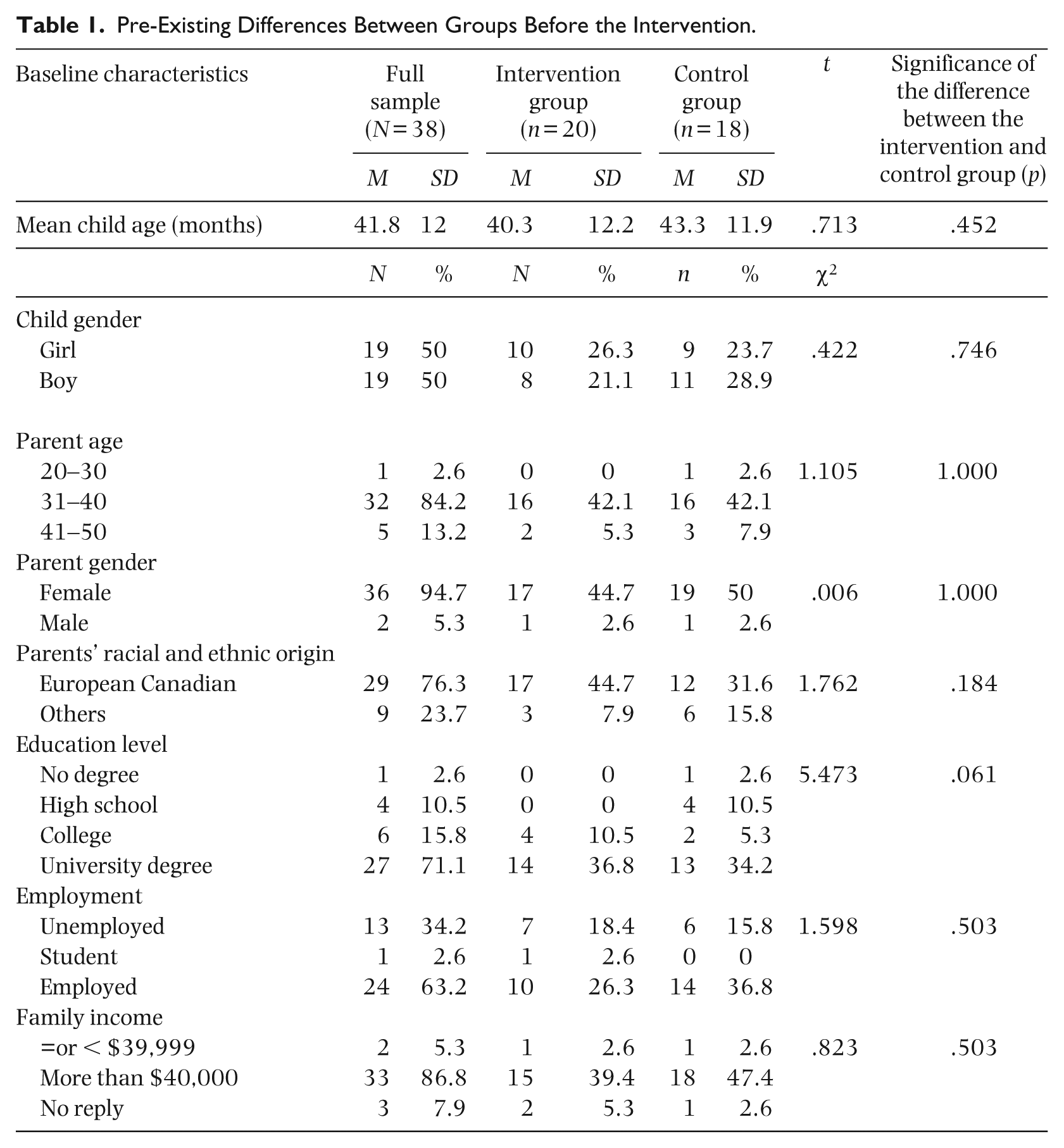
The final sample comprised 38 parents (36 mothers; two fathers) and their children (50% female; mean age = 41.84 months, ranging from 24 to 64 months, SD = 12 months). Most parents were Canadians of European descent (76.3%) and had French as their first language (78.9%). Table 1 shows the descriptive statistics.
Pre-Existing Differences Between Groups Before the Intervention.
Procedures
The principal investigator (A.G.-L.) contacted the administrators of childcare and community centers, who agreed to collaborate on the research project. She communicated with all interested parents to inform them of the purpose of the study and explained the procedures. She then scheduled home visits and sent out the written consent forms.
Research assistant training
Prior to the pretest, four research assistants (graduate students who had completed their research method courses) received a 4-hr training session. During this session, the principal investigator presented the observation protocol and the measurement tools in detail. The principal investigator then reviewed a protocol administered by each research assistant with a research team member (G.M.T.) to ensure it was followed correctly.
Pretest
Research assistants administered the observation protocol in the parents’ homes for approximately 2 hr per family. This protocol, developed by Pederson and Moran (1996) and presented by Tarabulsy and colleagues (2008), encompassed six segments: (1) arrival; (2) signature of the written consent form and completion of the sociodemographic questionnaire; (3) parent interview (15 min); (4) a parent–child free play interaction with age-appropriate toys provided by the research assistant (15 min); (5) the completion of the Behavior Assessment System for Children, Third Edition (BASC-3 CDN-F) (15 min); and (6) departure. This observation protocol allowed the research assistant to meet with the parent, ask questions (interviews and questionnaires), and observe the parent’s ability to divide their attention between their child’s needs and a task (e.g., completing a questionnaire) in a natural setting. Video recording of the protocol allowed independent observers to subsequently complete the Maternal Behavior Q-Sort short version (Tarabulsy et al., 2009).
Assignment
Following the pretest, participants were randomly assigned to either an intervention (eight girls, Mage = 43.5, SD = 12.6 and 10 boys, Mage = 37.7, SD = 11.9) or a control group (11 girls, Mage = 42.7, SD = 14.7 and nine boys, Mage = 43.9, SD = 7.9). The 10-week intervention began for the intervention group. Parents were given the choice to participate in the Music Together program during the week (Wednesday or Thursday at 9 am) or on the weekend (Saturday at 9 am). Groups ranged from six to 10 families, with a mean of eight parent–child dyads per class. All but one of the families in the experimental group attended at least six classes, which has been considered the minimum requirement for the intervention to affect child functioning in previous research (Nicholson et al., 2008).
Intervention
The Music Together program was the intervention implemented as a part of this research. This MELP, inspired by the work of Edwin Gordon (2013), aims to support children’s musical development by enabling them to experience musical and movement activities in the company of their parents or other family members within a group. These musical activities are repeated several times during the session, generally lasting 10 weeks.
We chose Music Together for three reasons: (1) the program has been internationally recognized for more than 30 years and is implemented in many countries, (2) the program is led by trained and supported facilitators, and (3) parents who enroll in this program receive quality materials (i.e., songbook, CD, access to an app) and can reproduce the musical activities in other contexts (e.g., in the car, at home).
In addition to formal undergraduate and graduate training in music therapy and education, the principal investigator was trained to implement the Music Together program prior to actually implementing the program. She implemented the Music Together Family Class program in three childcare centers for 10 weeks (45 min per week). She facilitated interactive musical activities in various tonalities, meter signatures, and musical styles, including a hello song, sound plays, nursery rhymes and songs (with and without words), rhythmic or tonal patterns, small and large movement activities, a jam session, a relaxation, and a goodbye song. Moreover, as is expected by the program, she prompted parents to observe the children’s behaviors at some points during the class. These short verbal interventions, typically a part of the Music Together program, are generally related to the children’s musical behaviors (e.g., “Have you noticed that your child is more confident when singing this song? What happened since last week? Did you sing it together?”). That said, it is also possible to formulate comments in such a way as to help the parent better understand (and possibly react more sensitively to) their child’s behaviors (e.g., “Have you noticed your child returning to you after the jam session? He probably remembers that it is lullaby time. And he is right! It is time to relax. Predictability might be very important for children, do you agree?”). These types of comments were formulated to parents when opportunities presented themselves during the sessions.
Families received guidance throughout the program to learn different ways to interact with their children through music in a non-formal approach (see Creech et al., 2020). They received all the previously mentioned, necessary materials (access to an app, CD, and songbook) to replicate musical activities in other contexts (in the car, at home).
Post-test
The post-test took place within 2 weeks following the end of the program (12–14 weeks after the pretest). As in the pretest, the observation protocol was composed of six segments minus the consent form and demographic questionnaire. The principal investigator did not inform research assistants of the experimental condition (intervention or control group) assigned to the dyads.
Measures
Sociodemographic data—pretest only
Parents completed a questionnaire that required them to report the child’s age and gender, parental age and gender, level of education, employment status, family income, racial and ethnic origins, first language, and language spoken at home.
Information related to the family environment
Research assistants conducted a 15-min interview to obtain more information about the family (number of children, childcare arrangements). They also asked parents if they had any concerns about their child’s development and if their child received any individualized services.
Parental sensitivity
Two trained research assistants, blind to the intervention group and time of measurement, completed the Maternal Behavior Q-Sort (MBQS short version; Tarabulsy et al., 2009). This Q-sort includes 25 items that describe parent–child interactions that may occur during a 2- to 3-hr home visit (Pederson et al., 1990; Pederson & Moran, 1995). This tool is a valid and reliable instrument (Tarabulsy et al., 2009) and is considered “the most suitable [measure] for coding playful interactions” (Bohr et al., 2018, p. 743).
Using a 15-min video segment of the parent–child free play interaction recorded during the pre- and post-test home visits, research assistants independently sorted the 25 items from the MBQS into five piles based on whether they were most “different” (Score 1) or most “similar” (Score 5) to the observed parent. Item scores for the observed parent were then correlated with standard criteria scores, yielding a global sensitivity score ranging from −1 (least sensitive/responsive) to 1 (most sensitive/responsive) (for more information about the sorting, see Pederson & Moran, 1995). Reliability was calculated on subsample of eight dyads (21%) using the intraclass correlation coefficient (ICC) and was found to be excellent (.87, p < .001).
Socioemotional functioning
Parents completed the French-Canadian version of the Behavioral Assessment System for Children (BASC–3CDN-F; Reynolds & Kamphaus, 2015). This questionnaire includes 139 items, rated on a 4-point scale ranging from 0 (never) to 3 (almost always). We used the following composite scores in the analyses: Adaptive skills (e.g., adaptability, social skills), Behavioral symptoms index (e.g., attention problems, withdrawal), Internalizing problems (e.g., anxiety, depression), and Externalizing problems (e.g., aggression, hyperactivity). The coefficient values for internal consistency (α) ranged from .76 to .92 for the different composite scores, with most coefficient values sitting between .80 and .90, which is deemed good to excellent (Russell, 2018).
Data analyses
We performed descriptive analyses using t-test and chi-square to ascertain that both groups were equivalent before the intervention. Variables considered were the following: child age, child gender, parent age, parent gender, parents’ racial and ethnic origin, education level, employment, and family income. We then conducted one-way between-groups analyses of covariance (ANCOVAs) to measure the difference between groups at post-test, using pretest scores as covariates, post-test scores as dependent variables, and group membership as a fixed factor for each variable. The pre- and post-test scores considered were the following: parental sensitivity, adaptive skills, behavioral symptom index, externalizing problems, and internalizing problems. We finally performed simple mediation analyses using PROCESS to examine the mediating role of parental sensitivity in the relationship between MELP participation and young children’s socioemotional functioning (adaptive skills, behavioral symptom index, externalizing problems, and internalizing problems). Participation in Music Together was the independent variable, changes in socioemotional functioning (i.e., the difference between post-test and pretest scores) was the dependent variable, and changes in parental sensitivity (i.e., the difference between post-test and pretest scores) was the mediator variable (see simple mediation model, Hayes, 2022, pp. 80–84). All analyses were conducted using IBM SPSS statistical software, version 28.0.
Results
Descriptive analyses
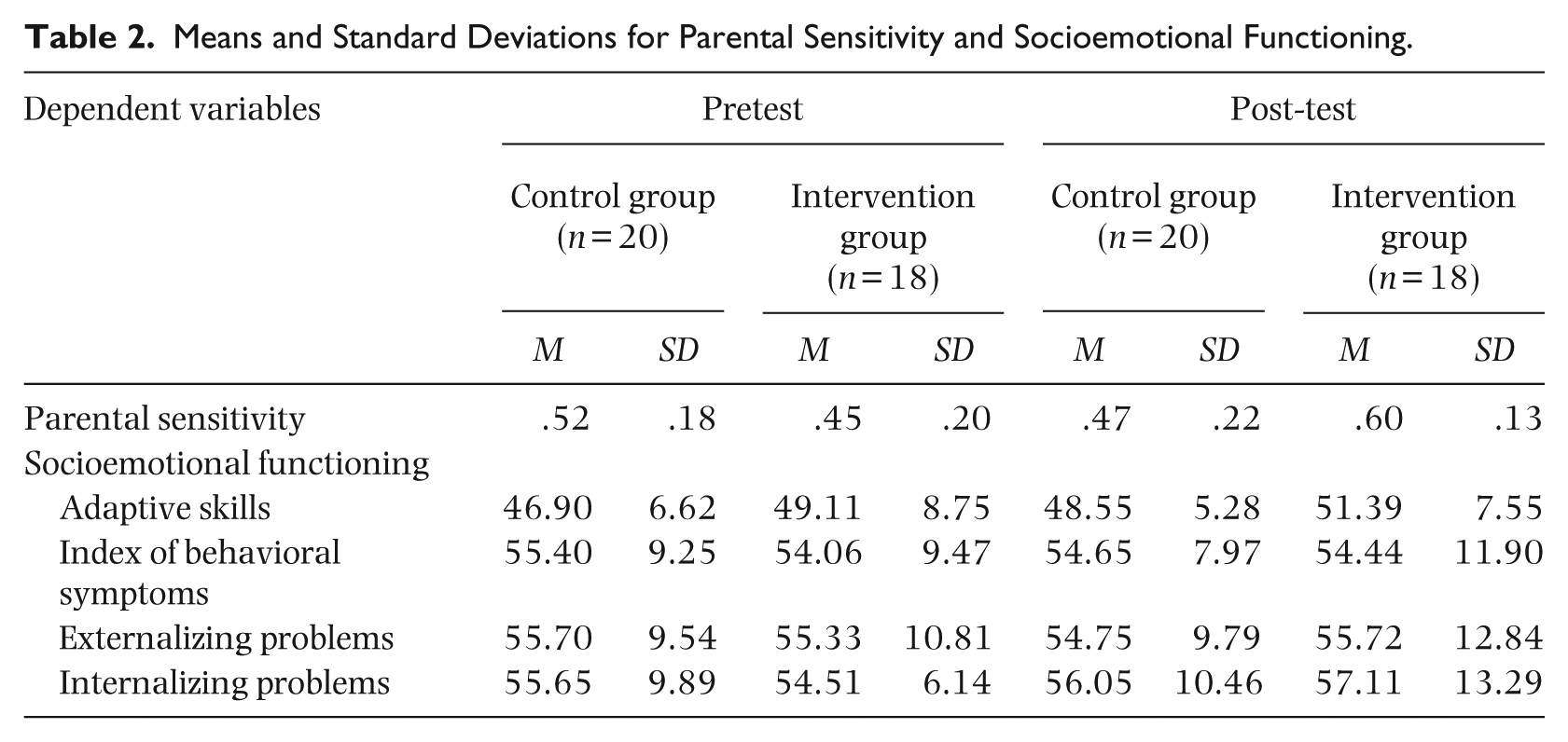
Table 1 presents sociodemographic data. Table 2 shows the means and standard deviations for each measure. Analyses (t-test [child age] and chi-square [child gender, parent age, parent gender, parents’ racial and ethnic origin, education level, employment, and family income]) showed no differences between groups before the intervention.
Means and Standard Deviations for Parental Sensitivity and Socioemotional Functioning.
Difference between groups at post-test
In line with our hypothesis, a significant difference in parental sensitivity was found following the intervention after controlling for pretest levels of parental sensitivity (F = 8.26, df = 1, p = .007, partial eta squared = .19). Following the intervention, participants in the intervention group (n = 18) showed higher sensitivity scores (.62, SE = .04) than participants in the control group (n = 20) (.46, SE = .04). Nevertheless, in contrast with our assumptions, no significant differences were found in the child’s socioemotional functioning following the intervention. According to reported data, the children participating in the intervention did not demonstrate better socioemotional functioning than those in the control group after the intervention.
Direct and indirect effects of participation in Music Together
Mediation analyses revealed that participation in Music Together significantly contributed to parental sensitivity (β = 0.200, SE = 0.064, p = .003). Nevertheless, participation did not directly affect the child’s socioemotional functioning (see Table 3).
Direct Effects of Participation on Socioemotional Functioning.
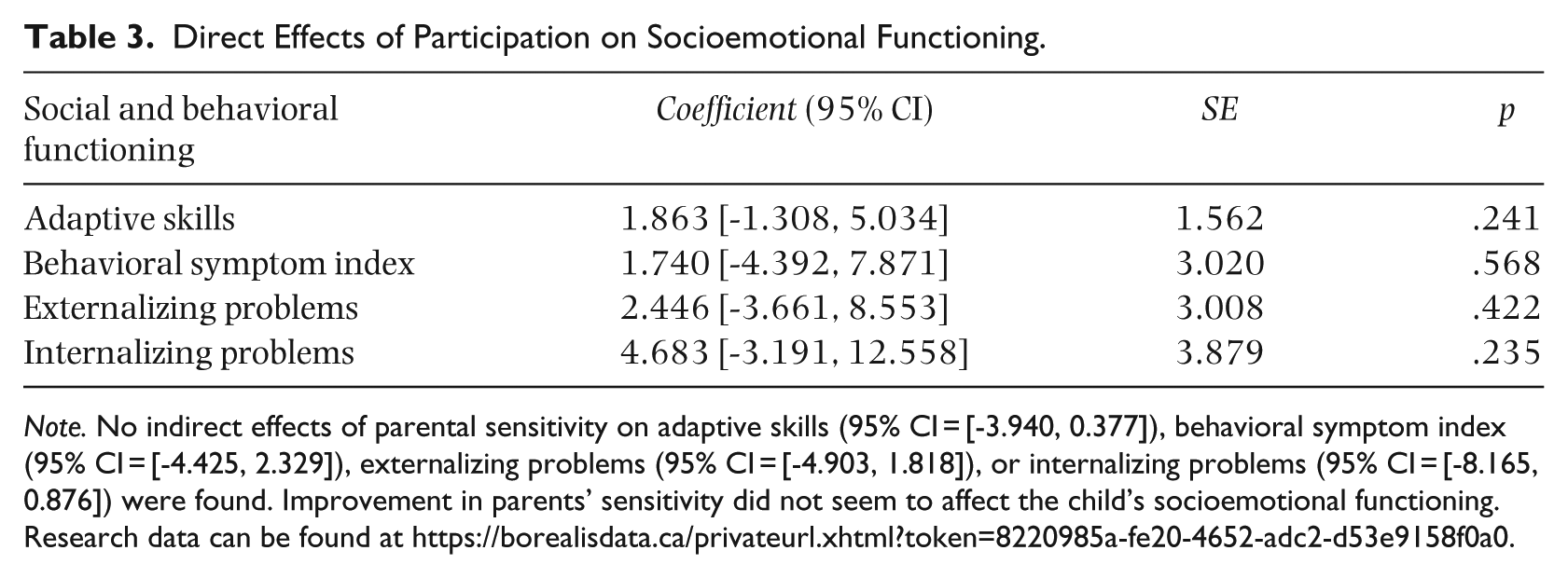
Note. No indirect effects of parental sensitivity on adaptive skills (95% CI = [-3.940, 0.377]), behavioral symptom index (95% CI = [-4.425, 2.329]), externalizing problems (95% CI = [-4.903, 1.818]), or internalizing problems (95% CI = [-8.165, 0.876]) were found. Improvement in parents’ sensitivity did not seem to affect the child’s socioemotional functioning.
Research data can be found at https://borealisdata.ca/privateurl.xhtml?token=8220985a-fe20-4652-adc2-d53e9158f0a0.
Discussion
The present study examined the implications of participating in a MELP for parental sensitivity and socioemotional functioning in children aged 2–5 years. To achieve this goal, we met with participating families before and after implementing an established MELP to which they were randomly assigned. We collected data using a semi-structured observation protocol, a Q-sort, and a parent-reported questionnaire.
Key findings
Participation in a 10-week MELP contributed to increasing parental sensitivity. Parents in the intervention group showed greater parental sensitivity after participating in the program, whereas no changes over time were found in the control group. This result is consistent with previous studies examining the impact of participation in a 10-week music therapy program (Nicholson et al., 2008, 2010; Teggelove et al., 2019; Williams et al., 2012). The following characteristics of the MELP implemented in this study may have contributed to this positive change in the parent.
First, like other attachment-based interventions that have demonstrated efficacy in enhancing parental sensitivity (e.g., Moss et al., 2019), Music Together follows a highly predictable structure. Musical activities are repeated at the beginning and at the end of each session, providing “a comforting predictability within the changing components of the week-to-week lesson plan” (Guilmartin & Levinovitz, 2014, p. 8). Within this structure, through guidance, demonstration, and encouragement, parents may feel comfortable experimenting with musical activities they can later use in the home to “provide for the expressed and implicit needs of [their child]” (Custodero & Johnson-Green, 2008, p. 16). These early musical interactions may help parents to capture and maintain their child’s attention (Cirelli et al., 2018, 2019; Lense & Camarata, 2020) as well as soothe them, especially when they are distressed (Cho et al., 2025; Cirelli & Trehub, 2020; Corbeil et al., 2016; Trehub et al., 2015). They may also help parents and their children feel joy, enjoy each other, and have fun (Abad & Barrett, 2023).
Second, as in other parenting interventions using music (e.g., Lense et al., 2022; Webber & Koops, 2022), the Music Together program offers parents different ways to gain new parenting knowledge. For example, one or two times during the class, the music facilitator invites parents to notice their child’s behavior and briefly shares related information. These short verbal interventions (called parent educational moments in the Music Together program), along with other strategies used in the program, might help parents better understand their child’s development, acquire parenting strategies (Lense et al., 2022), and feel more competent (Savage et al., 2022; Teggelove et al., 2019).
Participation in a 10-week MELP did not affect the child’s socioemotional functioning. This result contrasts with previous research, which has suggested that more than 6 weeks of participation in a music program could positively influence the child’s behaviors (Nicholson et al., 2008; Williams et al., 2012). Differences in the study population and the methodology employed could explain this variability. Indeed, previous research examined changes in children aged 0–3 years considered at risk due to certain factors (e.g., low level of education, low income, single parent, children with disabilities). Changes in child behavior were assessed over time (pre-post design) using a four-item questionnaire completed by parents during the first and last sessions of the program. In contrast, we compared changes in children aged 2–5 years participating or not in a MELP (RCT) using a 139-item questionnaire completed by parents at home during a semi-structured protocol.
Certain factors may explain the absence of changes in the children’s socioemotional functioning. The first is related to the time between measurements. It is possible that the 10-week period, sufficient to detect a positive change in the parents, was not long enough to observe a change in the children. That said, as parental responsiveness predicts later socioemotional functioning later in life (Bernier et al., 2021; Leerkes et al., 2009), positive changes in the child might be identified later on.
A second factor is related to the child’s level of functioning before the intervention. According to the results, the children participating in this research were not considered at risk regarding socioemotional functioning prior to the intervention (Reynolds & Kamphaus, 2015). The effects of MELP participation might be greater for children at higher risk of developing externalizing or internalizing problems (Brown et al., 2022; Lobo & Winsler, 2006).
Of note, the Music Together program is an established music program that has been implemented for more than 30 years worldwide. This MELP provides families with various music classes to support the musical development of children aged 0–8 years but is not explicitly designed to support parental sensitivity and children’s socioemotional functioning. The program mainly focuses on the child’s musical development, and its main objective is to enable the child and their family to experience musical activities together within a community and at home. That said, researchers have recently introduced new ways to help parents better understand and respond to their child’s behaviors through participation in a music program. Lense and colleagues (2022) designed a 12-week psychoeducational parent–child music program that “provides music-based parent training and peer interactions in a musical play context” (Lense et al., 2022, p. 81). Each session includes (1) a moment for the music therapist and the parents to discuss the previous week’s goals, (2) a moment to present the theme of the week, (3) 30–40 min of structured group music activities, and (4) a moment to set individual goals for at-home practice (see Lense and colleague [2022] for a detailed description of the program). Webber and Koops (2022) worked with early childhood specialists to develop a series of short videos explaining the socioemotional skills young children are expected to develop in the early years. In the context of their study, videos were shared with parents a few days before the music class, in addition to other videos in which different ways of supporting socioemotional development through music were suggested. These videos were added to the usual material of the music program to address the needs and worries expressed by parents during the global pandemic. These examples of collaborative, interdisciplinary work are particularly noteworthy because they demonstrate that interprofessional collaboration can help develop and implement MELPs that respond to the needs of young families. As Sanfilippo and colleagues (2022) note, “greater progress could be achieved through collaborative or interdisciplinary efforts, with considerable benefits for [children], caregivers, families, and communities” (Sanfilippo et al., 2022, p. 29).
Strengths and limits
Most research to date documenting the implications of MELP participation on parental sensitivity has used intervenor observations (Nicholson et al., 2008, 2010; Teggelove et al., 2019; Williams et al., 2012) and questionnaires (Nicholson et al., 2008; Nicholson et al., 2010; Teggelove et al., 2019; Williams et al., 2012). This previous body of research should be considered cautiously due to the biases that may arise in using these types of assessments (Vener et al., 2017). In the present study, trained research assistants observed parental sensitivity in participants’ homes during a semi-structured observation protocol (Tarabulsy et al., 2008). Independent assessors, blinded to the condition, completed the Maternal Behavior Q-Sort (MBQS short version, Tarabulsy et al., 2009). This assessment method has been found to be the most reliable for assessing parental sensitivity due to its high ecological value (Atkinson et al., 2000). However, certain aspects related to this protocol may have constrained the participation of some families. For example, parents were required to be available and comfortable participating in a semi-structured observational protocol at home, without distractions from children apart from the participant child. It may have been difficult for some parents to find an arrangement to be alone with their child for the duration of the protocol (2 hr).
We also asked parents to complete a questionnaire regarding the child’s socioemotional functioning (BASC-3 CDN-F; Reynolds & Kamphaus, 2015). The advantage of using parents as informants of the child’s socioemotional functioning is that they typically observe their child in different social situations over time (Erdley & Jankowski, 2020). However, they may lack opportunities to observe their child interact with peers. Having the teacher or educator complete a questionnaire could help get information about the child’s socioemotional functioning in a group setting (Boucher et al., 2021). That said, researchers should use these options cautiously, given the potential biases of parent and teacher assessments (Erdley & Jankowski, 2020).
Conclusion and future directions
To conclude, this study examined the implications of participating in a MELP for parental sensitivity and socioemotional functioning in children aged 2–5 years. A trained facilitator implemented a MELP in three community settings. We found that participation in this program resulted in positive changes in parental sensitivity. These findings suggest that exposure to MELPs may benefit parent–child interactions and relationships in much the same way as attachment-based interventions. To go further, researchers might document the impact of these musical interventions on children’s attachment security using validated outcome measures (Newman et al., 2022).
Participation in the MELP did not affect variables linked to child socioemotional outcomes. The absence of child-based socioemotional results suggests, like Gaudette-Leblanc and colleagues’s (2021) meta-analysis findings, that further research is needed to investigate additional factors that may facilitate or hinder positive outcomes for children. For example, future research might help better understand which aspects of MELPs might be involved in improving parents’ and children’s outcomes. One variable to consider might be the level of support and training provided to the music facilitators implementing the MELP (Varvarigou et al., 2021).
As outlined by Ilari, “( . . .) there is [ . . .] a clear need [in music education research] for designs where results from different studies can be directly compared, contrasted, and replicated” (2020, p. 13). Consequently, we encourage researchers to replicate or pursue this work using robust research designs (i.e., RCTs) and validated measures. Of note, observing the child’s behaviors using a validated observation tool is an option that should be considered as part of further research. Moreover, adding an active control might be “extremely valuable” (Ilari, 2020, p. 12), informing us whether participating in a MELP “is relatively more efficient than participating in another [comparable] program” (Dumont et al., 2017, p. 17).
Finally, we emphasize the importance of considering the families involved in a MELP by gaining a deeper understanding of them and their backgrounds. Parents may have different parenting goals, interests, and wishes for their children (Koops, 2019) and may act differently than expected in a group setting as a function of their culture (Young, 2017). The interview within the semi-structured observation protocol used in this study might be an excellent way to learn about the families’ needs and preferences and to respond to them consistently. Using this protocol with robust data collection instruments enables rigorous research and advances the field.
Footnotes
Acknowledgements
The authors would like to thank the Regroupement des centres de la petite enfance de la Montérégie for their valuable support, as well as the early childhood centers, community centers, and families for their participation.
Authors’ note
A.G.L. did her doctoral studies at Université Laval. She is now working at Université du Québec à Trois-Rivières(

Funding
The authors disclosed receipt of the following financial support for the research, authorship, and/or publication of this article: For this research, the first author obtained a Graduate Scholarship from the Social Sciences and Humanities Research Council and funding from Fonds de recherche du Québec—Société et culture. The second author obtained funding from Mitacs Accélération.
Ethical statement
Ethical approval was obtained from the Université Laval human research ethics committee (approval 2018-301).