




Abstract
Previous research showed that the impact of background music (BgM) on cognitive performance is influenced by various task-, music-, and listener-specific factors. However, it remains unclear whether these impacts are mirrored in real-life music listening contexts, and past research has revealed various inconsistencies. In this research, we explored university students’ music-listening habits while studying, combining retrospective surveys with a mobile experience sampling methodology to obtain more context-based information about their behaviours, and tried to explore previous contradictory findings. Our results indicate that (a) the likelihood of studying with BgM decreases with age; (b) while studying (compared to other contexts), students listen more to instrumental, softer, slower, and lower energy and valence music; (c) students listen to music while performing (self-perceived) difficult study tasks, in which the music’s energy level decreases with increased perceived task difficulty; and (d) students use BgM to balance between the affective and cognitive impact of music on their study outcome. We conclude by suggesting that to better understand BgM’s role in the interplay between affective and cognitive goals, and the ways they may favour or hinder cognitive performance, future research should explore music-listening habits over longer durations of cognitive engagement.
Keywords
People often listen to music in their day-to-day lives while doing other things (e.g., driving, exercising, house chores, cooking, working, etc.). In these contexts, although music is not the main focus of attention, it serves important functions with practical relevance to everyday life (Greasley & Lamont, 2011; Greb et al., 2018; Juslin et al., 2008; Lonsdale & North, 2011; North et al., 2004; Schäfer, 2016; Schäfer et al., 2013; Stratton & Zalanowski, 2003). For instance, some people exercise with music to increase physical arousal and performance (Greasley & Lamont, 2011; Lonsdale & North, 2011), or to de-stress after a long day of work (North et al., 2004). Others listen to music while carrying out mundane tasks (e.g., housework, commuting, etc; Greb et al., 2018; Kiss & Linnell, 2023; North et al., 2004), which is seen as an effective method to regulate boredom, make the tasks more enjoyable, or pass the time (Greasley & Lamont, 2011; Kiss & Linnell, 2023; Randall & Rickard, 2017; Rentfrow, 2012).
Another common activity associated with music listening is cognitive work (e.g., studying, working; Greasley & Lamont, 2011; Greb et al., 2018; Lonsdale & North, 2011; North et al., 2004; Rentfrow, 2012). In these contexts, music is often used for affect regulation including stress reduction (Adriano, 2010; Kotsopoulou & Hallam, 2010), mood elevation (Goltz & Sadakata, 2021) and coping with boredom/loneliness (Adriano, 2010; Kotsopoulou & Hallam, 2010). Effective affect regulation can also optimise motivation levels and feelings of enjoyment (Groarke & Hogan, 2016; Kiss & Linnell, 2023), which may subsequently improve concentration (Adriano, 2010; Goltz & Sadakata, 2021; Kiss & Linnell, 2023) and work productivity (Kononova & Yuan, 2017).
Past research also demonstrated that people can identify the circumstances when certain types of music would hinder their cognitive performance. In these circumstances, they would adapt by either being more selective about the music they listen to or avoiding music altogether (Goltz & Sadakata, 2021; Haake, 2011; Kiss & Linnell, 2023; Kotsopoulou & Hallam, 2010). This hindrance could be attributed to the limited resources in human cognition, whereby concurrent engagement with multiple cognitive tasks would overload cognition and potentially impair performance (Baddeley, 2003, 2012).
Nonetheless, a recent systematic review on this topic revealed a complex picture and contradictory findings, which could be explained by various task-, music-, and listener-specific factors mediating background music’s (BgM’s) impact on cognitive performance (Cheah et al., 2022). This indicates that the functions and impact of music listening could be individual and situational, simultaneously suggesting that people would strategically adapt their music listening behaviours to specific contexts and goals – the music that people listen to may change according to their mood (Kotsopoulou & Hallam, 2010) or the type (e.g., reading, writing, memorising, etc.) and complexity of the cognitive tasks (Goltz & Sadakata, 2021; Kotsopoulou & Hallam, 2010).
The lack of information regarding these individual and situational factors possibly contributed to the complexity and contradictions among previous findings. This may be related to the fact that all previous examinations of people’s real-life music-listening habits while performing cognitive tasks were approached using retrospective studies. Although relevant and adequate in many contexts, retrospective studies are prone to recall and misattribution biases and also lack the adequacy to capture the contextual subtleties and dynamic properties of everyday music episodes (Reis, 2012).
About this study
The purpose of our study was to explore music-listening habits while studying using an experience sampling method (ESM). We aimed to obtain real-time insight into episodes of music listening during cognitive work over several weeks. This potentially overcomes the limitations of retrospective studies and provides real-time insights into the individual and contextual factors that mediate BgM’s uses and impacts on cognitive work. We also employed retrospective methodologies to compare both sets of findings, as well as exploring how lab-based studies evaluating BgM’s impact on cognitive performance relate to everyday life habits. Our research questions (RQs) were:
To answer these questions, we designed two studies. Through an online survey, we aimed to answer RQ1 and RQ2 by determining: (a) whether the frequency of listening to BgM while studying can be explained by particular individual characteristic(s), and (b) whether (and how) the characteristics of the BgM students listen to while studying (hereinafter study-music) differ from those they listen to in everyday life (hereinafter everyday-music). Then, through an ESM study, we aimed to re-evaluate RQ2 by exploring students’ study habits with music in real time and to answer RQ3 and RQ4.
Online survey
Methods and procedures
The target population were university students 18 years old and above. No other inclusion or exclusion criteria were set. Participants were recruited online, via mailing lists and social media platforms. For the study, they completed an online questionnaire encompassing: their basic demographic information (e.g., age, gender, etc.), personality traits, music preferences, everyday music uses, and their study habits with music, along with optional choice for open-ended feedback if they have additional comments to share about their music-listening habits. Upon completing the questionnaire, participants were provided a brief description of the ESM study and were asked to provide their email addresses if they wished to participate.
Materials
Demographics
This section included questions about participants’ age, gender, spoken languages, level of study (e.g., undergraduate, postgraduate), subject area (e.g., Medicine, Psychology, etc.), country of study, and term-time living situation (e.g., staying alone, staying with housemates, etc.). See Supplemental Appendix A for the full questionnaire.
Personality
Participants’ personality traits were identified using the Ten-Item Personality Inventory (TIPI), a short, validated 10-item inventory that provides brief evaluations of the Big-Five personality traits (Gosling et al., 2003): extraversion (TIPI_E), conscientiousness (TIPI_C), emotional stability (TIPI_ES), agreeableness (TIPI_A), and openness to experience (TIPI_O).
Music while studying
The likelihood of listening to music while studying (MWS frequency) was obtained using a 7-point Likert scale ranging from 1 (very unlikely) to 7 (very likely; cf. Supplemental Appendix A).
Music preferences
In reference to Jellison and Flowers’ (1991) observation that people tend to identify their music preferences in the forms of music genres (see also Rentfrow & Gosling, 2003), we adopted the comprehensive list of 23 music genres in the revised Short Test of Musical Preferences (STOMPR; Rentfrow & Gosling, 2003) to determine students’ likelihood of listening to specific music genres while studying and during everyday-listening. Nonetheless, since genres may not comprehensively define the music characteristics underlying participants’ music choices, we also asked participants about their likelihood of listening to music with specific characteristics (e.g., presence of lyrics, tempo, dynamics) – irrespective of genre. All items were rated using a 7-point Likert scale ranging from 1 (very unlikely) to 7 (very likely; cf. Supplemental Appendix A).
Music Use and Background Questionnaire (MUSEBAQ)
Musical habits are individualised experiences that vary with individual differences such as music education and everyday engagement. To capture some of them, we adopted the MUSEBAQ (Chin et al., 2018) modules 1, 2, and 4 (respectively) to measure participants’:
musicianship: formal training in music theory (FT_T) and music performance (FT_P), knowledge of music structure (FT_S), professional (MM_P) and amateur (MM_A) music-making experience, and amount of practice (MM_R)
musical capacities: emotional sensitivity to music (MC_E), personal commitment to music (MC_C), musical memories and imagery experiences (MC_M), listening sophistication (MC_S) and indifference to music (MC_I)
music uses and motivations for musical engagement: Musical Transcendence (MU_T), Emotional Regulation (MU_E), Socialise (MU_S), Musical Identity and Expression (MU_I), and Cognitive Regulation (MU_C).
Data analysis
First, to explore potential differences between study-music and everyday-music, we conducted a series of paired-samples t-tests (Wilcoxon signed-rank test for non-normal data 1 ) on participants’ likelihood of listening to (1) each of the 23 music genres and (2) each of the music characteristics (e.g., lyrical/instrumental, loud/soft, etc.), between the contexts of study and everyday-listening. As our principal aim is to understand the habits of those who study with music, only data from participants who reported listening to BgM about 70% of the times when they study (i.e., MWS frequency ⩾ 5) were included in this analysis.
Next, the relationships between individual traits and MWS frequency were examined in two steps. First, we conducted a correlational analysis (Pearson’s Correlation Coefficient; r) to identify relationships between MWS frequency and participants’ characteristics (age, personality traits, and all MUSEBAQ items). Then, we conducted dominance analysis (DA; Azen & Budescu, 2003, 2006; Budescu, 1993) on the individual characteristics with significant correlations with MWS frequency, evaluating each characteristic’s relative importance for predicting MWS frequency (see Azen & Budescu, 2006; Setti & Kahn, 2023 for more details about DA’s functions and operations).
Results
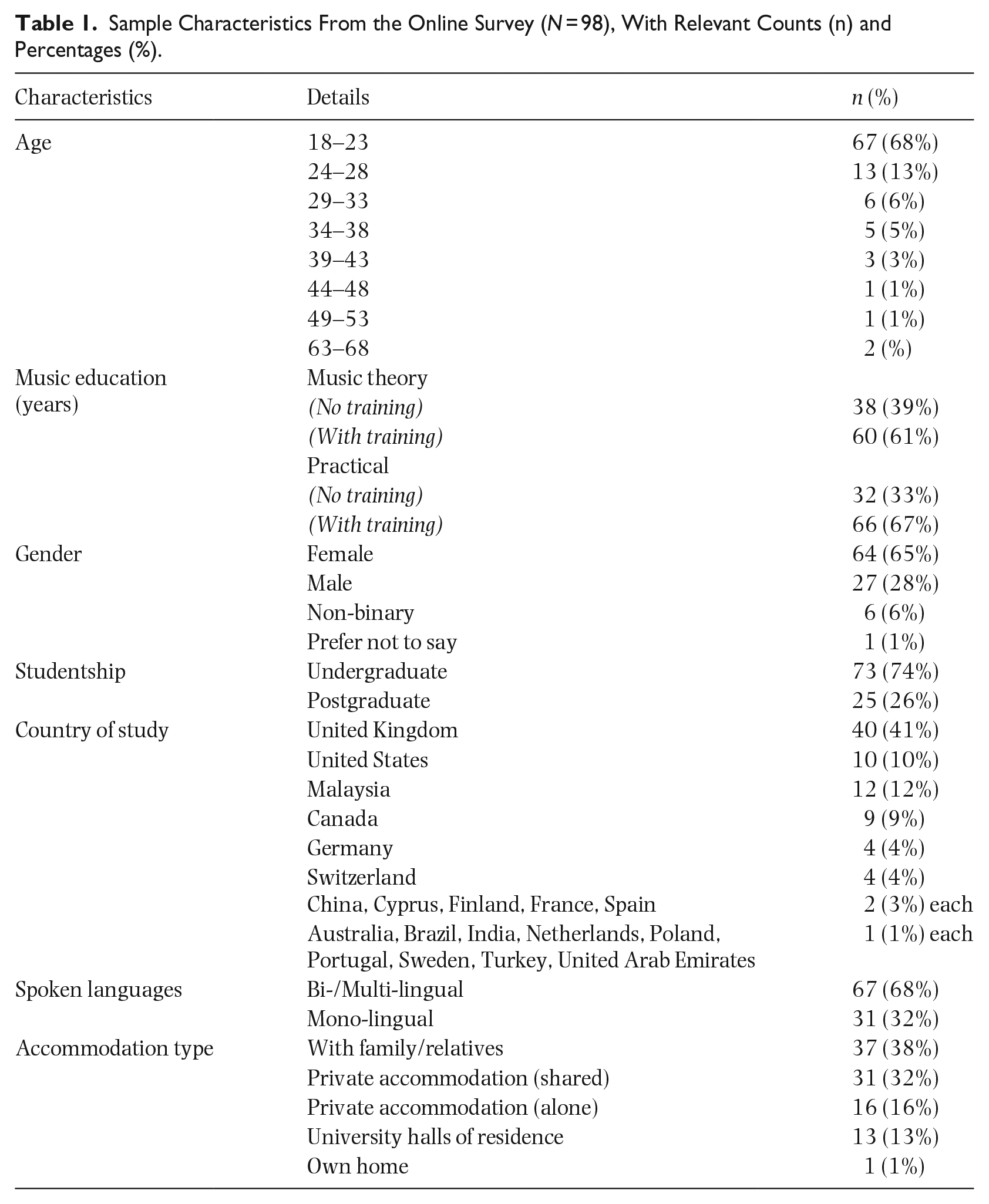
Ninety-eight participants (female: 65%; male: 28%; non-binary: 6%; no answer: 1%) from 20 countries participated in the survey. The majority were young adults (Mage = 24.60, SDage = 8.92, range = 18–67 years old) and undergraduates (74%). Sixty per cent had formal education in music theory (M = 5.78 years, SD = 4.14) and 67% had formal education in practical music (M = 8.59 years, SD = 5.61). Other sample characteristics are shown in Table 1.
Sample Characteristics From the Online Survey (N = 98), With Relevant Counts (n) and Percentages (%).
As depicted in Figure 1, on average, participants reported listening to BgM in more than 50% of their study sessions (M = 4.61; SD = 1.89), and more than half (58%, n = 57) indicated that they would listen to BgM in more than 70% of their study sessions. Only a minority (28%, n = 27) indicated listening to BgM in less than 30% of their study sessions, and 14 participants indicated listening to BgM in 50% of their study sessions.
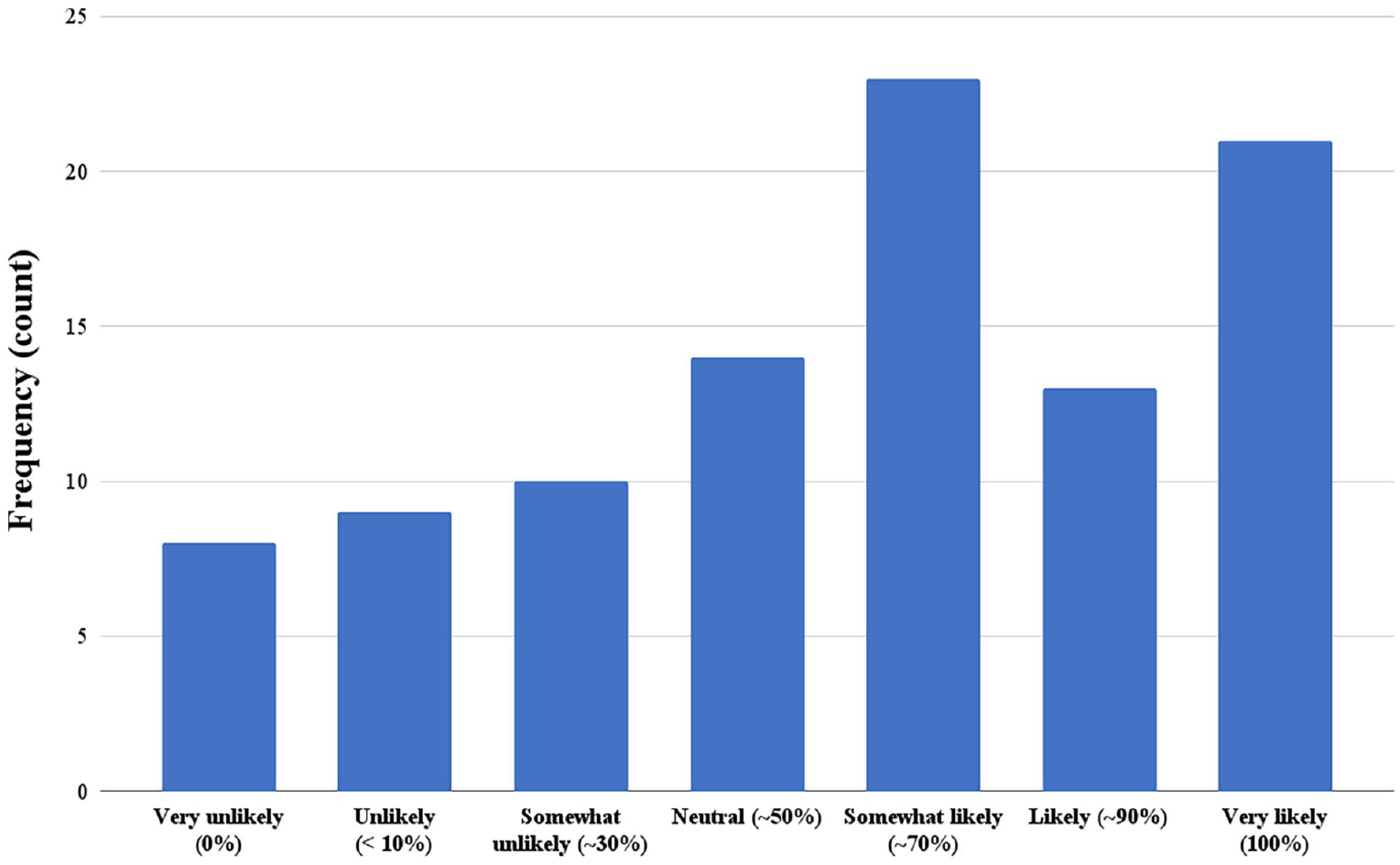
Distribution of Students’ Self-Reported Likelihood of Listening to Music While Studying (MWS Frequency) by a 7-Point Likert Scale (N = 98).
MWS frequency and individual traits
The correlation analyses showed that MWS frequency has significant negative correlations with age, r(96) = −.27, p = .008, FT_P, r(96) = −.22, p = .032, and FT_T, r(96) = −.20, p = .048; and significant positive correlations with MU_E, r(96) = .38, p < .001, and MU_C, r(96) = .56, p < .001. 2 The follow-up dominance analysis revealed that Age, FT_P, FT_T, MU_E explained 8.6% (R2 = .09) of the variance in MWS frequency. Age is the most relevant predictor (R2 = .07) with both general (see Table 2) and conditional (see Table 3) dominance over all other variables (which, together, explain less than 2% of the variance). In sum, Age emerged as the only relevant predictor of MWS frequency, with MWS frequency decreasing as Age increases.
General Dominance Statistics of Age, MU_E, MU_C, FT_P and FT_T in Predicting MWS Frequency.
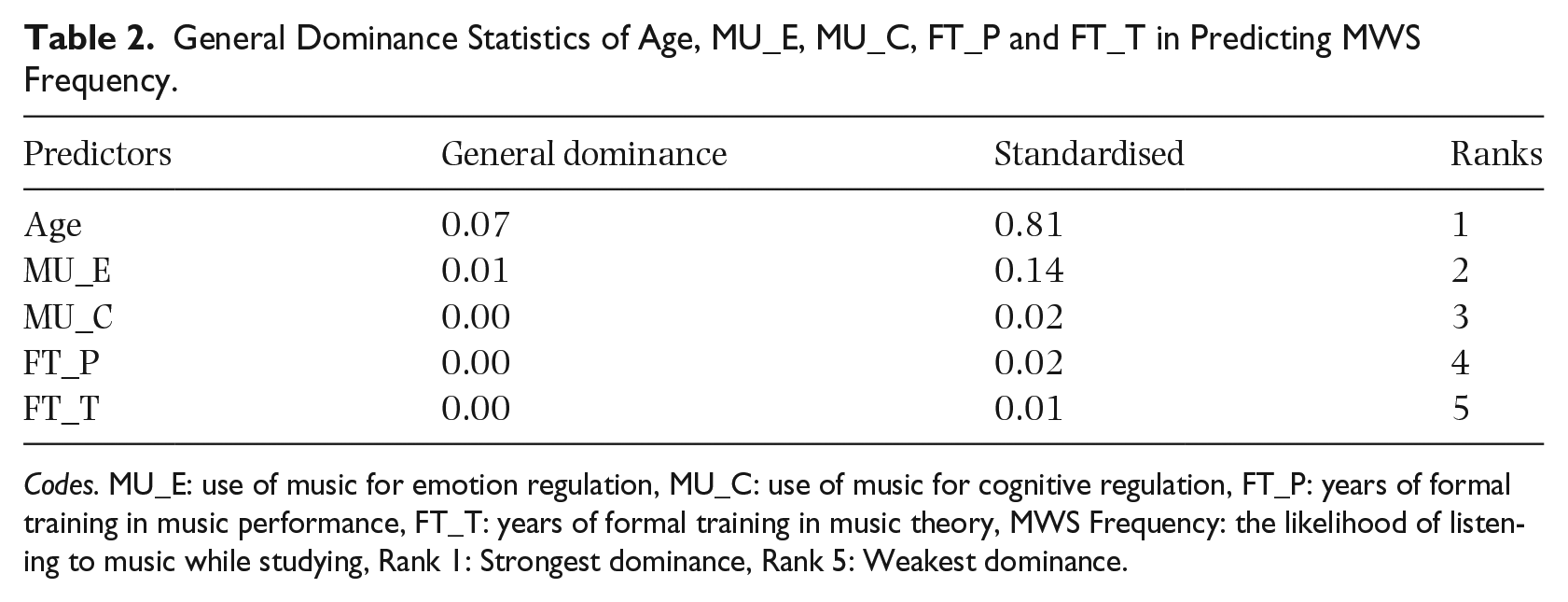
Codes. MU_E: use of music for emotion regulation, MU_C: use of music for cognitive regulation, FT_P: years of formal training in music performance, FT_T: years of formal training in music theory, MWS Frequency: the likelihood of listening to music while studying, Rank 1: Strongest dominance, Rank 5: Weakest dominance.
Conditional Dominance Statistics of Age, MU_E, MU_C, FT_P and FT_T in Predicting MWS Frequency.
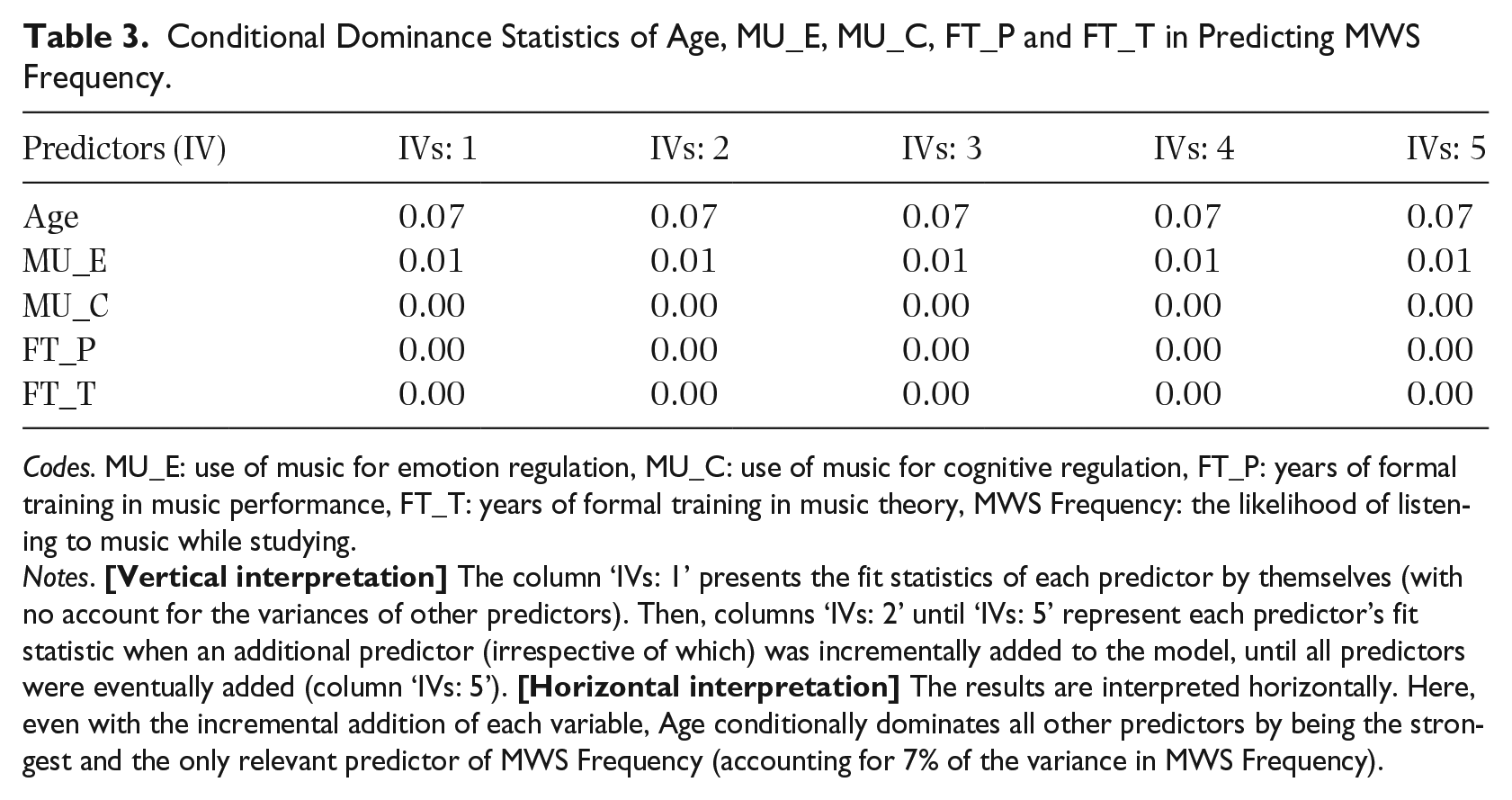
Codes. MU_E: use of music for emotion regulation, MU_C: use of music for cognitive regulation, FT_P: years of formal training in music performance, FT_T: years of formal training in music theory, MWS Frequency: the likelihood of listening to music while studying.
Notes.
Study-music versus everyday-music
A sub-sample of 57 participants (Mage = 23, SDage = 7.21, female: 70%, male: 21%, non-binary: 9%) reported listening to BgM about 70% of the times when they study (i.e., MWS frequency ⩾ 5). To validate an actual difference in reported MWS habit, we performed an independent t-test on MWS frequencies between the group who reported MWS frequency ⩾ 5 and those who reported MWS frequency ⩽ 4. As expected, there is a significance difference in MWS frequency between both groups, t(72.48) = 15.19, p < .001 (Mmws ⩾ 5 = 5.96, SDmws ⩾ 5 = .89; Mmws ⩽ 4 = 2.73, SDmws ⩽ 4 = 1.14). We also evaluated the gender distributions and results from chi-square analysis suggested no difference in gender (male, female, non-binary) between the two MWS groups, χ2(2, N = 97) = 4.15, p = .126.
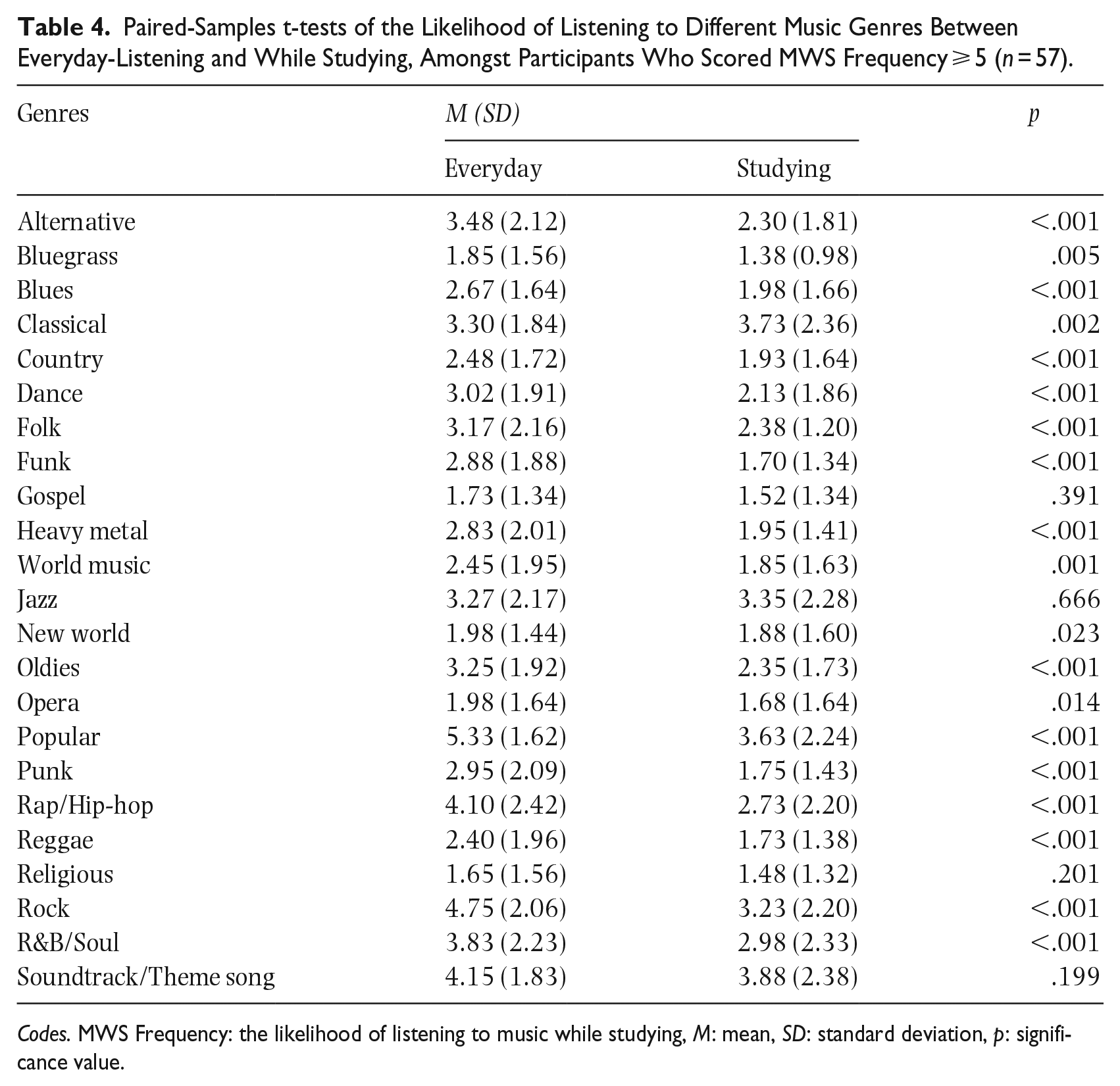
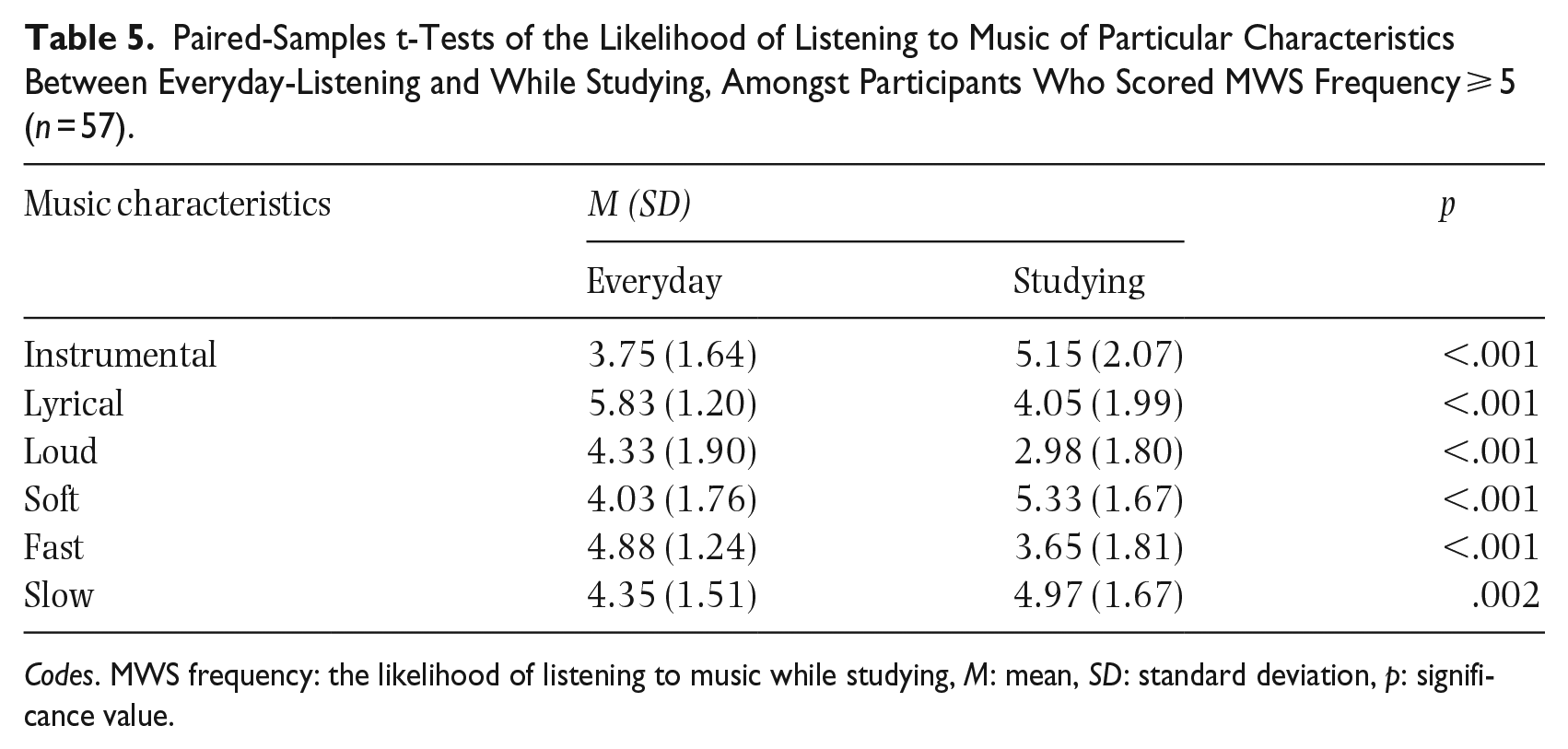
As shown in Table 4, the sub-sample of 57 participants were generally less likely to listen to most genres while studying than in everyday life, with the largest differences in Pop, Rock, Rap/Hip-Hop, and Alternative music. The exceptions were Classical―which was listened to significantly more often while studying―and Jazz and Soundtrack/Theme Song, with no significant differences between contexts. 3 Furthermore, as shown in Table 5, participants were (compared to everyday life) more likely to listen to instrumental, t(56) = −4.84, p < .001, soft, t(56) = −5.43, p < .001, and slow music, t(56) = −3.17, p = .002, while studying, and less likely to listen to music that was loud, t(56) = 4.84, p < .001, fast, t(56) = −4.40, p < .001, or had lyrics, t(56) = 6.81, p < .001.
Paired-Samples t-tests of the Likelihood of Listening to Different Music Genres Between Everyday-Listening and While Studying, Amongst Participants Who Scored MWS Frequency ⩾ 5 (n = 57).
Codes. MWS Frequency: the likelihood of listening to music while studying, M: mean, SD: standard deviation, p: significance value.
Paired-Samples t-Tests of the Likelihood of Listening to Music of Particular Characteristics Between Everyday-Listening and While Studying, Amongst Participants Who Scored MWS Frequency ⩾ 5 (n = 57).
Codes. MWS frequency: the likelihood of listening to music while studying, M: mean, SD: standard deviation, p: significance value.
Summary of findings
In this study, we evaluated whether individual characteristics can explain individual differences in the likelihood of listening to BgM while studying, and to identify potential differences in both the genres and characteristics between their preferred study-music and everyday-music. Our results confirmed that studying with music is a common habit, with the majority of participants reporting a likelihood of listening to BgM for at least 70% of their study time. Analyses of individual characteristics indicated that younger age may be related to a higher likelihood of studying with music.
Regarding musical choices, there was a clear indication of context-dependent selections related to genre and musical characteristics. In terms of genre, our results showed that: (a) students were less likely to listen to most music genres while studying than during everyday-listening, with Pop, Rock, Rap/Hip-Hop and Alternative music showing the largest differences; (b) students were more likely to listen to Classical music when studying than during everyday-listening; and (c) did not differ in their likelihood of listening to Jazz and Soundtracks/Theme Songs in both contexts. In terms of music characteristics, comparisons between both contexts revealed a clear picture: while studying, students listened more to instrumental music that was also softer and slower, than during everyday-listening (which was lyrical, fast, and loud). Altogether, these results indicated students being purposeful and functional when selecting their study-music.
Experience sampling study
Methods, materials, and procedures
The targeted sample for the ESM Study was the same as the online survey. To collect real-time behavioural data, we used MuPsych, a smartphone application (Android phones only) that collects event-based experience sampling reports of the music people listen to within set times (Randall & Rickard, 2013). After installing and setting up MuPsych, 4 for six weeks, when music was played on their devices, participants were prompted to answer two sets of questions (presented 30 minutes apart). A ‘Not now’ button was also available in any case participants were unable to commit to the questionnaire upon receiving a prompt. Alternatively, they could simply ignore the prompt.
At the first prompt, they were asked about their mood at that specific moment and, if they were studying (or about to study), they were asked about their study context, task(s), whether or not they would play music in the background, and, if yes, their reasons for doing so (see Supplemental Appendix D). At the second prompt (see Supplemental Appendix E), participants were asked once more to report their mood, whether they had been studying for most of the previous 30 minutes, and (if yes) whether they achieved their study goals and the perceived impact of studying with music. Participants also had the option to provide written feedback about their study session with BgM during the preceding 30 minutes.
In addition to the self-reported data, MuPsych also logged the music tracks (track title, artist name, and if relevant, the Spotify ID of the tracks) participants were listening to on their mobile devices between both prompts. This happened at seven different time points:
on the first prompt (once the music playing started),
when participants completed the first-prompt questionnaire,
two minutes after the first prompt,
four minutes after the first prompt,
eight minutes after the first prompt,
on the second prompt,
when participants completed the second-prompt questionnaire.
Data analysis
First, we identified the contextual characteristics where participants were studying with music (e.g., location, types of study tasks, reasons for music listening, perceived impacts of music, etc.) through descriptive results. Next, to analyse the characteristics of the music participants listened to while studying, we used Spotify’s API (‘Get Tracks’ Audio Features’ method) 5 to retrieve the mode (major/minor), energy, loudness and valence for each track. Music characteristics were analysed in two ways. First, each characteristic was compared between the contexts of studying and everyday-listening for an overview of possible contextual differences. Here, independent t-tests were used to compare the distributions of each characteristic between everyday-music (323 tracks) and study-music (102 tracks) episodes (a chi-square test was used for mode because the data is recorded in binary form: 0 = minor mode, 1 = major mode). Second, a correlation analysis (Spearman’s rank-order correlation coefficient) was performed between each music characteristic (energy, valence and tempo) and participants’ perceived level of task difficulty, to assess whether these characteristics might change with changes to the level of perceived task difficulty.
Results
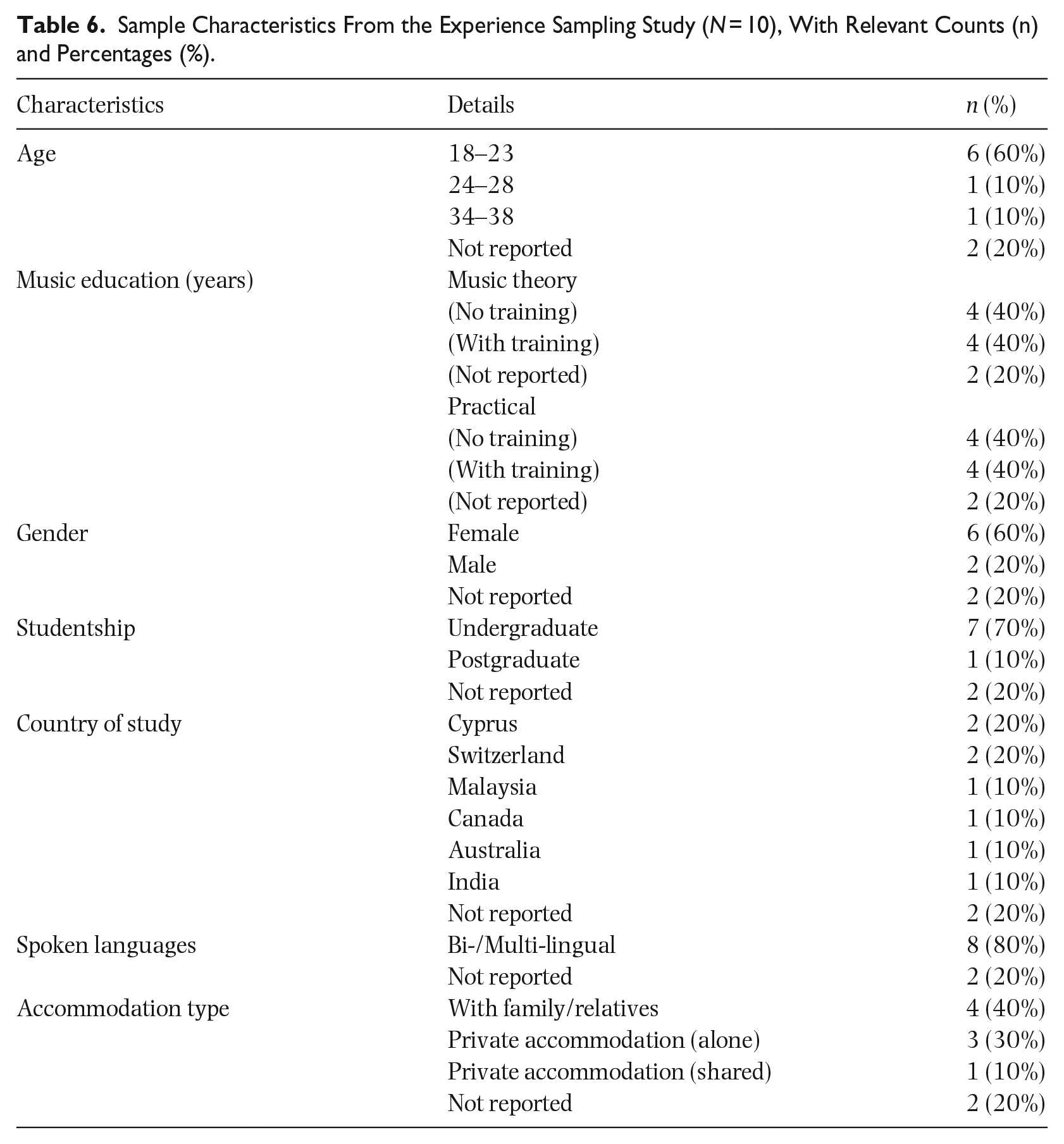
Ten participants (females: 60%, males: 20%, no answer: 20%) from the online survey also joined the ESM Study. The majority were young adults (Mage = 23, SDage = 5.88, range = 19–37 years old) and undergraduates (70%) across different countries (Cyprus: 20%; Switzerland: 20%; Malaysia, Canada, Australia and India: 10% each; no answer: 20%). In this sample, at least 40% of the participants had received formal education in both music theory (M = 2.25 years, SD = 1.89) and practical music (M = 7.25 years, SD = 5.62). Other sample characteristics are shown in Table 6.
Sample Characteristics From the Experience Sampling Study (N = 10), With Relevant Counts (n) and Percentages (%).
During the 6-week participation, 181 music episodes (first prompt) were recorded. Forty-two of these (23%) pertained to music listening while studying (hereinafter study-episodes), whilst the rest were music listening in other situations (hereinafter everyday-episodes). Upon the second prompt, the number of study-episodes dropped to 14.
Studying with music: doing what and why?
As shown in Figure 2(a) and (b), most often, participants studied alone (95%) at their own homes (74%). The types of study tasks involved were varied (cf. Figure 2(c)), with the most frequent ones involving writing (24%) and memorising information (21%). For the vast majority of the study-episodes recorded, on a scale of −2 (very easy) to 2 (very difficult), the study tasks were perceived as being 1 (‘difficult’; 48%) or 2 (‘very difficult’; 26%; cf. Figure 2(d)).
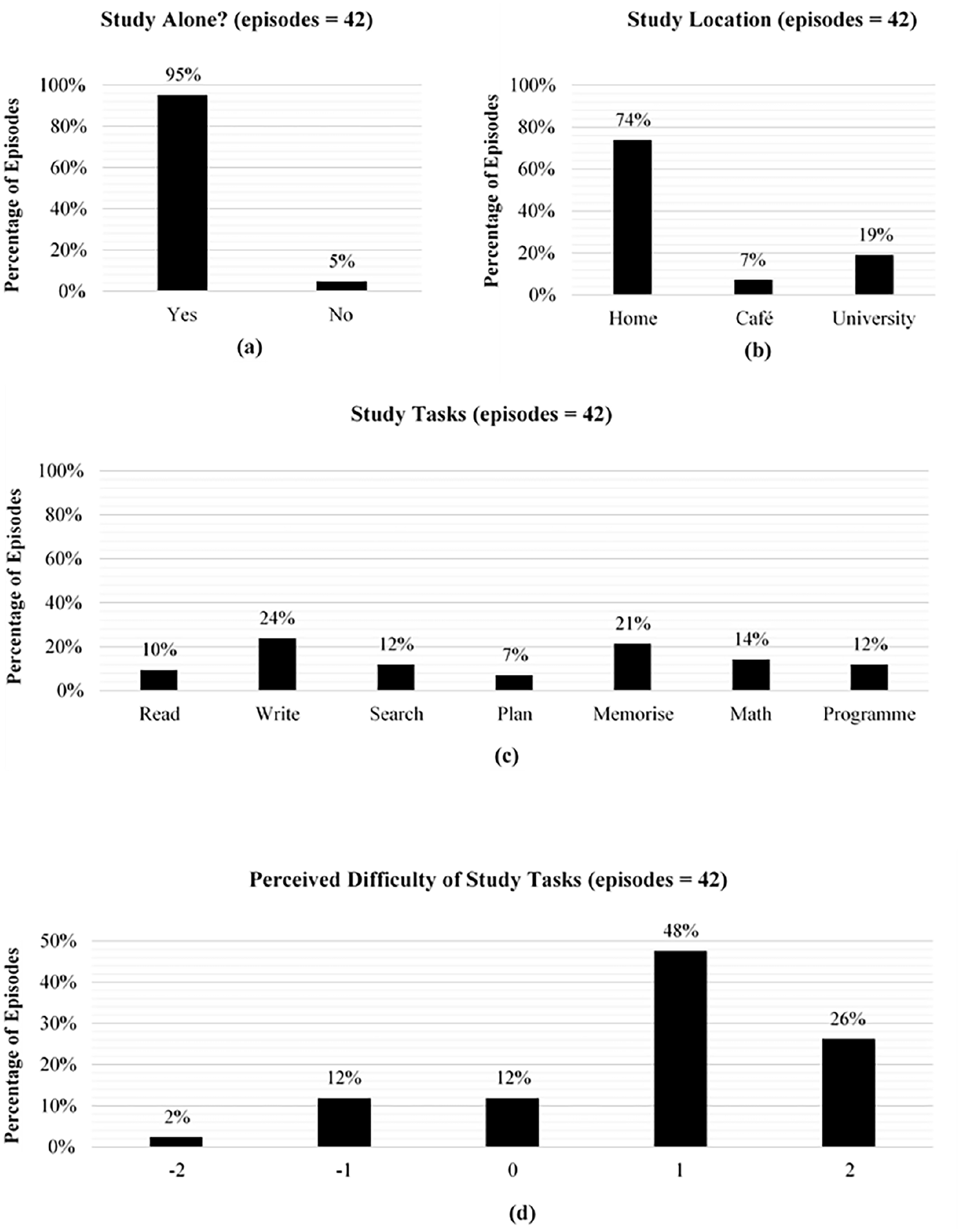
Descriptive Output of Associated Contexts (a), Environment (b) and Tasks-Related Information (c and d) When Listening to Music While Studying (N = 10).
The self-reported reasons for listening to music when engaging with these tasks (see Figure 3(a)) were, more than half of the time, using music as a source of company and/or filling up the silence (52%). Participants also used music often to block out other noises from the surroundings (33%), increase focus (33%), and improve mood (31%). The less common reported reasons were to be more alert (5%), prevent distraction (10%), inspire/enhance creativity (10%), and reduce stress/anxiety (10%).
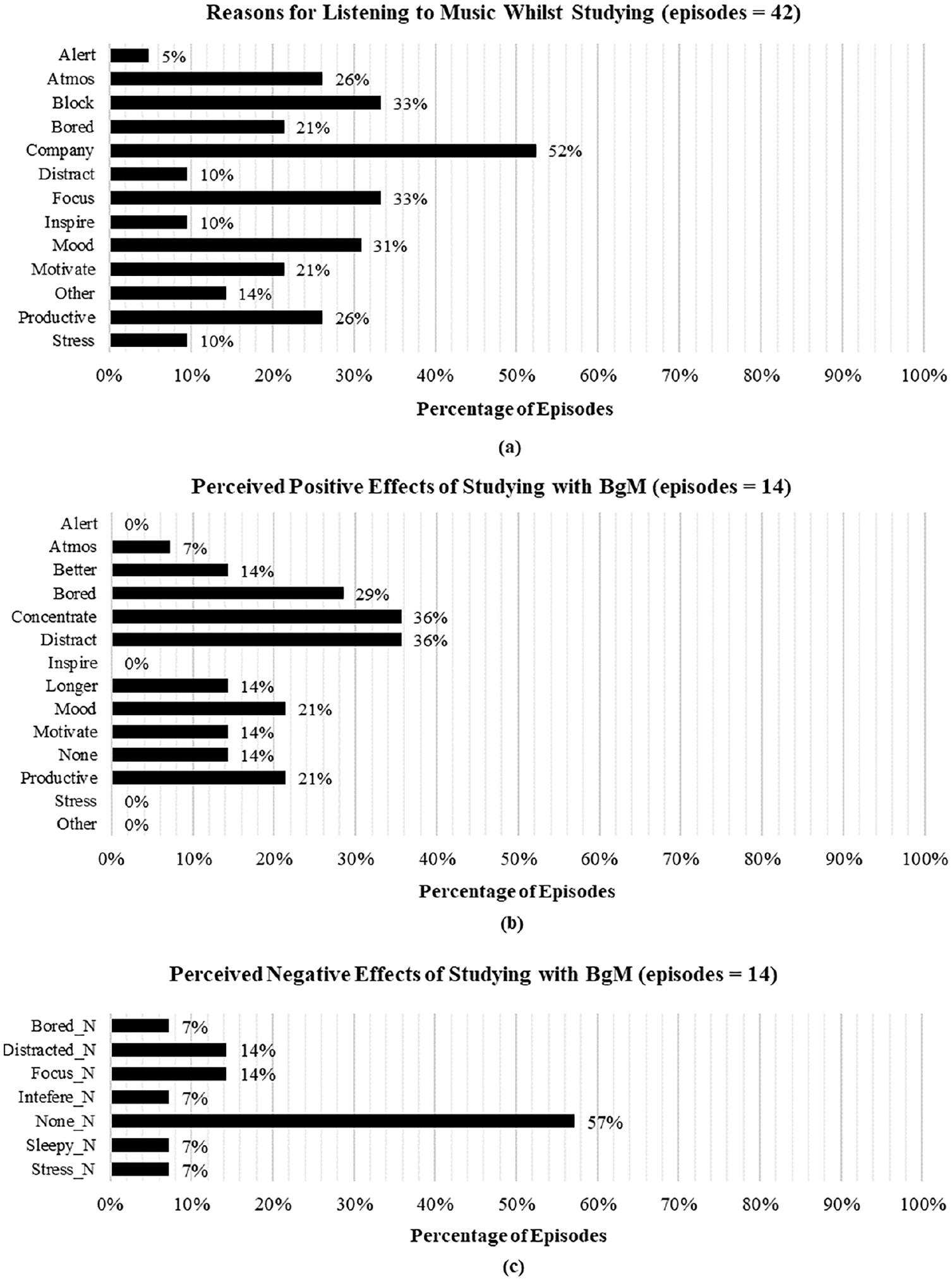
Reasons For Listening to Music (a) and Perceived Positive (b) and Negative (c) Impacts of Listening to Music While Studying (N = 10).
The outcomes of listening to music while studying
The perceived positive and negative impacts of listening to BgM during the study-episodes are shown in Figure 3 (b and c, respectively). As can be seen, the most common positive impacts reported after studying with music were: improved concentration (36%), reduced proneness to distractions (36%), less boredom (29%), improved mood (21%), and increased productivity (21%). Moreover, in 57% of the study-episodes, participants reported no negative impact of BgM. Concerning participants’ affective states before and after studying with music, no significant differences were found between these moments in terms of valence, t(13) = .56, p = .583, and arousal, t(13) = .37, p = .720. 6
Characteristics of study-music and everyday-music
Results from Table 7 showed that, compared to everyday-music, study-music had lower energy, t(423) = 4.10, p < .001, d = 0.47, lower valence, t(423) = 2.07, p = .039, d = 0.24, and lower loudness, t(423) = 2.68, p = .008, d = 0.30. No statistically significant differences were found for tempo, t(423) = −.70, p = .504, or mode, χ2(1, N = 425) = .53, p = .467. 7
Independent t-tests of Music Characteristics Between Everyday-Listening and While Studying.
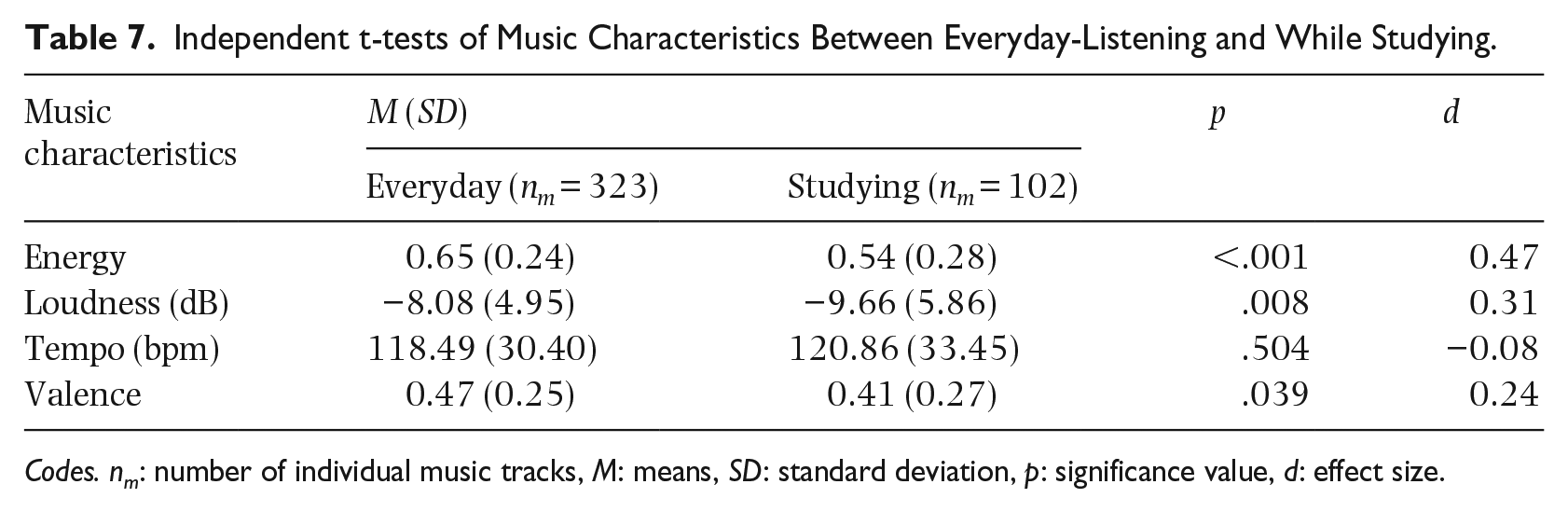
Codes. nm: number of individual music tracks, M: means, SD: standard deviation, p: significance value, d: effect size.
Results from the Spearman’s rank-order correlation coefficient demonstrated a weak but significant negative correlation between the level of perceived task difficulty and energy (ρ = −.22, p = .030), indicating that a higher level of perceived task difficulty was associated with listening to music with lower energy (i.e., calmer music). There were no significant correlations between the level of perceived task difficulty with either valence (p = .783) or tempo (p = .953).
Summary of findings
In this study, university students’ BgM-listening habits while studying were collected both in real time and retrospectively. Unfortunately, the sample size was small, possibly due to the high participant burden required in experience sampling research (Scollon et al., 2003; Van Berkel et al., 2017) and/or because MuPsych was only available on Android smartphones. There were, nonetheless, 42 study-episodes recorded and interesting points related to the findings to discuss (which will be interpreted with caution).
Overall, students often listened to BgM while writing and memorising information, tasks they perceived as ‘difficult’. Their music choices tend to have lower volume, lower valence (hedonic tone), and less energy compared to their musical choices in other moments. Moreover, the music becomes progressively less energetic with increasing perceived task difficulty. The most common reasons for studying with music were related to affect regulation and context adaptation, such as coping with boredom and loneliness, improving mood, and blocking out surrounding noises. Interestingly, the only performance-specific reason for listening to BgM was to facilitate concentration.
Students’ perceptions of how BgM impacted them and their study outcomes were largely positive, including preventing distraction, improving concentration, productivity, mood, and alleviating boredom. Notably, although mood elevation was a commonly reported reason and perceived positive impact of studying with music, there were no significant changes in students’ self-reported mood (nor arousal) during the 30-minute study period.
General discussion
The overarching purpose of our research was to explore how university students’ music-listening habits while studying are related to recent findings related to the impact of BgM on cognitive performance (Cheah et al., 2022). In particular, we wanted to understand the role of individual characteristics in determining the propensity of students’ music engagement while studying, their reasons to do so, the types of study tasks often partnered with music, as well as the characteristics of the music listened to in those circumstances. Moreover, given that all previous research in this area has investigated these topics through retrospective surveys, we also intended to explore some of these issues in real time to capture more accurately students’ motivations to listen to music while studying and information about the music they listened to. In what follows, we discuss our results in the context of our RQs.
Are individual background characteristics related to the likelihood of listening to BgM while studying?
Results showed that only Age negatively predicted the likelihood of listening to BgM while studying. This could be explained by age-related declines upholding divided attention (Glisky, 2007; Matthews et al., 2022). It is also possible that, compared to older adults (who might be more accustomed to other forms of media, e.g., radio or newspaper; Voorveld & Van der Goot, 2012), the younger generation is more acclimated to media multitasking that involves music listening. From another perspective, lesser uses of BgM to accompany cognitive work could also be accounted for by changes in music use with age. For instance, a recent study by Hird and North (2020) showed that age negatively predicted the use of music for mood regulation. Given that our sample (see also Kotsopoulou & Hallam, 2010) reported mainly studying with music for affect regulation, it is possible that a reduction in listening to music while studying occurs due to the reasons for engaging with music in the first place. Nonetheless, as our sample is skewed towards younger students (68% aged between 18 and 23), future research should widen the age range in order to explore the frequency and motivations behind BgM listening during cognitive work for different ages.
It is also important to note that whereas no other individual characteristics were found to predict students’ study habits with music, it is important to consider other factors. One important example that emerged from the open-ended comments (from two participants) is neurodiversity: I never listen to music when studying; I find it too distracting. Admittedly, I’m on the autism spectrum (formerly Asperger), so it’s likely that it’s simply too much added stimuli for me. (Participant 1) I typically listen to brown noise while studying – I tend to get easily distracted by rhythm/lyrics when studying since I have ADHD. (Participant 2)
Overall, our results confirmed previous findings that the likelihood of performing cognitive work with BgM was predicted by neither personality traits nor musical experience (Goltz & Sadakata, 2021; Kotsopoulou & Hallam, 2010); but it is predicted by Age, with the likelihood of studying with BgM declining with older age (Goltz & Sadakata, 2021). This is interesting because, despite previous findings reporting that BgM impacted introverts’ and extraverts’ cognitive performance differently (Cheah et al., 2022), the level of extraversion was not (at least in our sample) a determinant of study habits with music.
What are the characteristics of the BgM that students are more likely to listen to while studying?
The retrospective survey suggested that, regardless of genre, students were less likely to listen to BgM while studying than in everyday life (see also Kiss & Linnell, 2023). The most common genres listened to while studying were Classical, Soundtrack/Theme Songs and Jazz. Nonetheless, there were important difference between music preference in everyday life and while studying: (a) there was a higher likelihood of listening to Classical music while studying compared to everyday life; (b) there were no differences for Soundtrack/Theme Songs and Jazz; and (c) all other genres were significantly less likely to be chosen for study sessions. Interestingly, Pop and Rock (the two top genres preferred by the current sample), Rap/Hip-Hop, and Alternative music showed the largest differences between both contexts.
Overall, our findings indicate that students adopted specific music selection strategies for the context of study sessions, which aligns with previous research studies that also reported Soundtrack/Theme Songs (Coutinho & Lisser, 2015; Goltz & Sadakata, 2021) and Classical music (Coutinho & Lisser, 2015; Goltz & Sadakata, 2021) as the preferred study-music genres (at least among university students). Nonetheless, this pattern of genre preferences contrasts with that of Kotsopoulou and Hallam (2010), who reported Pop music being the preferred genre for study-music, and Classical music as the least preferred. In this respect, Age may play a key factor since the student sample that contributed to this particular result in Kotsopoulou and Hallam (2010) was between 12 and 13 years of age. It is possible that older students might be more strategic and purposeful in their music-listening habits while studying.
That being said, genre classifications can also mislead (Schäfer & Sedlmeier, 2009; Silver et al., 2016; Van Venrooij, 2009) and mask the relevant music characteristics that determine the reasons why students engage with particular music selections while studying (as well as the limitations of using a limited set of music genres). In support of this, when asked about music characteristics rather than genres, the answers were clear: students chose more instrumental, soft and slow music for studying, and less music that had lyrics, or was loud or fast. These results were confirmed by the ESM Study results: compared to everyday-music, study-music was less loud (although not necessarily slower) and more negatively valenced (characteristics typical of soft and slow music). Moreover, study-music was less energetic, something that is expected given the high correlation between loudness and energy (Coutinho & Cangelosi, 2011; Coutinho & Dibben, 2012).
A particularly noteworthy finding was that students listened to less energetic music when engaging with study tasks perceived as difficult. Two (not mutually exclusive) explanations are plausible. First, this behaviour is relatable to Easterbrook’s (inverted U-shaped) arousal theory (Easterbrook, 1959), whereby although an optimal level of arousal is needed to achieve optimum cognitive performance, over-arousal beyond the optimal level can be detrimental to performance. This was demonstrated by Bodner et al. (2007), who found that arousing BgM (dissonant music was used in their research study) facilitated performance in easy cognitive tasks, but silence was better than arousing BgM in facilitating performance in difficult cognitive tasks. In sum, as performing a difficult cognitive task can by itself trigger arousal, the addition of arousing BgM could cause over-arousal and consequently, performance decrement. This is also analogous to the self-reported behaviours presented in Goltz and Sadakata (2021), whereby although individuals were generally less critical towards the music that they listened to when performing easy tasks, with increasing task difficulty, their preferences for, specifically, Classical, calm and non-vocal music also increased. Second, another related explanation is that students attempted to balance the utilisation of their limited cognitive capacity (Kahneman, 1973) by prioritising their study tasks and listening to less arousing music (see also Schellenberg & Weiss, 2013).
Why do students choose to listen to BgM while studying and what are the perceived impacts of music on the intended outcomes?
Our results showed that students studied with music to reduce loneliness/boredom, block out noises, focus, and improve mood. Overall, this indicated that the primary uses of BgM were to facilitate concentration and regulate affective states (increase positive and reduce negative affect). Apart from coinciding with previous retrospective reports on the reasons for performing cognitive works with music, interestingly, these motives also closely aligned with the general reasons for listening to music in everyday life, which are to relieve boredom (including to help pass the time), regulate mood and arousal, and to create a comfortable private space (e.g., setting a right atmosphere, blocking out noises; Greasley & Lamont, 2011; North et al., 2004; Schäfer et al., 2013). Notably, our ESM Study did not reveal any significant differences in students’ self-reported affect (mood valence and arousal) between the start and end of the 30-minute study session. This may indicate that rather than elevating mood, BgM helped maintain it and indirectly benefited concentration and cognitive performance. Naturally, given that the sample size and the number of music episodes recorded were small, we cannot make strong assertions about these results.
Correspondingly, the majority of students perceived positive impacts from BgM that align with their motives for studying with BgM. That being said, two levels of caution should be applied to interpreting this finding. First, due to the purpose of the ESM Study, the sample consisted only of individuals who habitually study with BgM rather than those who do not. Therefore, our results should be considered in light of other literature showing the opposite or different perceptions for individuals who either prefer studying in silence (see Drewes & Schemion, 1991) or with other forms of media (e.g., listening to the radio; see Voorveld & Van der Goot, 2012). Second, we also highlight that the impact of BgM discussed in the context of this research was based on subjective measures of people’s self-perception (no objective measures of study outcomes were measured). Individual differences in prior beliefs, habits and preferences related to studying with music and to the type(s) of study-music one listens to do not necessarily determine the objective impacts of BgM on the actual quality of study outcomes (Drewes & Schemion, 1991; Fontaine & Schwalm, 1979; Johansson et al., 2012; Parente, 1976), thus warranting future ESM Studies that incorporate both objective and subjective measures of BgM’s impact on studying.
What types of study tasks would students commonly engage with when they listen to BgM?
With the caveat of the small sample size, results from the ESM Study suggest that students often engage with cognitive tasks associated with the negative impact of BgM (i.e., memorising, difficult tasks in general; see Cheah et al., 2022). These results also contradict previous retrospective research studies that reported less likelihood of listening to BgM while engaging in memory-related and difficult tasks (Goltz & Sadakata, 2021; Kotsopoulou & Hallam, 2010). However, considering the answer to RQ3, we should conceive the possibility that students prioritise facilitating task engagement and concentration through mood regulation (rather than directly enhancing task performance), especially during longer study sessions. Indeed, most laboratory research that reported negative impacts of BgM listening on cognitive task performance often measured cognitive tasks that lasted only a short duration (e.g., approximately or less than 15 minutes; Gonzalez & Aiello, 2019; Salamé & Baddeley, 1989), and their focuses were not the interplay between mood and performance over extended durations of cognitive work. In reality, it is reasonable to expect that students would study for longer periods, whereby persistent task engagement is potentially a (more) important determinant of performance. In that line, research studies on cognitive effort and mental fatigue have suggested that prolonged and/or intense cognitive effort is mentally tiring (i.e., cognitively depleting; Lin et al., 2020; Shamosh & Gray, 2007), but this can be counteracted (or delayed) if the feeling of enjoyment can be artificially induced or occur naturally during task engagement (Polman & Vohs, 2016; Vohs et al., 2008).
Conclusion
In line with previous work, we have shown that students listen to BgM while studying to adjust their study context and affective state to facilitate engagement with cognitive work. Even when listening to music in situations when music might impair performance, there were clear music-selection strategies that deviated from everyday listening habits and revealed strategic adaptation to the study context (e.g., less energetic music is preferred when engaged in study tasks considered to be difficult).
Unfortunately, some of our findings are limited by the small sample size and recorded music episodes in the ESM Study, which are related to practical issues faced with experience sampling. In our case, a central issue (as reported by participants) is that MuPsych (the only music-based experience sampling platform available) was, at the time of data collection, restricted to Android mobile devices (in the meantime, a new version compatible with iOS devices has been released, www.mupsych.com/research). Moreover, a number who participated did not engage with the full 30 minutes of the data-collection process, which resulted in reduced responses in the second prompt. Various reasons could have contributed to the decreased responses: participants might have missed or ignored the notification to respond, they might have stopped studying by that time, or the app may have malfunctioned (especially if participants’ phones were not kept updated). Another limitation was the time-point-based music tracking in the experience sampling app. The app only logged the music at specific time points throughout the 30 minutes, rather than each music track played throughout the 30-minute study sessions. Although this approach provided a general idea of the types of music students were listening to, it was not comprehensive. For instance, the data collected did not inform whether each logged music was listened to in its entirety (participants could be skipping through their playlist when a music track was logged). Clearly, careful thought has to be placed on the application of mobile experience sampling in future studies, in terms of universal accessibility, user engagement, and the reliability of collected data. Furthermore, given the high time commitment and engagement required of experience sampling studies, we also suggest that future studies provide compensation (no compensation were provided in our study) to encourage participation.
Despite these considerations, we are confident that this research study will instigate future research of similar natures, ultimately expanding current knowledge of how BgM might impact cognitive performance in reality. A necessary first step would be expanding the accessibility of the mobile-based experience sampling data collection across different mobile platforms while also collecting more fine-grained information about the music being played at different moments. This would allow replications and extensions to our work, and to explore the uses of BgM during cognitive work in other contexts and with different populations (e.g., workplace, driving). Another important direction, one that we are pursuing, is the relationship between affective (motivation and mood) and cognitive (attention and performance) goals in the context of prolonged cognitive work. So far, research has focused on isolated analyses of the direct impact of BgM on individual cognitive skills and short-lived tasks (see Cheah et al., 2022; De La Mora Velasco & Hirumi, 2020; Kämpfe et al., 2010; Vasilev et al., 2018). Considering the prolonged duration of many cognitive task sessions (e.g., studying or working), it is important to consider issues such as mental fatigue and mood regulation, and how music can have different functions and implications for the quality of cognitive work in those conditions. Such studies may reveal key information regarding the interplay among motivation, mood and cognitive performance in realistic study (or work) settings.
To our knowledge, this work is the first empirical study that examined music-listening habits while studying in real time. Our findings emphasise the importance of this approach when exploring the functions, characteristics, and outcomes of studying with BgM.
Supplemental Material
sj-pdf-1-pom-10.1177_03057356251351778 – Supplemental material for Help me study! Music listening habits while studying
Supplemental material, sj-pdf-1-pom-10.1177_03057356251351778 for Help me study! Music listening habits while studying by Yiting Cheah, William M Randall and Eduardo Coutinho in Psychology of Music
Footnotes

Funding
The author(s) disclosed receipt of the following financial support for the research, authorship, and/or publication of this article: This work was partially supported by a PhD scholarship awarded by the University of Liverpool to the first author.
Ethics statement
This research has been granted ethical approval by the University of Liverpool’s Research Ethics Committees (reference number: 9866).
Supplemental material
Supplemental material for this article is available online.
Notes
References
Supplementary Material
Please find the following supplemental material available below.
For Open Access articles published under a Creative Commons License, all supplemental material carries the same license as the article it is associated with.
For non-Open Access articles published, all supplemental material carries a non-exclusive license, and permission requests for re-use of supplemental material or any part of supplemental material shall be sent directly to the copyright owner as specified in the copyright notice associated with the article.
