




Abstract
Recent research indicates high proportions of individuals report they have music playing while they read. This behaviour has implications for effective comprehension, as some scholars suggest the presence of music depletes cognitive resources, resulting in a greater chance of becoming distracted. By contrast, some have claimed that listening to music can improve cognitive performance by increasing physiological arousal and improving mood. This study captured self-reported behaviours of university students regarding whether they chose to listen to music while reading for study purposes. Reasons for listening varied, with reports of increased motivation, enhanced focus, or masking external noise. The most listened to music genres while reading were Classical and Rock, and individuals preferred to listen to non-lyrical, slow music while reading. Similar proportions of respondents claimed they often listen to music while reading for study purposes (54%) and avoided it (46%), suggesting that individual differences may determine whether music is distracting or helpful to readers. Working Memory Capacity was not found to be associated with distraction from music while reading, nor was trait Mind Wandering. However, a Music Engagement rating was related to how helpful individuals perceived background music to be while reading and their decision to listen to it.
Keywords
Survey data suggest that music listening during reading is commonly reported among large samples of participants. Whittinghill et al. (2021) reported that 75% of their 583 respondents claimed they listened to music while studying. A survey undertaken by the Good News Network (Gill, 2022) found that 49% of the 2000 individuals reported listening to music while they study, with 60% claiming they feel they study better with music playing. The College Rover Team (2023) also surveyed 1,025 individuals and reported that 38% of their sample reported listening to music ‘very often’ while studying. It has been suggested by some scholars that listening to music while reading interferes with concentration (Avila et al., 2012; Kämpfe et al., 2011; Lehmann & Seufert, 2017; Thompson et al., 2012; Vasilev et al., 2018; Zhang et al., 2018). However, the large proportion of individuals who read and listen to music concurrently suggests there may be some benefits to listening that are not yet fully understood. The trend for listening to music during study activities also corresponds with the popularity of dedicated ‘study’ playlists available through YouTube and Spotify, such as the Lofi Girl Channel (Lofi Hip Hop Radio – Beats to Study/Relax to), which has 13.8 million subscribers and has recorded over one billion views since its creation in 2019 (Lofi girl, n.d.).
Theories such as the Interference-by-process account (Jones & Macken, 1995; Linklater et al., 2024; Marsh et al., 2009) and the Attentional Account (Bell et al., 2021) would suggest that listening to music while reading may cause individuals to become distracted. The Interference-by-process account is one of two mechanisms described in the Duplex Account (Hughes et al., 2013): it claims that attentional interference (i.e., distraction) occurs when two tasks share similar processes, but does not occur when there is similarity of content alone. For instance, interference would occur when both the ignored and focal stimuli contain intelligible sentences that require processing of semantic meaning. Whereas if the to be ignored material contains phonetically similar words presented randomly without any meaningful order, no interference would occur, as there would be no need for semantic processing. An example of this was found by Marsh et al. (2009), who found that auditory distraction was more evident during the presentation of semantic information when auditory distractors had a similar semantic meaning compared with when distractors had similar content alone. Linklater et al. (2024) offer further evidence of an Interference-by-process account, finding that in experiments that required participants to hum a known melody from memory, irrelevant sounds of a melodic form distracted to a greater magnitude than those presented in speech form. Likewise, they found that when the task involved verbally reproducing known lyrics from memory, irrelevant speech-based sounds were more distracting than melodic distractors. Furthermore, research by Meng et al. (2020) found that in a task where participants needed to assess the semantic meaning of sentences, meaningful background speech produced greater disruption than meaningless speech and silence. In the experiment by Meng et al. (2020), the participants were not required to make any verbal response, as they were in Linklater et al.’s (2024) experiments, indicating interference persists when verbal repetition is not required, consistent with conditions of silent reading with background music.
However, in the context of short-term serial recall tasks such as memorising and repeating lists of words, the mechanism of interference differs. Contrary to the idea of distraction from phonological similarity, studies by Jones and Macken (1995) and Page and Norris (1998) demonstrate that it is not phonological similarity between focal stimuli and distractors that drives disruption. Instead, it is the degree of acoustic change within the irrelevant sound stream that leads to interference. This is a key aspect of the Interference-by-process account in serial memory contexts: disruption occurs because both the irrelevant auditory input and the memory task rely on a similar serial processing mechanism, not because of content overlap per se. That is, the disruption does not occur primarily because of phonological similarity of content words (e.g., rhyming) but instead because they present with acoustic variability to focal words. This distinction supports the Interference-by-process account, as the type of task being performed is more sensitive to distraction from distractors that require similar processing. For example, remembering a list of random words in order is sensitive to changes in sound patterns, whereas understanding the meaning of text is sensitive to similarities in the meanings or phonetic features of words. Therefore, in the context of listening to music while reading, it is more likely that interference would occur because of the lyrics interfering with the semantic processing of the text, rather than in serial recall tasks, where possible acoustic changes in distractor sounds may be the driving mechanism of distraction.
Research by Hughes et al. (2013), building on work by Eimer et al. (1996), states that distraction from irrelevant sounds can also occur via a ‘deviation’ effect, or via a ‘changing state’ effect. For example, music that interferes via a deviation effect may change from a previous constant or repeated pitch to a new and unexpected one, or via a changing state effect when it contains a series of changing states (pitches or other acoustic features) throughout. Hughes et al. (2013) went on to induce task engagement in their recall task using incentives and found that distraction by a deviation effect could be controlled by top-down processes, demonstrated by superior recall in the incentivised condition compared with non-incentivised one; however, distraction by changing state was automatic. Therefore, according to the Duplex Account, background music may interfere in two ways. First, by interfering with processing if there is similarity of processes required for the focal task and background stimuli, for example, when processing intelligible lyrics and written text. Second, when the irrelevant stimuli deviate from an expected pattern. The Duplex Account also suggests that distraction from auditory stimuli can occur because of attentional capture, which occurs automatically regardless of a similarity in processes or deviation, and is best described by the Attentional Account (Bell et al., 2021).
The Attentional Account (Bell et al., 2021) describes two types of attentional capture in which stimuli can gain access to attention either because they have specific relevance to the individual, such as hearing their name, or in a non-specific way, such as when the stimulus deviates from an expected pattern. In the reading context, specific attentional capture could occur if an individual hears a song that reminds them of a loved one or a significant event. This kind of attentional capture becomes more relevant when the music listened to is familiar. A specific attentional capture could occur when a stimulus captures attention due to its unexpected deviation from a pattern. At a playlist level, this could occur when a song is presented of a different genre, or at a song level, when there is a sudden change in musical characteristics (e.g., change in tempo, volume, metre), and may occur regardless of whether the song heard is familiar or unfamiliar. The findings of Linklater et al. (2024) also highlight that attention capture via the supplementary motor area is another way that music listening may distract readers, as it seizes the vocal motor system, occurring when individuals feel compelled to either sing along to a familiar song or mentally replay a melody heard. Regarding whether individuals may become distracted by music playing while they read, according to the Interference-by-process account, music should automatically interfere with processing and lead to poorer comprehension if there are similarity of processes required for the focal task and background stimuli, such as processing intelligible lyrics and the written text (Linklater et al., 2024; Marsh et al., 2009). Furthermore, attentional capture of irrelevant sounds may distract individuals if they deviate from an expected pattern or have a specific relevance to the individual (Bell et al., 2021; Hughes et al., 2013). However, experimental work by Hughes et al. (2013) has shown that irrelevant sounds that are changing throughout may be able to be protected against for individuals with a stronger control of focus and/or motivation to perform well.
For findings in which a facilitative effect of music listening was found, the Arousal-Mood Theory may provide a better explanation, as it suggests that music can enhance cognitive functioning through changes to physiological arousal and increased positive affect (Husain et al., 2002; Thompson et al., 2001). Studies that have found background music improves various aspects of cognitive functioning include Carr and Rickard (2016) and Proverbio and de Benedetto (2018). The premise that this improvement results from changes in arousal is supported by studies that have investigated the physiological impact of music listening, where music selected specifically to impact arousal successfully demonstrated increased skin conductance response, heart rate, and cortisol levels (Krumhansl, 1997; Lundqvist et al., 2009; Rickard, 2004). The increased arousal observed in these studies was associated with differing musical characteristics. Lundqvist et al. (2009) utilised music with a fast tempo and a major mode, whereas Rickard (2004) utilised what was described as rhythmic music that contained changes to volume throughout and had low melodiousness. Krumhansl (1997) did not report on any specific musical characteristics, instead claiming they chose music that was assessed by experts as having happy, sad, and fearful valences.
Increasing motivation also may explain why some individuals have music playing while they read specifically for study, as it helps them to feel more motivated to perform reading activities, particularly if their interest in the content is low. Differences in context when individuals read for pleasure versus when they read for work or study purposes are worth noting. The former does not require the individual to read or continue reading against their will, and it can be assumed that if their interest was low, ceasing reading would not have any consequence. However, the latter category of reading tasks includes the need to read a certain amount of material, regardless of interest. This context may be one where motivation plays a stronger role, and individuals may utilise methods to maintain their motivation, such as music listening. It is interesting to note that workplaces often have music playing, with research finding that the presence of music enhances workplace productivity and job satisfaction (Axelsen et al., 2022; Sanseverino et al., 2022; Serpian et al., 2023). This is in stark contrast to libraries, where students often study in a music-free environment. These varying contexts may contribute to different behaviour practices around music listening during reading for varied purposes.
Given that there are competing explanatory mechanisms for why music may improve or impede cognitive performance, it follows that the evidence regarding the impact of music on reading comprehension is mixed. Studies have attempted to discern the effect of various styles of music when it is played in the background during reading tasks, referred to for this article as ‘background music,’ but including a variety of styles and genres, including lyrical, instrumental, familiar, unfamiliar, slow, and fast tempos. Kämpfe et al. (2011) conducted a review of 40 studies and concluded that background music had a negative effect on reading comprehension. Vasilev et al. (2018) also found background music had a mild detrimental impact on comprehension in their review of 35 studies. However, a review of 30 studies undertaken by de la Mora Velasco and Hirumi (2020) revealed close to equal numbers of studies yielding positive, negative, and neutral effects of background music on comprehension (n = 11, n = 9, n = 9, respectively). Most recently, de la Mora Velasco et al. (2023) conducted a review of 47 studies, with their analysis revealing background music having a small positive effect on comprehension (d = .314). Interestingly, when Cheah et al. (2022) investigated the impact of background music on various cognitive tasks, including reading, they found that the distracting effect of background music was not uniform for all individuals, finding it to be more pronounced for introverts, in addition to being more evident during difficult tasks. Furthermore, the difficulty in reaching a consensus on the impact of music on reading is heightened by the challenge researchers face in maintaining experimental consistency when using complex and highly alterable experimental stimuli. Thus, methodological differences may have contributed to the varied results reported due to a lack of comparability of musical characteristics between the reviewed studies, introducing confounds such as music that had characteristics that were more likely to distract, such as faster tempi or varied and inconsistent rhythms. On the other hand, music listening preferences are individualised and inconsistent, and experiments may not have external validity if the musical characteristics are controlled too tightly, challenging researchers to find an acceptable balance between external validity and experimental control when selecting music.
As these methodological inconsistencies are difficult to completely exclude in this area of research, another area of focus that might explain some of the variation in prior results is that individuals vary in their susceptibility to distraction from music while they read, as was found in Cheah et al.’s (2022) review. It is possible that while music can be distracting, some people are better able to block out distractions than others. Working memory capacity was chosen as an individual difference measure that may explain this possibility, primarily because it had been used by prior researchers in this context, with findings that it was protective against distraction from background music while reading (Christopher & Shelton, 2017; Lehmann & Seufert, 2017; Robison & Unsworth, 2015). For these studies, working memory was operationalised for executive function, that is, the ability to maintain focus upon the focal stimulus when distractions are present. Although working memory is more active in serial recall tasks rather than semantic processes that are dominant for reading (Körner et al., 2019), it is relevant in some forms of attentional capture that can be controlled by top-down processes (Hughes et al., 2013). This suggests that a higher working memory capacity, being an element of executive control, may be helpful in circumstances when music captures attention in the form of a deviation effect. Failure to find a relationship between working memory and distraction potential would challenge the Attentional Account, which suggests that individuals should be able to minimise distraction using top-down control (Bell et al., 2021). However, as demonstrated by Hughes et al. (2013), top-down control was only possible when the music listened to was distracted via a deviation effect. It is therefore possible that if the music listened to by the current sample distracts via a changing state effect, a relationship between working memory capacity and distraction would fail to appear.
In addition, according to Thomson et al. (2015), an increase in mind wandering can occur when cognitive resources are depleted, either as time on task continues or if the task is particularly taxing, such as when an individual reads material they find hard to understand. They go on to claim that the extent of resources that are used up when performing cognitive tasks, such as reading, is related to working memory capacity. That is, if an individual’s working memory capacity is larger, they may be able to read for longer periods, or read more difficult to understand material, before slipping into mind wandering. Thus, working memory capacity and mind wandering are related when we consider the cognitive resources required to maintain concentration amidst potential distractions required for various types of reading.
Using an experience sampling method, Greasley and Lamont (2011) found that individuals who are more engaged with music listen to music more often and are more likely to have the music alter their mood than those who are less engaged with music. Therefore, those who are more engaged with music are more likely to become distracted by music in their environment as their interest in it leads them to attend to it. It is also possible that these individuals experience a greater impact of the music on their level of arousal and mood than those who are less engaged, so the music is better able to facilitate their reading performance. A study undertaken by Patston and Tippett (2011) found that musicians were more easily distracted by background music than non-musicians when performing a language comprehension task, highlighting the possibility that those more engaged with music may be more likely to be distracted by it when they read.
The literature supports the premise that working memory, mind wandering tendency and engagement with music may provide some context around individual habits regarding music listening during reading. Given that prior results showed large variations in findings with respect to personality traits, with many studies failing to find an effect of extraversion on reading performance during music exposure, for instance, we opted not to measure extraversion in this study (Furnham & Allass, 1999; Furnham & Bradley, 1997; Furnham & Stephenson, 2007; Kou et al., 2018; Lim et al., 2022). Consequently, the first aim of this study was to replicate prior survey research and confirm individual differences in the choice to listen to or avoid music while reading. The second aim was to explore associations between working memory capacity, mind wandering tendency and engagement with music, with the perception of whether having music playing is a help or a hindrance to reading. Such associations may help to explain variations in the behaviour and mixed results found in past research.
The current study
This study aimed to gain a greater understanding of current music listening habits while university students perform various cognitive tasks, including reading. Individual difference measures were collected to investigate whether associations existed between individual characteristics and music listening habits. The individual difference measures were Mind Wandering Tendency, Music Engagement and Working Memory Capacity. These measures were chosen because previous research has indicated their potential relevance to distractibility. Additional data were collected regarding respondents’ reasons for listening or avoiding listening to music while they read, and the genre and characteristics of the music they listened to for reading, compared with other activities. Finally, respondents were asked to rate how helpful they perceived music to be when they read to allow for an assessment of whether any individual difference variables were associated with an increased perception of helpfulness or distraction.
Based on prior research, it was expected that up to 50% of the sample would report listening to music while they read for study purposes. Any relationships that may exist between individual difference measures and the perception of music being either distracting or helpful to reading will be useful in evaluating theories that have been invoked to explain the impact of background music on comprehension, such as the Interference-by-process concept (Linklater et al., 2024) the Attentional Account (Bell et al., 2021) and the Arousal-Mood Theory (Thompson et al., 2001). For example, for those who perceive music as distracting, correlations between lower working memory and higher mind wandering would be expected to be present. This result would be consistent with research that has found reduced comprehension when background music was present and provides evidence for the utility of theories that propose that music would interfere with the reading process and drain cognitive resources. Developing a greater understanding of associations between music listening behaviour and individual difference variables may allow the above theories to better explain why individuals either choose to listen to music or avoid it while they read.
Method
Participants
The participant group consisted of 226 university students, with a mean age of 28.41 years (SD = 9.01), with a range from 18 to 55 years. The majority were studying full-time (62%) and female (83%).
Materials
A survey was created to assess participants’ music listening habits, followed by the administration of individual difference measures. The survey consisted of questions covering general demographics, formal and informal musical background and experience, and the preference for listening to or avoiding music during a variety of tasks. In addition, data were collected regarding preferences for music genre, tempo, and the presence of sung lyrics in music played during selected tasks. A rating scale on the perceived helpfulness of music listening during selected tasks was also included. See Supplemental Appendix A for full survey questions.
Music Use and Background Questionnaire (MUSEBAQ)
The MUSEBAQ is a 67-item scale developed by Chin et al. (2018). It assesses how an individual experiences music by examining the extent of formal and informal Musical Training and Skill (Module 1), Musical Capacity (Module 2), Music Preferences (Module 3), and Motivations for Music Use (Module 4). Musical Capacity (28 items) refers to the capacity for music-related sensitivity, for example, having the listening sophistication to describe a piece of music accurately by holding features of music in memory, or awareness of emotions represented by a musical excerpt. When tested, the Musical Capacity module revealed Cronbach’s alpha values of .90, .77, .81, and .81 for each contained subscale. Example items include ‘I get chills or gooseflesh when listening to moving music’ and ‘After hearing a new song a few times, I can usually sing or hum it by myself’. Motivations for Music Use (30 items) measures how an individual uses music for various purposes, such as musical transcendence, emotion regulation, social connection, musical expression, and formation of identity. When tested, the Motivations for Music Use module revealed Cronbach’s alpha values of .92, .93, .86, and .79 for each subscale. Example items include ‘I use music to distract me from emotional pain’ or ‘Certain types of music help me think or concentrate’. For ease, the Motivations of Music Use module scores are referred to as ‘Music Engagement’ during statistical analyses, as it was felt that the items best represented a level of engagement with music possessed by an individual. Items in Modules 2 and 4 are scored using a 6-point Likert scale from strongly disagree to strongly agree.
The MUSEBAQ instrument offers researchers nuanced data capturing the varied ways that individuals engage with music. In this study, average scores for the ‘Motivations for Music Use Module’ and the ‘Musical Capacity Module’ were analysed to assess the relationship between the constructs and the behaviour of listening to music while reading. Items in Module 1 are recommended by the scale developer to be analysed individually as they are not captured using the same measurement. Item 1 was analysed to assess if a relationship existed between music listening while reading and years of formal training with an instrument. Participants’ music preferences (Module 3) were excluded from the analyses as participants were asked to select the genre of music they most often listened to specifically while reading in the Music Listening Habits Survey, which was deemed more relevant data than overall music preferences.
Mind Wandering Questionnaire
The Mind Wandering Questionnaire is a 5-item scale measuring the extent to which an individual experiences mind wandering using a 6-point Likert scale (Mrazek et al., 2013). Respondents are asked to rate statements related to the frequency of experiencing mind wandering. An example item from this scale is ‘I have difficulty maintaining focus on simple and repetitive work’. The questionnaire is considered a reliable measure of mind wandering with a Cronbach’s alpha of .85. Convergent validity of the scale was demonstrated by a positive correlation being found between the number of incidences of non-task related thoughts reported by participants during a working memory task and mind wandering score (r = .23, p = .047), in addition to a negative correlation between mind wandering score and working memory performance (r = −.28, p = .013).
Working memory task
Working memory was captured using an Operation Span Task (OSpan), which involved keeping strings of up to seven letters in memory while consecutively performing simple mathematical operations (Unsworth et al., 2005). The task was obtained from the Inquisit Test Library and presented online via the Inquisit (Web) programme. The participant is first presented with an instruction screen that explains the task. They are then presented with a mathematical operation, for example, (1*2) + 3 = . Once they have mentally operated, they are instructed to click on the screen to continue. The following screen provides a potential answer to the operation, and the participant is asked to select whether the answer is ‘true’ or ‘false’. Once an answer is selected, whether it is incorrect or correct, a screen with one letter is presented, for example, P. The individual is instructed to commit this letter to memory. This process is repeated between 3 and 7 times before a recall screen containing 12 letters with check boxes is presented. The participant is instructed to select the letters they recall in the correct order before selecting ‘exit’. If they are unable to recall, they can select ‘blank’ in any position of the letter order. A feedback screen is then presented showing the number of correctly remembered letters. A running percentage of correctly answered mathematical operations is presented in the top right-hand corner of the screen throughout the task. Participants are prompted in the instructions to attempt to keep this percentage above 85%. The Operation Span Task requires the participant to complete 18 trials. An absolute OSpan score ranging between 0 and 75 is calculated as the sum of all perfectly remembered sets of letters.
Procedure
Ethics approval for the study was received from the ECU Human Research Ethics Committee, in accordance with the National Health and Medical Research Council’s National Statement on Ethical Conduct in Human Research (2007). All participants provided written informed consent to participate in the research and for their data to be used for the research before participation. Participants first completed a survey regarding their music listening habits, followed by the Mind Wandering Questionnaire and the Music Use Scale. Following this, the participants were directed to the Inquisit Website to complete the OSpan. All measures were presented online, and the total time taken for all components was approximately 45 min. The participants were able to choose where and when to complete the online survey and OSpan test, accessed via a link. They were advised at the outset of the approximate time commitment and that they would require a quiet space and a reliable internet connection to complete. The OSpan test could not be exited until completed to ensure it was completed in the same sitting. Qualtrics software was used for the presentation of all self-report measures (Music Listening Habits Survey; Mind Wandering Questionnaire, Music Use Scale). The OSpan was presented via Inquisit Player (Web Version).
Data analysis
First, the prevalence of the behaviours of both listening to and avoiding music while reading specifically for study purposes was assessed. In addition, for those who listen to music while reading for study, the preferred music genres and musical characteristics were reported as percentages. Following this, t-tests were conducted to compare group averages for individual difference measures to better understand the characteristics of those who listen to and those who avoid listening to music while reading for study. Following analyses of group averages, correlational analyses were conducted to investigate relationships among the individual difference measures collected and the stated behaviour of either listening to or avoiding music while reading for study purposes. Reasons for listening or avoiding music while reading were reported, as well as the extent of perceived helpfulness of the music for those who listen to it while reading. Before conducting any statistical analysis, data screening was undertaken. The initial dataset contained 321 responses; however, 95 individuals failed the attention checks. No responses had to be deleted due to falling outside the possible scoring range (< 1, > 6). Therefore, a final dataset of 226 was used for statistical analysis. Furthermore, of the 226, only 179 individuals completed the OSpan task, of which 18 responses from those with very low OSpan score (< 15) were removed, leaving behind 161 records. The OSpan test is set up to take between 15 and 20 min to complete, depending on the speed at which the participant responds to answers. To move on to the next screen throughout, the space bar must be pressed, so that it cannot be left to run its course without interaction. Participants are unable to exit the screen until it is finalised. In case of participants not completing the test in one sitting by simply leaving their computer screen, the total amount of time spent on the OSpan test was also checked. The mean time taken was 19 min, with a range of 10 to 39 min. A decision whether to remove outlier records was made based on the upper and lower bounds (Barbato et al., 2011). The upper bound was calculated by multiplying the interquartile range by 1.5 and adding this to the 75th percentile. Four records fell outside this limit (28.54 min) and were removed. No records fell outside the lower bound of 10.27 min. A final dataset of 157 remained for use in analyses that pertain to working memory.
Results and discussion
Music listening habits
The most popular genres of music listened to while reading were Classical (48%), Rock (33%), and Pop (18%). Individuals generally preferred non-lyrical music when they are reading compared to when they are performing ‘easy tasks,’ with 64% choosing lyrical music while performing easy tasks, and only 22% choosing lyrical music while reading, suggesting that lyrical music interferes with the reading process. This is consistent with prior research demonstrating that lyrical music is more distracting to readers than non-lyrical music (Avila et al., 2012; Perham & Currie, 2014; Vasilev et al., 2018, 2022). Individuals’ choices were also context-dependent, with 54% preferring to listen to slow music while reading compared to only 5% preferring slow music while performing easy tasks. It could be suggested that the tempo of the music is used to regulate arousal to be optimal for the task, with a calmer state being preferable for reading, and a more awake state aiding individuals to remain focused for longer periods on more monotonous tasks. The utilisation of this kind of strategy was also found in a study by Kiss and Linnell (2023), who found that individuals in their survey claimed to match their choice of music to the needs of the task they were performing.
Perceived helpfulness of music to reading
Those who claimed to listen to music while reading for study purposes went on to rate the perceived helpfulness of the music to their reading on a scale of 1 to 5. The results are presented in Figure 1. A large proportion of the listening group considered the music to be ‘very helpful’ to their reading.
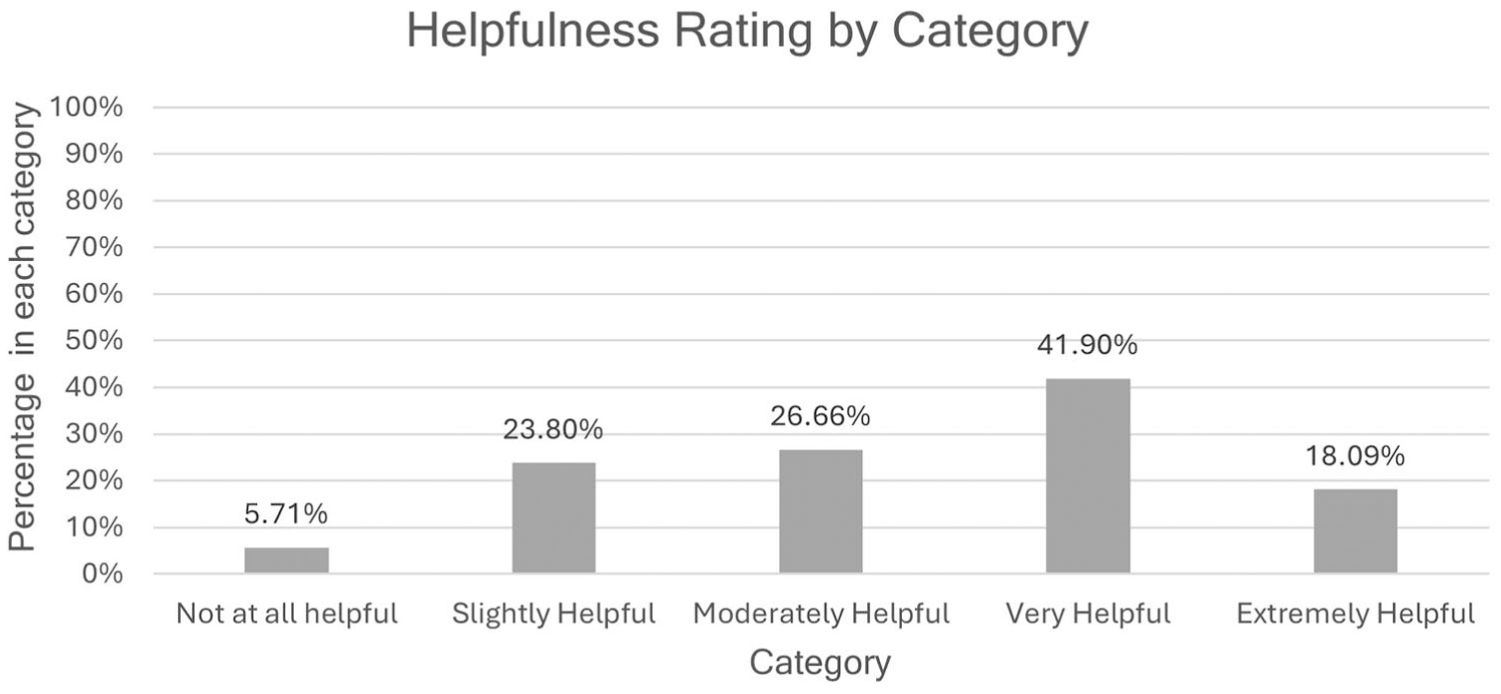
Percentage of Helpfulness of Music Ratings by category in the Listening Group.
Group differences in listening/avoiding
Although the sample reported a higher proportion of those who listen to music while undertaking general reading (70.79%) than those who avoid it (29.21%), when answering whether they listen to music while reading specifically for study purposes, the prevalence was more even, with over half of the sample (54%) claiming to listen to music. The remaining 46% claimed to avoid music while they read for study purposes. See Table 1 for Descriptive Statistics.
Descriptive Statistics for ‘Listening to Music’ and ‘Avoiding Music’ Groups.
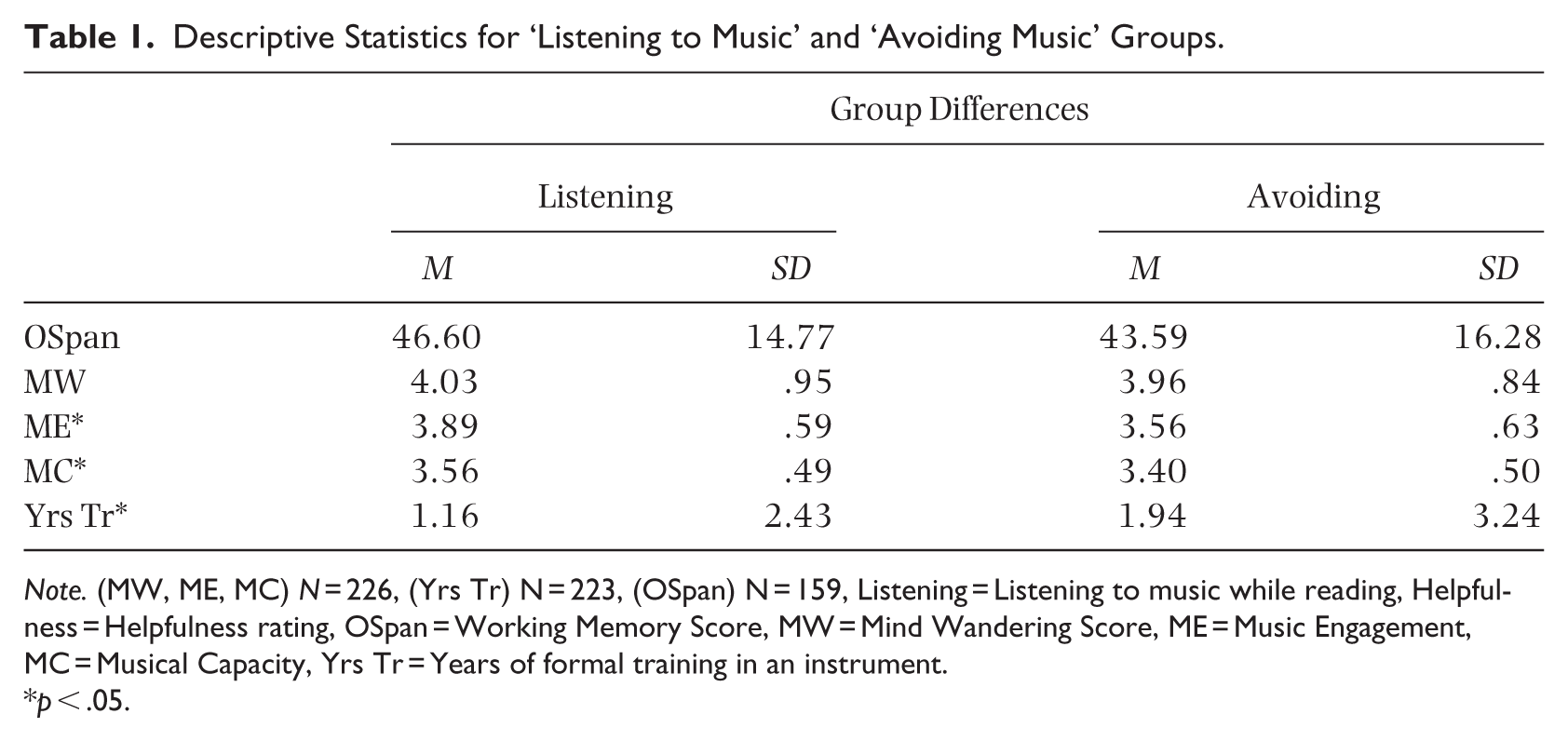
Note. (MW, ME, MC) N = 226, (Yrs Tr) N = 223, (OSpan) N = 159, Listening = Listening to music while reading, Helpfulness = Helpfulness rating, OSpan = Working Memory Score, MW = Mind Wandering Score, ME = Music Engagement, MC = Musical Capacity, Yrs Tr = Years of formal training in an instrument.
p < .05.
The results revealed that participants who listened to music while they read for study scored higher in Music Engagement than those who avoided listening while reading, t(225) = 4.178, p = .000, d = .56, with a medium effect size. Listeners also scored higher in Musical Capacity than avoiders t(225) = 2.344, p = .020, d = .29, and reported a lower number of years of formal musical training than avoiders t(223) = 2.054, p = .041, d = .27, with both these analyses representing small effect sizes. However, the t statistics for group differences in OSpan score t(156) = 1.215, p = .266 and Mind wandering score t(225) = .682, p = .496, between listeners and avoiders were both non-significant.
Associations between individual difference measures and music listening/avoiding while reading
Point biserial correlations were used to examine the relationship between individual difference variables and listening to music or avoiding music while reading. There were weak positive correlations between both ‘listening to music while reading’ and ‘music engagement’, and ‘rating of helpfulness of music while reading’ and ‘music engagement’. That is, those who were more engaged with music were more likely to listen to music while reading and more likely to rate it as helpful to their reading experience. However, a weak negative correlation between ‘listening to music while reading’ and ‘years of formal musical training’ was also apparent, indicating that a negative relationship existed between formal training and the behaviour of listening to music while reading for study (Dancey & Reidy, 2007). In addition, ‘music engagement’ scores and ‘musical capacity’ scores were strongly correlated with one another, as were ‘listening to music while reading’ and ‘rating of helpfulness of the music to reading’. Participants’ OSpan scores, Mind wandering scores and musical capacity scores were not correlated in either direction with either ‘listening to music while reading’ or ‘rating of helpfulness of music during reading’. It would be useful to confirm whether the lack of relationship found between OSpan scores and Mind Wandering scores with music listening behaviour also applies to objective measures of comprehension, and not just self-reported music listening habits. Future studies could test whether people with higher working memory capacity are less distracted by background music by measuring their comprehension directly and comparing this to the comprehension of those with lower working memory capacity. If no advantage is found for those with higher working memory, this would challenge the Attentional Account, which argues that irrelevant sounds only disrupt attention when top-down control is weak (Hughes et al., 2013). However, if working memory capacity is shown to affect comprehension, the survey results raise an interesting point. People may be unaware of their own working memory limits. Instead, they might choose to listen to music based on personal preference, not on how well they can stay focused. This aligns with the current findings, which showed that people with higher music engagement were more likely to listen to music while reading. The results of the correlational analyses are presented in Table 2.
Intercorrelations for Listening to Music while Reading, Helpfulness Rating, and Individual Difference Measures.
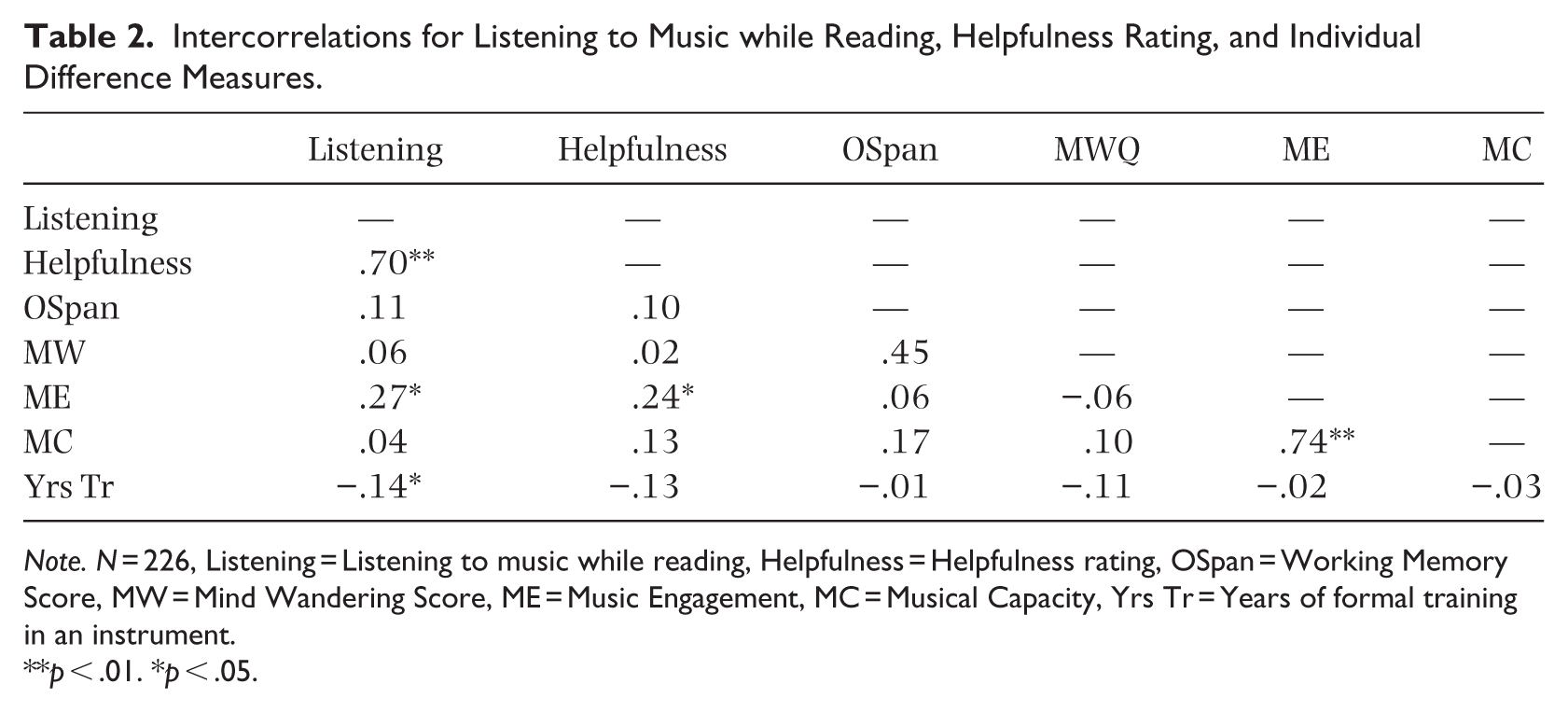
Note. N = 226, Listening = Listening to music while reading, Helpfulness = Helpfulness rating, OSpan = Working Memory Score, MW = Mind Wandering Score, ME = Music Engagement, MC = Musical Capacity, Yrs Tr = Years of formal training in an instrument.
p < .01. *p < .05.
Subjective responses
Reasons for avoiding
Respondents who avoided listening to music while they read for study gave reasons such as ‘it distracted them’ (86%), ‘increased their fatigue’ (5%), and ‘reduced enjoyment’ (4%). Neither lower working memory capacity nor higher mind wandering tendency can be proposed as a reasonable explanation for the high percentage in the avoiding group that claimed that they found the music distracting, as both listening and avoiding groups had similar scores in these measures.
Reasons for listening
Respondents who claimed to listen to music while they read for study reported the reasons for listening being because it ‘helped them to focus’ (57%), ‘masked external noise’ (50%), ‘increased their motivation’ (49%), or ‘increased enjoyment’ (37%). The higher mean musical engagement score in the listening group may explain the percentage who claimed they listened to music while reading to increase their motivation, enhance their focus or for enjoyment, as these people were more likely to use music in their daily life for these various purposes. Interestingly, distraction was reported as both a popular reason music was avoided, and listened to, with 86% of the avoiding group selecting distraction as their reason for avoiding and 50% of the listening group claiming their reason for listening was to block out distraction in the form of external noise. It is possible that while most individuals are susceptible to distraction while they read, differing strategies are used to minimise distraction. This is supported by the current findings, with those more engaged with music using it to block out other external distractions, and those not as engaged preferring to read in silence as they find the music itself distracting. It could also be that some individuals do not perceive music as a distraction due to their preference for higher levels of stimulation (Gonzalez & Aiello, 2019).
Responses to open-ended questions
Participants were asked to elaborate on why they listen to music while performing reading tasks. If they felt their reason fell outside of the provided responses, which included ‘to mask external noise’, ‘to help focus’, to increase enjoyment’ and ‘to increase motivation’, they could provide their own reasons. Forty-seven such responses were collected. These responses revealed a theme of music being used for ‘emotion and stress management’. Some example responses included ‘To calm my nervous system when I’m stressed or anxious’, ‘to improve my mood’, ‘to reduce stress’, ‘to distract me from negative thinking’, ‘to reduce overstimulation’, ‘it calms me down and reduces anxiety’, and ‘it has a calming effect’. See Figure 2 for a word cloud of the most common words used in participants’ open-ended responses.
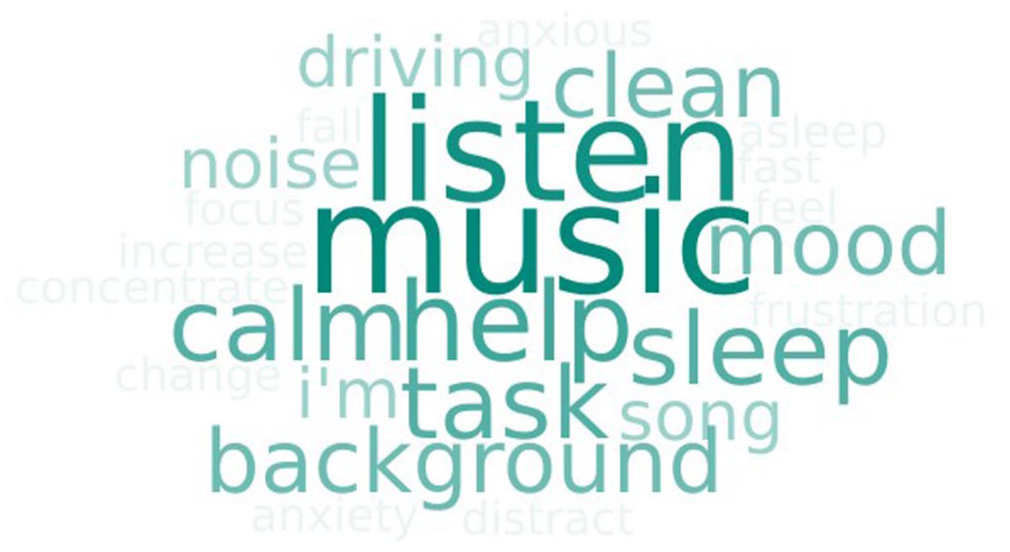
Most Common Words Used in Open-Answer Responses.
Summary
The proportion of individuals in the current sample that claimed to listen to music while reading for study purposes (54%) was comparable to proportions found in past survey research (Gill, 2022; The College Rover Team, 2023; Whittinghill et al., 2021), confirming that it is a prevalent behaviour regardless of the assertion of some scholars that it is detrimental to do so (Avila et al., 2016; Kämpfe et al., 2011; Lehmann & Seufert, 2017; Thompson et al., 2012; Vasilev et al., 2018; Zhang et al., 2018). The 54% of participants who reported listening to music while reading mainly chose to listen to non-lyrical music and music with a slow tempo, and almost all (94.29%) claimed it was helpful to their reading process. Intuitively, that non-lyrical music may distract less while reading, due to lowered potential for semantic processing competition between lyrics and text. However, there is also the possibility that instrumental music may capture attention when it contains a familiar melody, indicating it may not always be the best choice while reading. Linklater et al. (2024) found that instrumental music can indeed induce individuals to mentally replay melodies of familiar tunes. Classical music was the most popular genre listened to while reading (48%), followed by Rock (33%) and Pop (18%). Additionally, 64% of listeners preferred lyrical music and 95% preferred fast-tempo music when the task was perceived as easy. In contrast, only 46% chose fast music while reading, further demonstrating that not only is the decision to listen context-dependent, but the type of music chosen is as well.
An association between higher working memory capacity and lowered distraction from music was not found in this study, with no significant difference in working memory score between the music listening and music avoiding groups. This was counter to the expectations of the Attentional Account, as it would be expected that better attentional control would protect against attentional capture by irrelevant sounds. However, as prior research by Hughes et al. (2013) and Bell et al. (2021) has found, minimising attentional capture with top-down control was only found when auditory stimuli deviate from an expected pattern (i.e., via a deviation effect). Unfortunately, it is not possible to determine whether aspects of musical and lyrical features of the music participants reported listening to while reading could be minimised in the sample of this study. However, it is plausible that those who listen to music while reading may deliberately select music that minimises the potential requirement of working memory. For instance, selecting music with changing states throughout, but not deviations from expected patterns, might be generally preferable for anyone listening to music while reading.
It would be expected that for those in the sample who listened to lyrical music while reading, the lyrics would have interfered automatically regardless of their working memory capacity if they contain a storyline requiring semantic processing, as the Interference-by-process account does not overtly claim that any level of top-down control can minimise this interference (Jones & Tremblay, 2000; Marsh et al., 2009). Instead, it claims that when there are competing processes such as reading text and listening to lyrics, only one stream can be attended to. This is because selective attention mechanisms are deployed to avoid cross-talk between these competing processes. This is claimed by Marsh et al. (2009) to be an adaptive mechanism to allow performance of a specific task during goal-directed action. Therefore, although the ability to select the correct stream of information and ignore distractions might depend on individual traits like working memory, there is no evidence from past research to support this idea. In contrast, there is evidence that top-down control can reduce distraction from attentional capture via a deviation effect rather than competition for semantic processing, as shown in the study by Hughes et al. (2013). As such, if the chosen music of the sample contains lyrics in which there is no lyrical story, and instead uses repetitive phrases or words, it would be more plausible that attentional capture mechanisms may play a part in distraction. Thus, those who had a higher working memory capacity may have been more likely to be protected from distraction and choose to listen while reading, resulting in a significant difference between the listening and avoiding groups in working memory capacity. It was suspected that mind wandering tendency may be related to the choice to avoid listening to music while reading. However, the mind wandering score was also not found to relate to the choice to avoid listening to music while reading, with no significant difference being apparent in the mind wandering score between the listening and avoiding groups. In this sample, the decision to listen to music while reading was related to the extent to which an individual was engaged with music, with the listening to music while reading group exhibiting higher music engagement scores than the avoiding music while reading group.
The results of this study support the assumption that there are individual differences in preferences for listening to music while reading. In particular, both higher levels of music engagement and fewer years of prior musical training predicted the likelihood of listening to music while reading. The findings highlight several reasons for music listening while reading, such as enhancing motivation, facilitating focus, inducing enjoyment or reducing distraction from other noises. Substantial individual differences in music listening habits are evident in the results of this study. It is unknown whether individuals base their preference for reading purely on their liking for it or if their choice is based on the music having any facilitative effect on their reading performance. However, as a large proportion of the listening group claimed the music to be either very helpful or extremely helpful to their reading performance (60%), we could speculate that the motivation to listen may be linked to facilitative benefits. This finding provides some explanation for the mixed results found in past experimental studies, when some individuals find it facilitative rather than distracting. Future testing would be needed to confirm whether any perceived facilitative effects of music listening are reflected in objective performance changes. This variation in past findings is understandable considering the wide individual preferences that exist for music listening. Researchers have the unenviable task of balancing the need to maintain conditions that are controlled and consistent while accounting for wide individual preferences in music. Another possibility is that prior research has not paid enough attention to individual differences in the affective states induced by music listening as a potential mediator of reading performance, as per the premise of the Arousal-Mood Theory (Thompson et al., 2001). The affective state produced by the music may depend on the current mood an individual is experiencing, or prior exposure due to associations an individual may have with it. An individual’s reaction to music playing may also be dependent upon contextual factors of the task they are performing, such as a task they find easy or monotonous, as was found in the results of this study. It could be that these contextual factors are contributing to the inconsistency in past findings. However, if individual differences can be identified that contribute to background music either becoming a hindrance or a benefit, they can be statistically accounted for by measuring them as covariates in future studies.
It should be noted that the positive correlations found between music engagement and listening to music while reading and music engagement and perceived helpfulness of music while reading were weak in magnitude, indicating that although a relationship between the variables did exist, an association between the two variables may not be present in all contexts and for all individuals. In addition, the use of self-report data limits the extent to which strong conclusions can be made, especially when data relies on the participants retrospectively recalling their experiences, which may be subject to biased beliefs around the possible impact of music listening (Reis, 2018). However, by collecting self-report data on individual preferences for listening to music while reading for study purposes, this study was able to demonstrate significant individual differences in this field of research, as demonstrated by the varied prevalence of those who listen and those who avoid music while reading. In conclusion, this study’s findings offer support for continuing to explore individual difference variables when measuring the impact of music on cognitive tasks such as reading. A useful adjunct to the current data on habitual preferences would be to measure the comprehension of material read in conditions where music is playing in an experimental design, providing more objective data on the impact of listening to music on comprehension. Based on the results of the current survey study, we suggest such experimental work includes investigation into musical engagement as a moderator; however, personality and cognitive traits such as extraversion and working memory capacity may also provide valuable data, as these have both been found to be associated with differing impact of music listening in past studies (Cheah et al., 2022; Christopher & Shelton, 2017; Robison & Unsworth, 2015). Further investigation into the habits of individuals around listening to music while reading could also be undertaken using the Experience Sampling Methodology, as this may provide more accurate data that relies less on the retrospective accounts of experiences, often problematic in self-report surveys.
Supplemental Material
sj-docx-1-pom-10.1177_03057356261421209 – Supplemental material for Music as a distraction during reading: Music listening habits of university students
Supplemental material, sj-docx-1-pom-10.1177_03057356261421209 for Music as a distraction during reading: Music listening habits of university students by Lindsey Cooke, Craig Speelman and Ross Hollett in Psychology of Music
Footnotes
Data accessibility statement

Funding
The authors received no financial support for the research, authorship, and/or publication of this article.
Ethical approval
This research project has received the approval of the ECU Human Research Ethics Committee (HREC), in accordance with the National Health and Medical Research Council’s National Statement on Ethical Conduct in Human Research (2007). The approval number is 2022-04008-COOKE.
Supplemental material
Supplemental material for this article is available online.
References
Supplementary Material
Please find the following supplemental material available below.
For Open Access articles published under a Creative Commons License, all supplemental material carries the same license as the article it is associated with.
For non-Open Access articles published, all supplemental material carries a non-exclusive license, and permission requests for re-use of supplemental material or any part of supplemental material shall be sent directly to the copyright owner as specified in the copyright notice associated with the article.
