




Abstract
Musical performances require significant physical effort and musculoskeletal injuries are an integral part of musicians’ careers. The physical strains of performances are often accompanied by psychological stresses that can accelerate the development of particular physical injuries. This study aimed to understand the protective or deleterious effects of motivation, self-efficacy and rumination. We conducted a cross-sectional study of data collected retrospectively from 121 musical artists. Participants completed sociodemographic, medical, and psychological questionnaires. The artists were divided into previously injured (n = 66, 54.5%) and not previously injured (n = 55, 45.5%) groups. Significant inter-group differences were found for age (p < .05), years of performing (p < .01), and hours of practising (p < .001). No differences were found for sex and total musical practice. Overall, 74.1% of the periods lost to injury lasted under 30 days. Almost all injuries (98.4%) involved the upper limbs or trunk, most frequently hands (15.3%) and wrists (15.3%). Muscles (39.7%) and tendons (26.5%) were the usual tissues damaged. The previously injured and not previously injured groups showed no differences regarding the dimensions of motivation (p > .05), self-efficacy (p > .05) or rumination. However, there were significant inter-group differences for the subdimensions of integrated motivation (p < .05), introjected motivation (p < .05), and the intrusiveness of repetitive negative thinking (p < .05). The present study’s epidemiological data highlighted the need to provide musicians with better support for their physical preparedness. Promoting more comprehensive care for this population and improving their biopsychosocial well-being could improve their ability to manage stress and injuries and implement effective coping strategies.
Being a professional musician involves a physical investment and pace of life comparable to that of an elite athlete (Williamon & Antonini Philippe, 2020). To perform at their best, musicians and athletes must train or rehearse for hours every day, which requires high levels of discipline and organisation. Physical movements are repeated incessantly, and individuals’ physical limits are often put to the test, which can increase the risks of different types of physical injuries (Cumps et al., 2008; Hootman et al., 2007). Indeed, playing a musical instrument professionally is physically challenging (Williamon, 2004) and tends to increase the risk of injury, with most musicians experiencing pain at some point in their careers (Ascenso et al., 2016). The most prevalent somatic problems experienced by musicians are musculoskeletal disorders (MSDs), the onset of which are thought to be promoted by maintaining strenuous postures for long periods and systematically repeating often complex movements resulting in overuse (Norton, 2020). Ackermann and colleagues (2014) reported a prevalence of MSDs of 84% among orchestra musicians. A more recent study by Détári and colleagues (2020) showed that 77% to 87% of orchestral musicians had experienced a MSD, 67% of music students and 23% to 93% of pianists. Amateur musical artists are also prone to these types of injuries (Lederman, 2003), with back pain (17%), neck pain (22%), and shoulder pain (10%) often mentioned in the literature (Leaver et al., 2011). However, some studies have identified slightly higher prevalence of MSDs among women (Kok et al., 2016; Leaver et al., 2011). Although a number of studies supported a higher prevalence among females (Ackermann et al., 2014; Engquist et al., 2004), our study did not identify differences between males and females.
Musicians not only face physical strains but are also exposed to various psychological difficulties. A study of performance anxiety and indicators of psychopathological problems among a sample of Brazilian musicians revealed the prevalence of moderate to severe symptoms of general anxiety (13%), social anxiety (19%), and depression (20%) (Barbar et al., 2014). Ackermann and colleagues (2014) also showed the prevalence of symptoms of social phobia (33%), depression (32%), and post-traumatic stress disorder (22%) in their sample of professional musicians. These data seem to converge around the idea that playing music at a professional level could have a deleterious effect on performers’ well-being to a greater extent than at amateur level (Fishbein et al., 1988; Gross & Musgrave, 2020; Kenny & Ackermann, 2015; Kenny et al., 2012). A very recent study carried out on an Australian population working in the field of music (N = 1,304) reported that 66.1% of participants experienced a high or very high level of psychological distress, compared with 15.0% in the general Australian population. The study also highlighted the high prevalence of disorders such as anxiety (36.5%), depression (36%), post-traumatic stress disorder (10.7%), eating disorders (5.0%), substance abuse (4.4%), bipolar disorder (2.5%), and personality disorder (1.6%) (Elmes & Knox, 2022). To better understand the differences between amateur and professional musical performance, especially in terms of their levels of well-being, Antonini Philippe and colleagues (2019) studied a population of amateur musicians and music students in Switzerland. Quality of life and general health – specifically physical health – were lower among music students. The study showed that although music can have protective effects on health, implementing health promotion activities for music students is important to encourage the healthy practice of music. In recent years, several health promotion programmes have been launched at music colleges and health education courses have been offered. This is the case of a British conservatory that introduced a 5-month health education programme for students in September 2016. Evaluation of this programme showed that students had found the courses relevant and had led them to implement changes in their lifestyle and management of their music practice (Matei & Ginsborg, 2022). Mental health and physical health are closely related (Kenny & Ackermann, 2015); thus, the presence or absence of certain psychological variables could have deleterious or protective effects on various physical and mental disorders and could impact musical rehearsals and performances.
As theoretical support for this research, the Stress Injury Model developed for sports by Williams and Andersen (1998) has been used to account for the occurrence of injuries related to responses to perceived stressful situations in music. These stressful situations could be competitions, tests, training sessions or even physical pain that leads an athlete to re-evaluate their situation. This evaluation would be moderated by the individual’s personality and their previous experiences with stress and their coping resources. Psychological variables can also influence the resources used and coping strategies implemented, and vice versa. All these elements have the potential to decrease or increase the perceived degree of a threat of injury, thereby modifying the real risk of injury (Deroche et al., 2007). Musicians also deliver performances that can subsequently lead to injuries in their rehearsals. The Stress Injury Model can, therefore, serve as a basis for understanding the mechanisms that predict injury in this population of musical artists. The model makes it possible to establish links between certain psychological variables, which present risk factors for or are protective against injury during a person’s career (Williams and Andersen, 1998).
Another major problem faced by musicians is musical performance anxiety (MPA) (Osborne & Kirsner, 2022; Sarıkaya & Kibici, 2022). This is defined using three levels of severity related to the use of functional and non-functional coping strategies and ranging from the normal stress induced by a professional musical performance to a full-blown state of panic (Kenny et al., 2004; Spahn et al., 2021; Sweeney & Horan, 1982). Even if anxiety can be beneficial for performance and creativity when present at the right level, it can also be detrimental to activity when present at too high a level (Mumm et al., 2020). Musicians are reportedly exposed to a higher level of anxiety than the general population (Kemp, 1981). They face many daily demands that require a high level of commitment to perform at their best, and this workload is a significant source of stress (Clark et al., 2014). A review of 43 studies showed a prevalence of MPA among classical musicians ranging from 16.5% to 60%. These wide variations in prevalence can be explained by the characteristics of the participants (age, gender, etc.). Music students would be more likely to present this form of anxiety (Fernholz et al., 2019). James (1998) reported that 70% of orchestra musicians experienced significant anxiety that was enough to impact their performance. Another study showed that 33% of music students consider MPA to be an important issue whose impact could have consequences for their current and future careers (Studer et al., 2011). Women musicians performing at a high level have been reported to be more likely to experience this (Osborne & Franklin, 2002; Sinden, 1999).
Performance anxiety can, therefore, generate a deleterious and negative emotional state, and in response to this, some people will develop repetitive negative thoughts, also called rumination (Nolen-Hoeksema et al., 2008). Ruminative thinking tends to disempower musicians and negatively impacts engaged, problem-solving behaviours (Nolen-Hoeksema et al., 2008). A study by Nielsen and colleagues (2018) linked MPA with rumination after stressful events such as solo performances. More anxious musicians reported more negative rumination than less anxious musicians. Their coping strategies would therefore be less functional and could negatively impact a stress response, potentially leading to injury. It is also important to note that ruminations combined with too high levels of stress and anxiety would be likely to induce significant risks of developing depression or other mental health problems (Roy et al., 2016; Watkins & Roberts, 2020).
Motivation is a key factor in understanding how people cope with the difficulties of everyday life, and this is also the case in music (Evans, 2015). According to Rolandson (2020), motivation has a direct impact on the length and intensity with which musicians will rehearse. It is often discussed in the context of the self-determination theory developed by Deci and Ryan (2000), which proposes studying six subtypes of motivation ranging from the most self-determined form of motivation to no motivation at all (intrinsic, embedded, identified, introjected and extrinsic motivation, and amotivation). According to self-determination theory, there are several types of motivational factors. Firstly, there are external factors, such as a reward system, evaluations, pressure from teachers or parents, and the views and opinions of others. Internal factors refer rather to the subject’s interest in the field, curiosity, desire to develop and many others (Pelletier et al., 2013). Thus, self-determined motivation could also be at the origin of the adapted coping strategies implemented by musicians during stressful situations and protecting them from injury.
The model developed by Williams and Andersen also suggested the existence of protective factors that enable artists to implement effective coping strategies when faced with various stressful situations. Indeed, psychological variables such as motivation and self-efficacy could positively influence the coping strategies that musicians use to cope with stressful situations.
Self-efficacy is a variable often studied in relation to a specific domain; Scholz and colleagues (2002) described self-efficacy as an optimistic view of one’s own skills. However, as a concept, self-efficacy refers to an individual’s overall confidence in their ability to cope in a wide range of situations (Schwarzer & Jerusalem, 1995). A general feeling of self-efficacy helps explain many human behaviours and coping strategies (Luszczynska et al., 2005). Bandura (Bandura & National Institute of Mental Health, 1986), the researcher behind social-cognitive theory, hypothesised that an individual’s expectations of their sense of self-efficacy determine their coping strategies, the amount of effort they expend, and how long they will be able to cope with the difficulties encountered (Guerrin, 2012; Orejudo et al., 2017). According to Orejudo and colleagues (2017), a high sense of self-efficacy, coupled with optimism, could result in certain stimuli being assessed as less of a threat, thus promoting problem-focused coping strategies rather than avoidance. Moreover, one’s self-efficacy influences cognition, affect and behaviour, and it can also help to manage stressful circumstances (Luszczynska et al., 2005). A high level of self-efficacy would allow a performer to positively affect their strategies for coping with performance-induced stress to avoid disrupting their performance (Spahn et al., 2021).
The primary objective of the present study was to identify psychological traits that could positively or negatively contribute to the onset of injury in a population of music performers. To address this objective, comparisons were made between music performers who have experienced injuries and those who have not. It was anticipated that music performers with a history of injuries would exhibit lower motivation, lower self-efficacy, and a higher level of rumination compared to non-injured musicians. A secondary objective of this study was to confirm the associations between rumination and self-efficacy, motivation and self-efficacy, and rumination and motivation.
Materials and methods
Participants
We conducted a cross-sectional study of data collected retrospectively from 121 music performers (n = 69 female, n = 51 male, one did not disclose), made up of vocalists (n = 11, 9.1%) and instrumentalists (n = 110, 90.9%) ranging from 16 to 79 years old (M = 27.6, SD = 12.5). Participants had to be at least 16 years old, with parental consent required for minors, and be students in conservatories, professional music performers (pre-professional training) for at least 10 hr (personal rehearsals and lessons) per week. They also had to be participants in auditions, competitions or concerts at the national level at least. Exclusion criteria were as follows: participants who were under protective measures (guardianship, curatorship) and participants whose native tongue was not French were not eligible to participate in the study. Each participant gave written consent to participate. If the musical artists approached met all the inclusion criteria, they were asked to complete sociodemographic, medical and psychological questionnaires.
Procedure and methods
Sociodemographic questionnaire
This questionnaire collected sociodemographic information such as sex (male, female), age, type of musical practice (instrumental or vocal), main instrument played, status (concert performer, music teacher, professional, conservatory student, amateur), years of experience in the field, and number of hours of practice weekly.
Artist injury questionnaire
We developed an online survey to collect extensive data on performance-related injuries. It was based on the International Olympic Committee’s consensus statement on methods for recording and reporting epidemiological data on injury and illness in sports (Bahr et al., 2020). This tool was pre-tested by a doctor and four researchers in the field before a consensus was reached regarding the quality of data collection. The survey was specially adapted to collect detailed information regarding potential and real occurrences of injury and their nature, among our specific population of musical artists. Survey items collected additional information about participants’ history of injury, the date of their last injury, its circumstances (i.e., in rehearsal, competition, outside of practice), recurrence (i.e., yes, no), bodily location (i.e., head, face, shoulder, arm, elbow, forearm, wrist, hand, finger, trunk, lower body, foot), the mode of onset (i.e., sudden, gradual or missing), the mechanisms of injury (i.e., clearly identifiable injury with contact, clearly identifiable without contact, not clearly identifiable or missing), tissues affected (i.e., muscle, tendon, ligament, bone, articulation, nerve, skin or other), and severity (i.e., no time lost, 1–7 days lost, 8–30 days lost, 31–90 days lost, 91–180 days lost, >180 days lost).
Psychological questionnaires
The French version of the Sport Motivation Scale-II (SMS-II-FR) (Pelletier et al., 2013) aims to measure the six subdimensions of motivation proposed by Deci and Ryan’s (2000) Self-Determination Theory, that is, Intrinsic Motivation, Integrated Motivation, Identified Motivation, Introjected Motivation, Extrinsic Motivation, and Amotivation. Participants were asked to respond to items using a Likert-type scale ranging from 1 (does not correspond at all) to 7 (corresponds strongly). Motivation subdimension scores were calculated by averaging the scores for the three items covering each dimension. The total score was calculated by assigning weights to each subdimension score according to each subdimension’s position on the self-determination continuum (Clancy et al., 2017). A self-determination score was obtained using the following computation: (3 × Intrinsic Motivation) + (2 × Integrated Motivation) + (1 × Identified Motivation) – (1 × Introjected Motivation) – (2 × Extrinsic Motivation) – (3 × Amotivation). The SMS-II-FR questionnaire was completed by musical performers in their own artistic context, without changing any of the SMS-II’s specific items or instructions. The SMS-II-FR questionnaire has shown good psychometric properties, with internal consistency Cronbach’s alpha ranging from .61 to .83. The original English scale had a Cronbach’s alpha ranging from .67 to .83.
The General Self-Efficacy Scale (GSES) was developed by Schwarzer and Jerusalem in 1995 and consists of 20 items. Scholz and colleagues translated this into a 10-item scale in French in 2002. Each item is answered using a 4-point Likert rating scale to evaluate the individual’s self-efficacy from 1 (not at all true) to 4 (totally true). The sum of the 10 scores is used to calculate a total score ranging from 10 to 40. The scale’s results on our study show good internal consistency, with a Cronbach’s alpha of .88, and a Cronbach’s alpha of .86 for the original scale.
The Perseverative Thinking Questionnaire (PTQ-10) was adapted into French by Devynck and colleagues in 2017. This 10-item self-reporting questionnaire measures repetitive negative thoughts. Each item is rated using a 5-point Likert scale (1 = never; 5 = almost always) and three subdimensions: the repetitive nature of negative thinking, the intrusiveness of repetitive negative thinking, and the effects of repetitive negative thinking on mental resources. Its internal consistency has also been rated as excellent in our study, with a total Cronbach’s alpha of .92 (α = .88 for Factor 1; α = .85 for Factor 2; α = .84 for Factor 3). Original scale Cronbach’s alpha ranged from .82 to .88).
Participants were contacted by e-mail via their music conservatories, music schools or other music students. Recruitment of this convenience sample was done directly by the investigators, who presented the study to the musicians in person or by telephone, provided relevant information, answered questions, and collected consent from those willing to participate. After allowing a 4-day period of reflection, the investigators contacted all the participants again by e-mail to reconfirm their informed consent to participate in the study. The same two investigators asked each participant to complete the questionnaires on a data collection platform (LimeSurvey), which lasted between 15 and 20 min in total. This study was approved by the University of Lausanne’s ethics committee (number: C-SSP02202 1-00004).
Data analyses
Descriptive statistics were summarised using means (and standard deviation, SD) for continuous variables and counts (percentages) for categorical variables. Two independent groups were subsequently classified as ‘injured group’ and ‘non-injured group’ according to whether they had been injured during their musical careers or not. Differences between these two groups were measured using chi-squared tests and t-tests. A significance value of p ⩽ .05 was considered indicative of a significant difference between these two groups. Non-parametric tests, such as Welch’s correction and the Mann–Whitney U test, were used if assumptions checks were violated. Spearman’s correlations were assessed between questionnaire scores and subdimensions. Data were analysed using SPSS software (Version 23.0) and Jamovi (Version 1.1.5.0).
Results
Descriptive characteristics of the study sample
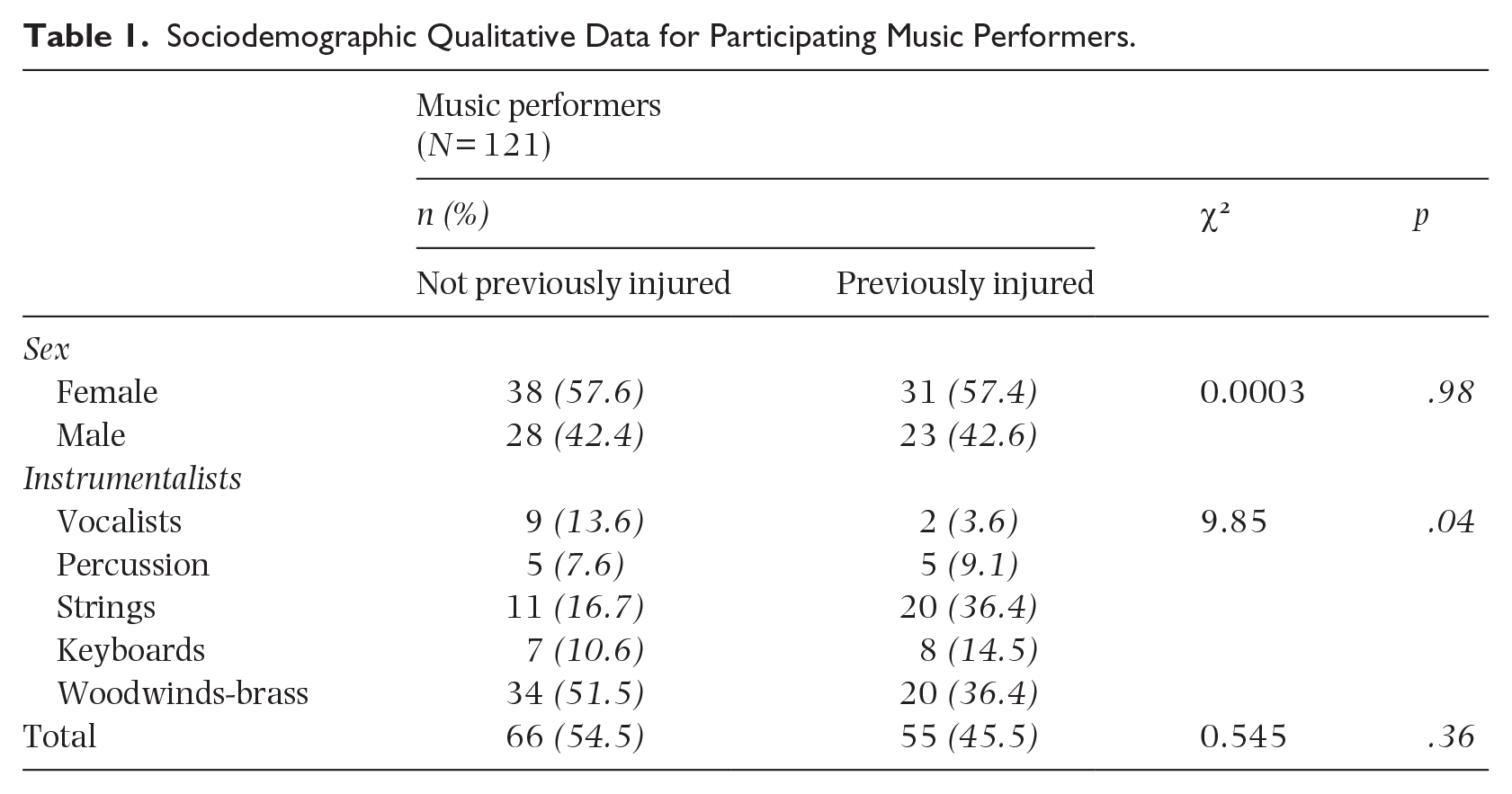
For our analyses, the 121 participants were divided into two groups of previously injured (n = 66, 54.5%) and previously not injured (n = 55, 45.5%) music performers on the basis of their response to the injury questionnaire to the question: ‘Have you suffered an injury during your career?’ No difference was observed between the distribution of men and women who have been injured or not during their musical career, χ²(1) = 0.0003, p > .05. However, there were some differences between playing a type of instrument and being injured or not, χ²(4) = 9.85, p < .05. Differences were also found regarding age between injured or not injured group for U = 1,400, p < .05 (see Table 1).
Sociodemographic Qualitative Data for Participating Music Performers.
We used t-tests to search for differences between previously injured and previously not injured music performers. Performers who have been injured previously were older, practised more hours a week, and played instruments for a longer period of time than performers who had not been injured previously (see Table 2).
Quantitative Sociodemographic Data for Participating Music Performers.
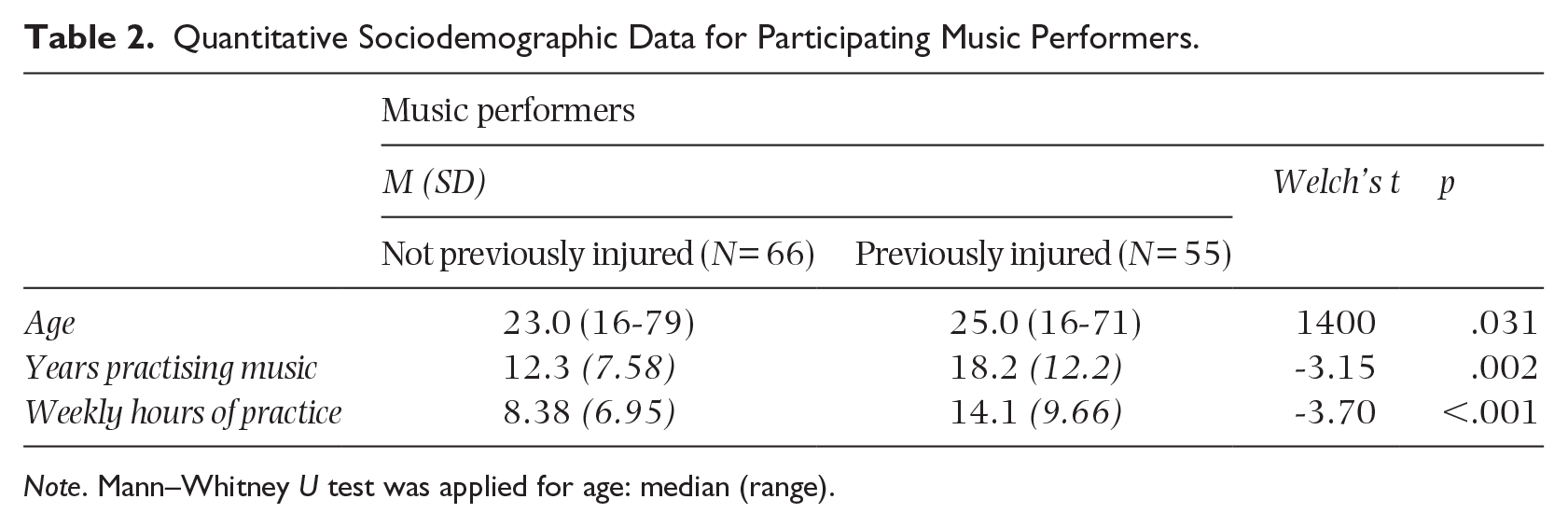
Note. Mann–Whitney U test was applied for age: median (range).
Epidemiology of injury
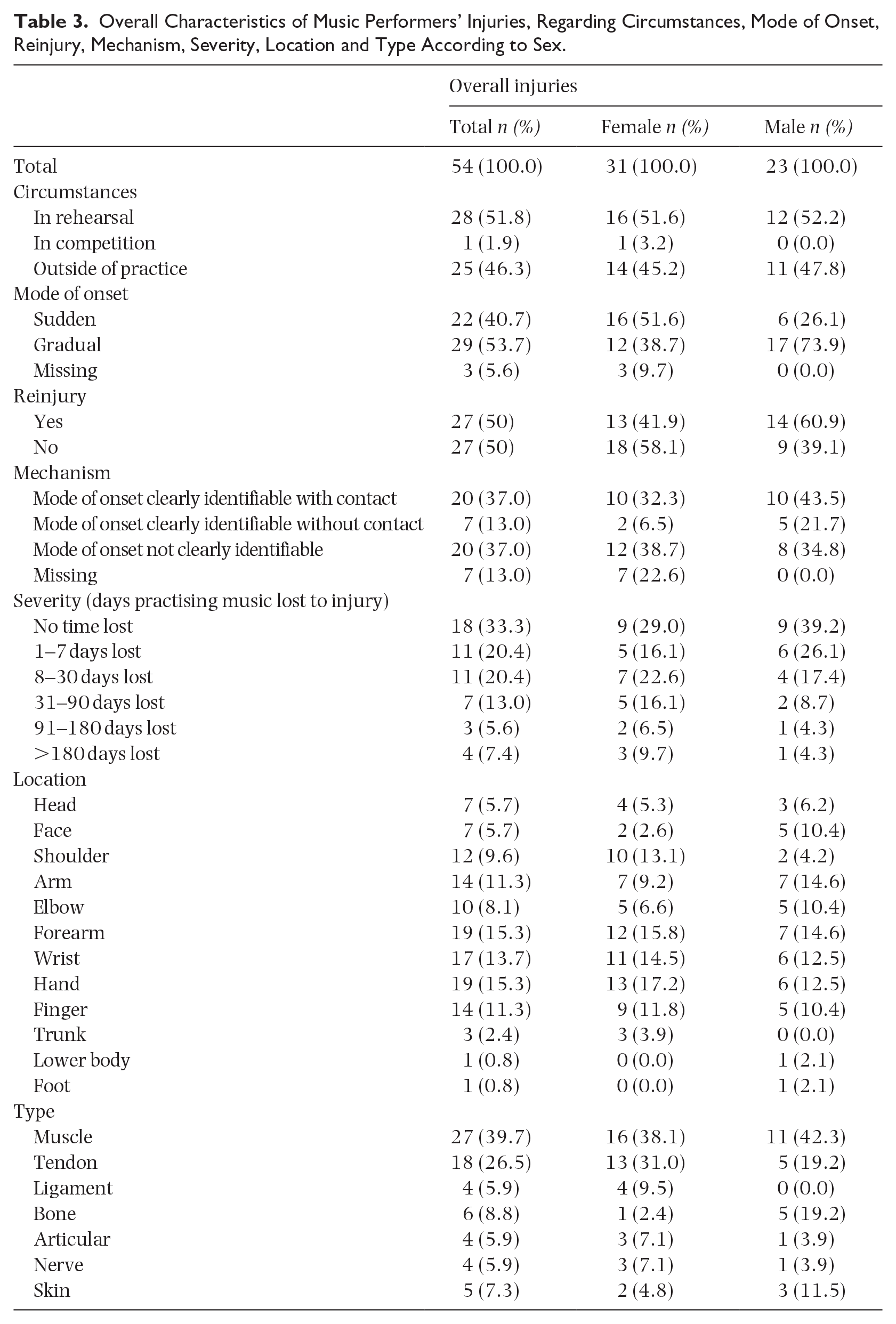
The characteristics of 54 music performers’ injuries are presented in Table 3. Using the injury classification model developed by Bahr et al. (2020), all the general characteristics of the injury were investigated using the questionnaire developed for the study, that is, circumstances, onset mode, reinjury, mechanism, severity, location, type of injury according to the gender. For male musicians, 73.9% of cases were gradual onset, compared with 26.1% of cases that were sudden. These characteristics were consistent across 31 injuries in females and 23 in males, except for the mode of onset: gradual onset was more frequent for males (73.9%) than for females (38.7%). Overall, 74.1% of the time periods lost to an injury were less than 30 days, with 122 (98.4%) of the 124 localised injuries being to the upper limbs or trunk. The most frequent injury locations were hands (5.3%), wrists (15.3%), and forearms (13.7%). Muscles (39.7%) and tendons (26.5%) were the most frequent main tissue types damaged. There was no main circumstance of injury and no specific mode of onset, but 50% of first-time injuries reoccurred and there was no specific main injury mechanism.
Overall Characteristics of Music Performers’ Injuries, Regarding Circumstances, Mode of Onset, Reinjury, Mechanism, Severity, Location and Type According to Sex.
Primary outcomes
Motivation – SMS-II
There was no difference between the previously not injured and previously injured groups’ overall motivation, as measured using Welch’s t = −.97 (88.3), p > .05 (Table 4).
Scores and Differences Between Not Previously Injured and Previously Injured Music Performers for Motivation, Rumination, Self-Efficacy, and Their Subdimensions.
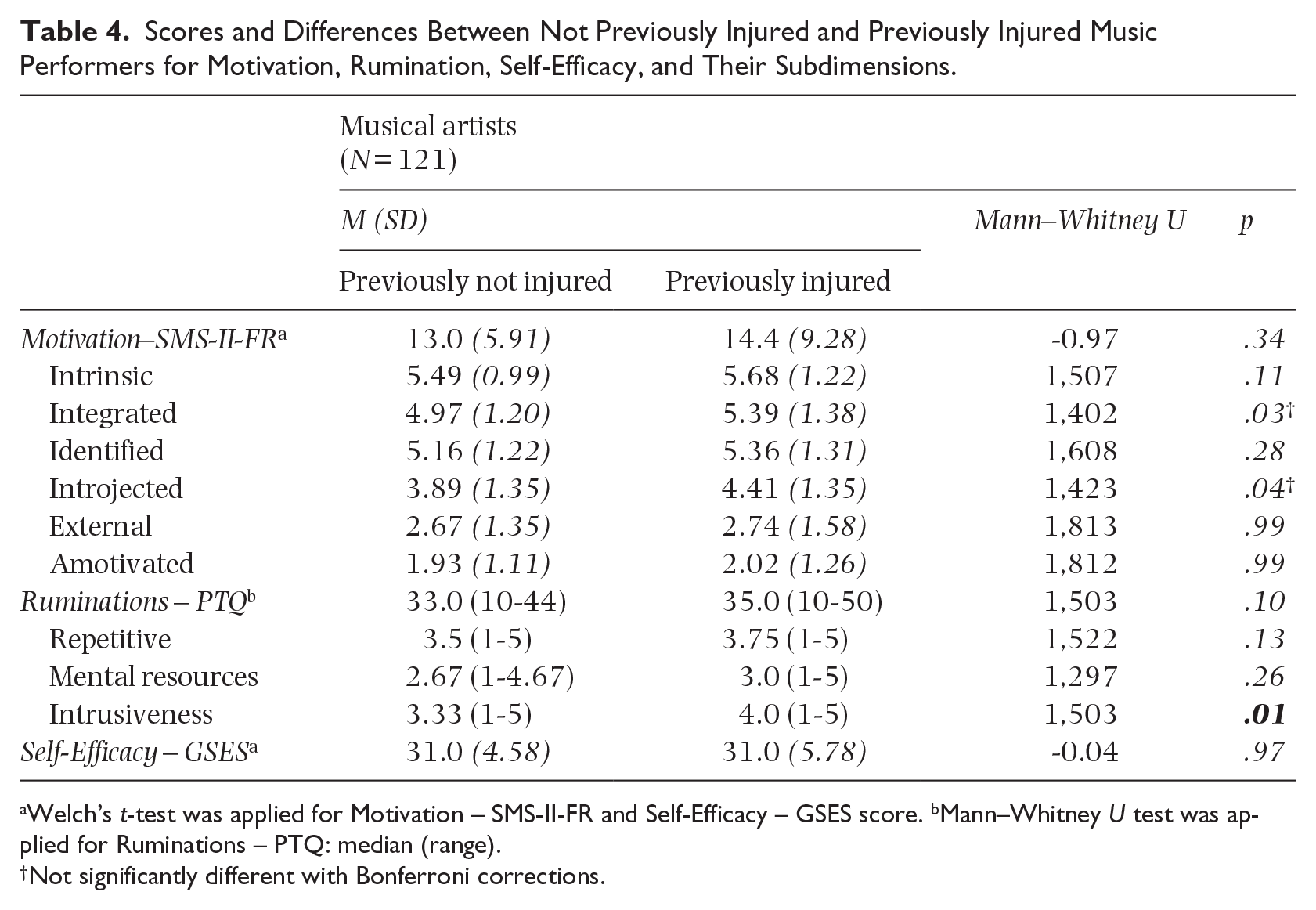
Welch’s t-test was applied for Motivation – SMS-II-FR and Self-Efficacy – GSES score. bMann–Whitney U test was applied for Ruminations – PTQ: median (range).
Not significantly different with Bonferroni corrections.
Rumination – PTQ
There was no difference between the previously not injured and previously injured groups for rumination (U = 1,503, p > .05). Regarding the subdimensions of rumination, only intrusiveness of repetitive negative thinking score (U = 1,503, p < .05) was significantly different between previously not injured (Med = 3.33, range: 1–5) and previously injured (Med = 4.00, range: 1–5) music performers (Table 4).
Self-Efficacy – GSES
There was no significant difference between non-injured and injured music performers for self-efficacy as measured using Welch’s t = −0.04 (98.4), p > .05 (Table 4).
Correlation
Finally, we calculated Spearman correlations to investigate the existence of any relationships between motivation, self-efficacy, and rumination. These results are presented in Table 5.
Correlation Matrix.
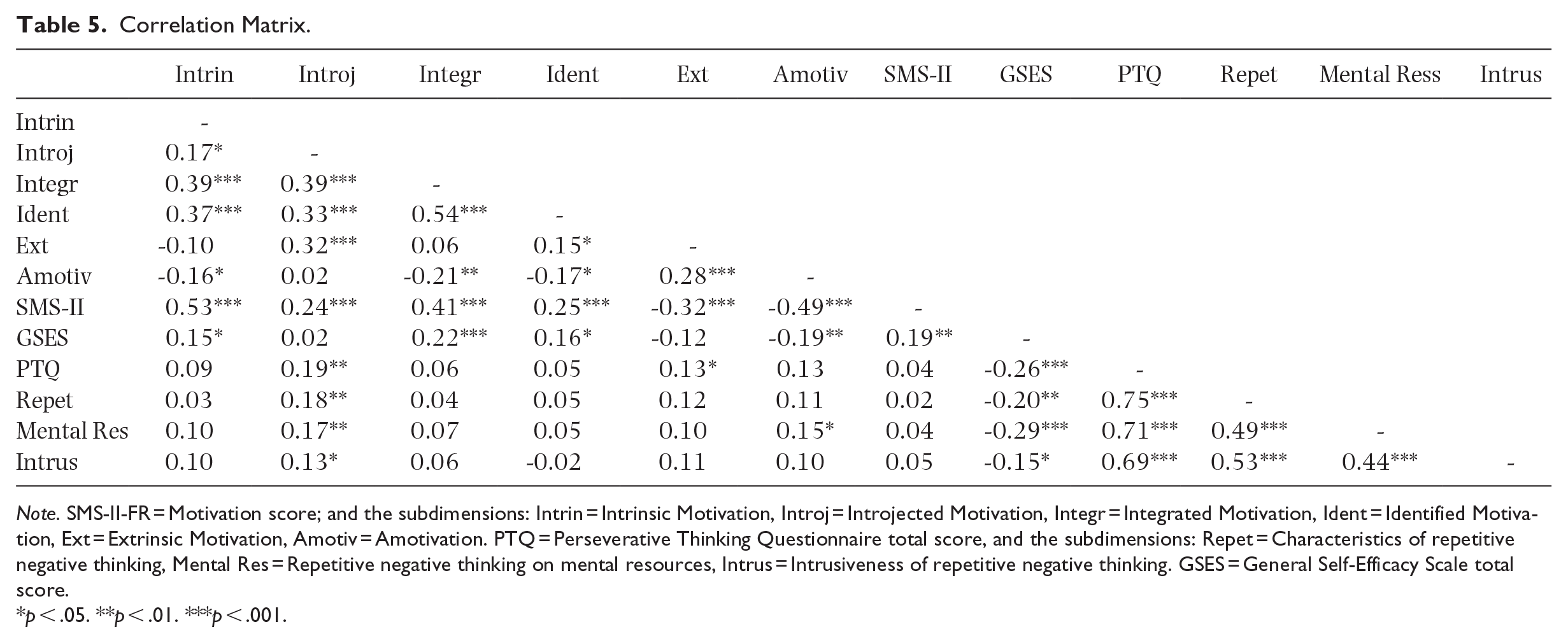
Note. SMS-II-FR = Motivation score; and the subdimensions: Intrin = Intrinsic Motivation, Introj = Introjected Motivation, Integr = Integrated Motivation, Ident = Identified Motivation, Ext = Extrinsic Motivation, Amotiv = Amotivation. PTQ = Perseverative Thinking Questionnaire total score, and the subdimensions: Repet = Characteristics of repetitive negative thinking, Mental Res = Repetitive negative thinking on mental resources, Intrus = Intrusiveness of repetitive negative thinking. GSES = General Self-Efficacy Scale total score.
p < .05. **p < .01. ***p < .001.
Discussion
Epidemiology of injuries
The frequency of the occurrence of injuries among the musicians who participated in this study was found to reach around 50%. Indeed, 45.5% of the sample had previously experienced an injury during their musical career. The prevalence reported by the various prior studies on this subject varied considerably, ranging from 39.0% to 87.0% in a study conducted by Zaza (1998). More recently, Ackermann and colleagues (2014) reported an 84.0% rate of MSDs among professional orchestra musicians.
When the musical practices of previously injured and previously not injured musicians were compared, clear differences appeared between their ages, hours of musical practice per week, and years of musical experience. These findings underscored the results obtained by Kenny and Ackermann (2012), who had suggested that the majority of injuries among musicians were overuse injuries. They also highlighted the positive link between hours of musical practice and increased injury risk. Because artists’ careers are relatively long, overuse injuries could be more common. As a result, it is possible that older musicians have accumulated more years of musical practice, which may increase their risk of injury.
As mentioned above, several studies have shown a prevalence of MSDs above 80% among professional musicians (Ackermann et al., 2014; Steinmetz, 2015). These numbers raise the question of whether these disorders become chronic. Although our data did not reveal a significant overrepresentation of chronic injuries within the previously injured group as a whole, it was nevertheless possible to observe a greater proportion of chronic-type injuries in men than in women. This result was consistent with the study by Norton (2016), who mentioned the problem of chronic injuries in connection with a lack of support (e.g., support structures, rehabilitation centres) for music performers seeking optimal treatment and healing.
The most affected tissue types were muscles and tendons. As the most prevalent injuries among musicians involve MSDs (Ackermann et al., 2014; Lederman, 2003; Steinmetz, 2015), these data supported our findings. The significant impact of practising music on muscles and tendons can be explained by the particularly uncomfortable musicians’ positions, sometimes held for hours and hours, and carrying heavy instruments (Kenny & Ackermann, 2012). Moreover, physical preparation for performance, as opposed to technical and artistic preparation, is not always an integral part of music rehearsals and practice.
Epidemiological data on the physical location of the injuries suffered by our population of musicians also confirmed the predominance of upper-limb injuries, particularly forearms, hands, and wrists, as shown by Kok and colleagues (2016) in a previous study. Our study also highlighted the effects of certain psychological variables on the moderation of stress response, which may or may not lead to occurrences of injuries according to Williams and Andersen’s (1998) Stress Injury Model.
Psychological variables
When looking at the scores for the overall dimension of rumination, our results showed no significant differences between the previously injured and previously not injured groups. In order to be meaningful, these results should be compared with those from other studies that have also examined specific populations and have focused on the same primary outcomes, for example, athletes (Lichtenstein et al., 2018; Steffen et al., 2009) or, in the elderly population (Li et al., 2022). However, when looking at the subdimensions of rumination, intrusive rumination scored higher among the previously injured group. One plausible explanation could be related to the lack of emotional discharge. In fact, a study conducted on injured athletes found that the lack of emotional discharge led to the suppression of thoughts and feelings, resulting in an increase in intrusive rumination and an inability to reframe (Salim et al., 2016). In the field of sports, Maugendre and Spitz (2011) considered practice intensive when it exceeded 8 hr per week. Thus, the previously injured subjects in our study, both professional and amateur, exceeded this number of hours by a wide margin. We can suggest that practising an instrument takes up a very important place in musicians’ daily lives and that they are highly committed to their musical activity. This commitment could represent an increase in emotional charge and could generate repetitive negative thoughts (rumination) (Nolen-Hoeksema et al., 2008). As a result, musicians could remain focused on negative events and no longer implement adaptive and effective functional coping strategies that minimise stress responses and reduce the risks of sustaining an injury (Nielsen et al., 2018; Williams & Andersen, 1998).
The data showed no significant differences between the previously injured and previously not injured groups of music performers for the overall dimension of motivation. However, the subdimensions of integrated motivation and introjected motivation showed marginal effects of injury occurrence. As a result of the Bonferroni correction, we are unable to determine whether the effect is the result of chance or is a real consequence of the injury. According to Deci and Ryan’s (2000) theory, a person’s integrated motivation relates to an activity that includes values that are important to them and consistent with their concept of self. It is thus a form of intrinsic motivation implicit in the voluntary, self-regulated practice of music. Chalabaev and colleagues (2017) studied this form of motivation in relation to the occurrence of injury in athletes. While intrinsic motivation may protect against the occurrence of an injury due to its flexibility and adaptability to an individual’s needs, it may also have a detrimental effect because the individual is less inclined to perceive the risks associated with the practice that they deem primarily positive for them. As our sample was largely composed of amateur music performers, it is possible that music was a secondary – and voluntary – activity in which they engaged passionately, concealing the risks associated with this practice. Moreover, as mentioned above, the previously injured music performers practised music in a manner considered intensive, representing their strong commitment, but also high probability of injury. However, according to Lamontagne (2016), this constitutes the norm in the artistic field.
Our results also indicated difference in introjected motivation after the occurrence of an injury. This subdimension represents the internal pressure that individuals impose on themselves. Regulation remains external and behaviour is often motivated by elements related to ego, social desirability or appearance (Heutte et al., 2016). Since introjected motivation is considered to be external motivation, it represents a factor of exposure to injury as the pressure that individuals impose on themselves could provoke maladaptive responses (Williams & Andersen, 1998). One could also imagine that these pressure and stress mechanisms are even stronger when musicians’ professional futures are unstable and precarious (Gross & Musgrave, 2020). Because career prospects are highly uncertain, this population might place a high degree of pressure on itself to succeed. Regarding self-efficacy, no significant difference was found between the previously injured and previously not injured groups of musical artists. Our two groups showed average scores close to those established by Scholz and colleagues (2002). From the results of this study, the scores seem relatively high. It is, therefore, interesting to note that injuries did not seem to have had an impact on our musical artists’ self-efficacy. On the contrary, their scores seemed to indicate high levels of confidence in their ability to return to their pre-injury level of musicianship. As Connolly and colleagues (2014) highlighted, self-efficacy can drive music performers to return to play their instrument or sing. The results of one study suggested that self-efficacy differed by gender, age, and level of physical activity during early stages of rehabilitation (Thomee et al., 2007). In fact, music performers are likely to exhibit varying levels of commitment to their practice, and in-depth studies would be required to identify the relationship between musicians’ commitments and their perception of instrument practice based on motivational factors or self-efficacy.
It is important to note that self-efficacy is often related to a specific area of activity, whereas the scale used in the present study measured a general concept of self-efficacy representing overall confidence in one’s ability to cope in a wide range of situations (Schwarzer & Jerusalem, 1995). Since playing music is not always done professionally, it is possible that the self-efficacy measured in our participants was not directly dependent on or influenced by their self-efficacy related specifically to that activity.
The correlations show a trend in the link between motivation and self-esteem; this encourages us to develop support strategies based on artists’ self-fulfilment, so that they can find meaning in their practice (Antonini Philippe et al., 2019). Self-esteem is also correlated with ruminations, which leads us to highlight the importance of mental preparation work in relation to thoughts and ruminations.
This work’s main limitation is related to its retrospective design, and information on the temporality of the reported injuries would have been necessary to establish more precise links between the different variables. The participants also provided information regarding their injuries, some of which may be inaccurate. As we mentioned, the sample for this study was a convenience sample, as only voluntary participants answered the questionnaires despite rigorous selection criteria. It was impossible for us to define whether scores on the different psychological variables tested were the causes or consequences of injuries. A clear example of limitation is that in our data we could not correlate the side of the injury with the musical practice and the instrument. A study with a prospective experimental design lasting at least 1 year would have enabled us to fill this information gap, better understand the occurrence of injuries in this population and highlight the meaning of the links between the psychological variables and the occurrence (or not) of injuries.
A second important limitation was the sample’s underrepresentation of singers (10%). This population may well present epidemiological differences in terms of injuries, but this was not highlighted in our data. Since singing and playing an instrument are relatively different, our study may not have been able to draw the right significant elements. Moreover, the multiplicity of tests also has statistical limitations that increase the likelihood of finding positive results by chance. A third limitation of this work relates to the lack of measurement of fitness levels and daily physical activity. Such data would have enabled conclusions to be drawn in relation to chronic injuries in particular. The final limitation is about the uneven distribution of professional versus amateur music performers, which limits the generalisation of the findings.
Conclusion
Several recent studies have focused on injuries among music performers. This study provided a more accurate description of the locations of their injuries and the tissues affected, using the consensus recommendations of Bahr and colleagues (2020). Our data highlighted the significant prevalence of upper extremity injuries among music performers and, thus, the importance of providing them with physical support. Physical preparation programmes, including appropriately adapted strength training and exercises, could reduce musculoskeletal injuries and their chronicity. The present work also produced innovative findings about music performers’ motivations and underlined the importance of regular psychological support. Psychological support would make it possible to reinforce protective factors against injury, particularly motivation and self-efficacy, and to reduce the impact of risk factors for injury, such as rumination. This support could take the form of a mental preparation programme that would teach music performers to use techniques and strategies to develop coping resources and manage difficulties related to practising music or other areas of life that might negatively impact their practice and lead to the development of certain injuries. In line with other recent studies on the prevalence of injuries in populations of artists (Berchtold-Neumann, 2018; Bouvet et al., 2008; Norton, 2020), the present research identified a high rate of injuries in this sample. However, observation of a variety of psychological variables failed to identify any differences between the previously injured and not previously injured groups regarding the overall dimensions of rumination, self-efficacy, and motivation. Nevertheless, several differences were found regarding certain subdimensions of these variables. This was the case for intrusive rumination, introjected motivation and integrated motivation. Artists might benefit from being supervised by multidisciplinary teams of professionals specialising in types of physical and psychological support that could prevent injuries. To ensure that this population is educated about potential supportive resources as early as possible and to promote the emergence of recommended health behaviours that will allow music performers to enjoy long and fruitful careers, should they wish to, this type of care should be introduced from a very young age.
