




Abstract
Despite many decades of academic interest in music and autism, we know little about what music means to autistic adults and how they experience it. The few existing studies lack a common theoretical basis and are therefore difficult to compare and integrate. To address this gap, we investigated whether Self-Determination Theory can be used as a common framework for understanding the functions of music as experienced by autistic adults. We focused specifically on the support and thwarting of the basic psychological needs (autonomy, competence, and relatedness). Thirteen autistic adults (seven women and six men; aged between 24 and 69 years) described their experiences with musicking in a one-to-one semi-structured online interview. We analyzed the transcripts using directed qualitative content analysis (DQCA). We found that music engagement can thwart as well as support autonomy, competence, and relatedness and that Self-Determination Theory indeed offers a robust starting point for understanding the functions of music as seen by autistic adults. We illustrate how basic psychological needs provide a red thread connecting all previous studies that investigated the experience of music in autistic adults.
Music helps people satisfy a great variety of needs (Daykin et al., 2018, 2020; DeNora, 2016; Greb et al., 2018; Groarke & Hogan, 2016; MacDonald, 2013; Maloney, 2017; Perkins et al., 2020, 2021; Viola et al., 2023). Interventions for various marginalized populations and populations with disabilities, including autistic people, utilize music due to its versatile support. However, researchers have mostly used observational studies to investigate music engagement in the autistic population, leaving their subjective experiences poorly understood.
It is important to deepen our knowledge of how autistic people engage with music, not only because their subjective experiences are worth knowing but also because they make up a large proportion of music therapy clients from an early age (Kern et al., 2013; Reschke-Hernández, 2011). More importantly, according to the United Nations Convention on the Rights of Persons with Disabilities (CRPD), signatories shall take all appropriate measures to ensure that persons with disabilities “take part on an equal basis with others in cultural life,” “have the opportunity to develop and utilize their creative, artistic, and intellectual potential, not only for their own benefit, but also for the enrichment of society,” all while supporting “their specific cultural and linguistic identity” (United Nations Convention on the Rights of Persons with Disabilities (CRPD), 2006). There is only a handful of studies exploring autistic people’s engagement with music (Allen et al., 2009; Bakan, 2018; Kirby & Burland, 2022; Korošec et al., 2022; Venter et al., 2023), and without a unifying theory, the findings can be difficult to compare and integrate. A framework that could connect these findings might be the Self-Determination Theory.
Self-determination theory
Self-Determination Theory (SDT) focuses on understanding what humans require from their psychosocial environments to thrive (Ryan, 2023; Ryan & Deci, 2000, 2017). The theory assumes that humans are born with a tendency to actively develop their potential while also requiring some basic psychological “nutrients” from their environment. These nutrients are universal for all people, and their needs for them are thus considered basic psychological needs.
Basic psychological needs
The theory suggests that all individuals, regardless of age or cultural background, have three basic psychological needs: autonomy, relatedness, and competence (ARC). Autonomy refers to the need to feel that our actions align with our values and goals and that they come from within ourselves rather than being solely influenced by external pressures. Relatedness pertains to the importance of social connections, both giving and receiving care, and feeling like we belong and contribute to a social group. Finally, competence covers the need to feel effective and skilled, having an impact on the world around us (Ryan, 2023; Ryan & Deci, 2017).
Different environments can either lack support for or actively hinder these needs. For instance, highly controlling environments can limit autonomy, excessively challenging situations can undermine competence, and rejecting or distant social environments can thwart relatedness. Support and thwarting of basic needs are thus two related but distinct continua (Ryan, 2023; Ryan & Deci, 2017). The satisfaction of basic psychological needs plays a vital role in people’s well-being, even if they are not explicitly aware of these needs or do not prioritize them personally (Ryan, 2023). When these needs are consistently thwarted over time, individuals may be at risk of developing psychopathological conditions (Vansteenkiste & Ryan, 2013).
SDT and autism
Autistic people are at a greater risk of experiencing mental health problems and dying by suicide when compared to their non-autistic peers (Cassidy et al., 2020; Kõlves et al., 2021; O’Halloran et al., 2022). Finding causes and solutions to this problem is one of the top priorities of the autistic community (Pukki et al., 2022), and one piece of the puzzle could be the fact that autistic people experience less self-determination than non-autistic people (Chou et al., 2017; Hodgetts et al., 2018; Qian et al., 2022; Thompson-Hodgetts et al., 2023). This can at least in part be explained by ableist expectations and discrimination (Späth & Jongsma, 2020; Thompson-Hodgetts et al., 2023).
SDT is starting to be used in different settings to support the self-determination of autistic individuals. For example, it was used to investigate how to promote independence and thriving in autistic people (Andrews et al., 2023; Cheak-Zamora et al., 2022; Tomaszewski et al., 2022), to create a framework for strength-based technology clubs for autistic youth (Jones et al., 2023), and help people decide whether they want to disclose their autism diagnosis/identity at their workplace (Tomas et al., 2023). Because the area is new, we need more empirical studies to see whether SDT is a useful framework for interventions in this population, but the initial findings are promising.
SDT and music
SDT is often used as a framework to explain how music might support well-being (Beebe, 2022; Evans, 2015; Ferrand et al., 2014; Koehler & Neubauer, 2020; Koehler et al., 2023; Krause & Davidson, 2021; Krause et al., 2019; Küpers et al., 2014; Strehle, 2023). When SDT is not explicitly mentioned, we can still find parallels in the alternative models, which agree that music can contribute to self-development and social engagement as well as a sense of agency and accomplishment (Creech et al., 2023; Dingle et al., 2021; Perkins et al., 2020, 2021; Saarikallio, 2019; Saarikallio et al., 2019; Sheppard & Broughton, 2020).
In this article, we use the term musicking to refer to all the ways in which people engage with music, for example, by playing, singing, composing, writing lyrics, dancing, or listening. The term was coined by Small (1999), who tried to shift the focus from music as a “thing,” for example, a musical work, to musicking as a social action always unfolding in a context. This view puts human behavior and experience at the forefront. In this study, we do not make distinctions between playing and listening as “active” and “passive” engagements because naming listening “passive” can be misleading. The listener can be very engaged, which can be seen through psychological as well as physiological measures (Bojner Horwitz et al., 2020; Gabrielsson, 2011; Theorell & Bojner Horwitz, 2019; Theorell et al., 2019).
One of the advantages of musicking is the ease of providing a sense of autonomy (Laiho, 2004; Saarikallio, 2019; Saarikallio et al., 2019). For example, by singing, dancing, or choosing which music to listen to, people feel that they can assert their personal choices. Musicking also allows them to learn new things and have more control over their environment, both of which are closely tied to the need for competence (Perkins et al., 2020; Saarikallio, 2019). Finally, musicking offers opportunities to socialize, connect, and belong to a group of people, thus supporting the need for relatedness (Bonde, 2011; Bonde et al., 2015; Krüger & Stige, 2015; Perkins et al., 2021). SDT offers a useful framework for understanding the connection between musicking and well-being (Krause et al., 2019). Research on the mechanisms behind music and well-being is mostly done in the general population, and we know very little about how it might differ in autistic people.
Autism and music
Music is one of the three most common areas of interest or passion for autistic children and youth (Nowell et al., 2021), but we know little about the experiences of autistic adults. Their views regarding musicking have been studied a handful of times, using only exploratory approaches. The first study on this topic was conducted by Allen et al. (2009), who interviewed 12 speaking autistic adults. The participants mostly musicked to alter their moods, for aesthetic appreciation, for “healing” or “therapeutic” effects, as they put it, and to feel a sense of belonging and achievement. Their subjective experiences of musicking were explored in greater detail in an ethnomusicological study by Bakan (2018). The findings are presented in the form of a book co-authored by 10 autistic individuals who share their life narratives.
Korošec et al. (2022) interviewed 13 autistic adults on their experiences of music and found three broad themes connected to the benefits of musicking and one that had to do with its negative side. The participants musicked to support their well-being (e.g., to manage emotions, improve the auditory environment, and find hope), for self-expression and self-development (e.g., to express their thoughts or feelings, to satisfy their curiosity and develop skills), and to support connectedness (e.g., sharing emotional experiences with others, a sense of belonging, and finding a common interest). However, some of their experiences with musicking were negative, such as experiencing negative emotions, being disturbed by the setting (e.g., unclear norms at a social dance), or the characteristics of music (e.g., loudness), as well as feeling judged by others regarding their musical abilities. Kirby and Burland’s (2022) findings largely align with those of Allen et al. (2009) and Korošec et al. (2022) although they interviewed autistic adolescents and young adults. The latest contribution to this area comes from Venter et al. (2023) who interviewed three autistic adults about how they experience music listening. They found five themes: “self-regulation,” “finding connection,” “music as a companion,” “getting lost in music,” and “coping with sensory sensitivity”.
We have seen a great rise in research exploring the roles of music in the lives of autistic adults in the past few years. For the area to flourish, we need to find a way to integrate these findings and build a strong theoretical basis for further research.
Aims
Our overarching aim was to find a common theoretical basis for studies exploring musicking in autistic adults. More specifically, we aimed to investigate whether SDT (basic psychological needs) can be used as a framework for their subjective experiences of musicking.
RQ: How is musicking related to the basic psychological needs of autistic adults?
Method
Procedure
The study was approved by the Swedish Ethical Review Authority (application number 2021-01121). Before participation, the volunteers were informed about their rights, study procedures, and objectives and signed written informed consent. The data analyzed in this study are part of a larger project and were previously examined using a different method in another study (Korošec et al., 2022). The previous study (Korošec et al., 2022) used a bottom-up approach (hermeneutic-phenomenological), aiming to explore the different meanings and functions of music in the lives of autistic adults. The current study uses a top-down approach (directed qualitative content analysis), focusing on a broader perspective and investigating whether we can frame the musicking experiences of autistic adults with SDT. The current study adds to the existing literature by providing a robust theoretical framework for existing (and future) exploratory studies.
Participants
We used interview transcripts of thirteen autistic adults aged between 24 and 69 (mean age 37, SD 12.49); seven identified as women and six as men. Our participants all reported having an autism diagnosis, were able to provide their own written informed consent, and spoke fluent Swedish. For an overview of demographic characteristics and support needs, see Table 1. To protect their privacy, we use pseudonyms in this article.
Participants’ Pseudonyms, Demographic Information, and Characteristics.
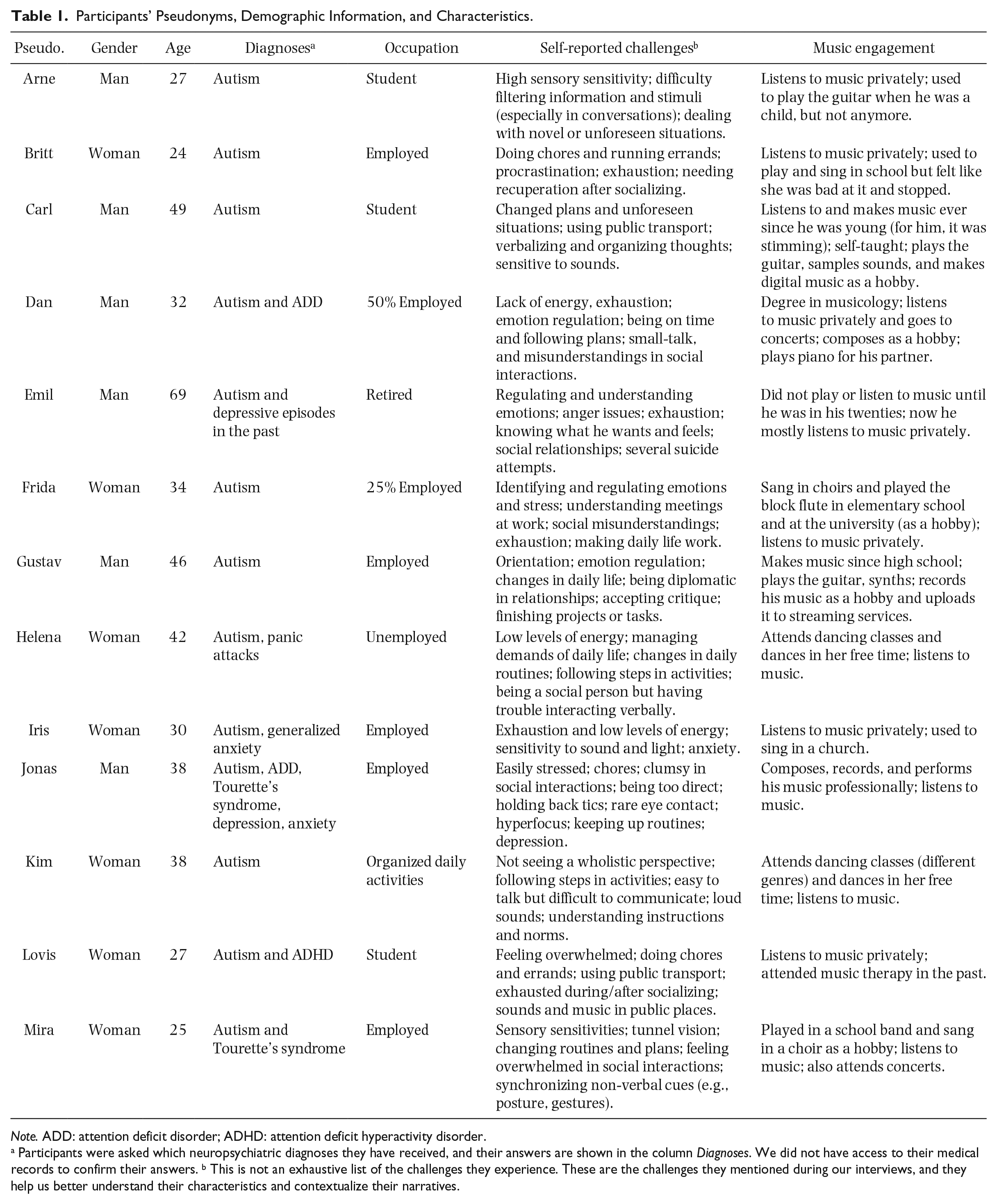
Note. ADD: attention deficit disorder; ADHD: attention deficit hyperactivity disorder.
Participants were asked which neuropsychiatric diagnoses they have received, and their answers are shown in the column Diagnoses. We did not have access to their medical records to confirm their answers. b This is not an exhaustive list of the challenges they experience. These are the challenges they mentioned during our interviews, and they help us better understand their characteristics and contextualize their narratives.
Interviews
Each participant was interviewed twice, to keep the interviews short and avoid exhaustion, as well as to give them time to think of more answers between the two interviews. On average, the first interview was 26 min long (SD = 11.37), and the second lasted 28 min (SD = 9.96). The interviews took place on an online video-conferencing platform and were conducted by the second author, who has a degree in special pedagogy and experience working with autistic people and people with disabilities. She used an adaptive style of interviewing, where she followed a list of broad questions but adapted to the needs and answers of the participants. As the data were collected for a larger project, the questions were not formulated to target components of the SDT directly but rather music engagement and well-being more broadly (examples of questions: What draws you to engage with music? Do you use music as a tool to feel better? Are there situations in which music can be a source of stress for you? What do you think your life would look like if you did not have music; what would you miss the most or be happy to be rid of?).
Analysis
We analyzed the data with directed qualitative content analysis (DQCA) using the framework developed by Assarroudi and colleagues (2018). DQCA is recommended when one tries to extend a theory to a new context or population (Elo & Kyngäs, 2008; Hsieh & Shannon, 2005), as was done in our study.
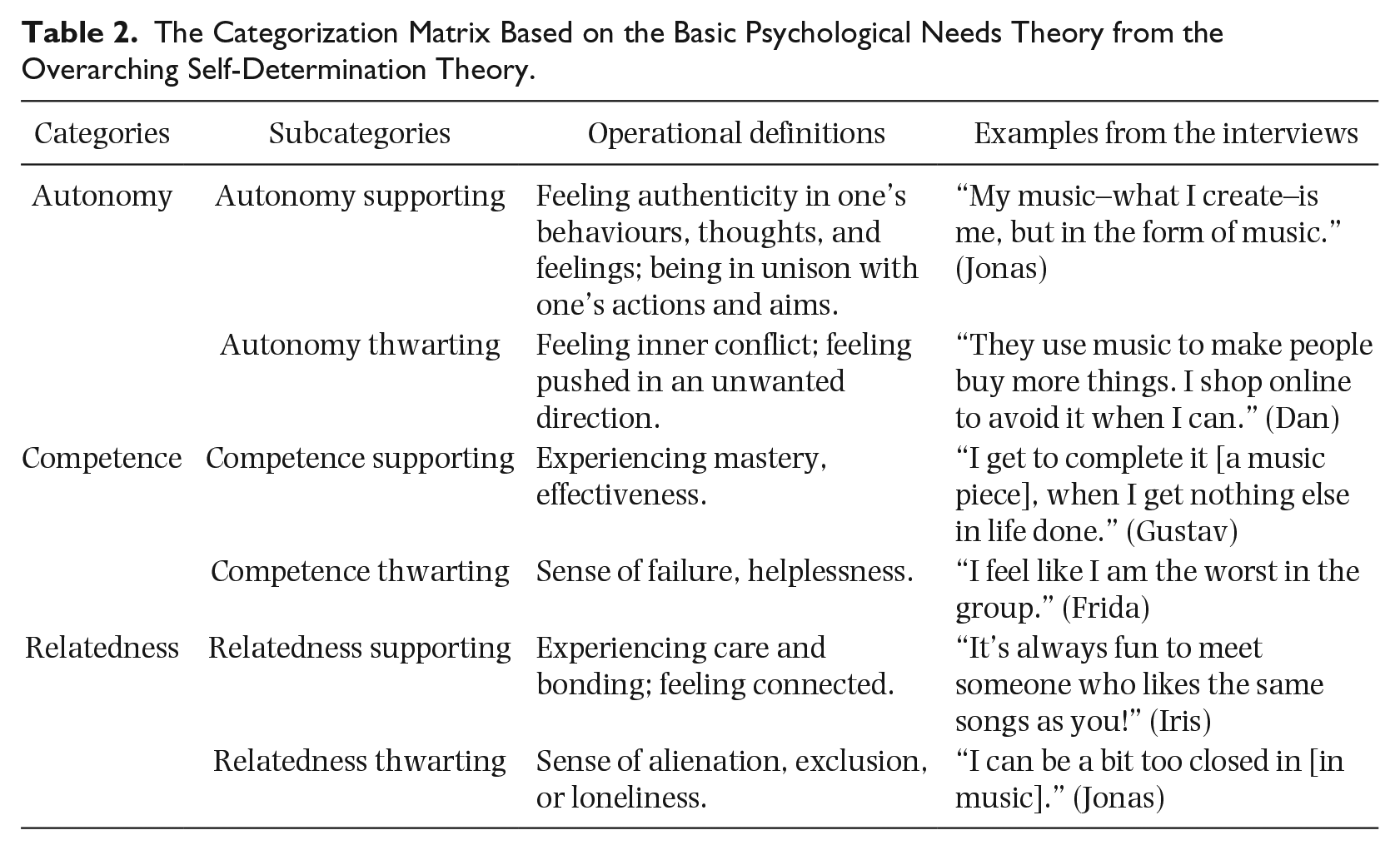
We created a categorization matrix defining all the categories we planned to look for in the transcriptions. This matrix was deductively derived from the SDT and is presented in Table 2. Our unit of analysis was an excerpt of text describing a single concept or phenomenon (e.g., the use of music to block out sounds). After pre-testing the categorization matrix and choosing anchor examples, the first and second authors coded the interviews independently and then had two consensus-building meetings and re-readings of the data (Assarroudi et al., 2018). While they largely agreed on the coding, they sometimes coded excerpts differently when two or more basic psychological needs were present in the same excerpt (therefore, both codes were right). This overlap is in line with the underlying theory (SDT) and is addressed in the discussion. The two coders used consensus-building meetings (peer debriefings) to refine the definitions of categories, discuss different perspectives on overlapping codes, and look for negative cases.
The Categorization Matrix Based on the Basic Psychological Needs Theory from the Overarching Self-Determination Theory.
To support the trustworthiness of our findings, we used the Total Quality Framework developed by Roller (2019) for considering quality in qualitative content analysis. We frequently engaged in peer debriefings, used investigator triangulation and reflexive journaling, looked for negative cases, used authentic citations to accompany our findings, and tried to describe the process of analysis transparently and in detail. The quotes presented in this article have sometimes been shortened or grammatically corrected to make them easily understandable.
Results
The results of the directed content analysis are presented in three sections for each of the three main categories: autonomy, competence, and relatedness. Each category was divided into two subcategories: supporting and thwarting. For an overview of the themes we found in each subcategory, see Table 3.
The Number of Participants Where a Certain Subcategory Was Found, With a List of Themes for Each Subcategory.
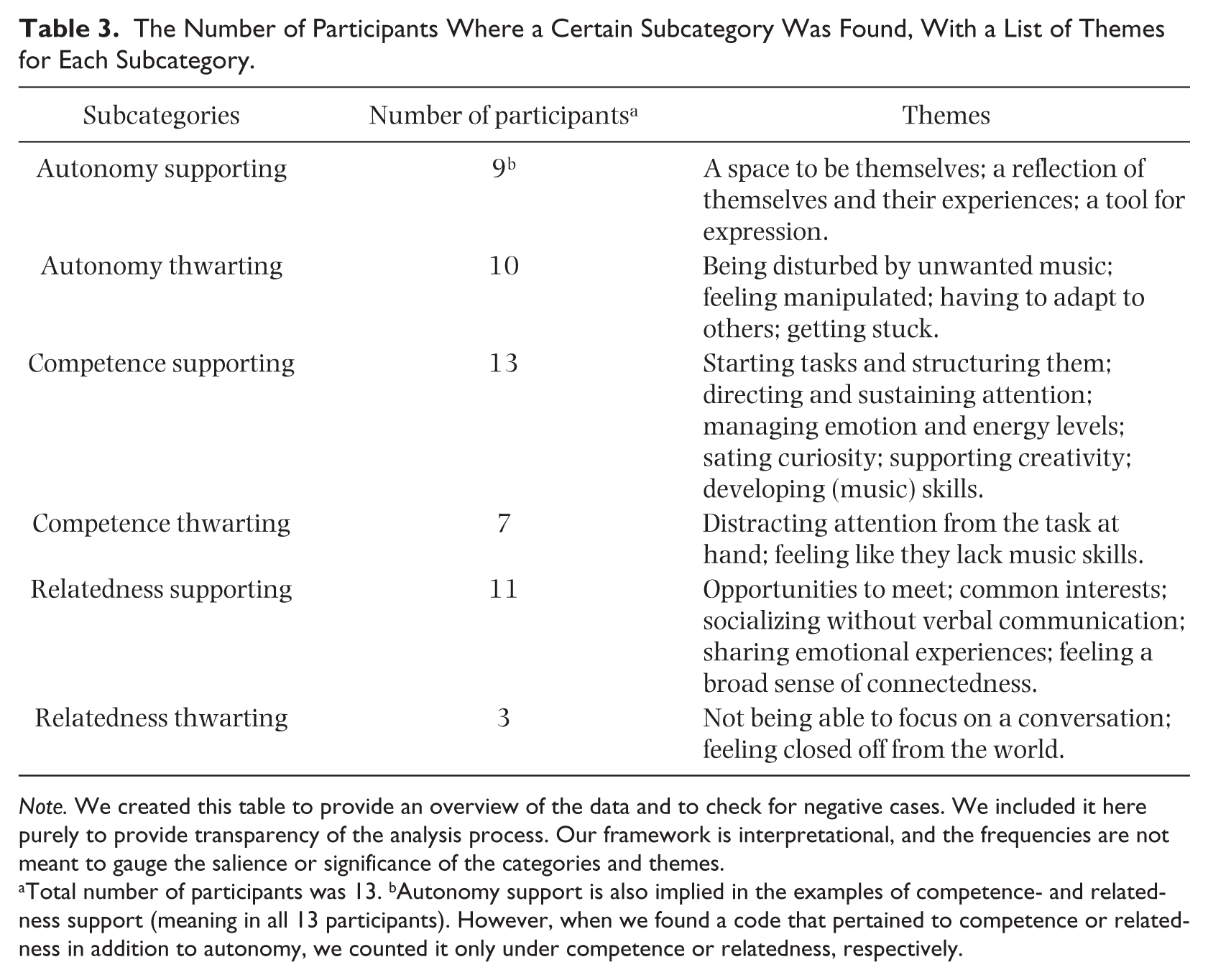
Note. We created this table to provide an overview of the data and to check for negative cases. We included it here purely to provide transparency of the analysis process. Our framework is interpretational, and the frequencies are not meant to gauge the salience or significance of the categories and themes.
Total number of participants was 13. bAutonomy support is also implied in the examples of competence- and relatedness support (meaning in all 13 participants). However, when we found a code that pertained to competence or relatedness in addition to autonomy, we counted it only under competence or relatedness, respectively.
Autonomy
We found three themes showing how musicking supports autonomy (providing a space where the participants get to be their authentic selves, reflecting on their experiences, and supporting their self-expression) and four showing how it thwarts it (feeling disturbed, manipulated, having to make compromises with others, and getting stuck). Musicking is an activity in which the participants get to engage on their own terms. Arne says, “I simply enjoy it,” and Mira adds, “It’s about having time just to myself; I only think about what I am doing in that moment, and it is a kind of recuperation [. . .] A space to be myself.” Music is able to reflect their experiences “like a soundtrack to one’s life” (Iris) and is for some of them considered a part of their identity (Dan, Carl, and Jonas). It can sometimes be difficult to express one’s feelings, needs, and ideas in words. Kim and Helena say that they struggle with expressing their emotions verbally, but dancing helps bypass words. “It is why music is so important to me,” says Kim. And while they do it through dance, Carl, Dan, Jonas, and Gustav express themselves through their compositions and improvisations.
However, musicking can also thwart autonomy. Participants reported that exposure to music they did not choose (e.g., in a store or park) can be quite distressing for them. “I find it really hard to filter out the sounds around me,” explains Arne. They try to solve this by using earplugs or headphones, but in some cases, “you just have to leave, and you lose everything you have planned for that day,” explains Carl.
In addition to feeling disturbed, some participants also felt manipulated by the music in the stores. “They [shop managers] pick music based on whether they want you to stay for a long time or shop quickly,” says Frida, and Dan tells us he shops online to avoid being manipulated by music.
A person is expected to feel a lack of autonomy when exposed to unwanted music, but they can also experience it in situations in which they choose themselves. Jonas, who is a professional solo musician (the only professional musician in our sample), admits that while collaborating with others can make the result better, it also makes the process more stressful. “I have less control,” he says. “I am good at what I do, but not so good at [working with others].” But even though musicking can be a very enjoyable activity, or precisely because of it, it seems easy to get “stuck in it” and neglect one’s “daily routines.” “It is fun, so it just happens that I forget everything else and do it for too long. I am getting better at avoiding that,” says Jonas.
In short, musicking seems to support autonomy by (1) providing autistic adults with a space to be themselves, (2) a reflection of their experiences, and (3) a tool to express themselves. Their autonomy can be thwarted when (1) they feel disturbed or (2) manipulated by music in public spaces; (3) they have to make compromises when musicking with others and (4) they get stuck musicking.
Competence
We found six themes describing how music supports competence (structuring tasks; managing attention; managing emotions and energy levels; sating curiosity; supporting creativity; developing skills) and two themes describing how it thwarts it (distracting attention; doubting one’s own music skills/abilities) (see Table 3).
First, musicking helped our participants start and structure tasks. Putting on some music can be a good motivator because it makes the activity “more enjoyable” (Lovis). Iris admits that she “would not be able to do nearly as much” without music, and some of them made playlists specifically to know when to start with a routine. Secondly, musicking helped them direct and sustain attention. Like Britt, many of them listen to music via headphones to “shut out” distracting stimuli. Mira explains: “I get so easily overstimulated if I do not have my headphones when I am commuting.” This “sound barrier” allows them to focus more on the task at hand. “For example, when you sit in an office environment, there is so many sounds coming from everywhere; [. . .] music can dampen all that is happening around me,” clarifies Frida. For some, silence can also be distracting. “I often listen to music when I study; it is easier to focus. It’s not just about how I take care of myself, it helps me to concentrate [. . .] I rarely manage to stay focused when everything is quiet,” says Lovis. Arne, on the other hand, becomes too distracted if he has music in the background while he studies, so he uses it during his breaks to rest and take his mind off the work.
Our participants also use music as a tool for managing emotions and energy levels. “I have energetic music when I need to be alert and calm when I need to relax,” explains Helena. They manage their emotions through music in many different ways. For example, they use musicking to redirect their attention, promote positive and decrease negative emotions, reflect on emotional experiences, experience novel emotions, or express their emotions via musicking instead of words. “I use music to stay in the emotion I am feeling,” says Iris, while, for example, Lovis uses it as “a distraction” when she is feeling down. Music can be a great tool in unpredictable or stressful environments because it creates feelings of “predictability” (Mira) and “familiarity” (Helena). Kim loves listening to certain songs “on repeat” and says that it is precisely that repetitiveness that “gives [her] the feeling of calmness.” For Mira, the possibility of making her environment feel more “predictable” by listening to certain playlists is especially important while commuting. For those especially sensitive to auditory stimuli, musicking can help block other sounds, but that is not the only way it helps them cope with the sound environment.
In addition to making a situation feel more familiar and predictable, musicking can also provide a safe space to experience something new, thus satisfying one’s curiosity. Frida says she gets a “dopamine kick from finding new music.” She reflects on how others expect her to only crave sameness because she is autistic, but she is constantly on the lookout for new music. Dan, Emil, and Helena also share this need, with Helena pointing out that she even enjoys venturing into new genres she has not heard before.
Participants also use music to spur creativity. “I tend to sit and procrastinate, but when I put on some music, I suddenly know what to write about,” tells us Lovis. Similarly, background music inspires Dan’s painting and Emil’s pottery-making. Musicking can thus support other forms of artistic expression but can also provide a sense of pride in advancing musicking skills.
In certain contexts, though, musicking can have the opposite effect and make one feel inadequate or unskilled. Britt did not like playing an instrument in school because she thought she was not good at it. This changed, though, when she tried making electronic music. Gustav avoids showing his musical skills altogether and only makes music for himself. “It’s a little scary, and I am not good at receiving critique,” he explains with a small laugh. Self-doubt was expressed by all participants who made music, amateurs and professionals alike.
Additionally, musicking thwarts their need for competence when it distracts participants from the task. Arne and Carl describe how music can disrupt their thoughts, with Carl likening it to a “short circuit.” Our participants found it particularly distracting while trying to shop in stores with music (Iris, Britt, Gustav, Lovis, and Mira).
In summary, musicking supported their need for competence by helping them to (1) start and structure tasks; (2) direct and sustain attention; (3) manage emotions and energy levels; (4) satisfy curiosity; (5) support creativity; (6) develop music and other skills. On the other hand, musicking sometimes thwarted their competence by (1) making them doubt their music skills or (2) distracting them from the task at hand.
Relatedness
While the presence of others can make our participants feel self-conscious, they mostly see musicking as an opportunity to feel more connected. We found five themes showing us how musicking can support relatedness (opportunities to meet; common interests; socializing without verbal communication; sharing emotional experiences; feeling a broad sense of connectedness) and two examples of how it thwarts it (not being able to focus on a conversation; feeling closed off from the world) (see Table 3).
“It is a social thing. You get to listen to music together and discuss it, and I like that,” says Britt, adding, “I would lose a lot of relationships if I did not have music.” Jonas describes it similarly: “I like talking to others about it. It [musicking] is not just about seeing and hearing but being able to discuss it too.” For Kim and Frida, talking and socializing become easier when they have a common goal or interest with other people, like singing in a choir together. These common goals help them know what to talk about. For Helena, on the other hand, musicking is about avoiding verbal communication altogether. “It is a way for me to be social with others without having to talk to them. I miss this a lot when I cannot dance,” she says.
Interests and preferences are one way through which people connect via musicking, but another important channel is emotion. Musicking provides a sense of connection through shared emotional experiences. While they can be shared between people in real-time, like when Dan sings with his partner or Helena dances with her friends, they can also be shared across time and space. The person to whom they feel connected can, for example, be the performer. Jonas and Frida both talk about how meaningful it is to hear somebody sing about life experiences or feelings that they have also experienced. “I find solace in these songs,” says Jonas. Lovis explains: “Sometimes, I can recognise myself in a piece of music . . . and it becomes this feeling of coherence.” Iris describes it similarly: “. . . it is validating when you see yourself in different (songs). For example, if I am sad, then I sometimes pick a song that is also sad.”
This sense of connectedness can stretch even beyond specific people and onto humanity or nature more broadly. Dan calls this “resonance,” and Jonas describes it as a “unifying force” that points out people’s similarities and “spans over borders and cultures.” According to Emil, “music is everywhere,” and it provides a link to being able to “connect with nature,” or perhaps “the divine, if one is religious.”
However, when they felt that the music was unpleasant or too loud and did not have any control over it, it prevented them from being able to focus on a conversation and connecting with others. Jonas, who often goes around with his headphones on, admits that he feels like he is sometimes too “closed in inside the music.” Both unwanted and freely chosen background music can sometimes make our participants feel like it is preventing them from connecting with others in their environment.
Musicking can help support the need for relatedness by (1) providing opportunities to meet people, (2) providing a common interest to talk about, (3) making it possible to interact without verbal communication, (4) providing meaningful shared experiences with friends and family, and (5) making them feel connected to the wider world, e.g., musicians, fans, humanity, and nature. On the other hand, musicking can thwart their need for relatedness by (1) distracting them during a social interaction or (2) preventing them from connecting with their social environment.
Discussion
Our findings show that SDT is a useful framework for understanding autistic adults’ experiences and needs related to musicking. In the following discussion, we will illustrate the parallels between SDT and previous studies in this field. What the present study adds to the existing knowledge is a strong link among the existing studies on the subjective experiences of musicking in autistic adults. More importantly, it grounds the existing knowledge in a well-established theory (SDT). Because we have little empirical evidence on how musicking affects the well-being of autistic adults, SDT can offer a good starting point for two main reasons. Firstly, the basic psychological needs are universal and have been well-researched over the past two decades, both in autistic and non-autistic people. Secondly, the theory focuses on how to change the environment to better meet people’s needs. Current music-based interventions often focus on “symptoms” (Applewhite et al., 2022; Geretsegger et al., 2022; Marquez-Garcia et al., 2022), even though this goes against the wishes of many stakeholders. They have long been advocating for interventions to switch the focus from changing the (autistic) individual to changing the environment to be more accessible to all (The Autistic Self Advocacy Network, 2022; Pukki et al., 2022). SDT seems to be a promising framework for that (McDonald et al., 2022).
To briefly summarize our results, we found that musicking plays a significant role both in supporting and thwarting ARC. It supports autonomy by allowing autistic adults to customize the activity to their current needs and giving them a space where they get to be their authentic selves. It supports their need for competence by helping them manage their surroundings, emotions, and attention; develop new or existing skills; and satisfy their curiosity. Finally, it supports relatedness by fostering a sense of connection with others, whether through shared interests, opportunities to meet new people, or sharing meaningful experiences with people close to them. However, it can thwart ARC, especially when the person does not have much control over how, when, and where they engage with music.
Our results highlight a red thread connecting all the previous studies on the experience of musicking among autistic adults. First, musicking supports autistic adults’ need for autonomy when they can engage with it for their own pleasure and in a way that suits them. The participants in our study described this as “having a space to be themselves,” which was echoed in other studies too. Kirby and Burland (2022) found that autistic youth intentionally used music to develop and express their identity. While not explicitly mentioned, autonomy is also implied in the findings of Allen and colleagues (2009) and Venter and colleagues (2023) in themes such as “listening for enjoyment” and “getting lost in music.” Namely, the participants described engaging with music based on their preferences and goals as opposed to external pressures.
Secondly, we found that musicking supports autistic adults’ need for competence in many ways, which resonates with existing studies on autistic youth (Kirby & Burland, 2022) as well as adults (Allen et al., 2009; Korošec et al., 2022; Venter et al., 2023). Previous findings show that autistic adults listen to music to self-regulate and cope with auditory sensitivity (Venter et al., 2023). An especially creative example of this is “emotion diaries”, from the study by Korošec and colleagues (2022). One of the interviewees reported sampling sounds that caught his attention, combining them into soundscapes, and adding his digital compositions to them as a way of coping with unpredictable and overwhelming sound environments. In addition to affect and attention regulation (Allen et al., 2009; Kirby & Burland, 2022), autistic people also musick to communicate, to support their personal and skill development, as well as for a sense of achievement and self-competence (Allen et al., 2009; Kirby & Burland, 2022; Korošec et al., 2022).
Finally, musicking can support the need for relatedness in autistic adults. Music itself can provide them with a sense of connection or companionship (Allen et al., 2009; Korošec et al., 2022; Venter et al., 2023), but it can also facilitate social interaction. It helps them share meaningful experiences with family and friends as well as connect with new people via common interests (Kirby & Burland, 2022; Korošec et al., 2022; Venter et al., 2023). Autistic adults in all previous studies alluded to musicking being able to satisfy their need for relatedness, which is not surprising considering how integral the social aspects are to musicking (Fancourt & Finn, 2019; Perkins et al., 2020). Many theories on the evolution of musicking see it as inseparably entwined with social bonding, one shaping the other through, for example, mating, coalition signaling, group cohesion, and parental care (Savage et al., 2021). The role of musicking in social behavior is especially interesting in the autistic population because they live in a neuro-normative world (a world that privileges certain types of functioning, implying there is an “ideal” way of functioning), which often misunderstands their social cues and vice versa (Milton, 2012). For example, musicking can provide them with more predictability in social interactions (e.g., clear norms in social dance) or with a safe space where they get to disregard neuro-normative expectations about how one should interact or express oneself (Korošec et al., 2022).
We have evidence suggesting that musicking can support ARC in the general population (Daykin et al., 2018, 2020; Fancourt & Finn, 2019; MacDonald, 2013; Perkins et al., 2020, 2021; Viola et al., 2023), and it would seem that the autistic population is not that different. However, while autistic and non-autistic people satisfy the same basic needs with musicking, the specific ways in which they satisfy them might differ. Examples might be the use of music to inform and protect daily routines, avoiding verbal communication, and avoiding overstimulation (Kirby & Burland, 2022; Korošec et al., 2022; Venter et al., 2023). Sensory differences are more common in autistic people, and many of them struggle with sensory hyperreactivity, which can make public spaces with background music inaccessible. When asked about their sensory experiences, 75% of autistic adults said they are hyperreactive to music, while music was also the second most sought-after stimulus (after textures), with 60% reporting seeking it (MacLennan et al., 2021). Having agency was the crucial difference between a pleasant experience and overstimulation, which also aligns with our findings.
For musicking to be a pleasant or beneficial activity, it is vital that autistic adults have a sense of autonomy. When this was not the case, our participants felt distracted, confused, angry, and overstimulated. It not only thwarted their sense of autonomy, but it also prevented them from satisfying their needs for competence and relatedness because of how distracted they felt. The autistic community has raised this issue many times, calling for quieter music in public spaces and access to noise-canceling headphones, among other things (Scheerer et al., 2022; Thompson et al., 2020). However, previous studies on the music experiences of autistic adults rarely addressed the potential negative aspects of musicking. To be able to better understand the role of musicking in the thwarting of ARC, we need more studies investigating the negative experiences and potential harms of musicking.
While the SDT framework seems like a sound starting point to integrate the existing evidence, it is not meant to cover all the values of musicking or all the mechanisms that support well-being through musicking. This theory only focuses on the basic psychological needs – those nutrients that are necessary for people to thrive. Based on current findings, musicking can play a significant role in supporting and thwarting those needs, but it could also affect well-being through other mechanisms. Korošec and colleagues (2022), for example, found that musicking provided autistic adults with hope for the future and strength to persevere in challenging life situations.
Autistic adults show great insight into how musicking supports and thwarts their needs (Allen et al., 2009; Bakan, 2018; Kirby & Burland, 2022; Korošec et al., 2022; Venter et al., 2023). They have developed many strategies to support their well-being through musicking—valuable expert knowledge that is rarely included in academic discourse and the development of music-based interventions (Bakan, 2018; Straus, 2014; Thompson et al., 2020). As previous research has shown, musicking is not a solution for all; it will contribute to one’s well-being as long as the person finds this activity meaningful (Koehler et al., 2023; Krause et al., 2019). Future studies could delve deeper into the distinct ways in which autistic and non-autistic individuals satisfy their basic needs with music. We also need more studies that would check how applicable SDT is to the experiences of musicking on larger and more diverse samples of autistic people, providing evidence for its generalizability.
Limitations
Although we emphasized in the invitation to the study that participants do not have to be knowledgeable, play, or even like music to be able to participate, it is plausible that only participants with at least some interest in music apply. Autistic adults who are impartial or even dislike music may not be interested in participating and might give different answers. Because of resource limitations, this study only involved speaking participants. Therefore, we cannot generalize these results to people who use other styles of communication. All participants reported having a formal diagnosis of autism. In future studies, we can additionally include people who self-identify as autistic, because for some, a diagnosis might be difficult to obtain.
Conclusion
This study offers a first look into how musicking can support and thwart the basic psychological needs of autistic adults. It shows that SDT is a useful framework for their experiences because the basic psychological needs are implied in all existing empirical findings and because the theory shifts the focus away from the “deficits” of an individual, toward how a particular environment meets that individual’s needs. We must, however, stay open to other aspects of musicking (beyond the basic psychological needs) that bring value to the lives of autistic adults.
The most important takeaway is that musicking can just as easily thwart basic psychological needs as it can support them and that music-based activities or support services should always consider the individual’s preferences and potential harms. The context of musicking—the “why, how, when, and where?”—is crucial to consider. There is no one-size-fits-all, and if we want to make music activities and public spaces more accessible to everyone, we need to ensure that the autistic community is part of the conversation.
Footnotes
Declaration of conflicting interests
The author(s) declared no potential conflicts of interest with respect to the research, authorship, and/or publication of this article.
Ethical considerations
The study was approved by the Swedish Ethical Review Authority under application number 2021-01121.
Funding
The author(s) received no financial support for the research, authorship, and/or publication of this article.
