




Abstract
Adverse experiences toward making music can be found in both musicians (music performance anxiety) and non-musicians (avoidance of participating in musical experiences). Both anxiety and avoidance are driven by perceptions and attributions about particular stimuli, based on schemas developed via direct and indirect experiences. Most research within music psychology focuses on the views of professional or student musicians. However, little is known about music avoidance in the general population, or their perceptions of music and performance. This article proposes to address this gap by comparing Australian adults’ perceptions toward music making and performance. A total of 116 participants self-identified as musical/non-musical, a musician/non-musician, and a performer/non-performer, then defined various terms and phrases related to music making and performance. Logistic regressions indicated that those with exposure to the music education system were significantly more likely to self-identify as musical, a musician, and a performer. Tests of independence reveal a relationship between self-identification and perceptions of music making, performance, anxiety, and willingness to engage. Possible mechanisms underlying the results of this study are discussed and a conceptual expansion related to music performance anxiety (MPA) and music making is proposed.
Keywords
Despite agreement in the literature on the universality of music making among humans (Blacking, 1973; Cross, 2003; Fitch, 2006; Justus & Hustler, 2005; Mithen, 2005; Peretz & Zatorre, 2003), there is evidence for negative feelings toward making music in Western society. Music performance anxiety (MPA) is widespread among musicians (Fernholz et al., 2019; Fishbein et al., 1988; Gross & Musgrave, 2020; Van Kemenade et al., 1995; Wesner et al., 1990) and the level of engagement in making music in the general population is low (Australia Council for the Arts, 2010, 2017, 2020; S. West, 2007). Attitudes toward music can be attributed to one’s personal perceptions toward music, developed over a lifetime via direct and indirect experiences (Anderson & Lindsay, 1998). While the existing literature focuses on musical experience and perception in professional and student musicians, little is known about experiences and perceptions toward music among the general population. This article proposes to address this gap by providing a cross-sectional view of personal definitions toward music and performance according to self-identification as musical, a musician, and a musical performer. This study aims to develop a possible model for the genesis of music aversion or negative attitudes toward music making in Western culture based on respondent definitions. The study is guided by three research questions:
What is the association between the likelihood of viewing oneself as musical/a musician/a performer and degree of exposure to the Western music education system?
What is the association between self-identification as musical/a musician/a performer and definitions of terms related to music making and performance?
What is the association between self-identification as musical/a musician/a performer and willingness to sing and play an instrument?
Our expectation is that exposure to the Western music education system impacts on musical self-identity and that self-identification impacts on personal definitions associated with music and willingness to participate in music.
Music performance anxiety
MPA is reported as a significant problem for professional musicians in the classical tradition (Fernholz et al., 2019; Fishbein et al., 1988; Kenny & Ackermann, 2015; Kenny et al., 2014; Roland, 1994), but also in jazz pop music genres (Cooper & Wills, 1989; Martin-Gagnon & Creech, 2019; Nusseck et al., 2015). MPA is also a problem for tertiary music students (Osborne & McPherson, 2019; Paliaukiene et al., 2018; Studer et al., 2011) with growing research on its prevalence in children and adolescent musicians (Boucher, 2008; Papageorgi, 2020; Patston & Osborne, 2016; Ryan, 2005; Thomas & Nettelbeck, 2014; Urruzola & Bernaras, 2020). MPA prevalence varies widely, with studies reporting prevalence anywhere between 16% and 75% (Fernholz et al., 2019; Fishbein et al., 1988; Help Musicians, 2014; Van Kemenade et al., 1995; Wesner et al., 1990).
Most research on MPA focuses on professional and student musicians with only a little known about how the general population feels about making music. Active music engagement in the general population is low (Australia Council for the Arts, 2010, 2017, 2020; S. West, 2007) with some common beliefs found among samples of the general population regarding their (dis)engagement with singing: origin of disengagement linked to a specific event in their past musical education, fear of evaluation by those listening, and a belief in a fixed, innate musicality (Abril, 2007; Ruddock, 2017; Ruddock & Leong, 2005; Shouldice, 2020; Swain & Bodkin-Allen, 2014).
Despite having characteristics similar to sufferers of MPA, there is little discussion around whether this general lack of musical engagement may be tied to MPA reported in professional and student musicians. Some authors have noted that MPA can lead to the cessation of performance in musicians (Braden et al., 2015; Lockwood, 1989; McGinnis & Milling, 2005; Dalia, 2004, as cited in Orejudo Hernández et al., 2018; Ryan, 2005; Steptoe & Fidler, 1987), without any connection to the general population’s lack of musical engagement. S. West (2009) conceptualizes the widespread fear and lack of engagement with music making, particularly singing, as selective mutism for singing (SMS), problematizing all forms of discomfort related to music making (Pike, 2017). This article seeks to expand the theory of SMS proposed by S. West (2007, 2009) and Pike (2017), recommending a conceptual extension of MPA to a more generalized “music making anxiety.” In this expanded model, MPA and music disengagement lie on a single spectrum of anxiety around music making. If these two concepts lie on the same continuum, we would expect to find similar patterns between musicians and non-musicians’ feelings toward music performance and music making, for example, MPA in musicians and music aversion in non-musicians.
Lay perceptions
“Lay perceptions” are the views held by non-experts in a field, formed through direct and indirect experiences (Anderson & Lindsay, 1998; Sarbin et al., 1960, as cited in Furnham, 1988) or informally through social interaction and conversation (Dowler et al., 2006). Lay beliefs are always evolving with studies providing a “snapshot” of views at any given moment in time (Dowler et al., 2006). However, these individual views tend to represent personalized versions of generalized attitudes reflected in wider society (Davison et al., 1991). Lay beliefs have also been shown to influence behavior in health settings (Burnette, 2010; Crum & Langer, 2007; McFerran & Mukhopadhyay, 2013; Riley et al., 2019; Werner, 2006).
While definitions of musical terms have been debated and refined among academics for a number of years, very few studies compare perceptions of definitions held by musicians and the general population, leaving a significant gap in the literature. Shouldice (2014), for example, gathered elementary students’ perceptions of being a “good musician.” Existing perception studies only include non-musicians as a control group to compare any differences in skill or processing ability as a result of music training. This study aims to address this gap and contribute a new perspective to the existing literature on musical definitions.
Method
Design
To explore these descriptive and exploratory aims, the study used a single-time, cross-sectional design. Participants completed a self-report questionnaire that captured their understanding of key terms in music making; their experiences with music education, performance, and engagement; and the way they thought of themselves in musical contexts. Data were collected via online questionnaire, delivered via Qualtrics (https://www.qualtrics.com/au/). Ethical components of the research were approved by the Australian National University Human Research Ethics Committee (Protocol: 2019/762).
Participants
Participants 18 years or over, residing within Australia, gave voluntary informed written consent to participate in the study. Potential “musicians” were sourced via email to state music teachers’ associations in Australia, with potential “non-musicians” and further “musicians” sourced via social media posts. Both invitations called for participants to complete a “survey on ‘musician’ and ‘non-musician’ perceptions around music making,” with equal emphasis on sourcing musicians and non-musicians. Participants were also sought online and through the lead author’s personal social media page.
In total, 123 participants completed the survey. After exclusions based on incomplete surveys and age reported under the age of consent required for the study, 116 final responses were analyzed. The majority of respondents were female (73.50%) with ages ranging from 18 to 82 (M = 41.99, SD = 17.71). Most lived in Australia all their life, described themselves as of a Western cultural background, and were university educated. A full list of demographic information can be found in Table 1.
Demographic Characteristics of Survey Respondents.
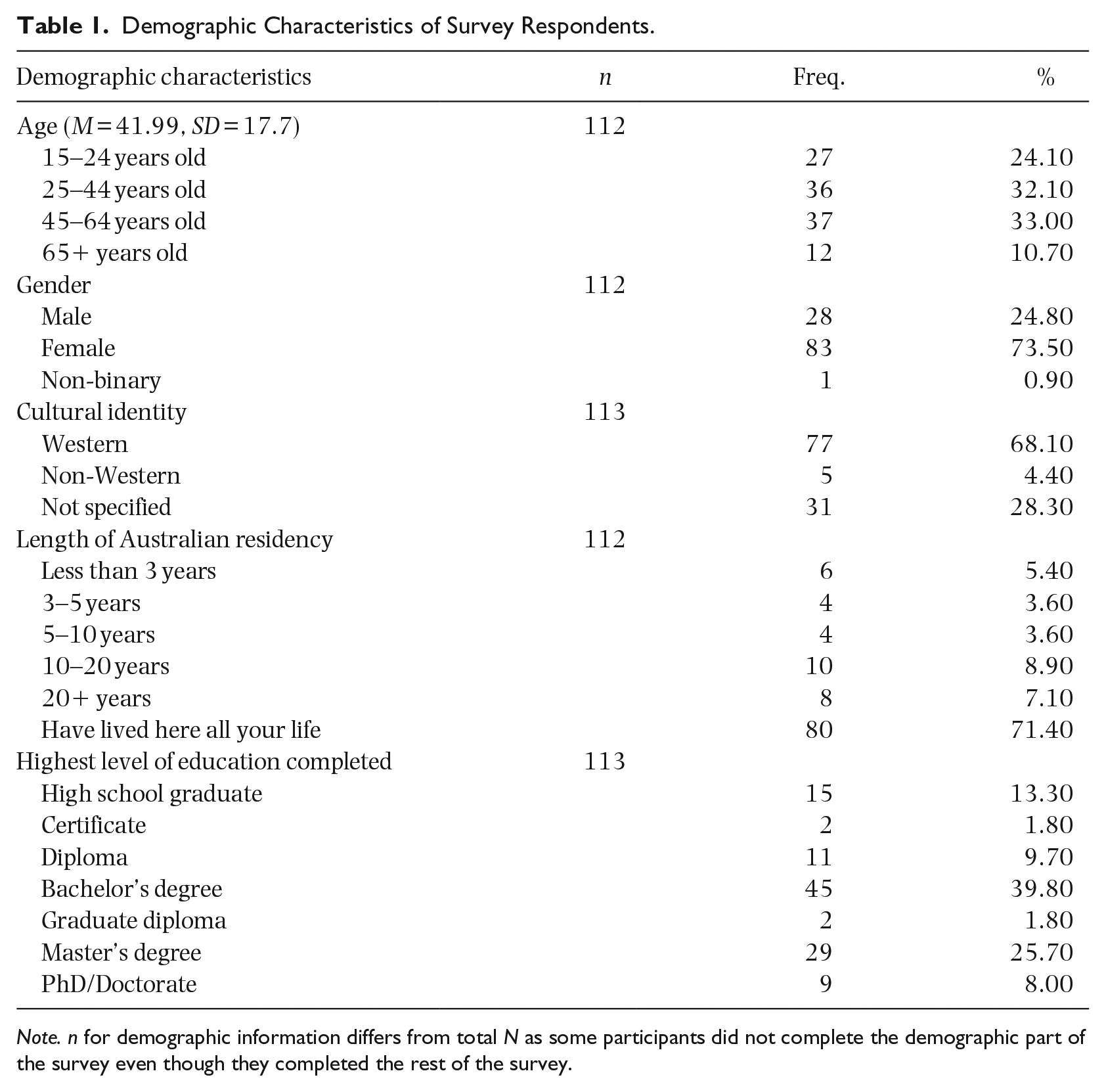
Note. n for demographic information differs from total N as some participants did not complete the demographic part of the survey even though they completed the rest of the survey.
Materials
No existing relevant psychometric scales were identified, so an online, author-developed questionnaire was created. Data were gathered on participant self-identification as musical (yes/no), a musician (yes/no), and a musical performer (yes/no); definitions toward music making and performance; willingness to engage with playing an instrument and singing; and general demographical data and musical experience.
Musical definitions
Musical definitions were gathered via both open-ended and multiple-choice questions. Participants were asked to provide their own definitions of the three identity terms (being musical, a musician, and a musical performer) via open-ended written questions. Participants then defined various music making and performance-related terms by selecting all multiple-choice answer options that applied from a range of possible musical activities. Participants were asked which activities they considered to be music making, require practice, are a performance, or may trigger anxiety. For example, the question, “Which of the following musical activities are a performance?” included answer options such as singing at a community sing-a-long, playing/singing solo in front of an audience, singing in the shower, singing Happy Birthday at a party, and playing in a lesson with a teacher. Participants were also asked to think about the quality of musical activities and indicate in what types of music making and performance scenarios they believed various attributes to be important, such as correct notes and in time with a steady beat, being innovative/creative, and encouraging others to participate.
The multiple-choice answer options were developed systematically to ensure inclusion of a spectrum of conventional and non-conventional musical activities with equal distributions of various relevant characteristics (e.g., formal/informal, singing/instrument, others present/others not present). For example, for the question, “What counts as ‘making music’?,” answer options included toddler banging pots with wooden spoons (informal/instrument/others not present/no musical intent) and rehearsing with a choir (formal/singing/others present/musical intent).
Willingness to sing and play an instrument
To indicate participant musical engagement while minimizing the impact of participant embarrassment or discomfort around such a question, vignettes (Finch, 1987; Hughes, 1998; Steiner et al., 2016) with five factor levels of increasing willingness to sing and play an instrument in public were developed by the authors. A score of 1 indicated a low willingness to sing or play, even when alone (e.g., “Casey doesn’t sing at all. Not alone and especially not when others can hear”), and a score of 5 indicated a high willingness to engage in solo singing or playing in public (e.g., “Jamie will sing along with a group and also alone when other adults are present. Jamie regularly sings throughout the day”). To minimize any gender or instrumental bias, gender-neutral names (e.g., Sam, Alex, and Casey) were attached to each vignette and references to any specific instrument excluded. Participants were asked to select which of the five descriptions was most like them. These character vignettes provided a non-personal and less-threatening method of indicating actual behavior (Hughes, 1998) on a potentially sensitive topic on which participants may be hesitant to answer truthfully, or at all.
Demographics and music experience
The final part of the questionnaire asked for general demographic data (age, gender, length of residency in Australia, cultural identity, highest level of education) and musical experience (highest level of formal music education, years of vocal/instrumental tuition, number of musical exams completed, and informal playing experience) via short answer, text, and predetermined multiple-choice questions.
Score of Western music education exposure
A score from 0 to 6 was developed from participants’ reported musical experience to indicate the extent of exposure to Western music education. While other authors have categorized music education experience according to the number of years of tuition only (Alluri et al., 2017; Chin & Rickard, 2012; Hamamoto et al., 2010; Hanna-Pladdy & MacKay, 2011; J. D. Zhang et al., 2018; F. Zhang et al., 2019), for the Australian context, this score combined the number of years of individual lessons (score of 0–3) with the number of exams completed (score of 0–3). 1 The addition of the exam factor further emphasizes the performative and evaluative nature of the Western musical culture than lessons alone, hence its inclusion in our score of exposure to Western music education. A score of 0 indicated no experience with music tuition or exams, and a score of 5 or 6 indicated a high level of exposure to Western music education with more than 20 years of tuition and more than 10 exams completed.
Procedure
The questionnaire was administered online between March and October 2020. Participants were granted access to the survey after providing written informed consent and proof that they had accessed the participant information sheet. Participants were able to then complete the survey in their own time. Questions were in the same order for all participants: self-identification, open-ended definitions, multiple-choice definitions, and demographic and information on musical experience. The questionnaire took approximately 15–25 min to complete.
Data analysis
Statistical analyses were performed using IBM SPSS Statistics for Windows (Version 26) (IBM Corp., 2019). Frequency statistics were calculated for demographic information, identity as musical/musician/performer, and musical experience of the sample. Mean, minimum, maximum, and standard deviation were calculated for the sample age. Binomial logistic regressions, controlling for age and gender, were performed to examine whether there is an association between music education exposure (music exposure score) and the likelihood of self-identification as musical, a musician, or a musical performer in this sample. For each multiple-choice definition, percentages of the number of selections for each type of musical activity were calculated for each participant (e.g., selecting all four formal activities for “music making” produced a score of 1.00 for formal activities). Mann–Whitney U tests examined any differences between the distributions of each type of activity for each multiple-choice definition across each pair of identities. Mann–Whitney U tests also examined any differences between pairs of identities on willingness to sing and play. An alpha level of .05 was used as the threshold of significance.
To analyze participants’ open-ended written text definitions of musical, a musician, and a performer, a manual inductive coding approach was employed. Initially, a descriptive open-coding approach (Saldana, 2016) was utilized by the first and second authors on participant responses to the three identity definitions. A focused coding approach (Given, 2008; Saldana, 2016) was then employed: the frequency of initial codes was discussed between the first and second authors and a consensus set of categories was identified. The identified categories were further defined between the two authors before a second cycle of coding was executed according to the new categories. The primary and secondary authors discussed and agreed upon any discrepancies in the assignment of codes. See Table 2 for a list of identified categories for each term.
Final Coding Scheme for Open-Ended Text Definitions, Developed Inductively From Data.
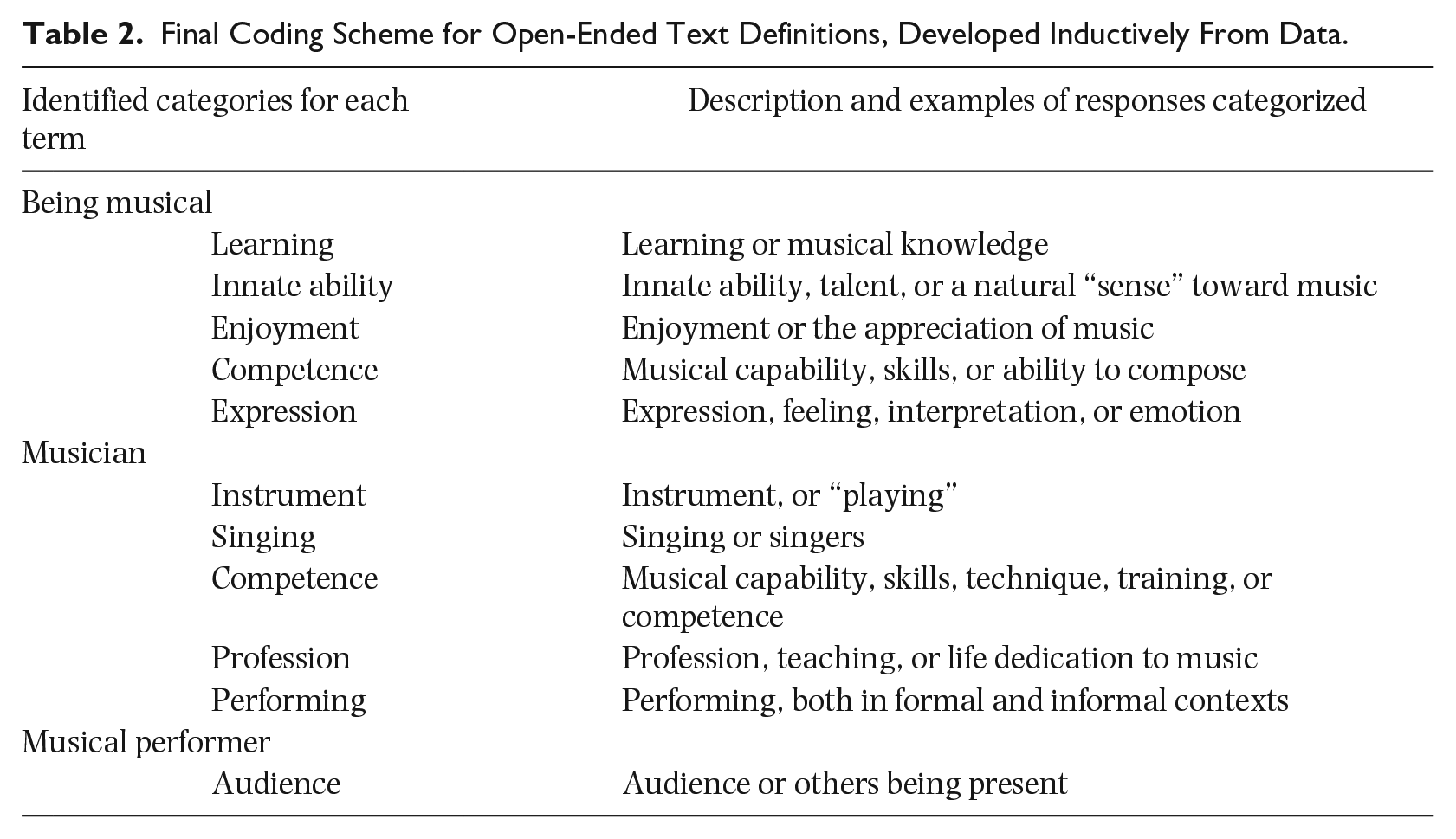
Chi-square tests of difference were used to examine differences in the distributions of each category across each pair of identities. An alpha level of .05 was used as the threshold of significance.
Results
Participant self-identifications and musical experience
Of 116 final responses, 75.67% identified as being musical, 42.24% as a musician, and 37.06% identified as a performer of music. Nearly a quarter (20.69%) did not identify with any of the three musical identities. Self-identification in this sample appeared generally hierarchical, a portion of the whole sample identified as musical, a subset of those identifying as musical also identified as a musician, and another subset of those identifying as a musician self-identifying as a performer (i.e. self-identifying as a performer means you are also likely to self-identify as musical and a musician). Figure 1 illustrates the distribution of participants’ self-identification.
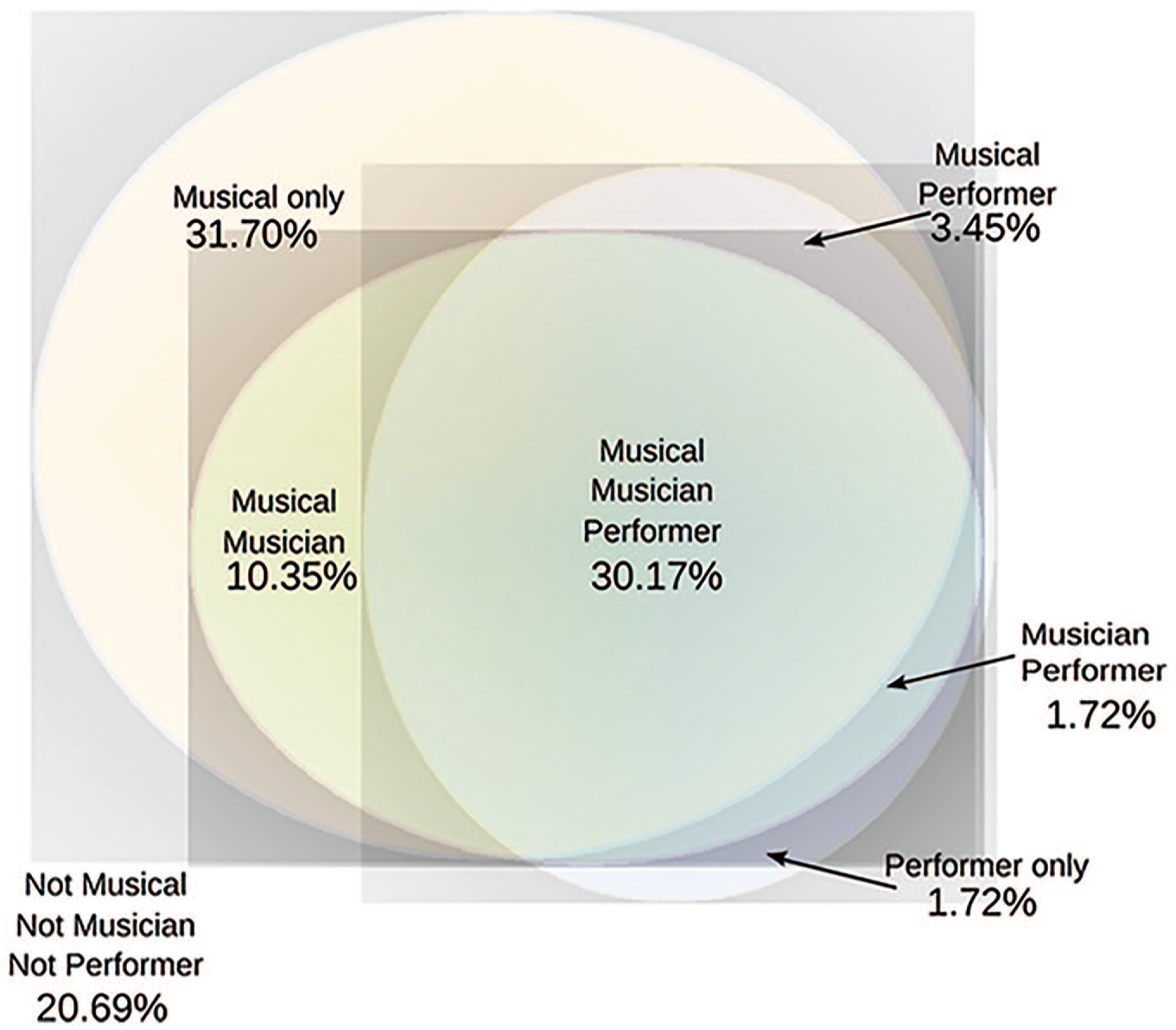
Distribution of Participants’ Self-Identification as Musical, a Musician, and a Performer.
Many of the respondents had been exposed to the Western music education system: 69.60% had received individual music tuition and 49.10% completed at least one music exam. Many respondents had informal experiences with an instrument or singing without any feedback from a teacher (62.50%), with 70.00% of those with informal music experiences still playing that instrument at the time of the survey. Table 3 provides further details on self-reported musical experience in this sample.
Self-Reported Musical Experience of Survey Respondents.
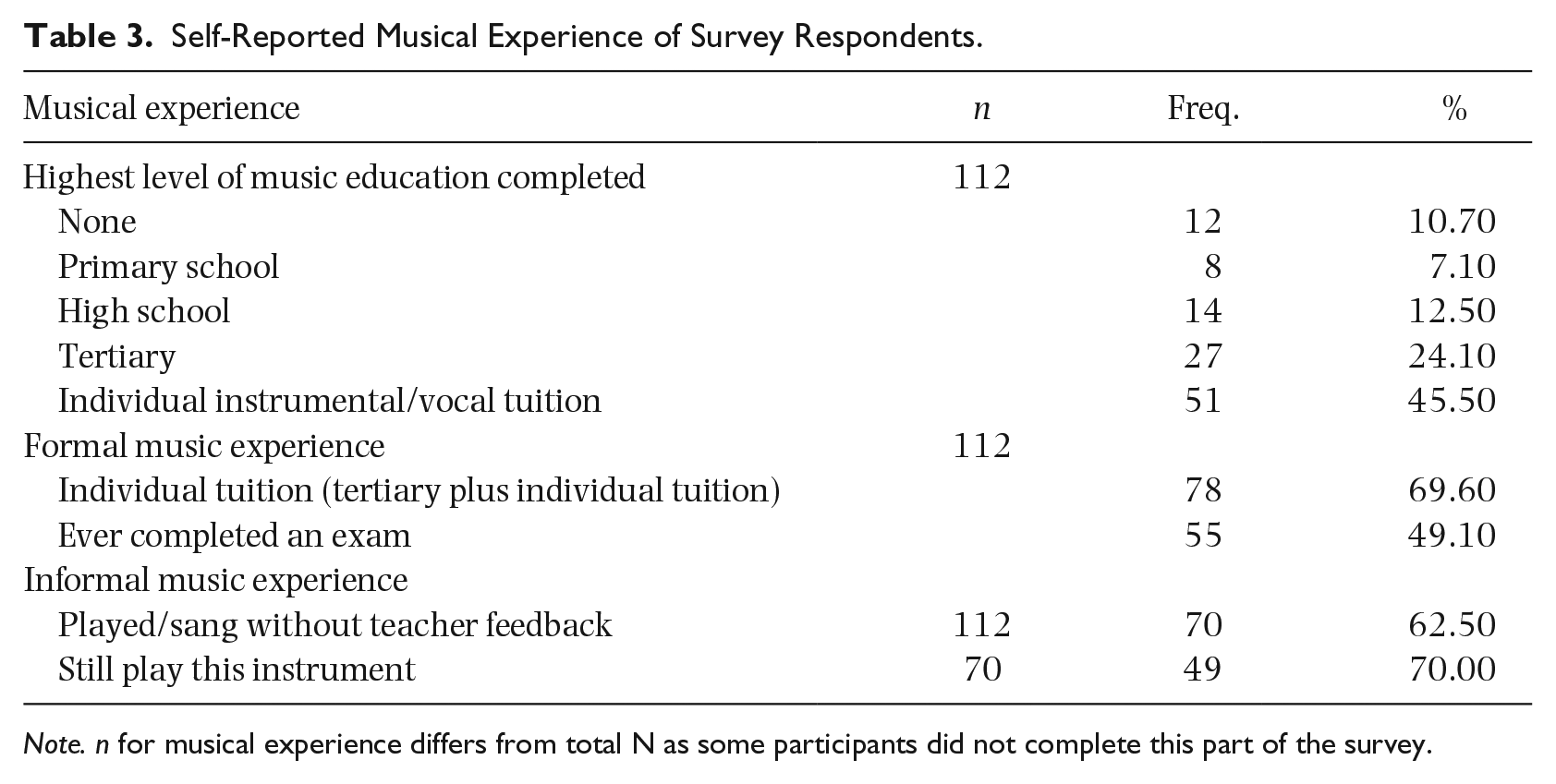
Note. n for musical experience differs from total N as some participants did not complete this part of the survey.
Relationship between musical self-identification and exposure to music education
Tests of independence revealed a significant positive relationship between identity as musical, a musician, and a performer, and exposure to the music education system (see Figure 2). A series of logistic regressions, controlling for gender and age, showed a significant positive relationship between each of the musical identities and exposure to the music education system. This indicates an association between increased years of training and exams and an increased likelihood of self-identification with the three musical identities. For every increase in score for exposure to the music education system, the likelihood of self-identifying as musical were 2.21 times higher, B = .79, p < .001, Exp(B) = 2.21. The likelihood of identifying as a musician was 2.44 times higher for every increase in exposure score, B = .89, p < .001, Exp(B) = 2.44, and the likelihood of identifying as a performer was 2.09 times higher, B = .74, p < .001, Exp(B) = 2.09.
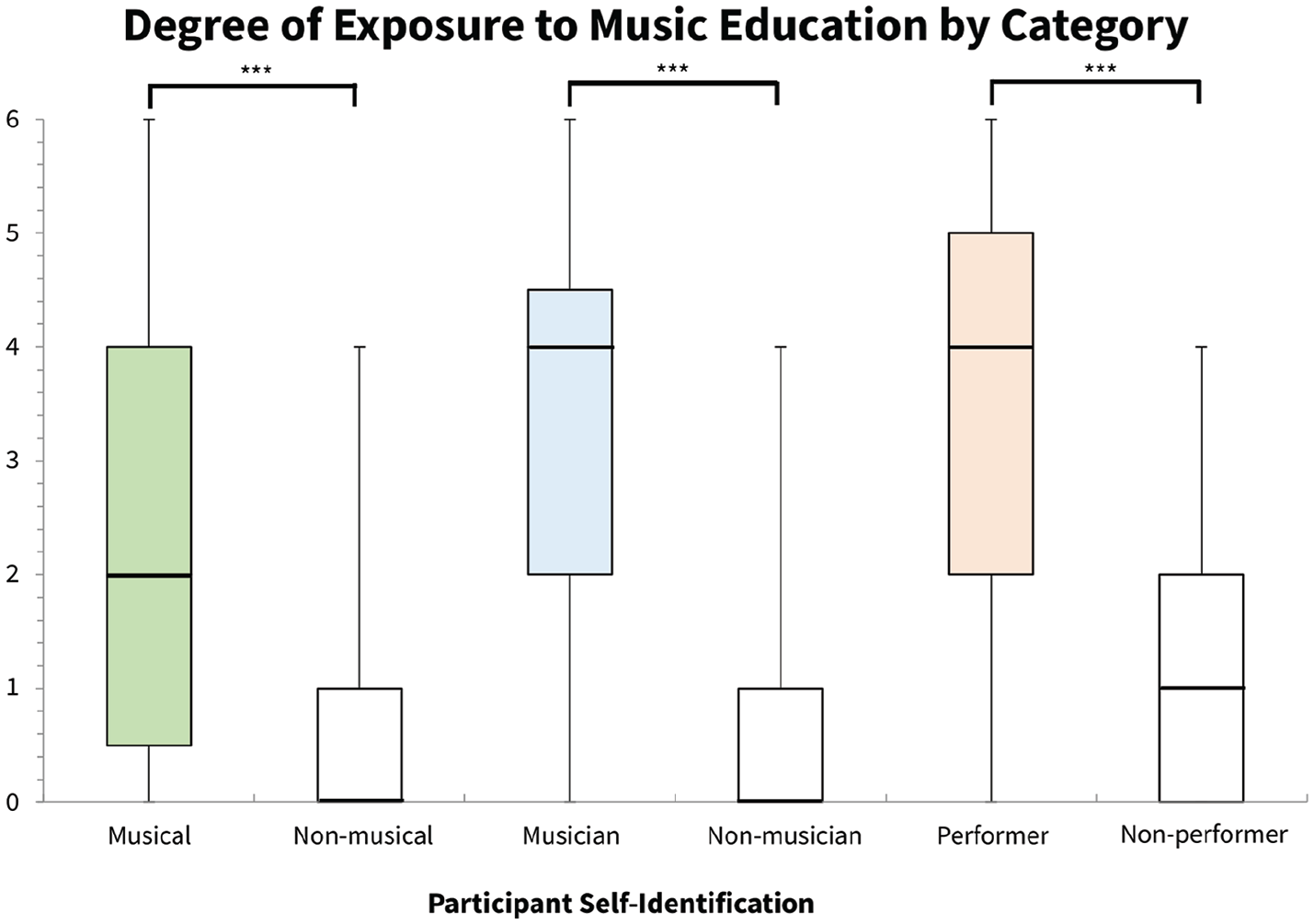
Differences in Exposure to Western Music Education Between Pairs of Musical Self-Identities.
Significant differences in definitions between pairs of musical identities
To examine any differing perceptions according to musical/musician/performer self-identification, 2 Mann–Whitney U tests were carried out on the coded text definitions as well as the systematic situational groupings (formal/informal, singing/instrument, etc.) for each multiple-choice definition question. A summary of significant differences between the pairs of identities is found below, with complete results found in the Supplementary Material.
Musical/non-musical self-identifications
Significant differences between musical and non-musical participants were found for text definitions of a “musician” and “performer”, and multiple-choice definitions for music making, performance, the importance of creativity, and the importance of encouraging others to participate. Musical participants were more likely to refer to singing in open-ended text definitions of a “musician” and an audience when defining a “musical performer” than non-musical participants. They defined “music making” more broadly than non-musical participants as they were more likely to include more references to all types of activities. Non-musical participants were more likely to value creativity in formal situations and situations with an audience than musical participants. See the Supplementary Material for detailed statistical information relating to these results.
Musician/non-musician self-identifications
Significant differences between musicians and non-musicians were found for text definitions of “being musical,” and multiple-choice definitions of music making, what requires practice, what is a performance, and what triggers anxiety. Musicians were found to value “expression” when defining “musical,” specifically in addition to already being musically skilled or trained. Like those identifying as musical, musicians held broad definitions of music making: they were more likely to include activities that were formal, included singing, when others were present, and with musical intent. While indicating overall that less musical activities could trigger anxiety, musicians were significantly less likely to indicate that singing, informal, when others are present, when there is no audience, and that group activities may induce anxiety. On the contrary, non-musicians were significantly more likely to refer to enjoyment in text definitions of “musical” and had a narrower definition of music making. They were also more likely to indicate that anxiety may be triggered by singing, informal contexts, when others are present, group music making, and activities without an audience (see Figure 3).
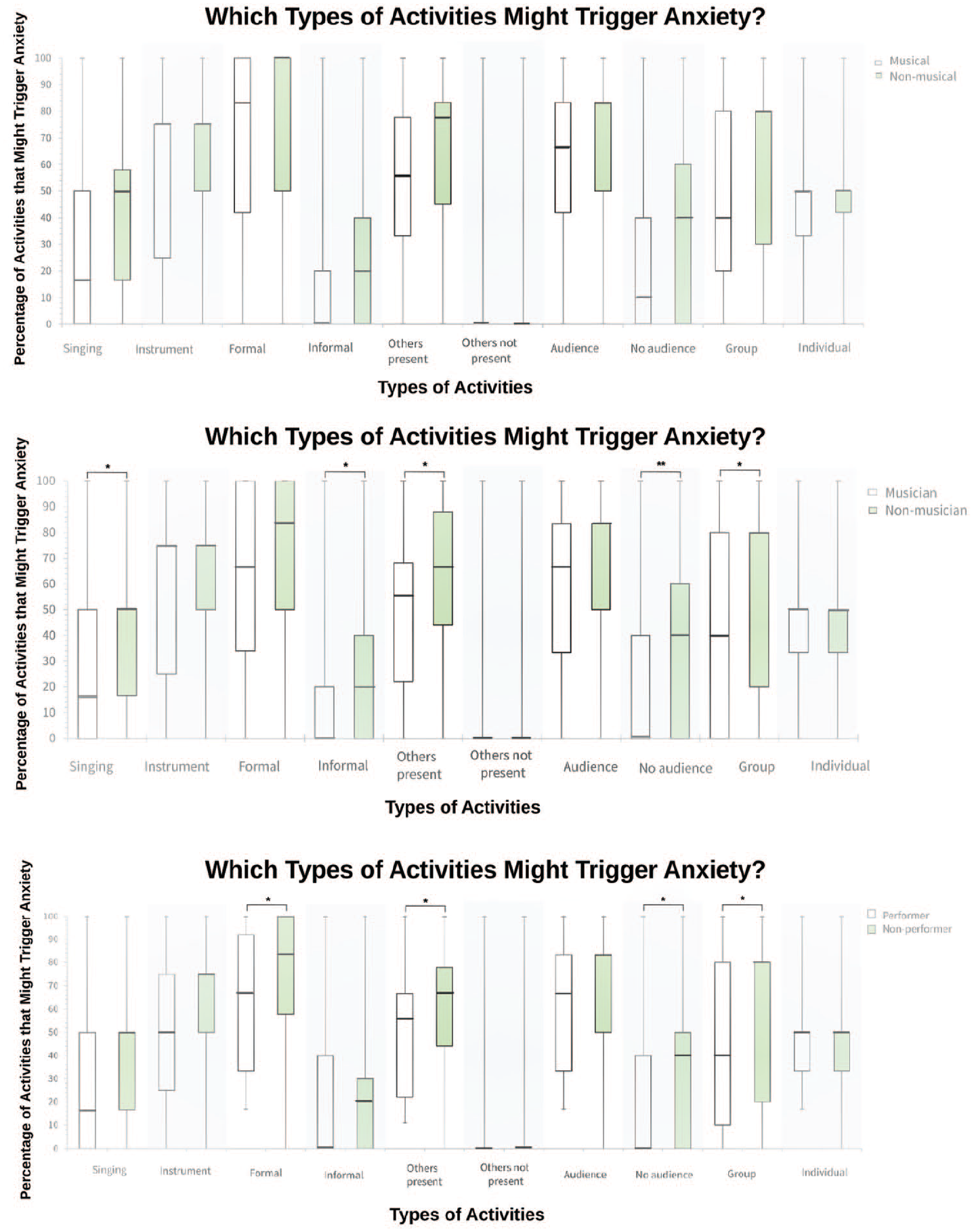
Percentage of Activities Perceived to Trigger Anxiety According to Pairs of Self-Identities.
Performer/non-performer self-identifications
Significant differences between performers and non-performers were found for text definitions of “being musical” and a “musician,” and multiple-choice definitions of music making, performance, what triggers anxiety, and contexts in which accuracy, having fun, and practice are important. Like musicians, performers were more likely to refer to “expression” as an addition to musical skill when defining “musical.” Compared with non-performers, performers held a broad definition of “music making” and were more likely to value pitch and rhythmic accuracy in all types of musical situations. Performers also indicated that more activities require practice as they were more likely to consider contexts with an audience and when others are not present require practice. Like non-musicians, non-performers were also more likely to refer to enjoyment in text definitions of “musical” and more likely to refer to an instrument in text definitions of a “musician.” Non-performers generally found more musical situations trigger anxiety, significantly differing from performers in most contexts (see Figure 3). See the Supplementary Material for detailed statistical information relating to these results.
Self-identification and willingness to sing and play an instrument
Significant differences were found between all three pairs of self-identities with regard to willingness to sing and willingness to play. A relationship between identity as musical/musician/performer and willingness to make music was found: those identifying as musical/a musician/a performer scored highly on the willingness to sing and play scores, and non-musical/non-musicians/non-performers were more likely to score at the lower end of the scales. Non-musical participants were the least willing to sing, with musicians and performers most willing to play an instrument solo in public. The views of these groups were held quite uniformly in both cases (IQR: 1), perhaps indicating that definitions of “musical” are tied to willingness to sing and definitions of a “musician” associated with playing an instrument (see Figure 4(a) and (b)).
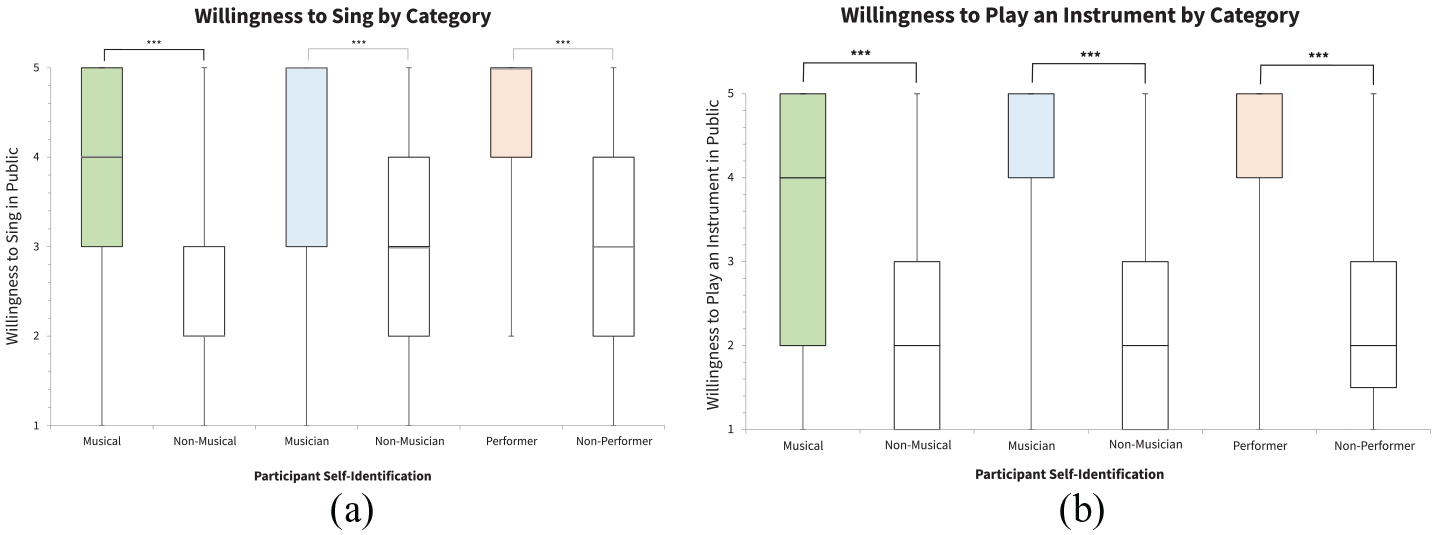
(a) Differences in willingness to sing in public. (b) Differences in willingness to play an instrument in public.
Discussion
The current exploratory study examined perceptions of concepts related to music making and performance according to musical self-identification and exposure to the dominant music education paradigm in Australian adults. It examined the contexts in which these participants would be willing to sing or play an instrument, with a focus on whether their music making can be heard. The following discussion will examine possible mechanisms underlying the findings of this study, first in terms of the relationship between music education exposure and musical self-identification, and then in terms of two profiles identified from the results. Characteristics of Profile 1 comprised those identifying with the musical identities, may be highly trained in music, value accuracy and technique, experience anxiety triggered by potential evaluation, yet are willing to make music in public situations. Characteristics of Profile 2 comprised those who do not identify with the musical identities, have minimal or no musical training, value creativity and enjoyment, experience anxiety triggered by whether someone is listening, and are less willing to make music in public situations.
Musical self-identification and exposure to Western music education
The majority of participants (75.67%) self-identified as “musical” and nearly half (42.24%) as a “musician.” This is not unexpected given that 69.60% of participants reported experience with individual music tuition, and unlikely to be representative of the Australian population. The high rate of “musical” and “musician” self-identification is likely a result of sampling bias. Despite “non-musicians” being explicitly invited to participate, it is possible some of the societal views around who has permission to make and talk about music described below impacted on potential participants’ musical self-concept, influencing their willingness to participate.
A relationship was found between the degree of exposure to the Western music education system and increased likelihood with self-identifying with music-related identities. Other authors have similarly categorized their “musician” and “non-musician” participants by music education experience (Chin & Rickard, 2010, 2012; Hamamoto et al., 2010; Madsen et al., 2019; Mullensiefen et al., 2014; F. Zhang et al., 2019), possibly indicating a similarity between the criteria used by academics and lay people to define these terms. However, it should be noted that our understanding of participants’ self-identification is limited due to the wording of the identity question we asked (e.g., “In general, do you consider yourself: a musician?; musical?; a musical performer?”). It is unclear whether participants that answered “no” to these questions just didn’t identify as “musical”, or actually self-identified as “non-musical.”
This relationship between music education exposure and musical identity, together with the association between musical self-identity and willingness to sing or play in front of others, indicates a perception that only those with musical training have “permission” to be heard making music. Further evidence for this perception was found in the greater breadth when defining “music making” for those identifying as musical/a musician/a performer: perhaps those identifying with the musical identities believe that any musical activity they carry out could be defined as “music making,” since they have permission to make music. Their definition of music making would therefore cover a broad range of activities. The fact that the majority (69.60%) of participants that chose to respond to our survey had some experience with individual music tuition also similarly emphasizes a public perception that only those with musical training have permission to legitimately comment or talk about music in the Australian context. With correlational data collected we cannot determine whether musical training strengthens musical identity or whether those that elect to participate, or continue to participate, in music study already have a strong musical identity.
Profile 1
Analyses revealed that those identifying with the musical identities valued technique and accuracy in music making. When defining “musical” in their own words, musicians and performers often referred to “expression,” specifically in addition to already developed technical musical skills, rather than as a precursor to developing the skills that identifies one as a musician or performer. This view could be driven by a characteristic of Western musical culture and education that emphasizes the development of technique before playing or singing expressively. Evidence for this view is found in the academic literature through descriptions of music education and in instrumental and vocal publications. In music education, while some believe that young children already possess all the inherent expressivity they need (Duke, 2005/2017; Meissner, 2017; Meissner et al., 2021) and can experience artistry from the beginning of musical instruction (Duke & Byo, 2011; Kaplan, 2003; McPhee, 2011), others have found that music teaching is focused on the mastery of the technical aspects before expression (Bartel & Cameron, 2004; Juslin et al., 2006; Manturzewska, 1990; Meissner et al., 2021; Mills, 2007; Persson, 2008; T. West & Rostvall, 2016; Woody, 2000). Likewise, instrumental or vocal publications tend to focus heavily on the technical production of music before expression (e.g., Fink, 1992/1999; Gat, 1954/1980; Lhevinne, 1924/1972; Matthay, 1903/1947; McLachlan, 2014; Newman, 1950/1986; Waterman, 1983/2006).
Other evidence for the importance of technique may be found in text definitions of a “musician.” Overall, these definitions frequently included mention of an instrument, suggesting that the definition of a musician for these participants is anchored in instrumental playing, rather than singing, supporting findings of Shouldice (2014). This was particularly true for non-performers, who were more likely to reference an instrument in text definitions of a musician, and those identifying as non-musical, who were less likely to refer to singing when defining a musician. This view was also reflected in the uniformity of musicians’ much greater willingness to play an instrument solo in public compared with non-musicians. This suggests a perception that vocalists are distinct from instrumentalists and not viewed as “musicians.” The academic literature lacks a clear position on whether both vocalists and instrumentalists are categorized as “musicians”: some authors distinguish between singers and instrumental musicians (e.g., Burwell, 2006), while others categorize both instrumentalists and singers as musicians (e.g., Halwani et al., 2011). However, mainstream media and popular culture support a public belief in distinguishing between singers and (instrumental) “musicians.” Singers are perceived to have less musical training with their skills attributed to a natural talent, with instrumentalists perceived to have extensive musical training in both theory and technique (DiOrio, 2019; Jane, 2019; Sutton, n.d.). Perhaps it is this emphasis on training and technique, particularly on an instrument, that defines a “musician.”
Performers also valued accuracy in all types of musical contexts. Given the association between increased exposure to the music education system and self-identification as a performer, this perception could be a result of the music education process, mediated by performance expectations. Performers are held to high levels of competence (Shoot, 2021; Chen, 2017; Dews & Williams, 1989; Herrera et al., 2021; Miksza et al., 2019; Potvin, 2021; Skoogh & Frisk, 2019; S. West, 2007), with the view that music should be perfect and mistakes are undesirable already found to be present in fourth-grade students (Shouldice, 2020). As a result, individual music lessons focus on the preparation of performance goals (Allsup & Benedict, 2008; Webster, 1993, as cited in Carey, 2010), achieved by a teacher-directed and efficient feedback process (Bartel & Cameron, 2004; Shockley, 1987, as cited in Burwell, 2019; Carey, 2010; Peters, 2004; Peggie, 2004, as cited in Pike, 2017). This perceived importance of accuracy was reinforced by performers’ views on practice: overall, more activities were considered to require practice, including those where others were not present to listen. This suggests an internalization of the importance of accuracy and culture of evaluation with performers always evaluating their own playing, even with no one to provide external evaluation. Southcott and Simmonds (2008) describe this concept in their participant as a negative inner voice, taking the form of an expert listener.
In the MPA literature, some authors have suggested that the widespread prevalence of MPA may be due to the music training process with its emphasis on accuracy (Botha, 2015; Brantigan et al., 1982; Brandfonbrener, 1986, as cited in Hargreaves & North, 1997; Havas, 1973/1980; Patston & Osborne, 2016; Rosset i Llobet & Odam, 2007; Skoogh & Frisk, 2019; Southcott & Simmonds, 2008). Likewise, there are indications that music education or teaching style may contribute to the development of perfectionism (Herrera et al., 2021; Jeong & Ryan, 2022; Patston & Osborne, 2016; Potvin, 2021), which can also be a predictor for MPA (Botha, 2015; Cupido, 2018; Diaz, 2018; Hruska, 2019; Kobori et al., 2011; Mor et al., 1995; Patston & Osborne, 2016; Stoeber & Eismann, 2007) and other psychological conditions or phobias (Hewitt et al., 2003; Ioannou et al., 2016; Jabusch et al., 2004; Kapsetaki & Easmon, 2017; Oddo-Sommerfeld et al., 2016; Stoeber et al., 2017). Some authors have suggested that perfectionism is more prevalent in musicians (Kapsetaki & Easmon, 2017; Patston & Osborne, 2016); however, it is unknown whether musicians experience perfectionism at a higher rate than the general population. Also unknown is whether those with perfectionistic tendencies are drawn to pursuing music education because of its emphasis on accuracy, are more likely to succeed in such an environment, or whether perfectionism (and MPA) may be developed through music training.
Overall, musicians and performers found fewer musical contexts to trigger anxiety than non-musicians and non-performers, respectively. Analyses indicated that anxiety triggers around music making for musicians and performers were related to who is listening, in what context, and for what purpose. Musicians and performers found contexts where others may be purposefully listening (formal, others present, audience) to trigger anxiety, but rarely found contexts where people may not be purposefully listening to the music making around them (others not present, informal, no audience) to induce anxiety. This perception of differing levels of anxiety according to context aligns with research indicating different levels of MPA between rehearsal/practice environments and recordings or performances (Abel & Larkin, 1990; Craske & Craig, 1984; Fredrikson & Gunnarsson, 1992; Guyon et al., 2020; Hamann, 1982; LeBlanc et al., 1997; Yoshie et al., 2009). One possible explanation for these results could be the emphasis on accuracy and evaluation in music performance described above, perhaps musicians and performers feel anxious about their ability to perform accurately and the potential evaluation attached to listeners in certain contexts. Finally, in line with a number of the precedent papers reviewed (Fishbein et al., 1988; Mazzarolo & Schubert, 2022; Paliaukiene et al., 2018; Sokoli et al., 2022; Wiedemann et al., 2022), our sample skewed heavily female. There is some evidence that women are more likely to respond to online surveys (Becker, 2022; Langlais et al., 2022; Slauson-Blevins & Johnson, 2016; Smith, 2008; Wu et al., 2022), and more likely to experience anxiety disorders (Pigott, 1999). However, evidence for the impact of gender on the level of MPA is mixed (Barros et al., 2022; Butkovic et al., 2022; Dempsey & Comeau, 2019), therefore we cannot be sure whether gender has impacted on our results. Future research should pursue a more balanced sample to eliminate this uncertainty.
Profile 2
The relationship between music training, musical identity, and music engagement found in this study supports findings of similar relationships between musical identity and engagement in first-year university students (Woody et al., 2021) and Australian adult non-musicians (Ruddock & Leong, 2005). Findings of the present study suggest that self-identification as musical may be related to (un)willingness to sing: non-musical participants indicated a strong lack of willingness to sing. Bodkin (2004) found a similar perception: despite behaving musically with various instruments, participants did not consider themselves “musical” due to their perceived singing ability.
The results of the present study suggest that those not identifying with the musical identities feel they lack permission to make music in public: non-musicians and non-performers considered more of each type of musical situation to trigger anxiety than musicians and performers. Non-musicians and non-performers indicated that making music while completely alone (others not present) may not trigger anxiety, but that some situations where their music making may be overheard by others (without a formal audience) may trigger anxiety (informal, others present, no audience). This could indicate that their anxiety around making music is not necessarily about who is listening, like the perceptions of musicians and performers described above, but instead whether someone is listening at all. These results provide some quantitative support for previous qualitative findings: Ruddock and Leong (2005) found that musical identity affected which musical activities were “allowed” in private and public environments, and Bodkin (2004) found musical identity to be related to musical confidence among other adults.
Further support for a perceived lack of permission to make music among those not identifying with the musical identities was found in their narrow definitions of “music making.” Perhaps those not identifying with the musical identities feel that any musical activity they can participate in (e.g., Toddler banging pots, singing “Happy Birthday” at a party, singing in the shower) must not count as “music making” as it is carried out by someone who does not identify or believe they have permission to make music (Pike, 2017). It follows that these groups of participants would hold a limited definition of what counts as “music making.” This view aligns with previous findings of a perceived need to be “good” or a professional to make music (Ruddock, 2012; Ruddock & Leong, 2005; Shouldice, 2020).
Analyses revealed that those not identifying with the musical identities valued enjoyment and creativity in music making. Non-musicians and non-performers made greater reference to the enjoyment of making music in their written definitions of “musical.” Assuming that all human beings have a natural desire to make music, perhaps these participants were expressing the enjoyment they would feel when making music themselves, but lacking the skills, opportunities, or permission to do so. They may vicariously feel the enjoyment of music making by others and long for that enjoyment themselves. Perhaps they were reminiscing about positive past musical experiences (Pitts et al., 2015). Likewise, non-musical participants placed greater emphasis on creativity in formal situations and those with an audience. While this may simply suggest a difference in definition for “creativity” (as participants were not asked to define “creativity” in this study), this could also indicate a divergence of views between performers and their audiences. This study has highlighted some differences in perception; however, further research investigating the underlying reasons for this difference is needed.
Despite the agreement that all human beings have an innate desire to make music (Blacking, 1973; Cross, 2003; Fitch, 2006; Justus & Hustler, 2005; Mithen, 2005; Peretz & Zatorre, 2003), the result of the perceived musical culture described above is an all-round negative view toward music making: the general population is afraid to make music and do not engage, and MPA is widespread in practicing musicians. The associations between music training, musical identity, and music engagement may suggest the need to extend music education across the population to increase the percentage of the population making music. However, it has long been documented that music programs are plagued with high dropout rates (Steinel, 1984 & Music Teachers National Association, 1990, as cited in Cremaschi et al., 2015; Gerelus et al., 2017; King, 2016; Ng & Hartwig, 2011; Pascoe et al., 2005) and active musical engagement rates in the Australian adult population are low (Australia Council for the Arts, 2010, 2017, 2020; S. West, 2007). Experiences of music performance anxiety are widely reported among student and professional musicians (Fernholz et al., 2019; Paliaukiene et al., 2018; Papageorgi, 2020), in some cases, even ending careers (Kenny, 2011; Lazarus & Abramovitz, 2004; Orejudo Hernández et al., 2018; Simoens et al., 2015; Topoğlu, 2014). The results of this study and contradicting evidence described above raise questions about the origin of these perceptions and their long-lasting endurance:
How do these negative views toward music making (disengagement and MPA) develop and what maintains their presence?
What is the origin of the perception that only those with music training have permission to make music?
How are these negative perceptions and permission to participate reinforced?
● To what extent does the music training process transform one’s perceptions about music making? ● To what extent does the importance of musical competence impact on overall musical engagement? ● Are those that value enjoyment and creativity in music not suited to the current music education opportunities available? ● Is music training difficult and only those who are able to complete the training should make music? ● Is there a perception that only some are creatively or musically talented and only those should make music?
Limitations and implications
There are limitations to the extent of the conclusions that can be made in this study and their generalization across the Australian population. First, the cross-sectional survey provided a “snapshot” of perceptions at a particular point in time, limiting examination on whether these views change over time or how they originate. Second, despite attempts to source participants that do not identify with the musical identities, the sample is heavily skewed toward those with musical training, possibly resulting in a non-representative sample. This is likely a result of snowball sampling and could impact on both the internal validity, due to social desirability bias, and the generalizability of the results across the Australian population. The survey was self-administered, used gender-neutral vignettes to gather data on potentially sensitive issues, and did not refer to specific instruments in multiple choice answer options to minimize the impact of social desirability bias.
Future iterations of the study could retest across a greater section of the Australian population to examine whether the perceptions hold across another sample of Australian residents at another point in time. A population could be tested multiple times at various intervals of time to examine any change in views. Repetition with samples of other Western cultures may indicate whether these views hold across other Western-influenced countries. Similarly, repetition of the study with populations from non-Western countries would help examine whether any differences in responses could be attributed to the Western music education system. Given this study focused on perceptions and behavioral intentions, future research could follow with a more objective measure of musical behavior between the musical self-identities.
This exploratory study makes a valuable contribution to the literature in suggesting an expansion of music “performance” anxiety to a more generalized music “making” anxiety, problematizing the overall negative feelings toward music making in Western populations. This study also expands the perspectives represented in debates around musical definitions and the impact of musical self-identification on personal definitions. With further repetition, this study may also provide some insight into the mechanisms underlying the musical engagement rates in Australia and other Western countries, with possible implications for education.
Conclusion
The results of this study describe the personal definitions toward music making and performance held by a sample of adults residing in Australia. While many definitions were consistent for all participants in this study, some perceptions differed according to self-identification as musical/non-musical, a musician/non-musician, and a performer/non-performer. There is a clear divergence on what is valued by those that identify with the musical identities and those that do not identify with the musical identities. Two profiles were identified: those identifying with the musical identities may be highly trained in music, value accuracy and technique, experience anxiety triggered by potential evaluation, yet are willing to make music in public situations; and those who do not identify with the musical identities have minimal or no musical training, value creativity and enjoyment, experience anxiety triggered by whether someone may be listening, and are less willing to make music in public situations. Two themes underlie these differing perceptions, a culture of continual evaluation, found formally throughout music education but also in attitudes toward music making in the general population; and granting permission to make music to only a select few, implying that only those with training or talent should make music, particularly in public situations, leaving the others afraid or unwilling to make music.
Given the extensive literature on MPA, but little around music making in the general population, this study proposes a theory that the negative attitudes found in both profiles are actually part of the same spectrum, a more general “music making” anxiety, mediated by pervasive perceptions of evaluation and granting permission to make music to a few. Those with music training feel able to make music, yet may still experience some anxiety around performing, while those not identifying with the musical identities feel the effects more strongly and refrain from any form of music making altogether. Eliminating this pervasive anxiety around music making by addressing the questions posed above may help more of the Western population fulfill their natural human desire to make music.
Supplemental Material
sj-docx-1-pom-10.1177_03057356241256958 – Supplemental material for Are we all anxious about the same thing? A comparison of lay definitions of music making and performance in the context of music participation
Supplemental material, sj-docx-1-pom-10.1177_03057356241256958 for Are we all anxious about the same thing? A comparison of lay definitions of music making and performance in the context of music participation by Katrina M Rivera, Lillian Smyth, Georgia Pike-Rowney and Susan West in Psychology of Music
Supplemental Material
sj-docx-2-pom-10.1177_03057356241256958 – Supplemental material for Are we all anxious about the same thing? A comparison of lay definitions of music making and performance in the context of music participation
Supplemental material, sj-docx-2-pom-10.1177_03057356241256958 for Are we all anxious about the same thing? A comparison of lay definitions of music making and performance in the context of music participation by Katrina M Rivera, Lillian Smyth, Georgia Pike-Rowney and Susan West in Psychology of Music
Footnotes
Acknowledgements
The authors thank the survey participants for taking the time to complete the survey and share their musical identities and beliefs. They also thank the reviewers who took the time to provide many constructive and thoughtful comments which helped to improve the quality of the paper.
Data availability
The raw data to support the findings of this study cannot be publicly shared to protect privacy and align with the consent given by participants. Anonymized survey responses may be shared upon reasonable request to the corresponding author, if appropriate.
Declaration of conflicting interests
The author(s) declared no potential conflicts of interest with respect to the research, authorship, and/or publication of this article.
Funding
The author(s) received no financial support for the research, authorship, and/or publication of this article.

Supplemental material
Supplemental material for this article is available online.
Notes
References
Supplementary Material
Please find the following supplemental material available below.
For Open Access articles published under a Creative Commons License, all supplemental material carries the same license as the article it is associated with.
For non-Open Access articles published, all supplemental material carries a non-exclusive license, and permission requests for re-use of supplemental material or any part of supplemental material shall be sent directly to the copyright owner as specified in the copyright notice associated with the article.
