




Abstract
This study examines how cultural workers in the music sector coped with the COVID-19-induced lockdown, and how coping is associated with growth in personal strength during the pandemic. We conducted an online survey 1 year into the pandemic among members of Creo, Norway’s largest trade union in the music sector. Respondents (N = 658) were to a large degree engaged in fight coping. Furthermore, seeking and giving social support, adopting new digital technologies, rotating job plans, as well as generating and maintaining professional skills were positively related to increased personal strength. We observed notable differences between occupational groups. Musicians chose skill nurturing, music educators engaged in technology adoption, and backstage workers reported flight coping to a larger degree than the other occupational groups. Surprisingly, self-employed and temporary employed workers reported a lower degree of innovation in terms of initiating and participating in new digital concepts and technology adoption compared to those with permanent employment. Finally, temporary or self-employed workers reported a higher degree of flight and freeze coping than permanently employed workers.
The cultural and creative industries were among the hardest hit by the economic consequences of the COVID-induced lockdown (Organisation for Economic Co-operation and Development [OECD], 2020). Social distancing measures meant that venue-based sectors, such as music festivals, concerts, and live music could no longer remain open. Research indicates a variety of negative effects, such as increased job insecurity after the COVID-19 pandemic among Italian musicians (Alfarone & Merlone, 2022). In our previous work, we found more job uncertainty among self-employed cultural workers in the music sector in Norway (Elstad et al., 2020). Studies in the United Kingdom found financial hardships and increased anxiety among musicians and other performing artists (Cohen & Ginsborg, 2021, 2022; Spiro et al., 2021), and a study among music teachers in the United States found significantly lower levels of overall well-being and higher levels of depression (Miksza et al., 2021).
Despite the potential negative effects of the pandemic, it was crucial for cultural workers to cope with the crisis in a constructive way (Breakwell & Jaspal, 2022; van der Merwe et al., 2022) to enable a continued career in the music sector (Cohen & Ginsborg, 2021, 2022). Previous research has documented the personal consequences of financial stress among musicians (e.g., Berg et al., 2022). The key issue, then, is not merely how these cultural workers coped with the crisis but also how they developed personally through the crisis. Growth in terms of increased personal strength is one of the potentially beneficial outcomes of a traumatic event, according to Tedeschi and Calhoun (1996). Therefore, the present article investigates different ways of coping and how these relate to increased personal strength during the pandemic.
Careers in music and other creative professions have traditionally been described as “involving chronic unemployment and underemployment” (Bridgstock et al., 2015, p. 334) with a persistent supply surplus of artists and with job insecurity and low incomes (Menger, 1999; Steiner & Schneider, 2013). In Norway, there has similarly been a surplus of artists over time (Heian et al., 2015; Mangset et al., 2016). Consequently, they were particularly vulnerable before the pandemic, and the culture sector has been one of the hardest hit sectors in Norway during the COVID-19 pandemic, with an estimated 60% decrease in gross product for art, entertainment, and other services from January to April 2020 (Holden et al., 2020, p. 17). Furthermore, in the period from the first quarter of 2020 to the third quarter of 2021 for the arts, economic development for the arts, entertainment and other services consistently lagged behind that of Norway as a whole (Stampe et al., 2021, p. 160), and 2020 brought serious disruptions for core arts industries. Notably, there were differences between the various industries. Literature and the visual arts industries experienced growth, while the music and performing arts industries suffered severe setbacks where the combined turnover in the music sector was estimated to have dropped 6% from 2020 to 2021 (Stampe et al., 2021, p. 161). Internationally, a review of the impact of the COVID-19 pandemic on the creative industries indicates several negative implications for the music industry (Khlystova et al., 2022).
As the music sector has been among the hardest hit by the pandemic, it has been essential for cultural workers in the music sector to cope with this extraordinary situation. Instead of focusing on the potential negative effects of this crisis, we wanted to study coping mechanisms that enabled cultural workers to manage their situation and thereby potentially increase their personal strength during the pandemic. Therefore, we pose the following research questions:
How did cultural workers in the music sector cope with the COVID-19-induced lockdown?
What is the relationship between different ways of coping and increased personal strength during the pandemic?
The study was conducted with members of Creo, a union that consists mainly of performing musicians, composers, conductors, music educators, cantors, and backstage workers in the music sector. We conducted a survey 1 year after the full lockdown, which in Norway began in March 2020.
Theoretical background and hypotheses
According to the transactional theory of stress, coping involves “constantly changing cognitive and behavioral efforts to manage external and/or internal demands that are appraised as taxing or exceeding the resources of a person” (Lazarus & Folkman, 1984, p. 141). Within this framework, the aim of problem-focused coping (PFC) is to directly manage the stressor, whereas emotion-focused coping (EFC) regulates emotions arising from a stressful situation. Furthermore, Skinner et al. (2003) established different levels of coping from higher-order families of coping into specific coping instances, and this classification has shown high validity in different contexts (Didymus & Fletcher, 2014; Webster et al., 2016). We focus on three main dimensions—fight, flight, and freeze—which we adapt to our particular context. In this context, fight is defined as actively trying to solve the challenges incurred by the pandemic. This dimension includes elements from the problem-solving and support seeking families of coping in Skinner’s classification (Skinner et al., 2003, p. 245). Flight implies an intended or realized escape from the present situation by considering job opportunities elsewhere and includes the escape dimension in Skinner’s classification. Freeze implies non-action, a paralysis of sorts, lingering confusion, or simply waiting the situation out. This includes elements from helplessness and isolation in Skinner’s classification.
While most research has focused on negative reactions to highly stressful events (Tedeschi & Calhoun, 2004), there is a body of research investigating the positive outcomes of a traumatic event (Helgeson et al., 2006; Park & Fenster, 2004; Riffle et al., 2020; Tedeschi et al., 2018). We build on a pervasive model of posttraumatic growth proposed by Tedeschi and Calhoun (1996, 2004). They defined posttraumatic growth as “positive psychological change experienced as a result of the struggle with highly challenging life circumstances” (Tedeschi & Calhoun, 2004). Posttraumatic growth can occur within five distinct life domains—greater appreciation of life and a changed sense of priorities; warmer, more intimate relationships with others; a greater sense of personal strength; recognition of new possibilities or paths for one’s life; and spiritual development. Because the respondents in our study were still coping with an ongoing crisis, we did not include dimensions related to cognitive and emotional processes after the trauma. Consequently, we focus on the general sense of increased personal strength of posttraumatic growth, which we suggest can occur during a crisis, as argued by Tedeschi and Calhoun (2004), for instance. At the time of data collection, the crisis had been in existence for almost a year and we can assume that growth related to coping had already taken place. While growth, as a process, presumably also continued after the COVID-related restrictions were lifted, such processes typically taper off with time. Personal strength combines the realization that severe challenges do happen in life and the experience of being able to better handle these challenges (Tedeschi and Calhoun, 2004).
Hypotheses
Fight coping occurs when the individual actively faces a challenge rather than escaping from it. In a meta-analysis of coping and posttraumatic growth, Rajandram et al. (2011) found that PFC and active coping are positively related to posttraumatic growth (Karanci & Erkam, 2007; Scrignaro et al., 2011). In addition, during the COVID-19 pandemic in 2020, active ways of coping in terms of support seeking and personal hygiene practices were positive predictors of benefit-finding among individuals in China (Miao et al., 2021). Thus, we propose the following hypothesis:
Hypothesis 1: During the COVID-19 crisis, coping in terms of fight is positively related to increased personal strength.
EFC attempts to deal with the emotional discomfort caused by stress, and often involves responding described in terms of escape and avoidance responses (Biggs et al., 2017; Dewe & Cooper, 2007), which are subsumed into flight and freeze in this study. EFC has generally been associated with negative outcomes, such as poorer psychological well-being and posttraumatic stress symptoms in the long term (LeBlanc et al., 2008). Such coping involves a certain disengagement from the stressful situation and tends to lead people to ignore direct problem-solving options (Amiot et al., 2006; Carver & Connor-Smith, 2010) and consequently reduce the potential for posttraumatic growth (Rajandram et al., 2011). Hence, we propose the following hypothesis:
Hypothesis 2: During the COVID-19 crisis, coping in terms of flight and freeze is negatively related to increased personal strength.
Method
Study settings and participants
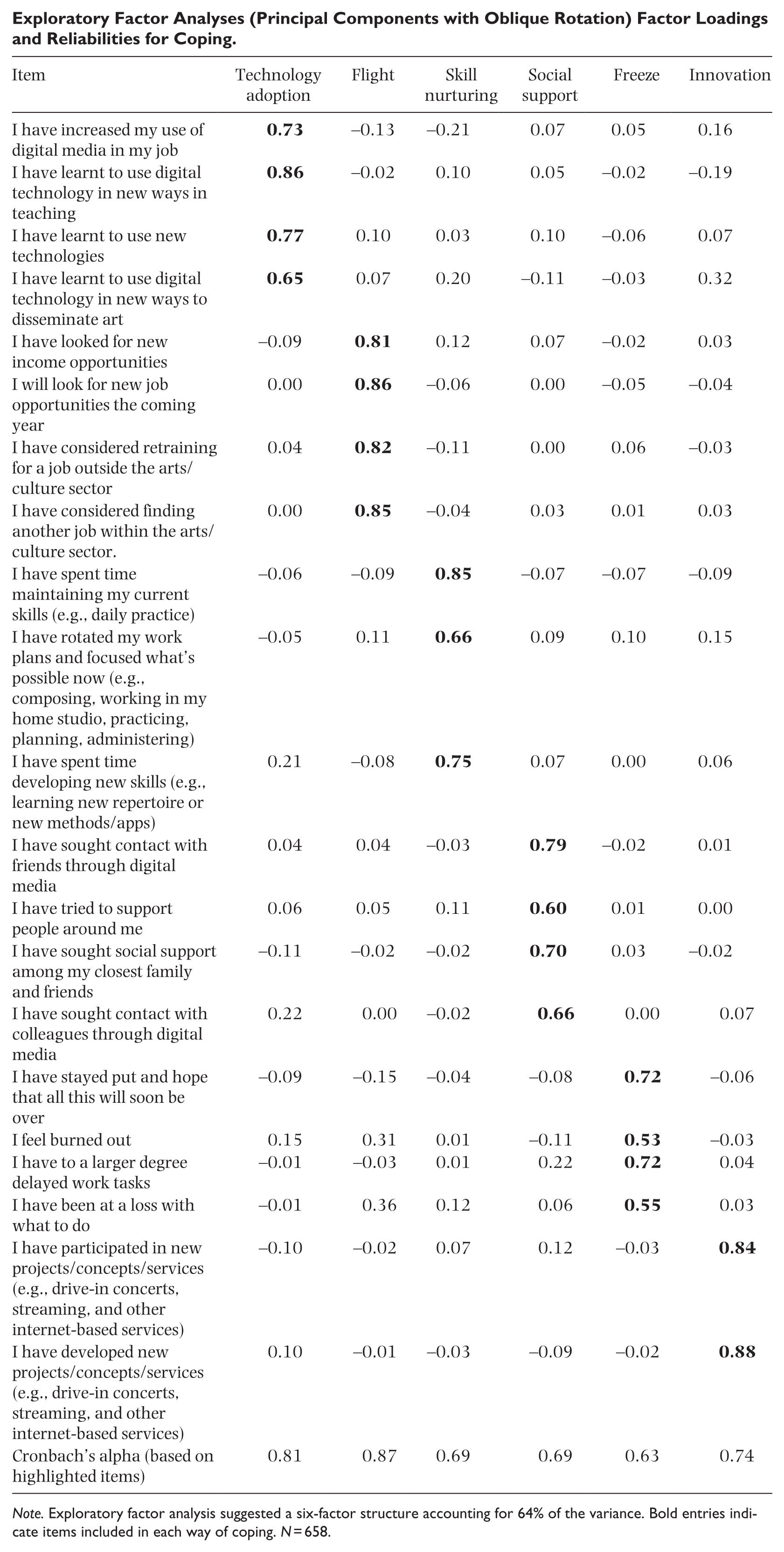
We administered two online surveys to cultural workers 10 months apart. In the initial survey, we collected data in April 2020, which was 1 month after the full lockdown in Norway. Through this survey, we developed a new measurement instrument for how cultural workers coped reflecting six ways of coping (Elstad et al., 2022). To study coping and increased personal strength a year after the full lockdown, we collected data in a second survey from 19 January to 14 February 2021. Regarding measurement of coping, we used the instrument from the first survey with minor changes (see Appendix 1 with list of items and the measurement section for more details).
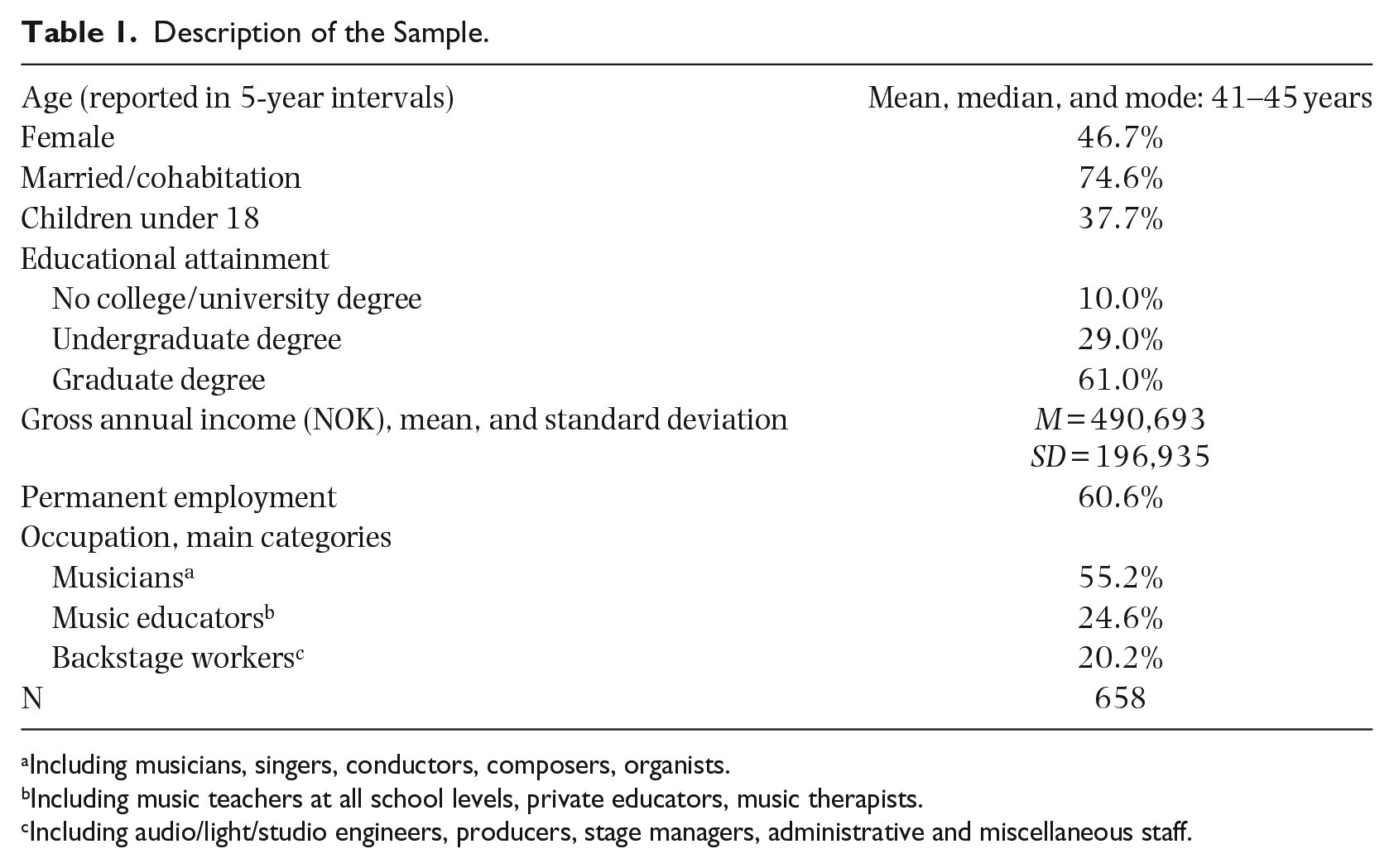
Informants were members of Creo—Norway’s largest trade union for performing artists. They worked in a variety of different occupations, such as musicians, singers, conductors, composers, music educators, music therapists, cantors, audio/light/studio engineers, producers, and administrative staff. The internet-based survey system “Nettskjema” provided by the University of Oslo was used to collect the data, ensuring the processing of anonymous data. We obtained 658 usable responses to the questionnaire. Table 1 presents a description of the research sample in the study.
Description of the Sample.
Including musicians, singers, conductors, composers, organists.
Including music teachers at all school levels, private educators, music therapists.
Including audio/light/studio engineers, producers, stage managers, administrative and miscellaneous staff.
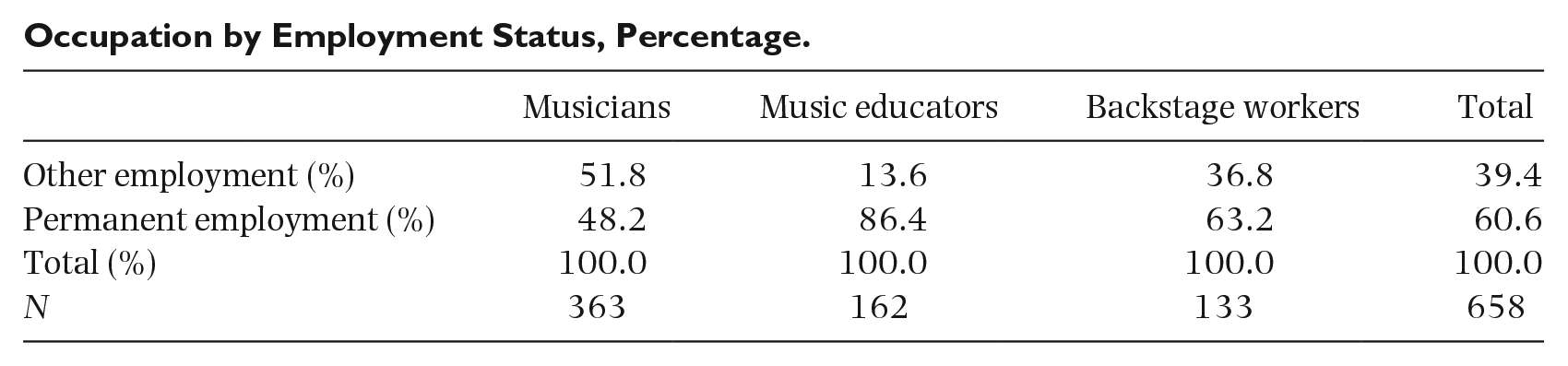
A majority of participants had a graduate degree (61%), and the mean gross annual income was 490,693 NOK (approximately 49,000 EUR). The mean and median for age were in the interval 41–45 years and 47% were female. Furthermore, 61% had permanent employment. When comparing the characteristics of all members of Creo recorded in their membership database, we found only minor differences regarding occupational groups. The order of the largest occupational groups in Creo is similar to the research sample: (1) musicians, including performing musicians, singers, composers, conductors, and cantors (2) music educators, and (3) backstage workers, including technical and administrative staff. Permanent employment is most common among music educators (more than 86%) and least among performers (48%).
Measures
Coping
Since the COVID-induced lockdown was a novel situation, we could not rely on existing and well-tested batteries of items designed specifically for the performing arts sector. Therefore, we developed a multi-item measurement instrument specifically designed to capture the uniqueness of coping among cultural workers affected by the lockdown. We decided a priori that the items should reflect the three higher-order coping families of fight, flight, and freeze. We generated a pool of coping instances by reviewing nationwide newspapers and the Kulturplot journal covering the comprehensive cultural sector in Norway. In addition, to ensure content relevance and representativeness of survey items (Flake et al., 2017), we discussed the measurement instrument with Creo leaders, who were well-informed about the members and their situations and critically examined the proposed items.
Survey respondents were asked the following overall question: “We have listed several possible instances of dealing with the coronavirus situation. To what degree have you [. . . .]?” Examples of subsequent items are “increased the use of digital media in my job” and “been at a loss concerning what to do.” Survey items were presented in no particular order, without any grouping according to a priori concepts and coping families were mixed. The answers were captured on a 5-point Likert-type scale from 1 (do not at all agree) to 5 (fully agree).
An exploratory factor analysis of coping instances in the initial survey in 2020 retained six factors with eigenvalues above 1 (Elstad et al., 2022). In the second survey in 2021, we used the same instrument with only minor revisions (Appendix 1 lists the items in conjunction with factor analyses). We removed and added some items from the instrument to account for changes during the extended lockdown in 2020. For example, we added the items “I have learnt to use digital technology in new ways in teaching” and “I have learnt to use digital technology in new ways to disseminate art,” intended to capture their experience with using digital technology during the first year of the COVID-19 pandemic. Consistent with results from the first survey (2020), the exploratory factor analysis in the second survey (2021) extracted six factors with eigenvalues above 1. Instances of coping as captured in survey items in both surveys combine into six ways of coping. Thus, although a couple of items were changed, the factor structure was consistent across the two surveys. The content relevance of survey items was further supported by published results from the first survey, where we reported that flight and freeze was negatively related to job satisfaction, whereas social support and skill nurturing had a positive relation to satisfaction (Elstad et al., 2022). These results from the first survey also showed that the self-employed responded with flight or freeze to a greater degree than other coping strategies, which is a plausible response given their precarious situation.
The first four ways of coping reflect the fight dimension in terms of actively trying to solve the challenges induced by COVID-19. Specifically, innovation (Cronbach’s alpha for internal consistency α = .74) includes developing and participating in new concepts and delivery, such as streaming or drive-in concerts. Skill nurturing (α = .69) encompasses rotation of job plans and focusing on what is possible to do during the pandemic, such as composing, working in a home studio, as well as maintaining and developing musical skills. Technology adoption (α = .81) involves learning new digital technologies and expanded use of digital media in the job to disseminate or teach performing art during the pandemic. Social support (α = .69) means actively seeking or providing social support with colleagues, friends, or family to cope with the situation. Flight (α = .87) implies an intended or realized escape from the present situation by pursuing job opportunities elsewhere, either within or outside the culture sector. Finally, freeze (α = .63) includes non-action, a paralysis of sorts, lingering confusion, or simply waiting out the situation.
Posttraumatic growth-personal strength
We focused on the personal strength (PTG-PS) dimension in the Posttraumatic Growth Inventory (Taku et al., 2008; Tedeschi & Calhoun, 1996). We measured increased personal strength by adjusting the overall framing of this particular context to capture change during the pandemic. Our measurement instrument consisted of four items, including: “Based on your experience with the coronavirus so far, to what degree did you experience the following . . .?”. The items were similar to those in the Posttraumatic Growth Inventory translated into Norwegian. Examples of items are as follows: “I know better I can handle difficulties,” and “I discovered that I’m stronger than I thought I was”. Respondents rated each item using a 5-point Likert-type scale, with values ranging from 1 (to a very little degree) to 5 (to a very great degree). In the present study, Cronbach’s alpha for PTG-PS was satisfactory (α = .81).
Data analysis
To test the hypotheses, we conducted regression analyses of increased personal strength in two steps. The first step included control variables only and the second step included six ways of coping as independent variables. Meta-analysis of posttraumatic growth shows that gender, age, marital status, income, and education are important correlates (Helgeson et al., 2006). Specifically, for the cultural sector, having permanent employment or not is a key issue in explaining working conditions, an issue that varies with occupational sub-groups. Therefore, we also included occupational sub-group as well as work arrangements as control variables. To preserve anonymity, we measured age in 5-year intervals rather than the exact year of birth.
Results
Descriptive and correlation statistics
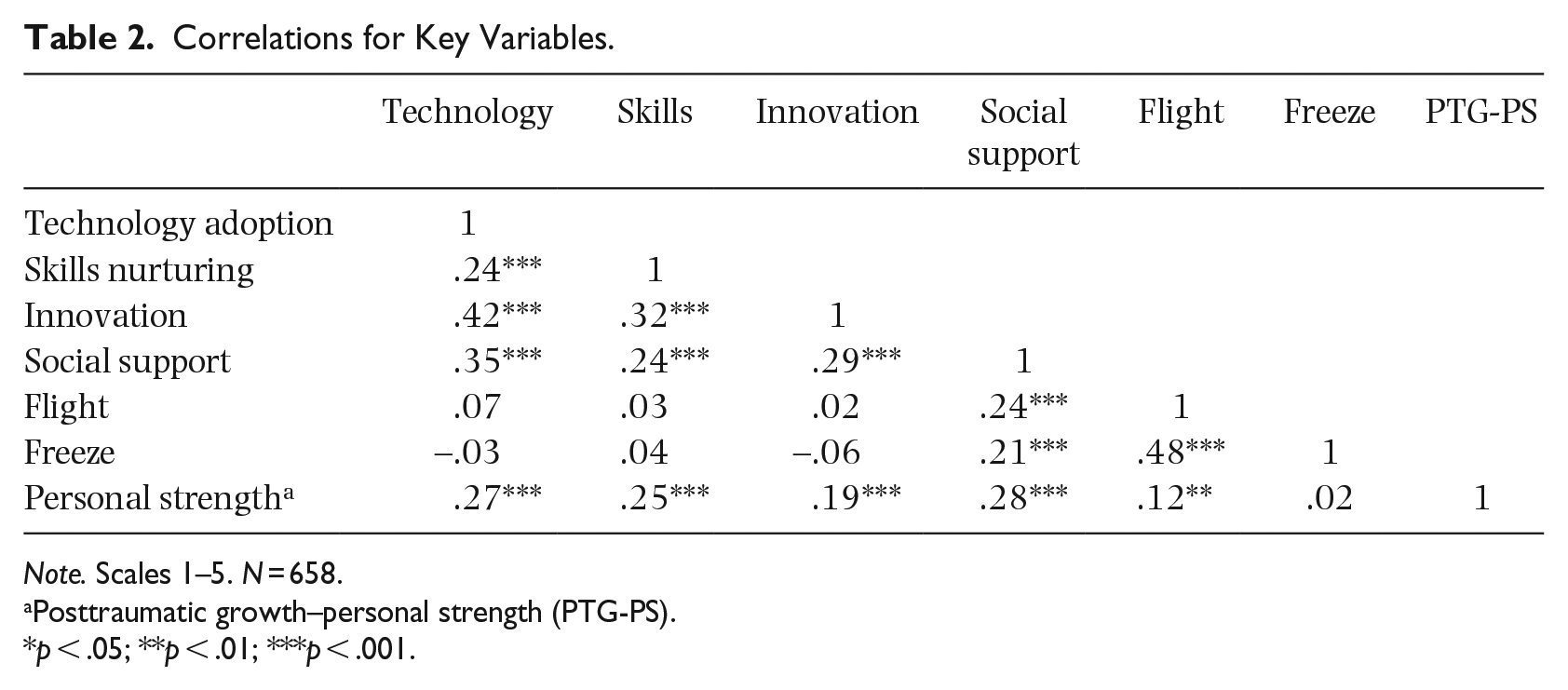
Bivariate correlations for key variables in the study are listed in Table 2 (means and standard deviations in Table 3).
Correlations for Key Variables.
Note. Scales 1–5. N = 658.
Posttraumatic growth–personal strength (PTG-PS).
p < .05; **p < .01; ***p < .001.
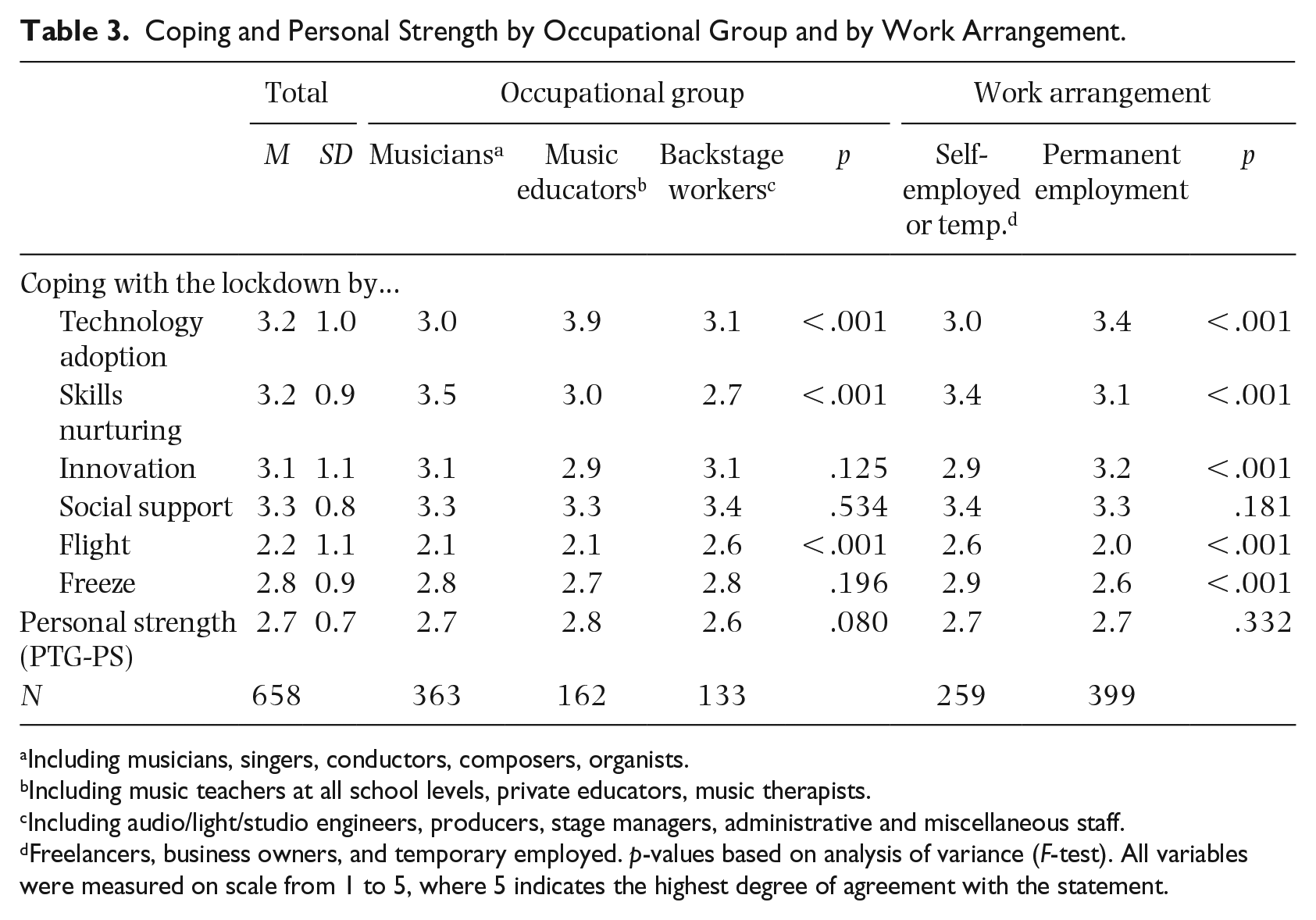
Coping and Personal Strength by Occupational Group and by Work Arrangement.
Including musicians, singers, conductors, composers, organists.
Including music teachers at all school levels, private educators, music therapists.
Including audio/light/studio engineers, producers, stage managers, administrative and miscellaneous staff.
Freelancers, business owners, and temporary employed. p-values based on analysis of variance (F-test). All variables were measured on scale from 1 to 5, where 5 indicates the highest degree of agreement with the statement.
All fight variables were positively correlated with each other, with the highest correlation between innovation and technology adoption (r = .42, p < .001). Also, flight and freeze were strongly correlated with each other (r = .48, p < .001). At the same time, flight and freeze were not correlated with technology adoption, innovation, or skill nurturing. The lowest correlations in absolute values were between flight and innovation (r = .02, n.s.), and between freeze and personal strength (r = .02, n.s.).
Table 3 shows that the most prominent coping family was fight, which includes seeking and giving social support (M = 3.31; scale = 1–5), technology adoption (M = 3.23), skill nurturing (M = 3.22), and innovation (M = 3.06). In contrast, flight and freeze were reported to a lesser degree with means of 2.22 and 2.75, respectively.
The prevalence of ways of coping varied between occupational groups. Musicians reported skill nurturing as a dominant coping strategy. Music educators mostly chose technology adoption, whereas backstage workers reported flight coping more often than the other occupational groups. Examining the differences between cultural workers with permanent employment and those that were self-employed/temporary employed, permanently employed workers to a larger degree chose technology adoption and innovation. In contrast, self-employed/temporary employed workers reported more skill nurturing, flight, and freeze coping compared to those with permanent employment. There were no significant differences in increased personal strength for occupational groups or work arrangements.
Multiple regression testing
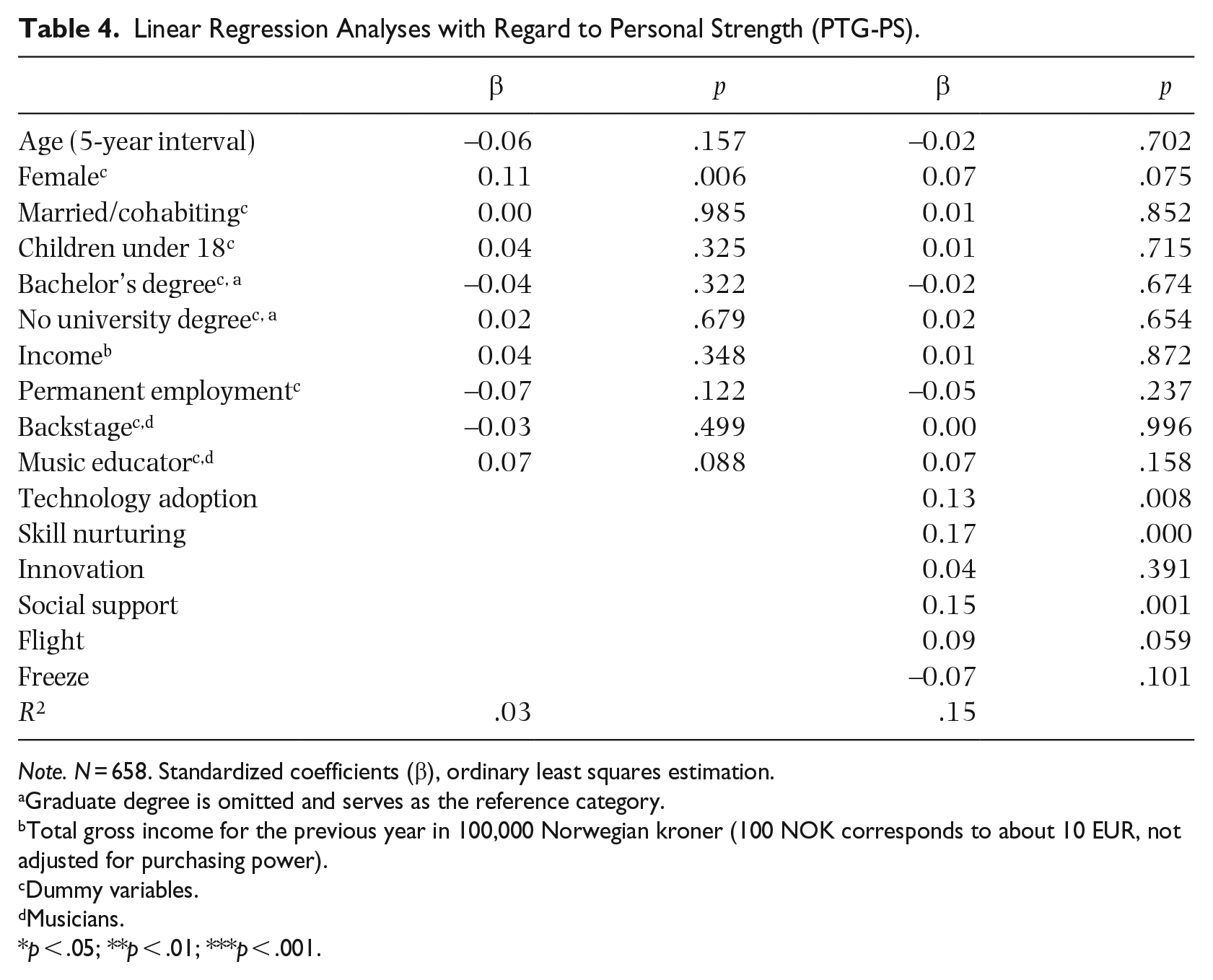
Results of the regression analyses are reported in Table 4 where the first step includes control variables only.
Linear Regression Analyses with Regard to Personal Strength (PTG-PS).
Note. N = 658. Standardized coefficients (β), ordinary least squares estimation.
Graduate degree is omitted and serves as the reference category.
Total gross income for the previous year in 100,000 Norwegian kroner (100 NOK corresponds to about 10 EUR, not adjusted for purchasing power).
Dummy variables.
Musicians.
p < .05; **p < .01; ***p < .001.
Consistent with Hypothesis 1, we found that three ways of coping belonging to the fight family were positively related to increased personal strength (PTG-PS): technology adoption (β = .13, p < .01), skill nurturing (β = .17, p < .001), and giving and receiving social support (β = .15, p < .01). On the other hand, innovation was not significantly related to PTG-PS. Thus, except for innovation Hypothesis 1 was supported. We found no significant relationship between flight and PTG-PS or between freeze and PTG-PS; accordingly, Hypothesis 2 was not supported.
Discussion
Coping in the music sector
In our study, fight was the most prevalent coping among the cultural workers in the sample. When the lockdown hit the cultural sector, concert and rehearsal venues were shut down. Therefore, musicians, music educators and backstage workers were confined to home studios, offices, and spaces. This meant less physical contact with other people and many of our respondents actively sought and gave support to colleagues and friends. In parallel, the lockdown spurred a substantial digitalization process to sustain communication (Khlystova et al., 2022). Our findings are consistent with a study of the effects of the COVID-19 lockdown among performing arts professionals in the United Kingdom, where respondents reported a 95% decrease in in-person social meetings and an 88% increase in social meetings online (Spiro et al., 2021). Consequently, many of our respondents had to acquire new skills and adopt new technologies.
Flight and freeze were reported to a lesser degree, with flight having the lowest mean score. Cultural workers are highly motivated individuals with a strong occupational commitment wanting to pursue a career in the creative and cultural sector (Bennett & Bridgstock, 2015; Hennekam & Bennett, 2016). Consequently, it is plausible that they were more likely to choose to fight rather than flee when facing the lockdown.
Regarding occupational groups, the majority of music educators were permanently employed (86%) in schools and universities (see Appendix 2) and most likely had better access to new video platforms and support from colleagues to implement digital solutions in their teaching practice (technology adoption). Backstage workers, on the other hand, reported a larger degree of flight coping. Their work is primarily connected to concerts and arrangements that were completely shut down for a long period. Hence, backstage workers had fewer options than musicians who could work with tasks other than performing live concerts, such as composing, rehearsing, and learning new repertoire (skill nurturing).
We found striking differences between work arrangements, where employed cultural workers reported more technology adoption and innovation, and temporary employed and the self-employed reported more skill nurturing, flight, or freeze coping. A possible explanation of these findings is a resource perspective with differences in available financial and human resources at hand. Our initial study of the same sample at the outbreak of the pandemic showed significantly lower income level for self-employed workers (Elstad et al., 2020). Furthermore, a study of the impact of COVID-19 on freelance orchestral musicians in the United Kingdom showed that “How to make money” was a dominant theme among the respondents (Cohen & Ginsborg, 2022). Learning new technologies and developing new concepts that rely on extensive digitization as the pandemic unfolded probably required financial investment in new equipment, as well as time and space for knowledge generation and transfer with colleagues. In this respect, the employed may have had an advantage whereas the self-employed were probably forced to attend to more immediate financial needs. In addition, we identified a possible lock-in effect where temporary and self-employed workers reported more freeze coping in tandem with internal orientation on skill nurturing. They were less externally oriented toward innovation. Self-employed entrepreneurs have, in many respects, been considered a driving force for creativity and innovation in society (Plotnikova et al., 2016). In contrast, our findings underline the importance of access to resources for creativity (Klamer & Petrova, 2007) and that permanent employment may offer financial resources as well as potential for innovation through cooperation and knowledge creation with colleagues in an organizational context (Nonaka & Takeuchi, 1995).
Coping and increased personal strength
We found that even though the COVID-19 pandemic has been a severe crisis, it has included potential positive outcomes. Four of 10 respondents reported that they had experienced some or more increased personal strength (PTG-PS). These results correspond with a qualitative study of freelance orchestral musicians in the United Kingdom, which found potential increased personal strength during the first lockdown among eight of 21 participants (Cohen & Ginsborg, 2022)., In support of our hypothesis, fight was overall positively related to PTG-PS. Thus, it seemed that job rotation and skills maintenance, expanded use of digital media and learning new technologies, as well as actively seeking and giving social support, increased the cultural workers’ sense of personal strength during the pandemic in the music sector. This is consistent with research indicating that PFC predicted PTG (Karanci & Erkam, 2007; Rajandram et al., 2011; Scrignaro et al., 2011) and that individuals who actively made sense of a traumatic event by searching for resolution reported higher PTG (Triplett et al., 2012).
Notably, innovation was positively but not significantly related to PTG-PS. Developing and participating in new products and concepts may be a double-edged sword. The cultural worker may have experienced growth through doing novel tasks, such as playing or arranging digital concerts for the first time with audiences present. Previous research indicates that music performance anxiety can be a challenge among many musicians (Coşkun-Şentürk & Çırakoğlu, 2018), and Spiro et al.’s (2021) study of performing musicians during the first lockdown in the United Kingdom showed that respondents reported anxiety as a challenge. Thus, respondents in our study could have been exposed to learning challenges, such as processes of trial and error, the possibility of failure (Colquitt et al., 2000; Wilson & Dobni, 2020), and the feeling of own shortcomings in front of an audience. These challenges may have eroded the positive consequences of innovation in terms of experienced personal growth.
The relationships among flight, freeze, and increased personal strength were not significant. These findings are somewhat unexpected given earlier research that showed that escape and avoidance coping tend to lead people to ignore direct problem-solving options (Amiot et al., 2006; Carver & Connor-Smith, 2010), and thereby a lesser potential for increased personal strength. Therefore, there is a need for more research to better explain these findings.
Limitations
We have studied the personal strength dimension of posttraumatic growth (PTG), which is particularly relevant when coping with an ongoing crisis. However, PTG includes additional dimensions, such as the recognition of new possibilities for one’s life and spiritual development. For these aspects of PTG processes, the individual needs time to struggle with the reality after the trauma (Tedeschi & Calhoun, 2004). When we conducted our survey, COVID-19 was still an ongoing crisis. Consequently, studies conducted when the COVID-19 pandemic is well behind us and when respondents have had more time to process their experiences after the pandemic are needed to understand other aspects of posttraumatic growth.
Implications
The prevalence of innovative ways of coping and adopting new technologies among permanent cultural workers in the music sector indicates the capability and motivation to acquire new skills and try out new solutions. We do not know whether this is mainly due to this exceptional situation or will persist after COVID-19. Many employees seemed to experience a major competence shift when it came to using digital technology. Research indicates that the cultural and creative industries were the first to be heavily affected and challenged by changes brought about by digital technologies (Khlystova et al., 2022; Salvador & Benghozi, 2021). Therefore, managers should enable employees in the music sector to continue the process of acquiring new technologies and supporting the digitization process in the cultural sector after COVID-19.
In addition, policymakers should be aware of how temporary and self-employed workers reported a higher level of intent to leave the cultural sector, which threatens future capacity and competence. The music sector depends heavily on workers who are on short-term contracts in overall cultural production. Therefore, policymakers should consider this potential loss of competence and provide ongoing compensation schemes as long as the COVID-19 affects the music sector. There may also be a need for financial support for a period after the pandemic due to the lack of economic buffers in the first place for this precarious segment of the workforce.
Conclusion
The present study has identified how different ways of coping matter in terms of increased personal strength during the first year of the COVID-19 crisis. While the music sector suffered severely from the lockdown, cultural workers largely chose active ways of coping and many reported increased personal strength during the crisis. Our results indicate the benefits of struggling with crisis rather than escaping or avoiding it. We observed notable differences within our research sample. Temporary or self-employed workers reported less technology adoption and innovation and more flight or freeze coping than employed workers. We also find differences between those working frontstage, backstage, or as educators within the music sector: musicians preferred skill nurturing, music educators engaged in technology adoption, and backstage workers reported a higher degree of flight coping than the other occupational groups. Further research is needed, especially among those who reported freeze and flight coping, and whether this implies that they might be leaving the music sector with a potential loss of competence and resources.
Footnotes
Appendix 1
Exploratory Factor Analyses (Principal Components with Oblique Rotation) Factor Loadings and Reliabilities for Coping.
| Item | Technology adoption | Flight | Skill nurturing | Social support | Freeze | Innovation |
|---|---|---|---|---|---|---|
| I have increased my use of digital media in my job |
|
−0.13 | −0.21 | 0.07 | 0.05 | 0.16 |
| I have learnt to use digital technology in new ways in teaching |
|
−0.02 | 0.10 | 0.05 | −0.02 | −0.19 |
| I have learnt to use new technologies |
|
0.10 | 0.03 | 0.10 | −0.06 | 0.07 |
| I have learnt to use digital technology in new ways to disseminate art |
|
0.07 | 0.20 | −0.11 | −0.03 | 0.32 |
| I have looked for new income opportunities | −0.09 |
|
0.12 | 0.07 | −0.02 | 0.03 |
| I will look for new job opportunities the coming year | 0.00 |
|
−0.06 | 0.00 | −0.05 | −0.04 |
| I have considered retraining for a job outside the arts/culture sector | 0.04 |
|
−0.11 | 0.00 | 0.06 | −0.03 |
| I have considered finding another job within the arts/culture sector. | 0.00 |
|
−0.04 | 0.03 | 0.01 | 0.03 |
| I have spent time maintaining my current skills (e.g., daily practice) | −0.06 | −0.09 |
|
−0.07 | −0.07 | −0.09 |
| I have rotated my work plans and focused what’s possible now (e.g., composing, working in my home studio, practicing, planning, administering) | −0.05 | 0.11 |
|
0.09 | 0.10 | 0.15 |
| I have spent time developing new skills (e.g., learning new repertoire or new methods/apps) | 0.21 | −0.08 |
|
0.07 | 0.00 | 0.06 |
| I have sought contact with friends through digital media | 0.04 | 0.04 | −0.03 |
|
−0.02 | 0.01 |
| I have tried to support people around me | 0.06 | 0.05 | 0.11 |
|
0.01 | 0.00 |
| I have sought social support among my closest family and friends | −0.11 | −0.02 | −0.02 |
|
0.03 | −0.02 |
| I have sought contact with colleagues through digital media | 0.22 | 0.00 | −0.02 |
|
0.00 | 0.07 |
| I have stayed put and hope that all this will soon be over | −0.09 | −0.15 | −0.04 | −0.08 |
|
−0.06 |
| I feel burned out | 0.15 | 0.31 | 0.01 | −0.11 |
|
−0.03 |
| I have to a larger degree delayed work tasks | −0.01 | −0.03 | 0.01 | 0.22 |
|
0.04 |
| I have been at a loss with what to do | −0.01 | 0.36 | 0.12 | 0.06 |
|
0.03 |
| I have participated in new projects/concepts/services (e.g., drive-in concerts, streaming, and other internet-based services) | −0.10 | −0.02 | 0.07 | 0.12 | −0.03 |
|
| I have developed new projects/concepts/services (e.g., drive-in concerts, streaming, and other internet-based services) | 0.10 | −0.01 | −0.03 | −0.09 | −0.02 |
|
| Cronbach’s alpha (based on highlighted items) | 0.81 | 0.87 | 0.69 | 0.69 | 0.63 | 0.74 |
Note. Exploratory factor analysis suggested a six-factor structure accounting for 64% of the variance. Bold entries indicate items included in each way of coping. N = 658.
Appendix 2
Occupation by Employment Status, Percentage.
| Musicians | Music educators | Backstage workers | Total | |
|---|---|---|---|---|
| Other employment (%) | 51.8 | 13.6 | 36.8 | 39.4 |
| Permanent employment (%) | 48.2 | 86.4 | 63.2 | 60.6 |
| Total (%) | 100.0 | 100.0 | 100.0 | 100.0 |
| N | 363 | 162 | 133 | 658 |
Acknowledgements
The authors would like to thank the Creo organization for cooperating in the collection of data in the project.
Declaration of conflicting interests
The author(s) declared no potential conflicts of interest with respect to the research, authorship, and/or publication of this article.
Funding
The author(s) received no financial support for the research, authorship, and/or publication of this article.
