




Abstract
The coronavirus disease 2019 (COVID-19) pandemic has caused heightened mental distress globally. The purpose of this systematic review is to investigate the impact of music engagement on stress and anxiety in adults during COVID-19. Thirteen articles were included, encompassing 9,893 adults and reporting on seven forms of music engagement: music listening, singing, playing an instrument, watching music videos or virtual performances, dancing to music, composing, and externally-facilitated music interventions. The majority of articles concluded a beneficial impact of music on stress and anxiety among adults during the COVID-19 pandemic. Of the seven studies that investigated stress, four (57.1%) reported that music had a positive impact on stress and, of the nine studies that investigated anxiety, six (66.7%) reported a positive impact on anxiety. A higher proportion of externally-facilitated music studies reported reductions in stress and anxiety compared to studies with participant-facilitated music interventions. Our systematic review demonstrates the potential feasibility of music to improve mental health outcomes during times of heightened psychological distress. However, given the limited quality of included articles and the high proportion of observational studies, further research is required to better elucidate the effect of music on stress and anxiety among adults during the COVID-19 pandemic.
Background and purpose
Music can be found in daily life as a social and cultural activity tied to the values, norms, and identities of each unique society (Granot et al., 2021). Cross-cultural research has revealed that humans have a predisposition for music, regardless of their musical background or level of expertise (Honing, 2014; Morley, 2013; Trehub, 2003). The question of why humans make music has been explored in the literature (Savage et al., 2021). An emerging theory hypothesizes that the human predisposition for music stems from its facilitation of social bonding (Savage et al., 2021). In the clinical setting, the use of music has been recognized as a complementary therapy that assists patients in achieving health outcomes (Corbijn van Willenswaard et al., 2017; de Witte et al., 2020; Miranda, 2019; Silverman, 2021; Thoma et al., 2013; Umbrello et al., 2019). Music interventions have been shown to reduce stress, anxiety, and pain (Corbijn van Willenswaard et al., 2017; de Witte et al., 2020; Umbrello et al., 2019), in addition to being used for emotional modulation (Miranda, 2019). However, there may be adverse effects from employing music as a coping strategy if used maladaptively. Music engagement, for instance, may augment social isolation and exacerbate negative mood through avoidance and pessimistic rumination (Garrido et al., 2017; McFerran & Saarikallio, 2014; Miranda & Claes, 2009).
Historically, music has played a role in supporting well-being through mood regulation and social cohesion during previous pandemics (Chiu, 2020). In December 2019, the first cases of coronavirus disease 2019 (COVID-19) were declared in Wuhan, China (World Health Organization, 2020). Since then, COVID-19 has spread quickly throughout the globe, necessitating restrictive public health measures to control infection rates (Moghadas et al., 2021; Zhang et al., 2020, 2021). The COVID-19 pandemic has negatively impacted the mental health of individuals worldwide, with an estimated one-third of the global population having experienced significant stress and anxiety during this time (Nochaiwong et al., 2021; Salari et al., 2020). This heightened psychological distress has stemmed from prolonged quarantine, fear of infection, lack of infectious disease knowledge, frequent media exposure, supply shortages, and financial insecurity (Brooks et al., 2020; Salari et al., 2020). To help cope with pandemic-related distress and maintain social connections, individuals have engaged in music-related activities such as balcony singing (Chiu, 2020).
Given the high prevalence of stress and anxiety in adults during the COVID-19 pandemic and public health restrictions which have limited the availability of in-person supports, there is a need to identify the impact of accessible coping strategies (Machado et al., 2020; Nochaiwong et al., 2021; Salari et al., 2020; Zhang et al., 2020). Our systematic review investigates the utility of music in managing stress and anxiety in adults during the COVID-19 pandemic. The research questions were as follows:
Has music been effective in reducing stress and anxiety in adults during the COVID-19 pandemic?
How have participant-facilitated and externally-facilitated music interventions impacted stress and anxiety in adults during the COVID-19 pandemic?
Method and procedures
Study design and registration
The protocol of this study was registered in the International Prospective Register of Systematic Reviews (PROSPERO; CRD42021268842). We followed the Preferred Reporting Items for Systematic Reviews and Meta-Analyses (PRISMA) guideline (Liberati et al., 2009).
Search strategy
MEDLINE (Ovid), MEDLINE InProcess/ePubs, Embase, APA PsycINFO, the Cochrane Central Register of Controlled Trials, and ClinicalTrials.gov were systematically searched using the search terms outlined in Table S1 in the supplemental material. The authors used Zotero to remove duplicate articles. The search was limited to articles written in the English language and articles published from 2019 onward. The full search strategy is described in Table S1 in the supplemental material. The authors consulted with an academic librarian to develop the search strategy. Backward and forward citation searching of included full-text articles was conducted using Google Scholar to identify relevant articles missed through database searching. Backward citation searching involved examining the reference lists of included full-text articles, while forward citation searching involved identifying articles which cited an included full-text article. Continued literature surveillance was done throughout July 2021.
Study selection and data extraction
The first two authors independently conducted title and abstract screening based on relevancy to the research aim and inclusion criteria using Rayyan, a collaborative web tool that allows for blinded review (Ouzzani et al., 2016). Using artificial intelligence (AI) systems, such as Rayyan, can reduce errors caused by author fatigue during the search and screening processes, and minimize idiosyncratic decision-making which may enhance replicability (Blaizot et al., 2022; Wagner et al., 2022). However, there are several concerns such as the need for extensive human validation when utilizing currently available AI systems, and usability challenges for researchers lacking AI knowledge (Blaizot et al., 2022; Wagner et al., 2022). Due to the abovementioned limitations of using AI features, the authors only used Rayyan during the screening process to display titles and abstracts for blinded review. The first two authors independently conducted full-text evaluation, data extraction, and quality appraisal. Full-text articles were selected according to the following inclusion criteria: the study investigated forms of music engagement and its impact on stress and anxiety in adults aged 18 years and older during the COVID-19 pandemic. Reviews, conference proceedings, book chapters, case reports, and dissertations were excluded. Demographics, study characteristics, and outcome data from included studies were extracted using Excel. Any disagreements between the first two authors were resolved by the third author.
All included studies aimed to measure stress and/or anxiety levels in relation to music engagement. Some studies were vague in their reporting of stress or anxiety levels, and were thus excluded from this review. For instance, a study conducted by Mas-Herrero and colleagues only provided overall Depression, Anxiety, and Stress Scale (DASS) scores and no results specifically on the stress or anxiety components of the scale (Mas-Herrero et al., 2020). Other studies aimed to measure levels of stress and anxiety, but in relation to several coping activities. For instance, a study conducted by Sameer and colleagues measured DASS-42 scores, but did not link DASS-42 scores to any particular coping strategy such as listening to music (Sameer et al., 2020). These studies were also excluded as we could not isolate DASS-42 scores pertaining to music use.
Demographics extracted included country, age, gender, and population. Study characteristics included year of publication, study design, sample size, setting, frequency or change in music engagement, and type(s) of music engagement. The primary outcomes were stress and anxiety. Corresponding authors were contacted by email for missing information.
Quality appraisal
The quality of the included studies was independently assessed by the first two authors using the Newcastle–Ottawa Scale (NOS) and the Joanna Briggs Institute’s (JBI) critical appraisal tool (Herzog et al., 2013; JBI, n.d.; Wells et al., n.d.). The NOS quality assessment forms were used to appraise cohort and cross-sectional studies (Herzog et al., 2013; Wells et al., n.d.). The NOS comprises three domains: selection, comparability, and outcomes. Questions in each domain were allocated either one star (*) or two stars (**). The highest possible total scores were nine stars for cohort studies and 10 stars for cross-sectional studies. Randomized controlled trials (RCTs) were assessed using the JBI critical appraisal checklist (JBI, n.d.). The JBI checklist comprises of questions regarding group assignment, allocation, baseline characteristics, blinding, follow-up, measurement of outcomes, and statistical analysis. The four response options for each question were as follows: yes, no, unclear, or not applicable. The first two authors met to discuss their evaluations, and any remaining conflicts were resolved by the third author.
Results
The literature search resulted in 1,574 articles (Figure 1). After title and abstract screening, 1,032 studies were excluded based on the inclusion criteria. Of the 43 remaining articles, 30 studies were excluded after full-text screening; the reasons for exclusion can be found in Table S2 in the supplemental material A total of 13 studies were included in the systematic review; eight cross-sectional studies, two cohort studies, and three RCTs. The included studies had an overall total of 9,893 participants. The studies were published between 2020 and 2021.
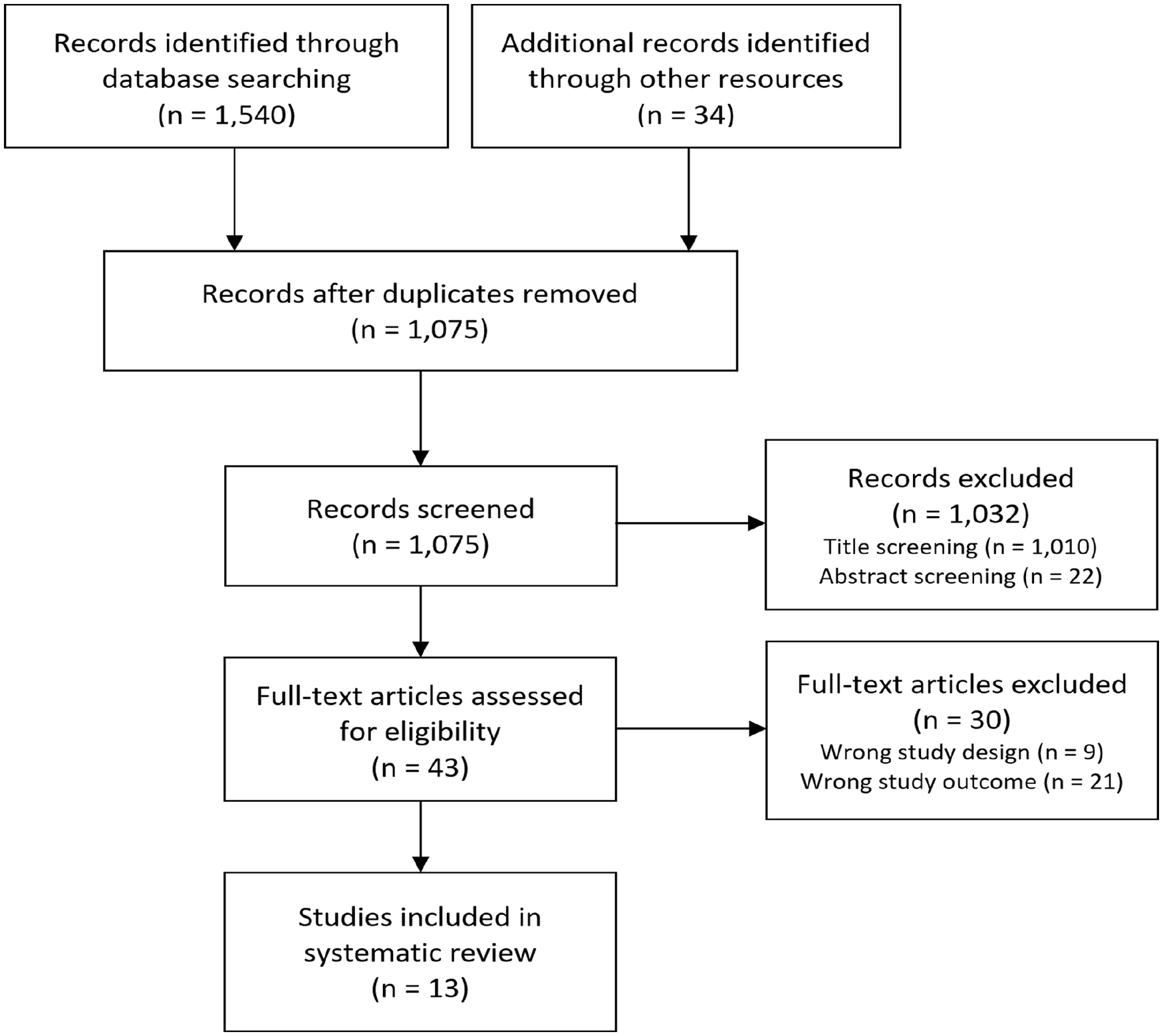
PRISMA Flow Diagram.
Study characteristics
The study characteristics of the included studies are summarized in Table 1. The average age of participants was 42 ± 15 years, and 40% were male. There were eight cross-sectional studies, two cohort studies, and three RCTs.
Characteristics of Included Studies.
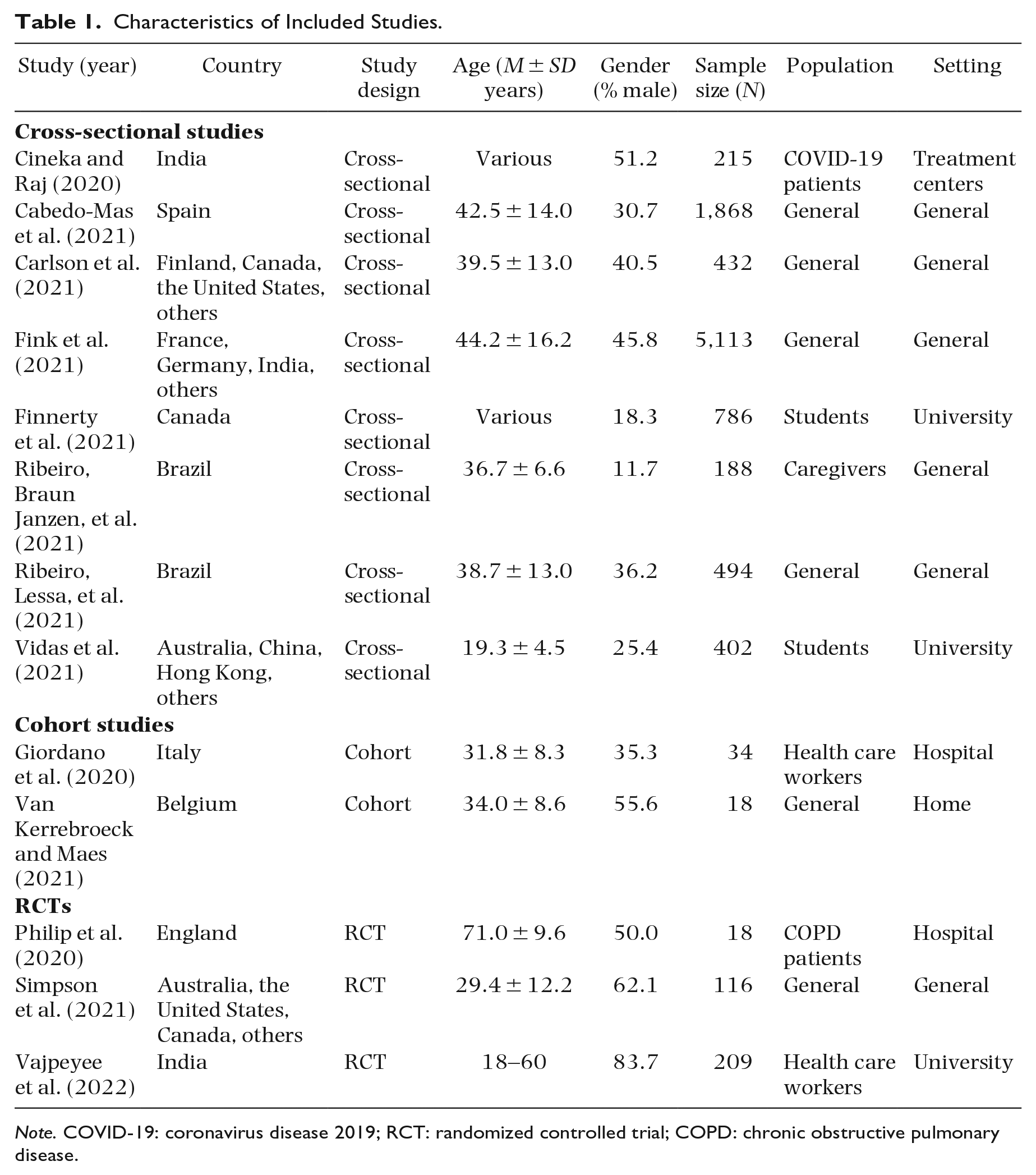
Note. COVID-19: coronavirus disease 2019; RCT: randomized controlled trial; COPD: chronic obstructive pulmonary disease.
Various measures were used for the primary outcomes of stress and anxiety. Six studies (46.2%) used validated Likert scales such as the Beck Anxiety Inventory (Smith et al., 2019), the DASS (Lee et al., 2019), the Generalized Anxiety Disorder Scale (Naeinian et al., 2011), the Perceived Stress Scale (Baik et al., 2019), and the State-Trait Anxiety Inventory (Gustafson et al., 2020). Six studies (46.2%) administered unvalidated Likert scales. One study (7.7%) utilized a qualitative approach to describe the effect of music on stress and anxiety (Fink et al., 2021).
Types of music engagement
Overall, the types of music engagement reported by the included studies can be categorized into seven activities: music listening, singing, playing an instrument, watching music videos or virtual performances, dancing to music, composing music, and externally-facilitated music interventions.
Cross-sectional studies
The eight cross-sectional studies disseminated surveys, questionnaires, or conducted interviews to examine how adults engaged in music during the pandemic. All eight cross-sectional studies (100%) reported participants engaging in various musical activities using surveyed data. Survey options included (1) listening to self-selected or externally-selected music, (2) singing, (3) dancing to music, (4) watching music videos or performances, (5) composing music, (6) playing an instrument, (7) reading or writing about music, and (8) engaging in music socially.
Cohort studies
The two cohort studies implemented researcher-facilitated (externally-facilitated) musical activities. Although researcher-facilitated music use does not provide an observational response as to how adults have used music during the pandemic, it does provide an answer to the first research question regarding the impact of music use on mental well-being in adults during COVID-19. The two cohort studies with researcher-facilitated music interventions used (1) receptive music therapy with music listening and guided imagery (Giordano et al., 2020), and (2) breathing sonification stimuli which included listening to a musical phrase (Van Kerrebroeck & Maes, 2021).
RCTs
The three RCTs implemented researcher-facilitated musical activities. The three studies had interventions such as (1) singing for lung health, which is an online group singing program developed to support people with chronic respiratory disease (Philip et al., 2020); (2) online vocal chanting in group or individual settings (Simpson et al., 2021); and (3) yoga in conjunction with instrumental music (Vajpeyee et al., 2022).
Stress
Seven studies (53.8%) reported stress as an outcome, including five cross-sectional studies, one cohort study, and one RCT. Outcomes of the included studies are summarized in Table 2.
Summary of Outcomes.
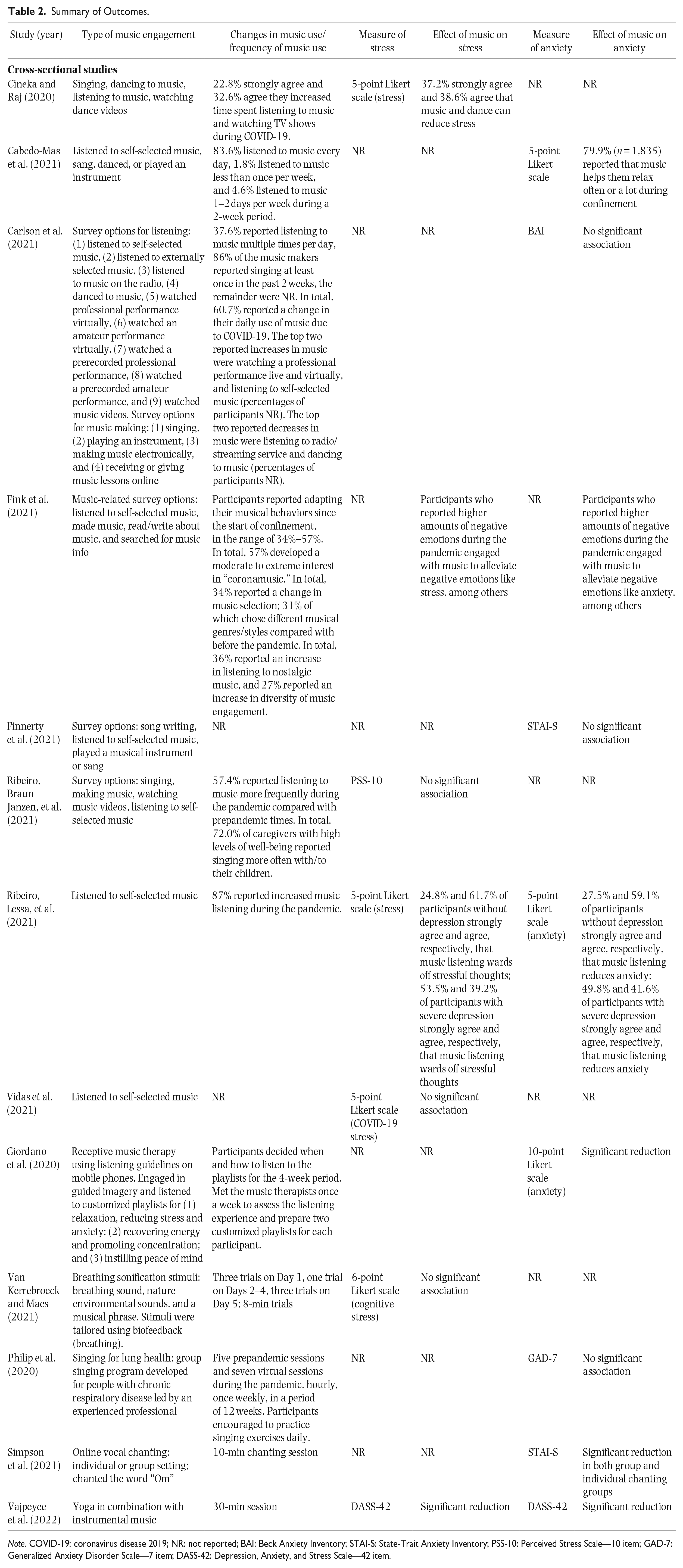
Note. COVID-19: coronavirus disease 2019; NR: not reported; BAI: Beck Anxiety Inventory; STAI-S: State-Trait Anxiety Inventory; PSS-10: Perceived Stress Scale—10 item; GAD-7: Generalized Anxiety Disorder Scale—7 item; DASS-42: Depression, Anxiety, and Stress Scale—42 item.
Cross-sectional studies
Five cross-sectional studies reported upon the outcome of stress using self-reported survey responses from participants. Among the five studies, one study (20.0%) reported that 75.8% of its participants agreed or strongly agreed that music and dance can reduce stress (Cineka & Raj, 2020). One study (20.0%) reported that 86.5% of participants without depression agreed or strongly agreed that music listening wards off stressful thoughts (Ribeiro, Lessa, et al., 2021). The same study found that 92.7% of participants with severe depression agreed or strongly agreed that music listening wards off stressful thoughts. Another study (20.0%) found that participants who reported an increase in negative emotions during the pandemic compared with before COVID-19 engaged with music to alleviate negative emotions like stress, among other emotions (Fink et al., 2021). Two studies (40.0%) reported no significant association between music use and stress (Ribeiro, Braun Janzen, et al., 2021; Vidas et al., 2021).
Cohort studies
One cohort study reported upon the outcome of stress using questionnaires and biometrics such as respiration rates and ratios (Van Kerrebroeck & Maes, 2021). This study utilized breathing sonification stimuli, which included a musical phrase option. Participants reported no significant association between music use and stress (Van Kerrebroeck & Maes, 2021).
RCTs
One RCT reported upon the outcome of stress using the DASS-42 (Vajpeyee et al., 2022). Participants engaged in yoga exercise in conjunction with instrumental music, reporting a significant reduction in stress (Vajpeyee et al., 2022).
Of the five studies that included participant-selected music interventions and measured stress as an outcome, one (20%) reported that a majority of participants experienced reductions in stress (Ribeiro, Lessa, et al., 2021). Of the two studies that implemented researcher-facilitated music interventions and measured stress as an outcome, one study (50%) reported a significant reduction in stress (Vajpeyee et al., 2022).
Anxiety
Nine studies (69.2%) reported anxiety as an outcome, including five cross-sectional studies, one cohort study, and all three RCTs.
Cross-sectional studies
Five cross-sectional studies reported upon the outcome of anxiety using self-reported survey responses from participants. Among the five studies, one study (20.0%) reported that 79.9% of participants rated that music helps them relax often or a lot during confinement (Cabedo-Mas et al., 2021). Another study (20.0%) reported that 86.6% of participants without depression agreed or strongly agreed that music listening reduces anxiety (Ribeiro, Lessa, et al., 2021). The same study found that 91.4% of participants with severe depression agreed or strongly agreed that music listening reduces anxiety. One study (20.0%) found that participants who reported an increase in negative emotions during the pandemic, compared with prepandemic times, engaged with music to alleviate negative emotions like anxiety, among others (Fink et al., 2021). Two studies (40.0%) reported no significant association between general music use and reported anxiety (Carlson et al., 2021; Finnerty et al., 2021).
Cohort studies
One cohort study reported upon the outcome of anxiety using a 10-point Likert scale. This study reported that engaging in receptive music therapy using prescribed music playlists and guided imagery resulted in a significant reduction in anxiety (Giordano et al., 2020).
RCTs
The three RCTs reported upon the outcome of anxiety using the Generalized Anxiety Disorder Scale-7, State-Trait Anxiety Inventory, and the DASS-42, respectfully (Philip et al., 2020; Simpson et al., 2021; Vajpeyee et al., 2022). One study (33.3%) reported a significant reduction in anxiety for both group and individual chanting groups (Simpson et al., 2021). One study (33.3%) which implemented yoga combined with instrumental music also reported a significant reduction in anxiety (Vajpeyee et al., 2022). One study (33.3%) reported no significant association between the singing for lung health program and anxiety (Philip et al., 2020).
Of the five studies that included participant-selected music interventions and measured anxiety as an outcome, two (40%) reported that a majority of participants experienced reductions in anxiety (Cabedo-Mas et al., 2021; Ribeiro, Lessa, et al., 2021). Of the four studies that implemented researcher-facilitated music interventions and measured anxiety as an outcome, three studies (75%) reported significant reductions in anxiety (Giordano et al., 2020; Simpson et al., 2021; Vajpeyee et al., 2022).
Quality appraisal
The NOS scores of the two cohort studies ranged from 5–6 out of a possible score of 9 (Table S3 in the supplemental material). According to the Agency for Healthcare Research and Quality (AHRQ) standards, the two studies were of poor quality because these studies did not ensure the comparability of cohorts by controlling for confounders or other relevant factors in their analysis. The NOS scores of the eight cross-sectional studies ranged from 3–6 out of a possible score of 10 (Table S4 in the supplemental material). According to AHRQ standards, three studies were considered to be satisfactory and five studies were unsatisfactory. None of the cross-sectional studies were awarded stars in the ascertainment of exposure section of the selection domain. The JBI checklist scores of the three RCTs ranged from 8–11 out of a possible score of 13, resulting in the inclusion of all three studies (Table S5 in the supplemental material).
Discussion
To the best of our knowledge, this is the first systematic review that evaluates the utility of music engagement for managing stress and anxiety in adults during the COVID-19 pandemic. The studies reported various forms of music engagement during quarantine, including participant-driven or researcher-implemented activities. The most common forms of music engagement were music listening, externally-facilitated music interventions, and singing.
Of the seven studies that reported stress as an outcome, four studies (57.1%) reported that music engagement resulted in a positive impact on stress and three studies (42.9%) reported no significant impact of music on stress. Of the five studies that included participant-selected music interventions and measured stress as an outcome, one (20%) reported reductions in stress. Of the two studies that implemented researcher-facilitated music interventions and measured stress as an outcome, one study (50%) reported reductions in stress.
Of the nine studies that reported anxiety as an outcome, six studies (66.7%) reported a positive impact on anxiety and three studies (33.3%) reported no significant effect of music on anxiety. Five studies implemented participant-selected music interventions and measured anxiety as an outcome, two (40%) of which reported reductions in anxiety. Of the four studies that implemented researcher-facilitated music interventions and measured anxiety as an outcome, three studies (75%) reported reductions in anxiety.
Due to the inclusion of a significant number of weak studies in this comprehensive review, further research is required for a stronger recommendation to promote music use for alleviating pandemic-related stress and anxiety. The results of this review should be interpreted with caution.
Explanation of findings
Although there were several limitations that contributed to inconclusive findings in this review, music engagement may have had a beneficial effect on the outcomes of stress and anxiety during the COVID-19 pandemic. There are a number of possible explanations for this finding.
Engaging in music may be more accessible and cost-effective than other coping activities during the pandemic (Carlson et al., 2021; Fink et al., 2021; Giordano et al., 2020; Granot et al., 2021; Krause et al., 2021; Mas-Herrero et al., 2020; Vidas et al., 2021). Furthermore, music is able to reach more of the world’s population due to technological advances that have supported the digitalization of music (Granot et al., 2021). This increases the likelihood of people participating in this activity during lockdown.
During the pandemic, balcony singing emerged as a social activity that connected community members from afar, alleviating some of the distress caused by quarantine (Cabedo-Mas et al., 2021; Granot et al., 2021). One extensive cross-sectional study conducted in Colombia, the Netherlands, Argentina, and other countries found that adults who participated in balcony singing reported significantly stronger feelings of ‘togetherness’ compared to nonparticipants (Granot et al., 2021). Some individuals have shaped music to be a social surrogate as a means of coping with isolation measures during COVID-19 (Brooks et al., 2020; Fink et al., 2021; Granot et al., 2021; Krause et al., 2021; Salari et al., 2020; Schäfer & Eerola, 2020; Schäfer et al., 2020). Music can provide a comforting presence and a sense of belonging through evoking memories of significant others and through lyrical interactions in singer–listener conversations (Krause et al., 2021; Schäfer & Eerola, 2020). In addition, caregivers can use music to socially bond with their children, which could reduce stress and anxiety during quarantine (Fancourt & Perkins, 2018; Ribeiro, Braun Janzen, et al., 2021; Steinberg et al., 2021).
The active or passive use of music may influence the ways in which music reduces stress and anxiety. Receptive music listening can provide solace mainly through emotion regulation; while active music engagement can provide a means of self-expression, reflection, and a sense of agency for the performer (Fink et al., 2021; Giordano et al., 2020).
An individual’s personality profile may also determine their capacity to experience pleasure and reward from music engagement and their proclivity for music use (Carlson et al., 2021; Fink et al., 2021; Finnerty et al., 2021; Granot et al., 2021; Martínez-Castilla et al., 2021; Mas-Herrero et al., 2020). Studies have shown that personality traits such as openness to experience, extraversion, neuroticism, and agreeableness were positively associated with the level of coping perceived from music listening or one’s predilection for music (Fink et al., 2021; Granot et al., 2021; Martínez-Castilla et al., 2021). There may also be a positive feedback loop connecting one’s perception of the importance of music and one’s perception of its efficacy for promoting well-being (Granot et al., 2021).
From a psychobiological perspective, music affects the stress response by reducing the activity of the hypothalamus–pituitary–adrenal axis which leads to decreased cortisol production (Chanda & Levitin, 2013; Thoma et al., 2013). Psychological stress has been shown to affect several regions of the brain that influence depressive symptoms (Yang et al., 2015). Therefore, music interventions that reduce stress may have a subsequent positive impact on depressive symptoms.
One study suggested possible adverse effects of music engagement on mental health outcomes (Carlson et al., 2021). Carlson and colleagues found that participants with severe anxiety reported a negative response to music comprising of lyrics and acoustic properties that amplified awareness of their anxiety (Carlson et al., 2021). This suggests that adverse responses to music could indicate a need to seek out more formal mental health resources (Carlson et al., 2021). However, further research is required to determine the detrimental effects of music in those with clinically high levels of stress and anxiety. In addition, another study suggested that some types of music (e.g., pessimistic or nostalgic) may elicit or perpetuate a negative mood (Granot et al., 2021).
Related literature
Previous studies have investigated the impact of music on mental well-being conducted prior to the COVID-19 pandemic. One systematic review with meta-analysis that included 104 RCTs found that music interventions resulted in a significant reduction in physiological and psychological stress among adults (de Witte et al., 2020). Although the current review did not conclude a significant reduction in stress, a small majority (57.1%) of the included studies which investigated stress reported a positive impact of music engagement on stress levels among adults during the COVID-19 pandemic (Cineka & Raj, 2020; Fink et al., 2021; Ribeiro, Lessa, et al., 2021; Vajpeyee et al., 2022). It is also important to note that the inclusion of more studies as the pandemic continues could further corroborate findings. Another systematic review that included 37 studies examined the effect of music on subjective well-being outcomes among the adult population (Daykin et al., 2018). The study concluded that music and singing interventions could reduce anxiety and improve mood in young adults, pregnant mothers, and prison inmates (Daykin et al., 2018). A study conducted on 87 undergraduate students also reported a similar conclusion; music interventions can mitigate significant increases in anxiety (Knight & Rickard, 2001).
Future directions
Eight studies (61.5%) had a cross-sectional study design, which determines association rather than causation (Wang & Cheng, 2020). As such, further research is needed to assess the direction of causality between music engagement and levels of stress and anxiety. Future studies are also required to determine the long-term effects of music use on stress and anxiety in adults during the COVID-19 pandemic. Several of the included studies in this review have investigated the effectiveness of music in promoting mental wellness in comparison to other coping strategies (e.g., watching television, exercise, and video calls). Future reviews with broader scopes could analyze the effectiveness of other coping methods that adults have utilized during the pandemic. Future reviews can identify characteristics of music and specific behaviors directly linked to reductions in stress and anxiety. This could ascertain the most effective forms of musical engagement for reducing stress and anxiety. A review of the impact of music on stress and anxiety in children is warranted as this population has also been affected by the COVID-19 pandemic. Although the authors did not include search criteria to identify whether there was a change in music engagement during the COVID-19 pandemic, future reviews could fill this knowledge gap. Among the included articles in this review, five studies (38.5%) reported on changes in music engagement, including three studies (60%) that reported an increase in participants’ overall engagement with music (Cineka & Raj, 2020; Ribeiro, Braun Janzen, et al., 2021; Ribeiro, Lessa, et al., 2021) and two studies (40%) which reported changes to music selection during the pandemic (Carlson et al., 2021; Fink et al., 2021). The increase in frequency of music engagement and changes to music selection during COVID-19 presents the possibility that the general adult population has attempted to adapt to pandemic stress and anxiety using music.
Limitations
This systematic review has several limitations. First, 12 studies used self-reported scales or questionnaires. This may impact the validity of the results as it introduces the potential for social desirability bias and recall bias (Althubaiti, 2016). Second, seven of the included studies (58.3%) used unvalidated scales. Third, the included studies did not use similar scales to assess stress and anxiety which precluded meta-analysis. Fourth, a significant proportion of studies used convenience sampling or did not describe the participant recruitment process. This reduces the probability that the sample is representative of the population, which limits the generalizability of the conclusions. Fifth, various study types were included in our review due to the limited number of studies available; therefore, results should be interpreted with caution in the context of varied study designs. Another limitation was that most of the studies did not isolate the impact of each type of music engagement on stress and anxiety due to the nature of the studies. For instance, studies that distributed surveys included various options for music engagement for participants to select. There were limited isolated analyses between each type of musical activity and its effect on stress and anxiety. Thus, this makes it difficult to determine which specific forms of music engagement were most effective in reducing stress and anxiety in the general population of adults during COVID-19. Finally, seven of the included studies (53.8%) were unsatisfactory or poor quality according to AHRQ standards. Future research is required, particularly through the inclusion of high-quality studies.
Conclusion
The majority of the articles included in this systematic review concluded a beneficial impact of music engagement on stress and anxiety among adults during the COVID-19 pandemic. A higher proportion of studies utilizing externally-facilitated music interventions reported reductions in both outcomes of stress and anxiety compared with studies with participant-facilitated music interventions. Our systematic review demonstrates the potential feasibility and accessibility of music to improve mental health outcomes during times of heightened psychological distress. However, given the limited quality of included articles and the high proportion of observational studies, further research is required to better elucidate the effect of music on stress and anxiety among adults during the COVID-19 pandemic.
Supplemental Material
sj-docx-1-pom-10.1177_03057356231225670 – Supplemental material for Music engagement for stress and anxiety in adults during the COVID-19 pandemic: A systematic review
Supplemental material, sj-docx-1-pom-10.1177_03057356231225670 for Music engagement for stress and anxiety in adults during the COVID-19 pandemic: A systematic review by Katherine Zhang, Rina A Tabuchi, Kevin Zhang and Rachael Finnerty in Psychology of Music
Footnotes
Declaration of conflicting interests
The author(s) declared no potential conflicts of interest with respect to the research, authorship, and/or publication of this article.
Funding
The author(s) received no financial support for the research, authorship, and/or publication of this article.

Supplemental material
Supplemental material for this article is available online.
References
Supplementary Material
Please find the following supplemental material available below.
For Open Access articles published under a Creative Commons License, all supplemental material carries the same license as the article it is associated with.
For non-Open Access articles published, all supplemental material carries a non-exclusive license, and permission requests for re-use of supplemental material or any part of supplemental material shall be sent directly to the copyright owner as specified in the copyright notice associated with the article.
