




Abstract
Listening to music can have a calming effect on people, but the natural “consumption” of music is generally not used in a goal-oriented way to reduce physiological arousal (i.e., heart rate and skin conductance) and tension, and to enhance mood. X-System is designed to predict the innate neurophysiological response to pieces of music and influence the arousal levels of users. We hypothesized that listening to a preferred genre of music has beneficial physiological and psychological effects and that X-System had an effect over and above the use of preferred music genres. A small-scale study (N = 38) was conducted in a medium secure forensic psychiatric facility to investigate the effects of passive music therapy on the arousal, tension, and mood of patients and their caregivers. Participants listened to a selection of songs of their preferred music genre for 2 days. On one of the 2 days, the music selection was played in an order established by X-System, with the aim to maximally reduce arousal, whereas on the other day the music selection was played in random order. In both conditions, physiological indices and self-reported tension decreased after listening to the preferred music. The hypothesized accelerated reduction in skin conductance for the X-System playlist was evident on visual inspection of the data, but the trend was non-significant (p = .065). The use of personalized music in forensic psychiatry might be a relatively effective, inexpensive way to benefit patients and staff members, especially patients that are hesitant to engage in the more traditional therapies.
Continuous exposure to aggressive behavior makes the job of mental health professionals relatively stressful compared with other professions and is associated with absenteeism and job turnover (Hensel et al., 2015; De Looff, Didden et al., 2019). Hospitalized forensic psychiatric patients in particular have an increased risk to engage in aggressive behavior in the ward (e.g., Hildebrand De Ruiter & Nijman, 2004; Mudde et al., 2011; Nijman et al., 2005). In the medium secure forensic department in which the current study was performed, for instance, it was found that 42% of the patients engaged in aggressive behavior during their admission (Mudde et al., 2011), with an average of five incidents per aggressive patient. Half of these aggressive incidents involved physical aggressive behavior (aggression against property or persons).
The vast majority of forensic psychiatric patients are admitted involuntarily, and many of them are treated in locked wards. In practice, this also means that the patients often do not agree with their caregivers about the need to be hospitalized and treated. This may make building a good (therapeutic) working alliance between the forensic patients and their caregivers problematic in many respects. Forensic psychiatric patients, for instance, may resist the pharmacological and psychotherapeutical interventions that are proposed to them. Music therapy (MT), however, is relatively popular among the often young, male patients. In fact, among the few personal belongings, these patients often have some form of a personal music collection with them during admission. While residing in the ward, many of the forensic psychiatric patients still listen to their preferred type of music. Patients may find comfort in listening to music, and it may help them to take their mind off disturbing (delusional) thoughts, and in some cases help to reduce auditory hallucinations, as a recent meta-analysis found that MT reduces total symptoms and negative symptoms in patients with schizophrenia (Jia et al., 2020). Because of this preserved natural interest in listening to music, MT may have a relatively low threshold for contact with involuntarily admitted forensic psychiatric patients, and to get them involved in therapy. MT also may be more appealing than psychotherapy for patients with limited verbal skills, or intellectual disabilities, in the sense that cognitive behavior therapy, for instance, makes an appeal to verbal skills, whereas (passive) MT does not. Recent studies have also indicated that MT has beneficial effects in people with intellectual disabilities (Bergmann et al., 2021; Mayer-Benarous et al., 2021).
Recent meta-analyses showed that MT has a substantial beneficial effect on several psychological, physical, emotional, behavioral, and physiological parameters (Bradt et al., 2016; Groarke & Hogan, 2016; Lee, 2016; Li et al., 2020; Lieber et al., 2019; Loomba et al., 2012; Panteleeva et al., 2018; Terry et al., 2020). On the basis of a recent review, Garrido et al. (2017) conclude “that pre-recorded music can be effective in reducing a variety of affective and behavioral symptoms, in particular agitation, even where a trained music therapist is not present” (p. 1129). In a general sense, many people in the general population experience that music can help them relax and influence their mood. This natural “consumption” of music, however, is generally not used in a very goal-oriented way to influence our mental state. Recent studies showed that MT combined with neuroscience has significant implications not only for reducing arousal, anxiety, pain, and behavior problems, but also for improving mood and self-regulation (Bradt et al., 2016; Gerdner, 2012; Hides et al., 2019; Lou, 2001; Miller et al., 2010). Various cortical, subcortical, limbic, hormonal, and neurophysiological pathways seem to be involved in the arousal inducing and relaxing characteristics of music (Daynes, 2010). The interplay between the limbic system with the physiological reactivity of the central and autonomic nervous system is thought to play a pivotal role in stimulating well-being (Menon & Levitin, 2005; Perez-Lloret et al., 2014). X-System, (see: https://www.x-system.co.uk/about.html) is designed to automatically predict and categorize the innate neurophysiological response to pieces of music. X-System may increase the beneficial (calming) effects of listening to music by categorizing existing pieces of music into a playlist that, when listened to in a specific order, aims at reducing physiological arousal and psychological tension, based on the arousal inducing and reducing characteristics of the individual songs. X-System classifies music by its effect on arousal and valence to predict the relaxing and arousal inducing effects of music on the neurological pathways resulting in activation of limbic structures, hormones, and the autonomic nervous system related to emotional functioning, and combines traditional statistical techniques with state-of-the-art neural networks to categorize music (for an extended overview see Sice et al., 2020).
In preliminary experimental studies, it has indeed been found that X-System reduces heart rate (HR) (Agres et al., 2017, p.5). Such a reduction can be reached with the type of music that the patient prefers to listen to anyway, as X-System has assessed and classified millions of popular songs. This is particularly interesting considering recent studies that found significant rises in HR and skin conductance (SC) preceding aggressive behavior (Goodwin et al., 2019; de Looff, Noordzij et al., 2019). Implementing an MT intervention targeted at reducing physiological arousal might thus provide ample opportunities for early prevention of aggressive behavior. Another study indicated that X-System had a significant medium effect on positive changes in emotional and physical well-being as well (Sice et al., 2020). As X-System was designed to provide guided induction and reduction of arousal, it may be hypothesized that participants listening to a playlist that was sequentially ordered by X-System show an accelerated and steeper reduction of arousal and tension in comparison with a randomly ordered playlist. Earlier studies indicated that psychiatric disorders are associated with dysregulation in the autonomic nervous system and can be positively influenced by MT (McPherson et al., 2019). However, McPherson et al. (2019) showed that only active MT (in which the participant is actively engaged in creating music), but not passive MT, was able to decrease sympathetic nervous system activity. No effects on HR variability (parasympathetic reactivity) were evident. In the passive MT, participants listened to different types of music genres over a 40-min period, and this did not result in decreased sympathetic activity. One reason for this finding might be that the authors used different types of music genres in the passive MT, and all these genres might not have an arousal reducing effect on participants. Uniform decreasing effects on anxiety but varying effects on HR have also been found in another study by Burns et al. (2002). It was apparent that different music genres had either arousal inducing or reducing effects in a group of 60 students (Burns et al., 2002). In line with this, a recent meta-analysis found that exciting music increases HR and decreases HR variability, whereas tranquilizing music decreases HR (Koelsch & Jäncke, 2015).
If music in their preferred genre, and ordered by X-System in particular, can help reduce arousal and tension in forensic psychiatric patients (and their caregivers), this could potentially be a low-key, economical, and patient friendly intervention to improve the well-being and safety of patients and staff in the ward. Because playlists generated by X-System can be based on the personal music preferences of patients, initiating the MT intervention may be relatively easy, even for patients who are resisting other forms of therapy. Another potential advantage of an X-system playlist is that it can also be used by the patient after discharge from the forensic psychiatric institution. Patients can store the playlist on their phone or preferred music players, and listen to it when they feel their tension level is high. Finally, staff members also may benefit from an arousal reducing playlist consisting of songs from their favorite type of music, for instance, during breaks at work, or when traveling home after their work. In their jobs in locked forensic wards, direct ward staff have to perform various tasks that increase their stress levels (de Looff et al., 2018, de Looff, Didden et al., 2019), and HR (variability) and SC have also been associated with job stress and burnout (de Looff et al., 2018).
In sum, taking these potential beneficial effects of a music intervention into account, we formulated the following research question for the current exploratory study:
Research Question: Does X-System has attenuating effects on tension and physiological indices and positive effects on mood in forensic patients and their caregivers?
Four specific hypotheses were formulated to investigate the research question:
Hypothesis 1: Listening to a playlist of songs from a preferred music genre leads to a reduction of the SC level (SCL) and lowering of HR in forensic psychiatric patients and their treating staff members.
Hypothesis 2: Listening to a playlist ordered by X-System leads to a significantly greater reduction of the SCL and HR in forensic patients and their treating staff members, when compared with a control condition in which the same patient (or staff member) listens to the same music pieces but then played in a random order.
Hypothesis 3: Listening to a playlist of songs from a preferred music genre leads to a reduction of subjectively experienced tension and an improvement of mood.
Hypothesis 4: Listening to a playlist ordered by X-System leads to a significantly greater reduction of subjectively experienced tension and a subjectively experienced improvement of mood when compared with a randomly ordered control playlist.
Method
Setting and participants
The study was conducted at a forensic psychiatric department located in the middle of the Netherlands. The participants consisted of 18 forensic psychiatric patients and 20 staff members (N = 38) and had a mean age of 38.7 years (SD = 10.6). Both groups did not differ from each other as far as age was concerned, t(36) = 0.38, p = .72 (two-tailed), but the subgroup of forensic patients had a higher proportion of males (i.e., 15 of the 18 patients versus six of the 20 staff members; χ(1) = 10.9, p < .05). As for the diagnoses of the patients, 10 of the 18 patients had schizophrenia spectrum disorder (56%), and three (17%) had a bipolar disorder on axis I of the DSM-5. On axis II of the DSM-5 it was found that seven patients (39%) had a personality disorder, mainly of the antisocial (four patients) and the borderline type (three patients).
Procedure
Both patients and staff members were informed about the current study and they provided written informed consent if they agreed to participate. The participants were asked about their music preferences, and they made a choice from five music genres: Pop music, Rock music, Dutch language music, Metal, or Hip-hop. Following this, the participants were asked to listen to a selection of songs of their preferred music genre for 2 days; on both days at (about) the same time, because the time of the day has some influence on the psychophysiological measures (Jarczok et al., 2013; de Looff et al., 2018). To be more precise, all participants, except for three, were measured within the same hour of the day, and the mean difference of the time of the day between the two listening sessions on both days for the entire sample was 28.6 min. The music playlists were played through a Sennheiser HD 280 PRO headphone from a Huawei p20 phone on a moderate volume (i.e., volume option 12 on a scale from 1 to 20). For each genre, six or seven songs representing the preferred genre were selected by the first and second author of the current study. These songs equaled 22.39–25.27 min of music in total (see Appendix 1).
Before the listening sessions started, the participants were asked to wear two Empatica E4 devices (see Figure 1) on both wrists (Garbarino et al., 2014; Poh et al., 2010) that were put on before walking to a ward in which a “comfort room” was situated where the experiment was conducted. Comfort rooms are quiet, dimly lit rooms with comfortable seats to which psychiatric patients can retreat when they are feeling stressed.
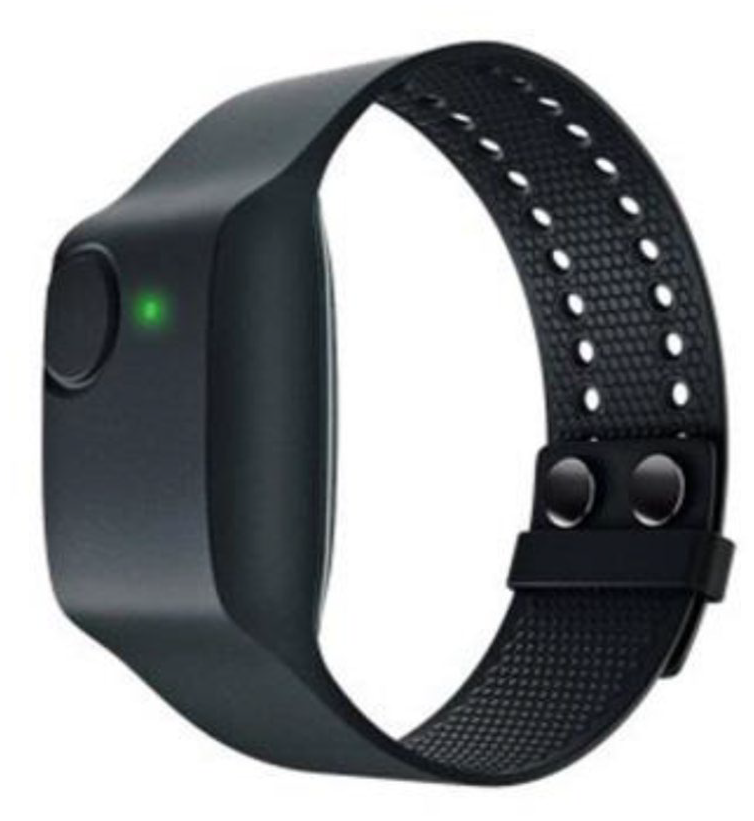
Empatica E4 Wristband.
After arriving at the comfort room, the participants were asked to rate their current feelings of tension and mood on two single item visual analogue scale (VAS) scales (see materials and methods). Following this, a baseline measurement of 5 min with the Empatica E4s was conducted. During the 5 min, the participant was asked to sit quietly in the room in silence. After the 5 min, the music started. In a crossover trial (Senn, 2002), on one of the two measurement days, the music selection was in the order as established by X-System with the aim of maximally reducing arousal, whereas on the other day the same music selection was played in a randomized order (Senn, 2002). These two listening conditions were counterbalanced, so that half of the participants listened to X-System order first, followed by the random order of the songs on the other day; whereas the other half of the participants listened to the randomly ordered music first, followed by the X-System order on the other measurement day. To avoid any carry-over effects from one condition to another, we included a washout period of 1 week (McPherson, 2019). The playlists ordered to specifically target and bring down arousal and tension are shown in Appendix 1. The second (control) condition was listening to a playlist in a preferred genre in a randomized order (the order of the songs was given a fixed random order for all participants by means of Excel). When the music playlist was finished, the participant stayed seated in silence for one more minute, after which the experiment ended with completion of the two VAS scales concerning tension and mood again.
Materials and methods
X-System is a music technology that uses algorithms to analyze recorded music tracks and to predict their neurophysiological effects in terms of arousal, relaxation, and valence on the listener. In the current study, the net arousal index of X-System was used to help ordering the experimental playlists with the aim to gradually lead the listener to a state of relaxation. The net arousal index runs from 0 to 1, with lower scores hypothesized to be related to stronger arousal reducing qualities of music. As can be seen in the Appendix 1, the net arousal indexes of the songs ordered by means of X-System decreased in all five of the playlists from ⩾ 0.74 to ⩽ 0.25. In the random order assigned by Excel, the last song had a net arousal index of at least 0.54 or higher.
The Empatica E4 is a tool in the form of wristband (see Figure 1) that has been developed for measuring psychophysiological markers (www.empatica.com/e4-wristband; Garbarino et al., 2014), such as SCL and HR. Besides that, the Empatica E4 also assesses physical movements and temperature on the skin. The assessments with the E4 are not intrusive for the user, and the device has already been used to assess stress in various scientific studies. Validation studies of assessments made with the Empatica E4 have yielded positive results (e.g., Menghini et al., 2019; Milstein & Gordon, 2020; Schuurmans et al., 2020; van Lier et al., 2020).
Vas-scales for tension and mood
Before and after listening to the music playlists, the participants were asked to rate their own tension and mood on two 100 mm VAS scales. The VAS scale related to tension ranged from I feel completely not tense on the left (0 mm) side of the VAS, to I feel very tense on the right (100 mm) side of the scale. The VAS scale to rate the mood of the participant ranged from My mood is very bad on the left side of the scale to My mood is very good on the right end of the scale.
Statistical analyses
Changes in the psychophysiological parameters of stress of both the participating patients and staff members combined were assessed by means of two multilevel (Hox et al., 2017) analyses (i.e., one for the SCL and one for HR), as the data are hierarchical in nature (Finch et al., 2014; Luke, 2019). In these multilevel analyses, it was investigated whether there was a reduction of SCL and HR while listening to a preferred music genre, as well as whether there was a difference between the X-System playlist and the random control condition over time. It was expected that the experimental condition (i.e., listening to the playlist ordered by means of the X-System) would result in a steeper decline of these physiological parameters over time. In these multilevel analyses, several time-varying and time-invariant variables were considered as control variables. Physical movements and skin temperature are known to have an effect on physiology and were thus included as time-varying covariates (Jarczok et al., 2013; de Looff et al., 2018). In addition, it was considered whether there were time-invariant predictors that have an effect on the physiological measures. For instance, two Empatica E4s were worn on both wrists. It was investigated whether it would matter if people would wear the wristband on their left or right hand. The order of the condition (whether participants first received the experimental playlist ordered with X-System versus the randomly ordered playlist) was also included as a covariate. Also, both staff members and patients participated in the study, and it was investigated whether this would make a difference (this variable is called “subject” in Tables 1 and 2).
Results from the Multilevel Analysis Predicting (Development of) the SCL.
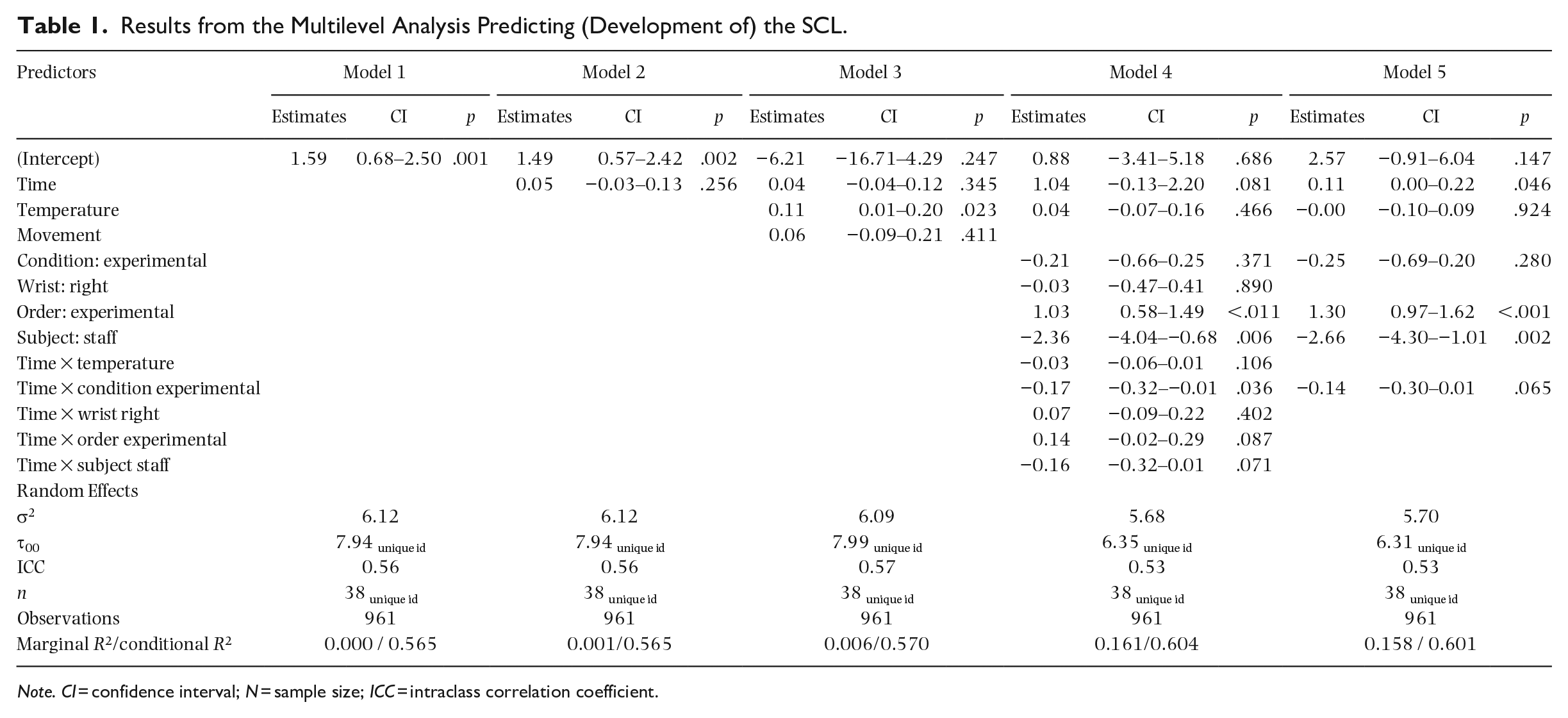
Note. CI = confidence interval; N = sample size; ICC = intraclass correlation coefficient.
Results from the Multilevel Analysis Predicting (Development of) the HR.
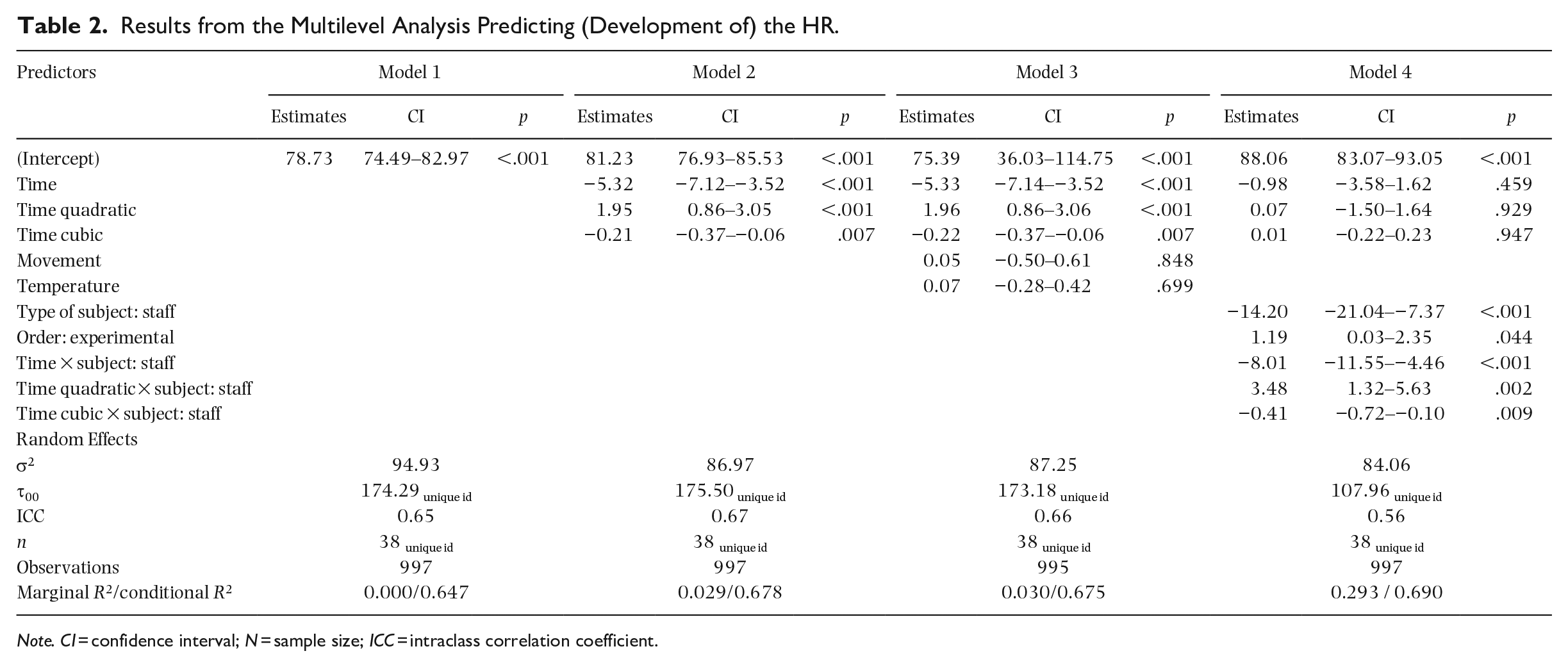
Note. CI = confidence interval; N = sample size; ICC = intraclass correlation coefficient.
In sum, we have the time-varying predictors: temperature and movement, and the time-invariant predictors: condition, order, type of subject, and wrist. The statistical model that was tested consisted of a longitudinal multilevel model with time (Level 1) nested within the person level (Level 2). The potential changes in SCL and HR during the experiment were tested in these multilevel analyses over the following time intervals: during walking to the ward (1 min), baseline rest measurement (sitting quietly in the comfort room; 5 min), first 5 min of listening to music, second 5 min of listening to the music, third 5 min listening to the playlist, last 5 min of listening to the playlist, and last minute after the music had stopped.
For all models, a similar strategy was adopted. First, a random intercept model was fitted, followed by several models with linear and polynomial effects of time. Third, time-varying predictors movement and temperature were added, followed by the time-invariant predictors. Lastly, the interactions with time and for significant main effects were tested (Hox et al., 2017).
The changes in the VAS scores concerning tension and mood were analyzed with a 2 × 2 general linear model repeated measures analysis, that is, a pre- and post-VAS-scores comparison before and after listening to the music playlist, for two groups (i.e., the two conditions, the playlist in the order ranked by the X-System versus the randomly ordered playlist). With this analysis, it was tested whether listening to the music playlists is associated with a reduction of subjectively perceived tension and an improvement of mood, and whether these (potential) improvements on the VAS scales are significantly greater when listening to the X-System ordered playlist, compared with the randomly ordered playlist. For all analyses, alpha was set at .05.
Ethical considerations
The study was approved by the Ethical Committee Social Sciences of Radboud University [ECSW-2018-044R1]. Both patients and staff members were free to reject participation in the study, and could retract their participation at any moment during the study. Participating patients received a compensation for their participation in the form of an Iris check of 10 euros upon completion of the study. The current study adheres to the reporting standards for music based interventions (Robb et al., 2011).
Results
As for the music genres, the 38 participants chose the following types of music to listen to: Pop music (15% or 39%), Rock music (11% or 29%), Hip-hop (5% or 13%), Dutch language music (5% or 13%), and Metal (2% or 5%). The distribution of the music preferences from the patients and staff members differed from each other, χ(4) = 13.25, p = .01, with staff members relatively often preferring Rock music (nine staff members versus two patients) and patients more often preferring hip-hop (five patients versus 0 staff members) and Dutch language music (five patients versus one staff member).
Psychophysiological outcomes (SCL and HR)
In Figures 1 and 2, the raw mean scores of the SCL (SCL for the sample; M = 1.6 uSiemens, SD = 3.7) and the HR (M = 78.7, SD = 16.2) for the studied epochs are depicted for the experimental playlist made by means of X-System and for the random control condition. In Figure 2, SCL seems to decline for the experimental condition, but rise for the random playlist, in line with expectations. In Figure 3, a gradual decline is evident for the experimental condition, and a more abrupt pattern is evident in the control condition.
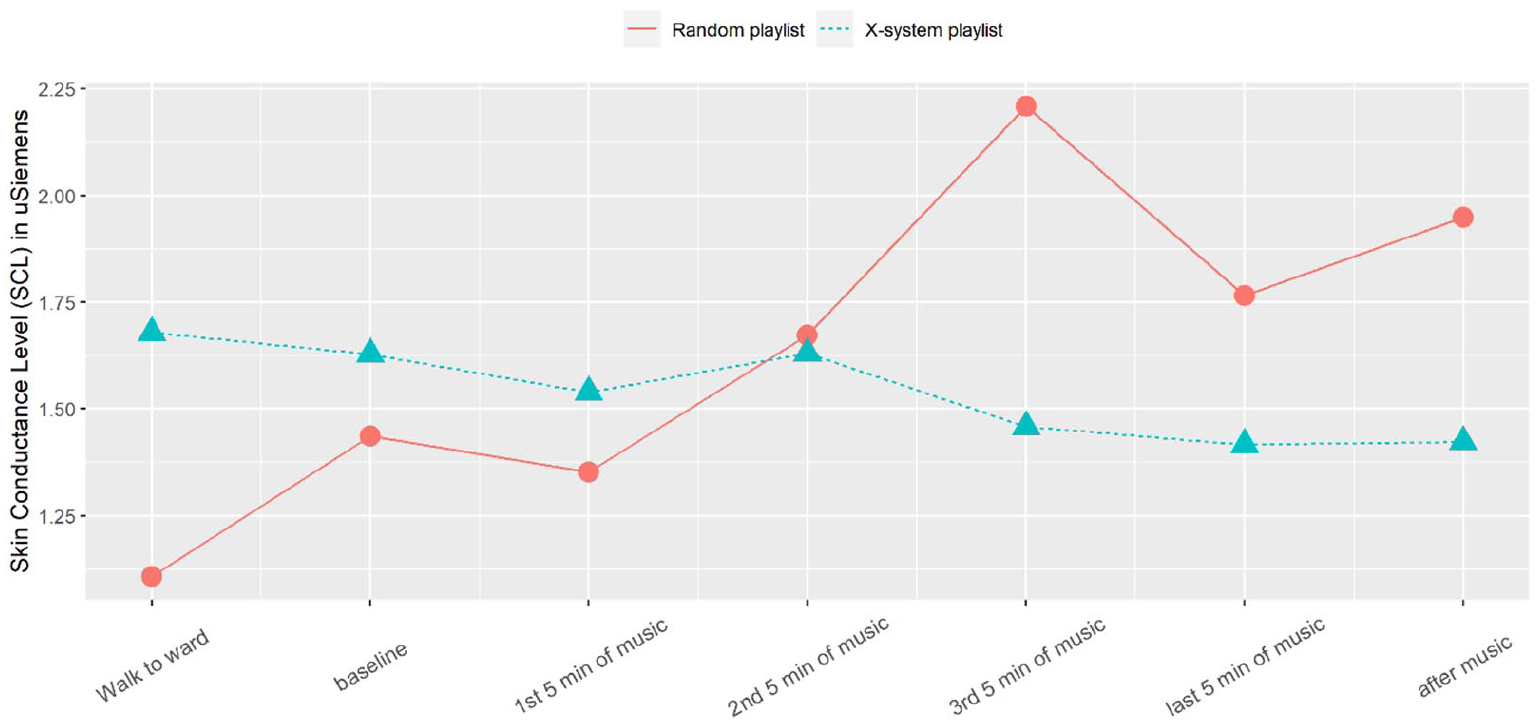
Development of SCL (Mean of Both Wrists) During the Experiment.
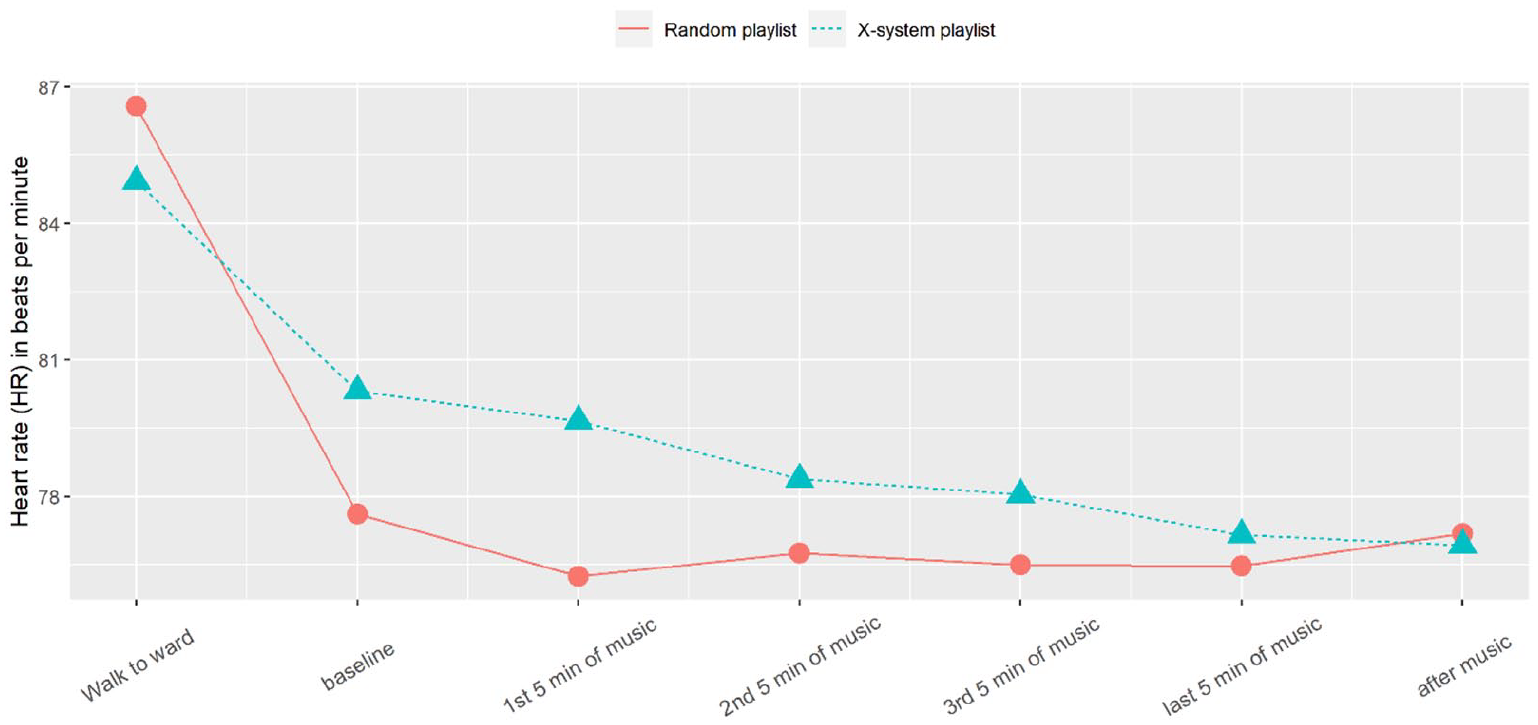
Development of HR (Mean of Both Wrists) During the Experiment.
In Tables 1 and 2, the results from the multilevel analysis concerning the development of SCL and HR when listening to the music playlists are presented.
As for the final model (Model 5) concerning the development of the SCL, no significant interaction effects are found. As for the hypothesized significantly higher reduction of the SCL, when the participants listened to the music playlist ordered by means of the X-System, compared with randomly ordered music playlist, a non-significant linear trend was found in the anticipated direction (p = .065; see Model 5 of Table 1). Besides that the SCL in Model 5 is significantly associated with time (p = .046), with the order of the conditions (p < .001; with the experimental condition being associated with higher SCLs in general), and with the type of subject (p < .001; with staff members having lower SCLs in general).
As for the development of the HR (see Table 2), in Model 2, there were significant linear, quadratic and cubic time trends. Both the graphs (not shown here) and the effects indicated that HR significantly reduced over time in the participants (all ps < .01). After entering the other relevant variables in Model 3 and Model 4, only an interaction effect for the time variables with subject was found (all ps < .01) in the final model, indicating a reduction of the HR over time for staff members (see Figure 4). Similar to the final model for the prediction of SCL, staff members in general had lower HRs (p < .001) and HR was associated with the order of the conditions, with the experimental condition being associated with higher HRs in general (p < .044). The hypothesized higher reduction of HR when listening to the music playlist ordered by means of the X-System, compared with randomly ordered music playlist, was not found.
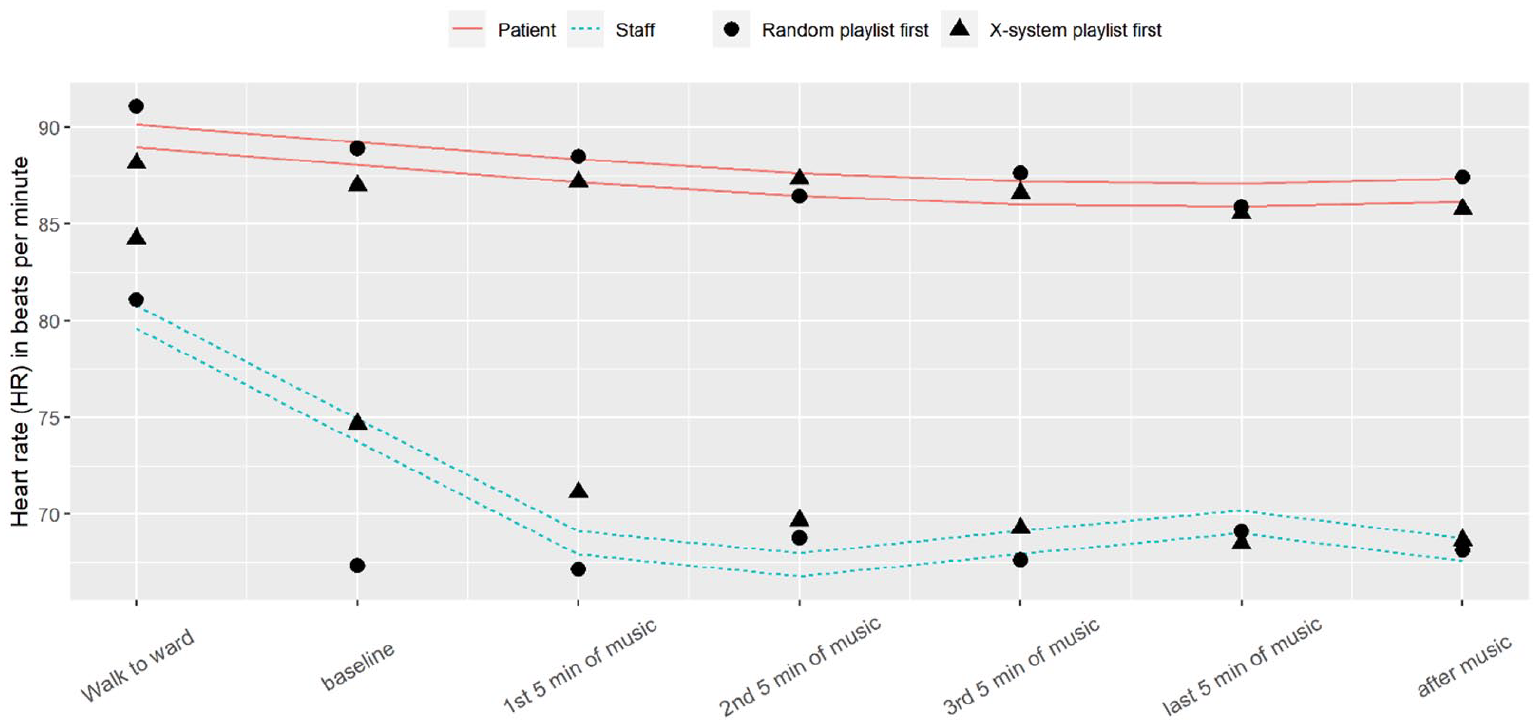
Best Fitting Model (Model 4) of HR of Patients and Staff Members.
Psychological outcomes (tension and mood)
In Figure 5, VAS scores concerning the subjectively experienced tension and mood of the participants pre- and post-listening to the music are depicted for the X-System playlists versus the randomly ordered, control playlists. The pretest (random: M = 31.4, SD = 20.9; X-System: M = 33.3, SD = 17.4) and posttest (random: M = 22.3, SD = 20.8; X-System: M = 24.6, SD = 20.2) tension scores indicated a decline in tension for both groups, whereas the pretest (random: M = 64.9, SD = 15.8; X-System; M = 59.2, SD = 18.8) and posttest (random: M = 64.1, SD = 17.5; X-System; M = 62.1, SD = 20.3) mood scores indicated a slight increase in mood scores that can be attributed to the X-System playlist as can be seen in Figure 5.
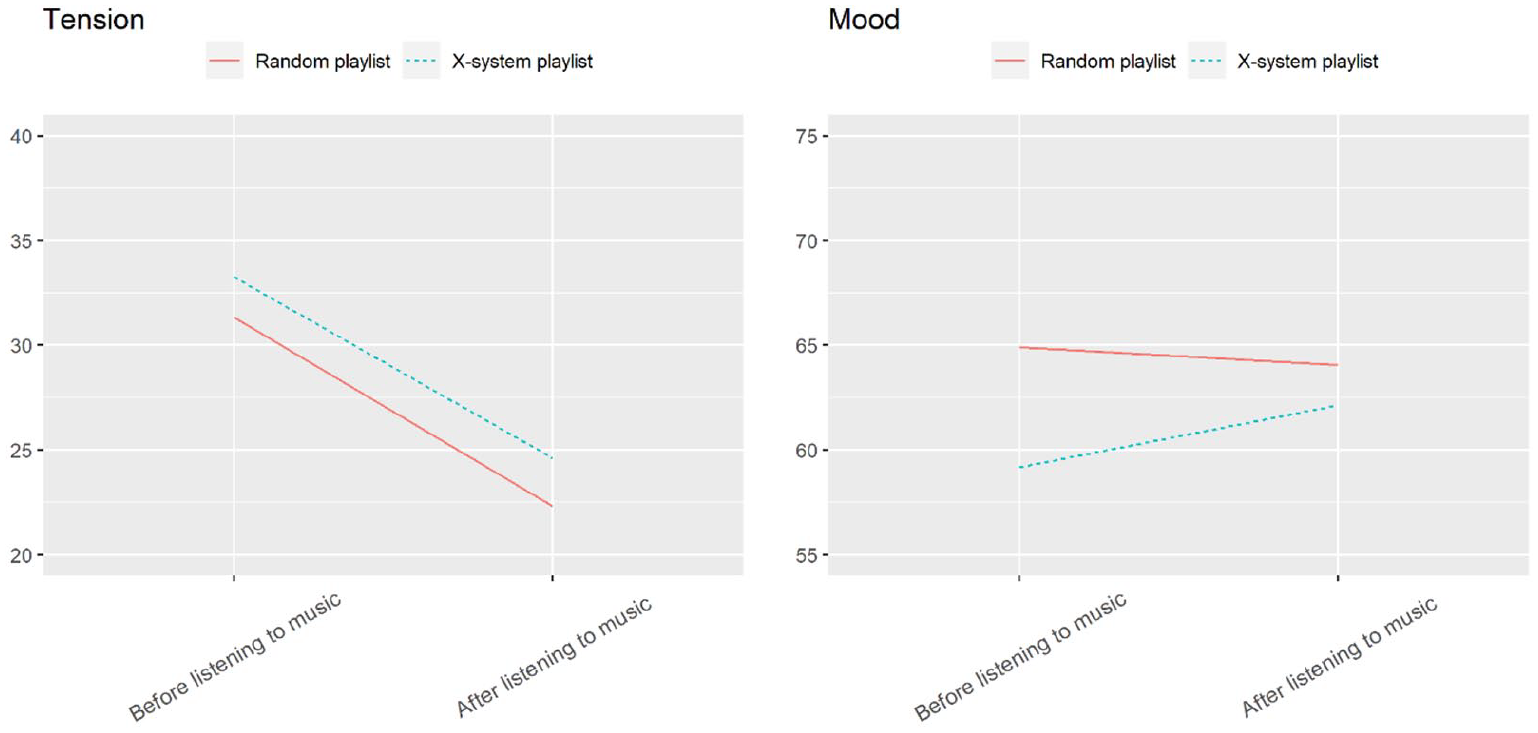
VAS Scores Concerning Tension and Mood, Pre- and Post-Listening to Music.
The reported tension (Figure 5) after listening to music considerably decreased over time in both conditions, F(1, 36) = 13.7, p = .001, but the decrease of tension was not stronger in the experimental X-System condition, F(1, 36) = 0.02, p = .89.
Mood improved somewhat from pre- to post-listening to the playlist in the order constructed by means of X-System, compared with the change in mood after listening to the randomly ordered playlist, but this difference did not reach significance, F(1, 36) = 1.9, p = .17. Overall, the reported mood was not improved significantly after listening to music in both conditions taken together, F(1, 36) = 0.48, p = .49.
Discussion
Main findings
The current study investigated whether music in a preferred genre, and in addition, ordered in a specific sequence to maximize the beneficial arousal reducing properties of music (X-System), has an effect on both physiological and psychological variables in a sample of staff members and patients in forensic psychiatry. The main outcome of the study is that the selection of a preferred music genre led to a reduction in physiological arousal (i.e., SCL, see Model 5 of Table 1) and psychological tension in line with the first and third hypotheses of the study. This reduction, however, was not significantly greater when the participants had listened to the X-System playlist. The multilevel model concerning changes over time in the SCL did find a trend in the hypothesized direction that the arousal level reduced more when listening to the playlists that were ordered by means of the X-System, but this trend was not significant (p = .065; see Model 5 in Table 1). Furthermore, a reduction of the HR during the experiment was found in staff members, regardless of which music playlist was used in the final multilevel model (see Model 4 of Table 2). This reduction, however, seems already to have taken place mainly in the baseline resting period of 5 min, when there was no physical activity anymore (see Figure 3).
Limitations
Several limitations of the current study are worth considering. First, the non-significance of the findings might be caused by a power-problem due to a limited sample size. Pre-study power calculations indicated that 26 patients and 26 staff members needed to be included. The current study, however, was discontinued after the inclusion of 38 participants because of an extremely severe recidivism of one of the patients residing at the study site (not a participant in the current study). Apart from that, the selected tracks had limited arousal value variation resulting in playlists that ended with songs that had rather moderate net arousal indexes assigned by the X-System of between 0.54 and 0.62, which may have limited the contrasts between the two conditions. In addition, all participants received the playlists in the exact same order, a truly random selection of songs (without consideration of the net arousal index of the X-System) in a preferred genre might have increased the power of the study as well, although another possibility would be that playlists that are ordered in a sequence to maximally reduce arousal offer no advantage over playlists that are in participants’ preferred music genre.
The current study also included a rather long resting baseline of 5 min, which may have reduced the power and possibilities to find changes in the SCL and HR, as these parameters in general reduce when resting. For clinical practice, we envisioned the potential (relaxing) X-System playlists to be used by patients and staff members when they feel very stressed and aroused on their ward. In such a situation, it is likely that the SCL and HR are relatively high, giving room for potential reductions of these psychophysiological markers of stress. In our experiment, patients were relatively relaxed compared with the situation for which this potential stress reducing intervention was actually intended in clinical practice, and the 5 min resting baseline probably made them even less aroused.
Future research
Taking into account the sample size and limitations, the current study offers support for the hypothesis that passive MT has beneficial effects on physiological and psychological variables, as long as the passive MT is offered in a preferred music genre, which may have been a limitation in the McPherson et al.’s study (2019). We did not take into account the different preferences in music genres for the participants in the study. Although participants were given the option to select a preferred genre, this does not imply that it reflects their own personal music preferences. If their favorite songs are not included, then it might just reflect a preference for a genre, not the personalized pieces of music that participants regularly listen to. The basic premise of X-System is that it is a model of the universal musical brain. It predicts the neurophysiological responses to music that are universal and in substantial part independent of culture and familiarity. Future studies might thus include these specific songs that the participant likes to listen to, as this might have a larger effect.
The current study also offers no information on the external validity of the findings as the study was not conducted on the ward in a naturalistic setting. It may well be that a preferred music genre can be used to reduce physiological and psychological indices of stress, but it would also be interesting to test whether this also has an effect on behavior, such as aggressive behavior of patients (de Looff, Noordzij et al., 2019), and if X-System offers an advantage over and above the use of preferred music genres in a naturalistic study. In the current study, patients had a higher HR than staff members, which might be due to dysregulation in the autonomic nervous system of psychiatric patients which is an often reported finding in recent meta-analyses (Alvares et al., 2016; Ying-Chih et al., 2020). Future research might therefore also include HR variability measures and SC reactivity measures. One indication that the patients in the current study suffered from dysregulation of the autonomic nervous system is the high HR at the start of the study, whereas there was almost no decline in the HR, as opposed to the staff members who were working and did show a decline in HR. In the case of potentially arousal reducing music interventions, a more real-life experiment can be considered, in which the aggression reducing potential of listening to arousal reducing music is tested. Possibly a controlled study can be set up in which in such cases patients are randomized to retreat to their room, versus to retreat to their room and to listen to a potentially arousal reducing music playlist. This way the effect of adding music to already widely used time-out interventions on (forensic) psychiatric wards can be studied in more clinically relevant situation of rising agitation levels of forensic patients. Another interesting topic, that was not part of the current study, is to study individual differences between participants and life style factors as these might influence the use of MT and its effect on physiological reactivity as well.
In this regard, it is interesting to note the difference in baseline HR between staff members and patients as the HR is (much) higher in patients throughout the experiment, and that the HR shows no reduction over time in patients as opposed to the significant reduction in staff members. One explanation could be that staff members were busy working on the ward, which increased their metabolic need, resulting in a higher HR at the start of the experiment, as opposed to patients who typically are relaxing when they are on the ward, and only increase their metabolic need as they engage in psychomotor therapies or exercise. However, this does not explain the difference in resting HR between the two groups. A possible explanation is that patients have experienced multiple traumatic events resulting in a higher risk for mental health problems, metabolic syndrome, reduced cardiovascular functioning (Garrido-Torres et al., 2021), and sleep disorders (Tahmasian et al., 2021). A recent meta-analysis, for instance, already found evidence of reduced metabolic and cardiovascular functioning in patients with first episode psychosis (Garrido-Torres et al., 2021), and it has been reported that the life expectancy for people with schizophrenia is 20 years shorter in comparison with the population, which might also be reflected in the current study (Pillinger et al., 2019).
Clinical implications
The generally used pharmaceutical and psychotherapeutic interventions, aiming at reducing stress, agitation, and aggression in forensic psychiatric samples are often not easily accepted by forensic patients, whereas an intervention with music may be. Personalized music might be a relatively effective, inexpensive way to engage patients and staff members, but especially patients that are hesitant to engage in the more traditional therapies. In the daily practice of forensic psychiatric wards, patients who are agitated are often asked (or required) to retreat to their room for a while, or to go to the comfort room for a “time-out” to try to reduce their tension. A personalized MT minimizes potential triggers that can illicit aggressive behavior, such as (hostile) interactions with fellow-patients. The current study presents evidence that personalized music genres have an effect on physiological parameters as indicated by significant reductions over time in physiological parameters. However, possible advantageous effects of MT are not only reflected by beneficial effects in physiological and psychological indices, but offer additional value to improve mood, aid in therapy and recovery, and have long-term beneficial and supportive effects.
Footnotes
Appendix 1
Declaration of conflicting interests
The author(s) declared the following potential conflicts of interest with respect to the research, authorship, and/or publication of this article: Two of the authors (NO and MW) are involved in the development and distribution of X-system.
Funding
The author(s) received no financial support for the research, authorship, and/or publication of this article.
