




Abstract
Previous work suggests that musical training can enhance acculturation processes. This study examined this assumption among third-graders with migrant backgrounds within a longitudinal framework. A total of 54 children (31 females; 23 males; mean age: 8.85 years) were assigned to one of three groups in a quasi-randomized procedure: (a) music training (singing or instrumental), (b) game-based mathematical training (board and card games), and (c) controls (do-nothing). We assumed that the music children showed increases in host culture orientation, perceived school integration, and in their individual self-concept in comparison to their peers with alternative or without additional training. Music children received weekly 45 min sessions over a period of 10 months. Data were collected at baseline, after one school year, and at a follow-up about six months after intervention. Results showed no advantages for music children across dependent measures. Increases of perceived school integration and self-concept were significant across groups. In sum, our results failed to replicate the main findings from previous studies. They suggest that weekly musical training over a period of 10 months might not be sufficient to improve the acculturation process or to enhance the self-concept of primary school children with a migration background.
Keywords
With a record of 13 million migrants in 2019, Germany holds second place worldwide in terms of number of international residents (United Nations, 2019). The acculturation processes of children are particularly complex due to the co-occurrence of challenges associated with their immigrant status on the one hand and age-related socialization and developmental tasks on the other (Birman & Simon, 2014; Kwak, 2003). With schools being the primary place where children and adolescents have regular contact with members of the host culture (cf. Sam, Vedder, Ward, & Horenczyk, 2006), the successful integration of students with different cultural backgrounds is an important challenge for educators (Gibson, 1998). There is debate about whether extra-curricular education including creative expression workshops (Rousseau, Drapeau, Lacroix, Bagilishya, & Heusch, 2005) or extended music education programs (Frankenberg et al., 2016) might facilitate the acculturation process among primary school children.
Acculturation has been subject of interdisciplinary research including anthropology, politics, sociology, or psychology (e.g., Yoon et al., 2013; Zick, 2010). However, from a behavioral viewpoint, Berry (1992, 1997) theorizes that acculturation is driven by both the origin and the host culture under the influence of a wide range of group-level and individual factors. In brief, psychological and sociocultural adaptation can be seen as the central indicator of (successful) acculturation. Following Berry’s model, the present article views acculturation as being composed of two central dimensions: the personal preference to preserve cultural values and features of the culture of origin (C-Origin) and/or the desire to assimilate characteristics of the host culture (C-Host; see also Arends-Tóth & van de Vijver, 2006). Cultural orientation has been shown to regulate the perception and communication within the host culture (Flechsig, 2001). There is wide consensus that orientation to both culture of origin and host culture, instead of being mutually exclusive, may evolve over time to different degrees and coexist largely independently of one another (e.g., LaFromboise, Coleman, & Gerton, 1993; Phinney, Cantu, & Kurtz, 1997; Ryder, Alden, & Paulhus 2000). Strong ties to both the culture of origin and the host culture are defined as the acculturation strategy of integration (Berry, Phinney, Sam, & Vedder, 2006). Integration is considered to be the most beneficial acculturation strategy for adult migrants (Chen, Benet-Martínez, Wu, Lam, & Bond, 2013) and children alike (Berry, Alden, & Paulhus, 2006; Brown et al., 2013; Choi, Tan, Yasui, & Hahm, 2016; Frankenberg & Bongard, 2013; Nigbur et al., 2008). And acculturation, in general, has been shown to be linked to mental health (e.g., Yoon et al., 2013).
Research over the last two decades has made great strides toward a better understanding of the acculturation of migrated children (e.g. Arends-Tóth & van de Vijver, 2006; Berry et al., 2006; Pérez, Wu, Murray, & Bravo, 2021; see also Frankenberg et al., 2013). For all age groups, the process of acculturation is associated with potential risks, for example, the experience of discrimination. A sense of belonging to one or more social groups can serve as a buffer (Caqueo-Urízar et al., 2021). Therefore, Manzoni and Rolfe (2019) recommend providing opportunities such as drama, art, or music lessons for at-risk migrant children at primary schools in order to increase connectedness between migrant and non-migrant children, resulting in higher social integration.
Social integration is “[. . .] the ability to interact with, make friends with, and be accepted by peers” (Stinson & Antia, 1999, p. 169) and involves joining social activities, developing safe relationships with peers (Stinson & Antia, 1999), and feeling liked by peers (Rauer & Schuck, 2003). A lack of integration leads to social isolation (Dyson, 2012). Social integration has been shown to be influenced by self-concept in primary school children (e.g., Schulz-Heidorf & Schwippert, 2014), that is, “[an] organized set of perceptions, cognitions, or evaluations that one holds about [. . .one’s] abilities and characteristics” (Anderson, 2011, p. 1308). In migrant children, social integration has been shown to increase with duration of stay in the host country (Harttgen & Klasen, 2009).
In Germany, a family history of migration is associated with a greater risk of low socioeconomic status (Statistisches Bundesamt, 2008) and low parental educational level, both of which may have a detrimental effect on children’s social integration (Entorf, 2005; Klapproth et al., 2013; Maitz et al., 2018). A poor command of the German language, more likely in children from households in which German is not spoken (Entorf, 2005), may compromise successful integration, given that mastering the language of the host country is a precondition for building social relationships (Settelmeyer, 2010).
The continuous use of the language dominant in the host country and region (here: Northern Germany), might help integration processes, as results of PISA 2000 (Entorf, 2005) showed. Migrated children who spoke the host country’s language at home achieved better reading scores in that particular language, than did children who spoke other languages at home. The present study collected detailed demographic information about the parental educational level and socioeconomic status in order to further eliminate possible systematic differences between the groups; a deeper insight into the migration situation was gained through considering participant’s place of birth (Germany vs. other country), the language use at home (German vs. non-German), and the time spent in the origin country.
Music benefits for migrant children
There is considerable research interest in the links between musical skills and child development and learning (e.g., Anvari, Trainor, Woodside, & Levy, 2002; Busse, Jungclaus, Roden, Russo, & Kreutz, 2018; Costa-Giomi, 1999; Degé & Schwarzer, 2011; Ho, Cheung, & Chan, 2003; Moreno et al., 2009, 2011; Rickard, Vasquez, Murphy, Gill, & Toukhsati, 2010; Roden, Kreutz, & Bongard, 2012), including social skills (Heyworth, 2013; Roden, Zepf, Kreutz, Grube, & Bongard, 2016; Schellenberg, Corrigall, Dys, & Malti, 2015). However, few studies placed a focus on acculturation. For example, Busse et al. (2018) used an intervention combining speaking and singing to facilitate language learning in recently migrated children. These authors found that singing was similarly effective as was speaking.
Could children benefit from musical training in terms of their individual acculturation? Indeed, Dieckmann (2016) found that musical activities facilitated adaptation of members of three Australian suburban communities: South Sudanese, Filipino, and White Australian, by enhancing their sense of belonging to mainstream Australian society. Moreover, Frankenberg et al. (2014) investigated the effects of school-based musical instrument learning on acculturation outcomes in primary school children of non-German origin, aged 7 to 11 years over an intervention period of 18 months. Participants were split into two age cohorts. Cohort 1 (n = 105; mean age = 7.54; SD = .64) attended grade 2, whereas Cohort 2 (n = 54; mean age = 8.54; SD = .70) entered grade 3 at the beginning of the study. The music group consisted of 62 children; the control group included 97 children. Children in the control group attended the regular, curriculum-based in-school music lessons, whereas the music group received additional, extended music education. At the beginning of the study, all students in the music group had already participated in the program for at least one school year. The music program, which began in grade two (corresponding to Cohort 1 at the beginning of the study), provided students with weekly 45 min instrumental tuition in small groups of five students on average. Cohort 2 received additional ensemble music lessons, that is, collaborating on a joint piece of music. Self-reports by the participants suggested a higher degree of social integration and wellbeing in the classroom for children with musical training than their peers without musical training, but only the older cohort of children in the music group, who participated in musical ensembles, showed an increased orientation toward the German host culture. Therefore, the authors suggested that the collaboration experienced through ensemble play generated the stronger orientation toward the host culture.
Aims, research questions, and hypotheses
The present study was designed to replicate and extend the previous work by Frankenberg et al. (2014). Therefore, it investigates the effects of a school-based musical intervention program on the acculturation process of primary school children of non-German origin. To this end, this study raises two research questions. First, to what extent do children who participate in an extended musical training program over the course of one school year benefit in terms of their adaptation to the host culture, as compared to children who either participate in a game-based mathematical program or do not receive additional training? Second, to what extent do children who receive musical training achieve a higher degree of perceived integration in their classroom and report a more positive self-concept, that is expressing more positive thoughts and feelings about themselves, as compared to children without musical training?
Participation in the music program was expected to significantly increase the orientation of migrant children to the host (German) culture when compared to children who did not receive extra musical training (H1). Despite the disconfirming results from the precursor study, we hypothesized that participating in the music program would enhance children’s orientation to their culture of origin (H2). Furthermore, it was hypothesized that significantly higher scores would be achieved in perceived social integration in the classroom (H3: a) and self-concept (H3: b) after participation in the musical intervention, as compared to children who did not receive extra musical training. Moreover, it was expected that students’ orientation to the host culture would be moderated by their perceived social integration in the classroom (H4: a) and self-concept (H4: b).
Methods
Participants
Initially, a cohort of 71 third graders (n = 33 boys; n = 38 girls) with migration backgrounds 1 participated in this study. Only children who achieved a minimum of 70% attendance of the intervention period, that is, at least 25 out of 36 lessons, were included. The highest dropout-rate occurred in the music group. A total of 54 children (n = 23 boys; n = 31 girls) met this criterion and was included in data analyses. At baseline, the children were aged 7;9 to 10;8 years (mean age: T1: M = 8.85, SD = .67; T2: M = 9.55, SD = .68; T3: M = 10, SD = .68). The sample was culturally heterogeneous, with participants themselves or at least one of their parents having been born in one of 26 countries. More than half of the students (n = 31; 57%) were born in Germany, 21 participants (39%) were born in another country, whereas two students (4%) provided no information of their birthplace. The mother tongue of 12 children (22%) was German, but most children (n = 42; 78%) spoke other languages at home. Regarding the time spent in the origin country, nine children (17%) have never been there, 17 participants (31%) had vacationed, and 21 children (39%) had lived there for a longer time, whereas seven participants (13%) gave no information considering this. The allocation of the students to the groups at all measurement points is shown in Table 1.
Distribution of Students to the Groups over Three Measurement Points.
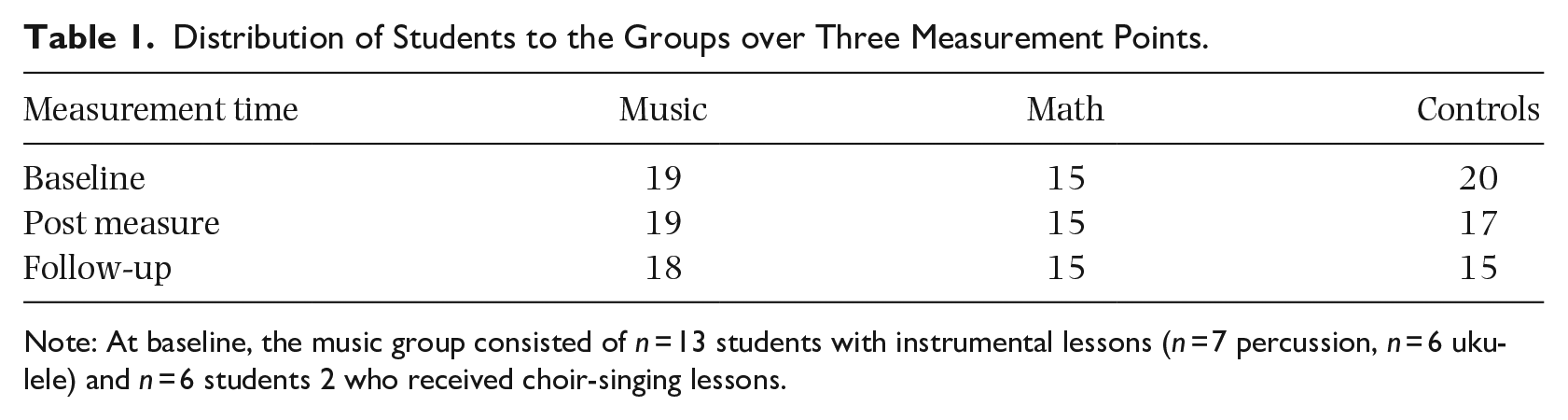
Note: At baseline, the music group consisted of n = 13 students with instrumental lessons (n = 7 percussion, n = 6 ukulele) and n = 6 students 2 who received choir-singing lessons.
Table 2 displays the musical background of participants (prior musical experience and participation in the regular curriculum-based in-school music lessons during the study).
Descriptive Statistics of Participants’ Musical Background.
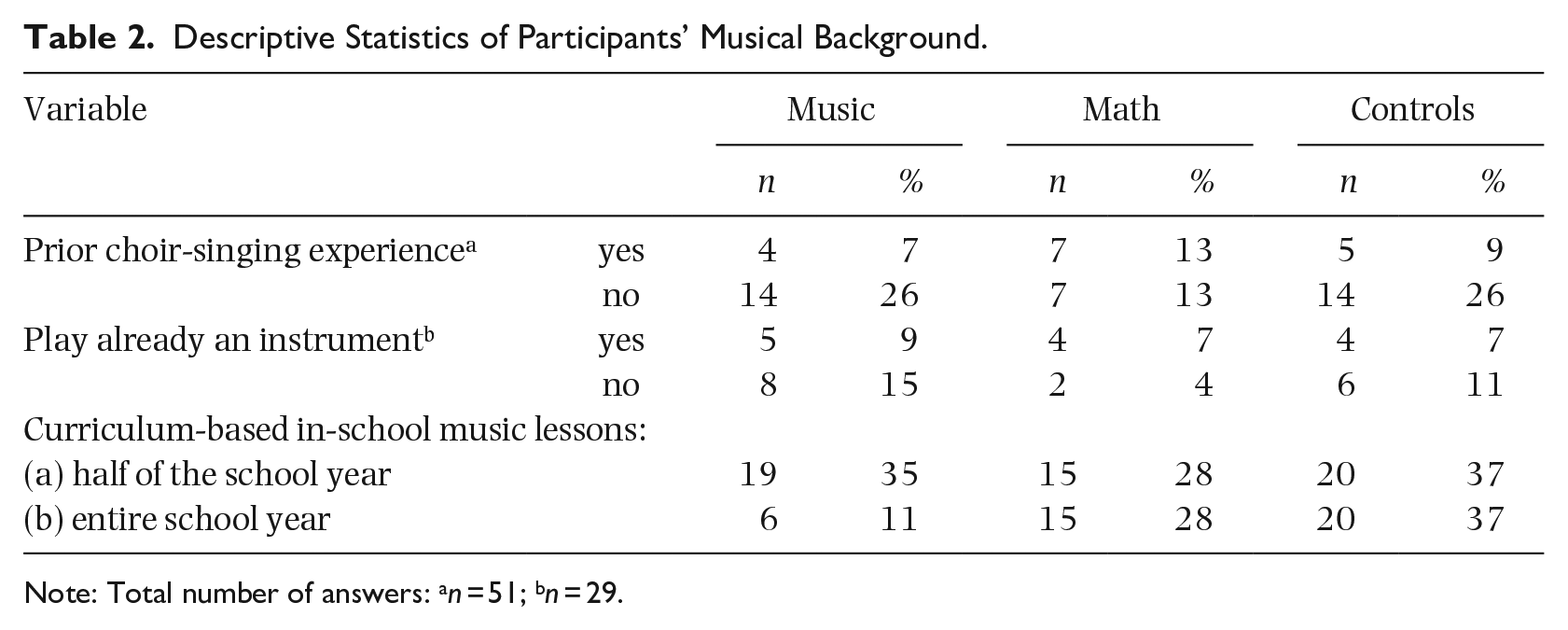
Note: Total number of answers: an = 51; bn = 29.
Measures
Demographic and information about prior musical education, parental educational level, and socioeconomic status was gathered via two questionnaires designed for this study, one for students and one for their parents. At baseline, differences in children’s intelligence were also assessed, as suggested by Bortz and Schuster (2010) for the use in experimental designs. Data was collected via the German adaptation of Cattell’s Culture Fair Intelligence Test (CFT 20-R, Cattell, 1961; Weiß, 2006).
Individual cultural orientations were assessed using the Frankfurt Acculturation Scale for Children (FRACC-C; Frankenberg & Bongard, 2013). The inventory asks to rate behaviors and attitudes with respect to cultural orientation in terms of language use, music preference, and so on, on a 5-point Likert scale and comprises two subscales, composed of six items each. One subscale addresses children’s orientation toward culture of origin (C-Origin) and indicates the level of maintenance of cultural identity (e.g., “I like listening music from my other country”; “I feel good in my other country”). The other subscale reveals children’s orientation toward the host German culture (C-Host), that is, the desire to adopt values of the new culture (e.g., “I like watching German TV”; “I know many German songs”). Each scale can range from 0–24 points. For both scales, the higher the score, the stronger the orientation toward that culture. The internal consistency of the scales in this study yielded following scores: C-Host: T1 α = .69; T2 α = .76; T3 α = .78; C-Origin: T1 α = .84; T2 α = .80; T3 α = .70.
In addition, a questionnaire for the assessment of school experiences, Questionnaire on Emotional and Social School Experiences of Primary School Children in the Third and Fourth Grades (FEESS 3–4; Rauer & Schuck, 2003) was administered. Via seven subscales, the inventory addresses children’s perceptions regarding their integration in school, their academic achievement, and their interaction with teachers. The two subscales relevant for this study are “Social Integration,” measuring children’s perceived acceptance in school and by their peers, and “Self-concept,” assessing a child’s perception of his/her own academic achievement. Participants provided answers on 4-point Likert scales, with possible total scores ranging from 0–33 (Social Integration) and 0–45 (Self-concept), respectively. In this study, the scales yielded the following internal consistency: Social Integration: T1 α = .80; T2 α = .68; T3 α = .53; Self-concept: T1 α = .84; T2 α = .79; T3 α = .41.
Design and procedure
This study utilizes a longitudinal design with three groups and three measurement time points. Children were assigned to one of the groups in a quasi-randomized procedure. Children could be assigned to interventions within their own school only. Randomization therefore only took place within schools where at least two of the three groups (music, math, control) could be implemented. An a priori power analysis was executed by the software program G*Power (Faul, Erdfelder, Buchner, & Lang, 2009) and indicated that for conducting an analysis of variance (ANOVA) with three repeated measures and three groups (α-level: .05, power [1 – β]: .80, correlations among repeated measurements: .50), a total of 36 participants would be sufficient to obtain a medium effect size f = .25 3 (Cohen, 1988).
Participants were recruited from six primary schools in Oldenburg, Germany. In advance, the study received approval from the Research Ethics Committee of the Carl von Ossietzky University, Oldenburg. Parents of participating children gave informed written consent prior to data collection.
During the school year, which lasted approximately 10 months, children participated in one of the school-based interventions. They either received extended music lessons or took part in a game-based mathematical training group. This means that music children received one hour additional music training per week and math children received one hour additional math games per week. Children in the control group did not receive extracurricular training; they had the choice to either go home or participate in other in-school lessons.
Participants completed the questionnaires three times. Baseline measurements were conducted at the beginning of the third class (baseline/T1: August–September 2017); the second measurement occurred at the end of the school year (post measure/T2: May–June 2018); and the third measurement was proceeded after a retention of intervention of approximately six months (follow-up/T3: November–December 2018). Participants were tested together in their classrooms beginning at 8:00 AM. At baseline, an intelligence test (CFT 20-R; Weiß, 2006) and demographic data from students and their parents were collected. Further, the FRACC-C (Frankenberg & Bongard, 2013), FEESS 3–4 (Rauer & Schuck, 2003), and other inventories 4 were administered.
Interventions
The music and math sessions lasted for 45 min each and were administered in each school at the same time throughout the school year. Children in the music groups were taught by professional teachers either to play a percussion instrument or ukulele, or sing in a choir. Each group was taught by one teacher. With the exception of the instrumental lessons which were given in groups of six or seven students, the participants in the choir lessons were taught in larger groups of up to 15 students. Based on reports on the positive effect of both instrumental and singing interventions on musical learning (Saunders, Himonides, Welch, & Le Messurier, 2015), children receiving instrumental or choir lessons were grouped together for further analyses. All musical interventions included general elementary music education.
The other intervention group received a game-based mathematical training program through the use of board and card games, which were repeatedly found to implicitly enhance numerical and arithmetic abilities (e.g., McConkey & McEvoy, 1986; Siegler & Ramani, 2008). Previous research on game-based mathematical interventions has mainly focused on short-term interventions with standardized board games (e.g., Elofsson, Gustafson, Samuelsson, & Träff, 2016; Siegler & Ramani, 2008). More recent studies, in particular designs with more than four weeks of intervention, include a wider range of games and a more naturalistic setting (e.g., Dillon, Kannan, Dean, Spelke, & Duflo, 2017; Gasteiger & Moeller, 2021; Lange, Brennemann, & Sareh, 2021). To avoid negative motivational effects and frustration, we chose a design using different board and card games that included basic numerical activities such as counting and simple arithmetic. Senior Pedagogy students taught small groups of approximately four school-students.
The intervention groups were heterogeneous and consisted of both migrant and German students. The difference in student-teacher ratio between the music and math interventions was due to a lack of teachers available for conducting the musical training program.
Data analyses
Repeated measures ANOVA were conducted for inferential analyses. Experimental design was a 3 × 3 mixed model, with Group as the between-subject factor and Time as the within-subject factor. In case of violation of sphericity, results of Greenhouse-Geisser Correction were considered. Bonferroni post-hoc tests were applied when necessary for multiple comparison of means. The final data was submitted to the statistical software IBM Statistics SPSS 24 (IBM-Corporation, 2016) for analysis. Differing sample sizes are due to missing values. In case of one missing value per scale, data imputations were conducted.
Results
Possible baseline differences between groups concerning demographic variables such as age, IQ, sex, parental educational level (highest educational achievement of each of the parents; number of books at home), and socioeconomic status (rank of occupation of each of the parents; parental income), as well as mother tongue, birthplace, and time spent in the origin country were analyzed. Information concerning parental educational level and socioeconomic status was available for a range of 16 (30%) to 22 (41%) participants. Groups were well balanced in terms of age, IQ, parental educational level, and socioeconomic status (see Table 3). Gender was also equally distributed between the groups, χ2 = 0.75, p = .687, as well as mother tongue, German vs. non-German: χ2 = 3.8, p = .149, and birthplace, Germany vs. another country: χ2 = 5.52, p = .238. Regarding the time spent in the origin country, the groups were again well-balanced, F(2, 46) = 0.479, p = .622,
Descriptive and Test Statistics of Age, IQ, Parental Educational Level, and Socioeconomic Status of the Music, Math and Control Groups at Baseline.
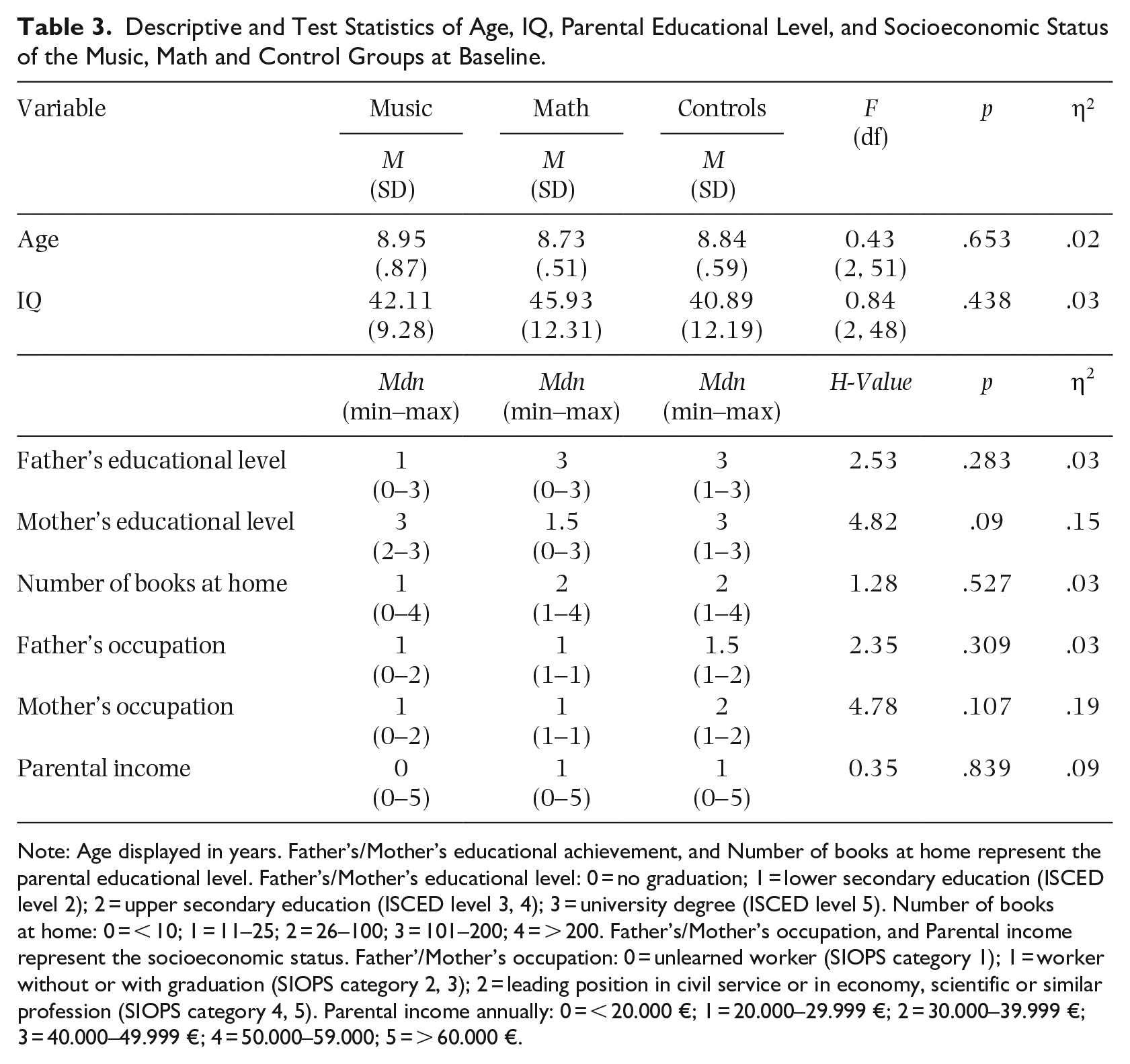
Note: Age displayed in years. Father’s/Mother’s educational achievement, and Number of books at home represent the parental educational level. Father’s/Mother’s educational level: 0 = no graduation; 1 = lower secondary education (ISCED level 2); 2 = upper secondary education (ISCED level 3, 4); 3 = university degree (ISCED level 5). Number of books at home: 0 = < 10; 1 = 11–25; 2 = 26–100; 3 = 101–200; 4 = > 200. Father’s/Mother’s occupation, and Parental income represent the socioeconomic status. Father’/Mother’s occupation: 0 = unlearned worker (SIOPS category 1); 1 = worker without or with graduation (SIOPS category 2, 3); 2 = leading position in civil service or in economy, scientific or similar profession (SIOPS category 4, 5). Parental income annually: 0 = < 20.000 €; 1 = 20.000–29.999 €; 2 = 30.000–39.999 €; 3 = 40.000–49.999 €; 4 = 50.000–59.000; 5 = > 60.000 €.
Furthermore, variables related to the musical background of participants such as choir membership, χ2 = 3.18, p = .204, playing a musical instrument, χ2 = 1.46, p = .481, and receiving lessons on that instrument, χ2 = 0.83, p = .66, were also similarly distributed across groups.
One-way ANOVAs were conducted to identify possible baseline differences in acculturation orientation between the three experimental groups. Concerning both C-Host (Welch-Test) F(2, 31.21) = 2.14, p = .135,
Next, repeated measures ANOVA for the dependent variables C-Host and C-Origin were performed on the subsamples of students for whom complete data was available (C-Host n = 45; C-Origin n = 44). Regarding C-Host, neither main effects, Time: F(2, 84) = 0.87, p = .424,
Descriptive Statistics of C-Host, C-Origin, Social Integration, and Self-Concept of the Music, Math and Control Groups at Three Measurement Points.
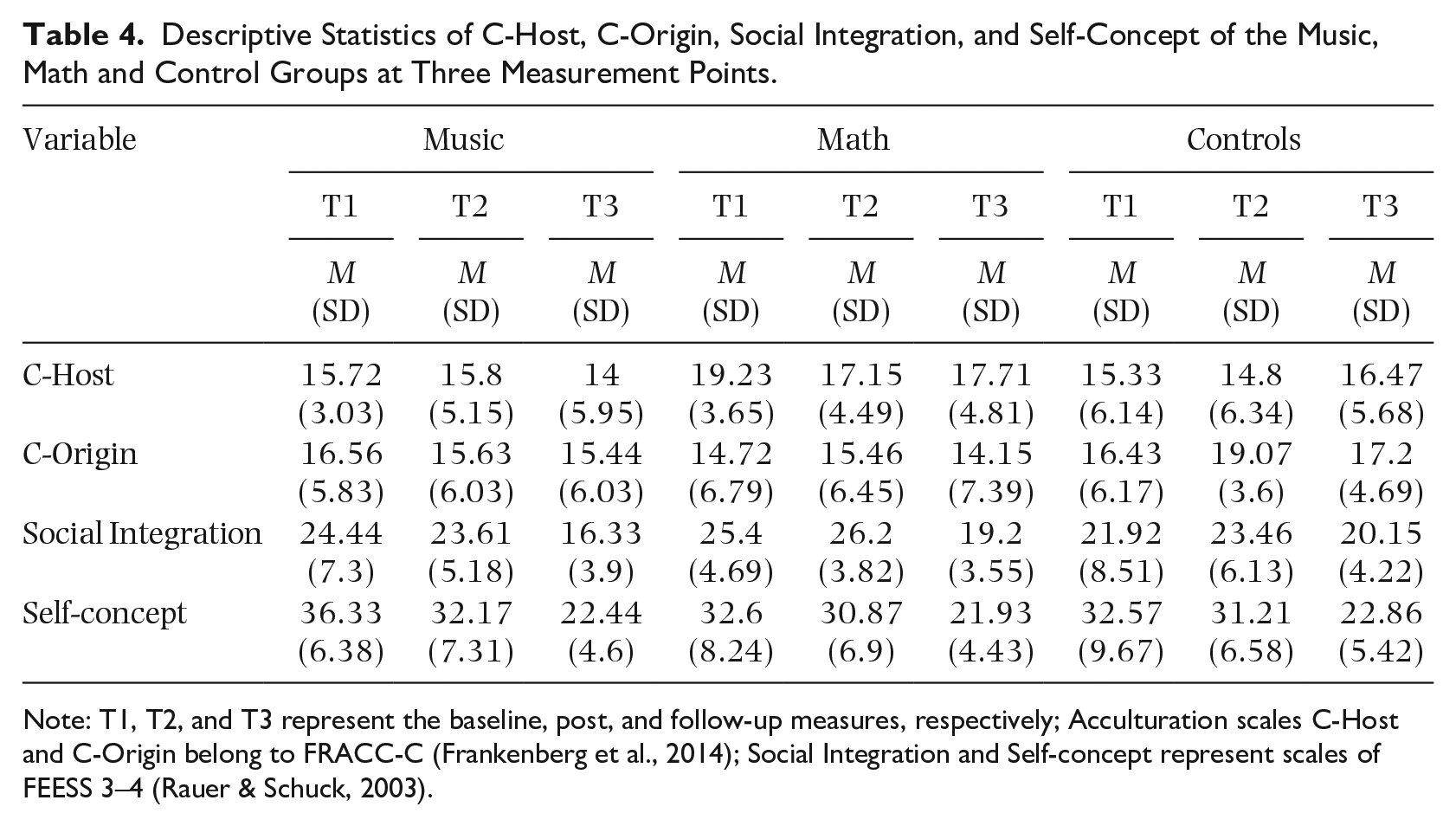
Note: T1, T2, and T3 represent the baseline, post, and follow-up measures, respectively; Acculturation scales C-Host and C-Origin belong to FRACC-C (Frankenberg et al., 2014); Social Integration and Self-concept represent scales of FEESS 3–4 (Rauer & Schuck, 2003).
Further, one-way ANOVA yielded no group differences for Social Integration, F(2, 49) = 0.75, p = .477,
In the next step, repeated measures ANOVA were performed for Social Integration and Self-concept. Analyses were conducted for subsamples of students for whom complete data was available (Social Integration n = 46; Self-concept n = 47). Concerning Social Integration, a main effect of time, (Greenhouse-Geisser) F(1.59, 68.32) = 24.92, p < .001,
The Self-concept scale (n = 47) also showed a main effect of time, (Greenhouse-Geisser) F(1.65, 75.56) = 48.3, p < .001,
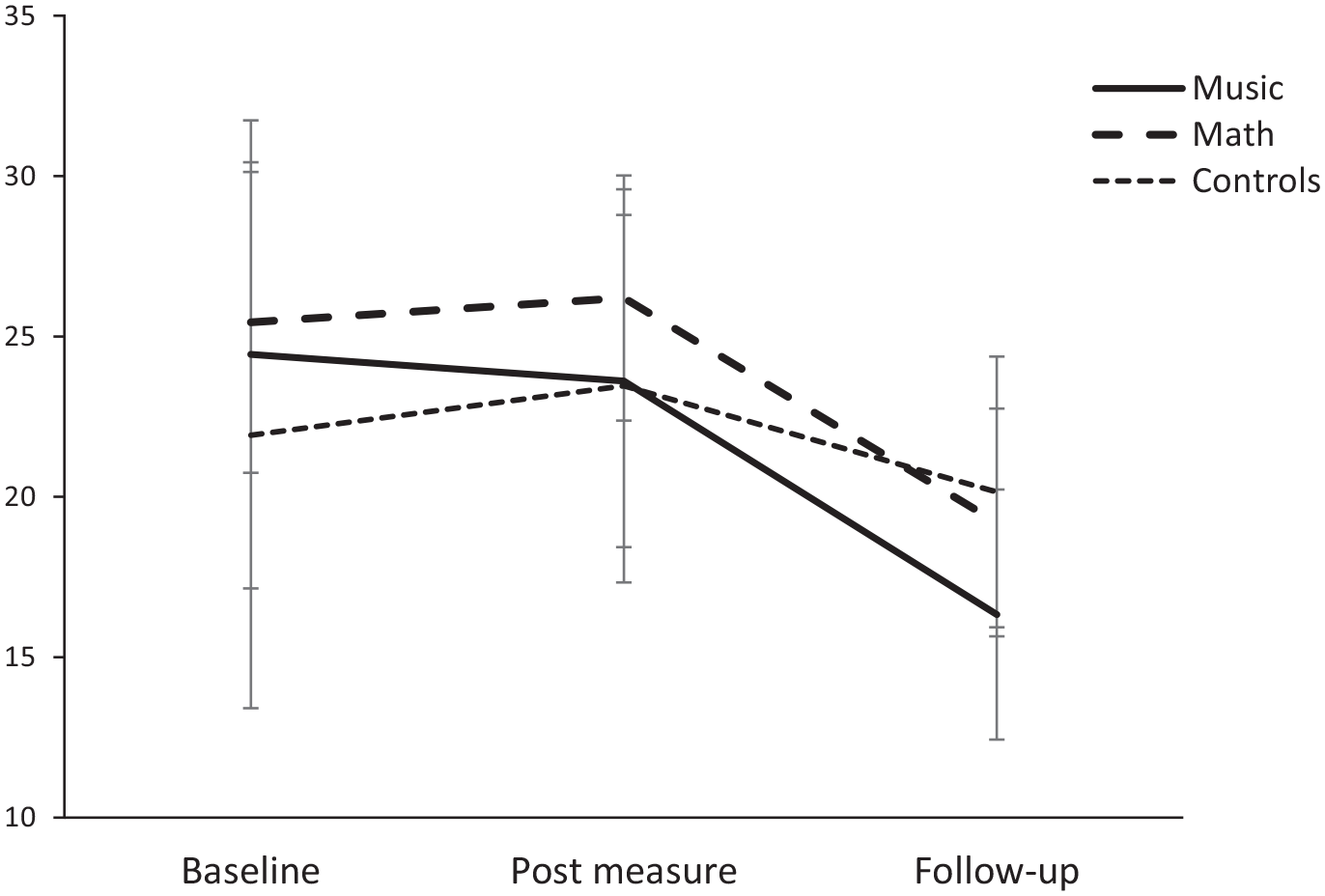
Mean Ratings of the Social Integration Scale for Music, Math and Control Groups at Three Measurement Points.
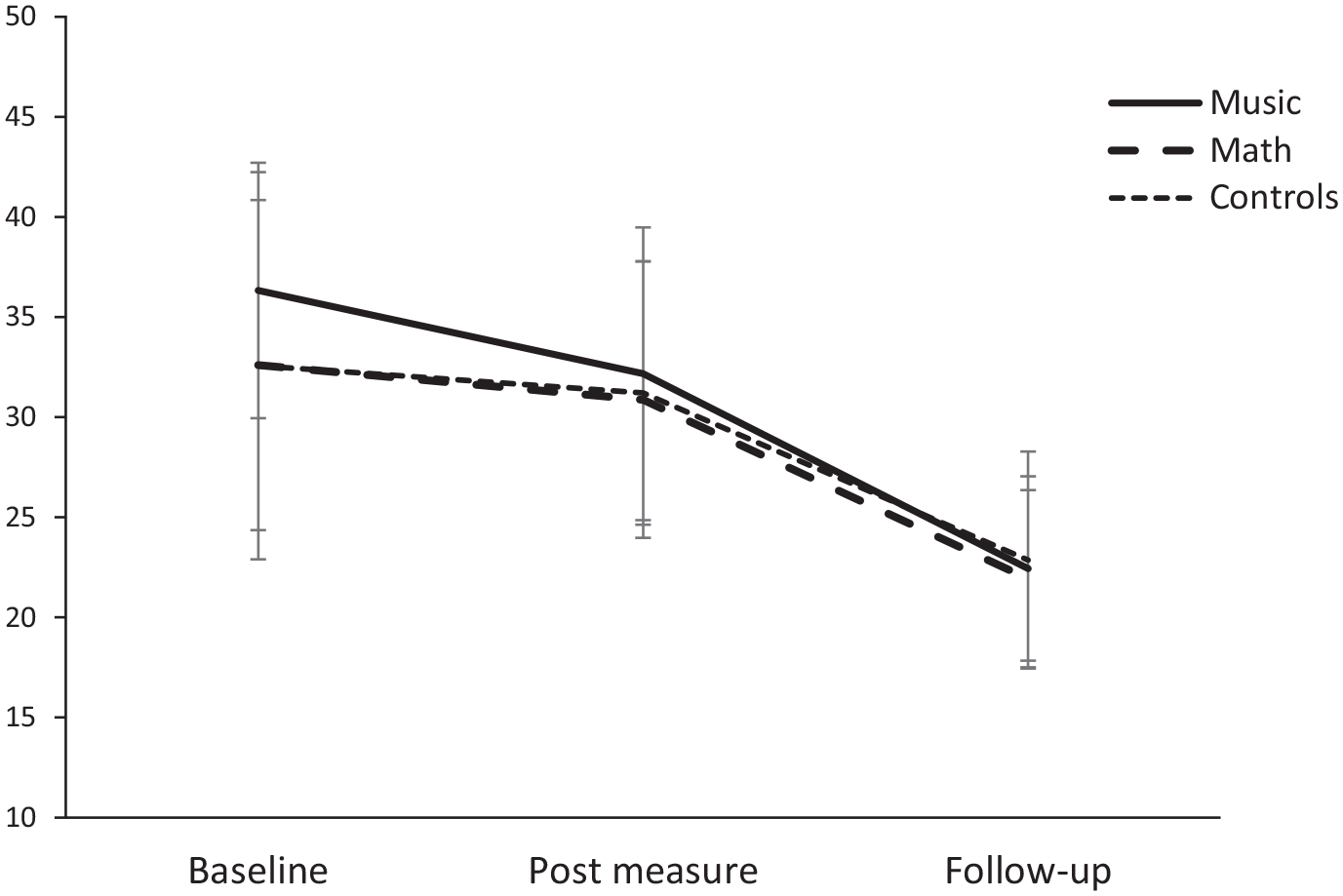
Mean Ratings of the Self-Concept Scale for Music, Math and Control Groups at Three Measurement Points.
Discussion
The present study sought to replicate and extend previous findings by Frankenberg et al. (2014), who observed a significant association between learning to play musical instruments at school and enhancement of orientation of migrant students to their host culture. The authors conclude that the experience of playing in ensembles or singing in a choir, which implies collaborating and performing music together in larger groups, might be the key for the positive results. However, our findings do not replicate these results. Furthermore, contrary to the precursor study and other research, we did not find improvements in the social integration of students in the classroom. In addition, the self-concept of participants was not affected by the musical intervention.
In the present study, we found that the scores on the orientation to host culture scale remained stable over the three measurement points and were similar between the music and the other groups. Consequently, the first hypothesis (H1) was not confirmed. This result mirrors findings reported by Frankenberg et al. (2014) for a group of younger children who did not experience ensemble play, but stands in contrast to the positive effects found in slightly older students who played in ensembles. In line with the previous study, we did not find any influence of music tuition on children’s orientation to their original culture, rejecting Hypothesis 2.
Considering children’s perceived social integration in the classroom and the self-concept scale, main effects of time occurred for both scales, with considerably lower scores in all groups at the follow-up measure compared to baseline and post measures. The observed effects of time for both scales were large (Cohen, 1988). No such changes were recorded directly after the intervention. Since no main effects of group or time-by-group interaction were found, the results lead to a rejection of the third hypothesis (H3: a, b). Furthermore, no transfer effects of the musical intervention regarding the orientation of students to host culture occurred, so a moderation of the transfer through the perceived social integration in the classroom and self-concept seems implausible. This leads us to reject the final hypothesis (H4: a, b).
We note that no baseline imbalances between groups regarding demographic variables and all dependent variables were found. Thus, it seems unlikely that these variables contributed to the outcomes. However, although parental educational level, socioeconomic status, and musical background were balanced between groups, there was also a higher level of missing data for these variables. Moreover, we could not deliver a clear account of the musical experience of children aside the interventions and therefore, not conclude about such influences.
In order to understand the large decline of scores regarding children’s perceived social integration and self-concept in all groups after the retention period, an exploration of possible influencing factors is warranted.
The first reason might be related to the timing of the study within the curriculum. The last measure in our study occurred in the middle of fourth grade, the period when a school selection takes place in Germany. This seems to be stressful for many students and is therefore described as a critical life period (Aust, 2010; Sirsch, 2000). Because the decreases were recorded on both, Social Integration and Self-concept, this might be due to the elevated level of correlation that was found between these measures (Schulz-Heidorf & Schwippert, 2014). Analyzing the link between these variables in a cohort of fourth graders, the authors found a strong positive correlation and concluded that this is a consequence of the social comparison characteristic that the self-concept includes. Because beginning with grade five, children attend a lower or higher form of education depending on their previous educational achievements, the type of educational setting seems to predict their graduation degree (Van Ophuysen, 2006). In addition, their future occupation and life status may seem to be settled, which represents a threat for many children (Koch, 2008). Consequently, decreases of Self-concept might be expected (Sirsch, 2000). In a previous study Buff (1991) compared the Self-concept of children who prepared for the school selection with a group of children who did not and found decreases only in the preparing group. Scores increased again after transition. At this point, it is worth noting that in our study, declines with large effect sizes were also found on both scales in all three groups of the cohort of German counterparts (n = 73) attending same school classes. The fact that both migrant and German students reached lower values corroborates this assumption.
A second reason is possibly anchored in children’s developmental setting. Students were about 10 years old at the third measurement, thus entering a prepubertal stage (Otto, 1983). This appears to be accompanied by physical, psychological, and behavioral changes that precede puberty. The physical development includes body and brain changes. At the same time, children have to fulfill social expectations. This requires psychosocial adaptation strategies, which might not be completed at this point. Hence, these changes possibly increase the emotional vulnerability temporarily and therefore challenge and possibly overwhelm individuals (Gulde et al., 2016).
In the case of migrant children when resources and strategies to cope with challenges of the host culture are not developed enough, for example, insufficient language proficiency, or when social support is not provided, acculturation stress and consequently, a negative wellbeing might emerge (Frankenberg, Kupper, Wagner, & Bongard, 2013). Moreover, it seems that differences concerning the level of emotional and psychological problems might occur when comparing migrant and German children as observed within the extensive KiGGS study (Hölling, Erhart, Ravens-Sieberer, & Schlack, 2007). Further, the supportive role of the parents concerning possible difficulties of children in adapting to the requirements of the new society or an eventual discrimination by their peers may be affected by the parents’ acculturation level and their previous social experiences (Frankenberg & Bongard, 2020). Since we do not have enough information regarding previous potential flight experiences of parents because of war or persecution, or about the parental acculturation level, we cannot conclude anything about such influences. But the lack of resources seems another plausible reason for understanding the mechanisms which lead to the decreasing results. However, maturational factors and developmental tasks seem to occur simultaneously to integration processes and therefore represent high potential stress sources migrant children must cope with (Frankenberg & Bongard, 2020).
Frankenberg et al. (2014) found support for positive effects of musical training on the orientation of children to the host culture in one cohort only after an assessment period of 18 months. Therefore, as students in our study received only 10 months of musical training, this might not have been long enough to affect the orientation toward the host culture and generate stable long-term acculturation outcomes in children. Positive effects of music lessons for other cognitive skills, for example, the improved verbal memory skills found by Roden et al. (2012), were shown after 18 months of musical training, suggesting the need of longer intervention periods to enable transfer of skills.
Second, the frequency of music lessons was higher in the previous study. The intervention consisted of two weekly sessions besides participating in an ensemble, whereas students in our study attended the musical intervention once per week. The curriculum prevented a higher frequency of music lessons. A longer duration of music lessons might enable positive transfer as demonstrated by Neto, Da Conceiçao Pinto, and Mullet (2016), who found decreases in the attitude toward dark-skinned people by sixth-graders participating in weekly musical training sessions of 90 min. Since students in our study received only one additional school hour per week and this even replaced the curriculum-based in-school music lessons, as in the case of children with instrumental tutoring, this might have been too seldom or too short to stimulate a sense of belonging between children.
Third reason might be the higher connectedness which was reached through ensemble play in the preceding study by Frankenberg et al. (2014), since effects were only found in those children joining the school ensemble. The collaboration between children possibly facilitated attachment and consequently promoted a higher orientation of migrant children to host culture. In the present study, only n = 6 children sang in a choir as part of the music intervention, which may be comparable to ensemble play.
The lack of positive results of the musical intervention could also be due to a more general acculturative stress (Birman & Simon, 2014) that affects the capacity of children to adapt and learn in school (Iversen, Sveaass, & Morken, 2014). Furthermore, the high dropout-rate of children in the musical training group, which caused the need to settle the condition of 70% attendance, might have affected the dynamics between the members of the group by creating different intervention group sizes and subsequently inhibited the acculturation process. Moreover, it has been shown that attrition could also indicate motivational problems in some children (Pakarinen et al., 2010).
Limitations
A main limitation of this study concerns the high dropout-rate of children in the musical training group, which probably affected the relations between students. A stable constellation of groups appears indispensable for creating routes toward integration. Consequently, it may be that lack of perceived group cohesion may have acted as a barrier. In addition, adherence to the music program may have been compromised by cancelation of individual sessions during the intervention period. Furthermore, since we were told about high stress level among teachers, this possible influencing factor and its consequences on students’ motivation need to be considered. Finally, our findings can speak for participants most of whom were born in Germany, which leave open the relevance of music training for recently migrated children (Busse et al., 2018).
Conclusions
Our findings could not confirm the main hypothesis that extended musical training would lead to improvements in the orientation of migrant children to the host culture and their perceived integration. Despite the obvious conflict with the precursor study by Frankenberg et al. (2014), the question of whether and how musical interventions might enhance acculturation processes or at least contribute to foster group integration in primary school children remains open. Longitudinal pragmatic trial strategies appear most appropriate to date to arrive at more informed conclusions in these matters.
Supplemental Material
sj-pdf-1-pom-10.1177_03057356221097990 – Supplemental material for The influence of school-based musical training on acculturation processes in children: Findings from a longitudinal study
Supplemental material, sj-pdf-1-pom-10.1177_03057356221097990 for The influence of school-based musical training on acculturation processes in children: Findings from a longitudinal study by Stefana Francisca Lupu, Ingo Roden, Mara Krone, Jasmin Chantah, Emily Frankenberg, Stephan Bongard and Gunter Kreutz in Psychology of Music
Footnotes
Funding
The author(s) disclosed receipt of the following financial support for the research, authorship, and/or publication of this article: This study was subsidized by the German Federal Ministry of Education and Research awarded to the last author (FKZ: 01JK1613A).

Supplemental material
Supplemental material for this article is available online.
Notes
References
Supplementary Material
Please find the following supplemental material available below.
For Open Access articles published under a Creative Commons License, all supplemental material carries the same license as the article it is associated with.
For non-Open Access articles published, all supplemental material carries a non-exclusive license, and permission requests for re-use of supplemental material or any part of supplemental material shall be sent directly to the copyright owner as specified in the copyright notice associated with the article.
