




Abstract
Current models of aesthetic experience of music (AEM) have emerged in the recent years capitalizing on evidence from psychology and neuroscience research, thus modeling mainly cognitive and information processes in the brain. However, a large part of the empirical research on which these models are based is related to Western tonal music, while another style of Western music, namely, contemporary classical music (CCM), has been almost neglected. CCM is often dissonant and lacks a tonal hierarchical structure, as, for example, in serial musical pieces. The current study qualitatively explored aesthetic dimensions of a CCM experience by contrasting it to classic–romantic music (CM). To this end, 16 semi-structured interviews with experts of both CCM (n = 8) and CM (n = 8) were conducted. The interview guide consisted of questions relating to physiological, affective, and cognitive dimensions of music listening. We applied qualitative content analysis on the textual material and compared the emerging main and sub-themes between the groups. Our findings show that especially the categories of expectations, physiological and emotional responses, pleasurable aspects, and, lastly, existential relevance revealed striking differences which allow us to conclude that CM and CCM afford distinguishable types of AEM in listeners.
Modeling the aesthetic experience of music
Part of the answer to the perennial question why humans make and listen to music lies in the fact that it allows us to have specific experiences, which can be immensely pleasurable, moving, engaging, or transformative (Pelowski & Akiba, 2011). Empirical approaches to conceptualize the aesthetic experience of music (AEM) have been growing in the recent years. Drawing from the field of neuroaesthetics, a particular focus has been on the underlying neural and cognitive processes particularly in relation to music listening (Brattico & Pearce, 2013; Hodges, 2016). However, so far there is no consensus about how to conceptualize an AEM (Istok et al., 2009) also due to the multifarious nature of music and the variety of existing musical genres. In the context of the present study, the term AEM refers to the physical, emotional, and cognitive states and processes that attend an individual’s engagement and internal interaction with a piece of music. With regard to the present study, the typical form of such an engagement with music is listening to it as a work of art, framed by specific aesthetic discourses (Mencke et al., 2019; Wald-Fuhrmann et al., 2021).
While a considerable number of cognitive models and approaches exist in the empirical literature, mainly describing visual art experience (Chatterjee & Vartanian, 2014; Cupchik, 1995; Leder & Nadal, 2014; Locher et al., 2010; Marković, 2012; Pelowski & Akiba, 2011; Pelowski et al., 2016; Redies, 2015; Shimamura, 2012), three models have been explicitly put forward to represent specificities of an AEM (Brattico et al., 2013; Hargreaves & North, 2010; Juslin, 2013).
The majority of these models from both domains conceptualize aesthetic experience in a structure that suggests several input and output variables that are separated by several stages of information processing (for an overview see Pelowski et al., 2016). The most common input variable is the artwork, that is, the sensory stimulus, in which other factors such as background of the individual or context/situation are also involved. These three input variables initiate the “early processing stages” of the entire process of an aesthetic experience and are followed by several intermediate and late processing stages like higher cognitive contributions. The last component is represented by the “output” or “response” of an aesthetic experience. The most prominent conceptualized outputs revolve around aesthetic judgments and certain emotional responses (Brattico et al., 2013; Juslin, 2013; Marković, 2012) and might involve certain bodily reactions and cerebral activity.
These empirical models primarily strive to identify the interrelations between stimulus input and a certain output and are specifically valuable with regard to investigate certain psychological variables of interest. As indicated by some models, these variables are, however, interconnected with partly bidirectional arrows and feedback loops representing the multiple interactions of an ongoing stimulation in each moment in time (especially Leder & Nadal, 2014; Pelowski & Akiba, 2011). The resulting non-linearity of interactions is challenging in case one strives to draw a broader picture of the specificities of an aesthetic experience or aims to grasp the phenomenon as an entity.
Besides information processing accounts, a complementary perspective on how to conceptualize an AEM—which specifically allows modeling of such interactions—is one that takes on a more holistic point of view. Not directly mentioning aesthetics or evaluative judgment processes, but general enough to encompass all kinds of music listening experiences, this approach structures such an experience into three main components comprising of the listener, the situation/context, and the stimulus (representing the main three input variables in the psychological models) as well as all the bidirectional interactions between each other (Reciprocal Feedback Model of Musical Response, Hargreaves & North, 2010; recently transferred to concert research: Wald-Fuhrmann et al., 2021). The key component is represented by the response of the listener, interacting—and modulated by—the listeners’ background, context, and the stimulus itself. This holistic model provides the opportunity to study a variety of responses of a listener as a function of music or musical style and is specifically appropriate for a qualitative research approach as it is pursued in this article. More generally, this co-constitutive tripartite account provides an operational framework for approaching an AEM from a bird’s-eye view; therefore allowing to conceptualize and explore several experiential dimensions within one conceptual idea. More concretely, its structure can be employed fruitfully when aiming to investigate an AEM as a phenomenological entity.
Classical and contemporary classical music
A large amount of psychological research on music listening has been carried out using Western tonal music or tonal stimuli. The major–minor tonal scale has been used for the majority of Western music of the so-called common practice period, encompassing the baroque, classic and romantic periods (c. 1600–c. 1900) in Europe 1 and often referred to as classical music (CM; Hyer, 2001; Taruskin, 2010). In the early 20th century, new forms of CM were developed that were characterized by a conscious turn away from major–minor–tonality and its accompanying musical features such as voice hierarchy, regular rhythm, and standardized form schemes. They were characterized by a free treatment of meter often times resulting in complex rhythmical structures, as well as a lack of tonal hierarchy. Moreover, many pieces had an inherently high degree of dissonance. Going through innumerable developments throughout the 20th century (Hüppe, 2016), these developments have been given different names, among them New music, modern music, and contemporary music; in this article, it will be referred to as contemporary classical music (CCM).
Today, however, it still appears to be a niche style being enjoyed only by a small part of the population (Mencke et al., 2019), which might also explain why this music has been so scarcely represented in music psychology research. However, the aesthetic premises of this strand of music have, in fact, always been accompanied by the aim to challenge the listener and to present the audience with something novel (Utz, 2016). Up to now these aesthetic premises like unexpectedness and novelty are positively valued and underlie the specific appreciation of this style of music (Hiekel, 2016; Mencke et al., 2019). Looking beyond the musical domain, one large-scale study that included interviews found that the rationale of the audience of contemporary art to attend exhibitions was the desire to experience something ‘different’ and ‘new’ as well as something ‘challenging’, ‘difficult’ and ‘unexpected’ (Gross & Pitts, 2016, p. 16).
Given the fundamental differences between CM and CCM, it is plausible to assume that they evoke different sets of experiential dimensions in listeners. The little empirical research that so far compared responses to tonal and atonal stimuli has revealed significant differences regarding several cognitive aspects. While a detailed review of the literature is beyond the scope of this article, one can say that atonal music is more difficult to remember than tonal music (Schulze et al., 2012), evokes weaker expectancies (Vuvan et al., 2014) and due to the partly high degree of dissonance often leads to auditory roughness (Plomp & Levelt, 1965) ultimately leading to sensory unpleasantness. Qualitative data on the pereption of atonal music revealed that listeners when trying to understand an atonal piece seem to focus on small-scale perceptual cues and that the familiarization to atonal music takes longer as compared to tonal music (Prior, 2013).
Generally, however, psychological research so far has the tendency to deal with CCM only as something like a deficient form of CM, rather than as a musical form in its own right that offers its audiences something positive and genuine (for a detailed review of the empirical literature on CCM compared to CM, see Mencke et al., 2019).
Aims of the present study
The current study is primarily aimed at exploring phenomenal dimensions of aesthetic experiences with CCM in comparison to those with CM. A qualitative approach was chosen, first, because far too little attention has been paid to the phenomenon of CCM from an empirical perspective. Second, since we were aiming at an understanding of a genuine listening experience with CCM as a holistic phenomenon, we intentionally decided to employ a method and a model (Hargreaves & North, 2010) that is capable of studying a number of different dimensions of an AEM. Two major research objectives were followed: First, the study sets out to examine whether CM and CCM afford qualitatively different types of aesthetic experiences. Second, we put an emphasis on positive aesthetic experiences with both musical styles in order to explore the possibly different dimensions and qualities of hedonic values that may accompany the experience.
Methods
Interview guide and sample
A semi-structured interview guide (Stigler & Felbinger, 2005) was created following the formal guidelines of Kruse and Schmieder (2014). The questions were mainly generated in reference to the Reciprocal Feedback Model of Musical Response (Hargreaves & North, 2010). Since the main aim of the study was to explore a broad range of subjective states of the listener, the dimensions that the model subsumes under “responses” were taken to inspire specific topics being asked (see Hargreaves & North, p. 5), namely, physiological, cognitive and affective dimension (Table 1).
Questions of the Semi-Structured Interview Guide.
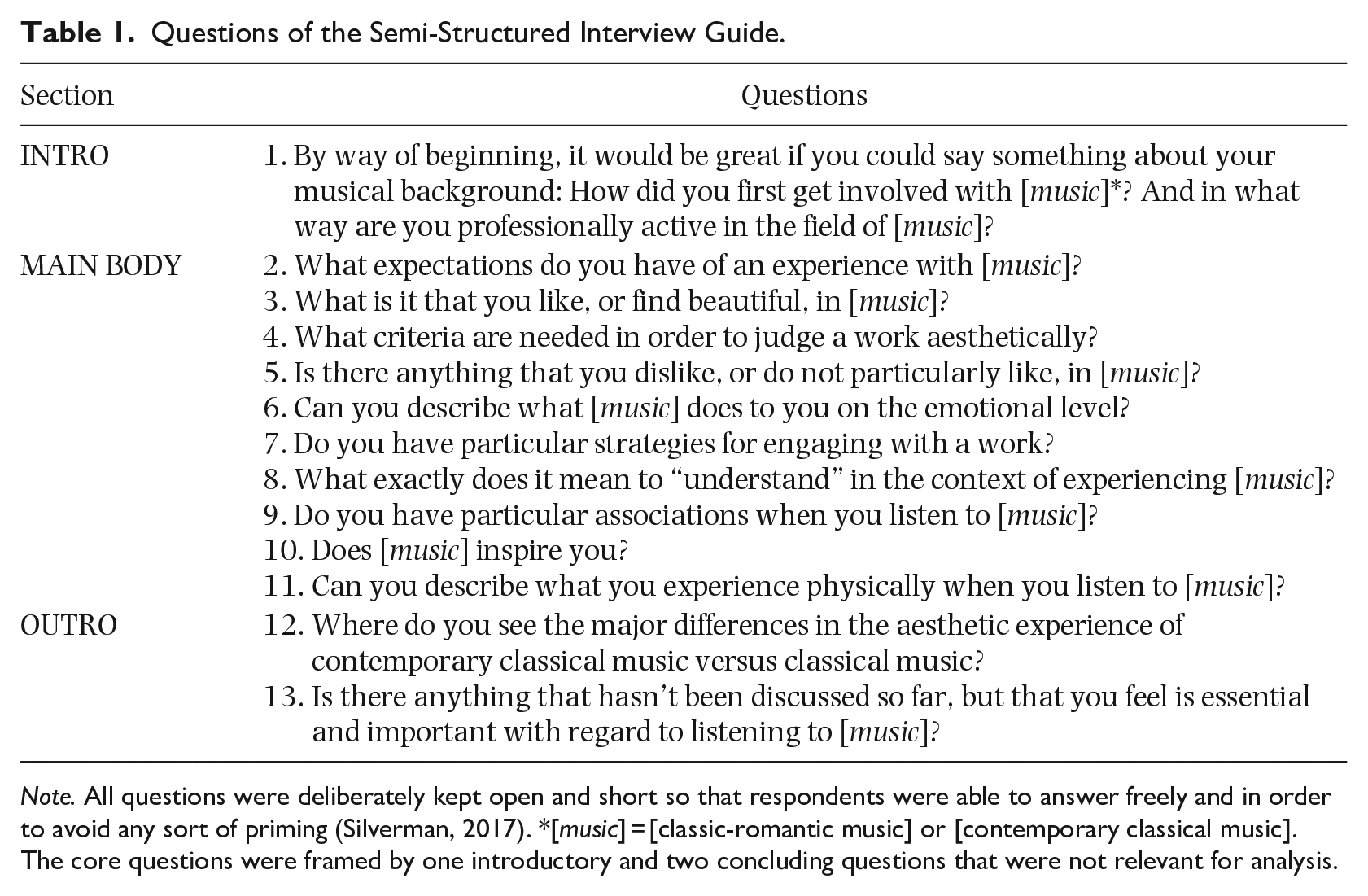
Note. All questions were deliberately kept open and short so that respondents were able to answer freely and in order to avoid any sort of priming (Silverman, 2017). *[music] = [classic-romantic music] or [contemporary classical music]. The core questions were framed by one introductory and two concluding questions that were not relevant for analysis.
The sample was drawn from expert groups. These “expert interviews” (Bogner et al., 2002) were held with individuals who are mainly occupied as professionals in the realm of the respective musical style, namely, artistic directors, festival directors, journalists, or radio editors. These professions were expected to regularly perform activities such as listening attentively to or evaluating music, for example, to select specific pieces or recordings for compiling concert or radio programs. We suspected that these experts would be better able to reflect on their subjective listening experiences and verbalize them accordingly. From this, we hoped to obtain rich textual material that would provide us with a basis for a comprehensive qualitative data analysis.
In total, 16 participants aged between 38 and 57 (M = 49.88, SD = 5.06; 6 women, 10 men) took part in the study, eight interviews with experts from the field of CM and eight interviews with experts active in the field of CCM. Twelve of the participants had studied musicology, seven of them literature or German studies. Six of them had studied music, of which five had studied an instrument (artistic or pedagogical focus) and one to become a school teacher. Three of them were (cultural) managers by training. Eight participants held a master’s degree or diploma, four had a PhD degree, and another four were professors at German or Austrian universities.
Data collection
The interviews took place either in the workplaces or at home of the interviewees. They were recorded with a ZOOM H4n Pro recorder. All experimental procedures were ethically approved by the Ethics Council of the Max Planck Society (Number 2017_12) and were undertaken with written informed consent of each participant. In advance of the interview, participants were asked to select three of their favorite pieces from the corresponding musical period. This not only ensured that they already reflected upon certain aspects relevant for the interview (such as reasons for why they like the one or the other piece) but was also supposed to serve as concrete musical examples during the interview whenever it was necessary for them to refer to a concrete example. Each interview started with the same introductory text read out by the interviewer in order to ensure consistency and the same “priming” across all interviews. This introductory part contained the core message and emphasized the importance that participants report on individual and subjective experiences. Following the guidelines of a semi-structured interview (Kruse & Schmieder, 2014), the conversation was led by the interviewer based on the interview guide. The interviews on average lasted 86 min (CM: M = 79 min, range = 67–93 min; CCM: M = 94 min, range = 66–119 min) and were conducted over a time period of four months. The recordings were transcribed with f4transkript (https://www.audiotranskription.de/f4), following a transcription guideline in order to provide a homogenous text corpus.
Data analysis
A qualitative content analysis approach (Gläser & Grit, 2010; Mayring, 2016; Stamann et al., 2016) was adopted. More specifically, a combination of a deductive and an inductive approach built the basis for the analysis. To this end, the software QCAmap (software for qualitative content analysis) developed by Mayring (2014) was used. First, the entire material was coded deductively in order to reduce the corpus and to extract relevant passages for inductive analysis steps. The core questions of the interview guide represented the deductive category system (Table 2).
Deductive Main Categories (Italics) and Subcategories.
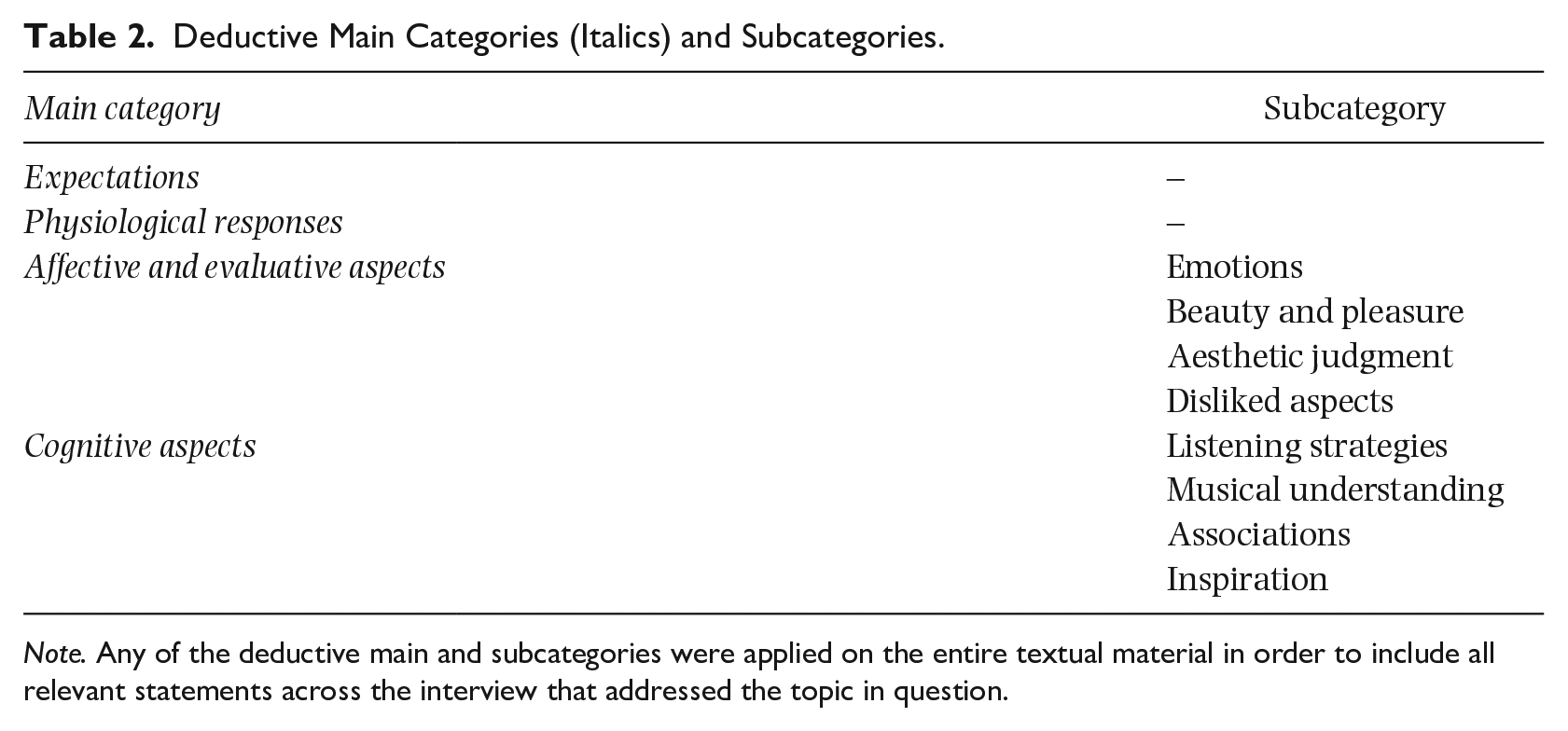
Note. Any of the deductive main and subcategories were applied on the entire textual material in order to include all relevant statements across the interview that addressed the topic in question.
For inductive category formation, the guidelines from Mayring (2014, pp. 79–87) were strictly followed. This “inductive category assignment” is close to the concept of the “open coding” strategy of the grounded theory (Glaser & Strauss, 1967; Strauss & Corbin, 1998) and the emergence of categories from the material itself is key in this approach. The inductive analysis comprised two steps. First, the material was coded in an iterative process leading to subthemes for each of the main or subcategories. Most of the emerging subthemes comprised at least two statements. However, in case one statement addressed a novel aspect that was not yet captured by the other subthemes a new subtheme was established in order to reveal the variety of the findings (such cases are mentioned in the corresponding caption of the tables). After the set of subthemes was complete, they were thematically sorted to higher level main themes (written in italics), where possible. The majority of the main themes comprised at least two subthemes. However, in case one subtheme could not be allocated to one of the other main themes, it was turned into a main theme (such cases are mentioned in the corresponding caption of the tables). These two analysis steps were applied on the CM and the CCM corpus independently and subsequently compared by contrasting the specific main themes and subthemes that emerged within each main and subcategory (Tables 3–9). In order to increase reliability of the results, a trained musicologist was consulted as a second coder to revise the subthemes. This was carried out for the entire corpus. Finally, a review of all coded passages related to the subthemes was conducted.
Results for ‘Expectations’ in Both Groups.
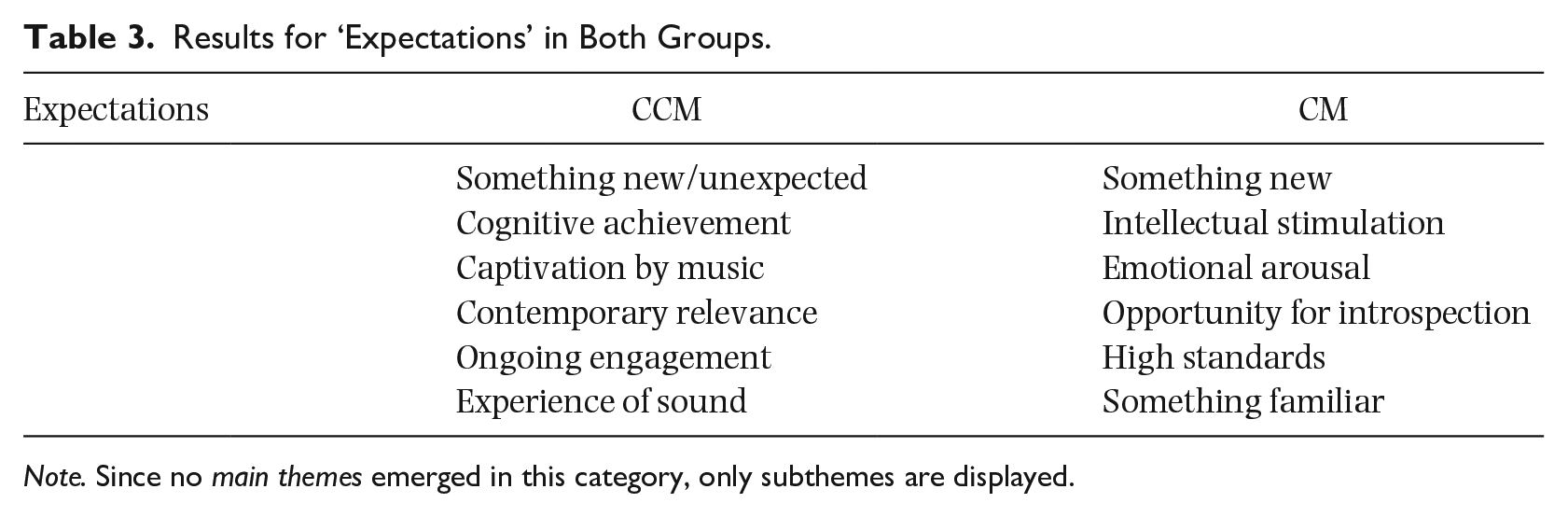
Note. Since no main themes emerged in this category, only subthemes are displayed.
Results for ’Physiological Responses’ for Both Groups.
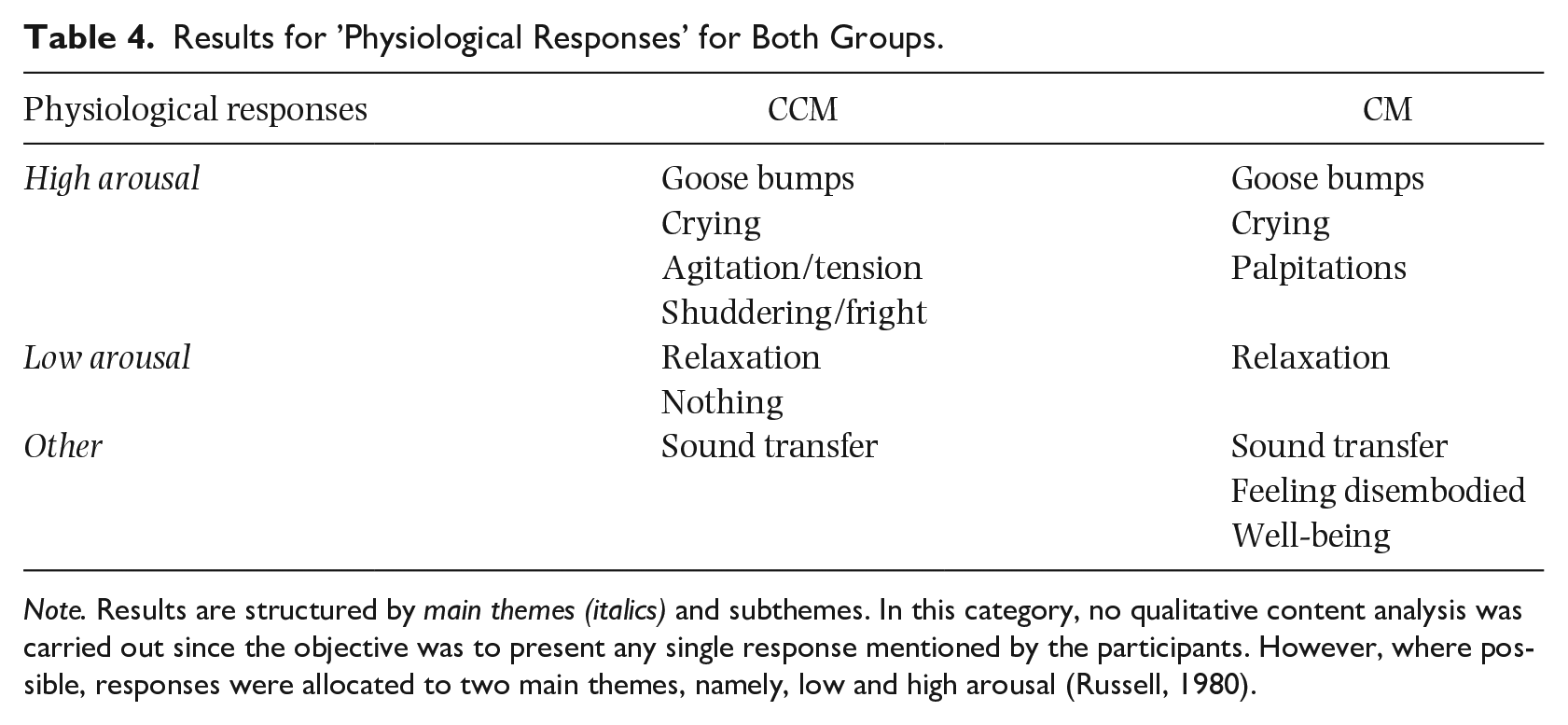
Note. Results are structured by main themes (italics) and subthemes. In this category, no qualitative content analysis was carried out since the objective was to present any single response mentioned by the participants. However, where possible, responses were allocated to two main themes, namely, low and high arousal (Russell, 1980).
Results for ‘Emotional Responses’ in Both Groups.
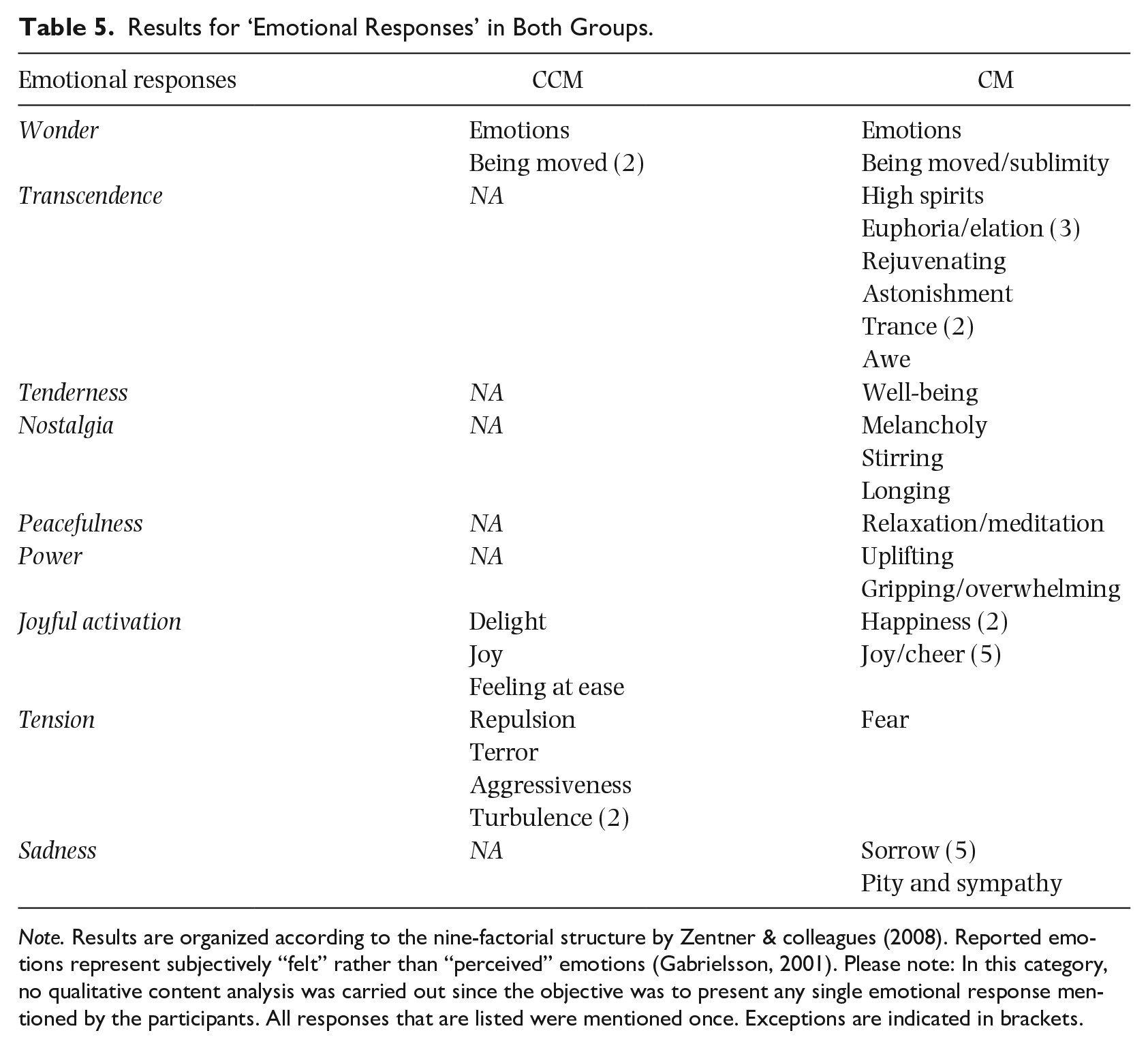
Note. Results are organized according to the nine-factorial structure by Zentner & colleagues (2008). Reported emotions represent subjectively “felt” rather than “perceived” emotions (Gabrielsson, 2001). Please note: In this category, no qualitative content analysis was carried out since the objective was to present any single emotional response mentioned by the participants. All responses that are listed were mentioned once. Exceptions are indicated in brackets.
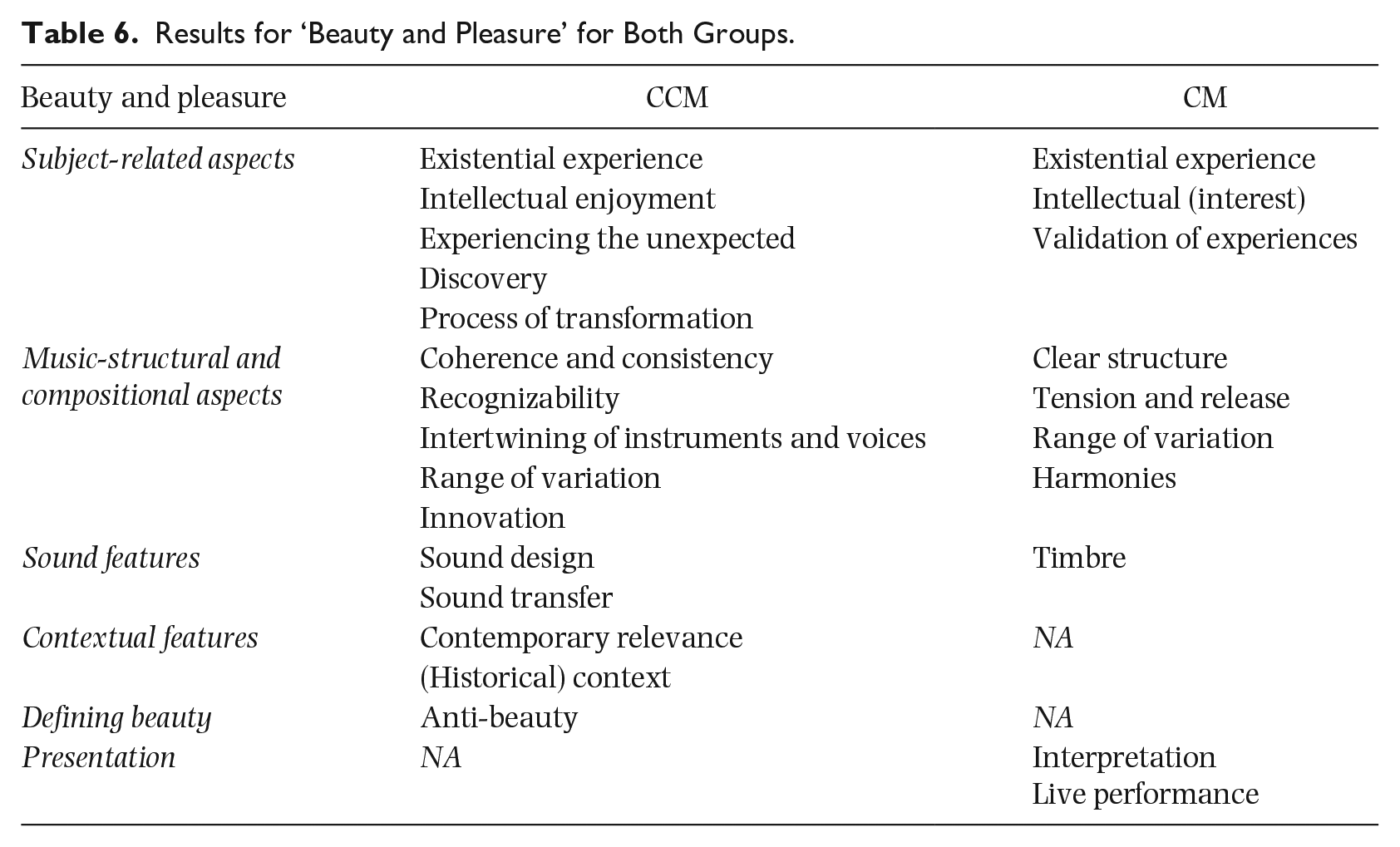
Results for ‘Beauty and Pleasure’ for Both Groups.
Results for ‘Aesthetic Judgment’ for Both Groups.
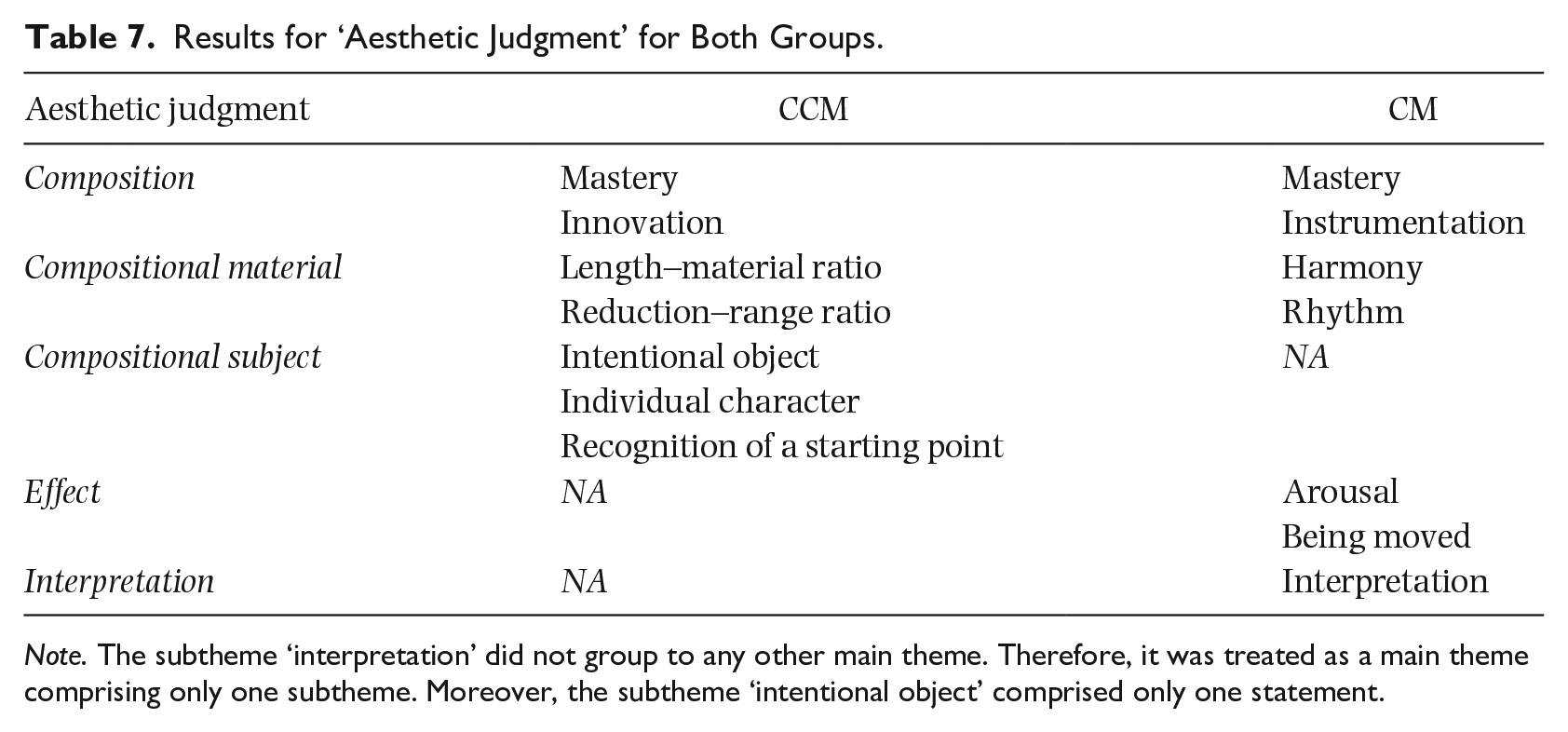
Note. The subtheme ‘interpretation’ did not group to any other main theme. Therefore, it was treated as a main theme comprising only one subtheme. Moreover, the subtheme ‘intentional object’ comprised only one statement.
Results for ‘Disliked Features’ for Both Groups.
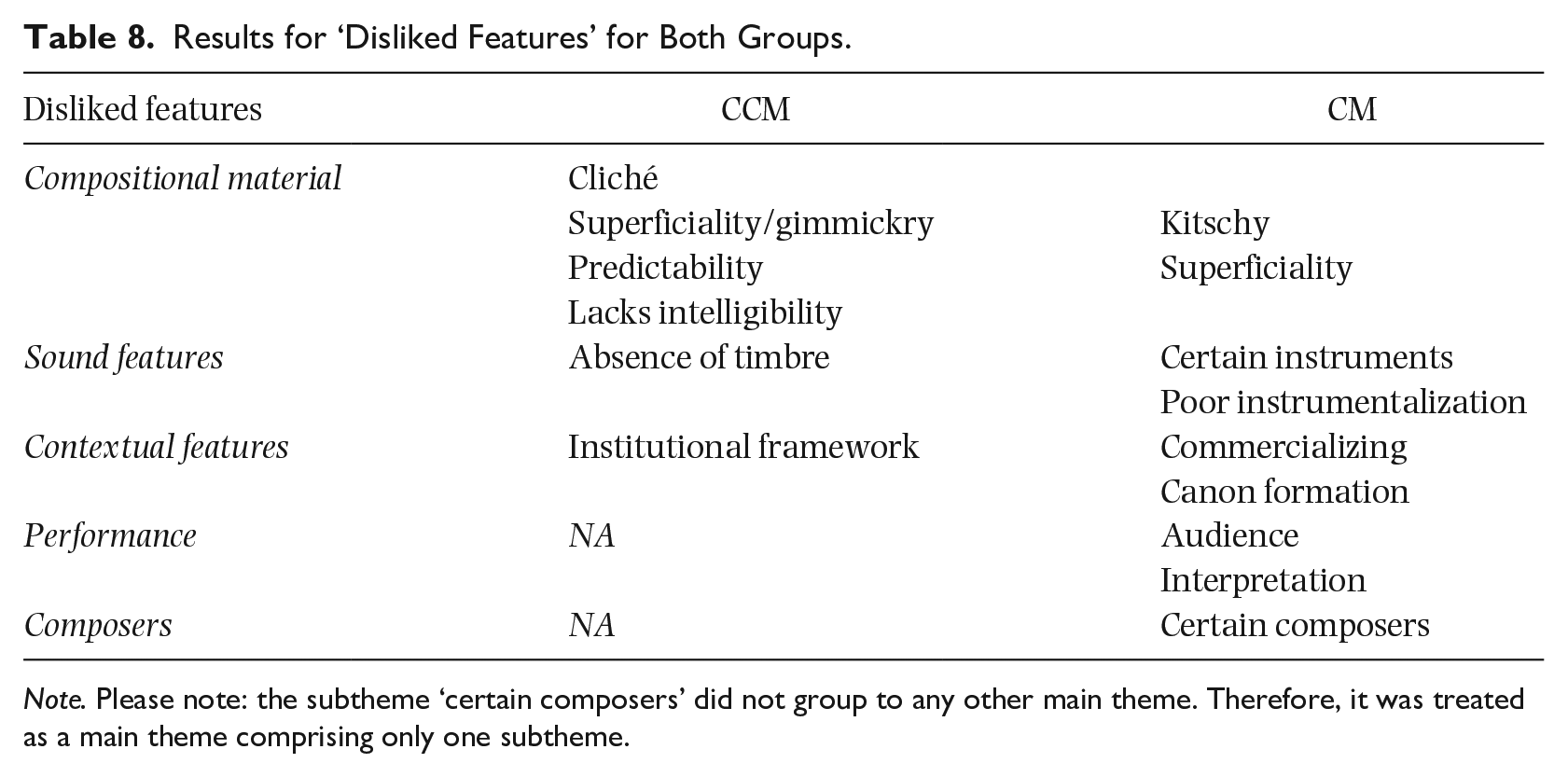
Note. Please note: the subtheme ‘certain composers’ did not group to any other main theme. Therefore, it was treated as a main theme comprising only one subtheme.
Results for ‘Cognitive Aspects’ for Both Groups.
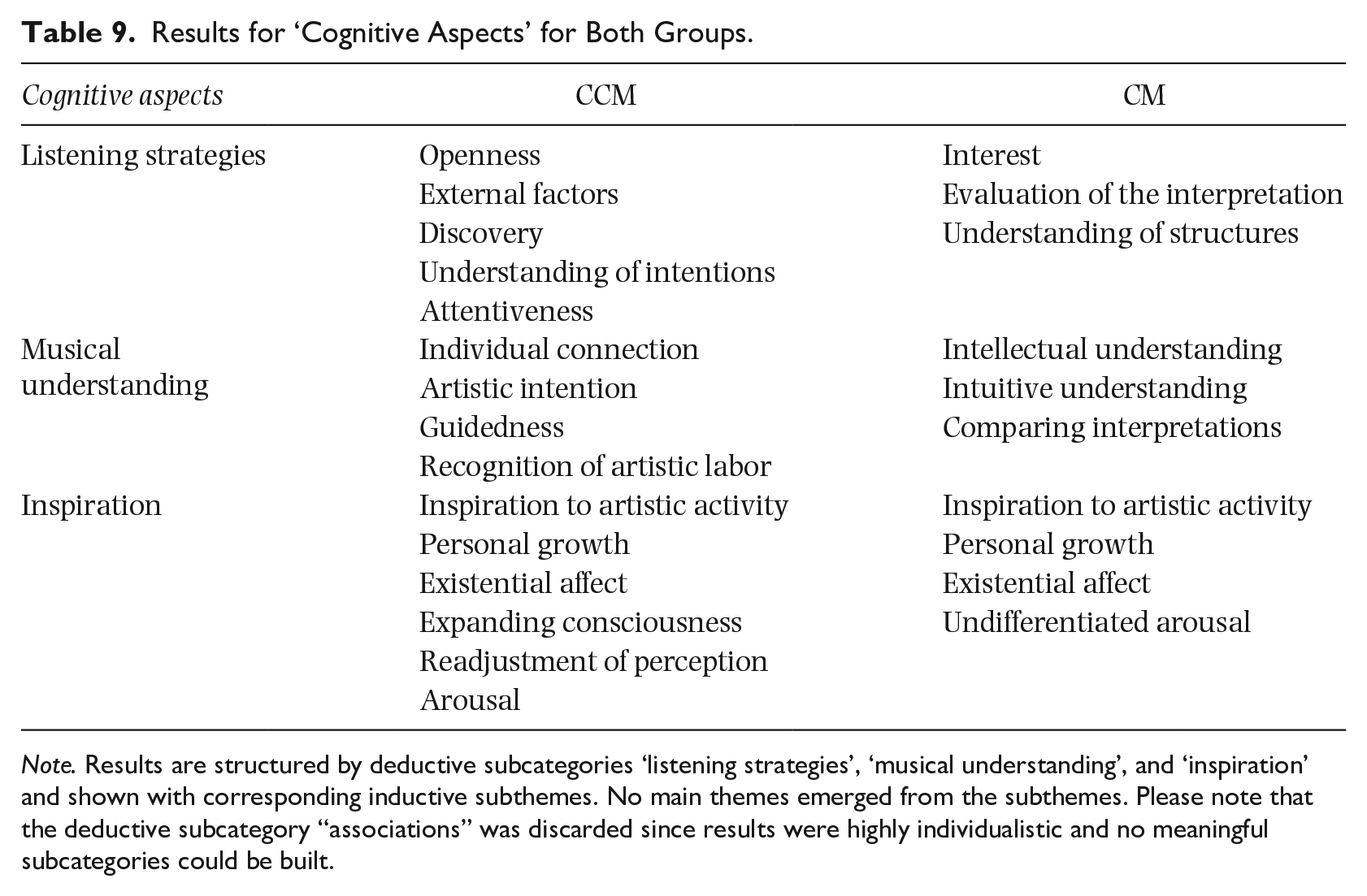
Note. Results are structured by deductive subcategories ‘listening strategies’, ‘musical understanding’, and ‘inspiration’ and shown with corresponding inductive subthemes. No main themes emerged from the subthemes. Please note that the deductive subcategory “associations” was discarded since results were highly individualistic and no meaningful subcategories could be built.
Findings
In the upcoming sections, the themes that emerged in each of the main and subcategories (Table 2) are examined, thus the structure in which they are presented follows the deductive category system. 2
Modifying factor: expectations
‘Expectations’ as a modifying factor of an AEM forms the first main category of this study. Here our aim was to explore what individuals generally expect from a listening experience and what kind of experiential goals they have (Table 3).
Beginning with the commonalities, what stands out is that both groups seem to expect the experience of ‘something new’ when listening to music in certain contexts, namely, in a concert setting. One participant from the CM group talked about the desire to gain “a new perspective, a new experience.” While the ‘new’ in the CM group is rather linked to new interpretations of familiar pieces as well as the discovery of pieces they do not yet know, a comment of a CCM respondent reveals a slightly different notion of discovering something new by suggesting to expect the unexpected: “And then of course you always have the expectation of something unexpected happening.”
Moreover, both groups desire to be intellectually stimulated. While this is addressed in the CM group regarding the demand of a high quality of the performance, respondents in the CCM group talk more about ‘cognitive achievement’ or the aim to go through a “process of understanding.” This is in line with the expressed desire of participants in the CCM group that is summarized in the subtheme ‘ongoing engagement’: “What I also think is very important, is that the piece should give me something that I can continue to think about even after it’s over.” Only in the CM group experts reported to seek a listening experience in order to have the ‘opportunity for introspection’. In contrast, only in the CCM group, the subtheme ‘captivation by music’ emerged and one participant stated: “I really want to be enraptured by the piece.”
Physiological responses
Physiological responses mentioned by the participants revealed several commonalities (Table 4). One commonly expressed notion was ‘sound transfer’, that is, the physical aspect of the sound being transferred to their body. “Your body is inundated with waves of sound and something gets released. It’s an amazing feeling” (CCM group). On the other hand, solely the CCM respondents reported about physiological states subsumed in the subtheme ‘agitation/tension’. They describe their reactions with “physical tension,” “fear,” “anxiety” or that a “flight response” can be triggered. But rather than expressing them in a negative way, they argue that they enjoy it because it is “much more exciting, more interesting and likewise more captivating, as if I somehow knew what was coming next.” On top of that, one participant in the CCM group mentioned sensations of ‘shuddering/fright’. The participant relates it to a reaction that happens, when “a piece of music is very gestural in its composition.” In contrast, in the CM group another interesting subtheme emerged, namely, ‘feeling disembodied’. One interviewee tried to describe an experience that might even point toward the transcendence of body perception to an altered state of consciousness: “when the absoluteness of the work is so powerful that you stop being aware of certain aspects of your own body.”
Affective and evaluative aspects
Emotions
Respondents reported comprehensively on their emotions and feelings during listening experiences. One approach on musical emotions has been suggested by Zentner and colleagues (2008) who classified them into nine factors. Results of the current study are presented according to this structure (Table 5).
Four different kinds of emotions were mentioned across the groups, namely, “delight”/“happiness,” “joy,” “being moved,” and “emotion.” However, the differences are much more striking, namely, the higher number and a much broader range of emotions covering all nine factors evenly in the CM group. An especially broad variety can be found in what Zentner and colleagues (2008) labeled Transcendence in which CM respondents talked about emotions like “euphoria,” “elation,” “awe,” and “astonishment,” only to mention a few. The only factor that was less pronounced by the CM group was that of Tension which, contrastingly, was more frequently represented in the CCM group. Expressions like “repulsion” and “aggressiveness” together with “terror” stick out and, furthermore, resemble the reports about physiological responses of the previous section.
Beauty and pleasure
Respondents were asked what they particularly appreciate and enjoy, as well as what they find beautiful when listening to the music (Table 1). By asking for liking and enjoyment, we strived to learn about experiences associated with musical enjoyment or pleasure and thereby aimed at their immediate and direct response to the music. On the other hand, by asking what they find beautiful in the music, we aimed to learn about objective features of the music to which they ascribe their positive feelings. The predominant goal, however, comprised of gaining insight into states with a positive hedonic value and pleasurable experiences. In this deductive subcategory, a couple of shared main themes emerged (Table 6).
Subject-related aspects refer to descriptions of subjective states by the listener when experiencing the music as beautiful. On the level of subthemes, two striking commonalities can be detected: Both groups reported that they enjoy the music in an intellectual way and that they enjoy the induction of existential experiences, that is, experiences that induce a heightened awareness of their mere existence. In sharp contrast to this commonality is how listeners report on expectations during music listening: While CCM listeners want to experience something unexpected, CM listeners like when their expectations were confirmed. While CM listeners, for instance, describe chordal progressions and the joy of knowing that a specific chord is approaching (“or you can tell that the chord is developing into a shining E major and then all of a sudden there it is, you hear the E major”), surprising and unexpected musical courses are one central motivation of CCM listeners to listen to this music. The last two subthemes in the CCM group reflect an essential dimension of the musical pleasure associated with listening to CCM. Interviewees reported that they enjoyed the active exploration (“joy of discovery”) of a piece of music: “the real pleasure in listening comes from always having new ways of engaging with a work, for probing it through listening.” Particularly prominent in the CCM group were aspects captured under ‘process of transformation’. Respondents report about changes in perceptual processes relating mainly to an ‘adjustment of perception’: “Somehow this idea of beauty involves [. . .] sharpening your perception, refining it, or in any case readjusting it.” Another notion in this subcategory was expressed by a statement relating to consciousness: not only can the music provoke an “experience of heightened awareness” but it is furthermore capable to evoke an “expansion of consciousness”; a subjective state that was described as strongly positive.
Music-structural and compositional aspects were the second-most frequently addressed main theme and represent reports relating to the musical material to which they attributed their positive experiences. What stands out is that the CCM group described pleasurable moments in relation to perceiving ‘coherence/consistency’, that is, when a tone or timbre is being repeated across a piece of music. Talking about this issue an interviewee said: “It’s when something catches your attention, like a flag or signpost in the music that guides your listening.” Another interviewee alluded to the notion of a specific degree of monotony that is positively associated since it can lead to a particular continuity. One participant commented: “Actually it’s a kind of organization, an organizational principle for things coming together in a way that makes sense.” All this is summed up by the following comment by one participant, allocated to the subtheme ‘recognizability’: “it’s a kind of a guide, [. . .] a point of reference that guides you through a work.” On the other hand, the respondents of the CM group similarly indicated that their enjoyment of music is linked to a ‘clear structure’. The participants argued that they like CM because of its structure: “what I like about classical music is that it [. . .] is structured according to recognizable principles” and, for instance its “well-orderedness” and its “cadence” were mentioned as such structural elements. However, whilst the CM experts contextualize this category as a reason for why they like this musical style in general, the CCM experts express it in a conditional way stating that if a specific piece contains coherence or provides a “guide for listening” it engenders a positive experience.
Moreover, both groups raised the topic of sound-related aspects, though the content and quantity differed remarkably between groups. The CM respondents only reported on the enjoyment of ‘timbre’ and how the different timbres of musical instruments are intertwined in a classical piece of music. While ‘timbre’ was also mentioned in the CCM group, another notion emerged there, namely, the notion of “sound sensuality” referring to the property of many CCM pieces playing with sounds as a main factor of the composition itself. Interviewees emphasized that the live experience of CCM allows an especially “sensuous quality”; one interviewee even spoke about an “orgasm of sound” when listening to a specific piece of music.
Only the CCM group challenged the question of beauty. This is captured in the subtheme ‘anti-beauty’: “Beautiful? I can’t say I agree with the question. What I wonder is whether beauty is even important.” Another participant noted that also “ugliness” can evoke the feeling of beauty.
Last, but not least, a subtheme that only emerged in the CM group was ‘interpretation’. One interviewee explained in the context of this question that he/she searches for the “thrill more in interpreting than in the music itself.”
Aesthetic judgment
In the section about aesthetic judgment, participants were asked on which criteria they base an aesthetic judgment of a piece of music. Two common main themes emerged from the textual material (Table 7). With regard to the ‘composition’ itself, both groups mentioned ‘mastery’ an important criterion. However, for CCM listeners, a certain degree of ‘innovation’ seems to be another criterion. The second main theme subsumes all aspects that address the ‘compositional material’ itself and an interesting observation could be made: Whilst the CM group refers to harmony and rhythm having to be “interesting,” “well executed,” and “exciting,” the CCM respondents described their criteria in a more abstract way and reported on the right proportion of “duration and material” as well as on “reduction and range.” One participant commented: “some pieces are just too long . . . the content doesn’t warrant the length.”
The single most striking difference on the level of main themes was that CCM interviewees expressed that a ‘compositional subject’ must be recognized or that a certain topic is recognizable in the music. Admitting that this can be a subjective dimension one respondent commented: “And something else, which is quite subjective but seems important to me, is that I have the impression that the work is actually about something” (‘intentional object’). Moreover, it was noted that a piece should be idiosyncratic and “that the piece has—and is able to express—its own language” as one interviewee put it (‘individual character’).
Disliked aspects
Individuals were asked whether there are aspects regarding the musical style that they dislike. Three main themes emerged across the two groups (Table 8). Regarding the ‘compositional material’, a common view amongst interviewees in both groups apparently was that the music firstly should neither be “kitschy,” nor “clichéed,” and second that it must not be “superficial.” For instance, the CCM respondents stated that they may dislike a piece “that is primitive and superficially trying to please. Something that’s really just going for an effect.” Another facet was expressed by participants of the CCM group who reported two further aspects, namely, ‘insufficient comprehensibility’ and ‘predictability’ in relation to disliked aspects. Further, the CCM experts expressed disliking a piece in case it is excessively demanding as well as when it is too predictable.
Cognitive aspects
Listening strategies
Interviewees were asked whether they have any specific strategy how they approach a piece of music. Results shown in Table 9 reveal almost no overlap between groups. One difference was that CCM experts repeatedly mentioned ‘openness’ as one of their listening attitudes. One participant stated that their “internal mode of reception is, on one hand, attempts to remain open to whatever twist or turn the work may take.” At the same time, they report to explore the music, “to try to discern a plausible trajectory through the work” and “really the point is to be an explorer finding your way through a jungle, an unmapped territory.” A listening attitude of openness and exploration, together with an attentive state (‘attentiveness’) and the aim of understanding the intentions of composers (‘understanding of intentions’) seems to be factors that can determine the listening modes of CCM expert listener.
Musical understanding
The second question addressed dimensions of musical understanding and distinctive notions were revealed. CM respondents mentioned ‘intellectual understanding’ by referring to having knowledge about history and background of a piece and emphasized the importance of ‘intuitive understanding’ by referring to emotional and sensuous experience of the music. Finally, the comparison between different interpretations of certain pieces was mentioned as a factor that determines musical understanding. In contrast, understanding the music in the CCM group is associated with finding an individual access to the piece: “It’s more like having a dialogue with what you’re hearing, a road that you need to pave yourself in your perception.” Similarly, it seems to be driven by grasping intentions of the composer (‘artistic intention’). One last comment of a participant goes one step further by questioning the concept of understanding in CCM subsumed under ‘guidedness’: “if you go in without any expectation of understanding and just let yourself be affected, then you end up understanding more than if you had gone in already expecting to acquire knowledge.”
Inspirations
The third subcategory was based on the question of whether the music inspires the listener in any way. When the textual material was reduced deductively, additional statements were allocated to this main category that addressed experiential dimensions that led to a (personal) transformation or that touched upon existential and transcendental experiences. Three common subthemes emerged from the analysis (Table 9). In both groups, the main theme ‘personal growth’ emerged. One individual in the CCM group stated that “this is how one can develop a capacity for being changed, for being affected in one’s whole being, not just on the level of understanding, but on that of perception as well.” In the CM group, the same notion was expressed: “it can be a trigger for growth.” An interesting notion of ‘existential relevance’ was raised in the CM group: One interviewee reported that “the music causes what you could call my innermost components to quiver.” Another CM respondent alluded to the notion of catharsis and the feeling of being “filled with spirit somehow, or cleansed.” Another insightful comment from a CM respondent was: “it elicited a really essential idea in me: What are humans capable of, what potential do we have, that we can compose such music. . . How amazing it is to be human and to be hearing this right now.”
Two further subthemes emerged only in the CCM group. Under ‘readjustment of perception’ statements are subsumed where participants reported how they observe their perception being changed by the music. With regard to the subtheme ‘expanding consciousness’, one participant expressed the idea that the music has a certain ability: “What it does, it pulls you out of yourself; it both expands your consciousness and is a kind of inspiration in that you might end up seeing everyday things quite differently, as less important.”
Discussion
The aim of the present study was the exploration of potentially different types and qualities of aesthetic experiences with CM and CCM. By qualitatively analyzing and comparing the reports of listening experts in the two styles, this study revealed how a musical style differently modulates responses of individuals, which suggests that different styles of music may evoke distinct types of aesthetic experiences in listeners. In the following, the findings will be discussed with a focus on these differences.
Expectation and discourse
While CM respondents expect something more familiar to happen in an upcoming listening experience, CCM’s expectations revolve around novelty and surprise. CCM experts seek this kind of challenge and are used to “expect the unexpected” (Huron, 2006). This finding strongly suggests that a musical style is inherently linked to its idiosyncratic affordance (Krueger, 2014), providing evidence that the specific discourse both a musical style and an individual is embedded in plays a crucial role (Wellmer, 2002). In fact, aesthetic premises in the realm of CCM are closely related to exploration and innovation (Mencke et al., 2019; Utz, 2016). One implication for future studies resulting from this finding is taking into account the historical narrative including the specific discourse how a musical style emerged as well as the accompanying aesthetic premises musical styles evolved from.
Physiological and emotional responses
The physiological responses revealed that an aesthetic experience with CCM may induce a different quality of arousal, namely, one that includes a palette of reactions reminiscent of fight or flight instincts (Huron, 2006) that puts an individual in an alarmed state. The predominance of high arousal dimensions in response to such highly uncertain music is in line with research that shows that shivers or frissons are more likely to be evoked by unexpected musical events, that is, by the violation of a listeners’ expectation (Sloboda, 1991). Other studies support this by showing that sudden dynamic changes can cause high arousal (Harrison & Loui, 2014) and another study found that moments with high information content not only positively correlated with listeners’ unexpectedness ratings but also with an increase in physiological arousal (Egermann et al., 2013).
Taken together with the emotions in the CCM group subsumed under the factor Tension, it seems that CCM might convey experiential dimensions that are usually associated negatively in daily life situations but receive a positive value and even appreciation in the context of CCM. The only negative emotional components expressed in the CM group were ‘fear’, ‘sorrow,’ and ‘melancholy,’ of which the latter, however, must count as a positive experience in the case of music (Vuoskoski & Eerola, 2017; Wald-Fuhrmann, 2011). Attributing value to negative experiential dimensions in an art context is a cornerstone of European aesthetics in general (Batteux, 1746; Menninghaus et al., 2017; Zelle, 1985) and especially the results in the CM group resonate with evidence that sad music can be correlated to “liking” (Brattico et al., 2016; Schubert, 2016; Taruffi & Koelsch, 2014; Vuoskoski & Eerola, 2012). However, physiological reactions and emotions mentioned by CCM experts revealed new facets of this central dimension in an aesthetic experience. The fact that such strong responses like repulsion, terror, and aggressiveness as revealed by our study can be evoked and specifically appreciated in an art context calls for further research on the topic of valence attribution in an aesthetic experience. Furthermore, it must be noted that some emotions were mentioned in both groups. The present study suggests that these emotions are prototypical to be evoked in the course of an aesthetic experience since they emerged independent of musical style. With regard to the emotional profile of the two groups, our findings support previous research showing that tonal and atonal music evoke different kinds of emotions (Daynes, 2011).
Beauty and pleasure
Our analyses revealed a common element between CCM and CM with regard to the enjoyment of ‘coherence’ or ‘clear structure.’ While CM experts directly expressed that they appreciate the clear structure of CM by referring to harmony and rhythm, CCM respondents—in contrast—formulated this conditionally: Whenever they discover such a coherence, they experience pleasurable moments. Since CCM is often irregular and contains a high predictive uncertainty (Imberty, 1990; Mencke et al., 2021), enjoyable moments may arise whenever a pattern is being discovered, as many statements in the subthemes ‘coherence’ and ‘recognizability’ of the CCM experts evidenced. This is in line with a recent hypothesis about predictive activity when listening to atonal music, which states that the recognition of a pattern in the context of atonal music is evaluated as positive since it allows to improve the predictive model of the listener (Mencke et al., 2019). This is supported by the finding that repetition in the context of atonal music leads to salient moments (Daynes, 2011). Moreover, taking into consideration Berlyne’s arousal theory and adaptation of the Wundt curve (Berlyne, 1970), our qualitative data of the CCM experts may point to the increase of hedonic value whenever the music becomes less complex for them either by recognizing a pattern or by repeated listening (Brattico, 2021).
Therefore, listening to CCM may be characterized by an oscillation between exploratory phases, moments of recognition and perceptual insight. The latter has been conceptualized as “aesthetic aha” in the visual domain (Muth & Carbon, 2013; Topolinski & Reber, 2010), that is, the pleasurable moment when recognizing a pattern. Especially CCM, as well as abstract art, may induce this quality of enjoyment since they tend to lack perceptual Gestalts (Van De Cruys & Wagemans, 2011). This dimension was not even mentioned by the CM respondents. When they elaborated on their favorite CM music, they referred to harmony, rhythm, and aspects of certain interpretations by masters. This might be due to the fact that by harmonic constructs and by a regular meter in CM listeners may recognize perceptual Gestalts (Huron, 2001) with greater ease (Mencke et al., 2019). CCM listeners (and even the experts) are forced to seek basic Gestalt formations, and strive to find them whereas listeners of CM are already provided with this.
Therefore, CCM offers the opportunity to investigate various dimensions of pattern recognition with an ecologically valid musical stimulus. Experiments that include both CCM and modern fine arts as stimuli would enrich our understanding of such processes from a cross-modal perspective. Moreover, this finding highlights the necessity to more comprehensively take into account the explorative stance that a listener can adopt in an AEM. Even though this goal to apprehend or to retrieve any kind of meaning from a piece of art or piece of music (Davies, 1994, 2007; Vogel, 2007) has partly been captured under the term aesthetic attitude (Juslin et al., 2010) or under the concept of “pre-classification as art” (Leder & Nadal, 2014) in the empirical literature, it seems to be less central as compared to the majority of approaches in philosophical aesthetics (Kemp, 1999). Critically, philosophers argue that engagement with a piece of art is preceded by the conscious decision to encounter it and that the individual brings some sort of motivation and curiosity for apprehension and exploration to a piece (Omigie, 2015; Silvia, 2008).
Existential relevance
The last remarkable finding discussed here is related to the transformative dimension and the existential relevance (Pelowski et al., 2017). Whereas in CCM existential experience is linked to perceptual transformation, heightened awareness, and expansion of consciousness, CM respondent reports revolve around catharsis and purification. Our findings give only an initial indication of how different and multifaceted this existential dimension can be. However, since existential and transcendental dimensions represent prominent characteristics in conceptualizations of an aesthetic experience (Dewey, 1958; Gabrielsson & Wik, 2003; Konečni, 2005; Marković, 2012; Pelowski et al., 2017), several questions remain unanswered at present. Whether musical styles engender different existential qualities in listeners represents an especially promising topic for future research.
Limitations
First, since an initial objective of the project was to explore the aesthetic experience with CCM, the interview guide was foremost designed to explore dimensions of an experience with this musical style. This may have caused the more extensive material in the CCM group (in contrast to the CM group) since the questions implicitly have been tailored to this musical style.
Second, this article reports the results of a case study featuring a small number of music experts; hence it cannot be excluded that other experiential dimensions may have emerged from a different kind of sample. Furthermore, since the interviewees were expert listeners, the findings cannot be generalized to a non-expert sample. Moreover, their expertise goes along with an elaborated knowledge of the respective aesthetics and discourses of both styles, that is, its language and its social and cultural affordances (Ramstead et al., 2016). Therefore, all statements from the interviewed experts should only be interpreted in the light of this specific discourse. Future empirical approaches that study CCM need to include non-experts in order to gain a more comprehensive picture of the experiential dimensions afforded by this musical style and particularly to understand how familiarity modulates those dimensions (Prior, 2013).
Third, related to the previous objection, is the fact that statements of interviewees about their experiences do not represent “inner psychological” states in any way (Silverman, 2017). Thus, our findings relating to aesthetic experience cannot be regarded as “some unmediated mental category” (Silverman, 2017, p. 155). To accomplish those constraints, one major effort in the present study was to follow the standards in qualitative research (Levitt et al., 2018).
Conclusion
This study is the first comprehensive empirical approach that strived to generate a holistic and phenomenological understanding of an AEM, which particularly presents a methodological account attempting to explore experiential dimensions of distinct style-specific aesthetic states of CM and CCM. In fact, our findings suggest that different musical styles may be capable to afford distinguishable kinds of aesthetic experiences.
All findings within groups were closely linked to each other so that a consistent narrative could be found for each musical genre. CCM experts expected something surprising to happen in the music, adopted an exploratory attitude, enjoyed the perceptual insight together with the path to this insight, wanted to be captivated by the music, and sought to find an individual access to the piece. Their physical and emotional state seems to be in part characterized by high arousal dimensions; states that can be considered negative in daily life contexts, but receive positive evaluation in a listening experience with CCM. In contrast, CM experts expected more familiar events, focused on details of the interpretation, enjoyed harmony and rhythm, sought for introspection when listening to CM and their physical and emotional state was characterized by low arousal and a rich and more positive emotional state. More concretely, the data have brought up the following experiential dimensions to be highly different across and highly consistent within a musical style: the expectations and the discourse of a musical style, the induction of physiological responses and emotions, the kind and quality of hedonic values, and the quality of the existential relevance.
This consistency within groups may point to the idea that a musical style is holding a common set of (prototype-like) musical features and discourses that may—to some extent—convey or induce specific bodily, affective, and cognitive states uniquely linked to this style. A further investigation of how each subjective experiential dimension is differently modulated by a specific musical style may allow us to gain a deeper understanding about the rich variety of the phenomenon of music. Finally, transferring this methodological approach to other forms of art could inspire the development of a more comprehensive framework that comprises a domain-general mapping of experiential dimensions in an aesthetic experience.
Supplemental Material
sj-docx-1-pom-10.1177_03057356221091312 – Supplemental material for Comparing the aesthetic experience of classic–romantic and contemporary classical music: An interview study
Supplemental material, sj-docx-1-pom-10.1177_03057356221091312 for Comparing the aesthetic experience of classic–romantic and contemporary classical music: An interview study by Iris Mencke, Christoph Seibert, Elvira Brattico and Melanie Wald-Fuhrmann in Psychology of Music
Footnotes
Funding
The author(s) disclosed receipt of the following financial support for the research, authorship, and/or publication of this article: The Center for Music in the Brain is funded by the Danish National Research Foundation (DNRF 117).

Supplemental material
Supplemental material for this article is available online.
Notes
References
Supplementary Material
Please find the following supplemental material available below.
For Open Access articles published under a Creative Commons License, all supplemental material carries the same license as the article it is associated with.
For non-Open Access articles published, all supplemental material carries a non-exclusive license, and permission requests for re-use of supplemental material or any part of supplemental material shall be sent directly to the copyright owner as specified in the copyright notice associated with the article.
