




Abstract
Although listening to background music is common, there is no consensus about its effects on cognitive-task performance. One potential mediating factor that could resolve the inconsistency in findings is arousal. To explore the role of arousal in mediating the effect of background music, this survey study directly explored people’s background music listening habits during a variety of everyday tasks varying in their complexity including studying, reading, driving, and monotonous tasks. Out of the 197 participants, most participants reported listening to background music during driving or monotonous tasks but fewer did so during studying or reading. Participants who did listen to music during studying or reading mostly reported choosing instrumental music and listening to music to calm them down. Contrarily, participants who listened to music during driving or monotonous tasks reported choosing vocal music more often and listening to music to feel energised. In sum, results revealed clearly different patterns in background music listening habits between tasks varying in their complexity that are consistent with arousal mediating the effect of background music. The results also revealed that people have an implicit awareness of the effects of background music and match the music to their needs as dictated by the specific task.
Although many people listen to background music, there is no clear consensus in the literature about its effects on attention and cognitive-task performance (e.g., Kämpfe et al., 2011). Research has focused on background music for decades (e.g., Jensen, 1931) but findings are inconsistent with some suggesting a positive, some a negative, and some no effect of the music (see Dalton & Behm, 2007; Kämpfe et al., 2011; Küssner, 2017, for reviews). For example, while background music has been shown to have a detrimental effect on writing fluency (Ransdell & Gilroy, 2001), reading comprehension (Anderson & Fuller, 2010; Drai-Zerbib & Baccino, 2017; Henderson et al., 1945; Lehmann & Seufert, 2017; Thompson et al., 2012), serial and immediate recall (Alley & Greene, 2008; Cassidy & MacDonald, 2007; Fraser & Bradford, 2013; Nittono, 1997; Perham & Vizard, 2011), and on a range of memory processes (Avila et al., 2012; Cassidy & MacDonald, 2007; Furnham & Bradley, 1997; Iwanaga & Ito, 2002), music has been shown to positively affect spatial processing (Angel et al., 2010), spatial reasoning (Miller & Schyb, 1989), and vigilance (e.g., Corhan & Gounard, 1976; Davies et al., 1973; Fontaine & Schwalm, 1979; Woods et al., 2019).
The seemingly contradictory findings in the extant literature could be a consequence of a variety of factors, including (1) differences in the complexity and nature of the task performed while listening to music in the background, (2) differences in parameters of the background music, and (3) differences between individuals (for further discussion of these factors, see Gonzalez & Aiello, 2019). All of these factors can themselves be mediated by differences in physiological arousal, given that the “arousingness” of both tasks and music can vary, as can individual levels of baseline arousal.
Importantly, the arousal framework highlights that there is an inverted-U relationship between arousal and performance, with arousal levels that are both too low and too high being linked to decreased performance and, respectively, increased mind-wandering or external distraction states (Unsworth & Robison, 2016; Yerkes & Dodson, 1908; see Figure 1).
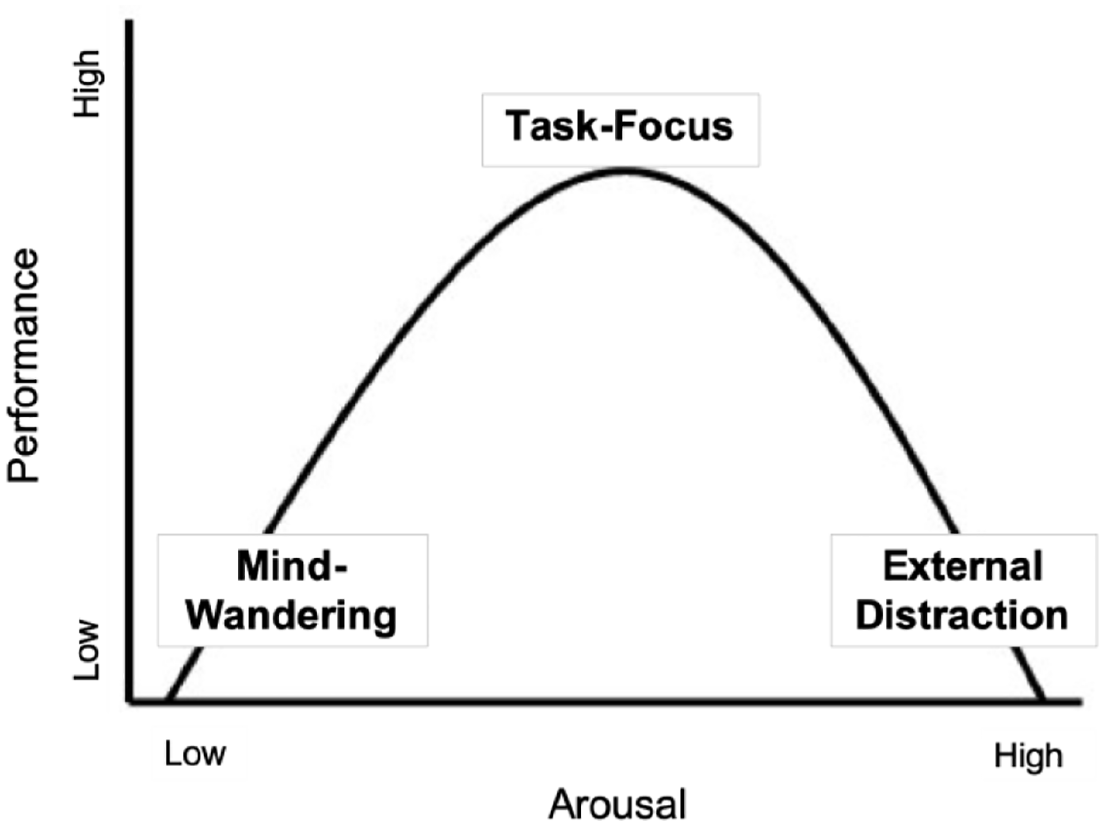
Nonlinear Relationship Between Arousal, Attentional States, and Performance, As Hypothesized by Unsworth & Robison (2016) and Yerkes & Dodson (1908).
Given that background music can increase arousal (e.g., Nantais & Schellenberg, 1999; North & Hargreaves, 1999), and that more simple tasks tend to be under-stimulating or under-arousing (e.g., Baron, 1986; Fischer et al., 2008; Gonzalez & Aiello, 2019), when a task is simple—such as most sustained attention or vigilance tasks that involve maintaining attention on the task over an extended period (Cohen, 2011)—an increase in arousal from the music could result in an arousal level optimal for performance and task-focused attention (e.g., Davies et al., 1973; Fontaine & Schwalm, 1979; Kiss & Linnell, 2021). On the other hand, given that more complex tasks tend to be sufficiently stimulating or arousing on their own (Baron, 1986), when a task is complex—such as working-memory tasks that require information to be temporarily maintained in memory in an easily accessible state (Adams et al., 2018)—an increase in arousal from the music could increase arousal to a level that is supra-optimal, resulting in distraction and worse performance (e.g., Anderson & Fuller, 2010; Drai-Zerbib & Baccino, 2017; Henderson et al., 1945; Thompson et al., 2012).
Although the extant literature is compatible with background music increasing arousal (e.g., Burkhard et al., 2018; Caldwell & Riby, 2007; Cassidy & MacDonald, 2007; Nantais & Schellenberg, 1999; Nguyen & Grahn, 2017; North & Hargreaves, 1999), it is less understood whether certain types of background music can actually decrease arousal. If certain types of background music can decrease arousal, then performance on a complex but not a simple task could benefit from listening to these types of music in the background. In line with this idea, research by Kotsopoulou and Hallam (2010) found that relaxing was one of the most common reasons students reported for listening to music during studying.
To extend previous findings and better understand the role of arousal in mediating the effect of background music on everyday tasks varying in their complexity, the aim of the present study was to directly examine people’s background music listening habits. Several laboratory studies have shown the impact of background music on a variety of prescribed cognitive processes; to our knowledge, however, only one previous study has surveyed background music listening habits during everyday tasks related to studying such as reading, writing, memorizing, and critical thinking (Goltz & Sadakata, 2021), and none has included a range of different tasks of varying complexity. Although there are existing survey studies on music listening, they mostly focused on music listening preferences without a concurrent task (e.g., Chamorro-Premuzic & Furnham, 2007; Hull, 2009; Lee & Hu, 2014).
Directly exploring background music listening habits should indicate whether people’s background music listening habits align with laboratory findings reported in the background music literature. It should also inform future research in the area by contributing to the understanding of the processes through which background music affects task-performance. In addition, it should provide insight into how performance on a variety of everyday tasks—that people perform with background music—can be optimized.
This study mainly focused on the scenarios in which people listen to background music and the types of background music they choose. We explored whether people’s everyday background music listening habits during cognitive tasks can be predicted by the complexity of the tasks performed with background music and the “arousingness” of the music. Following the arousal framework, we expected more participants to report listening to background music during simpler tasks than during more complex tasks. We also expected that participants would report listening to more arousing music (e.g., vocal, faster music; e.g., Carpentier & Potter, 2007; Holbrook & Anand, 1990; Husain et al., 2002; Kellaris & Kent, 1993; Pelletier, 2004) during simple tasks and less arousing music (instrumental, slower music; e.g., Burkhard et al., 2018; Caldwell & Riby, 2007; Cassidy & MacDonald, 2007; Nantais & Schellenberg, 1999; North & Hargreaves, 1999) during complex tasks.
To complement and extend this focus, the present study explored participants’ reasons for listening to the music, as well as the mechanisms through which they think the music enhances their performance (or what we term here the “helping-mechanisms”). We were particularly interested in exploring whether people’s self-reported reasons for music listening and helping-mechanisms of background music are compatible with the arousal framework.
In addition, we explored how individual differences in biological sex, age, and musical training are linked to people’s background music listening habits. These individual-differences variables were included in this study given that they are linked to arousal: research shows that males are more easily aroused than females (e.g., Knight et al., 2002), that arousing stimuli are more distracting for older than younger adults (Charles, 2010; Riediger et al., 2014), and that musicians exhibit higher levels of emotional arousal when they listen to music (Mikutta et al., 2014). Based on these differences, we expected males, older participants, and musicians (i.e., musically trained participants) to listen to less arousing music than females, younger participants, and non-musicians for complex tasks.
Method
Design
The study had a survey design where participants were asked to complete all questions in the survey. The variables were (1) the types of tasks during which people listen to music, termed tasks performed with background music (studying, reading, driving, monotonous tasks, other); (2) the types of tasks during which people avoid listening to music, termed tasks performed without background music (studying, reading, driving, monotonous tasks, other); the type of music they choose, specifically in terms of (3) background music lyrics (vocal, instrumental, both) and (4) background music tempo (slow, fast, both); (5) reasons for listening to background music (to mask external noise, for task-focus, for enjoyment); and (6) the helping-mechanisms of the background music through which the music helps them perform better (getting into the right mood, attaining full concentration on the task or getting into a “flow-state,” calming down, energizing). For each question, the frequencies with which participants chose the answers were recorded.
Participants
In total, there were 207 participants, 10 of whom did not listen to background music at all. Thus, data from the remaining 197 participants who listened to background music were analyzed. There were 43 males and 154 females between the ages of 18 and 62 years (M = 22.78, SD = 6.29), 128 of whom had had previous musical training and 69 of whom had had not. There were 137 students, 31 professionals, and 28 who were both students and professionals (1 response was missing). University students received credits for participation. In this study, anyone above the age of 18 years could participate; there were no other inclusion criteria.
Materials
The current survey study included questions related to participants’ uses of background music during different types of tasks (see the full questionnaire in Supplementary Materials). Specifically, participants answered 13 multiple choice questions related to their background music listening. Some of the questions allowed participants to choose more than one response, while some only allowed for one.
Procedure
The current study was a survey administered online and advertised on the social media site Facebook and on Goldsmiths University of London’s research database. The study was approved by the Goldsmiths’ Ethics Committee on 30 March 2020. After reading the information sheet and signing the consent form, participants first answered some demographic questions related to their biological sex, age, profession, music listening preferences, and previous musical training. Then, they completed the questions related to their background music listening. In total, completion of the survey took approximately 5–10 min. After completing the survey, participants were presented with the debrief sheet and university students received credits for their participation.
Results
The present study aimed to explore people’s background music listening habits using an online survey indexing a number of music-related variables. The first variable studied was the types of tasks during which participants chose to listen to music in the background (i.e., tasks performed with background music). Given that participants were able to choose multiple tasks and therefore responses were mutually inclusive, we calculated participant response proportions by dividing the numbers of participants reporting listening to music during each of the different types of tasks by the total number of participants. We also performed paired samples McNemar’s test to compare the extent to which participants listened or did not listen to music during simple (driving, monotonous tasks) and complex (studying, reading) tasks.
Similarly, the second variable studied was the types of tasks during which participants avoided listening to music in the background (i.e., tasks performed without background music). Given that responses for this variable were also mutually inclusive, we again calculated participant response proportions by dividing the numbers of participants reporting avoiding listening to music during each of the different types of tasks by the total number of participants. We then performed a McNemar’s test to compare the extent to which participants avoided or did not avoid music listening during simple (driving, monotonous tasks) and complex (studying, reading) tasks.
Furthermore, we also focused on the types of music people chose to listen to while performing the different types of tasks (i.e., background music lyrics present, absent, or both; background music tempo fast, slow, or both). Data for lyrics and tempo were mutually exclusive; therefore, it was possible to conduct chi-square tests (goodness-of-fit tests) to investigate, for each task separately, the significance of differences between response proportions of participants reporting listening to vocal, instrumental, or both, on one hand, and to fast, slow, or both, on the other.
In addition, we explored the reasons for music listening during the different types of tasks (i.e., reasons for listening to background music) and the helping-mechanisms through which participants thought the music would help them to perform better on the different types of tasks (i.e., helping-mechanisms of background music). For these variables, participants were allowed to choose multiple reasons and helping-mechanisms, resulting in mutually inclusive, categorical data with an unknown mix of paired and independent responses and different sample sizes for each choice. Therefore, participant response proportions were calculated which allowed for comparisons between choices to be made on the same scale. Response proportions were calculated by dividing the number of participants for each level of each variable for a given type of task by the total number of participants who reported listening to music during that type of task; for example, the number of participants listening to music for enjoyment (one level of the variable we term reasons for listening to background music) during the task of studying would be divided by the total number of participants who reported listening to music during studying.
Finally, we explored the association between music listening habits and individual differences in biological sex, age, and musical training. Here we focused on the main variables: first we focused on tasks performed with background music and tasks performed without background music to see whether differences between the tasks in the overall sample are mirrored in the data broken down by individual differences variables. We also focused on the types of music people listened to in terms of lyrics and tempo to see whether people chose music with different “arousingness” (i.e., vocal/instrumental/both, fast/slow/both) based on their sex, age, and musical training. To explore these differences between individuals, we conducted multidimensional chi-square tests for biological sex and musical training, and multinomial logistic regression analyses for age.
Below, descriptive statistics are presented in turn for each variable concerning participants’ background music listening (i.e., tasks performed with background music, tasks performed without background music, background music lyrics, background music tempo, reasons for listening to background music, and helping-mechanisms of background music), with statistical analyses presented alongside for tasks performed with background music and tasks performed without background music, lyrics, and tempo. Finally, statistical analyses are also reported for the individual-differences variables of biological sex, age, and musical training.
Tasks performed with background music
First, descriptive statistics showed that a proportion of .87 of participants listened to background music during monotonous tasks, followed by .64 for driving, .59 for studying, .36 for other tasks, and, finally, .26 for reading (see Figure 2).
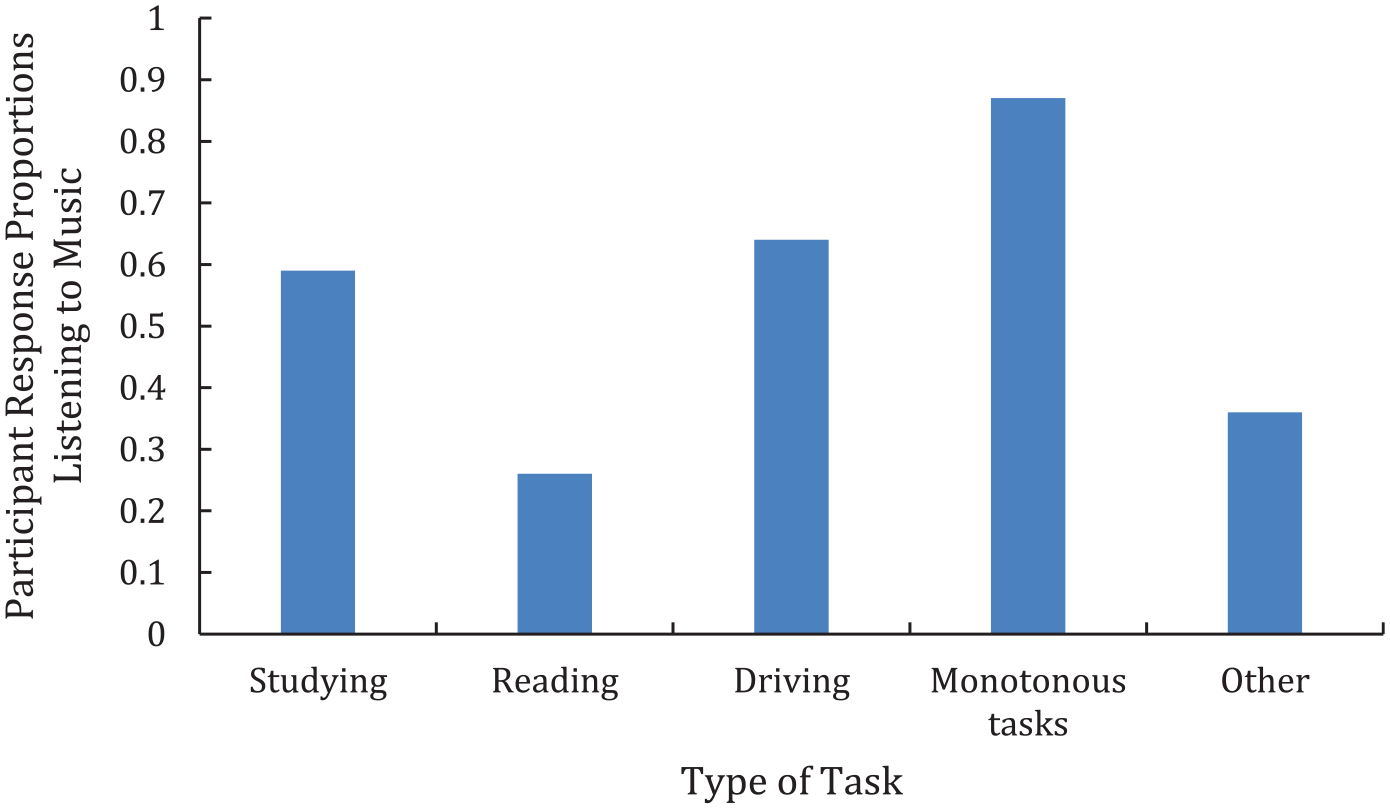
The Proportions of Participants Listening to Music as a Function of Type of Task. Responses in the “Other” Category Included Household Tasks, Cooking, Playing Sports, Traveling, Getting Ready, Working, Creative Hobby, Sleeping, Relaxing, Playing Games, All the Time Socializing, and Eating.
McNemar’s test was then conducted to compare the extent to which participants chose to listen and did not choose to listen to music during simple (driving, monotonous tasks) and complex (studying, reading) tasks. The results were significant, χ2(1, N = 197) = 37.959, p < .001, meaning that there were significantly more participants who listened to music during simple tasks compared with complex tasks.
Tasks performed without background music
Second, descriptive statistics showed that out of the 197 participants, 151 reported avoiding music during some tasks, with a proportion of .77 of participants avoiding music during reading, .51 during studying, .11 during other tasks, and only .02 during driving, and .03 during monotonous tasks (see Figure 3).
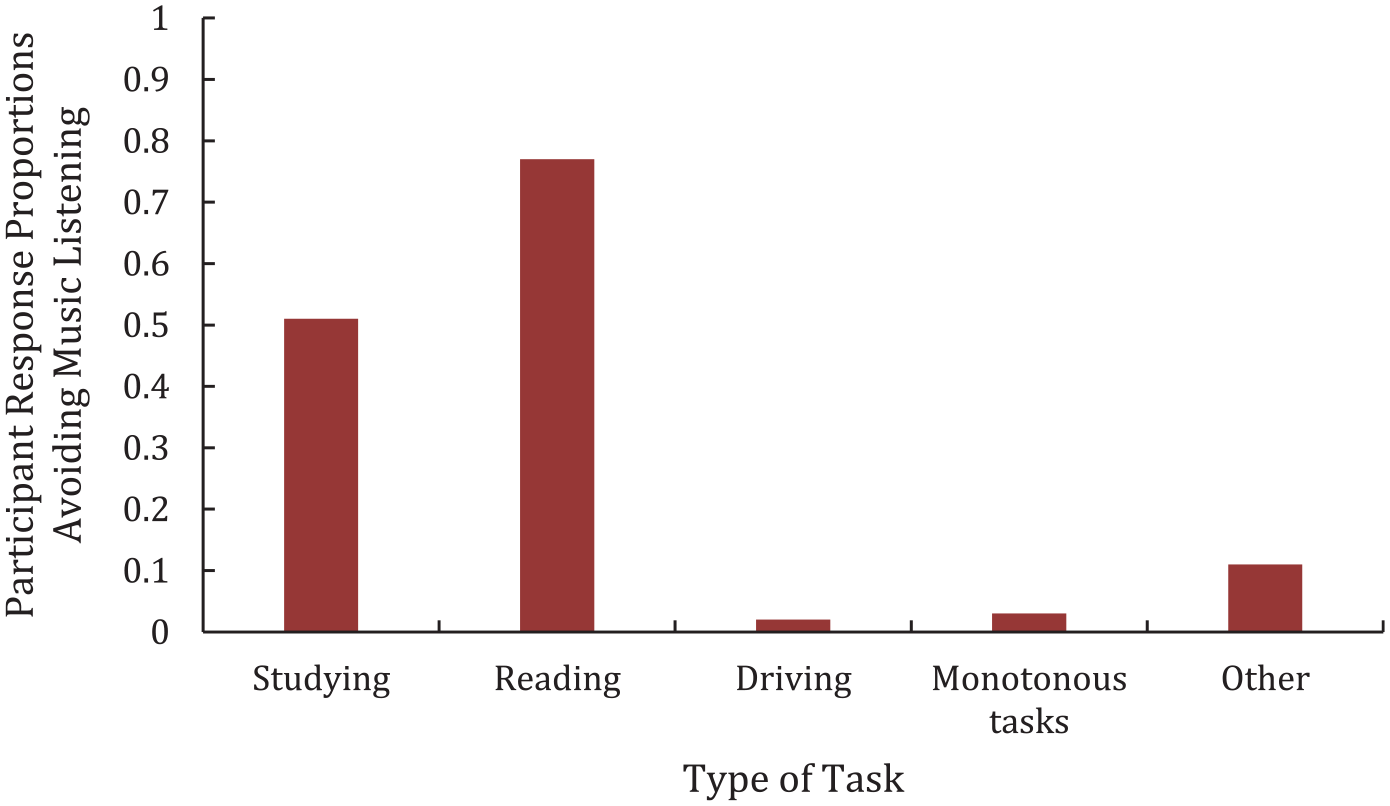
The Proportions of Participants Avoiding Music Listening as a Function of Type of Task. Responses in the “Other” Category Included Auditory and Language Tasks, Tasks Needing Full Concentration, Working, Writing, Sleeping, Eating, Praying, and Running.
McNemar’s test was then conducted to compare the extent to which participants avoided listening and did not avoid listening to music during simple (driving, monotonous tasks) and complex (studying, reading) tasks. The results were significant, χ2(1, N = 197) = 127.182, p < .001, meaning that there were significantly more participants who avoided music listening during complex tasks compared with simple tasks.
Background music lyrics
Third, chi-square tests (goodness-of-fit tests) showed that a significantly higher proportion of participants, who listened to music during studying, reported listening to instrumental music than to vocal music or both, χ2(2, N = 135) = 13.378, p = .001. Similarly, a significantly higher proportion of participants, who listened to music during reading, reported listening to instrumental music than vocal music or both, χ2(2, N = 76) = 9.579, p = .008. On the contrary, a significantly higher proportion of participants, who listened to music during driving, reported listening to vocal music than instrumental music or both, χ2(2, N = 140) = 67.986, p < .001. Similarly, a significantly higher proportion of participants, who listened to music during monotonous tasks, reported listening to vocal music than instrumental music or both, χ2(2, N = 181) = 53.381, p < .001 (see Figure 4).
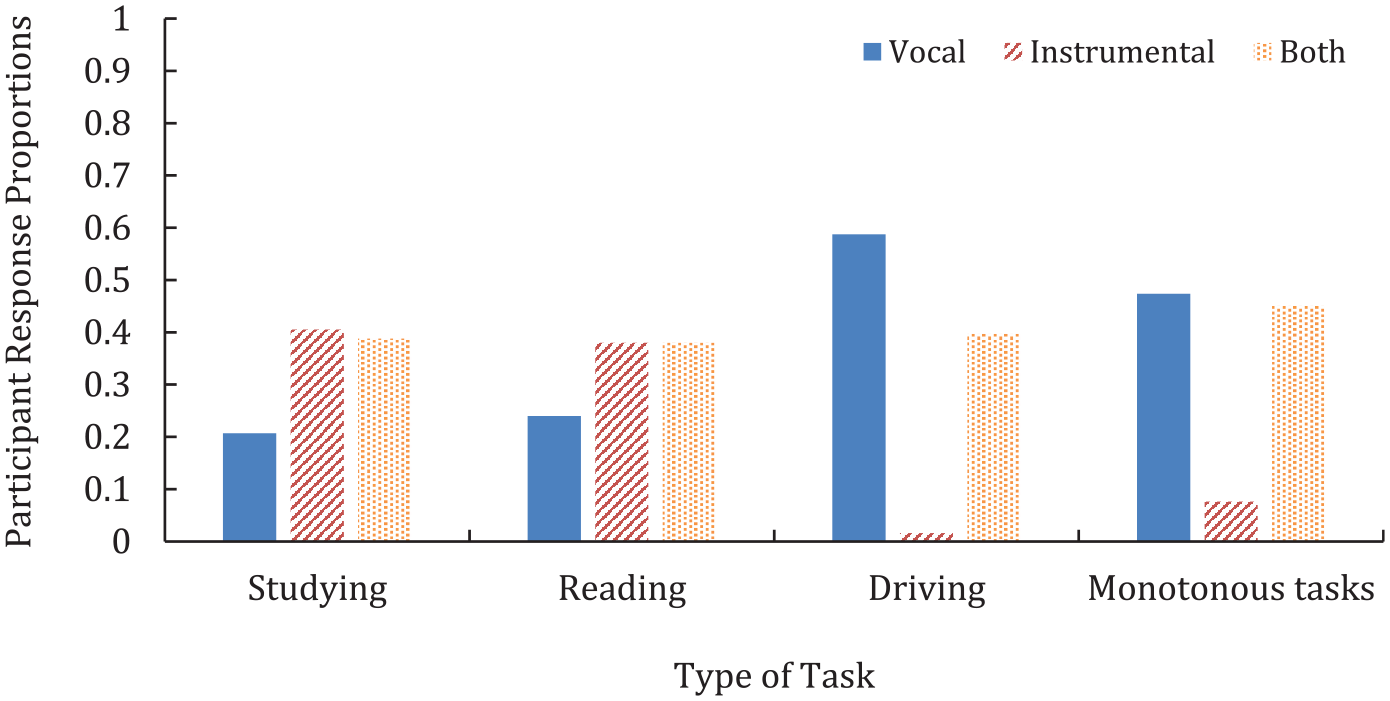
Participant Response Proportions as a Function of Type of Task and Background Music Lyrics (Vocal, Instrumental, Both).
Background music tempo
Furthermore, results of chi-square tests (goodness-of-fit tests) showed that during all four tasks a significantly higher proportion of participants listened to a combination of fast and slow music than purely to fast or slow music: studying, χ2(2, N = 133) = 43.955, p < .001; reading, χ2(2, N = 73) = 23.123, p < .001; driving, χ2(2, N = 141) = 157.574, p < .001; monotonous tasks, χ2(2, N = 181) = 165.094, p < .001. Nonetheless, based on descriptive statistics, somewhat higher proportions of participants listened to purely slow music during studying and/or reading than during driving and/or monotonous tasks (see Figure 5).
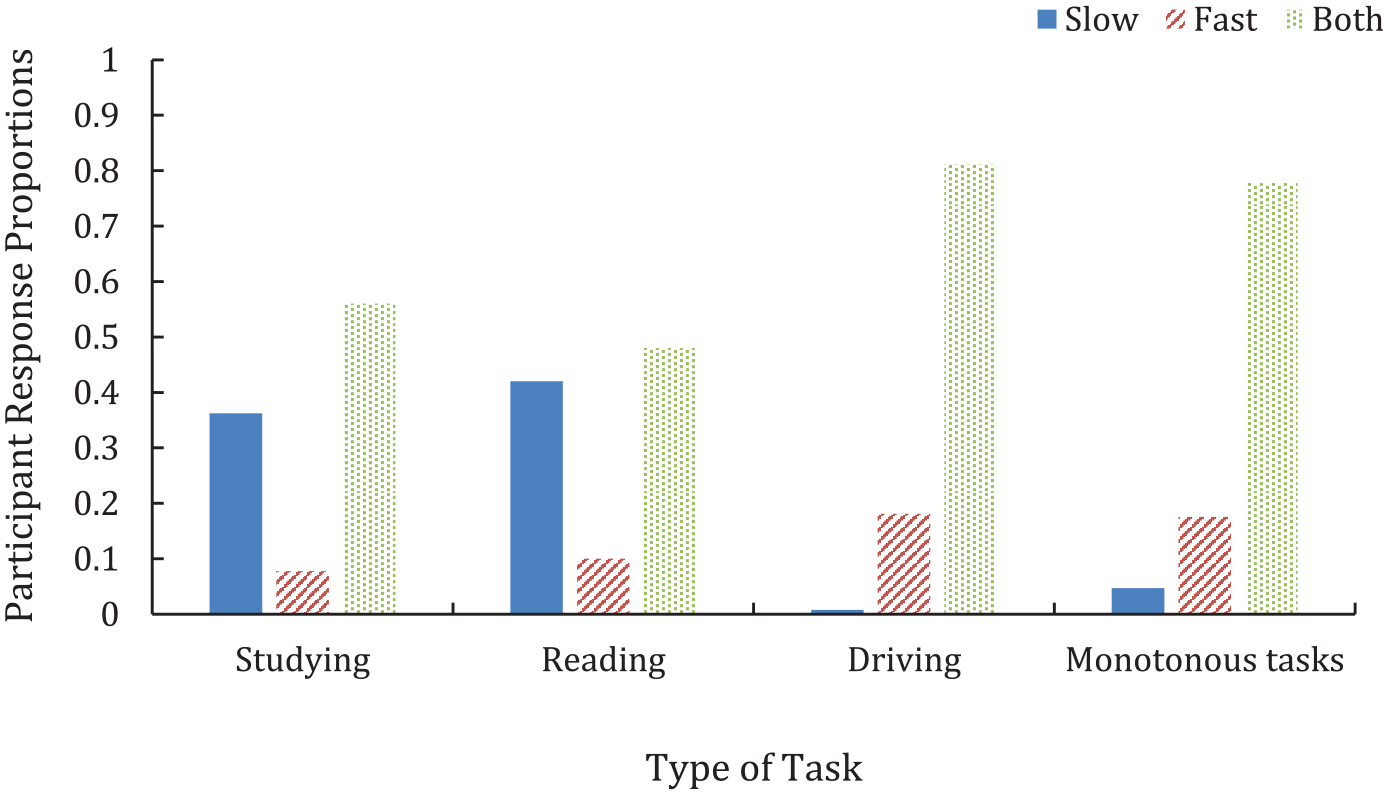
Participant Response Proportions as a Function of Type of Task and Background Music Tempo (Slow, Fast, Both).
Reasons for listening to background music
Moreover, based on descriptive statistics, there were apparent differences in the reasons participants chose for listening to background music during the various tasks. The most common reason for listening to music during studying was focusing on the task which was reported by a proportion of .64 of participants. During reading, driving, and monotonous tasks, however, the most common reason was enjoyment, which was reported by a proportion of .64 for reading, .99 for driving, and .90 for monotonous tasks. Moreover, a higher proportion of participants reported masking external noise and task-focus as one of their main reasons for music listening during studying (.44 for masking external noise and .64 for task-focus) and/or reading (.37 for masking external noise and .39 for task-focus) than during driving (.12 for masking external noise and .12 for task-focus) and/or monotonous tasks (.21 for masking external noise and .28 for task-focus; see Figure 6).
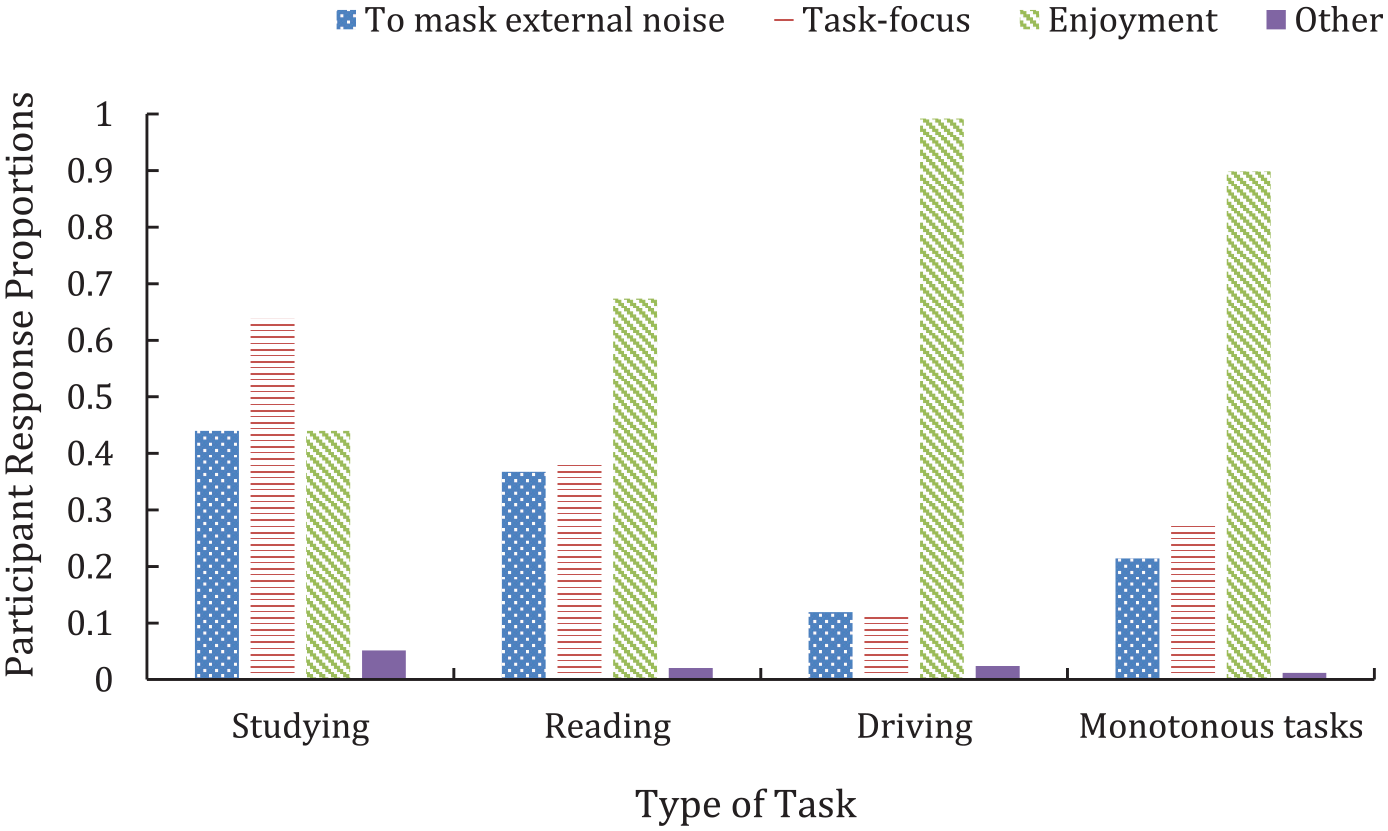
Participant Response Proportions as a Function of Type of Task and Reasons for Listening to Background Music (to Mask External Noise, for Task-Focus, for Enjoyment, Other). Responses in the “Other” Category Included Avoiding Silence, Finishing Tasks Quicker, Feeling Less Lonely, Increasing Motivation/Boosting Productivity, Feeling Comfortable and Safe, and Creating a Friendly Atmosphere.
Helping-mechanisms of background music
Finally, 152 of the participants reported that background music benefits their performance. Based on descriptive statistics, out of the 152 people, a proportion of .64 of participants reported that, during studying, the music helps them to attain full concentration on the task. Similarly, during reading, a proportion of .59 of participants reported that music helps them to attain full concentration on the task, and in addition a proportion of .56 reported that it helps them to calm down. However, during driving and/or monotonous tasks, a proportion of .26 and .22 of participants, respectively, reported that the music helps them by calming them down, whereas a proportion of .78 and .67 of participants, respectively, reported that it energizes them/makes them more awake (see Figure 7).
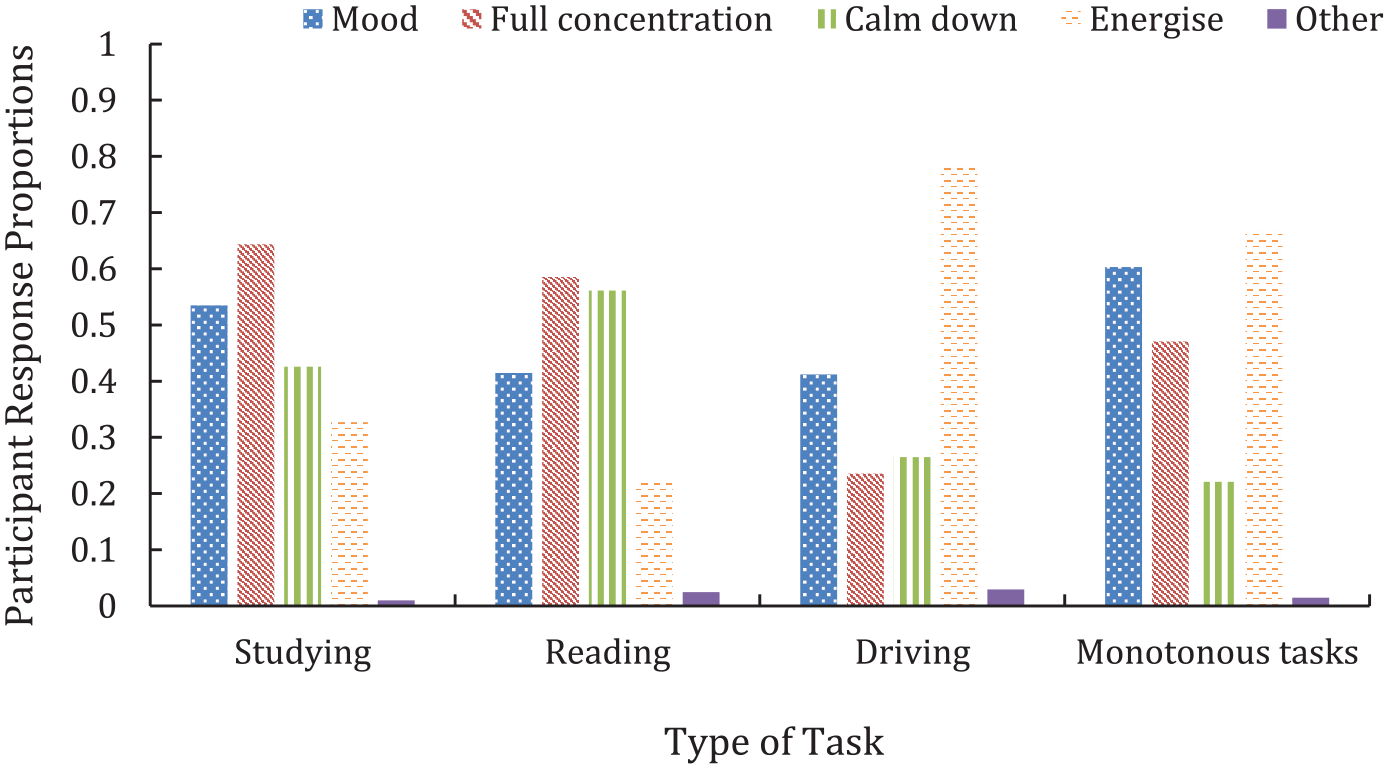
Participant Response Proportions as a Function of Type of Task and Helping-Mechanisms of Background Music (Getting into the Right Mood, Attaining Full Concentration on the Task, Calming Down, Energizing, Other). Responses in the “Other” Category Included Stopping from Getting Distracted by Thoughts, Making Time Go Faster, Reflecting on Oneself, Feeling Less Empty, Escaping Worries, and Stopping from Getting Bored.
Individual differences
The associations between individual differences in biological sex, musical training, age, and music listening habits were also explored in this study using multidimensional chi-square tests for biological sex and musical training and multinomial logistic regression analyses for age with Bonferroni correction. Specifically, analyses included tasks performed with background music, tasks performed without background music, and the types of music participants listen to in terms of lyrics and tempo during the different types of tasks.
Biological sex
Chi-square tests showed that sex was not significantly associated with either listening to music or avoiding music during the different tasks. However, sex was significantly associated with lyrics during monotonous tasks, χ2(2, N = 181) = 18.631, p < .001, with a proportion of .89 of females and only .11 of males reporting listening purely to vocal music and .70 of females and only .30 of males listening to a combination of vocal and instrumental music. On the other hand, a proportion of .57 of males and only .43 of females reported listening purely to instrumental music (see Figure 8).
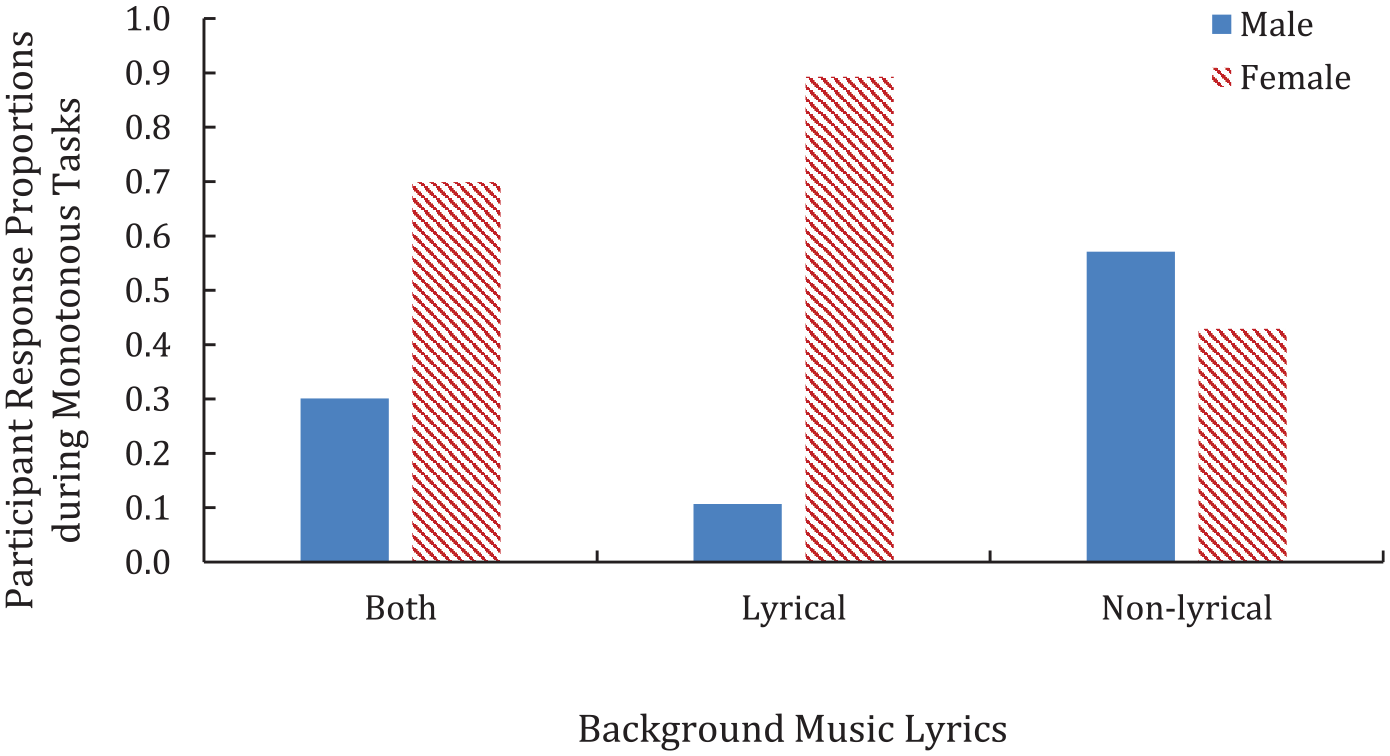
Participant Response Proportions During Monotonous Tasks as a Function of Lyrics and Biological Sex.
Musical training
Chi-square tests did not show any significant associations between musical training and any of the variables related to music listening habit after Bonferroni correction. Nonetheless, descriptive statistics showed that a proportion of .67 of musically trained and only .33 of untrained participants reported listening to purely instrumental music, and a proportion of .74 musically trained and only .27 of untrained participants reported listening to a combination of vocal and instrumental music. On the other hand, a proportion of .58 musically untrained and only .42 of musically trained participants reported listening to purely vocal music (see Figure 9).
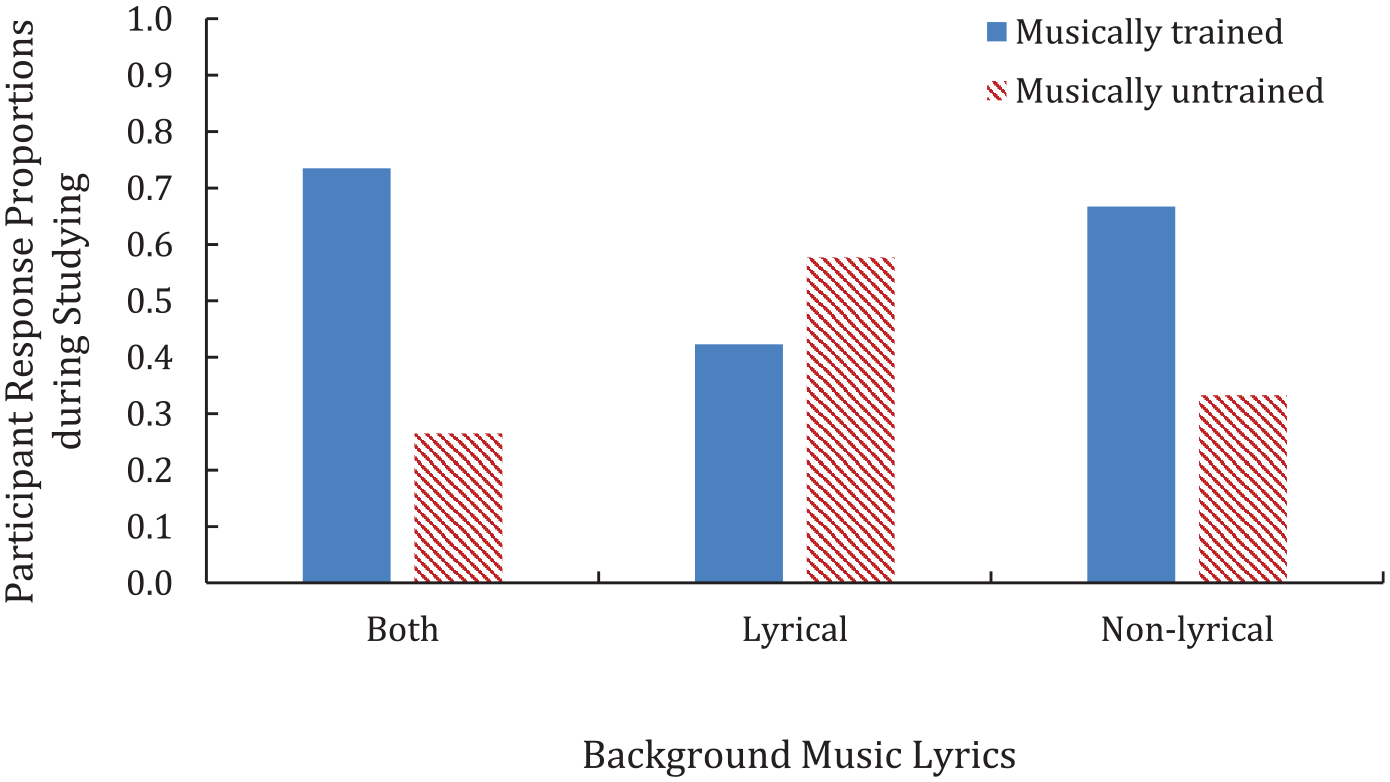
Participant Response Proportions During Studying as a Function of Lyrics and Musical Training.
Age
Multinomial logistic regression analyses were conducted to explore the relationship between age and music listening habits. There was no significant relationship between age and music listening habits when Bonferroni correction was applied.
Discussion
The present online survey study aimed to explore people’s background music listening during everyday tasks such as studying, reading, driving, and performing monotonous tasks. Results revealed that there were differences between the tasks in the proportions of participants who reported (1) listening to music during the different tasks, (2) avoiding music during the different tasks, (3) choosing vocal or instrumental, and fast or slow music to listen to, (4) listening to music for specific reasons, and (5) specific helping-mechanisms through which they thought music aids performance.
Importantly, the differences in proportions of all music-related variables (including tasks performed with background music, tasks performed without background music, background music lyrics and tempo, reasons for listening to background music, and helping-mechanisms of background music) showed patterns which supported the grouping of the tasks into two groups of, on one hand, studying and reading and, on the other hand, driving and monotonous tasks. Specifically, in the present study, most participants reported listening to music during driving and monotonous tasks while almost none reported actively avoiding music during these tasks. On the contrary, fewer participants reported listening to music during studying or reading and those who reported sometimes avoiding music listening mostly reported doing so during these tasks. Based on these findings (and the related findings on other music-related variables), the two groups can be differentiated based on their complexity, with studying and reading being more complex tasks and driving and monotonous tasks being simpler.
The differentiation of tasks based on their complexity is compatible with the arousal framework which highlights the nonlinear inverted-U relationship between arousal and performance (Unsworth & Robison, 2016; Yerkes & Dodson, 1908). Specifically, given that simple tasks tend to be under-arousing without music whereas complex tasks tend to be sufficiently arousing in themselves (e.g., Baron, 1986; Fischer et al., 2008; Gonzalez & Aiello, 2019), an increase in arousal from music could result in optimal arousal and increased performance for simple tasks but supra-optimal arousal and decreased performance for complex tasks. Nevertheless, given that there was a sub-set of participants in the current study who reported background music listening during complex tasks, it might be the case for these participants at least that their arousal is at supra-optimal levels and that they listen to music to decrease their arousal to an optimal level for performance and task-focused attention.
Indeed, the current results showed that the majority of the participants who listen to music during complex tasks reported that the music helped them perform better by calming them down and helping them fully concentrate on the task, with almost none reporting that the music helped them by energizing them. These results provide support for the potential of background music to decrease arousal during complex tasks to an optimal level for performance and concentration. Similarly, Kotsopoulou and Hallam (2010) found that participants mostly listened to music during studying to relax and concentrate on the task. On the contrary, during simple tasks in the present study most participants reported that the music helped them perform better by energizing them, with only very few reporting that it helped them by calming them down. This therefore provides support for the idea that during simple tasks the music helps people by increasing arousal to an optimal level.
Consistent with the arousal framework, in the current study there were significant differences in whether participants chose to listen to vocal or instrumental music in the background while performing the different tasks. There was a significantly larger proportion of participants listening to more arousing vocal music during simple tasks than during complex tasks; however, participants who reported music listening during complex tasks mostly chose instrumental music which is less arousing than vocal music (e.g., Husain et al., 2002; Kellaris & Kent, 1993; Pelletier, 2004). In line with these results, a recent survey study by Goltz and Sadakata (2021) showed that participants chose to listen to calmer, instrumental music during more complex tasks.
Results of the analyses on musical tempo were also consistent with the arousal framework: while participants mostly reported listening to a combination of slow and fast music during all tasks, somewhat more participants reported listening to less arousing slow music (Carpentier & Potter, 2007; Holbrook & Anand, 1990; Kellaris & Kent, 1993) during complex tasks than during simple tasks.
Although there is evidence in the literature for an arousing effect of even the less arousing slow and instrumental background music (e.g., Burkhard et al., 2018; Caldwell & Riby, 2007; Cassidy & MacDonald, 2007; Nantais & Schellenberg, 1999; North & Hargreaves, 1999), it is not clear whether some types of background music (e.g., slow, instrumental music) can actually decrease arousal. Therefore, one interesting area for future research would be to further investigate whether there are situations in which some types of background music can indeed decrease arousal.
Participants’ reported reasons for music listening were also in line with the arousal framework. The most common reason for listening was enjoyment, a positive mood state, with more participants reporting listening to music for enjoyment while performing simple tasks than while performing complex tasks. This result could be predicted from the mood-and-arousal hypothesis which posits that music that increases mood—here specifically enjoyment—increases arousal (Husain et al., 2002; Thompson et al., 2001); thus, music that increases mood should be more beneficial for simple tasks which are generally under-arousing on their own.
Nonetheless, the mood-and-arousal hypothesis has been developed to explain the effects of music that is listened to in advance of a task rather than whilst it is being performed. Other work on scenarios where music listening is the main and indeed only task has also provided support for the mood-and-arousal hypothesis (e.g., Gabrielsson, 2001; Krumhansl, 1997; Lynar et al., 2017; Peretz, 2001; Rickard, 2004; Taruffi et al., 2017). However, to this date, there is still no clear evidence for a role of mood in mediating the effect of background music (e.g., Nguyen & Ghran, 2017; Perham & Sykora, 2012). Therefore, future research could further explore how music-induced mood and enjoyment might mediate the arousing effect of background music.
Finally, analyses of individual differences showed that both males and females, musically trained and untrained participants, and participants of different ages reported similar patterns of listening to music and avoiding music during the different tasks that were consistent with the overall pattern of the data and the differentiation between tasks based on their complexity. Nevertheless, there were some interesting differences between individuals in the types of music participants reported listening to, highlighting that the effect of background music depends not only on task-complexity but on the listener as well.
As regards individual differences in listeners’ biological sex, males more often listened to instrumental music than females during simple tasks. This significant difference is not what was initially hypothesized (namely that males compared with females would listen to less arousing music during complex tasks rather than simple tasks); it is also not predicted by research showing that males are more easily aroused by emotional stimuli and are less skilled at regulating their arousal level than females (e.g., Knight et al., 2002). An explanation for these findings might be that there are factors other than arousal that drive these sex differences; for example, research shows that females are better at processing emotional prosody during word processing (Schirmer et al., 2002), which could also contribute to sex differences in the effects of lyrics in background music.
As regards individual differences in listeners’ musical training, analyses on musical training did not show any significant results, but there was a trend hinting that, consistent with our hypothesis, musically trained compared with untrained participants more often chose less arousing music (instrumental music or a combination of instrumental and vocal music) during complex tasks (studying). This finding supports previous research that professional musicians have a more intense pattern of emotional arousal when they listen to music (Mikutta et al., 2014).
As regards individual differences in listeners’ age, analyses on the relationship between age and music listening habits did not show any significant results, and we did not find support for the hypothesis that older participants would choose less arousing music during complex tasks. Nonetheless, individual difference variables were only included as exploratory variables and were not controlled for in this study.
Overall, the present survey results are consistent with laboratory findings in suggesting that background music can both improve and impair performance and that which of these two it does depends upon the complexity of the task. Furthermore, our results are also consistent with the literature in suggesting that people often listen to background music in order to increase their arousal, although our results make the novel suggestion that in some scenarios, specifically during complex cognitive tasks, people might actually use it to decrease their arousal. Importantly, the present results suggest that people implicitly understand the effects of background music on their arousal and performance and choose music that matches their needs.
The results of the current study are, nevertheless, based partially on descriptive statistics, and using these results as a guide, future research should further investigate the possibility proposed here that some types of background music can decrease arousal during some types of tasks. In addition, it is important to examine how arousal and mood interact with other factors mediating the effect of background music (e.g., distraction and preference for external stimulation, Gonzalez & Aiello, 2019; personality, Cassidy & MacDonald, 2007).
Conclusion
In conclusion, this survey study aimed to explore the scenarios in which, and reasons why, background music is listened to. To our knowledge, this study was the first that directly examined people’s background music listening habits on a variety of everyday tasks varying in their complexity in the context of the arousal framework. Directly asking participants about their listening habits allowed them to clearly communicate their implicit knowledge of how the music affects their cognitive performance during specific tasks including reading, writing, driving, and performing everyday monotonous tasks. Importantly, the results converged with previous laboratory findings in suggesting that people use music to increase their arousal to optimal levels for performance, more so during simple tasks than during complex tasks. In fact, although research on the role of arousal in the background music literature mostly suggests that music increases arousal, the present results also suggest that where people listen to music during complex tasks, they do so not to increase but to decrease their arousal. These findings suggest that people implicitly understand the effects of background music on their cognitive-task performance and choose music to modulate their arousal levels as appropriate for the given task. Taken together, the findings support the importance of arousal in mediating the effects of background music and the need to further examine how the arousal framework could mediate the effects of background music in different task contexts.
Supplemental Material
sj-docx-1-pom-10.1177_03057356221089017 – Supplemental material for Making sense of background music listening habits: An arousal and task-complexity account
Supplemental material, sj-docx-1-pom-10.1177_03057356221089017 for Making sense of background music listening habits: An arousal and task-complexity account by Luca Kiss and Karina J Linnell in Psychology of Music
Footnotes

References
Supplementary Material
Please find the following supplemental material available below.
For Open Access articles published under a Creative Commons License, all supplemental material carries the same license as the article it is associated with.
For non-Open Access articles published, all supplemental material carries a non-exclusive license, and permission requests for re-use of supplemental material or any part of supplemental material shall be sent directly to the copyright owner as specified in the copyright notice associated with the article.
