




Abstract
This study investigates the motivational conditions, self-efficacy beliefs, and practice of classical (symphonic, wind) orchestra/popular (rock, pop) band musicians. It thus complements previous research which has shed light on individual aspects of music learning. In both individual and collective work, high quality practice performed in a sufficient amount of time was shown to be very effortful. A mixed-method approach combined a questionnaire and an additional prototypical case interview for each genre with professional musicians. The results show that classical musicians were younger than popular musicians when they started to learn their first and main music instrument and entered their first orchestra or band. While it was confirmed that individual experience was crucial for the time invested in and the quality of deliberate practice, collective practice experiences were also indicated to be a determinant. Furthermore, individual and collective practice were shown to be interrelated. Professional level was suggested to be a more discriminating factor with regard to the variables studied than genre, as professional musicians from both genres deploy deliberate practice strategies in an individual and in a collective context. Improvisation and jamming, however, only appeared in the popular collective and classical individual practice context.
The probability is small of reaching a superior performance level without subjugating oneself to many years of specially designed practice activities (Hallam, 2013). Evidence exists that deliberate practice is an essential predictor of acquiring expertise across a range of domains. Recent meta-analyses, such as Ericsson and Harwell (2019) or Platz et al. (2014), have confirmed that deliberate practice is a reliable and important way to improve one’s performance.
Ericsson et al. (1993) defined deliberate practice as an effortful activity that is especially designed for improving performance. It requires high concentration and, thus, can only be performed for a limited amount of time. Performers need access to high quality material and immediate informative feedback on their performance, which is especially important if mistakes happen. The diagnosis of mistakes and provision of feedback often are accomplished through teachers who also design individualized practice process for learners. Musicians gradually become capable of taking over tasks that were originally fulfilled by the teacher. Expert musicians notice mistakes being made and tend to correct them immediately, while novices and less-experienced musicians leave their mistakes uncorrected (Hallam et al., 2012). Self-monitoring skills help to adequately adapt further practice activities (Concina, 2020).
Practice in different music traditions and genres
Close contact with a teacher is particularly visible in the classical “Western art music tradition” (Lehmann et al., 2018). By contrast, non-classical traditions such as jazz and popular music stress informal practice in groups outside tuition situations. Non-notation-based skills, such as improvising, memorizing, observing, and imitating, are considered to be more important activities to improve as a musician (Creech et al., 2008; Degner et al., 2003; Green, 2016). Giving feedback here is important as well, but it is most often provided by peers and band members (Längler et al., 2018, 2022b; Nielsen et al., 2018). Genres also impact the socialization of musicians, such as the age when they start to learn a music instrument and the dedicated amount of practice (Degner et al., 2003; Hallam et al., 2020). An important factor for early socialization with music is the family context, which can be inspiring and motivational for further musical development (Isbell & Stanley, 2018). For intermediate and expert popular musicians, peers, like band members, were shown to be supportive of their deliberate practice (Längler et al., 2022b).
The value of motivation and self-efficacy for deliberate practice
Lack of motivation is a threat to the career at any stage, but its variability is still not well understood (Evans, 2015). External or environmental factors (culture, institutions, families, tuition systems) interact with internal factors (cognition, affect) in the impact (positive or negative) on motivation. Research has identified four main motivational topics in music: satisfying personal needs, developing and maintaining a positive musical identity, acquiring effective approaches to learning music, and having a supportive environment (Hallam, 2013; Hallam et al., 2016; Schmidt, 2005). Recently, Zarza-Alzugaray et al. (2020) added musical practice self-efficacy to this list of motivational issues, that is, the confidence in one’s capabilities of being able to perform successfully is impacted by four factors: mastery experiences, vicarious experiences, verbal/social persuasion, and physiological state (Zelenak, 2020). Nielsen (2004) showed that music students with more self-efficacy used better the learning material. Both family, friends and peers, as well as experiences in public performances, support the growth of self-efficacy (Zarza-Alzugaray et al., 2020). Learners with appropriate self-efficacy show more willingness and effort to expose themselves to difficult and challenging tasks. However, reflection about practice and increased practice efficiency enhance self-efficacy concerning one’s own practice activities (Miksza & Tan, 2015). Thus, self-efficacy is related to the use of practice strategies, to invested practice time and thus, indirectly, to musical performance (McCormick & McPherson, 2003; McPherson & McCormick, 2006).
Taken together, previous research has mainly addressed music learning, deliberate practice, and motivational constraints in the context of classical music. Furthermore, it has focused particularly on individual musicians by leaving aside the characteristics of group musicians. This study contributes new insights into the differences and communalities of classical (symphonic, wind) orchestra and popular (rock, pop) band musicians regarding their socialization with instruments and music groups, their individual and collective practice, and corresponding motivational aspects.
Research aims
This study examines classical orchestra and popular band musicians with respect to their age during socialization with instruments and music groups, their individual and collective practice experience, their current individual and collective practice, their quality of deliberate practice, and their motivation and self-efficacy.
Research questions
Method
Design
Classical orchestra and popular band musicians were compared in a cross-sectional mixed-methods design in which a questionnaire was used to compare the groups, and a semi-structured interview was used in case studies to elaborate deliberate practice and motivation issues. Both questionnaire and semi-structured interviews included retrospective items and questions about the practice behavior of participants during different phases of their lives and musical careers. In this study, symphony and wind orchestras were defined as classical orchestras and rock and pop bands as popular bands.
Sample
An information letter was prepared with a request for redistribution, presenting general objectives and information about the research of the study, providing a link to the online questionnaire and inviting participation in the research. The information letter was distributed via email to a number of music institutions in Southern Germany: local and nearby music schools, venues with rehearsal rooms, professional and semi-professional symphony orchestras, the municipal theater, and an institute for music education.
A total of N = 70 classical orchestra/popular band musicians participated, of which 31 were popular musicians (44.3%) and 36 were classical musicians (51.4%). Three participants (4.3%) did not mention their genre affiliations (and thus were excluded from genre-dependent analyses). The mean age was M = 29.8 years (SD = 9.8 years), ranging from 14 to 57 years. Of the participants, 41 (58.6%) were males and 28 (40%) were females (one person did not provide gender information). Participants in the classical genre were 24 females (66.6%) and 12 males (33.3%), with a mean age of M = 29.3 years (SD = 11.9 years). Participants in the popular genre were 28 males (90.3%), two females (6.5%) and one with no gender information (3.2%). Their mean age was M = 29.3 years (SD = 5.2 years). In total, 12 participants were professional musicians (17.1%). Table 1 shows the occupational situation of classical and popular musicians.
Genre-Dependent Frequencies of Participants’ Occupational Situations (n = 67 Participants).
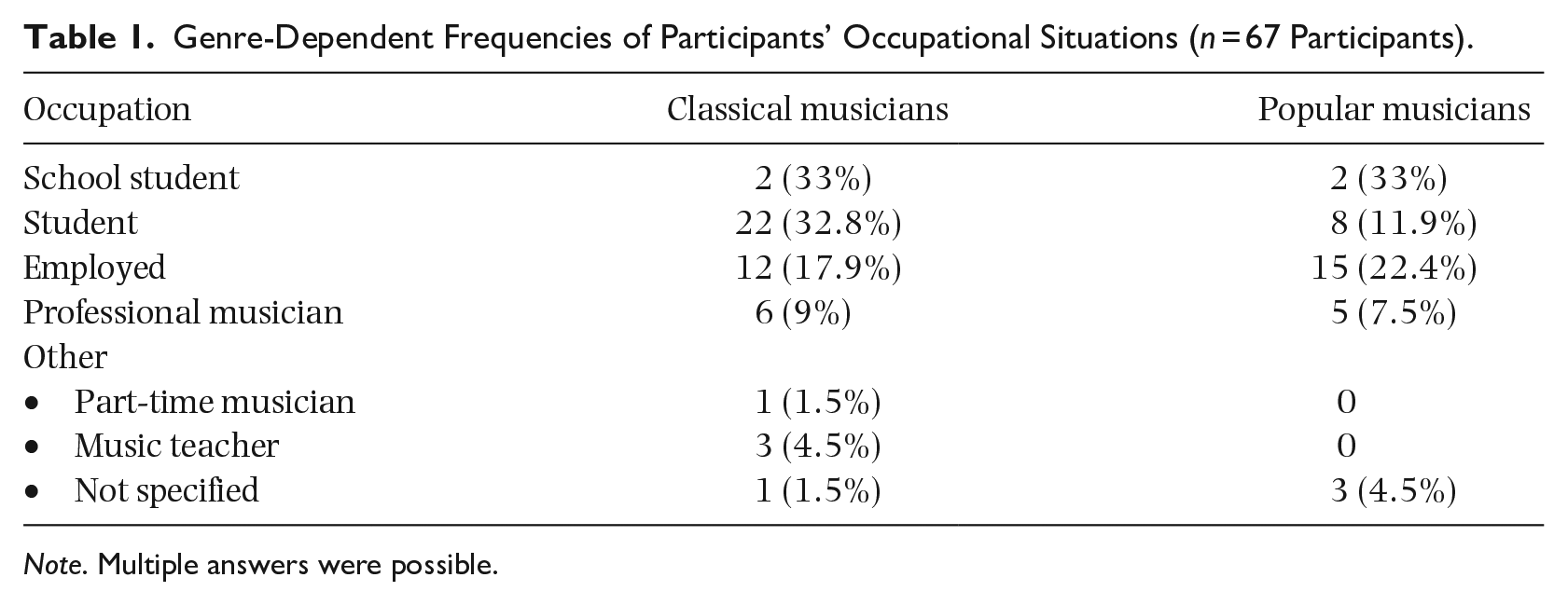
Note. Multiple answers were possible.
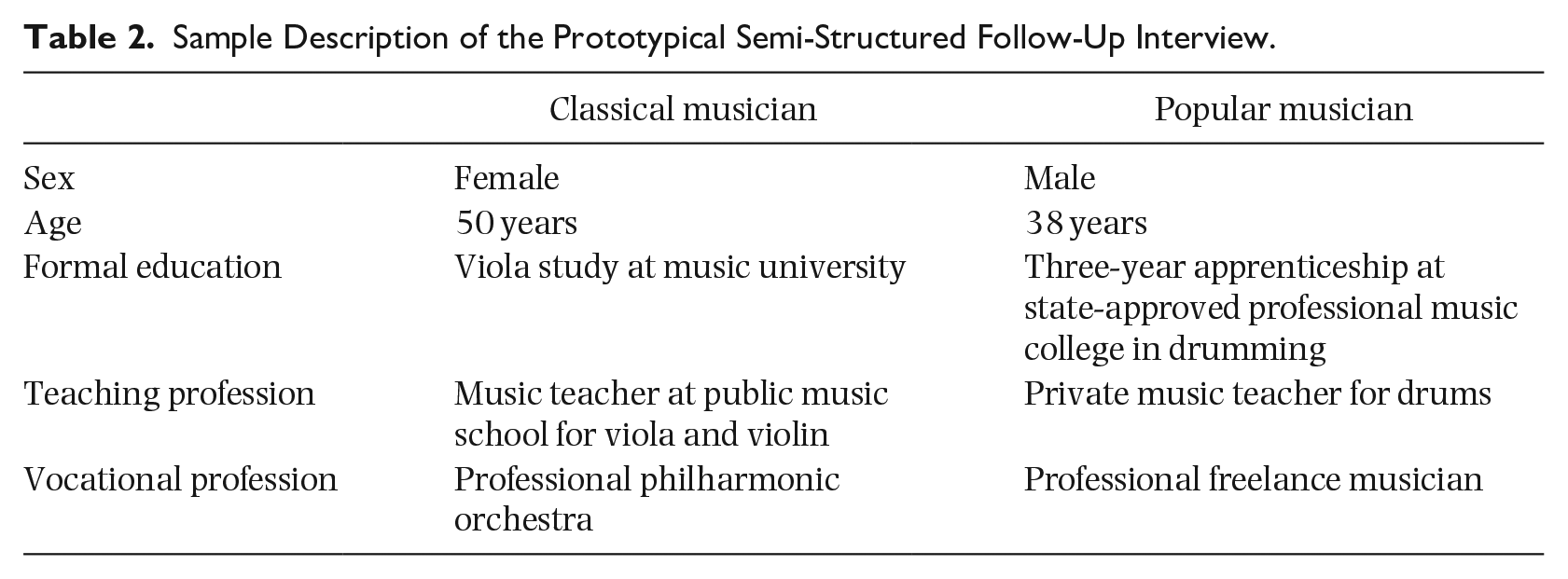
Participants could leave their email address if they were interested in participating in the interview study; 10 popular musicians and five classical musicians did so. For each genre, one participant was purposefully selected so that both musical and orchestra/band experiences were comparable. Both participants for the semi-structured follow-up interview resembled each other concerning musical experience, formal education and occupation as a professional musician, and music teacher (Table 2).
Sample Description of the Prototypical Semi-Structured Follow-Up Interview.
Instruments
Questionnaire
An online questionnaire was developed to assess demographical data, experience data related to music, and to measure motivation, self-efficacy, cumulated practice, current practice hours per week, current collective practice hours per month, and quality of deliberate practice.
The questionnaire’s opening part asked for demographical (age, gender, occupation) and experience data related to music (age starting first instrument, age starting main instrument, age at entry in first orchestra/band, age at entry in main orchestra/band, number of public performances in total, number of public performances with main orchestra/band, and genre affiliation).
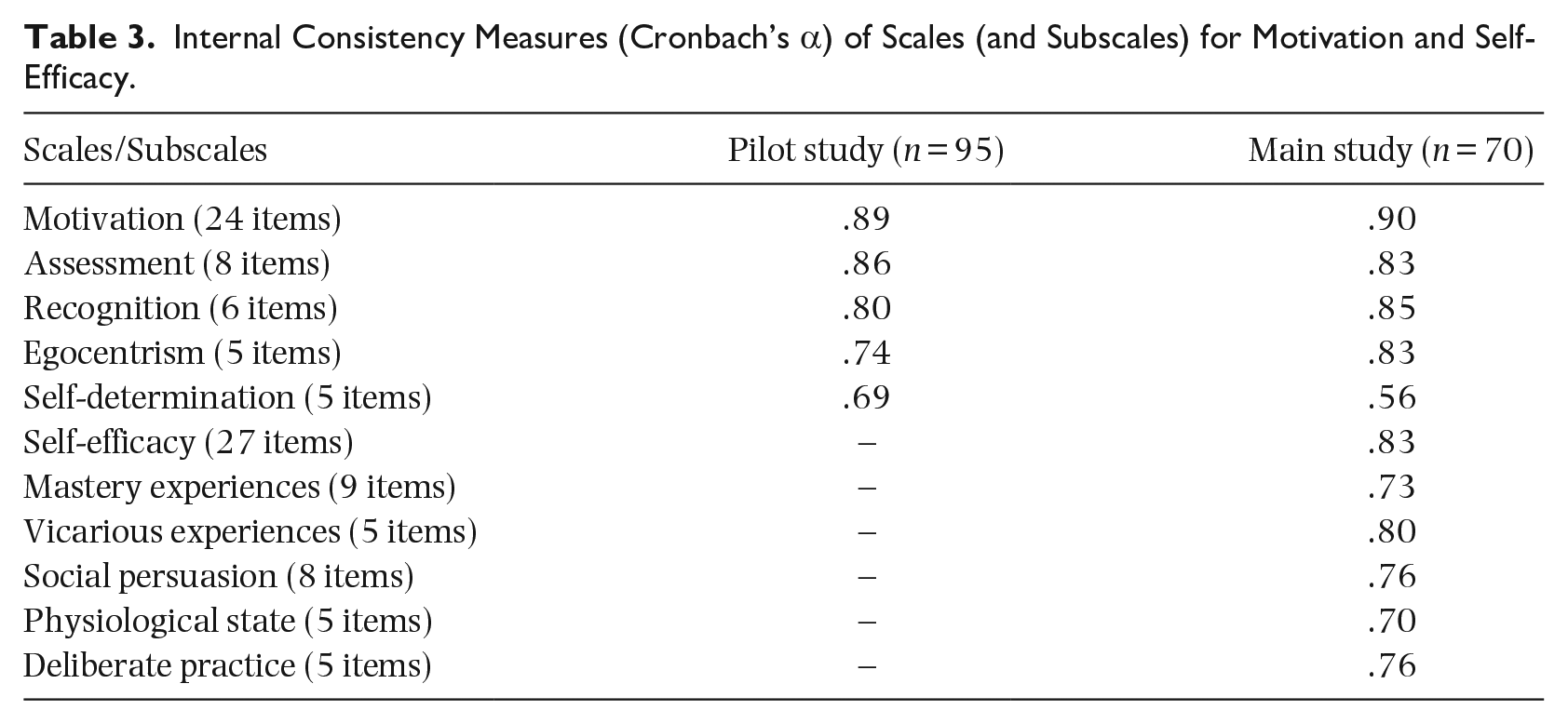
A scale for measuring motivation was adapted from Hallam (2013) and Schmidt (2005) and combined 26 items. In a pilot study with n = 95 group musicians from different genres, exploratory factor analysis, Kaiser–Meyer–Olkin (KMO) = .66; Bartlett’s test: χ2(325, n = 95) = 699.98, p < .001, revealed four subscales with 24 items in total: assessment, recognition, egocentrism, and self-determination. This dimensional structure corresponds to findings of previous research. Table 3 presents the Cronbach’s α scores and numbers of items for all scales and subscales.
Internal Consistency Measures (Cronbach’s α) of Scales (and Subscales) for Motivation and Self-Efficacy.
A scale for measuring self-efficacy was adapted from Zelenak’s (2020) Music Performance Self-Efficacy Scale (MPSES), which was supplemented by four items to differentiate measurement in performance situations, such as competitions, in class, performance of instrumental solo, and solo performances (27 items in total). Both scales were translated into the German language and rechecked for adequacy by a native speaker in both languages.
The questionnaire’s closing part asked for practice variables concerning the individual’s practice with the main instrument. Current practice hours per week were assessed using two items. Cumulated practice hours were retrospectively measured using six items, including three phases of the career: school age (6–18 years of age), early adulthood (19–35 years of age), and middle adulthood (36–65 years of age). To increase the accuracy of retrospective estimations of practice, memory assistance was provided with questions such as “Where did you live at this time?,” “What hobbies did you have besides music?,” and “How did your music activities match your daily life?” Collective practice hours were assessed using two items regarding the main orchestra/band rehearsals.
A scale for measuring the quality of deliberate practice was constructed according to the issues mentioned in the report on the state-of-the-art. The scale used five items to cover the most important factors of deliberate practice. There was no pilot-testing. The essential quality was presumed to be a priori due to a profound and content-related examination among the authors.
Items from all scales were rated on a Likert-type scale ranging from 1 (I do not agree at all) to 6 (I totally agree). An additional category (I am not able to answer this) was provided to allow free choice and to avoid pressure. All items of the questionnaire were checked for appreciation and transparency with a small sample of orchestra/band musicians who did not participate in the main study.
Semi-structured interviews
A guideline for the follow-up interviews examined the comprehension and development of practice activities and the motivation of orchestra/band musicians of different genres in greater depth. Both the pre-orchestra/band-phase and orchestra/band-phase were considered. The first part contained questions about socialization with music activities as well as questions concerning motivation and practice activities. The second part contained similar questions in the collective orchestra/band context but was introduced by asking questions about getting into an orchestra/band, specific entry point, and circumstances. The interviews were conducted in German.
Procedure
The questionnaire was presented online using Questback’s survey-tool Unipark. The item order within the scales for motivation, self-efficacy, and deliberate practice was automatically randomized for every participant. Explanations and instructions were given where necessary. Filter questions ensured that participants were presented with relevant questions suitable to their age cohort, which was especially important for retrospectively measuring cumulated practice. In the end of the questionnaire, participants were invited to leave their email addresses for a further approach to participate in an interview. Confidentiality was ensured.
After the questionnaire data collection, two comparable participants, one for each genre, were selected and requested to attend an individual appointment. In the following, “CM” refers to the classical musician and “PM” refers to the popular musician. They could decide where the interview should take place. The interview with CM took 37 min, while the interview with PM took 32 min. Interviews were audio-recorded with a dictaphone and transcribed verbatim.
Analysis
Before analyzing the quantitative results, Shapiro-Wilk tests were performed to check whether self-efficacy, motivation, and deliberate practice were normally distributed in groups of genre and occupation as a professional musician. Normal distributions could be assumed for these variables, except for deliberate practice in the group of nonprofessional musicians. In addition, Welch tests validated the results where necessary. Cumulated practice hours were calculated using participants’ statements regarding practice hours per week with the main instrument during different stages of their career. Experience with the main instrument was calculated using participants’ statements regarding their age and age at starting main instrument. Current practice hours per week, cumulated practice hours, current collective practice hours per month, number of public performances with the main orchestra/band, number of public performances with the main orchestra/band per year, and the number of public performances in total were transformed using the Johnson Transformation in order to achieve the normal distribution assumption of the residuals for regressions. The participants’ statements regarding their occupation were dummy coded to build the variable of occupation as a professional musician.
The qualitative semi-structured interviews were analyzed using the following steps of the web application workflow tool “QCAmap” (Fenzl & Mayring, 2017). An abductive approach was used to build the category system. First, theory-driven factors led to nine deductive categories in the first analysis. Then, a second inductive analysis yielded 38 subcategories that systematically extended the deductive categories of motivation and practice. Subsequently, two raters independently coded the data material in a matrix representing the fit of the subcategories for both musicians (Table 4). Inter-rater reliability reached a Cohen’s κ of .92.
Category System of Deductive Categories, Inductive Sub-Categories and Relevance for Research Questions (RQ). Resulting Codings Are Presented Using a Matrix with 1 (If Applicable) and 0 (If Not Applicable).
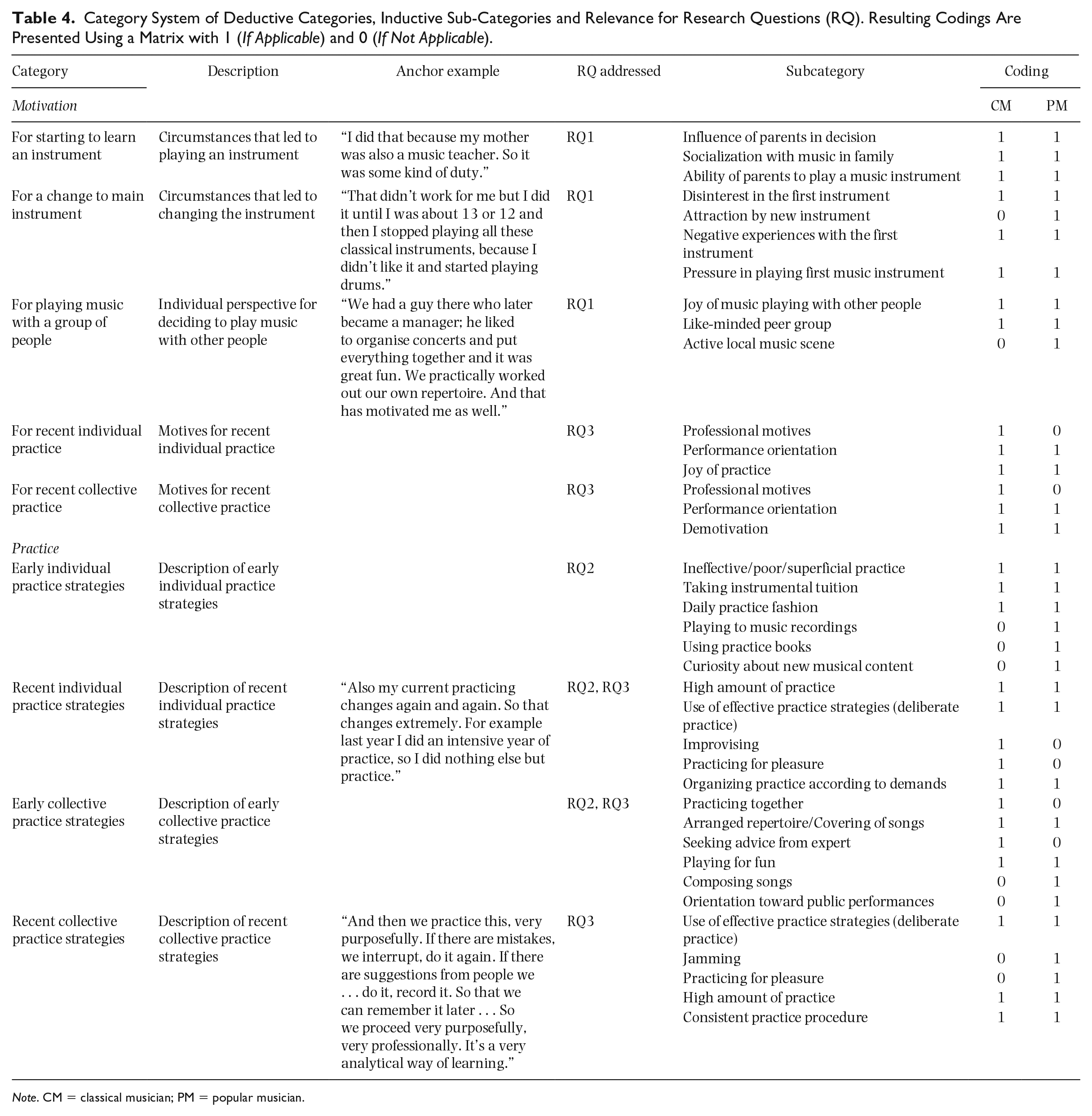
Note. CM = classical musician; PM = popular musician.
To answer RQ1, two multivariate analyses of variance (MANOVAs) were conducted using genre as the independent variable (IV). Dependent variables (DVs) for the MANOVA regarding age at starting instruments were age at starting the first instrument and age at starting the main instrument. DVs for the MANOVA regarding age at entry to orchestra/band were age at entry to the first orchestra/band and age at entry to the main orchestra/band. The qualitative analysis systematically provided categories that represented aspects of motivation during the socialization processes into music (with the first and main instrument) and orchestra/band.
To answer RQ2, four separate linear regression models were conducted. Two separate regression models examined the impact of individual (IV1) and collective practice experience (IV2) on current practice hours per week (DV1). Two separate regression models examined the impact of IV1 and IV2 on the quality of deliberate practice (DV2). Experience with the main instrument and cumulated practice hours indicated individual practice experience (IV1). The number of previous public performances with the main orchestra/band, the number of public performances with the main orchestra/band per year, the number of public performances in total, and the current collective practice hours per month indicated collective practice experience (IV2). The qualitative analysis provided comparable categories of early and recent individual and collective practice activities, which allowed the tracing of development in practice activities.
To answer RQ3, four MANOVAs were conducted. The first MANOVA assessed differences between genres (IV) in terms of cumulated practice, current practice hours per week, current collective practice hours per month, quality of deliberate practice, self-efficacy, and motivation (DVs1). Self-efficacy and motivation were each substituted by their subscales (DVs2) in the second MANOVA. The third and fourth MANOVAs each complemented the profession as the second IV for both DVs1 and DVs2. The qualitative analysis further allowed us to compare both genres on a professional level with respect to individual and collective practice activities and the corresponding motivational aspects for practice.
Results
RQ1: How do classical and popular musicians differ in age when starting to play their first and main instrument and entering their first and main orchestra/band?
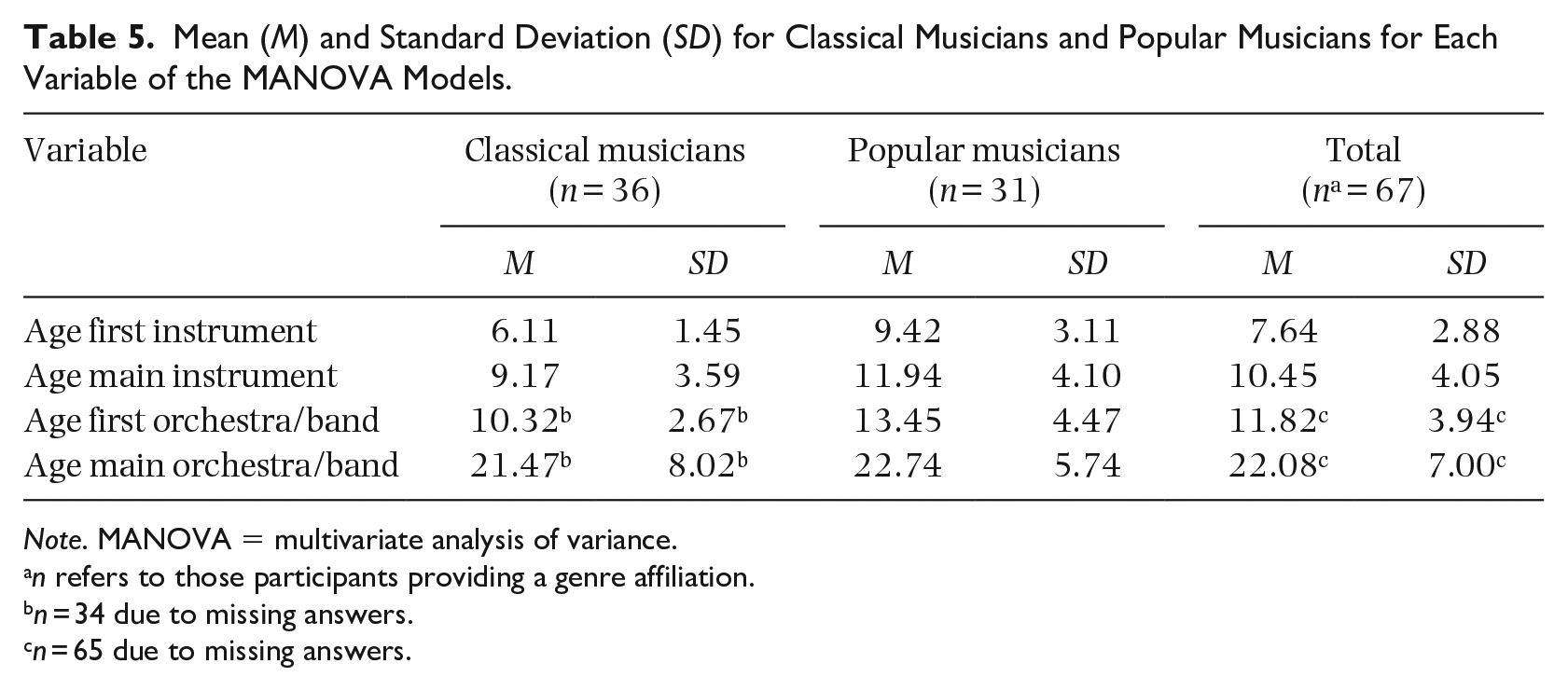
Table 5 shows the descriptive data of MANOVAs’ variables for both genres. The MANOVA model regarding age at starting instruments was significant, F(2, 64) = 16.30, p < .001, η2 = .34. Two following ANOVAs both showed the age of starting their first, F(1, 65) = 32.63, p < .001, η2 = .33, and main instrument, F(1, 65) = 8.69, p < .01, η2 = .12, as significant. The MANOVA model regarding age at entry to orchestra/band was significant, F(2, 62) = 6.10, p < 1 < .01, η2 = .16. Two following ANOVAs showed age at becoming a member in the first orchestra/band as significant, F(1, 63) = 11.97, p < .001, η2 = .16, and age at becoming a member in the main orchestra/band as not significant, F < 1.
Mean (M) and Standard Deviation (SD) for Classical Musicians and Popular Musicians for Each Variable of the MANOVA Models.
Note. MANOVA = multivariate analysis of variance.
n refers to those participants providing a genre affiliation.
n = 34 due to missing answers.
n = 65 due to missing answers.
The qualitative analyses of the interviews revealed that the parents of both participants played instruments for themselves, and both were socialized with music in their families, for example, by listening to music. Their parents influenced them in the decision to learn an instrument: “I did all this because my mom is also a music teacher. So that was a bit of a duty” (PM).
Motivation for the change to the main instrument revealed differences between the participants, although both showed disinterest in their first instrument and had some negative experiences with playing it. CM reported being pushed to participate in competitions by her teacher, which negatively influenced her motivation to practice the first music instrument (viola): “You had to do it. And if you did not want to do it, then you were mocked and scolded and pushed.” PM reported having no motivation to practice the first music instrument (piano) because it was a task by his mother: “I did not like to practice at all. It was awful. It was pure torture.” Instead, he was attracted to his designated main instrument (drums) by a band he idolized: “I was a very big fan of Queen at that time. And somehow I had to choose an instrument from them. And I thought that was the coolest.”
Both showed motivation and joy in playing music with other people. “I sometimes met with other school friends. And we played some music ourselves, which was somehow less stressful” (CM). Both reported having a like-minded peer group, which made practice more pleasant (CM) and enabled them to share their interest in music styles (PM). Both enjoyed being part of an active local music scene with their own bands.
RQ2: How do the experiences of classical orchestra/popular band musicians in individual practice and collective practice impact the amount of current practice and the quality of deliberate practice?
The regression model examining the impact of individual practice experience on current practice hours per week was significant, F(2, 66) = 19.59, p < .001, R2 = .37. Experience with main instrument in years, β = –.50, p < .001, and cumulated practice, β = .67, p < .001, were both significant predictors.
The regression model examining the impact of individual practice experience on the quality of deliberate practice was not significant, F(2, 66) = 2.19, p = .12, R2 = .06. Only cumulated practice, β = .29, p < .05, was a significant predictor.
The regression model examining the impact of collective practice experience on current practice hours per week was significant, F(4, 64) = 9.10, p < .001, R2 = .36. Number of public performances with main orchestra/band per year, β = .42, p < .01, and number of previous public performances with main orchestra/band, β = –.58, p < .001, were significant predictors.
The regression model examining the impact of collective practice experience on the quality of deliberate practice was significant, F(4, 65) = 4.14, p < .01, R2 = .20. Number of previous public performances with the main orchestra/band, β = –.49, p < .01, and public performances in total, β = .58, p < .001, were both significant predictors.
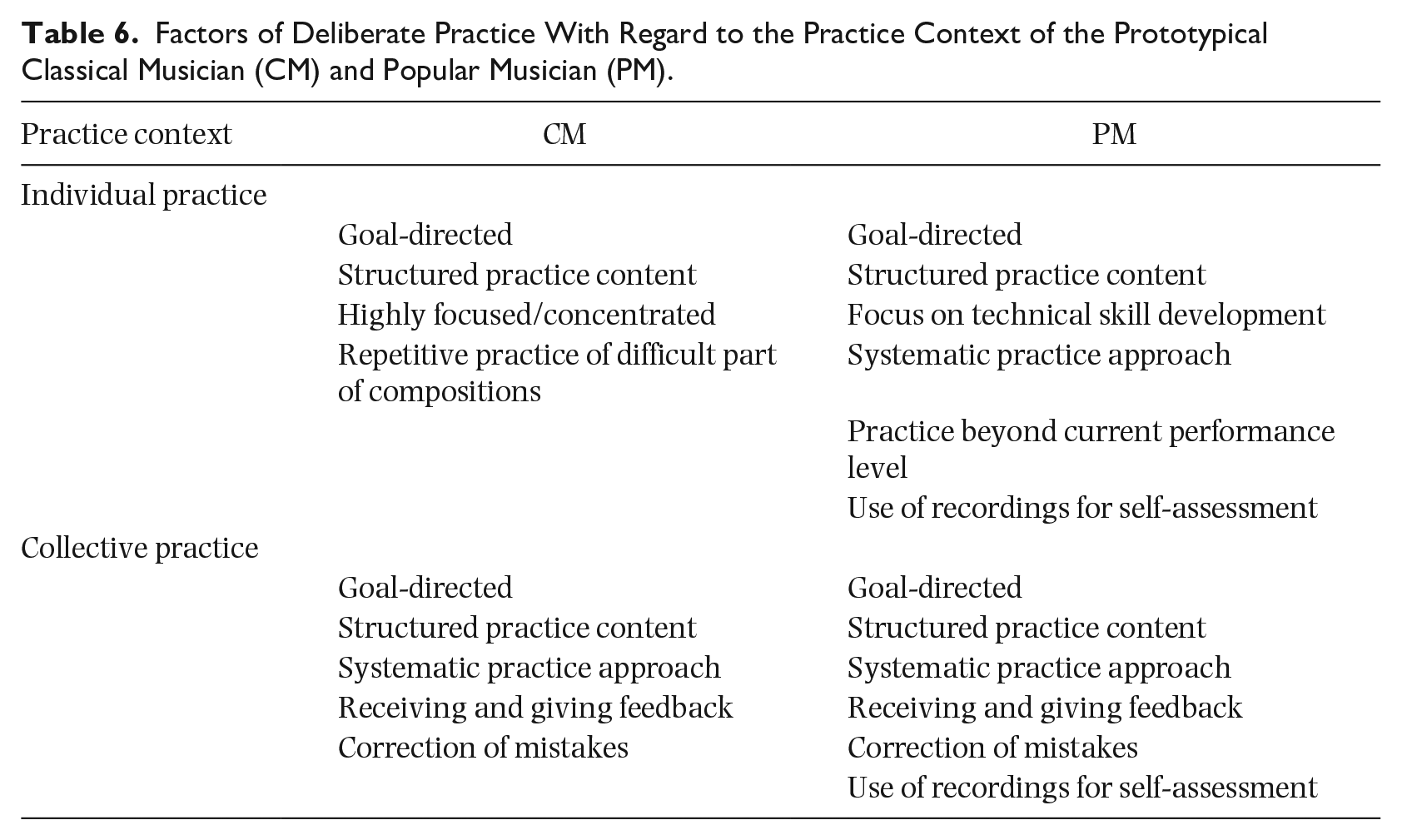
In terms of early individual practice, the qualitative analyses of the interviews revealed that both participants had instrumental tuition on their main instrument. They described a daily practice routine but had poor early practice strategies. “This had to be done. Uh and practiced was also actually consistently every day” (CM). PM used books for practice, played along with music recordings, and was inquisitive about new musical contents. They also reported investing considerable time in their recent individual practice: “The last great operas we made . . . I must have practiced for 20 to 30 hours” (CM). Both organized their practice according to demands, such as compositions that were prepared for orchestra practice (CM) or rehearsals of specific bands (PM): “The approaches are different (. . .) there is a band where we practice very goal-oriented . . . If a band works like that, then I invest a lot of time to prepare it. Extremely much time.” Both reported deploying effective and deliberate practice strategies during their individual practice sessions (see Table 6). CM reported practicing for pleasure and improvising during individual practice sessions.
Factors of Deliberate Practice With Regard to the Practice Context of the Prototypical Classical Musician (CM) and Popular Musician (PM).
Concerning early collective practice strategies, CM jointly practiced with a group of friends, and both participants arranged repertoires by themselves based on songs by composers they idolized: “We replayed the stuff that was good for us. So we were really into metal and stuff. So we tried to play Metallica” (PM). CM occasionally sought advice from experts when practicing collectively: “We maybe took a lesson with someone once or twice, but by and large, did it alone.” PM reported that their early collective practice was filled with composing own songs. Furthermore, collective practice was aimed at playing many public performances: “Then you could play many concerts in the villages. That you played almost every second weekend and did band rehearsals, and then you know this band (. . .) and from one band to the next.” Both collectively practiced for fun with their orchestra/band.
Both reported having invested a considerable amount of time in recent collective practice, and both described using effective and deliberate practice strategies in their collective practice (see Table 6). In the orchestra (CM) or band (PM), consistent practice procedures were established: “Symphony concert has, on average, six rehearsals and an opera 10 to 20, if it is a very difficult opera” (CM). However, only PM reported having jamming sessions and experiencing the pleasure of practice in the collective setting.
RQ3: How do classical orchestra/popular band musicians at different professional levels (professional and nonprofessional) differ in their motivation, self-efficacy, individual practice, and collective practice?
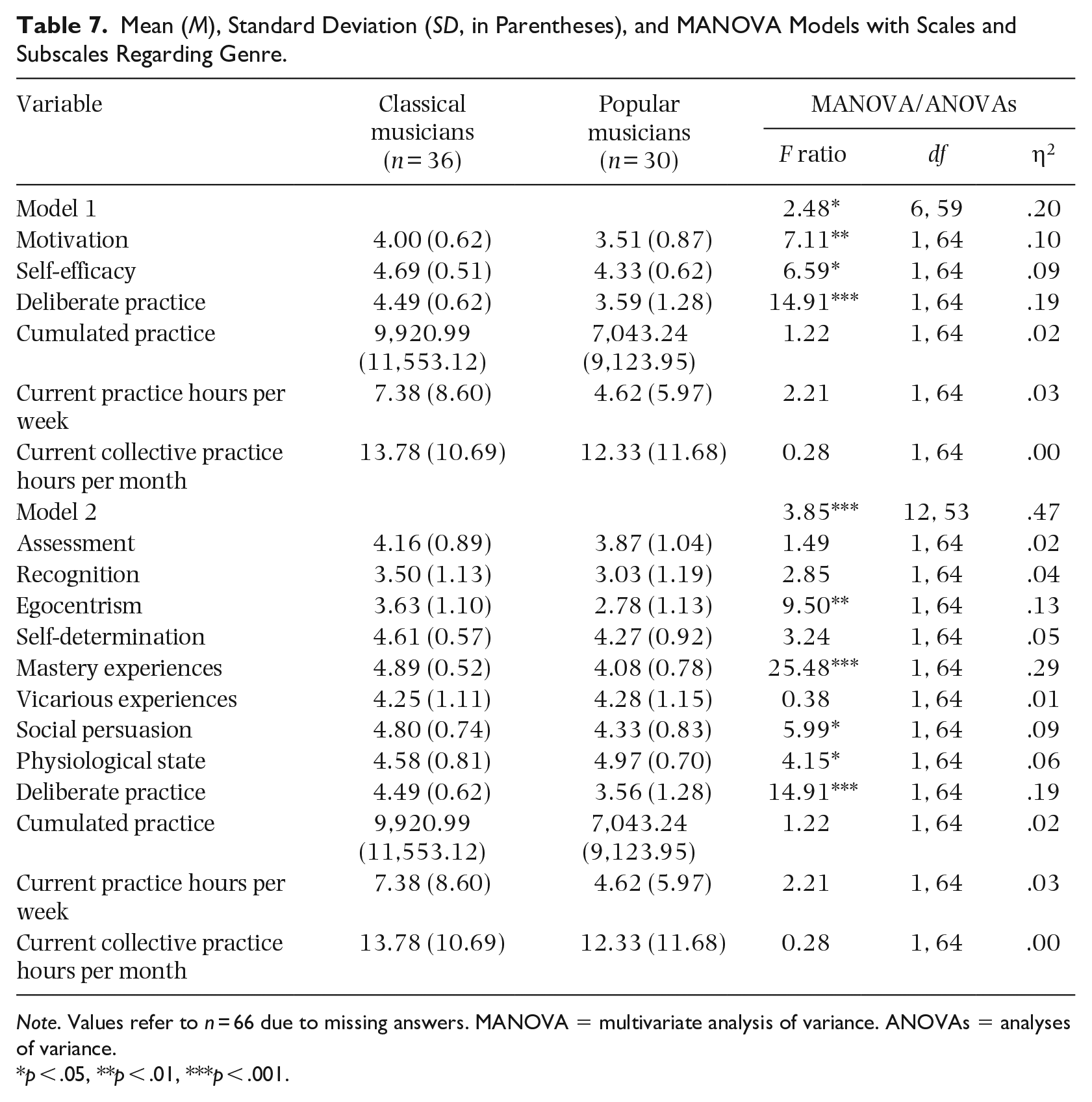
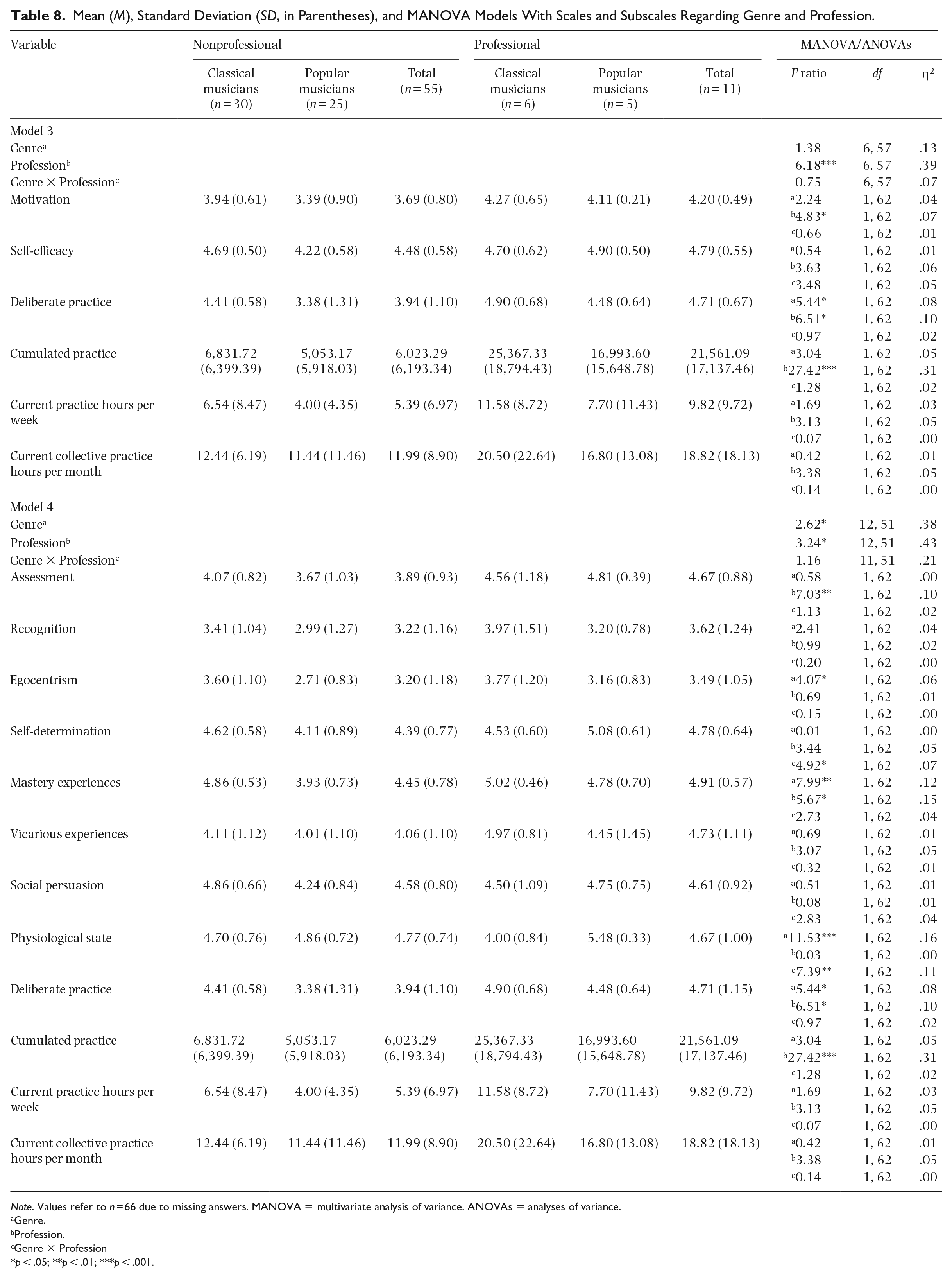
Tables 7 and 8 show the mean values, standard deviations, and MANOVA (and subsequent ANOVA) models for the scales and subscales regarding genre and profession.
Mean (M), Standard Deviation (SD, in Parentheses), and MANOVA Models with Scales and Subscales Regarding Genre.
Note. Values refer to n = 66 due to missing answers. MANOVA = multivariate analysis of variance. ANOVAs = analyses of variance.
p < .05, **p < .01, ***p < .001.
Mean (M), Standard Deviation (SD, in Parentheses), and MANOVA Models With Scales and Subscales Regarding Genre and Profession.
Note. Values refer to n = 66 due to missing answers. MANOVA = multivariate analysis of variance. ANOVAs = analyses of variance.
Genre.
Profession.
Genre × Profession
p < .05; **p < .01; ***p < .001.
The qualitative analyses of the interviews revealed that concerning motivation for recent individual practice, CM was extrinsically motivated when compositions had to be practiced for orchestra performances and intrinsically motivated for chamber music: “For orchestra, good, and for voluntary projects, i.e. chamber music, very high.” By contrast, PM showed considerable performance orientation: “I did an intensive year of practice, so I did nothing but practice for eight hours every day.”
In terms of motivation for recent collective practice, CM was extrinsically motivated by her profession: “It is my profession to play in the orchestra (. . .) you just have to play what is presented to you.” Both participants showed considerable performance orientation for collective practice: “So if I want to do something simple that feels simple, then I have to practice on a complex level so that when I do it, I can radiate simplicity” (PM).
Both mentioned demotivating factors during collective practice, for example, stressful moments within the orchestra/band: “Cooperation with colleagues in the orchestra is always a very fragile balance. There can also be tensions and incompatibilities. And that weighs heavily on me” (CM). PM was discouraged by too much focus on a prosperous band orientation: “The main killer . . . is ambition. Above all ambition in the sense of success. Or I want to play and make money and whatnot . . . The focus goes away from ‘I make music.’”
They applied deliberate practice strategies in their individual and collective practice (Table 6).
Discussion
This study gained insights into the differences and communalities of classical orchestra and popular band musicians regarding their starting age with instruments and orchestras/bands, individual and collective practice activities, and corresponding motivational aspects. Recent research has not addressed these issues, particularly with consideration of genre affiliation and practice that occurs in a group—collective practice.
The results are in line with recent research concerning the earlier start of classical musicians’ careers. This study places the starting age of popular musicians in terms of instrumental learning between those of classical musicians (Ericsson et al., 1993) and of jazz musicians (Degner et al., 2003). In this socialization process with music, parents and idols are influential entities. The significance that a family attributes to music by listening to records together or attending concerts has an influence on the attribution to music of their children (Reeves, 2015). Accordingly, the earlier entry of classical musicians into their first orchestra might depend on the age of learning the first and main instrument. Both classical and popular musicians joined their first orchestra/band after learning their first instrument and their main instrument for a similar amount of time, during which they may have learned the necessary skills for making music together. The age of entry into the main orchestra/band may depend more on the level of professionalism achieved by the participants and less on their genre affiliation, although there may be differences in the shape of the career trajectory. Professional classical musicians typically receive formal instruction at music institutions before joining a professional orchestra. A later entry into the main orchestra may also be true for semi-professional classical musicians, as they need to establish the necessary skills for playing in a semi-professional orchestra through years of music tuition. In contrast to classical music, career trajectories in the popular music genre seem to be rather non-institutionalized, self-directed, and entrepreneurial (Bull & Scharff, 2021), similar to the jazz music genre (Degner et al., 2003). In popular music, the establishment of bands is apparently motivated by like-minded peers and idols and is catalyzed by switching from one band to the other in an active local music scene. Many bands are formed and fall apart. Some of these projects endure and develop into a main band. Other projects may be more transitory, and the formation of the main band occurs later in the career.
The impact of (cumulated) experience in playing and practicing music instruments on the amount of current practice and the quality of deliberate practice strategies corresponds to previous research (Ericsson et al., 1993). This impact implies the importance of the individual practice experience in gradually developing one’s practice skills. In the context of collective practice, the current demands of upcoming public performances seem to impact individual practice hours to prepare for those performances. Many previous public performances, however, have a reducing effect on individual practice hours and quality of deliberate, as the repertoire may have already been practiced many times and requires less deliberate practice, especially in the absence of goals or constant demands from regular upcoming public performances. In contrast, the collective practice experience gained through performances with different orchestras/bands can translate into high quality individual deliberate practice, as musicians might be constantly challenged, for example, by the dynamic change of band constellations (Längler et al., 2022a). A greater number of public performances may require more frequent and profound preparation, especially through collective practice. Accordingly, this preparation for public performances may lead to a higher quality of individual deliberate practice. Both practice forms, thus, might be interrelated and reciprocally determine each other. As professional musicians are likely to perform public performances to a higher extent, the professional level of musicians might require a higher quality of collective practice. Irrespective of their genre, both professional musicians used multifarious effective practice strategies that might derive a high-quality individual and collective deliberate practice. In contrast, they had poor early individual and collective music practice strategies, which evolved over time through experience.
The differences between classical and popular musicians with regard to motivation, self-efficacy (and their subscales), and practice variables support and complement previous research by Papageorgi et al. (2010), who showed more aspirations to excel musically and technically for classical musicians than for non-classical musicians. Classical musicians may have gained more practice experience through formal instruction than popular musicians. As a result, they may have refined their practice and gained greater insight into the necessity of deliberate practice for and a greater awareness of their performance achievements, which could also be a motivating factor, but could also lead to a higher sense of competition. Popular musicians, on the other hand, seemed to feel more comfortable and less anxious about public performances. However, more explicit significant differences were found with respect to profession. The interaction effects found may be especially true for professional popular bands, which, in contrast to classical orchestras with a hierarchized leadership function through a conductor, seems much more democratic in deciding how to organize practice together. Taken together, the results suggest that professional level might be a more discriminating factor with regard to the variables studied than genre affiliation, even though there were still significant genre differences. Qualitative analysis indicated an almost congruent picture of both musicians. They invested a lot of time into practicing individually and collectively and used a range of components of deliberate practice, depending and reasoned on genre preferences, for example, using recordings for self-assessment to improve aspects of their individual and collective deliberate practice by PM (Boucher et al., 2021; Waddell & Williamon, 2019). In contrast to their classical professional counterparts, where the event schedule predetermines the compositions to practice for orchestra members, professional popular musicians might therefore experience less vocational motives and more democratic freedom in the selection and performance of songs. This may also explain the different occurrence of improvisation and jamming by practice context. The performance orientation by both match theoretical approaches of professionalization, underlining the necessary amount of high-quality practice (Bonneville-Roussy & Bouffard, 2014) and motivation (Appelgren et al., 2019) to be able to succeed in a profession. However, obstructive aspects of practice were also salient. Competition and mental pressure in the orchestra had an encumbering impact, which might be more severe for professional musicians as they are more encountered with stressful psychosocial factors. Second, a band’s focus on economic success can have a demotivating impact, as the intrinsic motivation lay outside of making music. These aspects indicate the necessary dispositions of attaining top-level expertise. If somebody does not have a robust mental constitution or a strong intrinsic interest in making music, they may be unable to fully succeed or enjoy their profession to the fullest.
This study has some limitations that future research should consider. For both the quantitative and the qualitative part, the sample sizes were rather small. Professional musicians were less represented in this sample, and genres showed an intragroup disparity of variance in professional status and experience in music. Data were transformed to comply with the prerequisites of the regression. Furthermore, the results of the qualitative prototypical genre comparison cannot easily be generalized to a bigger population. To obtain an indication for collective practice, a variable of the number of public performances and current collective practice hours was used to draw conclusions about the impact of collective practice. Future research should investigate the collective practice process of music groups more precisely.
The results show the impact of collective practice experience variables on the amount of individual practice and the quality of deliberate practice. As there were no significant differences between professionals’ and nonprofessional’s quantity of collective practice, the question of differences in the quality of collective practice remains as a research desideratum. A high quality collective deliberate practice, as laborious and in-depth preparation of orchestra/bands for those public performances might, therefore, also impact the member’s quality of individual deliberate practice. In line with this, PM’s individual practice was highly triggered by positive and productive collective practice sessions. Hence, further research in music psychology and expertise should take a collective deliberate practice into account and consider the implied mutual interconnectedness of the individual and collective practice processes of musicians. These processes might also affect the emergence of a shared collective efficacy among music group members of different genres, which in turn might affect group performance, for what Ray and Hendricks (2019) found partial support in the context of chamber ensembles. Knowledge about this relationship could expand the insights into and broaden the view of the acquisition of expertise on an individual and collective level and in music in general.
Footnotes
Acknowledgements
The authors would like to thank Maestro Arn Goerke, who helped us to acquire a considerable part of the sample.
Declaration of conflicting interests
The author(s) declared no potential conflicts of interest with respect to the research, authorship, and/or publication of this article.
Funding
The author(s) received no financial support for the research, authorship, and/or publication of this article.
