




Abstract
Popular music with prosocial lyrics affects listeners’ thoughts, emotions and behavior, yet little is known about the role played by the actual music in this process. This study focused on the interaction between the prosocial lyrics and the musical production elements, examining whether certain versions of a song can enhance the effect of prosocial lyrics on thoughts, emotions and behavior. Based on the general learning model and the reciprocal-feedback model of music perception, a laboratory experiment (N = 136) was conducted to test how listeners are affected by music with prosocial or neutral lyrics and by an electronic or an unplugged version of the music. For this purpose, an original song was composed and produced, using the same melodies and harmonies with varied lyrics and instrumentation. In a pilot study (n = 36), a version with acoustic instrumentation was rated as the most emotional and fitting, whereas an electronic dance version was rated as the least emotional and fitting. There was a significant interaction effect between the lyrics and the musical production elements: Those listening to the unplugged version with prosocial lyrics showed the most empathetic emotions. Prosocial lyrics also had an effect on prosocial thoughts but not on behavior.
Although few songs could be called prosocial music (Ruth, 2018b), everyone can recall famous examples of songs with prosocial lyrics and intentions. Examples include “Heal the World” by Michael Jackson and “We are the World” by United Support of Artists for Africa, an all-star musical group. Without doubt, in addition to commercial success, most musicians want to achieve a prosocial effect on their listeners, even in the long term where possible. However, few studies have considered the long-term effects of songs with prosocial lyrics on listeners (e.g., Coyne & Padilla-Walker, 2015). Nevertheless, a few dozen studies have shown the short-term effects of these types of songs (e.g., Greitemeyer, 2009a; Ruth, 2018a), especially on cognition (e.g., prosocial thoughts and associations) and affect (e.g., empathetic and caring feelings). Most of these studies have focused on conative effects, and only a few have been able to measure actual behavior, with most laboratory and online studies examining behavioral intentions instead.
Most existing studies looking at prosocial music have focused on the effects of lyrics because lyrics are arguably the most relevant element of a prosocial song. Although all musical parameters, such as harmonies, melodies and orchestration, are adjusted to fit a prosocial song, without the lyrics one would not be able to identify the prosocial purpose of the song. This means prosocial lyrics are a necessary but not sufficient requirement for an effective prosocial song because, without a fitting emotional and touching musical accompaniment, the song cannot fully achieve the desired impact on the listener.
The effectiveness of the musical layer of prosocial songs has been investigated in only one previous study, which manipulated the tempo of a song (Pieschl & Fegers, 2015). This paucity of research is understandable for two reasons. First, investigations of the behavioral effects of prosocial music have mostly been conducted by psychologists, especially social psychologists. Musicologists, who are more interested and better trained to focus on musical parameters, have rarely studied the effects of this type of music. Second, in terms of conducting experiments and manipulating stimuli, it is more convenient to systematically alter lyrics than music. Manipulating the musical parameters of a song, or even substantially altering the emotional quality, would require the permission and most likely the assistance of the music producer.
An alternative would be for researchers to write and produce original songs, with original lyrics that they could alter on every level. This is the starting point for the present study. By using an original song, we were able to investigate how the emotional quality of music, in interaction with prosocial lyrics, affects prosocial thoughts, feelings and an actual, observable prosocial behavior.
Theoretical background
Most previous studies investigating the effects of prosocial music have used the general learning model (GLM) put forward by Buckley and Anderson (2006), following the example of Greitemeyer (2009a). This model is a broad theoretical framework that has been used to explain the underlying process of prosocial media effects. The GLM suggests that any media reception, such as listening to music, playing video games or watching a movie, can have long- and short-term effects on the recipient’s behavior. The long-term effects of any media reception occur through a series of learning encounters with the media over a certain period, during which the short-term effects are evaluated by the recipient. The theoretical process that describes short-term effects is commonly used to explain the effect of media reception on behavior through internal routes. According to this model, personal and situational factors determine how a certain situation affects a person through their cognition, affect and arousal. These three routes interact with each other and eventually determine how a person behaves in a particular situation. As proposed by Buckley and Anderson (2006), situational variables include the presence of others and the current environment, whereas personal variables include age, level of education and self-esteem. During media reception, the media interact with all personal and situational variables, and together they affect the internal state through the three routes of cognition (e.g., by triggering thoughts, associations and scripts; Huesmann, 1986), affect (i.e., moods and emotions) and arousal (e.g., through experiencing chills or an increased heartrate). The internal state determines how a person appraises a certain situation. To illustrate the process, one could think of two young and empathetic (personal variables) people sitting in a crowded waiting room (a situational variable). One is listening to a song with prosocial lyrics (media) on his or her headphones, while the other listens to a song with neutral lyrics. The prosocial lyrics activate prosocial thoughts and feelings of empathy, which lead to a prosocial internal state. When an elderly person enters the room looking for an unoccupied seat, it is more likely that the person who listened to the music with prosocial lyrics and who would therefore have a prosocial internal state would give his or her seat to the elderly person than it is that the person who listened to the music with neutral lyrics would do the same.
Listening to music is such a complex process that the basic idea of the GLM seems insufficient for describing the role of music in the process. There are many musical variables that might influence the effect, which is why Ruth (2017b, 2018a) included multiple factors of music found in the reciprocal-feedback model of musical response (Hargreaves, MacDonald, & Miell, 2005) to extend the GLM. The GLM and the reciprocal-feedback model of musical response actually describe comparable features such as personal and situational input variables, as well as output variables such as cognition, affect and arousal. Whereas the GLM proposes that these outputs account for a certain behavior, Hargreaves and colleagues’ model does not feature this part of the process but instead includes the input factors of music. These factors of music comprise not only musical parameters, production elements, or lyrics, but also collative variables, such as familiarity or complexity, and performative variables, such as whether the music is live or recorded. The present study uses Ruth’s (2018a) music processing model, which combines the GLM and the reciprocal-feedback model of musical response (see Figure 1).
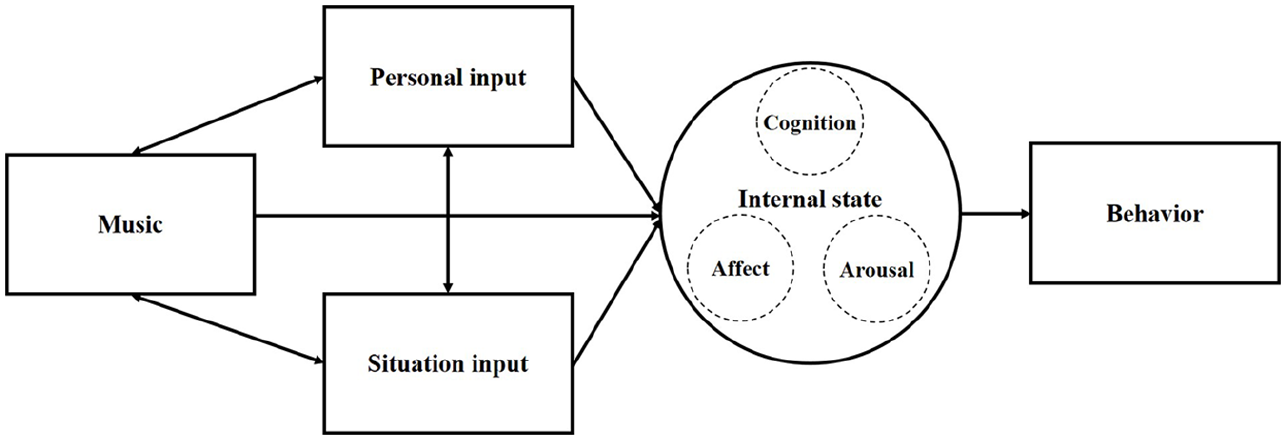
Music processing model (Ruth, 2018a).
The aim of this study is to investigate the interaction between two musical factors in the music processing model: lyrical content and the musical production elements. Because most previous research on prosocial music has focused on the effects of lyrics, it seemed interesting to test whether features of the music itself can enhance the effect of a prosocial song. The following sections review the literature on the effects of songs with prosocial lyrics and on musical parameters that can enhance music’s perception and effects.
Prosocial lyrics
Although a recent investigation on references to prosocial behavior in popular songs showed that only a few songs feature these kinds of references (Ruth, 2018b), there are many famous examples of songs that might be considered prosocial. Songs associated with charity projects, such as Band Aid’s “Do They Know it’s Christmas” or Michael Jackson’s “Heal the World,” might initially come to mind. However, there are many other popular examples, such as “Where is the Love?” by the Black Eyed Peas, Birdy’s “People Help the People,” and even pop singer Bruno Mars “Count On Me.” These examples, like most songs that could be considered prosocial, feature lyrics referencing a prosocial behavior. Padilla-Walker and Carlo (2015) described prosocial behavior as a multidimensional construct that is the key for establishing a civilized society and social relationships. Their definition is consistent with the ideas of many other scholars, who define prosocial behavior as behavior that benefits others or society at large. A prosocial behavior is performed intentionally, without involving payment, and it is not an action that is done because of one’s job. Typical examples of this kind of behavior are donating money, helping others or performing any action to help the environment.
To date, few studies have investigated the effects of songs with prosocial lyrics. Two field studies observed whether this kind of music can affect the behavior of people in an everyday environment. Jacob, Guéguen, and Boulbry (2010) conducted the first of these studies, finding that people exposed to songs with prosocial lyrics in a restaurant left larger tips than did those who were exposed to comparable music with neutral lyrics or to no music. Ruth (2017a) showed that customers who were exposed to music with prosocial lyrics exhibited more prosocial behavior by purchasing more fair trade products. In a series of studies on songs with prosocial lyrics, Greitemeyer (2009a) examined the underlying mechanisms of the effect of this music, revealing that songs with prosocial lyrics have an impact on prosocial thoughts, feelings and behavior. In another study, Greitemeyer (2009b) showed that empathy mediates the effect of music with prosocial lyrics on prosocial behavior. These results are supported by the findings of Böhm, Ruth, and Schramm (2016), who demonstrated the influence of prosocial songs on prosocial thoughts, and Ruth (2017b), who found evidence supporting the impact of trait and state empathy on the reception process. Clark and Giacomantonio (2013, 2015) have also shown the importance of empathy in this process. Bodner and Gilboa (2009) found an effect of crisis songs on a cognitive evaluation of intergroup conflicts, and Ziv’s (2018) results explained how protest songs can affect the appraisal of a certain situation.
Most previous investigations on the effects of songs with prosocial lyrics aimed to determine whether this kind of music can ultimately influence prosocial behavior. Greitemeyer, Hollingdale, and Traut-Mattausch (2015) showed that listeners’ attitudes and behaviors toward women were positively enhanced after the reception of songs with lyrics that advocate gender equality. Other studies reported that listening to music with prosocial lyrics is associated with less prejudice and discrimination (Greitemeyer & Schwab, 2014), less risky driving behavior (Greitemeyer, 2013) and less antisocial behavior (Greitemeyer, 2011). Yu, Wu, Zhang, and Fang (2019) showed that even song lyrics without accompanying music can enhance prosocial behavior. A longitudinal study conducted by Coyne and Padilla-Walker (2015) demonstrated that behavior can be influenced by prosocial lyrics, especially among adolescents, but aggressive or sexual lyrics have a stronger impact. Only one study, exploring customers’ aggression levels, reported no specific effects of prosocial references in song lyrics (Niven, 2015).
Overall, the empirical evidence from existing research supports the assumption that songs with prosocial lyrics positively affect listeners, as indicated by a recent meta-analysis (Coyne et al., 2018). So far, only one study has focused on how the actual musical features of songs with prosocial lyrics can affect listeners (Pieschl & Fegers, 2015). Because the music itself is important for music processing, as hypothesized in the theoretical model described above, the following section focuses on the effects of musical parameters.
Musical parameters
Pieschl and Fegers (2015) have argued that musical parameters are key factors in the effect of music with prosocial or antisocial lyrics but that it is difficult for researchers to test these effects in a valid way because this would require original music that could be manipulated in experimental studies. Pieschl and Fegers (2015) used songs written and performed by an indie band that allowed them to change the lyrics and tempo of the tracks. Although their results showed no significant effect for tempo, the approach seems promising, and they recommended further research on musical parameters.
Empirical evidence has shown that the emotional expression of a song can affect the emotions of the listener (Lundqvist, Carlsson, Hilmersson, & Juslin, 2009). There are many musical parameters, such as loudness, tempo, contour and texture, which can be altered to affect listeners’ emotions (Schubert, 2004). Furthermore, there are many ways of altering a piece of music to evoke certain emotions, such as composition, performance or orchestration (Nielzirn & Cesarec, 1982). Beer and Greitemeyer (2018) found that the emotional expression of a song influenced social behavior. They showed that melancholic and uplifting music affected tipping behavior among older customers in a restaurant. The genre of a song can influence how the music affects the listener (LaMarre, Knobloch-Westerwick, & Hoplamazian, 2012), and it seems likely that the overall emotional quality of a song can also affect the listeners.
An experimental study by Huron, Anderson, and Shanahan (2014) showed that certain instruments are associated with specific emotions and that the instrumentation of a song can affect the listeners. This result seems promising for the present investigation because popular music is often released in different versions, with varying musical production elements (e.g., studio, live, acoustic, or remix). We assume that an unplugged or world music version of a song could be perceived as more emotional, maybe even more arousing or appealing and therefore could be evaluated as more fitting for prosocial music. A song with fitting musical production elements seems to be more likely to enhance the effect of the lyrics. Therefore, we decided to focus on those elements and their impact on the effects evoked by songs with prosocial lyrics.
Hypotheses
Following the proposed music processing model and existing empirical evidence, one could argue that a song version with musical production elements that have a high emotional quality and are perceived as fitting for the lyrics can enhance the effect of music with prosocial lyrics. Emotions, especially empathetic emotions, seem to be the key factor influenced by music with prosocial lyrics (Greitemeyer, 2009b). The previously described empirical studies have indicated that musical production elements such as instrumentation (Huron et al., 2014) can intensify emotions. Therefore, it seems reasonable to argue that a song that features more fitting musical production elements supports the effect of prosocial lyrics on the listener’s thoughts, emotions and behavior, as described in the theoretical model. This leads to Hypotheses 1, 2 and 3:
Hypotheses 1/2/3: Listeners have more prosocial thoughts/are more emotionally affected/demonstrate more prosocial behavior after listening to a song with fitting musical production elements and prosocial lyrics than after listening to a song with fitting musical production elements and neutral lyrics or a song with less fitting musical production elements and prosocial/neutral lyrics.
The theoretical model describes how the internal routes of cognition, affect and arousal interact with each other and eventually affect behavior. If the internal state consists of prosocial thoughts and feelings, it will eventually lead to behavior that is more prosocial. Therefore, the final hypotheses (Hypotheses 4 and 5) are as follows:
Hypotheses 4/5: Having more prosocial thoughts/being more emotionally affected results in listeners engaging in behavior that is more prosocial.
Methods
A 2 × 2 between-subjects laboratory experiment was conducted with 136 German students. Participants were randomly assigned to one of four experimental conditions. In two groups, recipients listened to an emotional and prosocially fitting unplugged version of a song with either prosocial or neutral lyrics, whereas participants in the other groups listened to a comparably unemotional and prosocially less fitting electronic version of the song, again with either prosocial or neutral lyrics. To ensure a musical stimulus with high internal validity, a pilot study was conducted in advance.
Stimulus and pilot study
One goal of this study was to produce an original song that could be used in this experiment and in any other investigation requiring a song that it is not known to any of the research participants but that follows the composing conventions of pop music.
For this purpose, one of the authors composed a song that followed prototypical hit songs in terms of arrangement, harmonies, melody and rhythm, inspired by the insights of Riedemann (2012) and Frieler and Riedemann (2011). The harmonies in the original song, called “We Need to Talk,” employed one of the most commonly used chord progressions in popular music (vi–I–IV–V, which translates in the key of B major to G# minor–B–E–F# major) in the verse and a variation of it in the chorus. The tempo was moderate (89 beats per minute), and the lengths of the different segments were arranged following studies by Riedemann (2012) and Frieler and Riedemann (2011; see Figure 2).
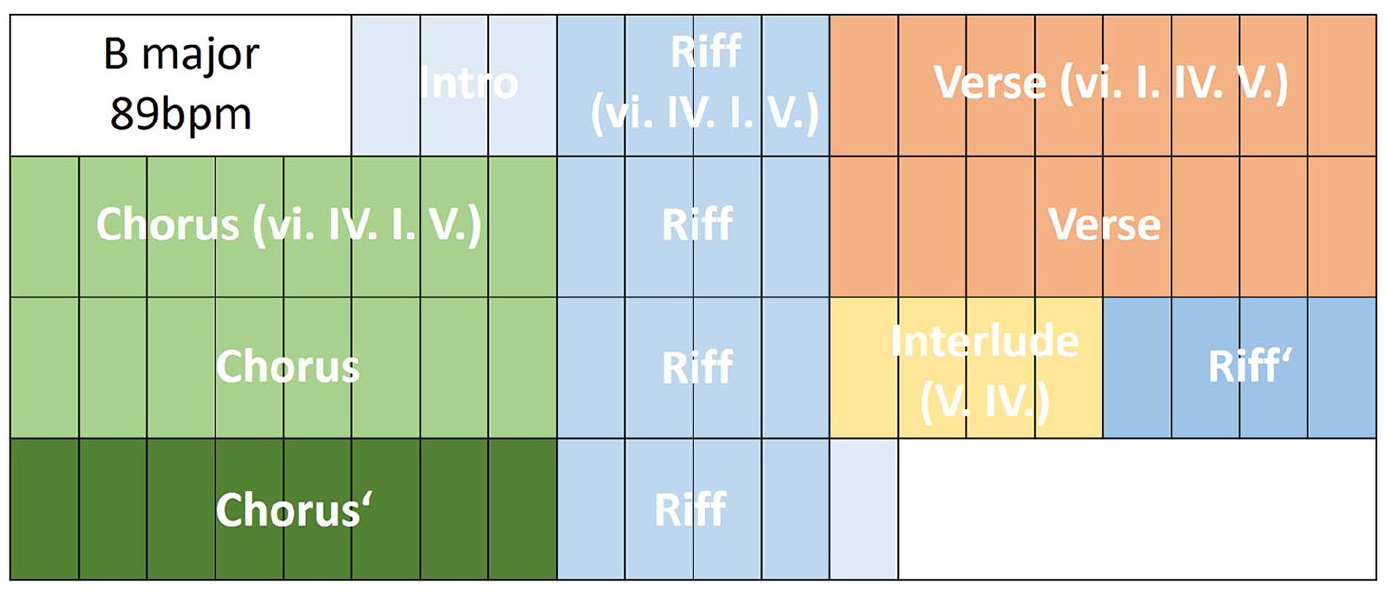
Song structure of the original song, “We Need to Talk,” used as a stimulus. One column equals one bar.
The melody featured common intervals and an ambitus that did not exceed one octave (see Figure 3).
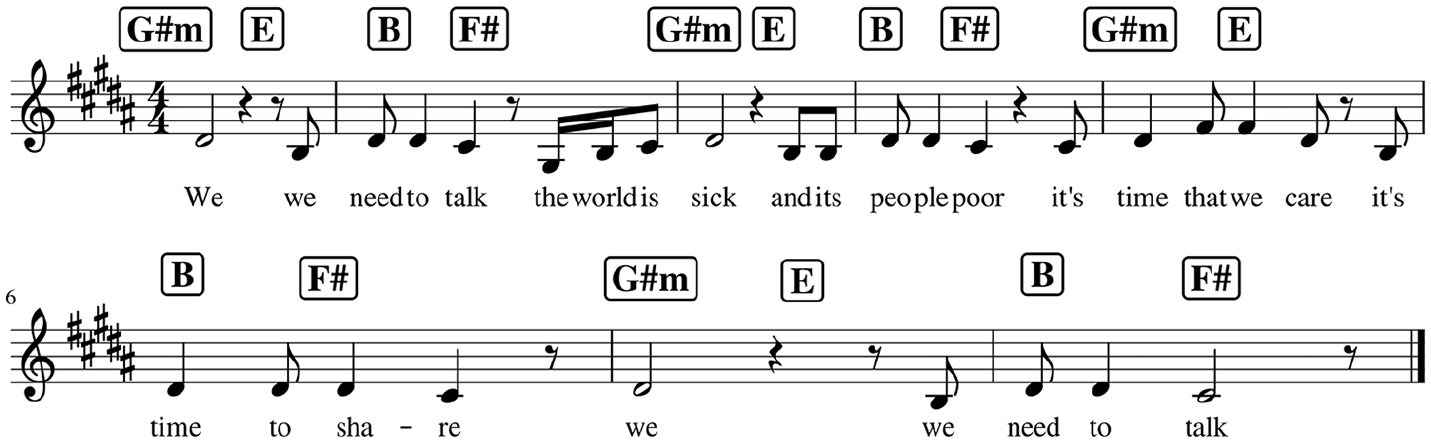
Melody (as proposed by the author, actual singing slightly varies), harmonies and prosocial lyrics of the chorus of the original song, “We Need to Talk,” used as a stimulus.
All instruments except the acoustic guitar and vocals were played with a MIDI keyboard (Nord Stage 2) and an electronic drum kit (Roland TD-17) so that the instrumentation of the song could be changed for different versions. Five versions of the song, with different musical production elements respectively instrumentation, were produced. The different MIDI samples used in the various song versions yielded five different musical styles: rock, pop, electronic, acoustic (“unplugged”) and world music. The first three styles use sounds of distorted amplifiers (rock) or artificial synthesizers (pop, electronic) and are thought to evoke less emotion and would be perceived less fitting compared with the latter two styles, which feature sounds of acoustic instruments such as string instruments and a grand piano (unplugged) or a marimba and steel drums (world music). A detailed list of the sounds is provided in Table A1 in Appendix 1.
In addition, four different sets of lyrics were written. All versions used a comparable meter and the same melody. Across versions, the refrains featured the same text, to some degree (“We need to talk . . . ”), but the main body of the lyrics differed. Two versions featured references to prosocial behavior, whereas the other two versions were designed to be comparably neutral, dealing with the themes of love and partying. The lyrics were written following Ruth’s (2018b) findings and are provided in Appendix 1.
To test whether the different song versions are in fact perceived as more or less emotional, arousing, likable and fitting, a pilot study was conducted with a sample of 36 students (58.3% female, Mage = 21.1 years, SDage = 1.97 years). All participants listened to 1-minute excerpts of all five song versions (without vocals), which were played in a random order. The participants then rated the extent to which the music sounded emotional, would fit prosocial lyrics (a definition of prosocial was given), was arousing and was likable, with each item assessed using a 5-point Likert-type scale (1 = not at all, 5 = very much). Based on the results of the pretest, the unplugged version of the song was chosen as the version with the more emotional musical production elements, and the electronic version was selected as the less emotional version, t(35) = -3.244, p < .01, d = -0.54. In addition, the unplugged version was perceived as more fitting for the prosocial lyrics than the electronic version, t(35) = -2.348, p < .05, d = -0.39. There were no significant differences in terms of liking, t(35) = -1.679, p = .10, d = -0.28, or arousal, t(35) = -1.971, p = .06, d = -0.33. Although the pop version was perceived as slightly less emotional, the electronic version was favored because it was perceived as closer to the emotional version in terms of arousal and because it was rated as having the lowest level of fit with prosocial lyrics (see Table 1). In addition, the electronic version provides more of a contrast to the unplugged version, whereas the pop version is comparably similar to the unplugged version.
Descriptive results of the pilot study regarding the perceived emotional quality, prosocial fit, arousal and likeability of the song versions, n = 36.
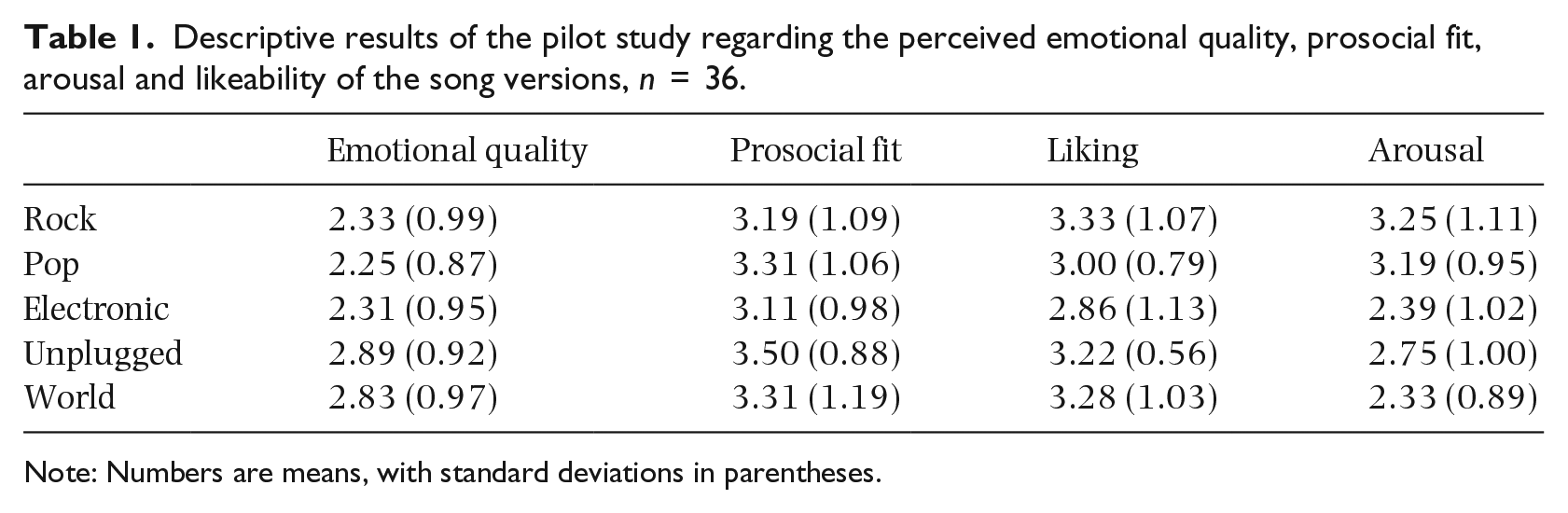
Note: Numbers are means, with standard deviations in parentheses.
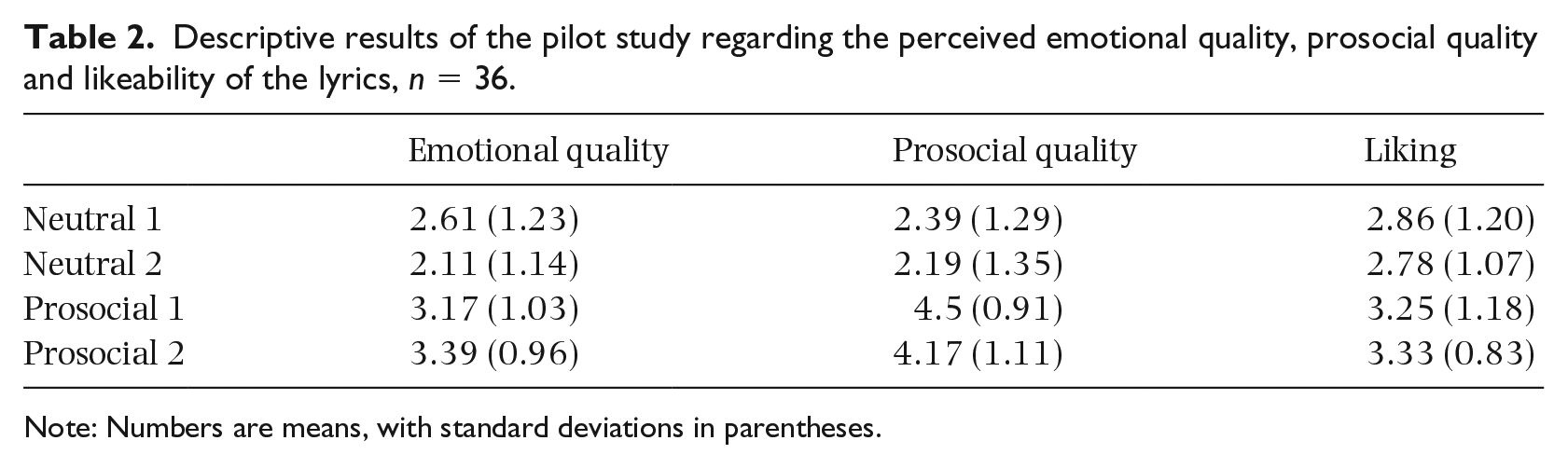
After rating the song versions, participants were asked to rate the four sets of lyrics on three scales regarding the emotional quality, prosocial quality and likeability. According to the results, the second neutral version (which was rated as the least prosocial) and the first prosocial version (which was rated as the most prosocial) were chosen for the stimulus (see Table 2). The chosen prosocial version was perceived as more emotional, t(35) = 4.842, p < .001, d = 0.81, likable, t(35) = 2.112, p < .05, d = 0.35, and prosocial than the chosen neutral one, t(35) = 7.184, p < .001, d = 1.20. There were no significant differences in terms of arousal, t(35) = 1.414, p = .17, d = 0.24.
Descriptive results of the pilot study regarding the perceived emotional quality, prosocial quality and likeability of the lyrics, n = 36.
Note: Numbers are means, with standard deviations in parentheses.
After the pilot study, a professional singer-songwriter from Germany, Gregor Jonas, was asked to sing the prosocial and neutral lyrics according to the guide track in the pop version (which was not used in the final study) so that the vocalist’s performance would not be affected by the more emotional version or the less emotional version used in the study. The final songs can be found as Supplemental Online Material.
Participants
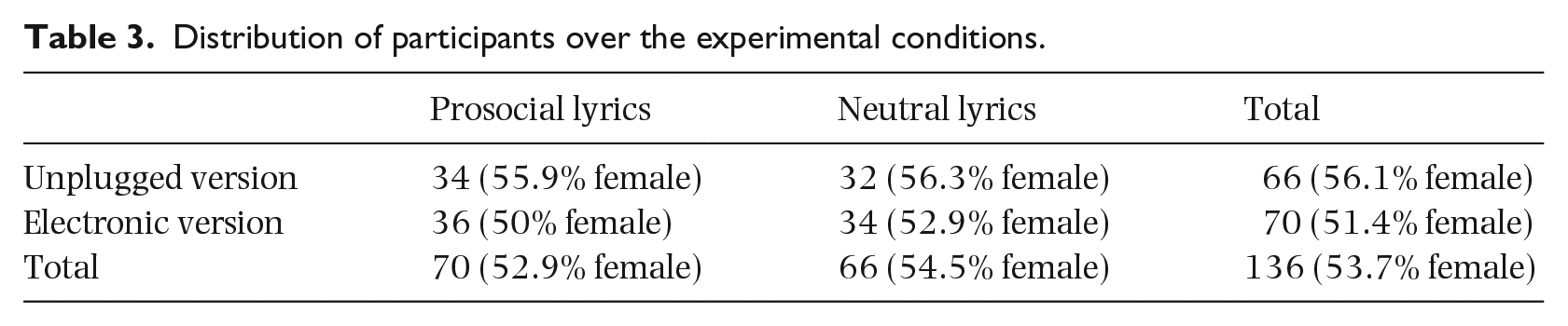
A sample of 136 students was recruited via a participant pool at a German university. As an incentive, students received credits for participating, and 14 participants were selected in a raffle to win 30 euro (chance of winning: approximately 10%). The majority (53.7%) of the participants were female. The average age was 20.57 (SDage = 2.15) years, with participants’ ages ranging from 18 to 32 years. The distribution of participants over the experimental conditions is shown in Table 3 (there were no significant gender differences among the groups).
Distribution of participants over the experimental conditions.
Measurements
The questionnaire began with assessments of ephemeral variables such as thoughts and emotions. Questions on socio-demographic characteristics and behavioral intentions were included at the end of the questionnaire.
Prosocial thoughts
The thought-listing technique designed by Cacioppo, Von Hippel, and Ernst (1997) was used to measure the frequency of prosocial thoughts a person had after listening to the songs. A short introduction instructed participants to fill in 10 blank fields with the first thoughts that came to their minds after listening to the music. One independent student helper rated all recorded thoughts and counted how many thoughts were about a prosocial behavior, following Mügge’s (2014) rules and definitions. For each participant, a coefficient was calculated to indicate the ratio of prosocial thoughts to all thoughts expressed by that individual.
Affect
To measure the accessibility of positive and negative emotions, a self-rating inventory of actual emotional feelings designed by Schmidt-Atzert and Hüppe (1996) was used. To assess participants’ emotions after listening to the song, they were asked to indicate how well each of 16 nouns described their emotions after listening to the music, recording their answers on five-point Likert-type scales (1 = not at all, 5 = very much). Examples of these nouns are “joy” and “fear.” Following the instructions of the German EMO16, we compiled two scales for the subdimensions positive and negative emotions. In order to achieve higher reliability six variables were excluded and therefore the two subdimensions consist of five items each. Items that reflect positive emotions are affection and desire as well as the reverse coded items aversion, boredom, and anger (α = .77). The negative emotion dimension consists of the items guilt, sadness, empathy, anxiety, and restlessness (α = .77). Since empathic reaction was considered the most important affective route for this study, the single item “Mitgefühl” (empathy or compassion) was used for further analyses on empathetic emotion.
Prosocial behavior
To measure an intention that is close to an actual prosocial behavior, participants’ willingness to donate money to a charity project was assessed. At the end of the questionnaire, participants were informed that the study was conducted in cooperation with a non-profit organization, BROT FUER DIE WELT (BFDW; “Bread for the World”), which supports poor people from developing countries. Using cards to be placed in envelopes, every participant was asked to indicate the amount of their possible raffle winnings (maximum: 30 euro) they would be willing to donate to BFDW. The cards were used to ensure that participants would feel assured that their personal data would not be linked to their personal identity to minimize the effects of social desirability. Using the colors of the cards, the researchers were able to reassign the donation amounts to individual anonymised responses. A coefficient representing the percentage of money that each participant was willing to donate was calculated as an indicator of their prosocial behavior. After the raffle, a final total of 154.8 euro was in fact donated to BFDW, according to the amounts indicated by the raffle winners.
Procedure
The study took place during 1 week in January 2018. All participants were invited to a laboratory with six isolated cubicles with computers and headphones (AKG K52). Every participant was welcomed and instructed by an examiner and then assigned to one of the six workspaces. Everyone was asked to listen attentively to the song (of their assigned experimental group) for one time via headphones and then answer the questionnaire at their workspace’s computer. The questionnaire was produced using Unipark software and presented via a web browser. After completing the questionnaire, all participants were asked to submit their envelope with the donation to the examiner who then shortly thanked and debriefed everyone.
Results
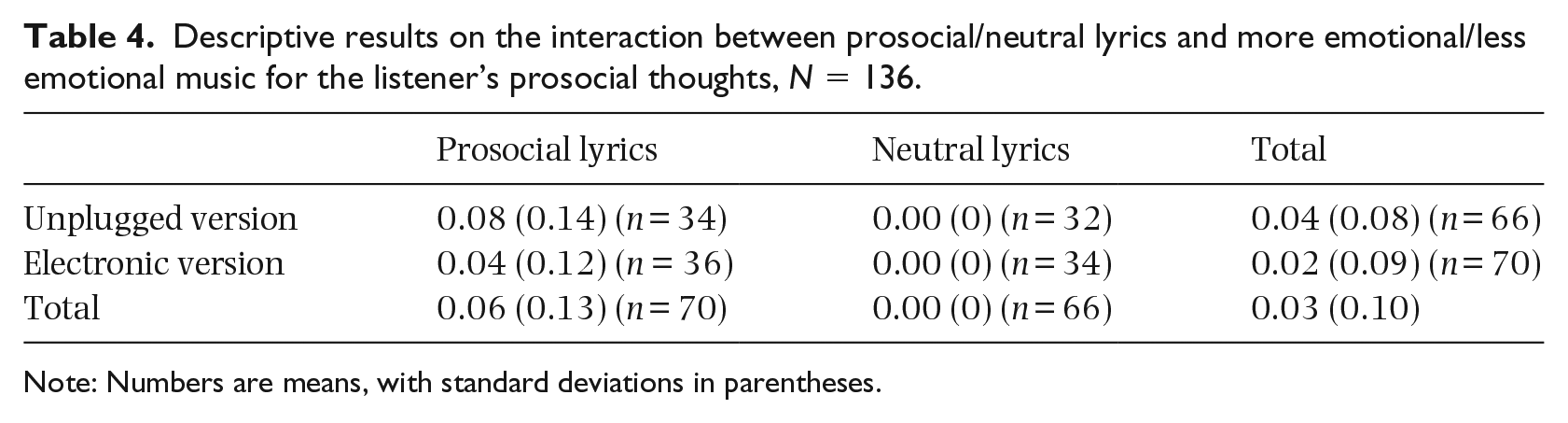
A two-factor analysis of variance (ANOVA) was used to test Hypothesis 1, which postulates an interaction effect between the lyrics (neutral/prosocial) and the music (unplugged/electronic) on prosocial thoughts. The ANOVA revealed no significant interaction, F(1, 132) = 1.53, p = .22, η2 = .01, and no main effect for music, F(1, 132) = 1.53, p = .22, η2 = .01, but there was a significant main effect for lyrics, F(1, 132) = 12.36, p < .01, η2 = .09. The results of this analysis are presented in Table 4. These results show that those who listened to a song with prosocial lyrics had more prosocial thoughts, but whether the music was unplugged or electronic had no effect on their thoughts. Thus, Hypothesis 1 can only be partly accepted.
Descriptive results on the interaction between prosocial/neutral lyrics and more emotional/less emotional music for the listener’s prosocial thoughts, N = 136.
Note: Numbers are means, with standard deviations in parentheses.
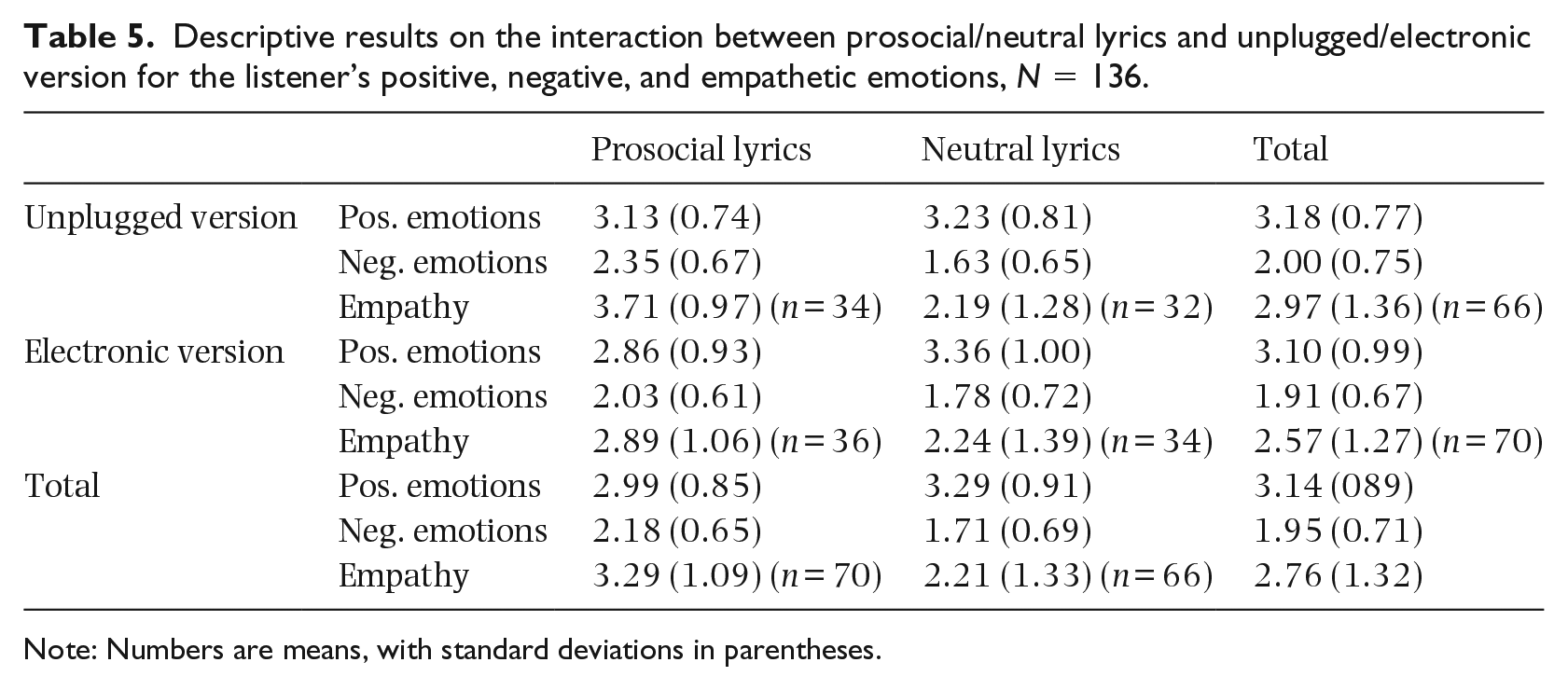
Three two-factor ANOVA were used to test Hypothesis 2, which states that the content of the lyrics significantly interacts with the musical production elements for the listener’s emotions. This first ANOVA revealed no significant main effect for musical production elements, F(3, 132) = 0.198, p = .66, η2 < .01, and only a marginal significant main effect for lyrics, F(3, 132) = 3.853, p = .052, η2 = .03, or interactions, F(3, 132) = 1.770, p = .19, η2 = .01, on positive emotions. A second analysis on negative emotions yielded a significant interaction, F(3, 132) = 4.153, < .05., η2 = .03, and a significant main effect for lyrics, F(3, 132) = 18.004, p < .01, η2 = .12, but no main effect for the musical production elements, F(3, 132) = 0.583, p = .45, η2 < .01. The negative emotions could be described as sad or guilty empathetic feelings. Which is why we decided to examine the most relevant affective route in more detail by analyzing the effects on the item “Mitgefühl” (empathy, compassion). The ANOVA for this dependent variable showed a significant interaction, F(1, 132) = 4.51, p = .04, η2 = .03, and a significant main effect for lyrics, F(1, 132) = 28.47, p < .001, η2 = .18, but the main effect for musical production elements was only marginally significant, F(1, 132) = 3.57, p = .06, η2 = .03. All descriptive results are shown in Table 5, and the interaction is visualized in Figure 4. The results show that those who listened to the more emotional song version with prosocial lyrics had the most empathetic emotions. The significant interaction supports the hypothesis that the emotional intensity of the music can boost the emotional effect of prosocial lyrics in a song. Thus, Hypothesis 2 can be accepted.
Descriptive results on the interaction between prosocial/neutral lyrics and unplugged/electronic version for the listener’s positive, negative, and empathetic emotions, N = 136.
Note: Numbers are means, with standard deviations in parentheses.
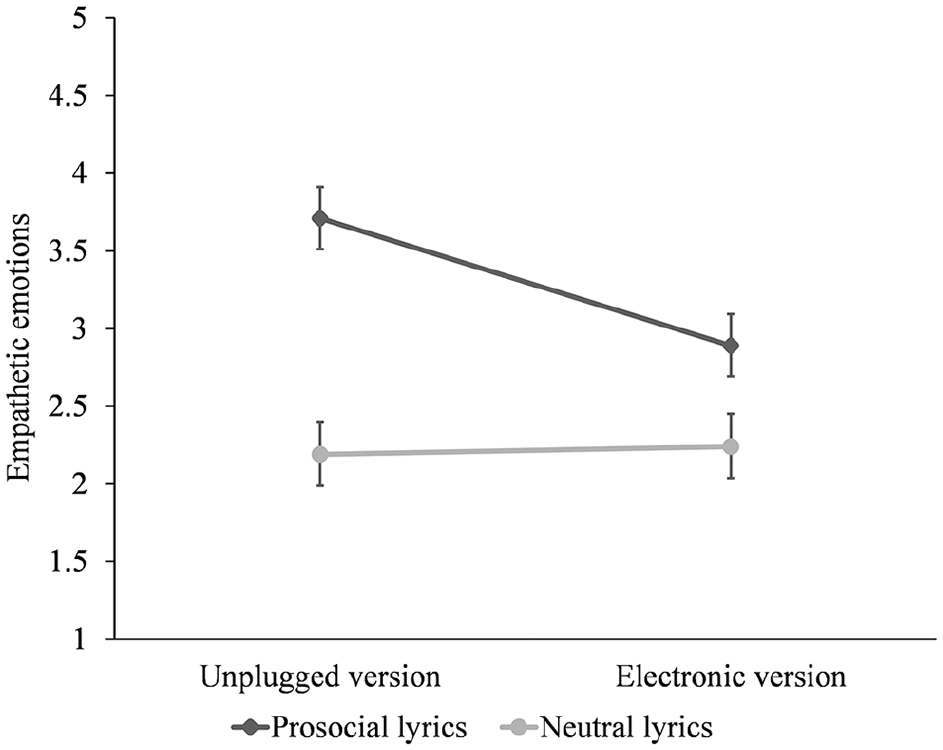
Interaction effect between lyrics (prosocial/neutral) and music (more/less emotional) on empathetic emotions, N = 136.
To test Hypothesis 3, which states an interaction effect between the content of the lyrics and the musical production elements of the music on prosocial behavior, another two-factor ANOVA was calculated. Because eight participants did not state how much money they would be willing to donate, the sample for this analysis was reduced to 128 participants. The ANOVA revealed no significant interaction, F(1, 124) = 0.60, ns, η2 = .01, no main effect for lyrics, F(1, 124) = 0.89, ns, η2 = .01, and no main effect for musical production elements, F(1, 124) = 0.03, ns, η2 < .01. Although the descriptive results suggest an interaction effect and that those listening to prosocial lyrics show more prosocial behavior compared with those listening to neutral lyrics, this hypothesis cannot be accepted (see Table 6 for these descriptive results).
Descriptive results on the interaction between prosocial/neutral lyrics and unplugged/electronic version for the listener’s prosocial behavior, N = 128.
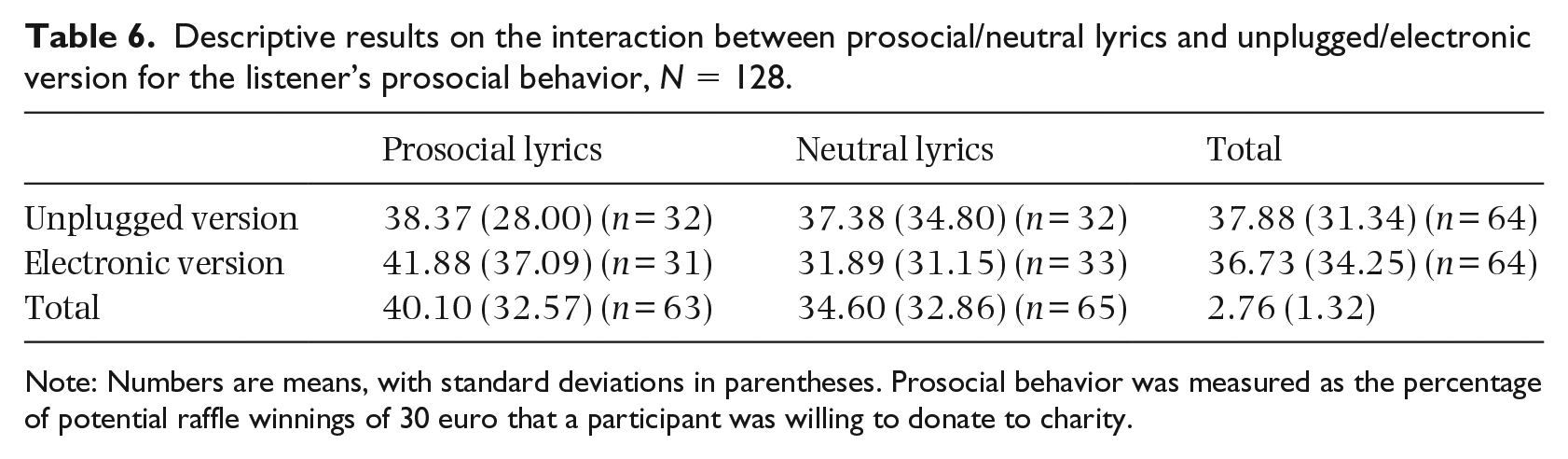
Note: Numbers are means, with standard deviations in parentheses. Prosocial behavior was measured as the percentage of potential raffle winnings of 30 euro that a participant was willing to donate to charity.
Hypotheses 4 and 5 were tested using a multiple regression with prosocial behavior as the outcome variable and prosocial thoughts and empathetic emotions as predictors. The results indicated that prosocial thoughts (β = 0.1, ns) and empathetic emotions (β = -0.02, ns) were not reliable predictors of prosocial behavior in this sample, F(2, 125) = 0.62, ns, R2 = .01, ∆R2 = -.01. However, prosocial thoughts and empathic emotions were correlated (r = .28, p < .01). A post hoc sensitivity analysis yielded that the critical F-value for interaction effects in this sample is 2.67. All significant results exceed this threshold.
Discussion
The study results draw a mixed but interesting picture: Prosocial thoughts were affected only by the prosocial lyrics, not by the musical production elements. The hypothesized interaction effect between lyrics and music was observed only for negative and empathetic emotions. Looking at the prosocial behavior (in this case, donating to a charity), the effect is lost and can only be found at a marginal level of significance in the descriptive results. There are several possible explanations and interpretations of these results.
The pretest of the unplugged and the electronic song versions already indicated that the song versions not only affected the perception of the perceived emotional quality of the song, but also the perceived prosocial fit. Although the emotional quality of these song versions was rated as significantly different, the perceived difference was rather small (only half a point on the five-point Likert-type scale used here), and neither version was rated as very emotional (both versions scored below the scale’s mean). As even the unplugged version was not perceived as very emotional, it is particularly remarkable that the slightly more emotional unplugged version in combination with prosocial lyrics evoked more empathetic emotions in the listeners. Which can be due to the differences in terms of fitting between the version, but also because of other factors that come with alternative musical production elements.
The song versions were produced with a MIDI keyboard and an electronic drum kit. If the music had been produced with actual instruments played by a band, the effect might have been more distinct. It is notable that even “artificial” song versions with limited quality of the musical production elements were able to evoke a difference in the emotional outcomes, suggesting that music meeting all expectations of professional pop songs should be able to impact a much larger range of emotions.
The main effect of prosocial lyrics on prosocial thoughts and the lack of interaction with the musical production elements can also be explained by the rather small perceived difference between the emotional quality of the different song versions. Empathetic emotions should be closer to the emotional quality of the music because of their affective nature, whereas prosocial thoughts might be more likely to be influenced by the lyrics because of their cognitive nature. In the present study, the strong effect of prosocial lyrics might have obscured the effect of the musical production elements on prosocial thoughts. Therefore, a main effect was observed, but there was no interaction effect. It might be the case that song versions with a sharp difference in one single dimension like emotional quality would bring out an interaction effect on thoughts.
Because effects on thoughts and emotions were found, following the GLM, we also expected to find effects on prosocial behavior. One explanation for why no effects were found for prosocial behavior is that the participants might have already disregarded most of their prosocial thoughts and empathetic emotions by the time they came to the question about donating. When considering how much of their potential 30-euro winnings they would donate, they most likely relied on other thoughts and heuristics. This idea seems to be supported by the lack of associations of thoughts and emotions with prosocial behavior. It seems logical that self-conscious students (such as those in the present sample) experiencing only small amounts of prosocial thoughts and empathetic emotions would consider making a donation in a prosaic or business-like manner. The participants in the present study may even have shown opposing donating behavior because they guessed the actual intention of the study. However, the descriptive results indicate that the students were not completely detached from the experience, which at least points in a direction that is consistent with the hypotheses. It seems likely that more intensive prosocial thoughts and empathetic emotions would have led to more prosocial behavior and that, when considering making a donation, less reflective participants would have been more likely to rely on their emotions.
Limitations
Although the present study yielded results that confirmed the hypotheses or at least fit with the assumptions on a descriptive level, there are some limitations that should be mentioned. First, the original song was produced with MIDI instruments and therefore did not sound like a professional recording. To find stronger differences in musical production elements and to produce more authentic pop songs, future studies should consider producing songs with an actual band and acoustic instruments. Here, we decided to use MIDI instruments to control differences across the song versions that would occur if a band and acoustic instruments were used. The stimulus used in the present study therefore had high internal (but lower external) validity. The song versions were consistent in terms of musical parameters because of the use of MIDI instruments. Second, future research should use non-student samples to reduce the probability of participants deducing the actual intention of the study or having their answers influenced by social desirability. Third, the implicit measurement of prosocial thoughts using the thought-listing technique might be problematic because many of the answers of the participants referred to the production of the original song they had just heard. The thoughts of the participants might have been influenced by their understanding that this was a study about music, which may have resulted in the lack of significant findings on some anticipated associations. Finally, future studies should consider using other measures of prosocial behaviors, such as that used in the study by Greitemeyer (2009a) or self-report measures of behavioral intentions (Ruth, 2017b), because some participants might deduce the actual purpose of asking them to select a donation amount. Still, the measurement of prosocial behavior in this study was an attempt to measure an actual behavior that fits with the intentions of the lyrics of the original song (e.g., donating to/helping poor people).
Conclusion
The present study broke new ground by producing an original pop song for use as a stimulus. The idea of this approach was to inspire follow-up studies and to challenge researchers to use original music or even the original song used in this study, “We Need to Talk,” which can easily be manipulated on many levels using sequencer software. Because it may be quite difficult for many scholars to find musicians and music producers willing to collaborate for research, using the do-it-yourself approach, as was done in this study, or seeking out musicians with a genuine interest in exploring the (long-term) effects of their prosocial music are potentially fruitful pursuits.
Overall, it seems that musical production elements themselves, and especially their emotional quality, have an impact on how prosocial music is perceived. Thus, musicians (as well as researchers) should pay careful attention to the music they produce in addition to the lyrics. Future studies might consider analyzing whether certain musical patterns are found in prosocial songs and how these patterns affect listeners. Based on the present results, it can be concluded that musical production elements of an unplugged song version with a strong emotional quality and a strong prosocial fit is likely to “boost” the effect of prosocial lyrics and might therefore facilitate people behaving in a more prosocial manner, or at least realizing that “we need to talk.”
Footnotes
Appendix 1
Declaration of conflicting interests
The author(s) declared no potential conflicts of interest with respect to the research, authorship, and/or publication of this article.
Funding
The author(s) received no financial support for the research, authorship, and/or publication of this article.

Supplemental material
Supplemental material for this article is available online.
References
Supplementary Material
Please find the following supplemental material available below.
For Open Access articles published under a Creative Commons License, all supplemental material carries the same license as the article it is associated with.
For non-Open Access articles published, all supplemental material carries a non-exclusive license, and permission requests for re-use of supplemental material or any part of supplemental material shall be sent directly to the copyright owner as specified in the copyright notice associated with the article.
