




Abstract
This study explores imagery evoked by Guided Imagery and Music’s (GIM) ‘Nurturing’ programme (seven classical orchestral compositions) and relates it to Jung’s Eros principle (passive and nurturing). Participants’ statements during 23 GIM sessions were recorded, transcribed and categorised by five coders into seven sub-categories, three of which belonged to Jung’s Eros (Flora, Fauna, Feelings), three to his Logos (Events, Structures, Actions), and one (Characters) that mixed Eros and Logos. The same categorisation was applied to 23 randomly selected fairy-tales from different cultures as a comparison. We predicted that participants’ imagery would be mainly Eros, corresponding to the choice of music. In fact, categories Structures(Logos), Flora(Eros), Fauna(Eros) and Feelings(Eros) occurred significantly more often in participants’ imagery than in the fairy-tale comparisons. These categories are plot-static: they do not generate active relationships between characters. Events(Logos), Actions(Logos) and Characters(Eros/Logos) occurred significantly less often. We conclude that music of the ‘Nurturing’ programme elicits mostly the Eros type imagery. It has the psychological function of creating an emotional-scenic background, but does not drive the narrative plot. In this sense, it may be misleading to describe the music of ‘Nurturing’ as a kind of virtual narrative or as having narrative structure or function.
GIM and narrativity
Guided Imagery and Music (GIM) is a type of music therapy developed by Helen Bonny in which clients experience spontaneous imagery that appears to be evoked by music and has a narrative structure related to the music’s temporal structure (Bonny, 1995). Clients listen to a music programme consisting of several compositions in a state of deep relaxation and report on whatever imagery occurs to them during listening. The therapist can choose from different programmes, which bear programmatic names: Nurturing, Relationships, etc. The imagery differs from client to client and usually features narrative-like events such as physical and social situations in which the protagonist engages. GIM thus suggests a strong relationship between music and narrative and represents an interesting platform to study this connection (Bonde, 2000).
Most GIM studies focused on the emotional and therapeutic effects of imagery on the clients. McKinney (1990) concluded that music contributed to the vividness of imagery and an increase in emotional intensity as opposed to silent imaging. Grocke (1999) analysed pivotal moments (emergence of important imagery) in the GIM sessions, listing their common characteristics and enabling their efficient recognition. A number of studies engaged with the content of the imagery but did not relate it to a narrative form (Lewis, 1999) until Bruscia et al. (2005) designed a ‘Collaborative Heuristic Analysis’. By exploring the influence of music features on imagery they concluded that imagery generated during listening cannot be explained entirely by the music structure. Bonde (2000) explored the function of metaphor and narrative in imagery focusing on the insight that happens when metaphors develop through music’s non-verbal narrative: music acts as a ‘co-narrator’, enabling the clients to integrate their life experiences into a comprehensible narrative. Finally, Lawes (2015) proposed a model where music provides a ‘meta-context of unfolding wholeness’ within which the client’s personal experiences are generated and his existing narratives transformed and deepened. The studies above paved the way towards the research on musical narrativity in GIM, each having a unique take on the role of a narrative in GIM.
This study attempted to use GIM therapy as a platform for investigating the similarity between music pieces and narratives. This was achieved by categorising the imagery experienced using the standard narrative elements (Herman, Phelan, Rabinowitz, & Richardson, 2012) and comparing them to the same narrative elements found in fairy-tales. Besides providing a direct insight into the music-imagery relations, the use of GIM was ecologically valid; imagery was extracted from a real-world therapeutic environment where participants were offered an opportunity to reflect on their current life situation before and after music listening, integrating the imaging experience. Music-elicited imagery could thus be observed in a natural situation.
Music, emotion and narrative
The imagery experienced during a GIM session has emotional content. But which comes first in the conscious experience of listeners: emotion or imagery? Philosophers offered different theories on whether meaning preceded or followed the emotion and whether meaning was even necessary for an emotion to occur (Lazarus, 1991; Solomon, 1993). Goldberg (2002) proposed that music stimulates an emotional response via stimulation of the autonomic nervous system (ANS), and the imagery occurs as a translator between the ANS and the brain as the multisensory representation of emotion. Robinson and Hatten (2012) also introduced a mediator or a “persona” who is the carrier of the emotional content of the piece. This “virtual persona” can be experienced as expressing complex emotions that develop and change over time. Thus, they see a piece of music as having an emotional “plot” which dramatizes a person’s psychological journey. The notion of a music “plot” can also be seen in Maus’s theory of dramatic action in music. He sees music as “a kind of drama that lacks determinate characters” (Maus, 1988, p. 72). In other words, music, like narrative, can express a dramatic plot but it does not have a permanent set of characters and a determinate meaning of its dramatic “events”; those depend on the listener.
This study explores the idea that emotions in music might be expressed through a virtual narrative agency. This “musical narrative” would be most clearly expressed in the imagery of GIM participants and would most easily be studied by examining the imagery that the participants experience. The underlying representation of music would thus be a highly abstracted blueprint for a story (Sloboda, 1985); a set of exchanging tensions and relaxations in temporal progression (Baroni Dalmonte, & Jacoboni, 1999) that are created by deviating from musical “grammar” and then returning to it (Lerdahl & Jackendoff, 1983).
The idea of a story blueprint is rooted in early human development, namely, the mother–baby interaction: the exchange of tensions and relaxations in parent–baby behaviour was described as the root of emotion and a “proto-narrative envelope” (Stern, 1985). Stern proposed that the infant organises its concept of time by either waiting for food (tension), or by feeding (relaxation): “When the motive or desire is enacted in an interpersonal situation, it creates a narrative-like structure” (Stern, 1995, p. 90). Nattiez suggests that this experience of mother–infant interaction might represent a footing of our relationship with music (Nattiez, 2013); in both cases there is a contour developing in time which exchanges tensions and relaxations.
Non-musical narrative archetypes
The idea of a unifying narrative framework that lies in the basis of every story has been widely researched in the 20th century: Frye (1976) surveyed the classics of literature and found what he termed “recurring primitive formulas”; narrative skeletons that consists of myths and metaphors and are rooted in rituals and fairy-tales, which he called “archetypes”. Frey’s idea that literature derives from myth explains the literature’s communicating power to withstand across centuries and through ideological and cultural changes. Although conditioned by social and historical factors, the literary archetypes retain the continuity of form that transcends its social environment and maintains its own identity.
Propp (1968) and Campbell (1949) have proposed somewhat similar archetypal plots that included additional standard narrative elements added to a narrative “skeleton”: a setting, a protagonist and characters are the remaining three elements of a narrative that have, alongside a plot, sustained their original meaning through time and cultures. These three narrative archetypes are fundamentally different from a plot, because their interactions are what constitutes a plot, which should thus be researched separately. Campbell’s idea of a monomyth explains the interaction of those four narrative archetypes in a universal story template termed “hero’s journey”. The idea of the three main narrative elements has been taken over by the structuralists in the late 20th century (Chatman, 1978) and has remained a leading narrative theory to this day (Tomascikova, 2009).
Archetypes in music
The concept of narrative archetypes was also applied to music. Almen (2003, p. 35) discusses narrative archetypes by defining a network within the piece consisting of the initial condition, listener’s identification with one pole or the other, conflict and outcome. Newcomb (1992, p. 119) explores the notion of a “plot archetype” in Mahler’s Ninth Symphony, which he explains as “various standard configurations of actions or intentions that are a fundamental part of our vocabulary for interpreting the design and intention of human action and its simulacrum, narrative”. However, in Almen’s words, analysis must articulate the semantic intuitions of the analyst and sufficient number of listeners in order to function. In other words, Almen and Newcomb have not taken into consideration the non-educated listener; their analysis is strictly theoretical and it does not concern itself with how the music affects the listeners. Score analysis can provide useful insights into the archetypal structures, but due to the significant impact of cultural values and social systems on archetypes, these theories cannot be empirically confirmed until they have been studied in an ecologically valid situation with musically uneducated listeners. Building upon Almen and Newcomb studies, this paper explores the notion of narrative archetypes focusing on the listener-centred analysis.
Jung’s archetypes
Carl Jung proposed a concept of two opposing archetypal systems that govern our behaviour: Eros and Logos. Eros was defined as passive, observing, maternal, embracing, nurturing, unconscious. Logos is active, cognitive, rulemaking, decisive, discriminating, conscious (Jung, 1951). These two opposing principles permeate all aspects of human functioning, including the narrative form. Studies in evolutionary psychology (Buss, 1995; Gilbert, 1997) and psychiatry (Stevens and Price, 2000; Stevens, 1982) have independently detected the presence of so-called “neuropsychic” tendencies that are similar to Jung’s archetypes, bearing testimony to their empirical validity. Although Jung’s original insight into the existence of archetypal systems came from the examination of individual’s unconscious content, the principle can also be applied to larger groups of people (Papandopoulos, 2006). Evolutionary psychology explored the implications of the two archetypal systems identifying two social structures: hedonic (Eros) and agonic (Logos; Chance, 1984). Hedonic social groups tend to treat their members with caregiving, attachment, affiliation and altruism, whereas agonic groups have a hierarchical structure concerned with status, discipline and territory. Both modes are concerned with gaining respect and power from the group members, but they seek it in a different way: agonic by intimidation and hedonic by attraction. The rhesus macaque monkeys, for example, display a social system that is agonic, whereas chimpanzees are capable of hedonic behaviour (Robbers, 2005), as are humans (Chance, 1984). The Logos/Eros division is not only applicable to human and animal behaviour, but also to the symbolism often found in narratives (Stevens and Price, 2000) and likewise GIM imagery; it is both empirically valid and rooted in psychoanalytic principles that give rise to psychological and therefore narrative structures.
Macmillan, Lynch and Bradley (2011) examined the hedonic and agonic system in contemporary society by studying symbolic imagery used by young adults to construct alternate identities. They categorized the costumes worn by college students for Halloween and found that women play a hedonic role and a majority of men present themselves as agonic power symbols. The study was conducted among Western society students and thus cannot be generalized, but nonetheless shows a certain gender trend among young adults. Although stereotypical gender roles are changing nowadays, most of human existence to date has occurred within hunter–gatherer societies where the gender roles followed the described patriarchal division. Since the agonic type of behaviour developed much earlier in animals and humans than the hedonic (Stevens & Price, 2000), it is likely that the human mind is still more adapted to that environment as opposed to the modern gender roles. However, this study will assume that the dichotomy is not gender specific (Jung, 1968) and that both genders display the characteristics of both hedonic and agonic nature, depending on the situation (Kaiser, Lennon, & Damhorst, 2013).
Jung’s archetypes and innateness
Expanding on Jung, evolutionary psychologists proposed that archetypes might be our thoughts and emotions organised by psychological adaptations that are then activated by some event in our immediate environment (Walters, 1994). Stevens (1982) treated them as biological phenomena that have evolved by natural selection. Henry (1986) located archetypes in the neurophysiological events of the central nervous system that govern the emotional aspects of behavioural patterns, such as neuroendocrine processes that occur during mother–infant or adult bonding. He suggested that archetypes are genetically inherited along with the rest of neurophysiological structure and are therefore the subject of natural selection. Goodwyn (2010) also claims that Jung’s archetypes have evolutionary foundations, based on the existing innate psychological structures studied by the evolutionary psychologists: Tooby, Cosmides and Barrett (2005) have demonstrated that organisms use many types of learning that are domain specific rather than domain general. This means that certain behaviours such as mate selection or predator/prey inference are learned more easily than mathematical operations for example, due to the pre-existing programme in the human mind that tells the organism what to learn about. Domain specific algorithms have been observed in many world cultures and have thus been labelled as highly resistant to the psychological environment, suggesting their innateness (Buss, 2009).
Jungian archetypes in GIM
Archetypes usually dwell in the unconscious of an individual. However, in GIM they may manifest themselves in the form of imagery. Although Jung mentions music rarely, his interaction with Margaret Tilly, chief music therapist at Langley Porter Clinic in San Francisco, speaks otherwise: I feel that from now on music should be an essential part of every analysis. This reaches the deep archetypal material that we can only sometimes reach in our analytical work with patients. This is most remarkable. (Jung, 1956 as cited in Tilly, 1956).
Although music has not become an essential part of psychoanalysis, music therapy approaches such as GIM tend to integrate Jung’s active imagination with music listening. Ward (2002) has pointed out the similarities between Jungian psychoanalytic therapy and GIM. Marshman (2003) attempted to integrate Jung’s ideas into GIM, exploring Jungian psychological theory of artistic creation and its role in music. Warja (1994) applied Jungian ideas to achieve individuation through music psychotherapy. Short (1997) conducted a case study, using Jungian interpretations of myth and fairy-tale to explain the client’s imagery. Finally, Brooks (2000) analysed the appearance of anima imagery in male clients, integrating Jungian theory of archetypes with practical GIM setting. Although in essence different, these studies show that Jungian ideas have been a part of GIM research and practice since its beginning and that the concept of archetypes is easily applied to the analysis of imagery. Since Logos and Eros principles are equally well integrated into the fibre of classic literary narratives as they are in the music elicited imagery of GIM, they represent a bridge that enables us to compare the essential building blocks of narrative and music structure.
The studies mentioned are either qualitative or theoretical. In order to encompass a broader range of clients and to offer as objective a view as possible, this study used quantitative methods. This approach neglects the subtle nuances of the imagery and clients’ individual perspective, but it gives us an opportunity to see the broader scope of clients’ imagery experiences, offering us a chance to examine the core connection between music and imagery. The research questions are thus centred around the core narrative archetypes in the imagery and their potential to exhibit either Eros or Logos qualities.
Research questions and hypotheses
This study aimed to examine the capacity of the ‘Nurturing’ programme to elicit imagery related to the Eros principle. The three main narrative categories (Setting, Protagonist, Characters) were divided into subcategories, each of them belonging to either Eros or Logos; the imagery was categorized accordingly. The first research question focused on all three narrative categories, and the second on the Characters category.
Q1: Will the imagery in the music group be more often assigned to the Eros principle than the imagery in the comparison material?
Q2: Will the personality traits of the Characters in the music group be more often assigned to the Eros principle than the personality traits in the comparison material?
Corresponding hypotheses were formulated:
H1: Imagery in music group corresponds more to the Eros by comparison to the comparison material. We expected this is due to Bonny’s intention for the programme, which was to be ‘indicative of nurturing of all sorts’ (Bonny, 1995).
H2: Character traits in music group correspond more to Eros by comparison to the comparison material. Characters imagery contains a variety of different people, with a mixture of Eros and Logos traits. It was assumed that the music would elicit the emergence of characters that were caring, observant and nurturing towards the participant and thus mostly display the Eros traits.
Method
Participants
Twenty-three undergraduate psychology students and volunteers from the local community centres took part in the study (19 female, 4 male, age 20–89, M = 26.6, SD = 3.8). They were all non-musicians (less than a year of music education). Twenty of them were first time GIM participants and three of them were experienced GIM participants (had five or more GIM sessions). All the participants spoke their native tongue (Croatian) throughout the sessions.
Stimuli
The music used was Bonny’s ‘Nurturing’ programme (35 min long); a programme suitable for first time GIM clients or those who are emotionally sensitive because it provides a small psychological “container” discouraging the client to go too deep into the psyche (Bonny, 1995).
The programme consists of seven music pieces:
- B. Britten’s “Sentimental Sarabande” from Simple Symphony, op. 4 (6 min 41 sec)
- W. Walton’s “Touch her soft lips” from Suite Henry V (an orchestral arrangement of his film score; 1 min 51 sec)
- H. Berlioz’s “Flight to Egypt” from The Childhood of Christ, op. 25 (6 min 56 sec)
- H. Berlioz’s “Shepherd’s Farewell” from The Childhood of Christ (5 min)
- Puccini’s “Humming Chorus” from Madama Butterfly (2 min 47 sec)
- J. Massenet’s “Sous les Tilleuls” from Suite (“Scènes alsaciennes”), op. 7 (4 min 59 sec)
- J. Canteloube’s arrangement of “Brezairola” from Chants d’Auvergne (3 min 13 sec).
The compositions followed one another with 3 to 5 seconds pause between them. Bonny constructed this programme in 1980 describing it in an interview with a fellow music therapist and researcher Denise Grocke (1995): we wanted something that was indicative of nurturing of all sorts, not only childhood experiences of nurturing but a close warm feeling, which I feel we have… The Nurturing tape was designed to do just that: to nurture. (Grocke/Bonny interview, October, 1995)
Procedure
The participants underwent a standard GIM session, lasting 1h and 30 min. The therapist was the first author. The music and the participants’ statements during listening were recorded on a single soundtrack using LogicPro9 software on a MacBookPro microphone.
The stages of a GIM session were:
Initial interview with the participant asking about their music education and GIM therapy experience.
A relaxation exercise which lasted 5 min. The participants were given the following focus before the music started: Let the music take you where you need to go. Then the “Nurturing” programme was played. The participants were asked to report any imagery that occurred during the listening and to describe it in as much detail as possible. The imagery was visual, olfactory, auditory, kinaesthetic, memories and feelings. The first author sat next to the participant asking non-leading questions such as “What do you see now?” Leading questions (e.g. “Tell me more about this person/tree/dog”) were avoided.
When the music stopped, the therapist applied the standard procedure to return participants to normal consciousness (Bruscia & Grocke, 2002). The participants were given 15 min to reflect on the experience, offer their own interpretation of the imagery and ask the therapist any questions they had.
The first and the second stages of the sessions were recorded. The third stage was not recorded but the participants’ comments were taken into account and were later available to the coders. The participants were asked if there was a particular image that they found important or that they felt needed further explanation. If that was the case, their clarifications were taken into consideration. 1
Analysis
Imagery categorization
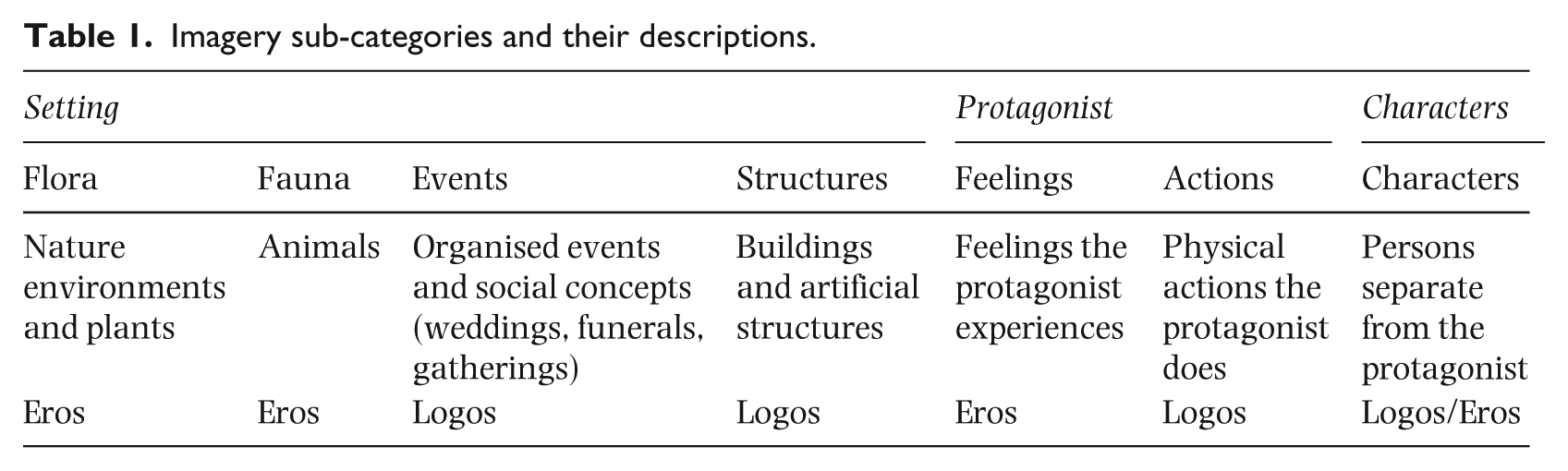
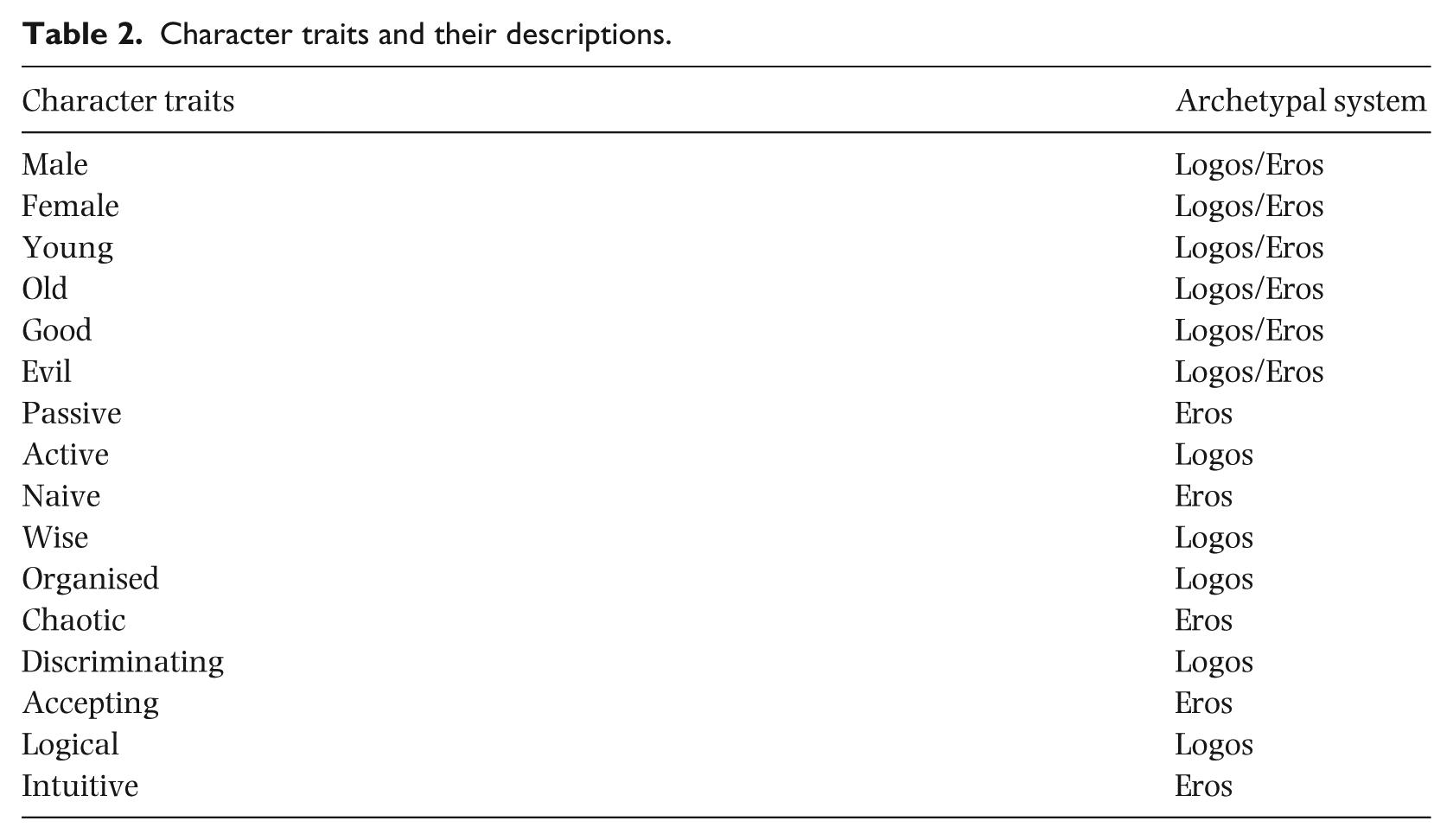
The imagery that appeared in the participants’ statements during listening was categorised by the coders according to standard narrative elements (Setting, Protagonist, Characters) and was divided into seven sub-categories, each belonging to either Logos or Eros (Table 1). Each Character that appeared was also analysed using the personality traits belonging to either Logos or Eros (Table 2). The Male/Female, Young/Old and Good/Evil traits can belong to either principle.
Imagery sub-categories and their descriptions.
Character traits and their descriptions.
Structure of the analysis
In order to better explain the steps of the analysis, the flow chart in Figure 1 was designed to show the stages and explain in more detail.
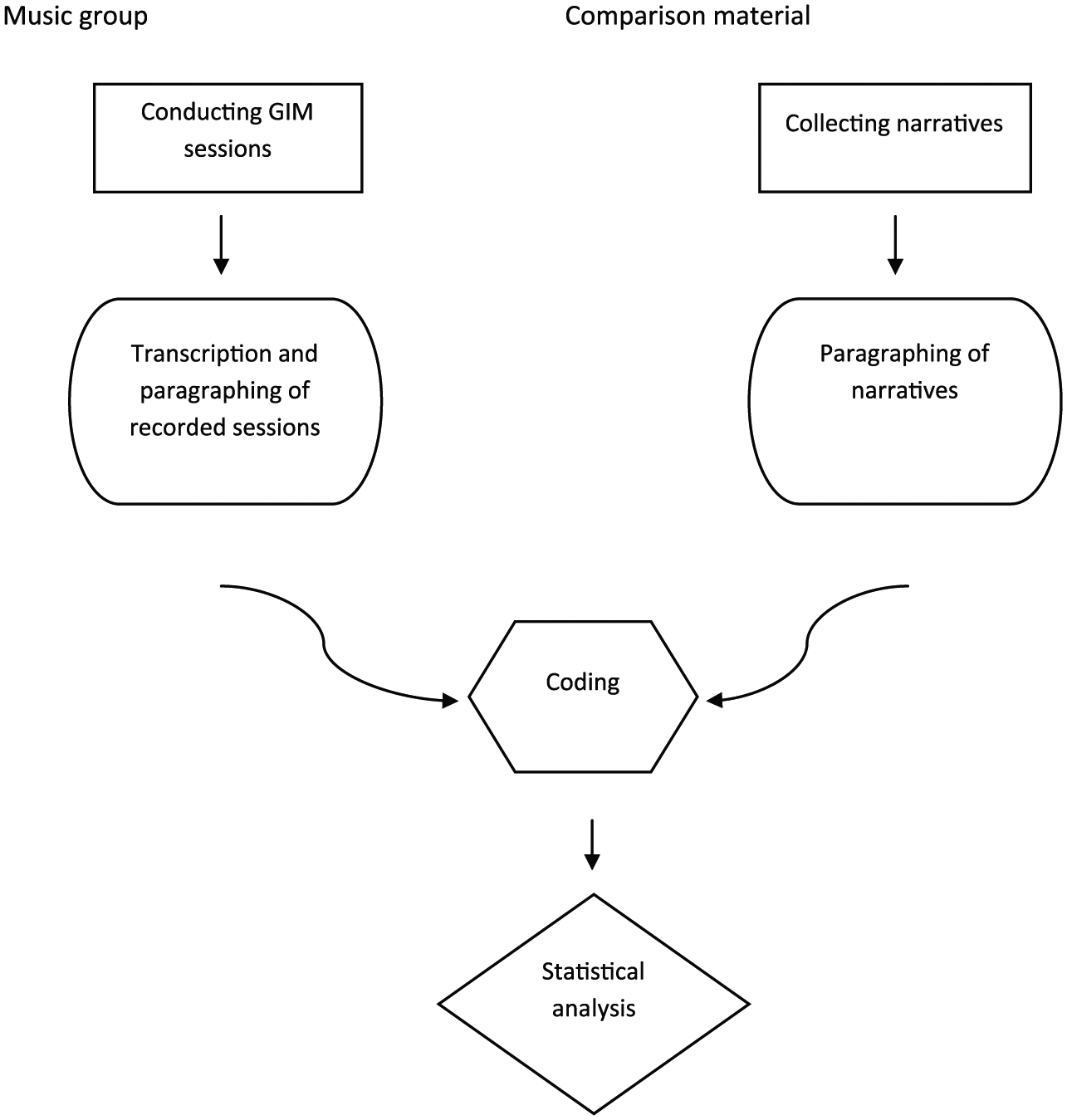
Structure of the procedure and the analysis.
Transcription
Single-track recordings of music and participants’ statements were transcribed using MAXQDA12 software for qualitative data analysis (VERBI Software, 2015). MAXQDA 2 enabled us to visualise the sound wave of the recorded sessions, mark and code parts of the soundwave of interest and transcribe the participants’ statements easily and accurately. Each of the 23 transcripts was divided into 33 paragraphs of text, each corresponding to approximately 60 sec of sound with boundaries occurring between sentences. Every paragraph contained on average three sentences. If a sentence extended through more than one paragraph, then it was transcribed as belonging to the paragraph where it first started.
Coding
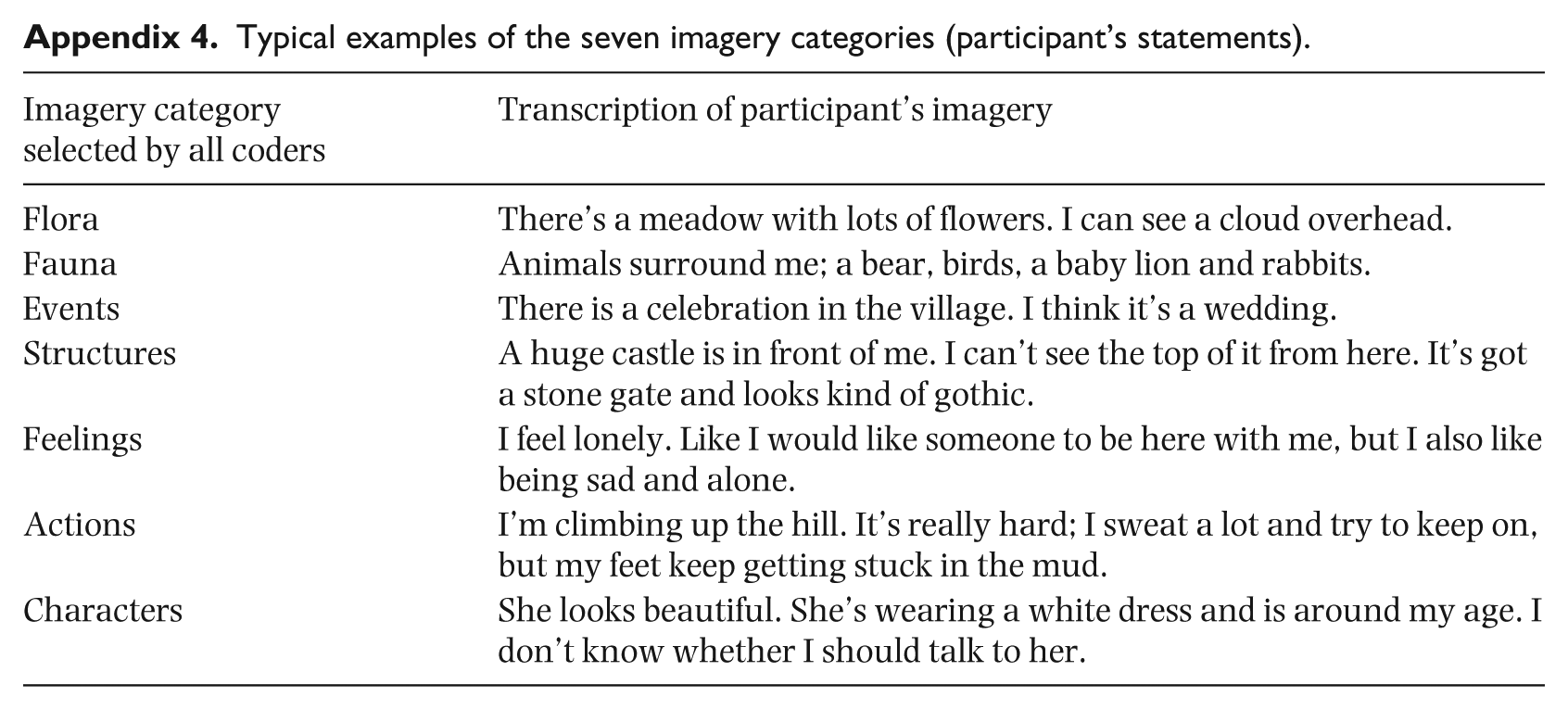
Five coders (undergraduate psychology students, three females, two males, age 19–22, M = 20.6, SD = 1.1) identified the main object of the protagonist’s attention in each paragraph of the transcripts (Appendix 1) by answering the question: What is the main theme of this paragraph? Then, they categorised each theme as belonging to one of the imagery categories (Flora, Fauna, Structures, Events, Feelings, Actions and Characters) by using the coding sheet (Appendix 2). Along with the paragraphed transcript and the coding sheet, the coders were given an explanation of each category as shown in Table 1. If the theme of the paragraph belonged to the Characters, the coders were asked to characterise the person using the traits in Table 2, on a separate coding sheet (Appendix 3). Each category in every paragraph was thus allocated a number ranging from 0 (none of the coders identified this category) to 5 (all coders identified this category). The average number of coders that identified each category in every paragraph of 23 transcripts was calculated. Interrater reliability calculations were conducted using Cohen’s Kappa to estimate the level of agreement between the coders. There was a good interrater agreement between the coder’s judgements, k = 0.75, 95% CI [0.74, 0.77], p < 0.01. A series of excerpts from the coding sheets were translated to English language for readers’ convenience (Appendix 4). They all represent imagery that was coded by all five coders as belonging to a similar category, therefore characterizing the “typical” representation of a given category.
Comparison material
The same analysis was done with the 23 fairy-tales that served as a comparison material. The fairy-tales were chosen by random selection from the Folklore and Mythology Online Library and came from the following countries and regions: North America, Eskimo, Mexico, Brazil, Turkey, Australia, Tibet, Japan, China, West Africa, Ireland, Wales, Iceland, Scandinavia, Germany, Italy, France, Greece, Russia, Poland, Croatia, Romania and Philippines. The editor of the Library (D. Ashliman) had adapted the stories to be of approximately same length. Each fairy-tale was divided by the first author into 33 paragraphs, each of them containing on average three sentences. Five new coders (undergraduate psychology students, five females, age 18–22, M = 19.8, SD = 1.6) coded the comparison material using the coding procedure described above. There was a very good interrater agreement between the coders, k = 0.84, 95% CI [0.81, 0.87], p < 0.01.
Ethical considerations
All the participants that took part in this study signed a consent form stating that they consent that the data collected in the GIM sessions may be used for research purposes and publication. No private data was obtained from the participants that could identify them. Finally, the GIM sessions were not therapy sessions but listening sessions that did not concern the participants’ private lives or information.
Results
A series of t-tests assuming unequal variances were conducted 3 to compare the results of music group and comparison material imagery categories (Table 3).
Means and results of t-tests for music and comparison groups.
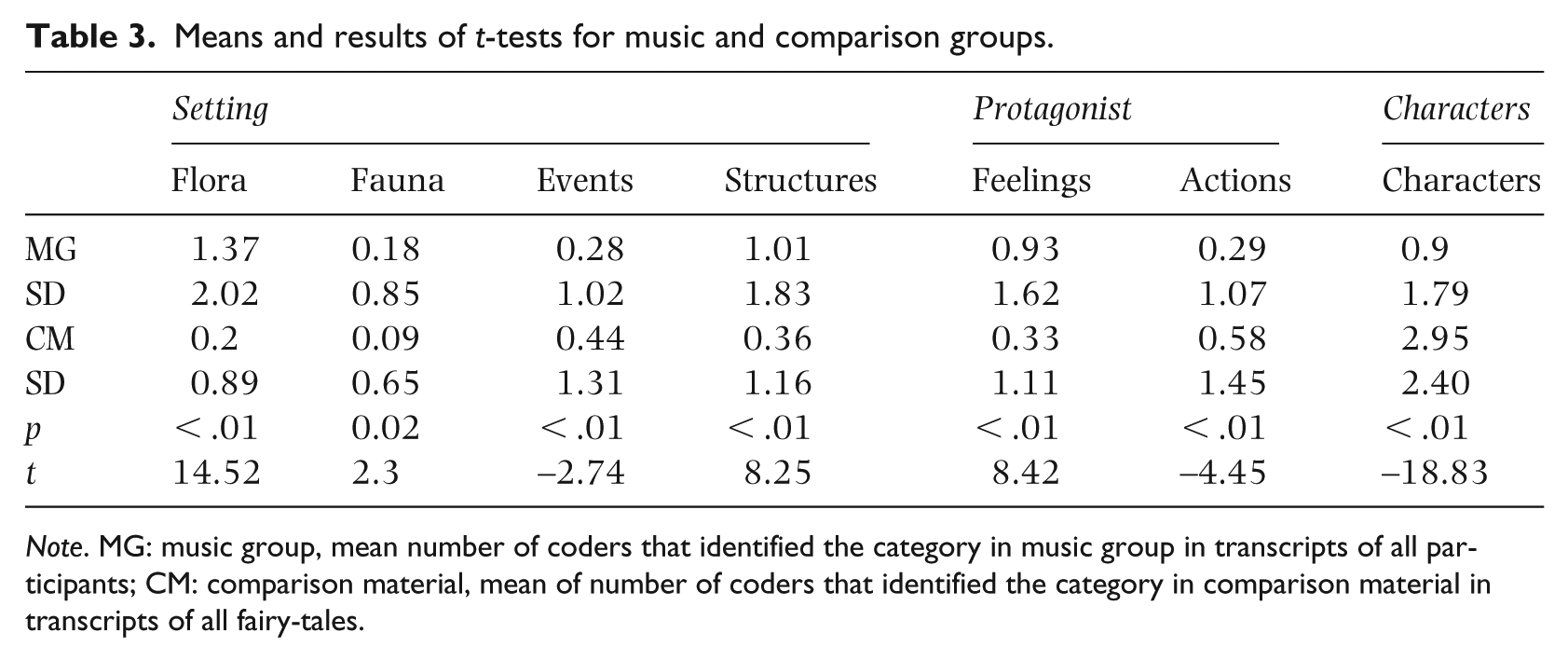
Note. MG: music group, mean number of coders that identified the category in music group in transcripts of all participants; CM: comparison material, mean of number of coders that identified the category in comparison material in transcripts of all fairy-tales.
The results show that imagery categories of Flora (E), Fauna (E), Feelings (E) and Structures (L) were selected significantly more often in the music group compared to the comparison material. Categories of Events (L), and Actions (L) were selected significantly less often in the music group compared to the comparison material. The Characters (E/L) category was selected significantly less often in the music group, compared to the comparison material.
The Characters category was additionally examined due to its mixture of Eros and Logos traits. A series of two sample t-tests assuming unequal variances were also conducted to compare the results of music group and comparison material traits categories (Table 4). Traits belonging to Eros have been selected significantly more often in the music group, compared to the comparison material.
Means and results of t-tests for music and comparison groups (Music group sample size: 46, Comparison material: 70).
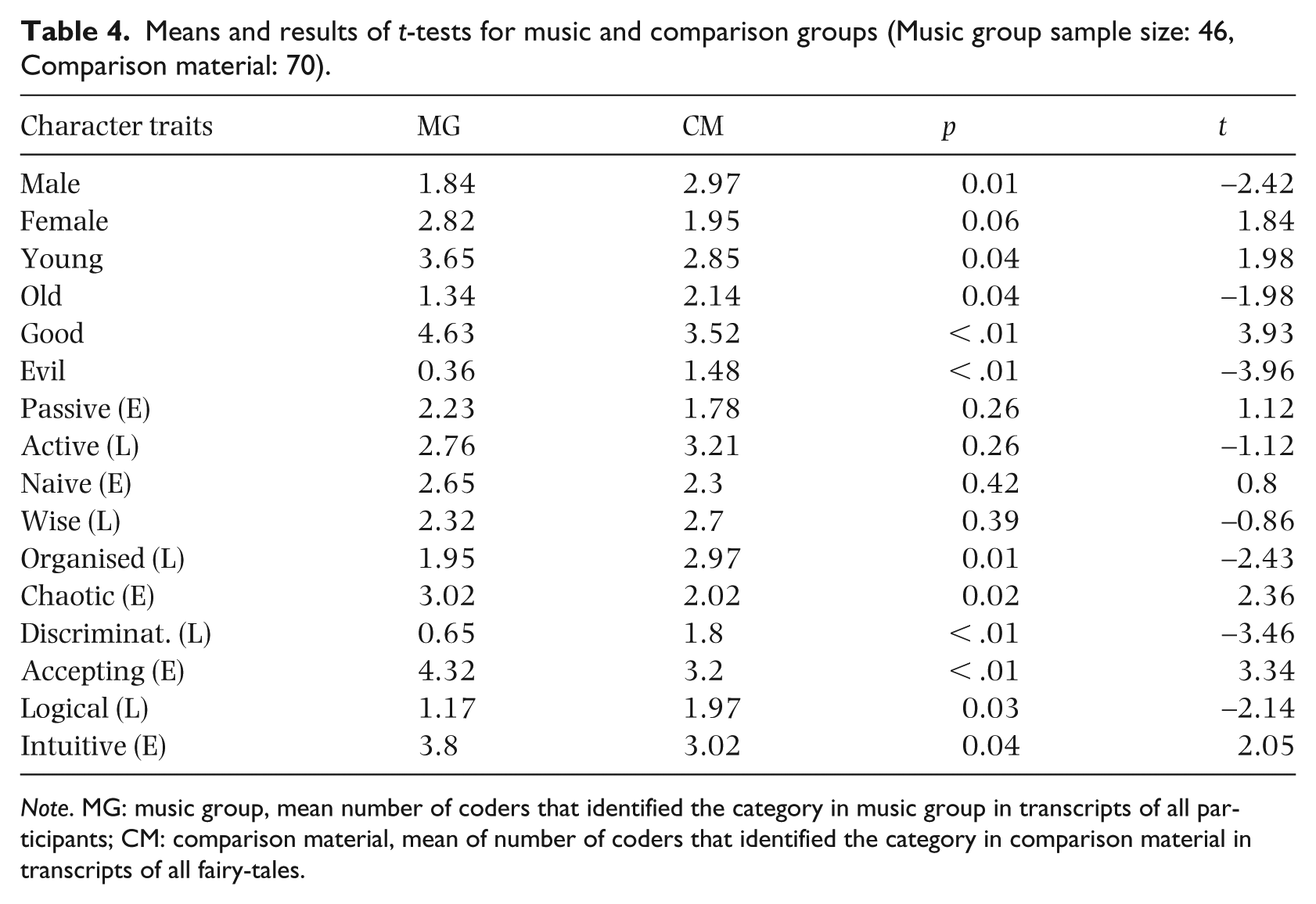
Note. MG: music group, mean number of coders that identified the category in music group in transcripts of all participants; CM: comparison material, mean of number of coders that identified the category in comparison material in transcripts of all fairy-tales.
Discussion
The results are discussed with reference to the hypotheses formulated earlier.
H1: Imagery in music group corresponds more to the Eros compared to fairy-tale comparison material.
Results indicate that the imagery was significantly more often assigned to the subcategories of Flora, Fauna and Feelings in the music group, compared to the comparison material. These subcategories exemplify the characteristics of Eros: they are maternal, embracing, devouring and passive, displaying connective qualities and governing the unconscious realm of emotions. Thus, the prevalence of Eros categories in the music group suggest that Bonny’s intention of the “Nurturing” programme is confirmed, at least in this limited group of participants. Results suggest two interpretations: if the prevalence of Eros archetypes is due to Bonny’s specific choice of music, then music can conjure a specific meaning that is manifested through archetypal imagery triggered during listening, and as such conveys meaning in a similar manner as any other narrative form. If, however, the prevalence of Eros archetypes is due to the nature of music, then music is an art form that is concentrated on conveying moods, feelings and developmentally static structures that are incapable of generating active relationships between characters. Which of these two possibilities is more likely to be true is impossible to conclude because of the limited scope of music used. Further studies should be conducted, using a differently themed GIM programme (Death–Rebirth, Warrior King, etc.).
Results also indicate that the imagery in the music group was significantly less often assigned to Events (L) and Actions (L) compared to the comparison material. That was expected by the hypotheses. What was not expected was the significant prevalence of Structures (L) category in the music group compared to the comparison material. The “Nurturing” programme thus elicits not only Eros, but also Logos archetypes. Flora (E), Fauna (E), Structures (L) and Feelings (E) all have one thing in common; they do not generate any developmental or active relationships between specific characters. In other words, their plot is static. Furthermore, results suggest that the imagery in the music group was also significantly less often assigned to the Characters subcategory. Although the Characters category includes a mixture of Logos and Eros traits, it is an imagery category that drives the plot (Brooks, 2012). Thus we can see that imagery categories that are the “plot agents” (Events, Actions and Characters) are not present or are barely present in the music group.
H2: Character traits in music group correspond more to Eros compared to fairy-tale comparison material.
Results show that the character traits found in the music group were significantly more often assigned to Chaotic (E), Accepting (E) and Intuitive (E), compared to the comparison material: Passive (E) and Naive (E) did not differ significantly. Traits in the music group were significantly less often assigned to Organised (L), Discriminating (L) and Logical (L), compared to the comparison material, whereas Active (L) and Wise (L) did not differ significantly. Additionally, the traits in the music group were significantly more often assigned to Young and Good subcategories, whereas they were significantly less often assigned to Male, Old and Evil, compared to the comparison material. This suggests that the music group featured more characters with the following traits: Young, Good, Chaotic, Accepting, Intuitive. The following characteristics were less common: Male, Organised, Discriminating and Logical. Results are consistent with the second hypothesis, but the interpretation are also twofold.
The results suggest that both “Nurturing” music and narrative forms are capable of eliciting narrative archetypes of Eros and Logos qualities. However, “Nurturing” programme more often evoked plot-static categories such as Structures (L), Flora (E), Fauna (E) and Feelings (E), compared to the narratives. This suggests that music of the “Nurturing” programme is fundamentally unable to convey developmental or active relationships between specific characters. Instead, it holds a psychological function of creating an emotional and scenic background of a narrative.
Thus we can see that “Nurturing” programme was indeed designed to provide a safe and small “container” for the participants’ imagery (Bonny, 1989). Although the boundaries of music containers are always fluid as music unfolds in time, some GIM programmes (e.g., “Peak experience”) allow a wider space for exploring emotion and imagery than others. The dominantly static imagery in “Nurturing” suggests that the pieces of the programme provide a small and safe container therefore discouraging a more elaborate plot unfolding.
Clinical implications and future research
An awareness of types and levels of metaphorical imagery can be clinically useful (Bonde, 2000). While it is impossible to predict exactly what kinds of imagery will appear in each GIM programme, the present study may help to provide a rough preliminary estimate of the approximate range of evoked imagery. A GIM therapist who is aware of this can choose the appropriate programme with more confidence. Although intuitive music choices will always be part of the GIM process, it would be helpful to know in advance what one might expect from a new programme, especially if one is dealing with a sensitive client group. The present study opens up a new area of research. Is the dominance of static imagery due to Bonny’s specific music choices for the programme or due to the music’s nature in general? This question is relevant not only for GIM practice, but also for musicology in general: what is the essential function of music and what do people experience when perceiving it?
Limitations
The study was confined to a limited range of musical pieces from one GIM programme. Although this gives us an idea of the Logos/Eros imagery distribution within that programme, it does not clarify whether the Eros prevalence is due to Bonny’s music selection or due to music’s general capacity of imagery elicitation. If the music pieces came from a more advanced GIM programme, the music may have elicited more Logos imagery. That would be evidence that Bonny’s music choices influence the participants’ imagery.
Furthermore, participants with a more substantial GIM experience would have been more helpful for the study. Inexperienced GIM participants were used because there are no GIM therapists in Croatia, so it was difficult to find participants who have had a GIM session before. Additionally, the “Nurturing” transcripts assembled by other therapists from experienced participants that could have been used were discarded for the following reasons: (a) there were no recordings of the sessions so the transcripts included only shortened remarks by the therapist as opposed to the exact transcript of participants’ statements; (b) we had no means of knowing whether the therapist asked additional questions regarding imagery, therefore occupying the participant with one image and obstructing the natural flow of the imagery. We recognise that the use of inexperienced participants might lead to narratives that are less developed than in experienced participants, as it takes time for the participants to get used to the GIM method.
The use of fairy-tales instead of imagery transcripts of another GIM programme as a comparison material lies behind the aim of this study: to compare the archetypes in GIM and classical narrative forms. Thus, the comparison material had to be a series of standard, well-known narratives that stood the test of time. If the study used another GIM programme as a comparison material, it would not be possible to conclude anything about the nature of the imagery in the “Nurturing” programme as the comparison material would not have a neutral stand point; it would have a preconceived agenda that might or might not influence the types of imagery emerging. A collection of fairy-tales, each with a different background and a moral, does not have an overarching theme that binds them together and therefore represents a more neutral comparison material.
Finally, the use of psychology students as the sole coders has to be addressed. If a more versatile group of coders were used, the coefficient of interrater reliability would have been smaller perhaps, but the results would probably not change significantly because coders were provided with a sheet explaining each imagery category, so they all had the same foundation for imagery categorisation. Lastly, the coders differed in music and comparison material groups. Although it would have been ideal to have had the same coding body for both groups to ensure the consistency of the coding procedure, new coders were used to code the comparison material because the procedure took too long. We thus tried to recruit a group of coders with similar age group and background to do the task.
Conclusion
This study calls the attention to the importance of the narrative potential of imagery categories; namely, whether the imagery category has the potential of driving the plot forwards or is of a static nature (Brooks, 2012). In conclusion, the results confirm that Bonny’s “Nurturing” programme has the capacity of eliciting Eros imagery more than the narrative forms. However, they also raise questions that needs to be addressed in the follow-up study: is the dominance of static imagery due to Bonny’s specific music choices or due to the music’s nature in general?
Footnotes
Appendix
Typical examples of the seven imagery categories (participant’s statements).
| Imagery category selected by all coders | Transcription of participant’s imagery |
|---|---|
| Flora | There’s a meadow with lots of flowers. I can see a cloud overhead. |
| Fauna | Animals surround me; a bear, birds, a baby lion and rabbits. |
| Events | There is a celebration in the village. I think it’s a wedding. |
| Structures | A huge castle is in front of me. I can’t see the top of it from here. It’s got a stone gate and looks kind of gothic. |
| Feelings | I feel lonely. Like I would like someone to be here with me, but I also like being sad and alone. |
| Actions | I’m climbing up the hill. It’s really hard; I sweat a lot and try to keep on, but my feet keep getting stuck in the mud. |
| Characters | She looks beautiful. She’s wearing a white dress and is around my age. I don’t know whether I should talk to her. |
Funding
The author(s) received no financial support for the research, authorship, and/or publication of this article.
