



Abstract
Introduction:
Mandibular prognathism (MP) is known to be an inherited trait. Secondary condylar cartilage is the postnatal growth site of the mandible. Chromosome location 1p36 contains MATRILIN-1, which is related to cartilage matrix formation. The aim of this article is to find out relation between mutation in gene encoding MATRILIN-1 at 1p36 and MP.
Material and Methods:
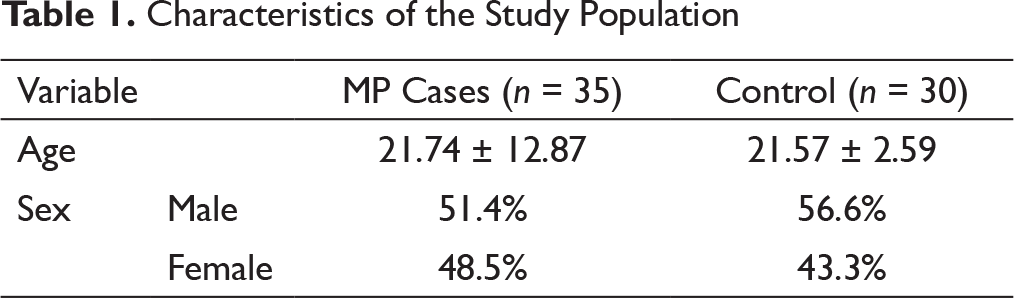
This case control study included 35 skeletal class III patients with MP (18 males and 17 females in the age range from 6 years to 63 years; mean age was 21.74 ± 12.87 years) and 30 control individuals with orthognathic skeletal relation (17 males, 13 females in the age range from 19 years to 25 years, mean age of 21.57 ± 2.59 years) without any family history of MP. DNA was extracted from venous blood and genotyped. Two loci on chromosome 1p36 (rs20566 and rs1065755) encoding MATRILIN-1 were studied for mutation.
Results:
Single-nucleotide polymorphism (SNP) at rs20566 and frameshift mutation at rs1065755 had a significantly greater frequency in MP cases than in control.
Conclusions:
Mutation at both the sites can be attributed to increased risk of developing MP.
Keywords
Introduction
Genetic predisposition in the causation of mandibular prognathism (MP) is an established fact.1, 2 It is an autosomal-dominant trait with incomplete penetrance.3, 4 Prevalence of MP is found to be high in Asians, particularly in eastern Asian races. In India, the prevalence of MP is found to be at 3.4%. 5
Generally, MP presents itself as a concave profile, reverse overjet, and Angle’s class III malocclusion. This is not only aesthetically disfiguring but may also lead to functional impairment. MP may be associated with maxillary retrognathism that aggravates the severity of disfigurement. Early diagnosis of class III malocclusion and its components are necessary in deciding treatment modality, time of intervention, and visualizing prognosis. Clinically, it is difficult to predict mandibular growth until post-adolescence age. However, with the help of genetic studies, early detection of developing MP can be made possible.
Postnatal growth of the mandible takes place by endochondral bone formation at the condylar cartilage that is a secondary cartilage. MATRILIN-1 is a non-collagenous protein secreted by chondrocytes and expressed during cartilage matrix formation. It is an adhesion protein for chondrocytes and fibroblasts that stabilizes cartilage matrix by altering its tensile strength and elasticity. 6 Mutation in gene encoding MATRILIN-1 may alter the physical properties of the resultant protein, in turn, shaping the skeleton, leading to MP.
Mp is found to be a polygenic trait affected by multiple genes, each making a small contribution to the overall outcome. Various candidate chromosomal regions have been found to be associated with it. 7 However, statistical significance of linkage to MP was noted at chromosomes 1p35, 1p36, 6q25, and 19q13.2. 8
Among these sites, chromosome 1p36 area contains many genes related to the skeletal system, such as alkaline phosphate, heparan sulphate proteoglycan 2, and cartilage matrix protein (MATRILIN-1). 8
Jang et al 9 investigated the association of MP with single-nucleotide polymorphisms (SNPs) in MATRILIN-1 gene in the Korean population. Three restriction sites studied on the chromosomal location 1p36, in MP cases and control, were rs20566, rs1149045, and rs1065755. Loci rs20566 and rs1065755 showed statistically significant difference in the nucleotide sequence in MP cases than in control. 9
On the basis of these facts, the present case control study aims to find out the correlation of mutations in MATRILIN-1 gene with MP in the central Indian population residing in the same city to exclude regional and geographical bias. Gene encoding MATRILIN-1, that is, 1p36, was studied at the restriction site rs20566 and region corresponding to rs1065755.
Material and Methods
Characteristics of the Study Population
For genotyping of samples, 2 mL of venous blood was collected from antecubital area of the arm, and DNA was extracted from each sample. Amplification of DNA fragment was performed through polymerase chain reaction (Bio-Rad, made in Mexico, alpha unit block assembly for DNA engine system model-PCT0220, SN DY004813, rating: 200-240 VAC, 50-60 Hz, and 1600 W).
The restriction sites rs20566 and rs1065755 were in the coding region of 1p36 MATRILIN-1 gene.
The primer sets used for amplification and sequencing analysis were designed based on the Gene Bank reference sequence (accession no. NG_027941.1).
Primers were obtained from Integrated DNA Technologies (IDT) and marketed by Allied Scientific Products. Restriction fragment length polymorphism (RFLP) was performed to genotype rs20566 with restriction enzyme Bsr1 (New England Bio Labs, R0527S). DNA sequencing was performed on the region corresponding to rs1065755 to check for the mutation. Amplicons were sent to the first base laboratories for sequencing. The obtained sequences were aligned with the help of Clustal X2 software along with the reference sequence deposited in NCBI (accession no. NT_027941.1).
Allele presence or absence in the given sample was mentioned as YES or NO, respectively, and then the data were collected in terms of percentage. The allele frequencies in MP cases and controls were analyzed and compared for the distribution.
Statistical Analysis
Kappa (κ) statistic 12 was used to analyze the intra-observer agreement of repeated measurements. κ values higher than 80% were considered to have good agreement. Allele frequencies between MP cases and control individuals were statistically analyzed to test the associations between MATRILIN-1 gene polymorphisms and mandibular prognathism, the chi-square test was performed. Odds ratios and 95% confidence intervals were calculated using the StatCalc feature of Epi Info software (version 7; Centers for Disease Control and Prevention, Atlanta, GA). For the analysis of discrete cephalometric measures, the nonparametric Kruskal–Wallis test was used to compare mean values between the groups, and the Mann–Whitney U test was used to compare their mean values. The statistical analysis was performed with SPSS software (version 16.0.2; SPSS, Chicago, IL). Results were considered significant at P < .05.
Results
Repeatability examination of the lateral cephalograms showed good agreement (0.80) as assessed by the kappa coefficient.
The genotype distribution of the MATRILIN-1 at rs20566 and rs1065755 was analyzed in MP cases and controls.
RFLP was performed on genotype rs20566. Gel electrophoresis of the fragments showed double- or single-banding pattern, depending on the digestion of fragment, which was indicative of either normal or altered sequence (SNP). A total of 60% MP cases and 13.3% of control individuals showed SNP at rs20566.
On alignment of sequences of the region corresponding rs1065755, we found frameshift mutation in 80.6% of MP subjects and 36.3% of control subjects.
Out of 35 MP cases, 10 were first-generation relatives. The mutation pattern was found to be similar in the relatives. Mutation at both sites was strongly associated with greater degree of disfigurement with ANB below −3 degrees and strong familial tendency.
A total of 51.6% of MP subjects showed mutation at both the sites. The association between both site mutation and MP was found to be highly significant (P ≤ .001). (Table 2)
The results suggest that the mutation in MATRILIN-1 at rs20566 and region corresponding rs1065755 can be attributed to MP.
Discussion
Out of all class III malocclusion cases, 19% are due to MP, while 45.6% are due to a combination of MP with maxillary retrognathism.13, 14 Identification of the jaw responsible for class III is important in making a decision regarding early or late treatment, as well as visualizing prognosis of the case. Inability to do so may lead to either loss of growth period, prolonged treatment, or relapse.
Yamaguchi, in 2005, mapped 3 chromosomal loci 1p36, 6q25, and 19p13.2, out of which 1p36 is the loci of interest for the study of skeletal system as it harbors candidate genes related to it. 5 Genome-wide association study in the Japanese population showed association of 2 loci with the susceptibility for MP—1p32.2 and 1p22.3. 7 The locus 1p22.3 mentioned in the study was found to be near 1p36.
MATRILIN-1 is a cartilage-specific homotrimer localized in the growth plate of long bones. It is transcribed in the late proliferative and hypertrophic chondrocytes of the growth plate. During endochondral bone formation, the sequence of expression is collagen type II, aggrecan, and MATRILIN-1. 15 It is an adhesion factor for fibroblasts and chondrocytes, which is mediated by Integrin a1b1 and thus may play an important role in the development and repair of skeletal tissues. 16
Mutation in gene encoding MATRILIN-1 may lead to altered polypeptide synthesis, resulting in altered chemical and physical properties of protein that is either itself responsible for altered phenotype or makes it more vulnerable to environmental influences.
MATRILIN-1 gene variants in Equus asinus have been found to be an effective genetic marker for MP in the species. According to a study by Rodrigues et al, 17 MATRILIN-1 might have a role in protein regulation, by affecting splicing, maturation, or elongation of RNA. It can also change enhancer or silencer, affecting transcription rate. Ultimately, the genetic variation seems to reduce the expression of resultant protein.
Jang et al 9 investigated the association of MATRILIN-1 with MP in the Korean population. Three restriction sites on the 1p36 locus were studied—rs20566, rs1149045, and rs1065755. At rs20566, SNP was found as a substitution of C > T. The significance of its association was found to be high in MP cases than in control (P = .001). Frequency of occurrence of SNP at rs1065755 as substitution of C > T was found to be increased in MP than in control. SNP at rs1149045 was not conclusive in the Korean population.
Mutation in MATRILIN-1 was significantly found to be associated with MP in the Korean population. The incidence of MP in the Indian population is less (3.4%) as compared to the rest of Asia. So, to check for its association, though being less in incidence in the central India population, we genotyped rs20566 and rs1065755. The study participants were the residents of the same city, negating the geographical bias and ensuring homogenous sample.
Genotype Frequencies of Polymorphism in MP Cases and Control

To genotype the region encoding rs1065755, DNA sequencing was performed. We found significantly higher frequency of frameshift mutation in MP cases as compared to controls. A total of 80.6% of MP cases showed frame shift when compared to control samples (36.3%).
An insertion or deletion of a nucleotide in a DNA sequence leads to shifting of the entire frame of codon during translation, thereby leading to abrupt proteins, which perhaps indicate the importance of MATRILIN-1 protein for normal skeletal features. Earlier in the sequence the frame shift occurs, more are the chances of the protein getting altered.
SNPs may remain inconclusive in predicting altered functional properties of the gene. However, in the present study frameshift mutation was noted in one of the coding regions of 1p36, associated with MP cases in Central India, bearing greater potential of resultant protein alteration or rendering it nonfunctional in most cases, making it a more lethal form of mutation.
The association of SNP at rs20566 and frameshift mutation at rs1065755 together were significantly greater in MP cases than in control (P ≤ .001). The frequency of occurrence of MP in the presence of mutation at both the sites was 51.6%. Samples which showed mutation at both the sites had strong MP component with average ANB lesser than −3 degrees.
Therefore, to study the predisposition to MP in an individual, the mutational screening of both sites—rs20566 and rs1065755—is reliable.
The major limitation of the present study was small sample size. But considering the incidence of class III malocclusion in the studied population, the results can definitely act as guideline for future studies.
Clinical Implication
Candidate gene analysis along with cephalometric findings will complete the diagnosis of MP, which will help us in treatment planning as well as determination of prognosis at an early age.
Conclusion
The results of this study show association of mutation in MATRILIN-1 gene with MP. A greater potential for frameshift mutation was found with resultant alteration of the protein.
The data generated in the present study can offer the foundation for mutational screening analysis to predict the susceptibility of developing an MP. However, large sample size is imperative to conclude about the exact association of MATRILIN-1 with MP.
Footnotes
Declaration of Conflicting Interests
The authors declared no potential conflicts of interest with respect to the research, authorship, and/or publication of this article.
Funding
The authors received no financial support for the research, authorship, and/or publication of this article.
