




Abstract
Abstract
Aims: This study aimed to evaluate and compare the effect of tea tree oil (TTO) mouthwash and chlorhexidine (CHX) mouthwash on frictional resistance.
Settings and Design: In vitro.
Materials and Methods: In total, 60 extracted premolars were mounted on a custom-made acrylic fixture. These 60 premolars were randomly divided into 3 groups of 20 each, on which 0.022″ × 0.028″ slot MBT stainless steel brackets were bonded and 0.019″ × 0.025″ rectangular stainless steel wire was ligated with an elastomeric module. The 3 groups included a control group where the samples were immersed in artificial saliva and 2 experimental groups immersed in 0.2% CHX and TTO mouthwash, respectively, for 1.5 hours. Postimmersion static frictional resistance was evaluated on a universal testing machine at crosshead speed of 0.5 mm/min.
Statistical Analysis Used: Tukey’s post hoc procedure.
Results: This study showed a statistically significant difference in the frictional resistance between saliva and CHX groups and CHX and TTO groups (P < .05). No statistically significant difference was observed between saliva and TTO groups (P > .05). The frictional resistance was more in the CHX mouthwash group than in the TTO mouthwash group.
Conclusions: Frictional resistance was lesser in the TTO mouthwash than in the CHX mouthwash. Based on this result, TTO mouthwash can be used instead of CHX mouthwash as an oral hygiene aid in patients with orthodontic treatments.
Introduction
Friction is the resistance to motion encountered between orthodontic bracket and archwire during sliding mechanics.
Chlorhexidine (CHX), the most commonly prescribed antiplaque agent, exhibits long-term adverse effects such as staining of teeth, resin restoration, and impaired taste sensation. Tea tree oil (TTO)-based mouthwash may be prescribed for reducing plaque accumulation during the active phase of orthodontic treatment as it has antiseptic, fungicidal, and bactericidal effects.
To date, the effects of TTO-based mouthwash on the frictional resistance between orthodontic brackets and archwires have not been reported. Therefore, the purpose of this study is to evaluate and compare the frictional resistance between stainless steel brackets and stainless steel wire after immersion in TTO-containing mouthwash and CHX mouthwash.
Subjects and Methods
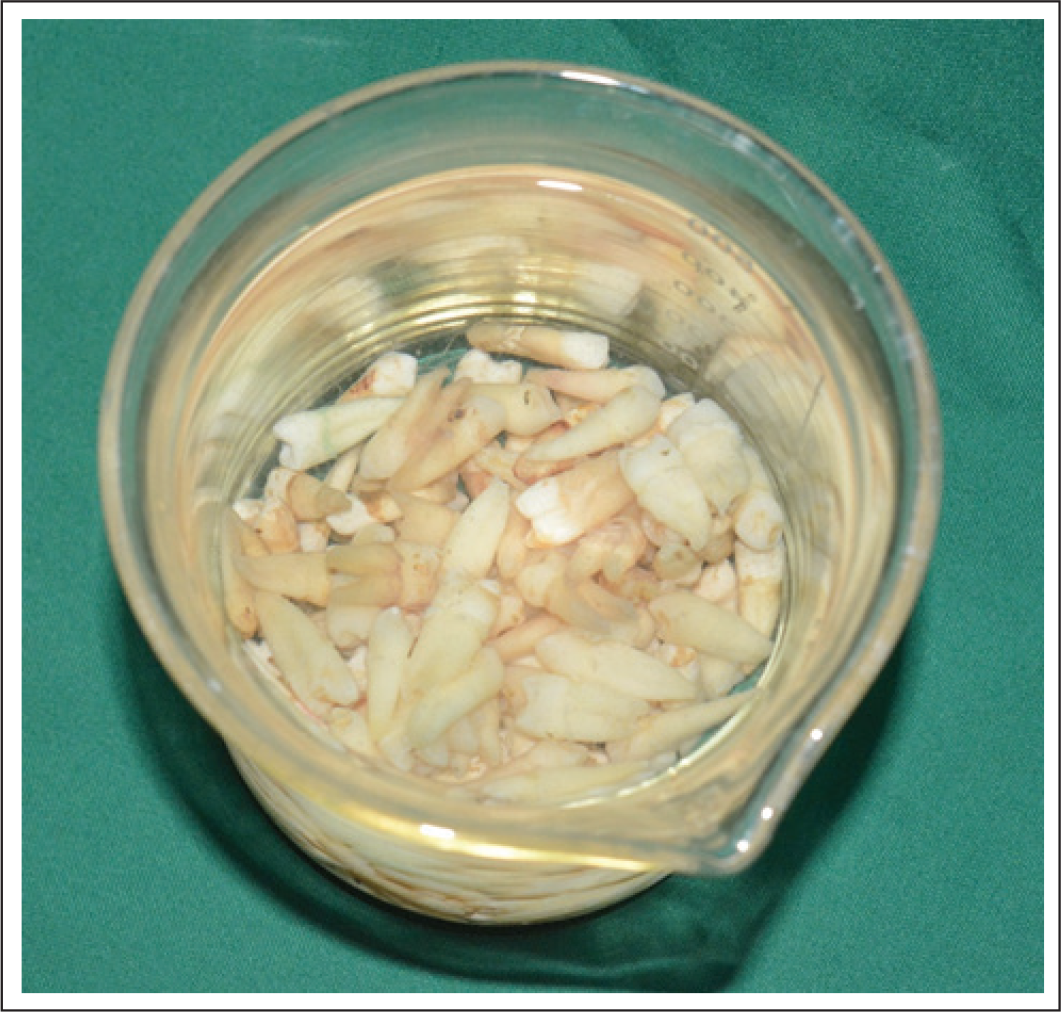
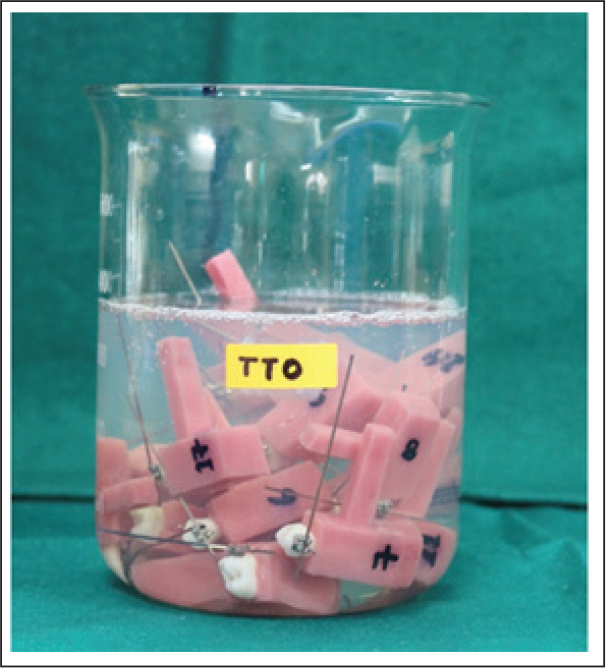
The study was conducted on 60 extracted upper premolars. The sample was stored in distilled water before the start of the experiment at 37°C (Figure 1). The following 3 fluid media were used:
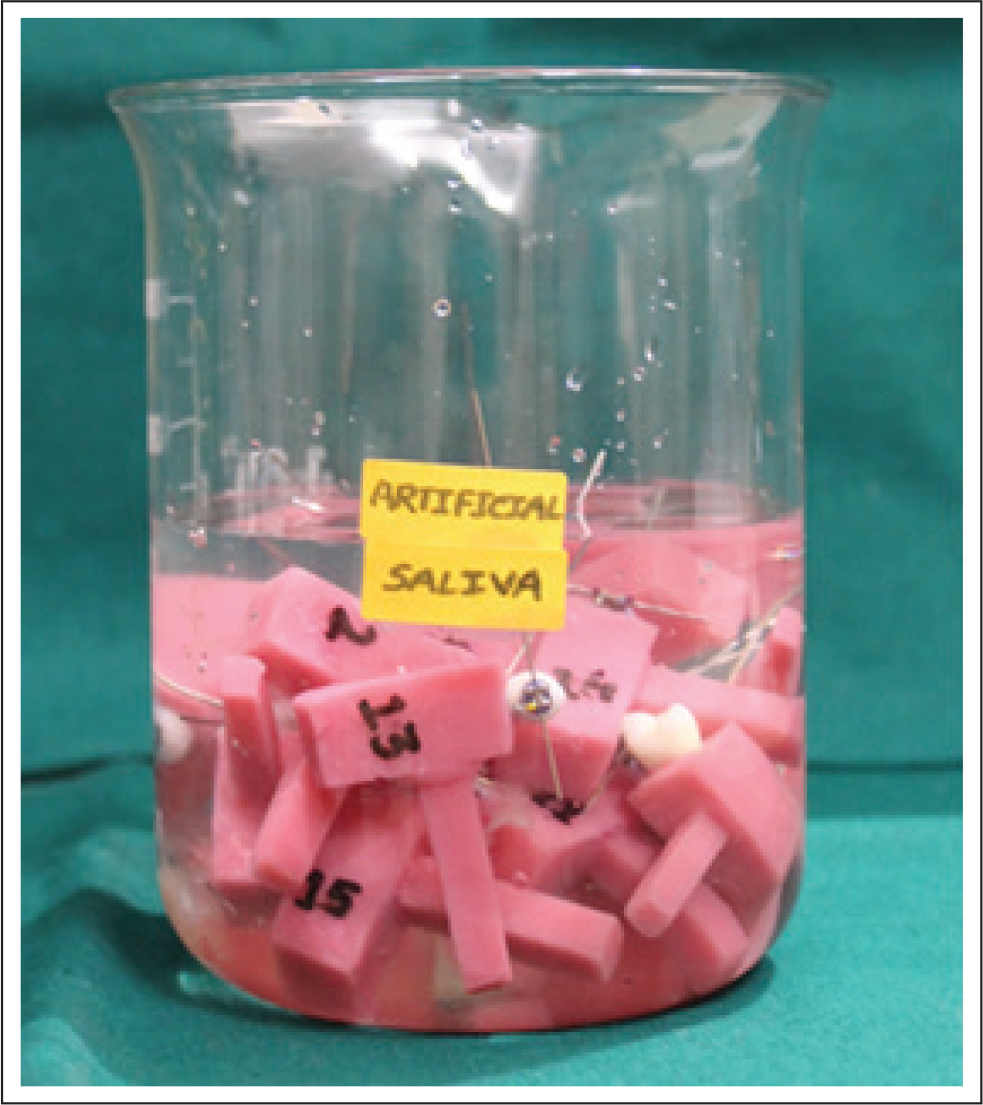
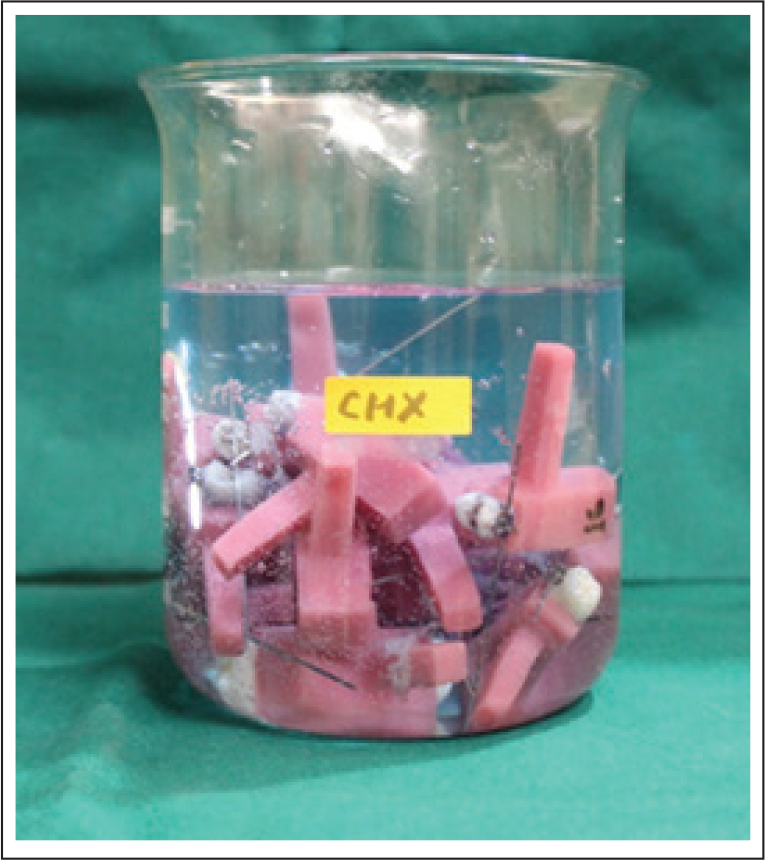
Artificial saliva (wet mouth) 0.2% CHX mouthwash (Hexidine) TTO mouthwash (Tebodont)
The sample selection was based on the following inclusion and exclusion criteria.
Inclusion Criteria
Teeth free of caries/restorations
Nonhypoplastic teeth
Teeth free of dental wears, fractures, and structural abnormalities
Exclusion Criteria:
Carious and restored teeth
Attrited teeth
Teeth with intrinsic stains or white spot lesions
Fractured teeth and teeth with dental anomaly
Teeth with iatrogenic damage
The total sample was further divided into the following 3 groups.
Specimen Preparation
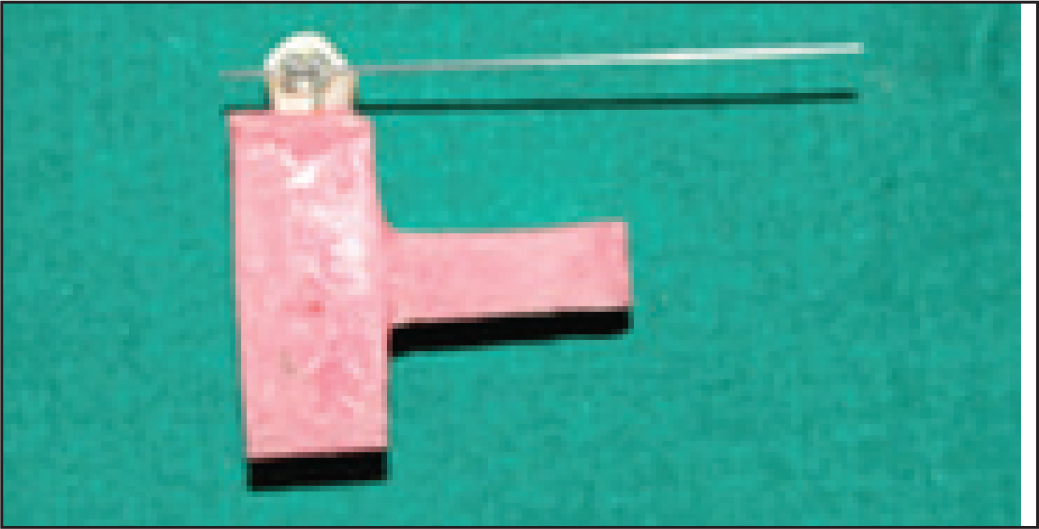
The test procedure was modified from a previous design. 1 The crowns of the selected samples were cleaned and pumiced after which the teeth were mounted in a custom-made acrylic jig. The acrylic jig was formed of specific dimension for fixation to the universal testing machine (INSTRON Model 5569, Brakes India Pvt Ltd, Mysore, India). After the teeth were mounted in the acrylic jig, bonding was carried out. All the samples (n = 60) were etched with etchant (37% phosphoric acid gel) for 30 seconds after which they were washed and dried with oil-free compressed air. The brackets were bonded with adhesive Transbond XT and 3M Unitek primer, which were cured using light-emitting diode light with a curing cycle of 30 seconds. The brackets were bonded at the center of the crown.
A 0.019″ × 0.025″ stainless steel archwire was taken. This wire was cut into 5-cm long segments. These segments were tied on to the bracket with the help of an elastomeric module to form a test unit (Figure 5). The wire was tied from its lower end. The brackets and wire segments were cleaned with alcohol wipes before the module was tied to form a test unit. After this, the samples were divided into the aforementioned 3 groups.
Frictional Resistance Evaluation
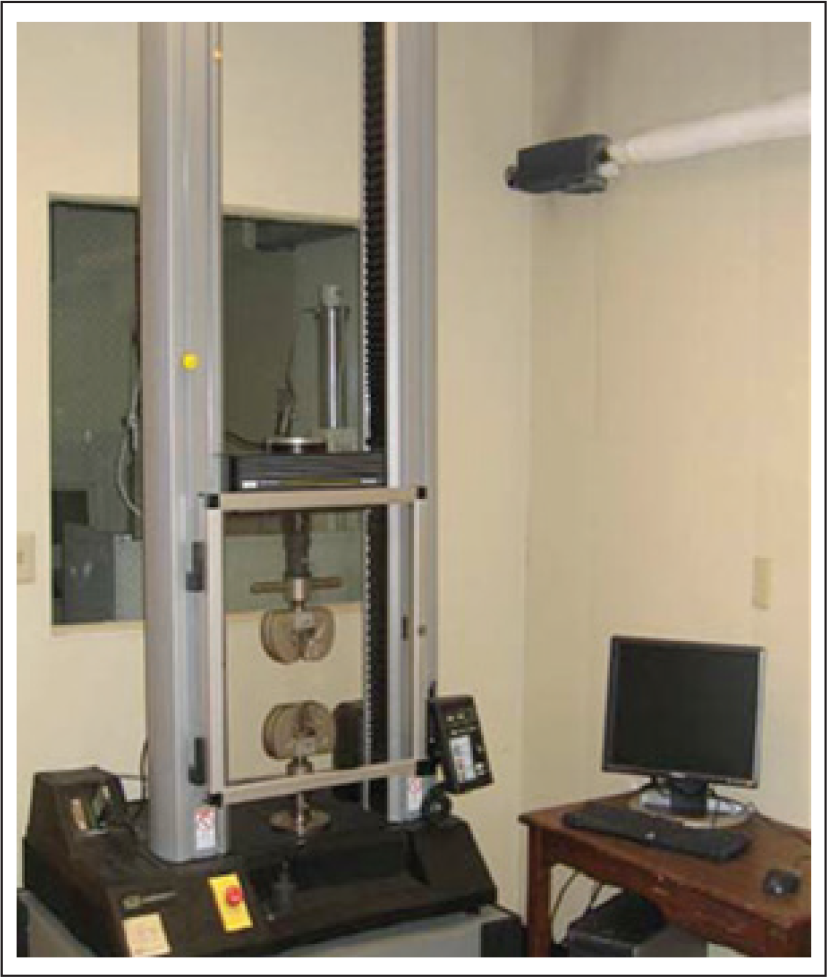
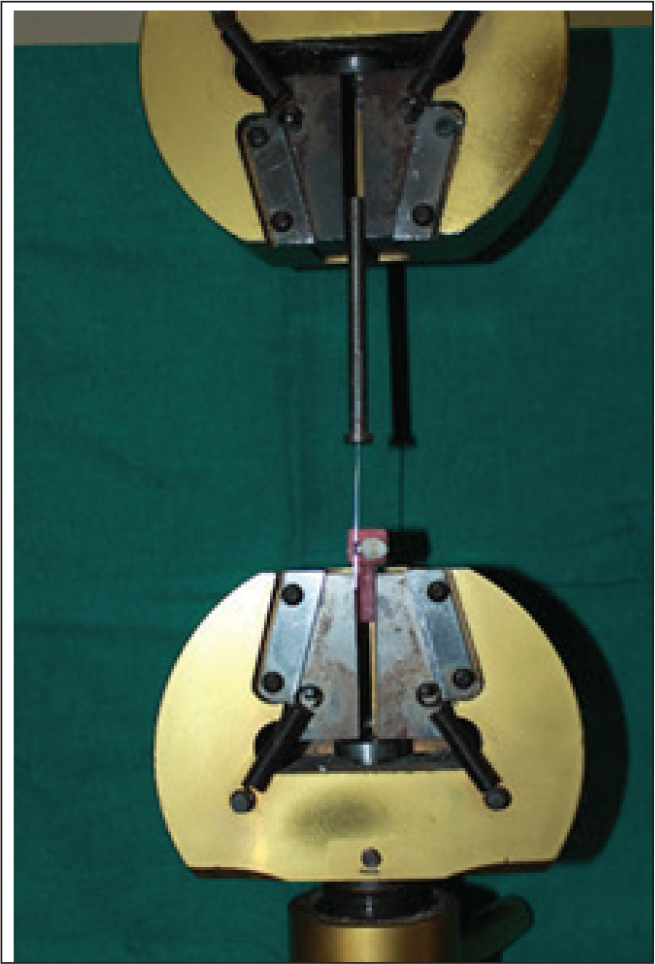
The specimens were removed from their respective solutions after 1.5 hours, and frictional force was measured using INSTRON universal testing machine (Figure 6). The upper end of the wire of the test unit was attached to the universal testing machine with the help of a customized acrylic jig (Figure 7). Care was taken that the test unit was parallel with the vertical framework of the machine. 5 N load cell was calibrated between 0 and 5 N. The wire was pulled at a crosshead speed of 0.5 mm/min. Care was taken to avoid introducing torsion into the test specimen. The data were transferred to a computer connected to the machine. Static friction was recorded as the maximum frictional force required to generate the initial movement of the bracket over 5 mm of the test distance. After each test, a new test unit was placed, and the test was carried out for all the 60 samples. Descriptive statistics of static friction were carried out for each group. Kolmogorov-Smirnov test was carried out to check the normality of the 3 study groups. One-way analysis of variance (ANOVA) was carried out to check for significant differences between the groups. To check for pairwise comparison for frictional resistance, Tukey’s post hoc procedure was carried out. The level of significance was set to P < .05.
Results
Results of Kolmogorov-Smirnov Test in the 3 Groups—Artificial Saliva, CHX, and TTO

Comparison of Three Groups With Respect to Frictional Resistance (in N) Scores
Mean, SD, and Standard Error of Frictional Resistance Value in the Artificial Saliva Group

Mean, SD, and Standard Error of Frictional Resistance Value in the CHX Group

Mean, SD, and Standard Error of Frictional Resistance Value in the TTO Group

Comparison of Frictional Resistance Among the 3 Study Groups Using One-Way ANOVA

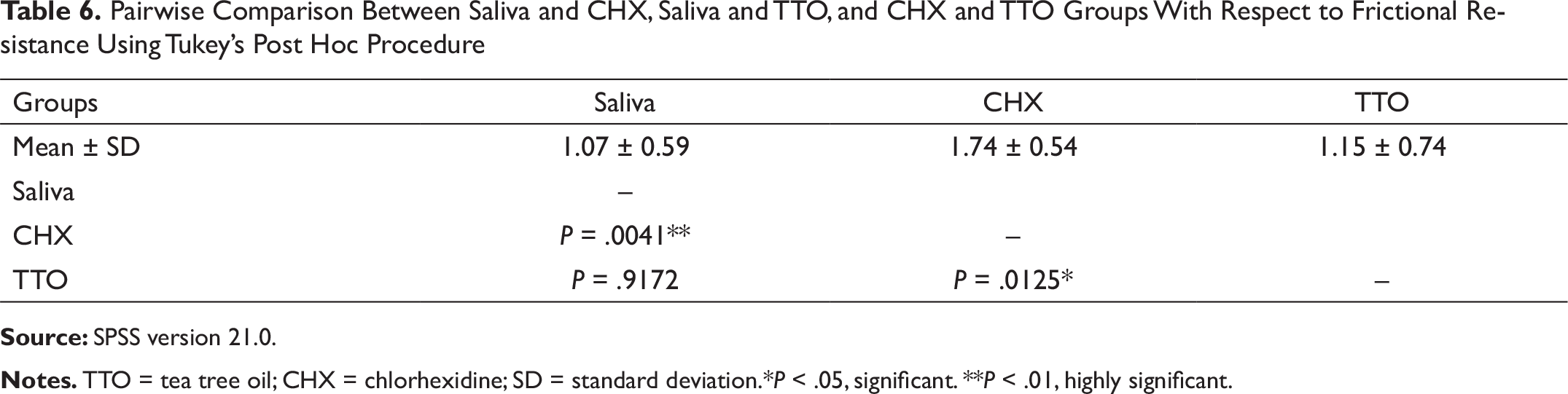
Pairwise Comparison Between Saliva and CHX, Saliva and TTO, and CHX and TTO Groups With Respect to Frictional Resistance Using Tukey’s Post Hoc Procedure
Discussion
Friction is the resistance experienced when one body slides over the other. During the sliding mechanics, a bracket moves along in a series of steps rather than a smooth continuous movement. Several parameters such as material, roughness, hardness, wire stiffness, geometry, fluid media, and surface chemistry at the bracket and archwire interface affect friction. 2
For better correlation between the results obtained from friction test and the clinical scenario, the reproduction of dynamics within the oral cavity is useful. Therefore, the presence of lubricants during the friction tests would serve as an important parameter because saliva plays a role in sliding mechanics in vivo. Most of the friction tests have been done in dry conditions1-3 although few studies have used artificial saliva as a testing medium.4-7
Studies on frictional resistance in the presence of saliva have yielded mixed results. In a study on frictional resistance in the dry state and wet state (saliva) where stainless steel and polycrystalline alumina brackets were tested against stainless steel, cobalt chromium, nickel titanium, and beta titanium wires, the kinetic friction decreased for all stainless steel combinations, whereas it increased for all beta titanium combinations in the dry state. On the contrary, the friction decreased up to 50% for all beta combinations in the wet state. 5 The varying results of frictional resistance in the dry and wet state only make it important to elucidate the importance of the testing medium on frictional resistance.
Different lubricants have been seen to yield different results for frictional tests owing to their physical and chemical properties. The use of different prophylactic fluoride agents on orthodontic bracket and archwire had been studied. These prophylactic agents have been seen to affect the mechanical properties at the archwire-bracket interface. In one such study, frictional resistance was seen to increase in the presence of 0.2% acidulated phosphate fluoride solution. Thus, the role of the testing medium assumes an important role in better understanding the sliding mechanics that occurs in vivo.8-10
Innumerable studies have been done to investigate the parameters affecting friction; however, the application and effect of prophylactic mouthwashes on friction have not been fully investigated. It was therefore the intent of the study to compare and evaluate the effect of 2 types of mouthwashes in terms of frictional resistance.
The mouthwashes used in this study were CHX (0.2%) and TTO-based mouthwash.
Orthodontic treatment demands long-term use of antiplaque and antigingivitis agents. Long-term application of mouthwash in orthodontic patients only increases the emphasis on understanding their impact at the bracket-archwire interface and the ways in which it can affect the sliding mechanics. CHX mouthwash has been the gold standard antiplaque and antigingivitis agent. However, reversible brown staining of teeth, tongue and resin restorations, and transient impairment of taste perception have limited its long-term use. Literature also shows an increased metal ion release seen intraorally with CHX application. It is best to avoid CHX application in patients with allergies. 11
A recent increase in the use of complementary and alternative medicines such as TTO (Melaleuca) has been observed.
TTO is extracted from Melaleuca alternifolia leaves (Myrtaceae family). TTO is composed of terpene hydrocarbons, mainly monoterpenes, sesquiterpenes, and their associated alcohols. The antimicrobial activity of TTO is attributed to terpinen-4-ol, a major component and the chemotype for commercial production of the oil. The hydrocarbon equity leading to disruption of bacterial cell membrane has been explained as the basis for its antibacterial activity. TTO is seen to exhibit better antimicrobial property compared with CHX. As CHX cannot be prescribed for a longer duration, the use of TTO mouthwash has gained popularity among the orthodontists.12-14
TTO has been noted for its unpleasant taste. However, in a study where the taste of TTO and CHX was compared, 30% unpleasant taste with TTO and 40% with CHX mouthwash were reported.15,16
Studies have also shown the efficacy of TTO in reducing the components associated with halitosis. Considering the long-term adverse effects of CHX and the broad-spectrum activity of TTO, TTO can prove to be a better oral hygiene aid over CHX.17-19
However, till date, there is no documented study on the effect of TTO on frictional resistance between the archwire and bracket.
Owing to difficulties with collection and storage of natural saliva, the chances of cross contamination, and the need for a saliva donor, artificial saliva was chosen as the control group. Similar results were observed when artificial saliva and human saliva were used as the testing medium.
Study Design
This was an in vitro study in which 60 freshly extracted upper premolars procured from patients undergoing treatment at the department of orthodontics were collected and stored in distilled water at 37°C until the start of the experiment. The teeth were obtained from patients aged between 15 and 30 years who were advised orthodontic extractions for their treatment. The total sample of 60 was divided into 3 groups of 20 samples each.
The test procedure was modified from a previous design. A custom-made fixture of acrylic was fabricated in which the extracted teeth were mounted. It was taken care that the tooth was mounted parallel to its long axis to avoid incorporating any torsion. Once mounted, each tooth was etched and brackets were bonded. The premolar brackets that were bonded had 0.022″ MBT slot. A 0.019″ × 0.025″(3M Unitek, Monrovia, California, USA) straight-length stainless steel archwire of 5-cm segment each was used for testing. This archwire dimension was chosen because it is the recommended size for sliding mechanics with the 0.022″ system brackets used in investigations. 20 The ligation between the bracket and wire was a clear Alastik module (Quick- Stik Clear, A-1 Alastik, 3M Unitek, CA, USA). An Alastik module was chosen for ligation as studies have found that steel ligatures generate greater friction than plastic modules.21,22 Furthermore, it has been demonstrated that the moistening effect of lubrication had an insignificant effect on plastic modules. Thus, an Alastik module would prevent unnecessary factors that might influence the friction testing. 1
The samples were immersed in respective solutions for 1.5 hours at 37°C before the start of testing. This temperature was taken to simulate the oral temperature.23,24
The immersion time of 1.5 hours was chosen to simulate 3-month accumulation of 1 minute daily CHX rinse applications. A 30-second expectoration of CHX twice daily would mean 1 minute of contact of mouthwash with orthodontic appliance (3 × 30 × 1 = 90 min). However, it is difficult to exactly define the concentration of CHX in the mouth after 30 seconds of expectoration. As CHX mouthwash is prescribed for a short-term usage of 4-12 weeks twice daily, a shorter immersion period would suffice the effect of CHX seen intraorally. In addition, it should be taken into account that an in vitro study cannot exactly simulate the real clinical situation.25,26
It was assumed that the incorporation of artificial saliva into TTO mouthwash and CHX mouthwash would neither have an additive nor a subtractive effect on the frictional resistance outcome of the respective mouthwashes as it is a comparative evaluation of the 2 mouthwashes. Thus, the evaluation was carried out between CHX mouthwash and TTO mouthwash without incorporating artificial saliva into the respective mouthwashes.
The testing was carried out in INSTRON universal testing machine. One end of the jig was fixed to the universal testing machine. It was ensured that bracket-archwire assembly was parallel to the vertical framework of the testing machine. A 5 N load cell was calibrated between 0 and 5 N, and the archwire was drawn through the bracket at a crosshead speed of 0.5 mm/min. This crosshead speed was chosen as previous studies have shown that the coefficient of friction for stainless steel archwires was unaffected from 10 to 0.0005 mm/min. 27 The program was set to highlight the maximum frictional force at initial movement, which was taken to represent the peak static frictional resistance. The test was carried out for each bracket-wire combination. The frictional test was carried only once for each bracket-archwire combination to eliminate the influence of wear. 28 Static friction was evaluated in this study. It has been seen that tooth movement occurs in short steps rather than continuous movement. Thus, the evaluation of static friction is more important than kinetic friction as it is resistance that needs to be overcome each time the tooth moves. 28
Interpretation of the Results
The mean, SD, minimum, and maximum values were calculated for each bracket-wire combination. To test the normality of the distribution of the data in the 3 study groups, Kolmogorov-Smirnov test was carried out.
Table 1 shows the test for normality in the 3 groups, which was determined by Kolmogorov-Smirnov test. As the result showed a normal distribution for frictional resistance between the 3 groups, a parametric test (one-way ANOVA) was carried out.
Table 5 shows the comparison of frictional resistance of the 3 study groups carried out through one-way ANOVA. Results showed a highly statistically significant difference among the 3 groups. Thus, the pairwise comparison was carried out by Tukey’s multiple post hoc procedure.
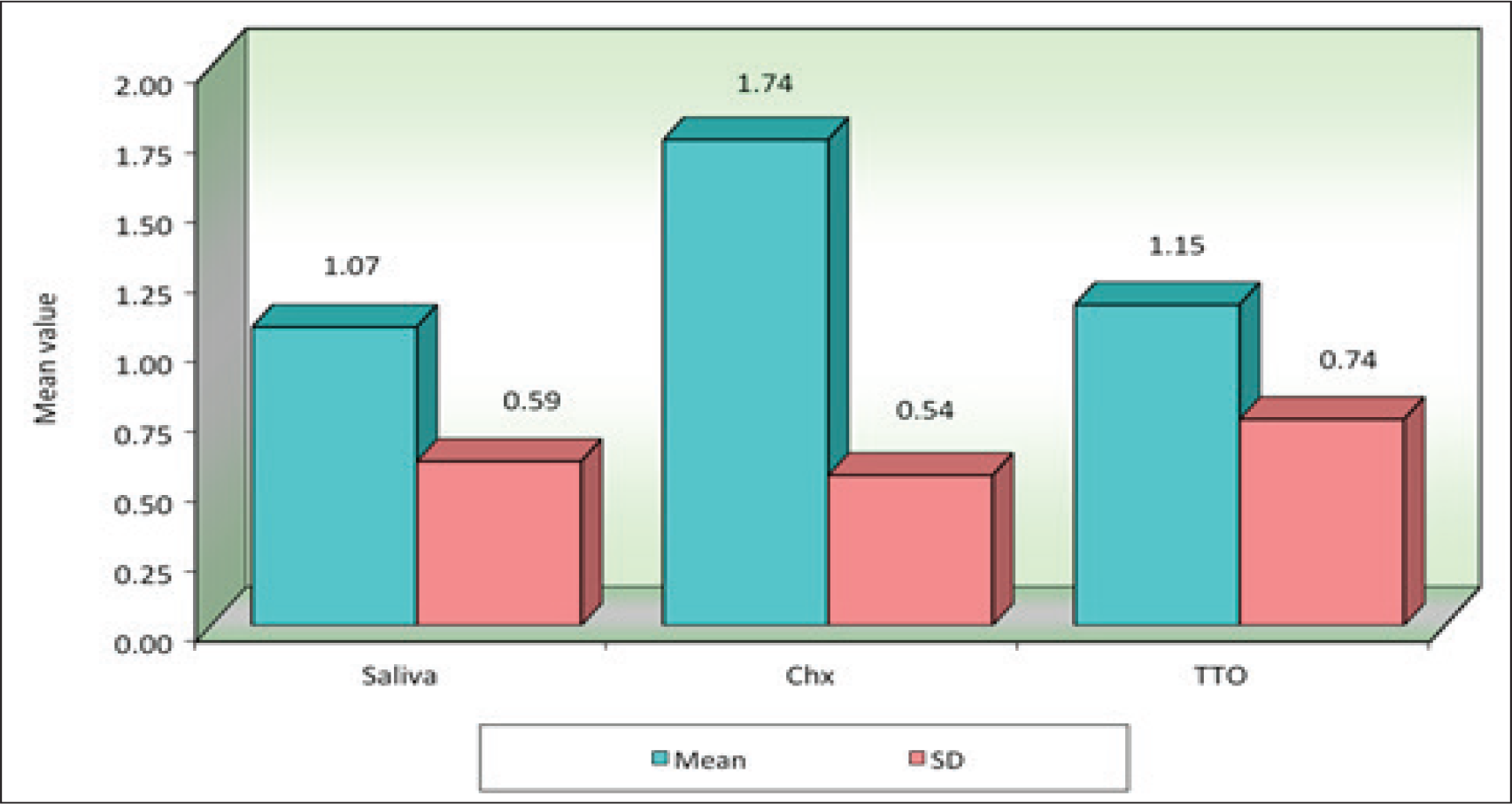
Table 6 shows pairwise comparison of the frictional resistance of the 3 groups by Tukey’s multiple post hoc procedure. The pairwise comparison of static frictional resistance of saliva and CHX group showed a statistically significant difference (P < .05).
Thus, it was seen that the static frictional resistance in the archwire-bracket combination was more in the CHX group when compared with the test unit that was immersed in artificial saliva (control group). This result was contrary to a previous study where no statistically significant difference was seen in the frictional resistance between these 2 groups. 24 This could possibly be due to the difference in the sample size taken or the variation in the methodology.
The pairwise comparison between saliva and TTO showed no statistically significant difference (P > .05). The frictional resistance of TTO mouthwash was high compared with artificial saliva (control group); however, this difference was not statistically significant. To the best of our knowledge, till date, there is no published data to compare the static frictional resistance of these 2 groups.
The pairwise comparison of frictional resistance between the CHX group and TTO group showed a statistically significant difference (P < .05). The static frictional resistance was more in the CHX group than in the TTO group.
The difference in the static frictional resistance obtained in the 2 mouthwashes could be ascribed to their rheological properties. One explanation for the reduced frictional resistance seen with TTO mouthwash can be explained with the fact that terpene-4-ol (terpenoid), the basic constituent of TTO, has a hydrocarbon backbone, which has a high lubricant property. This could lead to a reduced resistance seen between the bracket and archwire. However, frictional resistance is influenced by a number of factors. The exact interaction occurring at the bracket-archwire interface due to the application of TTO needs to be explored. The comparison of terpene-4-ol (TTO) and CHX digluconate, a bisguanide at chemical, structural, and physical preparations, also needs to be extensively studied. The comparative evaluation shows that TTO-based mouthwash is a better choice over CHX.
Clinical Implications
This research has highlighted the clinical implication of mouthwash on frictional resistance.
CHX has been a gold standard antiplaque and antigingivitis agent. However, frictional resistance is seen to be more in CHX application. Minimizing the frictional resistance during sliding mechanics has been the mainstay of any orthodontic appliance. Considering this and the adverse effects seen with its long-term application only makes one look out for a better option.
The recent rise of complementary medicines has proven TTO to be a better antibacterial agent. Our comparative study has shown that the frictional resistance seen with TTO mouthwash application is less when compared with the CHX mouthwash. Thus, TTO mouthwash can prove to be better option over CHX mouthwash.
Limitations of the Study
Following are the limitations of the study:
Frictional resistance is influenced by numerous variables and is technique sensitive, and so, the same study can have varying results under different experimental conditions or when performed by different operators. An in vitro experimental environment is very different from an in vivo environment. Oral temperature, arch form, angulation, and the intermittent occlusal forces might affect static frictional force and give varying result.
Conclusions
Within the experimental conditions/limitations of this in vitro study, it can be concluded that
A statistically significant difference was seen between the static frictional resistance of CHX and TTO mouthwashes. The static frictional resistance was more in the CHX group than in the TTO group. No statistically significant difference was seen between the TTO group and artificial saliva group. A statistically significant difference was seen between the CHX group and artificial saliva group. The frictional resistance was more in CHX than in artificial saliva.
Funding
The authors received no financial support for the research, authorship, and/or publication of this article.
Declaration of Conflicting Interests
The authors declared no potential conflicts of interest with respect to the research, authorship, and/or publication of this article.