




Abstract
Full engagement of orthodontic archwires to permit gate closure in self-ligating brackets can be challenging in both the initial stages of alignment with crowded or rotated teeth and also during the later treatment stages with use of heavy rectangular wires.
A handy, reliable tool has been developed to ensure complete seating of any archwire in slots of both conventional and self-ligating bracket (SLB) systems to overcome this problem.
Introduction
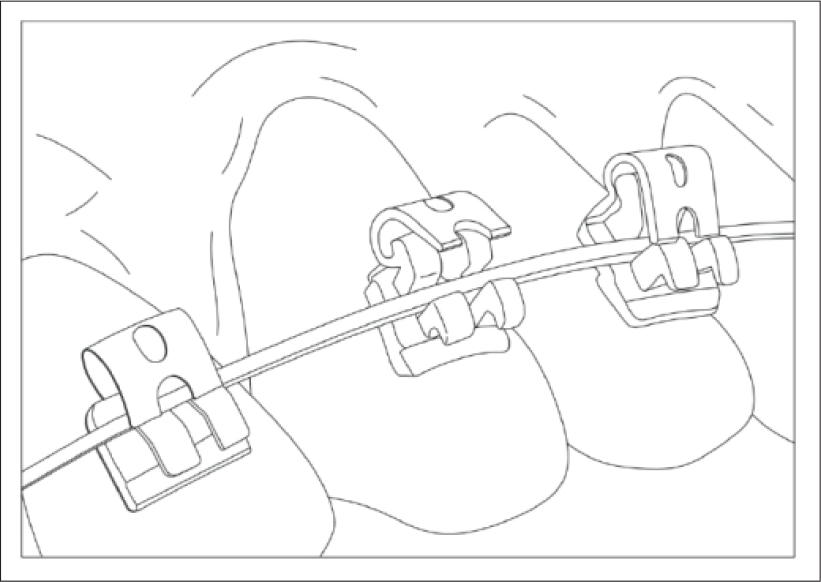
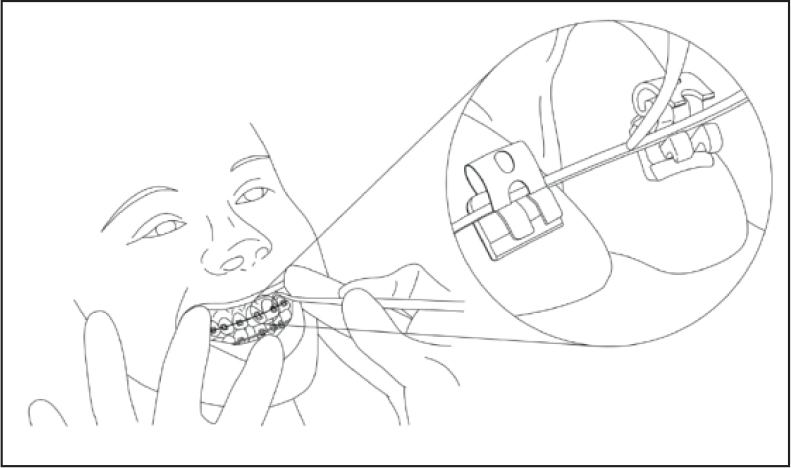
Full engagement of orthodontic archwires into bracket slots of conventional and self-ligating brackets during initial alignment of rotated or malposed teeth as well as in the final stages of treatment can be challenging. This is primarily due to tooth or bracket position and archwire dimensions. Orthodontists commonly use a straight or curved probe to ensure seating of the archwire into bracket slots prior to placing ligatures in conventional brackets or closing the slides/gates in self-ligating brackets (Figure 1). The disadvantage of this approach is the inherent rotation of the archwire in the opposite direction when only one side of the wire (either mesial or distal) is engaged with a probe or equivalent instrument (Figure 2). Additionally, there is also a risk of the sharp tip of the probe slipping and injuring the lips and gingiva of the patient.1-3 The problem becomes acute when heavy dimension rectangular wires are used. Unless heavy dimension rectangular wires engage the bracket slots fully, built-in bracket prescription values cannot be obtained. Incomplete gate closure in self-ligating brackets causes tissue irritation and loss of control. To overcome this problem, a new novel double-sided orthodontic archwire seating instrument has been designed and developed by the author. The instrument has been patented (Indian Patent No: 361311) and commercial production in the future is also envisaged. The instrument can be used with both conventional and self-ligating bracket types with equal efficiency to ensure full seating of archwires in the anterior and posterior regions prior to placement of ligatures or to enable easy closure of self-ligating bracket gates or slides.
Closing the slide of a self-ligating bracket using a probe.
Rotation of the archwire out of the slot on use of a probe.
Design and Method of Use
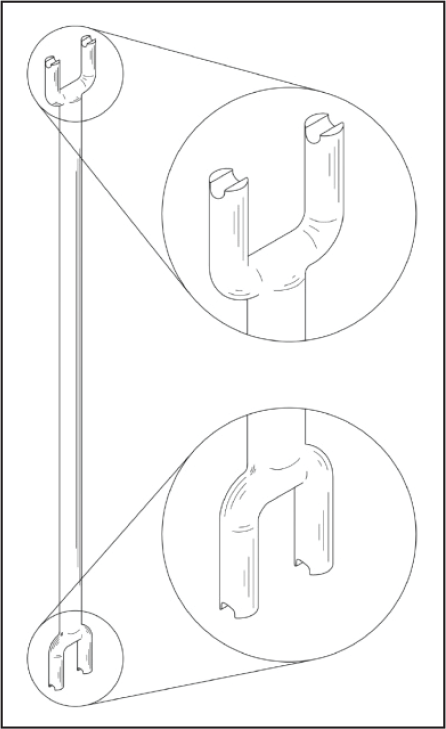
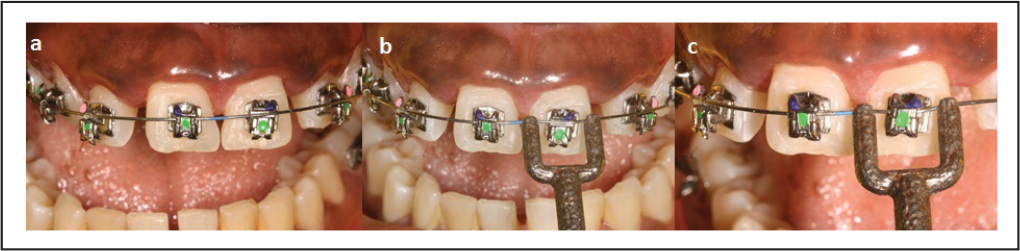
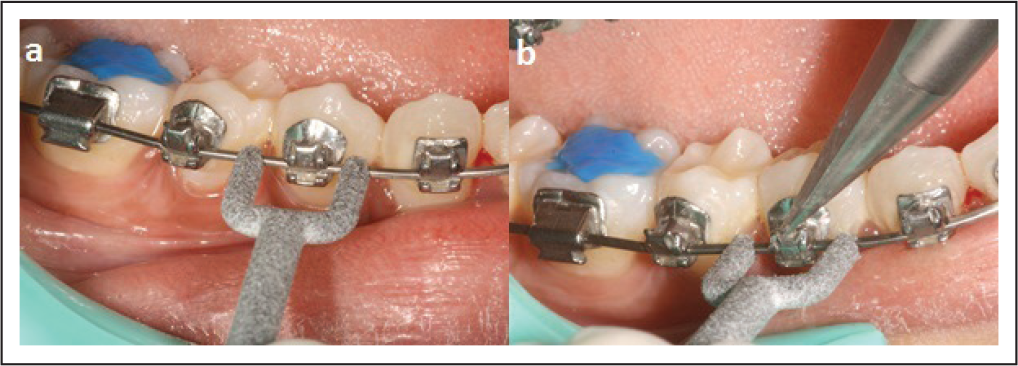
The instrument has an elongated handle with metal prongs at either end (Figure 3). The instrument has the following dimensions: handle length of 90 mm, prong length of 8 mm, inter-prong distance of 3.5 mm for the narrow prongs which can be used in the lower arch with reduced interbracket distance and 5 mm for the wide prongs used in the upper arch with wider interbracket distances available with prong groove depth of 0.7 mm. These dimensions were finalized after building and testing multiple prototypes. The instrument is made from medical grade steel and can be autoclaved after each use. The grooves have been designed to enable snug engagement of a 21 × 25 rectangular archwire. The prongs have recessed grooves on the underside which help secure the archwire firmly. Variable pressure on either prong can also be applied by the operator depending on the clinical requirements (mesial or distal end of archwire requiring more force). The instrument has been designed with wide and narrow width prongs taking interbracket widths into consideration. However, any side of the instrument can be used in either arch depending on clinical requirements and individual operator preferences. The prongs engage the archwire firmly both mesial and distal to the bracket. The operator can then apply gentle pressure on the archwire from both mesial and distal sides equally, ensuring that the archwire seats completely in the bracket slot enabling easy closure of the slide or gate in a self-ligating bracket or engagement of ligatures in a conventional bracket (Figure 4). Unlike in conventional brackets where either elastic or steel ligatures can be used, self-ligating brackets always require the gates or slides to be fully closed during all stages of treatment. As wire stiffness and dimension increase, it becomes difficult to fully engage such wires completely in these brackets and get the slides or gates closed. With this instrument, rectangular wires of any dimension and material can be fully inserted into bracket slots, making gate or slide closure easy and predictable (Figure 5). Both round and rectangular wires can be engaged with the instrument easily, making it an instrument of choice for clinicians at all stages of fixed orthodontic treatment.
Double-ended archwire seating instrument.
(a) Round wire rotating distally making slide closure difficult. (b) Instrument firmly seats archwire in slot. (c) Full closure of slide easily accomplished.
(a) Heavy rectangular archwire seated fully in slot. (b). Closing tool can be easily used for slide closure.
Conclusion
No instrument of similar type has been designed till date. The instrument will be a useful adjunct in every orthodontist’s armamentarium and can be used with all current bracket systems. It can also be autoclaved after each use.
