




Abstract
Electrical injuries in animals occur most often accidentally. They comprise contact to various forms of currents, including alternating, rotary, or direct currents. Depending on various parameters of the current (including the type of circuit, voltage, current and duration of exposure) and conditions of the animal (such as wet or dry hair coat and pathway of current through the body), lesions may be absent or may include early or localized development of rigor mortis, signs of acute circulatory failure, or severe thermoelectrical burns. Such burns may present as external current marks, singed hair or feathers, metallization of the skin, or occasionally internal electroporation injury resulting in muscle necrosis, hemolysis, vascular damage with thrombosis, injury to brain and spinal cord, or skeletal fractures. Furthermore, lightning strikes occur regularly in grazing animals, which have greater risk of death from step potentials (ground current) in addition to direct strike and contact injury. Such cases may have no lesions, external signs of linear or punctate burns, keraunographic markings, or exit burns on the soles of the hooves or the coronary bands. Besides detailed information about the circumstances at the location where the animal was found, electrical injuries in animals require a thorough morphological workup, including additional investigations in conjunction with certain knowledge about the possible lesion spectrum.
Keywords
Electricity is the flow of electrons through a conductor. An object that collects electrons becomes negatively charged, and when the electrons flow away from this object through a conductor, they create an electric current. The force that causes the electrons to flow is the voltage. Anything that impedes the flow of electrons through a conductor creates resistance. 48 These relationships can be summarized by Ohm’s law: V = I × R (V = voltage in volts, I = current in amperes, and R = resistance in Ohms). 50
Electrical currents are regularly applied to animals, such as electrocution at slaughter or electrocauterization as a surgical tool. In addition, contact of animals to electrical currents may occur accidentally. Damage by electrical currents is influenced by current, voltage, heat generated, and duration of the electrical flow. Electrical currents entering an animal’s body travel normally the shortest path from the source of contact to the ground contact or exit point. The longer the victim is exposed to the current, the greater the damage will be. Electrical currents passing through the victim can cause sudden death by disruption of neural regulatory impulses. Furthermore, electrothermal injuries may occur at the source and ground contact points and in inner organs.
Besides damage of environmental objects such as trees or buildings, cloud-to-ground lightning strikes are a cause of death mainly in grazing animals. In surviving as well as in dead individuals, indicative lesions may be present. In many fatal cases in livestock, financial compensation is only paid if the cause of death can be conclusively related to a lightning strike, implying that the diagnostic pathologist is familiar with characteristic morphological findings. 26
This review gives an overview about causes, pathogenic mechanisms, morphological findings, additional investigations, differential diagnoses, and causes of death in various forms of electrical impact. Some aspects of damage by electricity and lightning in this review article have deliberately been adopted from human legal medicine to provide a comprehensive overview and alert the veterinary pathologist in this respect even if these findings have not yet been described in veterinary literature.
Electrical Injuries—General Aspects
The passage of electricity through the body causes injury via multiple energy transduction mechanisms. 10 However, the pathophysiology of electrical injuries is not well understood, since a multitude of variables take part in the injury processes that cannot be measured or calculated. 69 Consequently, the injury patterns are unpredictable and differ in every single case of electrical accident. 10,69
Electrical accidents are arbitrarily divided at a 1000-V cutoff value in low and high voltage (Table 1). 69 The flow of accidental currents disturbs physiologic electric processes of the body. Therefore, morphological lesions may not be present in victims dying from disruption of these processes, such as ventricular fibrillation, if the current flow is low. 98 Established mechanisms causing death in low-voltage electrical accidents include disturbances of cardiac T-wave, direct introduction of fibrillation by multiple high-frequency pulses, and long-term high-rate electrical cardiac capture causing sufficient ischemia to lower the ventricular fibrillation threshold. 49 High-rate electrical cardiac capture overrides the physiological regulation of the heartbeat and leads to reduced cardiac output in a situation when the myocardium has an increased demand for oxygenated blood due to its frequent beating. For example, prolonged cardiac capture at rates of >220 heartbeats per minute may lead to ventricular fibrillation in pigs. 49 A mechanism leading to cell membrane injury is electroporation, which causes disturbances of cellular functions even when the current flow is too low or too short to induce thermal injury. 88,89 The principal lesions in a larger current flow are electrothermal injuries to skin and internal organs by Joule heating, 10,69 and the effects of electroporation are easily overridden by heat in the case of typical electrical accidents involving household, machinery, or overhead power lines. 50 Elementary parameters and formulae for understanding electric injuries are given in Table 2. The most important factor determining the development of electrical injuries is the amount of current that flows through the body or tissue (Table 3). Other important determinants are resistance, type of circuit, duration of contact, size of contact area, current pathway through the body, and type of electrical contact. 32,39,69,98
Characteristics and Differences of Electric Trauma by Low Voltage, High Voltage, and Lightning.a
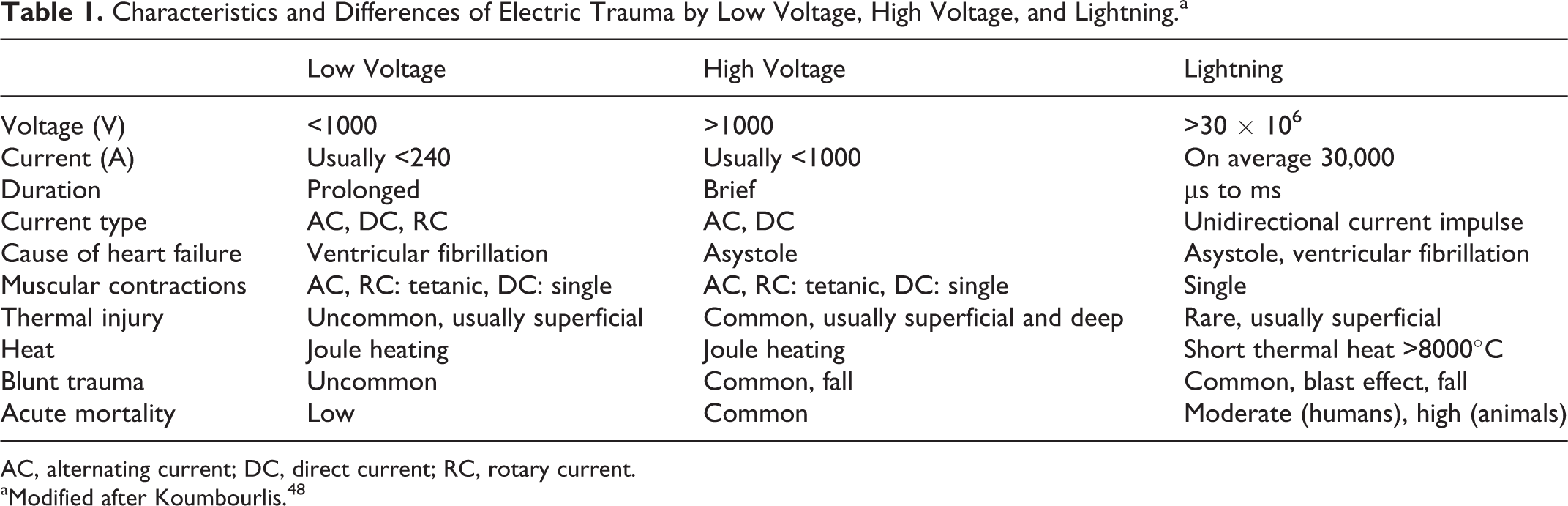
AC, alternating current; DC, direct current; RC, rotary current.
aModified after Koumbourlis. 48
Electrical Parameters and Formulas Relevant for Electrical Accidents.a
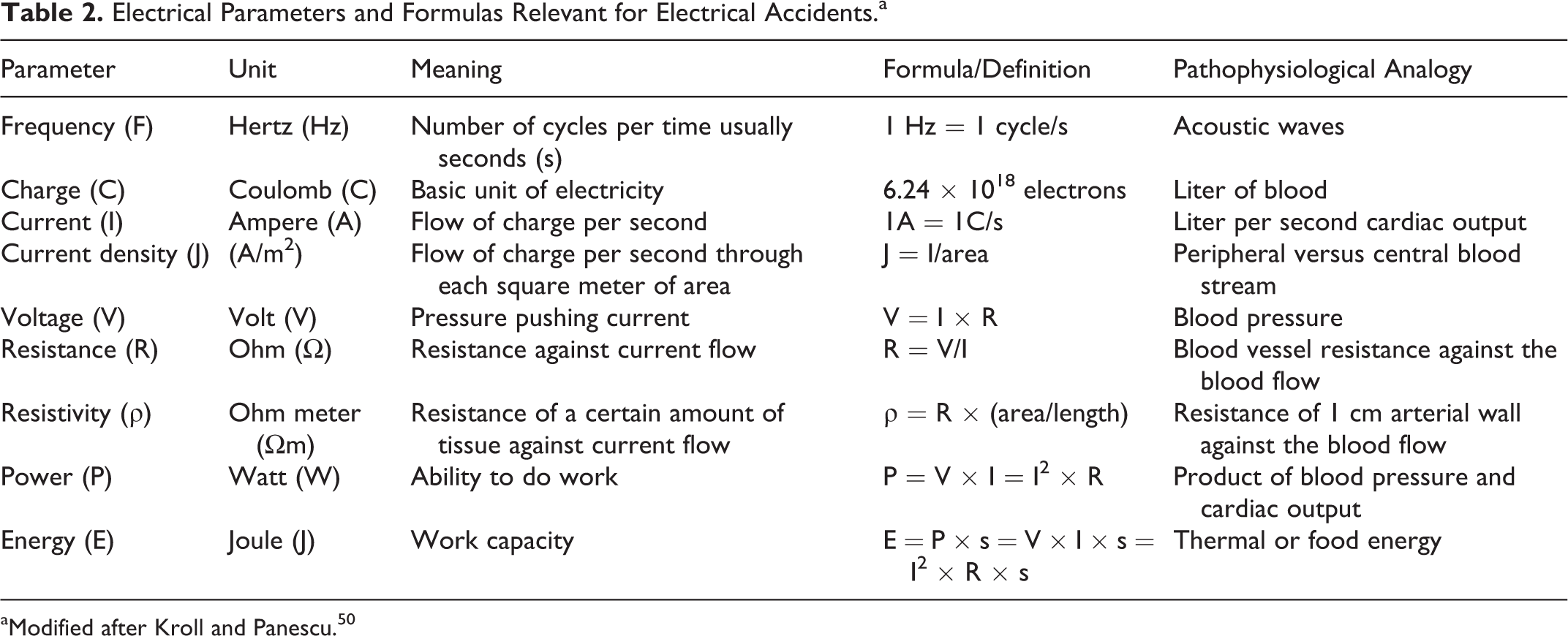
aModified after Kroll and Panescu. 50
Effects of Different Current Intensities.a
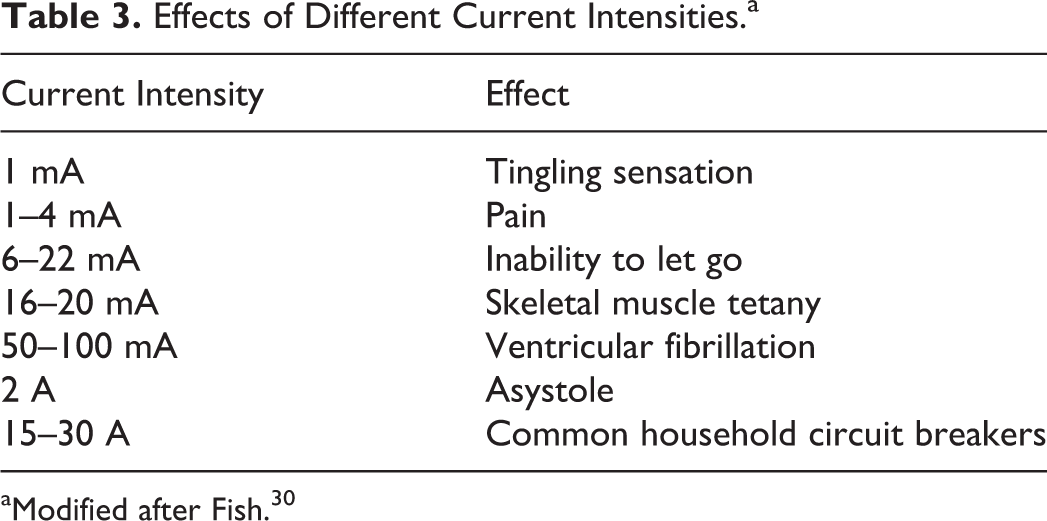
aModified after Fish. 30
Current and resistance are interrelated by Joule’s first law. When a current flows, the thermal energy that can be generated is proportional to the resistance and the square of the amperage. For a current to flow, the resistance (measured in Ohms [Ω]) of the tissues in contact with the electricity has to be overcome. The higher the resistance, the higher is the potential for transformation of electrical into thermal energy. The resistance is determined by the physical and chemical properties of the material or tissue itself and environmental factors. Moisture decreases resistance, and carbonization during burning increases resistance. 29 Skin (keratin) is the main resistor to the current flow into the body. In experimental electrocution of rats, a 3-phase response of the current was found. 39 In the first phase, there is a slow rise in current as a result of the progressive destruction of the skin barrier. The second phase is characterized by an abrupt current increase after complete breakdown of the skin. The current ceases to flow in the third phase after tissue fluids are volatilized by electrothermal heat, resulting in desiccation and carbonization with increasing resistance. Typical resistance of dry human skin can reach 100 kΩ or more. Under wet conditions (sweating, rain, showering, bathing), skin resistance may drop to 1 kΩ. Mucous membranes of humans have a resistance of approximately 100 Ω, and internal body resistance is around 300 Ω. The situation in animals is similar. Resistance of dry skin was found to be 375 kΩ in cattle 53 and 350 to 544 kΩ in chickens. 94 Wet skin has a resistance of 1.1 kΩ in cattle. 53 Internal body resistance was 139 to 437 Ω in cattle, 54 644 to 1031 Ω in pigs, 58 and 500 to 900 Ω in dogs. 87 Different resistances exist in tissues: bones, fat, and tendons have the highest resistance, followed by skin. The lowest resistances are present in blood, nervous tissues, muscle, and mucous membranes. The total body resistance in electrical accidents is equal to the sum of the internal resistance and the skin resistances at the contact points both to the source of the electricity and to the ground. 32,39,69,98
The type of circuit also influences the extent of damage. Alternating (AC) and rotary (RC) currents are about 3 times more dangerous than direct current (DC), because they are able to trigger continuous muscle contractions (tetany). Tetany occurs when the muscle fibers are stimulated between 40 and 110 times/s. Usual frequencies for household electricity are 50 (Europe, eastern Japan) to 60 (United States, western Japan) Hz. Consequently, DC currents tend to cause a single muscle spasm, often throwing the victim away from the contact. In contrast, AC or RC currents tend to induce muscular tetany, immobilizing the victim at the contact, thereby increasing the duration of the current flow. 32,39,69,98
The terms entry and exit wounds are often used to describe electric injuries to the skin. This is true for the unidirectional current flow in DC accidents. However, the terms source and ground contact points are more appropriate in the case of AC or RC accidents. 32
The longer the duration of contact of the victim with electricity, the more energy can cause electrothermal heating of tissues. This increases the degree of tissue destruction at the skin contact points and in inner organs. 32,39,69,98
The larger the size of the contact area, the less energy acts upon the tissue per square area. The same current producing thermal necrosis in the skin when the contact is made by a pinpoint electrode may cause no lesions when the contact area is large, which is the usual circumstance in electrocution of fishes 77 or in bathtub accidents in humans. 32,39,69,98
The current pathway through the body determines the localization and the type of tissue injuries as well as the degree of electrothermal heating. Current pathways through the heart or brain are the most dangerous ones, since they disrupt the vital physiologic electrical functions of these organs. With high current densities, the tendency of the current to flow through the tissue with the lowest resistivity is overcome and the body or an extremity functions as a volume conductor with homogeneous resistivity in which current flows through tissues indiscriminately. 69 Joint areas often exhibit the most severe injuries in high-voltage accidents since there is less cross-sectional area, and consequently, current density is higher than in the muscular parts. In addition, the proportion of tissues with higher resistance (eg, bone, tendons) is higher. The same principle leads to skin burns, when the contact areas are small and the current is concentrated at the source and ground contact points. 32,39,69,98 There is no rule regarding internal electrothermal injuries. They can occur anywhere along the current path even far away from the skin contact points and are usually noncontiguous with normal and injured tissue segments next to each other. 10,69 The length of the pathway between the contact points is inversely proportional to the electrical field strength. A high-voltage accident with 20 kV (eg, contact with overhead power line) and contact points at the head and the feet may have a similar field strength than a low-voltage accident with 120 V (eg, household circuit), when the contact points are next to each other (eg, chewing on electrical cords). Despite the same electrical field strength, the amount of tissues at risk for electrothermal injury differs dramatically in both situations. 32,39,69,98
There are different types of electrical contacts. The danger of step and touch potentials is discussed in the lightning section of this review. Briefly, step potentials occur when a faulty electrical device is grounded and current passes along the surface into the ground from the faulty device to the periphery. This grounding results in electrical potential differences along the current path, and consequently partial currents may flow through the body of a victim that is in contact with the ground along the potential gradient. 32 Touch potentials occur when a victim is touching a faulty electrical device and a part of the current passes over and/or through the body. 32 Similar to the situation in lightning accidents, 4-legged animals seem to be more susceptible to the danger of step potentials than humans. 36,62 Low-voltage accidents are usually direct contact situations. In high-voltage accidents, arcing can occur, and it is the most devastating type of injury. An electrical arc involves passage of electricity through the air. If the arc does not directly contact a victim, indirect injury can result from step and touch potentials or from heat since an arc easily reaches temperatures >2500°C. When the arc contacts the victim, severe flash fire-like burns may result from the heat of the arc, electrothermal heating of the tissues, and formation of flames after ignition of clothing, hairs, feathers, or environmental materials. 32,39,69,98
Morphological Findings in Electrical Injury
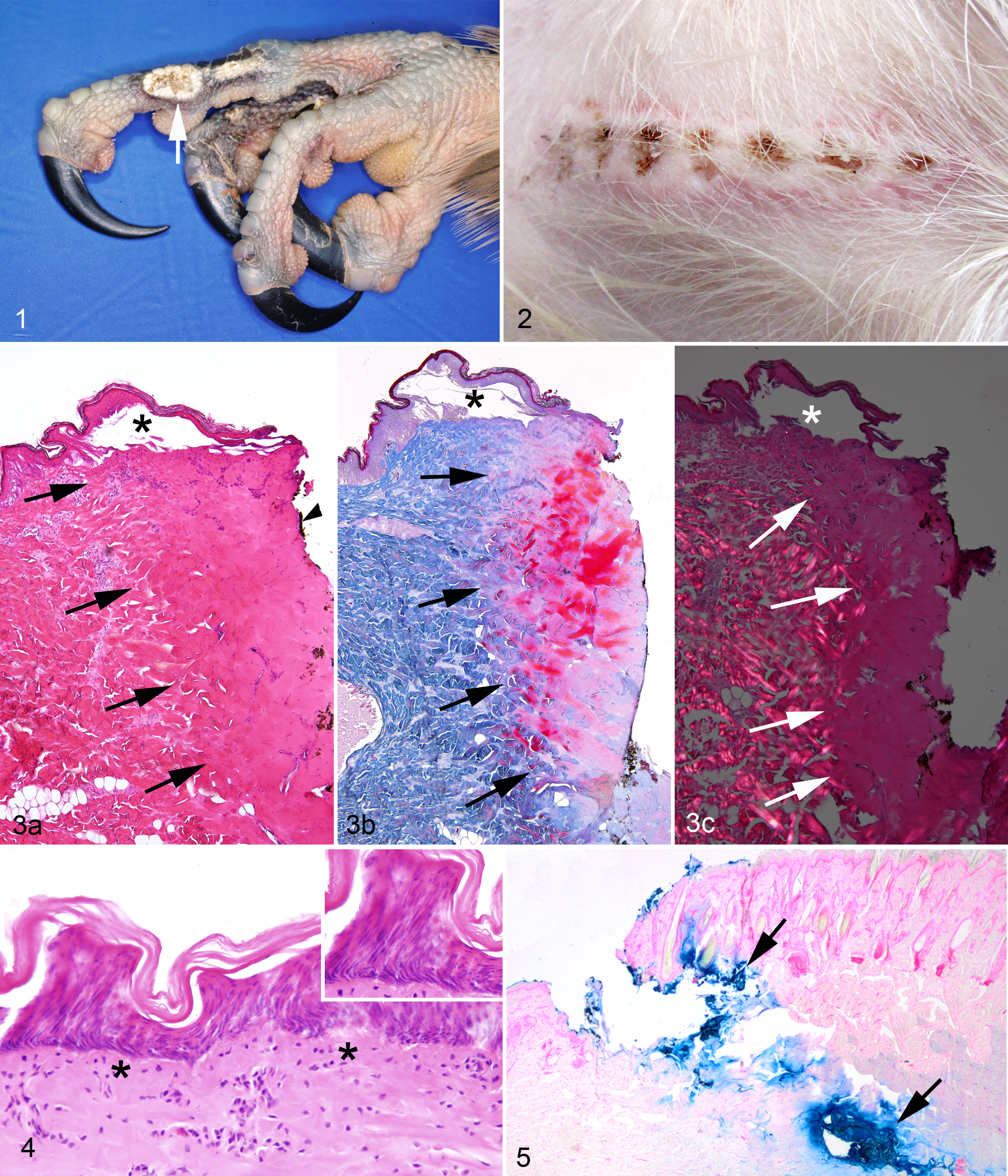
In general, victims of low-voltage, short-contact accidents tend to have milder lesions than those of high-voltage, prolonged (seconds) contact accidents. 69 In a case study in humans, electrical burns were absent in nearly half of the low-voltage victims, which showed only signs of acute cardiac failure or asphyxia at necropsy. 98 Inexplicable early or abnormal regional development of rigor mortis (eg, affecting only 1 arm or leg) may hint at electrocution since the tetany from prolonged electrical contact usually accelerates development of rigor. 98 Similar to the situation in humans, accidents in farm animals involving low-voltage power lines may produce only signs of acute circulatory failure. 60 Raptors and monkeys are especially at risk for high-voltage accidents involving overhead power lines, and electrothermal lesions are often severe in these animals (Fig. 1). 51,56
External Injuries
External injuries are essentially electrothermal burns and are usually present in high-voltage accidents or in low-voltage accidents with small contact areas and/or prolonged contact durations. Depending on the time and the amount of the current involved, they can be first- to fourth-degree burns. 19,69 Identification of small skin lesions, so-called current marks, can be difficult, and the use of an alternate artificial light source during external inspection of the victim at necropsy may facilitate their detection. 95 Singed hairs, feathers, and skin develop photoluminescent properties absorbing light of a certain wavelength delivered by an alternate light source and emitting light of a longer wavelength, which can be detected with goggles or cameras equipped with screening filters. 95 Current marks are described as crater-like elevations of the skin around a sunken center. 26 They are macroscopically surrounded by a pale, porcelain-like or alabaster-colored zone and have a raised border (Fig. 2). Microscopically, dermal collagen of the current mark appears hyalinized (Fig. 3a) with abnormal staining properties (eg, using azokarmin-aninilin dye) (Fig. 3b) and loss of birefringence under polarized light (Fig. 3c). Intra- and subepidermal blister formation (honeycomb pattern) is common (Fig. 3). Using a hematoxylin-eosin (HE) stain, coagulated collagen fibers of the current mark may show basophilia (Fig. 4). Epidermal cells and nuclei may display a fishbone-like elongation (Fig. 4). 26
The morphology of these wounds has been extensively studied in humans and animal models in the hope of detecting lesions that could differentiate electrothermal and thermal wounds. 23,68,75,81,86,90 However, the effects of electricity, heat, freezing, and simple mechanical force can produce similar lesions. Therefore, interpretation of lesions has to be done cautiously.
Microscopic particles (beads) of metal from conductors may be transferred to the skin (so-called metallization) in electrical accidents, although not in every victim (Fig. 5). 26 The beads themselves do not offer clues about their origin because it is not possible to differentiate metallic arc beads formed by electric arcing from melt beads formed by thermal heating as the result of fires. 6 The presence of metallic beads on the skin of victims of electrical accidents and fires can result from both processes, as was shown in experiments on animal and isolated human skin using red-hot wires. 12,13,68,75 However, there seems to be a tendency that electrically induced metallizations are concentrated at the margins of the skin wound, whereas metallization caused by heat is diffusely distributed throughout the lesion. 12,13,25 Tremendous efforts have been made to detect metallization with different analytical techniques, including atomic absorption spectrometry, 1,41 acroreaction test, 2 electrography, 57 chemical reagents sprayed on the skin, 67 laser microprobe, 42 transmission electron microscopy, 84 variable-pressure scanning electron microscopy (SEM) with an energy-dispersive x-ray microanalyzer, 46 histology with energy-dispersive x-ray spectroscopy, 82 atom emission spectrography, 45 and histochemistry. 40,68,75 Histochemistry, as a widely used and available technique in diagnostic pathology laboratories, focuses on the demonstration of metallic ions (usually iron or copper) transferred to the skin from metallic conductors. Perl’s Prussian blue for iron and rubenaic acid technique or dimethylaminobenzylidine-rhodanine method for copper are the most commonly used histochemical techniques. Careful interpretation of the results is necessary since these reactions may be positive even after simple mechanical contact with metals, such as oxidized copper or iron wires, 26,75 and also false-negative results are reported. 40,75 However, in case of electrocution, metallization reaches deeper parts of the skin (as far as the dermis), whereas in heat-induced lesions or after mechanical contact, metallization tends to remain superficially in the stratum corneum. 45,75 The diagnostic sensitivity of the methods using formalin-fixed, paraffin-embedded tissue sections is low. 40 Better results can be obtained with cryostat sections from specimens snap frozen in liquid nitrogen or fixed in ethanol. 75 Animal experiments in rats have shown that histochemistry can also be used on skin biopsies in survivors as long as the superficial wound crust is still present (in experiments until day 5). 75 In conclusion, metallization of the skin can be found in victims of electrical accidents. However, the results have to be carefully interpreted and other possible explanations for the presence of metals in the skin (fire, mechanical contact with metals or metallic dust) have to be ruled out before a final diagnosis is made. In addition to tracing of metallization in the skin lesions, metallic conductors involved in electrical accidents can be investigated for the presence of DNA from the victim since biological material is regularly transferred from the victim to the conductor even in low-voltage accidents. 65 In severe autolytic cases with detached epidermis, SEM of the dermal surface may help to detect indicative alterations to the papillary morphology caused by electricity. 85
Internal Lesions
Internal injuries are rare in low-voltage accidents. 69 If present, they seem to be caused by electroporation. Osmotic swelling of the tissues, vacuolization, and necrosis of muscle cells develop after structural damage to the cell membranes, and the resulting edema may be diagnosed in vivo by magnetic resonance imaging. 35 Tissue injury by electrothermal heating is often present in various internal organs of victims after high-voltage accidents and prolonged contact durations in low-voltage accidents. Their distribution depends on the pathway of the current. Common complications in survivors are rhabdomyolysis and myoglobinuria or hemolysis and hemoglobinuria, with resulting renal injury and failure. Rhabdomyolysis and compartment syndromes as a result of vascular ischemia and muscle edema may develop far away from the skin contact points and may be severe even in cases with minimal external current marks. 19,31,69 Since blood is a good conductor of electricity, current tends to flow along the blood vessels, causing damage to endothelial cells and myocytes, resulting in thrombosis. These lesions may develop at any time after the accident, even after several weeks. 30,69 Experimental models have been developed to study the effects of these vascular lesions. 17,19,55,63 The reduced tissue temperature due to thrombosis and ischemia may be of clinical importance as it can be visualized by infrared thermography, allowing low-stress distant diagnostics in wild animals like raptors. 59
In a recent study of local and systemic in vivo responses to electrocution in rats, first insights were gained into the signaling networks involved in the response of the body to electric injuries as genes involved in dermatological diseases and connective tissue networks were upregulated, whereas genes involved in cellular movement networks and signaling and nervous system networks were downregulated. 79
Central nervous signs are common in victims of electrical accidents if the current pathway goes through the brain or spinal cord. 69 Spinal cord injury after electrocution has also been described in a dog. 72 Animal models show that electrocution leads to pyramidal cell loss, 52 reduction in Purkinje fibers, 37 leptomeningeal hemorrhages and disruptions, 73 and hemorrhages, disruptions, cavities, and neuronal loss in the spinal cord. 76 Myocardial necrosis and infarction are rare in human victims of electrocution 69 but have been reported in cattle. 66 Hemorrhages, myocardial contraction bands, myocardial necrosis, and vascular thrombosis, especially in the area of the atrioventricular node, have been experimentally induced in dogs. 96 Changes in cardiac protein expression (eg, Cx43, Ang II, ET-1, type III collagen, c-fos) have been detected in electrocuted rats. 33,38 Cataracts developed in approximately 6% of human victims of high-voltage accidents involving the head. 69 They have been reported in a great horned owl, 24 and lens vacuoles followed by anterior subcapsular cataracts were reproduced in a rabbit animal model. 83 Skeletal injuries, including femoral fractures due to strong muscle contractions or from falling, are sometimes seen in humans. 31 Fractures of the lumbar vertebral column are common in electrocuted fishes, 77 as are fractures of the vertebral column, sacrum, pelvis, and femurs in electrocuted pigs. 11,34,47,80 However, as in humans, animals dying from the disruption of vital electrical functions of the body often show only signs of acute circulatory failure at necropsy. Common lesions are acute venous congestion of shock organs, petechiae, and ecchymoses in the trachea, heart, and lung, often combined with inexplicable early rigor or bloating of the carcasses. 34,60,93 Petechiae have also been frequently described in humans, 43 and they can be reproduced by the hypotensive effects of intracardiac electrocution in rabbits. 16
In conclusion, careful investigation of the victim and its environment has to be carried out to make a final or most likely diagnosis of electrocution since morphological lesions tend to be inconsistently present or even absent depending on a multitude of unpredictable individual, technical, and environmental factors.
Lightning Injuries—General Aspects
Every year, thousands of farm and wild animals suffer from lightning strikes worldwide. 36 Often the incidents are only reported in the daily newspapers. If postmortem investigations take place, mostly in farm animals, usually the local practitioner is commissioned to issue a death certificate for an insurance company. 15,92 Only few cases are submitted for necropsy to diagnostic veterinary pathology facilities. This situation results in a relative paucity of articles in peer-reviewed journals. Animals are more often affected by lightning than humans as they usually remain outdoors even under thunderstorm conditions. In addition, they are much more vulnerable to receive lightning injuries due to the dangerous potential differences (step potential) that may be built up between their feet in the event of nearby lightning. 36 Lightning accidents in humans result in a mortality rate of 10% to 30%. 69,71 The mortality rate in animals compared to humans is unknown. However, in the case of a group of children struck by lightning, dogs sleeping in the same tent as the children had a considerably higher mortality rate of 57% (4 of 7) versus 14% (4 of 28). 18
Mechanisms of Lightning Injury
Lightning causes injuries principally in 6 different ways (Table 4): direct strike, side flash, touch potential (contact injury), upward streamer, step potential (ground current), and blast. 36,69,71
Frequency of Different Mechanisms of Injury in Human Lightning Victims.a
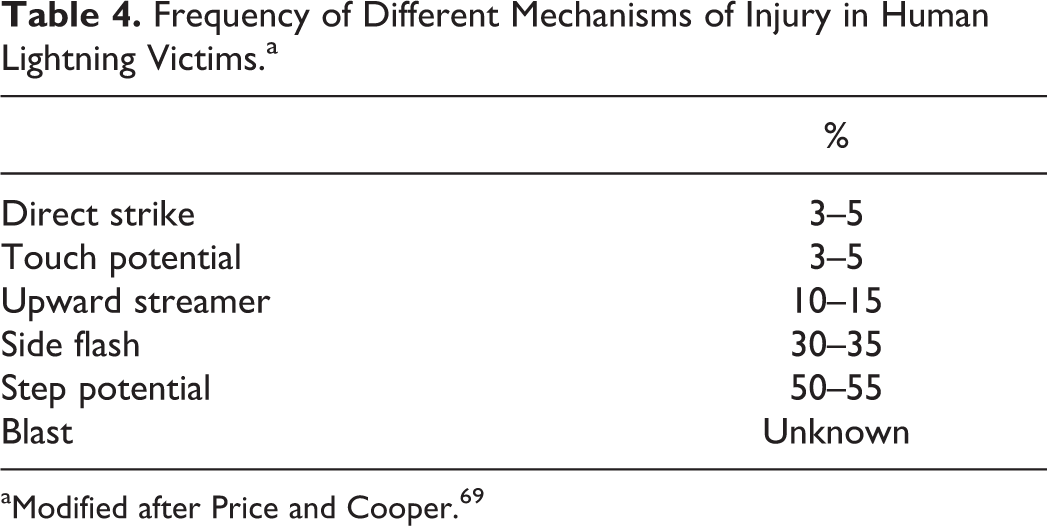
aModified after Price and Cooper. 69
Direct Strike
If victims are directly hit by the lightning flash, the entire current may pass over and/or through the body, which is often fatal. 36,69,71
Side Flash
A side flash involves currents jumping from nearby objects struck by the thunderbolt onto the victim. Under such instances, the entire lightning current or a part of it may pass over and/or through the body. 36,69,71
Touch Potential
A touch potential or contact injury occurs when lightning strikes an object, which the victim is touching, and a part of the lightning current may pass over and/or through the body. 36,69,71 This seems to be the usual cause of a lightning accident in farm animals kept indoors in stables. 4
Upward Streamer
Thunderbolts carry large amounts of usually negative charges to the ground, creating intensive electrical fields in their vicinity. In response, many objects in the surrounding area send positively charged electrical streamers toward the negatively charged electrical field of the thunderbolt for potential equalization, which may give rise to electrical currents passing through the body of a nearby victim and may cause paralysis or even (depending on the heart cycle) cardiac failure. 36,69,71
Step Potential
The step potential or ground current is the most common lightning hazard in 4-legged animals. When lightning strikes the earth, current passes along the surface and into the ground from the strike point to the periphery. This results in electrical potential differences along the current path, and consequently partial currents may flow through the body of a victim, which is in contact with the ground along the potential gradient. These currents enter the body at 1 pair of feet and leave at the other in a cranio-caudal or latero-lateral direction. Thereby, they usually flow through the heart in 4-legged animals in contrast to humans and may induce arrhythmias, ventricular fibrillation, or asystole. 36,69,71 Usual lightning currents of 20 kA may cause a step potential difference of 1.5 kV over a step length of 50 cm at 10-m distance from the point where the lightning hits the ground, resulting in 2- to 3-A current flow through the body for a 10-μs period. 10 Accidents caused by step potentials can occur at up to a 200-m distance from the ground strike point. 99
Blast
Lightning generates a shock wave (thunder), which can reach a pressure greater than 100 bar, 10 by massive expansion of air in the lightning channel creating primary (ruptured tympanic membranes, traumatic injury of inner organs) or secondary (blunt trauma from falling) blast traumata in the victim. In a case study on human lightning victims, primary blast injuries typically included uni- or bilaterally ruptured tympanic membranes in 17 of 21 (81%), aortic injury in 3 of 45 (6.7%), cardiac injury in 4 of 45 (8.9%), and head injury in 4 of 45 (8.9%) victims, respectively. 97 In an experimental study on rats, similar primary blast injuries to inner organs could be reproduced by the concussive effect of water vaporization due to flash over lightning in wet animals. 64
When lightning strikes, a very large potential difference between the body and the ground is established (Table 1), resulting in a brief, massive current flash over and/or through the body and in induction of secondary electrical currents around the magnetic field pulse of the lightning. The duration of the primary lightning current and the secondary electrical currents is generally too short to cause skin breakdown and lesions by Joule heating, as is characteristic for electrical injuries. 10,22,71 However, it is sufficient to damage the cells by other electrical mechanisms such as electroporation and electroconformational changes to membrane proteins and lipid bilayers, 10,89 resulting in unregulated leakage of ions through the damaged cell membrane and ultimately cell death when membrane repair mechanisms fail. 71 Since cell length is directly proportional to transmembrane potential, skeletal muscle and nerve fibers are especially susceptible to electroporation due to reorganization of cell membrane lipids into pores as a consequence of the imposed transmembrane potential. 71
Morphological Findings in Lightning Injury
The presence or absence of lesions in victims of lightning accidents cannot be predicted because of the multitude of individual and environmental influencing factors. Consequently, identical injury patterns do not exist, and the lesions, if present at all, are different in every single case. 10 In general, victims injured by direct strike, touch potentials, side flashes, or blast trauma tend to have lesions, whereas death by step potential may produce only signs of acute circulatory failure and sometimes secondary blunt traumata from falling.
External Injuries
External injuries, so-called lightning burns or marks, are often present in lightning victims along the path of the current flash over the body in humans and animals (Fig. 6). In a human case study, 97 91% of the victims had burns. In animals, external lesions seem to be less frequent, occurring in only 43% of lightning fatalities. 92 Lightning burns can be divided into 4 categories; however, combinations may occur. 22
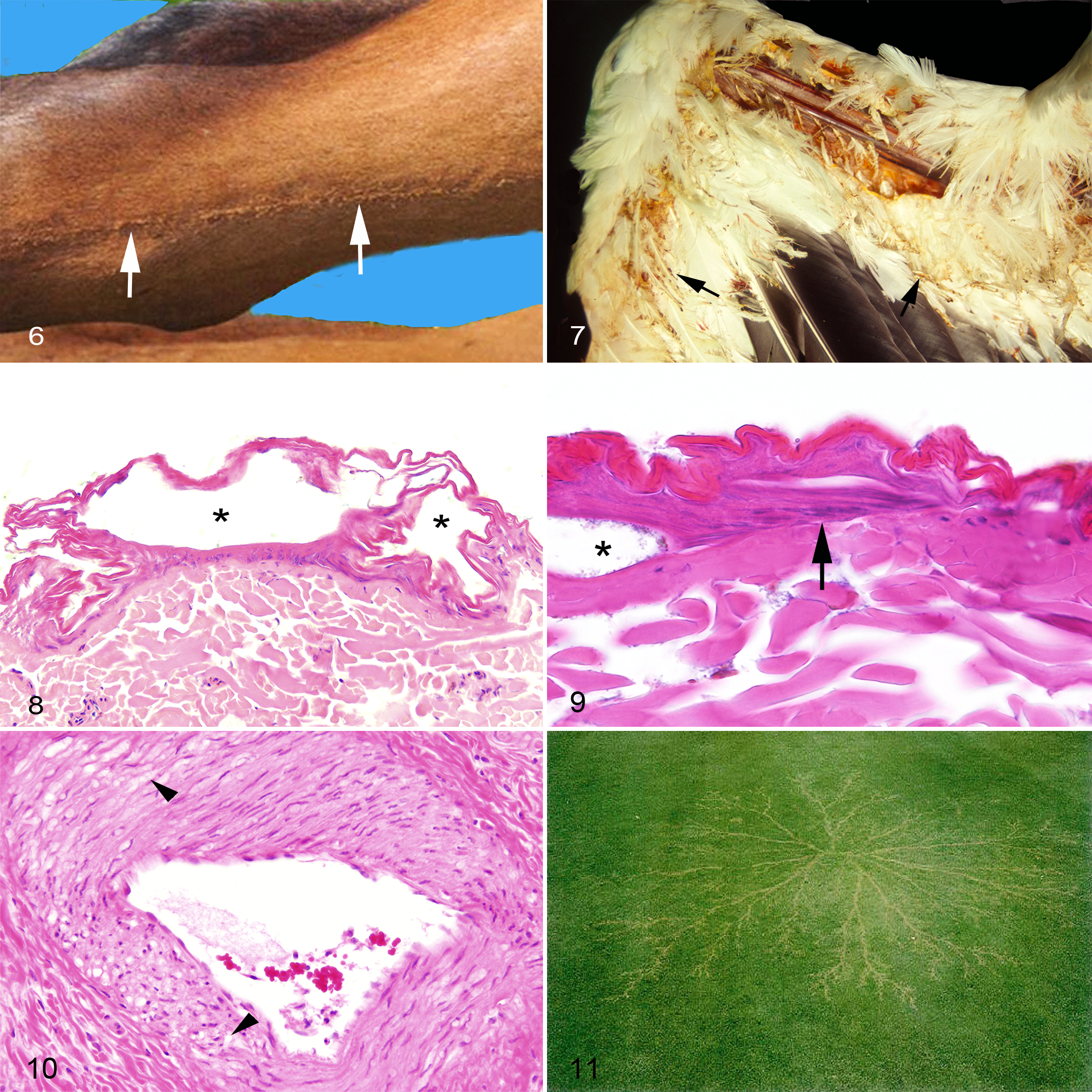
Linear lightning mark, haired skin, horse. Equine lightning victim with curled hairs at the cranial aspect of the right hind limb (arrows).
Linear burns are usually first- or second-degree burns found in wet areas (Fig. 7). They seem to be caused by steam originating from vaporization of sweat and rainwater. Histopathologically, the epidermis may show blister-like intraepidermal cavities (Fig. 8) or separation from the dermis, and volar keratin may be vacuolized, indicating that vaporization of water represents the main mechanism of skin destruction. Typical nuclear elongations in epidermal cells, indicative of electrothermal injuries, are only sporadically present (Fig. 9). Arterial myocytes show elongated wavelike nuclei, cytoplasmic vacuolization (Fig. 10), and single karyopyknotic cells.
Punctate burns are multiple circular burns resembling cigarette burns and may be of first to third degree but are usually too small to require skin grafting.
Thermal burns originate from ignited clothing or heated metal.
Keraunographic markings are regarded as pathognomonic lightning skin lesions in humans (syn.: Lichtenberg figures, erythematous branching patterns, arborization, ferning, feathering burns, etc). 20,21,70,97 However, they may also rarely be present in victims suffering from high-voltage accidents. 5,98 Keraunographic markings were found in about 33% of human lightning victims. 97 The nature of these lesions is not understood. They develop within 1 hour of the strike, are painless pink-red to brownish markings, and usually fade and ultimately disappear within 24 to 48 hours after the incident in survivors and on corpses, leaving no residual lesions. 20,21,70 Keraunographic markings are not associated with histological lesions and do not correspond to vascular or neuroanatomic patterns of the skin. 21,70,97 However, they can be reproduced in animals and seem to follow the lines of the surface flashover in lightning experiments. 22 They are easy to identify in humans with fair, sparsely haired skin, but they are rarely reported in animals. 4 Recognizing them when the skin is pigmented, densely haired, or feathered may require skinning of the whole carcass. Furthermore, victims need to be necropsied within the first few hours after death, and suitable light may be necessary to detect these markings because of their transient nature. 20 Keraunographic markings may also be found on the ground (Fig. 11) near human or animal victims, suggesting lightning as a probable cause of death. 78,97
Discrete entry and exit wounds of lightning currents are uncommon in humans 22 and animals, having usually been found on the soles of the hooves. 4,15,27,91 The hooves are the most likely transfer points of a current passing through the body of an animal into the ground and therefore need to be carefully examined in suspected cases of lightning injury or electrocution. 91 Special emphasis should be given to the coronary bands and soles since they are points of minor electrical resistance compared to the horn capsule.
Singed hairs or feathers following the path of the current flash over the body are regularly found in human and animal lightning victims. 3,27,92,100 The use of an alternate light source emitting variable wavelengths of 400 nm, 450 nm, 485 nm, 530 nm, 570 nm, and 700 nm during macroscopic investigation of the body surface may increase the detection rate in victims with subtle changes. 95
Internal Injuries
Acute internal injuries may involve nearly every organ in humans but mainly the central nervous system and the heart. However, due to the short exposure time to the lightning flash (Table 1) internal lesions are rare (in approximately 3% of victims) compared to high-voltage electrical accidents, where they regularly occur. 22 In a sheep model, 3 it was shown that lightning may enter the cranial orifices, leading to a passage of the current directly into the brainstem and causing periaxonal ballooning of the myelin sheaths at the floor of the fourth ventricle in the region of the respiratory control centers. In the heart, wrinkling of the myofibrils and patchy foci of necrosis were induced in the same model. 3 In another lightning model in pigs, 44 surviving animals had similar small to transmural necrotic foci in the myocardium and were suffering from ventricular or supraventricular extrasystoles. For the other pigs in the study, the cause of death was cardiac asystole and/or ventricular fibrillation. 44 Similar to the situation in electrocution, pigs often acquire vertebral or pelvic fractures, 9,15,27,91 which were speculated as being caused by strong muscular contractions resulting in a “jackrabbit” takeoff during the shock. 74 Similar fractures of the vertebral column have been reported in koi carp struck by lightning. 7 However, only signs of acute circulatory failure may be found at necropsy 15,27,92 since the most common form of lightning injury in animals are step potentials, leading to death by disruption of the physiologic electric functions of the body. 36
Delayed internal injuries seem to be common in humans, mainly involving the central, peripheral, and autonomic nervous system, eyes, and ears. 22 However, conflicting evidence is reported by other authors. 61 In animals, central nervous and other disturbances are frequently seen in survivors. 15,27,36 These may include vestibular signs, 8 corneal edema, 28 and cerebrocortical necrosis with visual impairment. 14
In conclusion, the statement of Brightwell 15 is still true that in cases of lightning strike, diagnosis has to be based on a combination of strong circumstantial evidence such as damaged trees or keraunographic markings on the ground near the victims, search for indicative morphological lesions, and elimination of other disease processes by thorough necropsy of well-preserved carcasses. Sometimes when animal carcasses are too autolysed for necropsy or found in remote areas of the wilderness, where in-depth pathological examination is not possible, the diagnosis has to rely on typical findings at the site of death (eg, circumstances at the death scene and keraunographic markings in the environment). 78 Consideration of lightning location data in countries where meteorological services register these incidents may further increase the diagnostic specificity. 92
Concluding Remarks
Investigations of electrical and lightning injuries are relatively infrequent in diagnostic veterinary pathology. In most cases, accidental contacts to electrical currents are the cause of death. A final diagnosis requires detailed information about the circumstances at the site of death and a thorough morphological workup of every individual case. Often tiny pinpoint lesions like the source and ground current marks may be the only clue for solving the etiopathogenesis of cases with electrical alterations. The diagnostic pathologist should be aware of the spectrum of lesions caused by electrical currents and lightning strikes as well as possible additional investigations, such as the presence of DNA on the conductor, to confirm the diagnosis of an electrical injury.
Footnotes
Declaration of Conflicting Interests
The author(s) declared no potential conflicts of interest with respect to the research, authorship, and/or publication of this article.
Funding
The author(s) received no financial support for the research, authorship, and/or publication of this article.