




Abstract
Keywords
The story of Veterinary Pathology begins with an extraordinary veterinarian, Leon Z. Saunders. Intelligent, widely read, and incredibly inquisitive, Saunders was to lead efforts to found the journal. Viewing conversation and criticism as art forms, he was a model for many of us in the give and take of scientific discussion. Born Leon Zlotnick in Winnipeg in 1919, he passed through St. John’s Technical High School and Wesley College to graduate from the Ontario Veterinary College (OVC) in 1943. The story of Veterinary Pathology, however, is more complex because it involves convergence of several events, institutions, and people—the emergence of stellar pathologists in the early 1900s, the postwar economic boom after 1945, growth of veterinary pathology in the 1950s, and a grant from the US government to support the journal in 1964. Thus it is that I preface this story with the status of institutions and people who were to influence the origins of Veterinary Pathology and the forces that transformed aspiring veterinary pathologists.
1930s: Setting the Stage
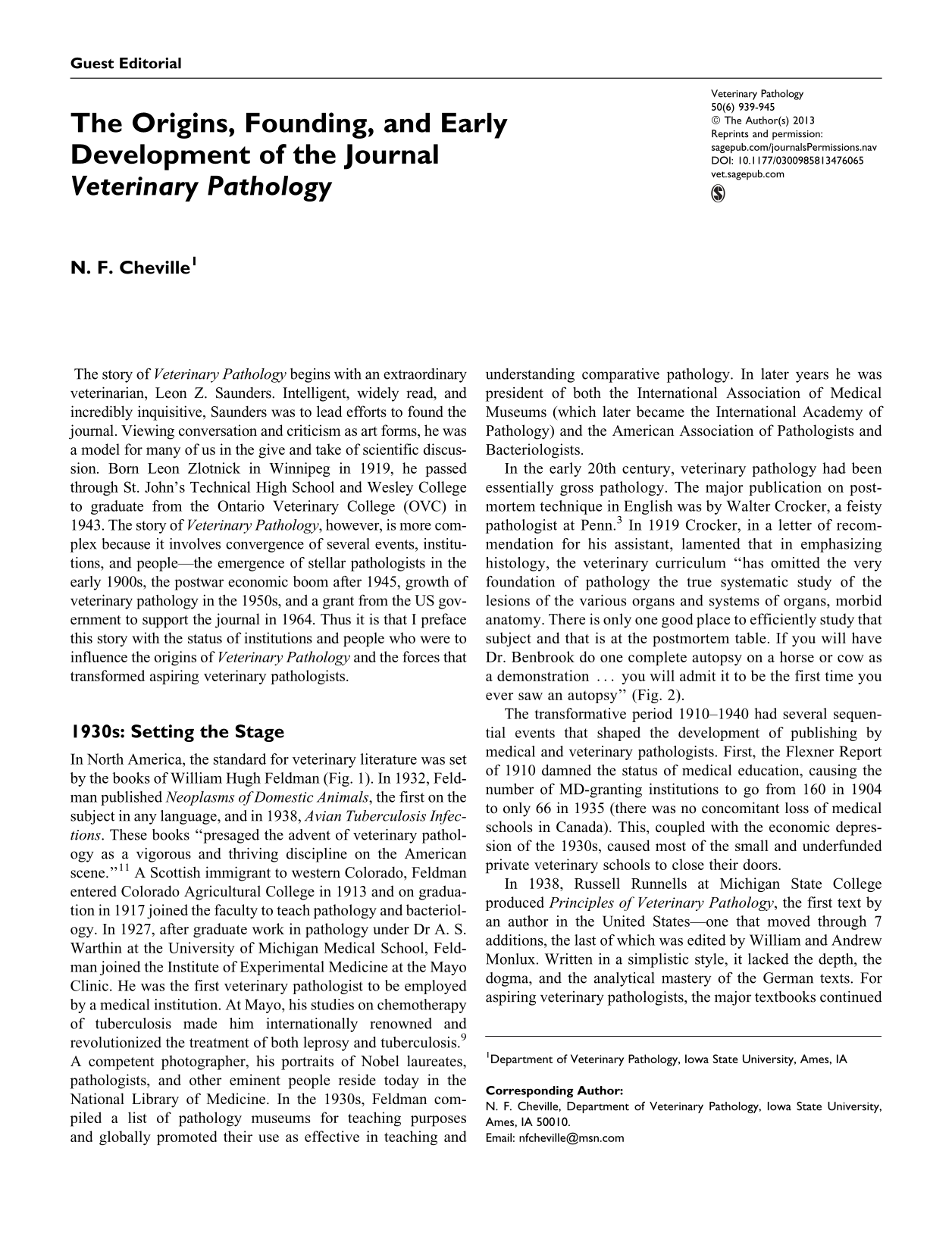
In North America, the standard for veterinary literature was set by the books of William Hugh Feldman (Fig. 1). In 1932, Feldman published Neoplasms of Domestic Animals, the first on the subject in any language, and in 1938, Avian Tuberculosis Infections. These books “presaged the advent of veterinary pathology as a vigorous and thriving discipline on the American scene.” 11 A Scottish immigrant to western Colorado, Feldman entered Colorado Agricultural College in 1913 and on graduation in 1917 joined the faculty to teach pathology and bacteriology. In 1927, after graduate work in pathology under Dr A. S. Warthin at the University of Michigan Medical School, Feldman joined the Institute of Experimental Medicine at the Mayo Clinic. He was the first veterinary pathologist to be employed by a medical institution. At Mayo, his studies on chemotherapy of tuberculosis made him internationally renowned and revolutionized the treatment of both leprosy and tuberculosis. 9 A competent photographer, his portraits of Nobel laureates, pathologists, and other eminent people reside today in the National Library of Medicine. In the 1930s, Feldman compiled a list of pathology museums for teaching purposes and globally promoted their use as effective in teaching and understanding comparative pathology. In later years he was president of both the International Association of Medical Museums (which later became the International Academy of Pathology) and the American Association of Pathologists and Bacteriologists.
William Hugh Feldman, founder and first president of the American College of Veterinary Pathologists.
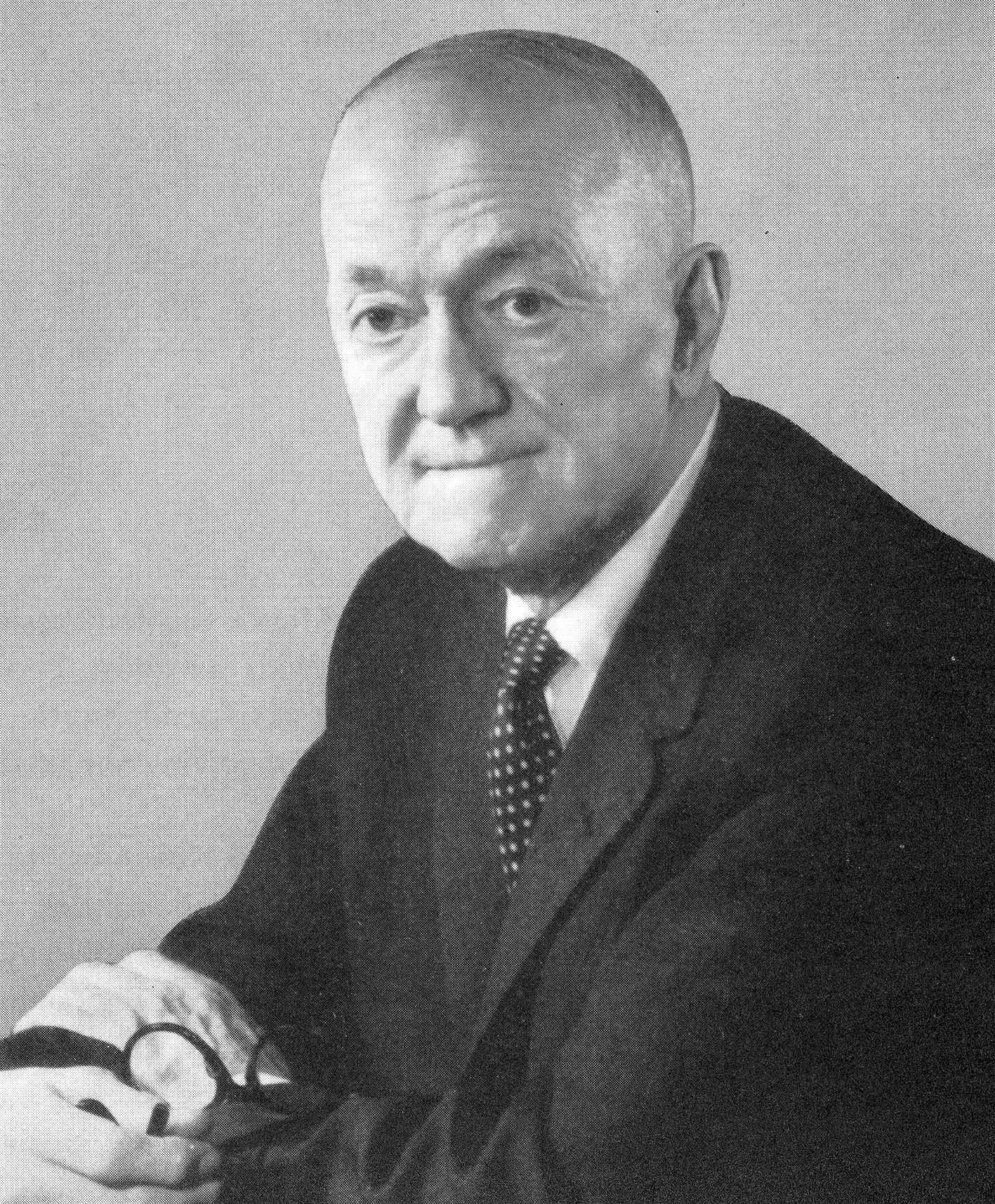
In the early 20th century, veterinary pathology had been essentially gross pathology. The major publication on postmortem technique in English was by Walter Crocker, a feisty pathologist at Penn. 3 In 1919 Crocker, in a letter of recommendation for his assistant, lamented that in emphasizing histology, the veterinary curriculum “has omitted the very foundation of pathology the true systematic study of the lesions of the various organs and systems of organs, morbid anatomy. There is only one good place to efficiently study that subject and that is at the postmortem table. If you will have Dr. Benbrook do one complete autopsy on a horse or cow as a demonstration … you will admit it to be the first time you ever saw an autopsy” (Fig. 2).
Extension meeting for practicing veterinarians, California Polytechnic Institute, 1947. Edward Benbrook demonstrating proper postmortem techniques.
The transformative period 1910–1940 had several sequential events that shaped the development of publishing by medical and veterinary pathologists. First, the Flexner Report of 1910 damned the status of medical education, causing the number of MD-granting institutions to go from 160 in 1904 to only 66 in 1935 (there was no concomitant loss of medical schools in Canada). This, coupled with the economic depression of the 1930s, caused most of the small and underfunded private veterinary schools to close their doors.
In 1938, Russell Runnells at Michigan State College produced Principles of Veterinary Pathology, the first text by an author in the United States—one that moved through 7 additions, the last of which was edited by William and Andrew Monlux. Written in a simplistic style, it lacked the depth, the dogma, and the analytical mastery of the German texts. For aspiring veterinary pathologists, the major textbooks continued to be Hutyra and Marek’s Spezielle Pathologie und Therapie de Haustiere (1906) and Nieberle and Cohrs’ Lehrbuch der Speziellen Pathologischen Anatomie der Haustiere (1930). But World War II halted European publishing and printing capacities, and when it ended in 1945 the forces of veterinary pathology in North America were changed in astonishing ways.
The enormous contributions of veterinarians to animal and human health in World War II (on both sides of the battle) led to the expansion of veterinary schools. In English-speaking institutions of the United States and Canada in the 1930s, publications in veterinary pathology had been generated consistently only in a few departments of veterinary science and in the 11 veterinary schools then existing as part of a large university: Cornell and Penn in the East, OVC in Canada, Colorado A&M College and Washington State in the West, Alabama Polytechnic Institute and Texas A&M in the South, and the four Midwestern schools of Iowa State College, Kansas State College, Michigan State College, and The Ohio State University. In World War II, appointments to the Veterinary Corps of the US Army were limited to graduates from these 11 schools.
1948: Founding of the American College of Veterinary Pathologists
In the 1940s, William Feldman encouraged T. C. Jones, then director of the veterinary pathology unit at the Armed Forces Institute of Pathology (AFIP), to organize a society that would provide for continuing education in comparative pathology. Jones, in the midst of his part in Hilton Smith’s text Veterinary Pathology, agreed. Together they began the initiative that founded the American College of Veterinary Pathologists (ACVP). Because of the prominence of Canadian pathology, the ACVP was dedicated to “further progress in veterinary pathology in the United States and Canada.”
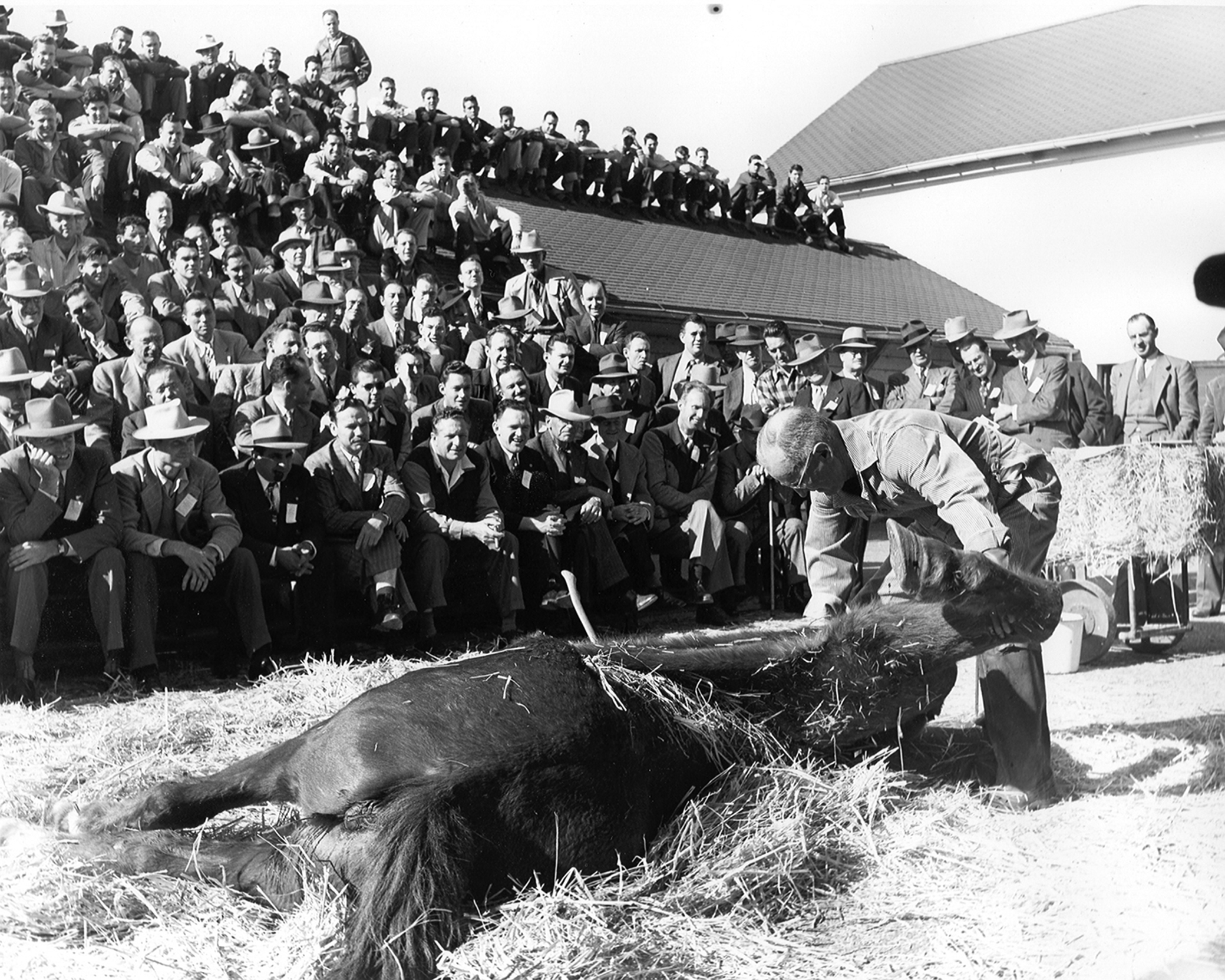
In Germany, Cohrs, the professor of pathology in Hannover (Fig. 3) and perhaps the most prestigious veterinary pathologist worldwide, was left to pick up the pieces after the war. As editor of Deutsche Tierärztliche Wochenschrift, Cohrs resumed its publication. He and Saunders worked to found a World Federation of Veterinary Pathologists. Later, In the 1960s, Cohrs gave his whole-hearted support to the concept of a new journal. His prestige among German-speaking pathologists led Saunders to write that “it is doubtful whether Veterinary Pathology could have been launched without Cohrs’ support.”
Paul Cohrs, first co-editor of Veterinary Pathology.
The massive entry of returning soldiers into academia was accompanied by increased funding for veterinary schools and graduate programs, all of which led to astonishing growth in existing schools and, in the late 1940s, the establishment of 7 new veterinary schools—at universities in Alabama (Tuskegee), California, Illinois, Missouri, and Oklahoma.
Veterinary Pathology After 1945: Leon Saunders
Saunders had spent his military service (1943–1944) as a lieutenant in the artillery attached to the Royal Army Veterinary Corps. After demobilization in 1946 and interested in postgraduate study in bacteriology, he moved to Iowa State College to begin graduate study with Ival Merchant, an internationally known bacteriologist. That had been the recommendation of Frank Schofield, who had left an imprint on Saunders at OVC. Schofield had discovered the new hemorrhagic disease sweet clover poisoning in cows and had reproduced it in rabbits showing that clotting time was increased.
At Iowa State, Saunders majored in veterinary bacteriology and minored in veterinary pathology. Surprisingly, his thesis on the resazurin test for bacteria in milk gave no indication of great things to come. Yet his Ames experience transformed Leon Zlotnick. First, he added the name Saunders—his master’s thesis was submitted under his given name, 18 but his research was published a year later under Saunders, his new name. 10 Second, Hilton Atmore Smith, a professor in veterinary pathology (who in 1957 with T. C. Jones authored Veterinary Pathology), encouraged Saunders to switch to pathology and he joined the Iowa State Diagnostic Laboratory as assistant to Edward Benbrook, the protégé of Crocker. Third, the new Saunders took with zeal to Benbrook’s love of classic pathology, self-discipline, perfection, and photography; together they published Leon’s first paper in veterinary pathology, a case of equine blastomycosis. 1 Saunders also met and had lifelong correspondence with William Bean, a professor of internal medicine in the state’s medical school. Bean, renowned for his medical critiques, had written, “Criticism is, of its nature, destructive. The notion of constructive criticism probably arose because criticism may be delivered in an effective way which cuts with small pain. It can have a result which is constructive if it leads to the correction of error, the improvement of technique, and the debridement of those necrotic evils of obscure style, sterile speculation, and discord between evidence and conclusion which so beset us.” That syntax and writing style are astonishing like those of Leon Saunders.
The move to Cornell in 1948 as an assistant to Peter Olafson provided Saunders with the milieu that allowed him to become the person whom we knew. Olafson, an Icelander transported to the Red River Valley in North Dakota, was an inspiring teacher and humanitarian who had spent training time with Nieberle in Germany and with Bailey in Chicago. He left an extraordinary legacy of inspired veterinary pathologists. Calling themselves the “Olafson boys”—Kenneth McEntee, Donald Cordy, Peter Kennedy, K. V. Jubb, William Monlux, and others—they in turn had a remarkable influence on veterinary pathology in general and on writing and publishing in particular. Craggy, aloof, and severe-appearing, Olafson, according to McEntee, “was a pussy cat in hawk’s clothing.” In correcting mistakes in the postmortem room, his kindness in correcting young trainees was in the tradition of William Osler, who once had admonished that “it is always best to do a thing wrong the first time,” as he demonstrated the correct way to do an autopsy. 14
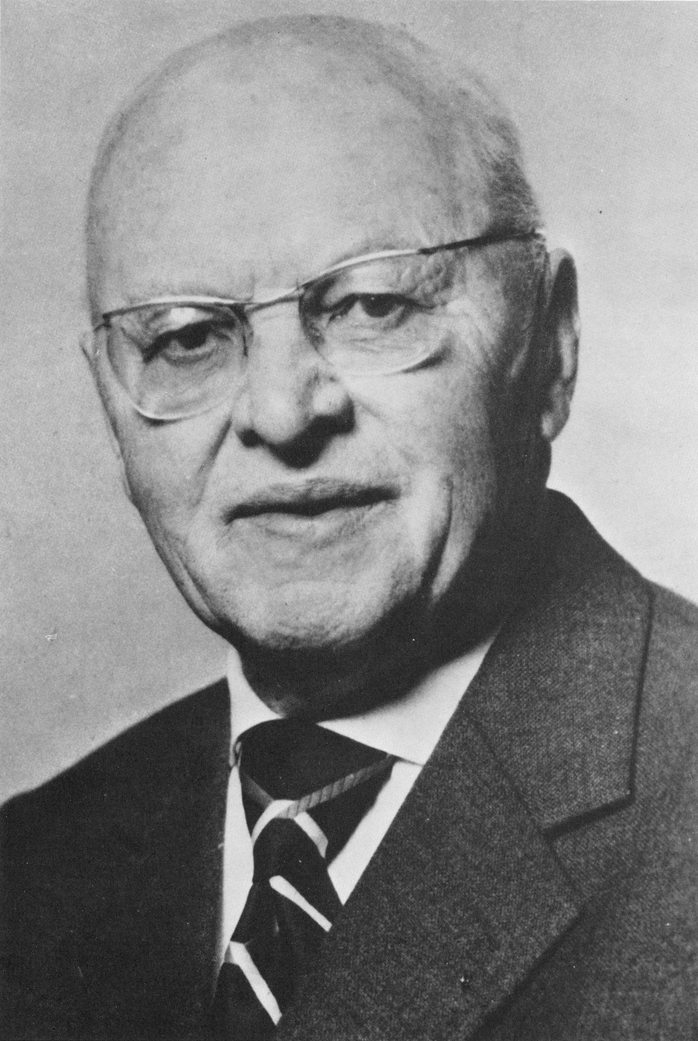
At Cornell, Saunders took full advantage of the great faculty outside of the veterinary school. He sought out internationally famed workers in genetics, embryology, and other fields of biology and worked and published with more than a dozen internationally known scientists. He graduated with a PhD in pathology and passed the first certifying examination given by the ACVP—both in 1951. Following appointments at the Edgewood Chemical Corps Medical Laboratory (1951–1952) and Brookhaven National Laboratory (1952–1958), Leon moved to his long-lasting affiliation with Smith Kline & French Laboratories in Philadelphia. Listing his books, papers, and awards would double the size of this story (Fig. 4).
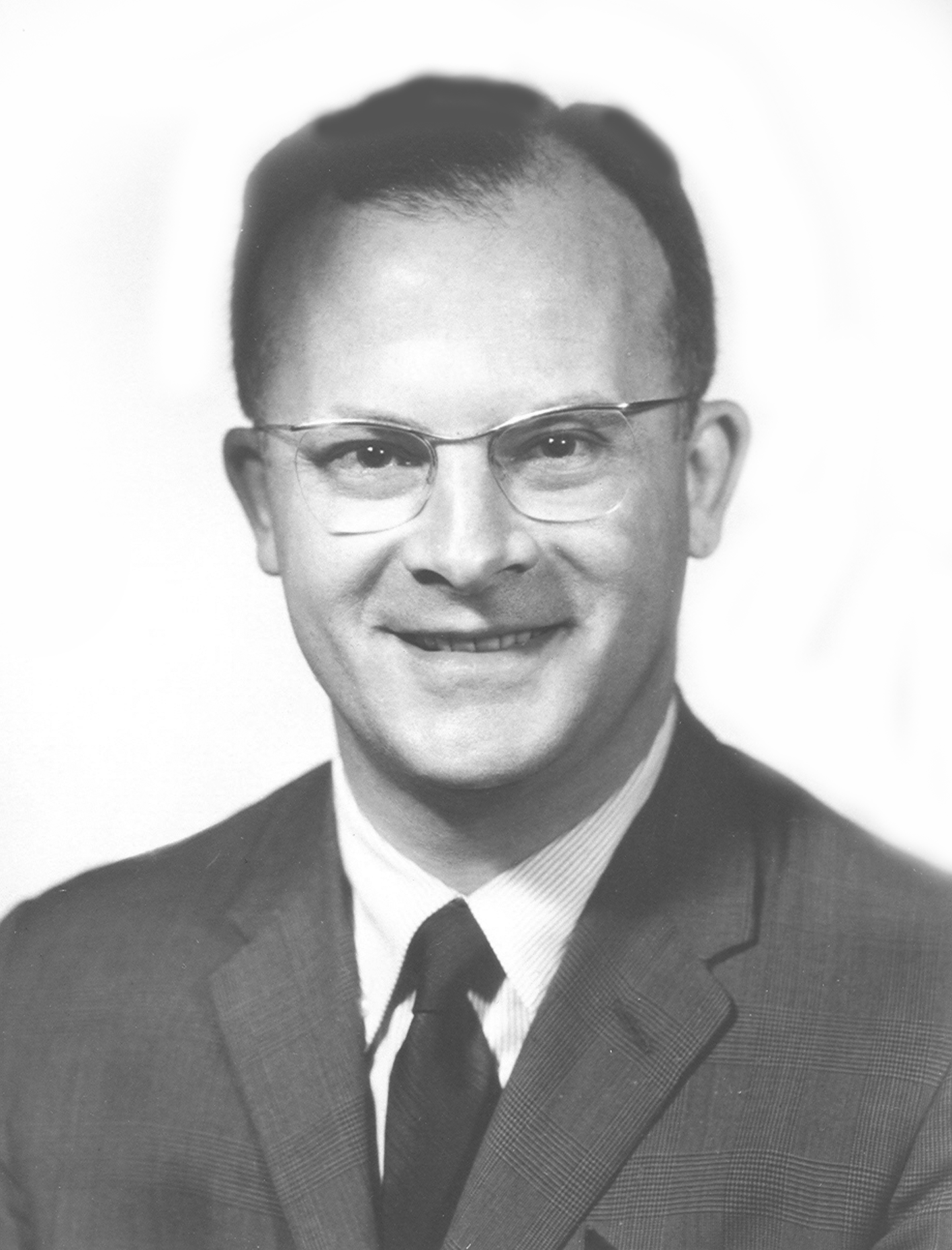
Leon Z. Saunders, founder and first co-editor of Veterinary Pathology.
Developing the Concept: Leon Saunders and Charlie Barron
The concept of a new journal began with Saunders’ frustrations over publication of a couple of papers published in the American Journal of Pathology, both of which had excellent of text and pictures yet failed to reach many colleagues who did not read that journal. 15 Publication in both the Journal of the American Veterinary Medical Association and the American Journal of Veterinary Research had resulted in “atrocious reproduction of illustrations and ham-fisted, execrable and unethical tampering with our text (eg, making changes in the proofs after the authors had read the galleys, so that nonsense, written by the editor, appeared under our names).” In subsequent papers submitted to the Journal of Comparative Pathology with Jubb, there was “irreparable damage done to our work … by causing many details in the photomicrographs to disappear” (L. Z. Saunders, personal communication).
Teaming with Charlie Barron, the two broached the possibility of publishing a dedicated journal with the American Veterinary Medical Association publications but were soundly rebuffed—perhaps in part because the AVMA had only recently established the American Journal of Veterinary Research. They then began talking with publishers, only to find that most thought the venture to not be financially viable because the potential readership was too small. Two publishers, however, S. Karger in Basel and Academic Press in New York, were willing to take a fling at it if a subsidy to shield them against almost certain deficits during the first 5 years could be obtained.
Funding discussions with the Pathology Study Section of the National Institutes of Health (NIH) raised the question, “Are enough papers of the quality you are seeking being written?” A short survey of the years 1959–1962 revealed the answer to be no, at least in English. As a consequence, help was solicited from Professor Paul Cohrs in Hannover, who agreed to join an editorial board and to encourage members of the Arbeitsgemeinschaft der Veterinärpathologen to submit papers to him for the new journal. The proposal that a bilingual publication would provide enough papers to fill each annual volume was assurance enough for NIH to support the venture. Thereupon, a grant application was made to NIH through the University of Pennsylvania, only to have the university officials drag their feet on signing off on the approved grant for fear it would divert NIH money that would otherwise go to research. After this was reported to Willard Eyestone, who was at that time serving in the Public Health Service and was president of the ACVP, and ACVP Secretary-Treasurer Clarence Cole, it was suggested that the grant be withdrawn from the university and reapplied for via the ACVP. The grant was submitted and approved for a 5-year period and was of sufficient amount to sustain the journal for this period. Karger in Basel agreed on a publishing contract but insisted on a Latin name to conform to the publisher’s other journals.
The Journal Is Launched
The journal was inaugurated in 1964 as Pathologia Veterinaria. Saunders and Paul Cohrs shared the position of editor. Cohrs was to encourage German-speaking veterinary pathologists to submit papers to the new journal. Barron, T. C. Jones, K. V. Jubb, Kenneth McEntee, and Leo-Clemens Schultz were co-editors. The editorial advisory board, 16 pathologists, many of whom trained directly or indirectly in Germany, were Dacorso (Brazil), H.-J. Hansen (Stockholm), K. W. Head (Edinburgh), C. Jackson (Achimota, Ghana), H. Köhler (Wien), L. Leinati (Milano), Ottosen (København), Ivanof (Sofia), Ressang (Bogor), Sofrenović (Beograd), Stenius (Helsinki), Stünzi (Zurich), Svenkerud (Norway), S. van den Akker (Utrecht), Yamagiwa (Obohiro), and Zulińsky (Lublin). Yamagiwa represented the remarkable postwar growth of Japanese veterinary pathology.
The long list on the editorial advisory board not only added to the international aspirations of the journal but provided a potent source of quality submissions from outside North America. The noticeable exclusion of pathologists from English, French, Italian, and Spanish institutions remains a mystery but probably reflected the disposition of Saunders and Baron for the Germanic system. In 1959 at the World Veterinary Congress in Madrid, Cohrs had invited veterinary pathologists to meet and discuss the formation of an international society. Saunders had an acrimonious combat with Glover and Hughes from the UK that “threatens to disrupt what little international amity remains.” 13 The barrier was the difference in definition of veterinary pathology between German-Dutch-Scandinavian-American members and those of the English-French-Italian group. Of the latter, only Leinati of Milan and Ivanov of Sofia adhered to the German definition—and both wound up as co-editors on the new journal.
The forward for volume 1 of Pathologia Veterinaria stated that “the columns of Pathologia Veterinaria will be open to all communications dealing with the pathology of diseases of animals other than man. Pathology for this purpose will be restricted in scope to the study of pathogenetic mechanisms and the description of the interaction between pathogenetic agents and vertebrate hosts.” Volume 1 began with Peter Kennedy’s paper on bovine abortion caused by the herpesvirus IBR and included the outstanding papers of Carmichael on ocular lesions of infectious canine hepatitis, Paul Newberne on hepatomas in rats fed aflatoxins, Markson on experimental transmission of ovine pulmonary adenomatosis, and Gilmore on a myeloproliferative disorder of cats. Volume 1 had Karin Fischer’s paper on symmetrical focal necrosis in the gray matter of dogs with epileptic seizures (from Bern, and in German), and volume 2 included Inger Nafstad’s work (from Norway) on vitamin E deficiency in pigs—the first contributions by women in the journal. The German language contributions were significant, and the phylogenic breadth was evident by an article on renal disease in reptiles by Zwart from Utrecht. Sadly, the rarity of contributions from most on the extensive editorial board represented a limited attempt at internationalization in the first issues. It was sad too that papers of Japanese veterinary pathologists, particularly those of the electron microscopist Tajima, were rarely submitted to the journal.
For the first years, long supplements were published to expand the numbers of pages; there was Lennart Krook’s “Nutritional Secondary Hyperparathyroidism in the Horse,” 98 pages with 40 figures and 26 tables in volume 1. Volume 2 included John McGrath’s monograph “Spinal Dysraphism in the Dog.” In volume 1, Jubb and Kennedy’s new text published by Academic Press was reviewed: volume 1 by Saunders and volume 2 by William Hadlow. Reflecting Saunders’ interest in history, a biographical sketch of the Danish pathologist Andreas Folger was provided by Svend Nielsen.
Submissions Decline: Charles Barron
For volume 4 (1967), Charles Barron took the editorial reins of the journal. He was a tall, lanky, athletic, out-of-doors sort of man. Highly competent and formidable in conversation, Barron had graduated from Texas A & M, spent time in the diagnostic laboratory at Oklahoma A & M, and, in the 1950s, moved to the Veterinary Pathology Division of the AFIP—with time out for graduate studies at the University of Michigan Medical School under Carl Weller. He settled in the Pathology and Toxicology Department at Smith, Kline and French, where he and Saunders became close friends and worked together to found the journal. As editor, Barron was devoted to the journal, as he was to anatomic pathology and to the correct use of the English language, and he maintained high standards. He made several major changes in the journal during his years as editor including the name change to Veterinary Pathology in 1970.
Barron was typically described by his friends as outspoken. Although admirable, his strong, often one-dimensional views during debates were generally delivered in a take-no-prisoners style that those who did not know him often considered mean-spirited. This approach had caused problems in his academic positions, military appointments, and collaborator appointments at Penn. 12 Editorial affairs lagged, and a perception among some authors that Barron was imperious in personal interactions and that his editorial policy was applied capriciously seemed to have had a negative effect on the journal. Slowly, publication times increased and by volume 7 the journal was being published nearly 1 year late.
Rescuing the Journal: David Dodd
The council of the ACVP appointed Dr David Dodd as editor for volume 8 (1971). Leo-Clemens Schulz was German editor, and co-editors were Saunders, Barron, Koestner, Nielsen, Pierce, and, for German papers, Trautwein. Dodd (Fig. 5) was a close friend of Saunders, and the two shared views on what was needed to improve the journal. To Dodd goes the credit for bringing the journal back to on-time publication and likely saving it from collapse. 4 The official crest of the ACVP designed by Thomas Hulland of OVC had been approved and was added to the cover of the journal. Dodd’s admirable effort to boost enthusiasm for the journal was met with disappointing results. Starting a section for Letters and Comments, a fine idea, he received a lethargic response from the readers. 5 He continued despite receiving inadequate numbers of well-prepared papers. The publication agreement with Karger Press was severed in 1976, and the ACVP became the publisher. The ACVP had grown remarkably in the past few years, and a new generation of leaders had appeared to govern the journal (Fig. 6).
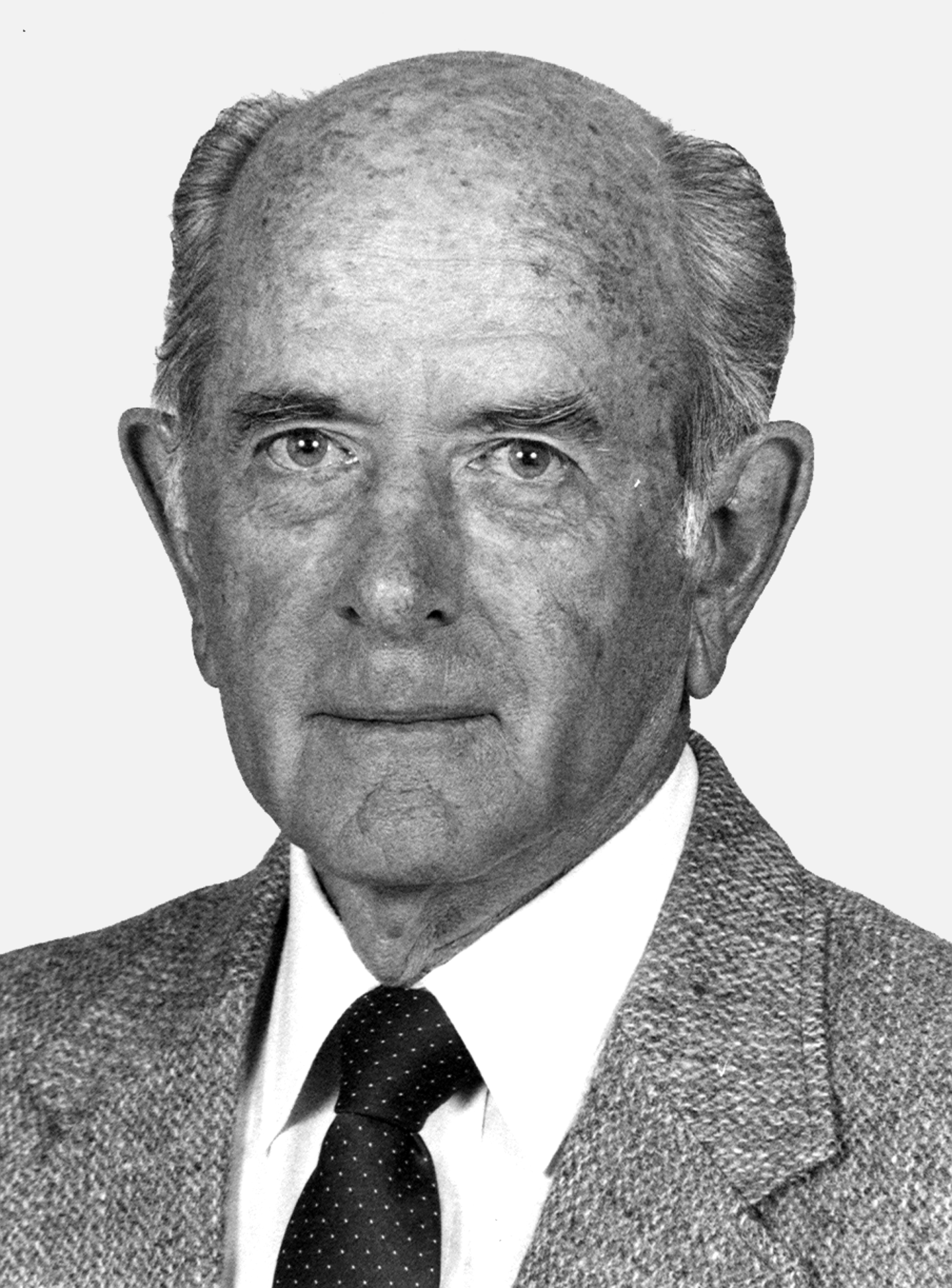
David Dodd, chief editor of Veterinary Pathology, 1971–1979.
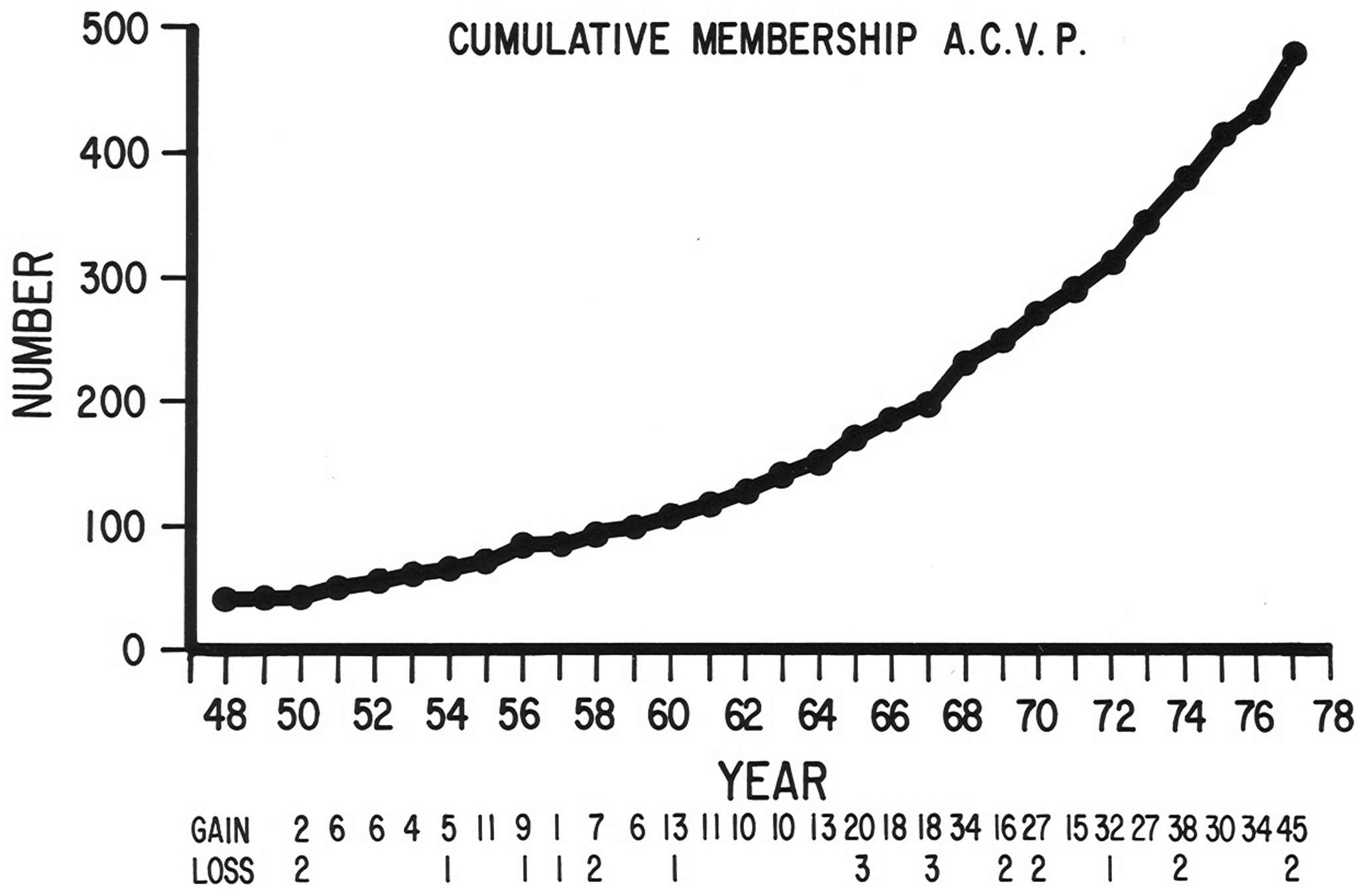
American College of Veterinary Pathologists: membership growth from 1948 to 1978.
As secretary-treasurer of the ACVP, I was instructed by the council to conduct an analysis of potential printers in the United States and recommended Allen Press in Lawrence, Kansas, as a small firm that would provide high-quality printing. However, this was overridden by Saunders’ recommendation, and Waverly Press in Baltimore was selected and printed the journal through 1985. The receipt of poorly written manuscripts continued to plague the journal and prompted editors and others to publish editorials on good writing; 2,4,6,7,16 despite the age of these editorials, it would do well for aspiring pathologists who wish to write well to dig them out of the literature.
In the later 1970s, the ACVP council, concerned about the quality of science in the journal, mandated that each manuscript be sent to 2 reviewers. Papers had been published that included a photograph of the “gall bladder of a horse” and that identified an ovine adenoviral lesion as a “herpesvirus.” Although the point was made (paraphrasing Virchow’s remarks on Virchows Archivs) that “anyone was free to make a fool of himself on the pages of the journal,” most councilors did not agree and, to relieve some of the burden of manuscript editing, the ACVP council, concerned about moving the journal into the expertise of the next generation, appointed John Shadduck as associate editor for 1978. It was fortunate that ACVP council members were visionaries who recognized the changing needs of the journal. These past and future presidents—Donald Dungworth (1977), William Hadlow (1978), Charles Capen (1979), Norman Cheville (1980), Bennie Osburn (1982), and Harley Moon (1983), along with Secretary-Treasurer Paul Hildebrandt (1986)—recognized the need for an editor with experience in the emerging technologies in the biomedical sciences.
New Biomedical Techniques: John Shadduck
Assuming the role of chief editor with volume 17, number 1 in 1980, John Shadduck (Fig. 7) was the first editor to be trained in the new science technologies at a large research university. Authors were increasingly using techniques such as protein chemistry, electron microscopy, cytochemistry, and electron probe analysis. Growing up in northeastern Burton, Ohio, about 40 miles east of Cleveland, Shadduck had, in his preveterinary years, expanded his science base with courses in German, philosophy, history, and quantitative analysis.
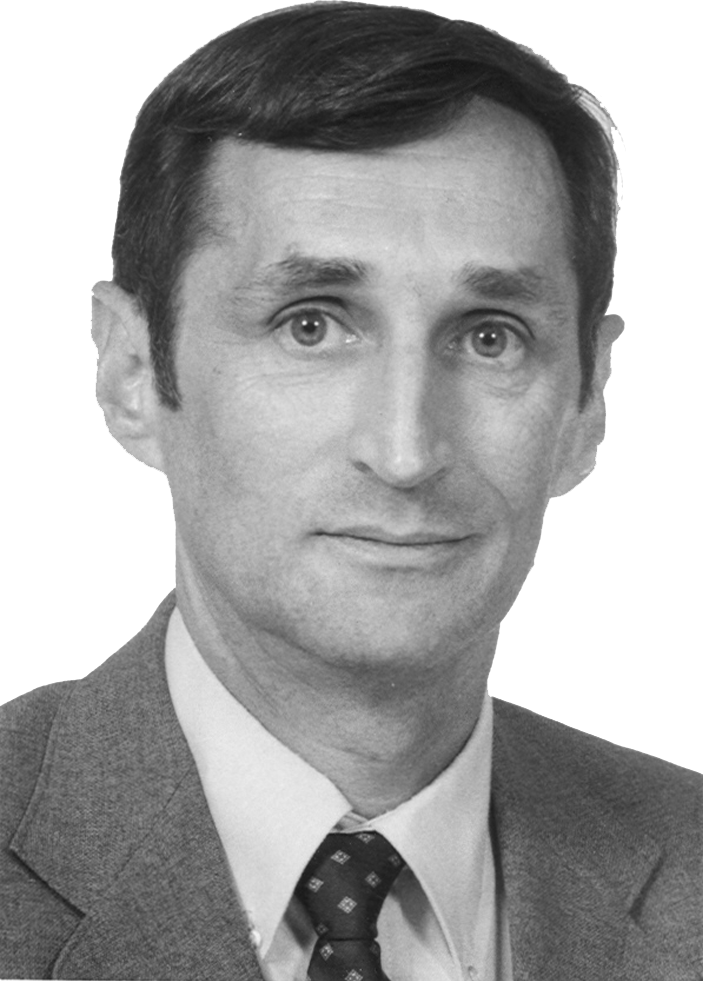
John Shadduck, chief editor, Veterinary Pathology 1980–1985.
In graduate school at Ohio State, Clarence Cole and Richard Griesemer set a high bar, insisting on diligent reading, not of textbooks but of Science, Proceedings of the National Academy of Science, New England Journal of Medicine, and other major journals in biology and medicine. Fellow students sharing this astonishing intellectual environment at the time were Capen, Storts, Hoover, Krakowka, Perryman, Wolfe, Jacoby, Fowler, Bishop, Rohovsky, and others whose careers were to have such a great impact on veterinary pathology. Armed with this background, Shadduck was well prepared to significantly influence the criteria for scientific publications in the journal. He appointed good reviewers who provided prompt, informative reviews. He also edited aggressively. If a paper had good content poorly presented he would typically rewrite one paragraph as an example of what was needed and send it back with a message that might state, “We’d really like to publish this, but we can’t accept it in its present form. I’ve given one example of how I would do it, but it’s your paper and must be in your voice.” That approach helped to get good papers out quickly.
During Shadduck’s tenure, the page size of the journal was enlarged, the position of European editor was discontinued, and Leon Saunders was officially appointed business manager. Schulz ended his tenure with volume 17. The number of papers submitted for publication increased from approximately 135 in 1979 to more than 200 in 1984. Still, many outstanding papers were being submitted to the American Journal of Pathology and Laboratory Investigation. 17 Those in scientific research depended on the wider audience and distribution that these journals provided and the impact that this had on their ability to be successful in awards of federal research money. As Shadduck moved to leave the journal, to maintain consistency, I was appointed associate editor for volume 21 (1984) and Leon Saunders as managing editor, a new position. Shadduck’s last issue was no. 6, volume 23 for 1986.
The Journal in Transition
The transition went smoothly. The first issue was the largest to date because Shadduck had completed all unedited manuscripts before transferring the office. I had begun the preparatory work for chief editor in late 1985 in time to set up volume 23 (1986). Because printing quality of the journal by Waverly Press had declined in 1985, the printer was changed. Saunders and I contacted and interviewed several possible printers; the decision was that printing be done by Allen Press in Lawrence, Kansas, which had been my selection over Waverly in 1976. Allen provided booklets for authors that explained how photographs should be processed for publication. Leon Saunders had a driving interest in photomicrography, 13 and co-editor Don McGavin had published several articles on monochrome and color photomicrography.
As manuscripts increasingly used new techniques and dealt with new animal species, scientific expertise was now required to be spread over an increased range of reviewers, and in 1987 the editorial board was expanded from 14 to 30 members. We began to receive manuscripts of extraordinary quality, such Peter Moore’s paper on malignant histiocytosis of Bernese Mountain Dogs.
Like previous editors, I read German, understood photography, and had a sense of keeping manuscripts moving. At Iowa State I had been impressed with William Monlux, one of the “Olafson boys” who had spent time with Hans-Jorgen Hansen in Stockholm, at the veterinary research institute at Onderstepoort, and with Hilton Smith in Texas. Perhaps more important was my assignment to the Army Biological Laboratories at Fort Detrick, Maryland—thrown in with a group of 35 inquisitive young veterinarians from nearly every veterinary school in the United States, a group that included Jim Rooney, Mark Morris, Alex De Paoli, Jim Sheldon, Bill Wooding, and Paul Hildebrandt (who went on to a distinguished career that included director of pathology at the Walter Reed Army Institute of Research, a division of both medical and veterinary pathologists). Weekly slide seminars were supplemented by travel to AFIP for its weekly slide conferences led by Fred Mauer and attendees Peter Craig, F. M. Garner, and Bob McCully as well as frequent visits by consultants Hilton Smith, T. C. Jones, Charlie Barron, and Leon Saunders.
Founded in 1862 as the Army Medical Museum, AFIP provided second opinion diagnostic consultations on medical, dental, and veterinary specimens. A victim of the Base Realignment and Closure program of 2005, it shut its doors on September 15, 2011, its operations replaced by a new Joint Pathology Center at the Forest Glen Annex in Silver Spring, Maryland. Many who trained there entered the field of toxicological safety testing in the pharmaceutical industry. The 1986 ACVP annual meeting was dedicated to toxicological pathology, and T. C. Jones, organizing a midyear seminar at Harvard Medical School, wrote to Saunders that “Carl Alden of the Procter and Gamble Company has agreed to speak on his newest work on chemical induction of protein nephropathy in male rats and its relation to renal tumorigenesis” and that G. H. Hottendorf of Bristol-Myers Company would share some new data on “the pathogenesis of nephrotoxicity of antibiotics.”
In the late 1980s, the journal editor was required to provide time, office space, and editorial management assistance from his own institution and, as the journal grew, that was a problem. There was no full-time copyeditor, and the task of managing the editorial office and the business manager began to interfere with the work I was being paid to do. Saunders as business manager was becoming increasingly resistant to change. He had initiated the addition of photographs of deceased historical figures on the cover of each issue. When I proposed that we use photographs of living persons or pathology specimens, Leon was ferocious in opposition. When the first of these appeared on the cover, one of William Hadlow and his famous quote in Lancet on the similarities of scrapie and kuru, a telephone call from Saunders came telling me “you have ruined the journal.” It was neither the first nor last of Leon’s “ruined the journal” calls, and had we not had efficient associate editors, Don McGavin and Harley Moon, keeping up with the growing journal would have been difficult.
On to the Second 25 Years
Donald McGavin was appointed the sixth editor of Veterinary Pathology in 1989, the 25th anniversary of the journal’s founding. 8 Don was enormously effective in transferring the operation to the University of Tennessee and was an effective sounding board for the frustrations involved in the operation. Gary Kociba and Keith Prasse were associate editors. McGavin remembers that a paucity of scientifically acceptable papers submitted remained and wrote that he “spent enormous numbers of hours editing and rewriting and improving illustrations.” To address the problem, the ACVP Council provided funds for a secretary/copyeditor.
The second 25 years of Veterinary Pathology has enjoyed a succession of highly competent chief editors: M. Donald McGavin, University of Tennessee (1990–1993); James Zachary, University of Illinois (1994–1999); Donna Kusewitt, The Ohio State University (2000–2003); Eva Sartin, Auburn University (2004–2007); and Carl Alden, Millennium Co. (2008–2013). Veterinary Pathology has gone digital and has expanded its base by including official sponsorship by the European College of Veterinary Pathologists and the Japanese College of Veterinary Pathologists, fulfilling Saunders’ original concept of an international journal. The end of 2013 will mark the completion of 50 years of publication. Recent editors have insisted that the journal remain dedicated to its original purpose—to offer authors a journal of high technical quality of printing and to provide readers with a journal bearing the most important work in veterinary pathology.
Footnotes
Declaration of Conflicting Interests
The author(s) declared no potential conflicts of interest with respect to the research, authorship, and/or publication of this article.
Funding
The author(s) received no financial support for the research, authorship, and/or publication of this article.