




Abstract
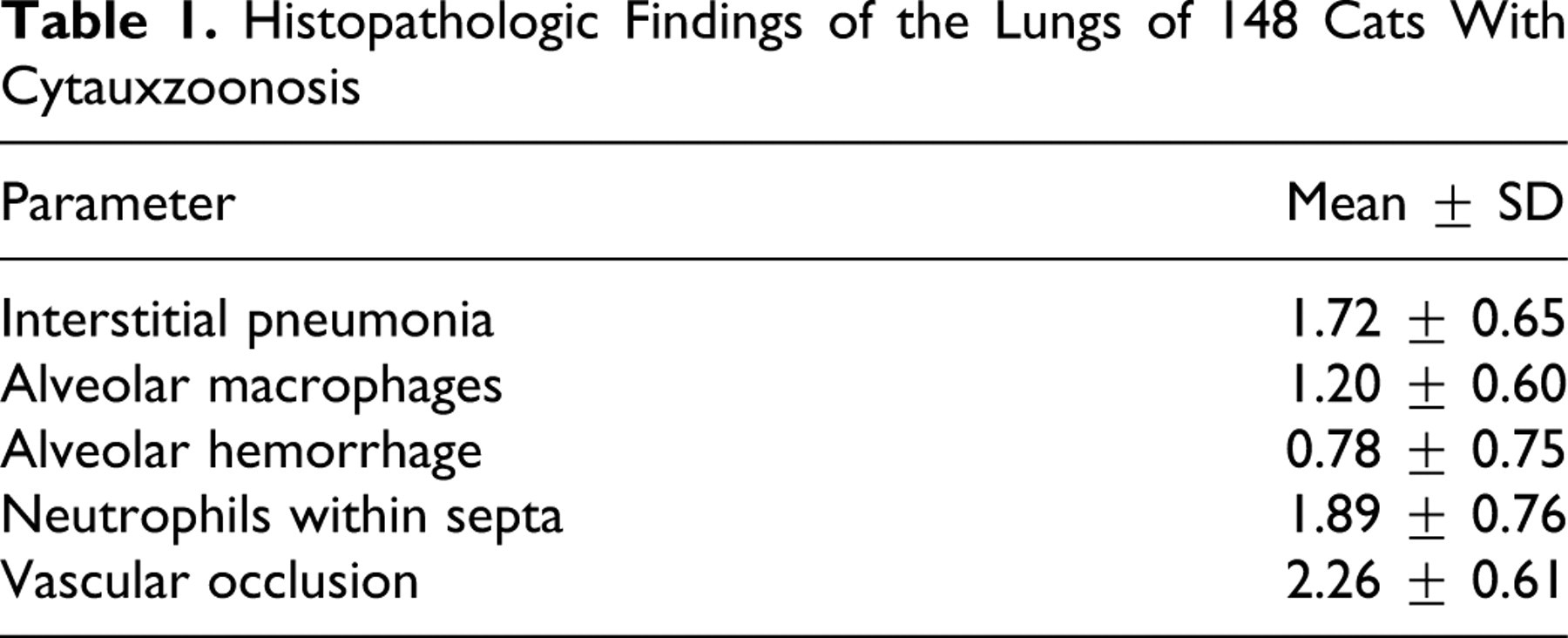
Cytauxzoonosis, caused by Cytauxzoon felis, is a regionally common, often fatal tick-borne disease primarily affecting the domestic cat. Retrospective analysis of case records from January 1995 to June 2005 identified 148 domestic cats diagnosed with cytauxzoonosis, having suitable archived lung sections. Lung sections were examined and graded on relevant parameters, the chief purpose of which was to characterize the pulmonary lesion of fatal feline cytauxzoonosis. Parameters were scored 0 to 3 for no lesion, mild, moderate, and severe, respectively. Evaluated parameters included the presence of interstitial pneumonia, increases in number of alveolar macrophages, degree of intra-alveolar hemorrhage, neutrophils infiltrating peribronchial and septal interstitium, and degree of vascular occlusion. Overall, interstitial pneumonia was moderate (1.72 ± 0.65); alveolar macrophage numbers were mild (1.20 ± 0.60); and intra-alveolar hemorrhage was mild (0.78 ± 0.75). Neutrophil infiltrates were moderate (1.89 ± 0.76), and vascular occlusion was moderate to severe (2.26 ± 0.61). Pulmonary edema was common; its scoring was incorporated into the assessment for interstitial pneumonia. Interestingly, a thrombus was detected in the lung of 1 cat. The current understanding of the pathogenesis of cytauxzoonosis focuses on vascular occlusion by macrophages distended by megaschizont parasite stages within liver, spleen, and lung. These findings corroborate the current understanding yet shed light on the possibility that macrophage activation and inflammatory mediators lead to an interstitial pneumonic process characterized by neutrophilic infiltrates and pulmonary edema. These characterized lesions are likely correlative with the respiratory distress seen in affected cats.
Cytauxzoonosis is a regionally common, often fatal disease of cats and wild felids, caused by the tick-borne apicomplexan parasite Cytauxzoon felis. 5,7,13 The disease is endemic in the southeastern and south-central United States, and it follows a defined biphasic seasonal pattern, with peak incidence in the late spring, followed by a smaller peak in early fall. 13 Although the fatality rate of feline cytauxzoonosis is still considered high, there are increasing reports of survival, attributed to either putatively less virulent strains 8 or suspected improvements in treatment strategies. 4,10
Feline cytauxzoonosis generally manifests as cases of sudden death in areas considered endemic for cytauxzoonosis. Naturally occurring cases seen by veterinarians are typified by a rapid clinical course—with fever, icterus, dyspnea, anorexia, and lethargy dominating the clinical presentation. 5,7 Key points in the life cycle 5,7,13 of the parasite include the transmission of sporozoites via tick bite, a prepatent period of 2 to 3 weeks, and culmination in schizogony—a tissue phase in which macrophages distended with merozoites occlude vessels. Many of the established clinical signs and pathology are attributed to the vascular occlusion, which can occur in any organ but is most histologically apparent within spleen, liver, and lung. 5,7 The vascular occlusion has morphologic similarity to a thrombus. 5 This fact, with the possibility of disseminated intravascular coagulation in naturally infected cats, 3 has led to the hypothesis that these cats die from a “shock-like state.” 5
The tissues analyzed in the present study represent a portion of the hundreds of domestic and exotic feline cases of cytauxzoonosis diagnosed via hematology or necropsy at our institution. In many of these cases, we had recognized pulmonary inflammation and other changes in addition to vascular occlusion. Therefore, we retrospectively evaluated a subset of these cases to gain a more thorough understanding of the pulmonary histopathology of feline cytauxzoonosis and to offer further insights into the pathogenesis and into clinical correlates.
Materials and Methods
Case Selection
Records from the Oklahoma Animal Disease Diagnostic Laboratory from January 1995 through June 2005 were retrospectively searched for cases of feline cytauxzoonosis, and 284 candidate cases were identified. Criteria for exclusion included the following: exotic cat, diagnosis only by cytology, or experimental induction. We identified 148 domestic cats diagnosed with naturally occurring cytauxzoonosis and having suitable lung sections from archival slides.
Evaluation
A pilot study on 10 slides was conducted to identify discrete and scalable parameters. Five parameters were selected for evaluation: interstitial pneumonia, increases in alveolar macrophages, alveolar hemorrhage, alveolar septal and peribronchial neutrophils, and degree of vascular occlusion within 5 randomly selected medium-caliber vessels. Such vessels were often, though not exclusively, morphologically recognized as venules. A scoring system from 0 to 3 was constructed, correlating to, respectively, no lesion, mild lesion, moderate lesion, and severe lesion. For purposes of this study, interstitial pneumonia was defined as thickening of alveolar septal walls by any inflammatory cells, as alveolar edema, or as a combination of the 2, as evaluated by averaging 5 similarly affected fields viewed with a 40× objective. Vascular occlusion was also scored from 0 to 3 with respect to the following ranges of occlusion: 0 = none; 1 = 1 to 39%; 2 = 40 to 69%; 3 = 70 to 100%. Slides were evaluated by 1 pathologist (TAS). Criteria were then applied to all 148 selected cases and slides.
Statistical Methods
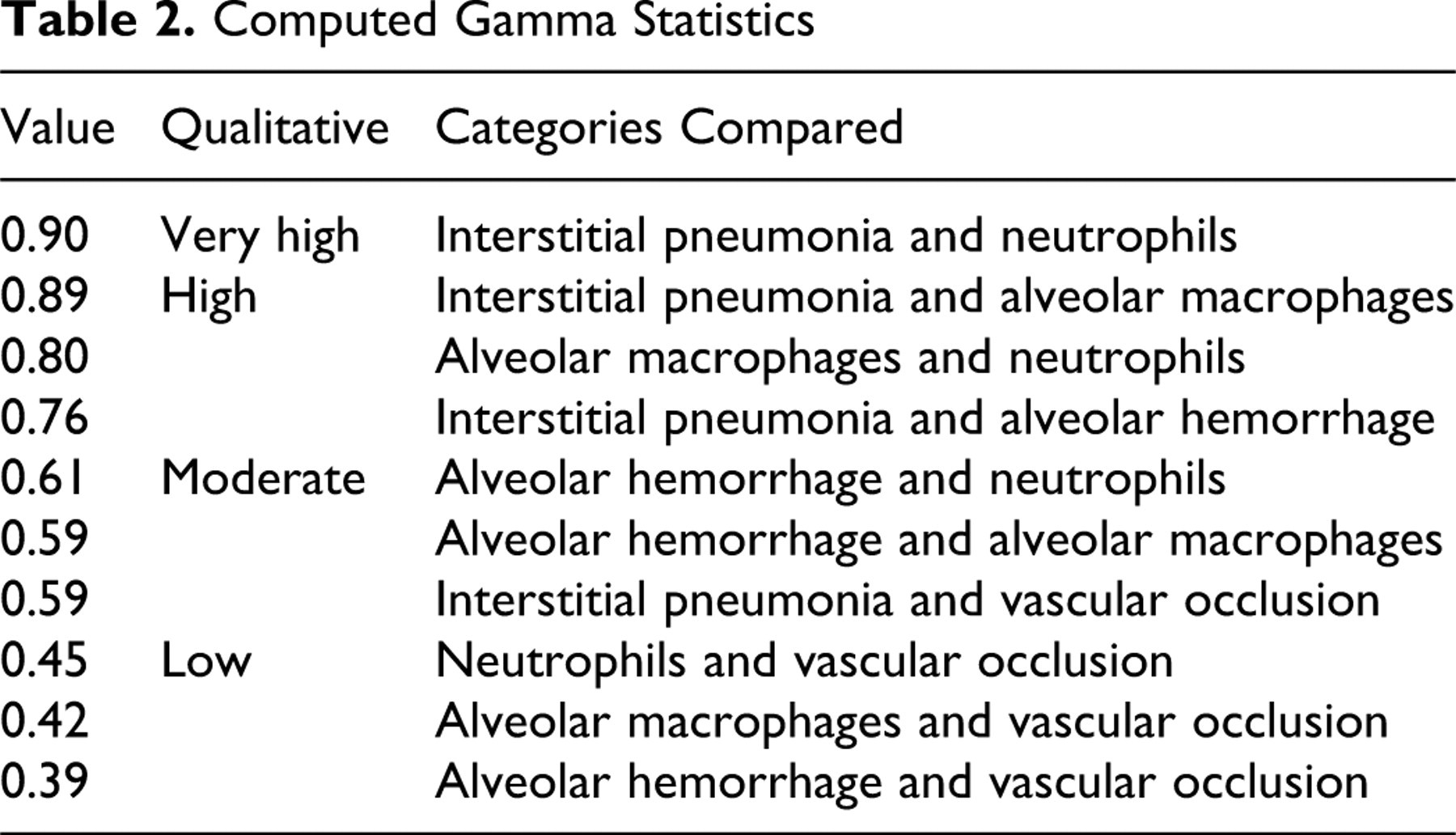
Lesion scores were tabulated, and means and standard deviations were computed. To detect meaningful associations of independently scored variables, contingency tables were created for pairs of the categorical responses. Because each variable is ordinal, gamma statistics 1 were computed to assess the correlative nature among the parameters. A gamma statistic serves as a measure of correlation for ordinal variables, giving the probability of concordance relative to the sum of the probabilities of concordance and discordance. A gamma statistic was qualitatively considered very high (.90 and up), high (.70–.90), moderate (.50–.70), and low (< .50). Each gamma statistic was tested for significance greater than 0, and a P value was recorded.
Results
Changes and lesions observed in each of the 5 parameters ranged widely, from no lesion to severe lesion, in all categories except vascular occlusion. Because intravascular parasitic megaschizonts are a hallmark diagnostic feature of the disease, all cases exhibited some degree of vascular occlusion (Fig. 1).
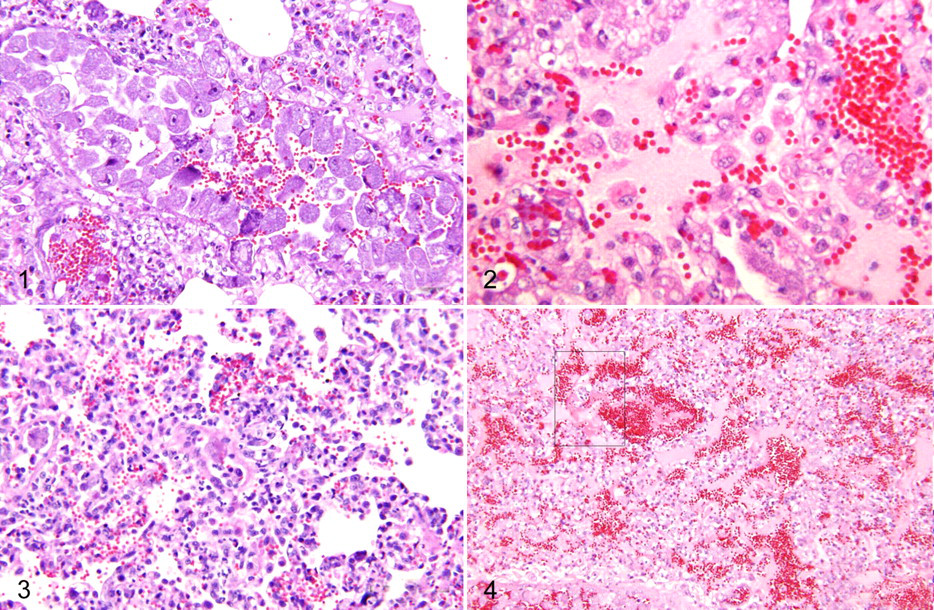
Table 1 summarizes the means and standard deviations of the 5 parameters. Alveolar hemorrhage (Fig. 2) was mild overall, with an average score of 0.78, whereas increases in alveolar macrophages (Fig. 2) were also fairly mild (average score, 1.20). Alveolar hemorrhage was usually present in small amounts, apparently per diapedesis, and alveolar macrophages were usually present singly or in clusters, within abundant proteinaceous alveolar edema fluid. The alveolar macrophages often had foamy cytoplasm and occasional erythrophagocytosis.
Histopathologic Findings of the Lungs of 148 Cats With Cytauxzoonosis
Alveolar septal or peribronchial infiltrates of neutrophils (Fig. 3) and interstitial pneumonia (Figs. 3, 4) were both moderate at 1.89 and 1.72, respectively. Alveolar septal walls were variably, though diffusely, thickened by infiltrates of neutrophils and macrophages accompanied by protein-rich edema. Occasionally, type II pneumocytes lined alveolar spaces and hyaline membranes were present (Fig. 4, box). Neutrophils also infiltrated peribronchial interstitium but less severely than alveolar septa.
Finally, vascular occlusion of medium-caliber vessels was moderate to severe (Fig. 1), with an average score of 2.26. The vascular occlusion was characterized by numerous 25- to 60-μm-diameter macrophages having an enlarged nucleus, often with a prominent nucleolus, and cytoplasm filled with myriad basophilic merozoites. These macrophages preferentially marginated along the vessels, often occluded more central regions of the vessel lumen, and were accompanied by plump endothelium. Also present was complete vascular occlusion of capillary lumens by similar macrophages.
Table 2 summarizes the gamma statistics computed for all possible pairs of variables. All gamma statistics were statistically significant (P < .0005). Two statistical findings deserve highlighting: First, vascular occlusion exhibited a low to moderate correlation with the other 4 parameters and represented 4 of the 5 lowest gamma statistics. Second, the only gamma statistic ranked as very high was the correlation between interstitial pneumonia and alveolar septal or peribronchial neutrophilic infiltrates.
Computed Gamma Statistics
Discussion
In this study, we report the range of histopathologic changes of the lung in cats affected with fatal cytauxzoonosis, thus expanding the descriptions of pulmonary changes reported by others. 3,5,7 We confirmed and objectively graded as severe the degree of vascular occlusion within pulmonary vasculature. Furthermore, we assessed and reported additional histopathologic changes that may be informative or correlative with respect to pathogenesis and clinical findings.
Overall, an interstitial pneumonic process, superimposed on the vascular occlusion, occurs in cats affected with cytauxzoonosis, as supported by the direct assessment and scoring of interstitial pneumonia (moderate, 1.72 ± 0.65; range, 0 to 3) and further suggested by the degree of neutrophilic infiltrates. Some pathologists incorporate the latter variable into their definition of interstitial pneumonia. Although that was not done here, the high gamma statistic between interstitial pneumonia and neutrophils (.903) is an indicator of their positive relationship. Small numbers of alveolar macrophages in most sections is also consistent with an interstitial pneumonia. We noted with interest that vascular occlusion correlated poorly with recognition and scoring of the other 4 variables. Indeed, the 4 lowest correlation coefficients were of vascular occlusion and other variables. This statistical analysis may indicate that the interstitial pneumonia components develop largely independent of the degree of vascular occlusion.
The cause of natural death in cytauxzoonosis cases is not definitively known. However, owing to the severity and rapid progression of terminal clinical signs, humane considerations usually result in euthanasia. In cases where natural death ensues, terminal clinical signs and findings include a moribund condition, dyspnea, and anemia. 7,14 Death from a shock-like state 5 is commonly accepted and readily fits the terminal clinical presentation. Respiratory failure, considered alone or as a component of a shock-like state, may contribute to the cause of death. Considered from the vantage point of respiratory failure, perfusion and ventilation are critical determinants. 6 Perfusion of the lung is likely to be critically compromised, as based on our scoring of the occluded vasculature as well as histopathologic findings in other sources. 5,7 In addition, we believe that our findings of interstitial pneumonia and its attendant components (neutrophils, edema, etc) indicate that ventilation and gaseous exchange may be significantly compromised. We speculate that the development of the interstitial pneumonia is due to the liberation of proinflammatory cytokines and chemoattractant molecules 9 elaborated by the parasitized macrophages. Furthermore, the macrophages are likely activated, a finding based on morphologic changes, including massive macrophage cell enlargement, enlarged nucleus, and prominent nucleolus. In the literature, activated macrophages are defined by assays for function, including the elaboration of key cytokines. 9 Our recognition of activated macrophages by morphologic parameters is a limited one in that functional macrophage assays have not been performed in the context of this disease. To a large extent, these functional assays are not currently possible because of a lack of a C felis cell culture system. Finally, on a comparative basis, macrophages parasitized by Trypanosoma cruzi—a related Apicomplexan parasite—can be functionally defined as activated, 11 and we are hopeful that similar studies for feline cytauxzoonosis may be possible in the future.
Although scoring of thrombi was not included in the tables, each slide was inspected for intravascular pulmonary thrombi. Only 1 thrombus was found in 1 sample, which is surprising in view of Wagner and colleagues' finding of multiple intravascular thrombi in many organs in experimentally infected cats. 14 One reason for the discrepancy may be that we focused on lungs whereas the Wagner et al report did not specify which organs possessed thrombi. Another potential reason was that more than half of Wagner’s experimental cats died naturally and thrombus development may occur terminally. Most cats in the present study were euthanized, perhaps before thrombi had developed.
Our key finding—that cats with cytauxzoonosis are affected with an interstitial pneumonic process—correlates with the severe dyspnea seen in these cases. 7,14 These cats may terminally suffer from acute respiratory distress syndrome (ARDS), 15 an idea worthy of further investigation. ARDS in small animals is increasingly recognized 2 and formally defined. 15 Defining histopathologic correlates of ARDS in cats needs further study, however. 15 Our feline lung sections often lacked evidence of alveolar hyaline membranes, a key histologic correlate of ARDS; 12 yet, the histopathologic lesions in these cases is entirely consistent with an early exudative phase of ARDS, as described elsewhere. 2 Regardless of the clinical classification of terminal cytauxzoonosis cases, it is clear that affected cats would benefit from critical respiratory care and from interruption of inflammatory pathways, and these ideas are worthy of prospective study.
Footnotes
Acknowledgements
We thank Mason Reichard for reviewing the article and Betty Handlin for assistance in figure preparation.
The authors declared that they had no conflicts of interest with respect to their authorship or the publication of this article.
The authors declared that they received no financial support for their research and/or authorship of this article.