




Abstract

Dear Editor,
We read with great interest the results of the survey published by Lasagna et al., 1 indicating suboptimal proposal of vaccination to patients by Italian medical oncologists as well as scarce knowledge of the benefits of vaccines and concern related to receiving multiple vaccines among patients.
In 2022, the Associazione Italiana di Oncologia Medica (AIOM) published a position paper outlining categories of oncological patients to whom the recombinant vaccine for the prevention of Herpes Zoster (RZV) should be recommended or considered, indicating the preferred timing of vaccine administration and discussing the benefits and disadvantages of co-administration with other vaccines. 2 In 2023, AIOM provided recommendations for other vaccines (seasonal flu, pneumococcal infection and SARS-CoV-2). 3 Those vaccines are considered safe and minimally invasive in patients with solid tumors. 3
The most recent Italian Vaccinal Prevention National Plan (PNPV) 2023-2025 recommends various vaccines in cancer patients undergoing chemo- or radiotherapy, including, but not limited to, Haemophilus influenzae type b (Hib) vaccine, meningococcal B and ACWY vaccines in case of immunodepression, pneumococcal vaccine, chickenpox vaccine (after careful assessment of immunity reconstitution or competency). 4 The Plan also encourages collaboration of physicians from the vaccination services with specialists, to increase vaccination uptake in groups of patients at increased risk of infectious diseases. 4
In the Azienda Sanitaria Universitaria Friuli Centrale, a Local Health Agency serving a population of approximately 500,000 inhabitants in the Northeast of Italy, a collaboration was started between the Vaccination Service and the Oncology Unit of Udine Academic Hospital. Physicians specializing in Hygiene and Preventive Medicine from the Vaccination Service met the whole team of Oncologists in May 2023 to discuss the current recommendations for patients with cancer and/or immunodepression, to collect information about doubts and concerns of oncologists, and to answer questions regarding vaccine indications and contraindications, mechanism of action, effectiveness, safety. In June 2023, one oncologist from the same unit attended one training session open to all the healthcare personnel of the Vaccination Service (physicians, assistants, nurses) to present the oncologist point of view. Subsequently, a joint procedure was developed to facilitate vaccination of cancer patients. Figure 1 depicts the respective roles of the Vaccination Service and the Oncology Unit. In short, oncologists inform and enroll patients for vaccinations, Hygienists develop a tailored vaccination plan. The patient is vaccinated in a dedicated ambulatory within the Oncology Unit, with mixed personnel: vaccinal assistants/nurses from the Vaccination Service, who bring the vaccines and administer them, and one oncologist from the unit who supervises the session, with a physician from the Vaccination Service always available for telephonic consultation, if needed.
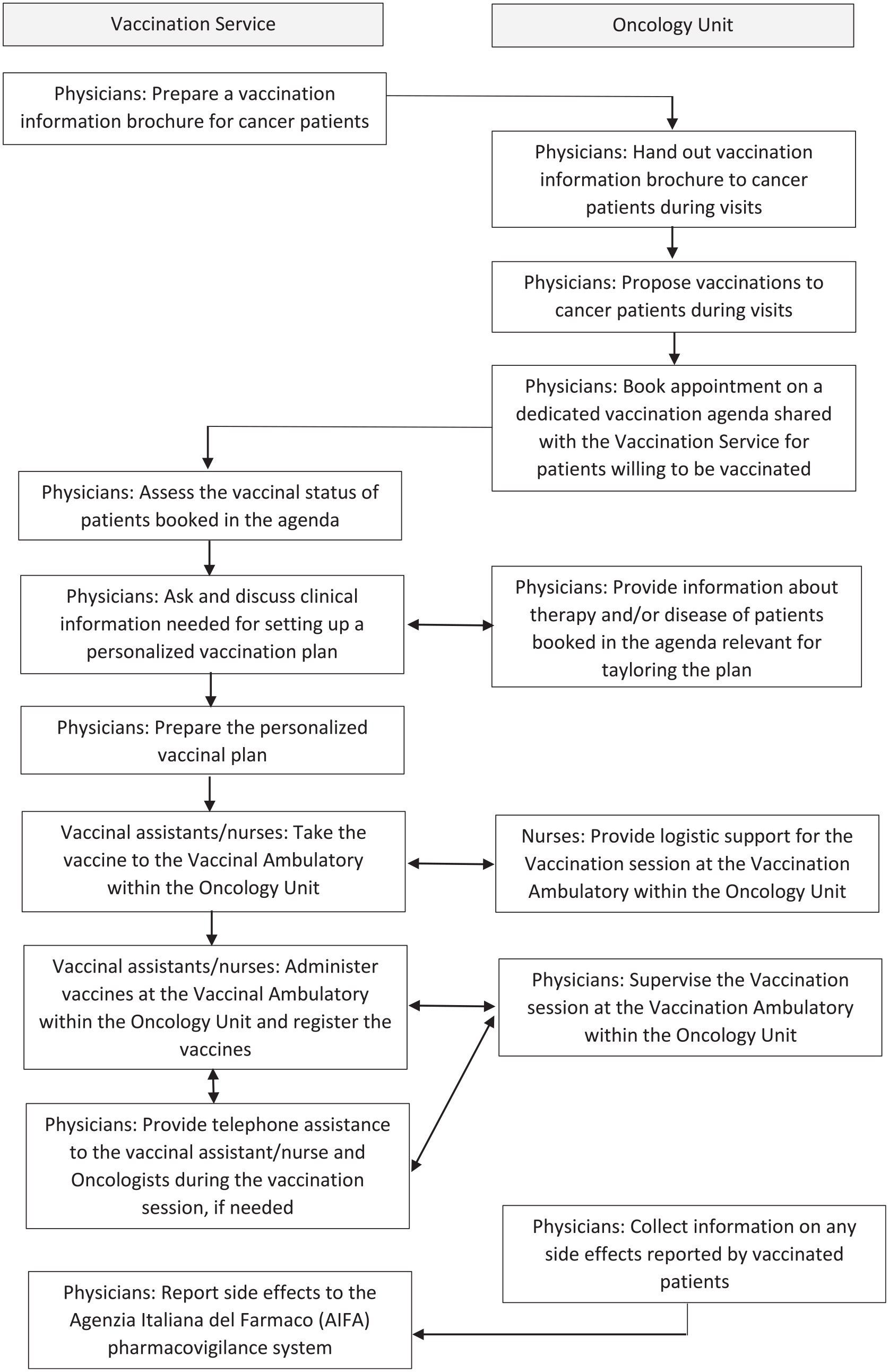
Roles of the Vaccination Service and the Oncology Unit in the shared vaccination ambulatory for patients with cancer in Udine, Italy.
The procedure was agreed upon by the two units and is being published in the ASUFC intranet site. The first vaccination session was planned for 31 August 2023. In this initial phase, the vaccination ambulatory is open once a week and a maximum of eight patients can be vaccinated in each session.
This experience shows that collaboration between on-cology specialists and vaccination personnel is feasible, increases knowledge on both parts, and allows identification of context-specific solutions to facilitate uptake of vaccinations in high-risk patients, putting the patient at the center of care. In the future, we will evaluate whether our strategy has improved patient adherence to vaccination recommendations.
