



Abstract
Objective
This study documented a thunderstorm asthma outbreak that occurred on 9–11 September 2022 in Yulin, Northwest China, and conducted a retrospective analysis of epidemiological patterns from 2018 to 2024.
Methods
A retrospective observational design was employed. Patient data were obtained from Yulin Hospital, The First Affiliated Hospital of Xi’an Jiaotong University. Case numbers were retrieved from the Hospital Information System, and detailed clinical records of hospitalized patients were sourced from the medical records database.
Results
From 2018 to 2024, the annual incidence of allergic respiratory diseases increased substantially, from 4778 to 26,459 cases. During the thunderstorm period in September 2022, emergency visits surged to 2185 cases, significantly exceeding baseline levels of previous years. Monthly data for 2022 showed a distinct peak in September, with 5647 visits. Pollen monitoring revealed a bimodal distribution, with concentrations sharply rising to 1488 grains/1000 mm2 on 8 September. Among 93 hospitalized patients, 58.0% had no prior asthma diagnosis, 70.9% had allergic rhinitis, and 59.1% were sensitized to mugwort pollen.
Conclusion
These findings confirmed thunderstorm asthma as a significant public health threat in Northwest China, driven by the convergence of mugwort pollen exposure and thunderstorm conditions, highlighting the urgent need for integrated early-warning systems in susceptible regions.
Introduction
Thunderstorm asthma is a rare phenomenon characterized by the sudden onset or worsening of asthma symptoms during or shortly after a thunderstorm. 1 This condition leads to a sharp, short-term increase in the number of patients presenting to emergency departments with respiratory complaints. It was first documented in 1983 by Packe and Ayres, who reported that 26 asthma patients visited the emergency department of East Birmingham Hospital in the UK following a thunderstorm—a striking rise from the usual average of two to three asthma-related visits. 2 Since then, numerous studies, primarily from the UK and Australia but also from Canada, Italy, and Iran, have described associations between thunderstorms and asthma exacerbations.3–11 Among these events, the most severe occurred on 21 November 2016 in Melbourne, Australia, affecting over 3000 individuals and resulting in 10 suspected fatalities. 12
The underlying mechanism of thunderstorm asthma remains incompletely understood. These episodes have been observed to coincide with extremely high levels of airborne allergens during thunderstorms. The main triggers are grass pollen and, in some cases, fungal spores. A widely accepted hypothesis suggests that pollen grains are drawn upward into the humid thunderstorm clouds, where they rupture due to osmotic shock, releasing fine, respirable allergenic particles. 13 These particles are then carried to ground level by downdrafts and rainfall. When inhaled, the pollen fragments can penetrate deep into the lower airways, triggering asthma attacks in sensitized individuals.
Yulin is located in Shanxi Province in Northern China, covering an area of 43,578 km2. According to 2017 census data, it has a permanent population of 3.7 million. Epidemiological data indicate that the prevalence of allergic rhinitis in Yulin is 24.26%, with a self-reported rate of 50.95%. 14 Among affected individuals, symptoms peak during the summer and autumn months (July–September) in 80%–90% of cases. 15 Mugwort (Artemisia desertorum Spreng) is the predominant allergen during this period. As part of desertification control efforts, mugwort has been widely cultivated in the region for its sand-stabilizing properties.
On 9 September 2022, the emergency and outpatient departments of Yulin Hospital, The First Affiliated Hospital of Xi’an Jiaotong University, China, were overwhelmed by a surge of patients presenting with sudden shortness of breath, coughing, or wheezing during and immediately after a thunderstorm.
This study aimed to document a thunderstorm asthma epidemic in the population of Yulin, Northwest China—a previously uninvestigated phenomenon in the region—and to characterize its clinical features systematically over a 7-year period (2018–2024).
Methods
We conducted a retrospective review of patients who presented to the emergency and outpatient departments of Yulin Hospital, The First Affiliated Hospital of Xi’an Jiaotong University, with sudden-onset or exacerbated wheezing or asthma during or shortly after a thunderstorm in Yulin, Shanxi Province, China. The thunderstorm event began around 15:00 on 9 September 2022 and lasted until approximately 18:00 the same day, accompanied by strong winds. A sharp increase in emergency department visits for respiratory complaints was observed between 9 and 11 September 2022.
We retrospectively enrolled patients presenting between 15:00 on 9 September 2022 and 23:59 on 11 September 2022, selecting those with an initial diagnosis of asthma, wheezing, allergic rhinitis, or allergic rhinitis with asthma. Case data for the 7-year period from 2018 to 2024 were also extracted following the same diagnostic criteria. All outpatient and emergency records were retrieved from the Hospital Information System. In addition, asthma hospitalization data for 2018–2024 were obtained from the medical records database. This retrospective study was approved by the Ethics Committee of Yulin Hospital, The First Affiliated Hospital of Xi’an Jiaotong University (Approval No: 2025-102), with a waiver of the requirement for informed consent due to the use of anonymized retrospective data. All patient identifiers were removed to ensure complete de-identification. This study was conducted in accordance with the ethical principles of the Helsinki Declaration of 1975, as revised in 2024.
Patients with severe asthma symptoms were hospitalized. Clinical data for these asthma patients were collected, including demographic characteristics, pulmonary function parameters, fractional exhaled nitric oxide (FeNO) levels, and allergen test results. Pulmonary function testing was performed using a Jaeger MasterScreen™ system (CareFusion, Germany), and FeNO levels were measured with a NIOX VERO® analyzer (Circassia, UK). Serum-specific immunoglobulin E (IgE) antibodies were quantified using a Thermo Fisher ImmunoCAP® 250 system. The allergen panel included common inhalant allergens such as house dust, dust mites, a mix of molds (Aspergillus fumigatus, Aspergillus niger, Alternaria alternata), cat and dog dander, mulberry, mixed weed pollens (careless weed, goosefoot, Japanese hop, and dandelion), mugwort, and ragweed as well as food allergens (egg, milk, fish, shrimp, crab, and mutton).
All clinical information was retrieved from the archived medical records for analysis. Statistical analysis was performed using IBM SPSS Statistics (Version 27).
Results
Overall trends in allergic respiratory diseases (2018–2024)
A substantial increase in the annual incidence of allergic respiratory diseases was observed over the 7-year study period. The number of recorded cases rose from 4778 in 2018 to 26,459 in 2024, indicating a significant upward trend in disease burden (Figure 1).
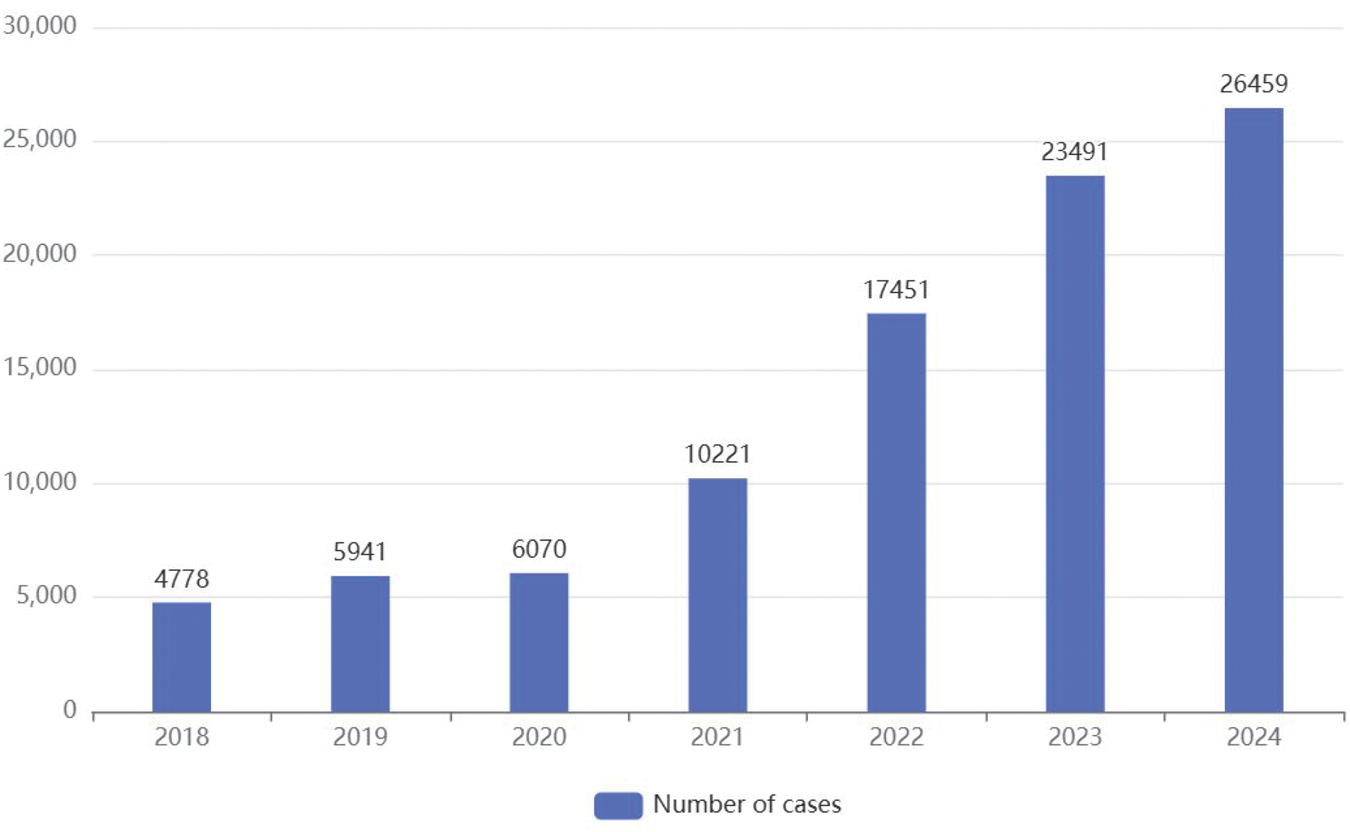
Temporal trend in allergic respiratory disease cases from 2018 to 2024.
The 2022 thunderstorm asthma outbreak: temporal association and magnitude
A dramatic surge in patient visits was documented in direct conjunction with the thunderstorm of 9–11 September 2022. During this 3-day period, a total of 2185 cases presented for emergency care, markedly exceeding attendance for comparable intervals in previous years (Figure 2). Monthly data for 2022 further highlighted this anomalous event, with September recording the highest patient volume (5647 visits) (Figure 3). The daily distribution showed a rapid onset, with 1432 visits on 9 September, followed by 573 and 303 visits on the subsequent 2 days (Figure 4).
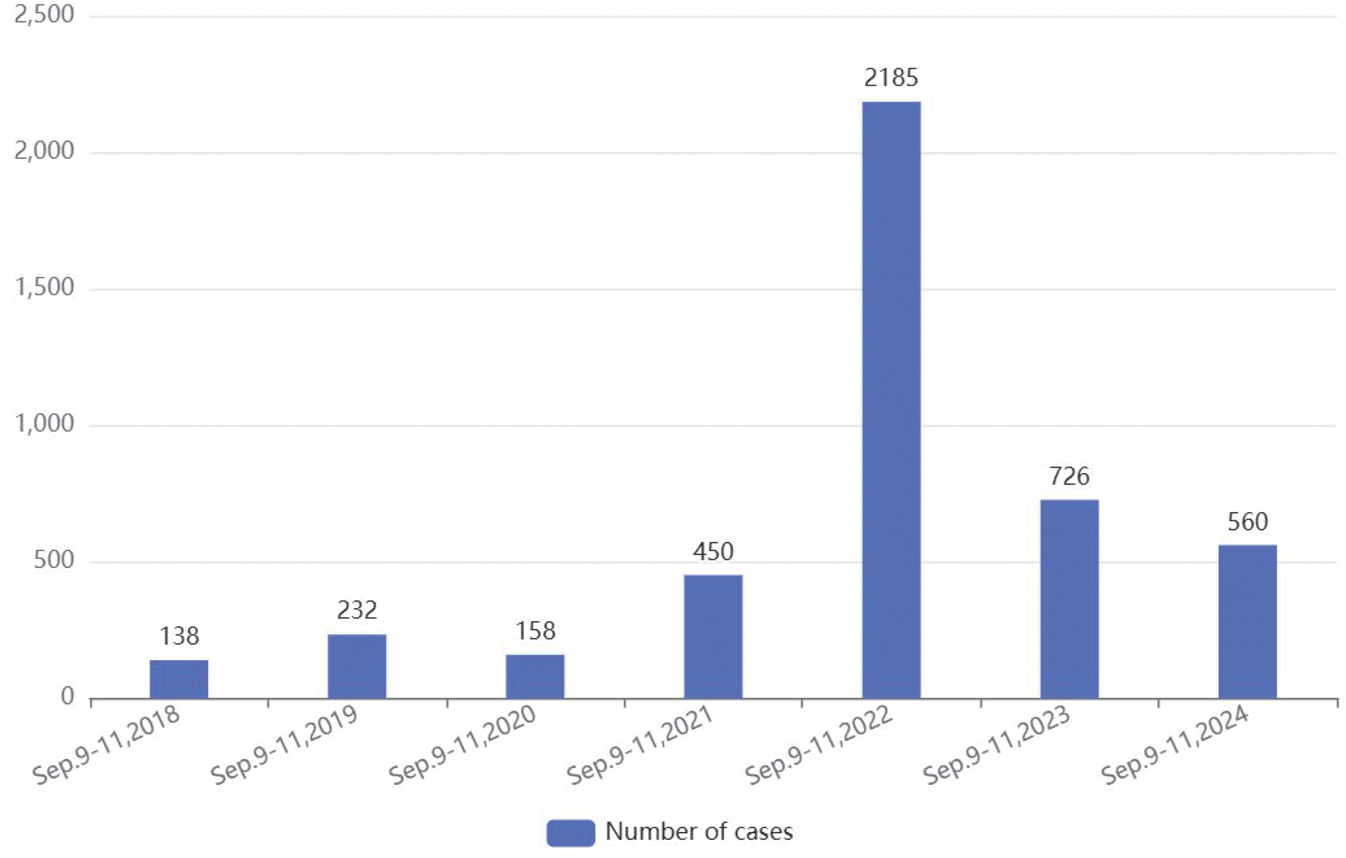
Number of allergic respiratory disease cases during the same calendar period (9–11 September) across consecutive years (2018–2024).

Monthly case volume of allergic respiratory diseases from January to December 2022.

Daily case volume of allergic respiratory diseases from 1 to 30 September 2022.
Concurrent aeroallergen exposure: pollen monitoring data
Concurrent aerial pollen monitoring in 2022 revealed a characteristic bimodal distribution, with the primary peak occurring in late summer (August–September) and a secondary peak in spring (March–May) (Figure 5). Notably, pollen concentrations increased sharply to 1488 grains/1000 mm2 on 8 September, immediately preceding the thunderstorm and subsequent surge in patient visits, followed by a second peak on 12 September (Figure 6).

Monthly average pollen concentrations from January to December 2022.

Daily pollen concentrations from 1 to 30 September 2022.
Quantitative impact of the outbreak
The 2185 emergency department visits for allergic respiratory diseases (asthma and allergic rhinitis) recorded during the 3-day post-thunderstorm period represented a 4.8- to 15.8-fold increase compared with the average baseline for the same calendar period across the 2018–2024 study years (Figure 2).
Demographic and clinical characteristics of affected patients
During 9–11 September 2022, thunderstorm asthma hospitalizations totaled 93, a figure that was significantly higher than the numbers recorded during the corresponding period in the years 2018–2024 (Figure 7). The majority (71.0%, 66/93) of the hospitalized patients were aged ≤40 years, and among them, 50.5% (47/93) were aged ≤18 years (Figure 8). Analysis of the 93 hospitalized cases revealed that 58.0% had no prior asthma diagnosis, while 23.8% had a pre-existing asthmatic condition. Additionally, 70.9% reported a history of allergic rhinitis. Upon presentation, 76.3% of hospitalized patients were classified as having moderate asthma. Specific IgE testing identified mugwort pollen as the predominant sensitizer, with a positive result in 59.1% of cases (Table 1).
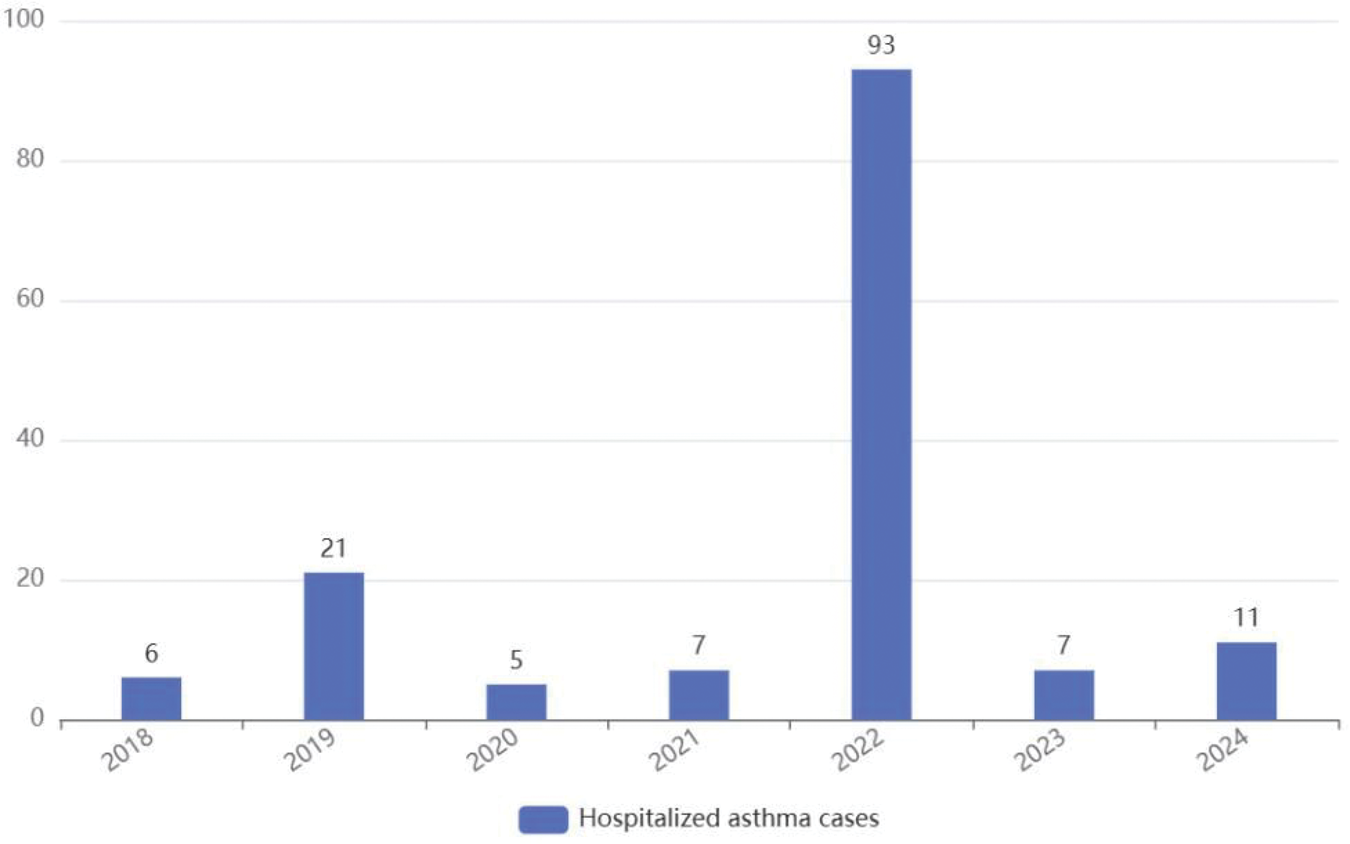
Comparative analysis of asthma hospitalizations during the corresponding period (9–11 September) from 2018 to 2024.

Age distribution of hospitalized thunderstorm asthma patients (9–11 September 2022).
Clinical characteristics of hospitalized patients with thunderstorm asthma (9–11 September 2022).

FeNO: fractional exhaled nitric oxide.
Discussion
The present study documented a substantial thunderstorm asthma epidemic that occurred in Yulin, Northwest China, in September 2022. This event was characterized by a sharp increase in emergency department visits for asthma and allergic rhinitis immediately following a major thunderstorm, resulting in a significant number of hospitalizations. Our analysis confirmed the characteristic features of thunderstorm asthma observed internationally while providing the first detailed epidemiological data from this region. The findings highlighted that the convergence of high airborne pollen levels and specific meteorological conditions can trigger severe public health emergencies even in non-endemic areas.
The epidemic demonstrated a clear temporal association with the thunderstorm event. The rapid onset, with a peak of 1432 emergency visits on the first day, aligned with the recognized pattern of thunderstorm asthma outbreaks described in Australia and Europe.16,17 Crucially, our pollen monitoring data revealed a dramatic spike in pollen concentration immediately preceding the thunderstorm, supporting the established mechanistic hypothesis whereby pollen grains ruptured in the thunderstorm environment, releasing respirable allergen particles that triggered bronchospasm in sensitized individuals.18,19 The clinical presentation, dominated by moderate asthma requiring hospitalization, underscored the severity of such events.
A key finding was the demographic profile of affected patients. The majority (71.0%) were aged 40 years or younger, with half being children and adolescents (≤18 years), indicating particular vulnerability in younger populations. Notably, 58.0% of hospitalized patients had no previous asthma diagnosis, suggesting that individuals with undiagnosed airway hyperresponsiveness or those who typically manifested only as allergic rhinitis were at substantial risk during such events. 20 This finding had important implications for public health planning and risk stratification.
The high prevalence of mugwort pollen sensitization (59.1%) among hospitalized patients identified this aeroallergen as the primary trigger in this epidemic. This finding was consistent with the regional ecology, where mugwort had been widely planted for desertification control and represented the dominant seasonal allergen.21,22 The coincidence of the thunderstorm with the peak mugwort pollen season created ideal conditions for this outbreak. Furthermore, the rising baseline trend of allergic respiratory diseases in Yulin from 2018 to 2024 suggested a growing population of sensitized individuals, potentially increasing susceptibility to future epidemics.
From a public health perspective, the 4.8- to 15.8-fold increase in emergency department visits during the outbreak period demonstrated the substantial burden such events placed on healthcare systems. These findings emphasize the need for integrated early-warning systems that combine pollen monitoring and thunderstorm forecasting to facilitate timely public health interventions.23,24 Healthcare providers in regions with high rates of seasonal allergies need to enhance their preparedness for similar events, particularly through patient education, ensuring adequate emergency response capacity.25,26
Several limitations should be acknowledged when interpreting the findings of this retrospective study. First, dependence on electronic medical records restricted the granularity of available clinical data, particularly regarding specific treatment regimens and longitudinal patient outcomes, which precluded a detailed analysis of therapeutic efficacy and recovery patterns. Second, as a single-center study based in a tertiary hospital, our findings likely capture the more severe spectrum of cases, potentially underestimating the true scale of the outbreak by omitting milder cases managed in primary care settings or through self-medication. Third, although a clear temporal association was demonstrated, the absence of real-time, high-resolution meteorological data and direct measurements of respirable allergen particles during the thunderstorm limited our ability to establish precise mechanistic links between pollen dynamics and asthma exacerbations. These constraints highlight the need for future prospective, multicenter studies incorporating systematic clinical follow-up and comprehensive environmental monitoring to validate and extend our observations.
Conclusions
This study provides compelling evidence regarding a significant thunderstorm asthma epidemic in Northwest China, characterized by acute onset following a thunderstorm during peak pollen season. The event predominantly affected younger individuals, many without prior asthma diagnosis but with underlying allergic rhinitis and mugwort pollen sensitization. These findings underscore the importance of enhanced surveillance systems and public health preparedness for thunderstorm asthma in pollen-endemic regions.
Footnotes
Acknowledgments
The authors have no acknowledgments to disclose.
Author contributions
Dr Hao had full access to all data in the study and takes responsibility for the integrity of the data and the accuracy of the data analysis. Concept and design: Liu, Ye, Hao. Acquisition, analysis, or interpretation of data: Liu, Gao, Ye, Hao. Drafting of the manuscript: Liu, Hao. Critical review of the manuscript for important intellectual content: Liu, Hao. Statistical analysis: Hao. Administrative, technical, or material support: Ye, Hao.
Data availability statement
The data that support the findings of this study are available from the corresponding author upon reasonable request.
Declaration of conflicting interest
The authors declare no competing interests.
Funding
This study was supported by the Yulin City Science and Technology Plan Project (No. 2023-SF-39), 2023, and the Shaanxi Province Health and Health High-level Talent Project (Shaanxi Guardian Letter [2024] No. 192).
