



Abstract
The current challenges of climate change and population growth require promoting food production strategies while simultaneously mitigating the adverse environmental impacts of agricultural activities. Urban agriculture in cities promotes sustainability through polycultures, water conservation, and soil care, among other practices. The aim of this study is to analyze the multifunctionality of community gardens in the Monterrey Metropolitan Area, Nuevo León, México, a region that shares the characteristics of biogeographical, cultural, and economic history. A community garden involves planting species for food, medicine, condiments, and ornamental purposes in public spaces, schools, or industrial yards. The method included literature review and fieldwork through participant observation, semi-structured interviews, questionnaires, and systematic tours to characterize the community garden, list the species, and document their management. There are 40 community gardens, and 80 species were recorded, 72% introduced and 28% from the American continent, with six different uses; they are heterogeneous spaces in terms of surface area, crops, infrastructure, maintenance, and forms of organization. The uses that people give to these plants are mainly food and medicine, broadly reflecting local knowledge about the species. In general, this work found evidence that people have great traditional ecological knowledge, reflected in the traditional uses they give to plants, as well as in the application of agroecological techniques in the management of gardens. We conclude that the community garden has a positive effect on sustainability, food production, self-consumption, and the strengthening of the social fabric. We suggest that community gardens should be promoted in urban areas due to their multifunctionality.
Introduction
Biodiversity provides a wide range of energy, food, medicinal, and genetic resources (Avilez-López et al. 2020), among other benefits that contribute to meeting numerous human needs and play an important role in maintaining soil fertility, air quality, climate regulation, and pest control (García 2023). It also impacts human well-being and quality of life in all its dimensions; for example, it is estimated that more than 75% of crops depend on pollination (Traveset 2025) and that 60% of carbon emissions are captured by marine and terrestrial ecosystems (Jansson et al. 2010). Furthermore, nature is a source of inspiration, learning, spirituality, physical and psychological experiences, and cultural identity, which is manifested in local communities (Díaz, Settele and Brondizio 2019). However, anthropogenic activities have altered the biogeochemical cycles on the planet due to the magnitude and spatiotemporal scale at which they occur. Land-use change generates the greatest impact (Dirzo and Raven 2003), having transformed more than 40% of the Earth's ice-free surface (Sánchez and Dirzo 2014). Habitat fragmentation is the main threat to biocultural conservation (Laurance et al. 2002), as it causes isolation by reducing the distribution area of flora, fauna, and indigenous groups. Ceballos and Ehrlich (2018, 2023) highlighted that the rate of species extinction is currently 100 times higher than that recorded in geological time; the speed of change prevents many organisms from responding or adapting, which promotes their extinction.
The current development model favors the concentration of infrastructure and services in urban areas, such that cities become centers of attraction for diverse groups of peasant producers seeking to improve their own living conditions and those of their families. These people arrive with their beliefs, customs, preferences for certain foods, and histories of plant and animal use and management, which are often replicated in urban spaces, reconnecting society with nature, culture, and traditions. Community gardens (CG) are communal spaces for collective planting, a set of individually cultivated plots, or a combination of these arrangements; most importantly, they involve groups of people without property who grow edible, medicinal, and ornamental plants in urban areas (Chan, Pennisi and Francis 2016). According to Buentello (2024), a CG is a planting site that is mainly present in neighborhoods, colonies, blocks, and housing units where people take advantage of vacant lots and common green areas: parks, medians, or squares.
The neighbors reappropriate the space through agricultural work; however, neighborhood cooperation is fundamental, since it is not only a work area but also strengthens the sense of community and coexistence. CG in urban environments provides ecosystem services of food provision and biodiversity conservation, as well as management practices and local knowledge that have originated a biocultural process resulting from the intrinsic relationship between society and nature (Albuquerque et al. 2023). CGs revitalize agricultural activities in cities, strengthen social cohesion by promoting the development of organized collective activities in urban environments, and restore ecological functions by creating green spaces that contribute to soil conservation and aquifer recharge and provide habitat for wildlife, such as birds, mammals, and insects, many of which are important pollinators. They also promote connections between humans, nature, traditions, and culture and spaces of therapeutic and educational importance, encouraging the formation of learning and care networks, coexistence, and self-management (Moreno et al. 2025). The CG may be a model for developing food production collective initiatives, specifically in urban areas (da Cunha et al. 2020); however, its structure, composition, organization, and citizen participation require documentation.
The aim of this study is to analyze the multifunctionality of CG in the Metropolitan Area of Monterrey (ZMMty), Nuevo Leon, Mexico. The literature review revealed the scarce documentation on CG in the state; in this sense, it is important to complement the available information with fieldwork that reveals the multiple functions of CG: agriculture in urban environments, cultivation strategies, food production, and recovery of social fabric. This area, known as Aridoamérica, was inhabited by diverse cultural groups who hunted and gathered a wide range of species; the different forms of use and management of biodiversity allowed them to subsist (Gual and Rendón 2018). In 2010, Lascuraín et al. (2010) noted that various ethnobotanical studies have documented more than 1,500 species of edible wild plants that constitute between 8% and 17% of the annual diet of rural communities. In 2016, Kew (2016) reported that more than 90% of recorded species are wild and only 7% are cultivated. For México, Caballero (2018) reported 7,409 species of useful plants, corresponding to a quarter of the country's known flora.
Materials and Methods
Study Site
Nuevo León is located in Aridoamérica, a region that encompasses the northern Mexican Republic and extends to the southern United States, from California to Texas (Kirchhoff 1960). The state is in the northeastern part of México, bordering Coahuila, Zacatecas, San Luis Potosí, Tamaulipas, and the United States; three physiographic regions converge in this area: the Sierra Madre Oriental, the North American Great Plain, and the Northern Gulf Coastal Plain (INEGI 2020b). The predominant climates are semiarid and temperate; therefore, the species richness of Nuevo León is estimated at 3,500 species of vascular plants (Velazco et al. 2010), of which 969 are used (González de la Rosa et al. 2010). These characteristics of the terrain, climate, and vegetation allowed for the settlement of numerous nomadic cultures, who lived by hunting and gathering. They formed temporary camps in small groups, inhabited caves or shelters made of perishable materials, and moved seasonally to take advantage of natural resources, allowing them to have a more diverse diet than that of farmers (López and López 1996). In the sixteenth century, the Alazapas, Guachichiles, Borrados, and other cultural groups inhabited this region. Upon the arrival of the Spanish in 1579, the New Kingdom of León was founded, stretching from the Pánuco River in Veracruz to Texas.
Encomiendas were established, which were frequently attacked by the local indigenous people. The conquistadors poisoned their watering holes and infected them with smallpox, which caused massive mortality among the population. They were also captured and sold to Cuba as slaves (Garza 2012, 2023, 2024). In the seventeenth century, indigenous Tlaxcalans were brought in to work the 35 registered haciendas, allowing for the growth of more than 100 haciendas in the eighteenth century. New Spain reached an area of almost five million km2; the New Kingdom of León was part of the Eastern Province, which included Texas and New Mexico. The United States declared its independence from England in 1776, and México became independent from Spain in 1810. In 1824, the free and sovereign state of Nuevo León was created, and in 1845, the state of Texas was founded. Both states have maintained their historical connection and exchange and shared similar ecosystems, history, and culture, which allowed for the establishment of ranches and farms. These characteristics of the relief and climate influenced, for a long time, the livestock farming, which was the main economic activity; however, at the end of the nineteenth century, an industrialization process began that currently stands out nationally due to its growing productive infrastructure. Currently, the state's main economic activities are manufacturing (26%), commerce (14%), and construction (11%). 6% of the state's land area is dedicated to agriculture: 67% rainfed and 33% irrigated, and 85% of the state's land area is dedicated to livestock (INEGI 2016). It maintains close communication and exchange with Texas in education, trade, and technological development (Rojas 2012).
The state territory is made up of 51 municipalities that occupy an area of 64,081.94 km2. The Nuevo León Council delimits area A of the ZMMty in nine municipalities: Apodaca, García, General Escobedo, Guadalupe, Juarez, Santa Catarina, San Pedro Garza García (SPGG), and San Nicolás de los Garza (Figure 1), based on physical-geographical criteria, municipal specialization, demographic behavior, communication, and proximity to development poles (Consejo Nuevo León 2023). The study area has an altitudinal gradient ranging from 400 to 2800 masl; the highest altitude is in the municipality of Santa Catarina, and the lowest altitude is in Juarez. There are four types of climates: arid, semiarid, semi-warm, and temperate; and four types of soil: lithosol, luvic xerosol, calcic xerosol, and vertisol. The most important rivers are Salinas, Pesquería, and Santa Catarina (INEGI 2020b).
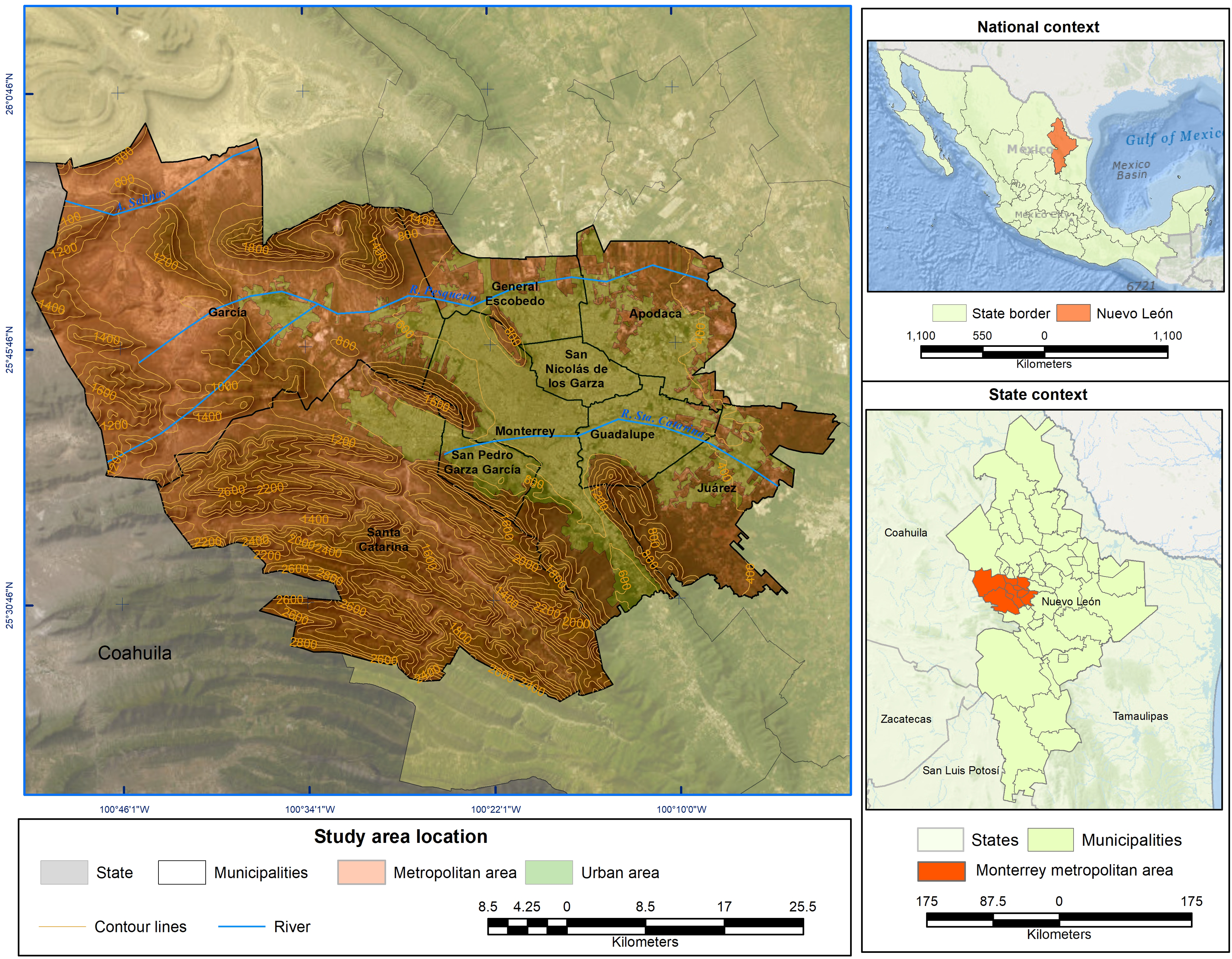
Location of the Monterrey metropolitan area.
The ZMMty covers an area of 3142.2 km2 and has 4,643,232 inhabitants, with a population density of 1,477.7 inhabitants/km2 (INEGI 2020b). The municipality of Monterrey has the largest number of inhabitants, and SPGG has the lowest population (INEGI 2020b). The distribution by sex is similar in all municipalities; approximately half are women (Table 1). The average age range is between 25 and 36 years old, and 57% of the inhabitants correspond to the Economically Active Population (EAP). The ZMMty concentrates 85% of the companies, generates 90% of employment, and contributes 89% of the state's Gross Domestic Product (GDP), and the main economic activity is industry.
Sociodemographic Overview of the ZMMty.
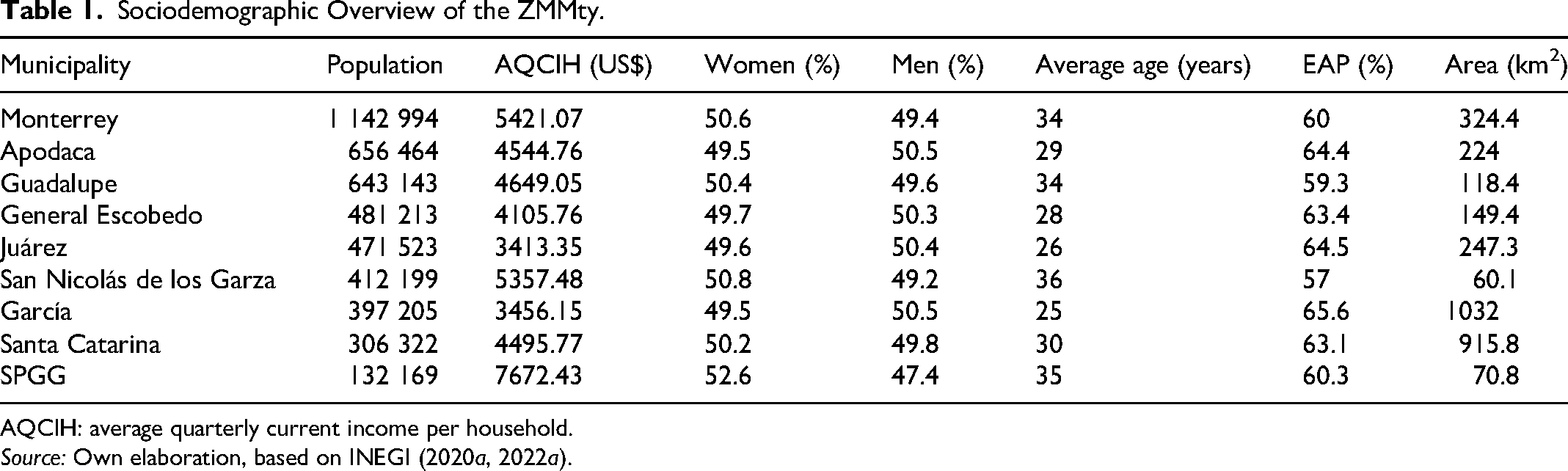
AQCIH: average quarterly current income per household.
According to the 2022 agricultural census, a total of 356 production units were registered in the ZMMty (INEGI 2022b), where 345.51 ha of corn, beans, chili, squash, sorghum, wheat, and oats are cultivated annually, and 1080.28 ha are planted with perennial crops: walnut, guava, lemon, orange, apple, grape, avocado, agave, alfalfa, and cultivated pasture (Table 2). The municipalities of Guadalupe, Monterrey, San Nicol
Agricultural Activities in the Municipalities of the ZMMty.

Source: Own elaboration, based on INEGI (2022b).
Data Collection
The study was carried out through the method proposed by García and Ordóñez (2025), which consists of three phases: 1) Bibliographic review: for study area characterization and literature review related to CG in the region; 2) Fieldwork: was conducted in accordance with the National Autonomous University of México's code of ethics, which provides for academic integrity and honesty, respect for cultural, ethnic, and personal diversity, as well as privacy and data protection (García and Ordóñez 2022). Data collection included permission from managers and approval from collaborators for the application of qualitative techniques (Bernard 1995), participant observation, semi-structured interviews, questionnaires, and systematic tours to understand the sociocultural context, foster contact with the inhabitants, and generate relationships of trust with people; and 3) Systematization: that contributes to analysis and interpretation of the data collected. The research was conducted from September 2024 to January 2025 due to a lack of information about the importance of CG for food, sustainability, and social development in the ZMMty.
Literature Review About CG in the ZMMty
This stage consists of three steps:
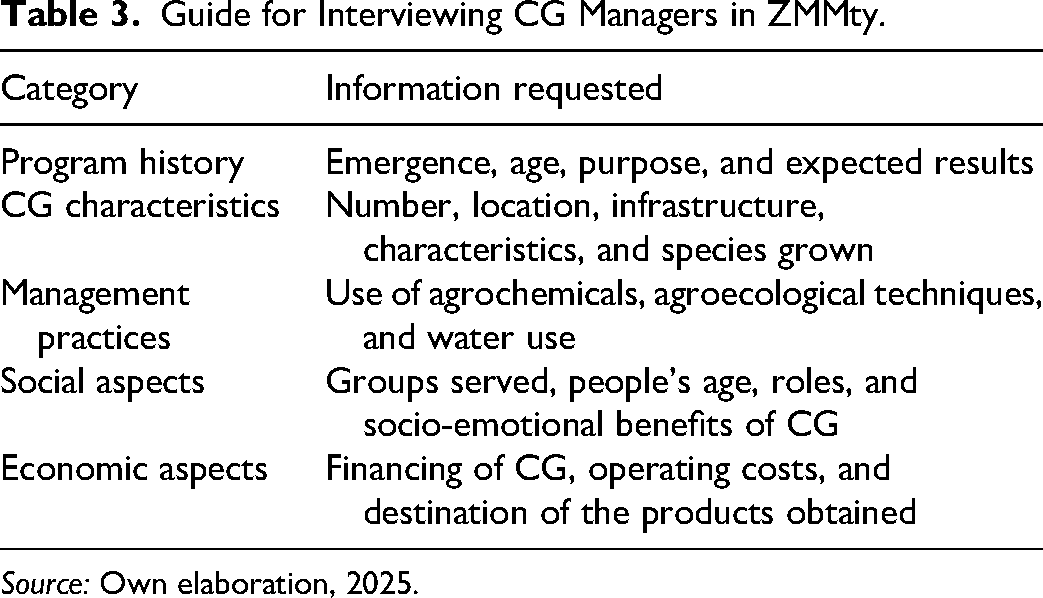
Search information on CG. Different search engines were used: Google Scholar, Scopus, public libraries, and institutional repositories of universities, research centers, and institutes in the country. The keywords were “community gardens,” “urban gardens,” “home gardens,” and “family gardens.” The same words were searched for in Spanish, which were “huertos comunitarios,” “huertos urbanos,” “huertos caseros,” and “huertos familiares.” All keywords were accompanied by the name of each municipality belonging to the ZMMty and the state of “Nuevo León” (e.g., “Community gardens in Monterrey”). Government agencies consult. Consisted of a search on the official website of each municipality on CG projects. Also, electronic news media, digital newspapers, and social networks were consulted to have as much information about CG programs as possible in the ZMMTy. The search showed that only the municipalities of General Escobedo, Monterrey, San Nicolás de los Garza, and SPGG have activities related to the reported research topic. Then emails were sent to request information on the public program. CG manager's interview. In each municipality, those responsible for the CG programs (managers) were contacted directly. Four semi-structured interviews for approximately 60 min to collect quantitative and qualitative information in the following categories were conducted: program history, CG characteristics, management practices, and social and economic aspects (Table 3).
Guide for Interviewing CG Managers in ZMMty.
Source: Own elaboration, 2025.
After the semi-structured interview, the CG managers answered a questionnaire with 30 questions based on the research carried out by Ponstingel (2022), which was applied in MS Forms and completed in approximately 100 min (Supplementary Material 1). This platform allows for efficient data collection and orderly sorting of information. The questionnaire responses and fieldwork data were captured in MS Excel and InfoStat spreadsheets to perform basic statistical tests, obtaining minimum, maximum, average, and frequency values.
Characterization of CG
In addition to the data obtained from the bibliographic search and knowing the locations of the CGs, the technique of participant observation and systematic tours (Bernard 1995) was applied to describe the infrastructure, water access, species and their uses, and information about the people and management of the CG.
The infrastructure and the different materials used in each CG were recorded; according to what was observed, a classification was made of their establishment since some plants were planted directly in the soil or using some other strategy for their cultivation, for example, in pots made of reused materials (e.g., plastic bottles and tires, among others), planting boxes made of wood, planters made of construction materials (e.g., block, cement, rocks, and synthetic fibers), or a combination of these (e.g., plastic bottles and tires, among others), planting boxes made of wood, planters made of construction materials (e.g., block, cement, rocks, and synthetic fibers), or the combination of two or more strategies (e.g., plants in direct soil + planting boxes).
The total area of each plot in CG was measured to obtain the average, minimum, and maximum surface area in m2. With the help of the CG manager, the plants were listed, and the number of species found was quantified. The characterization of the people who participated in the CG was based on gender, number of volunteers, age, proximity of the CG to their home, use of transportation, days dedicated to garden activities, and number of hours per week. The common name of the plants in the study region was recorded, as well as the uses assigned by the people: food, ornamental, aromatic, medicinal, and condimental. The list of species was organized by scientific name and was verified in the database of the Missouri Botanical Garden (MBG 2025) and in the International Plant Names Index (IPNI 2025).
CG management was described based on agroecological techniques such as the use of composts, soaps, extracts, insect traps, pollinator plants, and efficient use of water (rainwater harvesting and irrigation systems) (de Paz et al. 2024). The water access and the way the plants are irrigated were recorded, whether they are high-efficiency pressurized systems (sprinkler or drip) or if the water is supplied manually.
Systematization of Information on CGs
The quantitative and qualitative information contributed to the contextualization of the findings; in this sense, the multifunctionality of the CG in the ZMMty was systematized considering the background and objectives of such projects, and the results were prioritized according to the proposal of Alcántara and Larroa (2022): sustainability, strengthening of green spaces, contribution to food sovereignty, socio-emotional well-being of people, and strengthening of the social fabric.
Results
Management of CGs in the ZMMty
The CG is mainly promoted by local governments (93%), universities (5%), and the private sector (3%). These bodies are responsible for the design, creation, evaluation, development, and input for the operation of the CGs. The CG manager is a government employee who always accompanies the volunteers to carry out agricultural activities. The costs of establishing and operating the CG are covered by the local government. In the municipality of SPGG, the CG manager mentioned that the “Huertos Comunitarios SPGG” program emerged in July 2020 in response to the confinement due to the COVID-19 crisis. In response to this situation, a virtual workshop was implemented to guide people in creating “home gardens,” which worked as a precursor to the establishment of CG. In Monterrey, the Municipal Development Plan 2021–2024 proposed lines of action to promote urban gardens as a green area modality; with that basis and with the attributes delimited in the Municipal Public Administration Regulations, the Directorate for a Green City generated an urban agriculture agenda. Currently, this municipality has a specific office for the management of the CG; the project manager is called “the head of urban gardens,” who oversees the dissemination and continuation of the program since the new Municipal Development Plan considers urban gardens as a strategy to promote family economy and support people with vulnerability through food production. In San Nicolás de los Garza, the CG began as an occupational therapy program in 2006; this activity has been promoted and replicated in some public squares and schools.
The manager CG mentioned that the main motivations of those who participate in the CGs are the satisfaction of producing their own food, free of agrochemicals and other harmful substances, as well as the generation of green spaces in the city. They also perceive various benefits from this activity, such as stress reduction when interacting with plants, generation of new groups of friends and companionship, obtaining plants for various uses, and financial savings from not purchasing the vegetables they harvest, among others.
A total of 680 volunteers between the ages of 30 and 59 participated in the care of the CGs. Most are women who attend 2 to 3 times a week, mainly in the morning, and spend an average of 4 h a week on this activity. The distance between their homes and the public space is approximately 1000 m, and they do not usually use public transportation to get there. The CG managers are responsible for ongoing monitoring and conduct 3 to 6 workshops per year; those who initially participate receive training in agroecological practices: crop association, pollination, fertilization, composting, irrigation systems, and pest control. For the maintenance of the CG, volunteers appoint a person from the group as “CG leader,” who serves as a direct link with the CG managers to organize the work; through a WhatsApp group, they register the day and time when they will perform the tasks to which they are committed. The activities that take place in the CG are aimed at promoting teamwork and a culture of peace that strengthens the social fabric. Regarding social dynamics, the CG manager noted that people strengthen the sense of belonging to their community, e.g., volunteers assign a name to the CG and place a sign for others to know publicly. A good relationship and collaboration were also observed in general, without finding power dynamics or conflicts between the groups.
In the environmental issue, the CG manager promoted the manager who teaches agroecological principles in general terms. However, volunteers have appropriated this knowledge to adapt it locally; an example is the pollinator plants: people have identified that Bougainvillea spectabilis Willd. and Lantana camara L. are preferred by pollinators in this area. Currently, these two species are observed in several areas of the ZMMty. On the other hand, in the economic aspect, the production of food for self-consumption is promoted.
Characterization of Community Gardens in the ZMMty
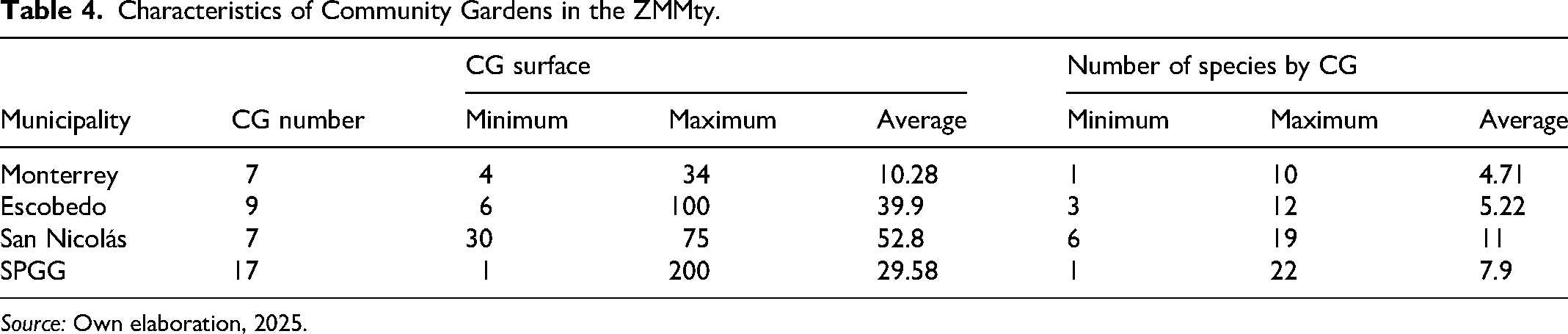
In the study area, 40 CG were identified (Table 4), with an average area between 10 and 53 m2, with an average of 4 to 11 species. The largest and smallest CG were in SPGG, where the largest and smallest number of species were recorded. The annexes include a planting area, composting area, pollinator garden, rest area, and visitors’ area. The CGs are located in public parks (50%), educational institutions (25%), community centers (18%), hospitals (3%), condominiums (3%), and industrial yards (3%). In their construction, people have used block, brick, stone, and concrete (40%), wood (23%), reused tires, PET, and other similar materials (15%), combined different elements (12%), or directly used the ground (10%). It is worth mentioning that 62% are protected and 38% lack fencing. Approximately 40% have a drip irrigation system, 37% are irrigated manually, and 22% by sprinkling. People irrigate 3 to 4 times per week, and the water comes from the local network.
Characteristics of Community Gardens in the ZMMty.
Source: Own elaboration, 2025.
According to the information obtained in the fieldwork, there are two types of CG: basic and technified (Figure 2). Both have heterogeneous characteristics; e.g., a basic or technified CG can be small, with high species richness, planted directly in the ground, without protection, and with irrigation systems where only a few people participate (Figure 3). In SPGG and Escobedo, technified CGs prevail, while in San Nicolás and Monterrey, basic CGs prevail. The typology of CG in the ZMMty is linked to GDP. According to the data, SPGG has the most favorable economy; in this municipality, the CG has the largest surface and infrastructure (e.g., durable materials and irrigation systems). In addition, the socioeconomic context influences species richness; in this municipality, species were found that are not present in the other municipalities, such as Brassica oleracea var. sabellica L., Brassica rapa subsp. nipposinica (L.H. Bailey) Hanelt, Passiflora edulis Sims, and Brassica oleracea var. gemmifera (DC.) Zenker, which was recently introduced and is used in gourmet cuisine. In this sense, the information suggests a close relationship between the purchasing power of the municipalities and the types of CG and species in the ZMMty.
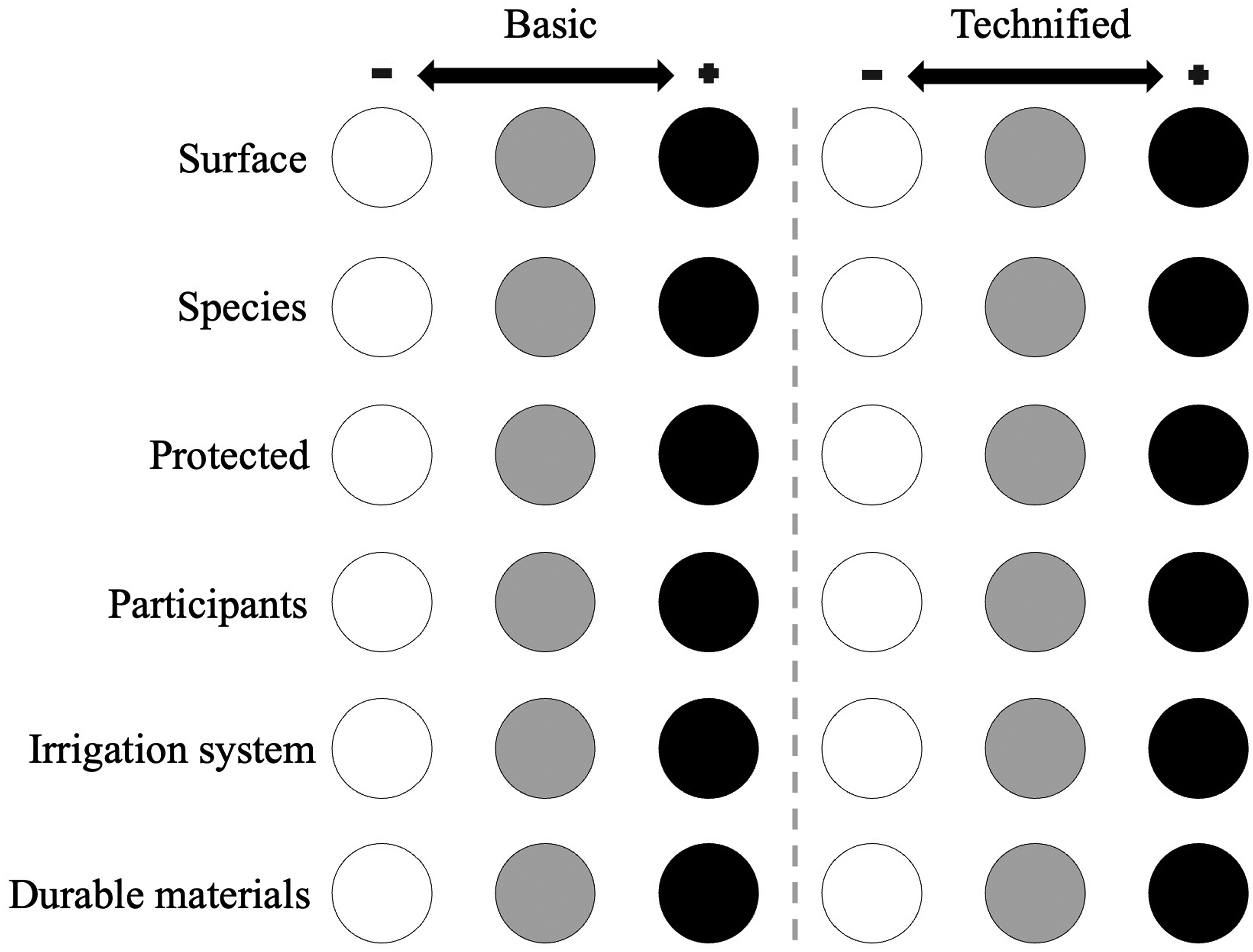
Typology of CG in the ZMMty.
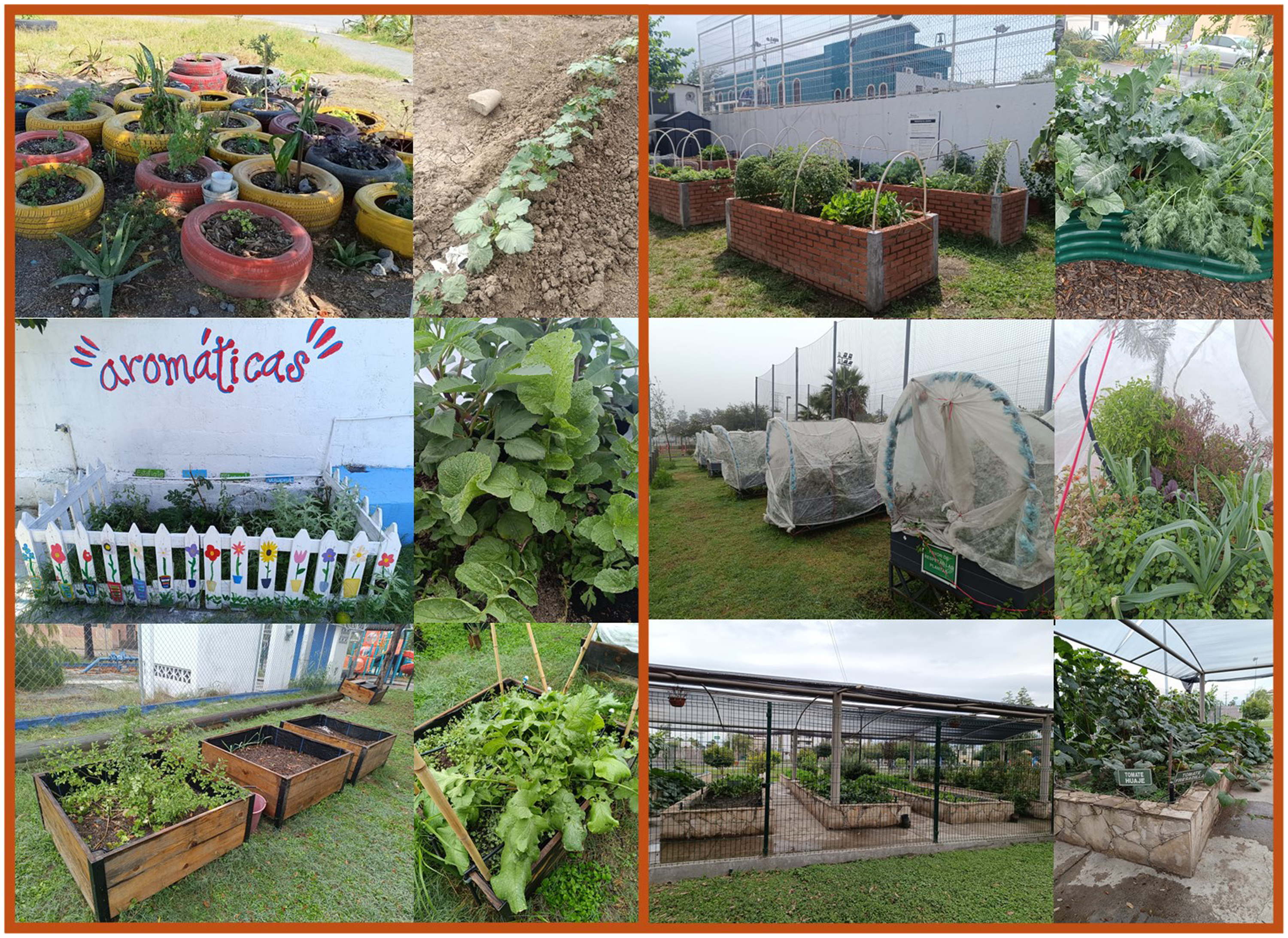
Images of CG typology in the ZMMty; on the left are basic types, and on the right are technified types; the CGs are organized from lowest to highest complexity.
In the CG of the ZMMty, a total of 80 species were recorded, where the botanical families with the highest relative frequency are Brassicaceae (11%), Lamiaceae (10%), Solanaceae (9%), and Apiaceae (6%), which together represent 36% of the total number of plants reported (Figure 4A). On the other hand, the most frequent species are radish (Raphanus sativus L.), tomato (Solanum lycopersicum L.), coriander (Coriandrum sativum L.), chard (Beta vulgaris var.
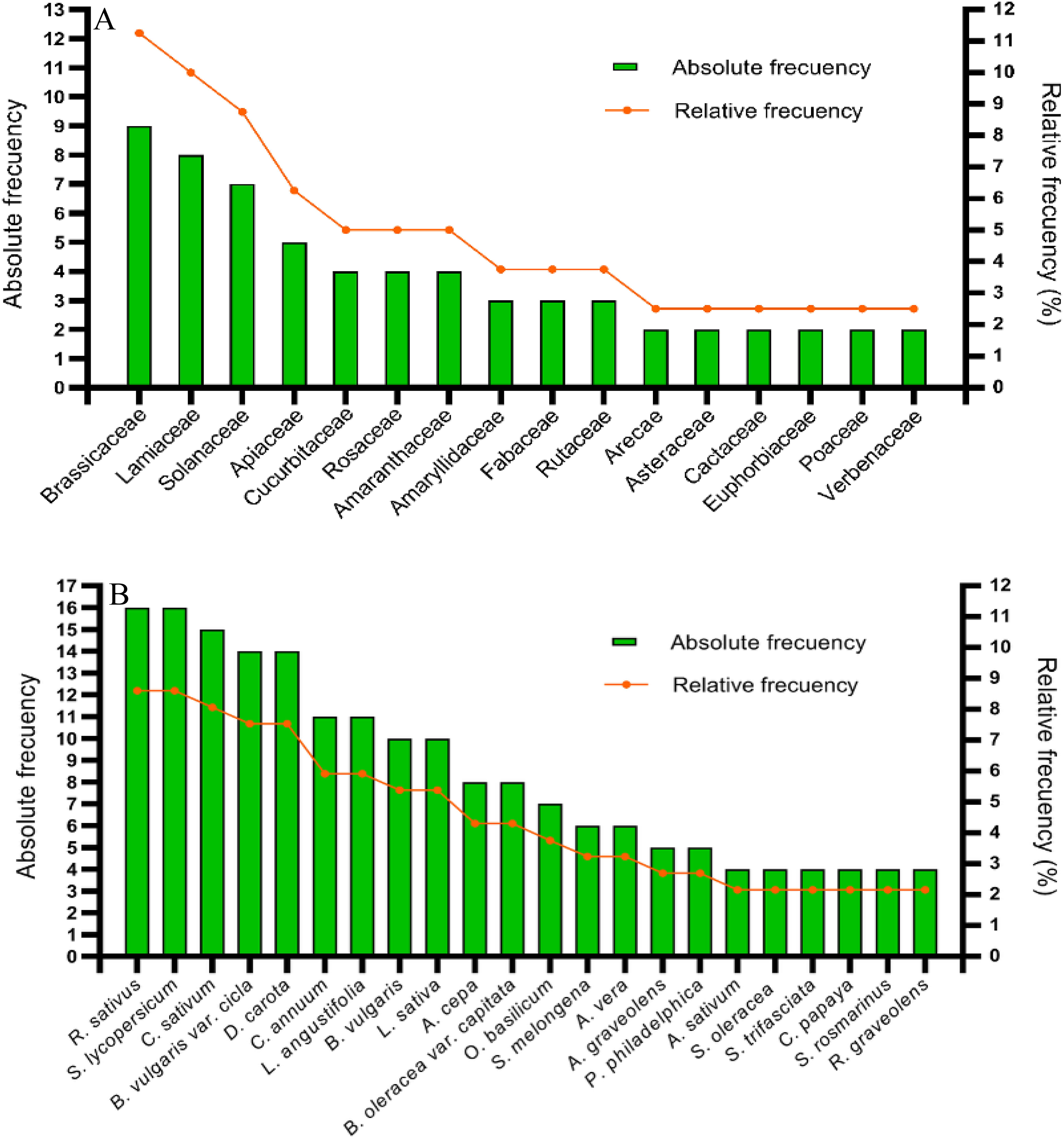
Absolute and relative frequency of botanical families (A) and species (B) in the CG of the ZMMty.
Regarding the distribution region of the plants, 72% are introduced and 28% are from the American continent; the CG managers and volunteers do not know their origin because they purchase seeds and species from agricultural stores. However, some plants have been adapted to the region for hundreds of years, such as Ficus carica L. and Rosa gallica L. Some species mentioned are typical of Mexican cuisine: Zea mays L., Phaseolus vulgaris L., Opuntia ficus-indica L., and Agave americana L., to name a few. Culturally important plants were also recorded, such as Euphorbia pulcherrima Willd., a species that is part of the Christmas festivities, as well as Quercus polymorpha Schltdl. & Cham. It is appreciated by Monterrey families because it is a tree native to the Sierra Madre Oriental and widely distributed in the ZMMty.
Plants are used for food (60%), with edible plants standing out because people use different parts of a plant and different ways of consuming them. CG managers mentioned that Monterrey families have created local dishes from plants such as charro beans, roast pork, prepared tostadas, and zucchini with meat. In medicinal use (26%), the leaves, stems, and seeds are relevant for making infusions and for direct application in the treatment of respiratory, digestive, hair, and dermatological diseases. Ornamental uses (19%) are associated with home and CG decoration. In the case of condiments (15%), leaves and seeds are dried to season food, while aromatics (8%) are used to attract pollinators, and ritual use (4%) is related to local beliefs to prevent the “mal de ojo” and other culturally related diseases. The list of plant species, with their respective uses, parts of consumption, and forms of use, is presented in Supplementary Material 2.
With respect to the municipalities’ goals regarding the establishment of CG, some differences were found among the managers’ responses (Figure 5). In the case of Monterrey and San Nicol
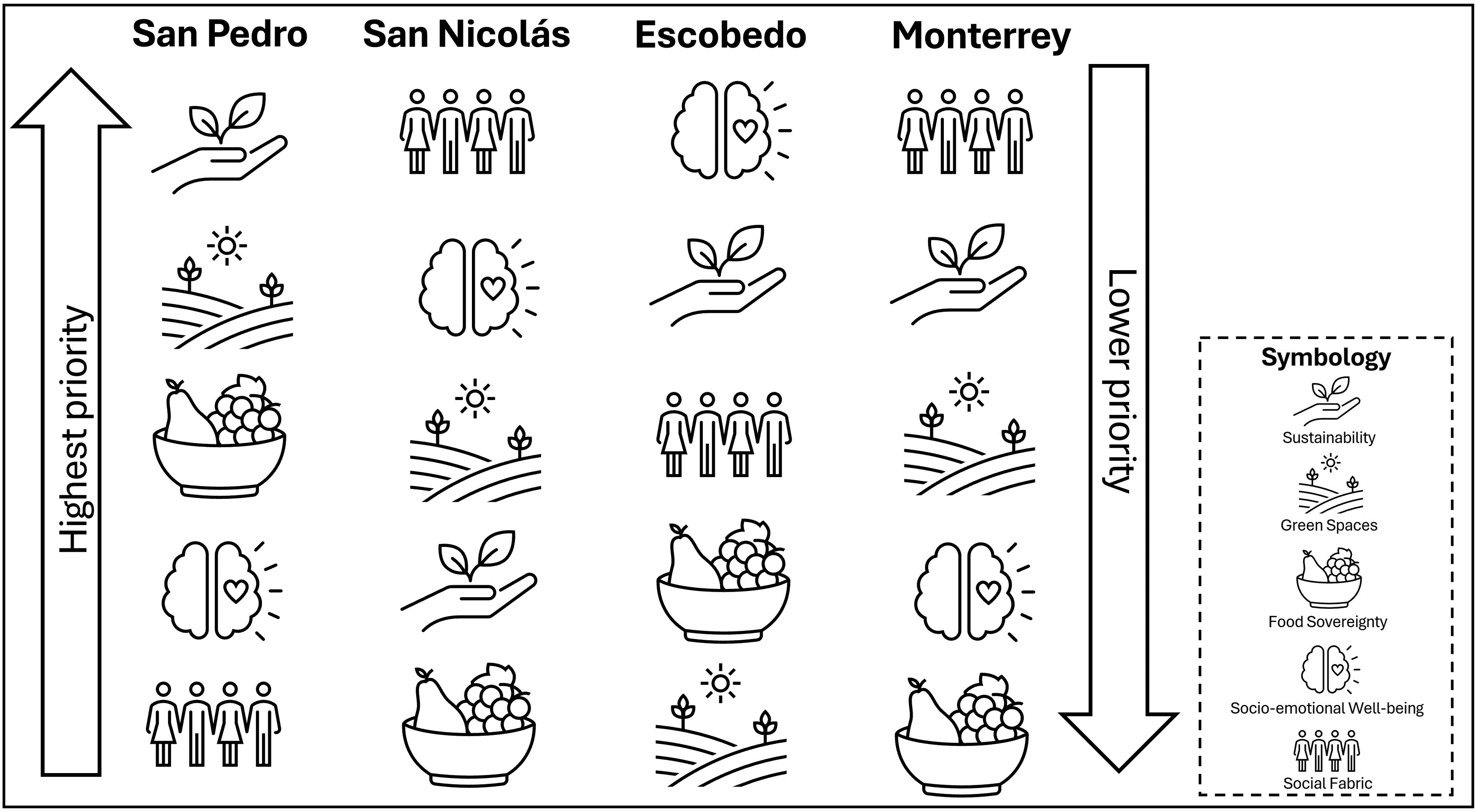
Priorities of community gardens in the ZMMty.
Discussion
Feeding the world's population is one of the greatest challenges of the century. According to Ambikapathi et al. (2022), in the last 50 years, the world's food systems have been transformed, affecting diets, nutrition, health, livelihoods, and the environment. The most industrialized cities register an increase in the affordability of nutritious foods. In this context, CG emerges as a viable tool to address problems. This research found that most CG initiatives in the ZMMty are promoted by municipal governments, and some of them promote such activity to a greater extent; the challenge is the continuity once the government period concludes, since the CG has the risk of being abandoned. In the ZMMty, 40 CG were recorded; the above is consistent with the study conducted by Dávila (2017), who reported 36 CG in the municipality of Monterrey, which were promoted by the 2012–2016 administrations. However, the author points out that the gardens lacked follow-up, information corroborated in the interviews conducted with the CG managers and participants. In that study, it was mentioned that changes in government significantly affected the continuation of the projects. The situation of uncertainty associated with CG is comparable to what happens in other countries. Guitart, Pickering and Byrne (2012) found a total of 86 CGs established in the United States; 33 were promoted by the government, 3 by the private sector, 21 jointly by both sectors, and the rest without specifying their origin. Despite this, Joshi and Wende (2022) noted that, in Edmonton, Canada, CG received special attention during the COVID-19 pandemic; in that region, it was found that such gardens favored social resilience. This study also identified that SPGG's CG program emerged as a response to the same health emergency.
In the CG located at the ZMMty, the participants are mostly adult women. The findings of this work coincide with those reported by Gregis et al. (2021), who reviewed 84 scientific articles on gardens; 44% of the sample is specifically focused on CG and found that 33% of the participating population are adults. In CG from Galicia, Spain, Soriano, Otero-Enríquez and Calo (2018) mentioned that the predominant age ranges were 33–54 years, followed by the +55 years group, with an overall mean of 52 years, which coincides with this research.
The ZMMty is a region with fewer than ten studies on CG, mostly on urban gardens, which represents a lack of information about general characteristics like surface, infrastructure, species richness, management practices, and plant uses, among other ethnobiological topics associated with CG. This study revealed a high heterogeneity between the CG established in each municipality analyzed, which allowed the development of a typology of CG. This typology showed a great combination of CG in terms of its characteristics, finding the basic ones in the municipalities of Escobedo and Monterrey, while the most technified ones were in SPGG and San Nicolás. Differences were found in garden size, infrastructure, and the species cultivated, which are related to the income level of the inhabitants of each municipality. Monterrey, Apodaca, San Nicolás de los Garza, Santa Catarina, General Escobedo, SPGG, Guadalupe, and García, with Monterrey ranking fourth in 2022 (INEGI 2022a). SPGG stands out as the richest municipality in the country and in Latin America (CEEBC 2024).
With respect to species found, the orographic and climatic characteristics favor that in Nuevo León, the native flora is of the desert type; in the CG, the most important botanical families are Brassicaceae, Lamiaceae, Solanaceae, and Apiaceae. Ethnobotanical studies by Estrada-Castillón et al. (2018) and Estrada-Castillón et al. (2022) conducted in municipalities bordering the ZMMty report other families; although Lamiaceae is among the most common, such a difference is because in the CG, there is a high selection of cultivated species. In this research, 80 species were identified, 13 more than Flores and Garza (2019) in urban orchards in the metropolitan area of Monterrey and 40 more than Buentello (2024) in the CG of México City. Based on the information, the CG, like the home garden, is heterogeneous in species (García and Ordóñez 2022); the literature indicates that its main function is food production. However, recent studies report that they conserve biodiversity (through the planting of native species), contribute to food security (producing food for self-consumption), and generate ecosystem services (increasing green spaces, using agroecological techniques, and promoting the establishment of pollinator plants). Intrinsically associated with the species richness cultivated in these spaces, these qualities favor their multifunctionality (García Flores, Ordóñez Díaz and Martínez 2022). As mentioned in the Results section, a significant number of species are established in the CGs of the ZMMty, some of them native to the region or of Mexican origin. There is no record of the origin of the varieties in each species, so now it's unknown if they correspond to traditional or native genotypes. Most of the species found were also reported in the ethnobotanical research of Estrada et al. (2007), carried out in this same region.
On the other hand, this research showed that governments promote the planting of species with simple agronomic management, with the aim of obtaining safe and fast results, promoting the participation of the participants. However, there is evidence that people introduce various species with different traditional uses, confirming the presence of traditional ecological knowledge (TEK) in CGs. With respect to the uses of the species established in the CGs, this work evidenced the richness of people's TEK, so these initiatives serve as an important tool for the conservation and transmission of such knowledge (Kumar et al. 2021). In the case of this research, the aforementioned tool specifically enriches urban environments.
On the other hand, in the present research, it was possible to show the wide use of agroecological techniques (e.g., use of composts, botanical extracts, and pollinating plants), as well as the non-use of agrochemicals in plants. The application of these practices is of utmost importance for the conservation of biodiversity through environmentally friendly techniques. The use and benefits of these techniques in urban environments have been reported in other cities in México (Villavicencio-Valdez et al. 2023). Likewise, the recent study by Altieri et al. (2025) highlights the potential of agroecology for biodiversity conservation and food security.
The findings in the present study reveal that CG also has a high richness; a very important element that influences the cultivation of plants is human action. According to Castañeda et al. (2020), people's knowledge influences the choice of the species that are indispensable for their subsistence. Another aspect is the uses that, while increasing the number and quantity of species, for García (2023), help to strengthen the social fabric. In this research, it was identified that voluntary work is rewarded with the products obtained from the CG. With respect to the above, García Flores, Calvet-Mir and Domínguez (2024) pointed out that the home garden contributes to the preservation of local culture because it provides multiple socio-environmental benefits based on local knowledge (García and Ordóñez 2022; García Flores, Calvet-Mir and Domínguez 2024). According to Boege (2008), the indissoluble society-nature link results in the use of species under different intensity gradients according to cultural patterns. According to García Flores, Ordóñez Díaz and Martínez (2022), the heterogeneity of CG favors a sustainable management model that should be considered to mitigate the socioenvironmental crisis in urban areas.
In addition to the benefits obtained from plants and agroecological practices, CGs significantly strengthen the social fabric through the creation of a sense of place and community, which could be verified by the testimonies collected in this research.
Conclusions
The ZMMty is made up of municipalities with high GDP per capita derived from their industrial vocation. However, people are interested in growing their own food. In response, governments have implemented urban agriculture initiatives, particularly CGs. The findings revealed that the CG is a multifunctional strategy that promotes the society–nature relationship, strengthens the social fabric, and boosts organizational capacities and citizen participation. In the CGs of the ZMMty, people adapt species to the conditions of the Aridamerican region, which shares biogeographical, cultural, and economic history, which is one way in which people in the cities recover and preserve their peasant memory. The CGs are heterogeneous and serve as species reservoirs where women make decisions to maintain their health, promote teamwork, and favor community coexistence. In this sense, they are spaces for female empowerment and teaching–learning of local and traditional knowledge. Mexican metropolises should promote CG projects because they promote sustainability, the use of agroecological techniques, and species diversity.
Supplemental Material
sj-docx-1-ebi-10.1177_02780771251411956 - Supplemental material for The Multifunctionality of Community Gardens: A Case Study in the Metropolitan Area of Monterrey, México
Supplemental material, sj-docx-1-ebi-10.1177_02780771251411956 for The Multifunctionality of Community Gardens: A Case Study in the Metropolitan Area of Monterrey, México by Carlos Alberto Garza Alonso, María de Jesús Ordóñez Díaz and Flor Esthela Sánchez Cortés, José Carmen García Flores in Journal of Ethnobiology
Supplemental Material
sj-docx-2-ebi-10.1177_02780771251411956 - Supplemental material for The Multifunctionality of Community Gardens: A Case Study in the Metropolitan Area of Monterrey, México
Supplemental material, sj-docx-2-ebi-10.1177_02780771251411956 for The Multifunctionality of Community Gardens: A Case Study in the Metropolitan Area of Monterrey, México by Carlos Alberto Garza Alonso, María de Jesús Ordóñez Díaz and Flor Esthela Sánchez Cortés, José Carmen García Flores in Journal of Ethnobiology
Footnotes
Acknowledgements
The authors would like to thank the municipal administrations of Monterrey, SPGG, San Nicolás de los Garza, and General Escobedo, particularly the people responsible for the community garden projects, for their valuable contribution to the development of this research, to the anonymous reviewers who enriched this work with their insightful comments and suggestions, and to Professor Guillermo Niven Martínez, who reviewed the English text.
ORCID iDs

Funding
The authors received no financial support for the research, authorship, and/or publication of this article.
Declaration of Conflicting Interests
The authors declared no potential conflicts of interest with respect to the research, authorship, and/or publication of this article.
Supplemental Material
Supplemental material for this article is available online.
References
Supplementary Material
Please find the following supplemental material available below.
For Open Access articles published under a Creative Commons License, all supplemental material carries the same license as the article it is associated with.
For non-Open Access articles published, all supplemental material carries a non-exclusive license, and permission requests for re-use of supplemental material or any part of supplemental material shall be sent directly to the copyright owner as specified in the copyright notice associated with the article.
